A low bun sits at the nape and holds through a full ceremony and reception without constant adjustments.
The style works sleek and polished for a ballroom wedding, textured and loose for a garden ceremony, or structured with braids if your hair is fine and needs extra grip to stay in place.
Shift your part all the way to one side, then tuck in pearl pins or small florals where the twist begins. Light hair makes every pulled piece visible, and the curl pattern decides how easily a bun holds.
1. Sleek Low Bun
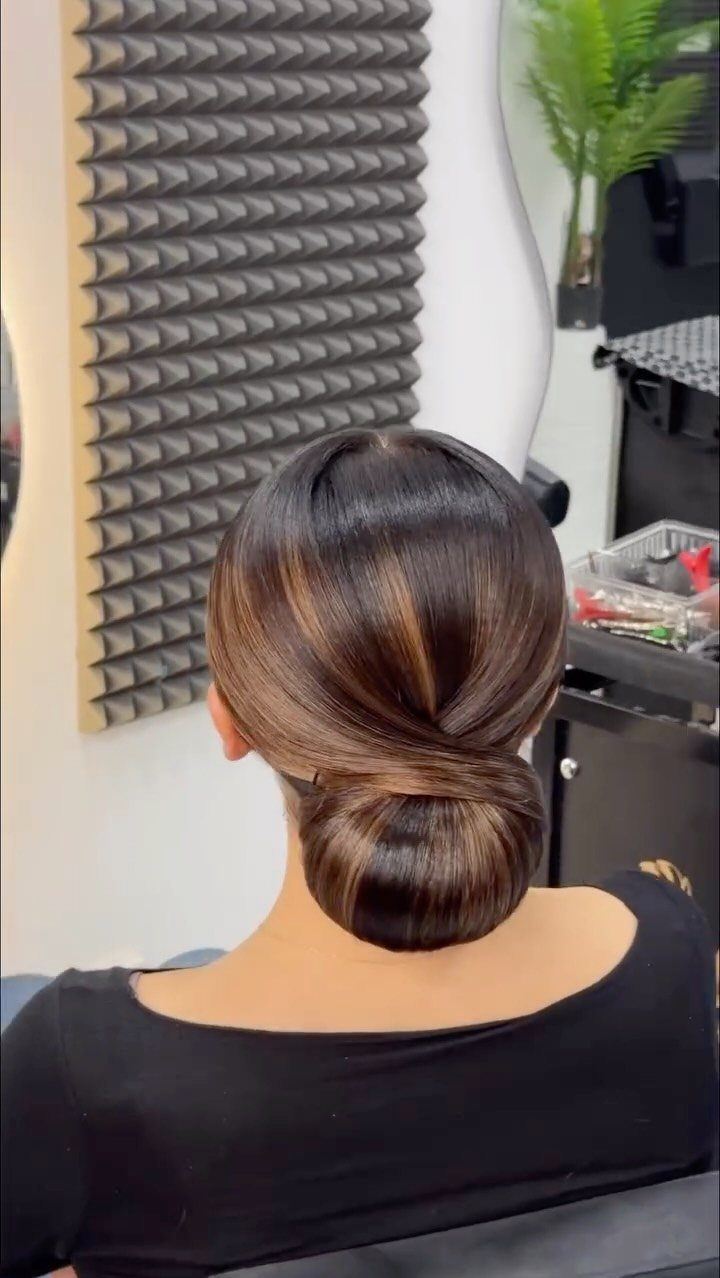
Hair pulled back smooth from the face and gathered low at the nape creates a polished, timeless look. The clean lines suit a structured gown or a more minimal wedding aesthetic.
Ask your stylist to prep with a smoothing serum or gel to control flyaways.
A center or side part works equally well. The finish holds through a long day without constant touch-ups, which matters if you’re doing your own photos or greeting guests for hours.
2. Textured Low Bun
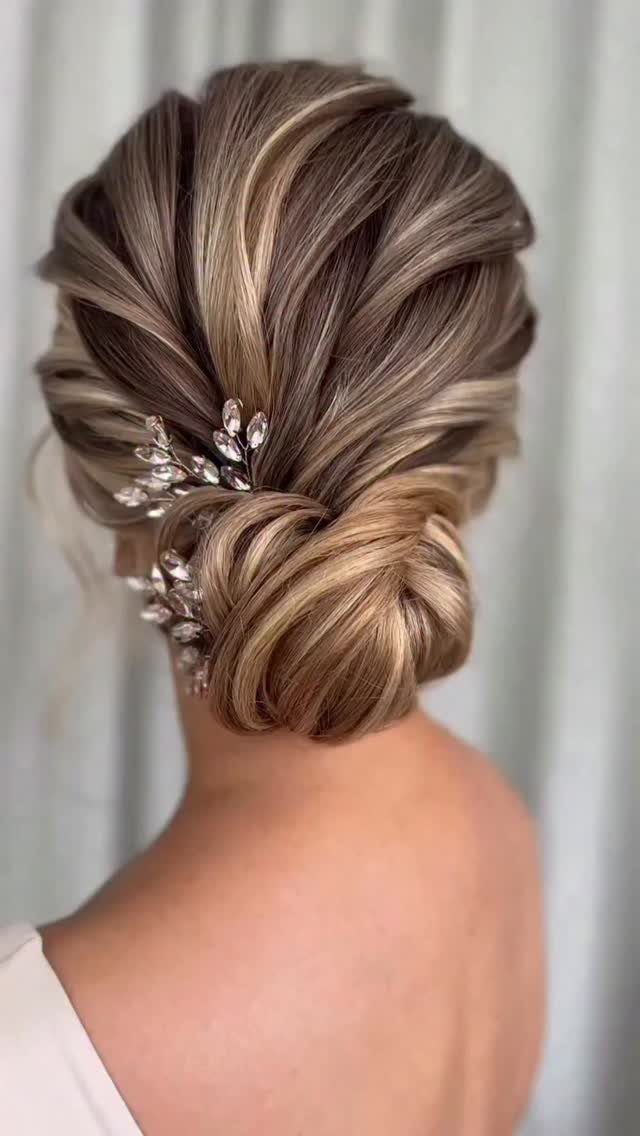
Instead of smoothing the hair flat, this version builds in visible texture before gathering it low. The woven, dimensional surface softens the formality without losing structure.
Start with loose waves or curls, then twist or roll sections as you pin them into place.
A texturizing spray before styling gives grip and separation. The result reads more relaxed than a sleek bun but still feels intentional, which suits a semi-formal wedding or a garden ceremony.
Pair it with a jeweled pin or comb if you want a little shine near the bun itself.
3. Messy Low Bun
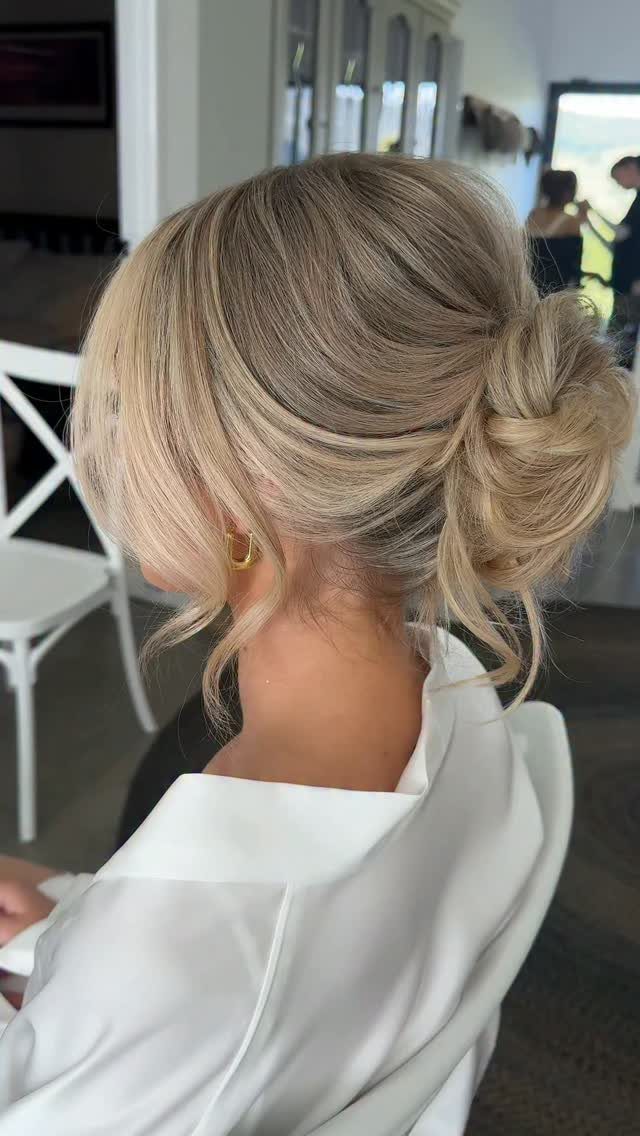
Loose, tousled pieces make this bun feel romantic rather than rigid. The undone finish suits softer fabrics like tulle or chiffon and less formal venues.
Build the bun with your fingers instead of a brush, and leave a few strands falling naturally rather than pinning everything in place. Curl the face-framing pieces first so they hold their shape through the day.
You give up some hold. A messy bun needs more pins than a smooth one, and you may need to adjust it once or twice during a long event.
4. Face-framing Low Bun
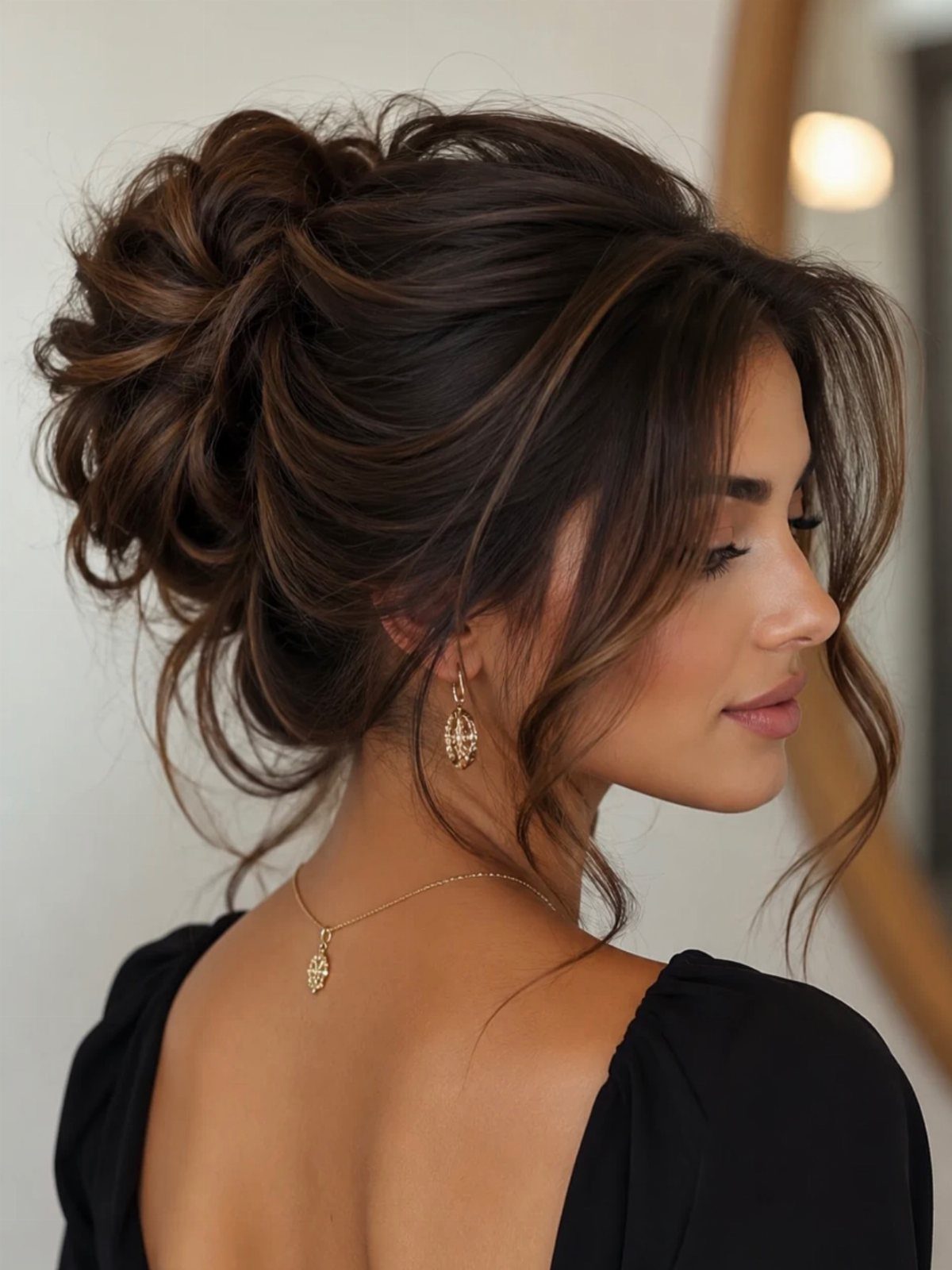
Curled tendrils frame the face while the rest of the hair stays gathered low. The combination softens the overall look without sacrificing the structure of an updo.
Curl the face-framing pieces with a small-barrel iron before pinning the bun, and set them with a light-hold spray so they stay in place without stiffening.
Leave them slightly longer than you think you need; they’ll spring up as they cool.
This works well if you want your face fully visible in photos but still want the romance of loose hair around your features.
5. Low Chignon
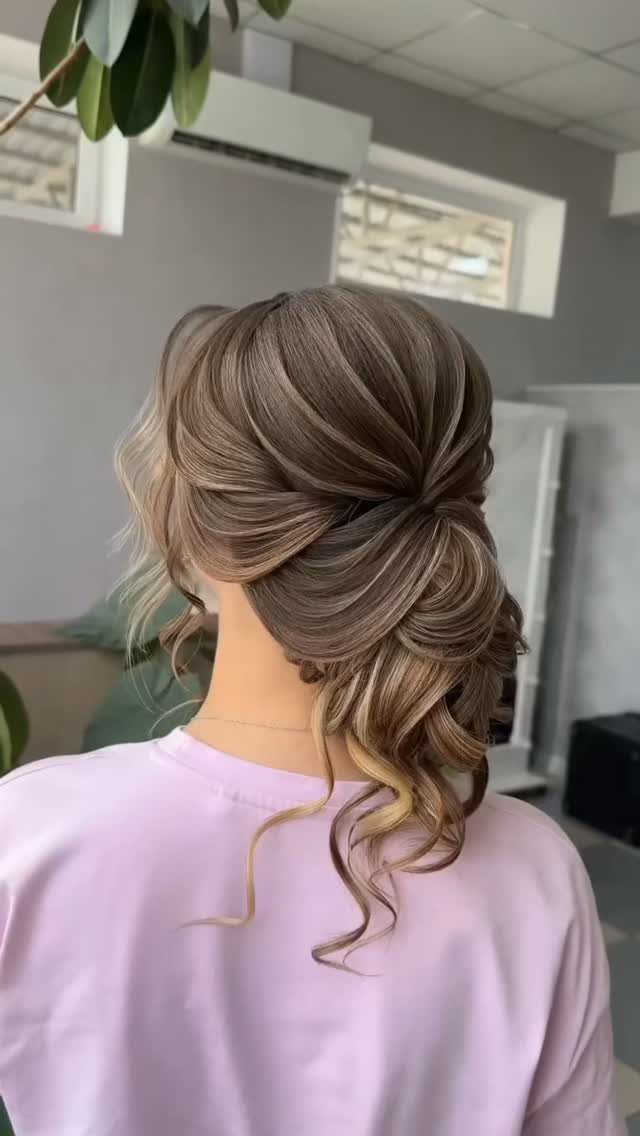
A low chignon sits at the nape with a smooth, rolled finish. The style reads formal and suits a classic wedding or a ballroom venue.
The hair is rolled under and pinned rather than twisted into a knot, which gives a flatter, more tailored silhouette.
If your hair is fine or slippery, a volumizing mousse at the roots helps the chignon hold its shape. Extensions add fullness if your hair needs it.
The polished finish makes room for statement earrings or a cathedral veil.
6. Side-part Low Bun
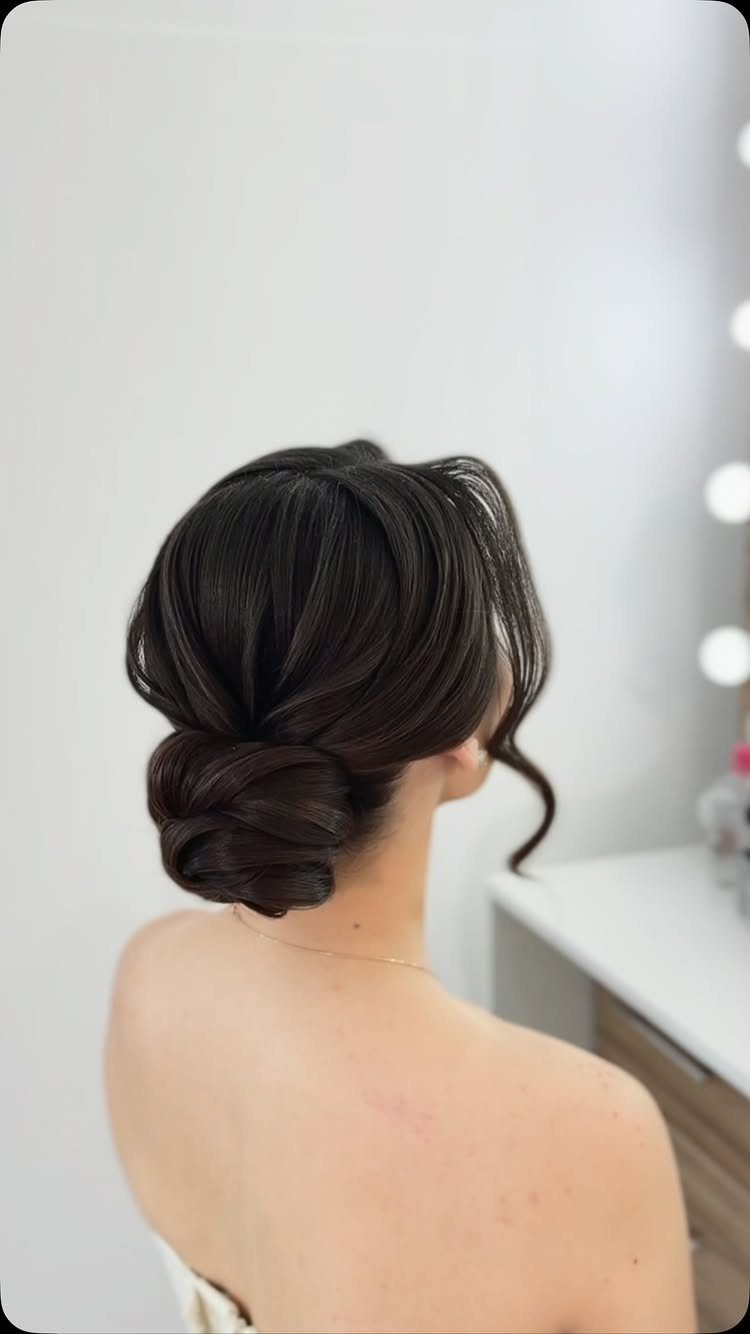
A deep side part shifts the visual weight of the bun and adds asymmetry to an otherwise balanced style. One side sits smooth and flat while the other carries a little more volume or a face-framing curl.
Part the hair while it’s damp so the part sets in place, then pin the bun low and slightly off-center if you want to emphasize the angle.
A side part suits an oval or heart-shaped face and leaves room for a side-swept veil or a single statement earring on the exposed side.
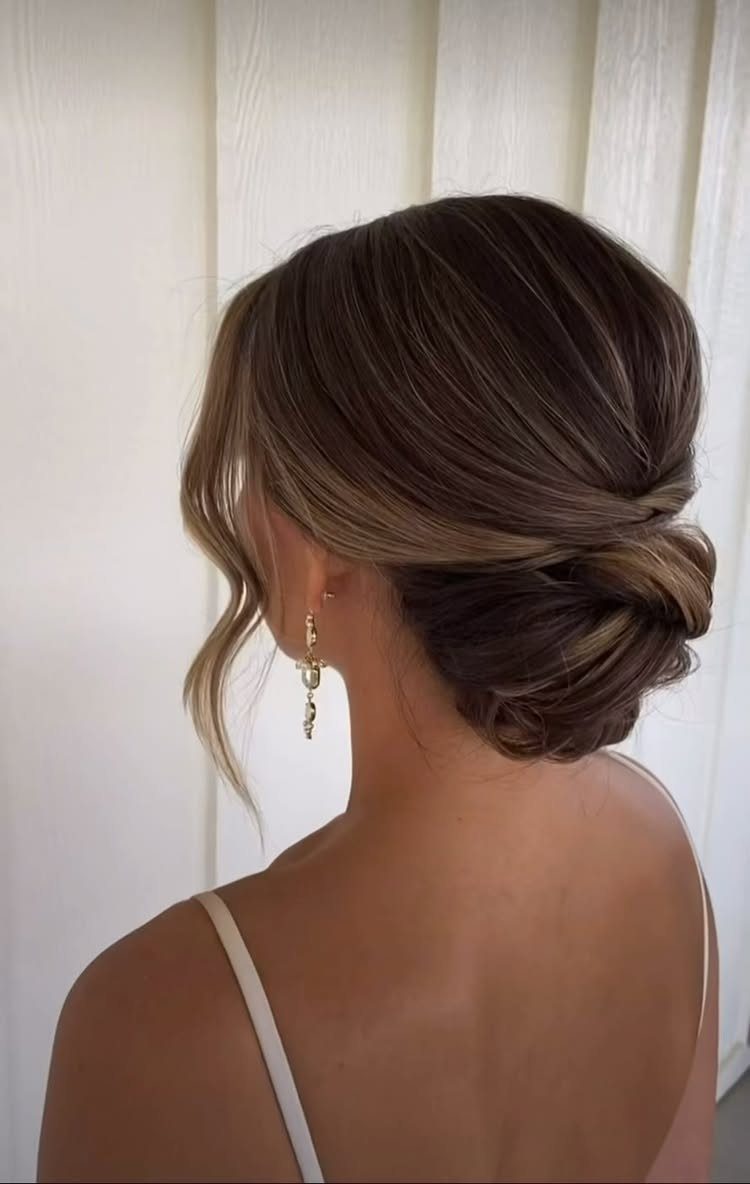
7. Blonde Low Bun
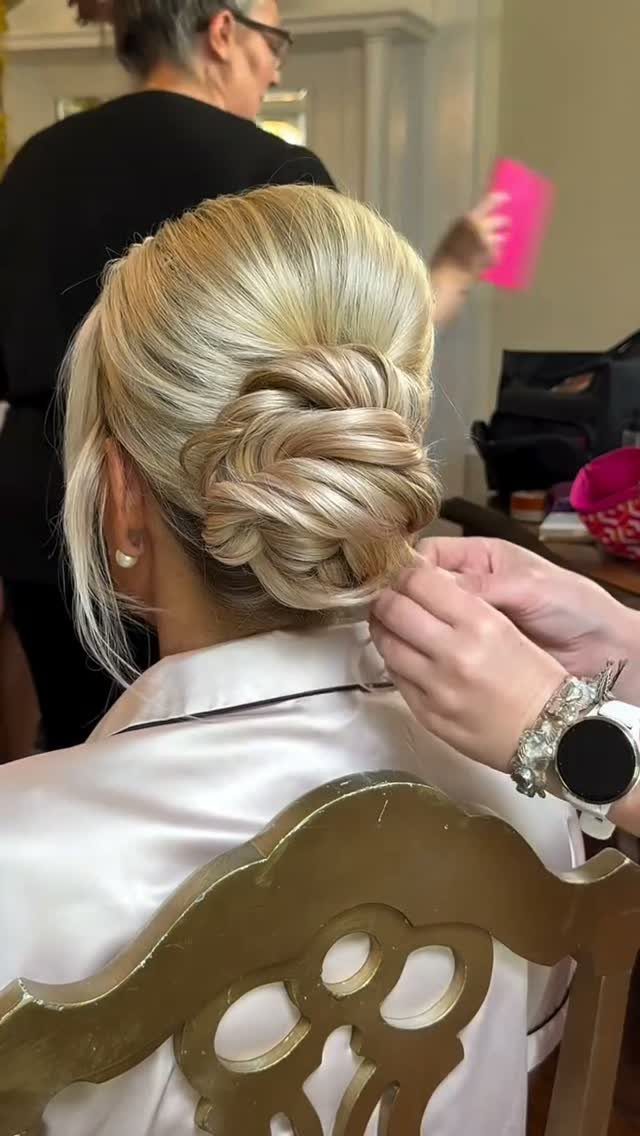
Blonde hair shows texture more clearly than darker shades, so a low bun on lighter hair reads soft even when the structure is secure. The pale tones catch light, which adds dimension without extra styling.
If your hair is fine, backcomb lightly at the crown before pinning the bun to give it body. A shine serum smooths any frizz without weighing the hair down.
The neutral tone suits ivory, champagne or blush gowns and lets colored flowers or a statement veil take center stage.
8. Bridal Bun with Comb
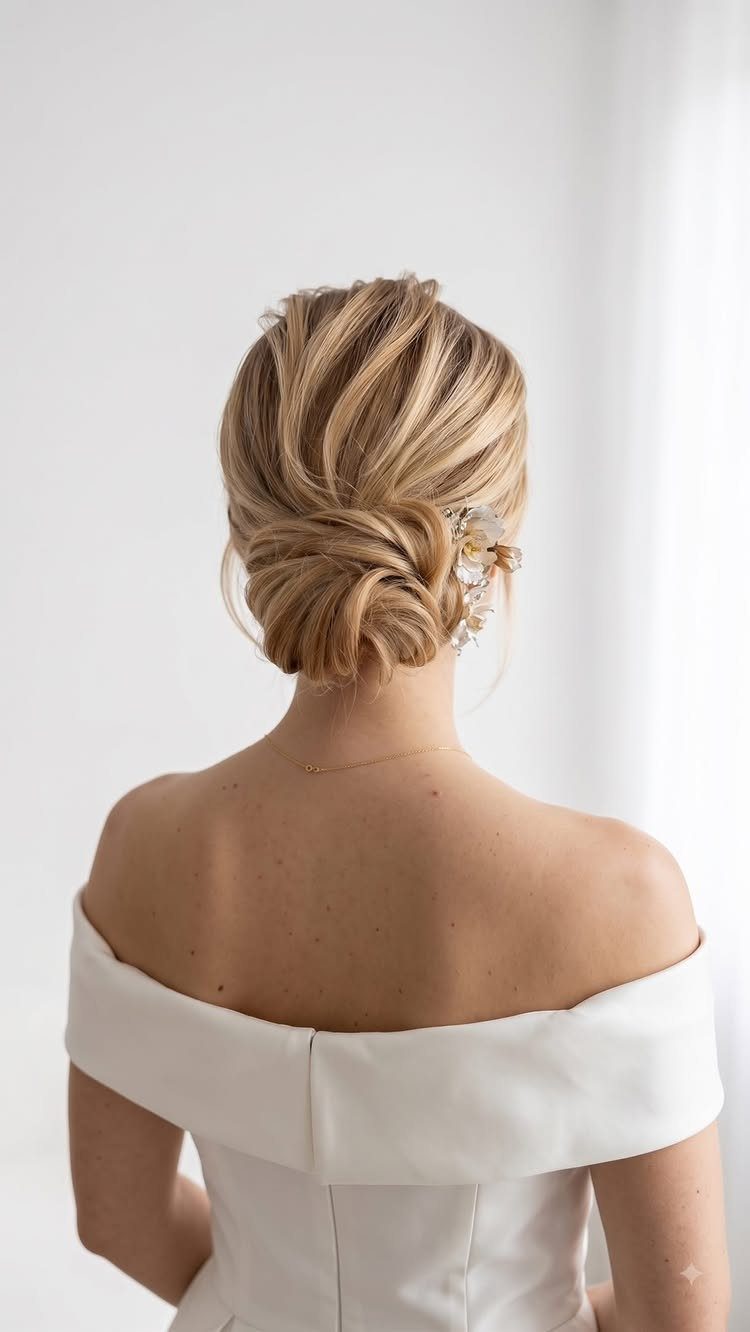
A hair comb anchors directly into the bun and stays put better than a clip. Floral combs suit garden weddings; pearl or crystal versions work for ballroom venues.
Slide the comb in after the bun is pinned, teeth angled down toward the scalp. Position it off-center rather than dead center if you want it visible in profile shots.
The comb holds without damaging the style, so you can remove it partway through the reception if you want a simpler look for dancing.
9. Curly Low Bun
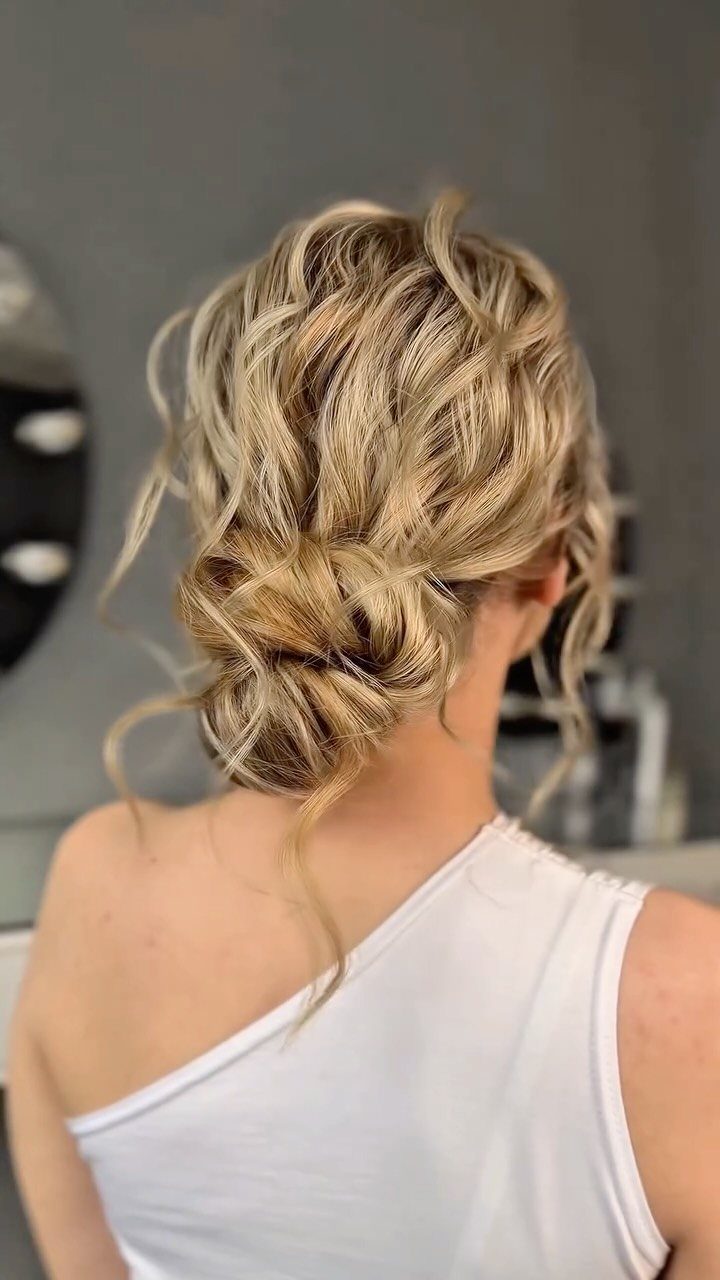
Curly hair gathers into a bun without fighting its natural texture. The volume stays intact, and the curls give the bun a soft, full shape that suits a romantic dress or an outdoor ceremony.
Pin curls loosely rather than stretching them flat, and leave a few spirals falling around the face or neck. A curl-defining cream before styling keeps the texture intact without weighing it down.
This bun holds better on second-day hair, when the curls have settled and the natural oils give grip.
10. Braided Low Bun
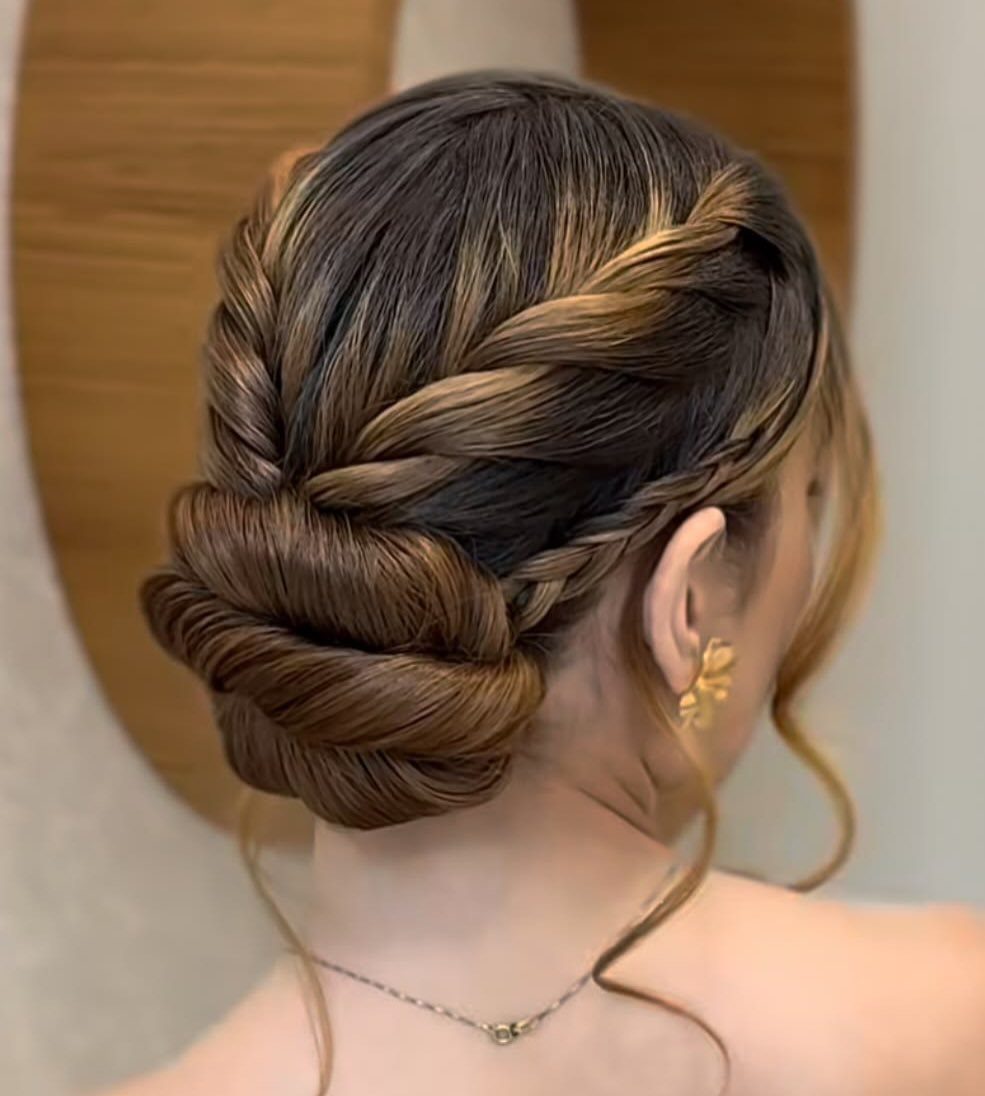
Braiding part or all of the hair before gathering it into a bun adds pattern and holds fine or slippery hair in place.
A single braid woven into the bun creates a subtle detail; multiple braids crossing the back read more intricate.
Start with a French or Dutch braid if you want the braid visible along the scalp, or braid a ponytail and coil it into a low bun. Secure each braid with a clear elastic before pinning.
The braided texture suits bohemian weddings and looks intentional even when the rest of the style is loose.
11. Soft Bridal Updo
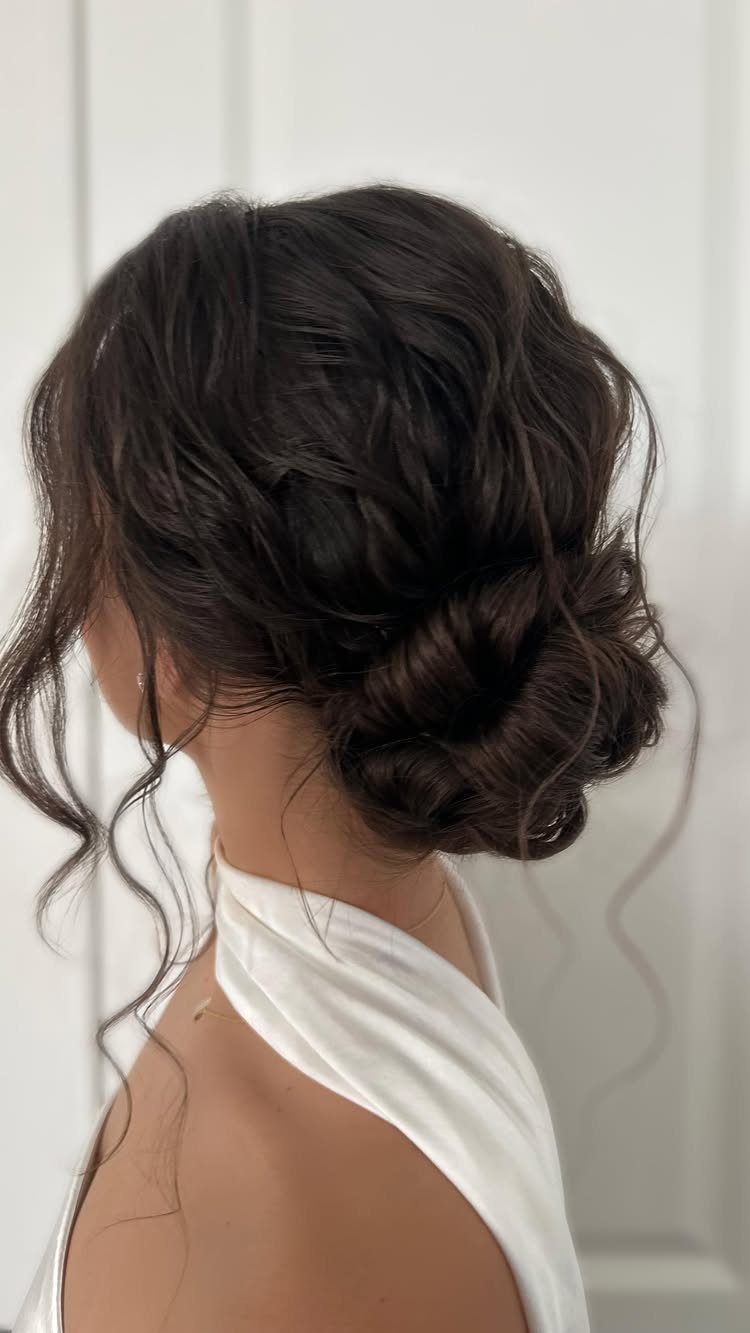
This updo sits low with soft, pulled-apart sections rather than tight twists. The finish is polished enough for a ceremony but relaxed enough to suit a less formal reception.
Build the bun with sections twisted and pinned individually, then tug at the edges to loosen them slightly.
The softness suits a lace gown or a vintage-inspired dress and photographs well in natural light.
12. Sculpted Bun
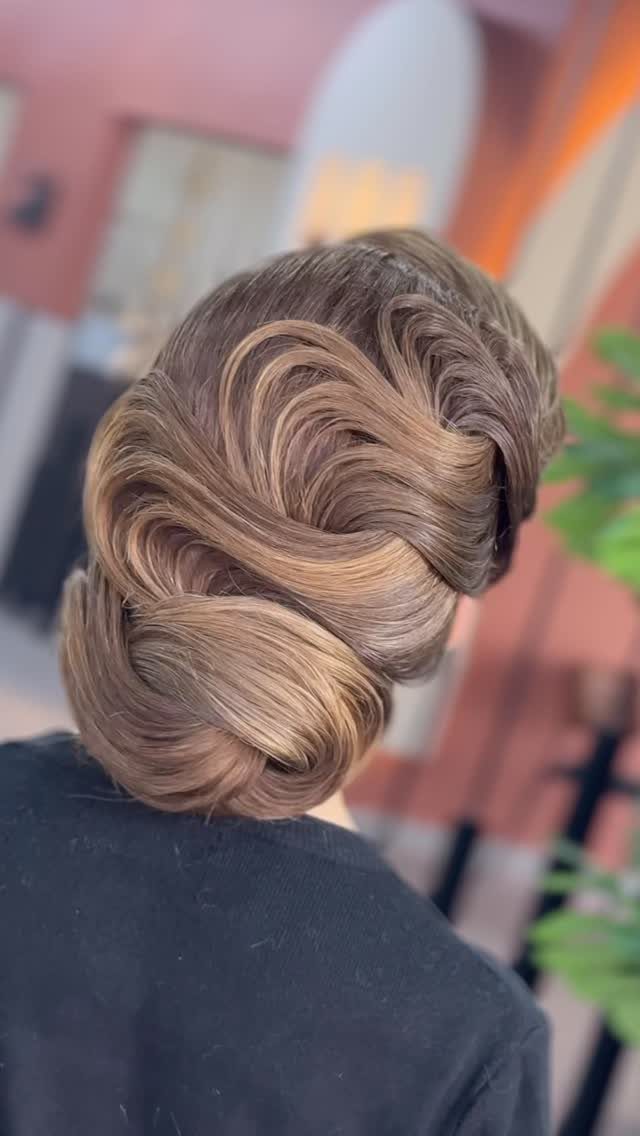
The waves sit flat against the head, which gives a sleek, sculptural silhouette.
Achieve the waves with a flat iron or a setting gel on damp hair, then pin them in place as they dry. The bun itself stays smooth and compact, so the waves are the focal point.
This style works best on medium to thick hair that can hold the wave pattern without excessive product. The high-shine finish suits a satin gown or a formal evening wedding.
13. Lived-in Low Bun
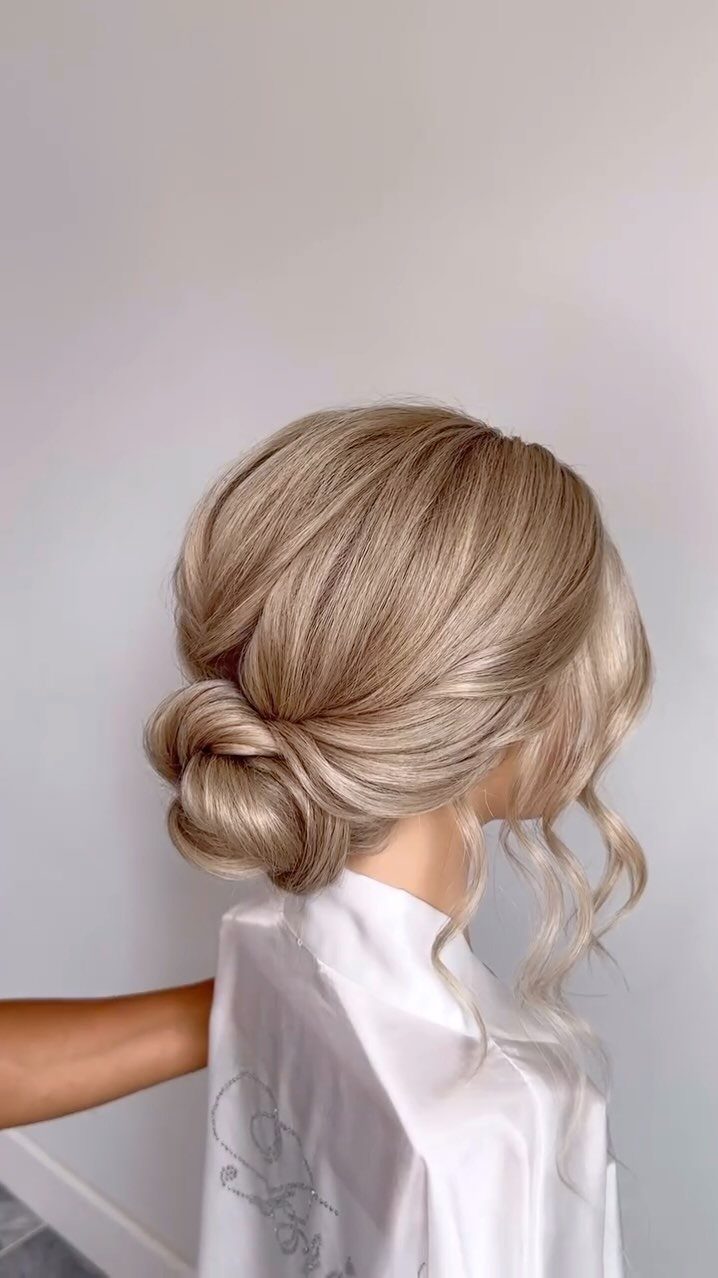
This bun looks like it’s been worn for a few hours rather than freshly pinned. The texture sits loose and the finish is intentionally imperfect, which suits a relaxed outdoor wedding or a less structured dress.
Skip the heavy smoothing products and build the bun with your hands, leaving some pieces uneven. A few face-framing curls soften the edges without making the style read as messy.
The lived-in finish holds better on hair with a little natural texture or wave. Fine, straight hair may need a texturizing spray first to give it enough grip.
14. Twisted Low Bun
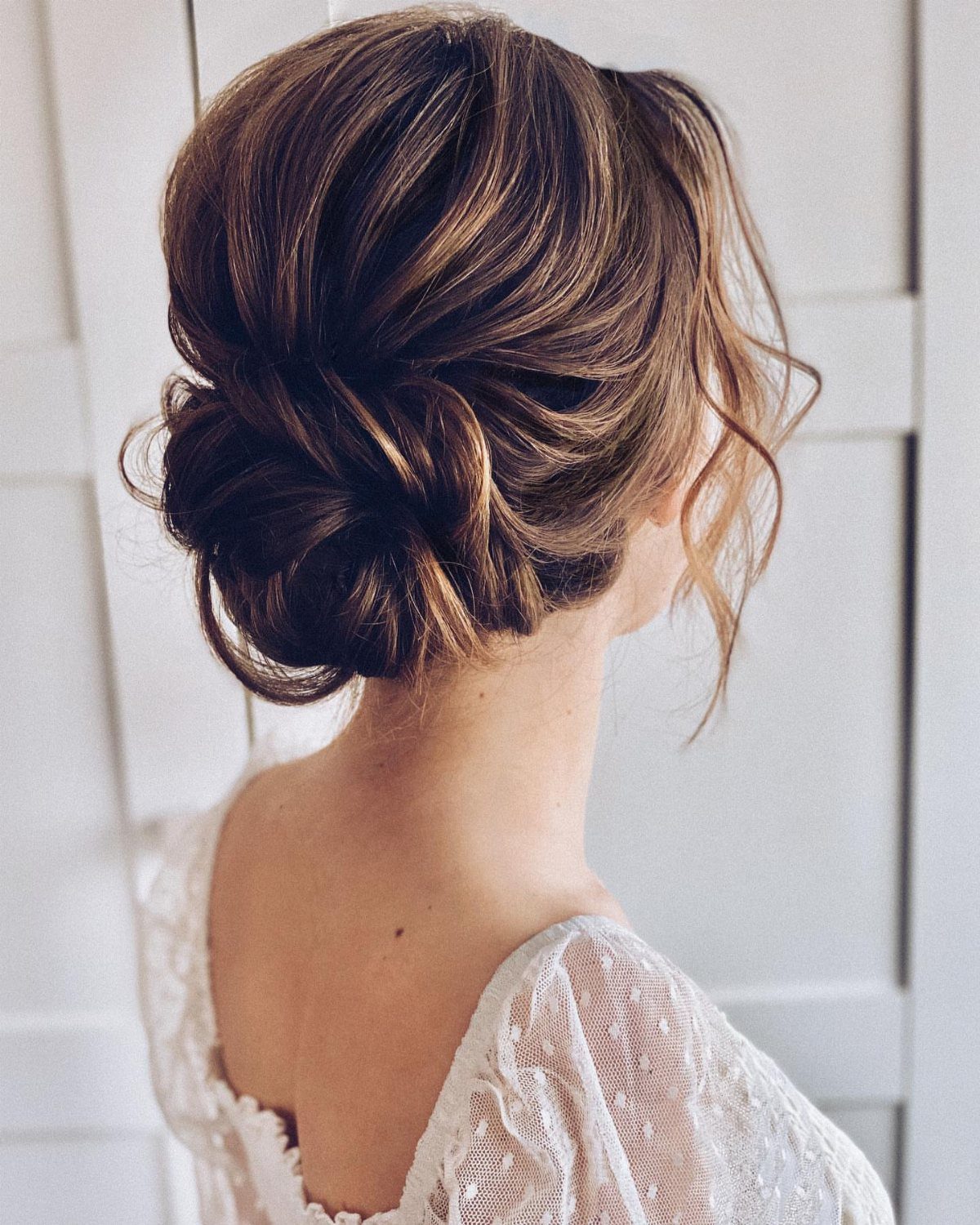
Sections of hair are twisted before gathering them into the bun, which adds visual interest without needing accessories. The twisted pattern holds fine hair in place and gives the bun a tailored finish.
Twist small sections individually as you pin them, working from the sides toward the center. The twists can sit flat against the head or stack into the bun itself, depending on how much volume you want.
A side-swept curl or 2 keeps the look from reading too severe. It fits well with silk or crepe if the event runs into evening.
15. Low Bun with Pearl Pins
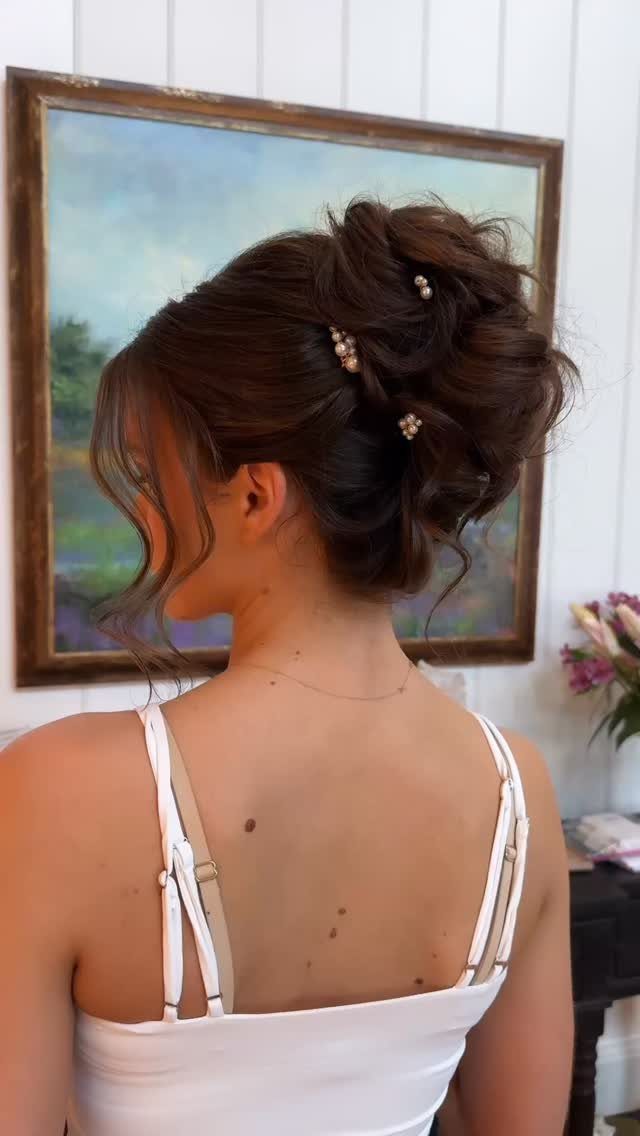
Small pearl pins scattered through a textured bun add a subtle bridal detail without covering the hair itself. The pins catch light as you move, which reads well in photos.
Pin the bun first, then slide the pearl pins in one at a time, spacing them unevenly rather than in a grid. Angle them so the pearl sits flush against the hair rather than sticking out.
Pearl pins suit ivory or champagne gowns and work with both warm and cool skin tones. They stay in place better than clips and won’t snag fine hair.
16. Low Bun with a Floral Hairpiece
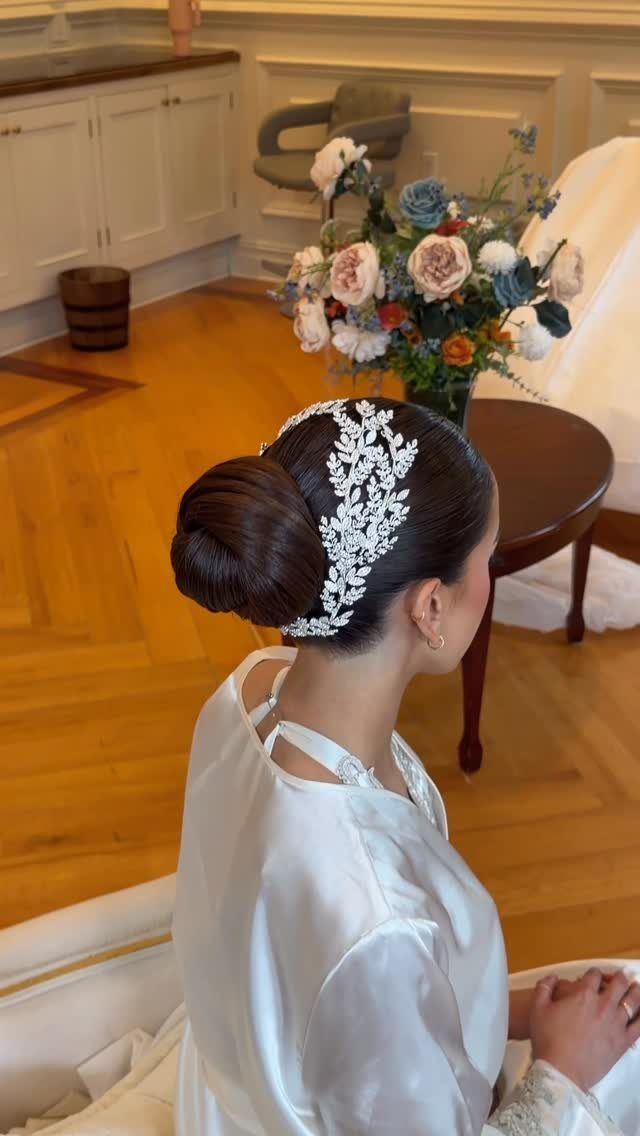
A floral lace hairpiece anchors at the base of the bun and adds dimension without competing with the dress. The white lace suits a formal ceremony and photographs cleanly against most hair colors.
Slide the hairpiece in after the bun is secure, positioning it slightly off-center if you want it visible from the front. A few pins through the lace hold it in place without damaging the fabric.
Fresh stems work outdoors; silk holds up better indoors under heat. You can take it out once photos are done and still have a clean updo underneath.
17. Low Bun with a Side-swept Curl
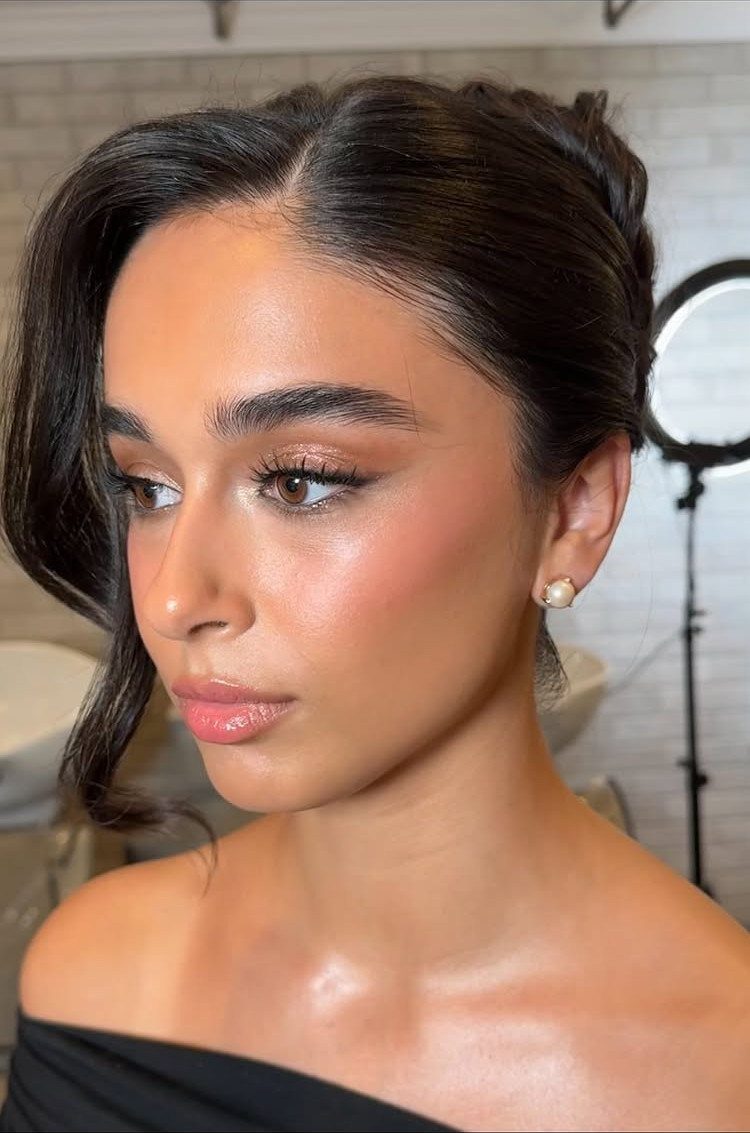
One loose piece frames the face on a single side instead of falling evenly. The contrast between the smooth bun and the defined curl adds drama without requiring a full updo.
Curl the side section with a medium-barrel iron before pinning the bun, and set it with a flexible-hold spray so it moves naturally.
Cut it a little past where you want it to sit; the wave tightens up after a few minutes.
The off-center shape works well if your face tapers at the chin, and it clears space for a bold earring.
Frequently Asked Questions
Can you do a sleek low bun with curly hair?
Curly hair takes more work to smooth into a sleek low bun, and some texture may still show through.
Curls tend to revert to their natural pattern as the day progresses, and the texture will show through no matter how much you smooth it down.
A textured or curly low bun works better because it uses the natural volume instead of fighting it.
Should a sleek low bun have a middle or side part?
Either works, and the choice comes down to personal preference. A middle part is currently more popular and gives a symmetric, polished look, while a side part softens the face and adds asymmetry.
How you usually wear your hair matters too, since you’ll be most comfortable with the part you’re used to seeing.
How does beach wedding hair hold up on a windy day?
A properly built updo holds through wind, heat, humidity and salt air, but some movement is normal in beach conditions.
The hairstyle will shift slightly as the day goes on, which is worth expecting. A strong structure keeps the bun intact while allowing it to move naturally rather than looking stiff or damaged.
How to secure a wedding veil with or without a comb?
A veil with a comb slides directly into the hairstyle and holds in place once the teeth are anchored.
A veil without a comb or clip is sewn into the hair using pins, which takes more skill but gives a secure hold.
Position the veil at the base of the bun or slightly above it, depending on where you want the fabric to fall.
Can you have a wedding hairstyle with short hair?
Short hair works fine; the style just shifts to suit what length and cut you have.
A low bun requires enough length to gather at the nape, but shorter hair works well with other updos, pinned curls, or textured styles that don’t need a full bun.