
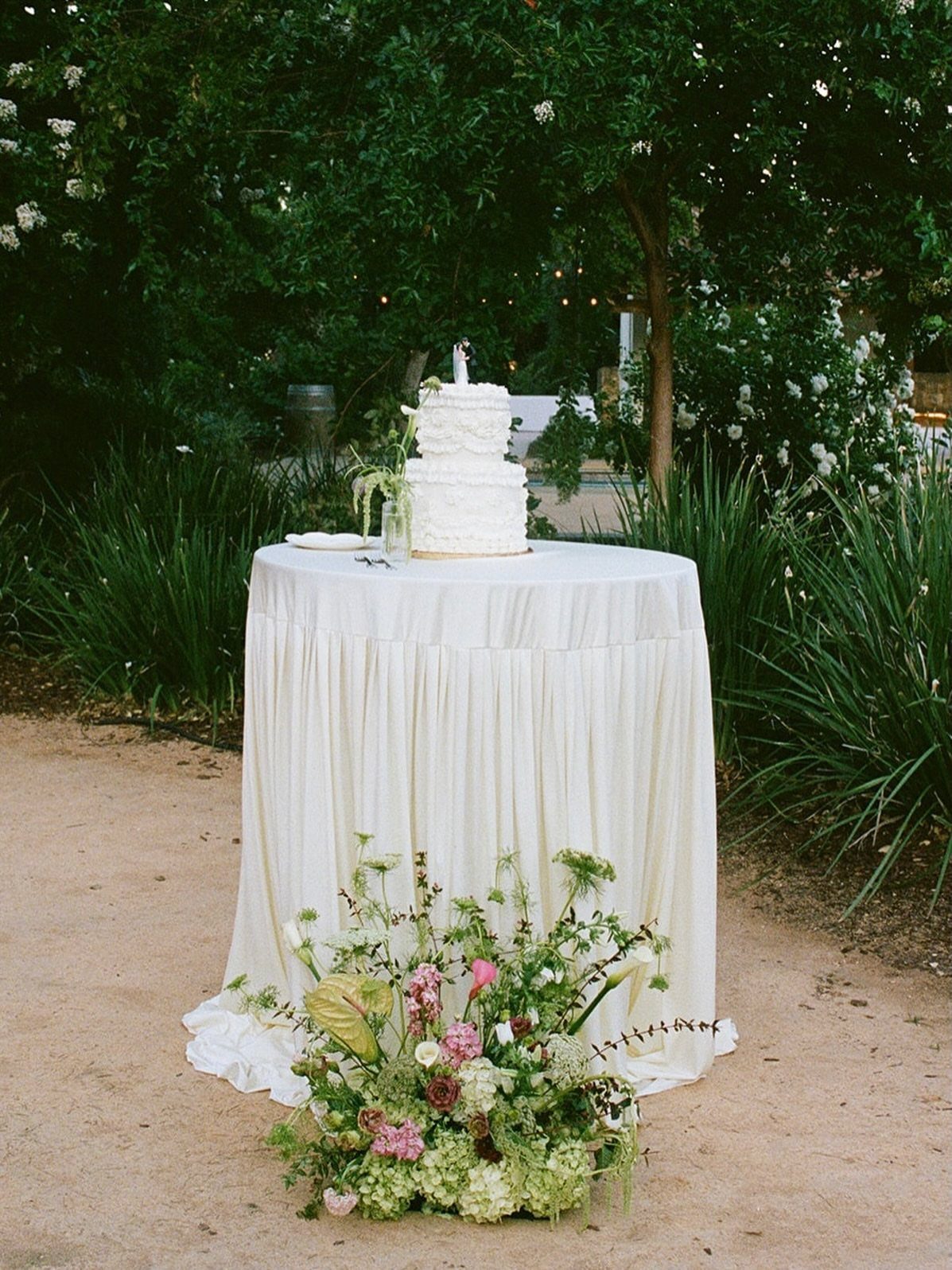
Ivory tablecloth coverage ranges from lap-length drape at 90 inches to floor-length at 120 or 132 inches, depending on whether your tables measure 60 or 72 inches across.
Polyester resists wrinkles better than linen, which matters when you’re setting up the morning of without time to steam.
1. Satin Tablecloth
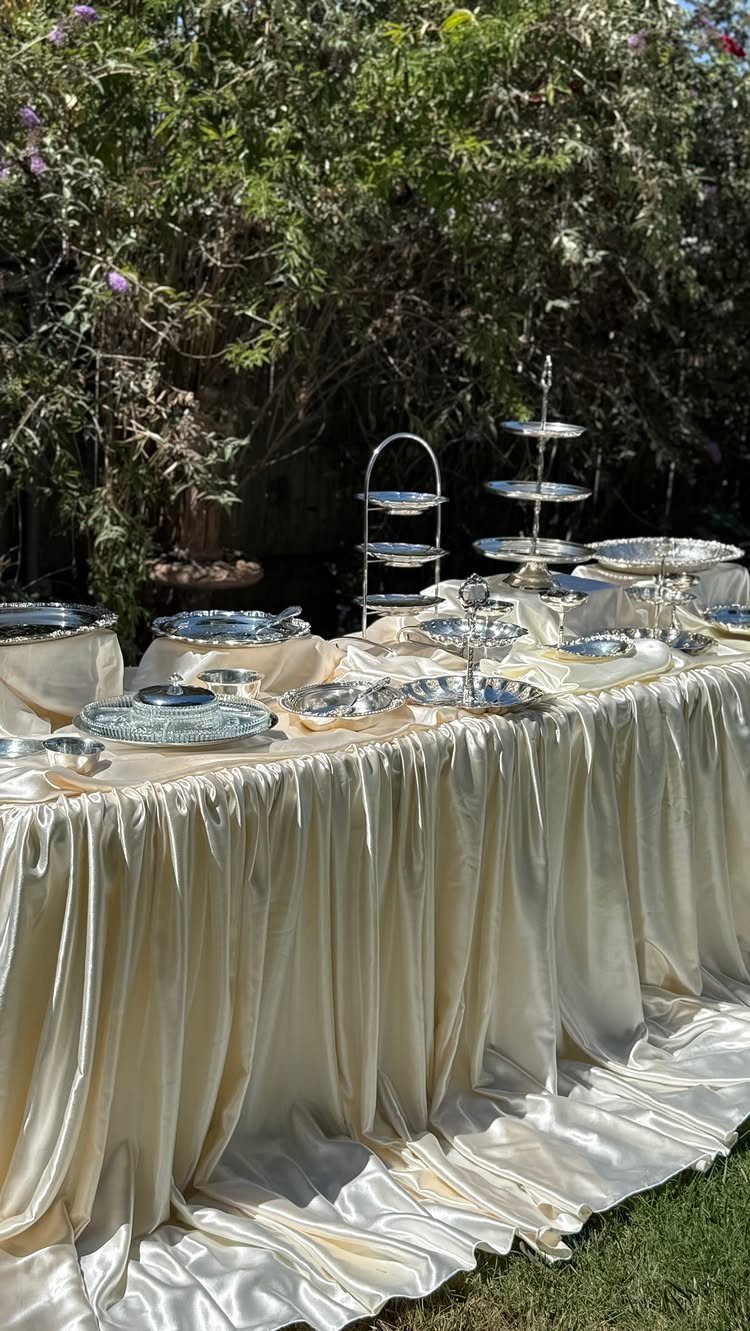
Satin catches light in a way cotton and polyester blends do not, which makes the whole table read as more polished even when the centerpiece stays simple.
The surface holds a slight sheen without feeling costume-heavy, and spills wipe clean faster than matte fabric.
Most satin tablecloths come in standard rectangle and round sizes. If the table legs show, tuck or pin the hem at each corner to keep the drape clean.
2. Round Ivory Tablecloth
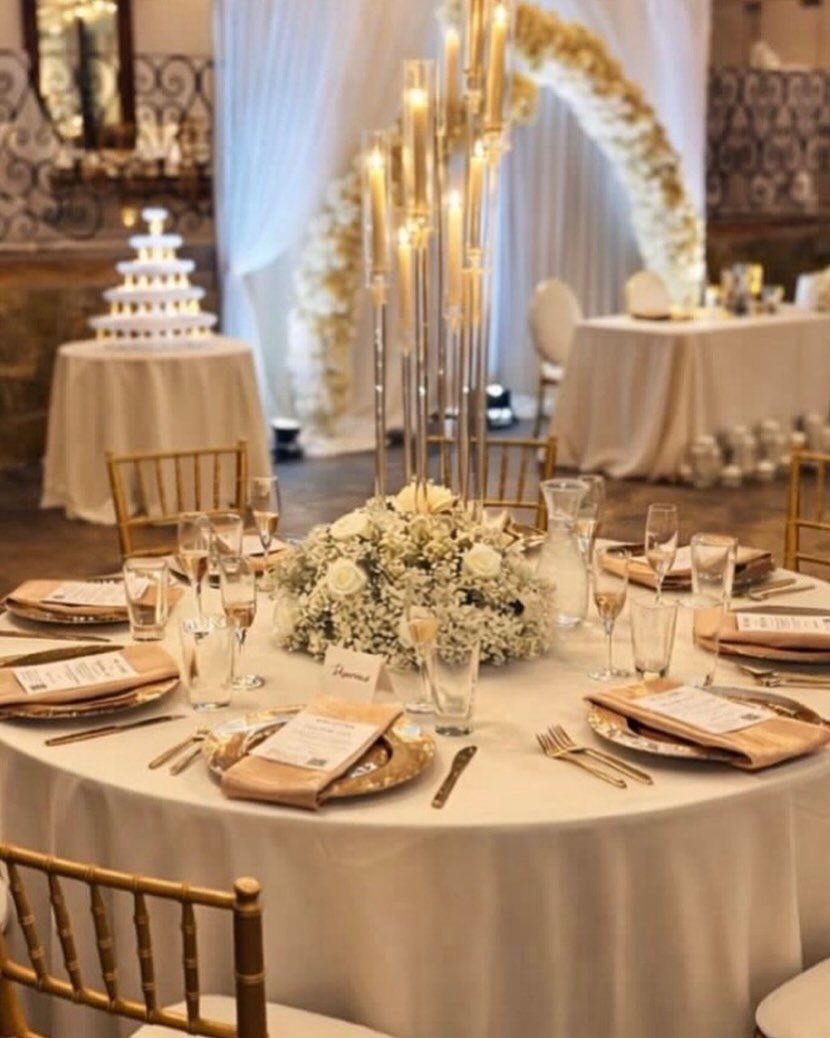
Round cloths are sized to the table diameter plus the drop you want on all sides.
A cloth that size covers a cocktail table with a long drop. For a 60-inch guest table, a 120-inch cloth gives you a floor-length look.
Most suppliers list the table size each cloth fits, so you can match coverage without doing the math yourself. Order one extra if you are covering a gift or cake table that was added late.
3. Ivory Linen Tablecloth
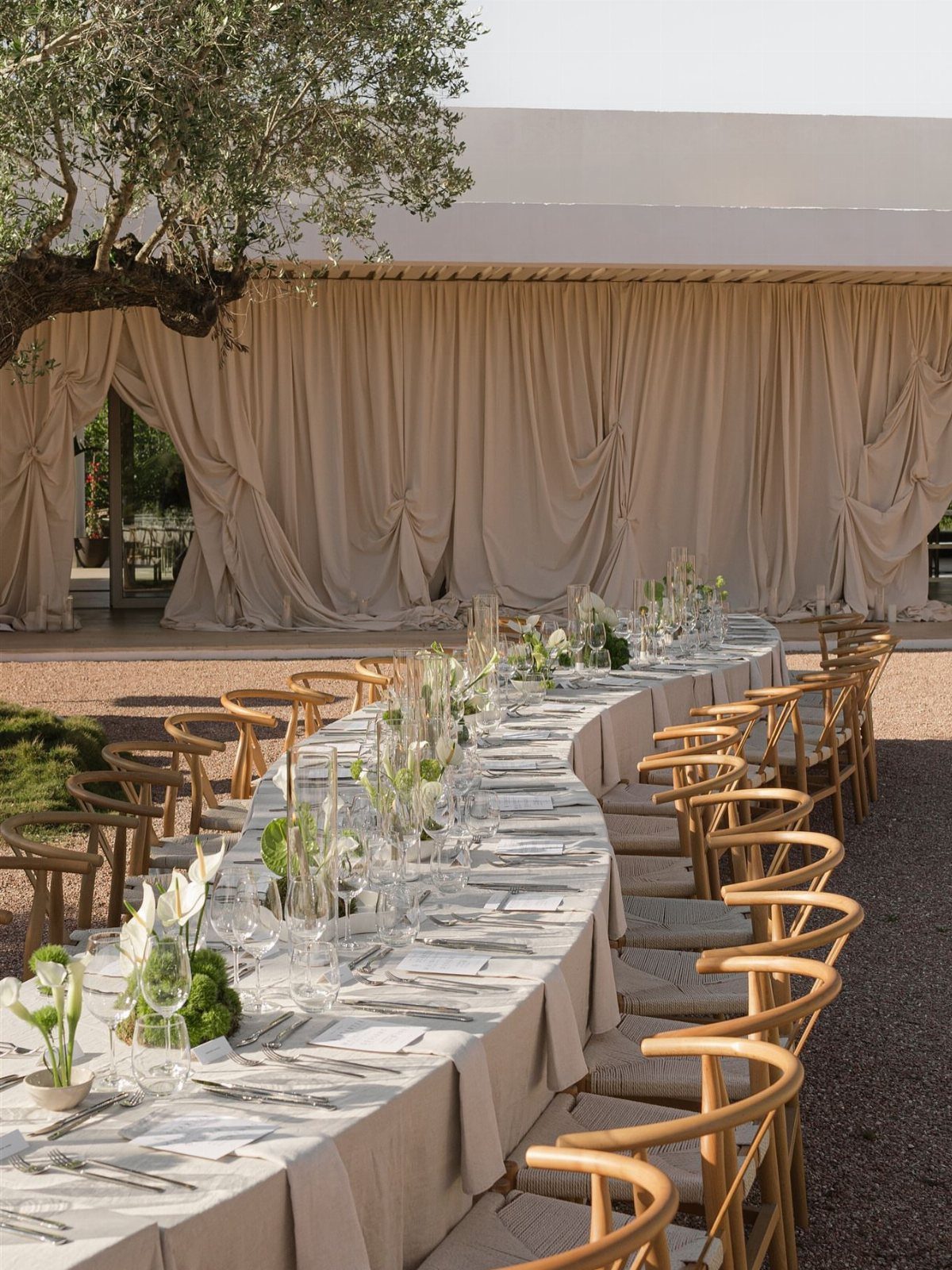
Linen wrinkles more than polyester, and that texture reads as intentional rather than messy when the rest of the table leans romantic or garden-inspired.
The fabric softens over the course of the event, which I prefer to something that stays stiff all night.
If you are renting, ask whether the linen comes pressed or if you will need to steam it on-site. Owned cloths can be ironed damp, then laid while still slightly warm.
4. Floor-Length Ivory Tablecloth
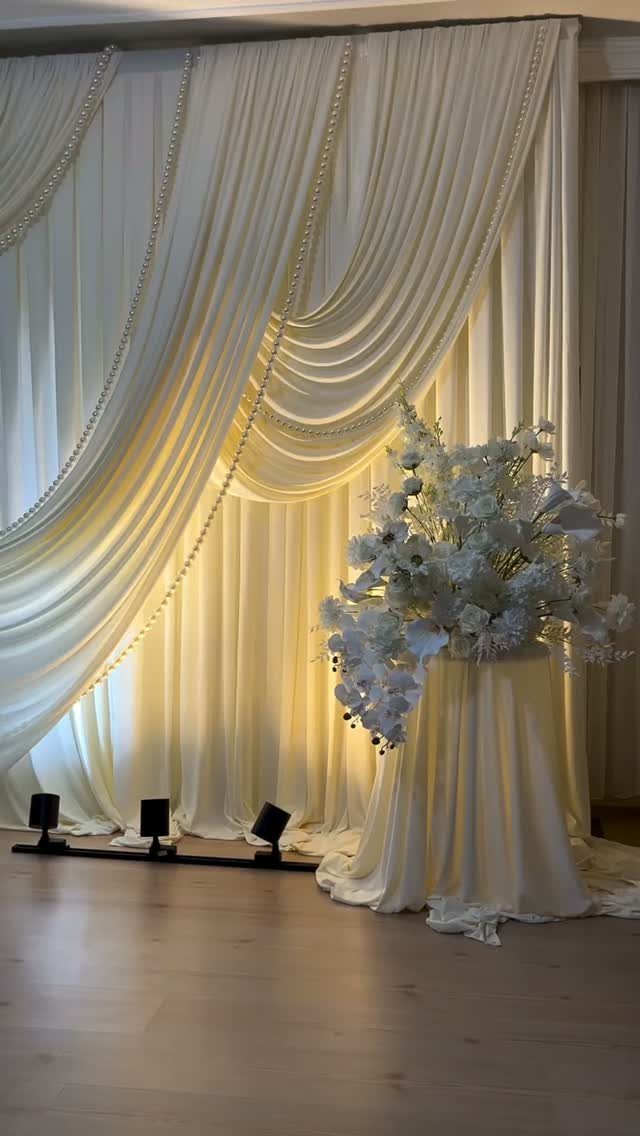
A cloth that reaches the floor hides folding table legs, storage bins, and anything else you have tucked underneath.
That coverage makes a mismatched table collection look uniform, which matters more in a rented hall than in a venue with matching furniture already.
Measure from the tabletop to the floor, multiply that by two and add the table width to find the cloth size you need. A table that height takes a 120-inch round cloth when the diameter is 60 inches.
5. Table Overlay
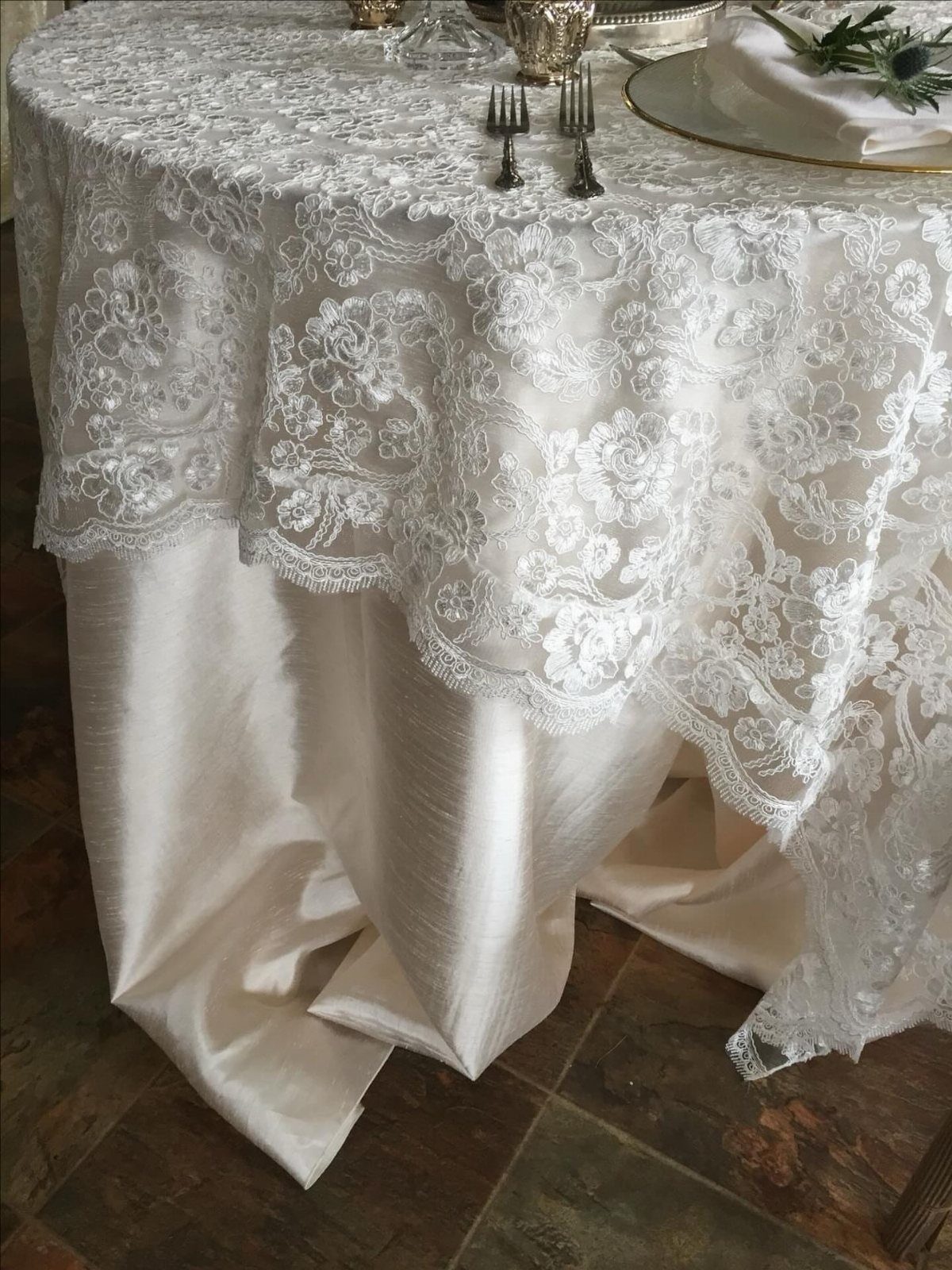
An overlay adds pattern or texture without replacing the base cloth, which is faster to set up than layering 2 full-size tablecloths and trying to keep both edges even.
Lace over satin gives you contrast in finish, and a shorter overlay shows a border of the base color on all sides.
Most overlays are sized smaller than the table diameter, so a lace square sits centered on a round cloth with room showing at the edges. Pin at the corners if the overlay shifts during setup.
6. Gathered Ivory Tablecloth
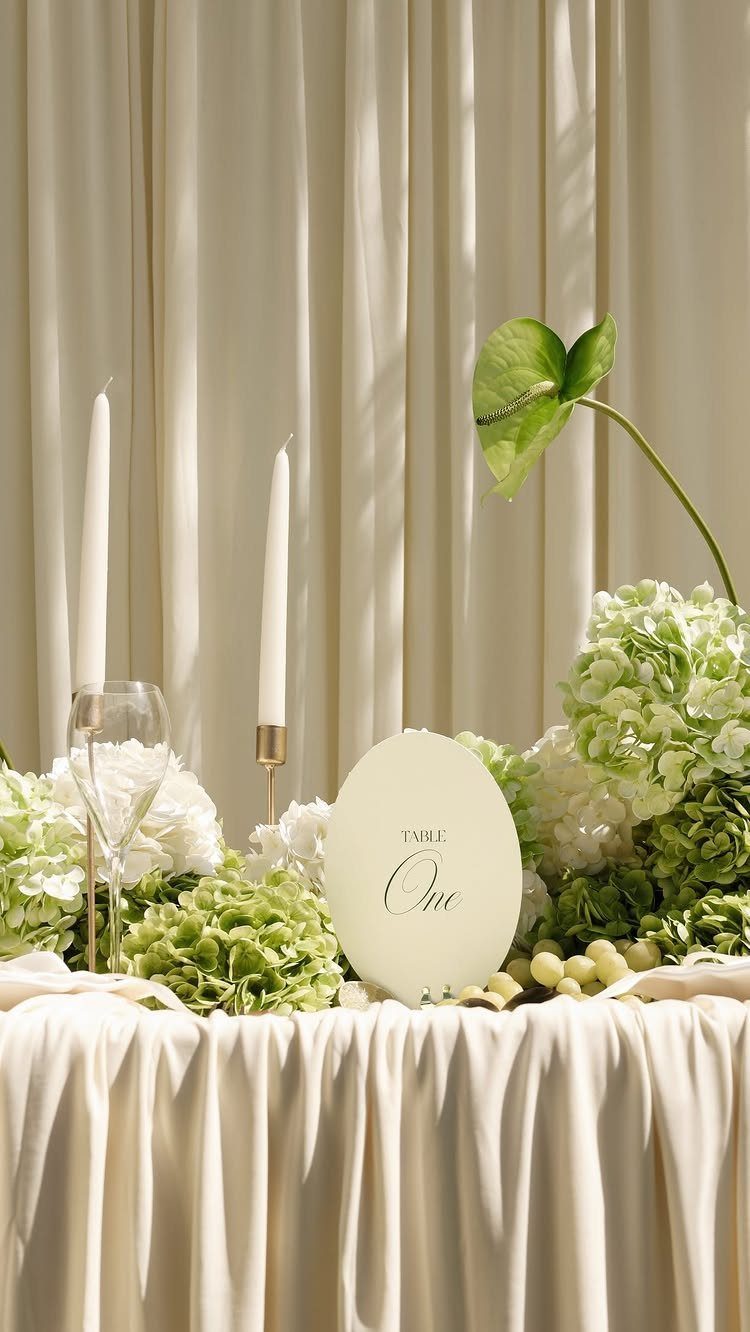
Gathered fabric is usually clipped or pinned along the table edge to create soft vertical folds, which gives the skirt more volume than a flat drape.
The gathers hide the table base completely, and the technique works on round or rectangular tables.
Space the gathers evenly around the perimeter and secure each fold with a safety pin on the underside of the cloth. A longer cloth makes deeper gathers, so size up for more texture.
7. Ruffled Ivory Tablecloth
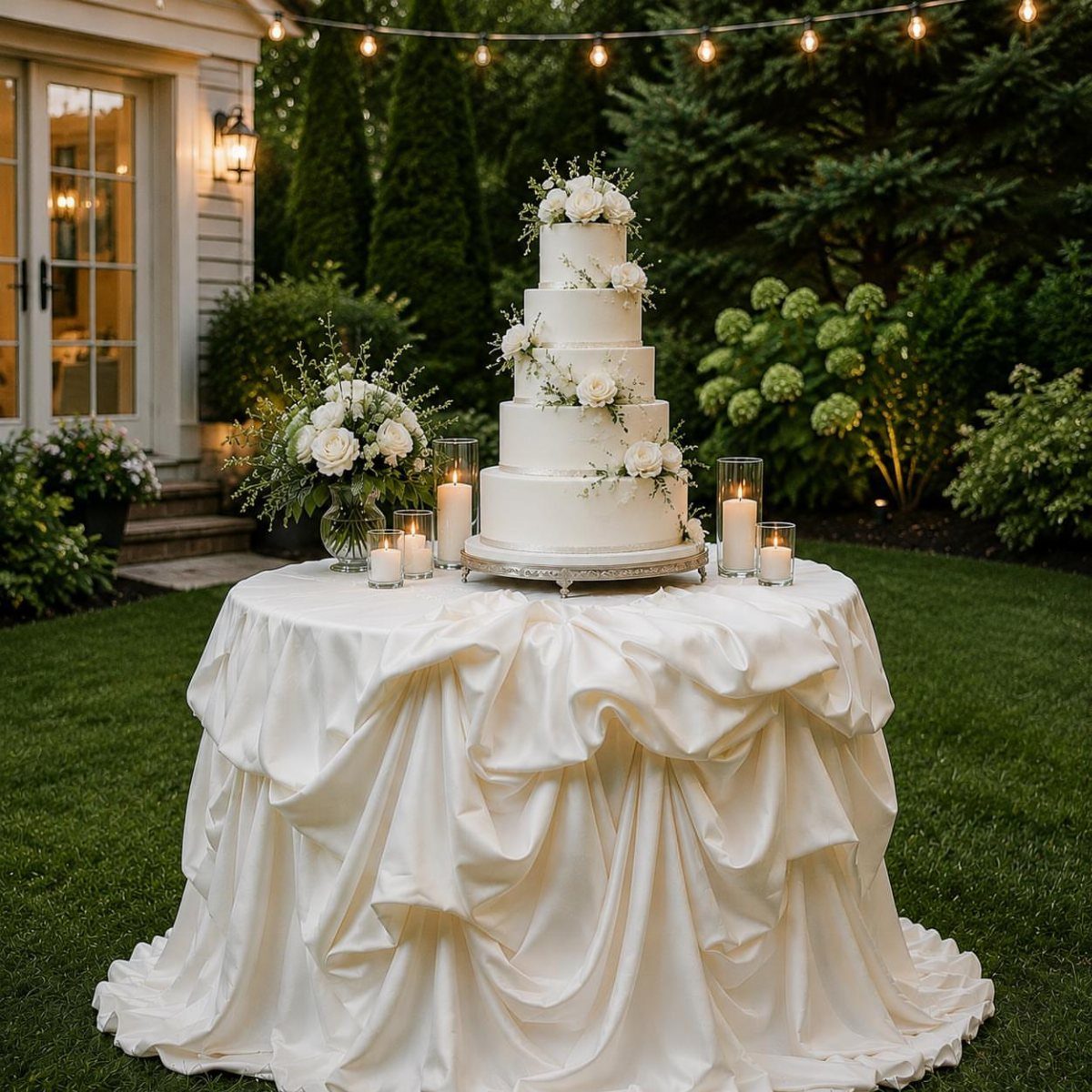
Ruffles add texture and movement that a flat cloth cannot, which gives the table more presence when the cake sits directly on the cloth without a riser or stand.
The tiers soften the line where the cloth meets the table edge, and the volume hides the legs completely.
Most ruffled cloths are sized for round tables and come gathered all the way around.
If you are making your own, gather the fabric edge with elastic thread and pin the ruffle to the base cloth at intervals to keep it from sagging between pins.
8. Ivory Lace Tablecloth
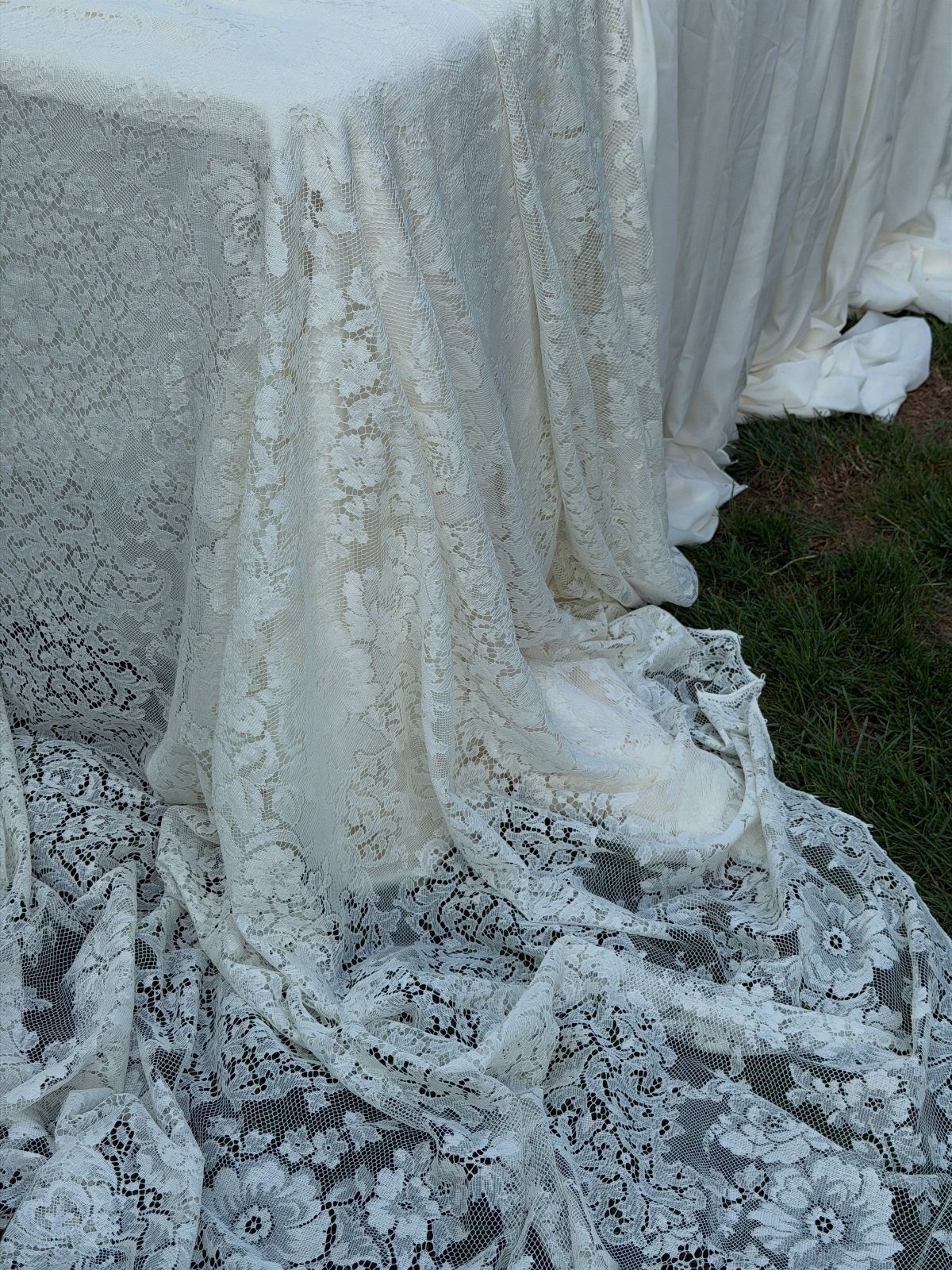
Sheer lace shows the surface underneath, so pair it with a solid undercloth if the table itself is scuffed or mismatched.
When the cloth pools on the grass, the extra length gives the setup a more romantic look than fabric that stops at the table edge.
Most lace cloths are delicate enough that they snag on rough surfaces, so lay them last after the table is in position.
If you are setting up outdoors, clip the edges to keep wind from lifting the cloth off the table.
9. Ivory Tablecloth with Lace Border
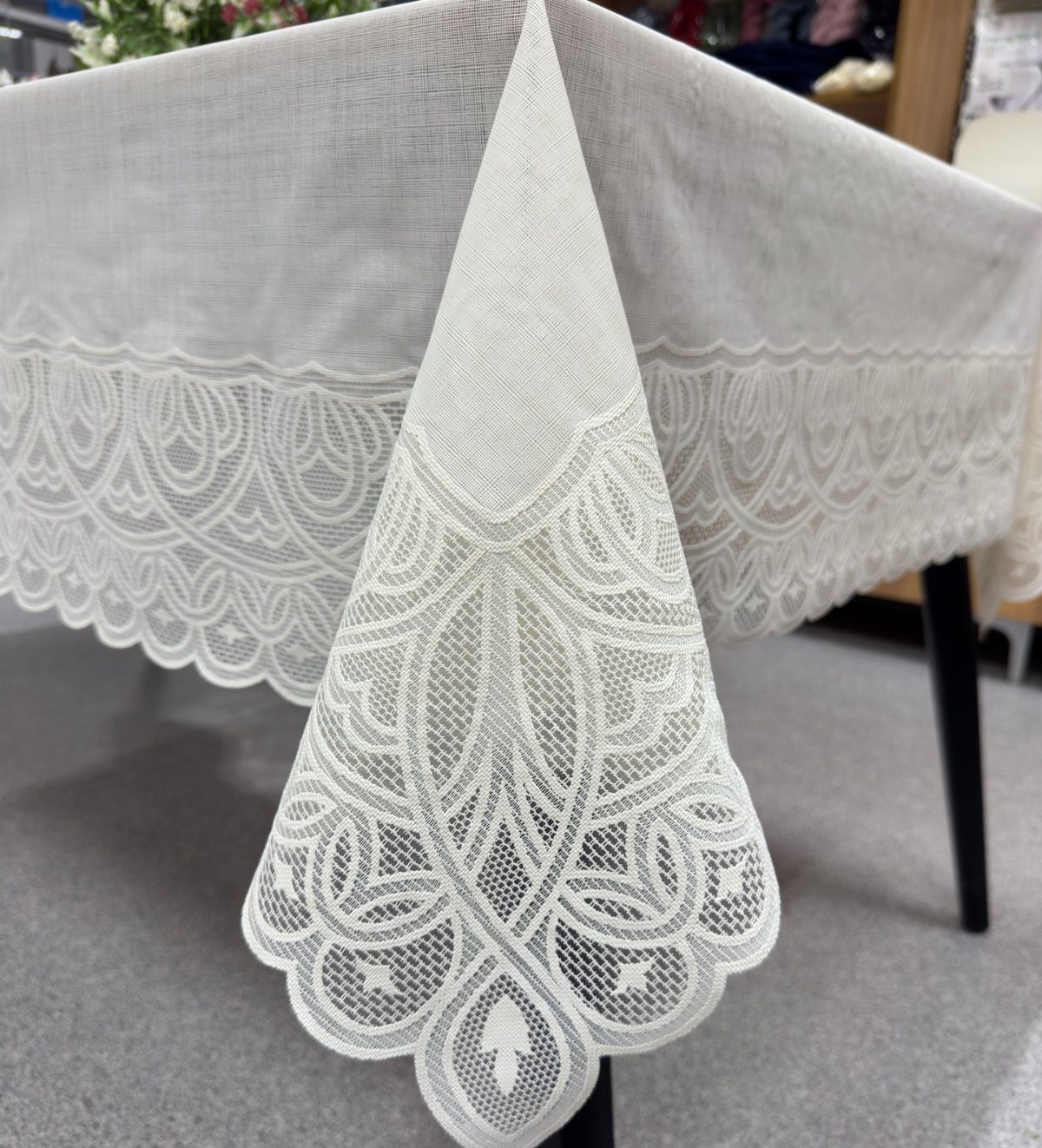
A lace border gives you pattern at the edges and leaves the center plain for place settings and centerpieces.
The scalloped edge softens the line where the cloth ends, and the border width sets how much lace shows when the cloth is draped.
If the border is wide, size up so the lace clears the table edge and shows when guests sit down.
10. Ivory Tablecloth with Gold Lace
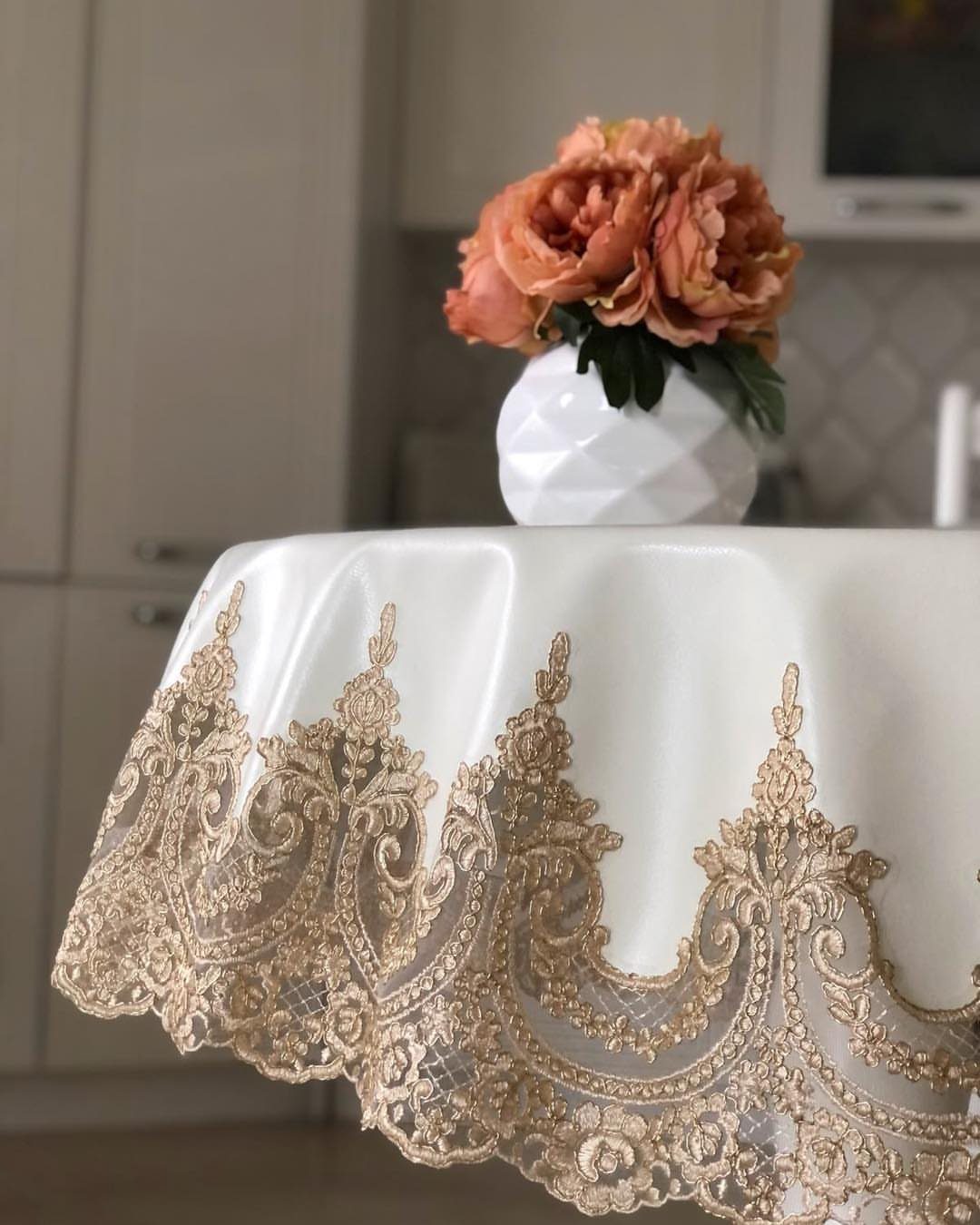
Gold lace reads warmer than white or silver, which suits a setup with brass candlesticks or warm-toned florals better than cool metallics.
The embroidery sits along the hem, so coverage needs to reach the floor or at least below the table edge for the detail to show.
If you are adding your own trim, measure the circumference and buy extra to account for any gathers or folds at the corners.
11. Ivory Tablecloth with Black Accents
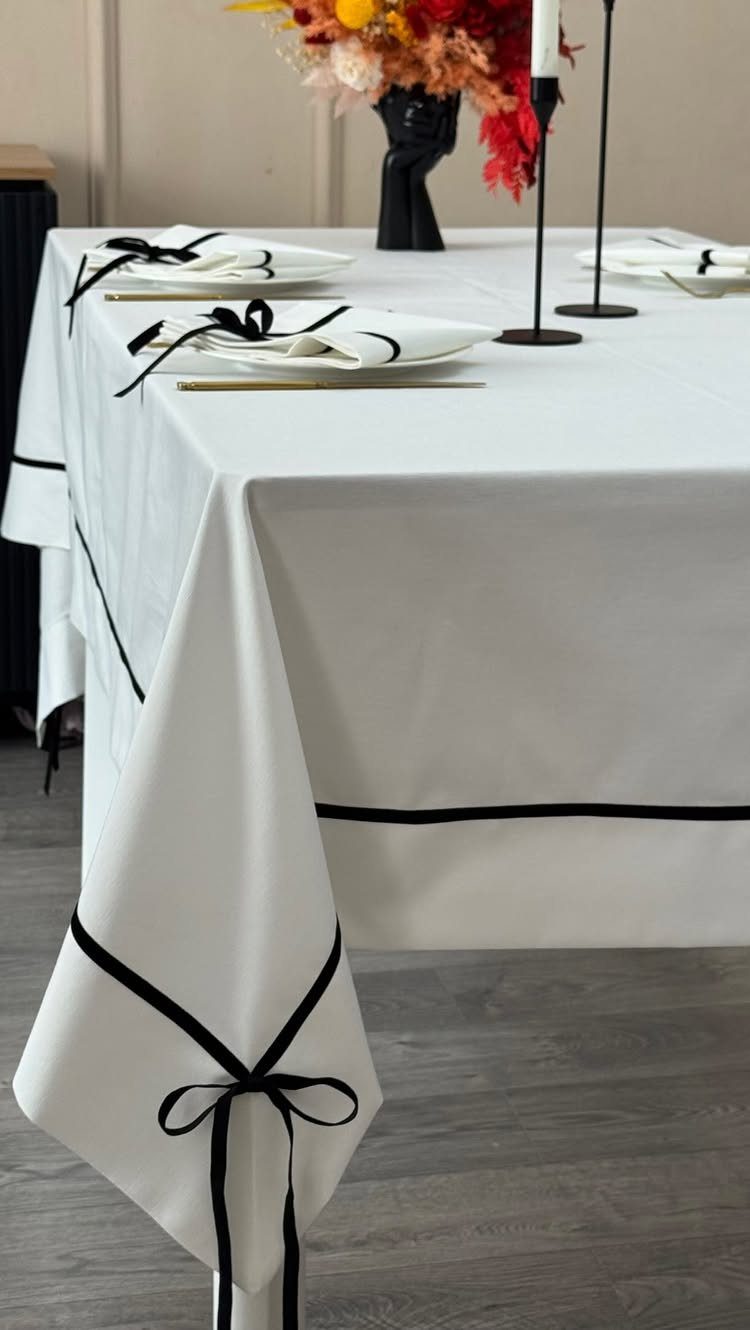
Black trim or bows frame the table and create contrast that reads formal without needing a dark wall or backdrop. The black anchors lighter centerpieces and keeps the setup from looking washed out when everything else stays pale.
Most ivory cloths with black accents come plain, so you add the ribbon yourself. Satin ribbon holds a bow better than grosgrain, and pinning the bows at even intervals around the table edge keeps the spacing consistent.
Choosing Tablecloth Coverage
Check the listing for table-size guidance rather than doing the math yourself. Most suppliers list which tables each cloth fits, and those charts distinguish between the 60-inch rounds that take a 120-inch cloth and the 72-inch rounds that need 132 inches.
Measure the height of your table from top to floor, then pick your drop length.
A cloth sized for floor length on a 60-inch table gives you lap-length coverage on a 72-inch table, so the size you order depends on the look you are after.
If you are covering multiple tables and one was added late, order an extra cloth in the same dye lot.
Ivory shifts between warm and cool depending on the fabric and the batch, and matching them after the fact is harder than ordering all at once.
Tablecloth Care and Durability
Polyester holds up to repeated washing better than linen, and most 100% polyester tablecloths are stain- and wrinkle-resistant. The care tag specifies warm water and low-temperature drying, which keeps the fabric from losing its finish over time.
If you are buying for a single event, economy polyester costs less than linen and still photographs well. The 150 GSM weight is thick enough to drape without transparency, and the hemmed edges stay flat after washing.
Linen needs more care.
It wrinkles faster than polyester and often arrives needing a press, so factor in time to steam or iron before the event. The texture softens with use, which I prefer, but it is not the low-maintenance option.
Budget and Event Uses
Economy polyester tablecloths are the affordable choice for one-time events or casual celebrations where the cloth does not need to hold up to repeated laundering.
The no-frills construction keeps the price low, and most options are described as suitable for occasional use rather than weekly dinners.
Ivory linen costs more and is listed for weddings, anniversaries, showers, and other formal occasions where the fabric texture matters as much as the coverage.
If you are hosting multiple events in the same season, linen justifies the higher up-front cost because it stays crisp and looks better over time than budget polyester.
Frequently Asked Questions
Should I do white or ivory tablecloths for a wedding?
Ivory reads warmer and hides minor stains better than bright white, which makes it the safer choice when you are covering multiple tables or hosting outdoors.
White stays crisper and pairs better with cool metallics, so it works when your palette leans silver or the venue already has white chairs.
Order all your cloths at the same time, since ivory can shift warm or cool from one fabric batch to the next.
What is the best color for a wedding tablecloth?
Ivory fits most wedding palettes because it pairs with both warm and cool accent colors and lets centerpieces and place settings take focus.
It photographs well in natural light and hides wear better than bright white, which matters when you are renting or reusing cloths across multiple tables.
If your setup includes gold, brass, or warm florals, ivory reads more cohesive than stark white.
How much do tablecloths typically cost for a wedding?
Economy polyester is priced for single-use or casual events where the cloth doesn’t need to survive repeated washing. Ivory linen costs more at purchase but survives laundering and stays usable longer if you’re hosting several events in the same season.