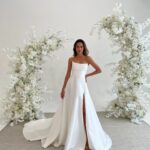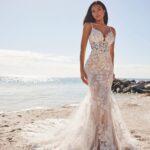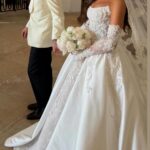
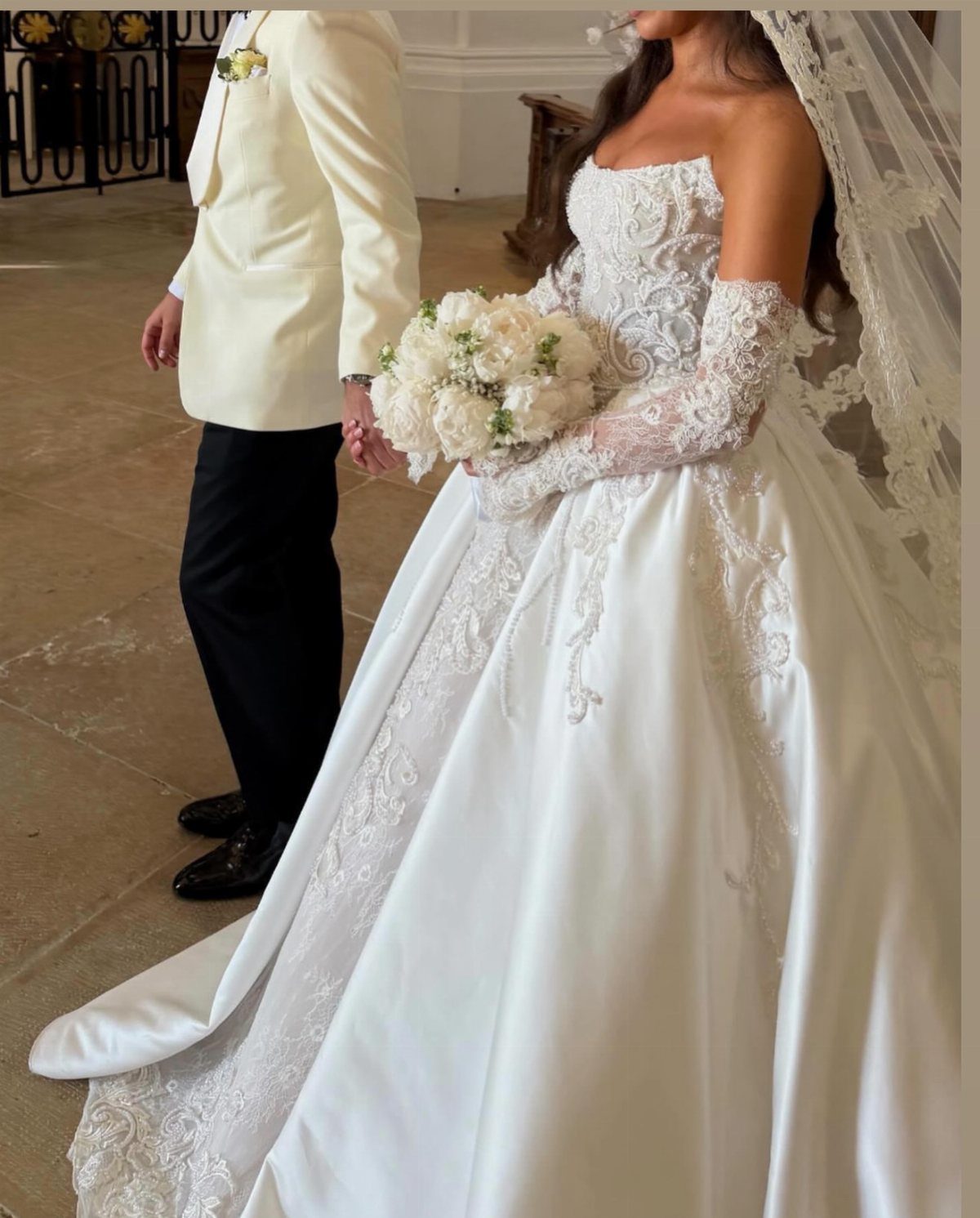
September wedding attire runs from tea-length lace to satin ballgowns with dramatic veils, and guest dresses range from silk slips to floral maxi gowns with draped one-shoulder necklines.
Temperatures shift through the day in fall, so an outdoor ceremony that feels comfortable at 3 PM can leave you cold by 7 PM at the reception.
1. Long Sleeves
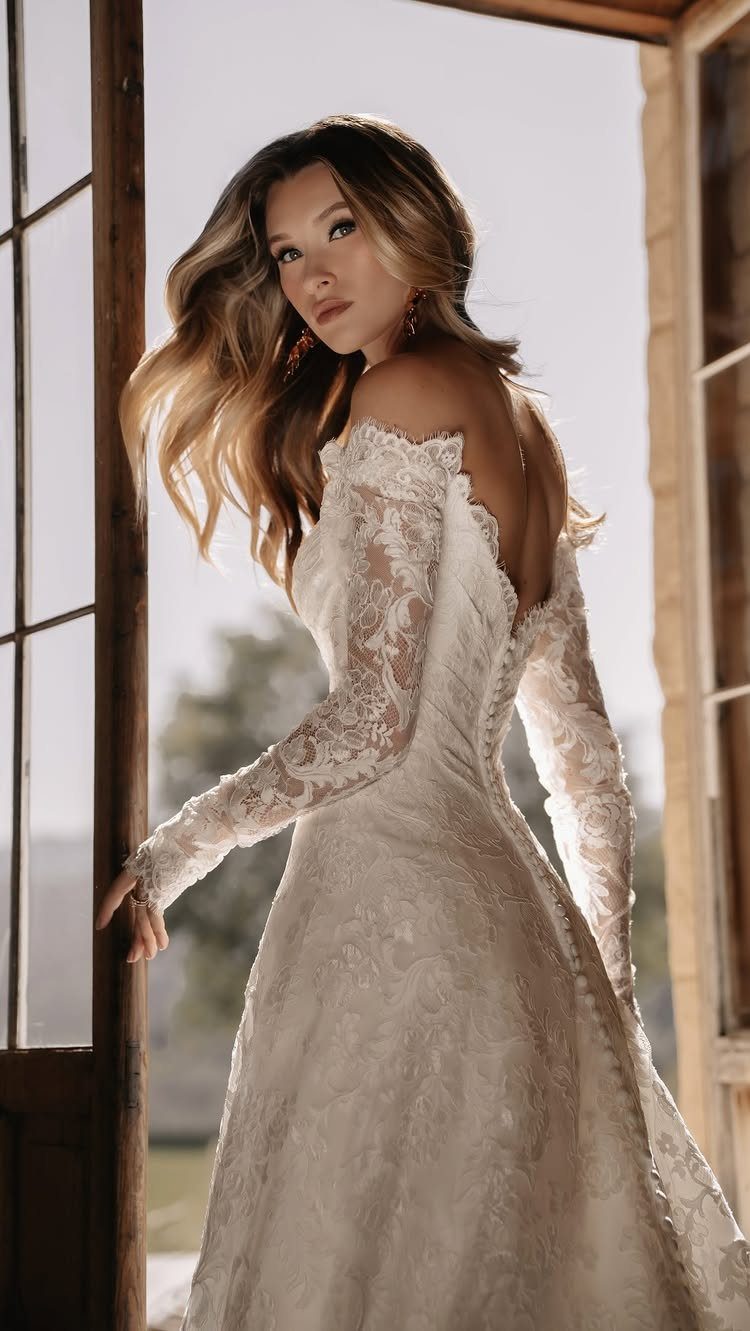
Sleeves suit a September ceremony when the forecast stays cool or you want coverage that still feels formal. The lace here fits a garden or estate wedding and reads bridal without extra layers.
If you run warm or the venue stays heated, short sleeves or cap sleeves give you the same line with less fabric. Long sleeves in lace or tulle stay lighter than crepe or satin.
2. Floor-length Gown
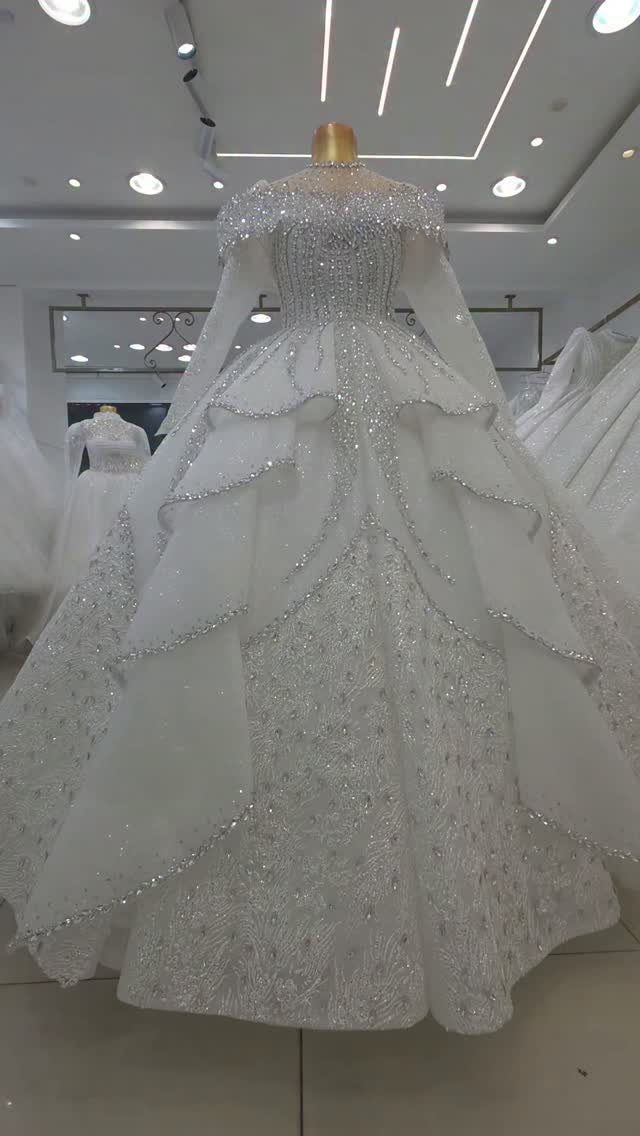
A floor-length hem belongs at formal indoor venues and evening ceremonies. The beaded tiers here add texture without a train, so you get detail that moves and a skirt that clears the floor on its own.
September weather lets you wear a gown like this without overheating, and the length suits a ballroom or historic hall better than a hemline that stops short.
If your venue has stairs or uneven ground, practice walking in the skirt before the day.
3. Shimmering Lace Gown
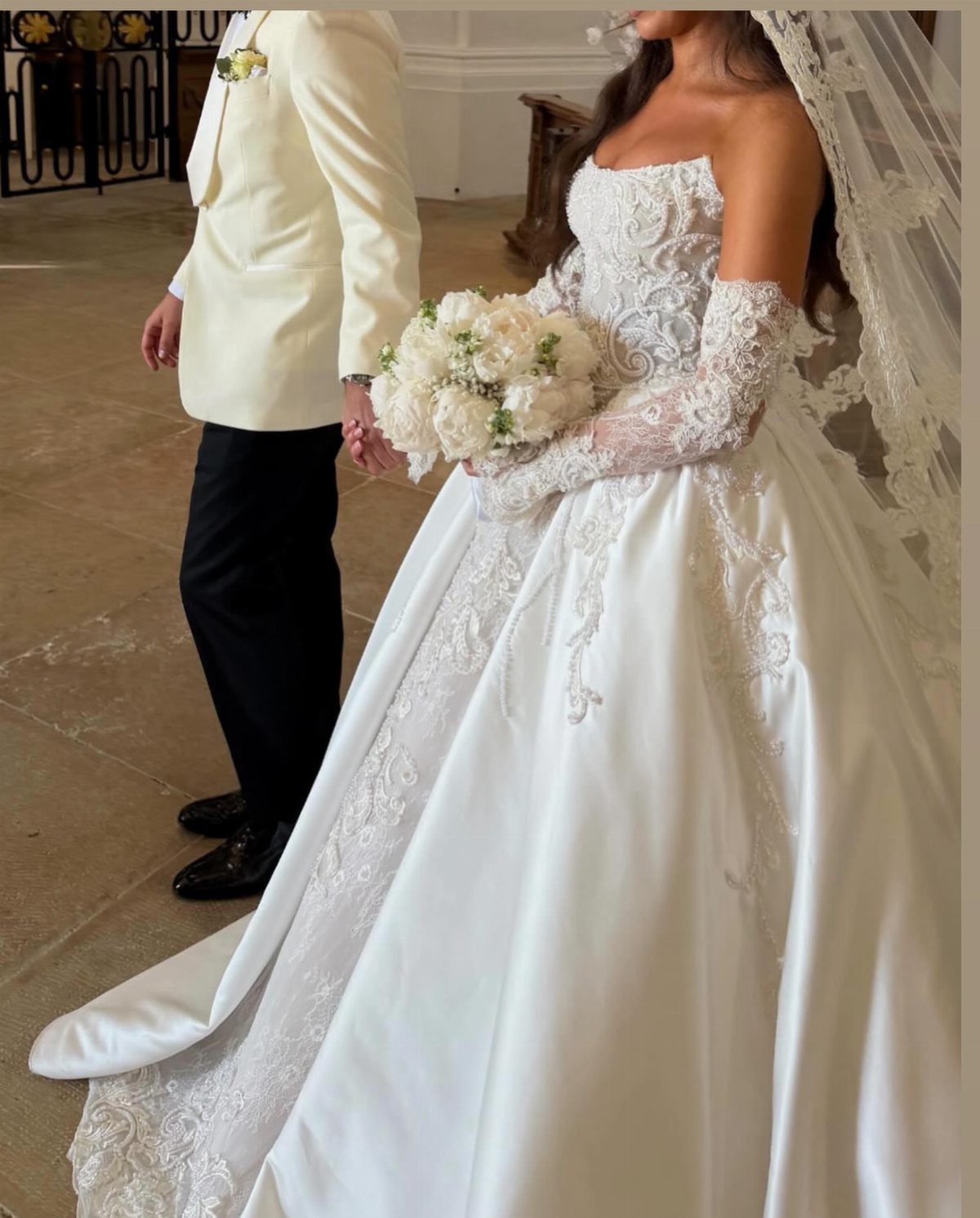
Lace that catches light suits a low-lit venue or an evening ceremony in early fall.
Detachable sleeves let you start with coverage for the vows and drop them at the reception, which solves the September temperature problem without carrying a jacket.
The shimmer reads formal but stays softer than full beading, and you get one gown that works two ways. If you want sleeves that stay on, look for the same lace sewn directly into the bodice.
4. Satin Ballgown
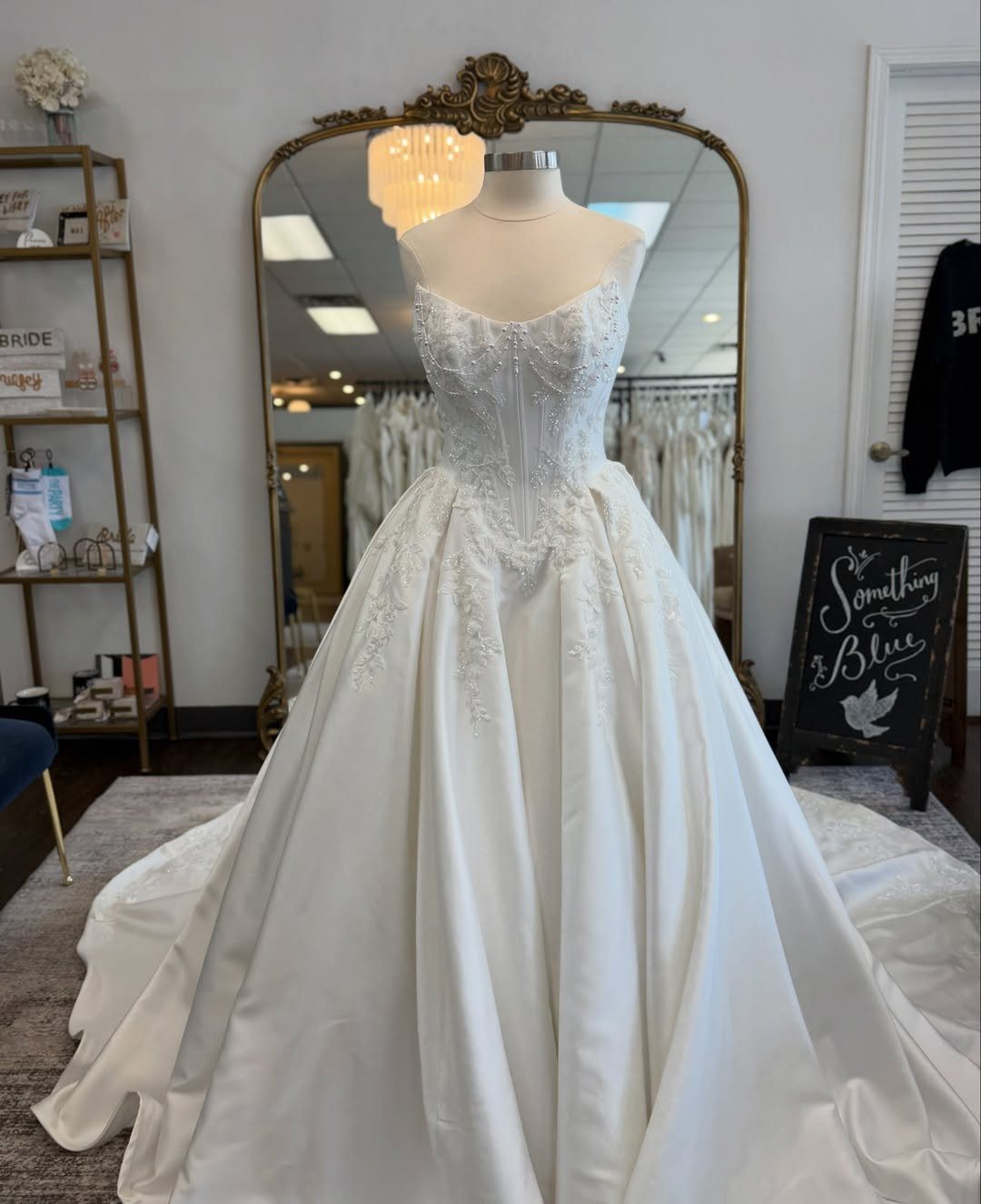
A ballgown skirt in satin holds its shape through a long day and suits a formal September wedding indoors.
Three-dimensional lace on the bodice adds detail you can see from a distance, and the combination of textures keeps the gown from reading flat in photos.
Satin this heavy stays formal and works best in a venue with space to move. If your ceremony or reception involves narrow aisles or tight seating, an A-line skirt in the same fabric gives you the finish without the volume.
Simkhai’s two-toned pleated gown and Tove’s ruby red satin number come to mind. Keep reading for more of the best fall wedding guest dresses that’ll get you excited to RSVP “yes.”
— Vogue
5. Tea-length Dress
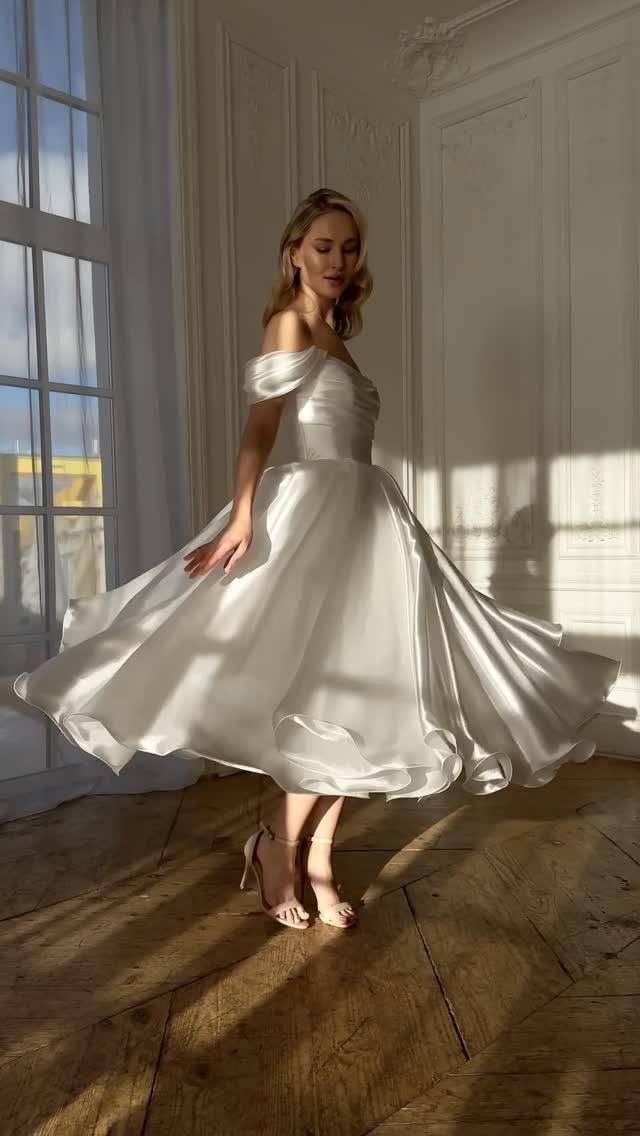
A tea-length hem works at semi-formal September weddings and garden or vineyard ceremonies where a long skirt picks up dirt. The off-the-shoulder neckline here reads bridal, and the shorter length lets you wear statement shoes that actually show.
This hemline suits petite brides and outdoor settings with uneven ground. If your venue stays formal or you want a gown that photographs traditional, go floor-length instead.
6. A-line Silhouette
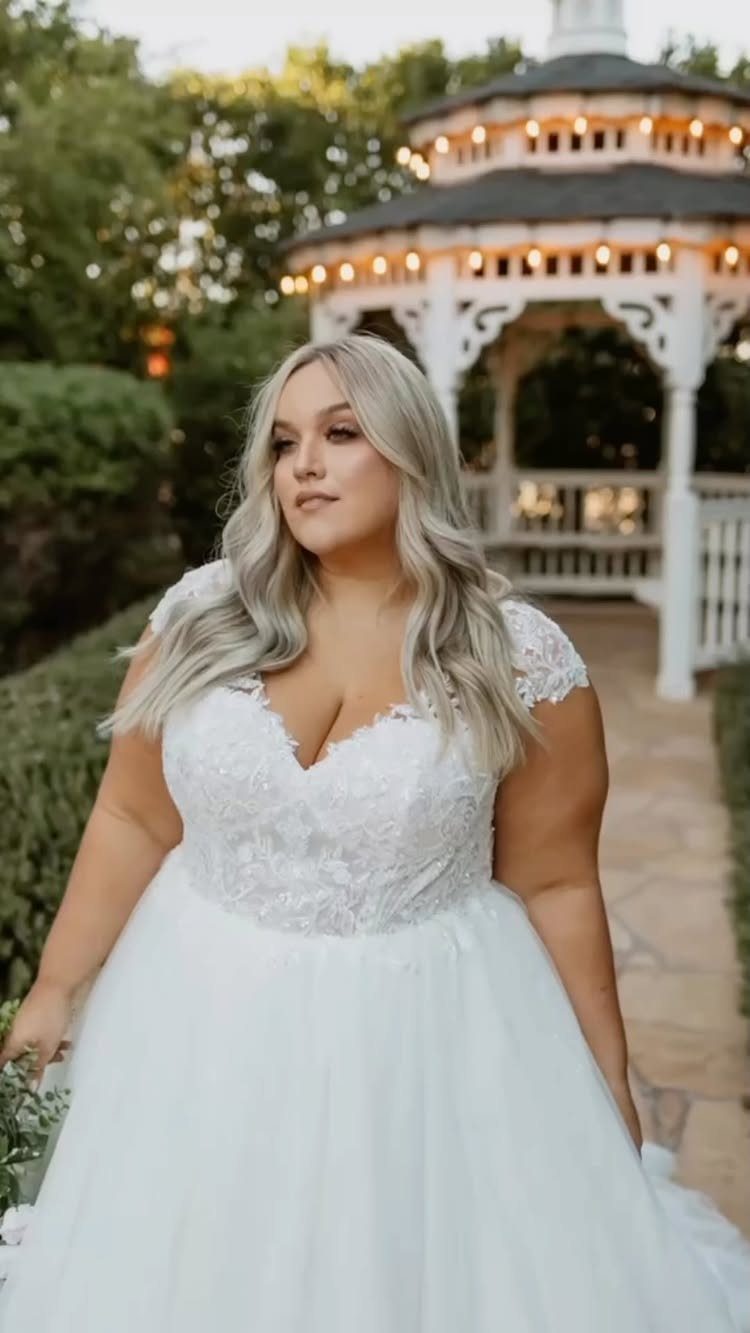
An A-line skirt fits most body types and moves easily through outdoor venues and reception spaces with mixed seating.
The shape here in lace suits a September garden ceremony or a historic venue, and it photographs well without reading as costume.
If you want more structure, look for the same silhouette in mikado or crepe. If you want less volume, a fit-and-flare gown gives you a similar line that stays closer through the hips.
7. Asymmetrical Satin Wedding Guest Dress
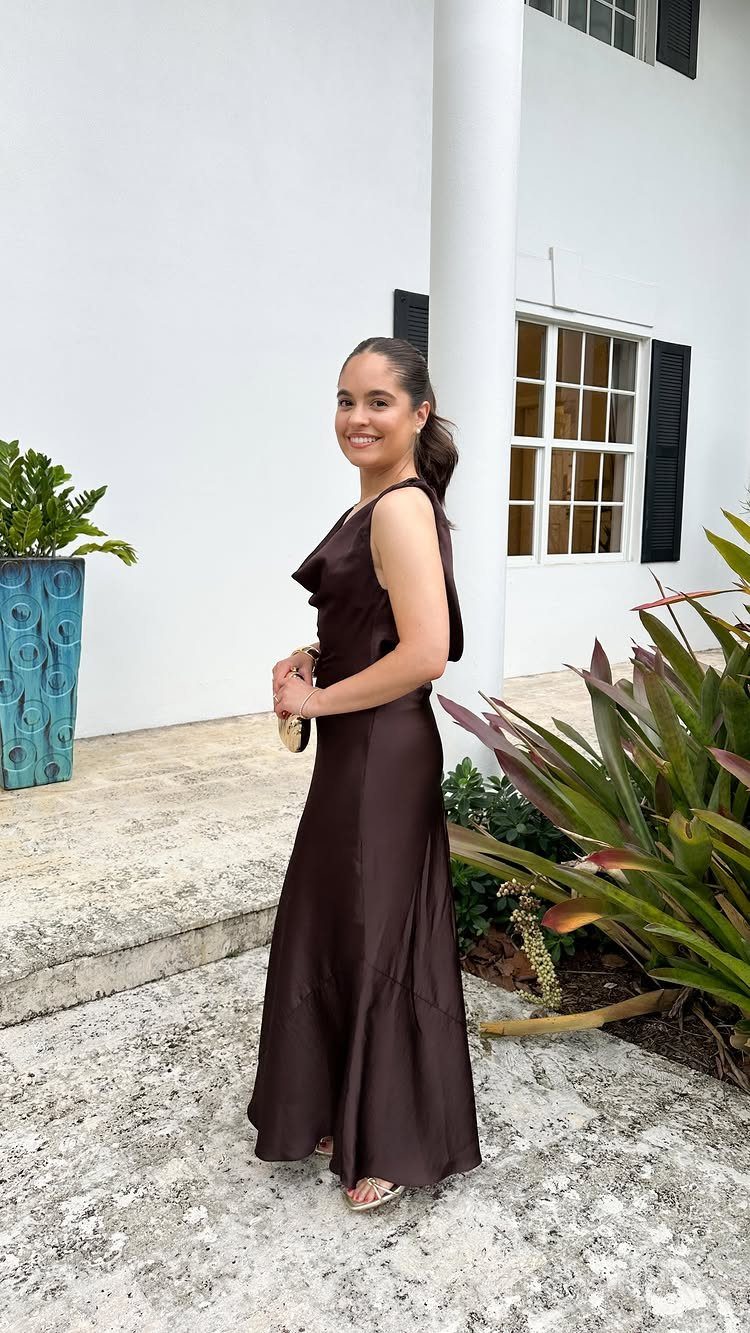
An asymmetrical hem in satin drapes in a way that suits a semi-formal September wedding and photographs well from multiple angles. The one-shoulder or side-swept neckline that usually comes with this cut balances the silhouette.
This style works at outdoor venues and cocktail-dress events where a floor-length gown reads too formal.
If the ceremony runs late afternoon into evening and temperatures drop, bring a wrap that covers your shoulders without breaking the line of the dress.
8. Silk Slip Wedding Guest Dress
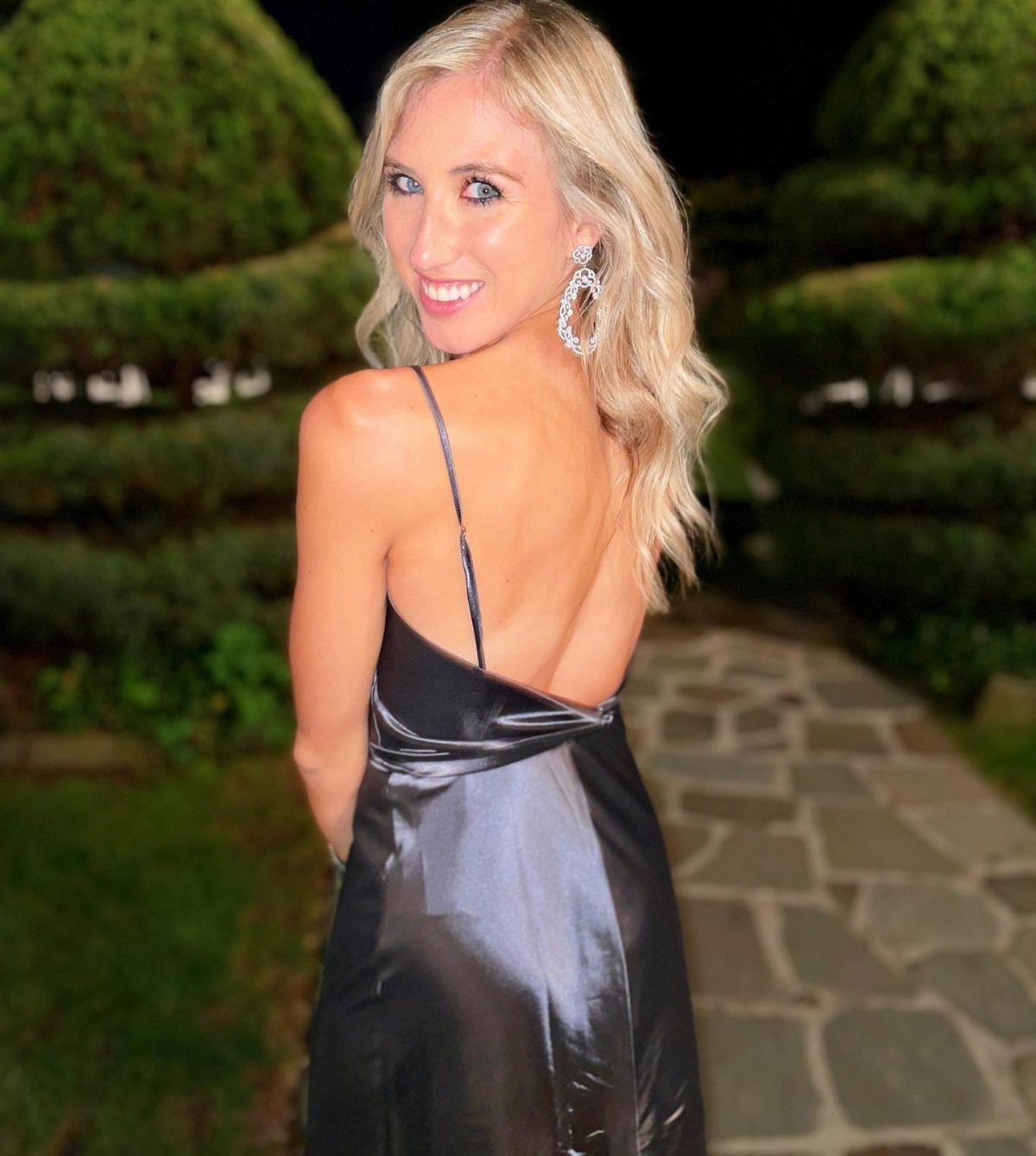
A silk slip dress fits September guest attire when the dress code stays cocktail or semi-formal and the venue is indoors. The narrow straps and bias cut here suit evening ceremonies, and the fabric moves without adding bulk.
If you need more coverage for a religious ceremony or a cooler outdoor venue, layer a tailored blazer or a fine knit cardigan over it.
The slip works best on its own in heated spaces or at receptions that start after sunset.
9. Draped One-Shoulder Wedding Guest Dress
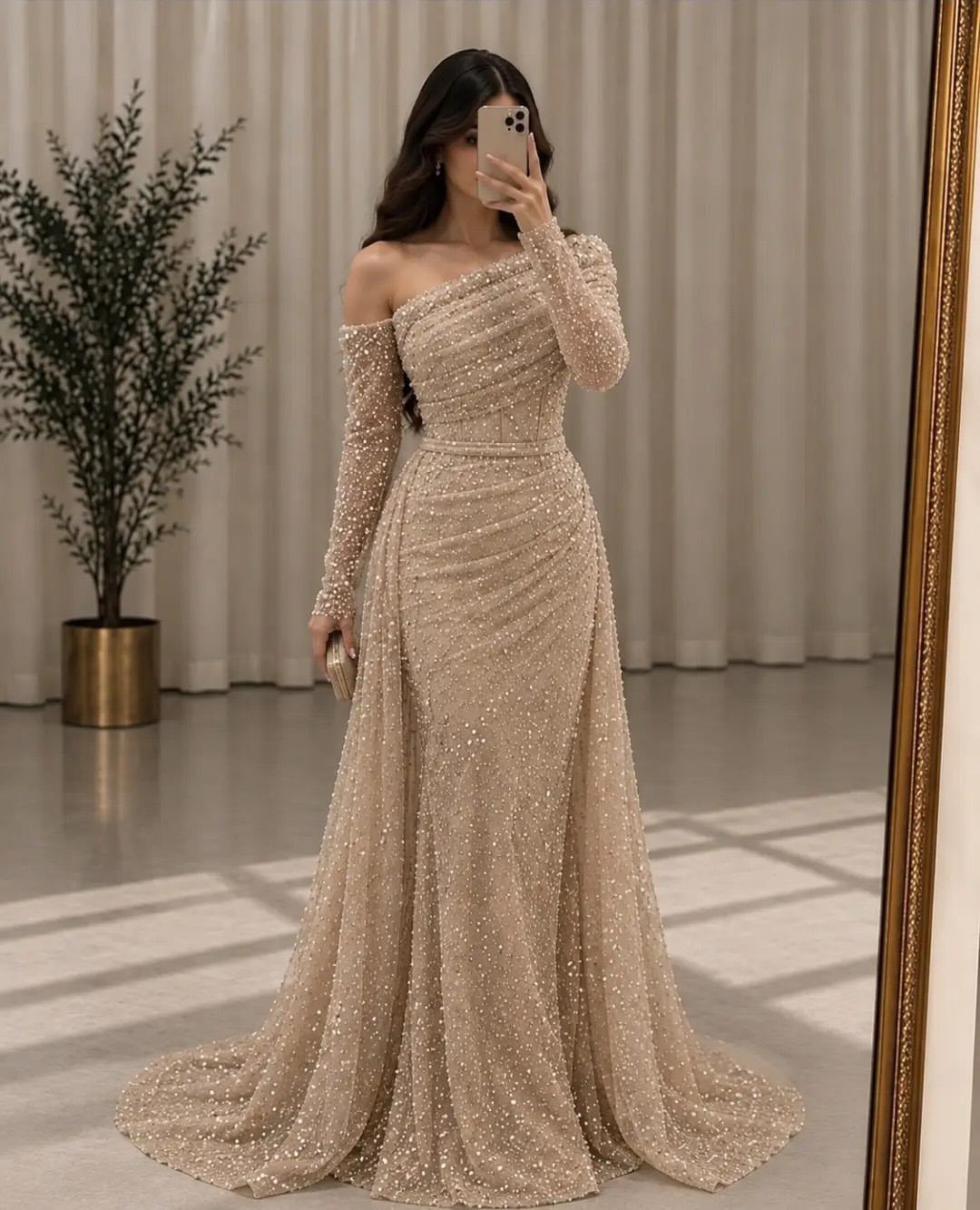
A one-shoulder neckline with draping gives you coverage on one side and a clean line on the other, which suits formal September weddings and black-tie-optional events.
The champagne shimmer here works in low light and photographs well, flattering but not pulling focus from the bride.
The single sleeve solves the September temperature problem better than strapless styles, and the draping hides fit issues at the waist.
If the ceremony is outdoors and temperatures drop, you lose the asymmetry the moment you add a wrap, so this style works best at indoor venues.
10. Long-Sleeve Maxi Wedding Guest Dress
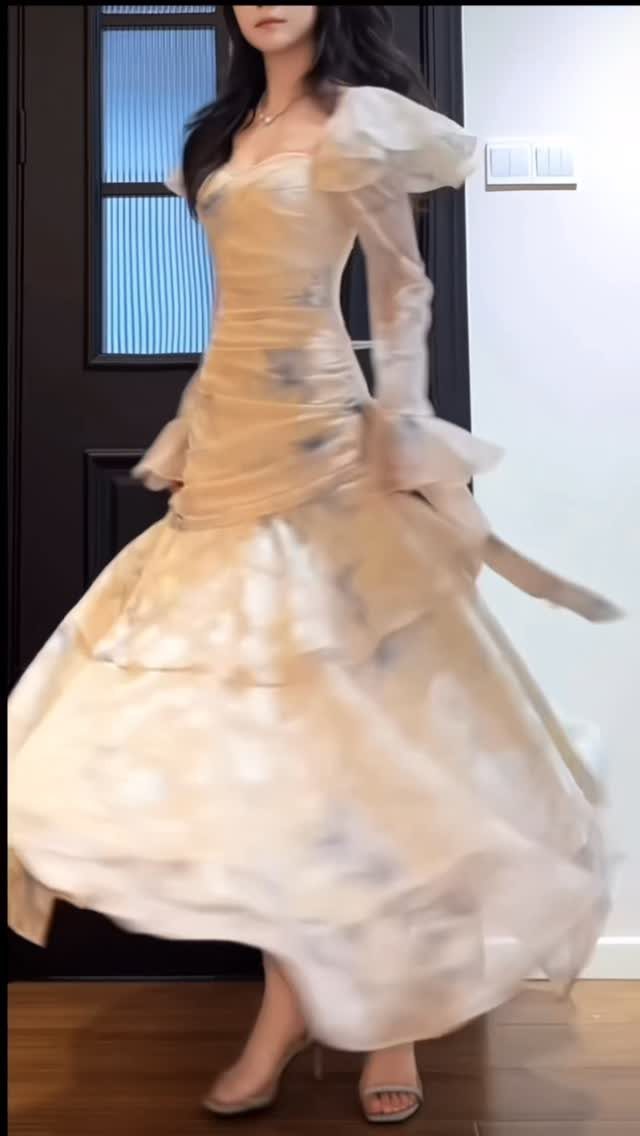
Long sleeves in a maxi dress suit September guest attire at outdoor ceremonies and daytime receptions where temperatures stay cool.
The floral pattern and champagne base here read formal without going dark, and the length works at semi-formal and formal weddings alike.
If the reception moves indoors or the venue stays heated, you might run warm in full sleeves. A three-quarter sleeve or a short-sleeve version of the same dress gives you the length and formality without the extra fabric.
11. Navy Satin Maxi Dress
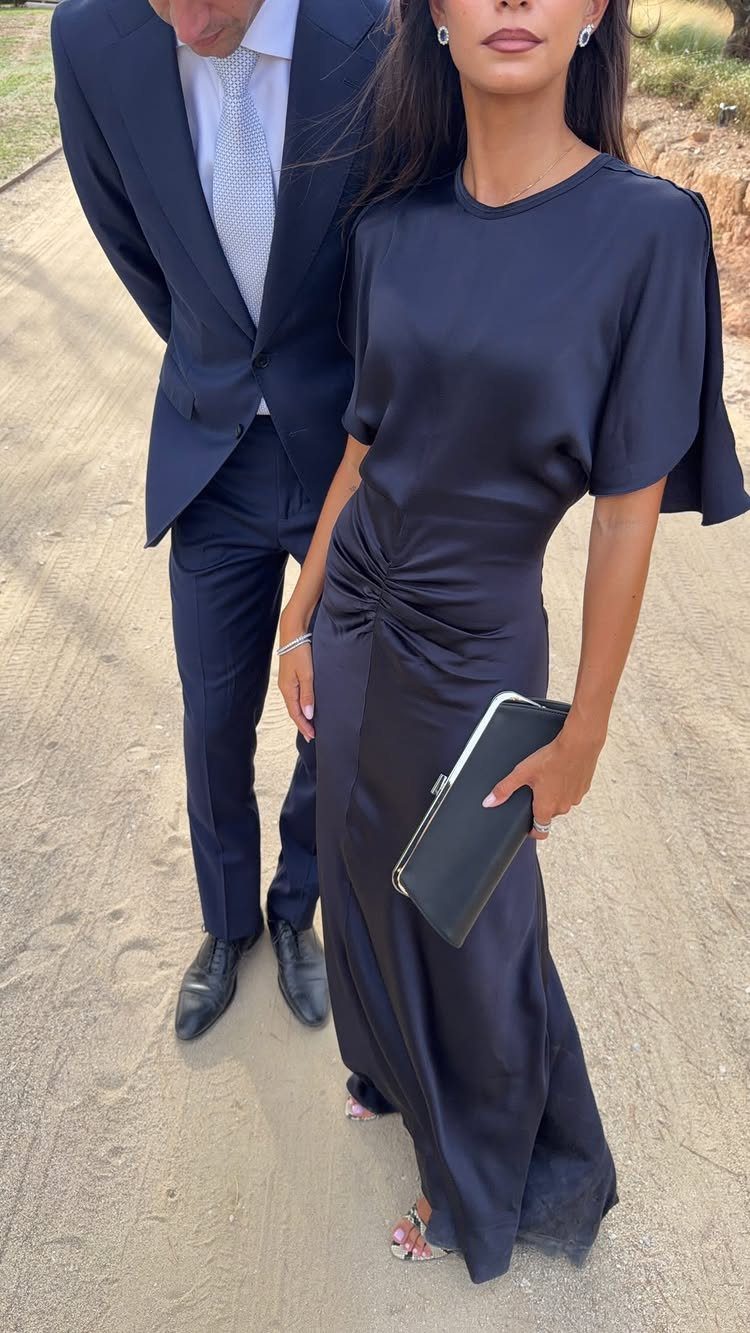
Navy satin in a maxi length suits September wedding guests at outdoor venues and semi-formal ceremonies.
The gathered waist here defines your shape without a fitted bodice, and the short sleeves work when temperatures hover in the 60s or low 70s.
Navy reads formal and photographs well next to most wedding palettes.
If the dress code goes cocktail or the venue stays casual, this hemline might look too formal; a midi length in the same fabric keeps the finish and drops the formality.
12. Floral Guest Gown
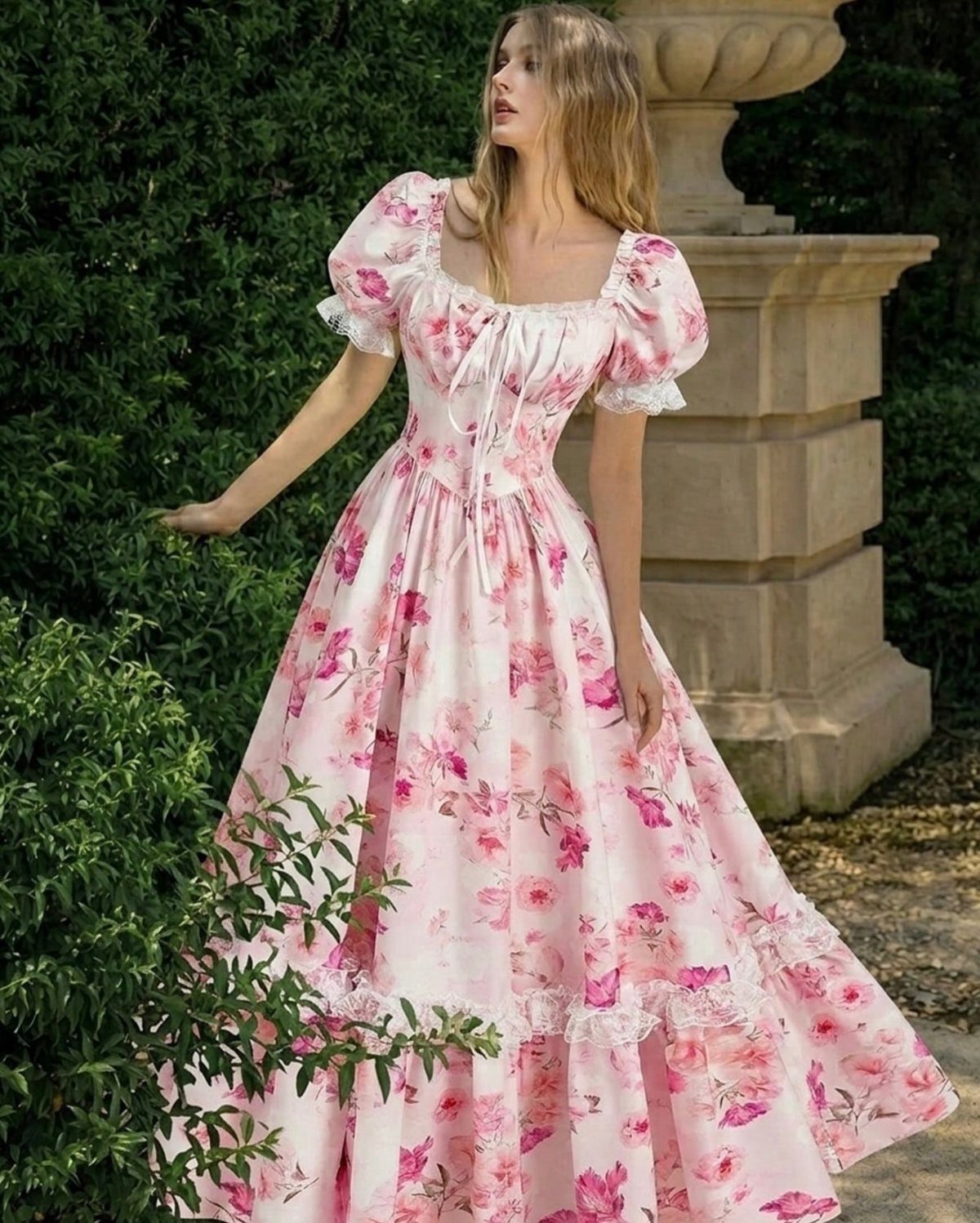
A floral gown with puff sleeves fits September guest attire at garden weddings and outdoor ceremonies with a romantic or vintage dress code.
The pink base here stays soft in natural light, and the full skirt moves well on uneven ground.
Puff sleeves add volume at the shoulder, which balances a full skirt but can overwhelm petite frames. If you want the floral print without the sleeve shape, look for the same pattern in a sleeveless or cap-sleeve style.
13. Sage Green Satin Guest Gown
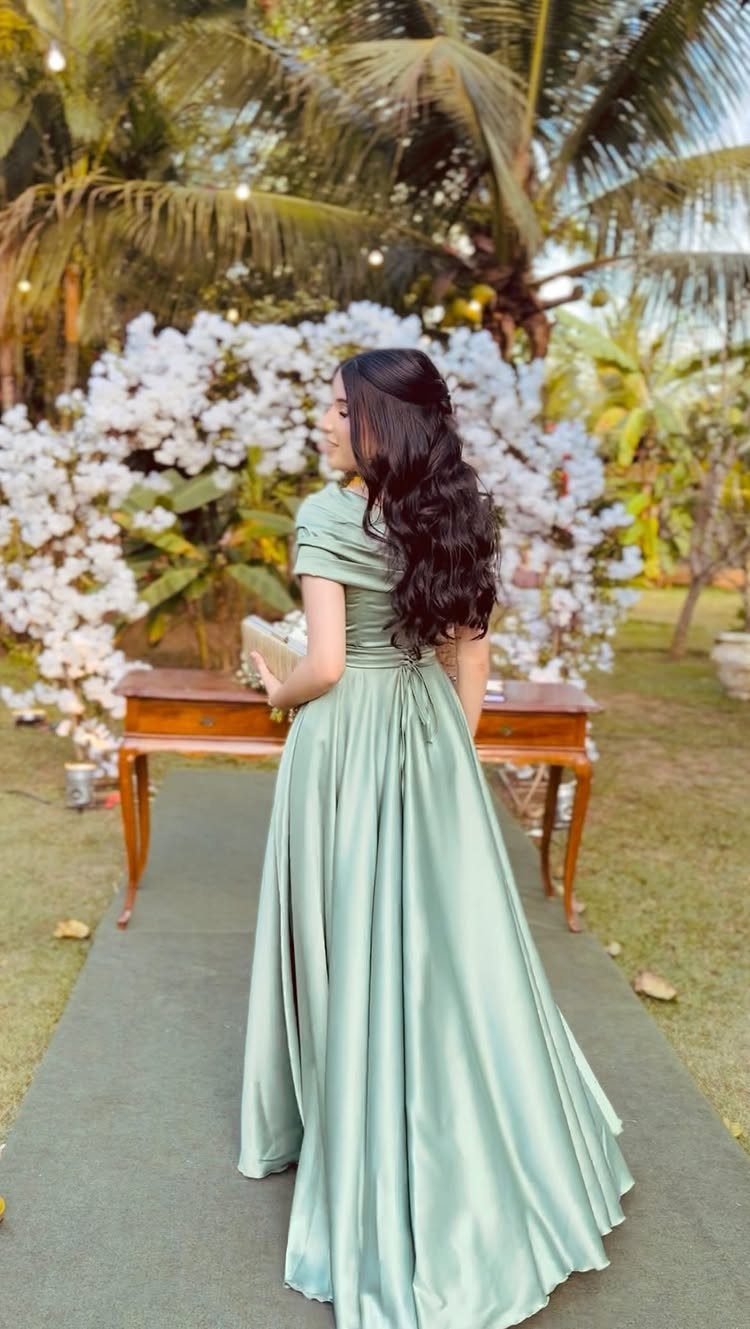
Sage green satin suits September guest attire at outdoor ceremonies and garden receptions where jewel tones read too heavy. The color photographs well in natural light and works with most wedding palettes without competing.
Satin drapes cleanly in a maxi length and holds its shape through a full day. If temperatures drop after sunset, the fabric stays warm enough on its own for evening receptions that move indoors.
14. Black Lace Wedding Gown
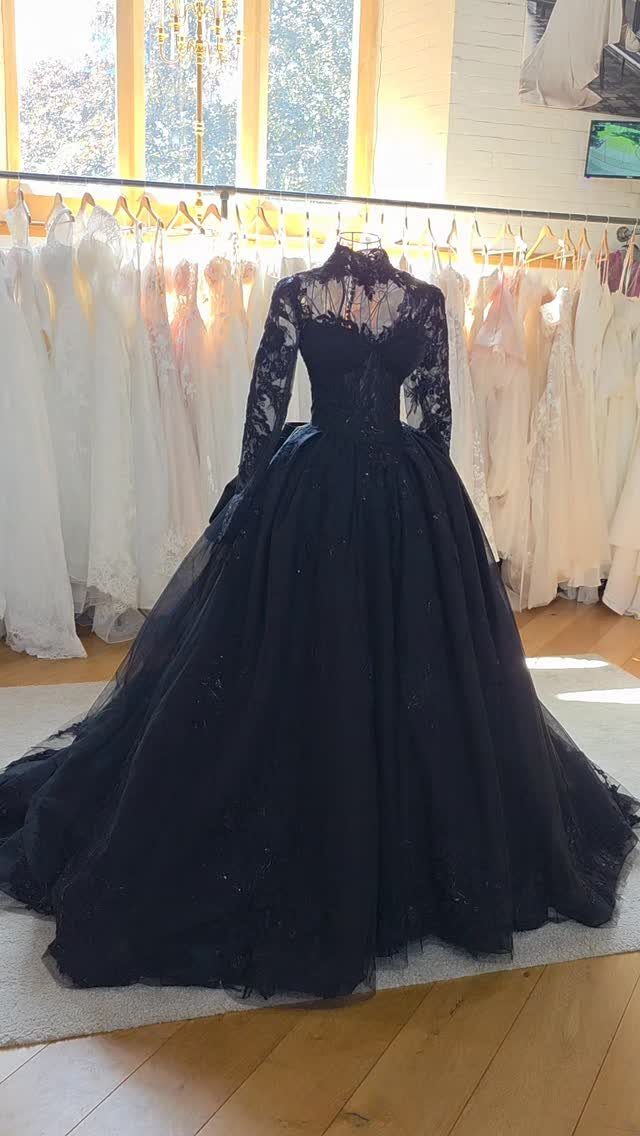
A black gown breaks tradition but suits brides who want something other than white and venues where drama matters more than convention. Lace sleeves keep the look bridal, and a tulle skirt in this volume needs space to move.
Black photographs well in low light and works at evening ceremonies. Some religious venues and traditional families expect white, so confirm expectations before you commit to a gown this far outside the usual palette.
15. South Asian Bridal Outfit
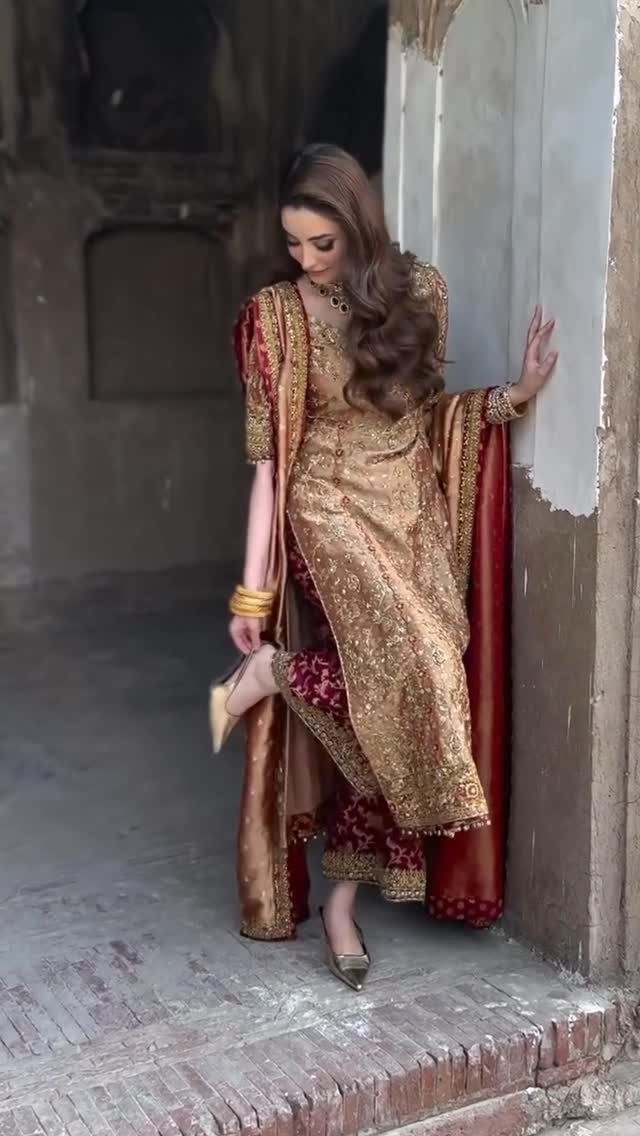
Traditional bridal wear in gold and maroon suits South Asian weddings in September, where embroidery and metalwork belong in the dress code. The jewelry here completes the look, and outdoor ceremonies give you natural light that shows the detail.
Embroidered fabric this heavy stays formal and holds up through a long ceremony. If your reception involves dancing or extended wear, choose a lighter base fabric or plan for an outfit change.
16. Dramatic Veils
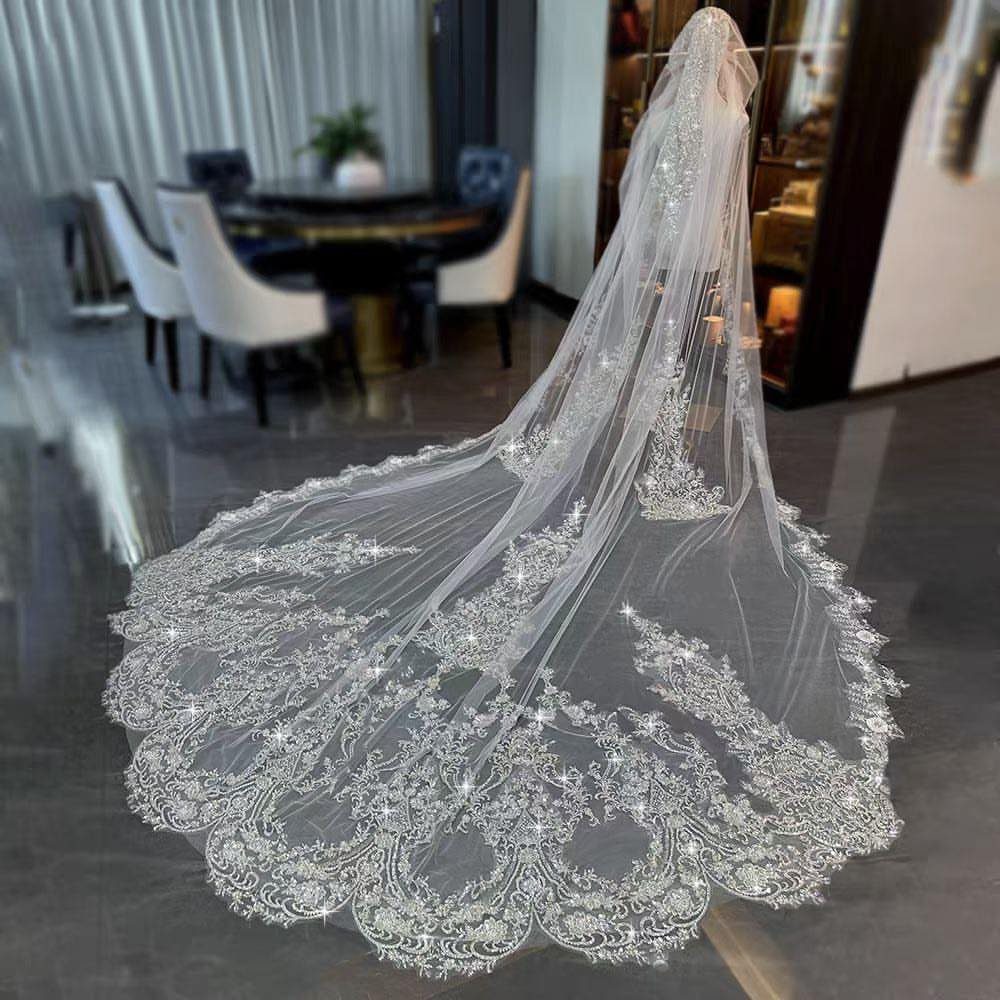
A cathedral veil with embroidered or beaded edges adds formality to a simple gown and suits September ceremonies in churches or ballrooms. The length here trails behind you and needs someone to carry it or arrange it after you walk.
If your ceremony involves stairs or tight spaces, a shorter veil moves more easily. Chapel length gives you drama without the same yardage, and a plain edge keeps the focus on the gown.
17. Detachable Trains
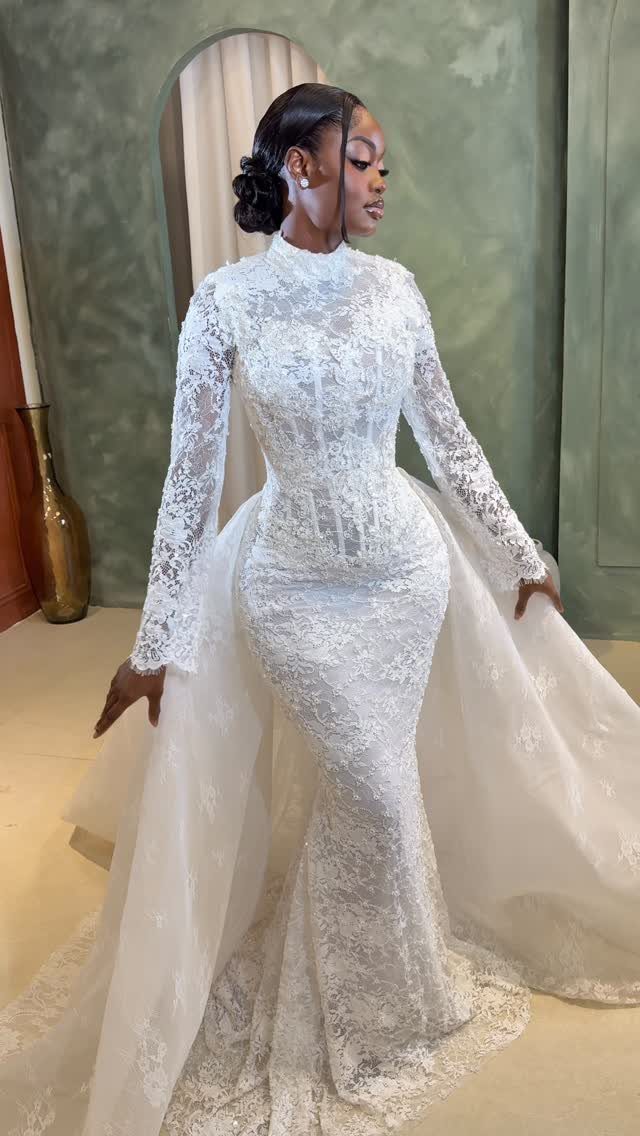
A detachable train gives you a formal entrance and a fitted gown you can actually move in at the reception. The overskirt here clips or buttons onto the waistline, so you lose the volume without changing the whole dress.
This setup works best with mermaid or fit-and-flare silhouettes where a permanent train limits walking. Budget time between the ceremony and reception for someone to remove and store the train.
Match the Venue and Dress Code
Start with the invitation. A dress code that says black tie or formal means floor length, and a venue like a ballroom or historic hall expects the same.
Semi-formal and cocktail let you go shorter, and garden or vineyard settings often work better with a hemline that clears the ground.
Outdoor ceremonies need a second look at the skirt. Slim stilettos sink into grass, and a long train picks up dirt on uneven paths.
Block heels, wedges, and dressy flats stay stable, and a bustle or tea-length hem moves more easily than a gown that trails. For indoor receptions or paved surfaces, strappy heels and full-length skirts work without the same risk.
September sits on the edge of cool weather, so check the forecast before you finalize shoes. Closed-toe pumps add coverage when temperatures drop, and satin shoes do not hold up well in rain or mud.
Plan for Fall Weather
Fall temperatures shift through the day, and September weather changes by location.
Cooler mornings can turn warm by mid-afternoon, then drop again after sunset. An outdoor ceremony at 3 PM might feel comfortable in a sleeveless gown, but the same reception at 7 PM can leave you cold.
Changing foliage and cooler air make outdoor celebrations appealing in fall, but rain, wind, and unexpected cold are all possible. Have a backup plan if the ceremony moves outside, and bring a layer that works with the dress.
Indoor-outdoor venues that blend cocktail hour on the grounds with dinner inside need an outfit that handles both. A dress with sleeves or a wrap you can remove gives you flexibility without carrying extra.
Comfort and Practical Fit
An outfit that photographs well but limits movement makes for a long day. Choose a dress that lets you sit, eat, and dance without adjusting it constantly, and shoes that handle the venue’s flooring and outdoor paths.
A flowing skirt in satin or chiffon, or an asymmetrical drape, gives you a polished finish that moves when you do.
Vineyard and garden weddings often mix indoor and outdoor spaces, so comfort matters more than at a single-room reception.
If the gown needs a hem or minor alteration, leave enough time on the calendar.
Fit matters more than a trend, and a dress that suits your shape holds up better through a full day than one chosen for the season alone.
Frequently Asked Questions
What color dress is good for a September wedding?
Wine red, rust, chocolate brown, burnished gold, emerald green, navy, dark teal, and plum all suit September guest attire and read formal in fall light.
Champagne, blush, and sage also work when paired with heavier fabrics like satin or lace. Skip white, ivory, and any shade that reads bridal.
What dress length works best for fall weddings?
Floor length suits formal and black-tie events, while tea-length or midi works for semi-formal ceremonies.
Outdoor venues on uneven ground call for shorter hems or a bustle on a long gown, since trailing skirts pick up dirt and limit movement on grass or gravel.
Should fall wedding dresses always have sleeves?
Sleeves add coverage and suit cooler temperatures, but sleeveless gowns work when you layer a jacket, wrap, or detachable sleeves. Pick based on the venue’s temperature and how much you plan to move around at the reception.
What fabrics work best for fall wedding attire?
Satin, lace, crepe, and tulle all suit September ceremonies and stay put through a long day. Heavier satin reads formal and stays warm, while lace and tulle move easily and photograph well in natural light.
Can I wear a lighter color dress to a fall wedding?
Champagne, blush, soft gold, and sage green work at September weddings when styled with substantial fabrics and seasonal accessories. Lighter colors photograph well in fall light and suit semi-formal and formal events in any palette scheme.
Is a black wedding dress appropriate for a fall wedding?
A black gown suits brides who want drama over tradition and works best at evening ceremonies in venues where formality matters.
Lace or tulle keeps the look bridal, and the color photographs well in low light. Check that your venue and family are comfortable with a choice this far outside the standard range.
What should I wear with a fall wedding dress?
Detachable sleeves, a tailored jacket, or a wrap give you coverage for cooler outdoor ceremonies and an option to remove at indoor receptions. Choose layers that match the formality of the gown and can be stored easily once temperatures rise.