Reception flowers stretch from $700 to $2,500 and divide between statement pieces like arches and flower walls, guest table centerpieces and smaller accents at the cake table, bar or entrance.
The budget decides whether you cover every table with a full arrangement or alternate floral centerpieces with candle-only setups, and the venue drives the style: garden clusters suit a barn, structured vases fit a ballroom.
1. Cake Table Flowers
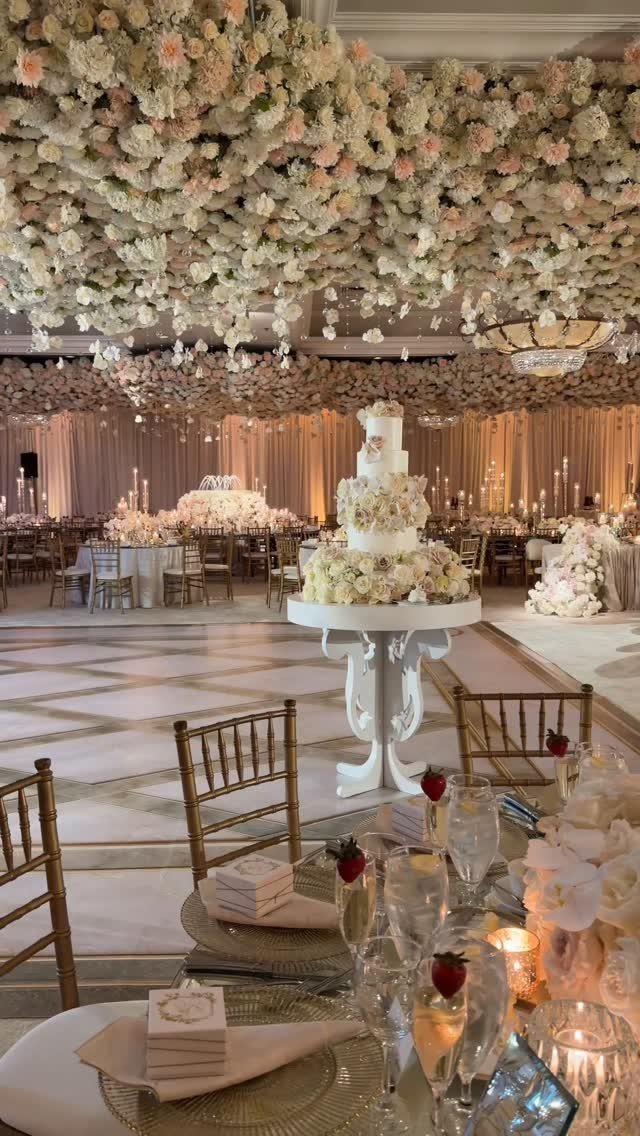
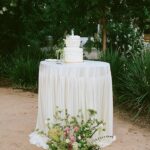
Flowers around the cake tie it into the reception’s palette and give the dessert table a finished look. A clustered arrangement at the base fills the space around the pedestal and draws the eye without blocking the cake itself.
Choose blooms that match the ceremony flowers or pick up colors from the table settings. Grouping smaller stems at different heights adds dimension and lets you stretch the floral budget further than one large arrangement would.
2. Sweetheart Table Arrangements
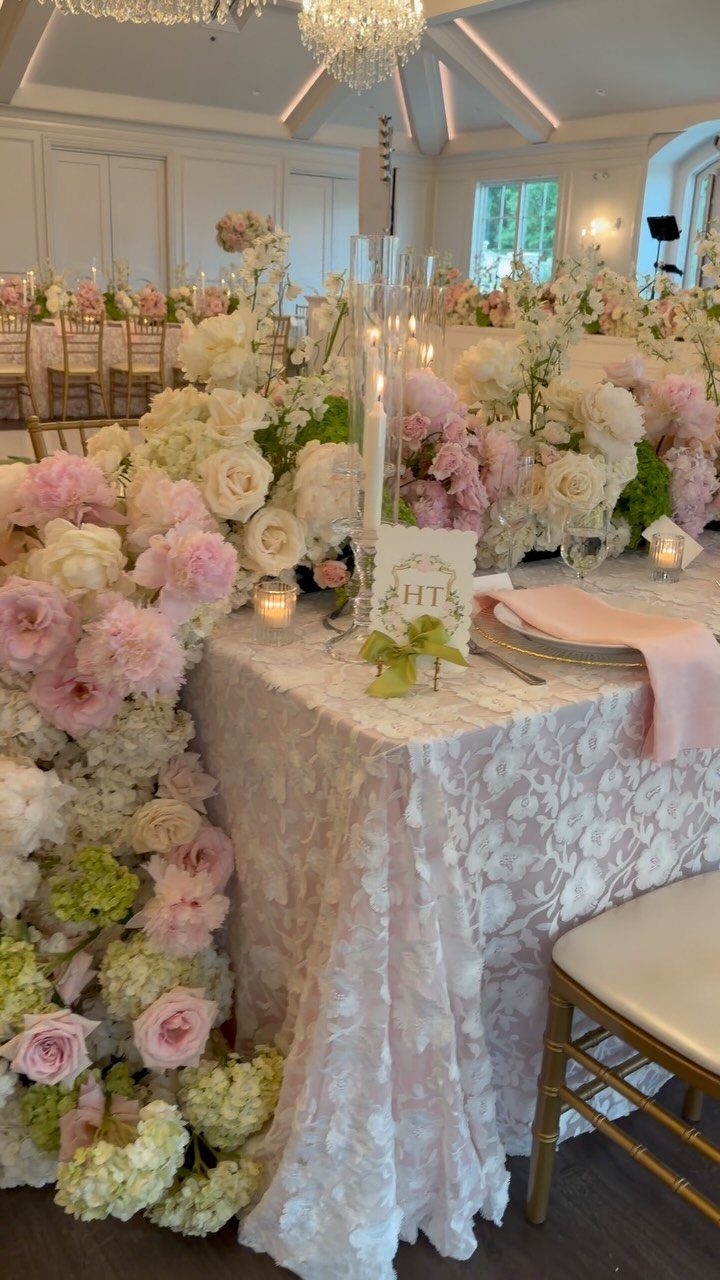
A floral arrangement behind or beside the sweetheart table frames the couple and carries the reception’s color scheme into the photographs.
Cascading blooms soften the table edge and give you a full backdrop without covering the surface you need for plates and glasses.
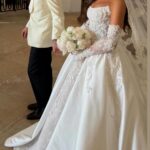
Match the arrangement to the bridal bouquet or use it to bring in a secondary color from the palette.
If the table sits against a wall, a single arrangement behind the couple centers the look. For a freestanding table, flanking arrangements on both ends balance the setup and photograph well from either side.
3. Bar and Buffet Accents
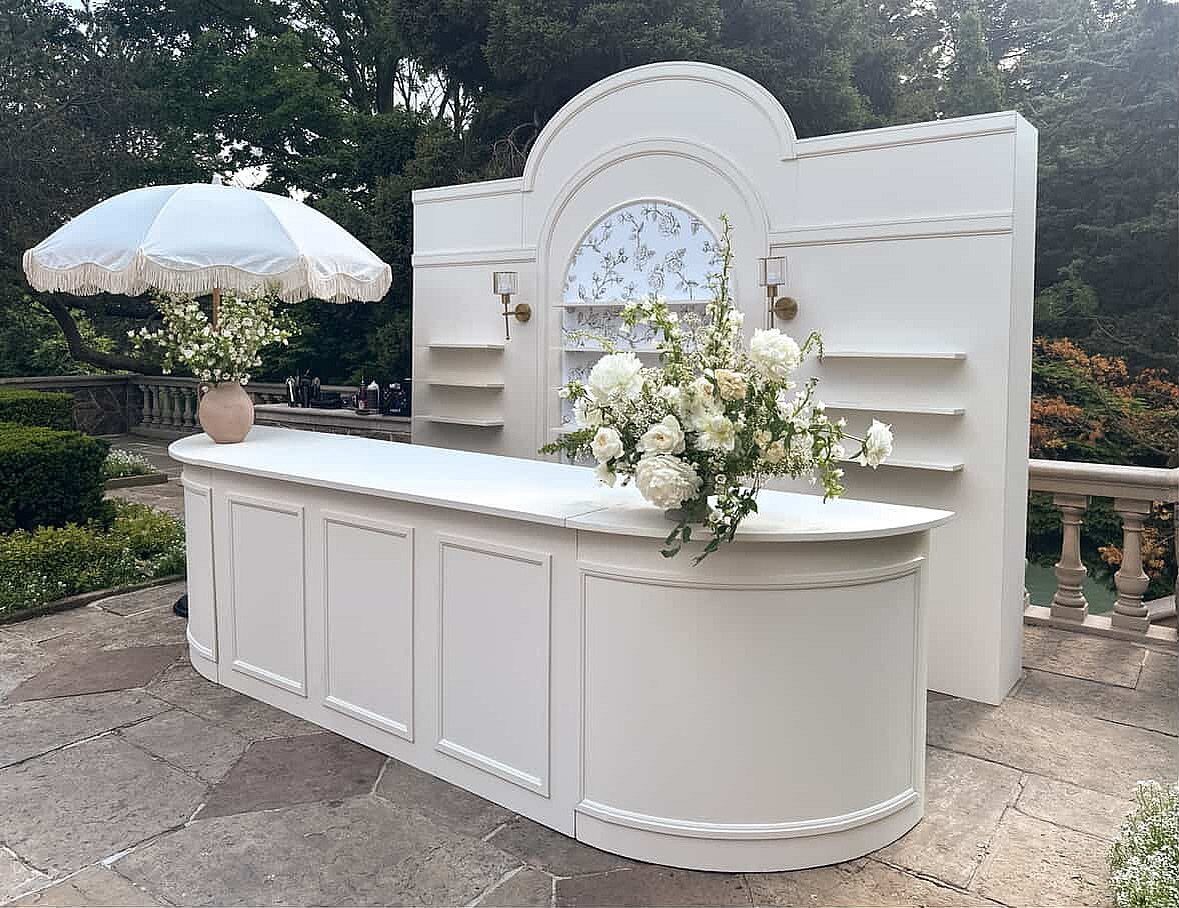
Small floral arrangements on the bar and buffet tables tie those service areas into the reception’s design.
A low arrangement on the bar top or a few stems in a short vase keep the flowers visible without crowding the bartender’s workspace or blocking guests’ view of the drink menu.
Pair flowers with the same candleholders or vases used on guest tables so everything feels coordinated. If the bar is outdoors, choose hardy blooms like roses or carnations that hold up in heat and skip delicate petals that wilt fast.
4. Reception Entrance Flowers
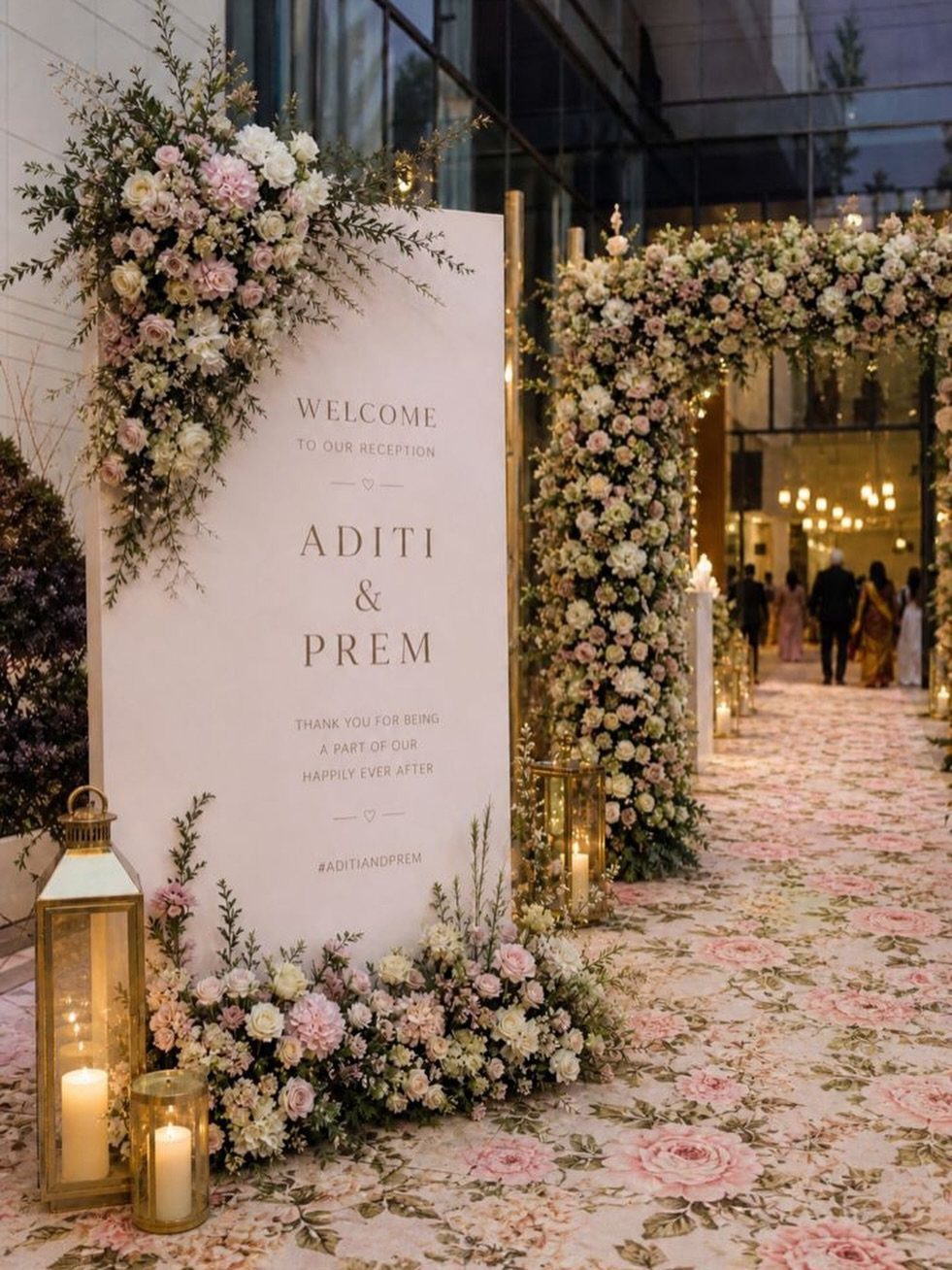
Flowers at the reception entrance set the tone before guests step inside.
An archway covered in blooms creates a focal point and frames the doorway, while a floral welcome sign or a low arrangement beside the entrance adds a softer touch that fits smaller budgets.
Reusing the ceremony arch saves money and gives it a second purpose. If you’re buying fresh arrangements for the entrance, choose blooms that match the color palette inside so the transition feels intentional rather than separate.
5. Guest Book Flowers
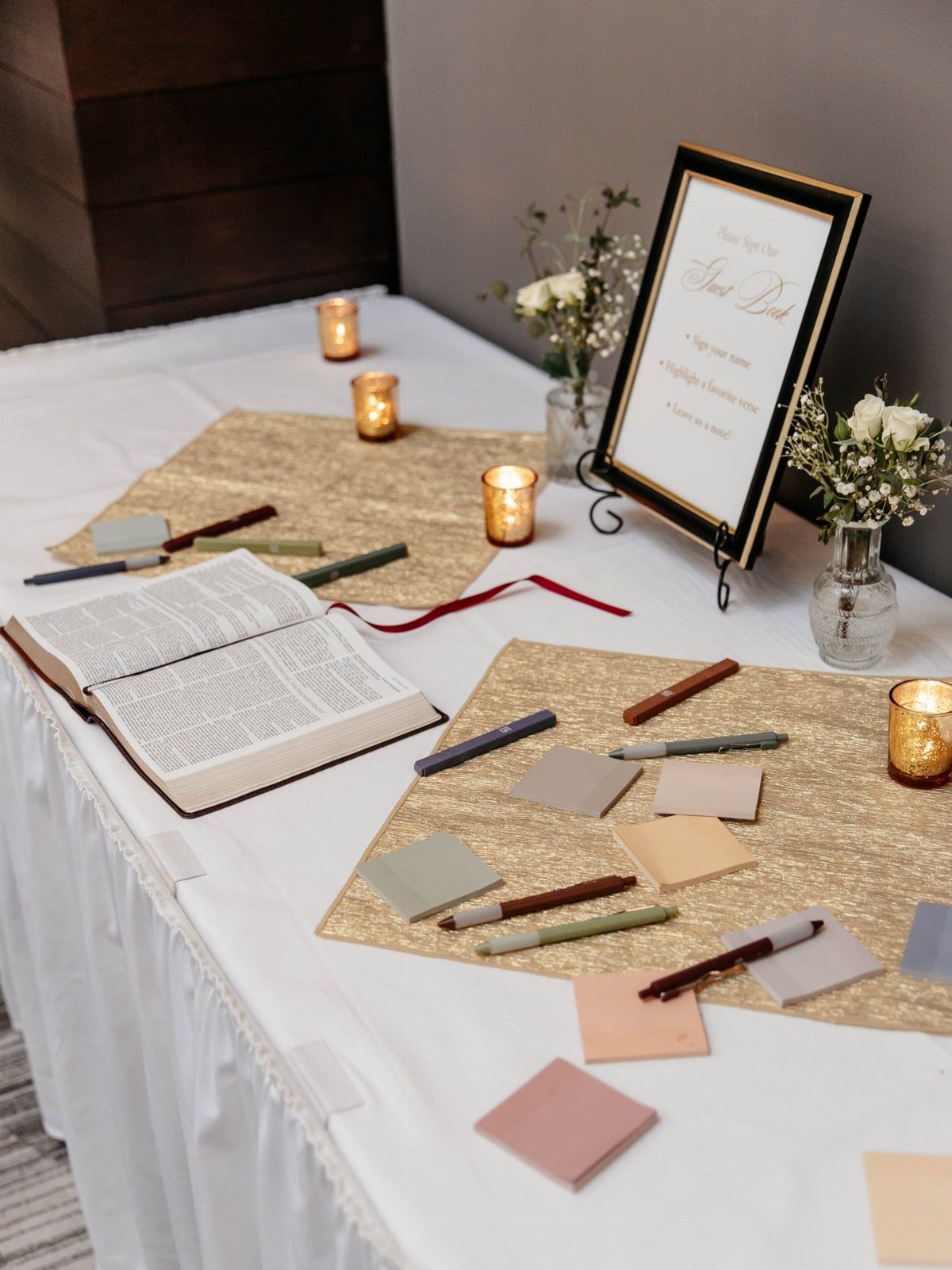
A small vase of flowers beside the guest book draws attention to the signing station and keeps it from looking like leftover office supplies.
2 bud vases like the ones here let you use leftover stems from larger arrangements and fill the space on either side of the book.
White flowers suit any color palette and photograph cleanly, but matching the guest-book flowers to the centerpieces ties the station into the room.
6. Reception Flower Walls
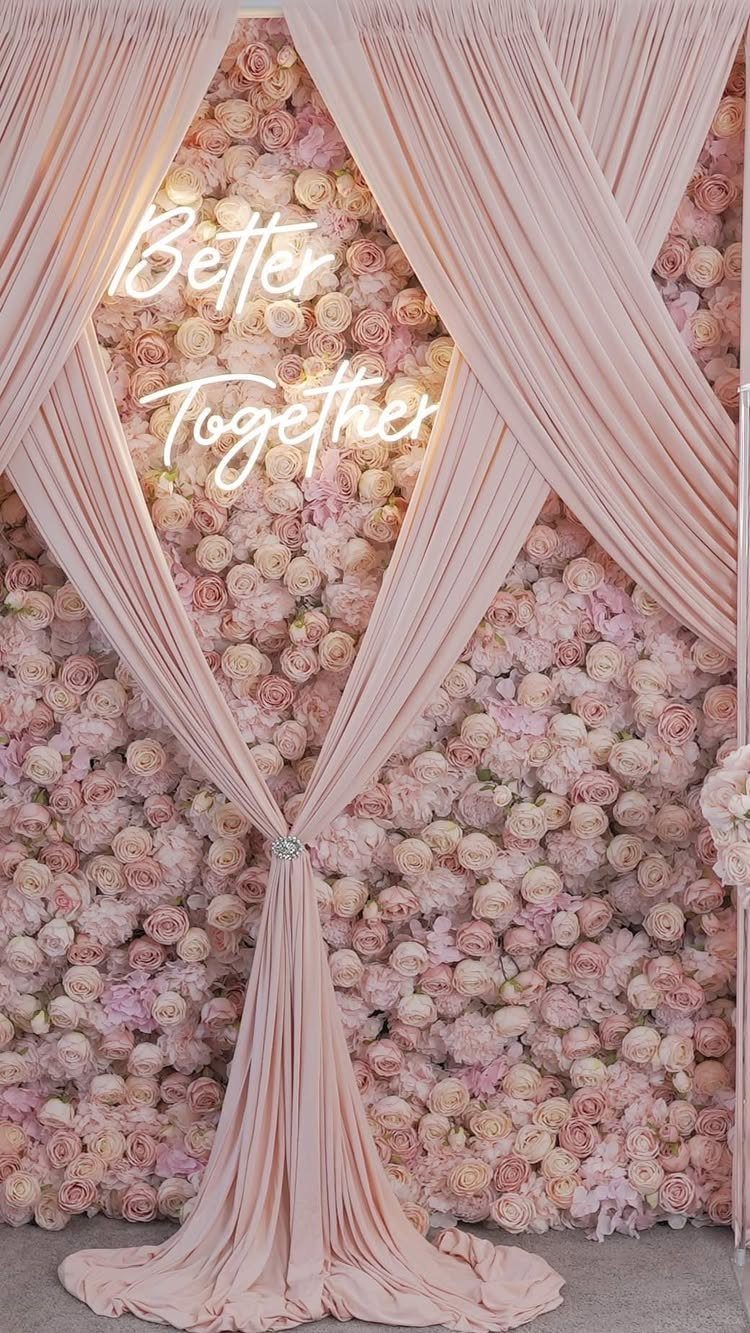
A flower wall creates a backdrop for photos and fills a large wall space with color and texture.
The wall itself is usually a panel covered in artificial blooms, which means it can be set up hours before the reception and holds up under indoor or outdoor conditions without wilting.
Rental companies charge based on the size and flower density.
Draping fabric across the top softens the edges and adds movement. Personalize the wall with a neon sign, the couple’s initials, or a frame in the center that guests can step into for pictures.
7. Candlelit Floral Runners
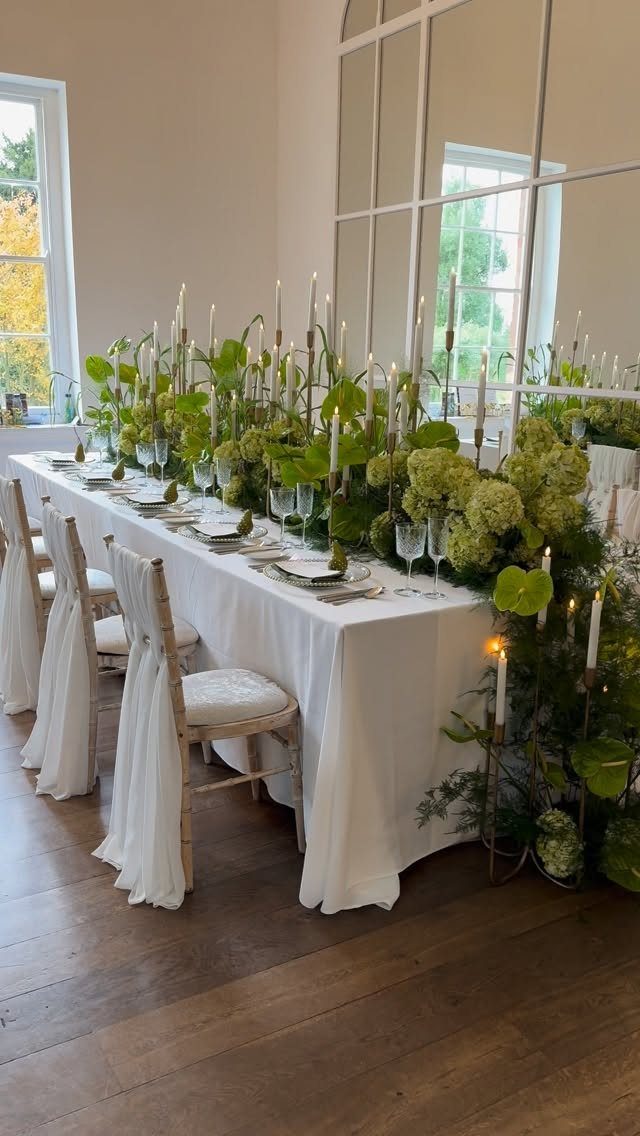
A floral runner stretches the length of a long table and keeps flowers visible from every seat. Greenery forms the base, with blooms tucked in at intervals and candles spaced between them to add height and light.
Use fewer flowers than a centerpiece at every place setting would take.
The greenery holds the arrangement together and costs less than filling the whole length with blooms. If the table is outdoors, weight the runner with low glass votives instead of tall tapers that catch wind.
8. Bud Vase Centerpieces
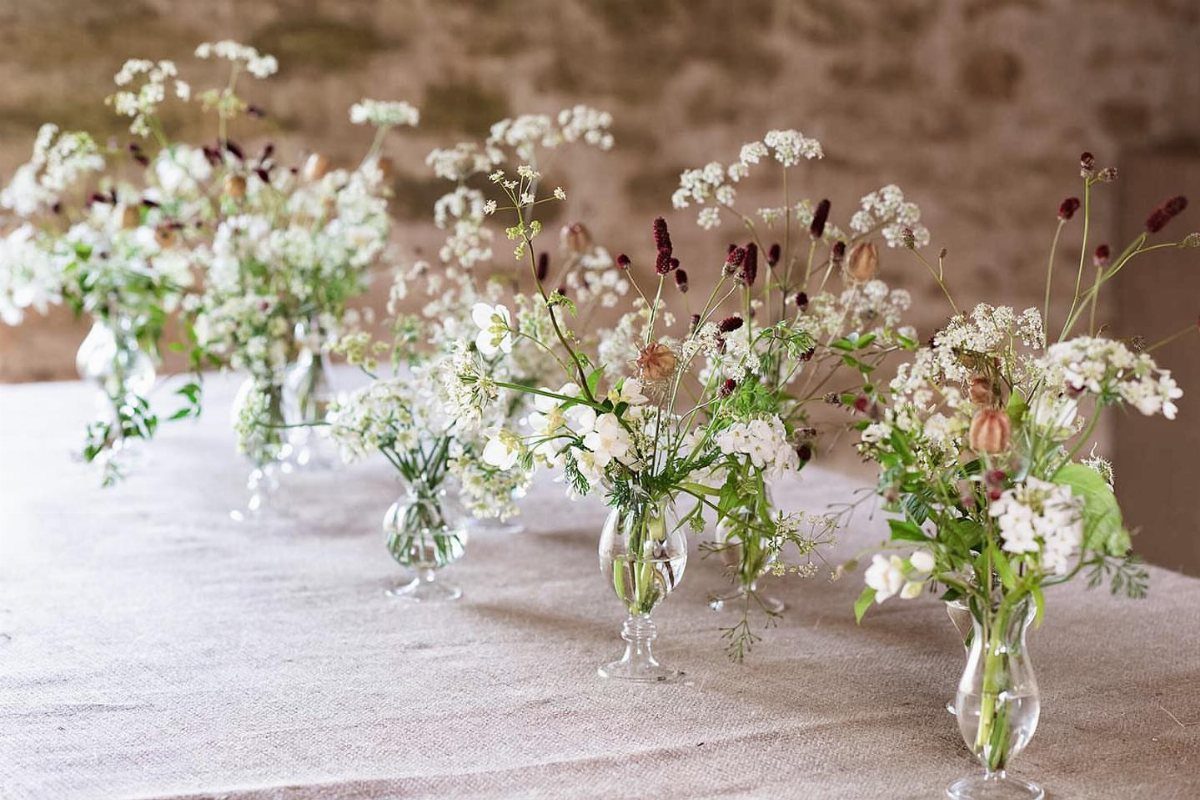
Bud vases scatter color across the table without the cost or height of a single large centerpiece. Each vase holds one to three stems, and grouping several vases together fills the space while leaving room for plates and glasses.
Mix flower types or keep one variety in each vase and vary the colors.
Mismatched vintage glass reads softer than uniform cylinders and costs less if you are buying rather than renting. Bud vases work best on round tables where guests sit close enough to see the small scale.
9. Tall Statement Arrangements
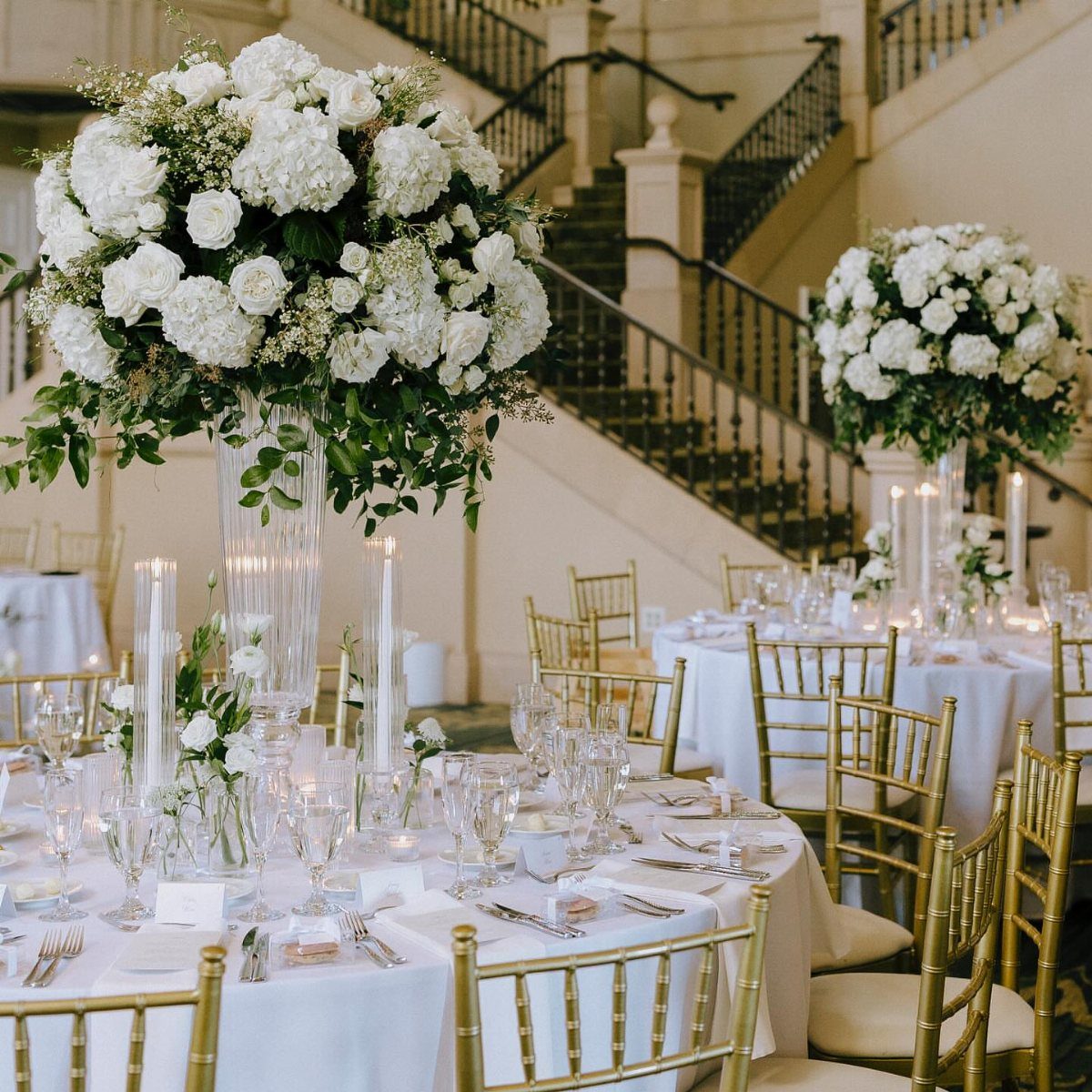
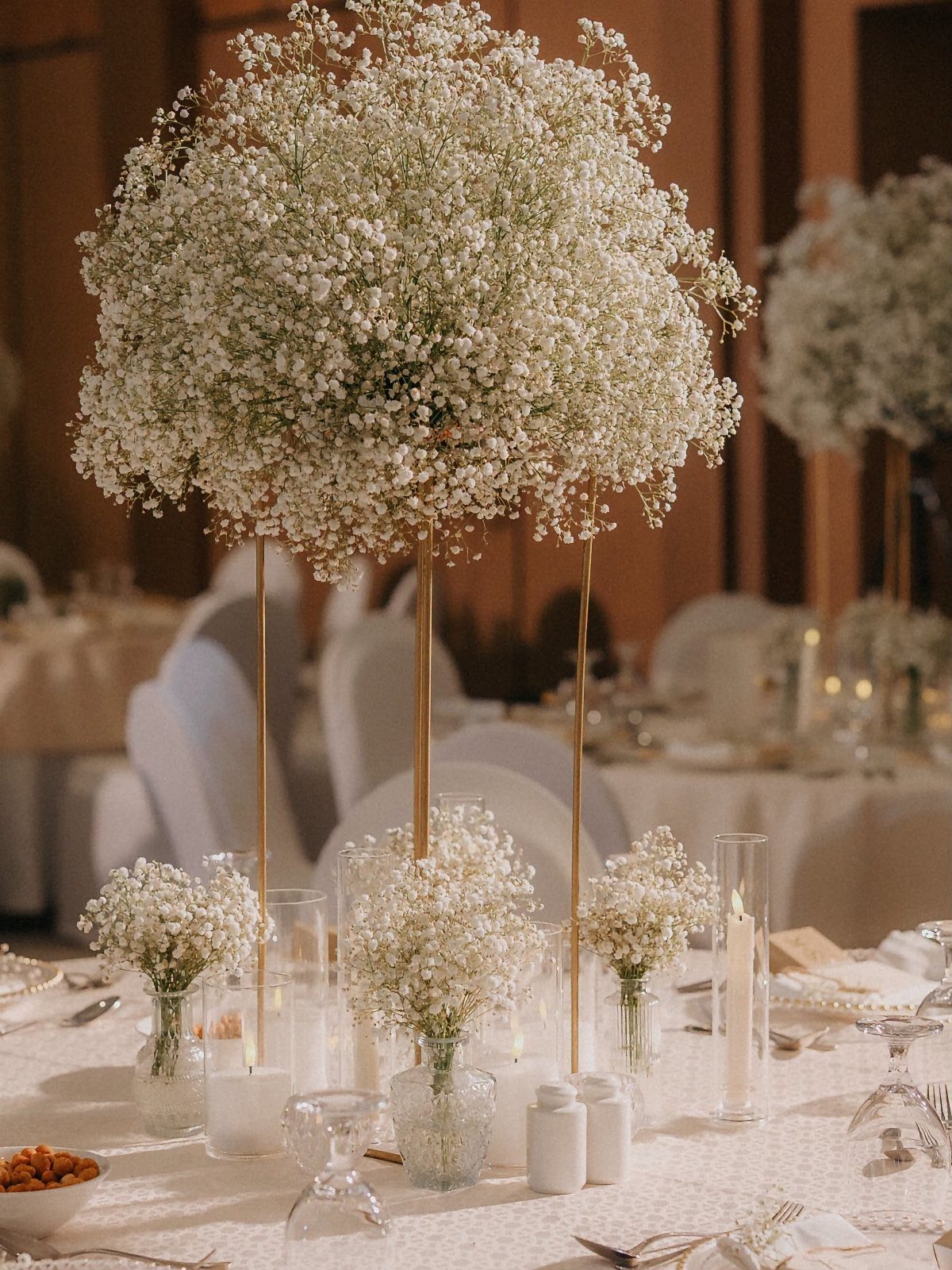
Tall arrangements lift flowers above eye level so guests can talk across the table while the blooms still make a statement. The height suits large rooms with high ceilings, where low centerpieces disappear into the space.
A tall vase keeps the arrangement stable and lets you use fewer stems at the base than a wide centerpiece would take.
White flowers photograph cleanly and suit any color palette. If the venue has low ceilings or narrow aisles, stick with low arrangements so the tall stems do not block sightlines or tip when guests move past.
10. Low Floral Clusters
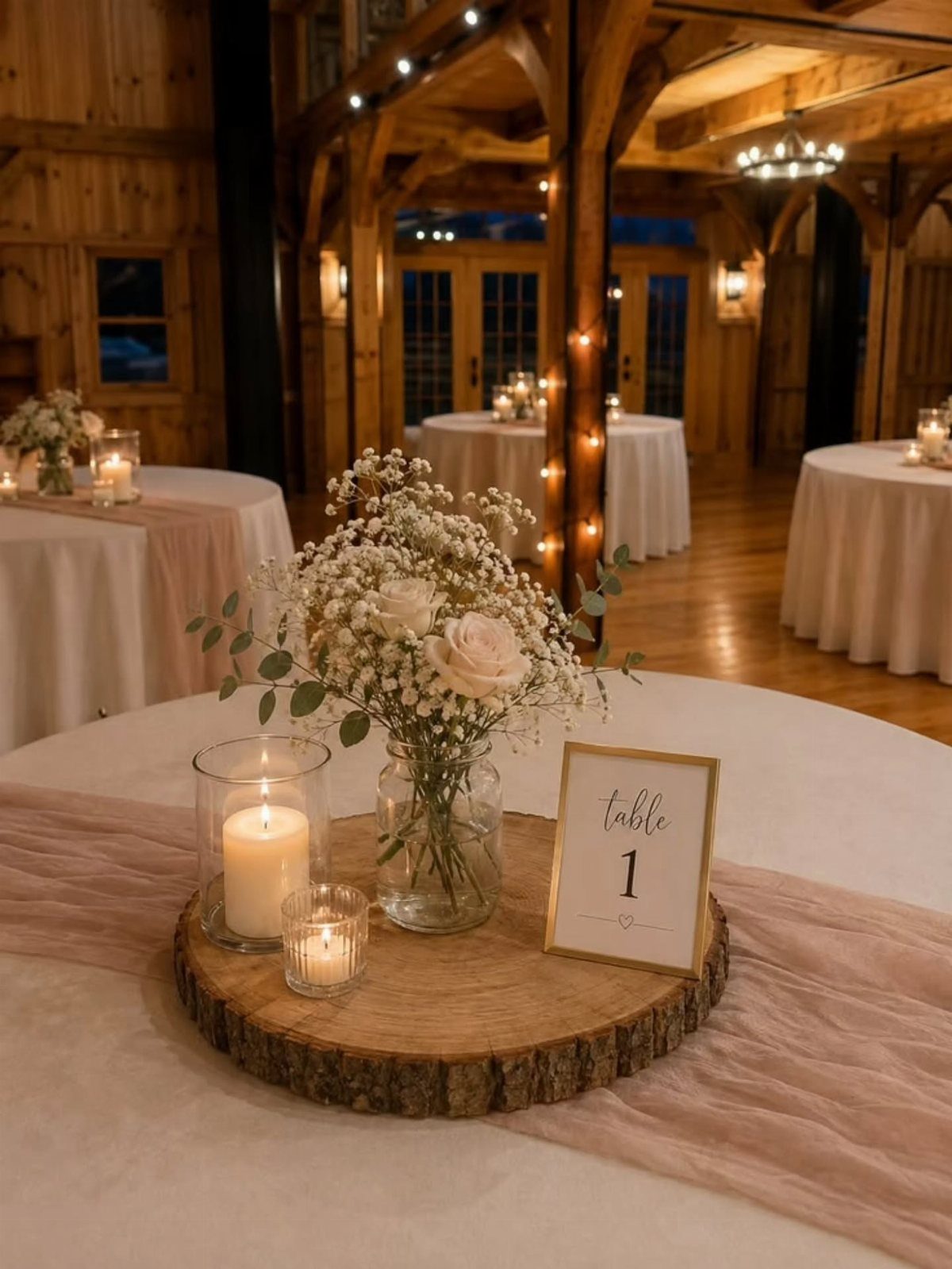
Several low arrangements grouped at the center of each table create a layered look without blocking conversation. Each piece holds a few stems, and varying the heights between them adds interest while keeping everything below eye level.
A wood slice or runner underneath ties the arrangements together and defines the display.
Use leftover blooms from larger arrangements or single stems in small jars to keep costs down. Low clusters suit intimate gatherings where guests want to see each other across the table.
11. Floral Arch
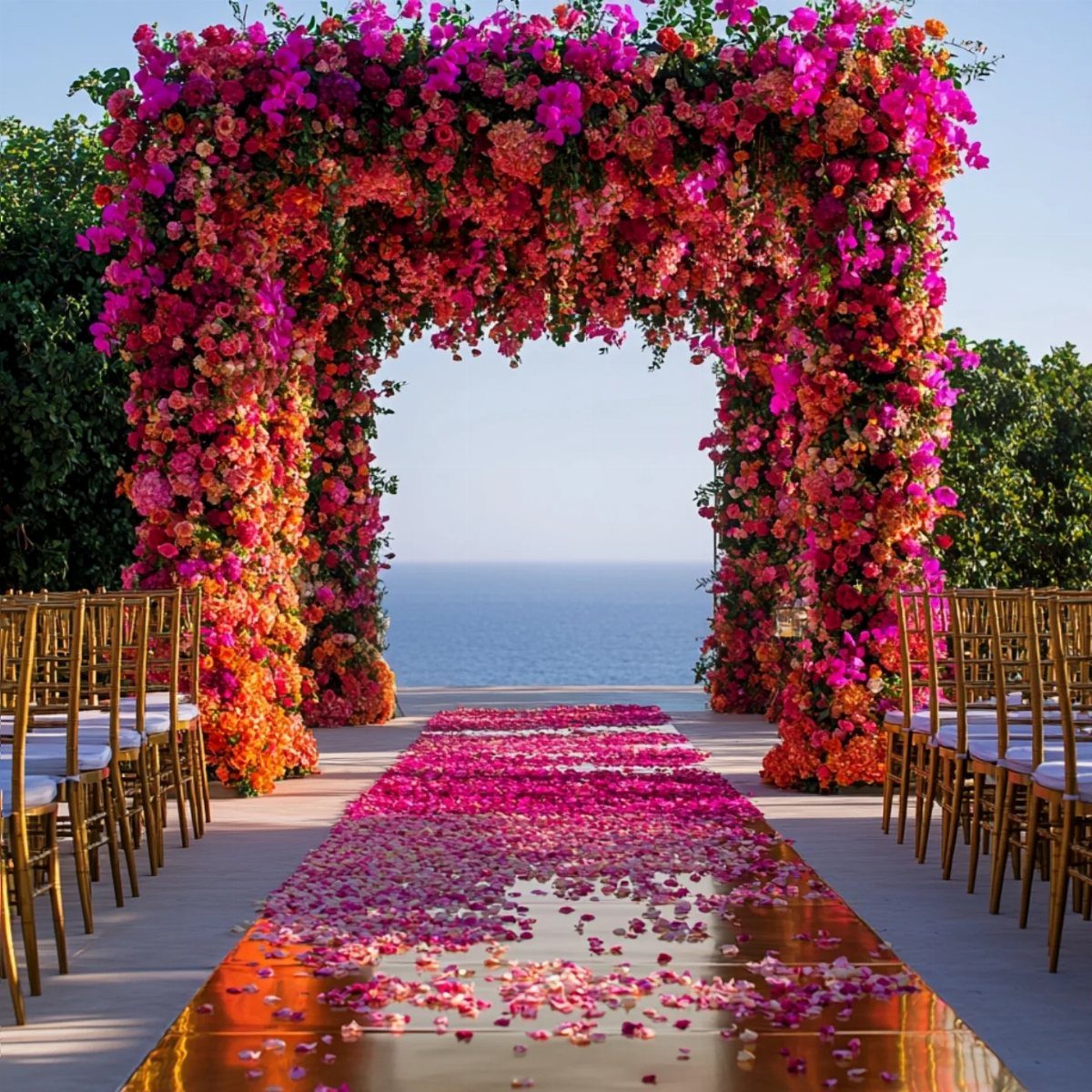
A floral arch at the reception gives you a second use for the ceremony structure and creates a backdrop for photos once dinner starts.
Flowers cover the frame in full or partial clusters, depending on how much of the arch you want visible.
Moving the arch from ceremony to reception saves rental and setup costs. If you are buying the arch outright, choose one that breaks down flat for transport.
Fresh flowers hold up for several hours, but switching to artificial blooms for the reception lets you set up the arch the day before without worrying about wilting.
Reuse Arrangements Between Venues
Repurposing ceremony flowers at the reception cuts the floral budget in half and gives expensive arrangements a second audience.
When both venues are in one location, the florist or a helper can move altar pieces, aisle arrangements, and the ceremony arch to the reception space during cocktail hour.
If the ceremony and reception are at different sites, talk to your florist early. Some arrangements can be designed to break down and reassemble, but others are too delicate or too large to move safely.
Distance and timing matter: a 10-minute drive between venues leaves time to relocate flowers, but a gap of an hour or more means blooms may sit in a hot car or wilt before they reach the second location.
Artificial blooms handle transport better than fresh ones and can be moved the day before without loss.
When it comes to re-using your wedding decor and flowers on the day, you will mostly be repurposing them from the ceremony to the reception space. This works best when the ceremony and reception are in the one venue.
Match Flowers to the Wedding
Repeating the same flowers and colors across the ceremony and reception ties the whole event together. Start with 2 or 3 signature blooms and a palette of 3 to 4 colors, then use them in the bridal bouquet, the ceremony backdrop, and the centerpieces.
If you are working with a florist, bring photos of arrangements you like and point out which flowers or colors matter most to you.
A vision board helps when you are not sure of the names but know the look you want.
Match the style of the arrangements to the venue. Loose, garden-style clusters suit a barn or outdoor space, while structured arrangements in uniform vases fit a ballroom or modern loft.
The vase style matters as much as the flowers: rustic wood holders read differently than glass cylinders, even with the same blooms inside.
Plan Flowers Around the Budget
The typical flower budget lands between $700 and $2,500, and you’ll be dividing that money between ceremony, reception and personal flowers.
If the budget is tight, choose 1 or 2 statement pieces like a sweetheart table arrangement or a floral arch, then fill in with candles, greenery runners, or bud vases that cost less per table.
Alternating floral centerpieces with candle-only tables cuts the flower count in half while keeping every table decorated. Reusing ceremony arrangements as reception centerpieces stretches the budget further and gives you twice the impact from the same purchase.
If you are not sure which reception flowers matter most, figure out which tables photograph most and which spaces guests see first. Those are the ones that justify a bigger arrangement.
Frequently Asked Questions
Where do you need flowers at the wedding and reception?
Reception flowers go on guest tables, the sweetheart table, the cake table, and at the bar or buffet.
The entrance, guest-book station, and photo backdrop are other spots that benefit from arrangements. Ceremony flowers can be moved to the reception to cover multiple areas without buying twice.
What wedding flowers are most important?
The bridal bouquet, ceremony focal flowers, and reception centerpieces matter most because they appear in the most photos.
How many floral arrangements do most weddings have?
That depends on how many tables you have and what you want on each one, but plan for bouquets, ceremony pieces, and a centerpiece per table at minimum.