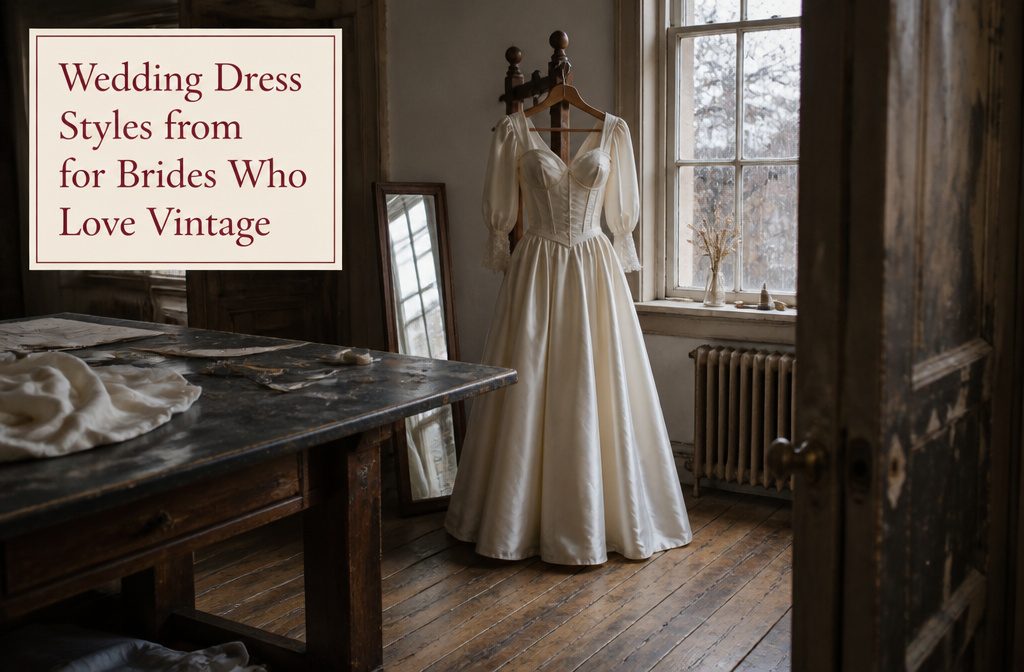
Satin, lace, puffed sleeves, and a tiara are all 1991 — but a corset bodice cannot hide poor tailoring the way a looser style can, and a full skirt needs an aisle wide enough to walk without catching on chair backs.
One era detail done cleanly reads bridal; stacking several reads costume.
1. White Satin Gown
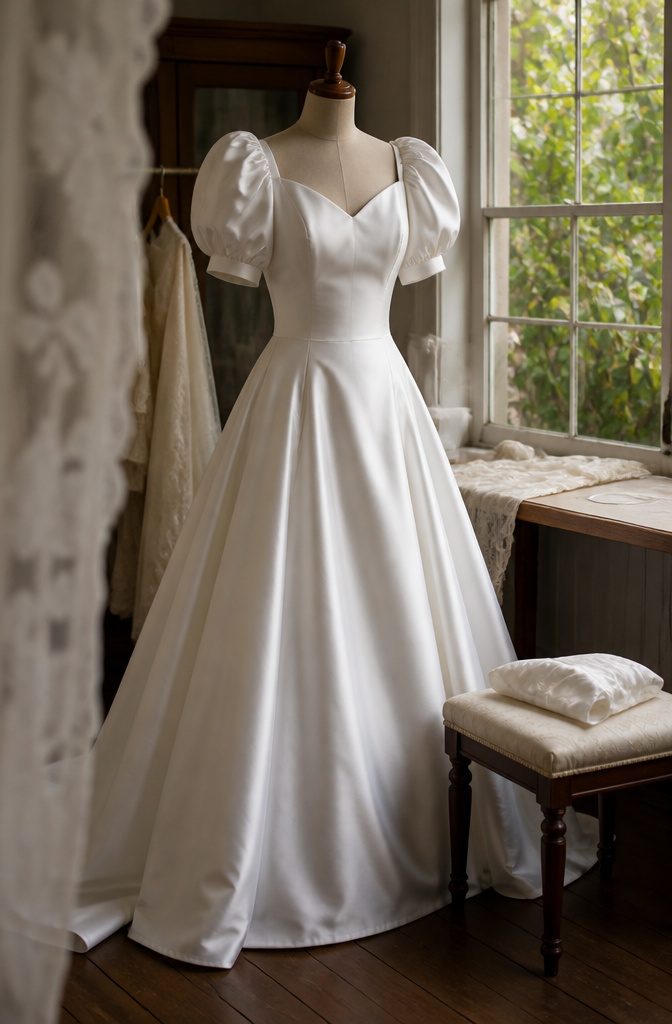
Satin is what gives a 1991 gown its formality before you add a single detail. The sheen does that work on its own, which means extra ornamentation is competing with the fabric rather than finishing it.
Pair the satin with just one statement: lace on the bodice, or puffed sleeves, but not both.
Stack lace, sleeves, and a veil together and the gown tips from vintage into costume. The fabric reads best when it has room to show.
Smooth satin picks up every wrinkle and water spot, so plan to steam the gown the morning of the wedding rather than the night before.
2. Lace Bodice
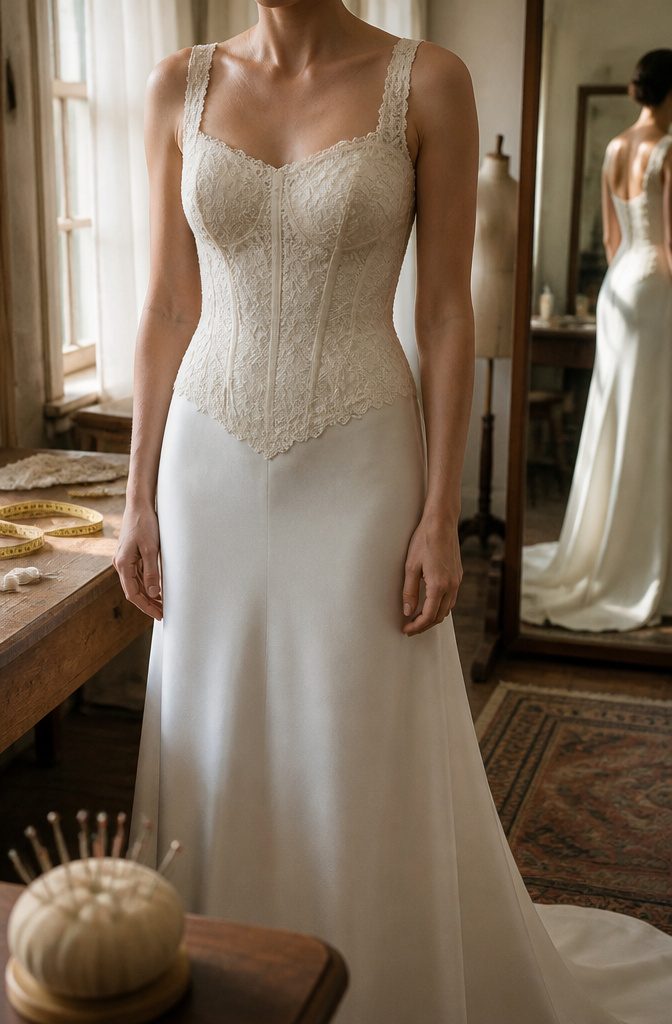
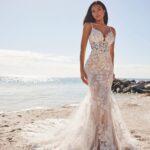
Lace concentrated on the bodice over a plain skirt is the most budget-efficient choice in the 1991 silhouette, because cameras land there first. Cream reads softer than stark white and suits the lived-in quality that makes vintage work.
A structured corset bodice under that lace defines the waist and frames the collarbones, but fit is the whole job: a structured bodice cannot hide poor tailoring the way a looser style can. Book a fitting with room to adjust.
Keeping lace to the bodice and the skirt smooth is the stronger call. Detail above the waist holds the eye; adding trim below pulls attention in two directions and neither wins.
3. Puffed Sleeves
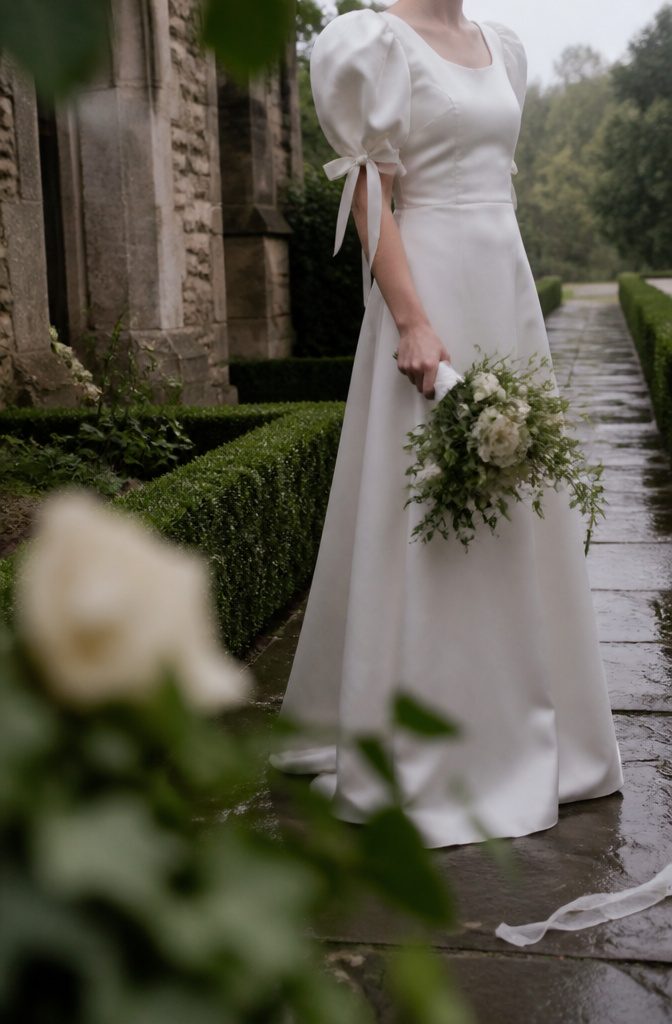
Puffed sleeves are the detail people picture first when they think about 1991 wedding dresses, and they still read as romantic rather than costume when the proportion is right.
A gathered, rounded shape that sits at the shoulder works far better than an extreme puff; the exaggerated version belongs to the early part of the decade and can swallow everything else on the gown.
A small bow at the sleeve or neckline pushes the look further into the era without requiring any other period detail.
Worn outdoors with a loose bouquet, the silhouette feels more romantic than dated, which is the whole reason to choose it.
4. Full Skirt
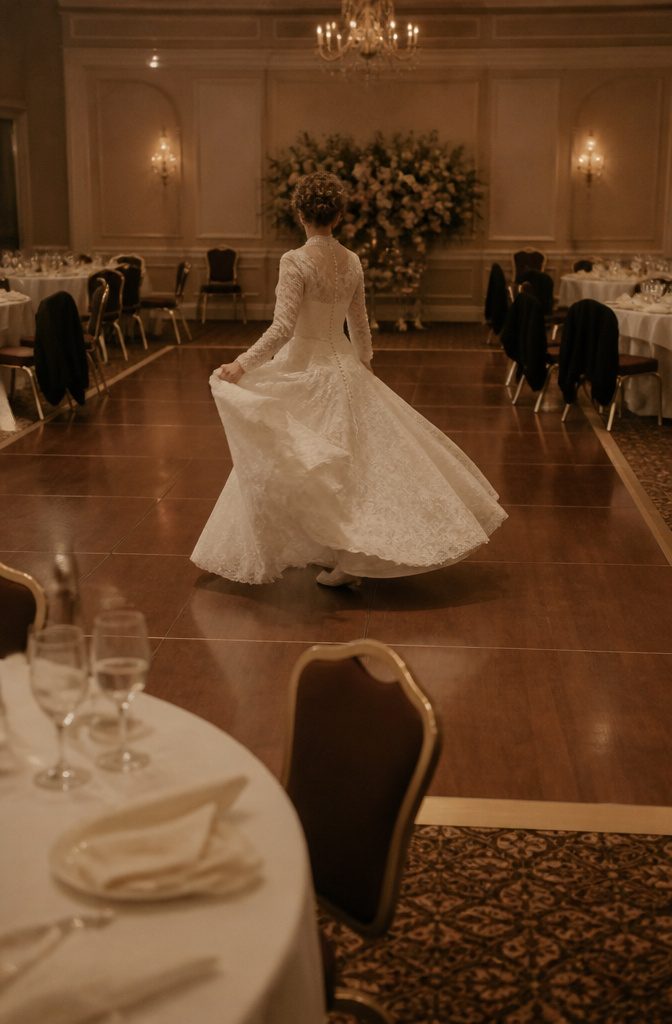
Volume is what a full skirt is for, and in a lace gown it turns every step into a small entrance. That effect only lands, though, if the room can hold it.
Picture the aisle width, the table spacing, and the dance floor before you commit. A skirt this wide needs room to walk, sit, and move through a crowd without catching on chair backs or forcing guests to shift.
Try it on in the fitting room and take a few turns, not just a slow spin, to get a real sense of how it moves.
If the venue is tight, the grand effect you paid for can read as inconvenient instead.
5. Matching Veil
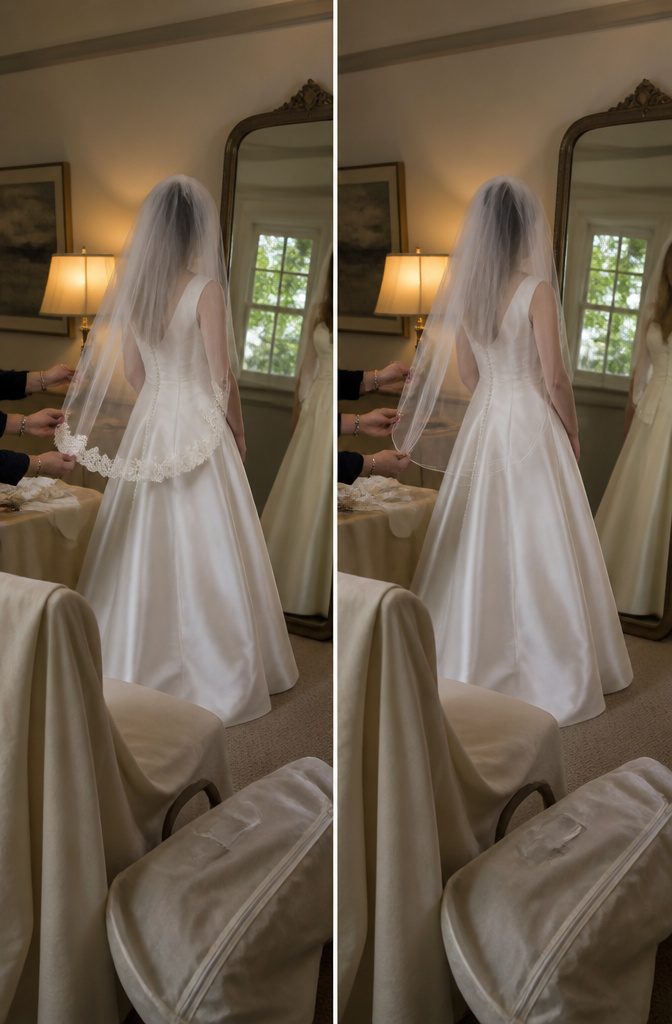
A veil cut from the same lace as the gown, or simply edged in it, makes the whole look intentional rather than assembled from separate purchases.
With a satin dress, compare the fabric whites in person before committing, since satin and lace can read as noticeably different shades under indoor lighting even when the tags say the same color.
Bring the veil to a fitting rather than ordering it separately and hoping they match.
The lace-edged border on a satin gown adds soft contrast without competing with the dress itself, which is exactly the balance a coordinated 1991 bridal look depends on.
6. Tiara
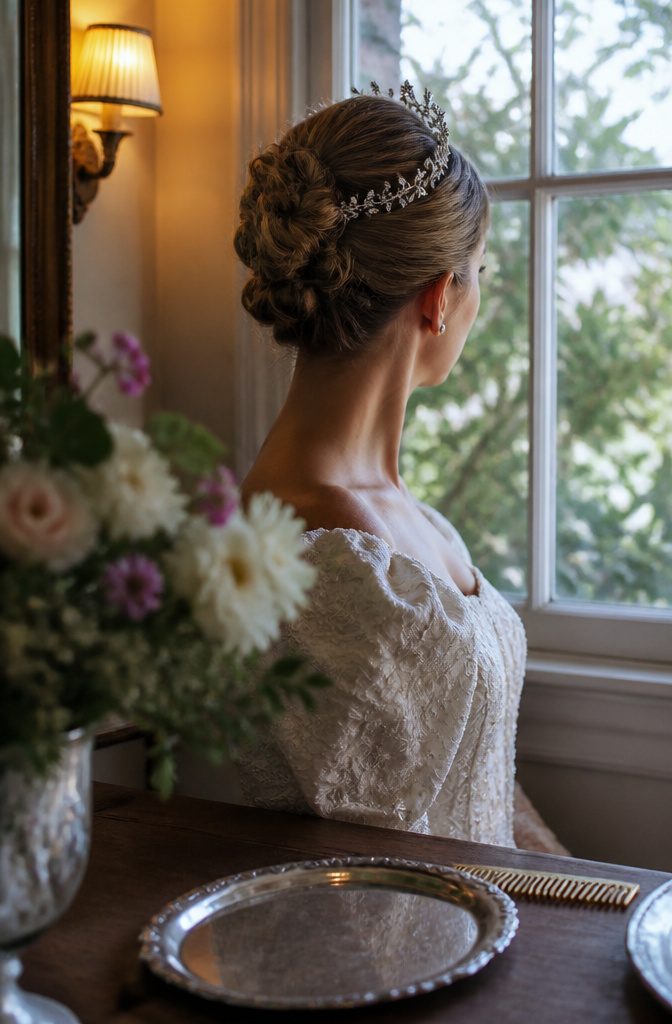
A silver tiara with floral shapes and crystals sits at the crown or just in front of an updo, where it stays put through the ceremony and the photos afterward.
The floral pattern keeps it delicate even when rhinestones catch light from every angle, and rhinestones themselves cost far less than real stones while still delivering the sparkle you want in close-up shots.
Keep earrings simple when you wear a tiara.
The tiara already carries the shine, and adding statement earrings splits the focal point between your hairline and your jawline. Small studs or no earrings at all let the tiara do its job without competing for attention.
7. Long Lace Sleeves
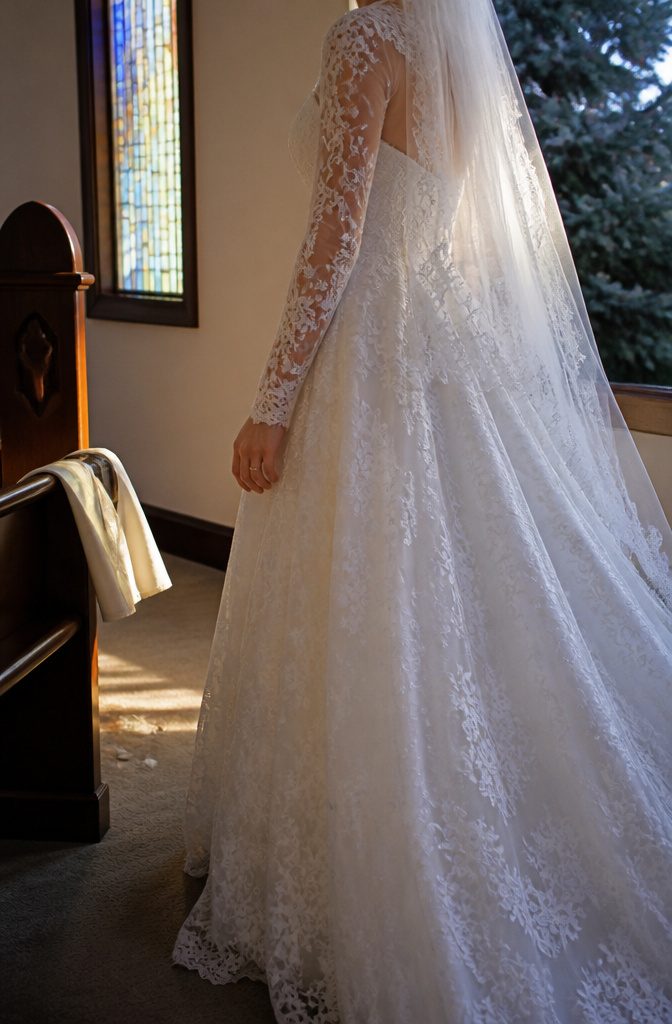
Long lace sleeves run shoulder to wrist and read formally in a way that a cropped or three-quarter sleeve simply does not.
The lace pattern itself does most of the visual work, especially against a long veil where the two textures play off each other.
Sheer lace over bare skin feels lighter than it looks, which is why it holds up better than a heavy sleeve through a long ceremony. That said, sleeve length is worth checking at your fitting rather than trusting the hanger.
Arm length and posture both affect where the cuff actually lands when you are standing upright and moving, and a sleeve that photographs as wrist-length on the dress form may sit differently on you.
8. Corset Bodice
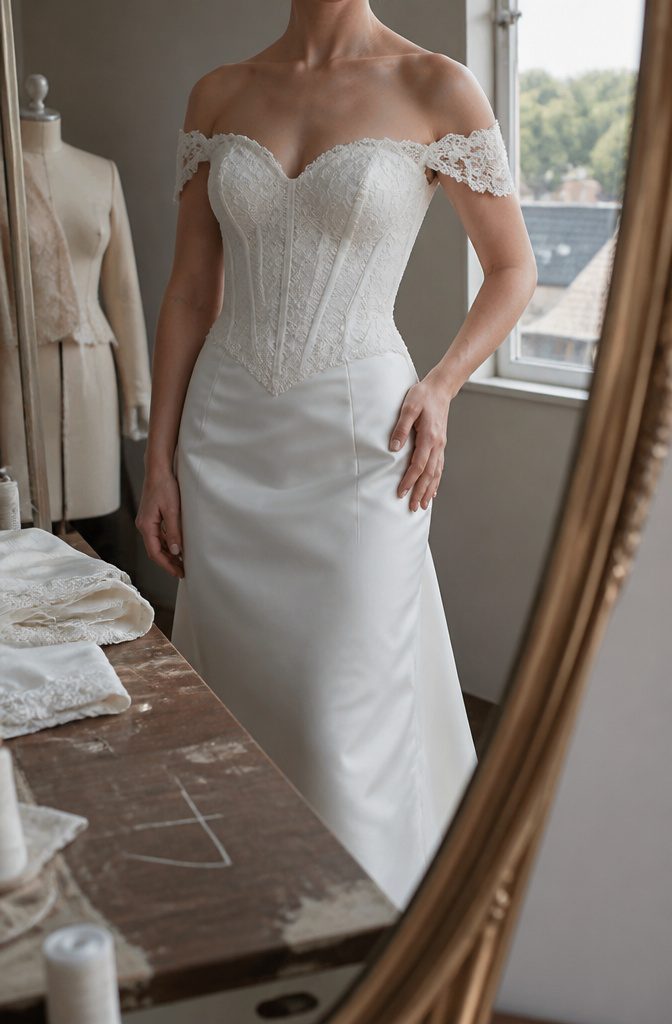
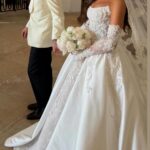
The structured corset bodice was the defining silhouette move of 1991 bridal fashion: it cinched the waist while framing the collarbones, and that double job is what made it so photogenic.
Off-the-shoulder necklines paired with it especially well, since the exposed collarbone line and the boned waist read as one continuous shape rather than two competing details.
Keep the lace on the bodice and let the skirt run smooth.
Lace that travels all the way down a full satin skirt competes with the structure instead of setting it off. A smooth skirt below a lace-and-corset bodice lets the waist do its work.
Fit matters more here than with any other silhouette. A structured bodice cannot absorb a poor fit the way a loose, draped one can, so book a fitting with genuine room in the schedule to adjust.
9. Floral Accents
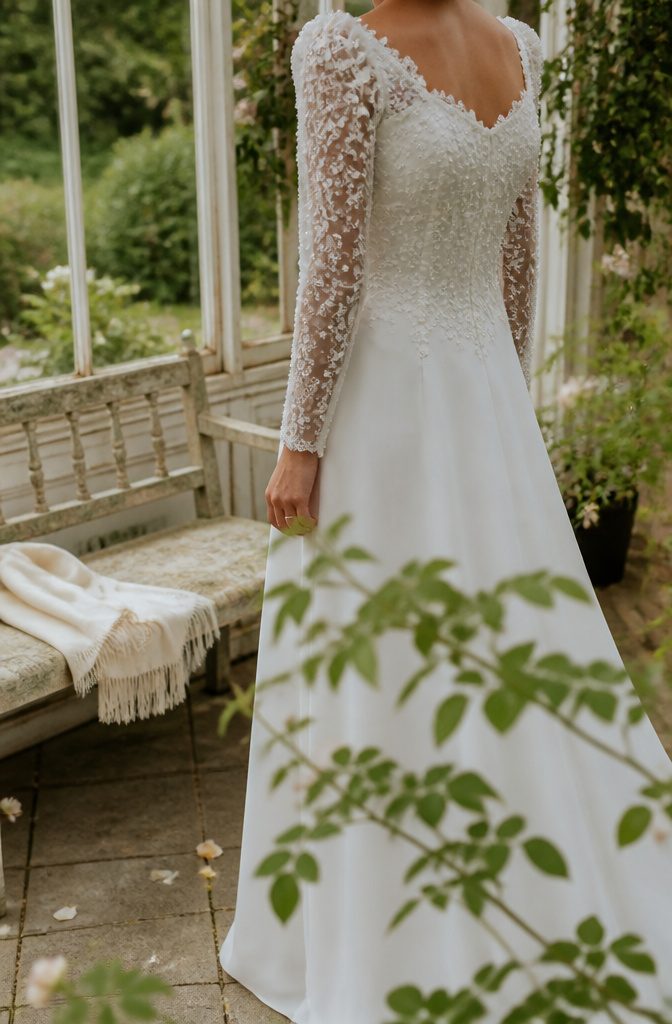
Floral lace appliqués scattered across the sleeves and bodice give a gown that softly embroidered look without adding much visual weight, especially when the skirt beneath stays light.
The same motif can carry through to a veil, comb, or headpiece, so one floral theme reads as intentional rather than accidental.
Pick one place for the florals to lead. If the dress already carries them across the bodice and sleeves, keep the accessories plain.
Stacking florals on the dress, the veil, and the headpiece all at once crowds the look in a way that works against the softness that made the detail appealing in the first place.
Choosing One Era Detail for Small Venues
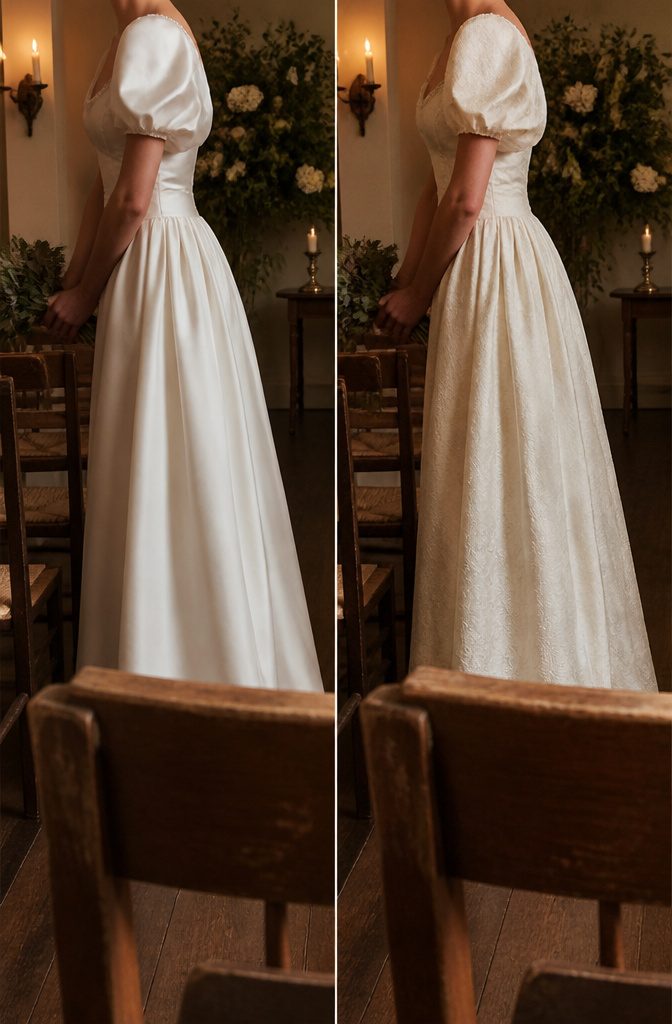
Small venues punish the full 1991 silhouette harder than any other setting. Pick one era-defining feature and keep everything else clean: a puffed sleeve against a plain skirt, or a high neckline against a minimal bodice.
Stacking big shoulders, a built-in collar, and a heavy skirt in a tight room turns the gown into the room.
Pick one era-defining feature and keep the rest of the cut clean.
The business-like shoulder is the detail worth skipping first.
Heavy shoulder structure ages a gown faster than any lace does, and in a small venue it reads as costume rather than bridal. A puffed sleeve stays readable; a padded power shoulder competes with the architecture and usually loses.
Short Dresses and Removable Drama
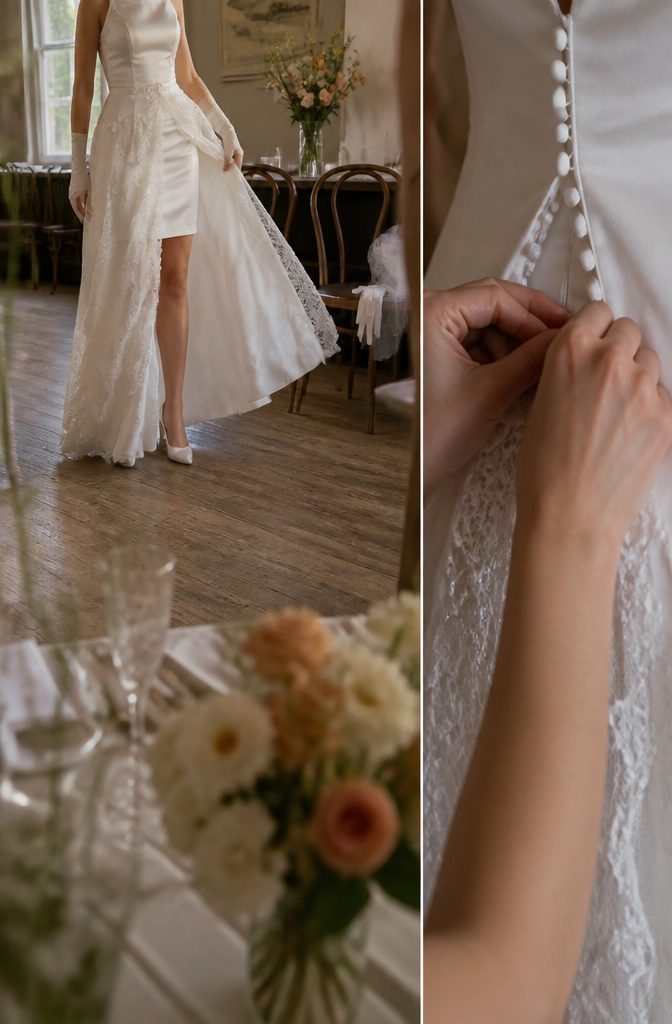
A white lace mini with puffed sleeves, a peplum waist, a sheer tulle veil, and satin gloves is one complete 1991 short look, and the shorter hem cuts both fabric cost and hemming time compared to a ballgown.
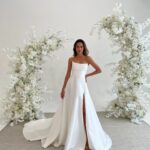
The second short option pairs a high neckline and a side slit with a lace-edged overskirt: the slit gives you room to walk, and the overskirt layers on exactly the kind of drama the era loved.
What makes the overskirt worth doing is that a seamstress can sew it as a detachable layer, so it comes off for dancing and you get 2 dresses from 1.
The heavy shoulder structure that showed up on some early-90s gowns is the one piece I would leave out; it ages a gown faster than any lace does.
Frequently Asked Questions
Are 90s wedding dresses back in style?
Yes, 1991 bridal silhouettes have a real following right now, particularly puffed sleeves and lace bodices.
Proportion decides it: a rounded shoulder puff or a corset bodice over a smooth skirt reads romantic rather than dated, while the more extreme versions from that era can tip into costume.
One era detail done well is what makes the look work in 2024.