Wedding flowers run from wholesale roses that cost pocket change to out-of-season peonies that spike past the budget entirely, and the deciding factor is usually whether you are building the bouquet yourself the morning of or handing it to a florist.
1. Roses
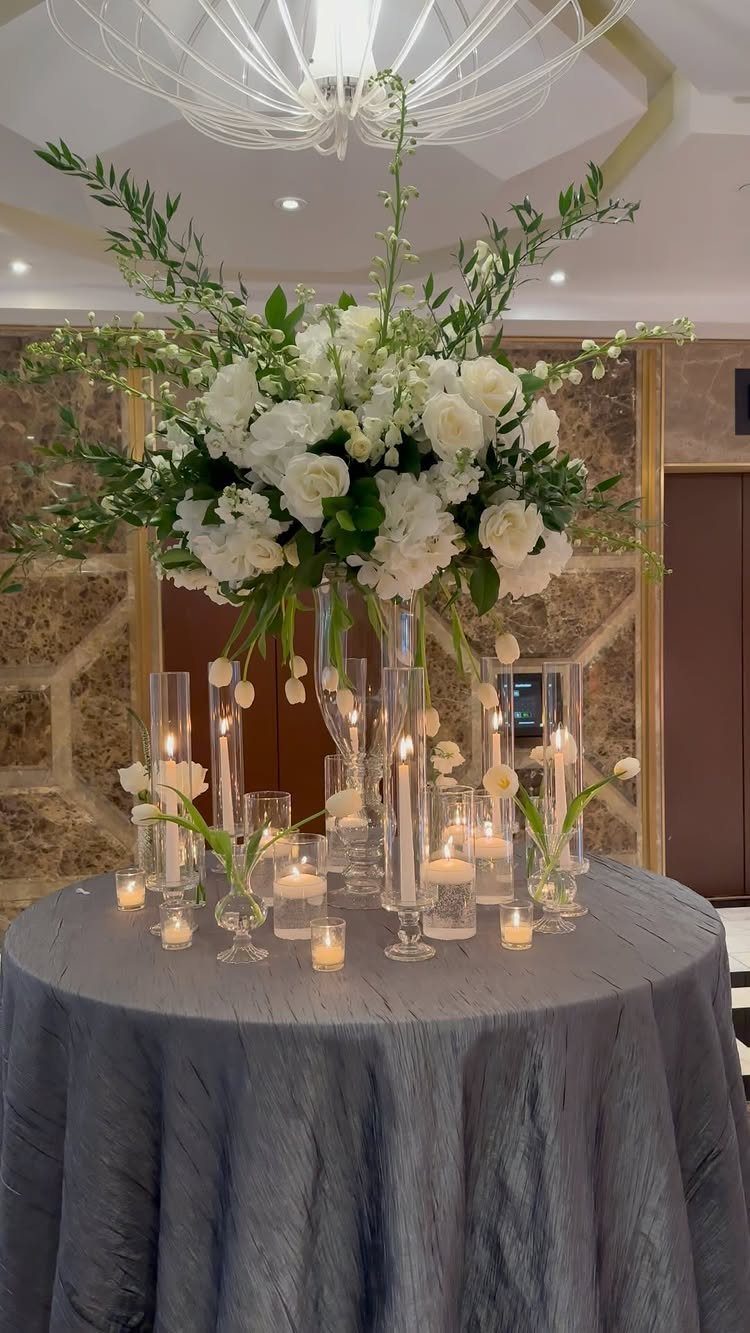
Roses carry the weight of every wedding promise without trying too hard.
A single stem runs a few dollars wholesale, so a full bridal bouquet lands well under what a florist charges if you buy stems yourself and build it the morning of.
White garden roses pair with hydrangeas for a clean look, or deep reds stand alone in a dozen-stem clutch for a winter ceremony. Spray roses stretch further: one stem gives multiple usable heads for table work.
Thorns and timing are the real downside; roses open fast in heat, so a June outdoor wedding needs backup ice and a cooler.
2. Peonies
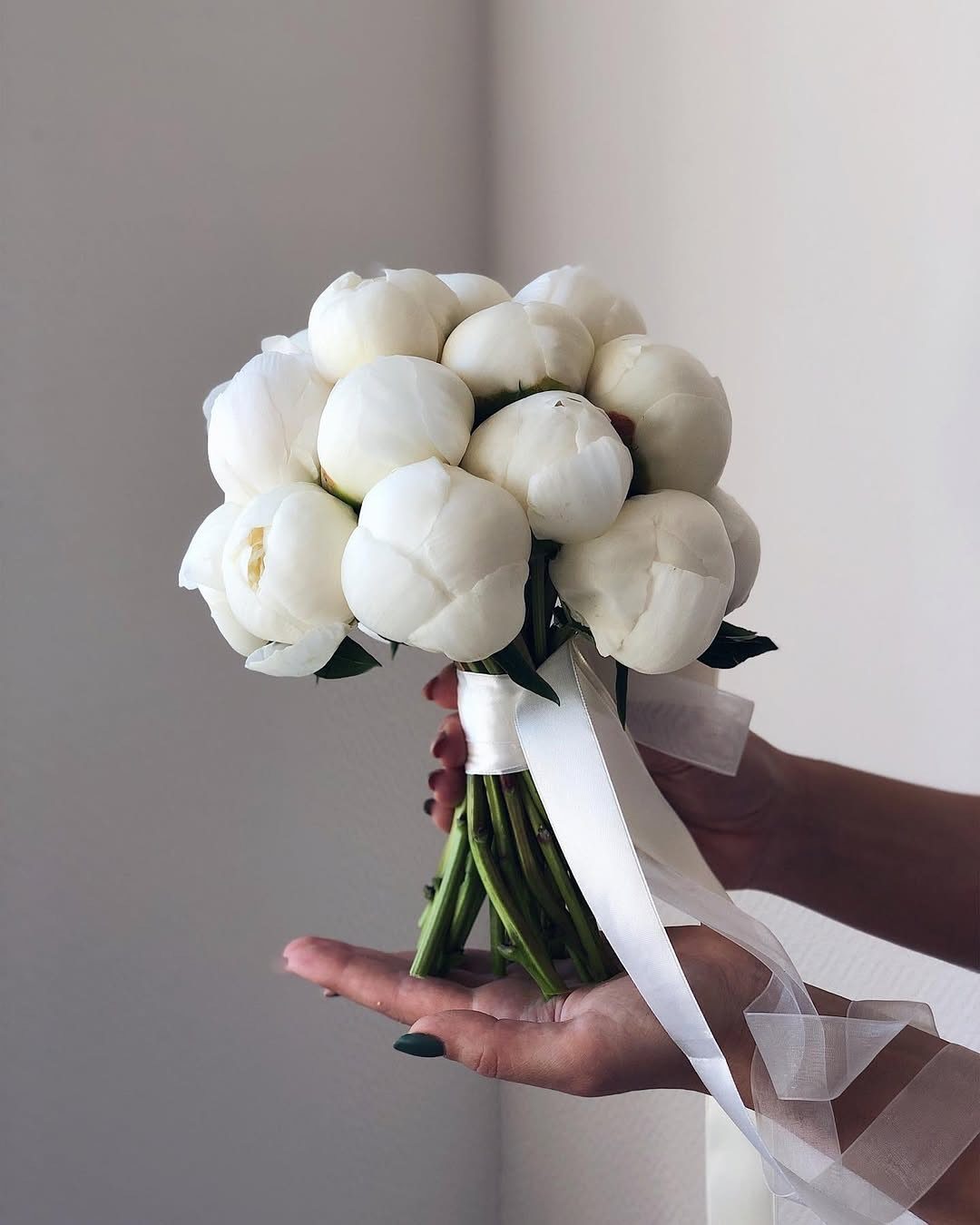
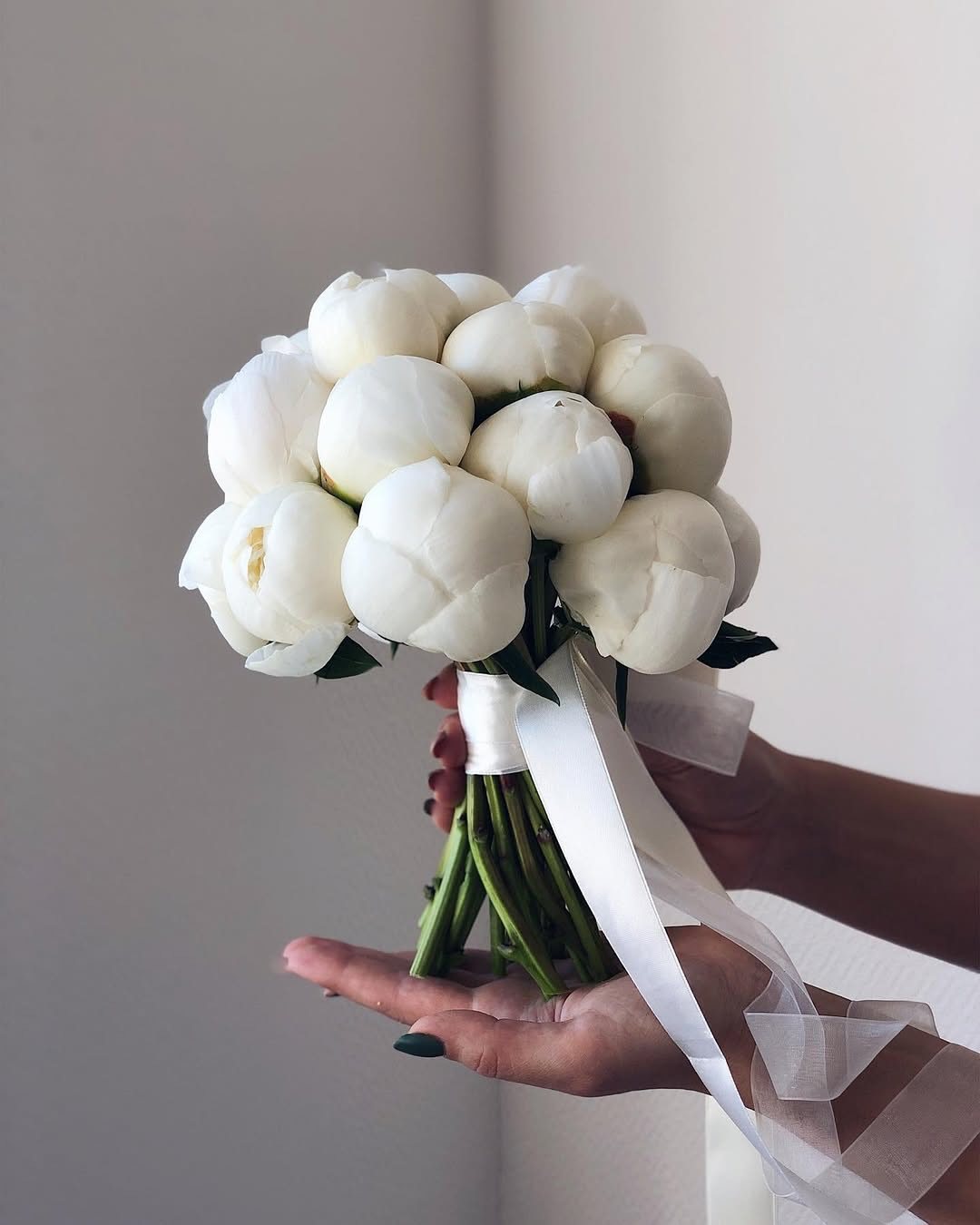
Peonies demand early summer and a generous hand. Their heads run softball-sized, which means fewer stems fill a bridal bouquet where roses need far more.
That fullness costs: wholesale stems spike out of season, and their window runs April through June.
For a modest budget, peonies work best as accents, a few stems tucked among garden roses or ranunculus to fake the look at lower cost.
The coral shades photograph warmer than white against skin, and their ruffled layers hide wiring mistakes if you are arranging your own.
3. Anemones
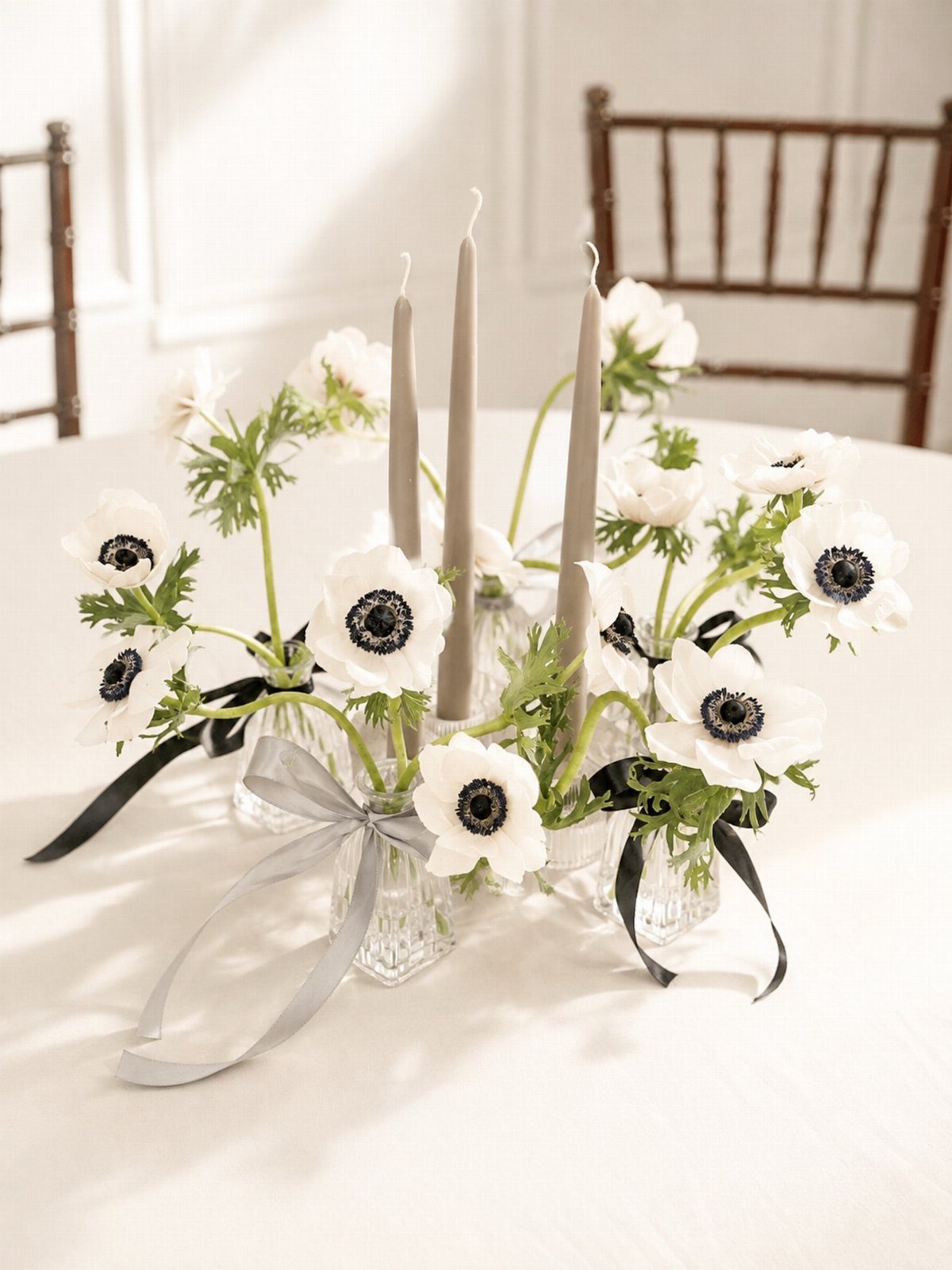
Anemones read modern because of that dark center, a natural bullseye that draws the eye without extra effort. The white-and-black version suits a monochrome palette; jewel tones shift the same shape toward evening formality.
They are fragile, with stems that bend and bruise, so water tubes or single-stem vases work better than massed hand-tied bouquets if you are DIYing. November through May is their reliable season.
Pair them with eucalyptus or olive branches; the silvery green softens their graphic edge without competing.
4. Sweet Peas
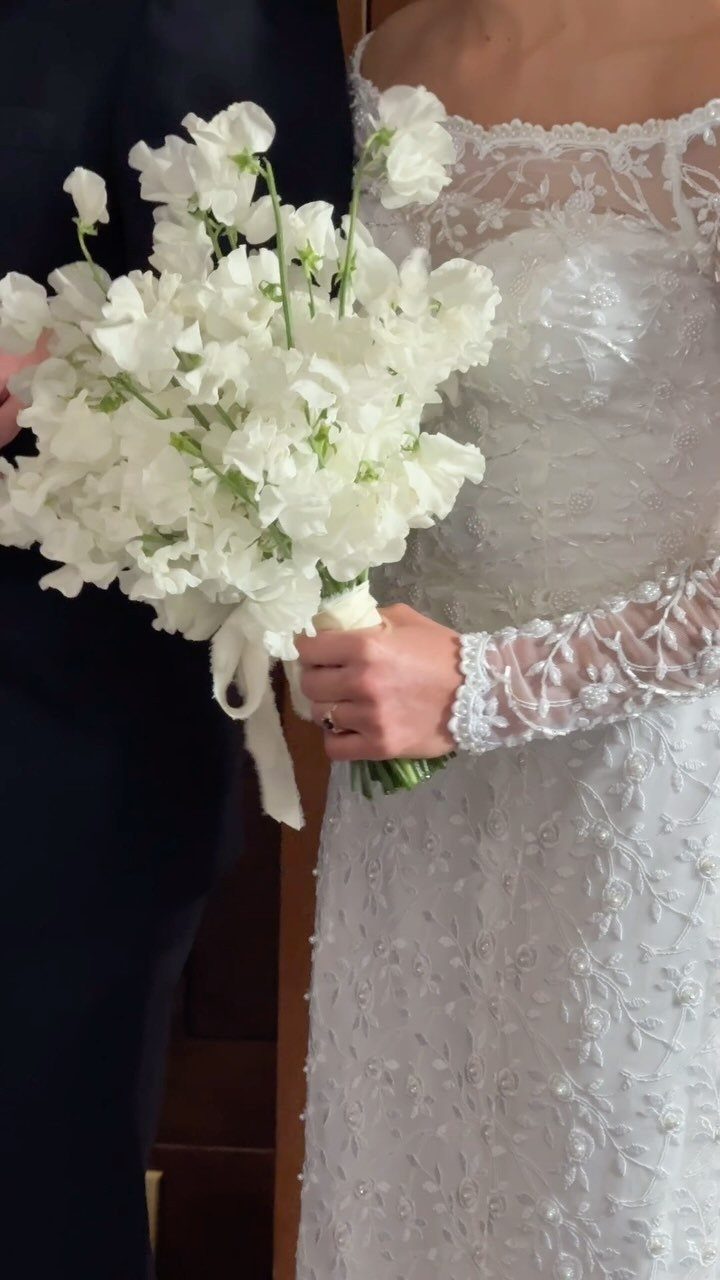
Sweet peas bring a ruffled delicacy that reads vintage without the dust. Their stems are thin and their vase life short, so they suit a Thursday pickup for a Saturday wedding or a local grower who cuts morning-of.
The fragrance is the reason to bother; it is faint, not overwhelming, and it disappears in outdoor wind. For a bouquet, a generous bunch with long ribbon tails gives the loose garden shape that flatters lace and simple gowns alike.
They do not travel well; skip them if your flowers ship cross-country.
5. Calla Lilies
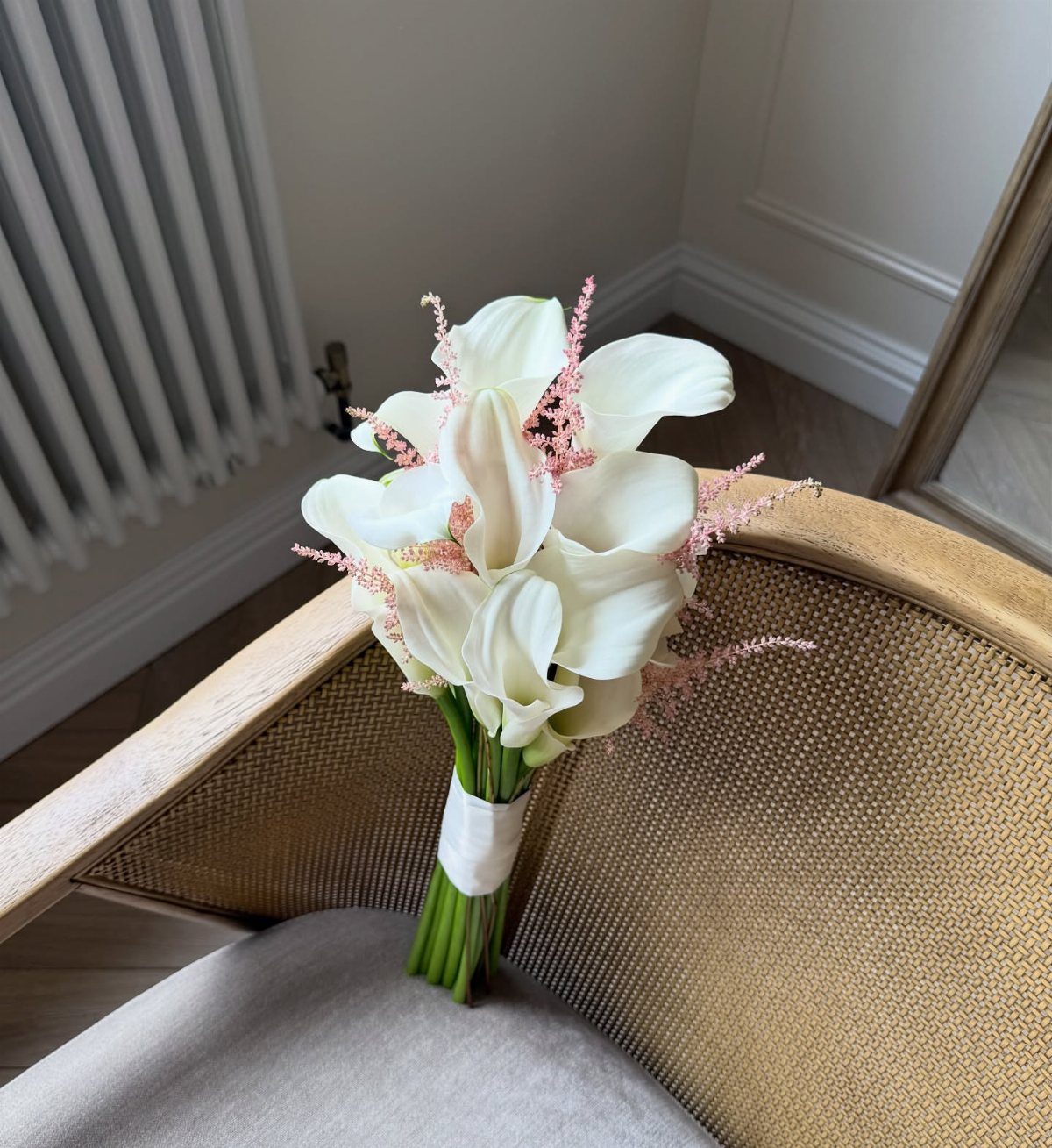
Calla lilies earn their place through stem economy and clean lines. One stem, one bloom, one decisive curve: a dozen make a bridal bouquet that photographs sculptural against busy lace or detailed beading.
The real cost comes with premium large-headed stems, and small florist-grade versions look thin in comparison.
6. Wildflowers
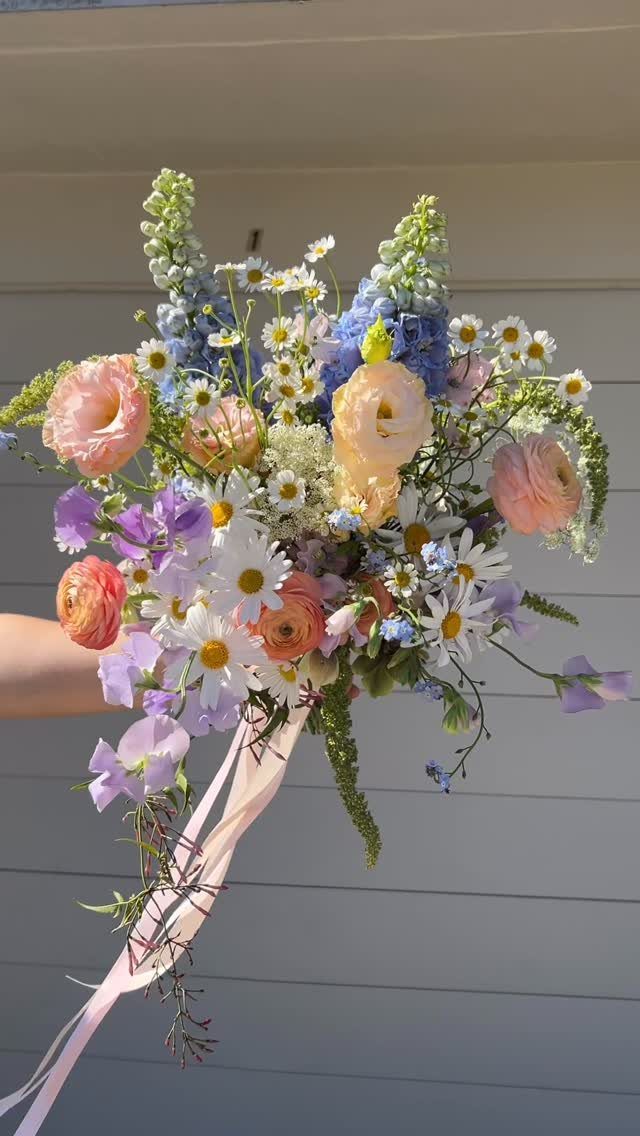
Wildflowers trade control for charm. A mix of ranunculus and daisies and delphiniums with trailing ribbon is not a single ordered palette but a gathered look that tolerates variation.
That tolerance is the budget advantage: grocery store bunches, farmers market leftovers, and whatever your aunt grows all fit the same aesthetic. The risk is cohesion.
Without 1–2 repeat flowers, the arrangement reads accidental, not intentional. Pick a backbone, a strong base of the total stems in one shape or color, then fill with what is available.
For outdoor ceremonies, wind and heat wilt delicate stems fast; sturdy fillers like Queen Anne’s lace and yarrow hold up where sweet peas would collapse.
7. Hydrangeas
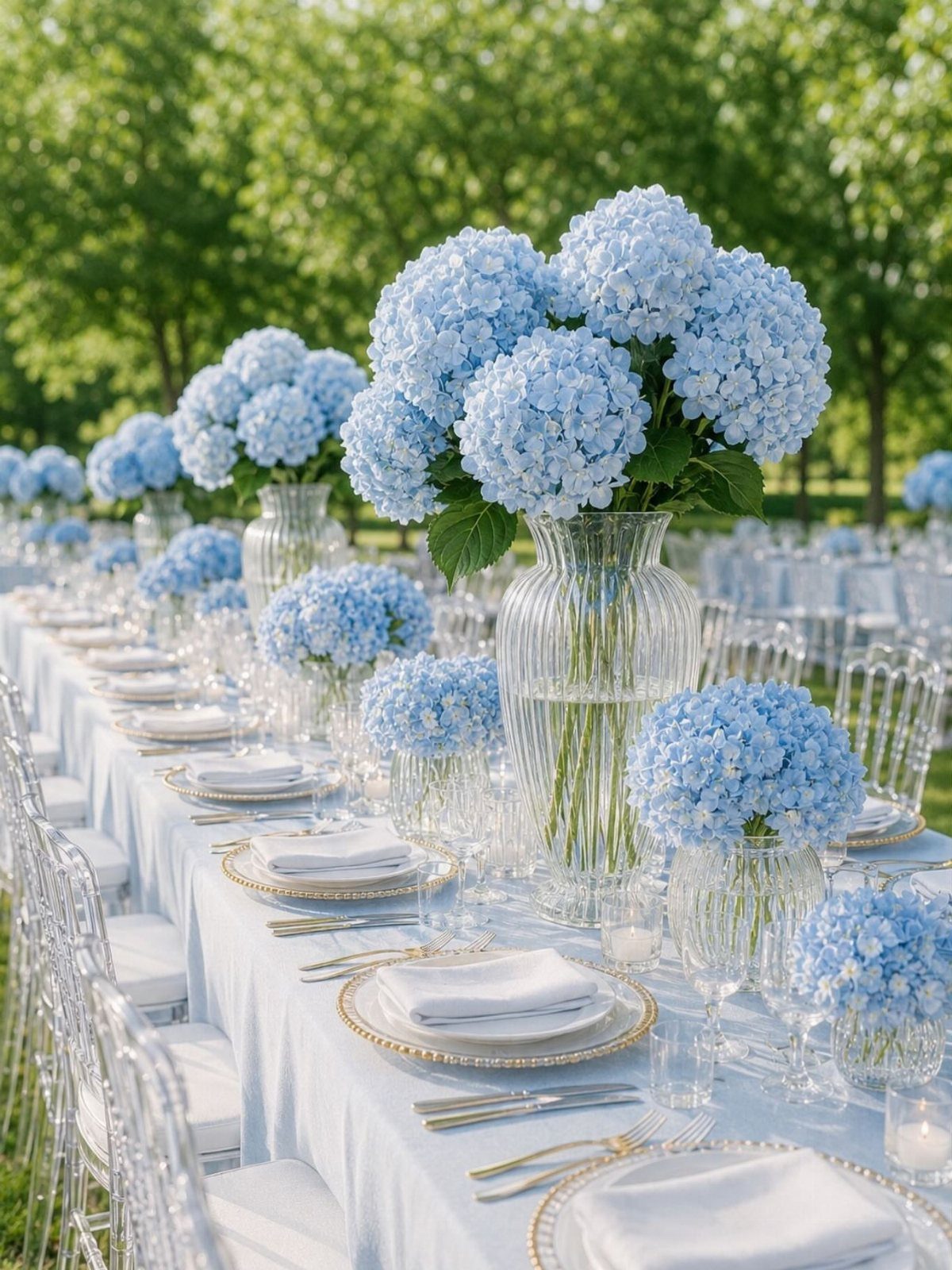
Hydrangeas give you the most volume per stem of any flower on this list, which matters when you’re filling a rented hall on a budget.
A single fluted vase with a few stems reads as a full centerpiece, no greenery required.
The classic blue variety runs white, cream, pink, and lilac too. Their season is May through September, so summer and early autumn weddings get the best prices.
I like them as the focal flower in mixed arrangements with roses and fresh foliage, or paired with orchids for something more contemporary.
They also work alone in cascading pieces or large table landscapes where their cloud-like form carries the whole look.
For a small group, 3 vases down a long table does the job. For a statement piece, a single oversized arrangement on a pedestal draws the eye without fighting the room.
8. Ranunculus
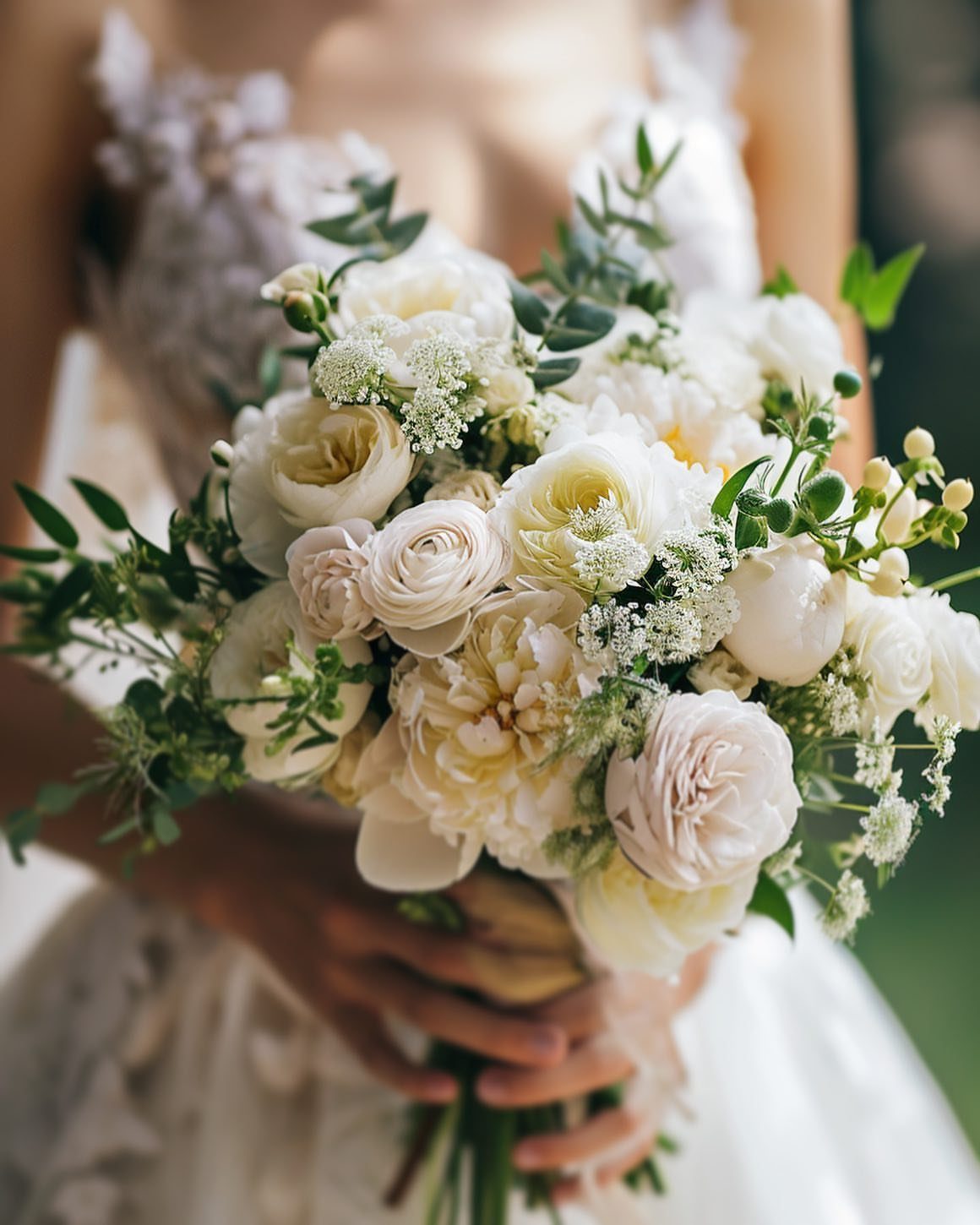
The paper-thin petals on ranunculus look delicate but hold up better than you’d expect in a bridal bouquet, and their layered structure adds depth that simpler flowers can’t match.
I find them most useful as an accent bloom, where their charm, as the Victorian language had it, does the romantic work without shouting.
Their season runs January through May, which makes them a natural for spring weddings and a harder get for summer dates.
The color range is broad enough to work across most palettes; blush and peach read soft and traditional, while burgundy shifts the same flower toward something moodier.
They pair well in mixed bouquets with roses and greenery, or stand alone in boutonnieres where their compact shape stays neat on a lapel.
If your florist has them, the parrot varieties with fringed edges add texture worth the slight upcharge.
9. Tulips
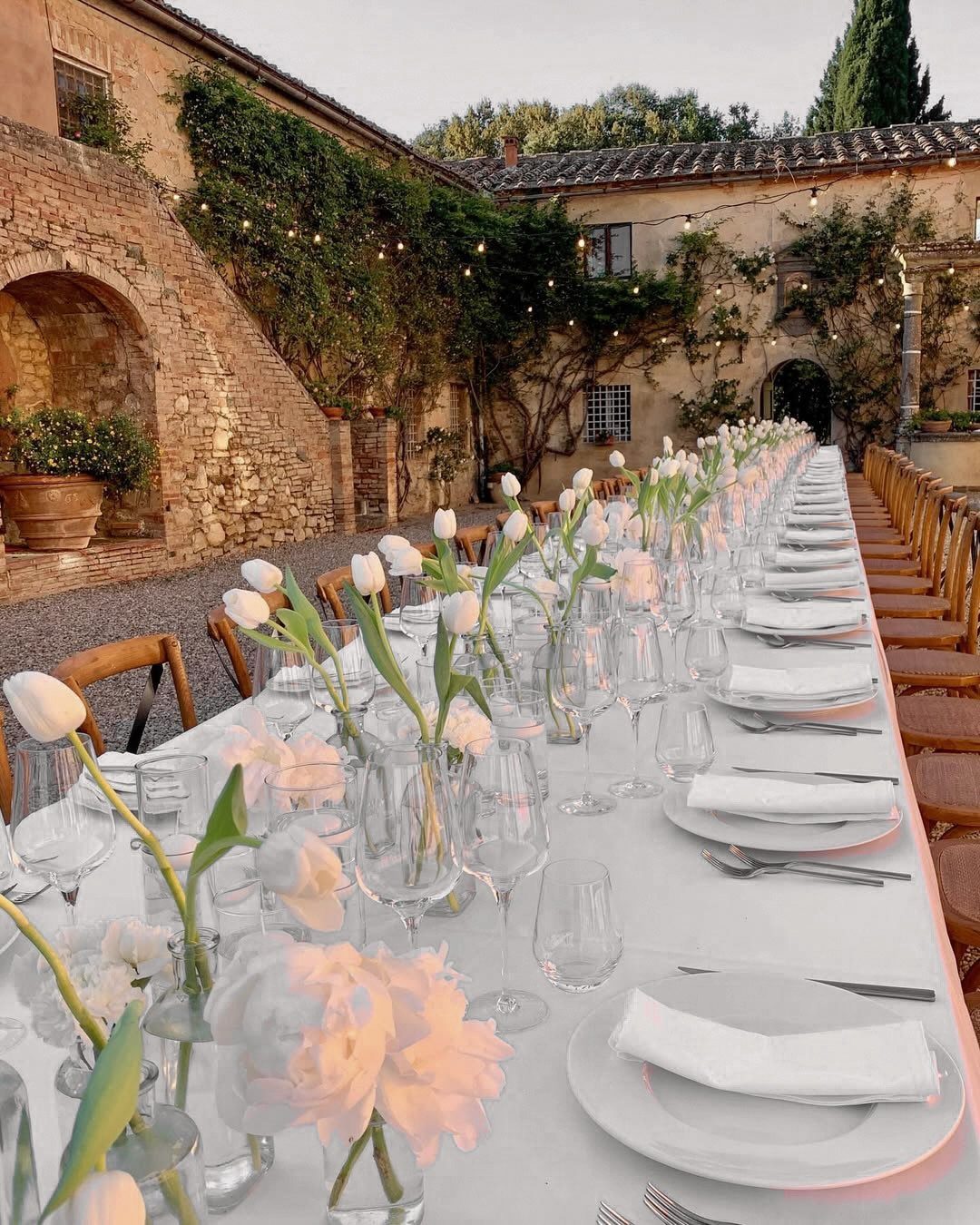
Tulips carry clean symbolism: love, happy years, rebirth. That directness suits couples who want meaning without needing to explain it.
Their season is March through June, and they work across the full range from bud vases on a rustic table to elaborate ceremony installations.
I tend toward white or soft pink for minimalist settings where the shape itself does the work, and save the parrot varieties with their fringed, feathered petals for moments that need a single distinctive note.
They are not a flower that opens much after cutting, so buy them at the stage you want to see.
For a long table, scattered bud vases with a few stems each give you the look without a florist’s full centerpiece price.
10. Orchids
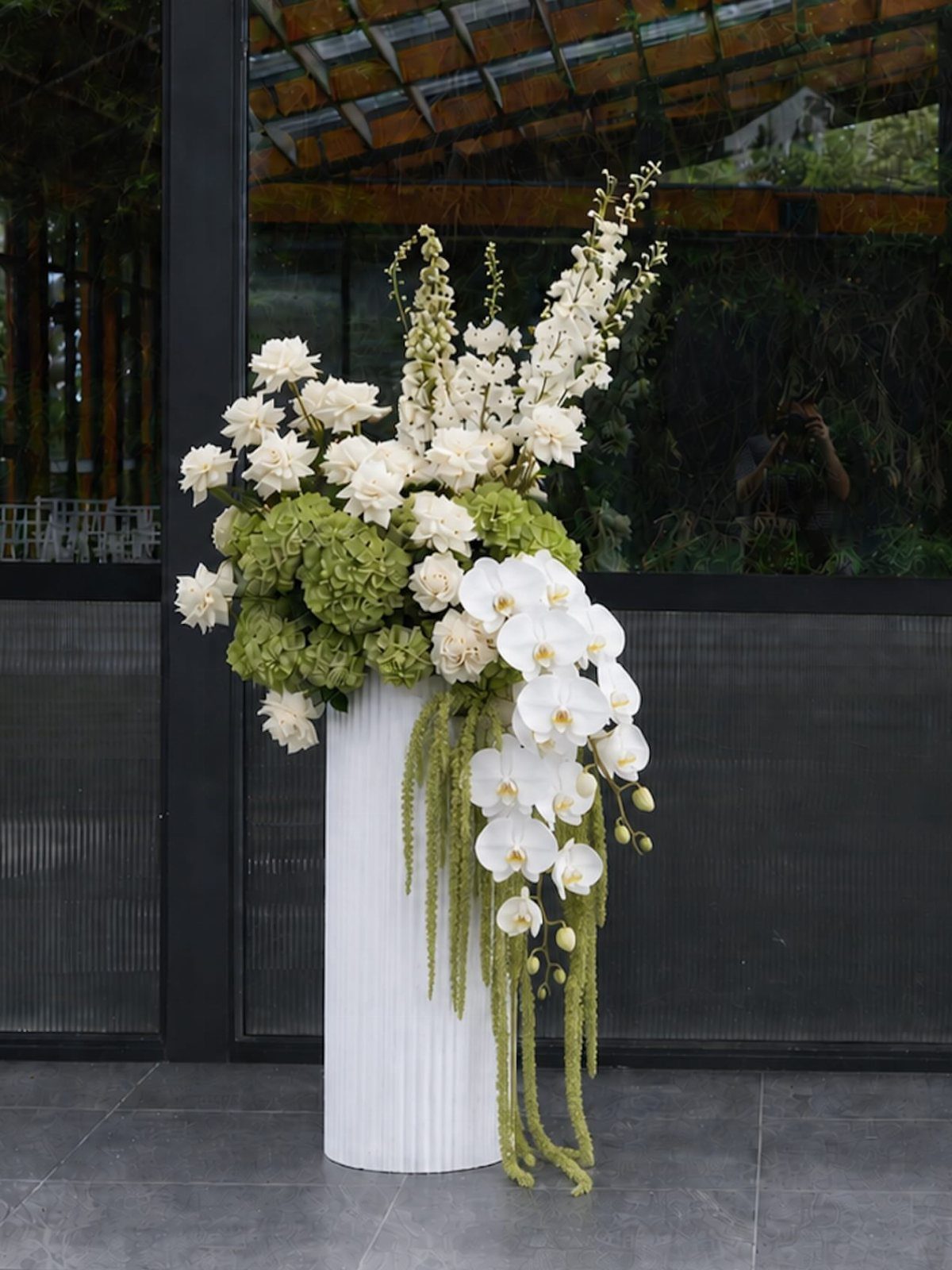
Orchids read expensive even when they are not, which is useful for a budget that needs to look like more than it is. A white Phalaenopsis set against dark glass does the modern sophistication work without competing with the room.
Their season runs April through September, with peak availability in May. The varieties most useful for weddings are Phalaenopsis, Dendrobium, and Cymbidium, in a color range that includes pink, red, blue, white, purple, orange, green, and yellow.
I find the pinks and whites most versatile; the stronger colors need a confident palette to support them.
They suit tropical themes directly, or add an edge to traditional arrangements when you want something that photographs contemporary. For a statement installation, their height and sculptural shape carry vertical space that rounder flowers cannot.
11. Dahlias
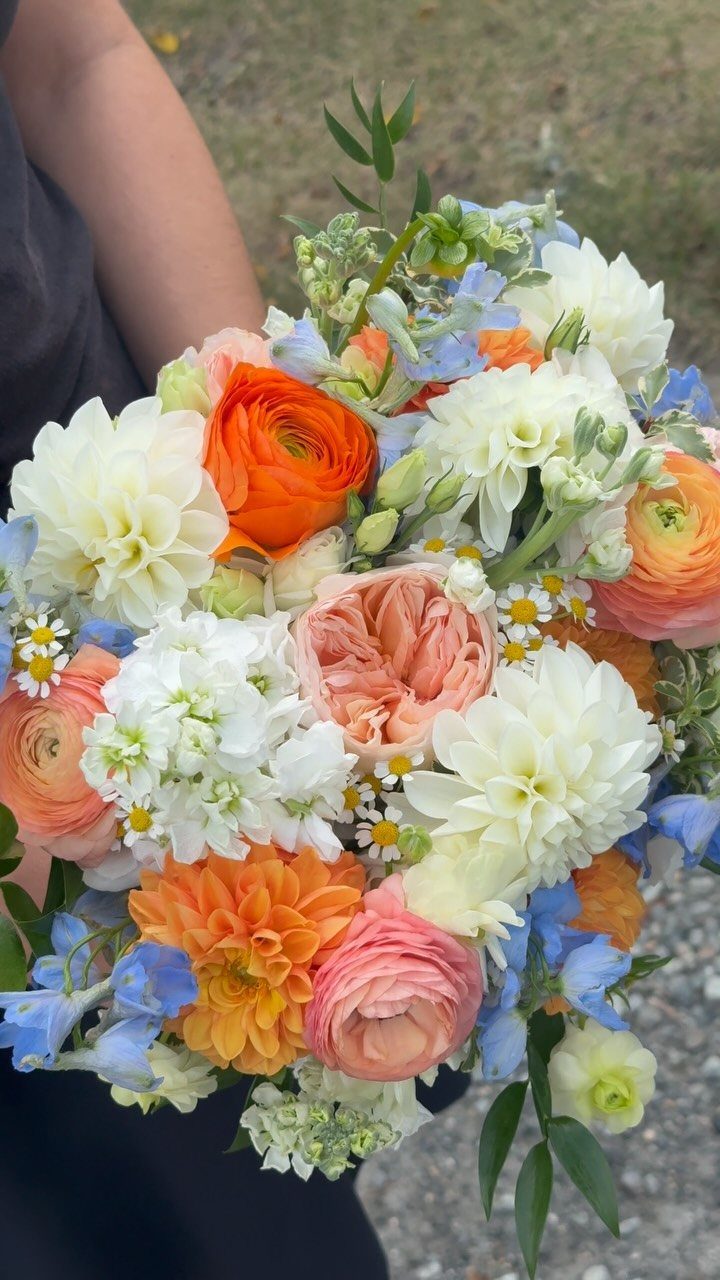
Dahlias are the flower I point to when a couple wants fall color and real presence.
The dinner-plate varieties measure at least 8 inches across, which means a single stem in a vase reads as a centerpiece, and the smaller pompon types layer well in mixed bouquets with white and orange blooms against garden roses and delphinium.
Their season is May through mid-October, with peak texture and color in late summer. The range runs pink, purple, red, scarlet, orange, yellow, and white, plus striped and bi-color varieties that add interest without needing additional flower types.
I find them most valuable for statement pieces where their intricate petals create the focal point your guests remember. For a budget trade, they replace volume: 3 large dahlias do the work of a dozen smaller stems.
Inner strength and creativity is their symbolism, which suits a wedding that feels personal rather than traditional.
12. Gardenias
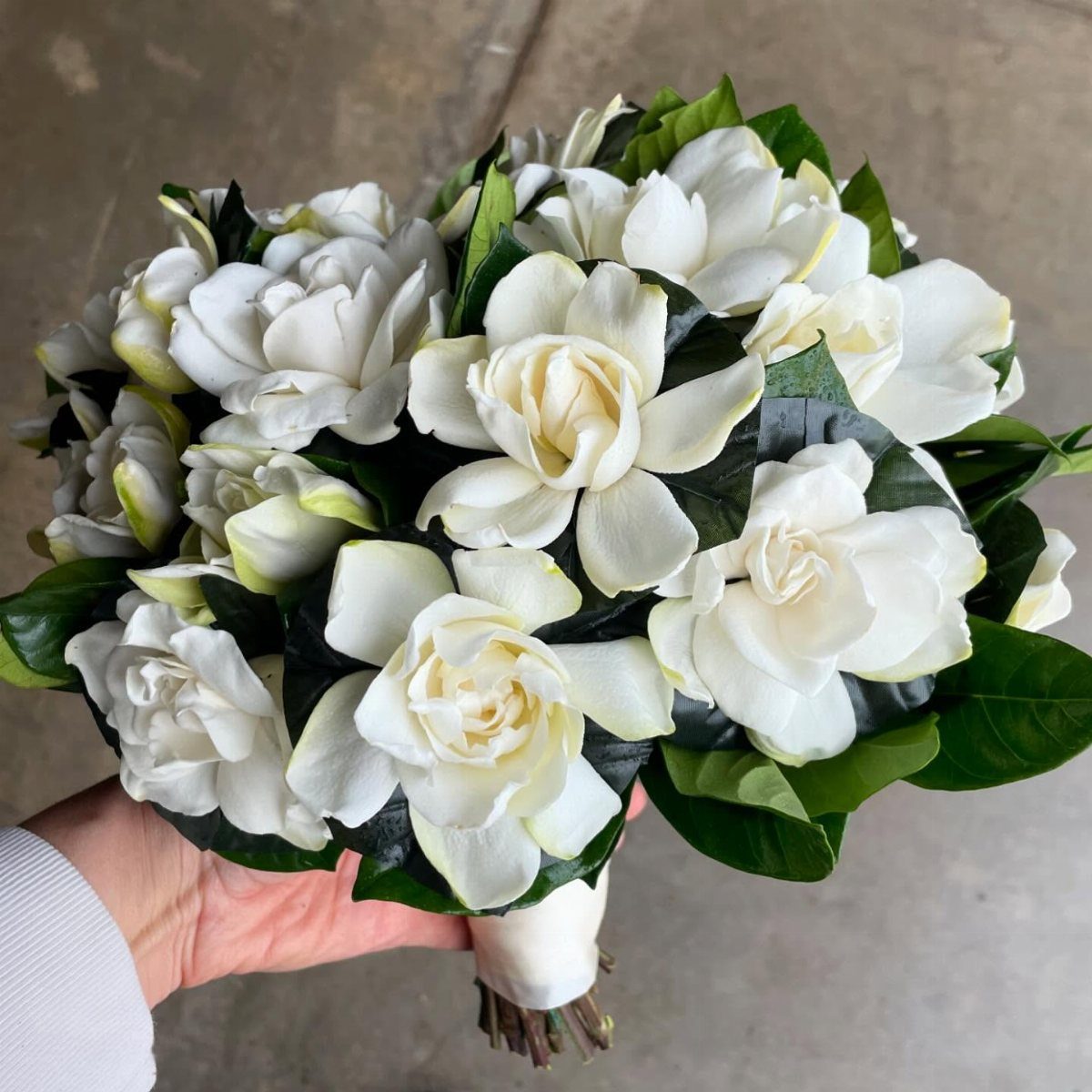
Gardenias are the most fragrant choice here, which is either their selling point or their problem depending on your venue size and your guests’ sensitivity.
Creamy white petals and glossy green leaves read classic and refined; their symbolism of elegance and refinement is not subtle, which suits a formal wedding and can feel heavy at a casual one.
Their season is May through September, and they bloom in red, pink, pale yellow, and white, though white is what you will find most available.
Without a stem, they work best as table decor, single-flower corsages, or hair accessories where their compact shape stays put. The flower crown is a particular strength; their size and scent sit right against skin without overwhelming it.
For a bouquet, I like them tightly clustered and wrapped clean, as above, rather than mixed with competing blooms. Their fragrance does the layering work.
13. Marigolds
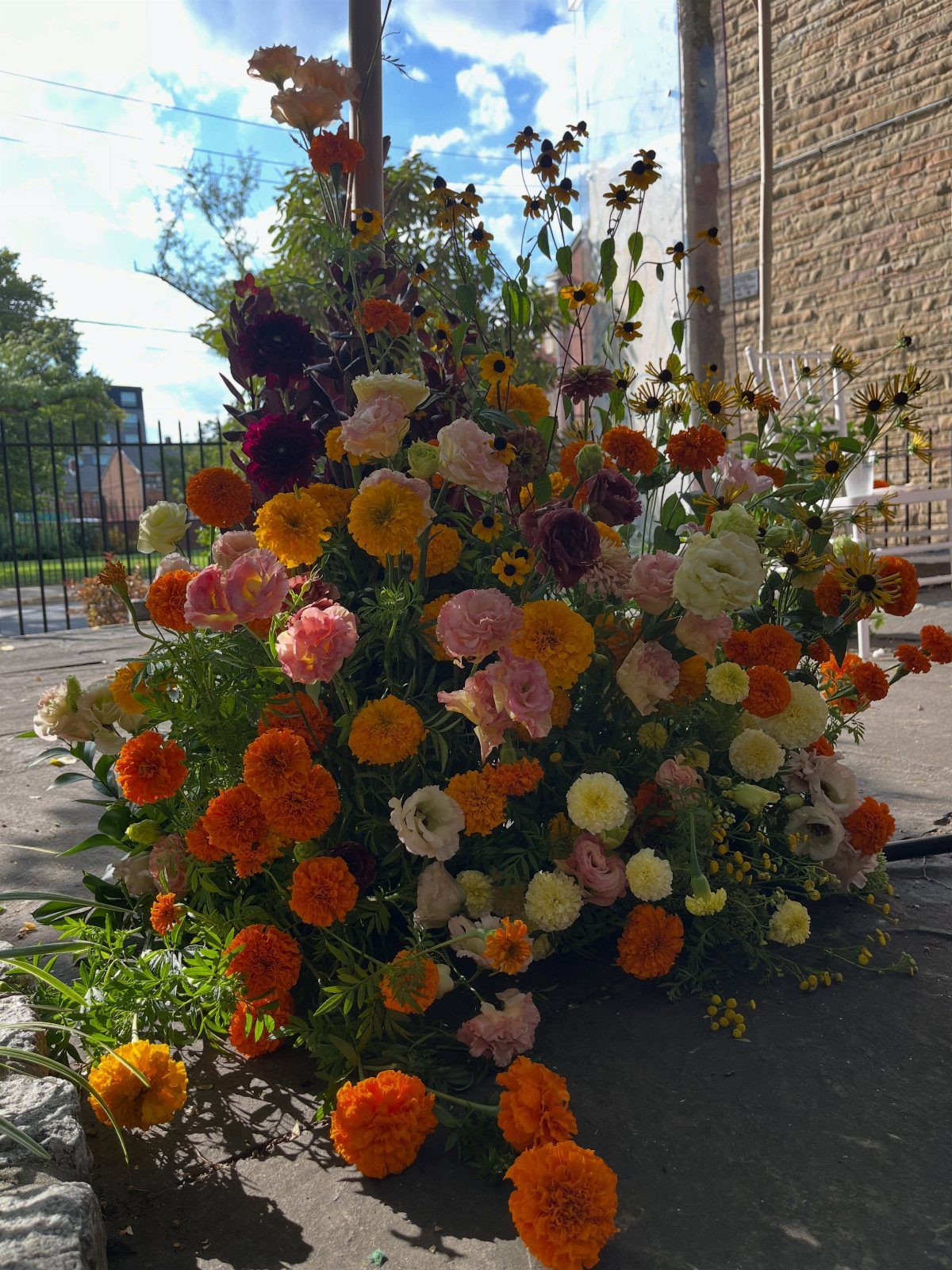
Marigolds carry their own heat. Gold, orange, and red tones read autumn even in late spring, and the color runs so deep you need less stem count to fill a space than you would with paler flowers.
For a Hindu or Mexican wedding, marigolds already belong; for anyone else, they are a deliberate swerve from blush-and-ivory predictability. Garlands over an arch or strung between poles keep the look ceremonial rather than decorative.
The stems are sturdy enough to lie loose in a ground-level installation without much wiring, though the heads are heavy and will droop if hung upside down.
They bloom May through November, which covers most outdoor wedding season in the northern US.
In cooler months, imported marigolds hold up but cost more; for a November wedding, I’d build the palette around what is still field-grown near the venue.
14. Chrysanthemums
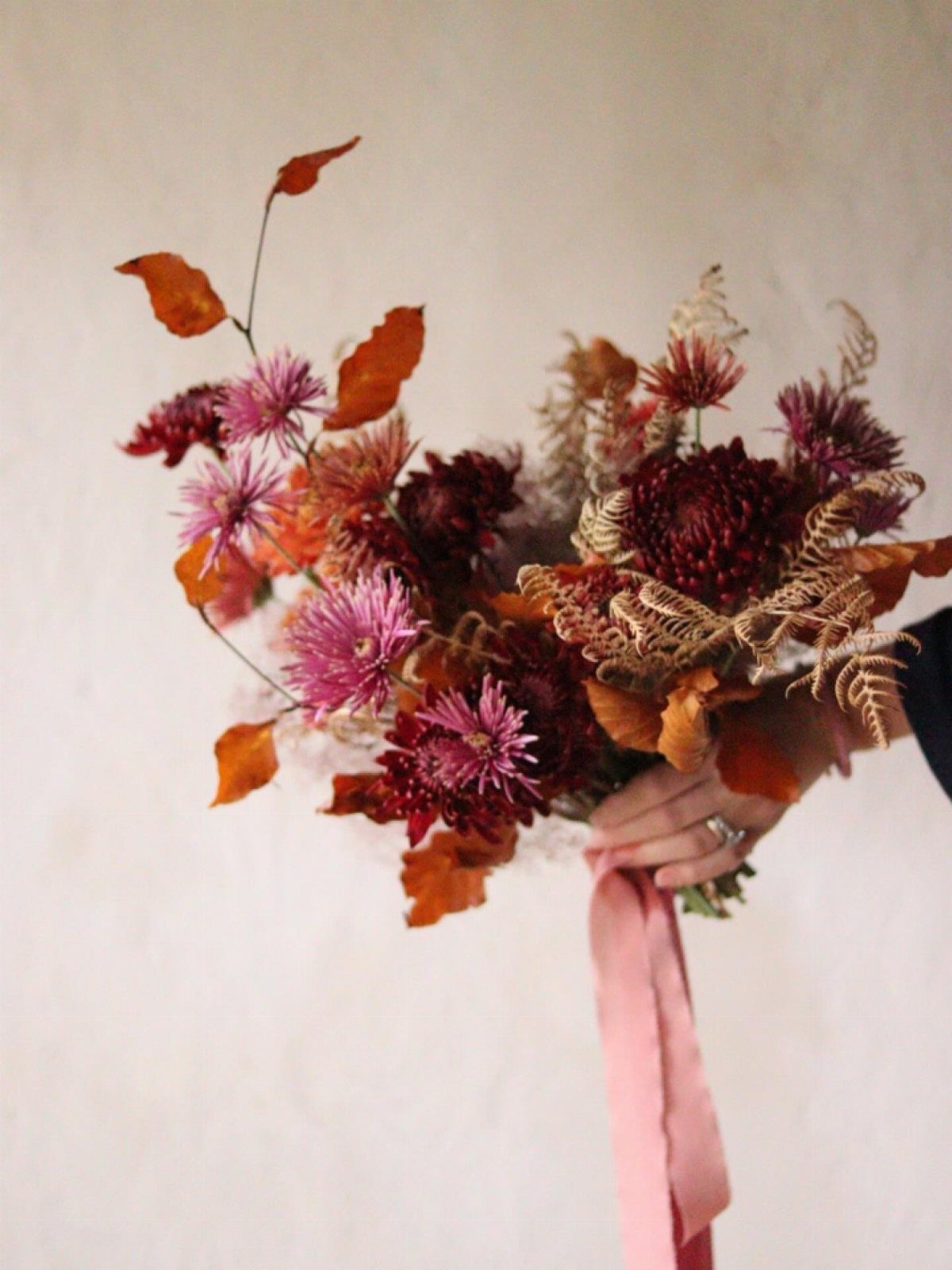
Mums are the flower you graduate to after sticker shock at the rose quote. They come in daisy shapes, button shapes, spider varieties that look like fireworks, and the color range runs from white through rust to deep purple.
That variety means a mum-only bouquet avoids the flat, single-note look cheaper flowers often give.
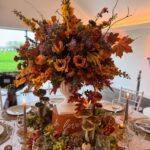
The texture is the point. Dried ferns or bleached ruscus layered with burgundy and copper mums give an autumn bouquet depth without requiring expensive out-of-season imports.
August through November is their natural window; outside those months, you are buying greenhouse stock or shipping from the southern hemisphere.
For centerpieces, football mums or disbud mums (one large bloom per stem, the side buds removed) give the volume of hydrangeas at roughly half the stem price.
They last well out of water for several hours, which matters if your ceremony and reception are in different locations.
15. Baby’s Breath
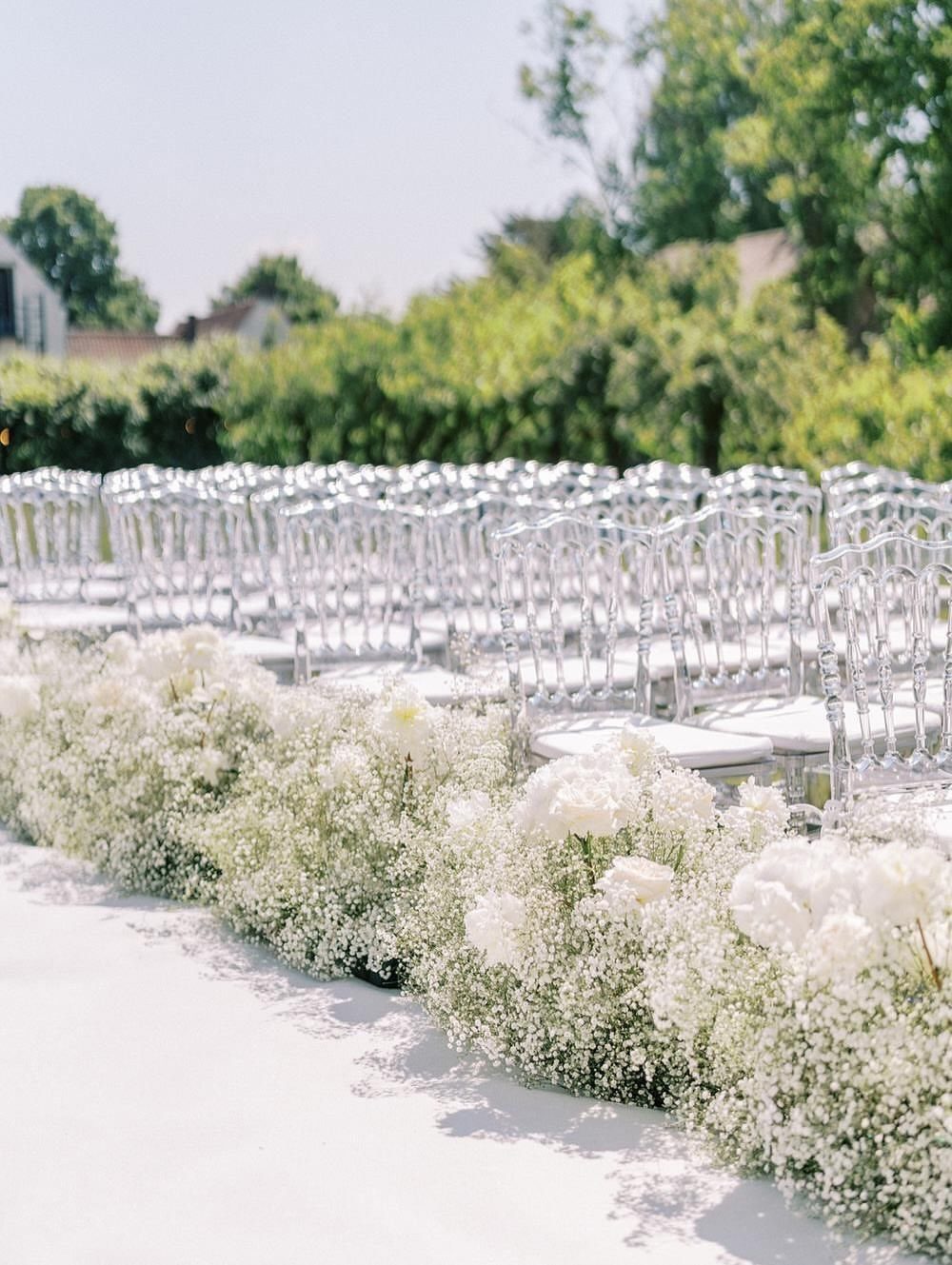
Baby’s breath works hardest when it is not pretending to be something else. Used as filler around roses, it reads cheap because it is cheap.
Let it carry the whole arrangement and the cloud-like density becomes the entire point.
Aisle markers built on domes of baby’s breath need no secondary flowers; the texture is uniform enough to read as intentional minimalism.
For a smaller ceremony, a half-dozen aisle arrangements in galvanized buckets or unglazed ceramic give enough presence without competing with the couple at the altar.
It dries well, which matters for destination weddings or events with long setup windows. The stems are brittle once dried, so transport in water and arrange on-site.
Boutonnieres need a single small cluster, not a full stem; otherwise the scale overwhelms a lapel.
16. Sola Wood Flowers
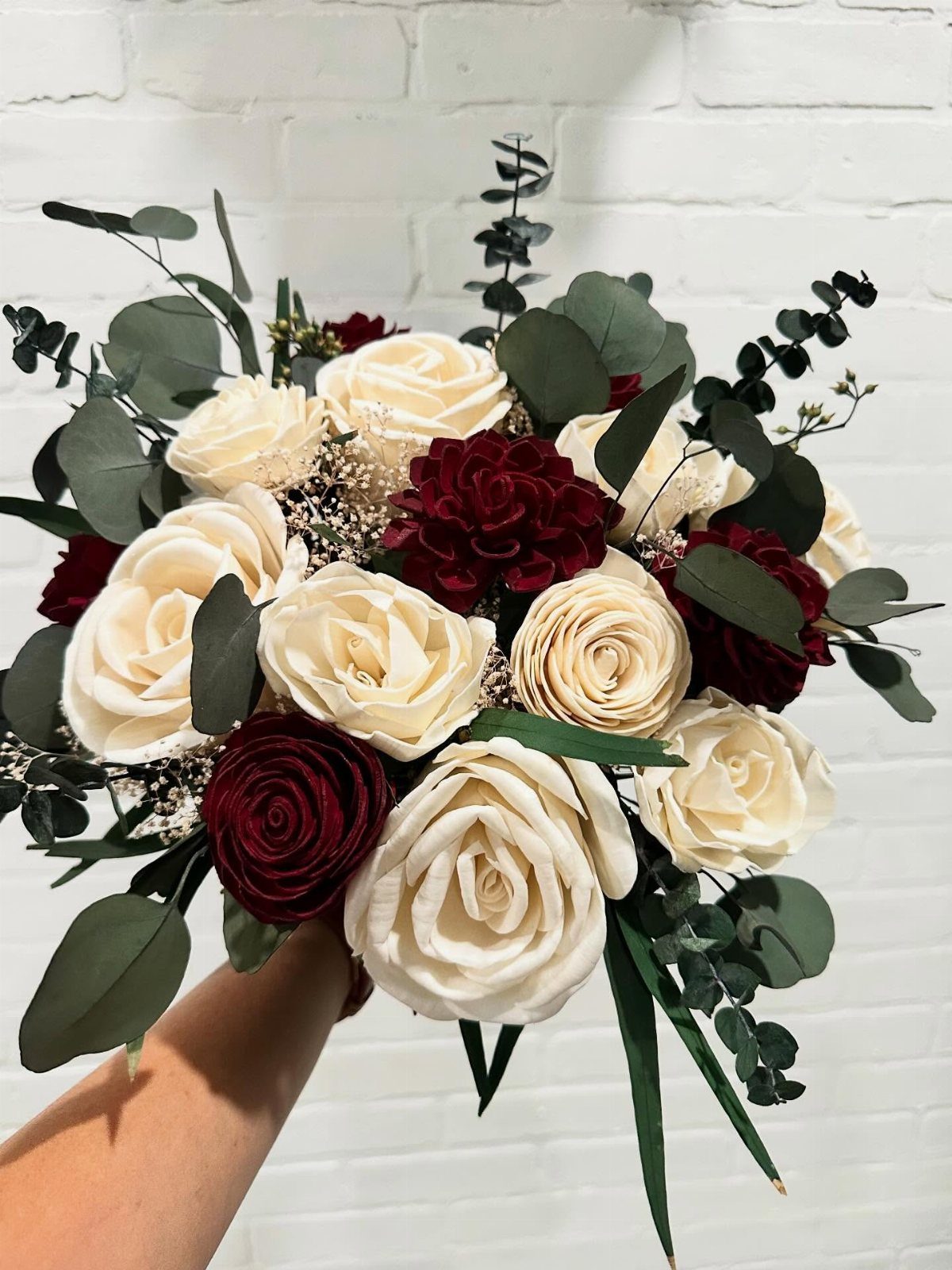
Sola wood flowers are shaved from tapioca root and hand-shaped into roses, peonies, and varieties that do not exist in nature.
They arrive cream-colored and take dye, which means a burgundy or dusty blue that matches your palette exactly rather than hoping the florist’s dye lot cooperates.
The weight is negligible compared to fresh flowers. A bride holding a sola bouquet for a short ceremony notices the difference; holding it through a long reception with photos in between notices it acutely.
They do not wilt, which eliminates the timing stress of fresh flowers and the cooler rental.
They cost more upfront than supermarket roses, less than out-of-season peonies. After the wedding, the bouquet keeps; some vendors sell DIY kits with stems, dye, and instructions.
The texture is matte and slightly porous, closer to paper than to petals. For a garden wedding, that difference shows.
In a candlelit hall, it does not.
17. Boutonnieres
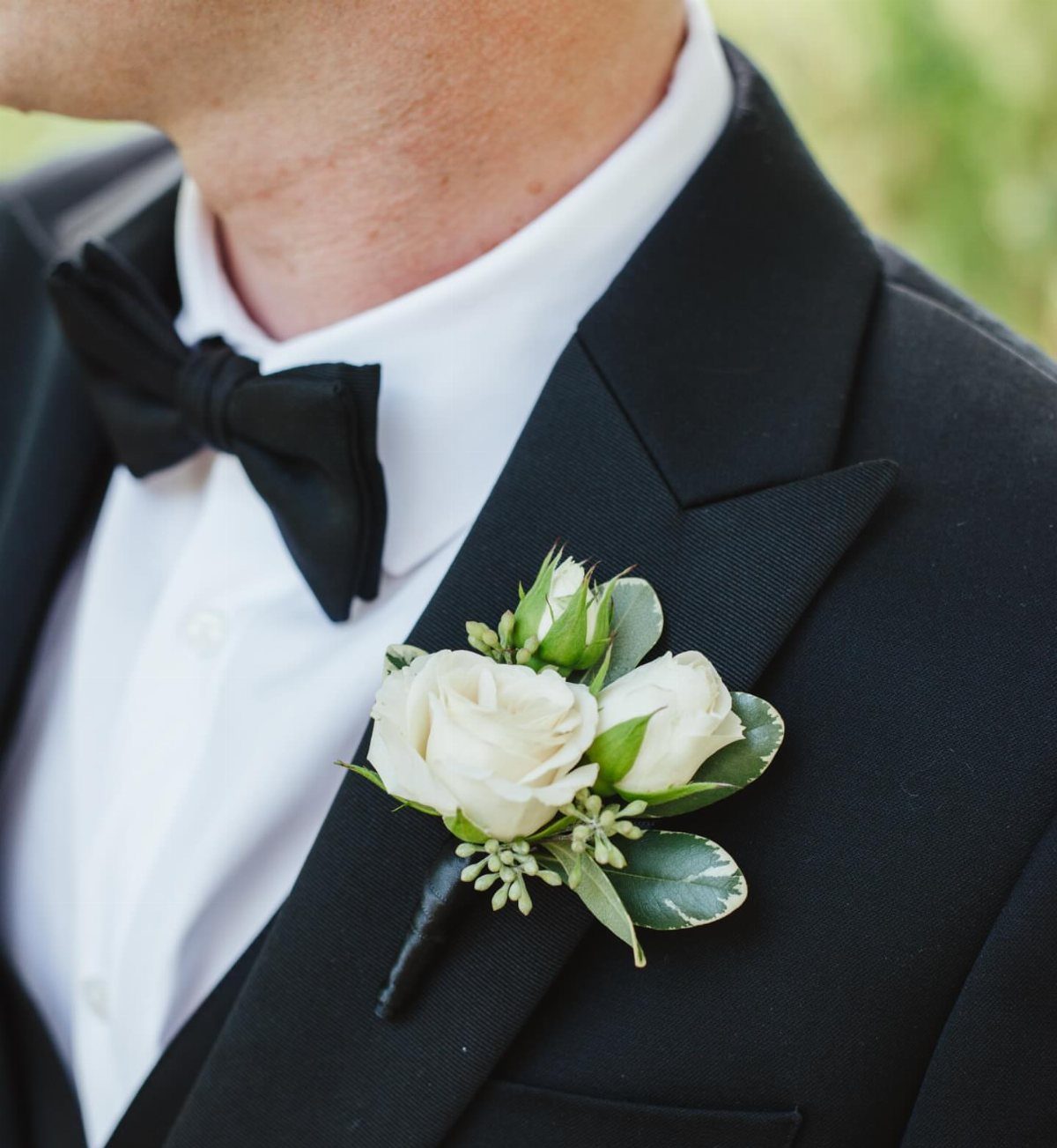
A boutonniere is one flower or a tight cluster of 2 to 3, pinned to the left lapel so the stem angles toward the shoulder.
The mechanics matter more than the blooms: a proper pin back, not a safety pin, and a small magnet or cork backing to keep the stem from swinging.
Matching the bridal bouquet is the standard move, though I prefer picking up the accent color instead.
If the bouquet is white roses with blue thistle, a thistle boutonniere with a single white rose ties the groom to the palette without making him carry a miniature version of her flowers.
Groomsmen, fathers, and officiants wear them; ushers and ring bearers can, though on a child the scale often looks wrong.
For a larger wedding party, the per-piece labor from a florist adds up; DIY with floral tape and ribbon takes practice but is learnable. Make 2 extras.
Someone always loses one between the hotel and the ceremony.
18. Centerpieces
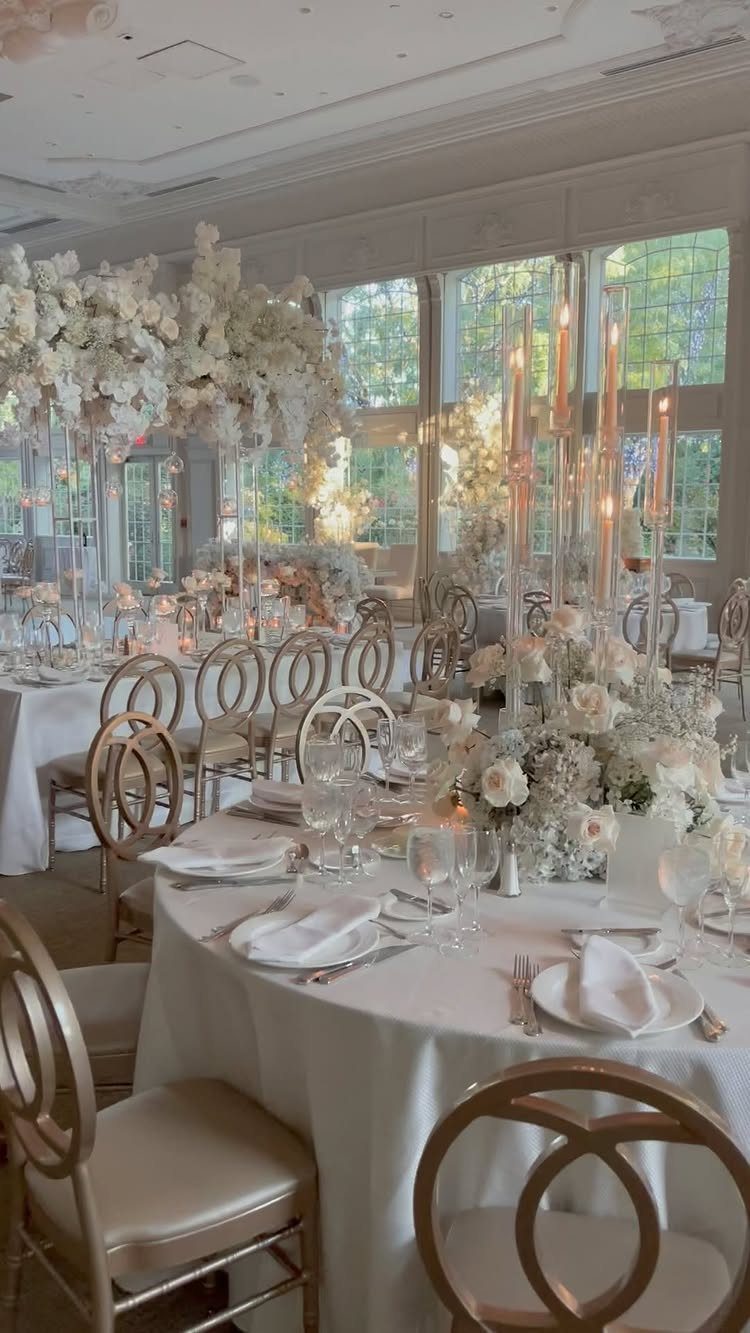
Centerpieces do the heavy lifting of reception atmosphere because guests spend more time looking down at their table than up at your arch.
Height variation across the room matters more than height within a single arrangement; a mix of low, medium, and tall pieces stops the space from flattening into a uniform plane.
Taper candles in glass holders add movement and lower light without requiring more flowers. The florist’s quote often separates flowers from candles, votives, and table numbers; ask what is included before you compare bids.
A tall centerpiece with branching elements needs a wider base than you expect to avoid the top-heavy, tipping hazard look.
Round tables seating a full group need a single focal point; long farm tables can run garlands with intermittent clusters.
The garland route uses more stems total but fewer of the expensive focal flowers, since the eye reads continuity rather than individual blooms.
19. Flower Crowns
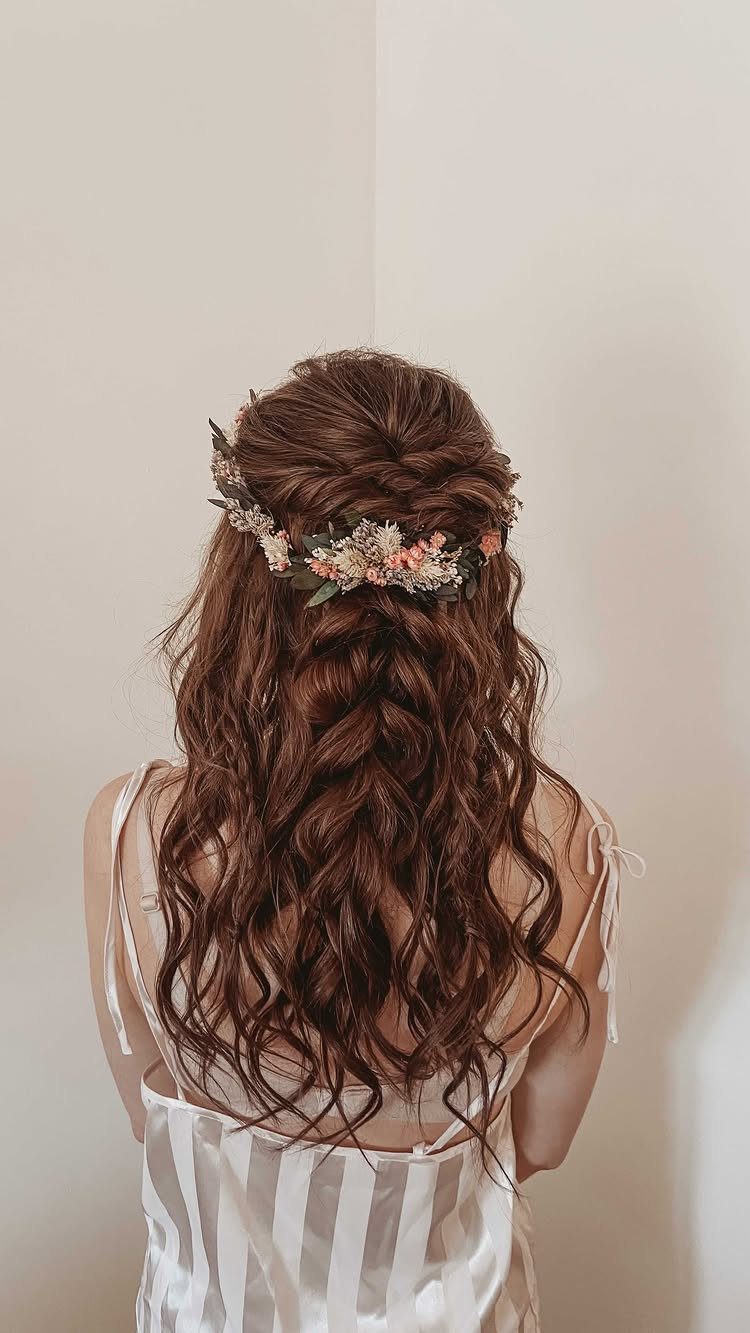
A flower crown shifts the floral budget from centerpieces to something the bride or her people wear home.
Dried blooms work best for this: small pink and peach buds wired onto a thin base that disappears into a braid or loose waves.
Fresh flowers wilt after a few hours and stain light hair; dried ones keep their shape through the night and cost less per stem.
Match the crown to your palette, not the other way around. If your theme runs cool, try bleached ruscus or dried lavender; warm palettes take strawflower or statice.
A bridesmaid with a curling iron and floral wire can assemble these the morning of, which suits a party with more time than money.
Wedding flowers are one of the most important elements of your special day. They set the tone, define the color palette, and express your personal style.
20. Floral Arches
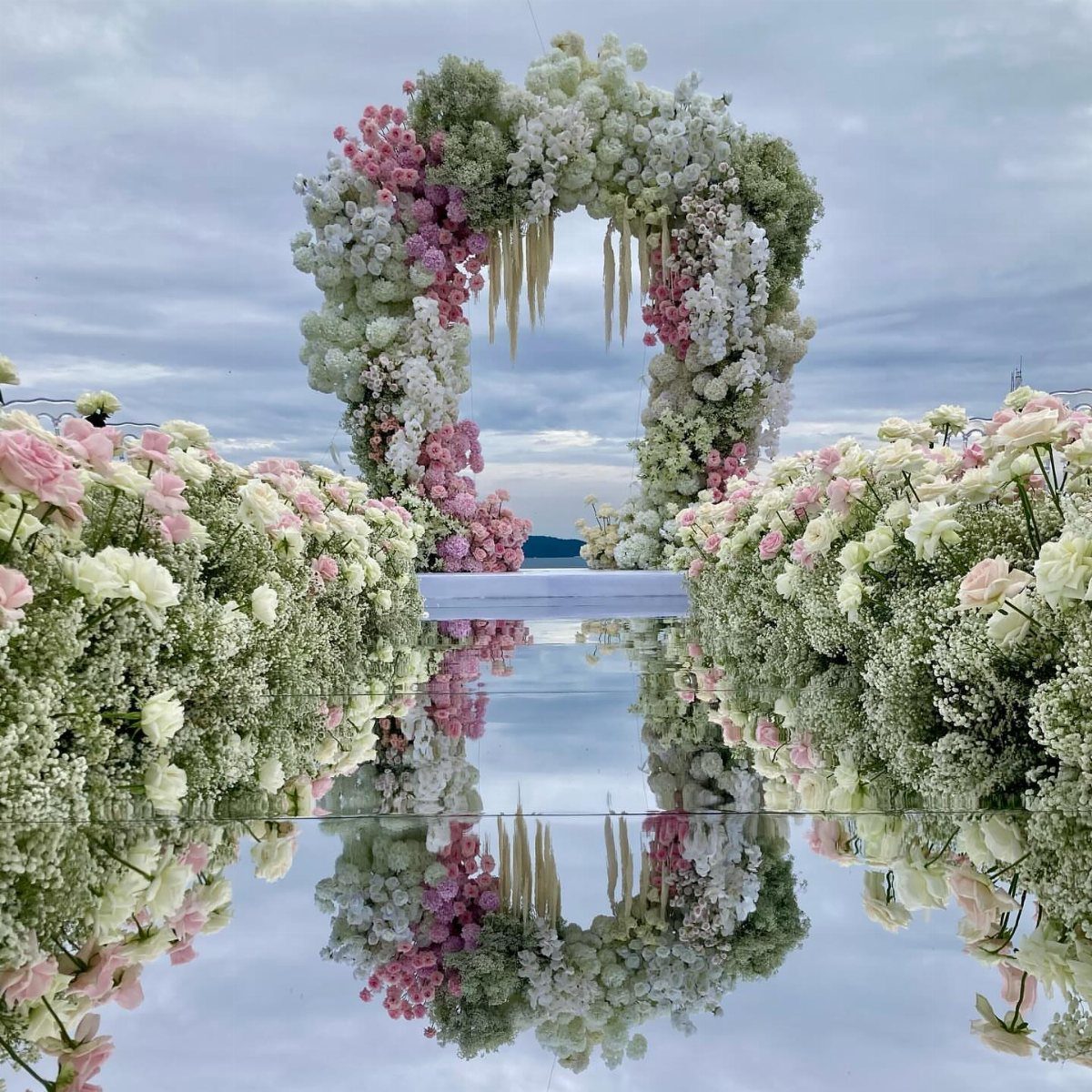
A floral arch frames the moment everyone photographs, and that is where the money goes. Scale down to a single-sided arch against a wall, or a half-moon shape behind the officiant, and the stem count drops by half.
Move the arch’s flowers to the reception if the timeline allows; the same pieces that line your ceremony aisle can flank the cake table once the ceremony ends.
Ask your florist which varieties hold up to the shift, and build that into the contract rather than hoping for it after.
21. Floral Cake Decor
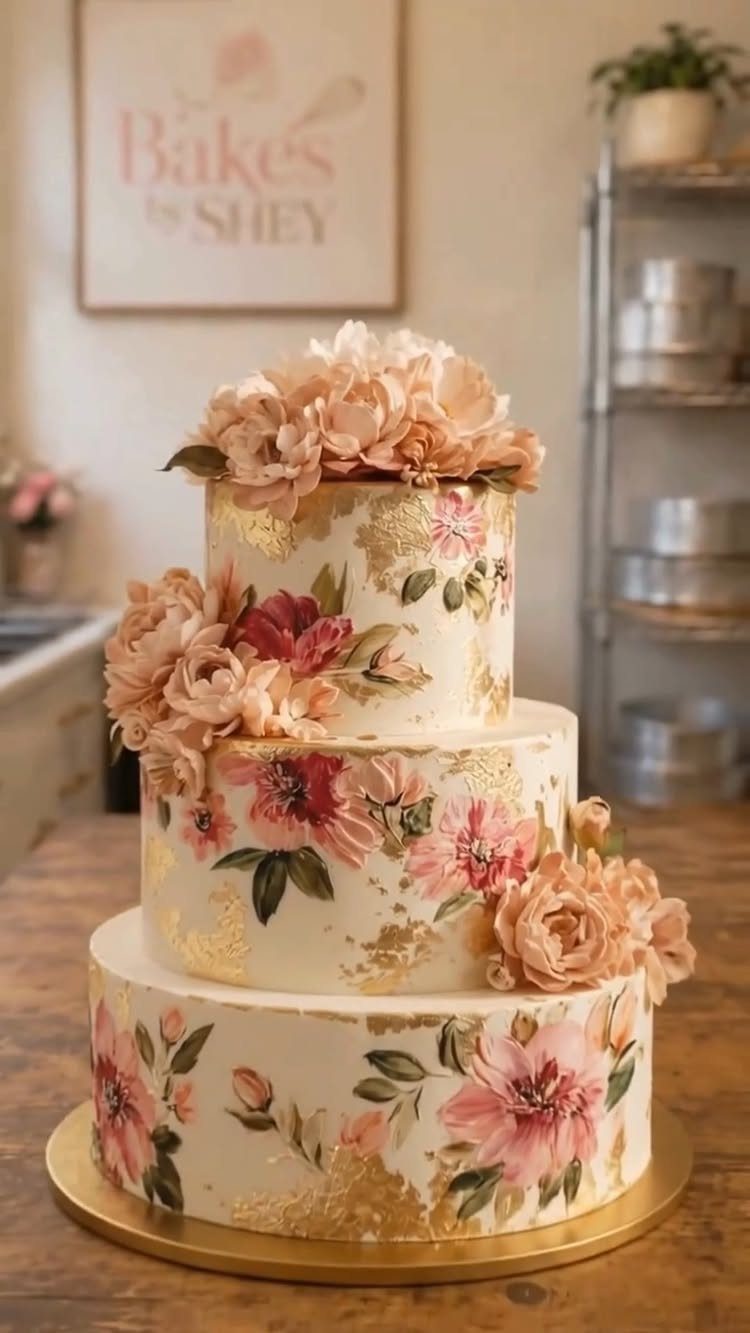
Fresh flowers on a cake look romantic until they touch buttercream and begin to weep.
If you want real blooms, coordinate with your florist on varieties that are non-toxic and short-stemmed; roses, pansies, and certain herbs work. Sugar flowers cost more upfront but become keepsakes.
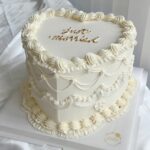
Fresh ones run cheaper and get thrown away. The painted detail on this cake, floral but not three-dimensional, splits the difference at a middle price.
Budgeting for Flowers
The percentage stays useful because it scales with what you are already spending on the room and the meal.
A florist can reshape that number by swapping your first-choice bloom for something in season or suggesting a different arrangement structure. A tall centerpiece needs more stems than a low runner; a ceremony arch needs more than aisle markers alone.
Ask where the money goes, stem by stem, before you commit.
If your credit is thin, some florists work with wedding financing options that let you spread the cost.
The better move is usually to simplify: fewer tables with flowers, more with candles, or a bridal bouquet that carries the visual weight while attendants hold single stems.
Flower Meanings
Roses carry the oldest vocabulary: red for love, white for purity, pink for admiration. That history is why they feel expected; it is also why they still work when you want the meaning understood without explanation.
Other flowers speak more quietly. Peonies mean good fortune and happy marriage in the old language.
Ranunculus, in Victorian floriography, signaled charm.
Anemones are harder to read. Dahlias stand for inner strength and creativity, a newer association that suits couples building something personal rather than inherited.
The meanings matter most when you care about them. A guest will not know the difference unless you tell them.
If the symbolism resonates with you, build around it. If not, choose by color and shape and let the flowers speak for themselves.
Seasonal Considerations
Seasonal flowers cost less because they travel less. A May peony from a farm 50 miles away beats a December peony flown from Chile on price, freshness, and carbon footprint alike.
For a spring wedding, March through June, tulips and ranunculus are at their peak. Sweet peas and peonies follow in April and May.
Summer, May through September, brings hydrangeas, gardenias, and dahlias from July onward. Fall stretches dahlias into October and gives chrysanthemums their natural window, August through November.
Winter weddings rely on greenhouse stock or imports; anemones hold up November through May, and orchids peak in May after a winter of forced blooms.
If you are planning a year out, notice what is blooming locally at the same week you have chosen. A florist who sources locally can confirm what will be available, and what will need a backup plan.
Frequently Asked Questions
What are the bridal flower trends for 2026?
Seasonal blooms and eco-friendly options like sola wood flowers are the direction couples are moving. Sola wood flowers take dye to match any palette exactly, weigh almost nothing, and eliminate the cooler rental and timing stress of fresh flowers.
Dried hydrangeas hit a middle price that works for a tight budget: above grocery-store roses, well below peonies flown in from the wrong season, and the bouquet stays usable long after the last guest leaves.
What flowers symbolize weddings?
Rose bouquets signal romance and intensity, tulips carry the meaning of lasting love and new beginnings, and dahlias bring in the idea of quiet strength and making something your own.
Calla lilies with their single decisive curve suggest purity and rebirth through their sculptural form. Gardenias lean toward formality and polish, which reads beautifully at a black-tie evening and can feel like too much weight at a backyard afternoon.
How much do wedding flowers cost?
Most couples put 10-15% of their total budget toward decor including all florals and greenery, with the flower bill alone averaging $700 to $2,500 based on stem choice, how many you need, and how intricate the arrangements get.
DIY with wholesale stems and morning-of assembly cuts the florist labor markup, though you trade that savings for your own time and the risk of mistakes.
What are the most popular types of wedding flowers?
Roses, peonies, hydrangeas, and tulips lead the list for their versatility across themes and palettes. Ranunculus and anemones follow for couples wanting something more modern or textured.
Mums become the backup plan when the rose quote stings, with enough range in shape and color to dodge the one-dimensional look that cheap flowers usually land on.