These ideas run from a borrowed cornhole set to a four-piece band at roughly double DJ rates, so the deciding factor is your crowd: whether they need something to do, something to drink, or something to watch.
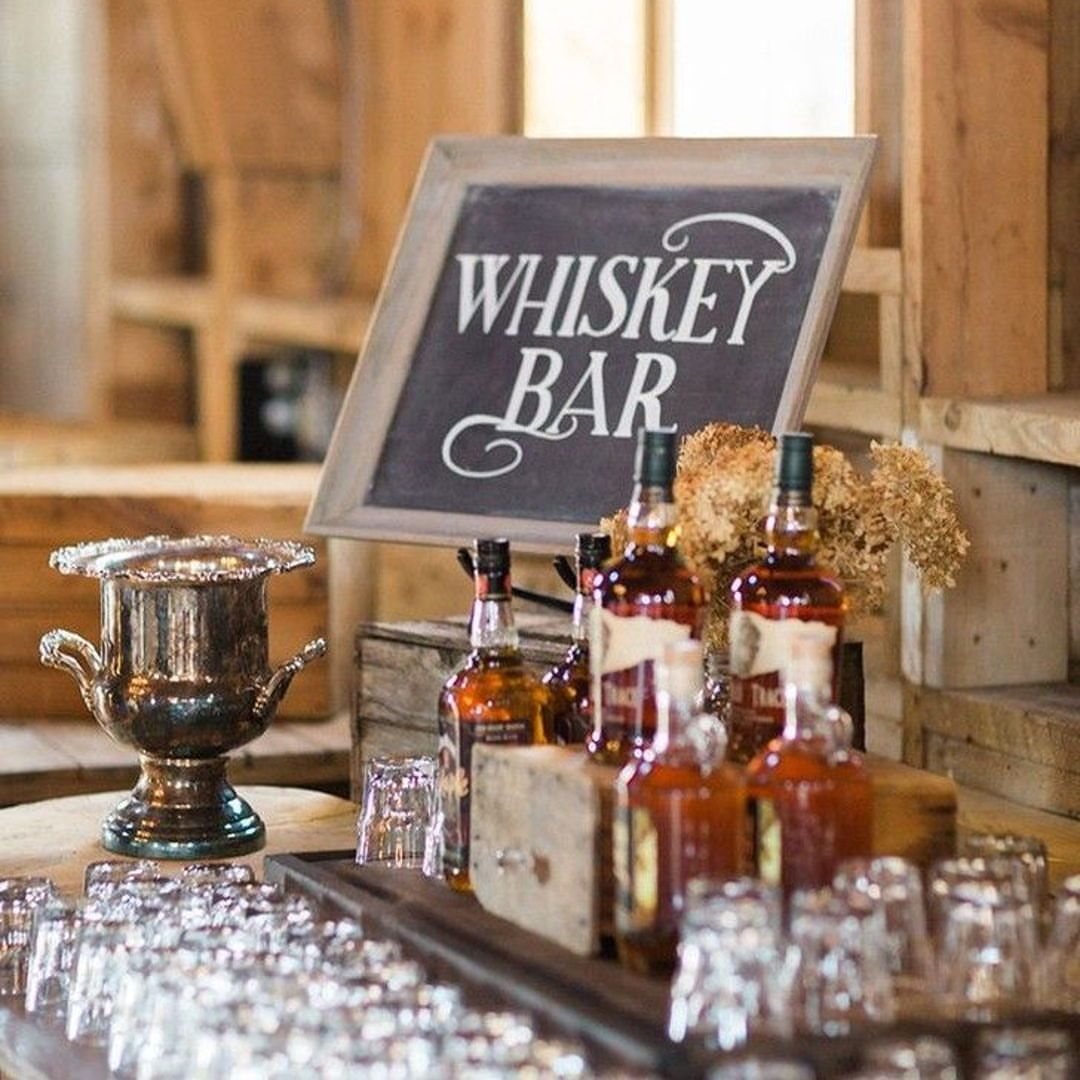
A whiskey bar with age-stated bottles gives adults something to talk about; a candy station with bulk gummy bears and pretzel rods keeps younger guests occupied while the grown-ups finish their drinks.
1. Photo Booth
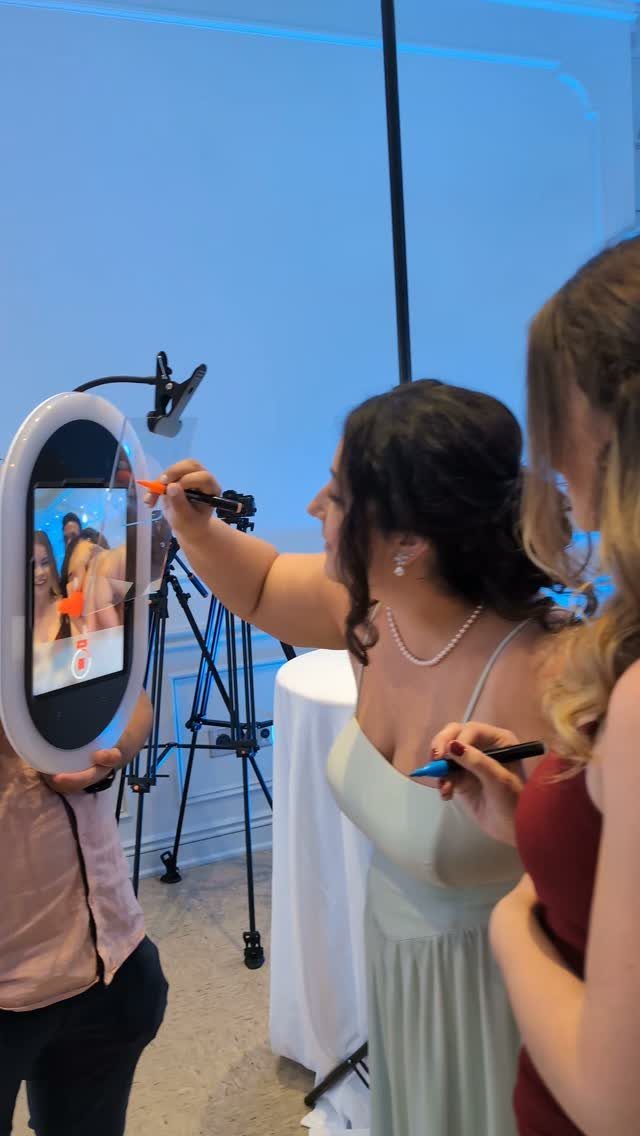
A photo booth gives guests something to do during the lulls that always creep into a reception timeline. A digital screen guests can draw on turns the usual prop-and-pose routine into something they actually shape themselves.
Props that match your colors or theme keep the results from looking like a generic rental. Custom printouts with your date cost extra at most vendors, but guests treat them like favors they chose to take.
This works for any guest mix, though it shines when you have shy relatives who need an assigned activity.
A roaming booth costs more and needs space to move; a stationary one fits a corner near the bar where people already gather.
2. Live Band
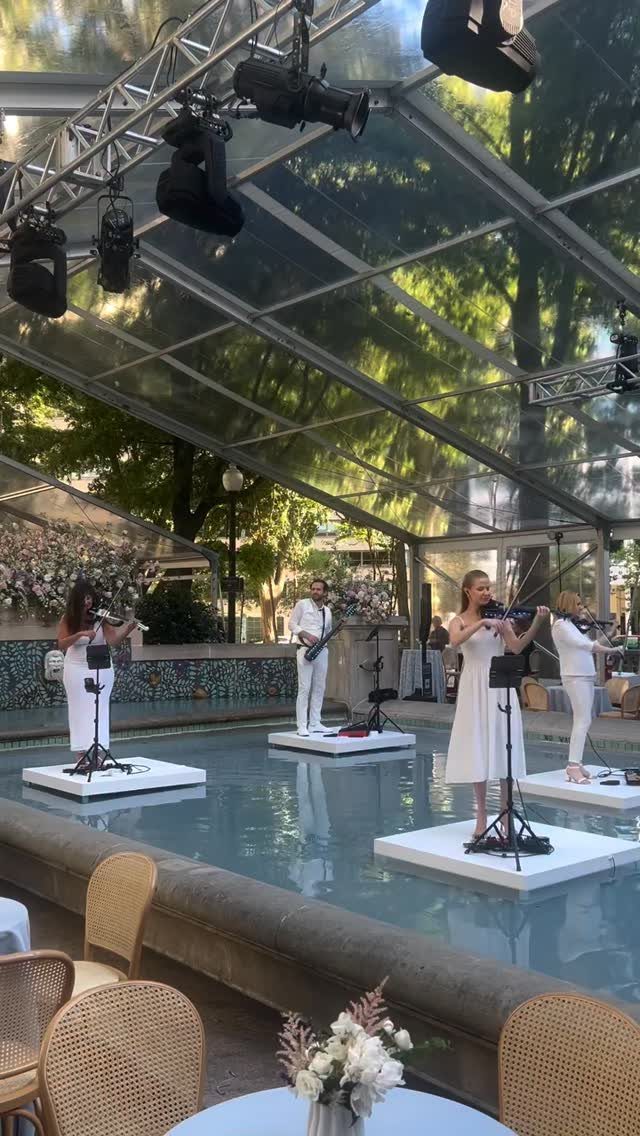
Live music changes how a room feels in a way a playlist cannot, especially during the first hour when guests are still warming up.
Performing on platforms set in a pool is extreme, but the core idea of staging the band as a focal point scales down.
A four-piece ensemble costs roughly double a DJ in most markets, and you lose the continuous song-to-song flow.
What you gain is a visual focus and the chance to request a song that actually matters to your relationship, performed once, for the people there.
I’d spend the money here for a tented or outdoor reception where sound bleeds anyway; in a hotel ballroom, recorded music often wins.
3. Whiskey Bar
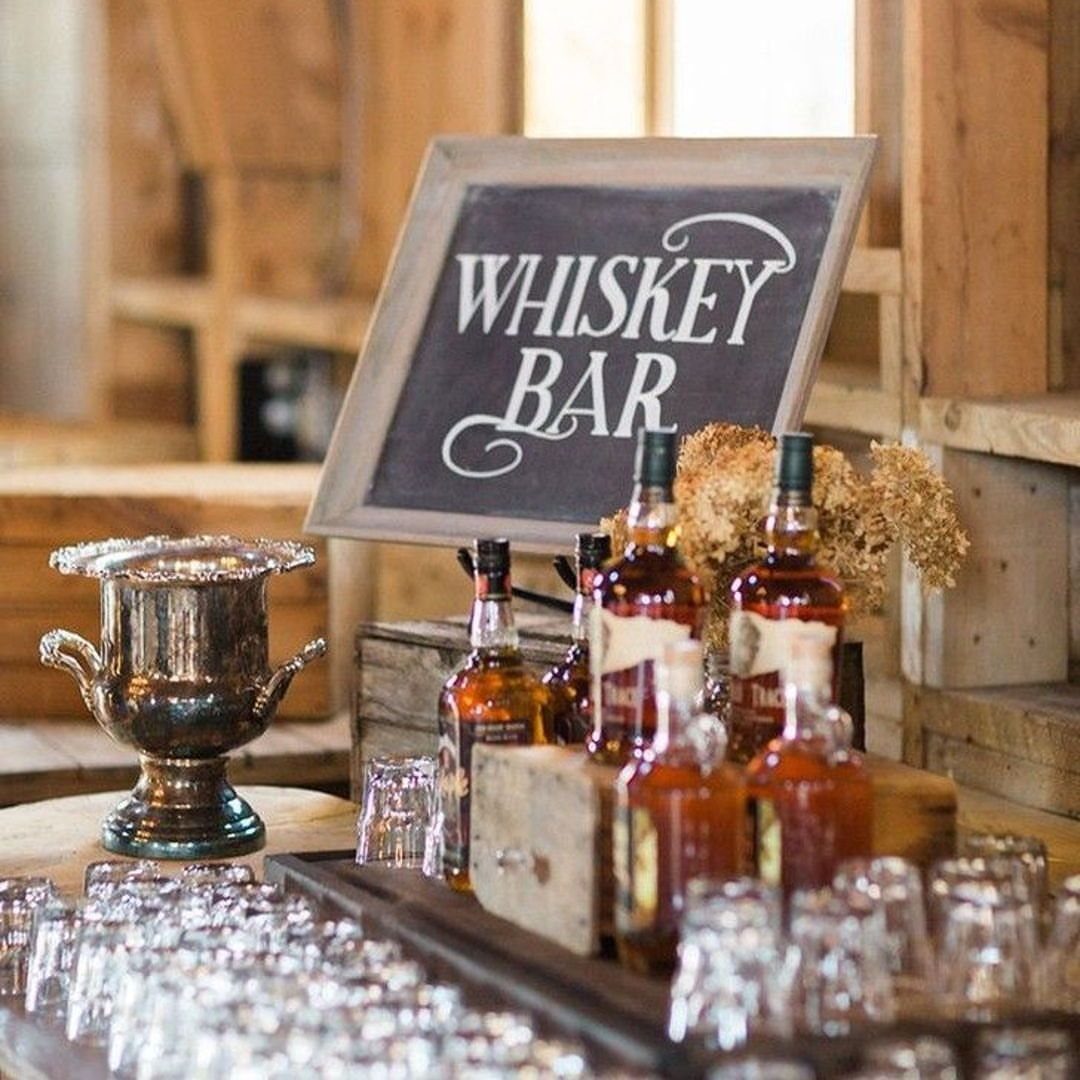
A whiskey bar narrows your drink menu to something you can actually curate instead of drowning in open-bar options.
Aged varieties matter more than quantity; a few bottles with real age statements beat a dozen young ones.
The whiskey fountain mentioned in some circles is a rental piece that pours from a central spout, dramatic but finicky to keep chilled.
This suits a fall or winter wedding, or any crowd that skews older than 25. Skip it if your guest list runs heavy on beer drinkers or light drinkers; a signature cocktail station covers more people for less.
4. Pet Ring Bearer
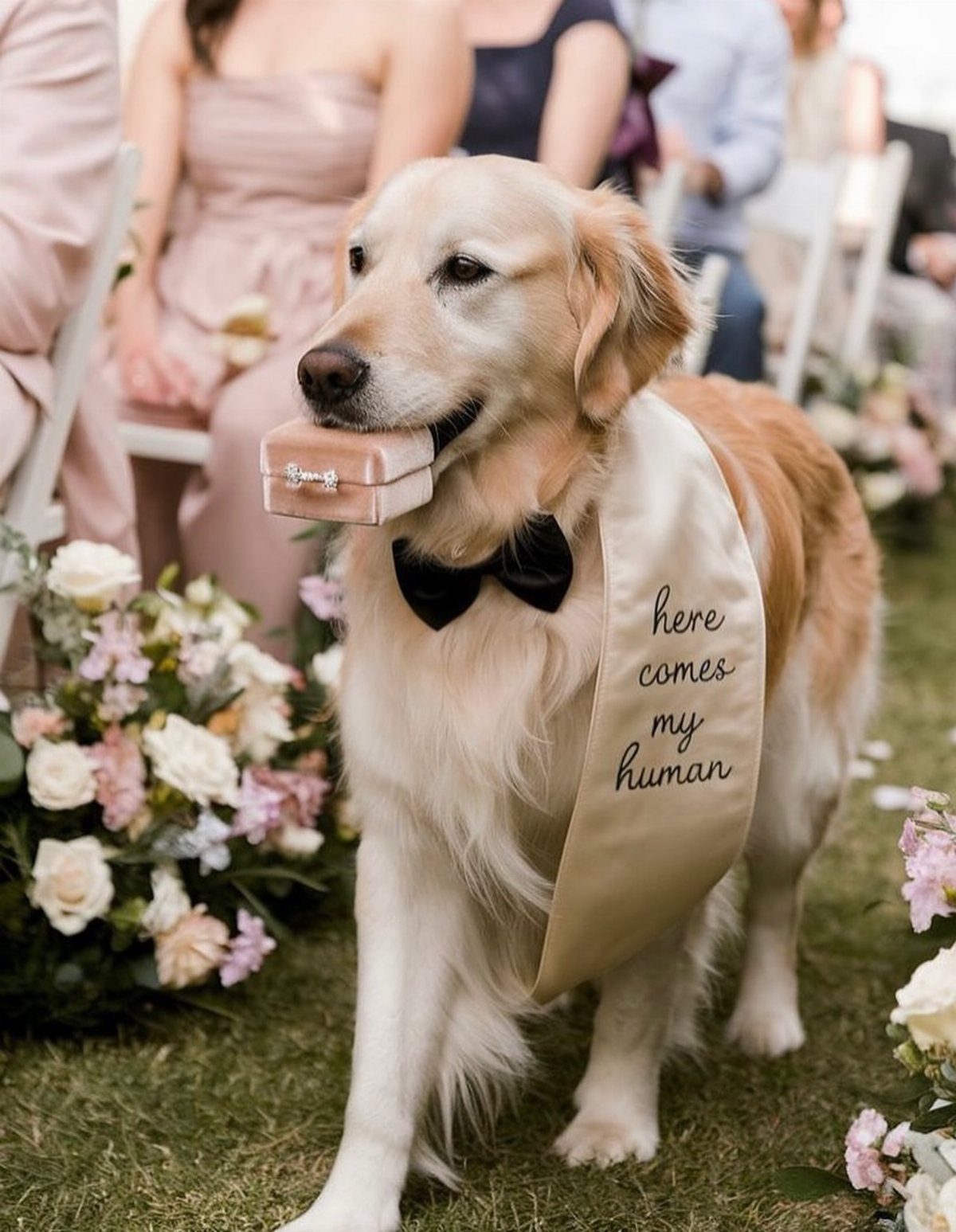
A dog carrying the rings down the aisle solves two problems at once: you include a family member of the furry sort, and you guarantee at least one unscripted moment in a very scripted hour.
A bowtie and a sash reading "here comes my human" sets the tone without looking like costume overload.
Someone still needs to hold the actual rings. Attach a lightweight box to the collar or harness, but keep the real bands with a human attendant; the dog’s job is the entrance, not the insurance claim.
This works if your pet is steady around crowds and noise. A reactive or anxious dog becomes the story you did not want.
Assign a handler who is not in the wedding party, and rehearse the route once at the venue.
5. Lawn Games
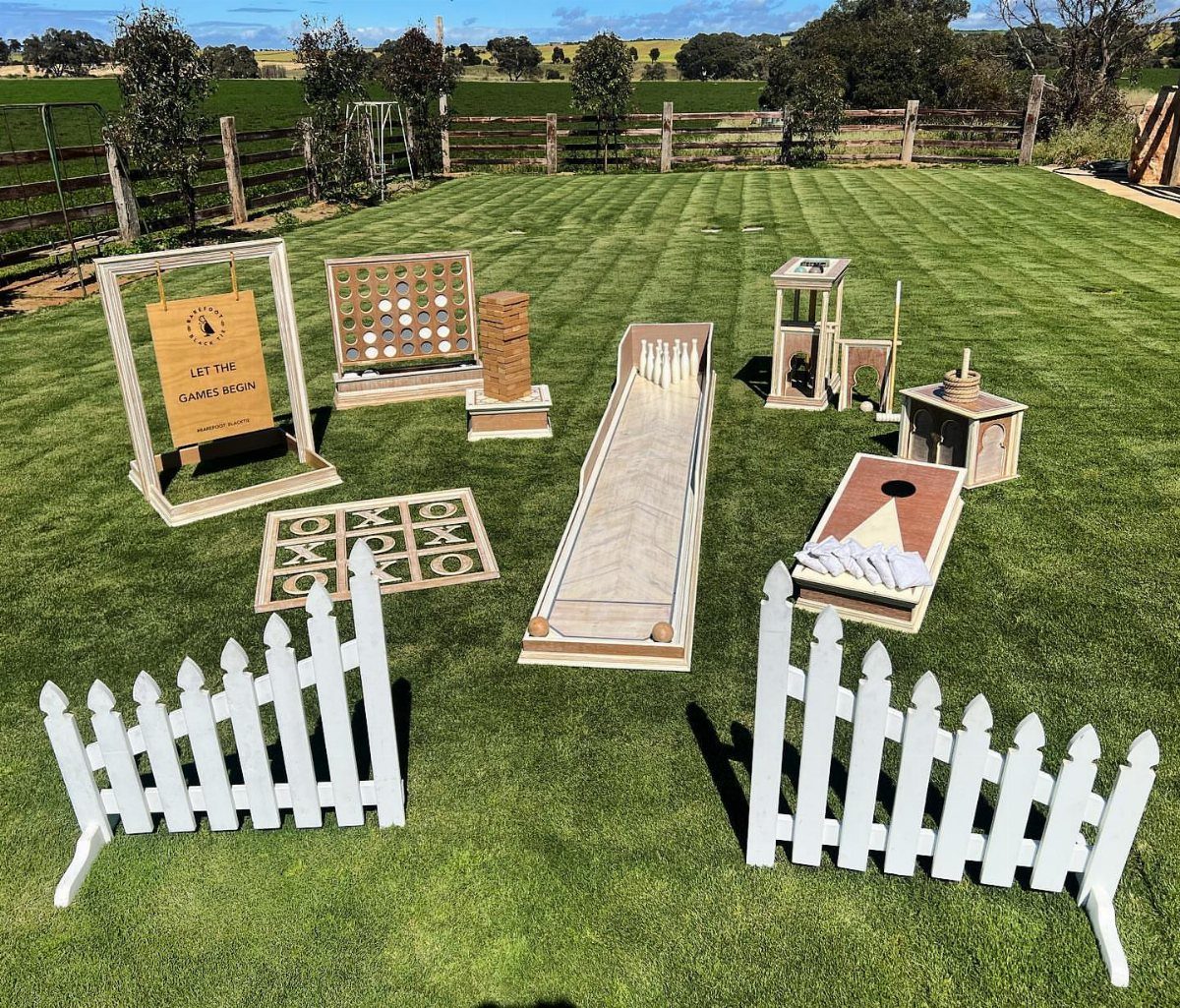
Lawn games give guests who do not dance something to do with their hands and a reason to talk to strangers.
Fencing off cornhole, giant Jenga, and a wooden ramp game with a sign reading "LET THE GAMES BEGIN" marks the space as intentional rather than leftover.
Cornhole and giant Jenga travel well and set up fast; I have seen venues keep sets on hand you can borrow. Place them where cocktail hour already flows, not off in a corner that requires a decision to walk over.
This is the cheapest entry on the list and the most forgiving of mixed ages. Weather is the real risk; a light rain turns wooden sets into hazards, and strong sun bakes players who cannot retreat under a tent.
6. Dessert Table
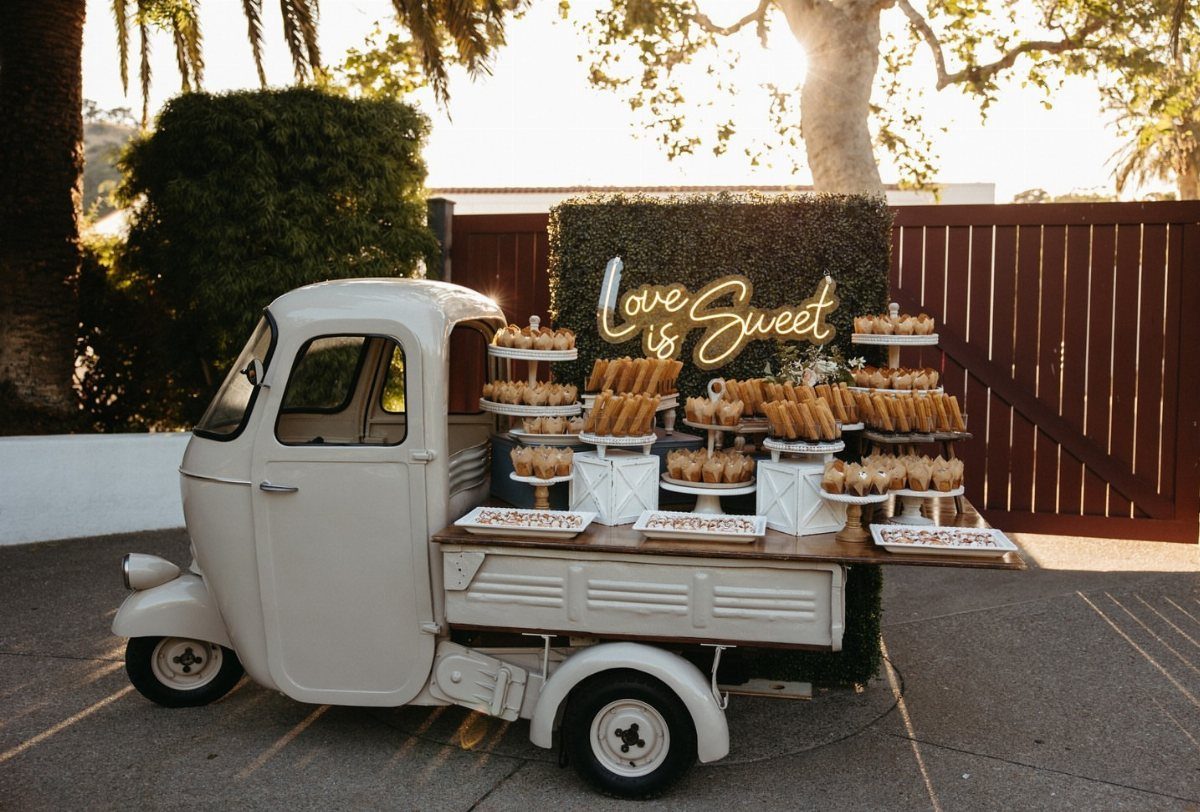
A dessert table built around a vehicle or unexpected structure, like a vintage three-wheeled truck, does the decorating for you. The "Love is Sweet" neon against a hedge wall gives guests a photo spot that happens to serve food.
Tiered pastries and churros are easy to replenish during the night, and small to-go boxes let people take something home without the cost of formal favors.
I would limit the variety to a handful of items done well; a sprawling spread looks generous but creates waste and slows the line.
This suits an outdoor or industrial venue where a polished truck feels at home. In a traditional ballroom, the same setup reads forced; there, a simple linen-draped table with the same desserts works better.
7. Candy Station
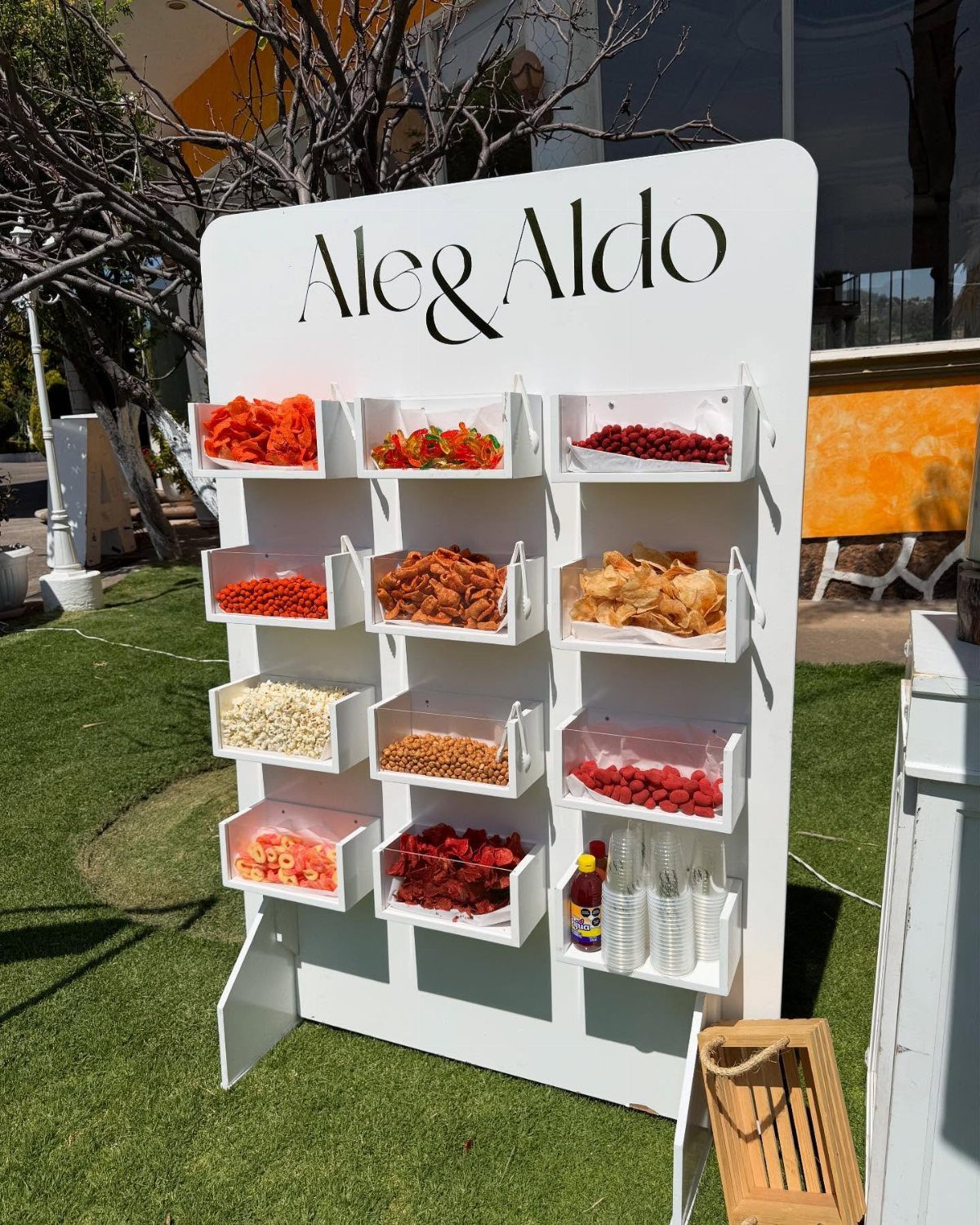
A candy station keeps kids busy during cocktail hour while giving adults something nostalgic to talk about.
A vertical stand with labeled bins lets guests serve themselves without a line forming, and the footprint stays small enough to tuck against a wall or near the exit.
Fill clear containers with color-coded treats: gummy bears, sour worms, chocolate-covered nuts, something salty like pretzel bites. Paper bags or small cups at the base keep hands clean.
For a winter wedding, swap the candy for a coffee station with 2 carafes (regular and decaf), a pump thermos of hot chocolate, and a bowl of peppermint sticks.
Either version stays cheap if you buy bulk candy or coffee wholesale and build the stand from a rented crate and pegboard.
Skip this if your venue already has a late-night snack planned; the surprise wears off if sugar is everywhere.
8. Signature Drink Station
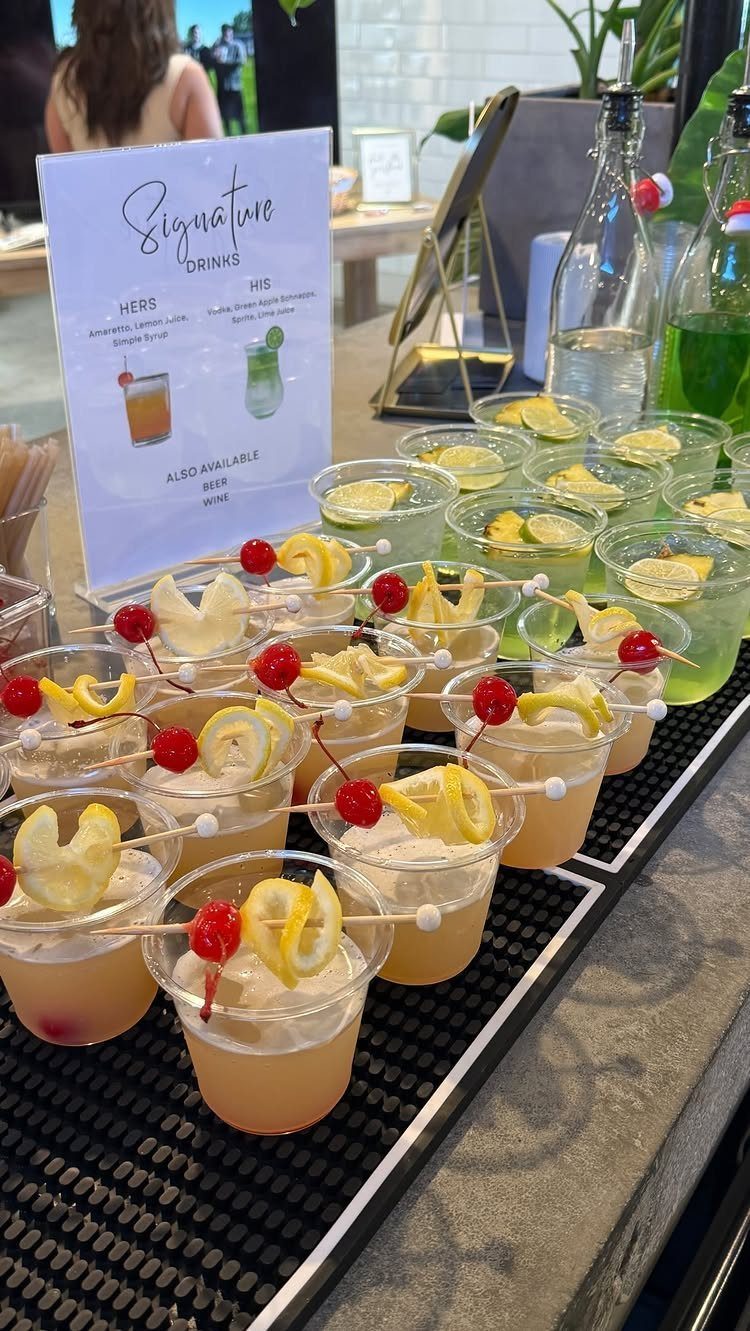
Signature drinks solve two problems at once: they speed up bar service and they give guests who do not know what to order something to reach for.
A split drink station labeled for each of you is a simple way to frame the choice, though I would rename them for the couple or the flavors instead.
Batch the cocktails well before service, pre-pour into small cups, and keep them on a tray over ice. A printed card with ingredients helps guests avoid allergens and gives them something to photograph.
One base spirit, 2 mixers, and a garnish is enough; 3 options slow the line. The bar mat and sign are standard rental items, or a print shop will make the sign cheap.
This works best for smaller weddings, where the tray empties before the ice melts.
9. Outdoor Lounge Area
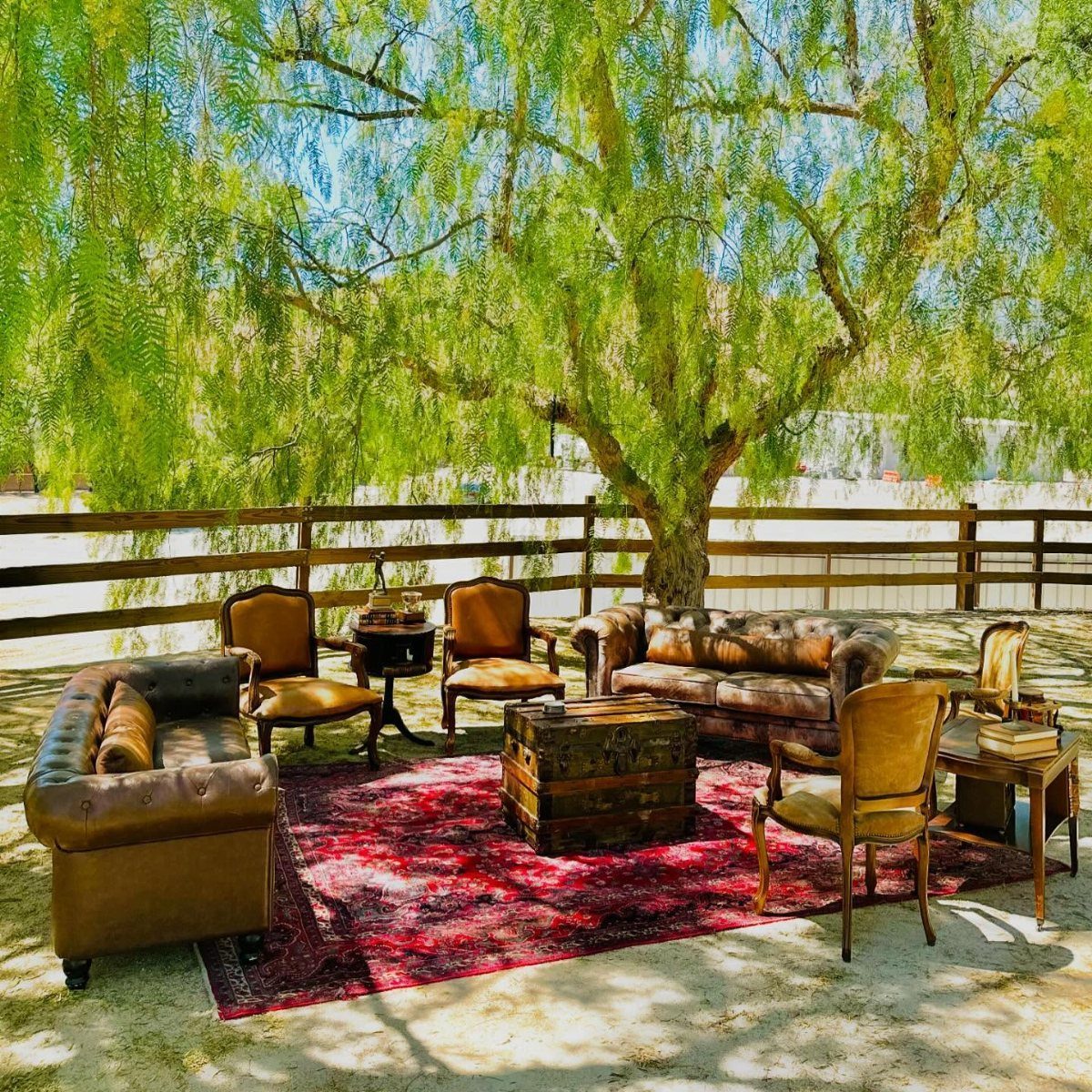
Leather sofas under a willow tree look expensive because they are, but the idea scales down to rented church pews, floor cushions, or even picnic blankets with backrests.
Create a zone away from the dance floor where guests can hear themselves talk.
Start with a rug to anchor the space, then add seating for a small group, a flat surface for drinks, and one light source if the area stays open past sunset.
Vintage pieces from an estate sale or rental warehouse need a consistent look; matching sets read as ‘lounge,’ mismatched reads as ‘yard sale,’ so pick one approach and commit.
A wooden trunk as a coffee table doubles as storage for spare blankets if the temperature drops.
Reserve this for outdoor receptions with real mingling time; a short party never empties the dance floor enough to justify the floor space.
10. Sunglasses Wedding Party Photo
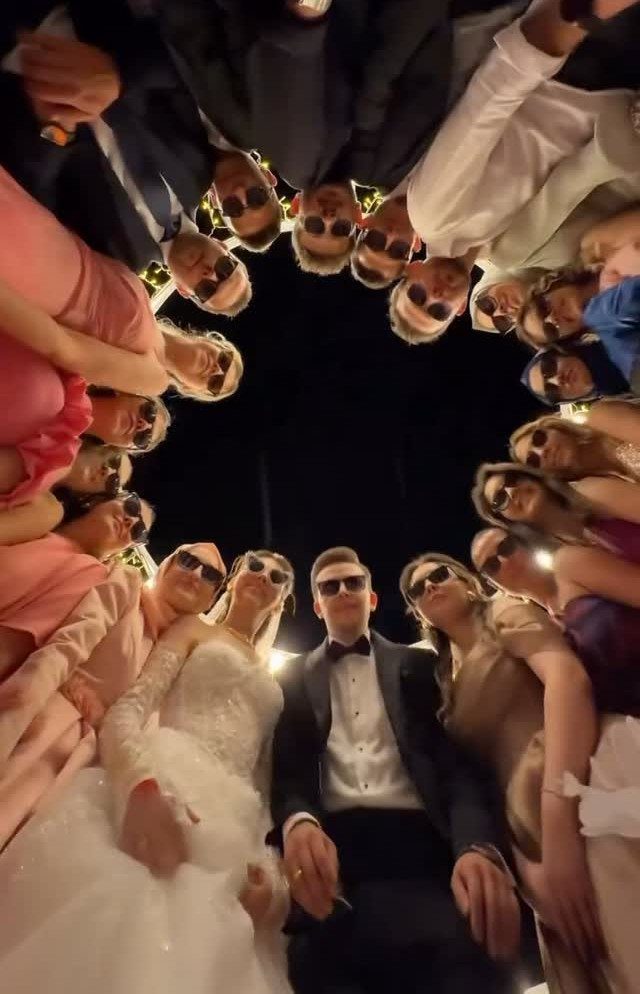
The overhead circle shot with sunglasses turns the wedding party into a single graphic shape, and the dark lenses hide blinked eyes and squinting against flash.
I have seen this done with sparklers, confetti, and bare faces, but the sunglasses version works at noon or midnight and does not require cleanup.
Buy matching plastic shades in bulk; aviator or wayfarer styles run cheap online. Hand them out with a note that the group photo happens once the dance floor is full.
The photographer climbs a ladder or uses a balcony, the guests look up and in, and the shot takes almost no time. The rest of the night, the sunglasses become props guests wear unironically.
This suits a midsize wedding party; smaller groups do not fill the frame, larger ones need a wider ladder or a drone permit from the venue.
Budget-friendly Options
Entertainment does not need a rental company to work. A borrowed cornhole set and a handwritten scorecard on a chalkboard costs almost nothing and still gives guests something to do besides wait for the next course.
A tablet on a tripod with a timer app replaces the paid booth entirely, and guests email themselves the files.
The candy station works the same way: bulk candy in glass jars from a thrift store, paper bags folded at home, and a printed label taped to the front.
I would put the money toward the one element guests actually remember, which is usually the band or the open bar, and fake the rest with elbow grease.
Inclusivity for All Ages
Mixed-age guest lists are the norm, not the exception, and every activity leaves someone out if you are not deliberate. Lawn games already work for grandparents and teenagers alike, but the list does not mention the real barrier: height.
A cornhole board at standard height is awkward for anyone under 8; a small step stool underneath fixes it without calling attention to the kid.
The lounge area matters most for guests over 60 who need to sit down without leaving the party entirely; a chair with arms and a spot near the conversation, not exiled by the restrooms, respects that need without making it a production.
Personalization
The officiant can weave in the story of how you met, or a family recipe read aloud as a blessing, or a ritual you design together: planting a sapling, mixing two wines into one glass, anything that takes time and has a result you keep.
Music is the easiest entry point. The song from your first date, not the one every wedding uses, costs nothing extra and changes the emotional temperature of the room.
A pet in the ceremony, already covered for ring delivery, works just as well seated with a handler during the vows if the aisle walk feels too risky.
Symbols matter too: a flower that grew in your grandmother’s garden, a color you both wore on the trip where you decided to marry. These details do not need explanation in the program; guests feel the specificity without being told.
Planning and Communication
Guests participate more when they know what is coming. A printed timeline at each place setting, or a simple sign at the entrance, removes the anxiety of missing something.
I would list only the 3 or 4 moments that need a group: ceremony start, first dance, cake cutting, send-off. The rest is noise.
For interactive elements, a single sentence of instruction posted where guests encounter it prevents hesitation. The photo booth needs "pick a prop, tap the screen, wait for the countdown"; the lawn games need "grab a partner, flip for first throw."
Without this, people stand at the edge deciding whether they are allowed.
The signature drink station benefits from a card naming the ingredients, already noted, but I would add one line about the batch size so guests know whether to take one now or wait for a fresh tray.
Communication is not over-explaining; it is removing the small friction that stops someone from joining in.
There’s a good chance that your wedding will be the biggest and best party you’ll ever throw. When you think about it that way, it only makes sense to inject as much fun into the big day as humanly possible.
— HuffPost
Frequently Asked Questions
How to make a wedding party fun?
Give guests something active to do with their hands and a reason to talk to people they just met.
Lawn games like cornhole and giant Jenga work for mixed ages and cost almost nothing; a photo booth with props that match your colors turns shy relatives into participants.
What is the cheapest way to feed 100 people at a wedding?
A dessert table built around a simple structure, with tiered pastries and churros you replenish during the night, costs less than a formal cake and doubles as decor.
Small to-go boxes let guests take leftovers home instead of buying separate favors.