These looks span from matching denim in a laundromat to full winter white on a frozen lake, and the choice hinges on where the camera is: salt air, rented studio, your first apartment stoop, or the gravel lot behind the bar where you met.
Heavy beadwork goes flat under fluorescents, and a train needs hands: the list below walks through what reads for each setting, not the settings themselves.
1. Pre-wedding Photoshoot Outfits
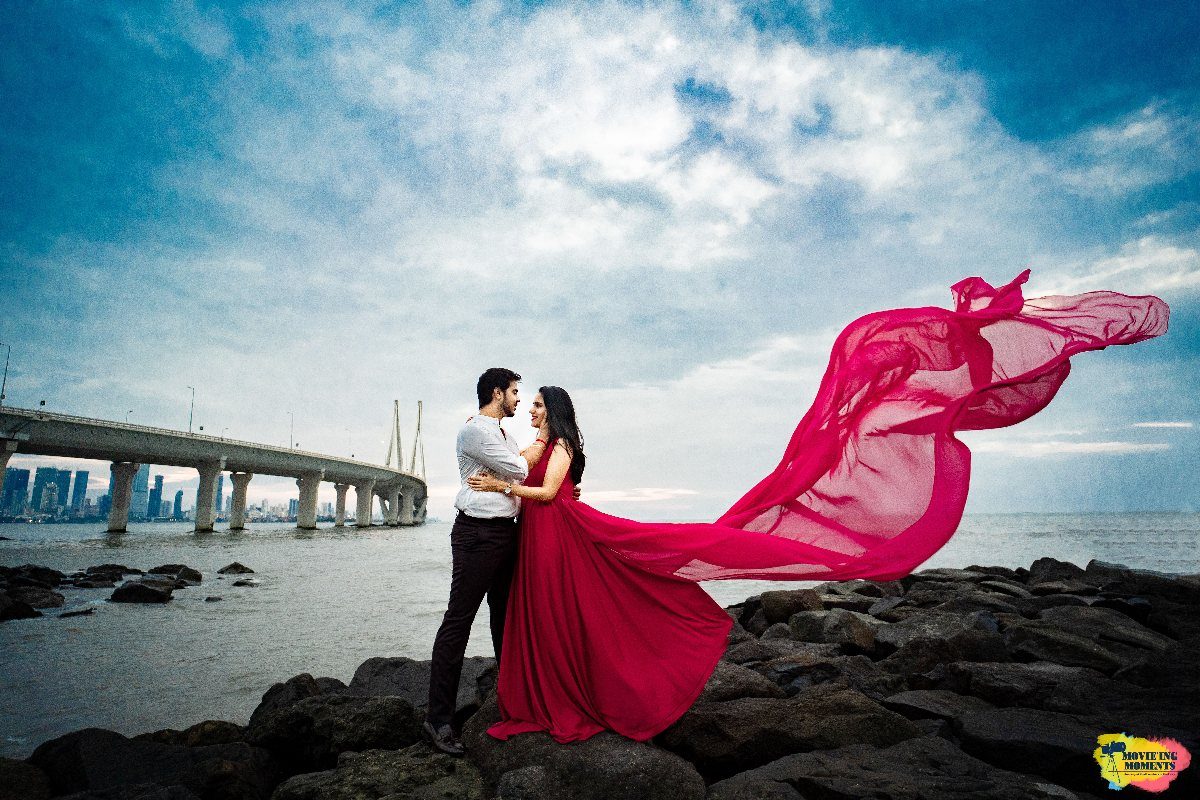
A pre-wedding shoot gives you dress rehearsal photos in clothes you own outright, not rented for the afternoon.
I like picking one location everyone will recognize: the bridge, the waterline, the stone outcrop. A long flowing gown in magenta or red catches wind and draws the eye without competing with the view.
Pair it with neutral tones on your partner so one of you anchors while the other moves. Light shifts fast enough that timing matters; golden hour here is not a suggestion, it is the reason you picked the coast.
2. Matching Outfits
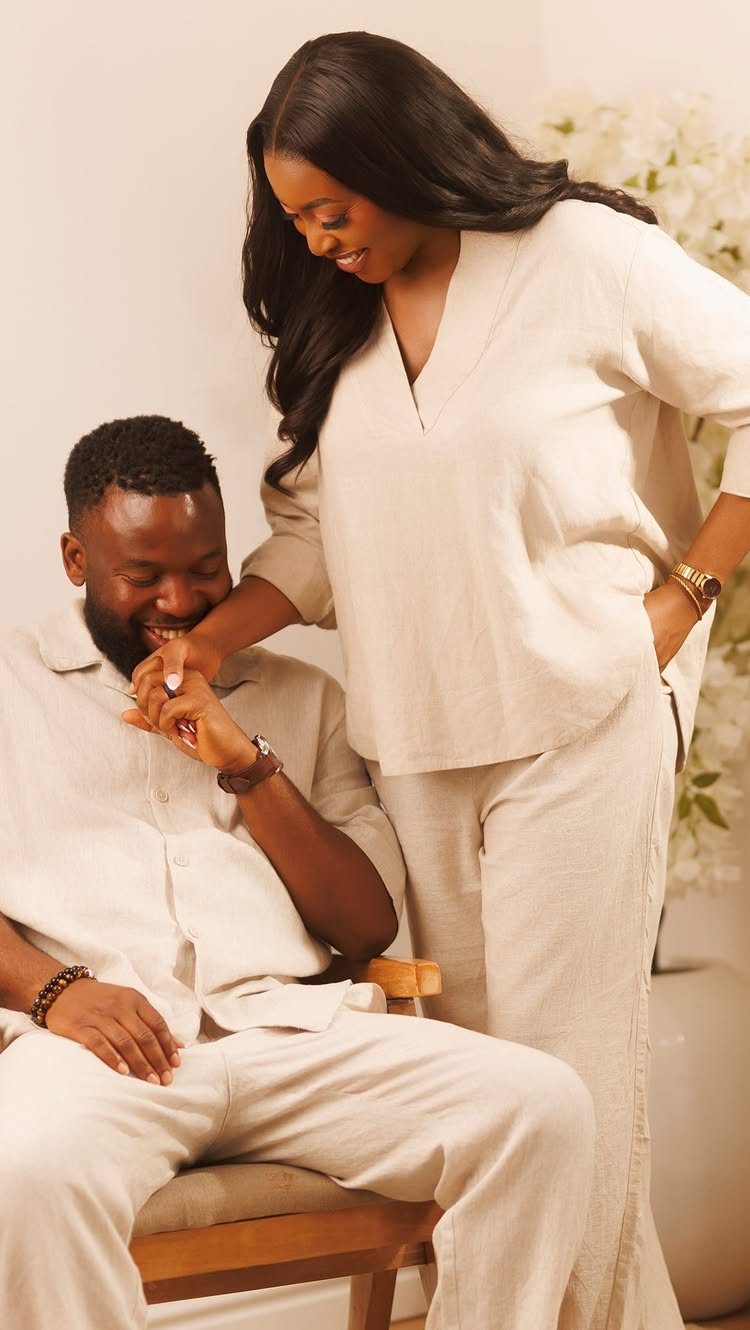
Coordinated cream linen against a plain background reads clean and intentional without shouting.
I reach for matching through texture rather than identical cuts: same fiber, different silhouettes, so you look related not uniform. Heavy silk in peach or orange works the same way across a saree and a long kurta.
Precise tailoring is what makes matching outfits work; loose matching looks accidental, tight matching looks styled. Decide which mistake you would rather risk.
3. Casual Outfits
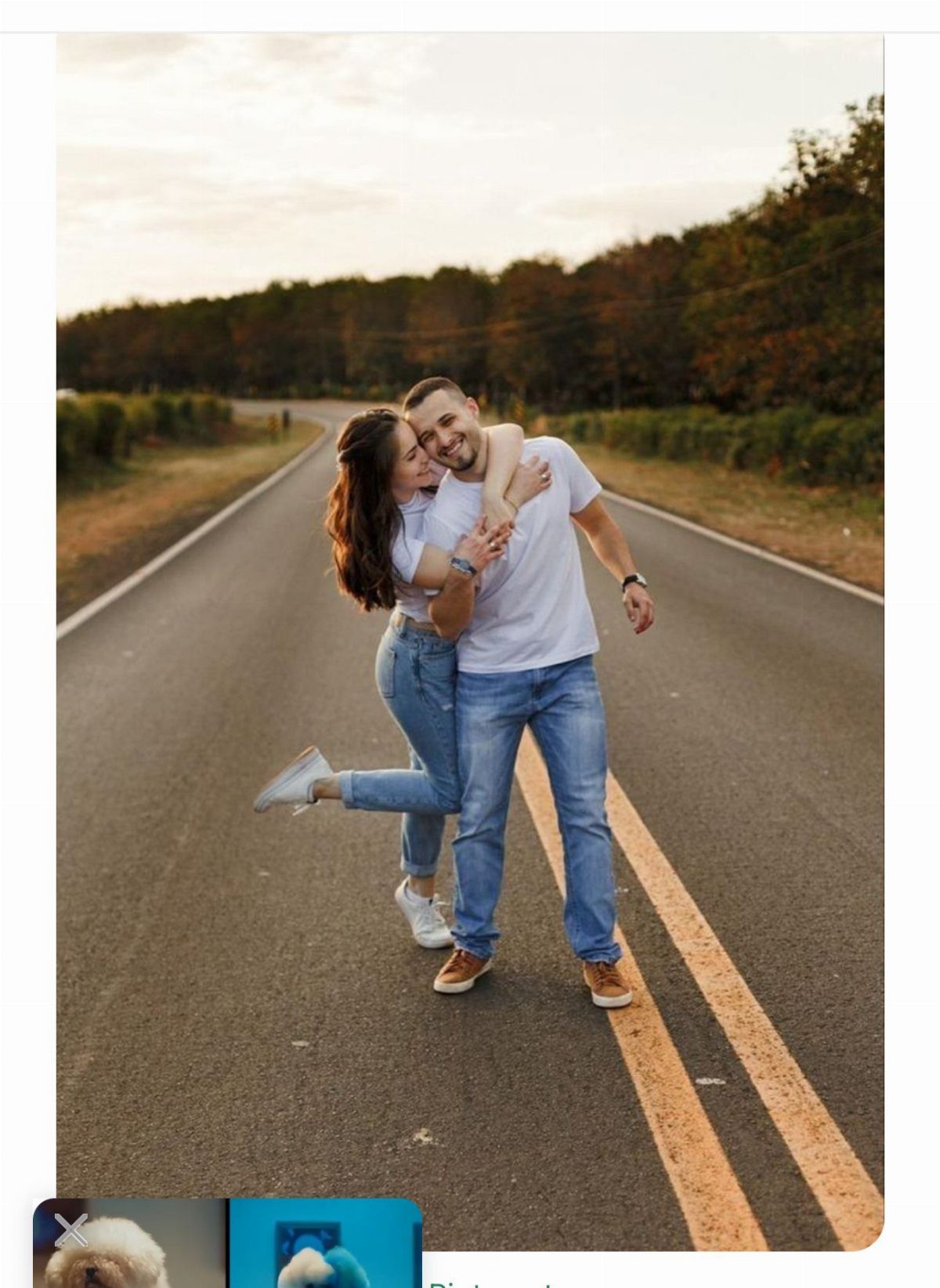
White tees, light denim and canvas sneakers turn any paved road or dirt path into your set. I would add one rule: the jeans must fit well, since there is no skirt or jacket to distract.
Walk together, hug, dance down the center line; the outfit is simple so the movement carries the frame. Check soles before you leave—gravel roads chew through thin rubber fast.
4. Tuxedos and Formal Gowns
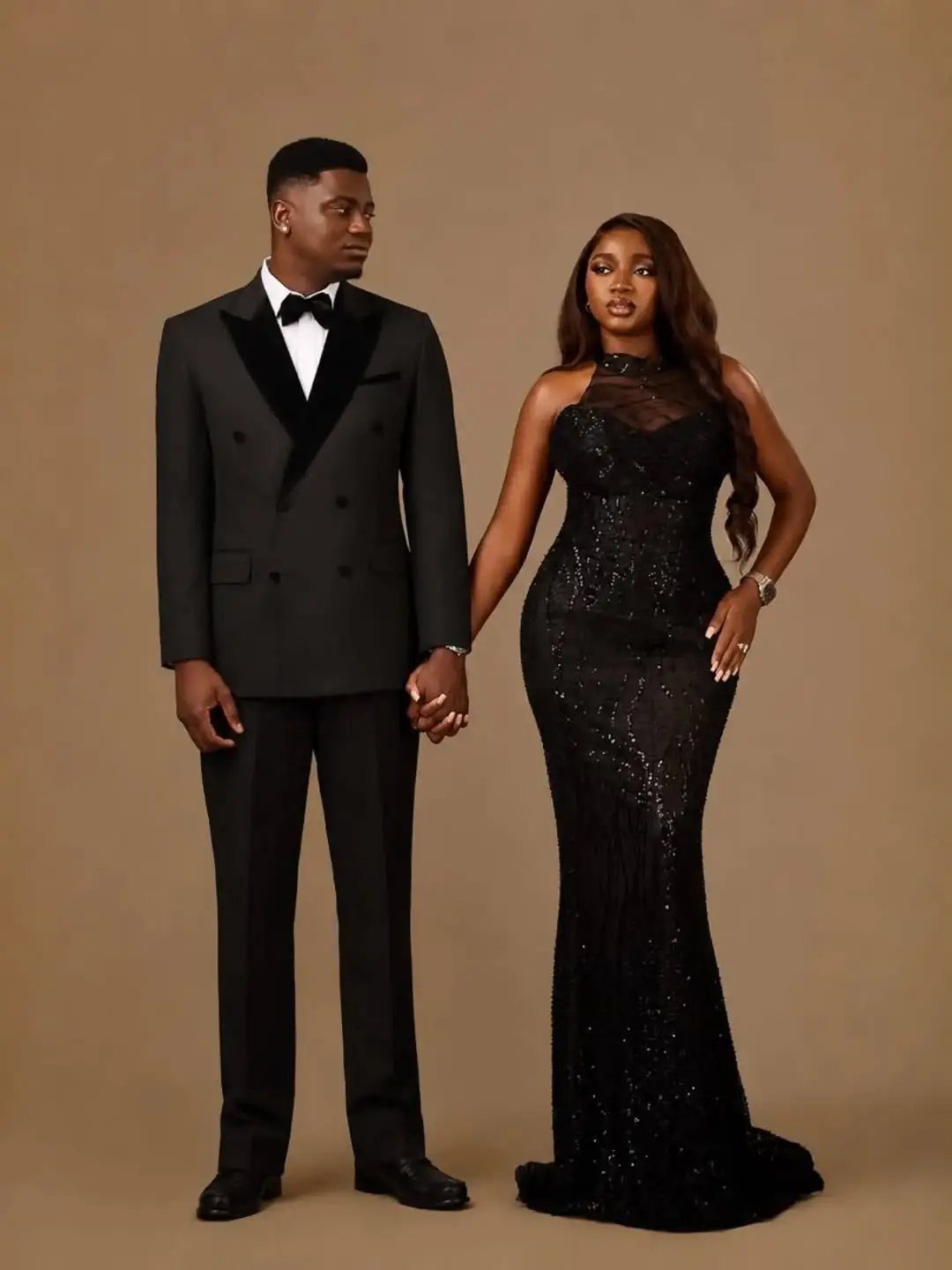
Black sequined gown against black tuxedo reads evening without trying for color.
Studio back-lighting turns the sequin into rim light your photographer does not have to add. Off-the-shoulder satin in deeper purple works the same formal register with a single color note.
Velvet on him picks up that shine without matching it exactly. This is rented-wear territory for most budgets; book fittings early and check what the shop includes for shirt studs and cuff links.
5. Winter Whites
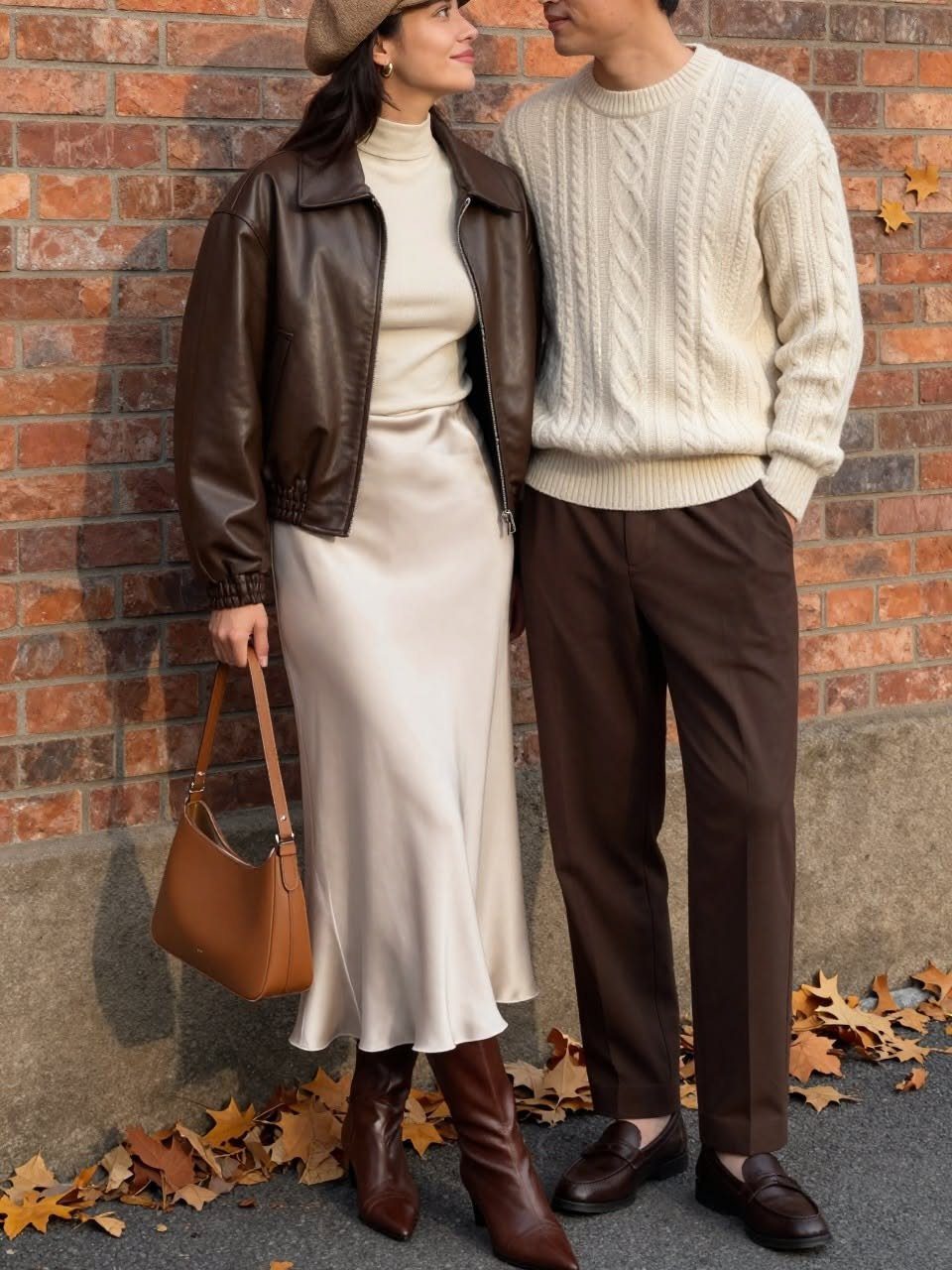
Cream and brown layered against brick with fallen leaves reads autumn even before you notice the foliage.
I would extend the logic: pastels for cherry blossom season, saturated brights against summer green, earth tones under October skies, white-on-white when snow is the backdrop.
The coat does the heavy work; keep the base layer simple and let outerwear shift with the thermometer. Leather boots hold up to leaf mulch and salt both.
6. Jewelry and Hats
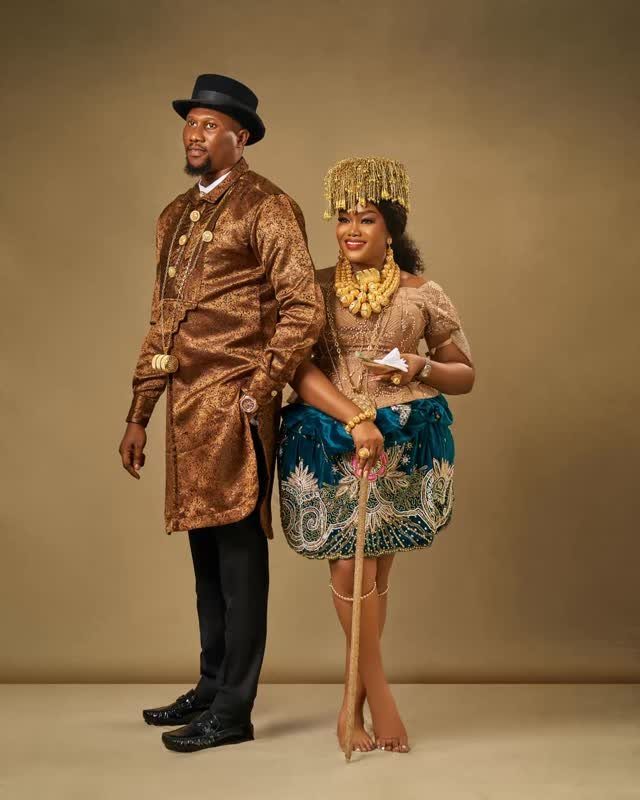
A top hat and ornate gold headdress turn studio light into occasion without any background at all.
I see this as accessorizing up, not dressing down: start with your best traditional piece and heap on the metal until the frame balances.
Heavy embroidery on a sherwani or brocade on a saree gives the jewelry something to talk back to. The risk is clutter; photograph from two angles before you commit, and remove one piece if doubt strikes.
7. Sarees, Lehengas, and Sherwanis
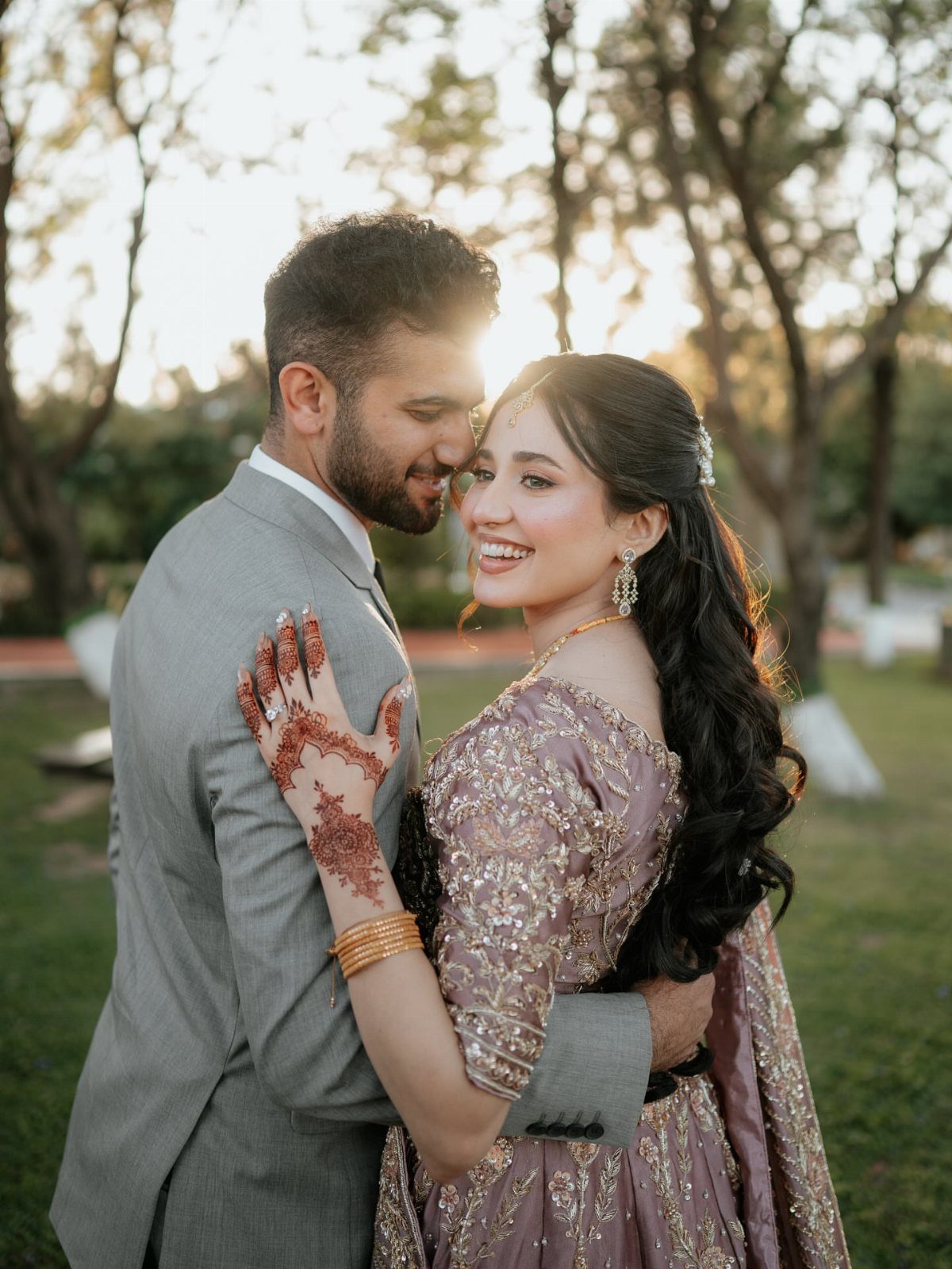
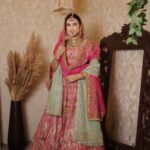
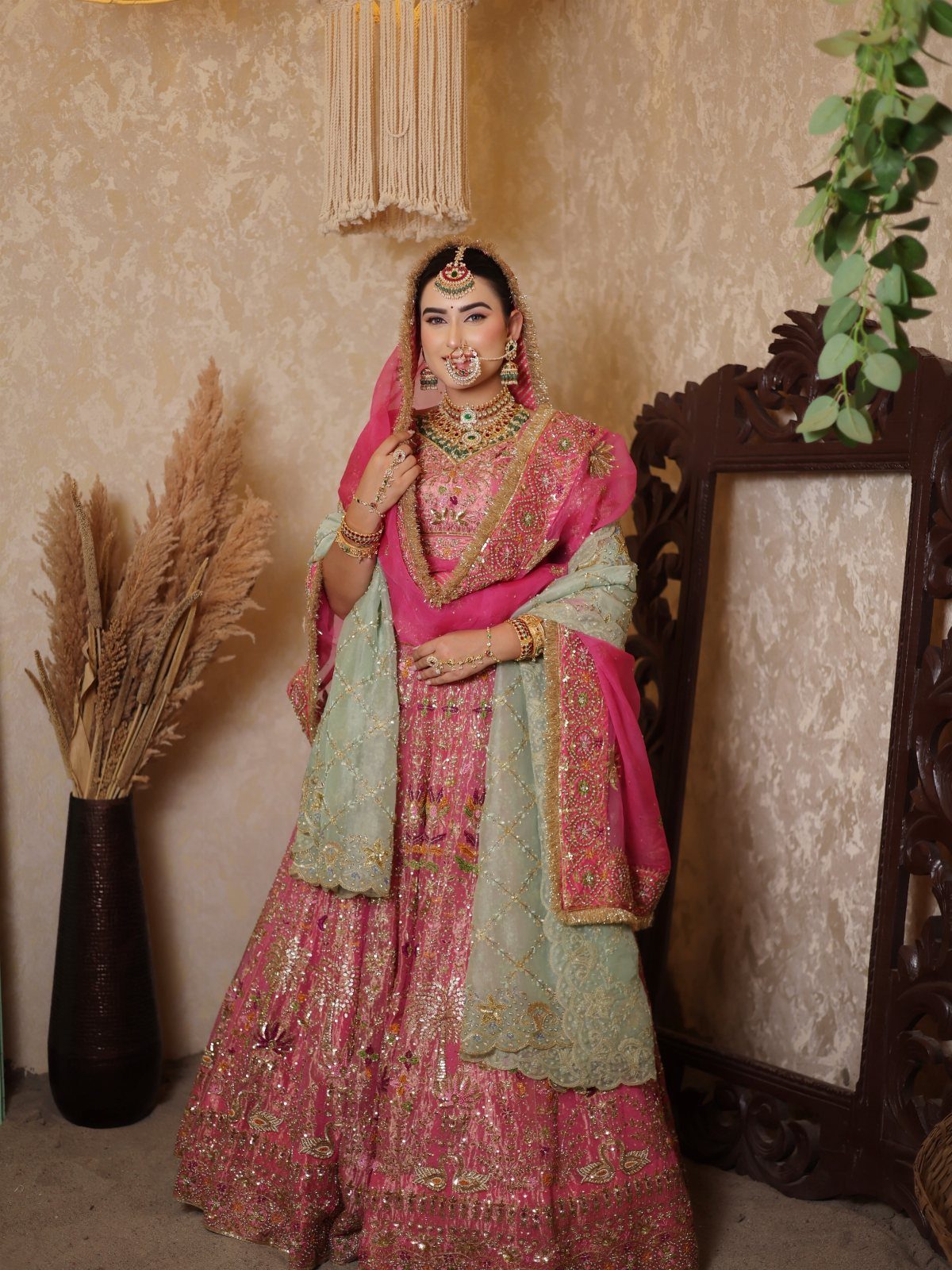
I would pick this route when one partner wants South Asian dress and the other wants to echo it rather than mirror it; the shared palette does the connecting.
Heavy embroidery needs space to read, so outdoor light or a plain studio wall both work better than busy backgrounds. For the lehenga route, champagne and beige-gold register as neutral in photos while still reading as occasion.
Jewelry stacks on top, not beside: neckline embroidery decides whether a necklace sits right or fights the stitching. Check that before the shoot, not after.
8. Wedding Dress Photoshoot
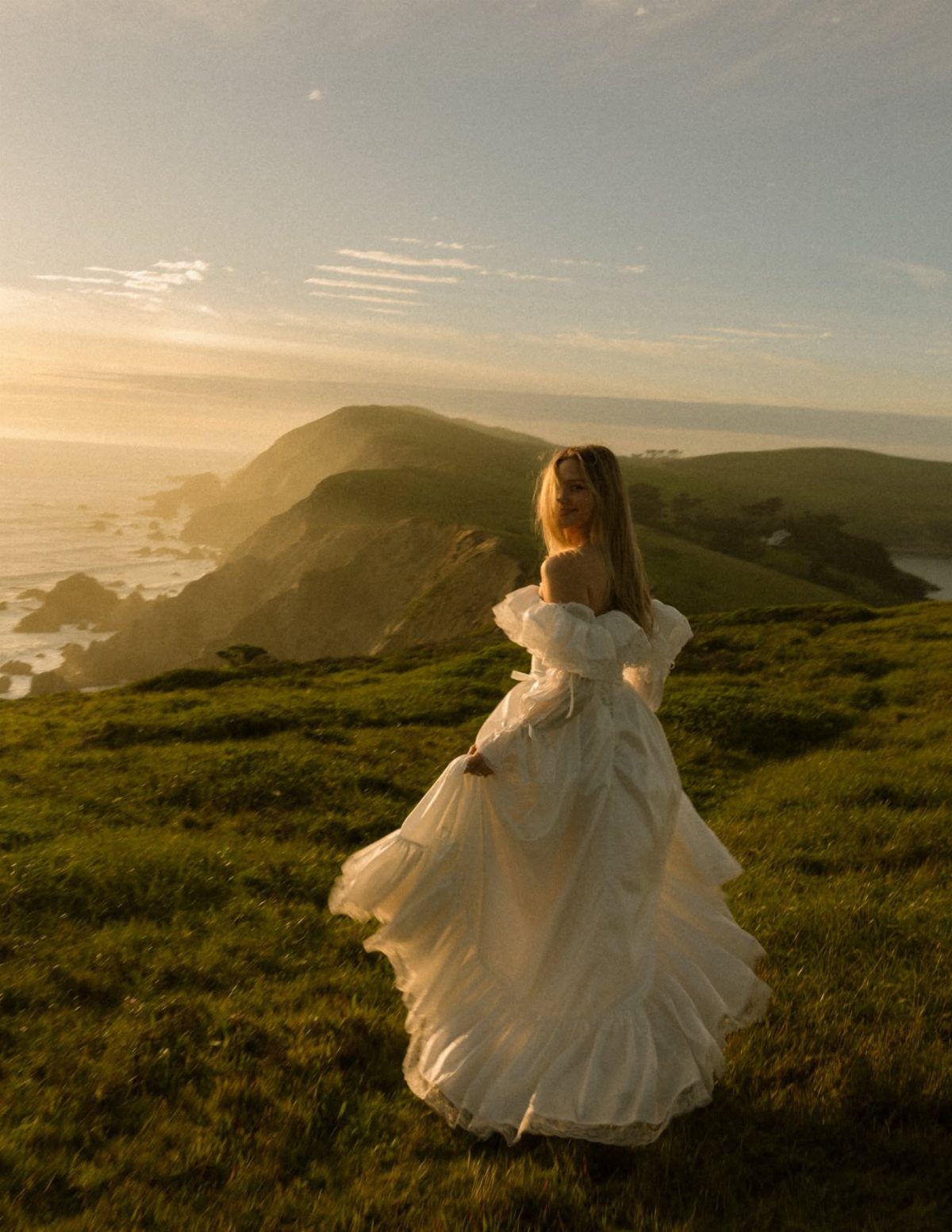
Most brides wear their dress once. This idea gives it a second run against a coastline or city street without the ceremony schedule pressing.
An off-shoulder billowing cut needs wind to perform; schedule around weather and bring someone to manage the train so you are not doing it yourself.
Shoes do not matter until they do: hidden wedges for grass, bare feet for sand, something clean for pavement.
A red tulle overlay on white turns the whole look toward editorial rather than bridal; decide which registry the photo belongs in before you commit to the colorway.
The dress is the subject, so keep everything else quieter than you would at the wedding itself.
What to Wear for a Photoshoot
Your clothes need to move with you, not against you. Skip the busy patterns; they fight your own lines for attention and never sit well in a photograph you want to keep looking at.
A small check or thin stripe reads as texture from a few feet back, which is where the camera usually sits.
I have watched a couple in bold florals lose themselves to their own shirts; the eye goes to the pattern first and only later notices who is wearing it.
What Not to Wear
Neon and saturated primaries bounce light back at the lens in ways that flatten skin tones.
A red this bright is useful for one person in a group shot; on both of you it becomes a shouting match. Logos date faster than the marriage, and copyright concerns aside, they read as accident, not choice.
The same distractibility applies to any pattern larger than your open hand at chest distance: it becomes the subject you paid someone else to advertise.
Trends in Wedding Photography
The posed stiffness couples worried about in their parents’ albums has largely given way to movement caught between poses.
Your photographer is likely working handheld more than tripod now, chasing the unguarded laugh or the glance that slipped past. Natural light is the current baseline preference, though that still means knowing when to seek shade rather than open sky.
Location choice has shifted toward places with personal history, less emblem than evidence: the apartment block where you met, the freight platform where you talked until 2 a.m.
Indian luxury wedding photography still stages the regal walk against palace architecture, gold jewelry and ceremonial sword intact; that register of formality persists as its own strand, not the dominant one.
Photographer Attire
A photographer who cannot kneel without her skirt riding up will miss the low angle that makes a short person look regal.
I stick to slim pants with real pockets for spare batteries and a dark top that will not reflect in glass or chrome.
Shoes matter more than they appear; I have stood in wet grass for an hour and learned that lesson once.
I dress to disappear into the background I am composing, never to become an exclamation point in the corner of someone else’s frame.
Frequently Asked Questions
What should I wear to a wedding photoshoot?
Pick clothes that move with you and feel like your own style, not a costume. One partner in a flowing bright color like magenta or red and the other in neutral tones gives the frame focus without shouting.
For pre-wedding shoots specifically, I like one recognizable location, a well-fit base layer, and timing around golden hour if you are outside.
What not to wear for a photo shoot?
Skip neon and saturated primaries, which bounce light back at the lens and flatten skin tones.
Bold florals and oversized prints become the subject instead of the couple; in photos, the loudest garment wins and the people wearing it fade to background.
What are the trends in wedding photography for 2026?
The current style favors movement caught between poses over stiff formality; photographers now work handheld more than tripod, chasing unguarded moments.
Indian luxury wedding photography keeps its own strand of staged regal formality against palace architecture, but it is not the dominant direction.