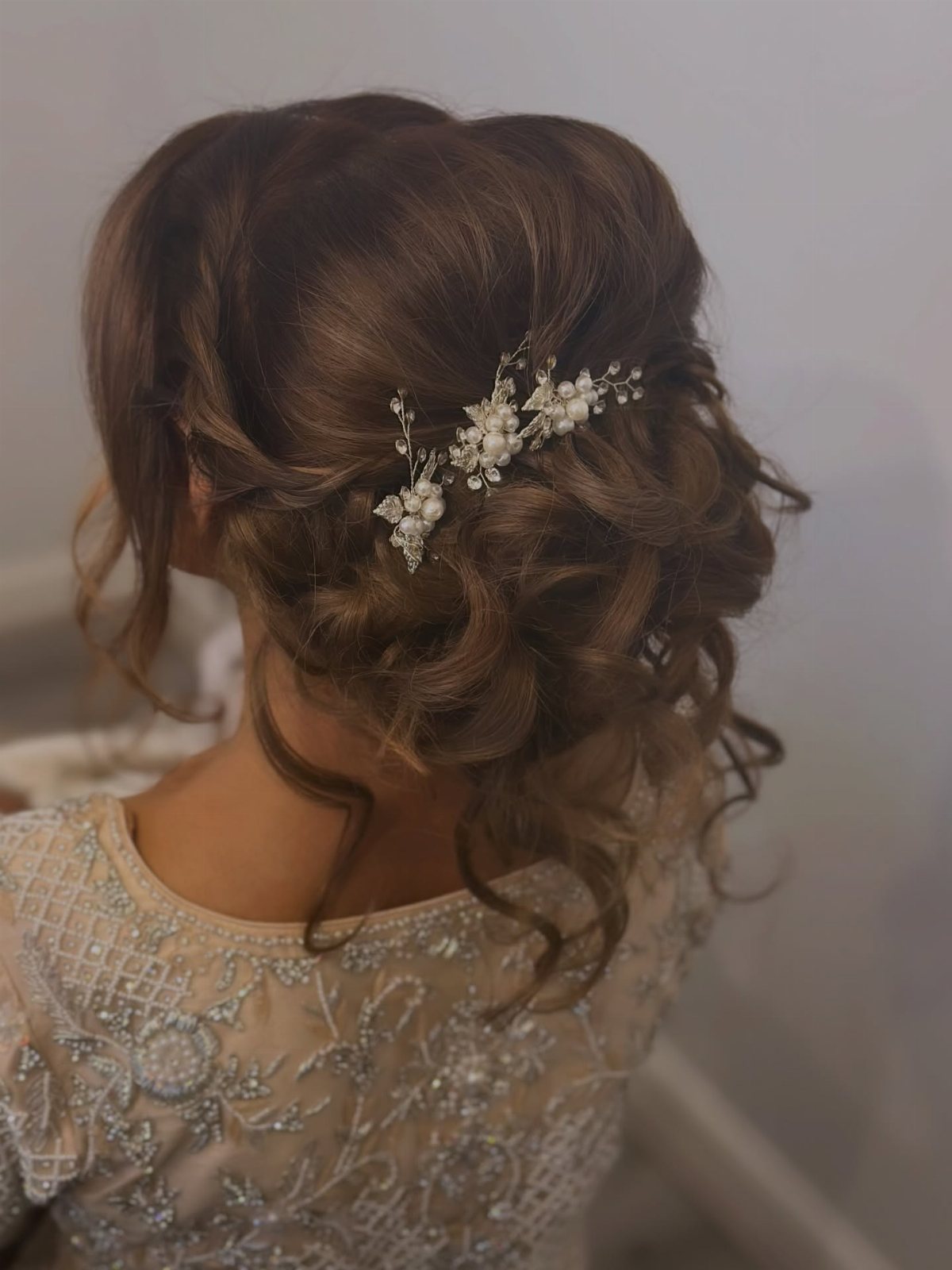
These ideas run from a damp-hair twist you can do at the mirror to sculptural braiding that needs a practice afternoon and a stylist who cannot be rushed.
The deciding factor is how much your hair does on its own: natural curl or thick texture carries styles that straight or fine hair needs extensions, padded forms, or a wand to build.
A single pearl cluster placed off-center, or a bubble braid with hidden elastics, turns the same basic shape into either candlelight formality or playful structure.
1. Curly Updo
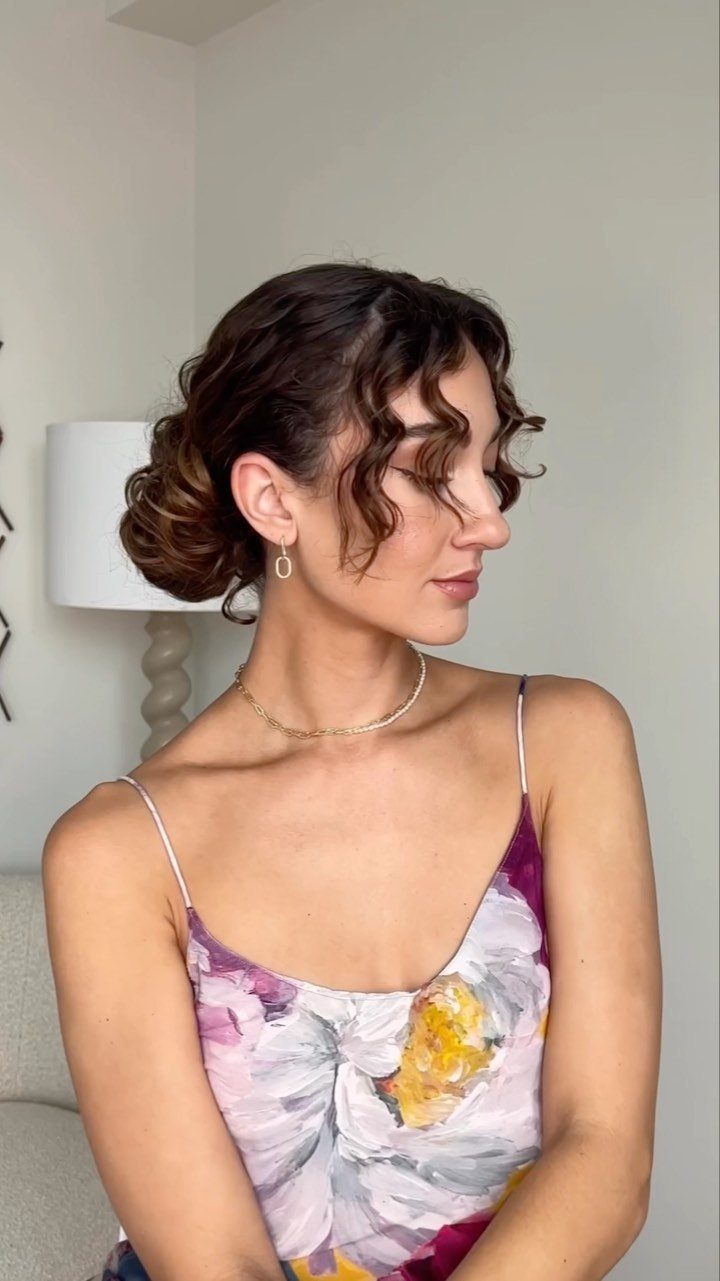
Tight curls piled high make this one read as sculpture rather than just an updo. Working with damp natural texture and no heat gives you an updo that looks intentional in about the time it takes to finish your coffee.
Natural curls hold the shape on their own; if yours are straighter, a small wand builds the same density. Face-framing tendrils soften the height and keep it from reading too formal for an outdoor ceremony.
I’d pick this for a beach wedding where breezy still needs to look like you tried.
2. Classic Chignon
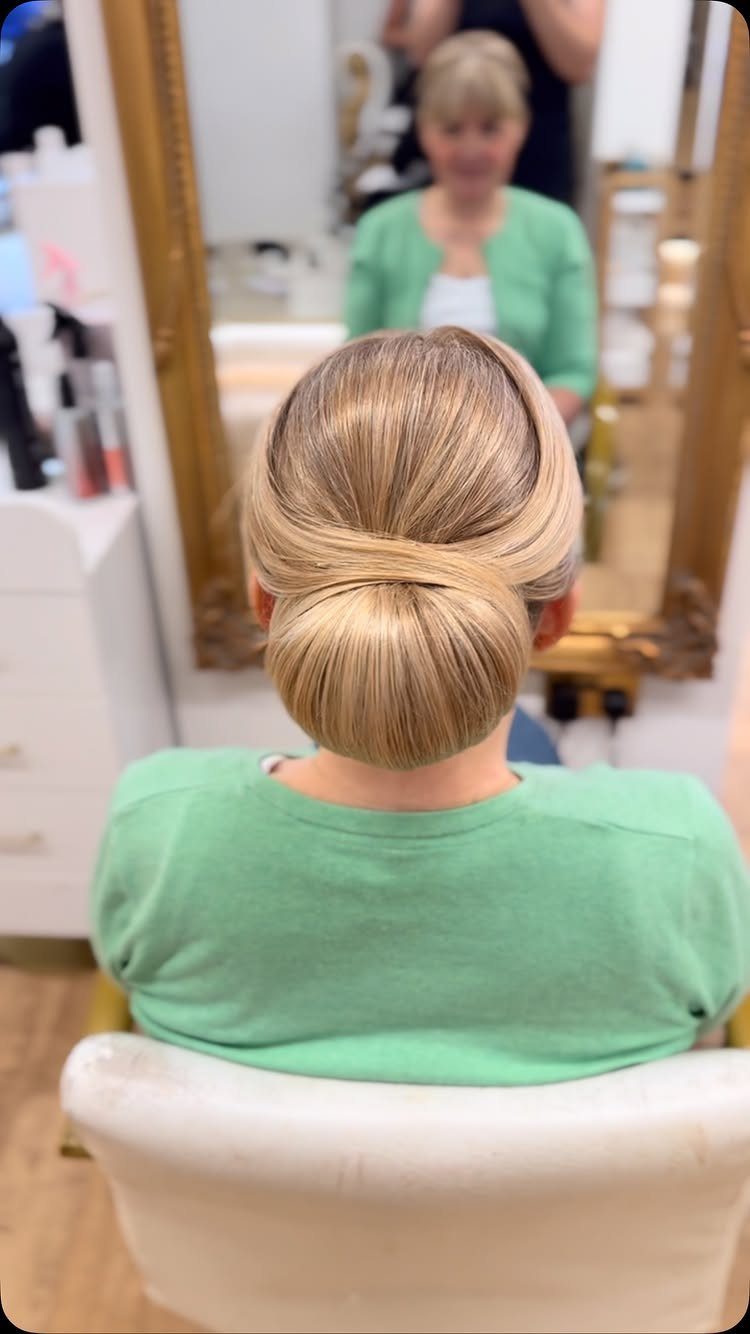
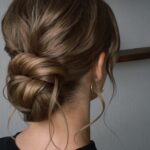
A chignon sits lower and tighter than a standard bun, folded into itself rather than wound. That folded structure holds a hat or fascinator steady, which matters when the role comes with headwear.
The finish can run sleek or slightly soft; extensions add bulk if your own hair is fine. Hairspray matters more here than with looser styles, since every layer is visible and flyaways break the line.
This one trades some ease for a look that stays current long after the day itself.
3. Sleek Bun
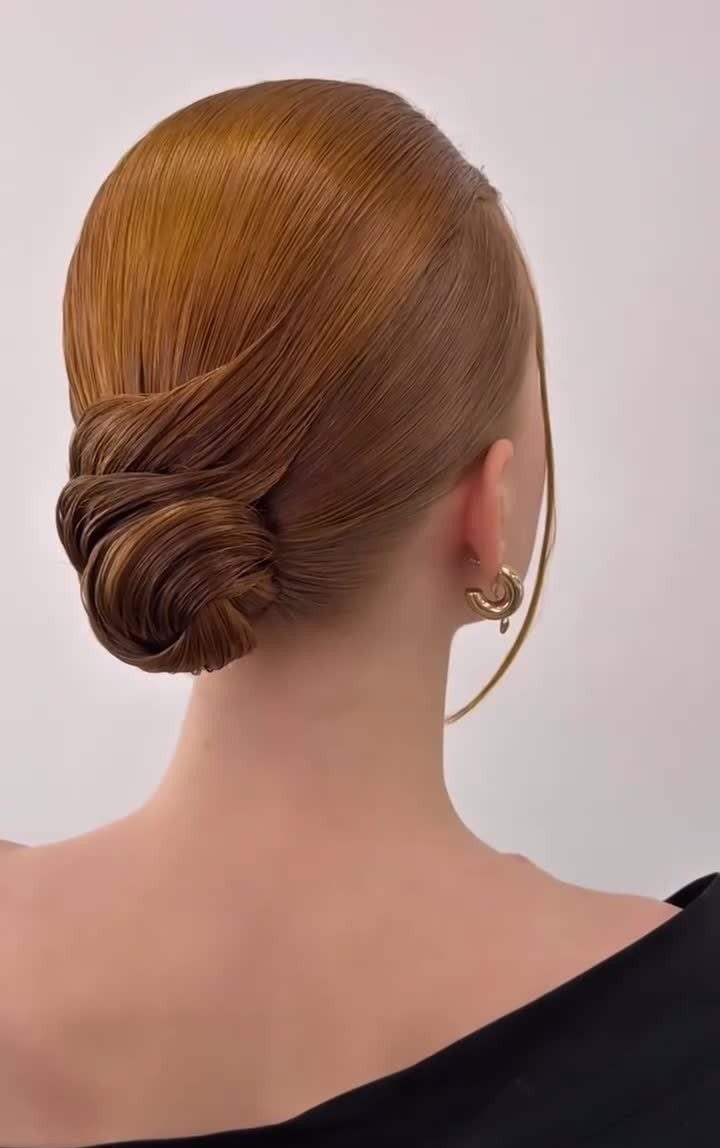
Gloss matters most here. Hair smoothed to the point of reflection, gathered low at the nape, gives the sleekest finish.
A hair gloss treatment gets you there if your own shine is uneven; the maker of this version used that step.
Face-framing tendrils keep the severity in check. Without them, the look tilts editorial and can feel cold against a festive dress.
With them, it carries from ceremony to dancing without a change.
Backless or low-back dresses benefit most: the bare skin and the polished bun draw the eye upward together.
4. Textured Updo
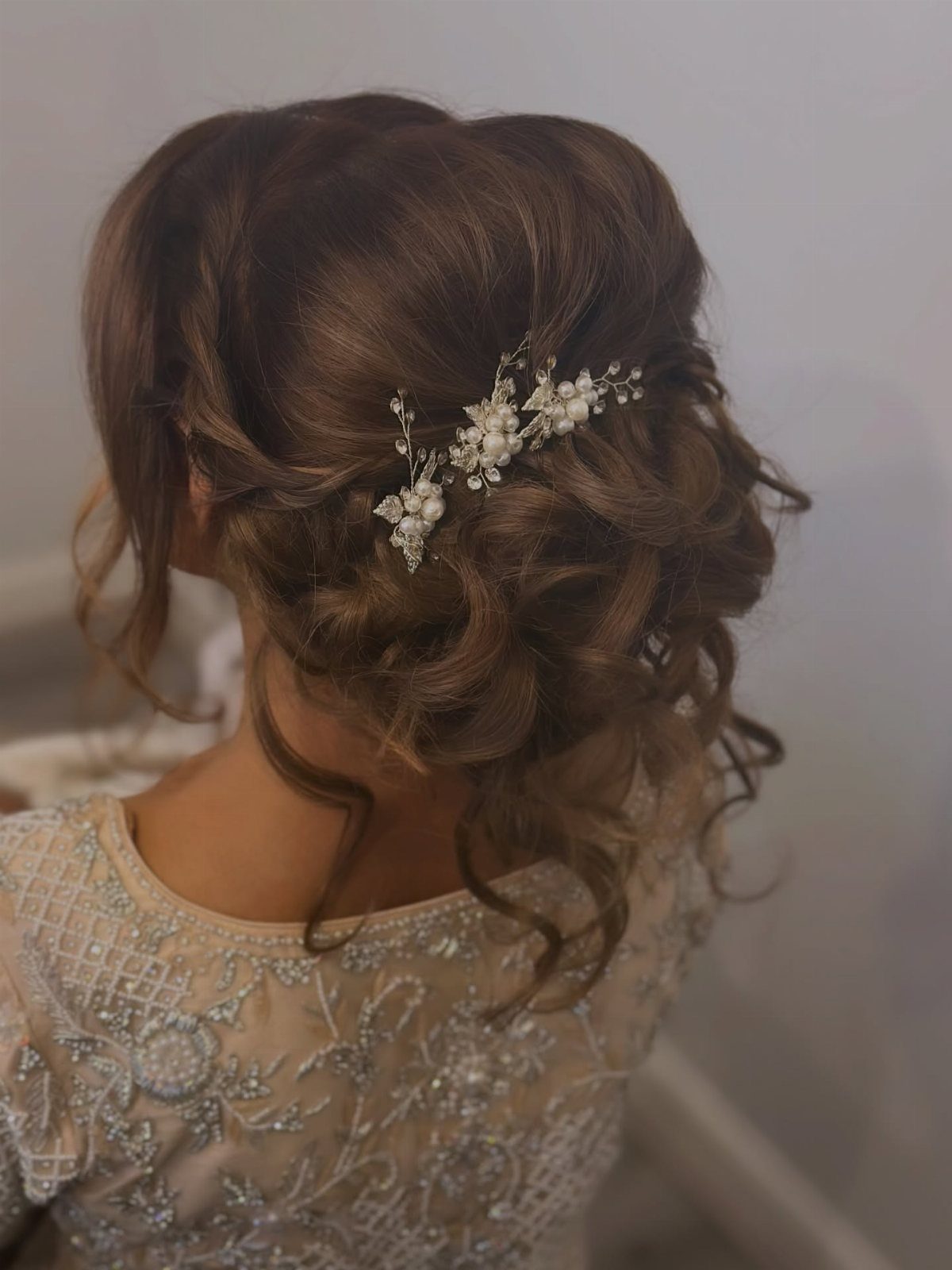
Volume and looseness are the goal here, not the accident they would be in a chignon. Teased and pinned hair with pieces left to escape intentionally catches light best with a pearl and crystal hairpiece worked into the texture.
Loose strands around the face are not an afterthought, they are part of the structure. Thick or long hair suits this best; the weight that makes a summer day feel heavy becomes the substance that holds the shape.
Oval and round faces carry it well, though elongated faces may find the height pulls further.
I’d skip this one if the wedding is black-tie and the dress is minimal; the hair needs something equally detailed to balance it.
5. Low Bun with Curled Side Tendrils
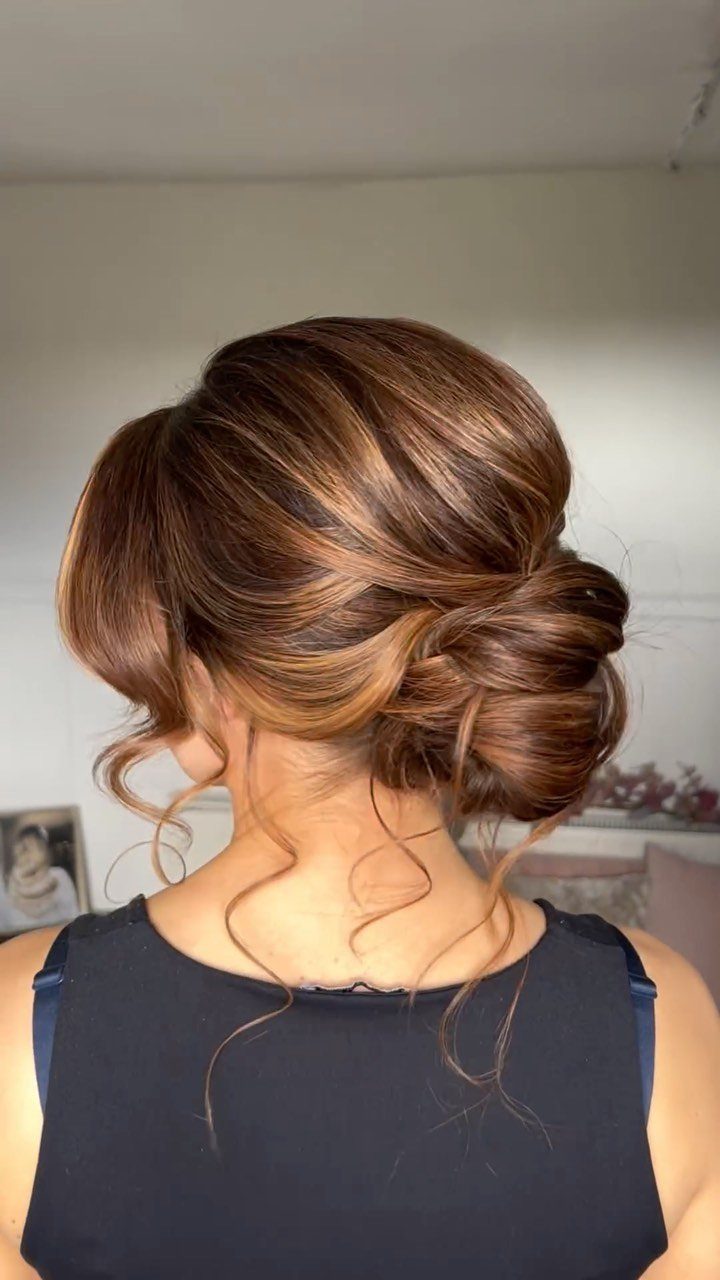
Several thin, curled tendrils trailing from a low bun give this its particular mood: country evening rather than city ballroom.
The curls are set with a large iron, not natural, so they hold their spiral against humidity if the wedding moves outdoors.
The looseness reads casual, which makes it a strong choice for barn or garden settings where a tighter updo would feel overdressed. The tendrils also do the work of softening a strong jaw or wide forehead without requiring bangs.
Time spent on the curls is time not spent on the bun itself, which can stay simple.
6. Face-Framing Bun
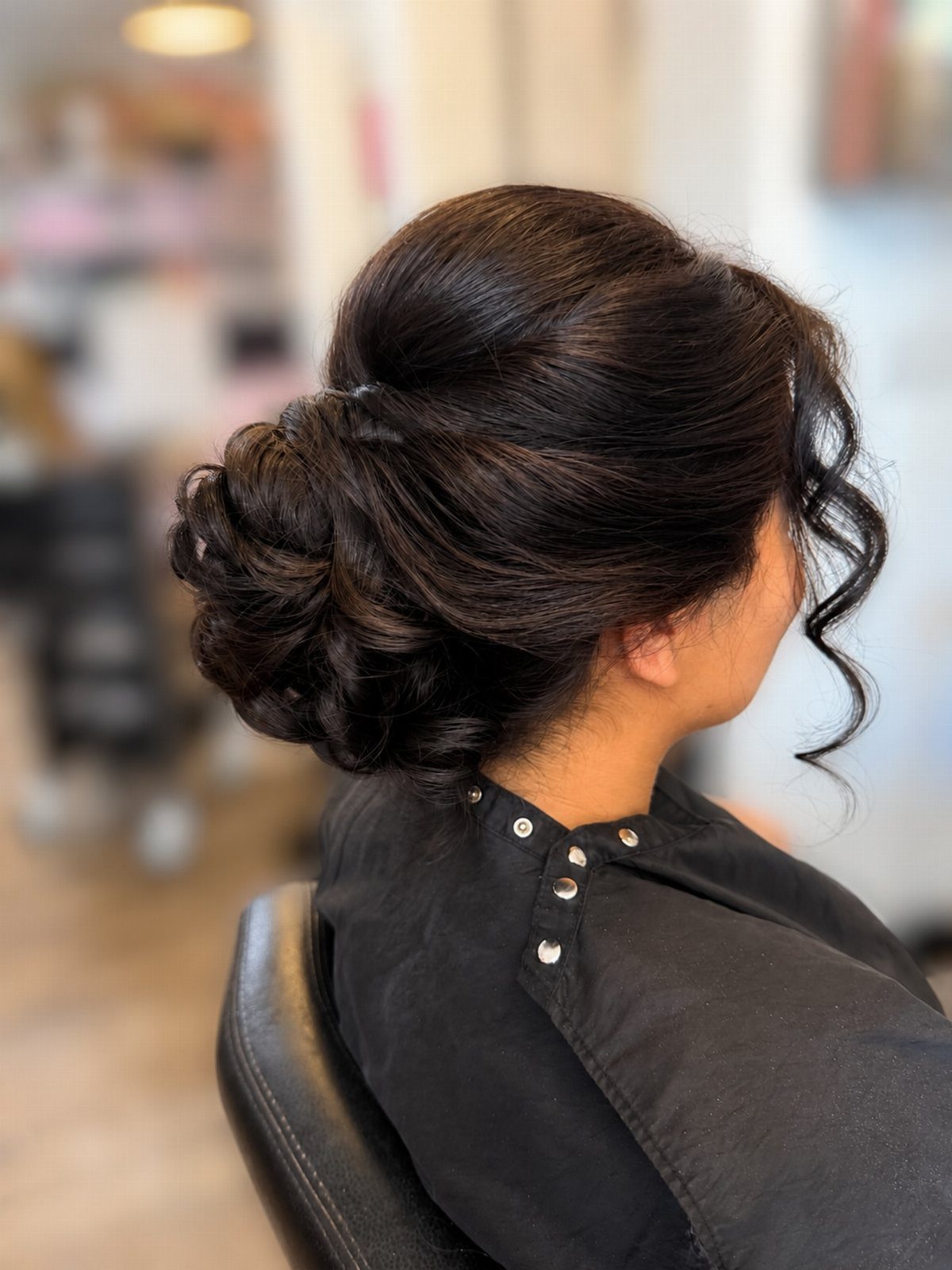
One curled strand, left deliberate against the cheek, turns a basic bun into something that flatters the face directly.
The structure is replicable at home: gather the hair low, pin, then pull a single layer from the front and curl it away from the face.
Bangs or face-framing layers make this natural; without them, you are creating the frame artificially. Either works, though natural layers fall more softly throughout the evening.
This reads romantic without the effort of the braided entries below. I’d use it when the dress is detailed and the hair should support rather than compete.
7. Artistic Bun
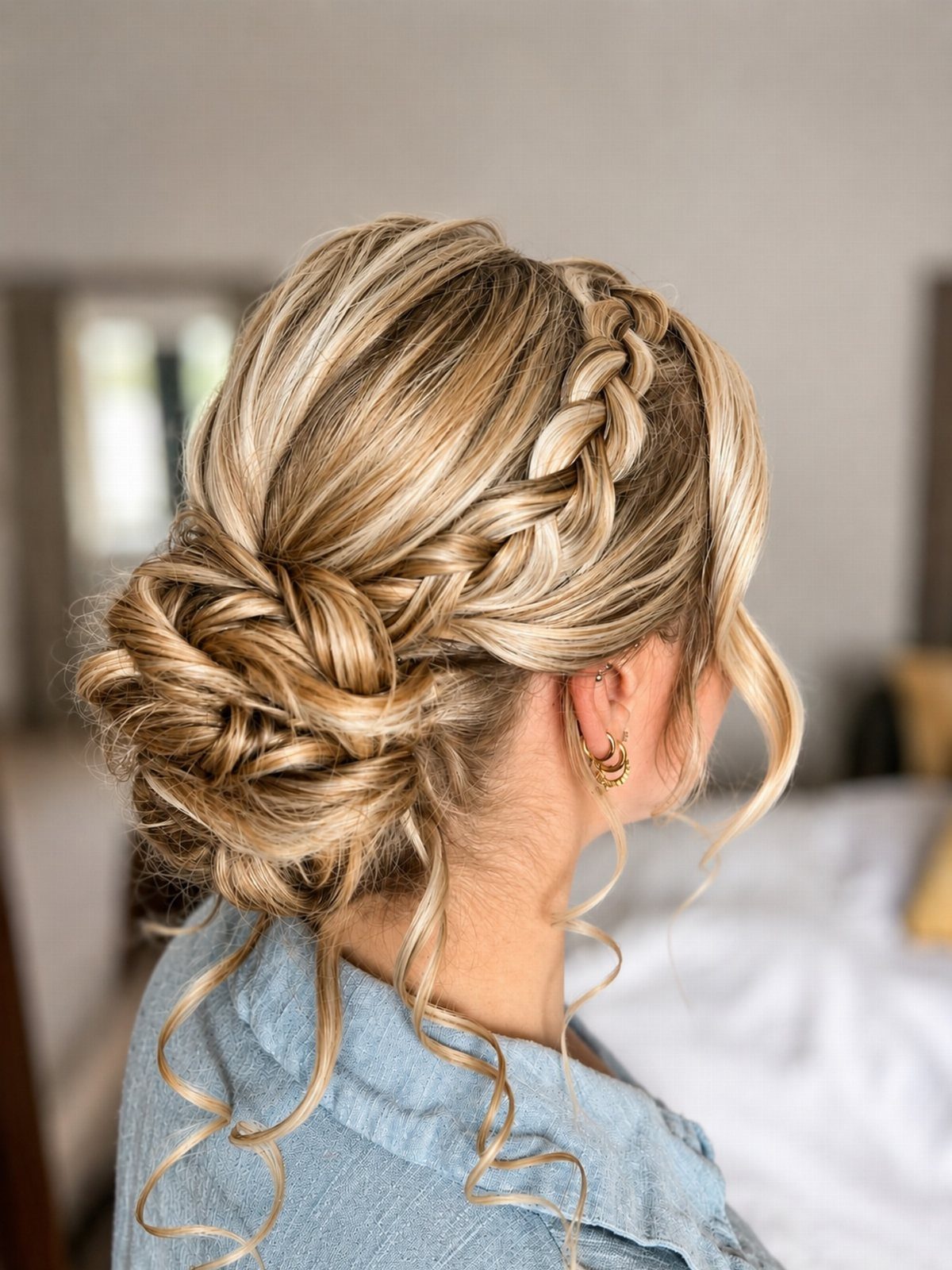
An artistic bun turns the nape of your neck into the place where something interesting happens.
I twist the gathered hair into a shape that reads as intentional, not leftover, and let a few curls escape to keep it from looking too finished.
This one suits guests who want the polish of an updo without the formality of a classic chignon.
A braid adds structure to this bun; you could work one in or skip it depending on how much time the stylist has.
I’d wear this to an evening wedding where the dress code sits somewhere between cocktail and black tie.
8. Floral Accent Updo
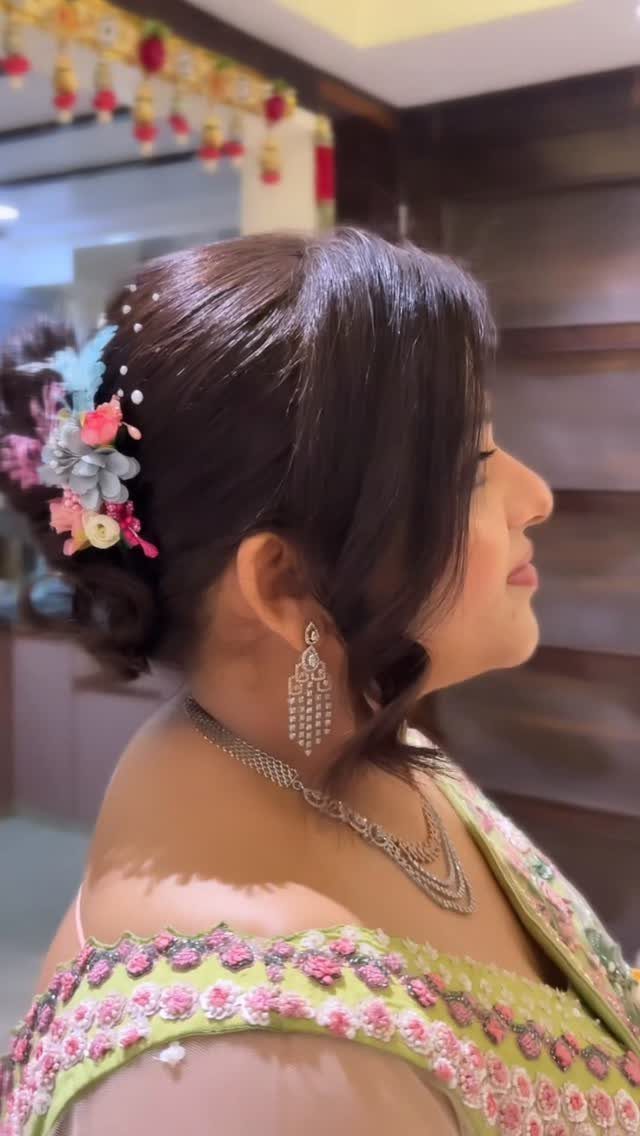
Fresh or silk flowers pinned into a dark updo do what jewelry sometimes cannot: they add color without adding metal. Bright accents pop against deep hair, and silver earrings repeat the cool tone without competing.
For a guest, smaller blooms or a single cluster work better than a full crown; you are not the one walking down the aisle.
I would match the flower color to something in my outfit rather than the wedding palette, to avoid looking like borrowed decor. This style travels well to outdoor summer weddings where the setting already has greenery.
9. Voluminous High Bun
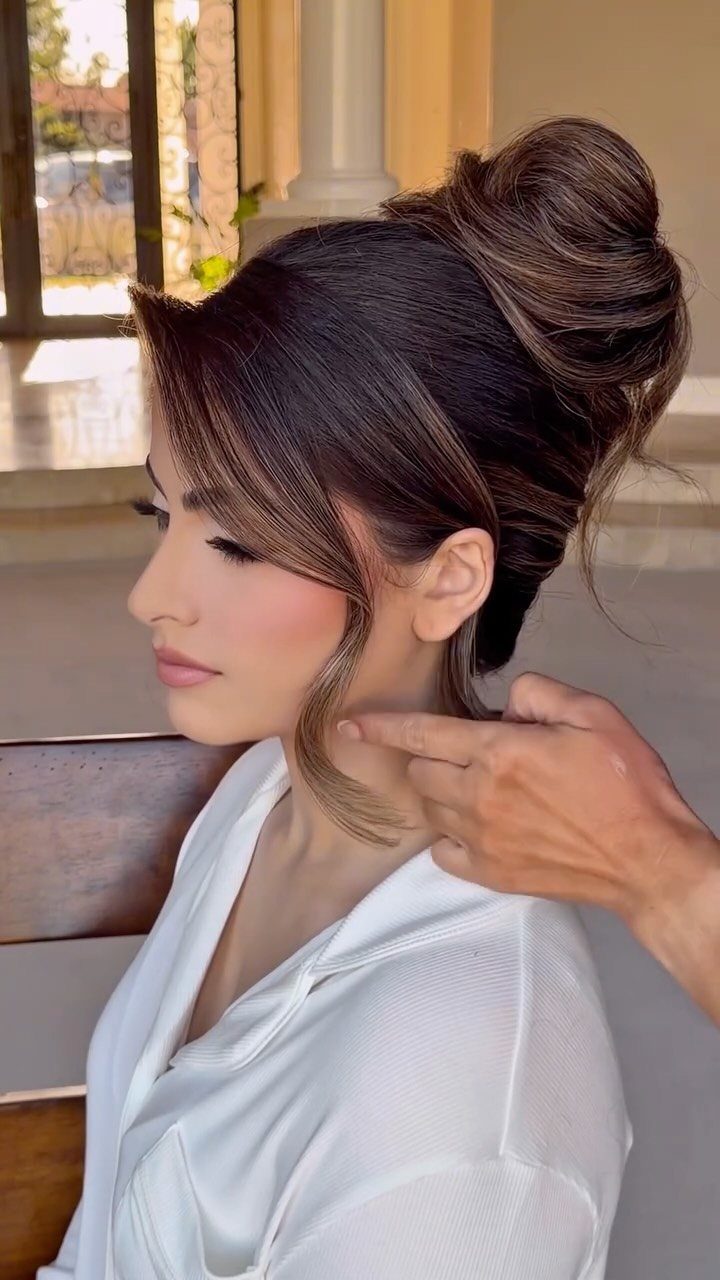
A high bun with real volume changes your silhouette, lifting the line of your neck and showing off whatever is happening at your shoulders.
Face-framing strands keep this from reading too severe; I would insist on those pieces if my face is longer or my forehead higher.
To build the height, backcomb the crown before smoothing the surface, or use a padded bun form if your own hair is fine. This one rewards a bold earring.
I have seen this fall flat on hair that was too clean; day-old hair holds the shape better.
10. Intricate Braided Updo
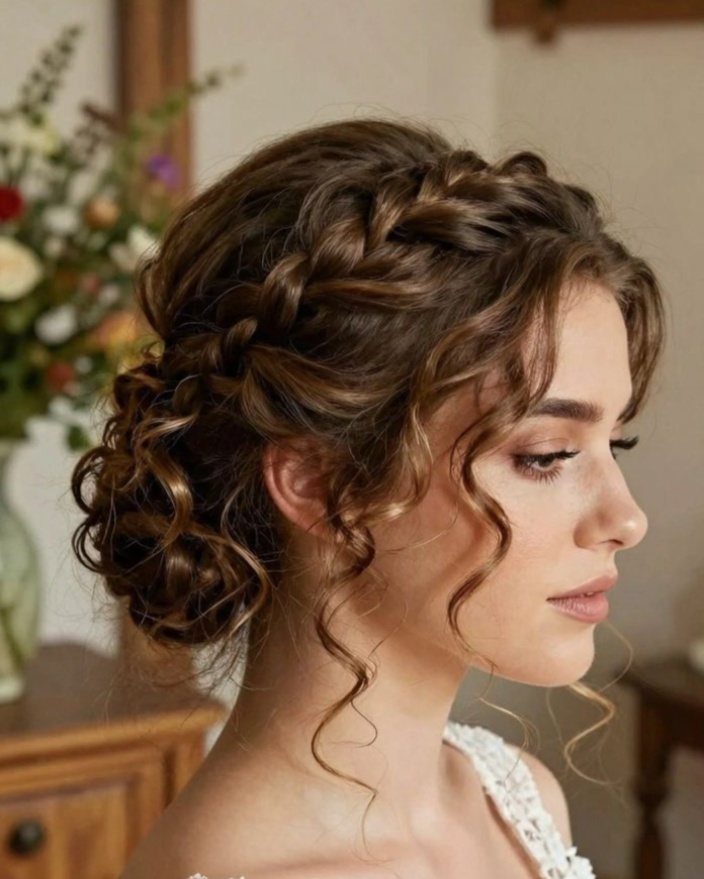
Thick braids woven into a low updo give curly hair a structure that a simple bun cannot provide.
Texture is doing real work here: the braids hold their pattern against the softness of the tendrils, so the style reads as designed rather than pinned-up desperation.
A stylist who braids tightly at the start, then loosens the loops with a pin tail comb, gets this balance. I would book more time than a basic updo requires; intricate braiding cannot be rushed.
This suits guests with naturally curly or textured hair who want to wear it up without fighting it straight.
11. Low Braided Bun
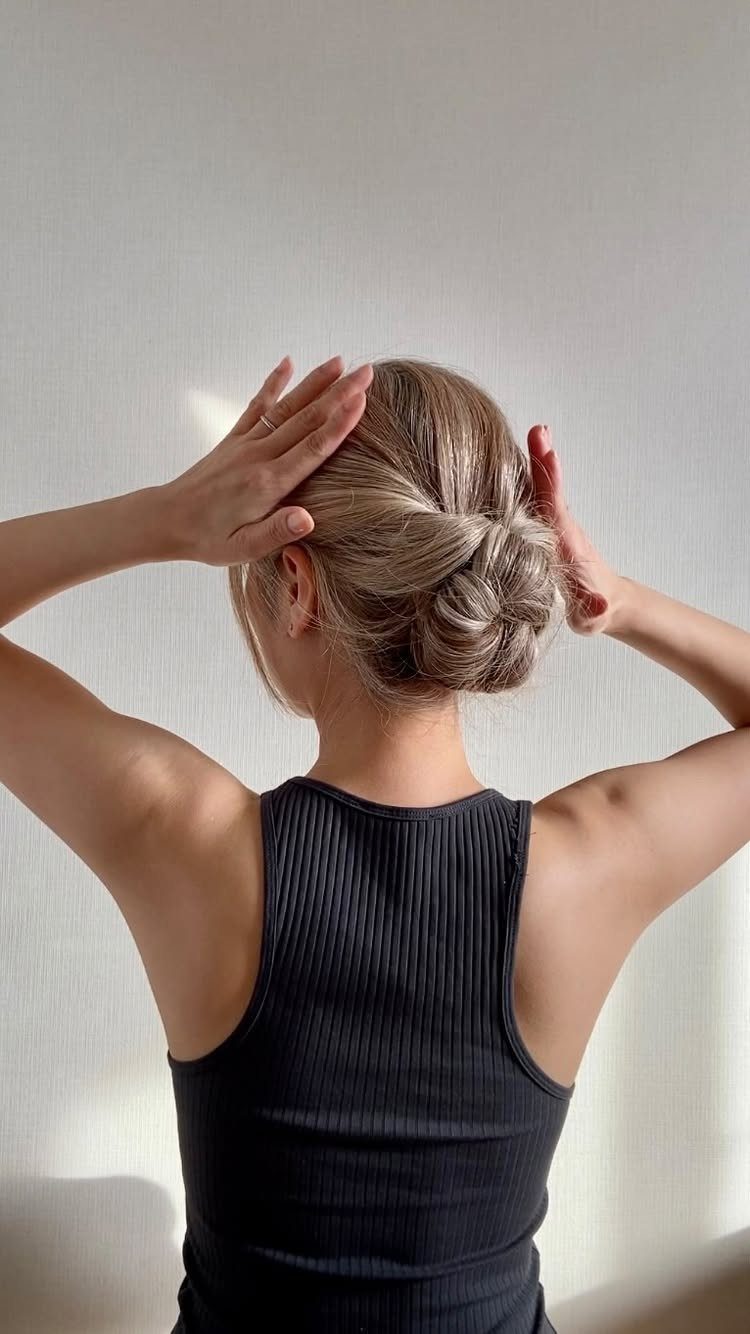
A single braid leading into a low bun gives medium-length hair enough detail to compete with longer styles.
The braid is the main event, with the bun as a quiet ending; I would reverse that emphasis only if my bun were fuller or my braid thinner.
This style forgives hair that misbehaves, since a slightly messy bun here looks intentional. You can braid a crown section from one temple to the other, or start the braid lower at the nape.
I would choose this for a daytime wedding where I need to look pulled together without looking like I tried too hard.
12. Pearl-Adorned Low Bun
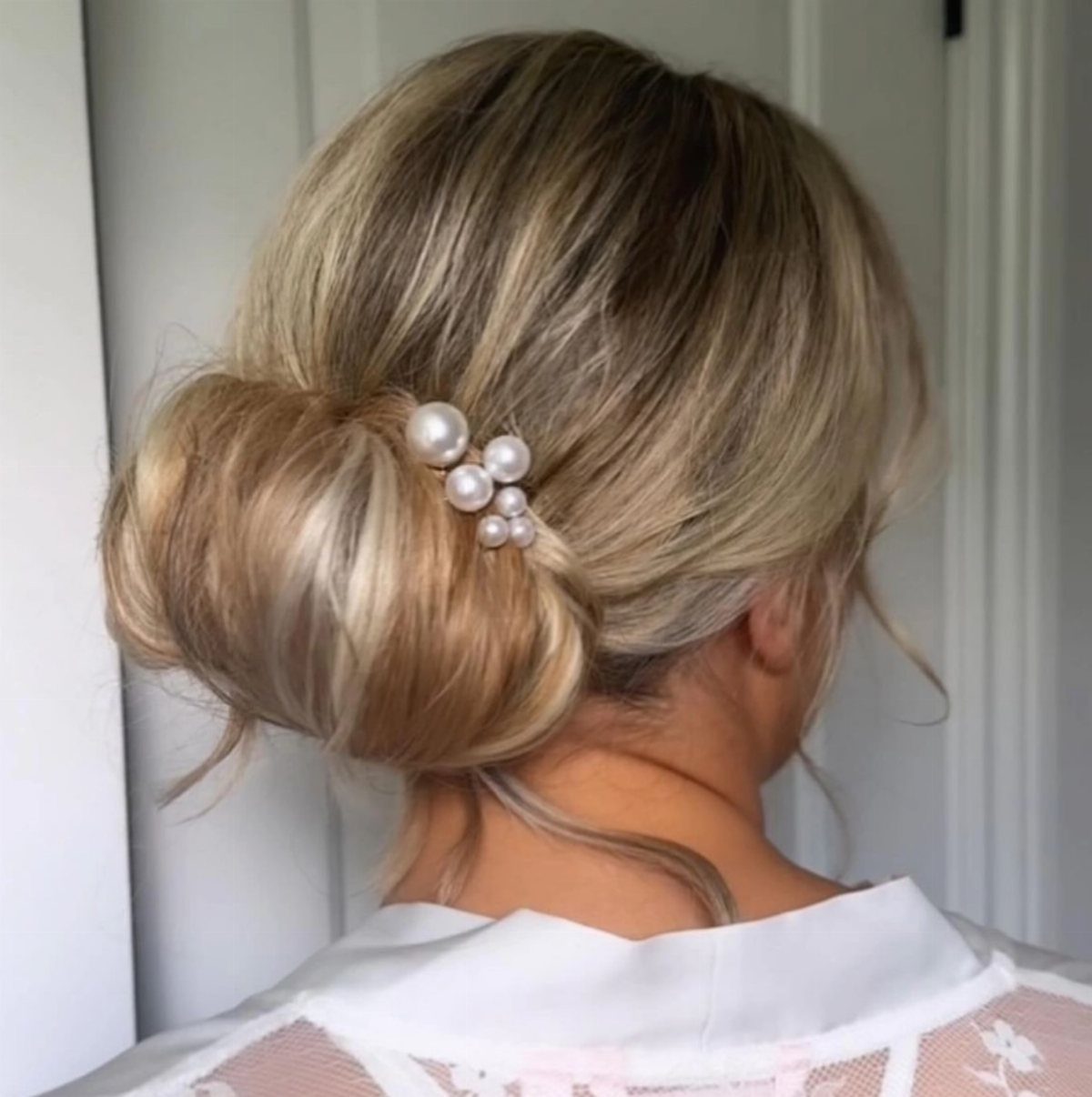
Scattered pearls turn a low bun into something that catches candlelight without catching attention the way crystals might. Large white pearls sit on textured hair, not a glass-smooth surface, which keeps the look from feeling too bridal.
I would place them asymmetrically, clustering 3 or 4 on one side and a single pearl lower down, rather than spacing them evenly like a tiara. Loose waves at the neck soften the line.
This style suits a guest who wants one statement element but does not wear bold jewelry well; the pearls do the work of earrings you never bought.
13. Half-Up Bun
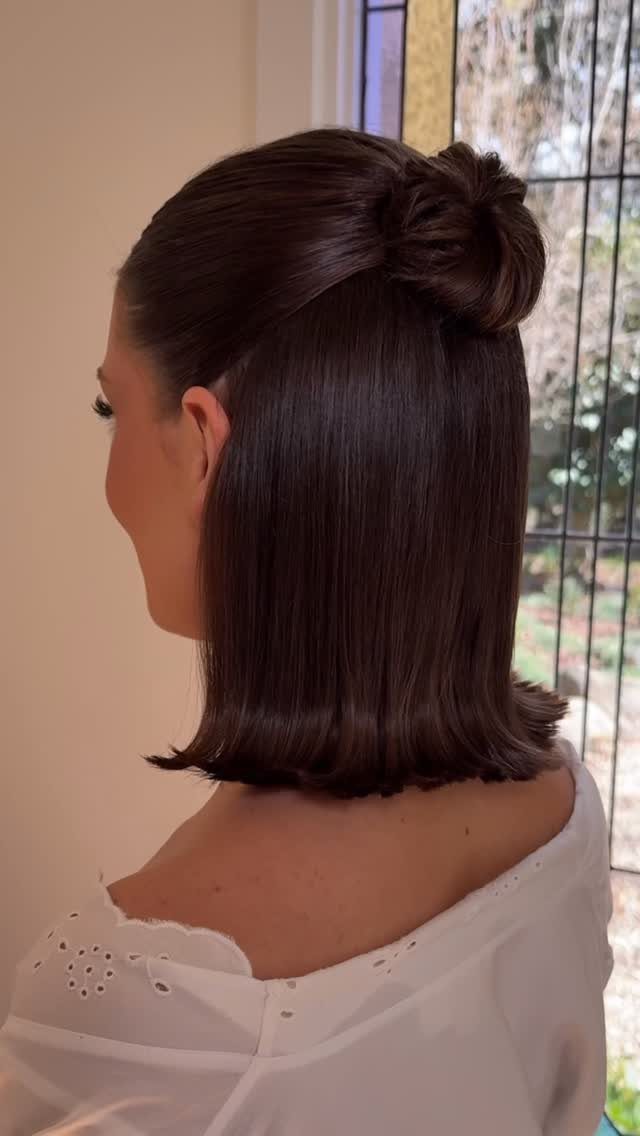
A half-up bun keeps the polish of an updo without surrendering all your length. The top section pulls back into a neat bun at the crown while the rest falls straight to your shoulders, giving you structure that still moves.
I would wear this for a wedding weekend with multiple events; the top half can shift into a sleeker bun for the ceremony, then loosen for the after-party without a full restyle.
It works on shoulder-length hair and longer, and the straight lower section keeps the look intentional rather than half-finished.
A looser take keeps the top gathered but not tight, with the rest falling past the shoulders.
14. Half-Up, Half-Down
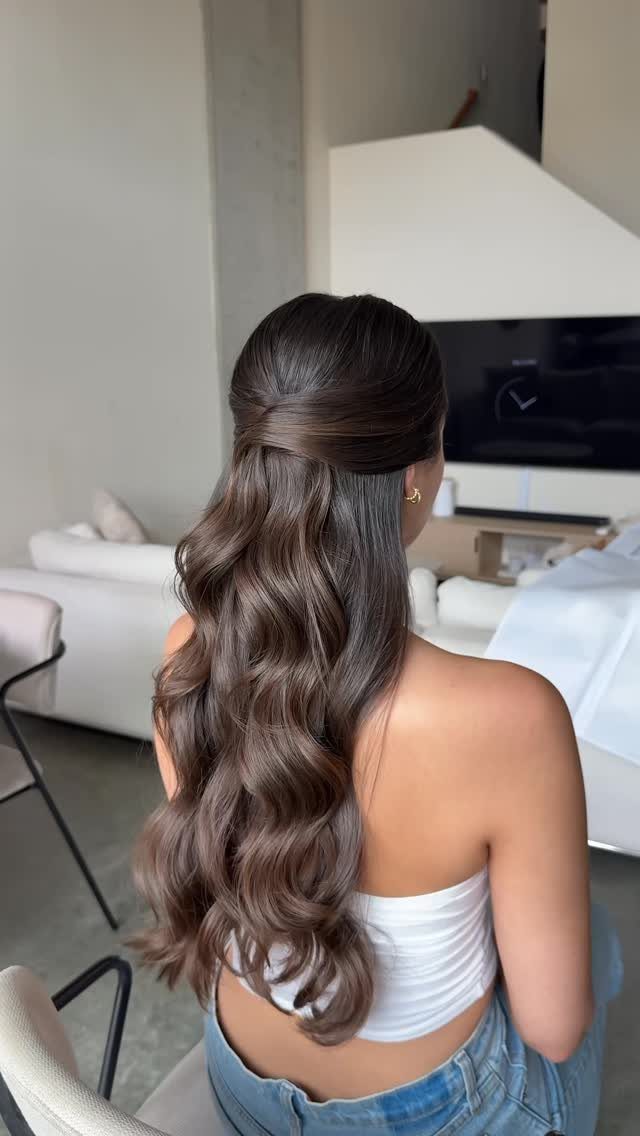
The half-up, half-down style splits the difference when you cannot choose between up and down.
The top half pulls back smoothly while the bottom carries volume in loose waves, giving you the ease of wearing your hair out with the control of having it off your face.
This is the style I’d pack for a destination wedding with events back to back. You can slick the top section into a high pony for the rehearsal dinner, then loosen it to a softer hold for the brunch after.
It suits every length and texture, and the waves in the lower half hide any limpness from travel or late nights.
The front pieces frame without falling forward, which matters more than people think once you are seated through a long ceremony.
15. Sculptural Braids
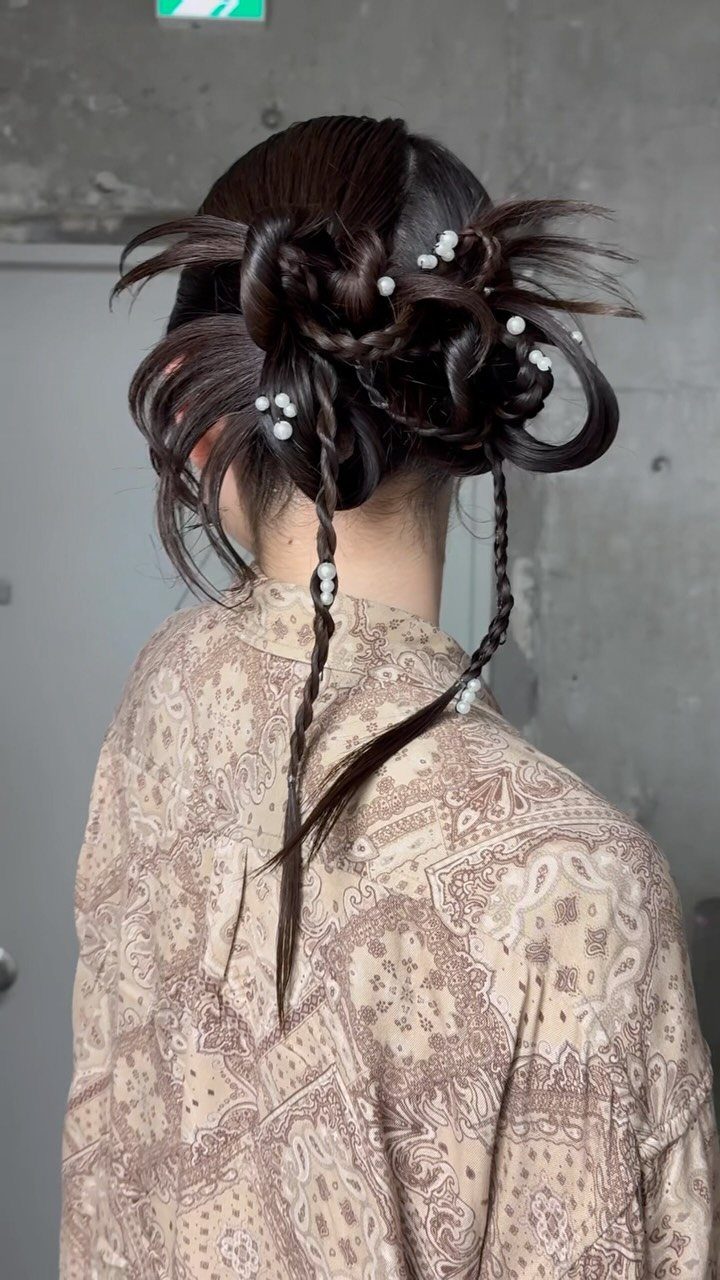
Sculptural braids treat your hair as material for something closer to architecture than styling. Loops, braids, and small pearl accents build upward into a shape that holds its own against a detailed neckline or a plain one.
The braiding here is involved enough that I’d run through it once on a free afternoon before the day itself.
The base can be box braids or another protective style, which gives the structure something to grip and extends the wear past the wedding itself.
Pearl beads add the formality; without them the shape reads more artistic than occasion-appropriate. Check that your scalp tolerates tension before committing, since sculptural styles pull more than loose ones to keep their geometry.
16. High Ponytail
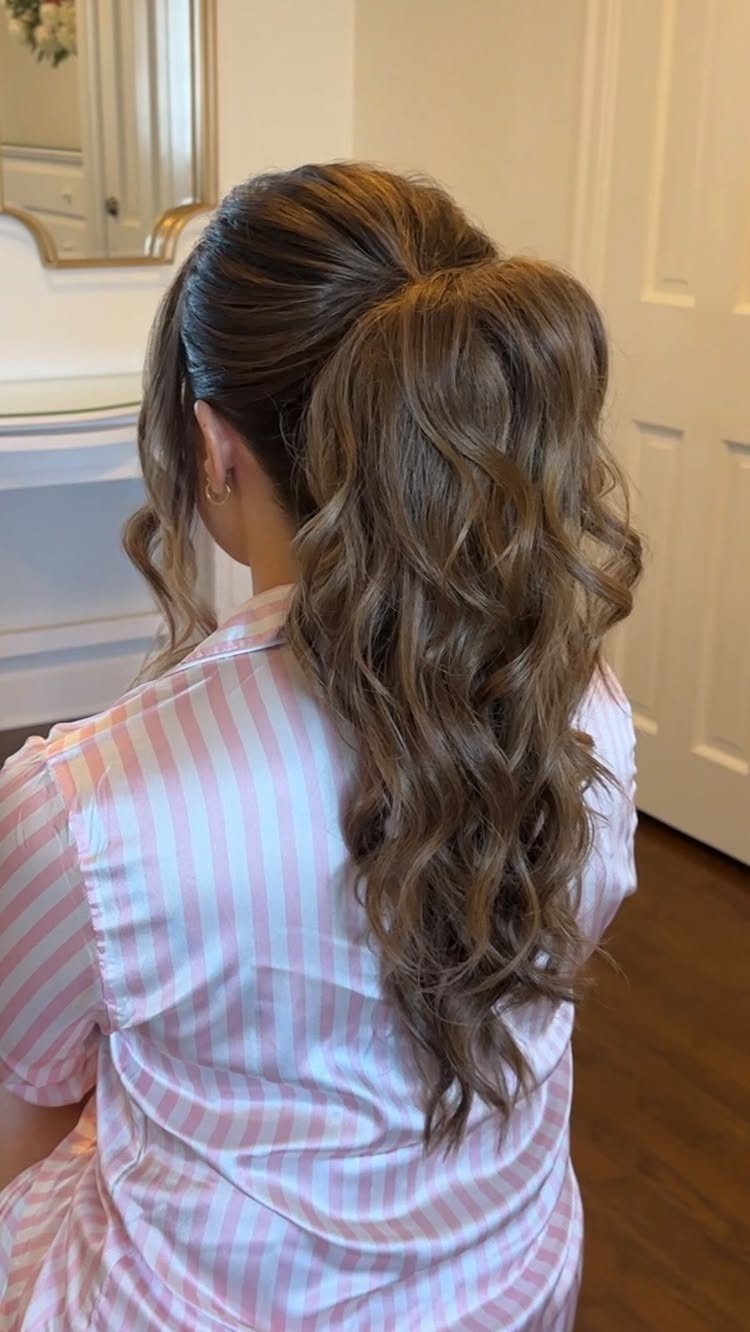
A high ponytail sits at the crown and draws the eye upward, which is the closest thing to a free facelift that hair provides.
The volume comes from brushing back and securing with tension, then letting the length cascade in waves that move when you turn your head.
I would add a ponytail extension if my own hair falls past my shoulders but lacks density; the extra length and weight keep the shape from looking wispy by evening.
Curl any pieces that escape at the front, since straight tendrils against a formal outfit look accidental rather than styled.
For shorter or finer hair, the extension attaches and removes easily, and the difference is immediate.
17. Bubble Braid
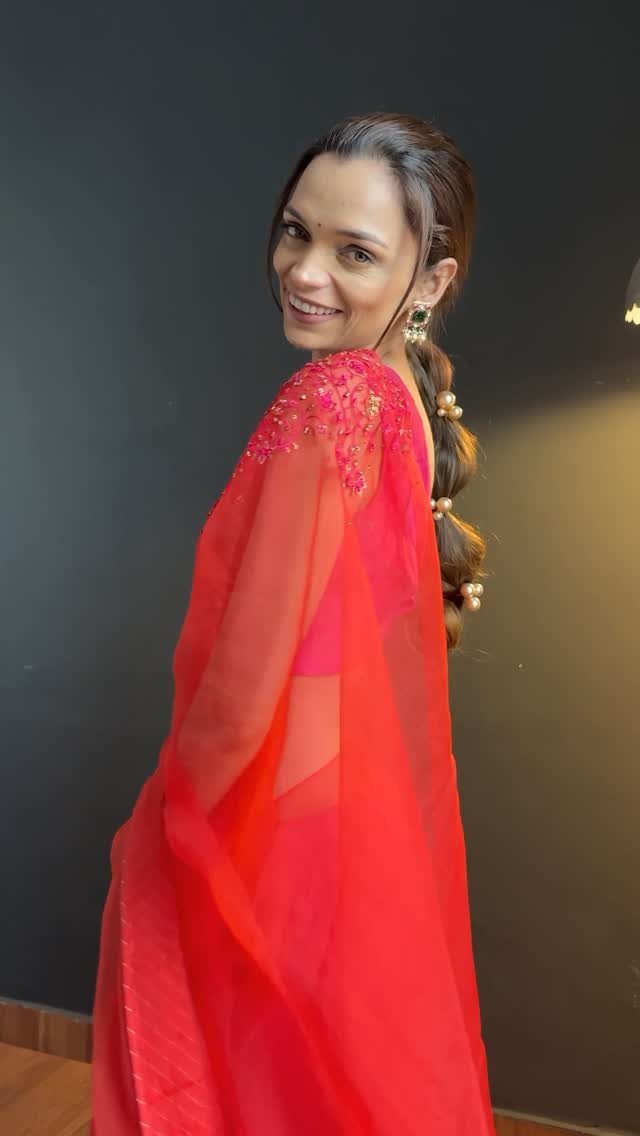
The bubble braid builds a ponytail into a column of rounded sections, each one fanned out between elastic bands.
Pearl or gold accents at the joints turn a playful shape into something that reads dressed-up against a saree or a structured gown.
Build it from a ponytail high or low, then wind a small section of your own hair around each elastic and pin the end underneath to bury the band.
Two or three sections are enough; more than that and the shape becomes costume rather than style. The fanning is the key move, and it takes patience to get each bubble even.
Longer hair carries this best. I would practice the wrapping once before the day, since hidden elastics look simple but take a few tries to pin flat.
Choosing the Right Hairstyle
Start with your outfit and work backward. The wedding’s formality sets the floor, not the ceiling.
A barn reception forgives a loose low bun with curled tendrils; a black-tie evening asks for structure, whether that is a chignon or a sculptural shape.
Comfort is the piece people forget. You will wear this through heat, hugging, and possibly dancing, so comfort matters as much as how it looks in the mirror.
A style that needs hourly checking pulls you out of the day. Pick something that holds without your attention.
Weather is the last variable. Humidity unravels precision; wind turns loose pieces into a nuisance.
Check the forecast the morning of, and have 4 to 6 extra pins in your bag either way.
“Always make sure that you feel beautiful and confident but never take away from the bride,” says hairstylist Ricky Fraser. “A wedding guest should always follow the lead of the bride and the setting of the event.”
— Vogue
Hair Accessories
A hair accessory should read as something you chose, not something you added because the style needed help. Small pearl or diamante clips work on almost any updo; they catch light without demanding it.
Place them where they will be seen in profile, not dead center like a tiara.
Fascinators belong at formal weddings with headwear already in the dress code. At a semi-formal afternoon event, they tilt toward costume.
If you are unsure, skip it.
The rule is taste, not size. A single cluster of fresh flowers pinned asymmetrically adds more than a scatter of competing pieces.
Match the accent to something in your own outfit rather than the wedding colors; you are a guest, not part of the table setting.
Weather Considerations
Heat and humidity are the enemies of anything polished. Styles that keep hair off your neck and face, a high bun or a sleek ponytail, buy you hours of comfort that loose waves cannot.
The crown of your head radiates warmth; lifting the hair away from it changes how long you last outdoors.
Wind is the subtler problem. Loose tendrils that photograph beautifully in still air become a maintenance job in a garden breeze.
If the ceremony is outside, anchor what you can and accept that a few pieces will escape. A small bottle of hairspray in your bag, 3 ounces or less for travel, repairs what the weather undoes.
Rain is rare but decisive. A style that depends on surface smoothness, the sleek bun especially, shows every drop.
Textured updos forgive moisture better; the volume is already meant to look a little undone.
Hair Length and Texture
Your starting length and texture set what is easy, not what is possible. Shoulder-length hair builds a half-up bun or a low braided bun without help; shorter than that, and extensions become practical rather than optional.
A clip-in ponytail or piece adds length and density both, and a quality one lasts years with proper care.
Fine hair needs bulk to hold a shape. Thick or curly hair already carries the weight that makes a textured updo sit right; the challenge there is control, not substance.
Practice with any extension before the day. The piece should attach in minutes and feel secure enough to forget.
Frequently Asked Questions
Should I wear my hair up or down as a wedding guest?
Both work if they match the dress code and your outfit. An updo suits high necklines and formal settings, while loose hair complements low necklines and casual venues.
Half-up styles split the difference when you want structure without giving up length. Pick what you can adjust through a long ceremony and still feel like yourself in by the dancing.
What are the trendy hairstyles for wedding guests in 2026?
Sleek buns, textured updos, and loose waves with intentional detail are what I am seeing. A low bun with curled tendrils works for summer, while sculptural braids and pearl accents add formality without looking borrowed from the bride.
The common thread is styles that look finished but not overworked.