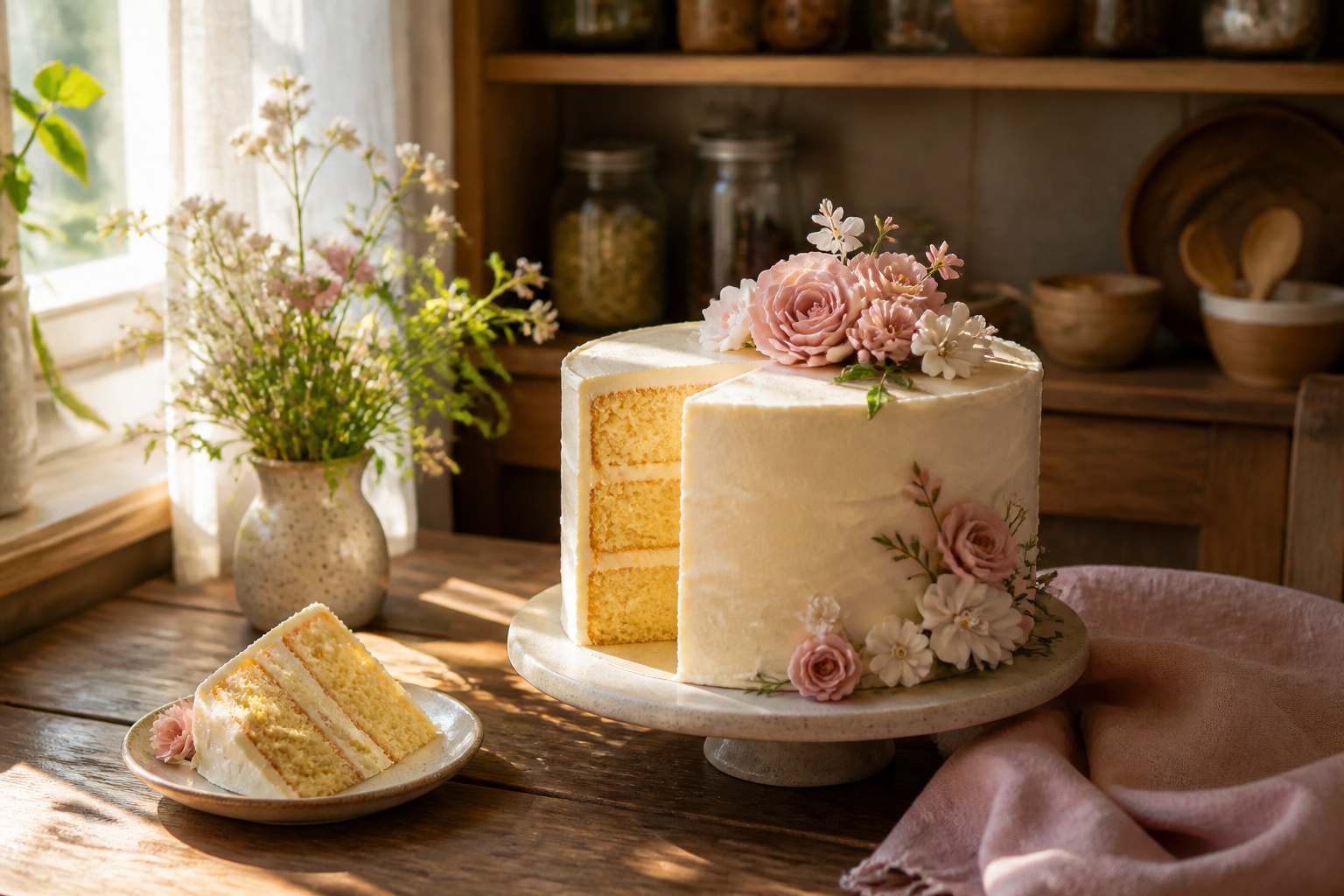
This vanilla cake lands soft and moist with a tight, velvety crumb that holds up for four days, and it gets there in under an hour of active time.
The difference is butter plus oil together: butter for flavor, oil to stay liquid after cooling so the slice never turns dry. Cake flour at 300 grams makes the texture; all-purpose at 325 grams will work, but the crumb tightens toward muffin.
Room temperature is the condition that breaks most home attempts, cold eggs or dairy stiffen the butter and the batter splits into streaks that bake oily.
Ingredients
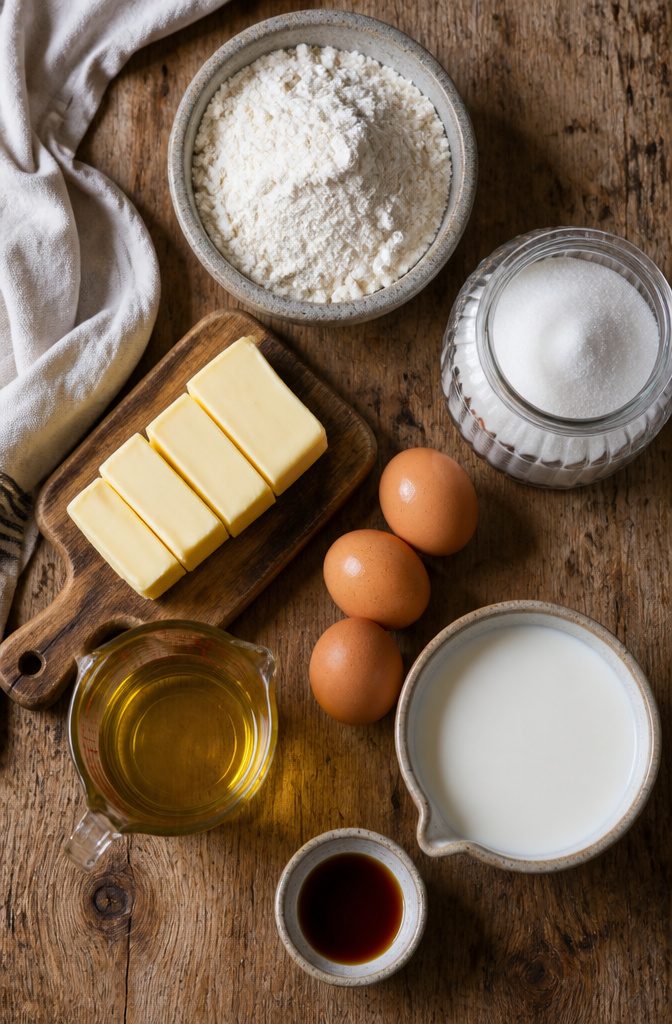
Cake flour is the move here if you want that boxed-mix softness: 2 ½ cups measured by weight clocks in at 300 grams, compared to 325 grams for the same volume of all-purpose. The lower protein matters.
I have skipped this and regretted it; the crumb came out tighter, more muffiny, less what I was after.
- 3 cups (360g) cake flour or 2 ½ cups (325g) all-purpose flour, measured properly
- 2 cups (400g) granulated sugar
- ¾ cup (168g) unsalted butter, room temperature and sliced
- 6 tablespoons (80g) vegetable oil
- 4 large eggs, room temperature
- 1 to 1 ⅓ cups milk or buttermilk, room temperature; whole milk for softness, buttermilk for tenderness
- 2 to 2 ½ teaspoons baking powder
- 1 to 2 tablespoons vanilla extract; vanilla bean paste if you want the speckles
- ½ teaspoon salt
Room temperature is not optional. Cold butter will not cream, cold eggs will break the emulsion, and you will notice in the finished cake.
Some bakers add sour cream for richness, others swap in a quarter-cup of oil alongside the butter for moisture insurance. Both work.
What does not work is imitation vanilla; the difference is immediate and hard to miss.
Method
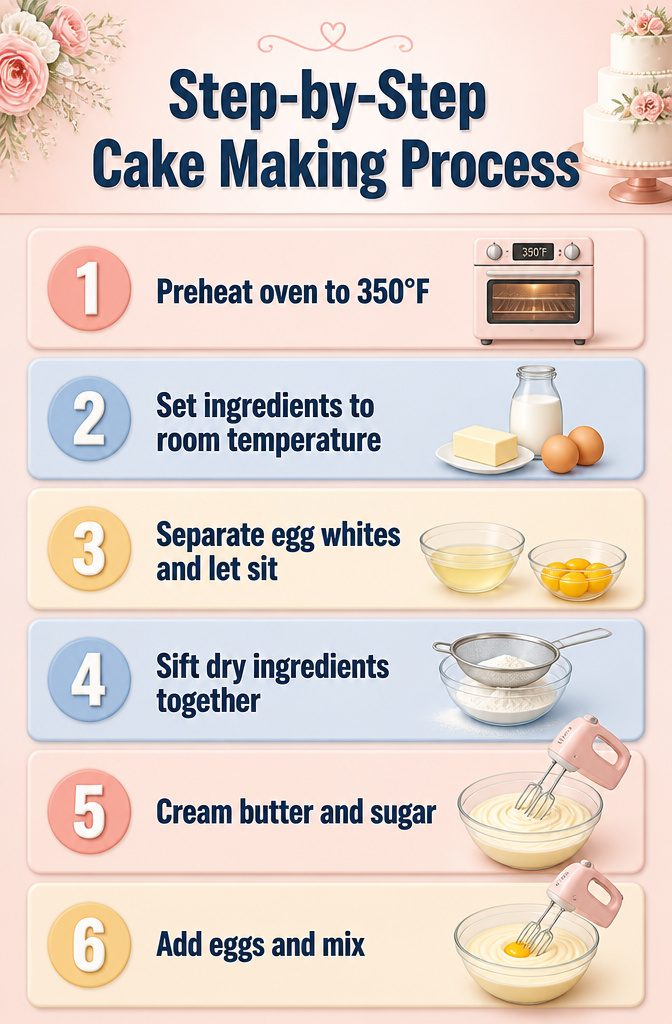
- Preheat oven to 350°F. Prep takes 15–35 minutes, and getting that right is half the battle. Prep two round 9 inch cake pans by spraying, then lining bottoms with parchment paper. Do not skip the parchment; sprung crumbs are not worth the ten minutes you saved.
- Set butter, whole milk, and eggs out early. Room temperature means 70–73°F, warm enough that the butter gives when pressed. Cold butter fights the sugar; cold milk seizes the batter into lumps that bake into oily spots. I forgot once, rushed, and the crumb came out streaked. Never again.
- Separate 4 egg whites while the eggs are still cold, easier that way. Let the whites sit out 30 minutes, or dunk whole eggs in warm water for 10 minutes, then separate. You need those whites room temperature to emulsify properly.
- Sift 2 1/2 cups cake flour, 2 1/4 teaspoons baking powder, and 1 teaspoon fine sea salt into a bowl. Whisk to combine, set aside. Sifting is not optional; it aerates and prevents pockets of baking powder that bloom bitter in one bite.
- Cream 1/2 cup unsalted butter with 1 2/3 cups granulated sugar. Beat 3 minutes until blended, smooth, and the color shifts pale. This is standard creaming, and it works because you gave it the full 180 seconds.
- Add one egg at a time, mixing low until each disappears before the next goes in. After all eggs are in, add 1 tablespoon vanilla extract and 2 teaspoons vanilla bean paste. Beat on high one minute until the batter turns pale yellow and tiny bubbles surface. Those bubbles are your lift.
- Pour in 1/4 cup fresh vegetable oil. The butter gave flavor; the oil stays liquid at room temperature, so the crumb stays soft after cooling. Beat until the oil vanishes completely, no streaks.
- Now the reverse creaming move, the one that guards against toughness. With the mixer running low, add one third of your flour mix. Stir until you do not see dry flour.
- Pour in half the room temperature whole milk. Mix only until it blends.
- Repeat: another third of flour, gentle and brief. Then the rest of the milk. Then the final third of flour.
- Stop the mixer the instant the last flour disappears. Fold any stragglers by hand. Overmixed batter develops gluten; your cake turns rubbery, not tender.
- Divide batter evenly between the two pans. A kitchen scale here is your friend; exact halves bake flat and even. Eyeballing won another streaked layer for my files.
- Slide pans into the center rack. Bake 23–25 minutes for 9 inch layers. The full range across pans runs 18–60 minutes. Cupcakes lean toward the short end; a 9×13 needs longer. Your signal is the top springing back under a gentle poke, plus a tester coming out clean or with just a few moist crumbs.
- Run a knife around each cake immediately after pulling from the oven. This keeps the sides from gripping as they contract.
- Cool completely in the pans before frosting or storing. Warm cake slides, tears, and turns the buttercream oily. Patience here costs you an hour and saves the whole project.
What Makes It Moist
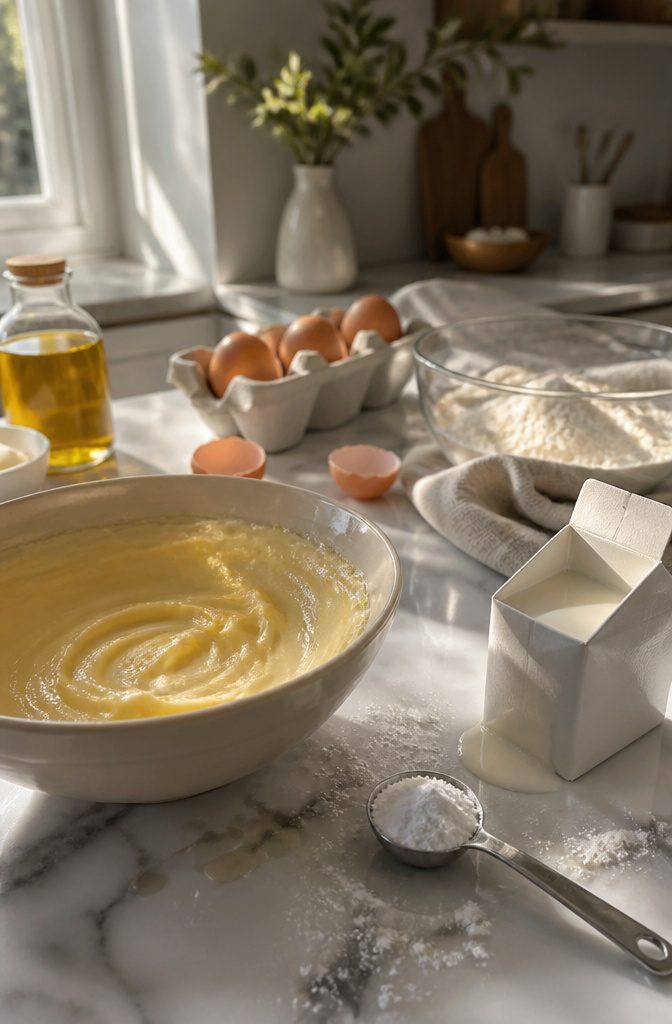
Moisture in a vanilla cake is not about adding more liquid; it is about how the butter, oil, and dairy hold onto it through the bake.
Butter plus oil gets you the flavor butter brings and the staying power oil has against the oven’s heat. An all-butter cake often tastes right but finishes dry; an all-oil cake stays soft but reads flat on the tongue.
Buttermilk or full-fat sour cream does more than wet the batter. The fat and acid in both make the crumb tender and keep it from drying out the day after.
I have seen recipes that suggest a buttermilk substitute made from milk and vinegar, but the cake suffers for it. Real buttermilk changes the texture in a way the shortcut does not match.
Room temperature matters more than most home bakers credit. Cold eggs or cold sour cream stiffen the butter when they hit it, and the batter breaks instead of emulsifying.
You want eggs, dairy, and butter all at 70 to 73 degrees Fahrenheit so they blend uniform and bake even. No oil spots, no dense streaks.
Overmixing is where it falls apart. Once the flour goes in, every turn of the beater develops more gluten, and gluten tightens the crumb into something gummy and dry.
Mix to combine, then stop. The batter should look a little imperfect; that is the sign you have not gone too far.
Flour Choices
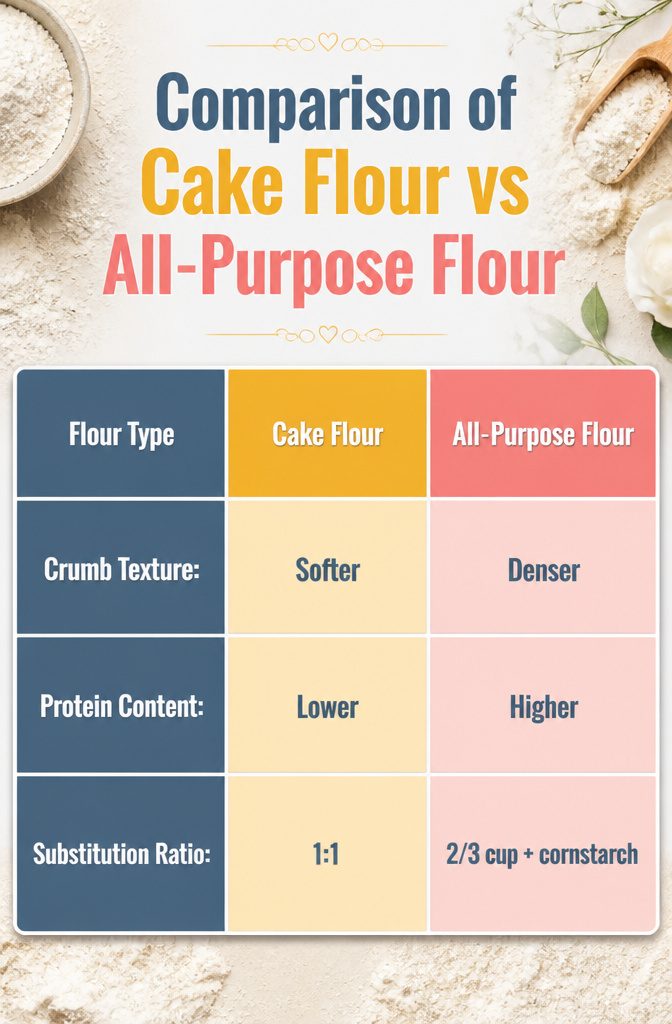
Cake flour is the quiet reason this cake reaches a softer, velvety crumb that all-purpose flour can approximate but never quite match.
The difference sits in protein: cake flour carries less of it, which builds less gluten and leaves the finished slice tender rather than bready. One side-by-side test turned this up plainly.
The all-purpose version worked, but the crumb turned slightly denser, just enough past the line of ideal.
That said, all-purpose flour will carry the recipe if the clock runs out. Remove two tablespoons per cup and swap in cornstarch to mimic the lighter protein load.
For three cups of cake flour, plan on two and two-thirds cups of all-purpose flour instead. The texture will not be identical.
The cornstarch swap narrows the gap but does not close it, so save the cake flour for the days when the occasion matches the fuss.
Preventing a Sunken Cake
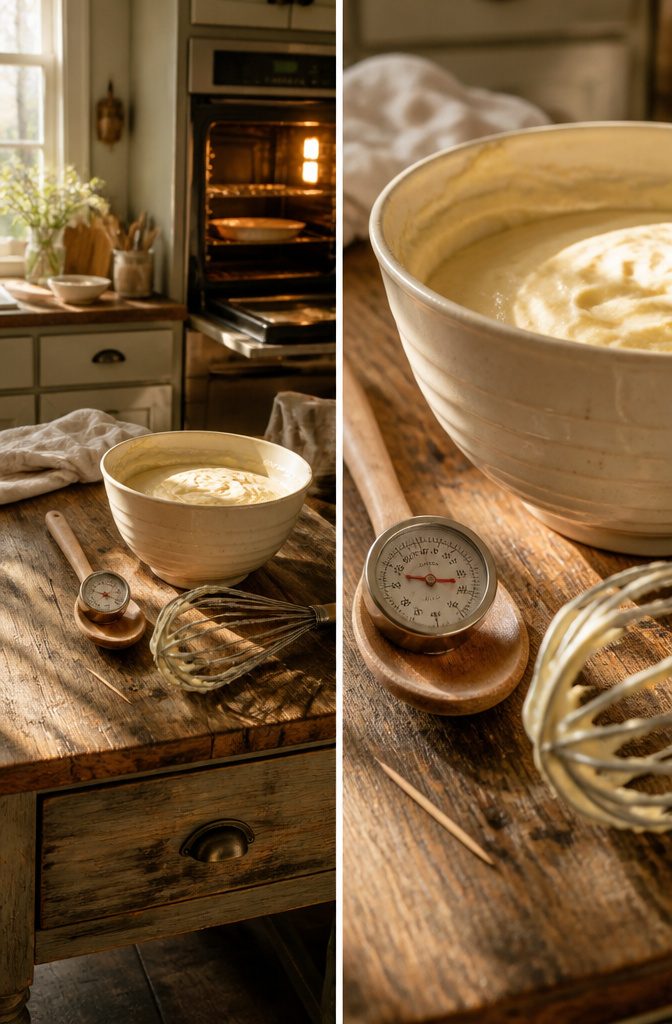
The reverse creaming method builds structure through about two minutes of mixing, not more. Once you pass that mark, you risk tunneling and a gummy crumb, which is why I finish the last strokes by hand.
An oven thermometer belongs on your center rack because the dial lies; even a minute past done dries the crumb and can make the center sink if you check too early.
Spring back when lightly touched, or use a toothpick coming out clean, but not before. Fresh baking powder matters more than most people think.
Stir a teaspoon into hot water; if it does not fizz vigorously, the can is dead weight and your cake will fall.
Above 5,000 feet in elevation, pull back slightly on the baking powder so the rise does not overreach and collapse.
Frosting That Works
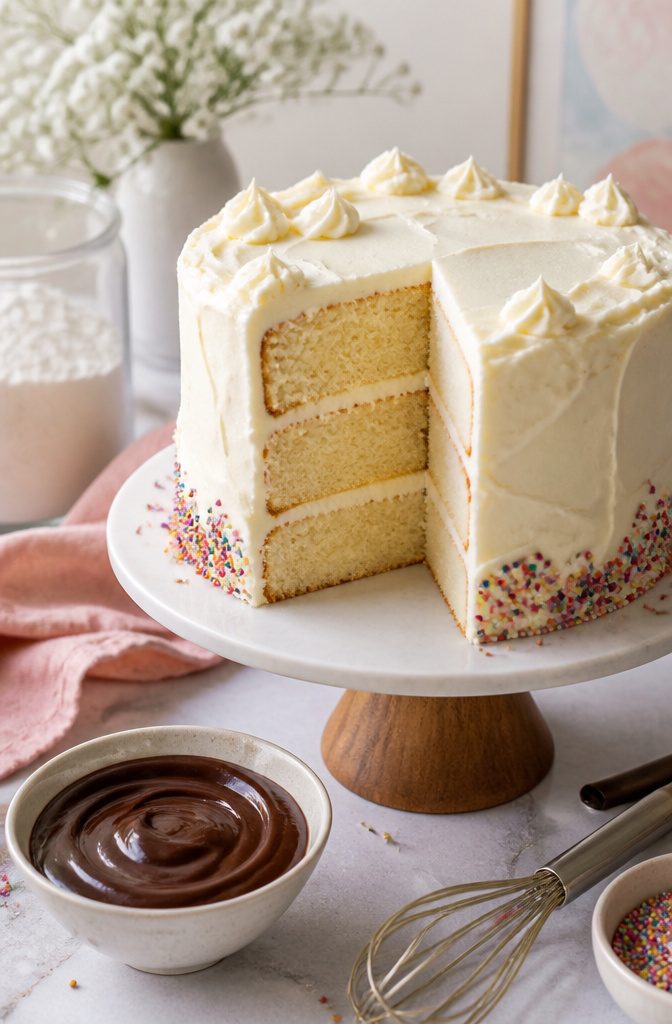
A vanilla cake this reliable deserves a frosting that will not fight it.
American buttercream is the safest starting point: six to eight cups will fill and coat a standard three-layer 8-inch cake, and the recipe keeps in the refrigerator for a week or six months frozen if you have leftovers.
It crusts slightly, which helps when you are smoothing the sides with a scraper.
Chocolate ganache is the alternative for a more stable finish, especially if you want a drip effect or need to transport the cake. White chocolate ganache in particular carries the vanilla flavor through without adding competing intensity.
Cream cheese frosting sits somewhere between the two: it spreads like buttercream but stays softer, so the cake needs cooler storage.
What frosting you choose decides where the finished cake lives. Buttercream sets firm enough to hold at room temperature for a few hours.
Cream cheese and whipped cream frostings, including the stabilized cream cheese versions, need refrigeration until serving. Ganache firms as it cools but still stores best chilled.
For flavor variations, almond extract stirred into buttercream comes through clearly without overwhelming the cake. Fruit flavors work the same way: strawberry buttercream or raspberry filling between the layers with a buttercream dam to hold it in place.
I have also seen brown butter and vanilla bean versions of cream cheese frosting that add depth without departing from the classic profile.
Swiss and Italian meringue buttercreams are silkier and noticeably less sweet than American, though they take longer and require more attention to temperature.
Storing the Cake
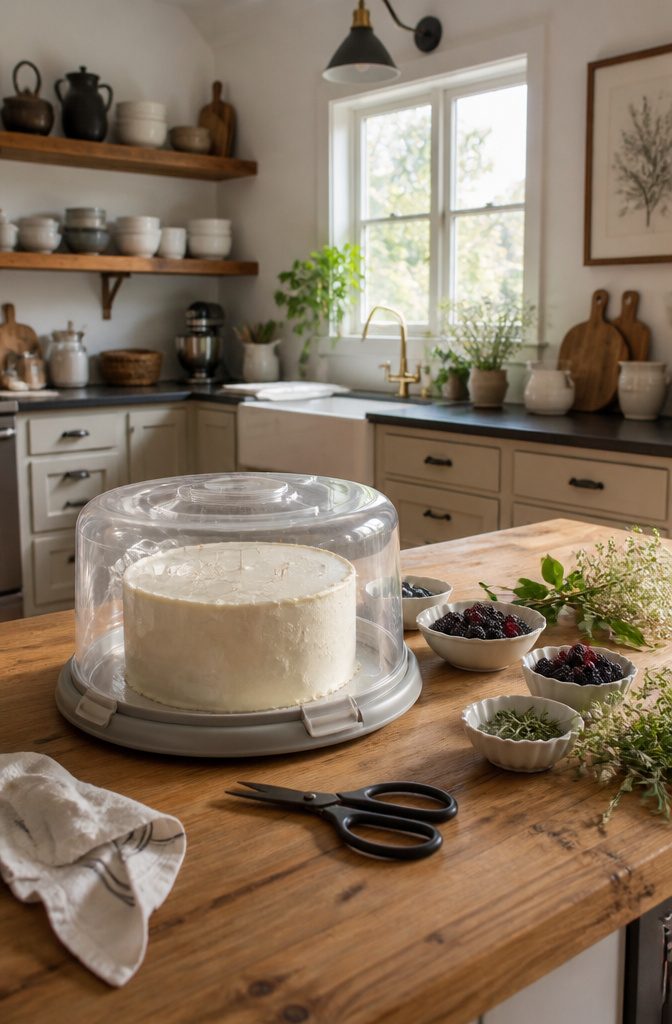
A cake this moist stays good for 4 days at room temperature if you keep it airtight.
That number comes from how the crumb is built, not from preservatives, and it gives real leeway for a wedding weekend when the kitchen is already full of other prep.
Room temperature works best when the cake is unfrosted or finished with something stable like American buttercream.
A cake carrier with a tight seal, or a double layer of plastic wrap propped off swirled frosting with toothpicks, keeps the crumb soft without chilling it.
Once you move to cream cheese, whipped cream, or anything perishable, the refrigerator becomes unavoidable. Cold air pulls moisture faster, so a refrigerated slice benefits from an hour on the counter to return to its proper texture.
For longer planning windows, bake the layers ahead and freeze. Wrap each fully cooled round in plastic, then foil, and it holds for 3 months.
Cupcakes travel the same way; wrap them in small groups, bag them, and leave the frosting for after defrosting at room temperature.
I have pulled frozen layers out on a Thursday night for a Saturday event, and the crumb reads as freshly baked if the wrap stayed tight against freezer air.
Substitutions
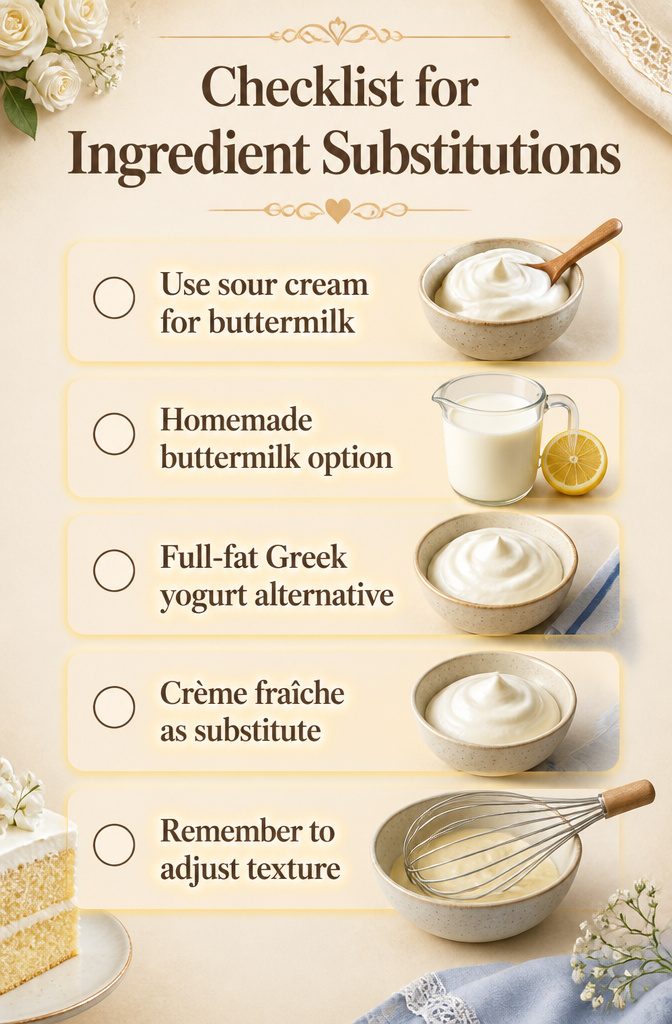
Sour cream and buttermilk can be swapped in this recipe, but the texture changes enough that it is worth knowing which you are choosing.
Use an equal amount of sour cream in place of buttermilk when that is what you have; the batter will be thicker and the crumb slightly denser, still moist from the fat but lacking the same tang and tender spring.
Full-fat Greek yogurt or crème fraîche work the same way, falling somewhere between yogurt and sour cream in richness.
Homemade buttermilk from milk and vinegar or lemon juice is the fix most people reach for first, and it is fine in a pinch. The chemistry is close enough for the leavening to activate.
What you miss is the cultured depth that real buttermilk gives, the subtle complexity that makes a vanilla cake taste like more than sugar and flour.
I have made the substitution in rush jobs and the cake bakes through and slices clean; guests do not send it back. But when I have the real thing, I use it.
The difference is not night and day, but it is there in the aftertaste, in whether the slice feels like a bakery cake or a very good box mix.
Frequently Asked Questions
What makes a cake moist?
The combination of butter plus oil gives you flavor and staying power against the oven’s heat, while buttermilk or full-fat sour cream tenderizes the crumb and keeps it from drying out the next day.
Room temperature ingredients and stopping the mixer the instant the last flour disappears also protect moisture; overmixed batter develops gluten that turns the crumb rubbery and dry.
Can I use cake flour instead of all-purpose flour?
Cake flour is what this recipe calls for, and it produces a softer, more velvety crumb because its lower protein builds less gluten.
All-purpose flour works in a pinch; use 2 2/3 cups instead of 3 cups cake flour, or remove 2 tablespoons per cup and replace with cornstarch, though the texture will not match exactly.
How do I prevent my cake from sinking?
Do not check the cake too early, as opening the door can make the center sink. Bake until the top springs back when lightly touched and a toothpick comes out clean or with just a few moist crumbs.
Use fresh baking powder; test it in hot water and replace if it does not fizz vigorously. At elevations above 5,000 feet, reduce the baking powder slightly so the rise does not overreach and collapse.
How do I store a frosted cake?
Store the frosted cake airtight at room temperature for up to 4 days if the frosting is stable like American buttercream. Use a cake carrier with a tight seal, or prop plastic wrap off swirled frosting with toothpicks.
Cream cheese, whipped cream, and other perishable frostings require refrigeration, though cold air pulls moisture so let slices sit out an hour before serving to restore their proper texture.
What is the secret to a perfect cake?
Room temperature ingredients, cake flour, the reverse creaming method, and stopping the mixer as soon as the flour disappears.
Cold butter, eggs, or dairy break the emulsion and leave streaks or dense spots, while overmixing after adding flour develops gluten that toughens the crumb.
What are the 7 rules for baking perfect cake?
This recipe builds in six: use room temperature ingredients at 70–73°F, sift dry ingredients, cream butter and sugar fully, add eggs one at a time, alternate wet and dry ingredients with the reverse creaming method, and stop mixing once the flour is just combined.
The seventh is patience; cool layers completely before frosting so the buttercream does not melt and the cake does not slide.
What is the 1-2-3-4 cake rule?
This recipe is not a traditional 1-2-3-4 cake, which typically uses 1 cup butter, 2 cups sugar, 3 cups flour, and 4 eggs.
Here the proportions differ to accommodate extra moisture from oil and the reverse creaming method for a softer, more tender crumb.
What is the most delicious cake in the world?
That depends entirely on personal taste, but a moist vanilla cake with real vanilla extract or vanilla bean paste carries a classic flavor that pairs with almost any frosting or filling.
This recipe aims for a boxed-mix softness with from-scratch flavor, using butter for taste and oil for moisture retention.