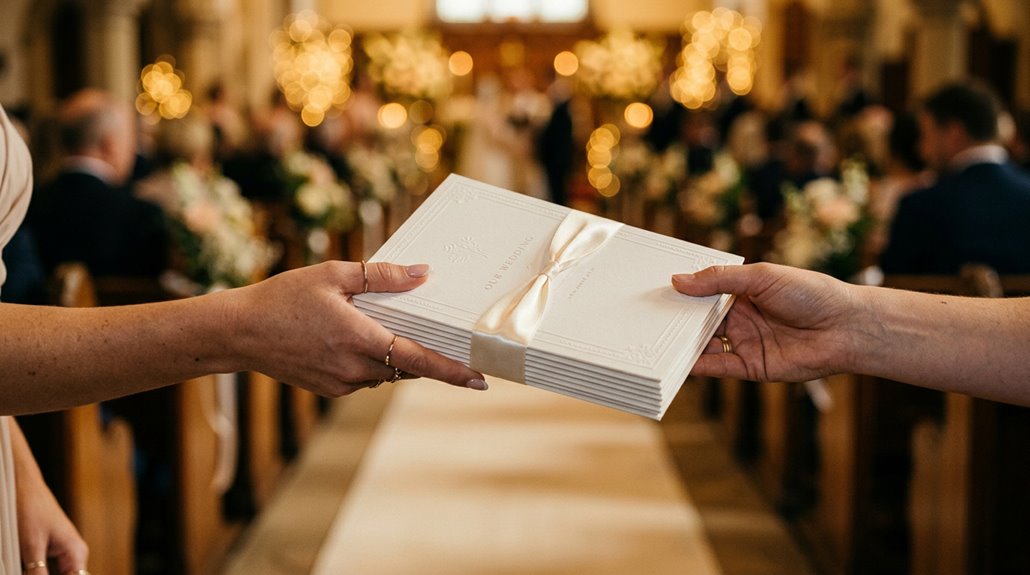
Wedding programs aren’t mandatory, but they transform your ceremony into a shared narrative guests can follow and later revisit. They identify participants, explain complex elements, and help unfamiliar attendees understand ceremony flow. Quick ceremonies under twenty minutes may skip them, while longer or culturally rich services benefit from printed guidance. Programs serve as tangible keepsakes, capturing moments for future reflection. Whether you choose traditional printing, DIY templates, or digital alternatives like signs and QR codes, the decision depends on your ceremony’s complexity, length, and budget. Exploring your specific needs reveals which format fits your celebration best.
Do You Actually Need Wedding Programs?
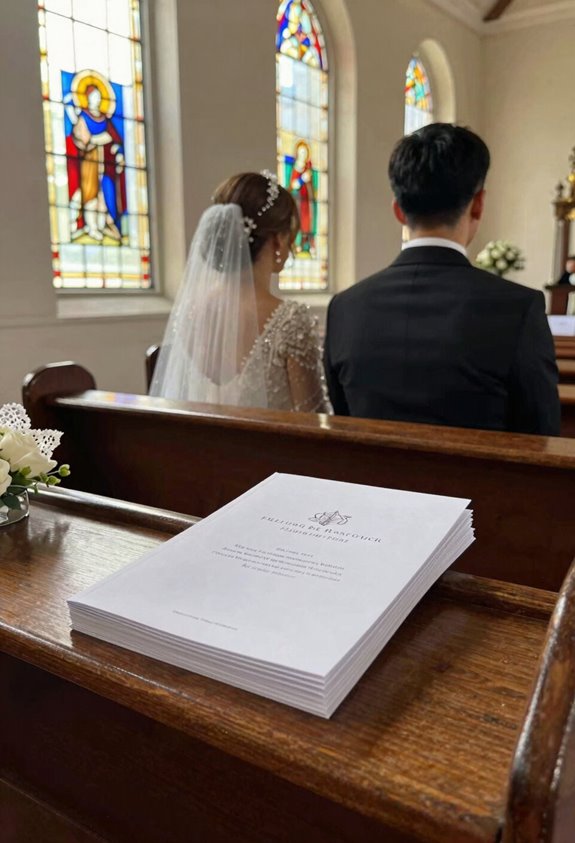
Whether your ceremony will benefit from printed programs depends on several practical factors rather than a single rule. Quick ceremonies under twenty minutes often don’t require programs, while longer or more complex ceremonies gain considerably from them. Your decision rests on personal preference, venue requirements, and guest needs rather than ceremony length alone.
Programs serve important functions beyond decoration. They explain ceremony parts, readings, and customs for unfamiliar guests, improving overall understanding and comfort. Some couples prioritize readability and budget by choosing signs instead of traditional printed programs. Others find programs essential for conveying meaningful details to their assembled community.
Consider your specific situation carefully. Weigh your guest composition, ceremony complexity, and available resources when deciding whether to include this amenity.

Give your special day the significance it deserves with the simple elegance of our convenient pearl ivory print at home programs


Personalized invitations and stationary. Printed on 100 lb cardstock. Order only what you need!
Does Ceremony Length Determine If You Need Programs?
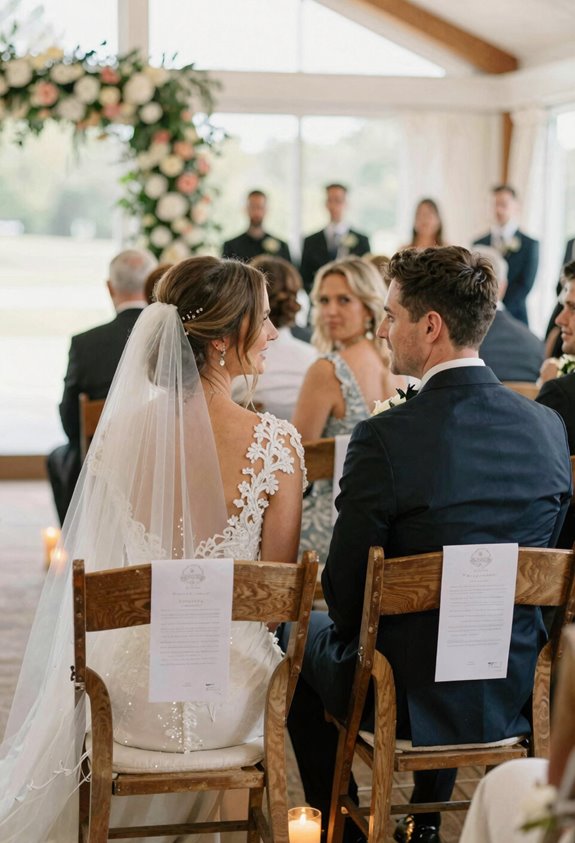
Ceremony length serves as one practical indicator, though not the only factor, in deciding whether programs enhance your celebration. Quick ceremonies under twenty minutes typically don’t require programs, as guests can follow the proceedings without written guidance. However, longer ceremonies benefit significantly from printed amenities that outline the order of events, readings, and participants.
Extended ceremonies often include multiple readings, cultural rituals, or religious components that warrant explanation. Programs help guest understanding by clarifying unfamiliar traditions and identifying who’s participating in each section. When your celebration includes complex elements, programs prevent confusion and provide necessary context.
Consider your specific ceremony structure alongside its duration. A twenty-five-minute service with three readings and two cultural traditions might need programs more than a thirty-minute straightforward exchange of vows. Match program inclusion to both your timeline and content complexity.


✨ FULLY PERSONALIZED WEDDING SIGN: Create a unique experience for your guests by customizing this Order of Events sign with your names, wedding date, and specific event timeline. Our professional design ensures a beautiful, tailored look that perfectly matches your wedding theme and helps guests navigate your special day smoothly.
What to Include if You Decide to Print Programs?
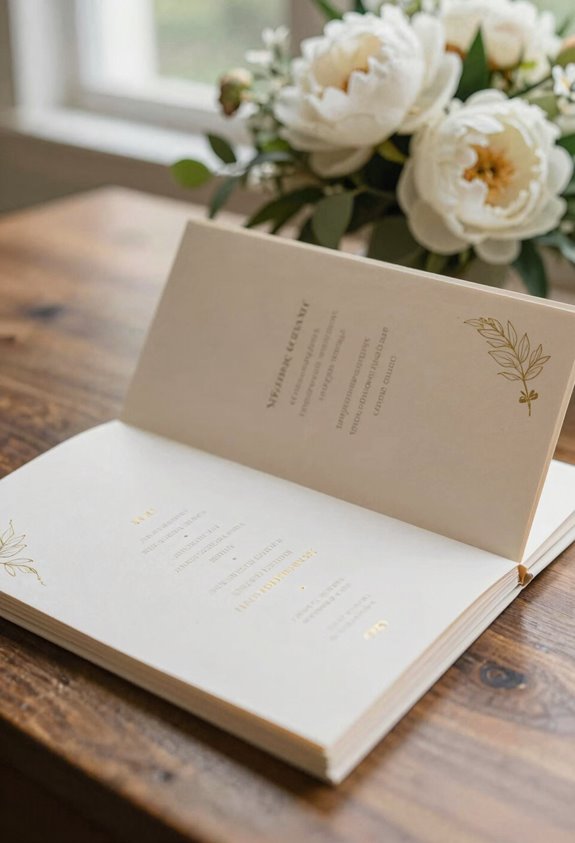
Once you’ve determined that programs serve your ceremony’s needs, thoughtful content planning ensures they’ll genuinely benefit your guests.
Include the ceremony order with key moments: processional, vows, and recessional. List your wedding party members and honored guests by name, along with the officiant and any readers or musicians. Note their roles clearly so guests understand who participates in each segment.
Add readings or songs with titles and participants’ names. A back-cover section can acknowledge loved ones who’ve passed away and extend brief gratitude to parents or guests for their support.
Design your programs to align with your overall wedding stationery for visual cohesion. Plan to print for approximately 75 percent of your guest count, accounting for extra copies. Choose a practical format: folded program, simple two-sided sheet, or large sign if printing options are limited.


Set from 20 to 100 Personalized Programs, select the quantity works for you event

Includes: 50 program papers
Save Money Without Sacrificing Style: DIY vs. Professional Programs
How much should you really spend on wedding programs? DIY options like Canva templates offer significant savings, starting at just a few dollars per piece for one or two-sided designs. Professional programs cost more, ranging from $2 to $6+ per copy due to design expertise, layout services, and premium paper stock.
You’ll want to order approximately 75% of your guest count to accommodate extras and last-minute needs, regardless of your chosen method. DIY production provides flexibility to match your wedding’s aesthetic while requiring time for design, proofs, and printing coordination. Professional programs eliminate these tasks but increase expenses.
Digital alternatives, including simple signs or QR codes, further reduce printing costs while maintaining functionality. Both approaches deliver style without compromising your budget when planned thoughtfully.

Custom Wedding Photo Sharing Signs: Collect all the candid moments your guests capture with a set of 20 personalized “Capture the Love” photo sharing cards. Guests simply scan your QR code to access your chosen photo sharing album or upload page and share their favorite wedding photos.
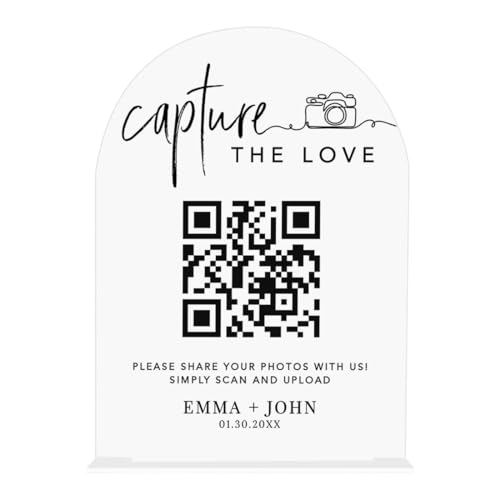
SHARE WEDDING MEMORIES INSTANTLY: Make it easy for guests to upload and access event photos with this stylish 7x5-inch arch acrylic photo QR code wedding sign. Simply scan the QR to join the shared photo album—no apps needed. Perfect for modern and minimalist weddings.

Framed Wedding QR Photo Sign - Designed as a tabletop wedding photo sharing sign, this set includes an 8 x 10 inch gold-colored metal picture frame with a 6 x 8 inch pre-printed Snap and Share insert already installed.
Wedding Program Alternatives: Signs, Fans, and Digital Options
Beyond the traditional printed program, you’ll find several creative formats that accomplish the same goal while offering distinct advantages suited to different venues and budgets. Strategically placed signs work well when seating visibility is clear and sizing accommodates your venue’s layout. Fans and other attendee-friendly formats merge practical function with ceremony information, providing cooling or shade while guests stay informed about the lineup and ceremony order. Digital options through QR codes or apps eliminate printing costs entirely, allowing you to update details instantly and reduce environmental impact. Your choice among these wedding program alternatives depends on guest accessibility, venue configuration, and financial considerations. Each format guides attendees while maintaining style and efficiency throughout the celebration.

Print your own Wedding Programs

Complete Wedding Scrapbook Kit: All-in-one set includes 2 wooden covers, 1 red inner page, 30 brown kraft paper inner pages, 2 4cm diameter loose-leaf buckles, 2 heart-shaped wood pieces with beaded chains, 10 laser colorful heart stickers, 50 wedding-themed graffiti stickers, 2 sheets of glitter alphabet stickers, 5 random markers, 1 sheet of photo corner stickers, and 4 unique painting stencils—everything you need to craft your perfect wedding memory book

PREMIUM 8.5x11 CARDSTOCK MADE IN USA — Professional 98 bright white cardstock measuring 8.5 x 11 inches, 65lb cover (176 GSM), with a smooth finish on both sides. Made in the USA from acid-free paper for archival-quality results
How Many Programs to Order and When to Print?
Determining your program quantity hinges on guest count and distribution strategy. Intimate weddings typically call for one program per attendee, while larger celebrations often benefit from a per-household or per-family approach that minimizes waste without sacrificing access. Your printing timeline should align with your final guest count, ideally printing three to four weeks before the ceremony. This window allows sufficient production time while ensuring accuracy based on confirmed attendance numbers. Before committing to print, finalize your design and layout completely to avoid costly delays from last-minute revisions. Prepare detailed specifications for your printer, including exact dimensions, fold preferences, paper stock selections, and any perforations needed. Consider supplementing physical programs with digital options or QR codes to reduce printing quantities while maintaining inclusive access for all guests.

Print your own Wedding Programs


Print your own Wedding Programs
What Couples Regret About Their Program Choices
Looking back on their wedding day, many couples identify their program decisions as a source of mild regret. This stems not from the programs themselves, but from miscalculations in quantity, design priorities, or necessity.
Many couples later regret wedding program decisions, though usually due to planning miscalculations rather than the programs themselves.
Common regrets include ordering too few ceremony programs for larger guest lists or venues with multiple entrances, leaving some guests without essential information. Others overemphasized wedding-party bios at the expense of clear ceremony explanations, creating clutter. Many couples spent considerably on professional design when DIY templates or Canva could have achieved acceptable aesthetics affordably.
Some regretted printing programs for short ceremonies under thirty minutes, viewing them as unnecessary. Additionally, couples without clear distribution plans experienced delays and overcrowding during handouts.
Thoughtful planning requires realistic assessment of your ceremony’s needs and consideration of practical logistics before committing to final program choices.

Used Book in Good Condition

The Hidden Benefit: Why Guests Love Keeping Programs
While couples often focus on programs as functional ceremony guides, they’re overlooking a significant advantage: guests genuinely treasure these keepsakes long after the wedding concludes.
Your guests appreciate programs for meaningful reasons beyond the ceremony itself:
- Physical mementos that preserve the day’s details, readings, and participant names for future reference
- Explanations of non-traditional customs that deepen guests’ understanding and connection to your celebration
- Personalized souvenirs reflecting your wedding’s theme, cohesion, and individual style choices
- Commemorative keepsake honoring loved ones and special moments woven throughout your ceremony
A thoughtfully designed program transforms into a lasting memento guests display in homes, share with family, and revisit during meaningful moments. This keepsake serves practical functions while creating emotional connections to your celebration. The program becomes more than ceremony logistics; it represents your story and invites guests into belonging within that narrative.

Set from 20 to 100 Personalized Programs, select the quantity works for you event


Package Content: you will get 50 sets of wedding fan kit, including 50 white cardstocks, 50 wavy wooden stick fan handles, 50 white bows, and a roll of double sided adhesive tape, Note: the card paper has two sides, the smooth side is suitable for laser printing, and the matte side is suitable for inkjet printing