Wedding gift cash typically runs $50–$500, determined by how close you are to the couple and what you can afford. Close family gives $200–$500, extended family and close friends $150–$300, regular friends $100–$200, colleagues $50–$150.
Major cities push those figures 10–20% higher, but your budget matters more than geography. The couple can receive it through their wedding website, folded into origami, or tucked inside a puzzle box they solve together.
How Much to Give as a Wedding Gift
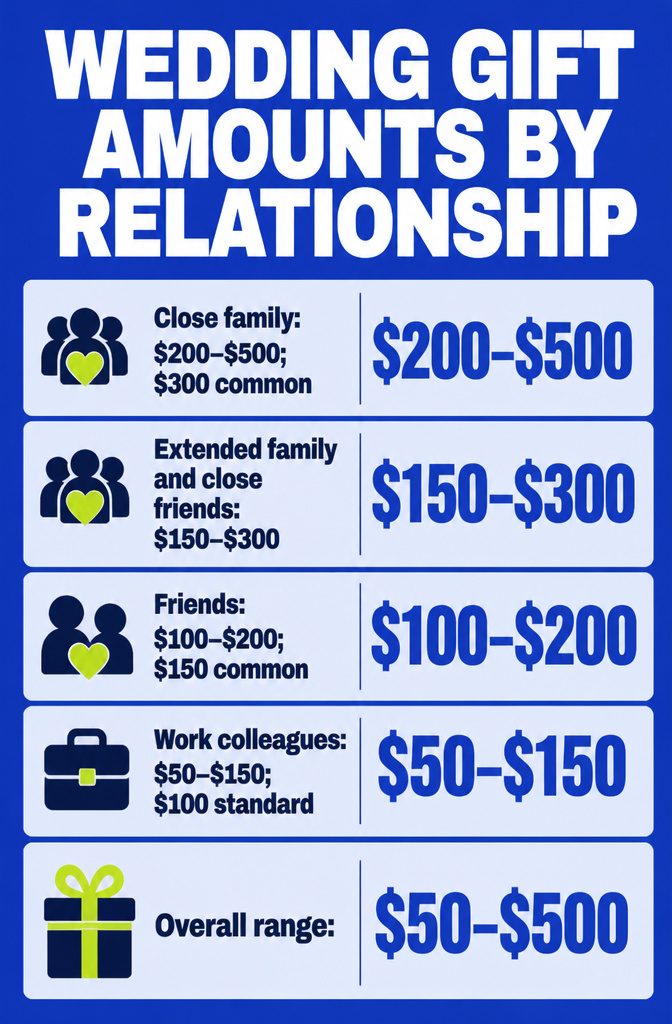
The amount depends on your relationship to the couple and your budget, typically ranging $50–$500. Close family members — parents, siblings — usually give $200–$500, with $300 being common.
Extended family and close friends tend to land in the $150–$300 range. Friends typically give $100–$200, with $150 most common, while workplace colleagues give $50–$150, with $100 standard if you’re not particularly close outside work.
Determining the appropriate amount depends on your budget and the closeness of your relationship with the couple. For those you consider close friends and family members, a minimum of $100 is recommended. For acquaintances, cutting that number in half to a minimum of $50 is a thoughtful gesture.
That minimum framing is useful, but the ranges above give you more room to calibrate. Major cities run 10–20% higher, though personal circumstances matter more than location.
These are guidelines, not requirements. Giving within your means is what counts, and the couple will appreciate your gesture regardless of the amount.
1. Give Money Through the Couple’s Wedding Website or a Payment App
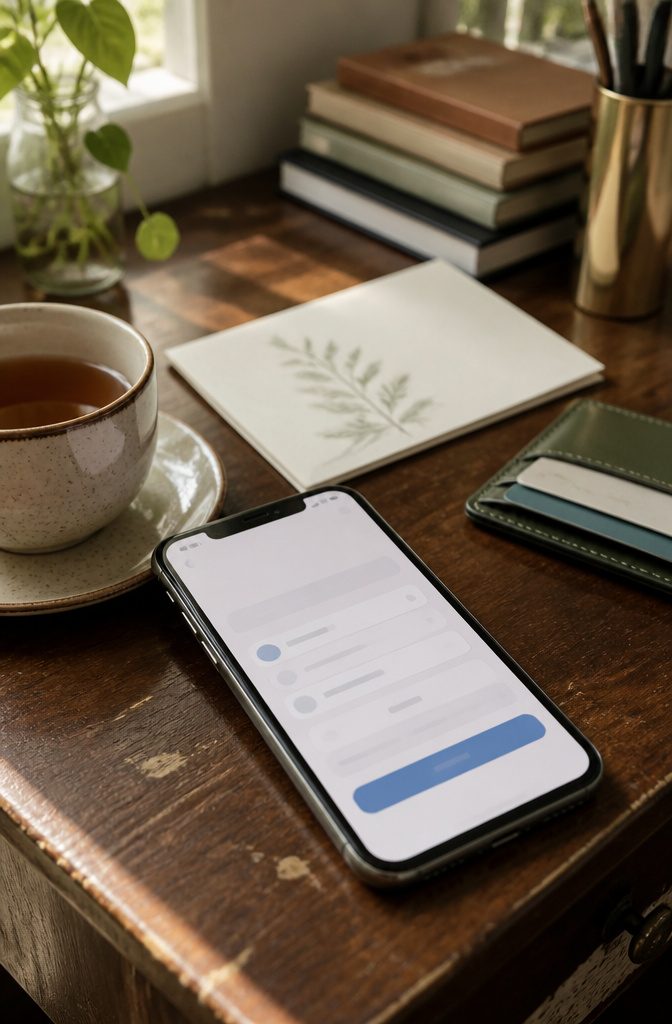
Paying through the couple’s wedding website or a payment app like PocketWell lets you send money directly without writing a check or carrying cash to the event.
The couple shares a link or QR code, you pick an amount, add a message if you want, and pay using Apple Pay, Google Pay, or a debit or credit card.
The platform shows a small service fee before you confirm, so the final total is clear.
The couple receives automatic weekly payouts every Tuesday, and the funds take 1–7 days to clear depending on their bank and country.
That speed beats waiting for a check to arrive in the mail or hoping someone hands over an envelope at the reception.
If you are attending from out of state or can’t make it to the wedding at all, paying online means the gift gets there on time without hunting down their mailing address.
2. Donate to a Charity the Couple Chose
Some couples name a charity in place of a registry, and a donation to that cause becomes your gift.
The amount is yours to decide, the same way it would be if you were buying something physical, but the gift now connects to what the couple cares about enough to share with their guests.
A donation carries meaning beyond the dollar figure when it goes to a cause the couple chose.
The couple should tell you which organization and how to give. Some wedding websites list a charity fund as a registry option, so you click through and donate the way you would contribute toward honeymoon expenses.
Others will name the charity in the invitation or on their site and leave the mechanics to you.
If the couple is collecting cash to donate later rather than asking for direct gifts, they should say when the donation will go through.
That timeline matters for your records, and it lets them send thank-you notes on the date they told you the money would move.
3. Give a Gift Card
A gift card splits the difference between cash and a physical gift. The couple still has full control over what they buy, but it feels more deliberate than an envelope of bills.
If you know a store the couple loves but not what they actually need, a gift card to that store covers the gap without forcing you to guess.
This works especially well when you notice most of their registry items come from one retailer.
You can pick up a card there and let them use it on whatever didn’t get bought before the wedding. It takes more thought than handing over cash, but less risk than choosing a specific item they might not want.
4. Contribute Toward the Honeymoon

A honeymoon fund lets you tie cash directly to something specific the couple will do.
Instead of handing over bills with no story attached, you can cover part of their hotel stay, pay for a spa day, or fund a romantic dinner they have planned.
Some registries include a honeymoon gift list where couples break out the trip into line items guests can claim.
The advantage is memory. The couple books the excursion or pays the resort bill knowing you made it possible, and that memory stays with them longer than a check deposited the week after the wedding would.
It takes slightly more planning than writing a check, since you need to know what honeymoon expenses they have in mind or find out whether their registry includes honeymoon options, but the effort makes the gift feel more personal than cash alone manages.
5. Contribute Toward a Life Goal Like a Home or Baby Expenses
Contributing toward a specific life goal the couple has shared makes the money feel connected to their future rather than generic.
If you know they are actively saving for a house, frame your gift as a contribution to their down payment fund. If they are expecting a baby or trying to conceive, offer money to cover baby expenses.
The couple should explain on their registry where the funds will go.
That transparency turns a cash gift into a gesture that acknowledges what they are building together. Aligning your gift with a goal they have already named adds weight without adding pressure or guesswork on your end.
6. Present Cash as a Money Bouquet
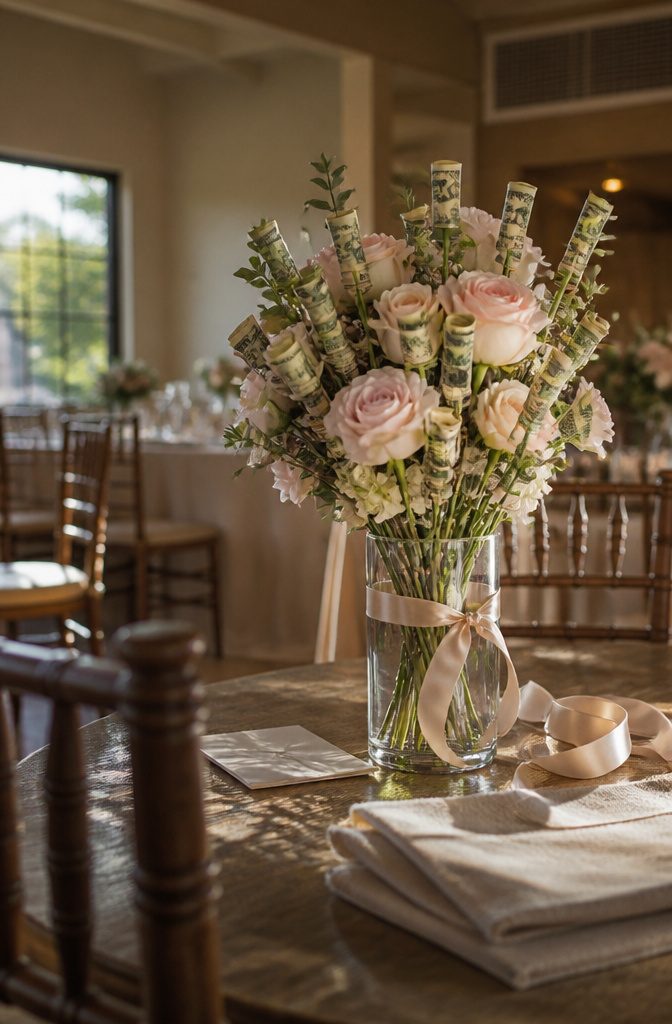
Roll bills and attach them to the stems of artificial flowers, then arrange the result in a vase or tie it with ribbon.
The cash becomes a display piece the couple can set out at the reception, and you get to work their wedding colors into the gift itself.
Match the palette of the bridesmaids or pick up the accent shade from the invitations.
Artificial flowers hold up better than fresh ones when you’re handling stems repeatedly, and they keep their shape through transport and the hours before the couple opens anything.
A clear glass vase shows off the arrangement, or you can wrap the stems in satin ribbon and hand it over like a real bouquet. The money stays accessible but the presentation reads as more than an envelope.
7. Present Cash on a Money Tree
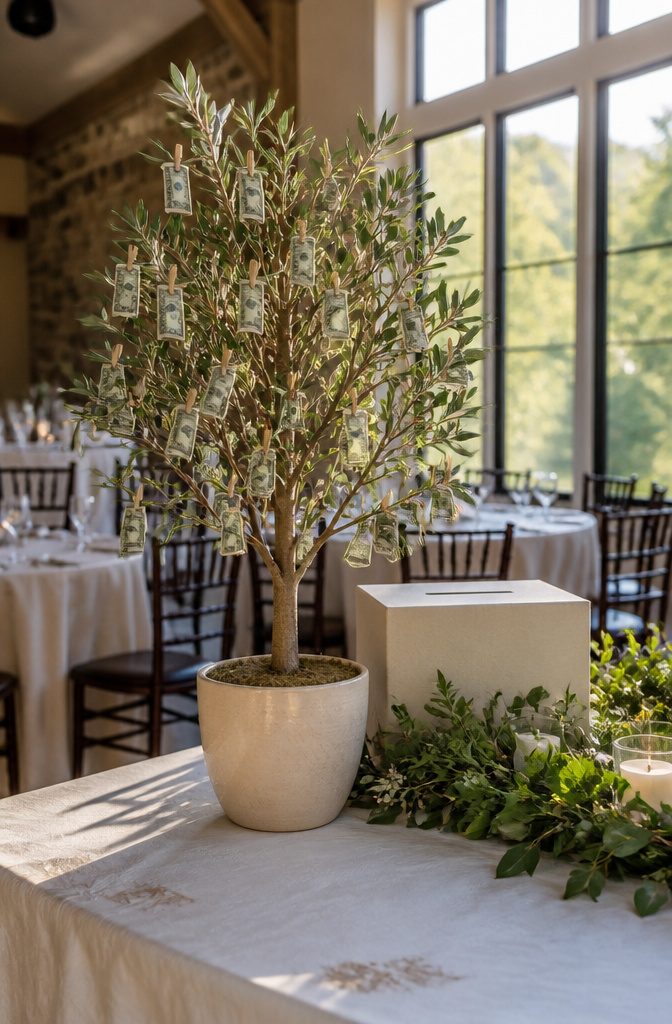
A money tree lets you give cash in a way that feels generous and finished rather than bare-handed.
The bills attach to the branches of a real or artificial tree, whichever fits your budget and how long you want the setup to last.
A live plant gives the couple something growing after the wedding, while a decorative artificial tree holds its shape through the reception without needing water or dropping leaves.
Either way, you present it in a pot so it stands on its own.
The couple can set it near the gift table or the entrance, and it doubles as reception decor while guests arrive.
Bills fold or clip onto the branches, and the visual weight of the tree grows as more people contribute. The setup takes a few minutes but reads as intentional, which matters when cash can otherwise feel like the fallback gift.
8. Set Out a Decorated Jar at the Reception
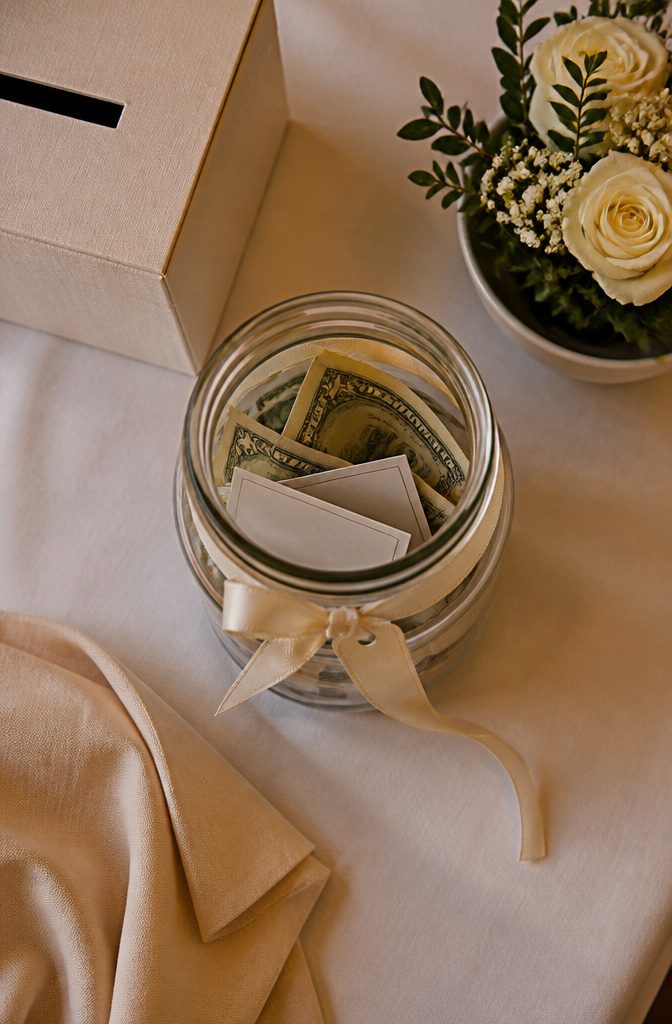
Set Out a Decorated Jar at the Reception
The jar sits on the gift table or near the entrance, and guests drop in cash or checks as they arrive.
Decorate a glass jar with the couple’s names, the wedding date, or handwritten messages to make it feel personal rather than transactional.
This works when the couple prefers to receive gifts in person rather than through a registry, and it keeps the exchange visible and communal instead of handled through a website or app before the day.
Guests can tuck in their own notes along with bills, which turns the jar into something more than a collection point.
I like that it stays simple: no QR codes, no apps to download, just a physical gesture that fits the rhythm of arrival.
The couple walks away with the jar itself as a keepsake if the decoration has any weight to it.
9. Fold Bills Into Origami
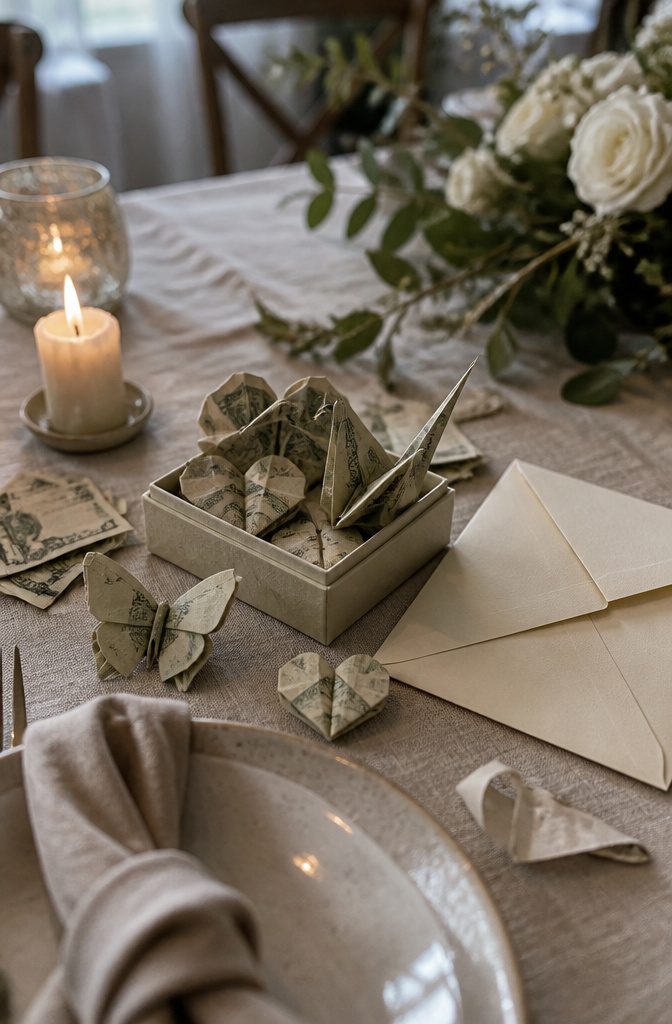
Fold Bills Into Origami
Folding bills into origami shapes like hearts, butterflies, or cranes turns cash into something guests can keep long after the reception.
Each folded bill becomes a small piece of handmade art. The technique takes patience, but the result feels personal in a way a plain envelope doesn’t.
Tuck the finished shapes into small envelopes or origami boxes and attach a tag with the couple’s names or a short message.
The gift works as a favor set out at each place setting or as a standalone present if you’re folding enough bills to hit your giving amount.
I like this approach when you want the money to feel considered rather than transactional. The folds say you spent time on it, which reads differently than a check dropped in a card at the gift table.
10. Display Bills in a Shadow Box With Wedding Keepsakes
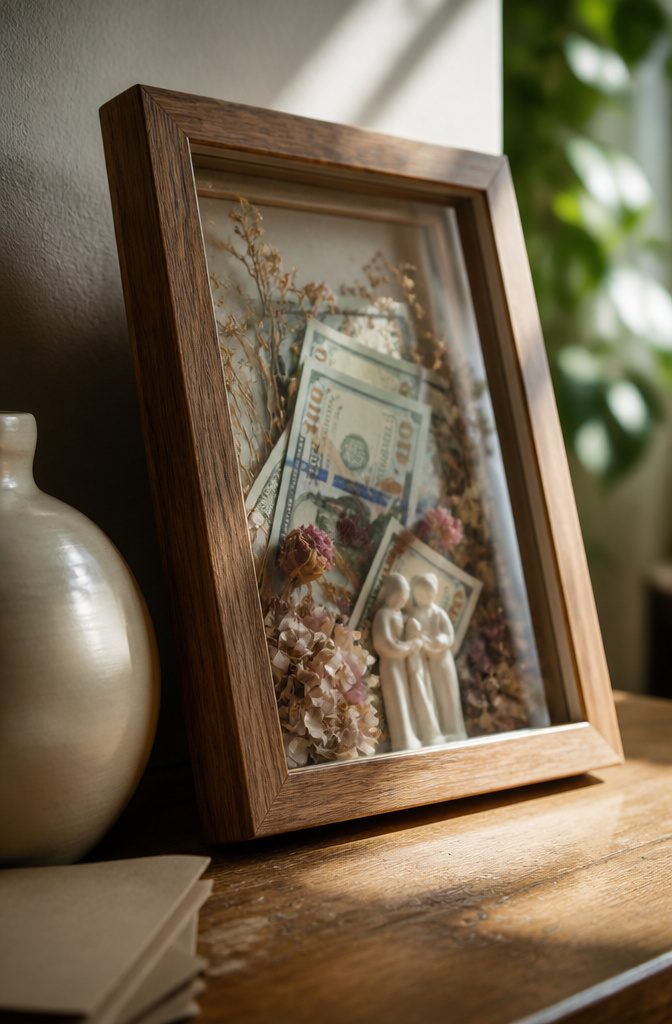
A shadow box lets you arrange bills alongside wedding keepsakes so the money becomes part of something they can hang or display.
The box might hold photos, dried flowers, or a copy of the invitation layered with the cash, all sealed behind glass and personalized with their names and wedding date.
This turns the gift into a decorative piece rather than something that sits in an envelope for a week before it gets deposited.
The approach works when you want the presentation to feel permanent.
The couple can keep the box on a shelf or wall long after the wedding, and the cash stays visible as part of the memento rather than disappearing into their account.
It does lock the money behind glass, so they will need to open the frame to actually spend it, but that’s intentional: the gift doubles as decor first and funds second.
11. Present Money in a Travel-Themed Container
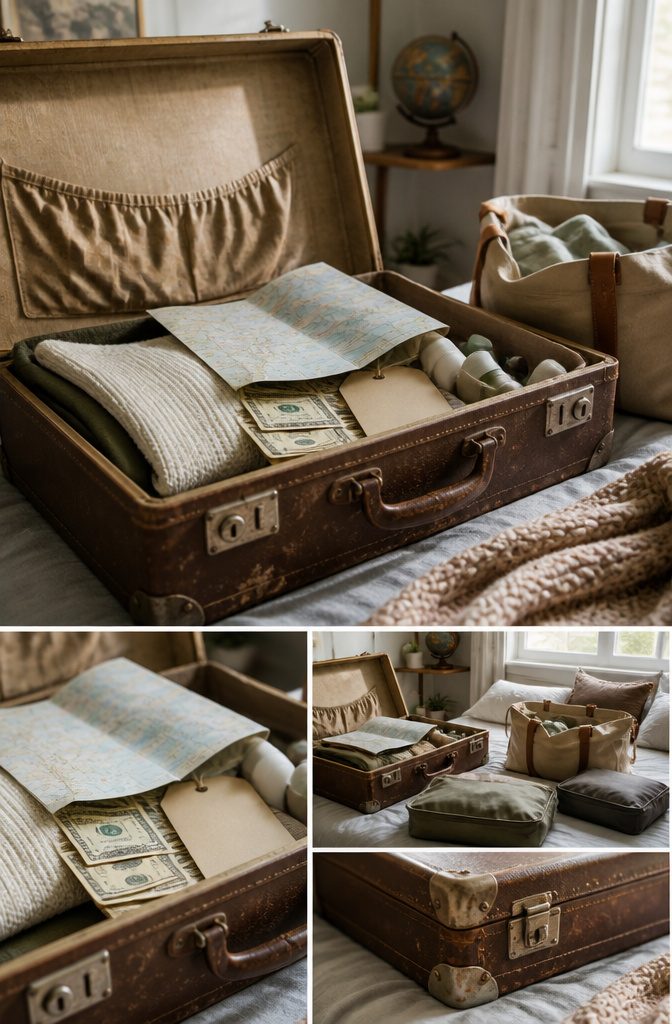
A vintage suitcase or a globe-shaped container turns a cash gift into a prompt for the trip ahead.
Pair the bills with a luggage tag, a small map of a destination the couple mentioned, or travel-sized toiletries — the sort of thing they would actually pack.
The extra items are inexpensive, but they tie the money directly to how it will be spent rather than leaving it abstract.
A travel guide for a city they dream of visiting works the same way, and it doubles as something they can flip through while they plan.
The container itself becomes part of the gift: a sturdy suitcase holds more than cash, and a globe sits on a shelf long after the honeymoon ends.
12. Put Money in a Puzzle
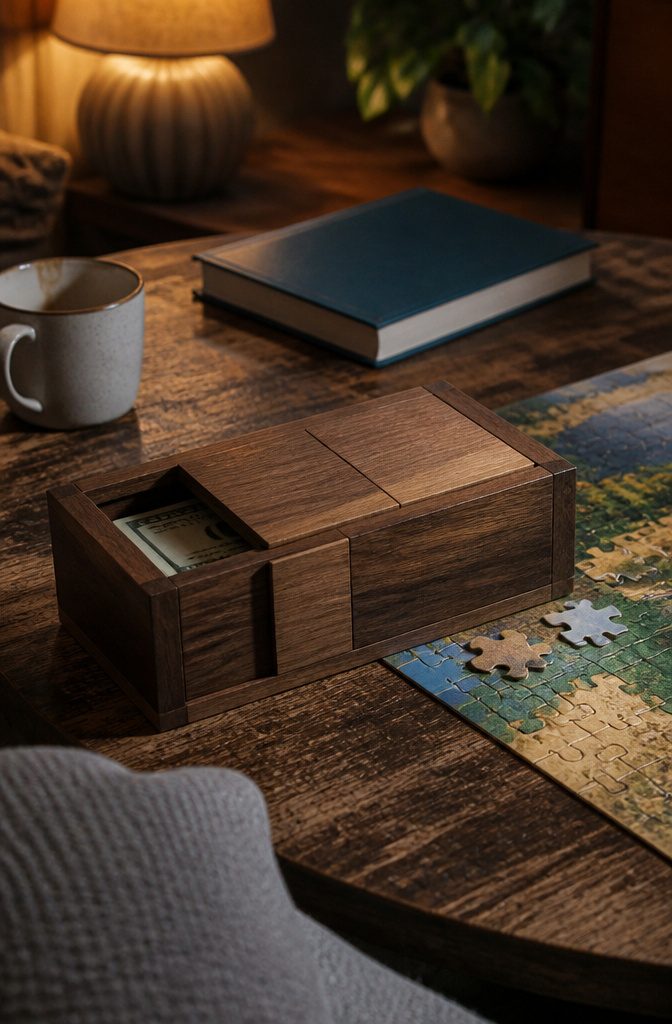
Put Money in a Puzzle
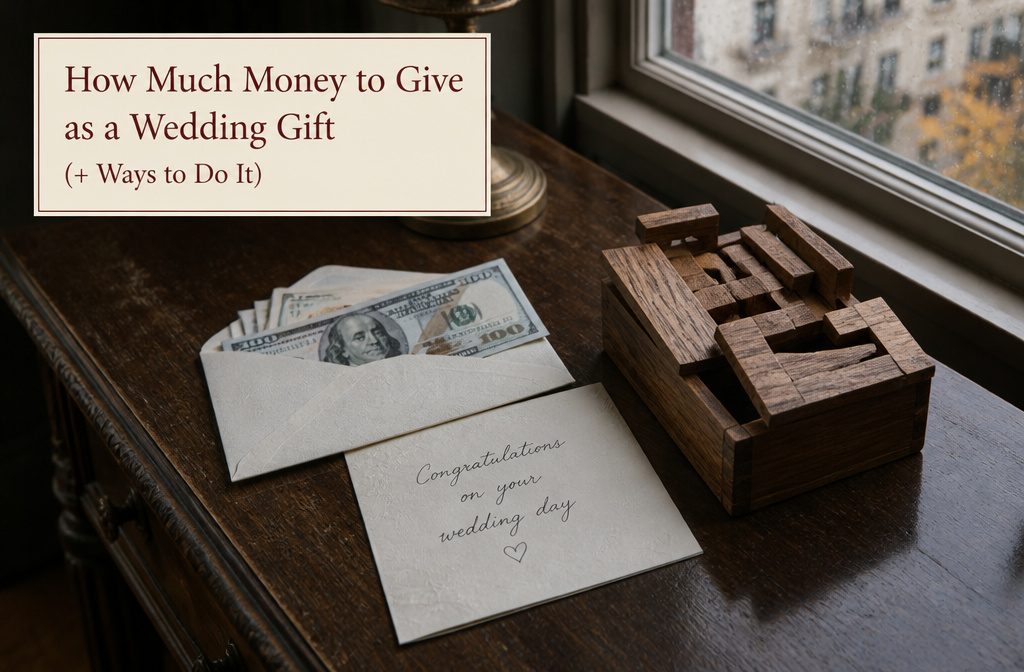
The cash sits inside a puzzle box or reveals itself as the couple completes a jigsaw, turning a gift into something they sit down and solve together.
The puzzle box version hides the bills behind a series of sliding panels or mechanisms that have to be worked in sequence.
The jigsaw approach prints a personalized image or message across the pieces, and the money appears as they fit the last few together or tucks inside an envelope beneath the completed puzzle.
Both versions add surprise and stretch the moment out longer than an envelope does.
The puzzle box feels more like a challenge, and jigsaws work better if the couple actually likes puzzles or if you choose an image that matters to them.
Either way, the gift becomes an activity rather than something they open in five seconds and set aside.
13. Give Money Through a Scavenger Hunt
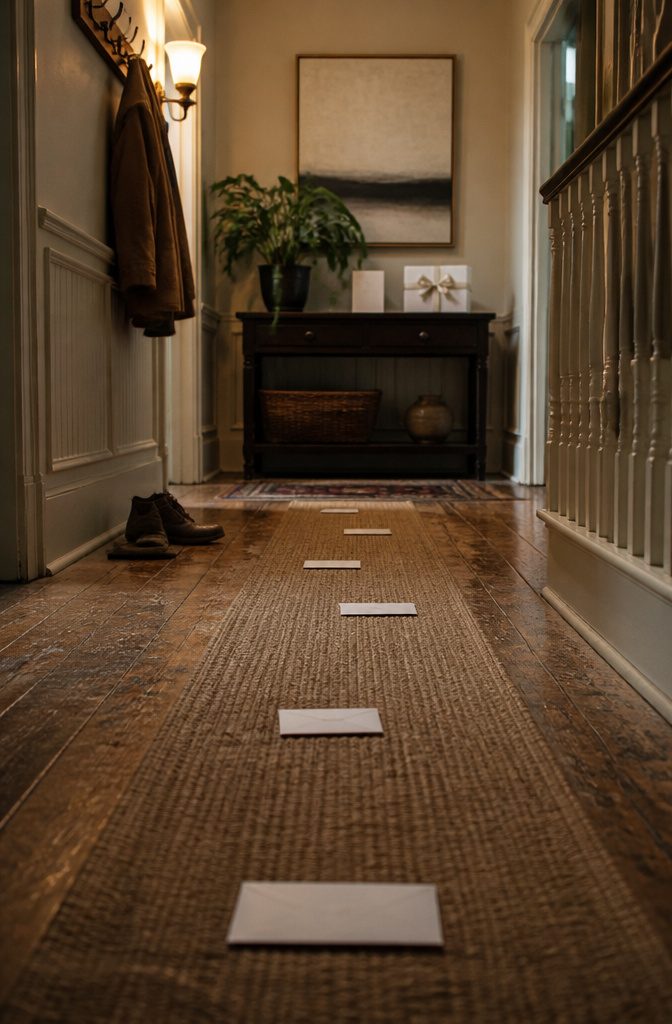
Give Money Through a Scavenger Hunt
A scavenger hunt turns the cash into the finale of a small adventure.
You leave clues and riddles that lead the couple from one location to the next, with envelopes of money waiting at each stop or the full amount revealed at the end.
The hunt can run through their house, the venue, or a few meaningful spots nearby, and each clue becomes part of the gift itself.
This works when you want the moment to feel less transactional and more like something they did together.
The couple gets to move, laugh, and end up somewhere with the cash in hand, and you get to build a memory around a gift that would otherwise be a single envelope on a table.
The setup takes time, but it becomes a story they will tell.
What the Couple Should Do With Cash After the Wedding
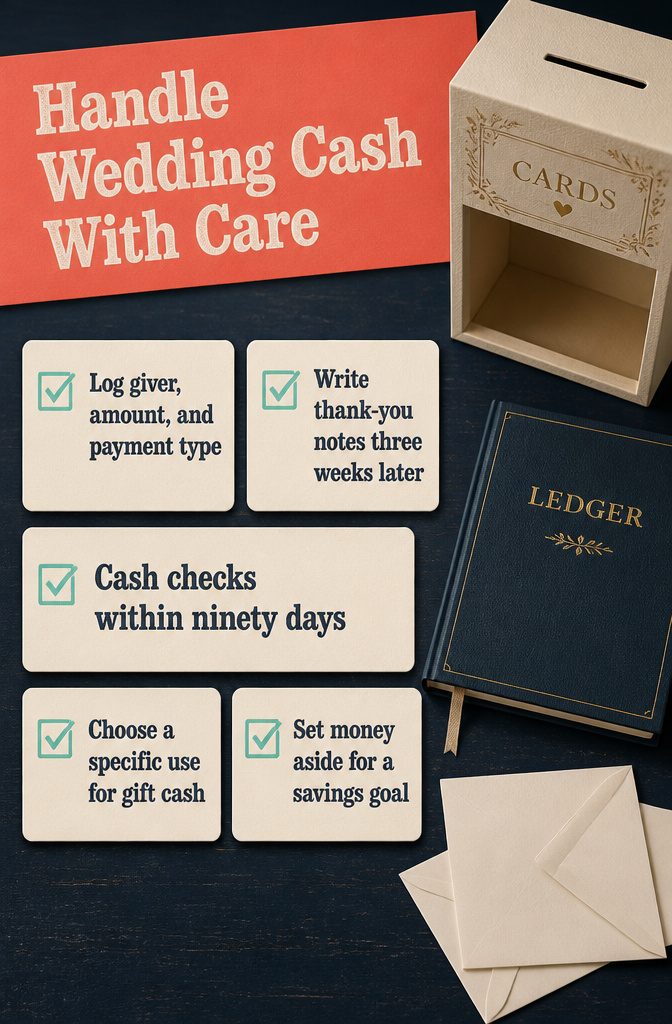
Cash shows up in cards and envelopes at the reception, and the thank-you notes you write three weeks later depend on knowing who gave what.
I keep a ledger while opening cards — name, amount, and whether it was cash or a check — so the uncle who gave $500 gets the specific acknowledgment he deserves, not a generic line about appreciating the gift.
Cash checks within ninety days. Most checks stay valid for six months, but some banks honor them for only ninety days, and none are required to accept them past that window.
Waiting also risks overdrafts if your guest forgot about the outstanding amount and spent into money they thought was still theirs.
Decide in advance what the money is for. Gift cash is not wedding-expense insurance, and spending it impulsively the week you get home means losing the margin it was meant to give you.
Treat it as seed money for something specific — furniture, honeymoon upgrades, or the start of a savings goal — and it stays useful instead of vanishing into the month’s general spending.
Frequently Asked Questions
How much should I give as a wedding gift?
The typical range is $50–$500, depending on your relationship to the couple.
Close family usually gives $200–$500, friends give $100–$200, and colleagues give $50–$150. These are guidelines, not requirements, and giving within your means is what counts.
What is a fair amount of money for a wedding gift?
A fair amount depends on how close you are to the couple and your budget.
For close friends and family, $150–$300 is common, while acquaintances typically give $50–$100. The couple will appreciate your gesture regardless of the specific amount.
Is $200 a good wedding gift in 2026?
$200 is a solid gift amount for friends or extended family.
It falls comfortably in the $100–$300 range most guests give for those relationships. Close family members often give more, but $200 shows thoughtfulness without stretching most budgets.
What if I can’t afford the recommended amount?
Give what fits your budget.
The recommended amounts are guidelines, not rules, and the couple will appreciate your gesture regardless of the dollar figure. Personal circumstances matter more than hitting a specific number.
Should I give more if I’m traveling to attend the wedding?
There is no hard rule.
Some people give slightly less when travel costs add up, while others stick to the same amount they would give locally. The decision is personal and depends on your relationship with the couple and your financial situation.