The outfits below move from a breezy midi you might find on sale to maxis that ask for more of the budget, and the one you pick depends on whether the ceremony starts while the sun is high or after it drops.
1. Floral Midi Dress
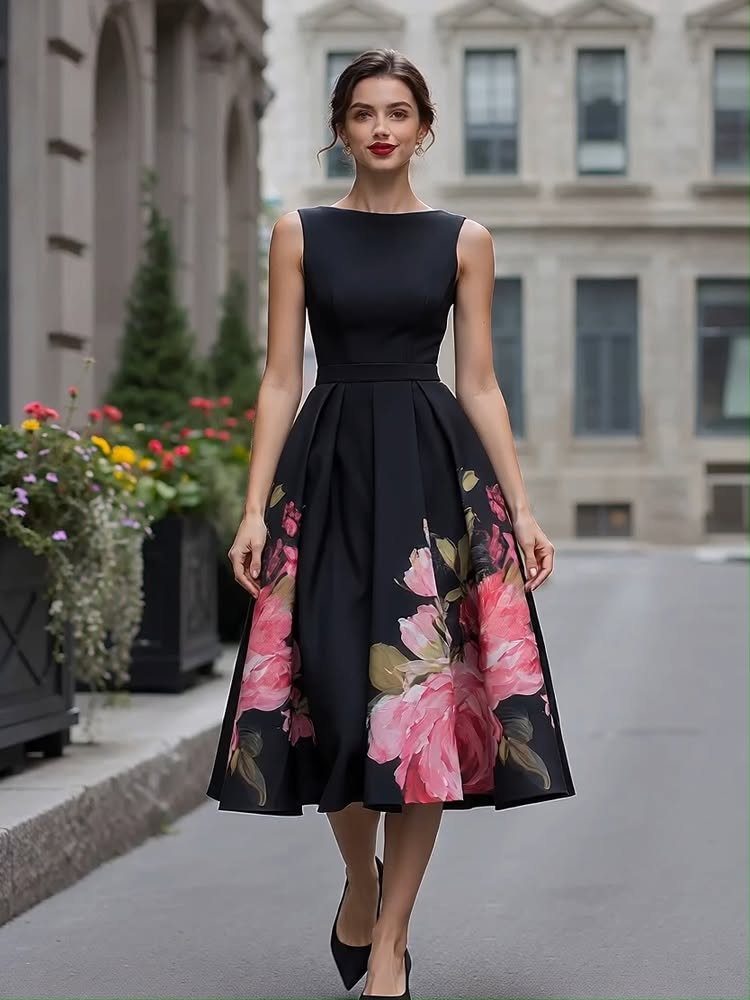
A black silk midi scattered with oversized pink blooms reads garden ceremony without trying too hard. The sleeveless cut and gauzy weight keep you cool when the ceremony stretches past noon.
Flutter sleeves or a cinched waist add shape if your build needs it; skip both if you’re broader through the middle. Minimal accessories work best here: one small clutch, one low mule with a little shine, done.
I’d wear this for a small group where the couple wants guests comfortable enough to move between lawn and tent.
The midi length saves your hem from dewy grass, and the dark ground hides the dirt that lighter florals collect by cocktail hour.
2. Palm Print Maxi Dress
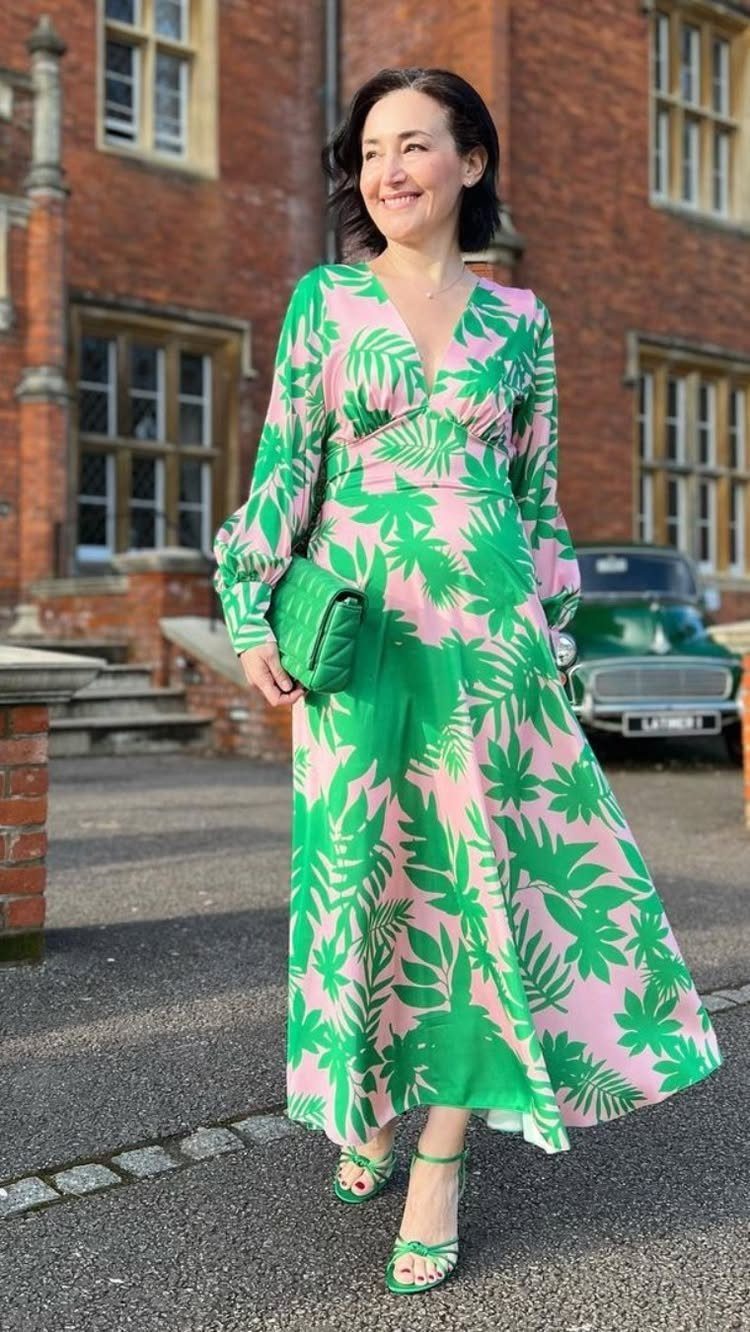
Palm prints on a maxi length signal vacation wedding the way no solid color manages. A pink-green mix runs bold; if that’s too loud for you, smaller-scale botanicals in navy or olive read the same without the statement.
Linen, chiffon, or cotton keeps the skirt moving in beach humidity. Flat sandals with a thin strap work better than wedges here; stilettos sink in sand and the host won’t have a boardwalk for every path.
A sunhat is optional but smart for a midday ceremony with no shade. The long sleeve on this version adds coverage without weight; roll it to 3/4 length if the breeze dies.
3. Asymmetric Gown
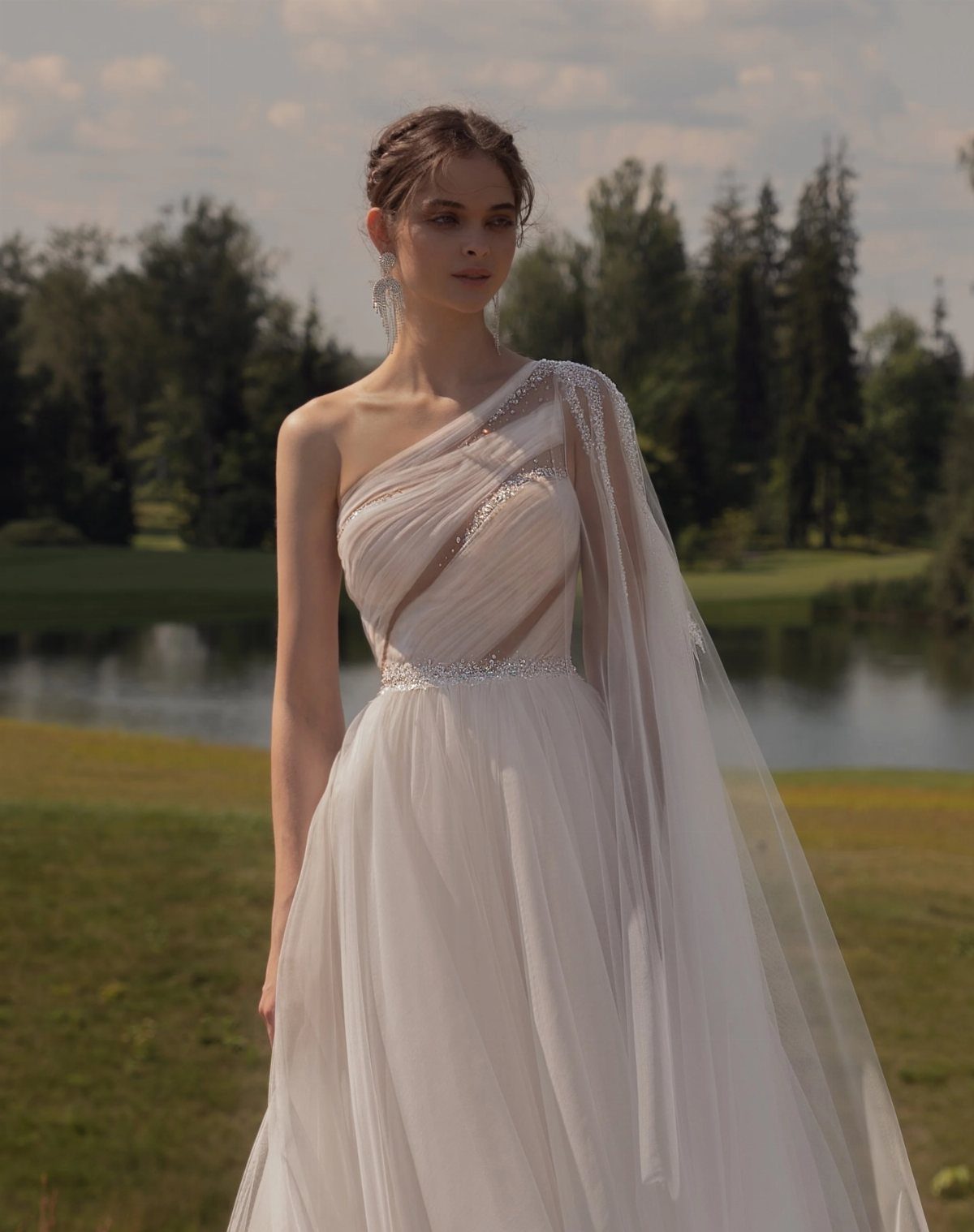
One bare shoulder and a tulle skirt that falls unevenly hits the middle ground between formal and relaxed that vineyard weddings demand.
Beading at the waist gives structure without a belt; if you’re shorter-waisted, look for the trim to sit at your natural waist, not the empire line.
Stacked heels or espadrilles handle gravel and grass better than a stiletto, and the uneven hem hides any slight sink into soft ground.
A sheer drape adds movement for photos but can tangle in wind; test the weight before you commit.
Bring a lightweight jacket or shawl. Cellar tours run cool even when the ceremony sun is high, and the evening shift comes fast in hill country.
4. Long Dress with a Wrap
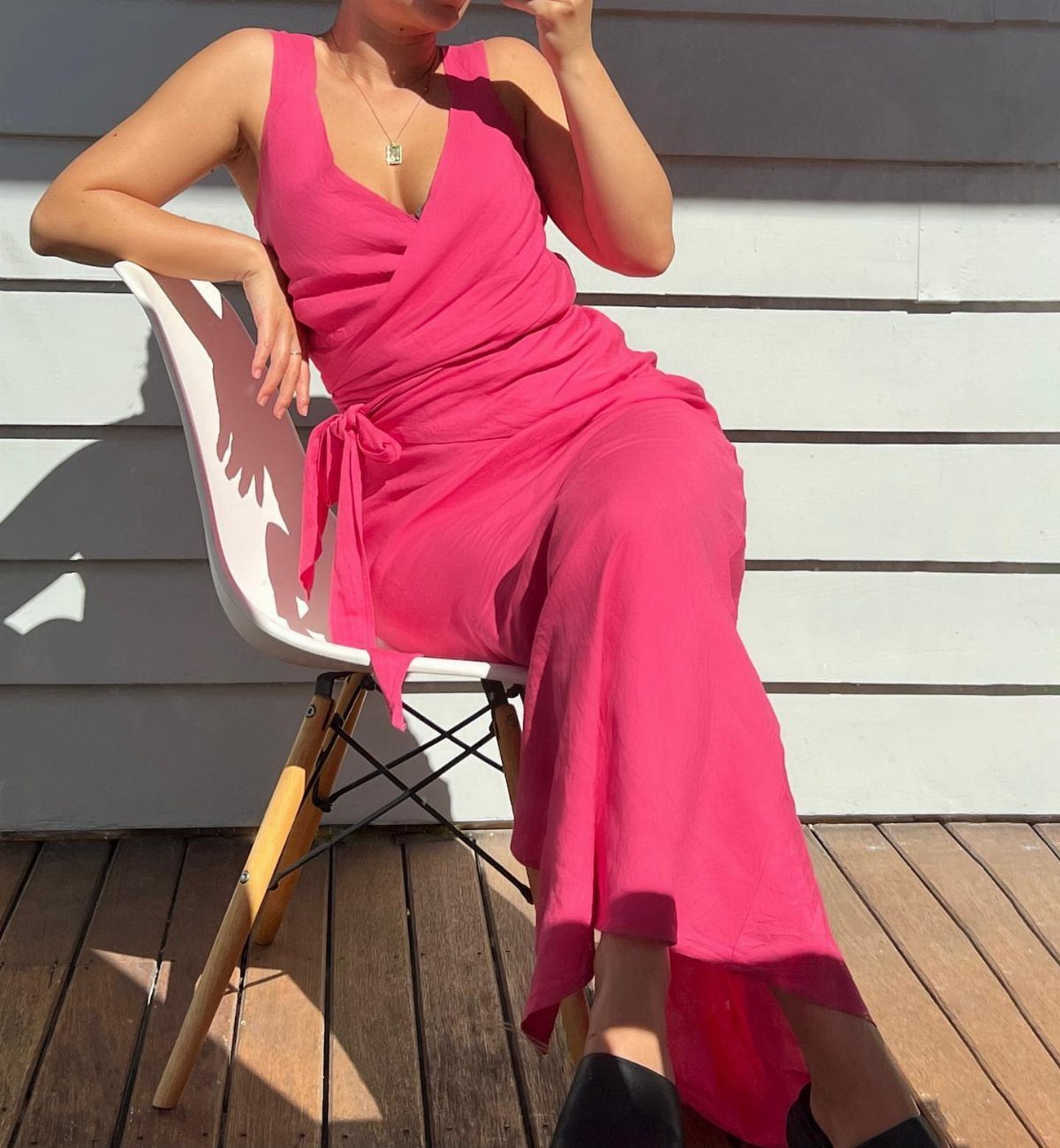
Bright pink in a long wrap dress is a choice that works for upscale outdoor weddings where the dress code sits somewhere between cocktail and formal.
The V-neck and waist tie let you adjust the fit across chest and midsection without tailoring; buy for your hips and cinch the rest.
A pendant at the neckline fills the space without competing. For evening, a wrap in silk or a light cashmere layer stashed at your seat saves you from the temperature drop that hits once the sun clears the tent line.
This is the option I’d pick when the invitation gives nothing to go on. The wrap shape reads dressed-up, the color reads celebratory, and you can loosen the tie after dinner without looking like you gave up.
5. Yellow Halter Maxi Dress
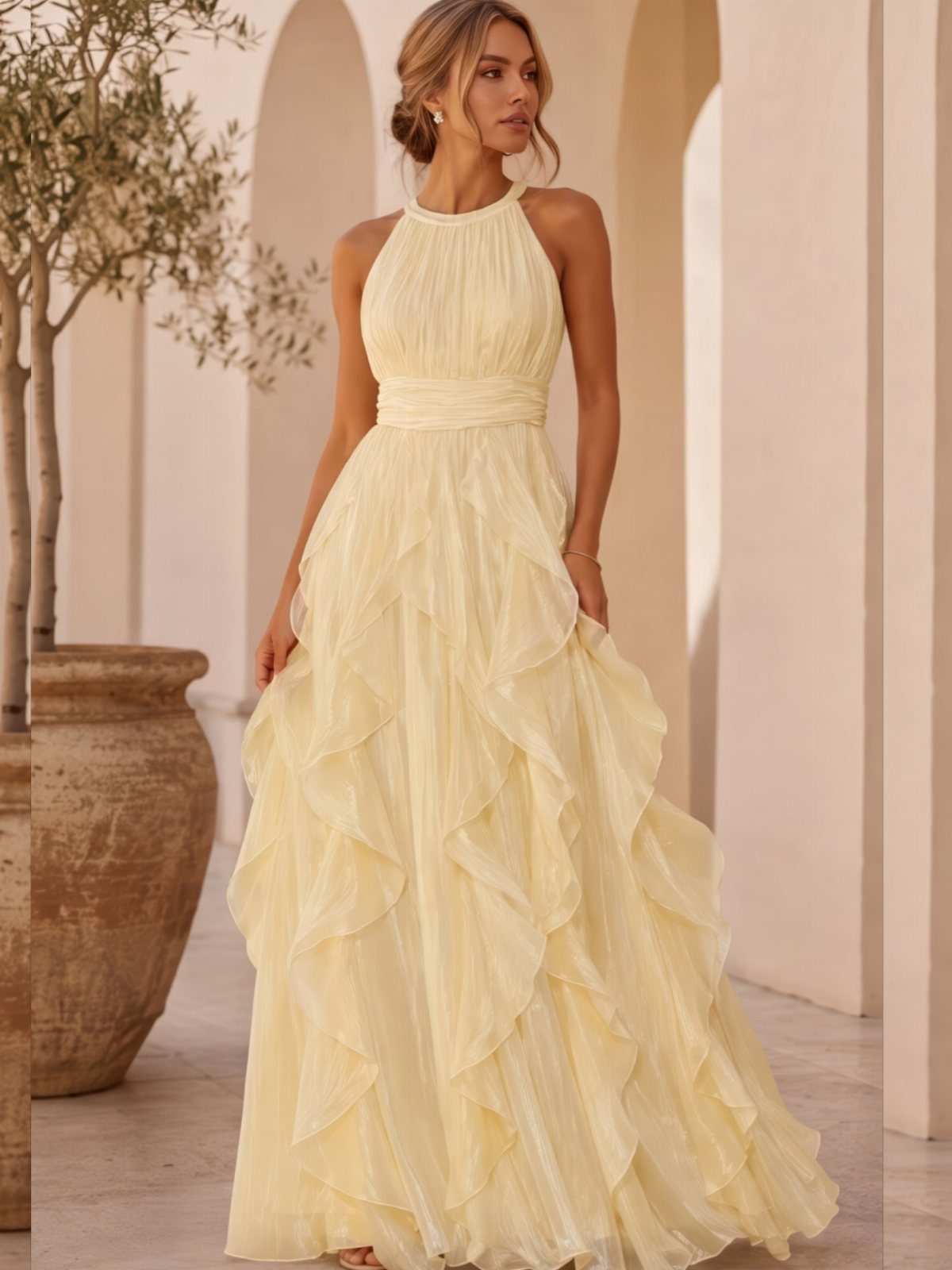
Tiered ruffles in pale yellow catch late-day light the way flat fabrics never will. The halter neck keeps shoulders bare for summer heat and the tiered skirt moves without needing a petticoat or heavy lining.
Columns, arches, and hard surfaces reflect sun and sound, so a halter cut keeps you cooler than sleeves would. In that kind of space, a color this light reads intentional, not underdressed.
Against softer backgrounds, I’d go deeper in tone, more mustard than lemon.
Halter cuts favor narrower shoulders; if you’re broader, the neckband can pinch or ride. Test the armhole depth before you buy, since the style often runs high and tight.
6. Colorful Striped Pleated Maxi
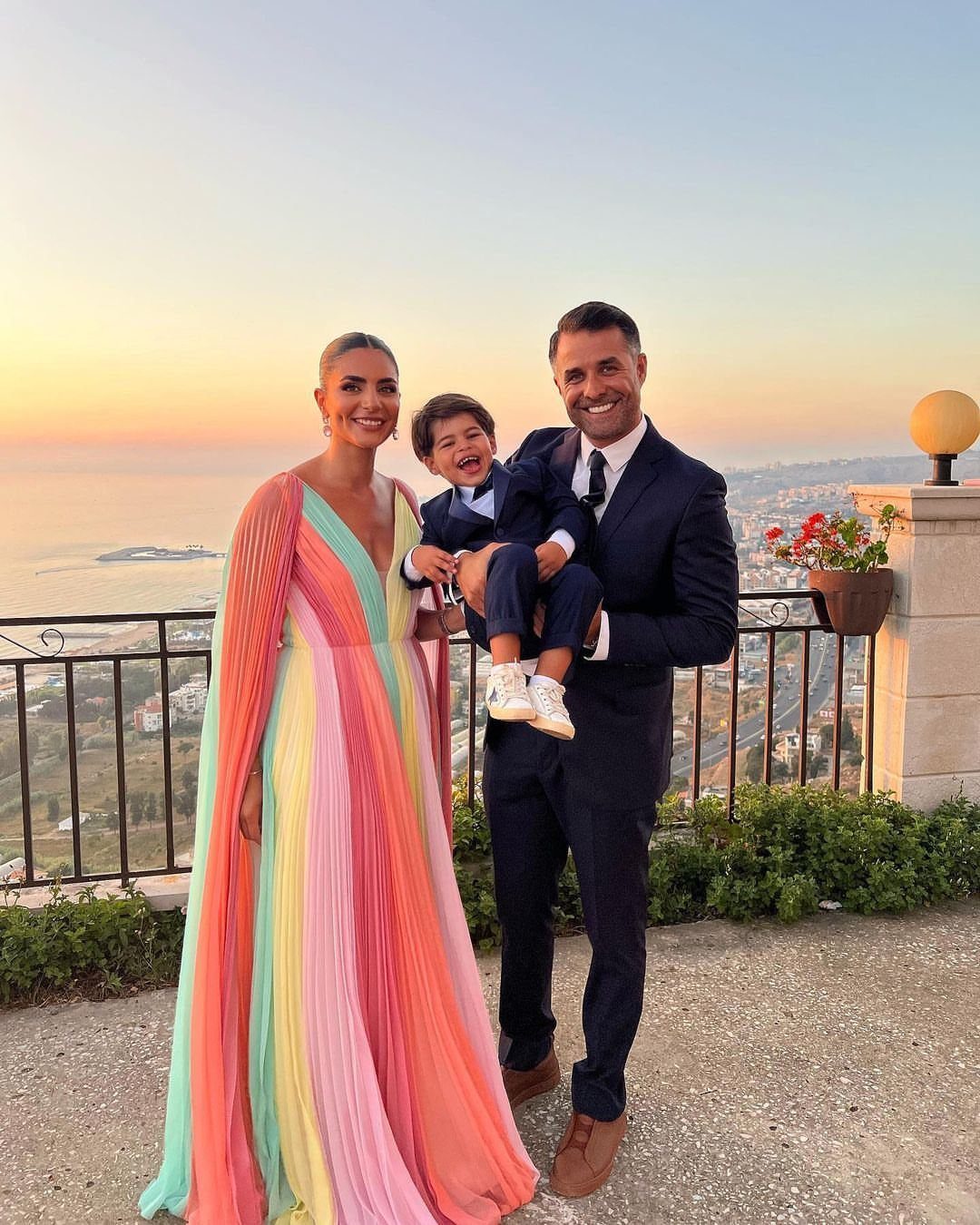
Vertical stripes in pink, yellow, and teal on a pleated maxi do the work of a print without the sweetness of florals.
The pleating holds the shape when you move; the stripes keep the eye traveling up, which helps if you’re shorter and want the length.
Sunset timing flatters this palette more than midday. The colors warm further as the light drops, and the pleats catch the low sun in ways flat jersey won’t.
A family photo in this dress, beside a partner in dark suiting, balances without matching.
Three colors plus texture reads busy up close. Keep jewelry minimal, maybe one thin bracelet or small stud.
This is for the guest who wants to be remembered, not the one who wants to disappear into group shots.
7. Brown Velvet Sleeveless Gown
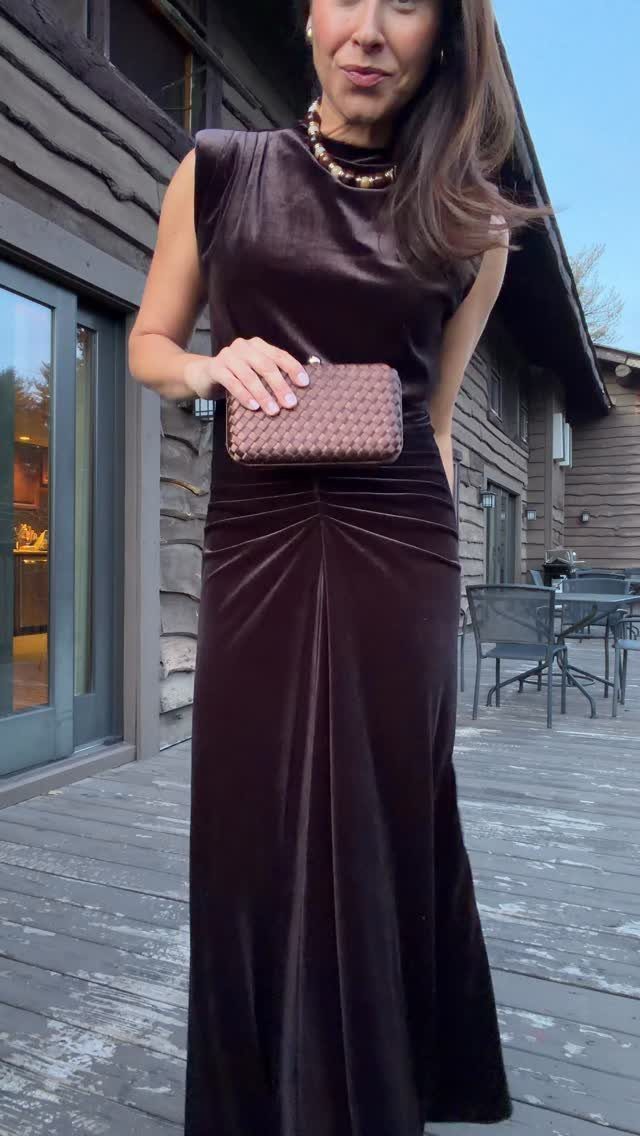
Velvet reads formal indoors but shifts to something else entirely when the sun hits it.
A sleeveless cut keeps the weight from overwhelming a warm afternoon, and the deep brown avoids the jewel-tone formality that can feel like too much on a wooden deck or lawn.
The ruching at the waist matters more than decoration here: it lets the fabric move without clinging, which is the difference between looking dressed and looking dressed up.
Pearls and a woven clutch keep the texture story going without adding competing shine.
Skip this if the wedding runs midday in July. The fabric holds heat, and sweat on velvet shows.
For a late-afternoon ceremony with a breeze, or any fall outdoor date, it earns its place.
8. One-Shoulder Embellished Midi Dress
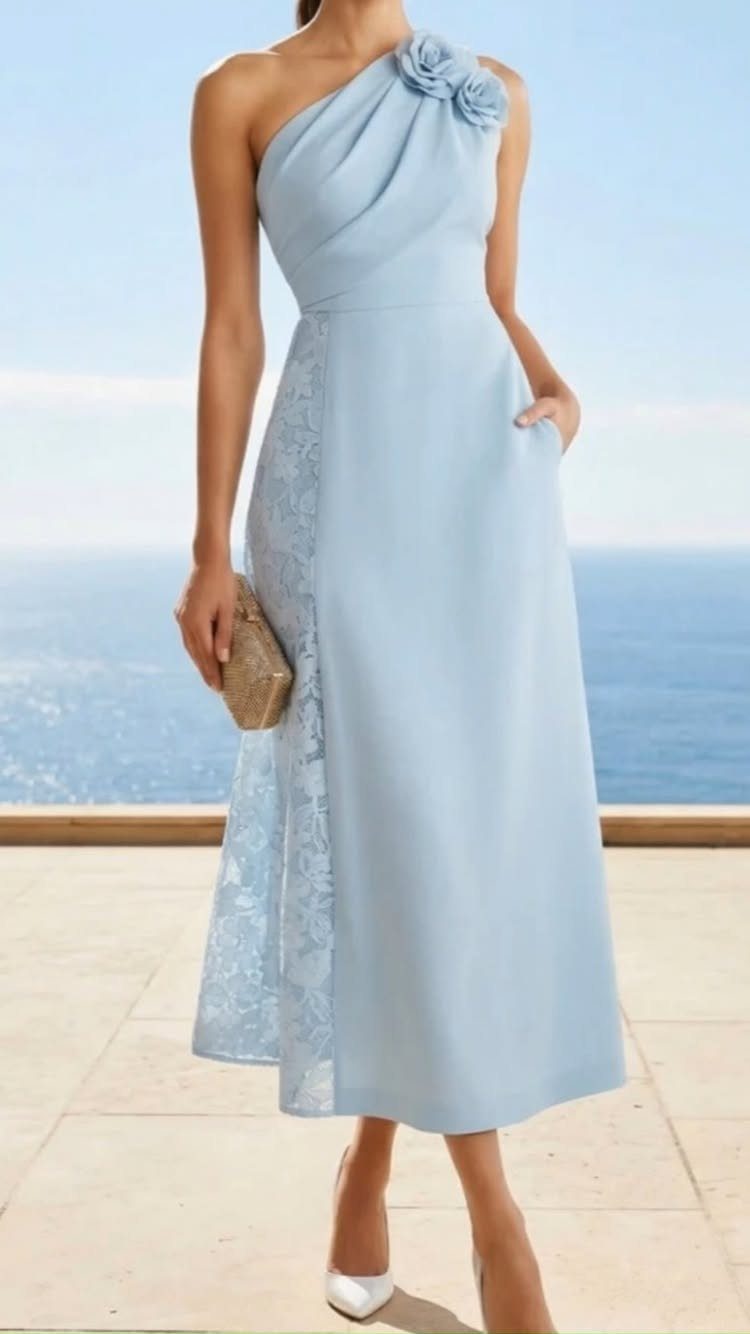
A one-shoulder line does the work of a statement necklace, so the embellishment on the strap reads as detail rather than excess.
The midi length lands exactly where outdoor weddings get ambiguous: casual enough for a backyard, structured enough if the couple meant "semi-formal" and forgot to say so.
Lace paneling at the side breaks up the silhouette without bare skin, which solves the temperature question that comes with solid fabric from neck to knee.
The floral appliques on the shoulder draw the eye up, useful if you are shorter-waisted and want the vertical.
For a relaxed ceremony, this is your ceiling on dressiness. For a dressier one, it is your floor.
That range is the point.
9. Long-Sleeved Floral Maxi Dress
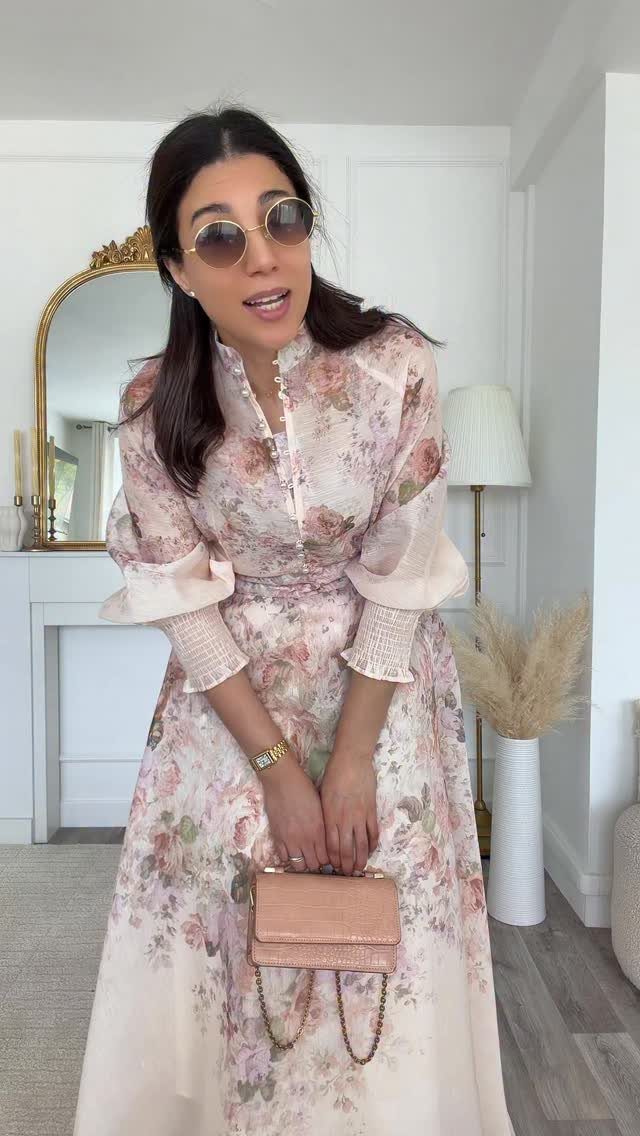
Long sleeves on a maxi dress sound like a contradiction for outdoor heat until you have sat through an evening ceremony that runs long and the temperature drops hard.
The flowy cut keeps the sleeves from reading winter; the pink and cream floral keeps the whole thing from reading funeral.
The mini bag with a chain strap is doing specific work here: it sits close to the body, which matters when you are holding a drink on uneven ground and a clutch would need a hand or a lap.
Sunglasses as an actual styled piece, not an afterthought, signal that this is a daytime event and you planned for sun.
If the invite says "formal," swap the print for a solid and keep the shape. The sleeves and length still carry the dress code.
Consider the Setting
"Outdoor" covers more ground than most invitations admit. A garden ceremony means grass underfoot, which block sandals or wedges handle better than a narrow heel that sinks.
A wooded setting like a conservation area reads romantic but trails dust and sap onto long hems; a flowy maxi in a darker ground hides what a light floral collects by the reception.
Beach air salts everything, so fabrics that shake clean, like linen or cotton, beat anything that holds grit in weave.
A hill-country afternoon can turn cold once the sun drops behind the ridge; keeping a cardigan or wrap at your chair means you do not have to duck inside.
Match the dress to the ground you’ll actually stand on, not the mood the couple hoped for.
Follow the Dress Code
Outdoor weddings often come with dress codes so loose they give you nothing to build from. When that happens, the shape and material do the signaling.
Lace, chiffon, or satin on a midi reads structure without formality; a long dress with some weight to the fabric reads formal even without the word on the invite.
A dressy jumpsuit splits the difference if you know the crowd leans modern. Sandals are fine for casual, but they should look chosen, not like the pair you walked to the mailbox in.
If you are unsure between two options, take the one that sits a half-step dressier. No guest has ever regretted looking like they tried; the same cannot be said for looking like they did not.
Backyard weddings are the ultimate way to celebrate love in a way that feels more personal. For guests, however, the dress code can feel like a grey area—it’s inherently low-key, but not necessarily casual.
— Vogue
What Not to Wear
White and ivory are the only colors with a hard rule: leave them to the bride. Beyond that, the mistakes are matters of degree.
Anything you adjust or tug is the wrong choice for a long ceremony and a longer reception. Denim, T-shirts, flip-flops, and sneakers read like you forgot there was an event; even a casual outdoor wedding is still a wedding.
Heavy fabrics, like wool or thick polyester, trap heat and look wrong against sun and open sky. Velvet belongs to late afternoon or fall; midday in July turns it into a mistake you can feel.
Stilettos belong indoors. On grass, gravel, or deck gaps, they wobble or sink, and no one enjoys watching a guest navigate her own shoes.
Frequently Asked Questions
What to wear to a garden wedding?
A garden wedding calls for prints that echo what’s growing around you, hemlines that brush the calf or fall to the ankle, and soft details like a sleeve that moves or a waist that ties.
Block sandals or wedges handle grass better than heels, and a darker ground color hides dirt that collects by cocktail hour. That in-between length keeps the fabric clear of morning grass and the dirt paths between rows.
What to wear to a beach wedding?
Linen, chiffon, and cotton let air pass through and don’t cling when the air sits heavy and salt-warm. A slim flat sandal stays on top of the sand; anything with height or bulk fights the ground with every step.
For a noon ceremony with no tree cover, a brim buys you shade, and a small-patterned floral in navy or olive looks like you packed for the trip rather than the event.
What to wear to a vineyard wedding?
Aim for the middle ground between formal and relaxed: an asymmetric gown with one bare shoulder, a tulle skirt, and beading at the waist hits that balance.
A heel with some stack or a rope-wrapped sole keeps you steady on the loose ground between rows, and a jacket light enough to tie at the waist covers you when the tasting room gives way to a breeze.
What to wear to a rustic wedding?
A cotton dress that falls to the knee or a tiered maxi in something breathable fits the rough walls and packed earth of a barn or field.
A sandal with some structure or a boot with a low heel handles uneven ground, and a wrap dress lets you pull the fit tighter or looser at the waist without a tailor’s appointment, looking finished without trying for black-tie.