Forest theme wedding decorations can start with a bag of moss from the craft store and run all the way up to chandelier rentals that need a venue rigging point rated for weight.
What decides which idea belongs in your plan is whether you are working inside a hired hall with a plain wall or outside under actual branches.
A simple wooden aisle runner laid on the ground is one end of that range; crystal hung from tree limbs with battery-operated LED candles inside is the other.
1. Draped Greenery
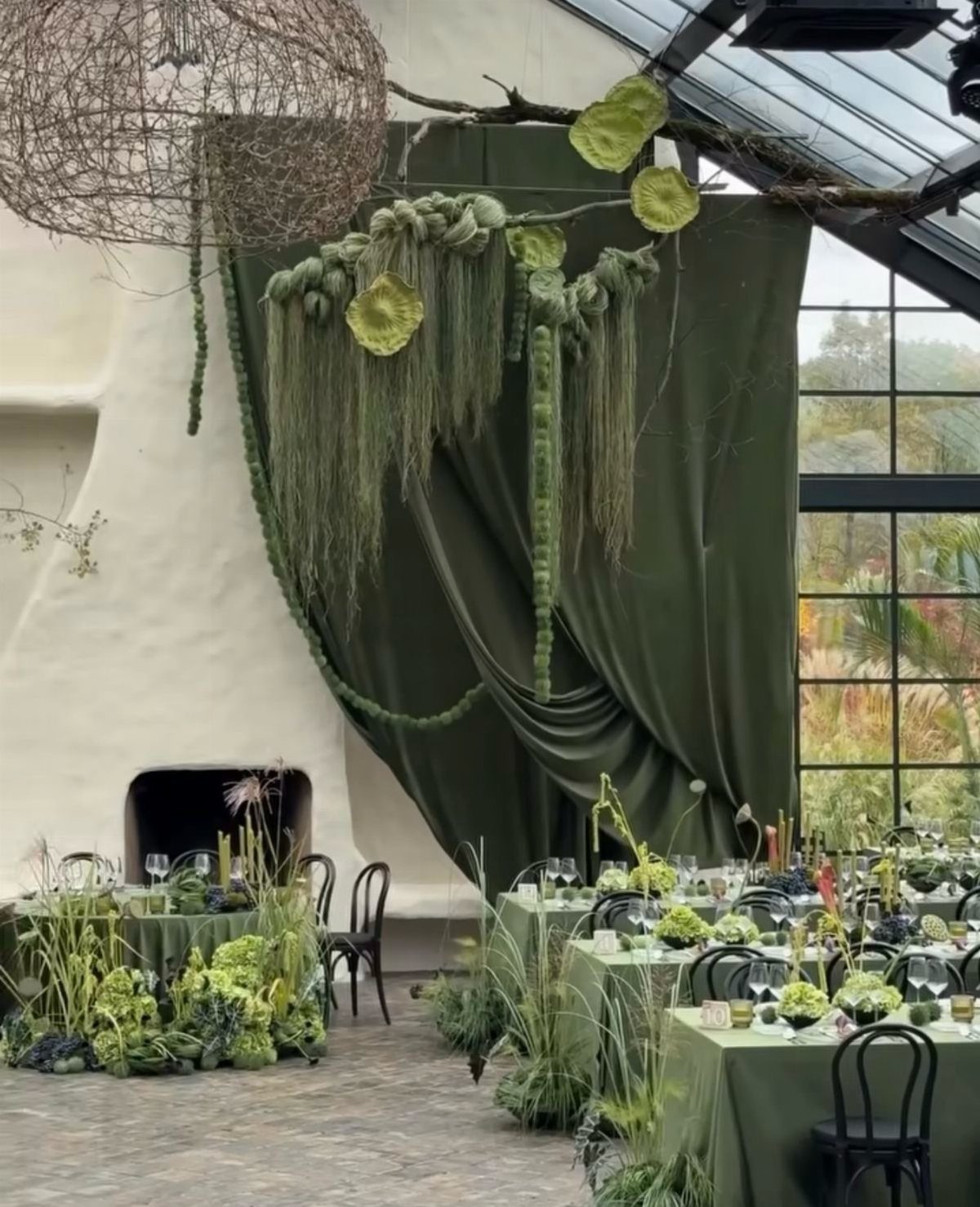
A ceiling of woven branches and vines turns any room into a forest clearing after dark.
String lights threaded through the greenery warm the whole thing up, and the weight of the installation is the main thing to plan for; rented rigging or a venue with exposed beams changes what you can hang.
Moss table runners and fern arrangements below carry the same texture down to the surface.
I’d pair this with gold flatware or candleholders if the budget allows, since the metal catches light against all that green and keeps the room from feeling like a greenhouse.
This one demands either a high ceiling or a tent frame you can build from. Low banquet halls need a different approach.
2. Tree Branch Archways
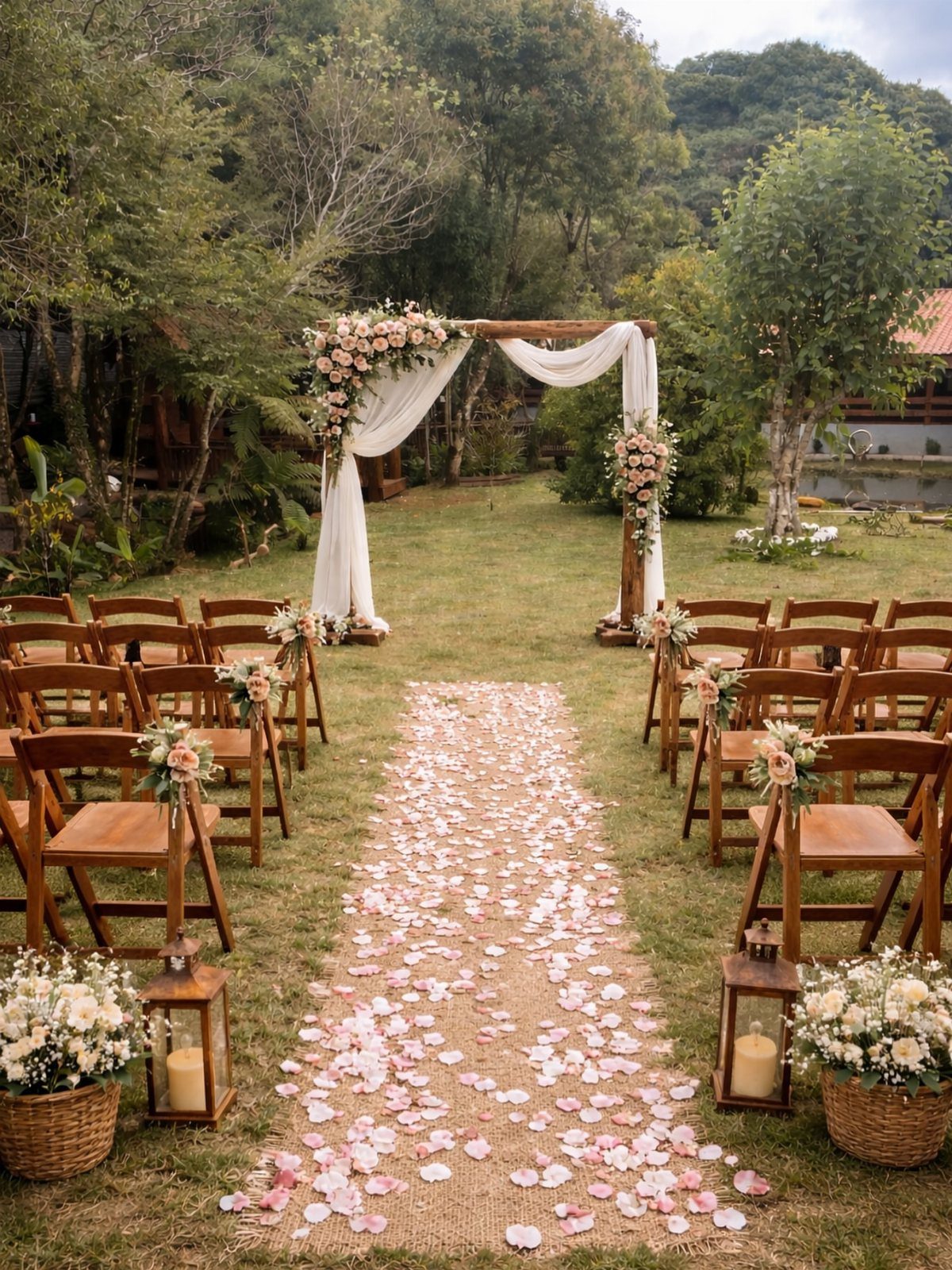
Fresh-cut branches lashed into an arch frame cost little more than the hardware to hold them. White fabric and pink blooms dress over raw wood, but the same structure works with only greenery if flowers aren’t in the budget.
Bendable willow or birch saplings shape easier than hardwood; thicker branches need a drill and long screws.
The arch stands on its own with enough depth in the leg base, or you can sink posts into buckets of concrete hidden by moss.
Indoor venues without a view benefit most. A plain wall becomes the ceremony spot with this in front of it.
Outdoor sites already framed by trees sometimes need nothing at all, and the effort is better spent elsewhere.
3. Luxury Tents for Guests
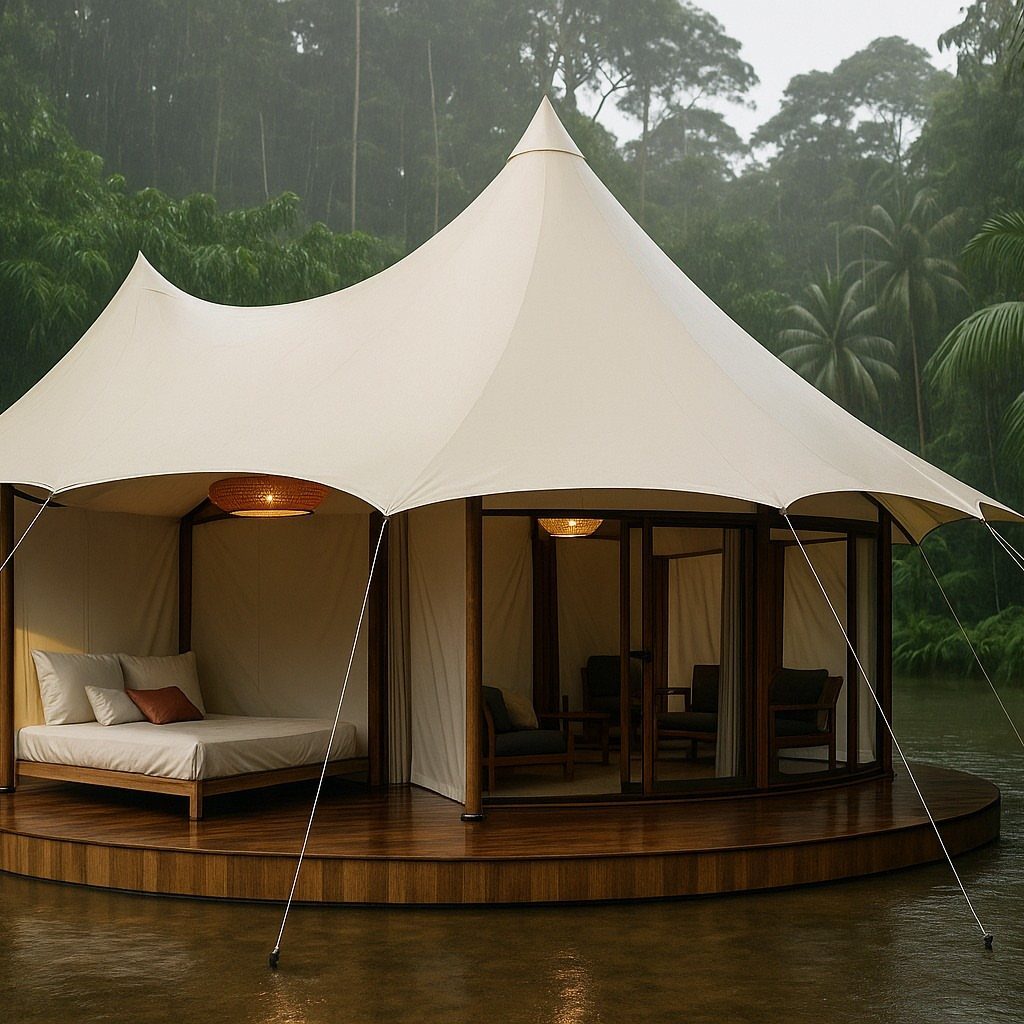
Yurts or canvas tents let guests stay past the last dance without driving.
A full setup on a platform over water is the dream version; most couples book a field or clearing and run power from a generator or skip electricity entirely.
A maintained bonfire nearby stretches the evening, and acoustic music covers the noise gap if you can’t wire speakers. The tents themselves run from basic rental models to furnished packages with beds and seating.
This suits a wedding where most guests travel in and the venue allows overnight use. Check fire regulations early; some forest sites ban open flames, and that changes whether the tents are worth the coordination.
4. Scenic Reception Spot
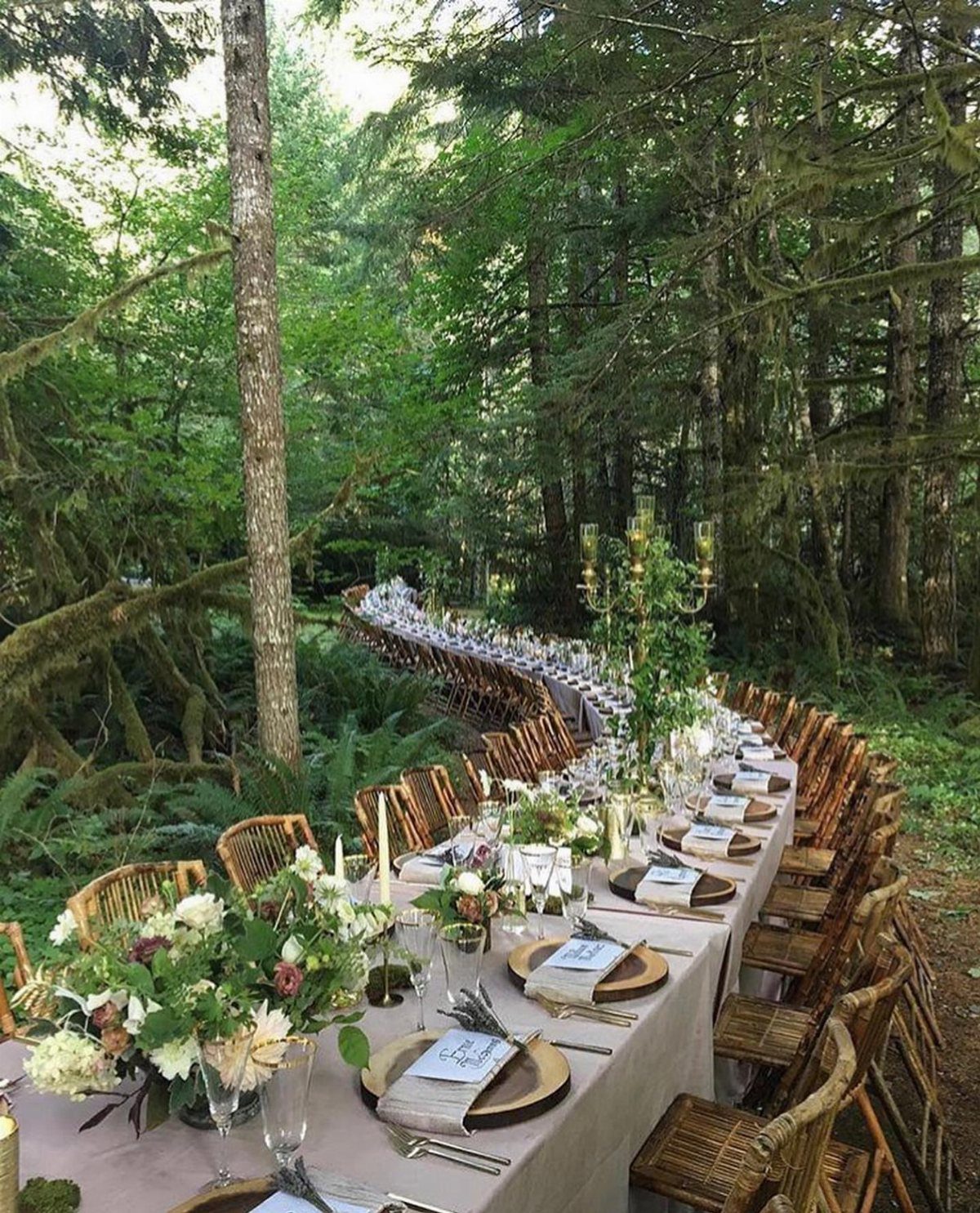
A hike between ceremony and reception turns the day into something guests remember differently than a standard timeline. A table stretching through actual forest, set with grey linen and gold touches, reads formal against the wild ground.
The distance is the variable to nail down. Elderly guests or anyone in heels need a shuttle option, and the route has to be walkable in dress shoes or you lose half the party to complaints.
Caterers carrying plated food over uneven ground is another conversation.
I’d only attempt this with a catering team who has done off-grid service before. The scenery is free; the logistics are where the money goes.
5. Gold Candlesticks
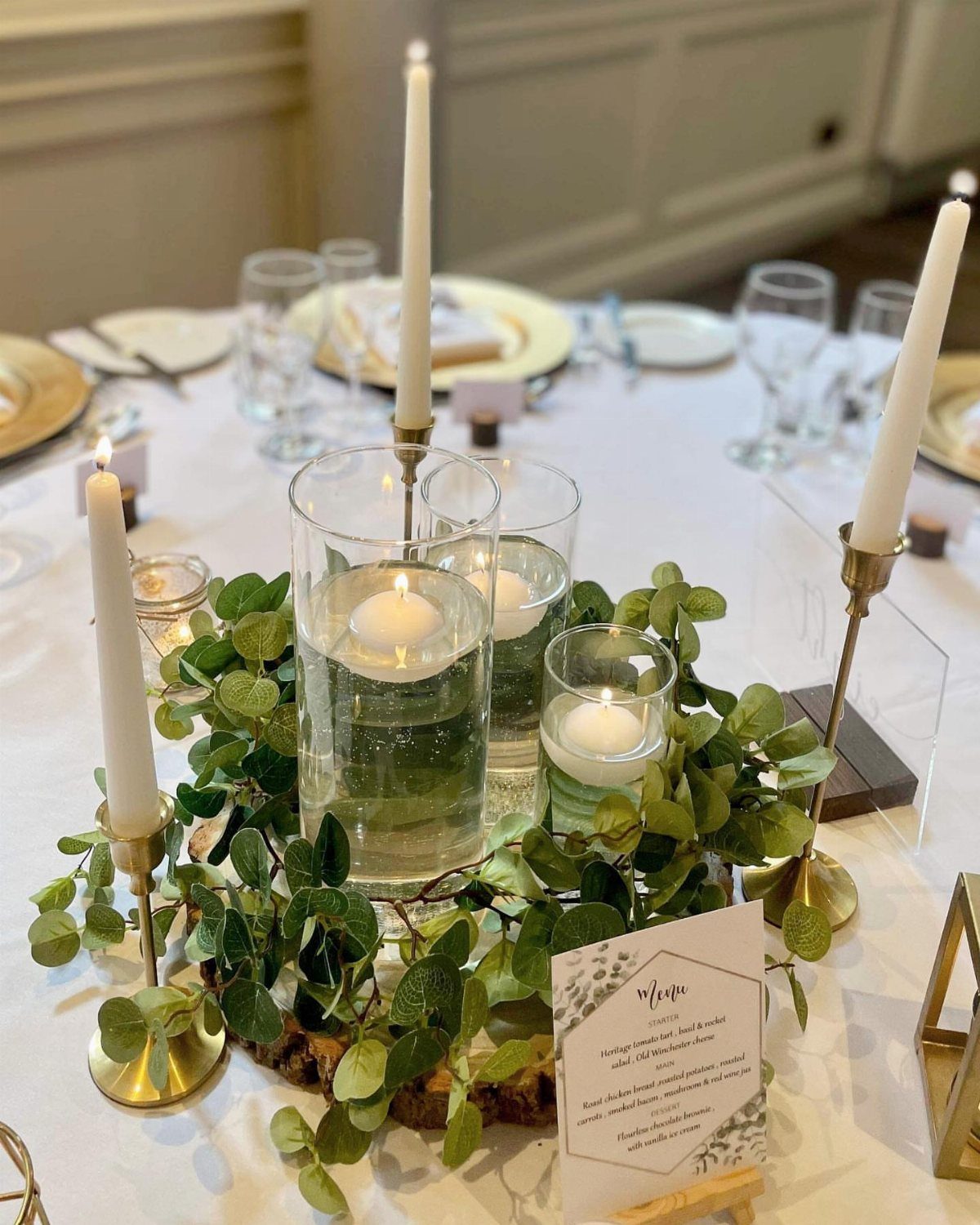
Gold candlesticks against green read expensive even when they aren’t.
Renting the candlesticks is cheaper than buying, and most rental houses stock brass or gold plate in bulk. The metal warms up a forest palette that can turn muddy without something reflective.
Napkins in the same tone work if the table budget is tighter than the centerpiece budget.
This is the detail that shifts a moss-and-fern table from summer camp to intentional design. One or two per table is enough; a full forest of them competes with the actual trees.
6. Fairy Lights
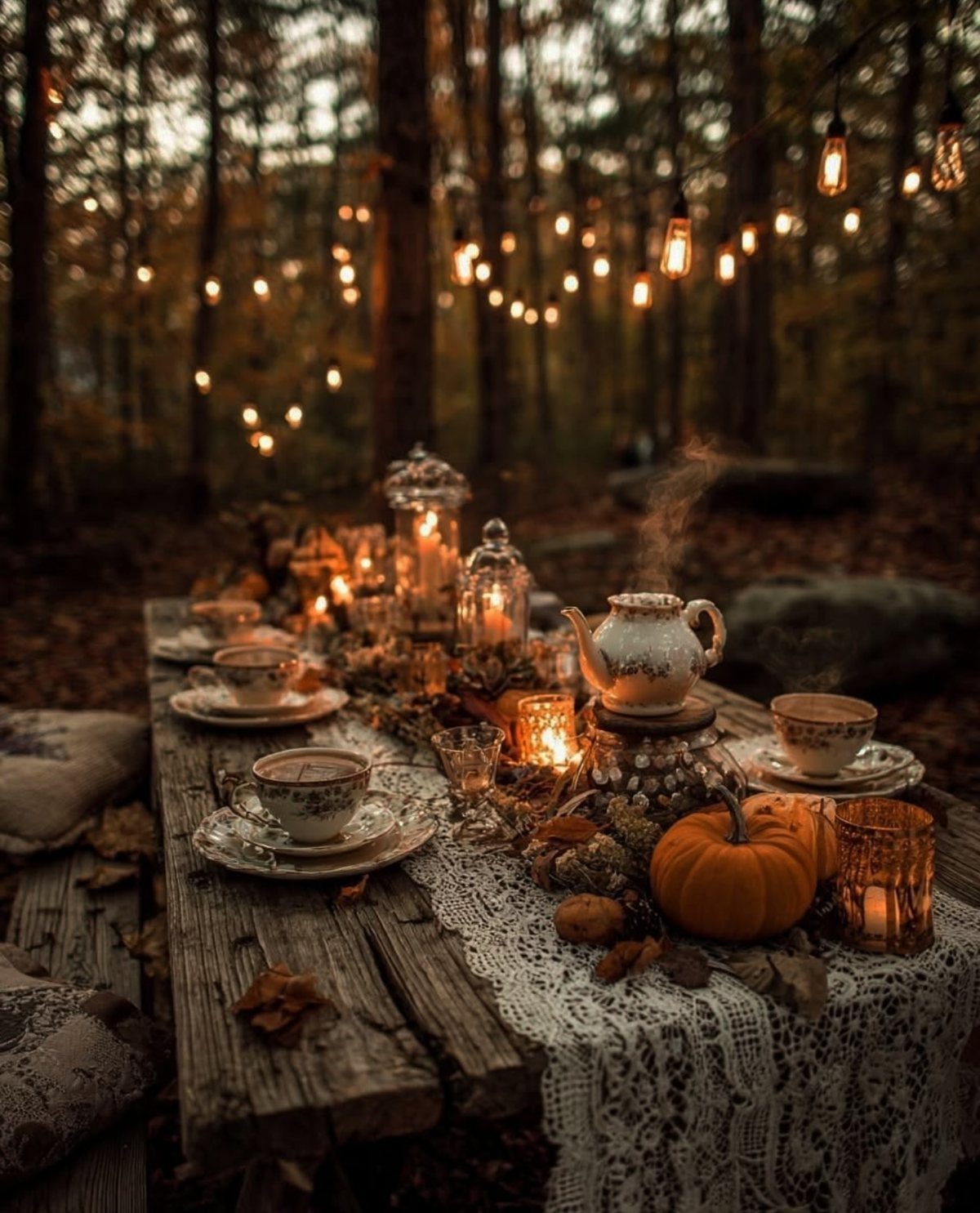
Warm string lights hung between branches extend usable hours past sunset without the cost of a full lighting package. The same rigging that works over a rustic tea setup also hangs above a dance floor or dinner tables.
Battery or solar strands skip the generator question where power isn’t available. The spacing matters more than the bulb count; too dense and they look like a Christmas display, too sparse and the gaps show.
Start with enough strands to cover the full span and adjust from there.
This is the most forgiving element on the list. It works in every forest venue, at every budget, and the teardown is easier than floral installations.
I’d build the rest of the decor around it as the one sure thing.
7. Moss-Covered Centerpieces
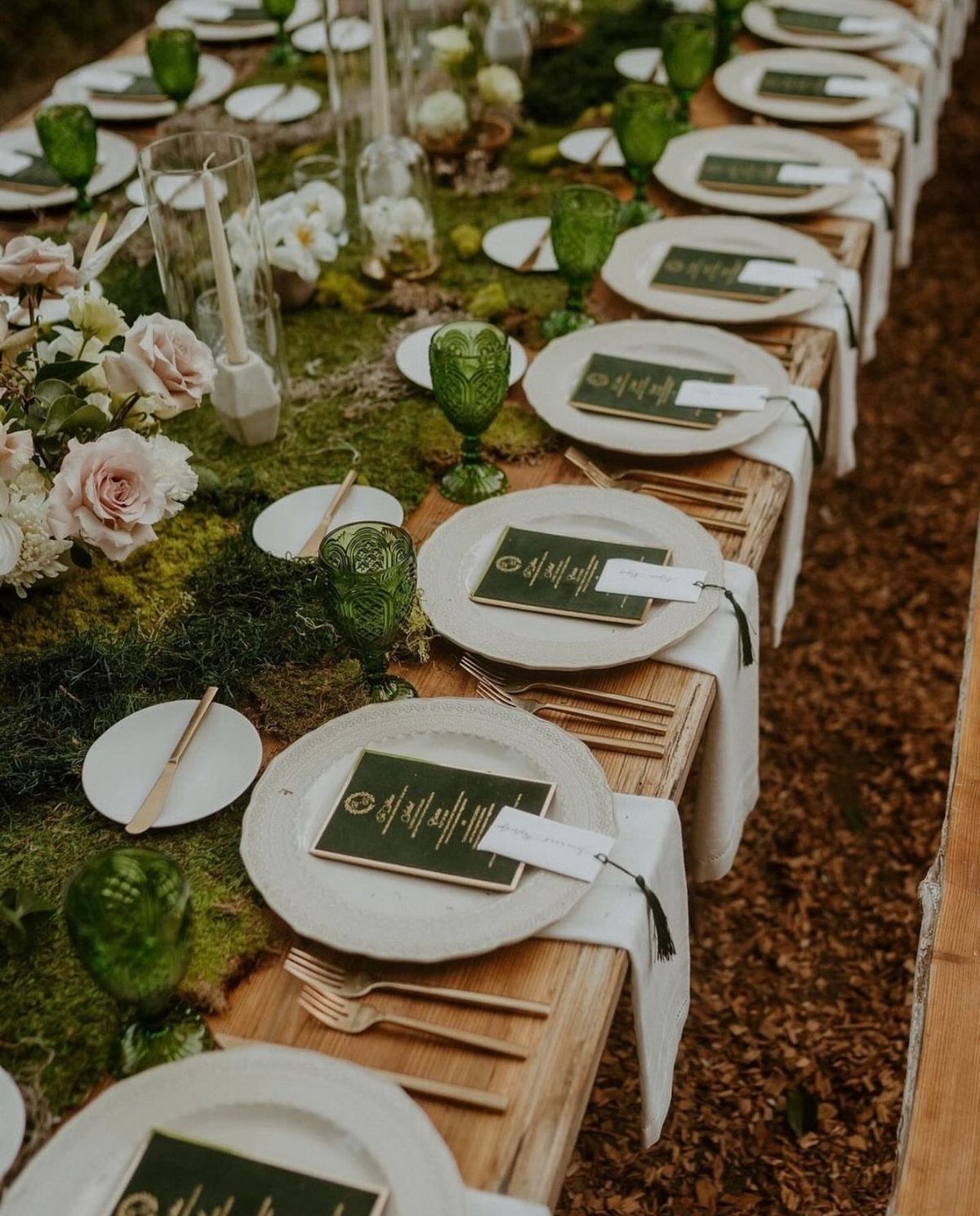
A moss runner turns any table into something that grew there. A long wooden banquet table needs something to soften its surface, and a thick carpet of moss does that while holding floral arrangements and candles in place.
That base layer is the trick: sheet moss or reindeer moss bought by the roll, dampened and pinned or glued to a thin fabric backing so it stays put through the evening.
You can nestle votives, bud vases, or small potted ferns straight into the moss.
The cost stays low because moss covers a lot of ground and needs no arrangement skill. I would skip it only if your tables are dark wood themselves; then the moss disappears instead of popping.
8. Wooden Signage
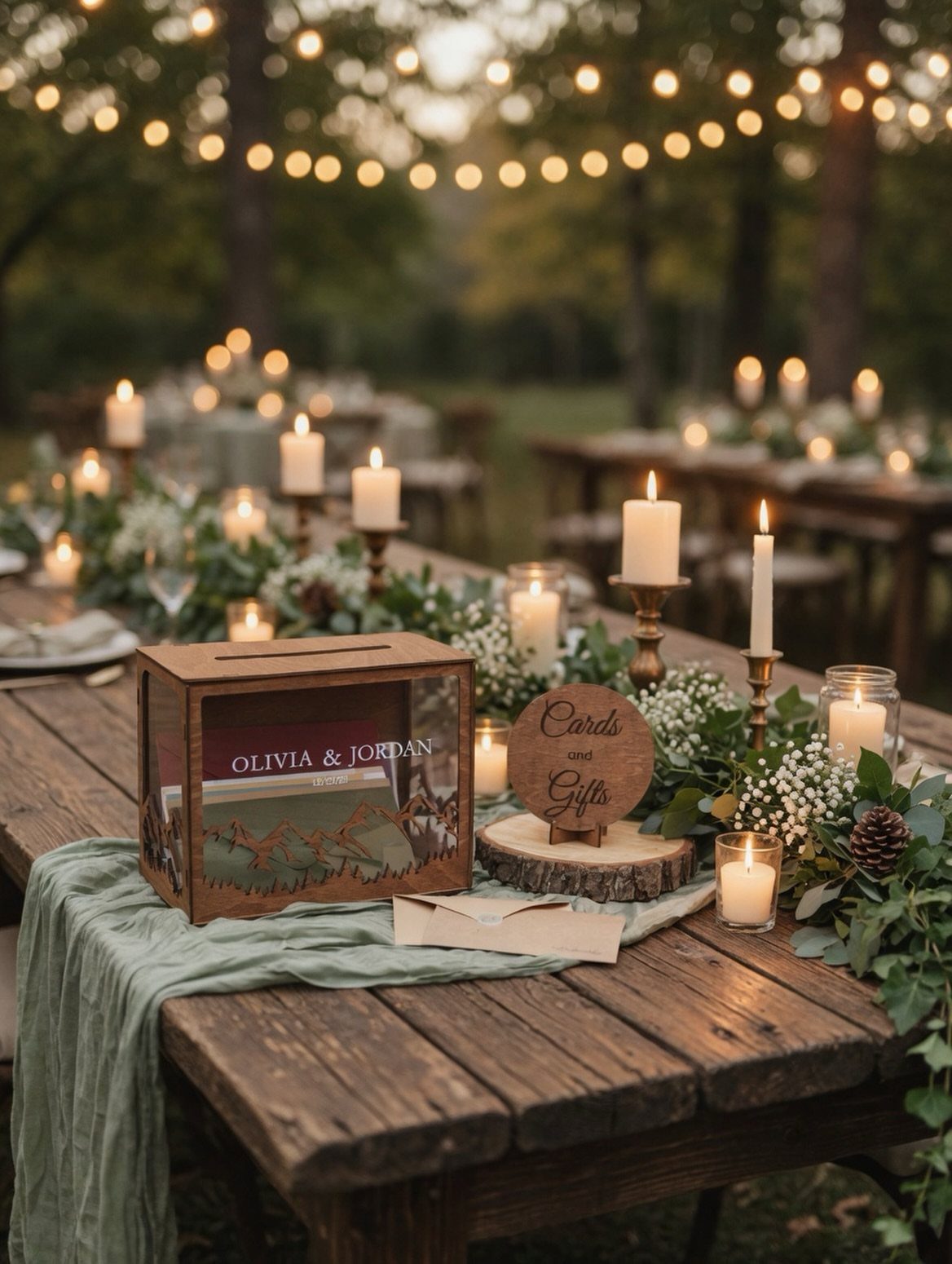
Signs carved or burned into wood feel like they belong in the trees around you. Light wood signs marking the card table with the couple’s names and a simple "Cards & Gifts" notice look best when they match the table itself.
You can order these from any laser-cutting shop if you have the wording ready, or burn them yourself with a cheap wood-burning kit and a steady hand.
The font matters more than the tool: something slightly irregular reads handmade, something too perfect reads printed. I lean toward the irregular for a forest wedding.
Placement is the real decision. One sign at the entrance to the ceremony path, one at the bar, one pointing toward restrooms that are never obvious in outdoor venues.
Guests wander less, and you spend less of your evening redirecting people.
A single sign at the gift table suits a small wedding where everyone knows the layout. Larger venues need 3 or 4.
9. Wildflower Bouquets
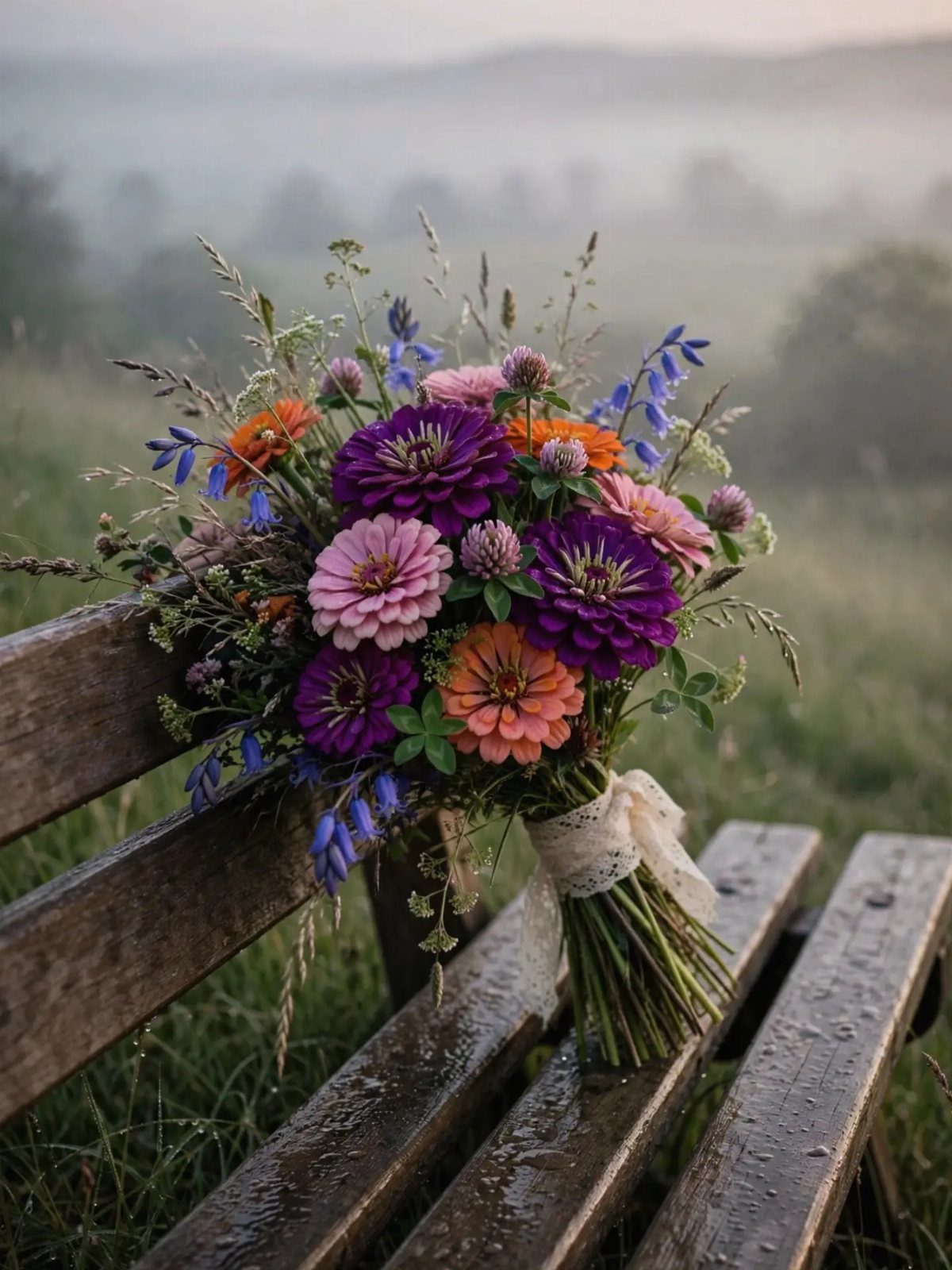
Wildflowers cost less than roses and look like you gathered them that morning, which is the whole point.
The season determines what you actually get. Summer weddings in most of the US can count on zinnias, cosmos, and black-eyed Susans from local growers or even roadside stands.
Spring shifts to lupines and bleeding heart. Fall brings asters and the last goldenrod.
Winter forces the question: dried wildflowers, or hothouse blooms that blow the budget?
Your florist should know what grows near your venue in your month. If they suggest substituting standard roses "for the same look," find another florist.
The irregular stems, the different sizes, the occasional berry or seed head: that is the look.
10. Rustic Seating
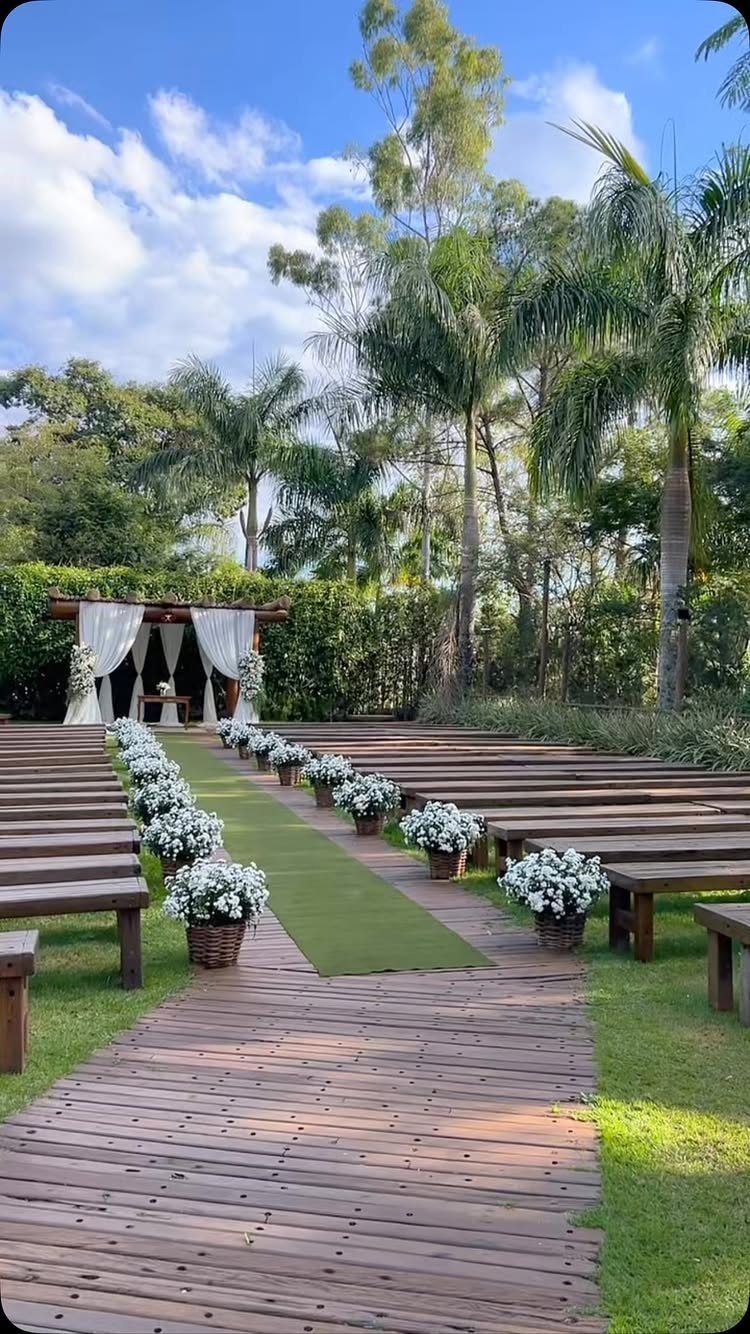
Wooden benches read ceremony, not dinner, and that is exactly why they work for a forest wedding.
Log benches or vintage wooden chairs both fit the woodland aesthetic, but only one of them accommodates guests in heels or with limited mobility.
I would mix them: benches for most rows, proper chairs with arms at the ends and in any row reserved for grandparents. Sand the log surfaces smooth; splinters in wedding photos are memorable for the wrong reasons.
Benches sitting directly on grass mean leveling each one or accepting a slight tilt. Wood chips, packed dirt, or a temporary platform fix this.
Indoors, these same benches need felt pads or a rug to protect the floor.
11. Candlelit Pathways
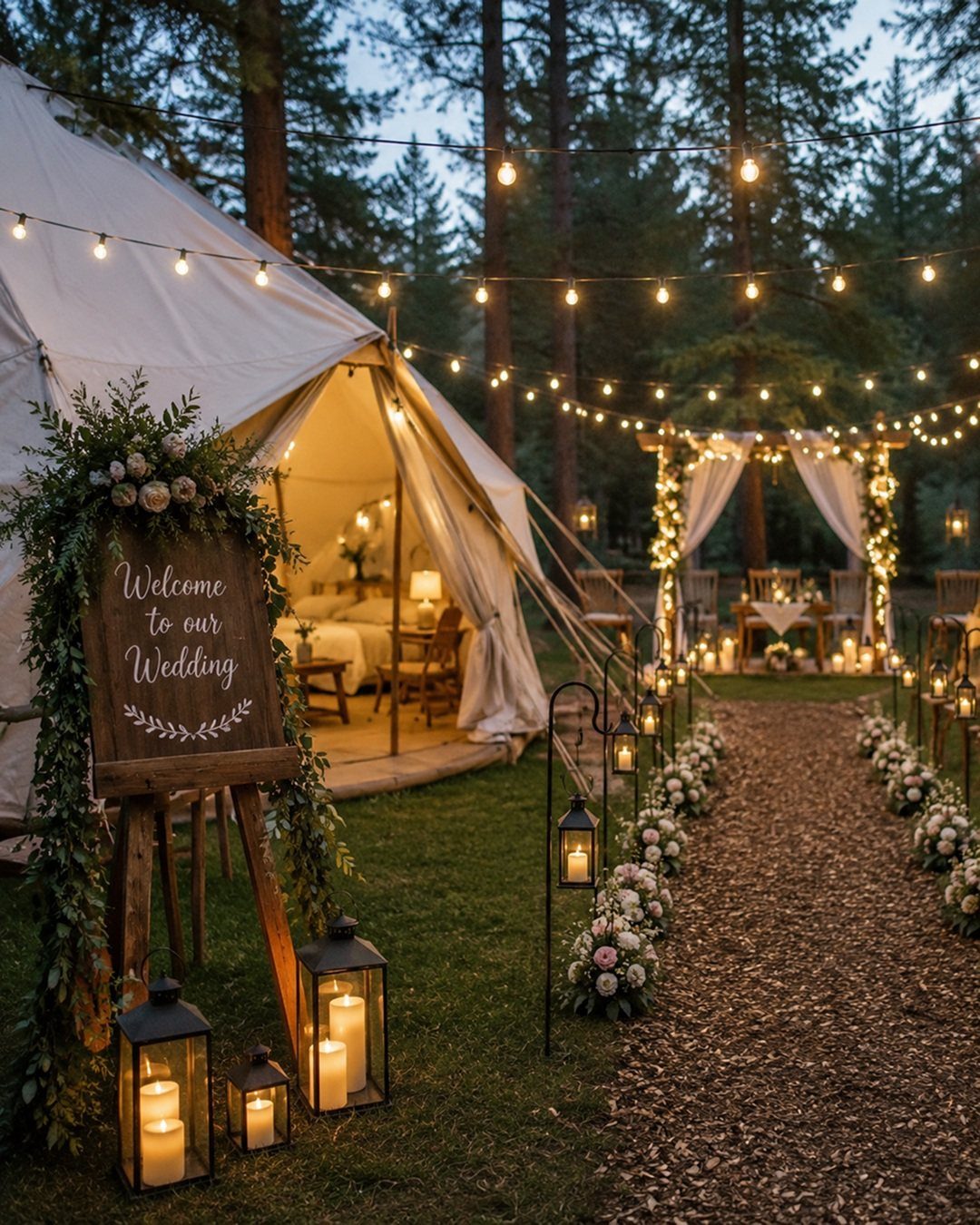
Lanterns along a bark path turn a practical walk into something guests remember.
The choice is candle or battery. Real flame in glass hurricanes looks richer and flickers in a way LED still cannot match, but it goes out in wind and is not allowed at many venues.
Battery-operated candles with warm-toned bulbs and slight flicker settings have improved enough that I would use them for any long path; the setup time alone wins.
Spacing matters more than the candle type. Spacing that keeps the light continuous works best, closer if the path turns.
Flowers between lanterns are optional and add setup time. Without them, the path still reads as intentional.
Check your venue’s rules before buying anything. Some require fire-retardant materials, others ban open flame outright, and the answer changes what you build.
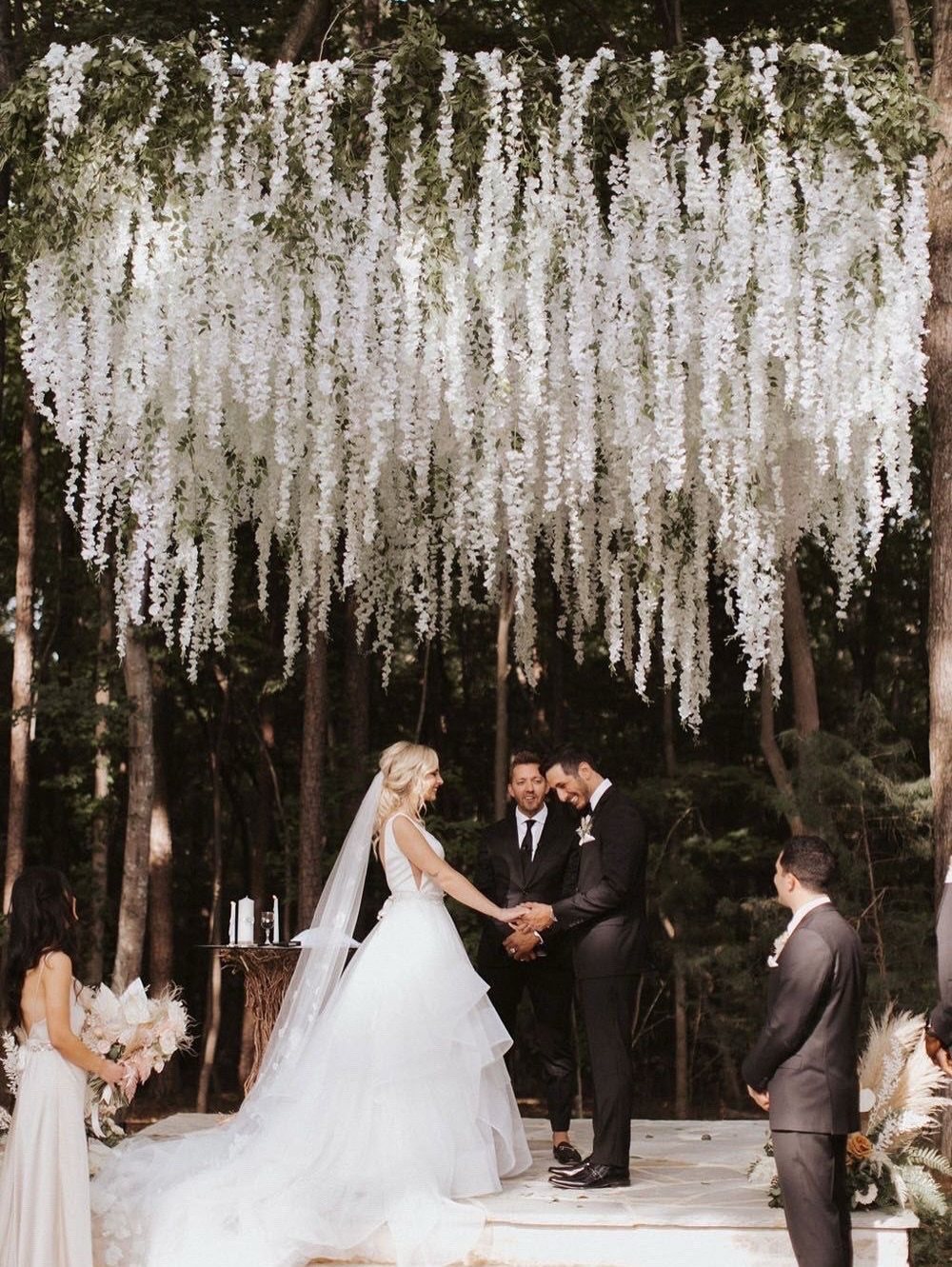
12. Hanging Floral Installations
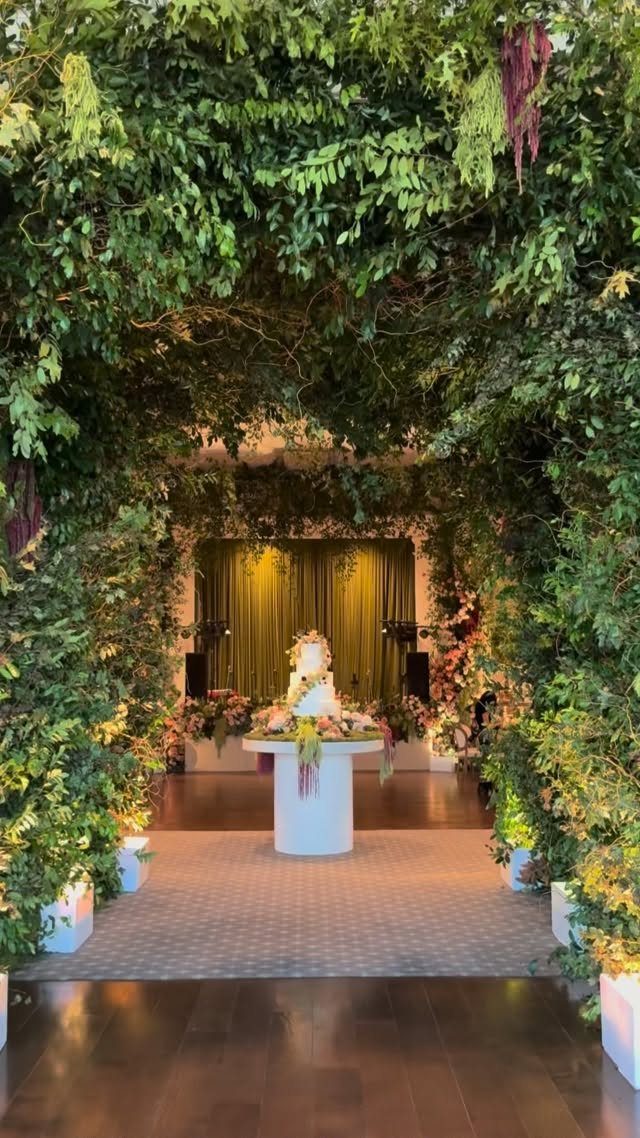
Hanging a canopy of greenery overhead brings the forest inside when you have no actual trees.
This is where budget indoor forest themes spend their money, and it is worth it. The vertical element changes how the room feels; guests walk through rather than sitting in a decorated box.
Faux greenery holds up better than real for installations that must last an evening without wilting, and the upfront cost pays back in not replacing brown leaves before the night ends.
You will need a rigging point or a freestanding frame. Many rental companies now offer circular or rectangular hoops designed for this.
The technique is layering: base of draped garland, then fuller branches, then accent blooms or vines that trail. The cake table sitting at the end of the path gives guests a destination.
I would only attempt this DIY for a small canopy over a single table, not a full room. The scale and the safety of overhead weight are not beginner projects.
13. Crisp Linen Table Settings
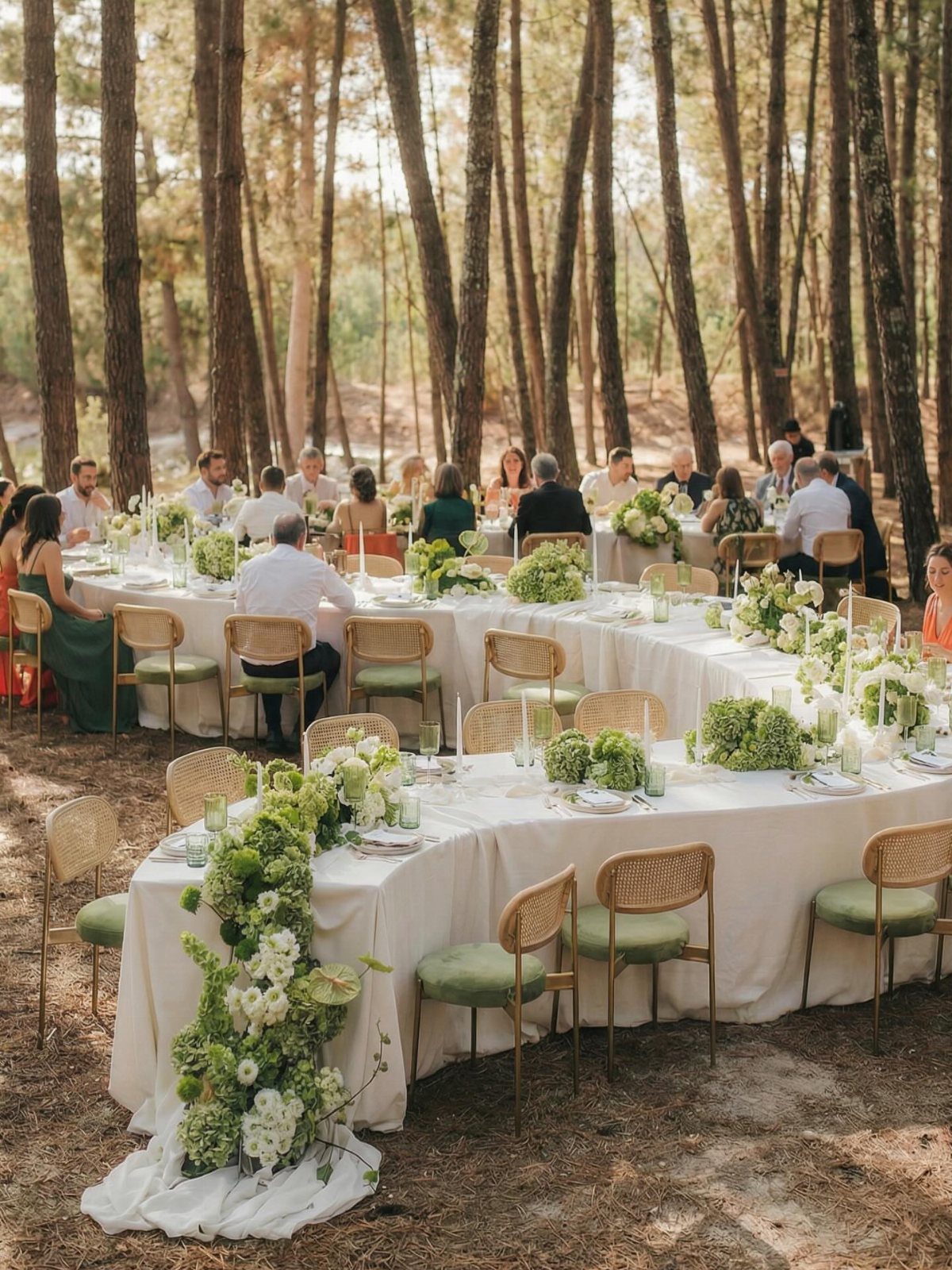
Crisp linen on a forest table reads as intentional, not accidental. White or off-white cloths against pine needles and bark create the contrast that makes the setting feel designed rather than improvised.
The weight of the linen matters more than the color. Heavier cloths stay put in breeze; lighter ones need clips or a runner to weigh them down.
I would skip floor-length drapes on uneven ground; a drop to the knee or mid-shin keeps hems clean and reduces tripping.
Gold chairs against white linen warm the whole look without adding another color. If your venue supplies standard folding chairs, linen napkins in a warm tone do similar work for a fraction of the swap cost.
14. Seasonal Blooms Arrangements
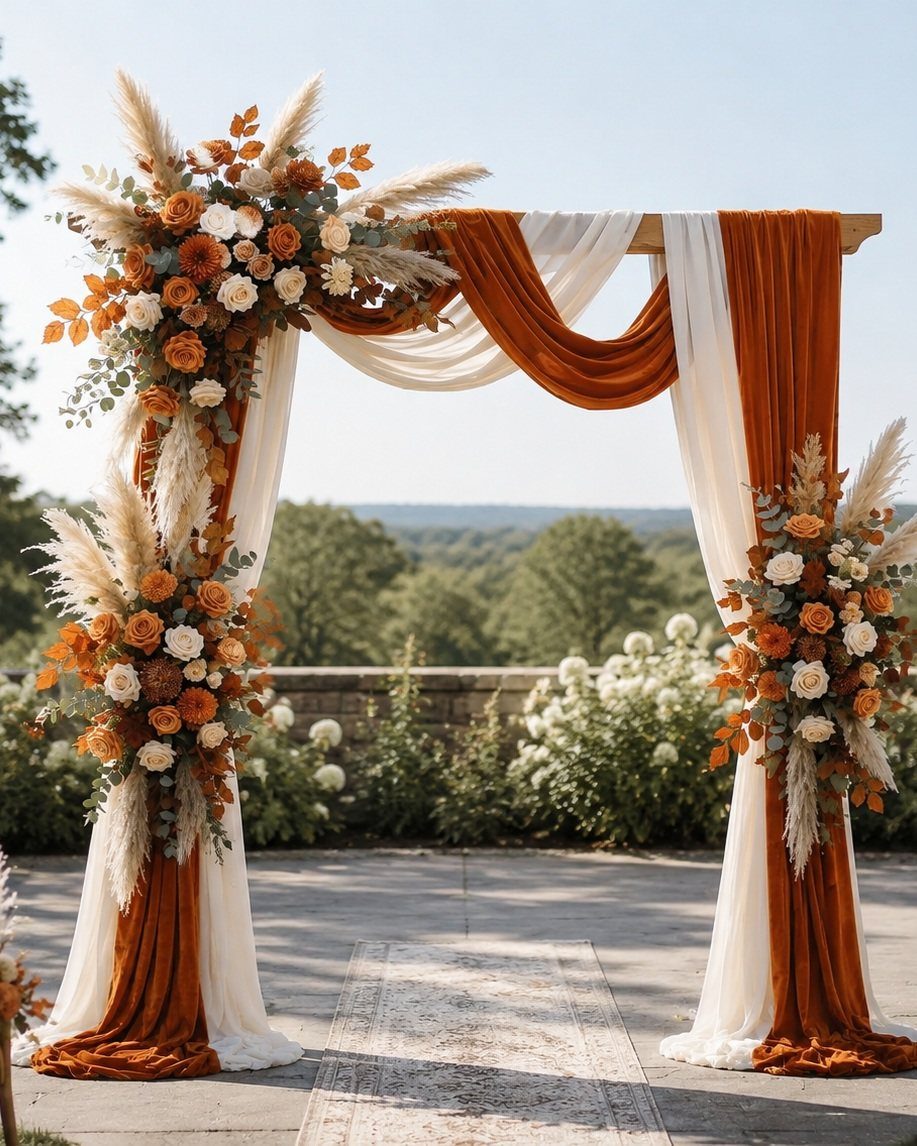
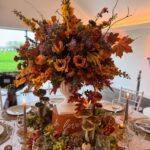
Orange roses and pampas grass against late-summer trees make sense because they borrow from what is already fading outside. Seasonal blooms cost less, last longer in outdoor heat, and look less like they fought to get there.
Choose flowers at their local peak, not their shipped peak. Dahlias in September, hellebores in March, cosmos when cosmos are running wild in fields near you.
Your florist knows; ask early and let the answer shape your palette.
Dried grasses and seed heads stretch the season backward and forward. Pampas holds shape through wind that would shred hydrangea.
Mixing fresh local blooms with dried elements cuts floral spend without looking like a cut.
15. Hanging Tree Chandeliers
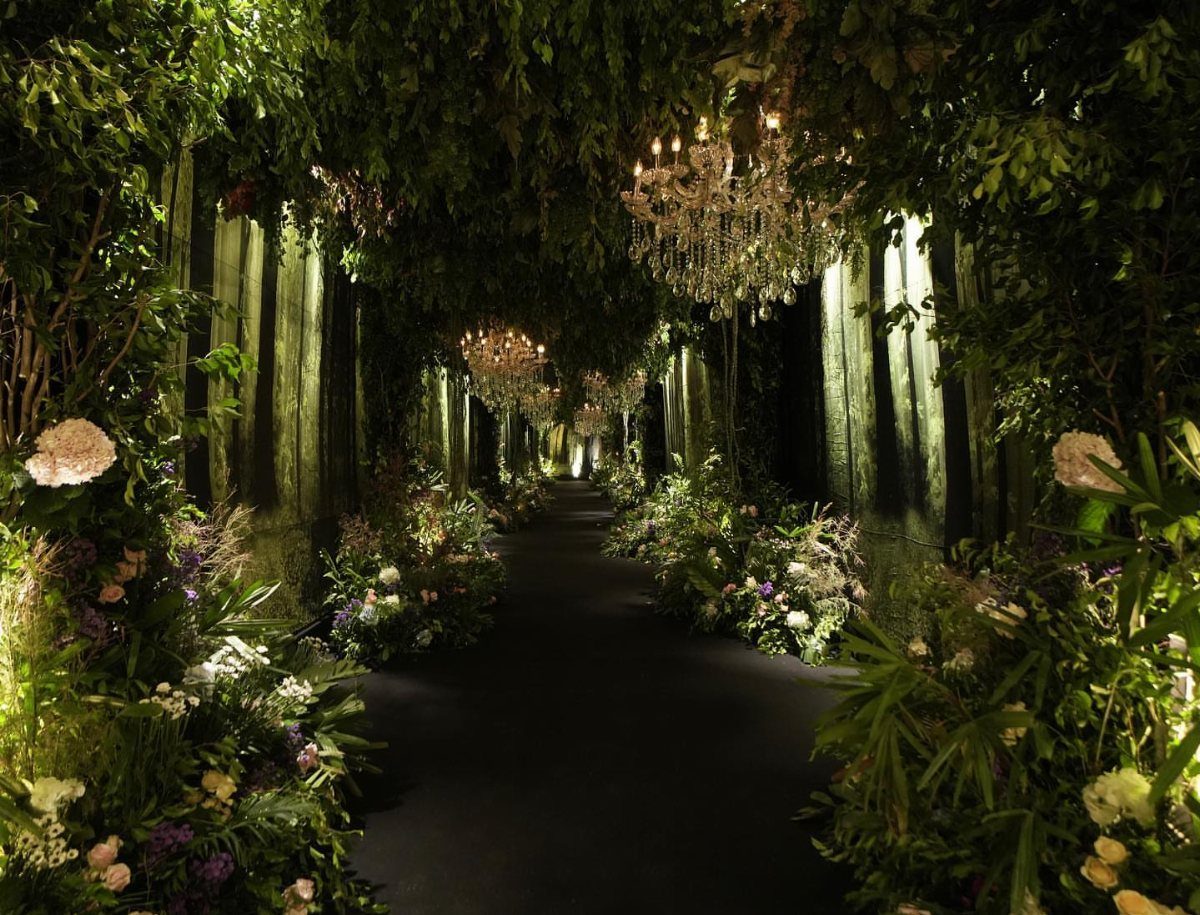
Crystal in trees sounds wrong until you see it. The formality of chandelier lines against random branch angles creates tension that keeps a forest reception from sliding into full campground.
Renting chandeliers for outdoor rigging adds cost fast, plus the hardware to hang them safely from limbs or a frame.
Most venues with forest access have worked this out; ask what they have hung before and what weight their points hold. Battery-operated LED candles inside real crystal housings give the glow without the generator hum.
For a path rather than a table canopy, spacing matters more than density. One chandelier every few yards gives enough rhythm to guide feet after dark without turning the woods into a mall corridor.
16. Macrame Arch Backdrop
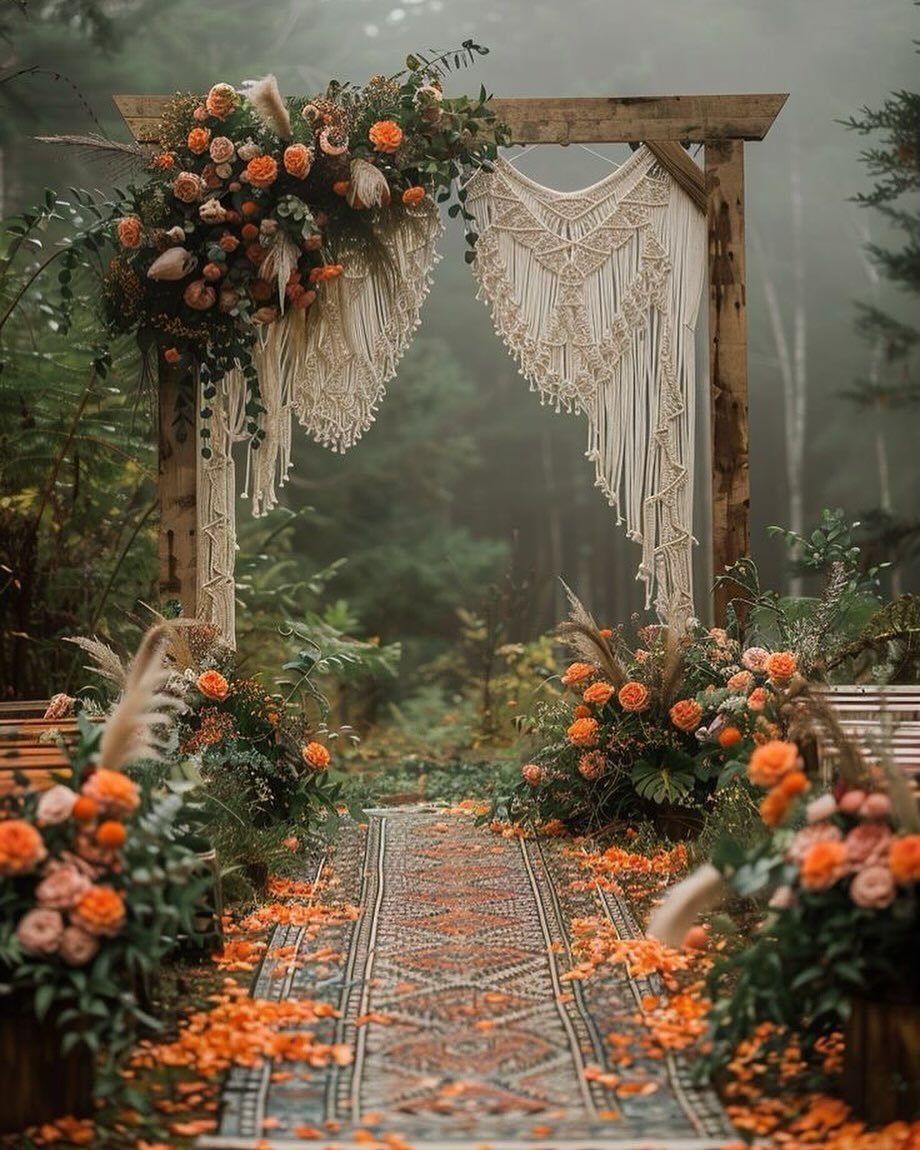
Macrame softens wood in a way fabric draping sometimes fails to. The fringe catches light differently, moves in breeze differently, and reads handmade in a forest setting where machine-finished edges can feel intrusive.
I would reverse that ratio for a smaller ceremony: let the macrame dominate and keep the blooms sparse. Too much macrame and the arch becomes a textile piece with flowers attached; too little and it looks like an afterthought.
The knot density should be loose enough to see through, dense enough to read as texture from the guest rows.
For DIY, ready-made macrame panels cost less than most arch rentals, or two evenings of knotting if you already know the basic hitch.
17. Pressed Botanical Wood Slices
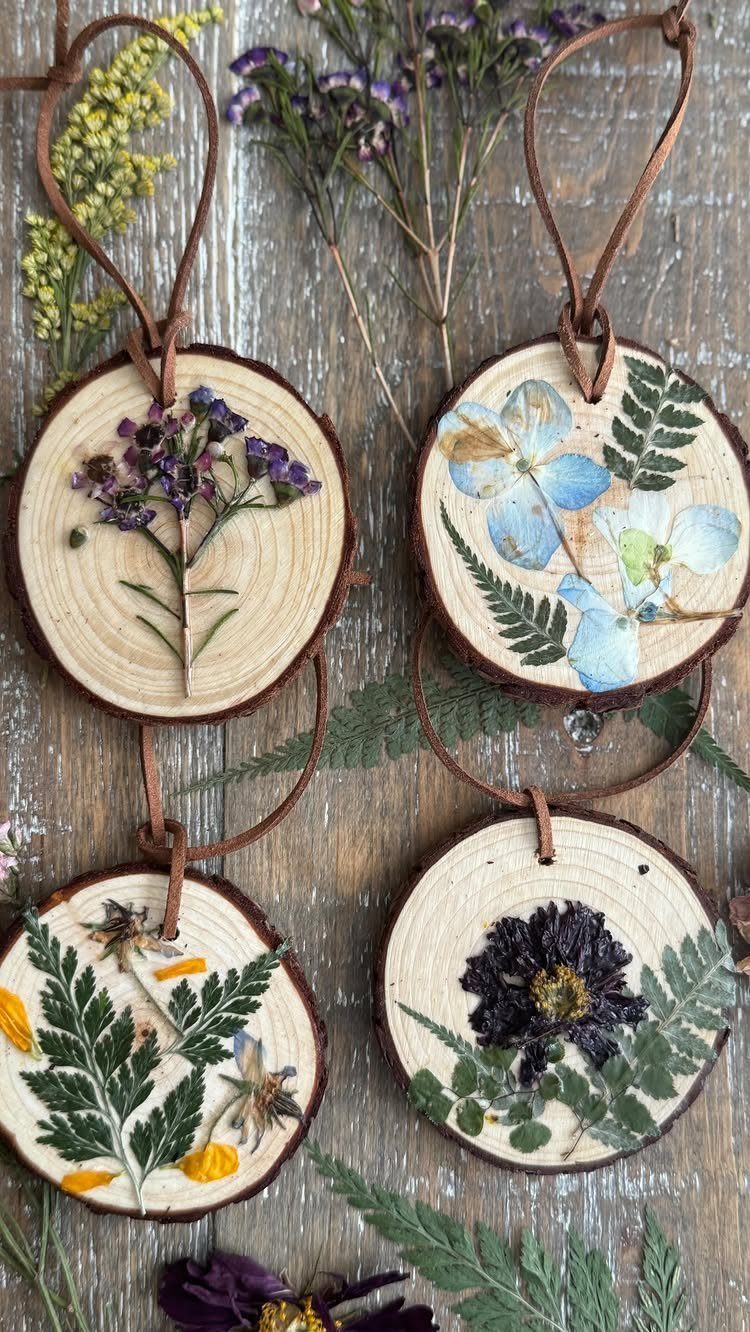
Pressed flowers in resin or wax seal inside wood slices keep a shape that fresh bouquets lose in hours. The leather loop turns a table number or place card into something guests pocket afterward.
Ferns press flatter than blooms with dimension; the pressed ones lie almost flush with the wood surface.
For a similar look, harvest after morning dew dries but before midday sun wilts, press for several weeks under weight, then seal with clear epoxy or a wax pour.
The wood slice thickness needs to stay under 1/4 inch or the loop strain shows.
These work best for smaller guest counts, where hand-assembly time spreads thin enough to stay sane. Above that count, a single pressed slice at each table’s center with paper place cards elsewhere keeps the gesture without the production line.
18. Forest Aisle Benches
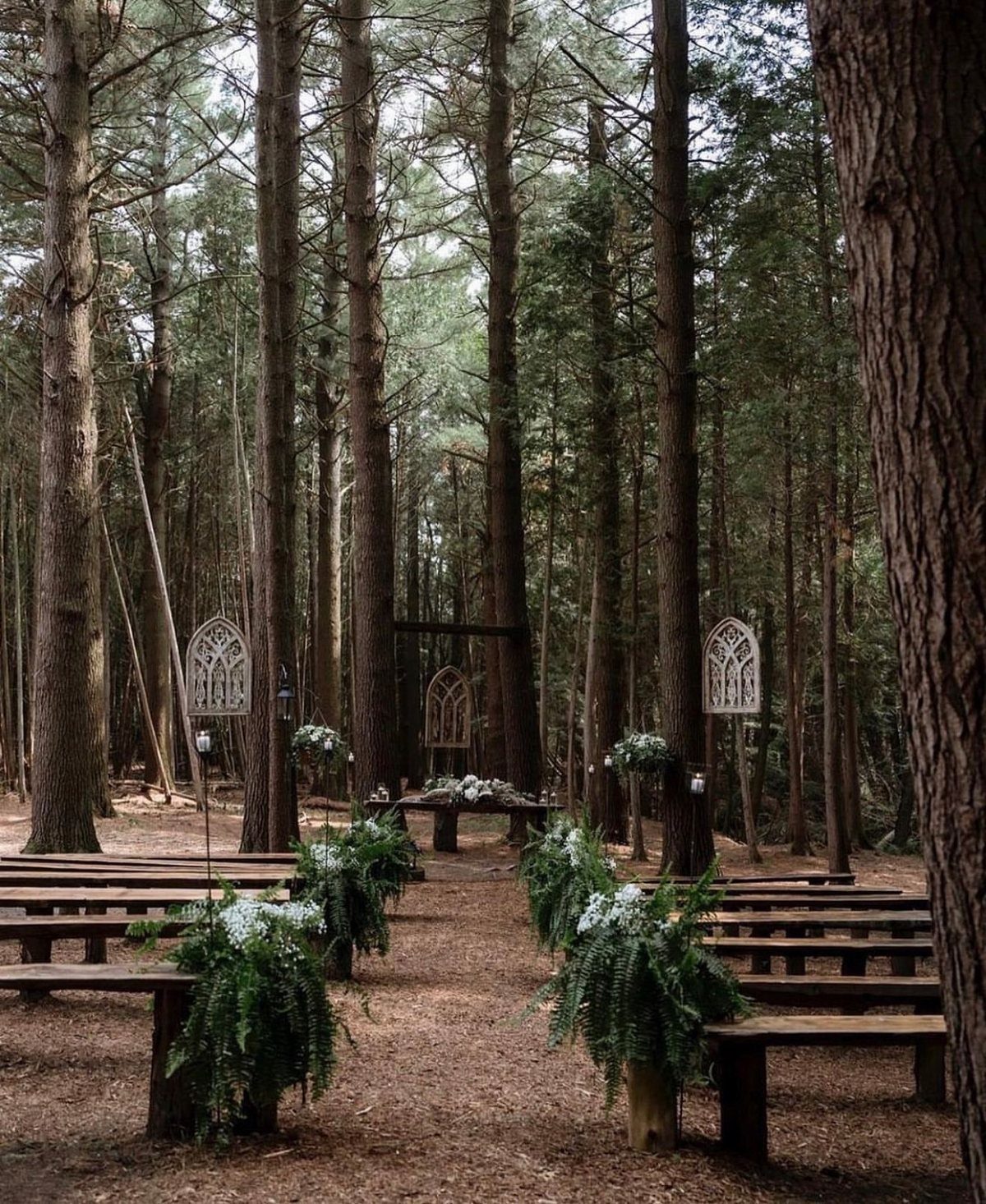
Benches in a pine forest solve the problem chairs create: metal or plastic against organic ground looks like a parking lot arrived in the woods. Wood on wood reads as continuation.
Greenery does the aisle-defining work so the benches can stay simple. I would add a thin foam pad to each seat if the ceremony runs long.
Bare wood on August afternoon or October morning gets uncomfortable fast, and comfort determines whether guests hear vows or think about standing.
Mix benches with a few chairs at aisle ends for guests who need back support or transfer help. The uniform look is not worth excluding someone.
Sanded stumps as aisle markers, as one variation goes, repeat the wood grain without adding another material to the visual field.
19. Wooden Aisle Runner
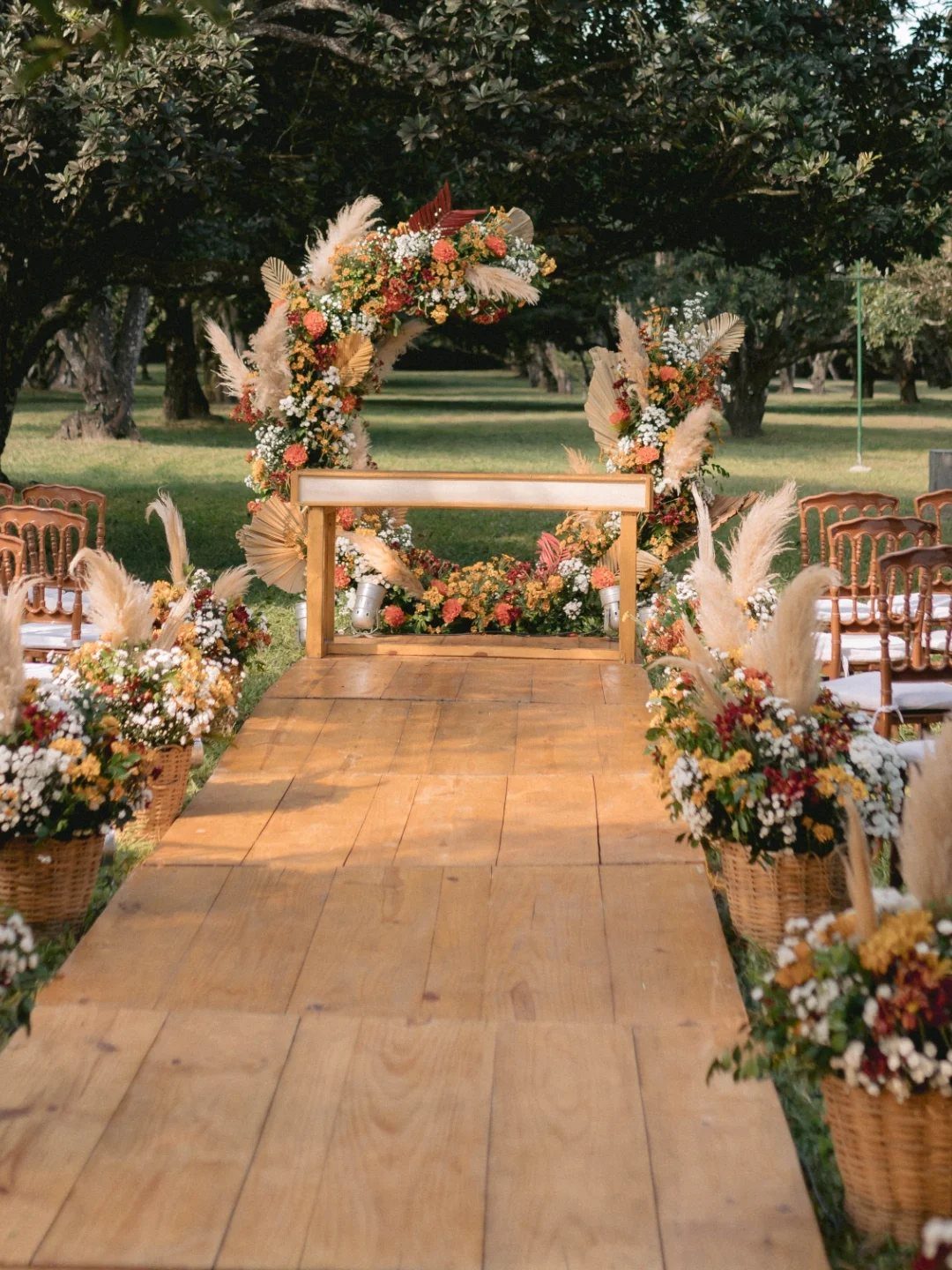
A wooden aisle runner turns packed dirt or grass into a level surface guests can walk in heels on without sinking.
Planks run straight toward a circular floral altar when you measure the approach first and cut boards to a consistent width rather than laying random lengths.
Pressure-treated pine 1×6 boards, spaced half an inch apart for drainage, keep this affordable if you have a circular saw and a free afternoon.
Stain them weathered gray or leave them bare; the raw look suits a forest setting better than gloss. I would rent a plate compactor for the ground underneath so the runner does not flex and dump a bridesmaid sideways.
Move it in the morning of, not the night before. Dew swells the grain and turns smooth pine into a slip hazard.
For indoor ceremonies, the same boards over a plywood base work in a hired hall where "no open flame" rules usually kill the moss-and-candle aisle.
Lighting Importance
Soft light changes a forest venue more than any single decoration. The canopy blocks overhead fixtures, so you are building the mood from scratch.
Battery candles inside glass hurricanes keep the color warm; cool-toned LEDs read clinical against bark and moss. String lights need dimming if the strands are bright white; warm white or amber bulbs match firelight and photograph better after dark.
The ceremony spot needs the most attention. Guests face one direction through the ceremony, and backlighting from behind the couple ruins photos.
A pair of soft front lights, hidden in greenery or hung from a low branch, fixes this without visible equipment. The reception can run darker; people move, talk, and notice the light less.
Test everything at the venue’s actual hour, not in a lit room at home. Forest darkness arrives earlier than open ground, and your setup time shrinks accordingly.
Color Schemes
A forest palette starts with what is already there. Green and brown are the ground, not the accent; your choices are what sits against them.
Ivory or cream table linens lift the setting out of mud tones without introducing a new color. Champagne reads warmer than gray and pairs with gold flatware without looking like a separate decision.
For couples who want one bold note, plum or amethyst against deep green carries enough contrast that you need little else.
Autumn weddings borrow from the trees themselves. Burnt orange and golden yellow work because they appear in the canopy that month; the same colors in June look imported.
Spring and summer couples do better with soft blush or lavender, which read as wildflower rather than hothouse.
Teal or navy against forest green risks muddiness unless the blue is saturated enough to hold its own. Test fabric swatches at the venue, in shade, before ordering.
What reads crisp indoors often sinks into the background under trees.
Neutrals stay versatile but need texture to avoid flatness. Linen weight, wood grain, or macrame knotting gives the eye something to land on when the color range is narrow.
Frequently Asked Questions
What colors are suitable for a forest-themed wedding?
Earthy tones like green, brown, and taupe work as a base, with ivory or cream to soften the look. I would add gold or another reflective metal; without it, a green-heavy palette turns muddy under forest canopy.
Deep teal or navy can substitute if you want cooler depth, though I find them harder to source in rentals than gold.
What are some ideas for nature-themed wedding decor?
Moss table runners, fern arrangements, and wooden signage all read as found rather than bought. Layering matters: greenery overhead, texture at table level, and light at human height.
What are some unique forest wedding ideas?
A hike between ceremony and reception turns a standard timeline into something guests remember, though only if the route works in dress shoes.
Tree stump seating in a circle, with proper chairs mixed in for accessibility, reads camp-inspired without excluding anyone.
What should I consider when selecting a venue for my enchanted forest-themed wedding?
Check whether the venue allows overnight tent use and what its fire regulations are; some forest sites ban open flames, which changes whether candlelit paths or bonfires are possible.
Ask what they have hung from trees or beams before and what weight those points hold; this determines whether chandeliers or greenery installations are even an option.
Indoor backup matters, since rain in actual forest is not a venue detail you can drape away.
How do I create an indoor enchanted forest theme?
Hanging greenery from ceiling rigging or rental hoops brings the vertical element that changes how the room feels; guests walk through rather than sitting in a decorated box.
Start with draped garland at the base, add fuller branches above, then finish with trailing accents.