Wedding detail shots run from a single perfume bottle held near window light to a full fragrance bar with mirrored trays and labeled dispensers. What you stage depends on how much time your morning allows before the ceremony starts.
A 10-minute flat lay of shoes, pearls, and a small perfume bottle still completes the album.
1. Flat Lay Shots
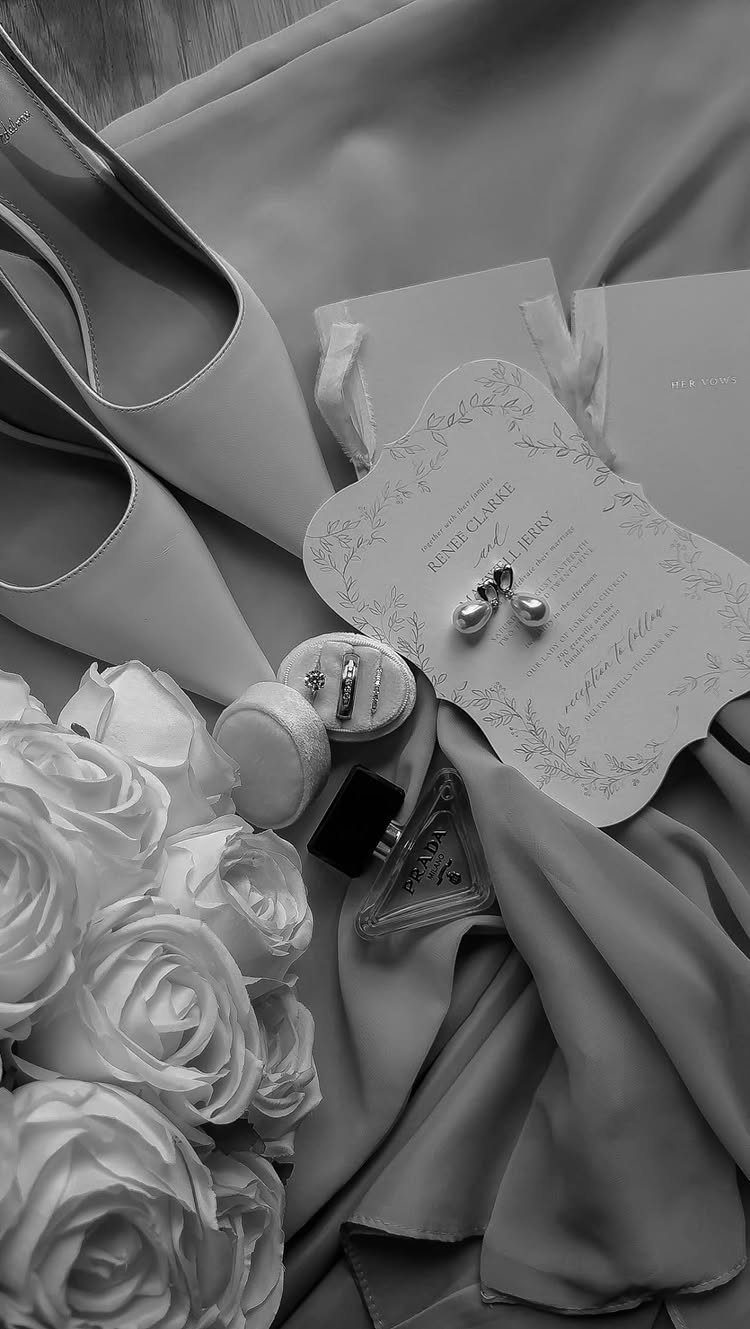
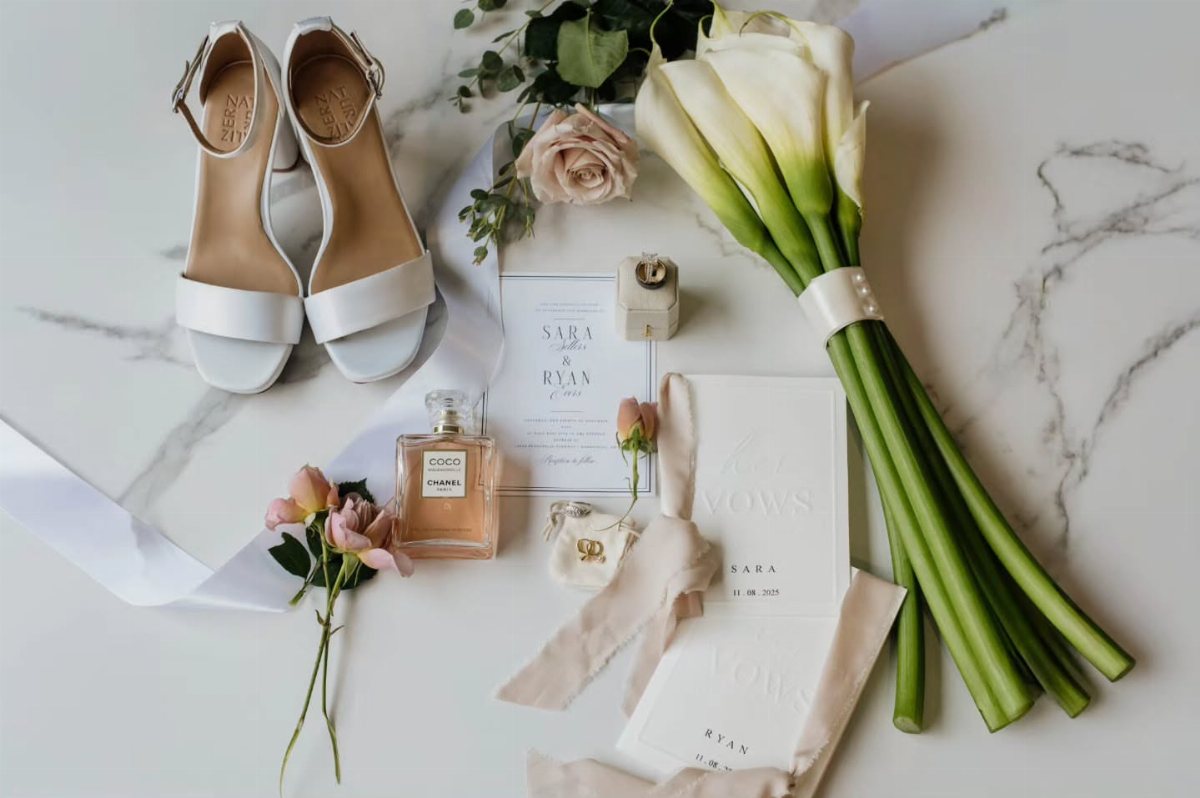
A flat lay works when you arrange your objects rather than scattering them. A flat lay works best when you keep to one palette: shoes, flowers, rings, perfume, and invitation layered on soft fabric so nothing fights for attention.
Natural light from a window gives you the clean, even tone that makes white-on-white readable instead of washed out.
For a different mood, the end-of-night messy flat lay has started showing up in albums lately: lipstick-marked glasses, cake crumbs, polaroids, matchbooks. It costs nothing extra and captures the actual energy of the party rather than the planned one.
Gather everything the night before and the setup takes almost no time in the morning. A clean surface matters more than an expensive one; a pressed white sheet on a hotel desk photographs the same as linen.
2. Invitation Suite
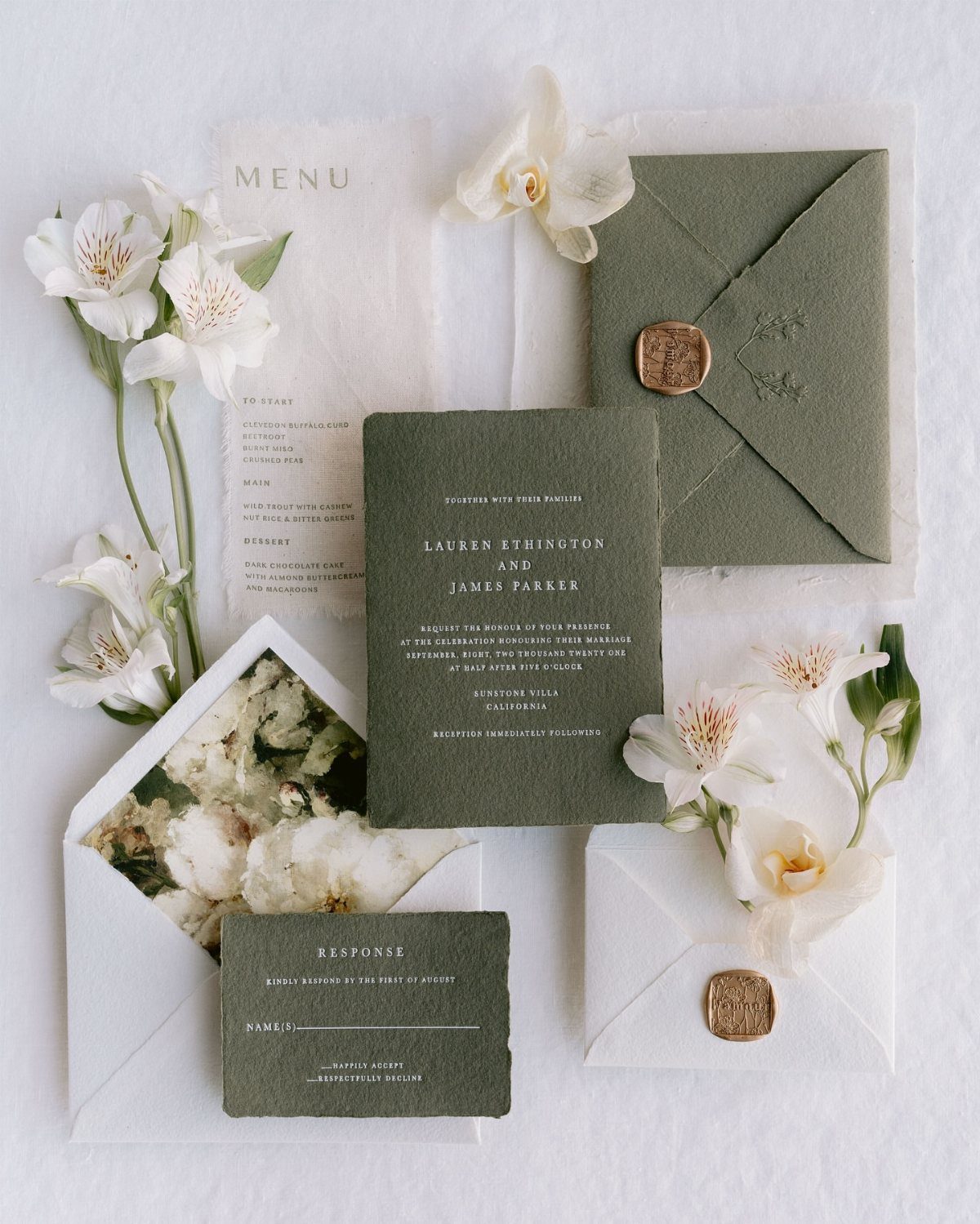
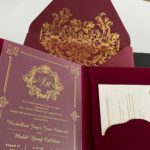
Your photographer needs two complete sets, not one. A single invitation with the main card missing its RSVP and details card leaves gaps in the flat lay; the second set covers any last-minute smudge or crease.
Silk ribbon in your palette color, run underneath or across the corner, ties the suite to the rest of your day without adding another object.
Print vendors to look for include Sal Studios, Summit and Sage, or Eros Studios. If someone in your party is contributing, ask early; the conversation is awkward but missing the help is worse.
3. Wedding Rings
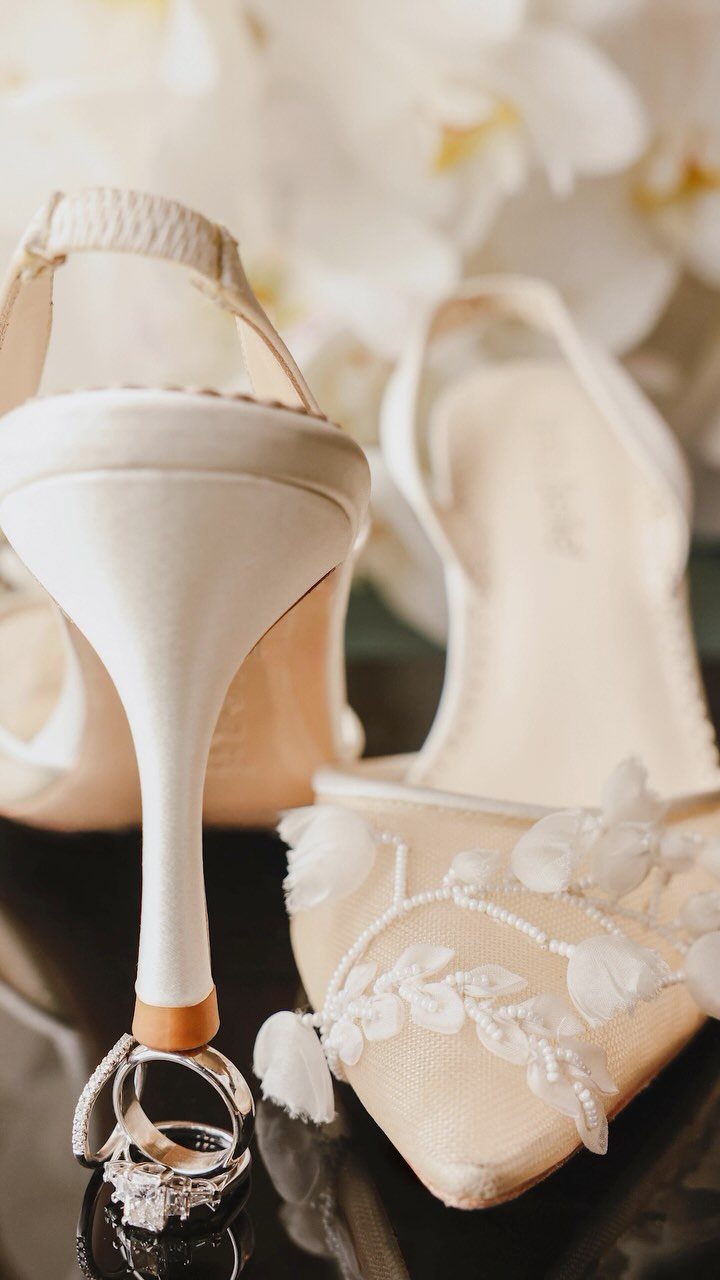
Three rings in one frame, your engagement ring and both bands, only works if you remember to bring all of them to the same place at the same time.
The morning of the wedding, rings travel in pockets, on dressers, with the best man. Pick one spot and one person responsible.
Clean them first. Most jewelers do this free even if you did not buy from them; a pharmacy kit works if you are pressed.
Rings against a reflective surface with flowers behind catch sparkle without direct flash.
For a more personal shot, a ring balanced on a shoe heel or caught in bouquet ribbon uses something of yours rather than a generic prop.
Ask your photographer what they prefer to work with; some have a style, others take direction.
4. Memory Table
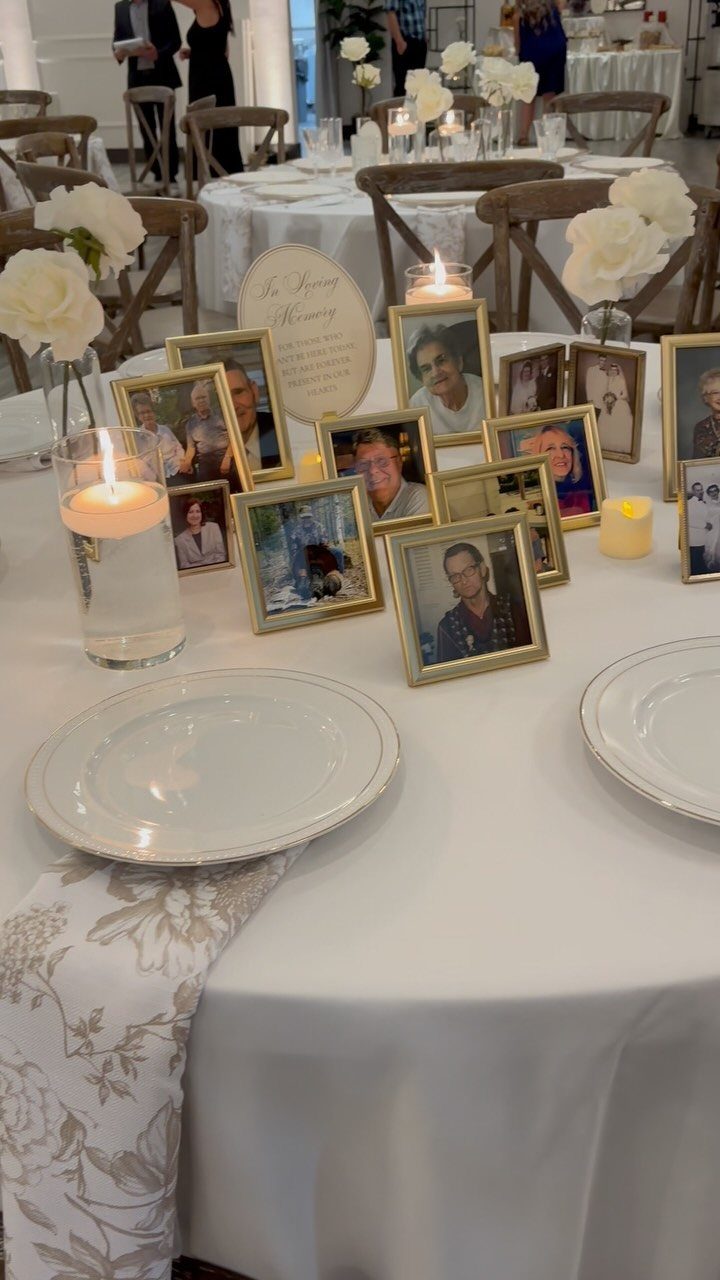
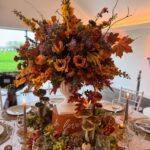
A memory table does not need to be large to read as intentional. White flowers and place settings connect it to the rest of the reception so it does not sit apart like a shrine.
Photographs matter most. Choose ones where the person is recognizable and, if possible, smiling; a formal portrait from their own wedding day often fits the tone better than a casual snapshot.
The "In Loving Memory" sign helps guests understand without asking.
Place it where guests will pass naturally, not tucked in a corner.
Near the guest book or the entrance to the reception works; too close to the dance floor and the candles become a hazard, too remote and no one sees it.
5. Wedding Dress
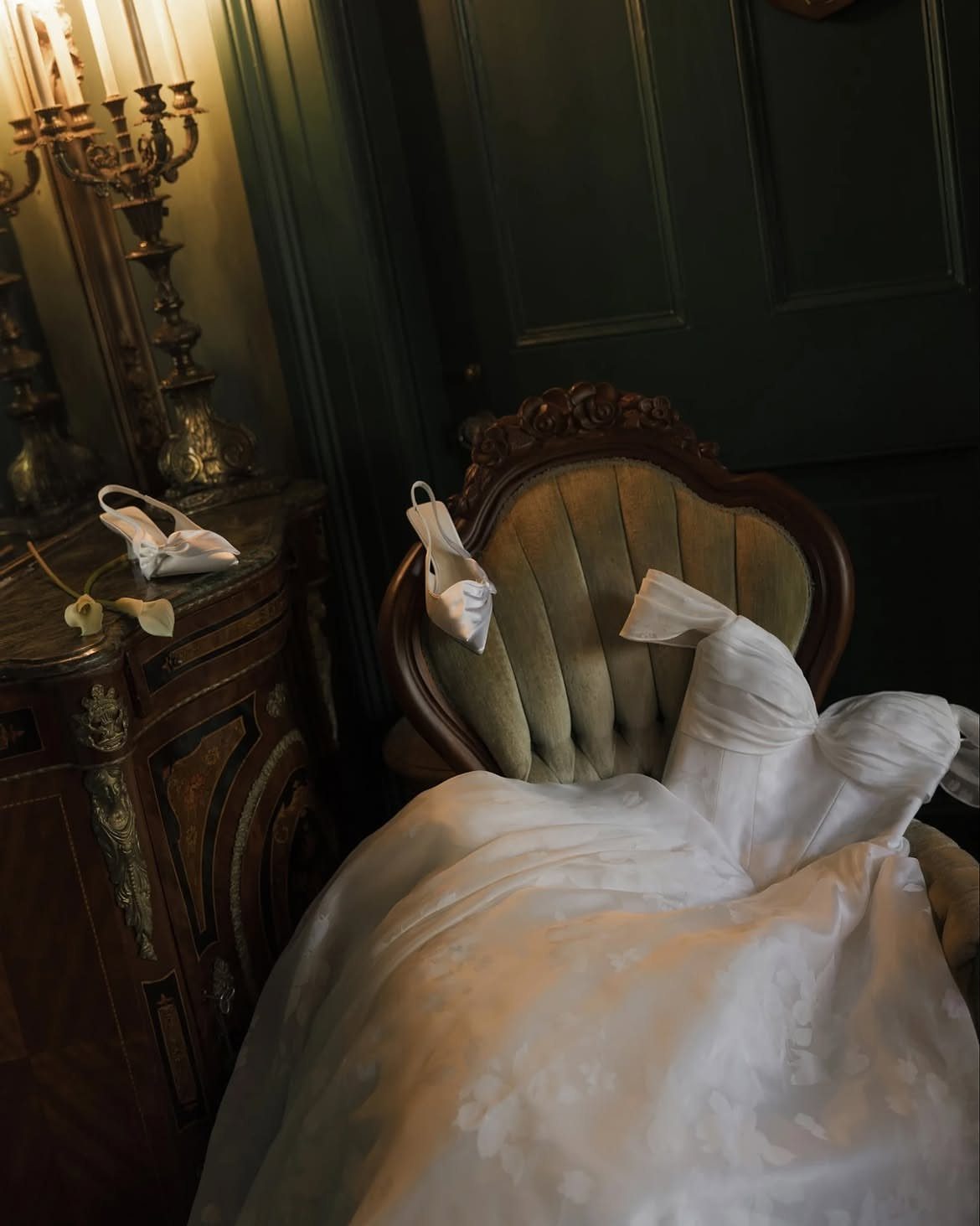
Architectural elements at a venue, or branches outdoors for a garden wedding, add character without adding clutter.
These close-ups often make the album spread that the bride lingers on.
6. Groom’s Details
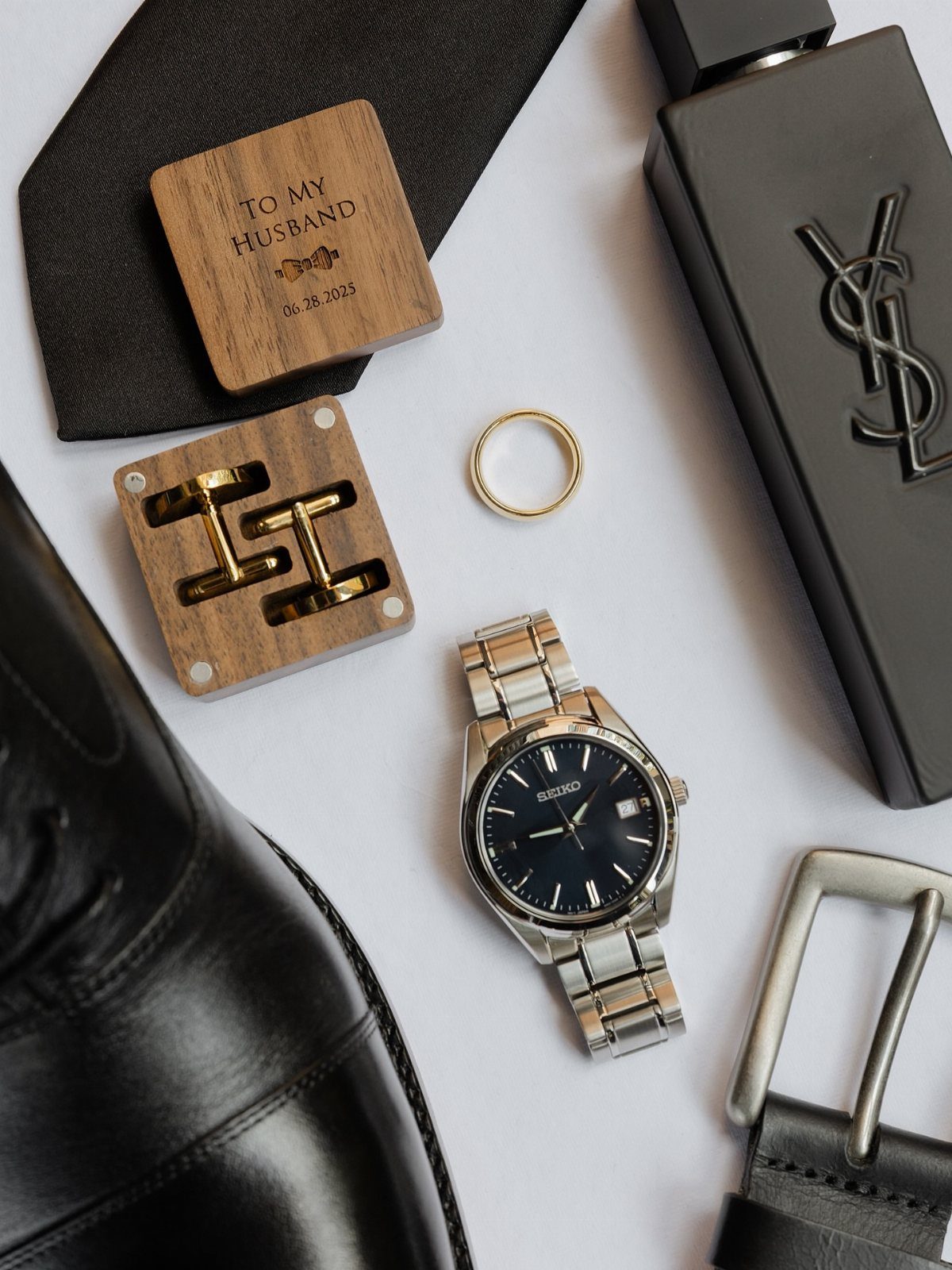
Groom detail shots are frequently rushed or skipped, which is a mistake. The watch in particular is often sentimental, a father’s or grandfather’s, and deserves the same attention as the bride’s rings.
The standard composition, watch laid on a folded tie, works because the texture contrast between metal face and fabric reads clearly at close range.
For a single-frame option, group the watch with cufflinks and boutonniere as a small flat lay. Cologne, a belt, and a shoe fill the frame without feeling crowded; an engraved wooden box adds a readable date.
7. Reception Details
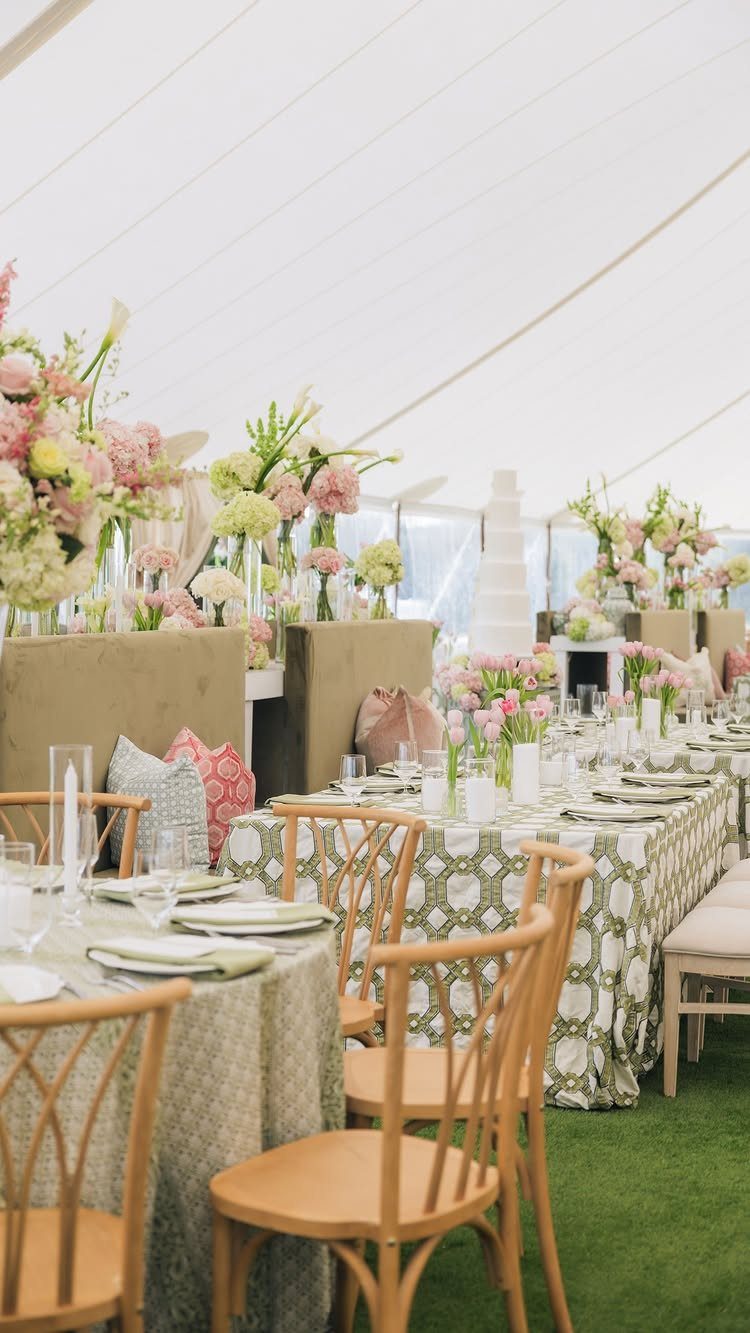
I would start with a wide establishing shot of the full tent or room; that is the image that opens the reception section in the album and shows the couple what months of planning looked like complete.
If the couple spent weeks choosing something, photograph it as carefully as the rings.
8. Cake
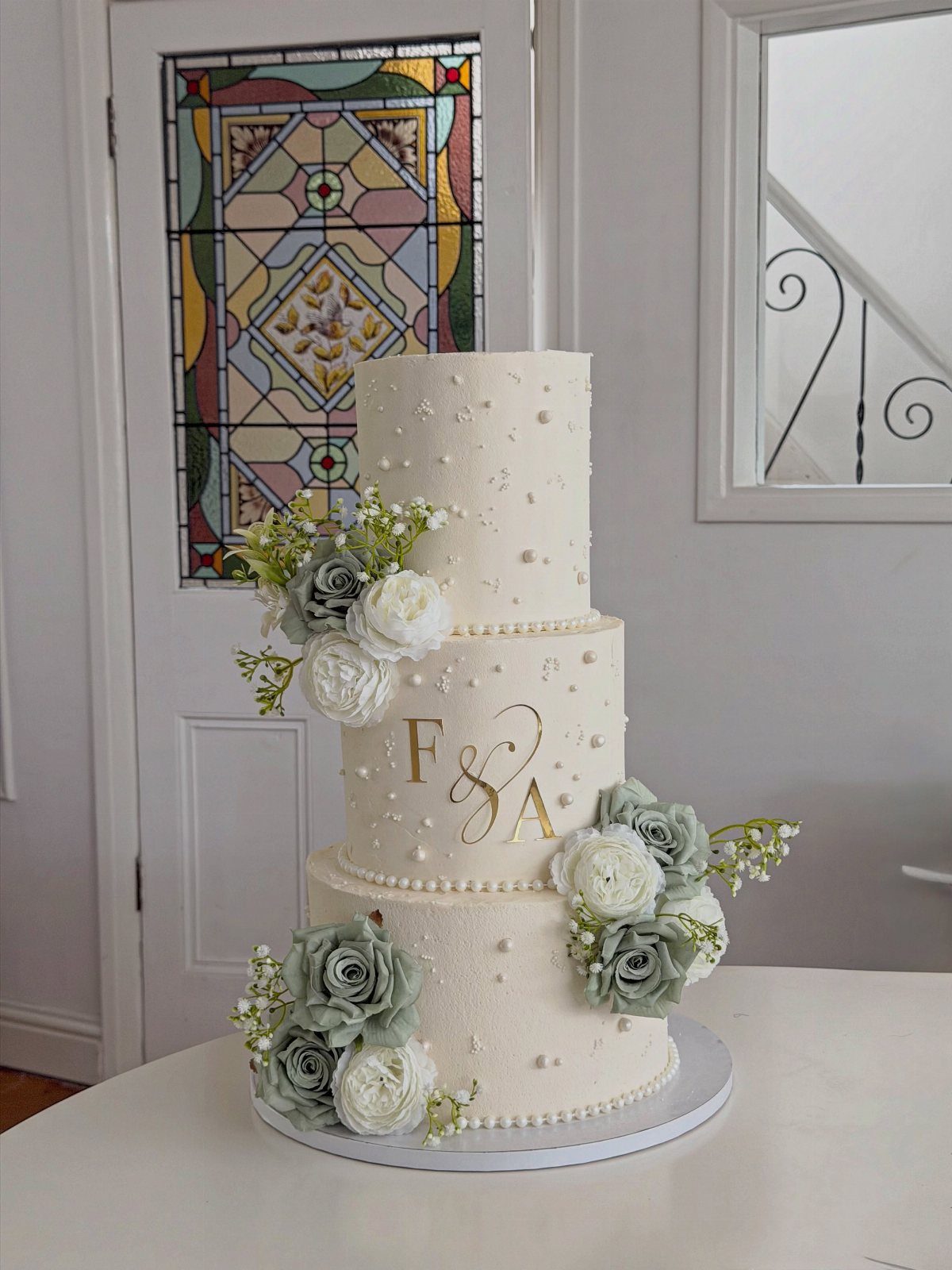
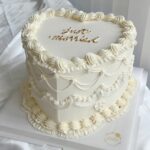
The cake usually sits somewhere already pretty, which helps. The bakery may want to feature the photo in their shop, so these shots serve the couple and build a vendor relationship at once.
9. Your Veil
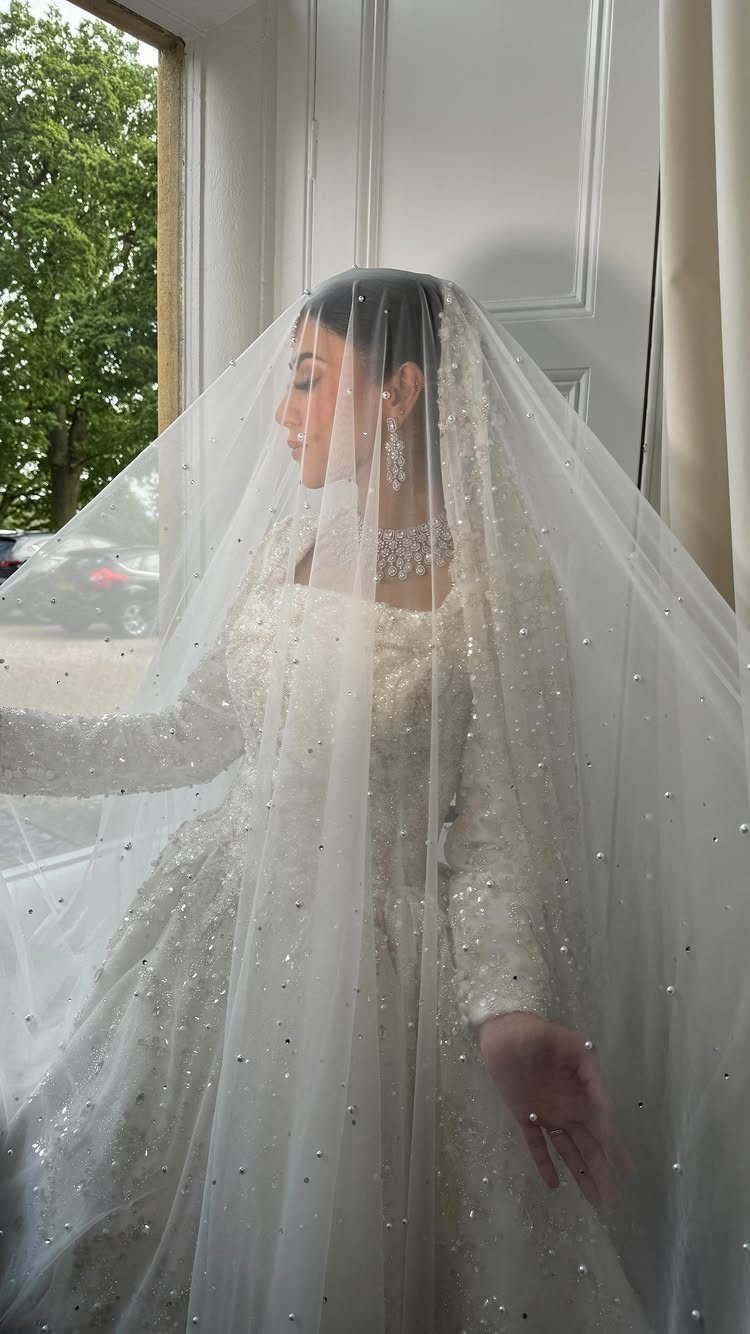
A pearl-scattered veil reads as jewelry from across the room and in close-up alike.
For detail shots, I would lay it flat with the dress, let it pool near the shoes, or shoot it backlit so the pearls catch light like scattered sequins.
If the veil carries family history, a frame of the bride wearing it belongs in the set too.
Sheer fabric with scattered pearls suits a bride who wants tradition without heaviness; a plainer veil needs more deliberate styling to hold the frame.
10. Ceremony Site
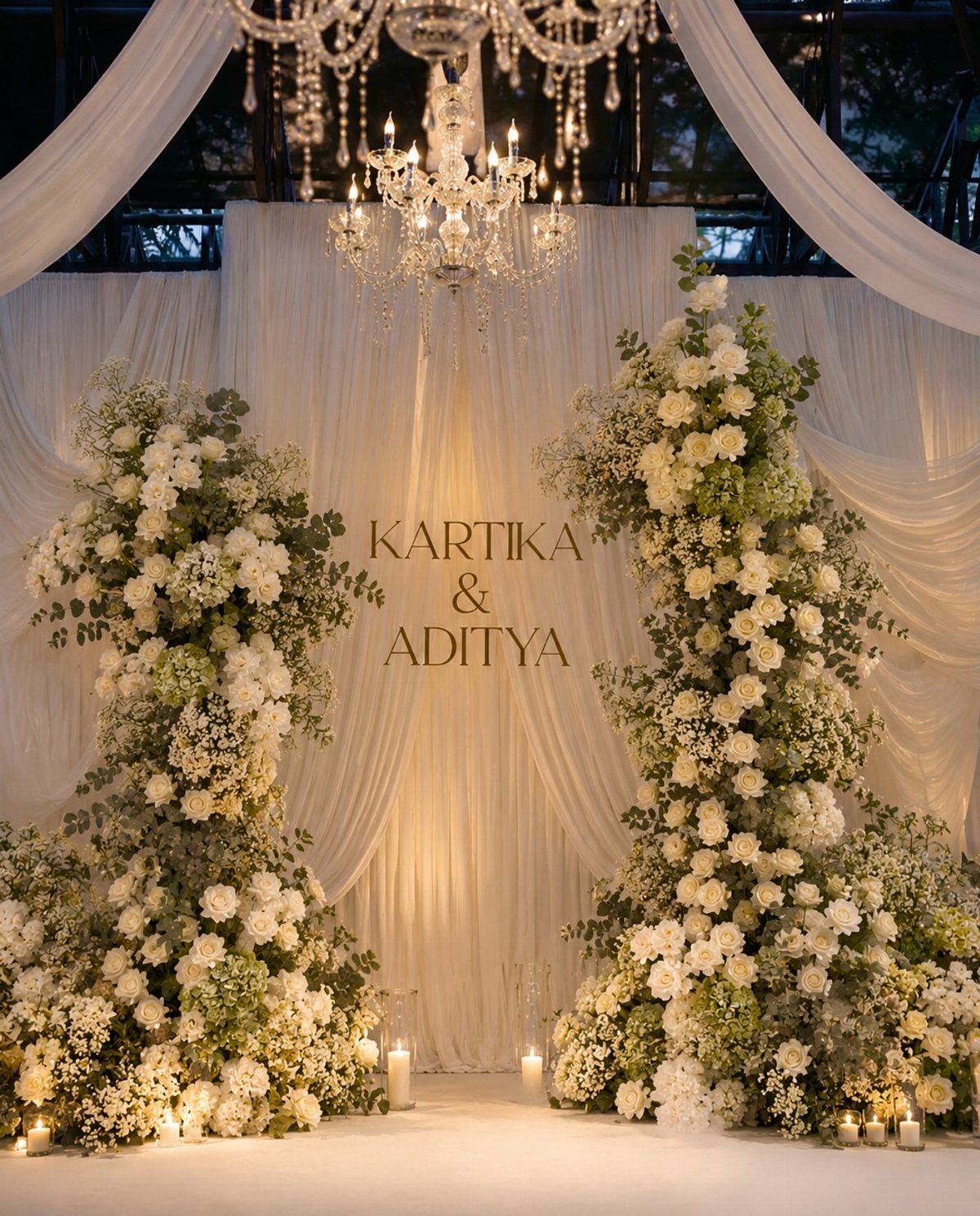
Ceremony sites now carry details that rival the reception. Arrive early enough for a wide shot with no guests yet; that sets the scene in the album the way the couple first saw it.
Then move to the smaller pieces. A 70-200mm f/2.8 lens handles the compression for carved initials in a birch arch, a handmade Chuppah, or gold lettering on draped fabric.
A refreshment table with signature drinks, if there is one, belongs in the sequence too; guests touch those first.
11. Place Cards
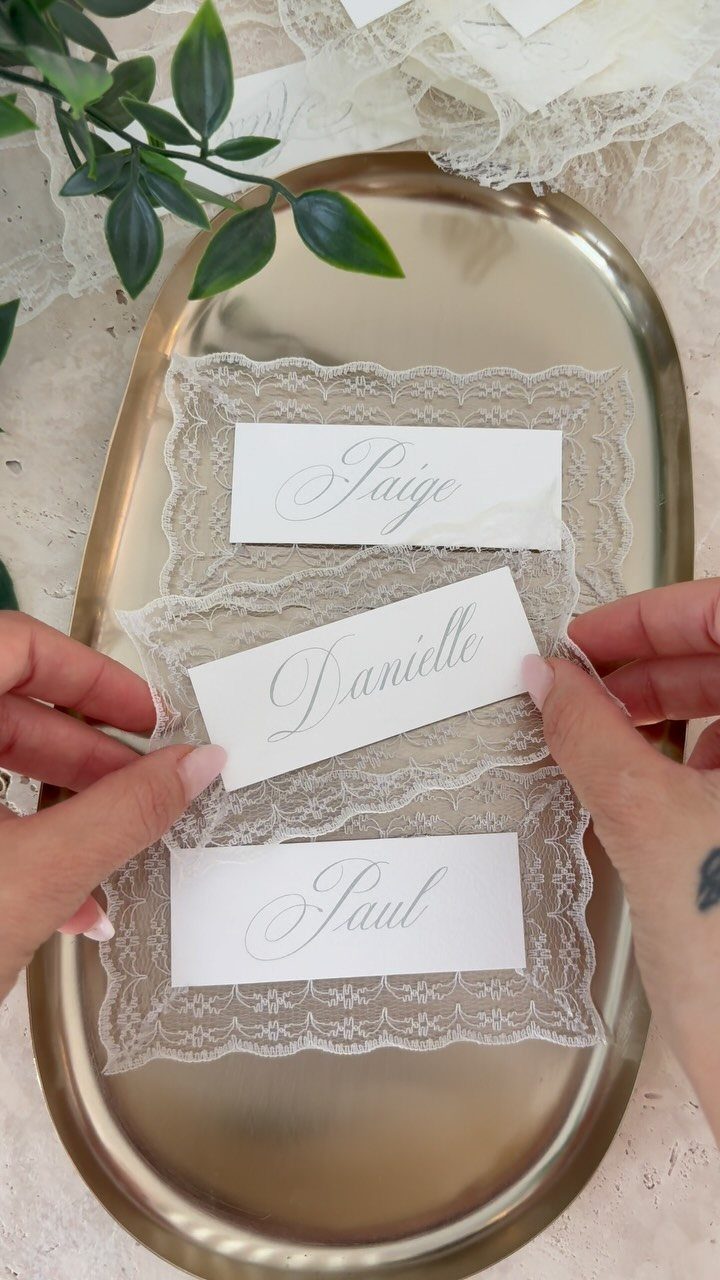
Place cards do practical work for guests and visual work for photographers. Calligraphed names with lace backing suit a seated dinner where guests need direction; for a cocktail-style reception, skip them and free up that budget.
If you do use them, gather a few on their tray before they are placed, or shoot one in hand with the greenery that accents the table. The detail is quick to stage and pays off in the flat lay.
12. Vow Books
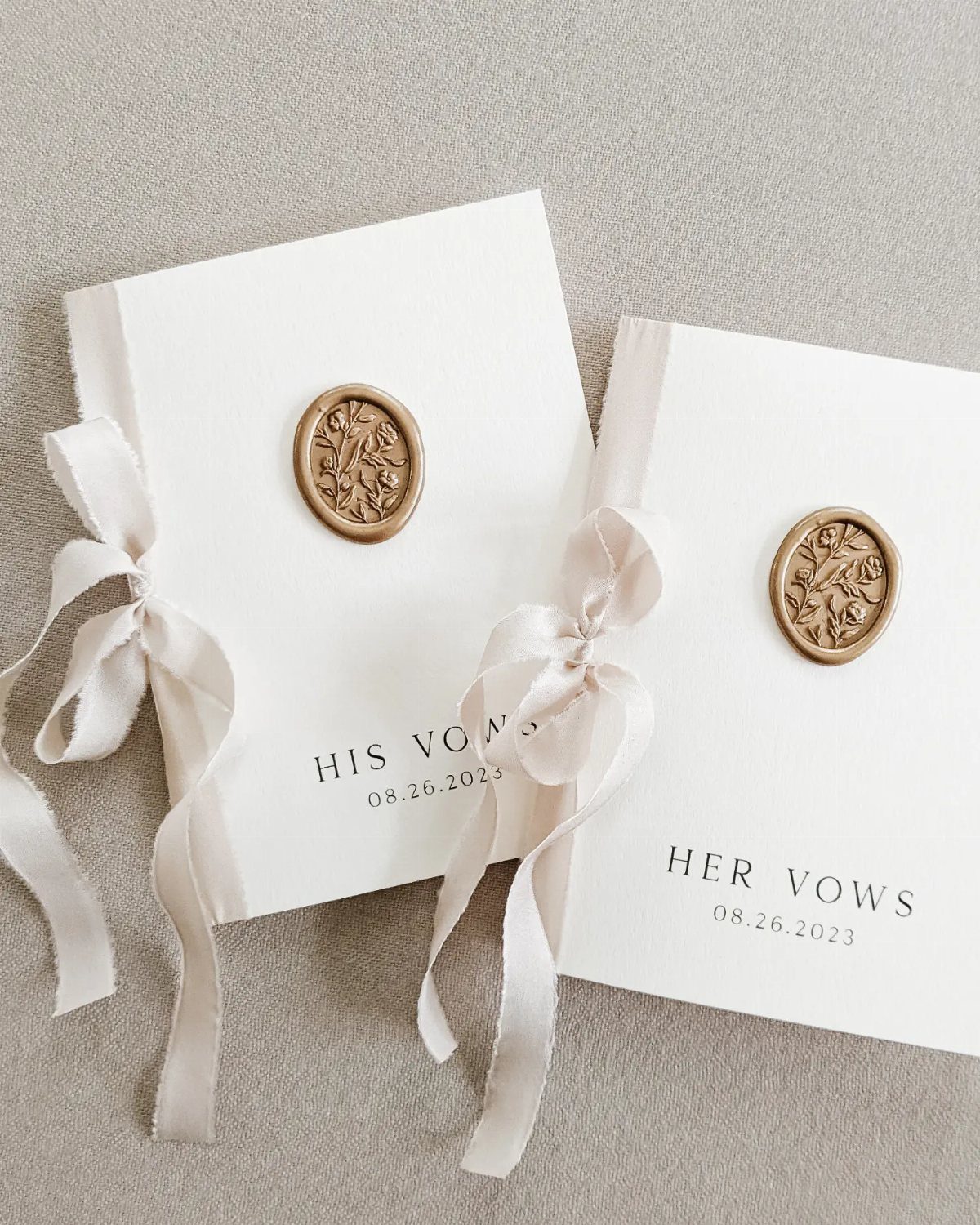
Vow books turn private words into a photographable object. The gold wax seals and silk ribbons here give the camera texture; handwritten vows inside add meaning the eye cannot see but the couple will remember.
I would open the books to a favorite line, or stack them closed with the rings on top.
If you wrote your own vows, the books justify their own frame; if you are repeating traditional words, the books still photograph well but matter less as a story.
13. Bridal Shoes
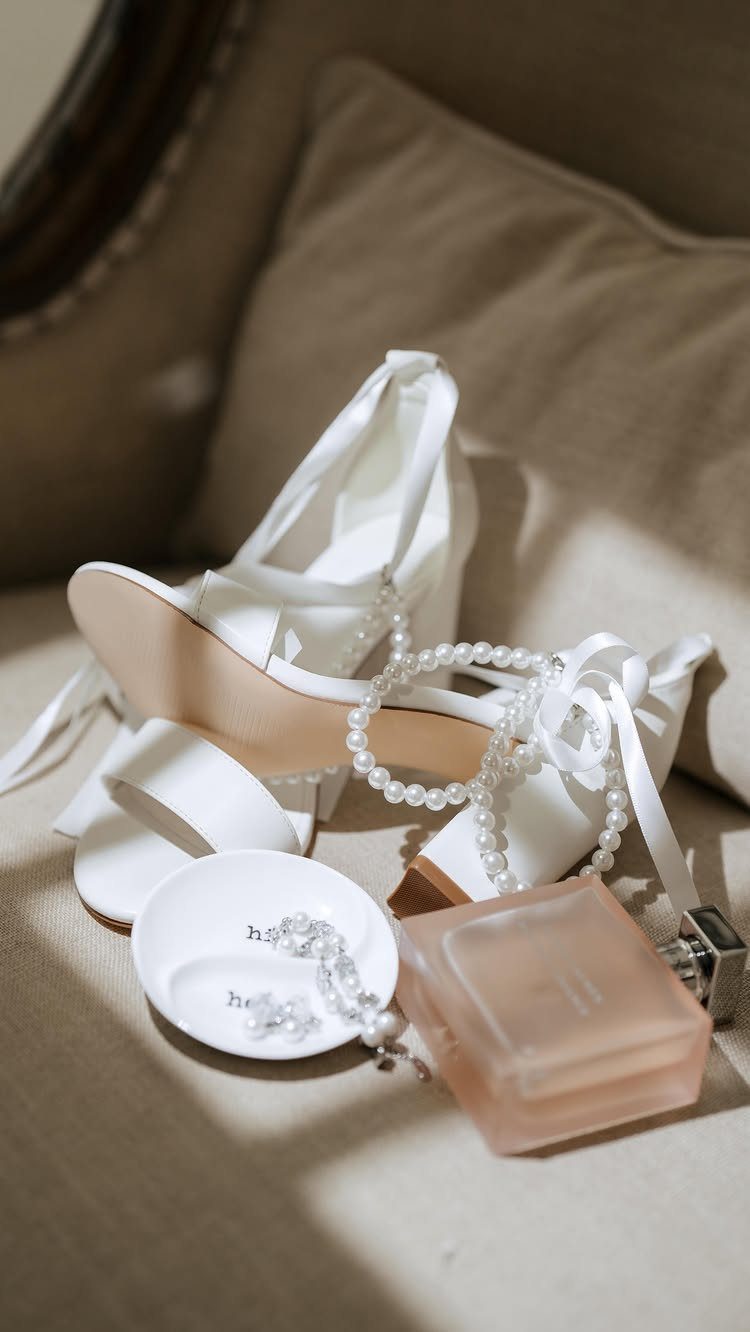
The shoes you finally choose after trying on dozens deserve their own frame, not just a glimpse under the hem.
Ribbon-tied satin sandals photograph beautifully against neutral fabric; add a strand of pearls and a small perfume bottle to build a still life that feels like morning, not staging.
A photographer working solo needs about 10 minutes for this during the getting-ready window. Place everything near natural light, on the upholstered chair or bed where you will actually sit.
Flat shoes need the same attention as heels; the price tag does not determine the shot.
I’d skip the full styling if your shoes are plain and you are already pressed for time. One clean image of them alone still completes the album.
14. Bridal Jewelry
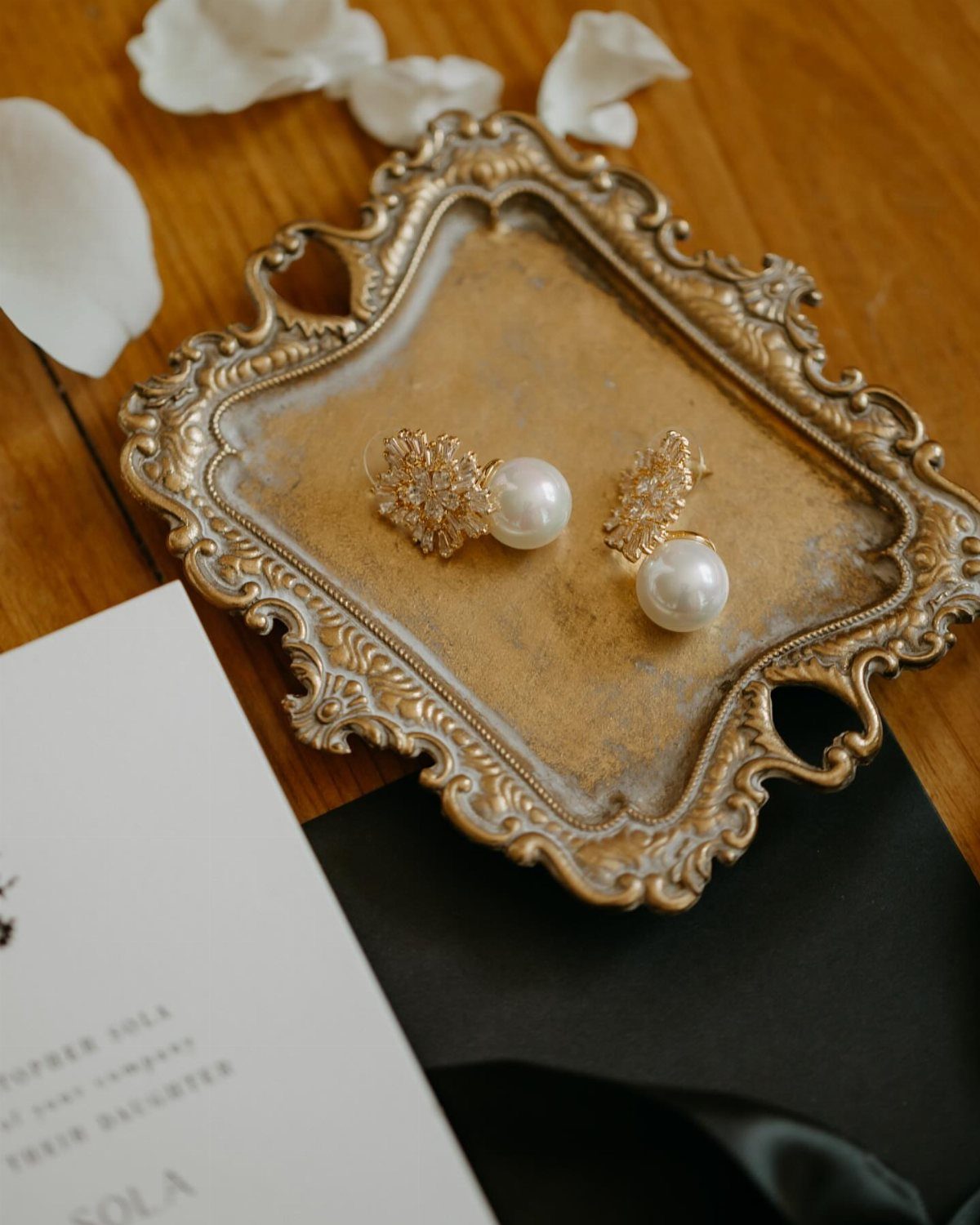
Gold and pearl drops on a vintage tray turn borrowed family pieces into a photograph with weight behind it.
The tray matters more than you would think; a plain surface makes even fine jewelry look catalogued, while something with age gives context.
Set this up while the bouquet is still fresh, using the same petals you will carry. A wooden table near a window, scattered with invitation scraps, costs nothing extra and takes almost no time to set up.
Skip the petal scatter if your venue supplies a clean marble dresser; that surface does the work itself.
15. Wedding Menus
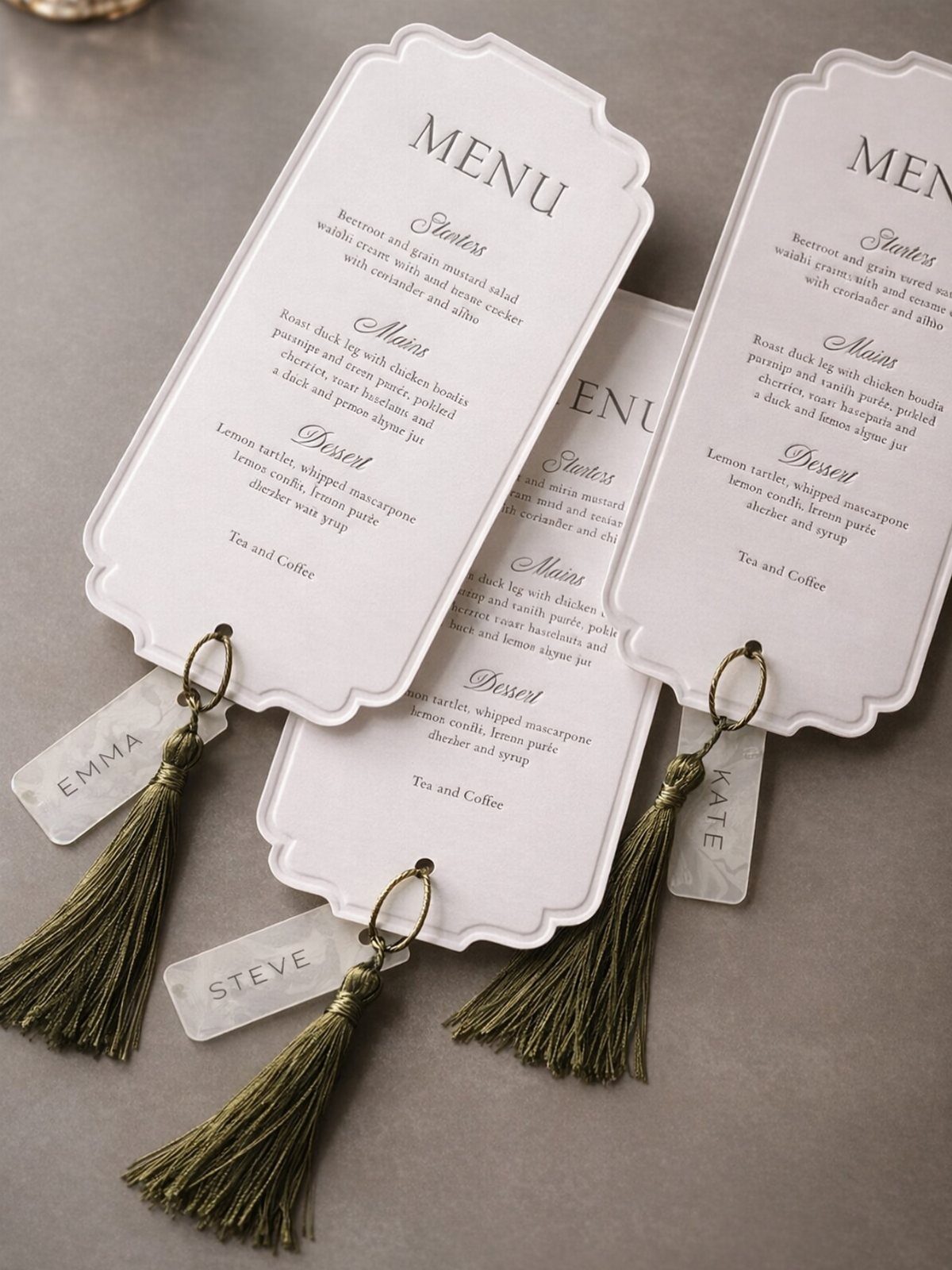
A menu card with a tassel and a named tag does two jobs at once: it tells guests what they are eating and marks where they sit.
A scalloped edge and olive green read as intentional without demanding custom printing beyond the names.
Attach the tassel with a small ring or thread through a punched hole at the bottom; the weight should hang straight, not twist. Print names on translucent tags so the menu type remains readable underneath.
One person can assemble 100 of these in an evening with a paper punch and a spool of ribbon.
The trade is time for impact. If your guest count runs high, simplify to a single tassel color and skip the tag variation.
16. Bridal Perfume Bottle
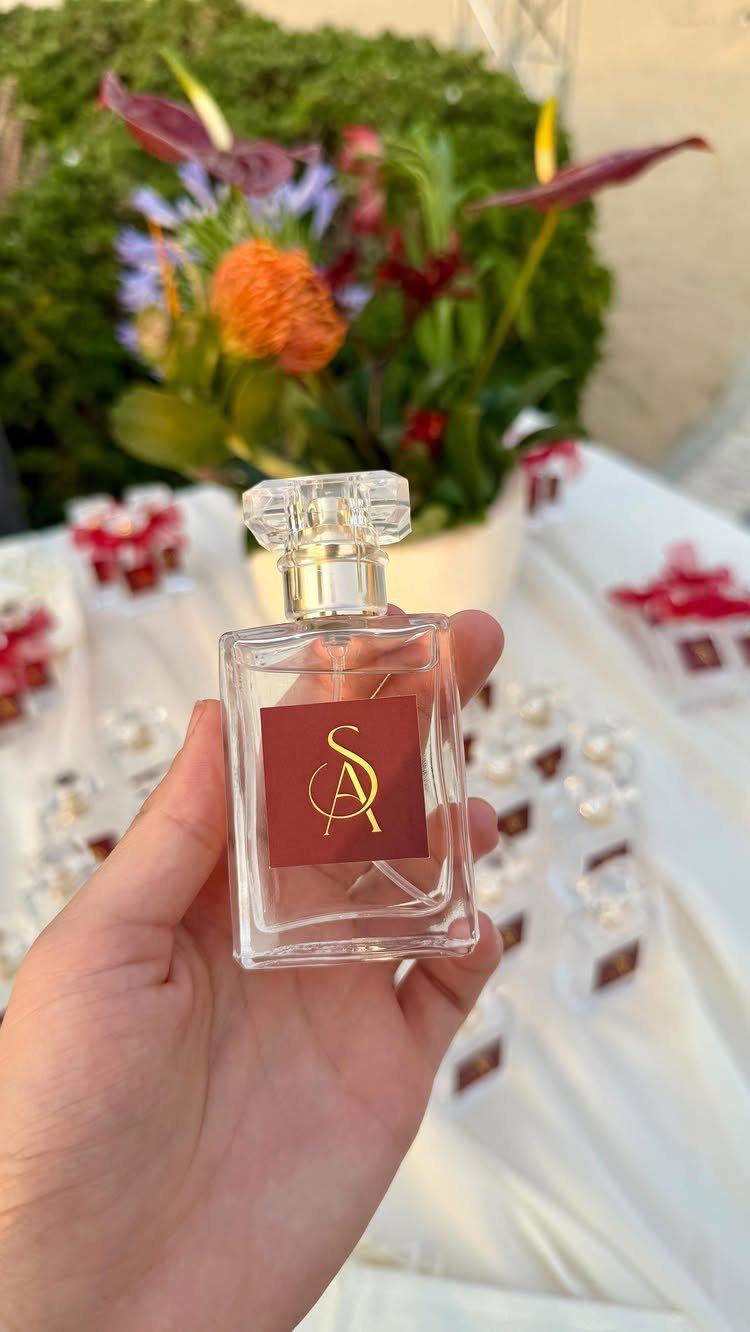
A perfume bottle with your initials pressed into a maroon label becomes something you keep past the wedding, not just a prop. A monogram small enough to feel private still reads in a close-up.
Clear glass catches light; hold it near a window or against a white tablecloth so the liquid color shows.
If you are building a favor version for guests, keep the same bottle shape and label style at a smaller size.
A plain bottle from a department store works if you add a custom sticker yourself. The monogram is the detail that photographs, not the juice inside.
17. Wedding Day Cards
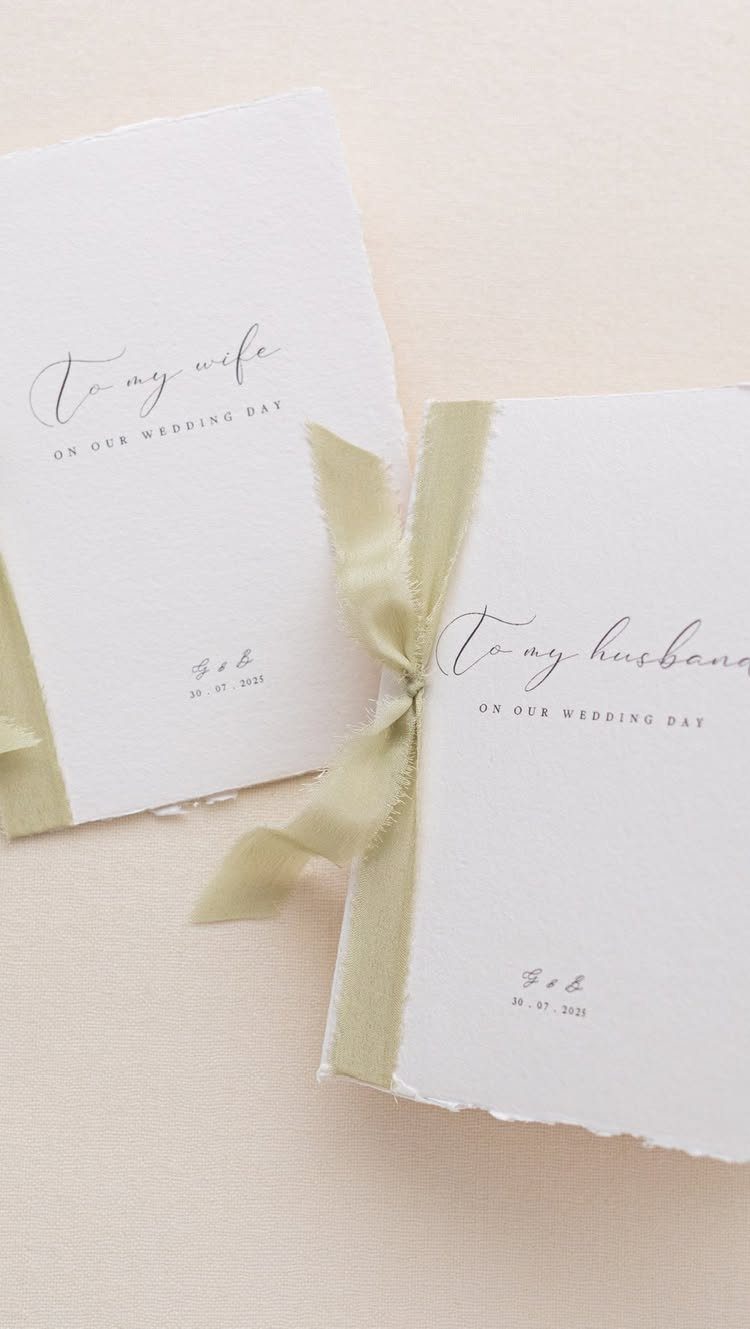
Deckled edges and frayed ribbon signal that these cards were chosen, not grabbed. The sage green against cream reads as calm rather than ceremonial, which suits a couple who wants the private exchange to stay private.
Write the message the night before, not in the getting-ready room where time compresses and handwriting tightens.
Have someone deliver the card to your partner’s space before the first look or ceremony; the photographer captures it in their hands, not yours.
The ribbon tie should loosen with one pull; a tight knot frustrates the moment it is meant to serve.
I would keep the text short, just a few lines. The card is a gesture, not a letter, and long passages rarely photograph well at this scale.
18. Wedding Ceremony Program
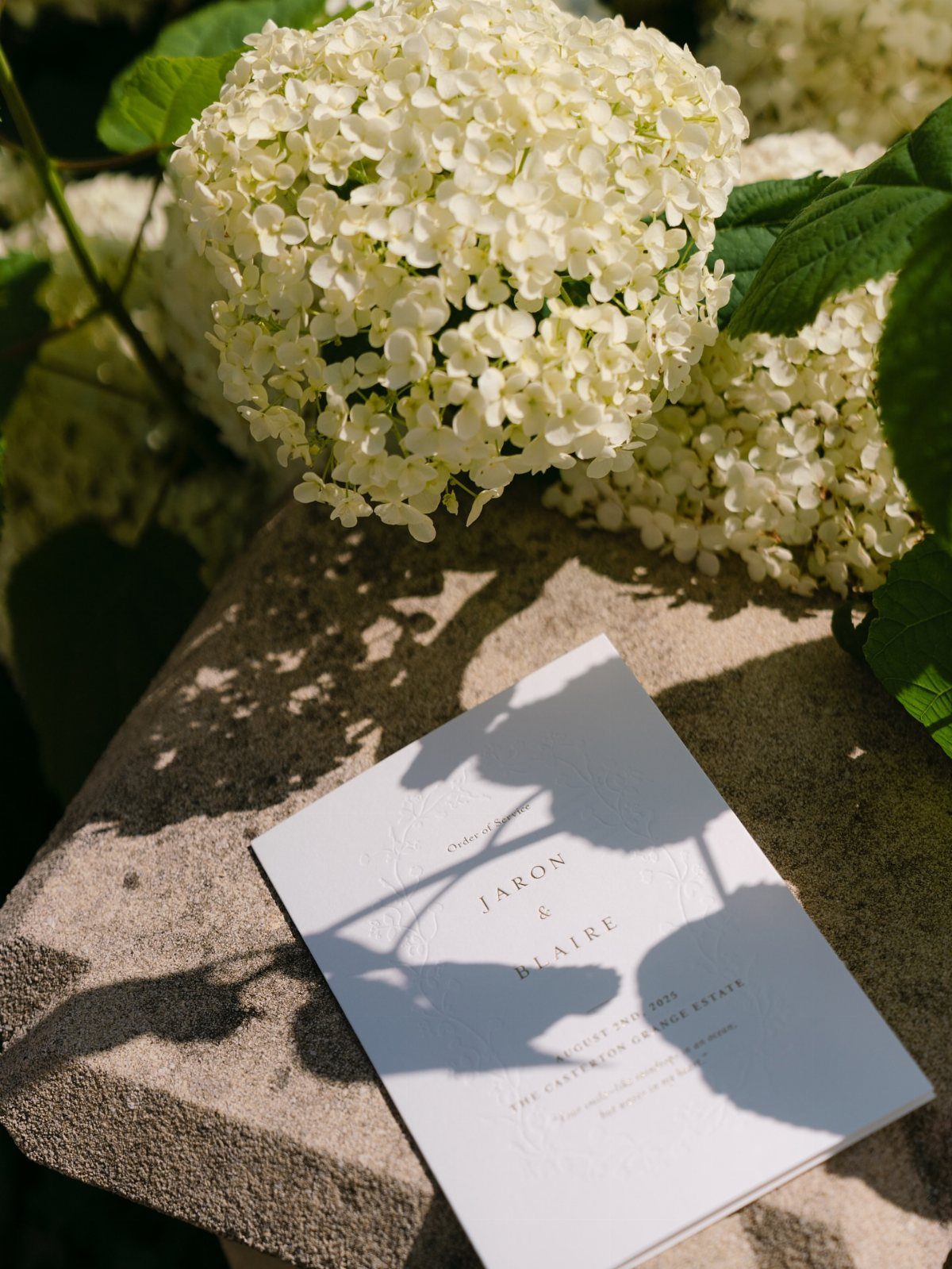
A program on stone with hydrangeas around it gives guests something to read while they wait and gives you a record of who stood where, what was read, which music played.
A booklet format lies flat and stays open; a single card curls in humidity and blows off the ledge.
Shoot this before guests arrive, during the gap between setup and seating. A second photographer can cover ceremony details while portraits run over; if you are solo, block time explicitly rather than hoping for a gap.
The stone ledge and flowers are already there; place the program where light falls across the names without glare.
Skip the printed program entirely if your ceremony is brief and your guest count sits low. The money goes further elsewhere, and short ceremonies do not leave anyone waiting long enough to need reading material.
19. Bridal Garter and Vintage Keepsakes
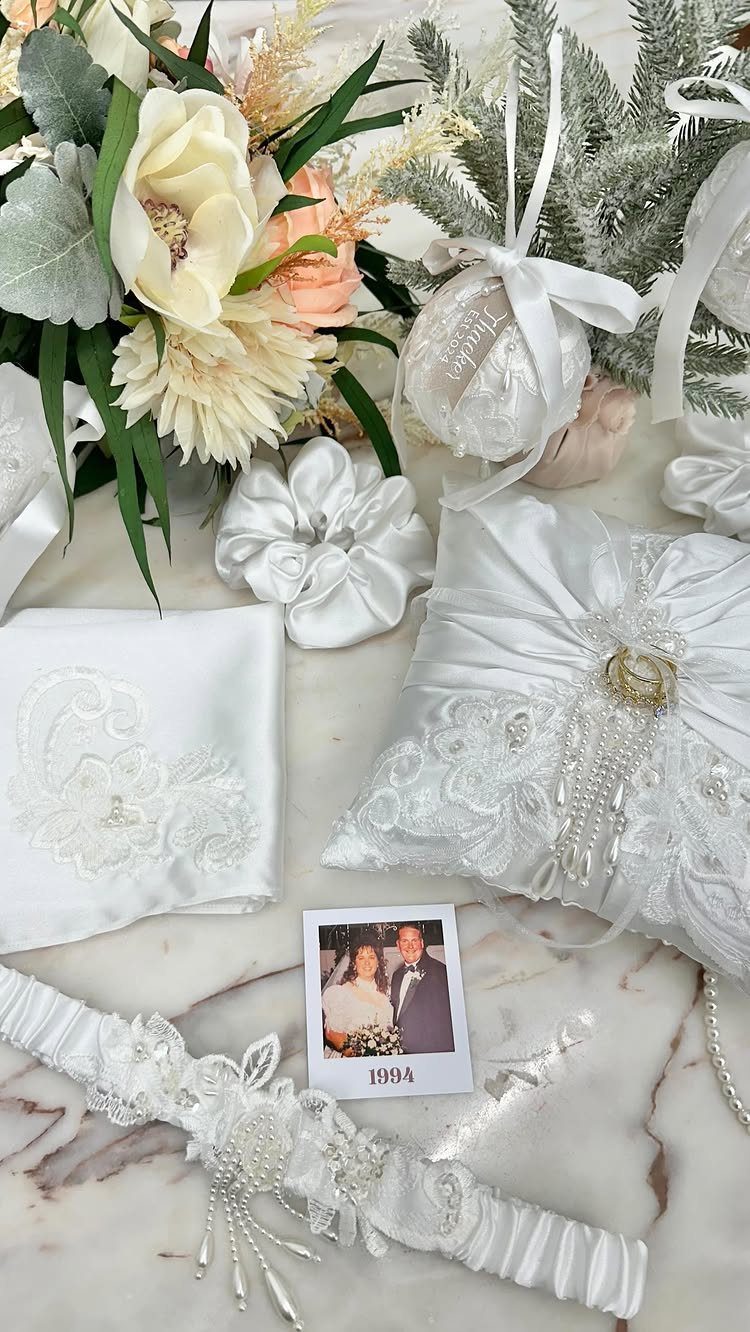
A garter still works as a detail shot even if you skip the toss. Lay it with something that carries weight: a grandmother’s handkerchief, a parent’s Polaroid, a ring pillow borrowed from a sister.
The satin and lace read as bridal; the extra item reads as yours.
Keep the palette tight. Cream, white, and soft gold photograph cleanly without fighting each other.
If the vintage piece has color, let it be the single accent rather than adding more.
This flat lay suits couples who already own the heirloom and need one composed shot before the day runs away from them. Without that personal item, the setup risks looking like a catalog spread.
20. Dress Buttoning Moment
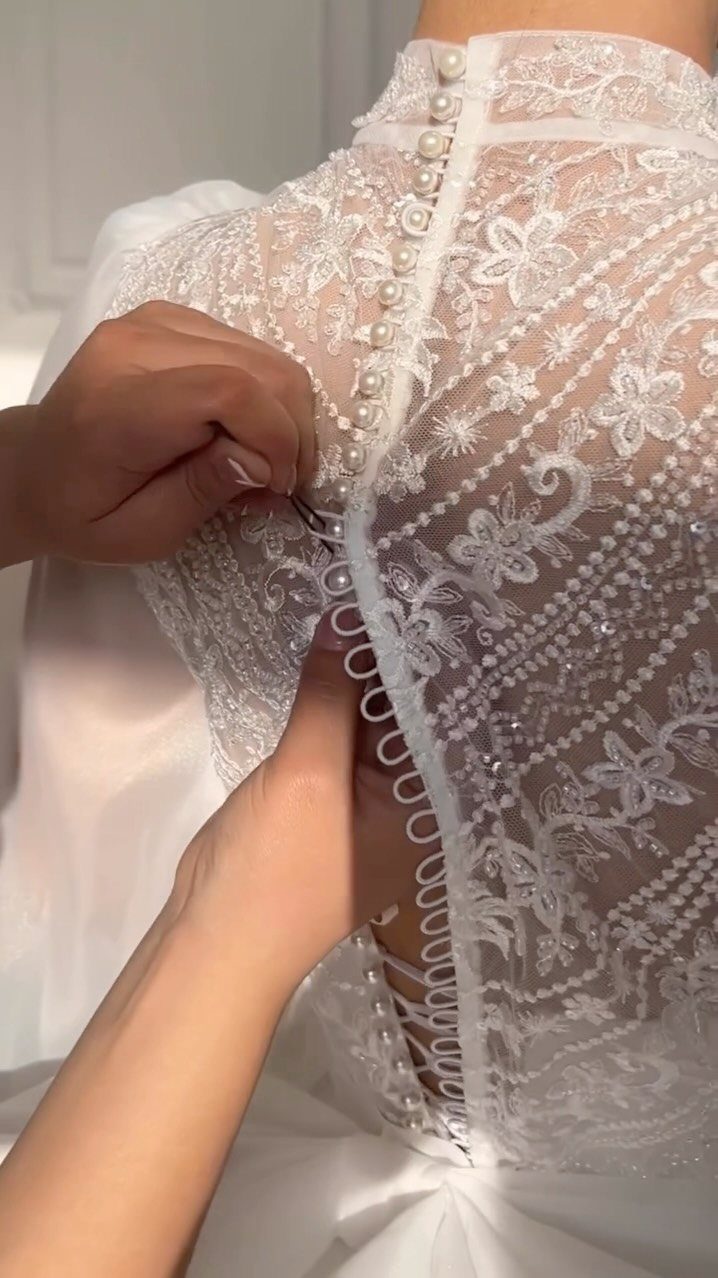
The buttoning moment gives you motion in a day that can turn static fast.
Hands working a row of closures, the slight tension of fabric being drawn together, the tool catching light: these small actions carry more feeling than a posed portrait.
Ask your photographer to arrive before the final fastening, not after. The sequence matters more than any single frame.
A lace back with pearl buttons needs the light behind you, soft and diffused, or the detail flattens into shadow.
This shot favors dresses with visible closures down the back. A zipper hidden under fabric panels offers almost nothing to photograph; save the time for your veil or jewelry instead.
21. Custom Fragrance Bar
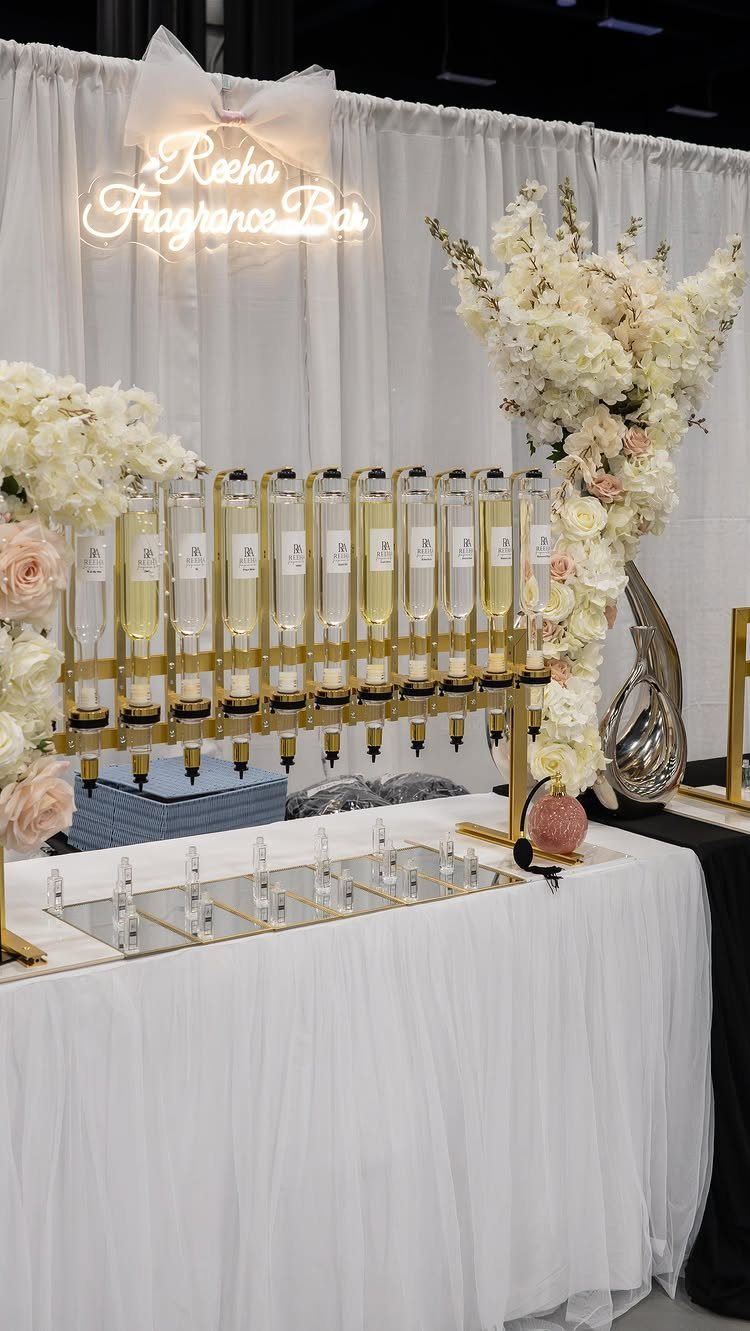
A fragrance bar turns a favor into an activity. Guests mix from labeled dispensers, fill small bottles, and leave with something they composed themselves.
Mirrored trays and a draped backdrop add height and reflection without eating up floor space.
Rent the dispenser hardware; buy the bottles and labels. The floral framing can be fresh or high-quality faux, depending on your venue’s rules and your timeline.
The neon sign is optional, though it photographs sharply against white fabric.
This works best for receptions with cocktail-hour breathing room. Guests need a few minutes to engage, and a line forms fast if your group runs large.
For a tight schedule, pre-mixed roller bottles at each place setting trade the experience for certainty.
Importance of Detail Shots
Detail shots do the work of preserving what the day itself moves past too quickly.
The invitation you proofread 6 times, the ring your grandmother wore, the perfume you chose after testing 12 others: these sit in the album as proof of intention, not just decoration.
Without them, the story of the day becomes only people and places, missing the objects that carried meaning.
The strongest detail shots are not always composed flat lays.
A ring on your finger as newlyweds, your hands helping your father with the tie you gave him, the moment of contact where an object becomes part of action: these carry more weight than any staged arrangement because they show how the day actually felt, not only how it looked.
Preparing for Detail Shots
Gather every item into one box 2 or 3 days before the wedding, not the morning of. Detail shots come first, while hair and makeup finish, and searching for earrings at that hour burns time you do not have.
A single box lets the photographer work fast and move on to candids and portraits.
A thorough detail set for a full-day wedding typically runs 40 to 80 edited images across all categories: personal items, ceremony, and reception. That’s not 80 shots of the rings — it’s comprehensive coverage of every category with two to four strong images per item.
Communicating with Vendors
Tell your florist you want flat lay flowers at the time you book, and spell out exactly what you mean. Heavy blooms, mostly greenery, or a mix: bring a photo that shows what you mean.
Your photographer may want a full call just for this; schedule it, or risk arriving to find the wrong stems and no time to fix it.
Clean your rings before the day, and wipe cologne or perfume bottles free of fingerprints. A cloth in your detail box handles touch-ups without a pharmacy run.
Confirm the florist knows your photographer’s arrival time. The shot you planned for 2 months fails if the flowers arrive after details are done.
Using Natural Light
Natural light is the right light for detail shots. Harsh sun needs a diffuser or reflector to soften it; the goal is texture you can see, not shadow that hides it.
Flash changes the quality entirely and is best avoided. If the getting-ready room faces north or the morning is overcast, that flat light is an advantage, not a problem: it wraps around objects without hard edges.
Detail edits need slightly more contrast and clarity than portraits to make texture pop. Keep the color palette consistent with the rest of the gallery so the album reads as one photographer’s work, not two different visions stitched together.
Frequently Asked Questions
What is in a wedding detail shot?
Rings, invitations, shoes, jewelry, perfume, and vow books all make solid candidates; the ones that share your colors and design thread pull the set together best.
A flat lay shot from above keeps everything visible and ordered, though working the same pieces into the room itself, on a windowsill or beside the bouquet, changes the feel entirely.
Three groupings usually cover it: her items alone, his alone, and a combined spread that folds in the stationery with both.
How long do detail shots take?
A photographer working solo needs about 10 minutes for a specific setup like bridal shoes during the getting-ready window. For the full detail coverage at the start of the day, many photographers budget 45 minutes to an hour.
This early slot works because you are busy getting ready, so the photography is least intrusive then.
What should I include in my detail shots?
Include items that carry weight for you: rings, invitations with complete suites, shoes, jewelry, perfume, vow books, and personal heirlooms like a grandmother’s handkerchief or a father’s watch.
A single personal item turns a generic setup into something that reads as yours.
A flat lay without that personal thread can read like a store display; one piece with history, a ring box from a grandparent or a handwritten note, shifts it back toward you.
What are some must-have wedding shots?
Most albums need the dress, the rings, and the moment someone fastens the final closure. The dress shot works hanging while makeup happens or against architectural elements; rings need clean surfaces and soft light behind flowers.
The buttoning moment adds motion to a morning that stiffens into posed shots fast; you see hands moving, fabric pulling together, someone leaning in close.