A wedding games table can run from free clothespins and a chalkboard sign to a custom-built spinning wheel with vinyl lettering, and the right pick depends on whether your guests already talk easily or need an excuse to mingle.
Most of these ideas need little more than a print run at a copy shop and someone willing to read the wrecked results aloud.
1. Mr & Mrs Game
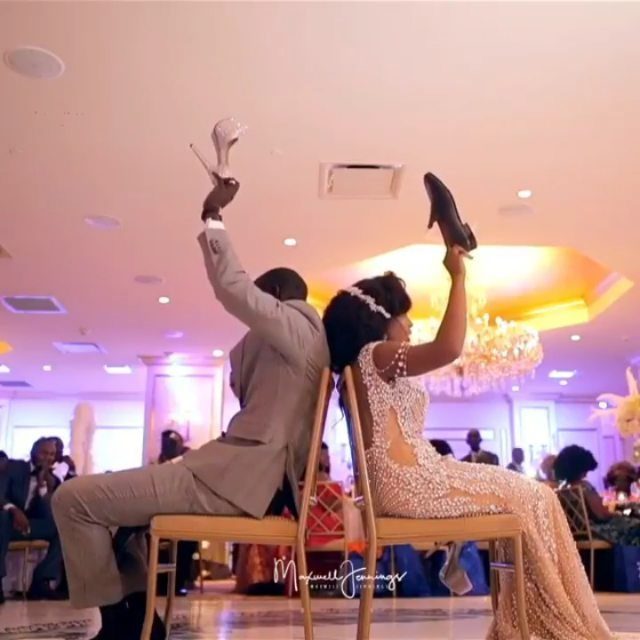
The Mr & Mrs game puts the couple on the spot in front of everyone they know.
Two chairs back-to-back on the dance floor, one shoe from each partner in hand, and the MC firing off questions like "Who said ‘I love you’ first?" or "Who’s messier?"
The raised shoe answers reveal how aligned, or hilariously misaligned, a pair really is.
It costs almost nothing beyond the MC’s time and works at any venue with a small floor space.
The questions land better when they mix sweet and mundane; "Who does most of the cooking?" gets more honest reactions than "Who loves who more?"
I’d keep the list short enough that the bit stays sharp and doesn’t drag past the point. Best for couples who can laugh at themselves in public; shy pairs should skip it and let guests play instead.
2. Mad Libs
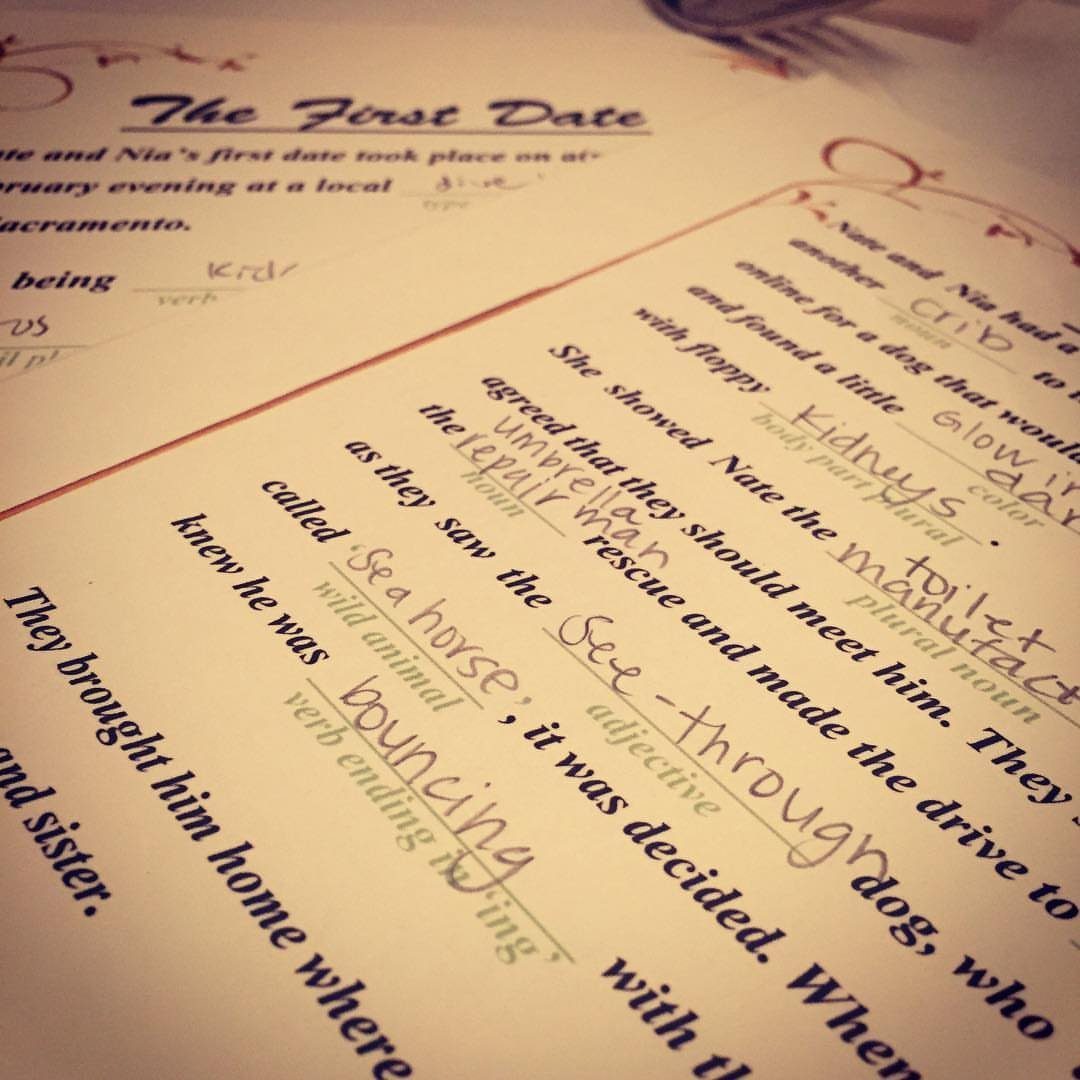
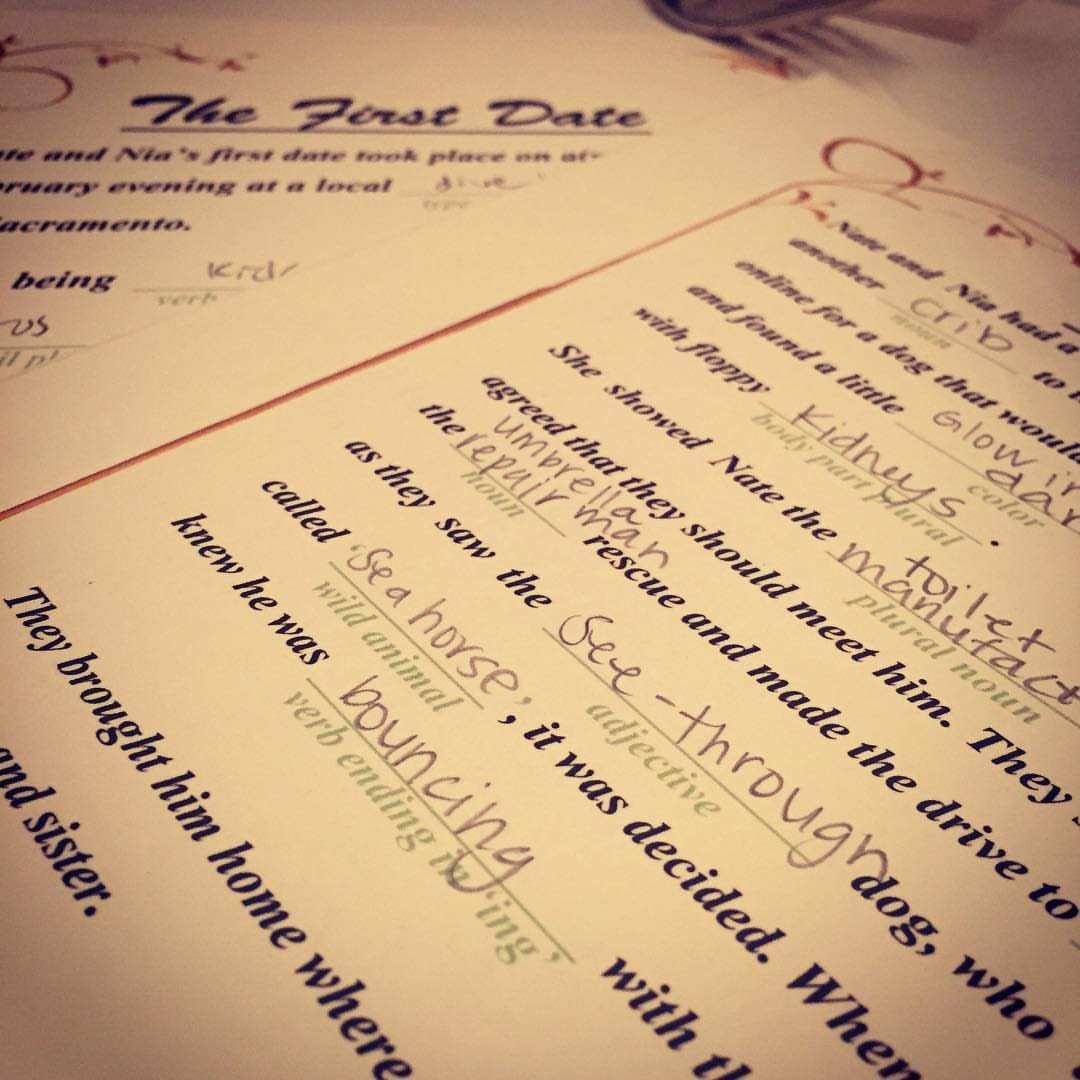
Mad Libs at a wedding table work because everyone already knows the grammar drill from grade school, and the results get stranger with adult vocabulary.
Custom sheets run about the price of a nice bottle of wine for a printable set from a designer on Etsy, or you build your own in a word processor with a story about the couple’s first date or how they met.
Guests fill in nouns, verbs, and adjectives without seeing the story, then read the wrecked result aloud.
A frame like "The First Date" gives guests a starting story, and the handwritten entries turn ordinary memories into something the table won’t forget.
This suits tables of mixed ages, since the format carries itself. One sheet per guest, or one per couple if you want to keep printing costs down.
3. Speech Bingo Cards
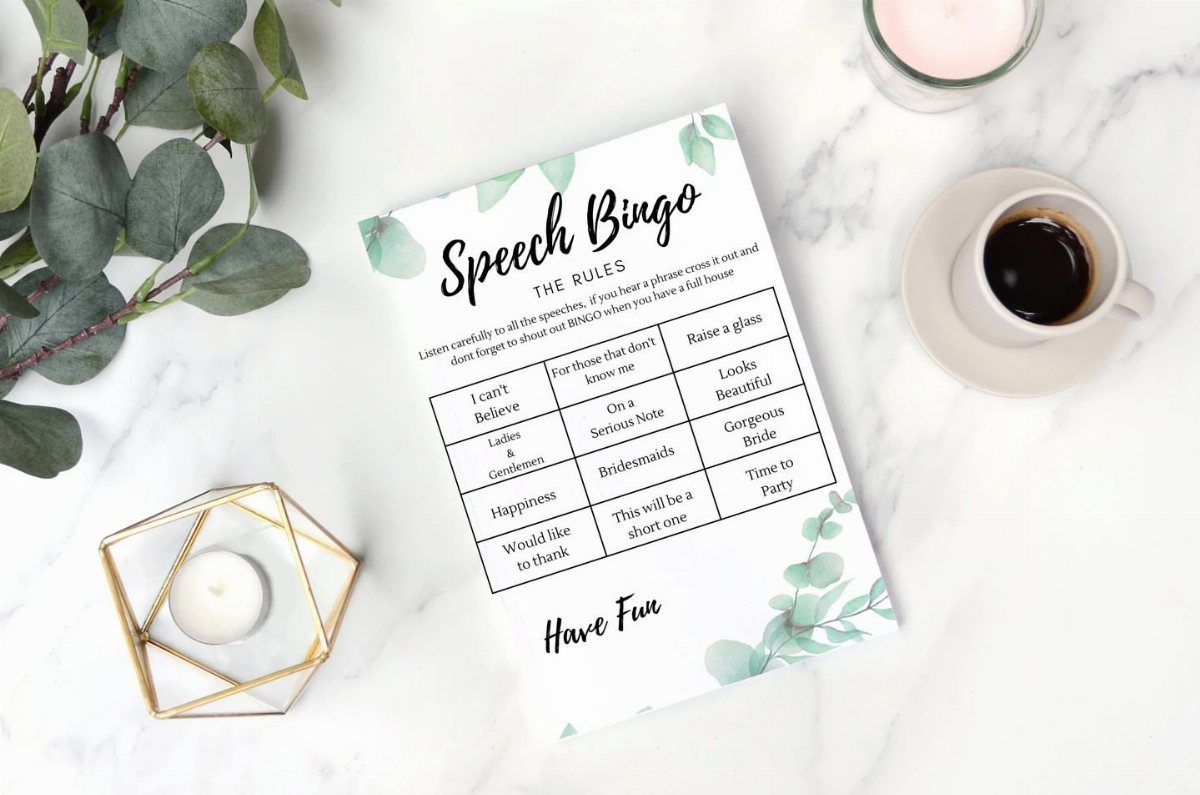
Speech Bingo turns the inevitable wedding clichés into a competition. Guests mark off squares as they hear phrases like "Don’t the bridesmaids look beautiful" or "Raise a glass," and the first full line wins.
A compact grid keeps the game short enough to finish inside one speech cycle.
Print costs stay low: design in Canva and run copies at a copy shop for pocket change. A small prize helps participation; wrapped candy or a drink ticket works.
The drinking variation trades the prize for a sip per hit, which speeds up the speeches and the guests equally. I’d use that version only at tables where everyone is of age and no one is driving.
Otherwise, standard bingo keeps the energy without the liability.
4. Find the Guest Bingo Cards
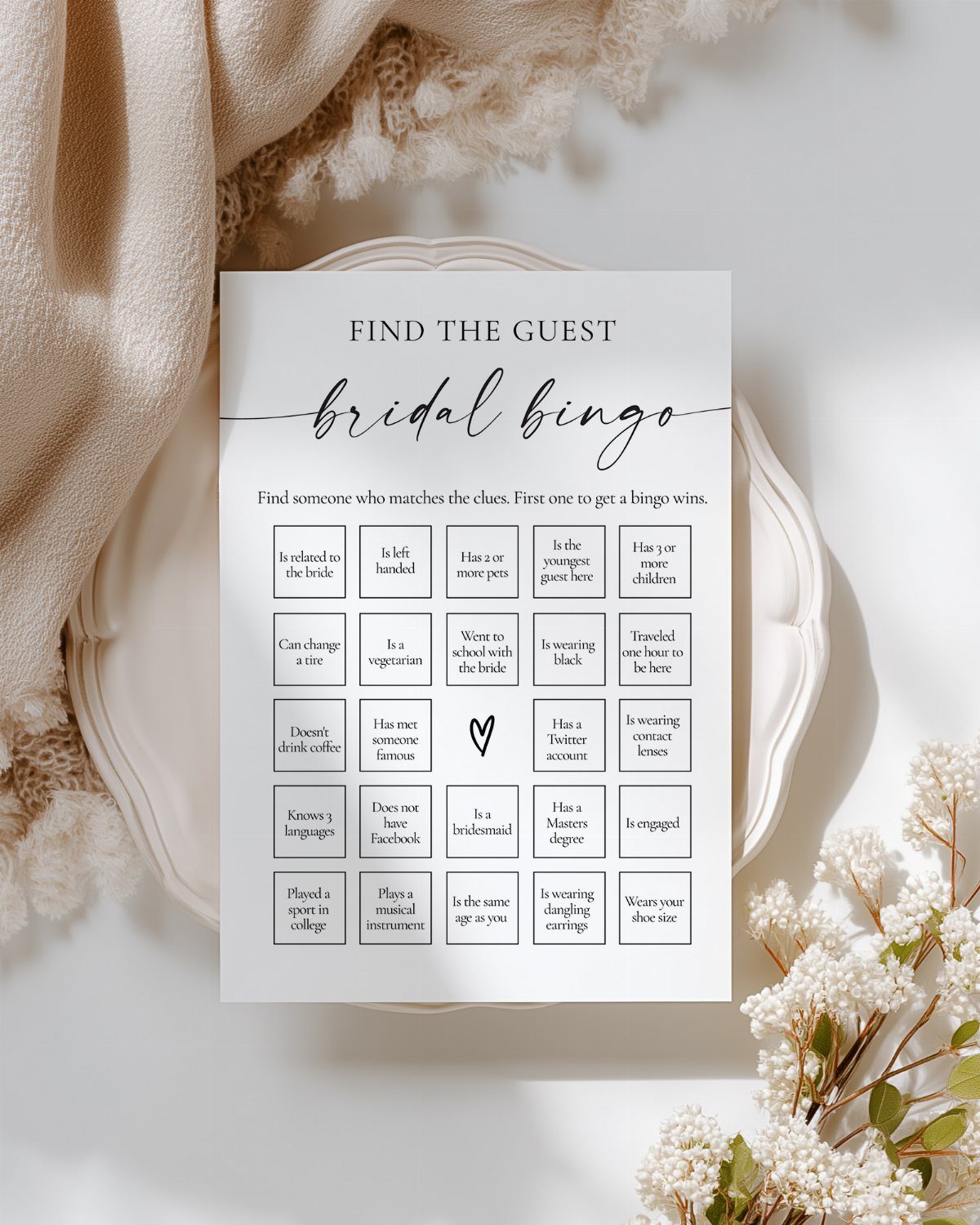
Find the Guest Bingo forces strangers to talk to each other, which is exactly what most seated receptions need.
Each card carries prompts like someone who has traveled extensively or someone who met the bride in grade school, and guests circulate to find matches and initial squares.
The setup takes more design work than standard bingo because the prompts need to fit your actual crowd. Mix easy hits with a couple genuine stumpers so nobody finishes before the drinks arrive.
A small prize for the first completed row, or just bragging rights, keeps it friendly.
This works best at weddings where the couple’s friend groups don’t overlap much; college friends and coworkers and cousins need an excuse to mingle.
If your guest list is almost entirely one tight circle, the game stalls because everyone already knows the answers.
5. I Spy Cards
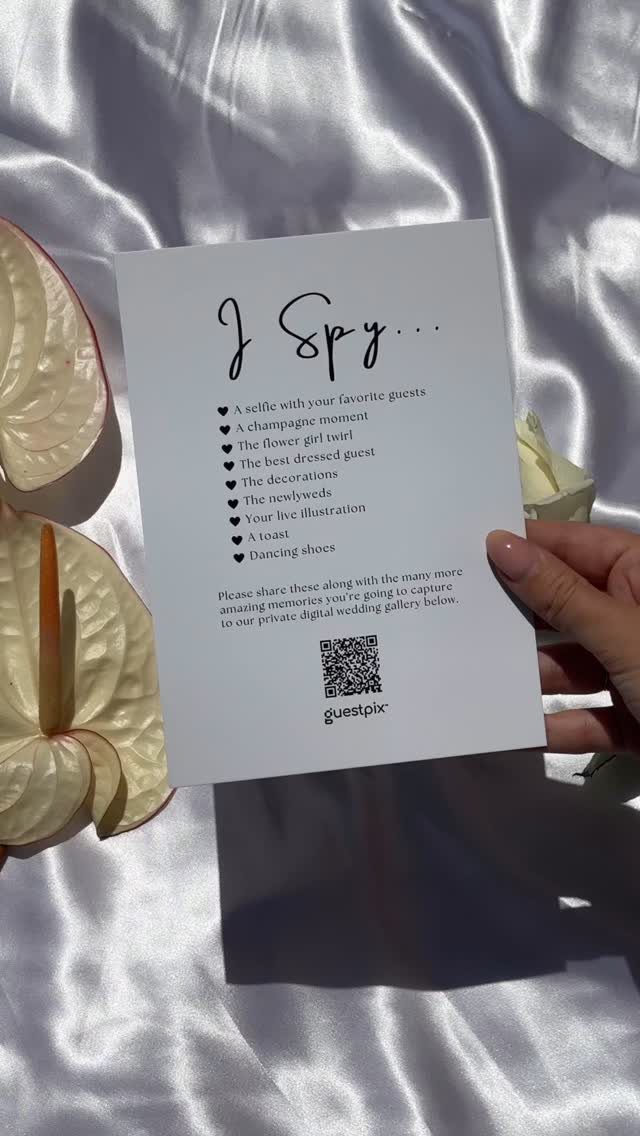
I Spy cards hand guests a scavenger hunt that runs the whole reception, not just one sitting at the table.
Rewards are optional and small when used: wrapped chocolates, a mini candle, or a sticker with the wedding monogram. The couple gets the real prize afterward: a photo collection from guests who tag or upload through the QR link.
This stays invisible during formal moments, which I prefer to games that interrupt speeches or demand MC attention. Best for guests who already have phones out; older crowds who keep devices pocketed may need paper checkboxes instead of digital proof.
6. Spin the Wedding Wheel
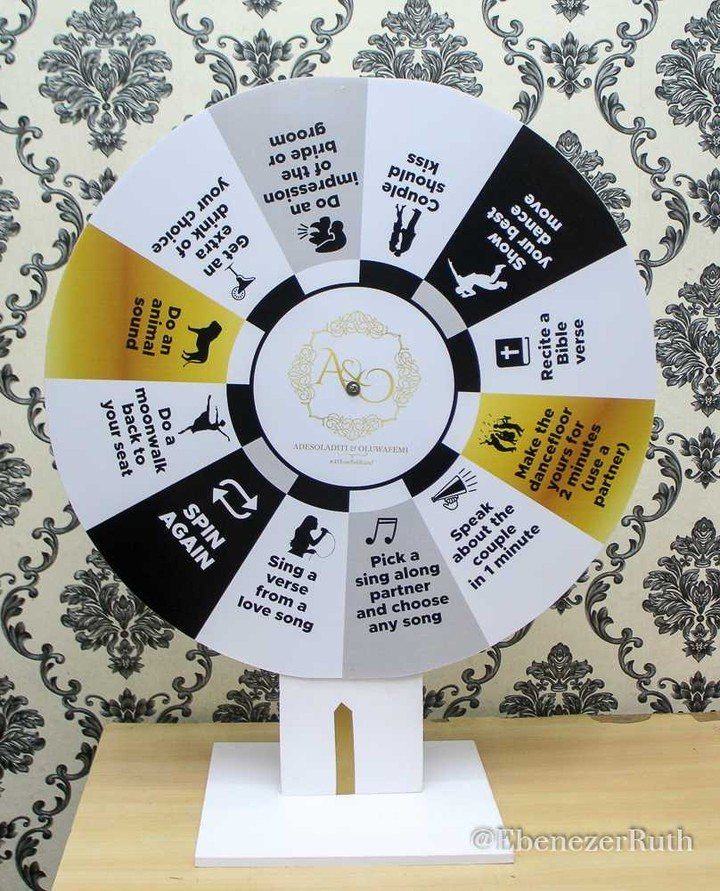
A tabletop spinning wheel puts the couple’s names at center and dares radiating outward in colored wedges: "Show your best dance move," "Kissing Menu," or "Give the newlyweds advice."
A wheel sized for a single table or a central cocktail spot works best when guests are already standing around with drinks.
Building one takes more effort than printing cards. A wheel from a craft store costs less than a centerpiece upgrade, plus vinyl lettering or a careful hand with paint markers.
The prompts need to read from across the table, so keep text short.
This works without an MC calling turns; guests spin when they feel like it, which keeps energy up without pausing the night.
I’d place it near the bar or photo booth, where people already linger, rather than at a dinner table where the wheel competes with plates and glasses.
Wedding games are a simple, thoughtful way to help guests loosen up, laugh together, and connect throughout the night. Whether you’re planning a cozy dinner, an outdoor gathering, or an all-night dance party, there’s a game that can fit your vibe.
— Minted
7. Photo Quiz
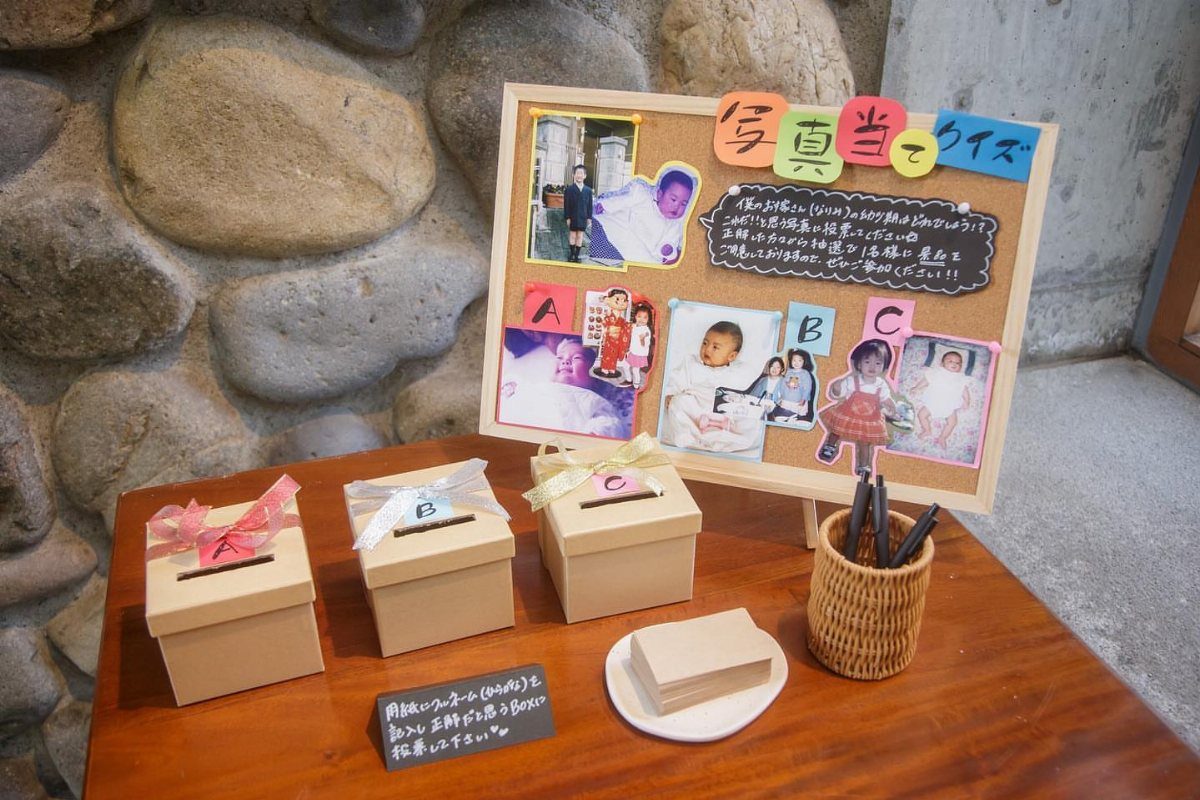
A photo quiz puts guests to work identifying baby pictures of the couple, their parents, or their pets. I like this one for mixed tables where not everyone knows each other; the guessing gives strangers something to talk about.
Labeled voting boxes keep the tally visible, but a simple numbered sheet works too. You can run it two ways: guests match photos to names, or they guess the story behind each image.
The second route needs pictures with actual stories attached, not just smiling faces.
For a budget build, print at home and mount on foam board. Label rounds by decade, by side of the family, or by whose photo is whose.
If you want a digital twist, ask guests to shoot their own photo-worthy moments during the reception and post with your hashtag. You review the entries on your honeymoon and announce a winner later.
This one suits couples with photo archives they actually want to show off. If your childhood pictures are mostly blurry or lost, skip it.
8. Wedding Crossword
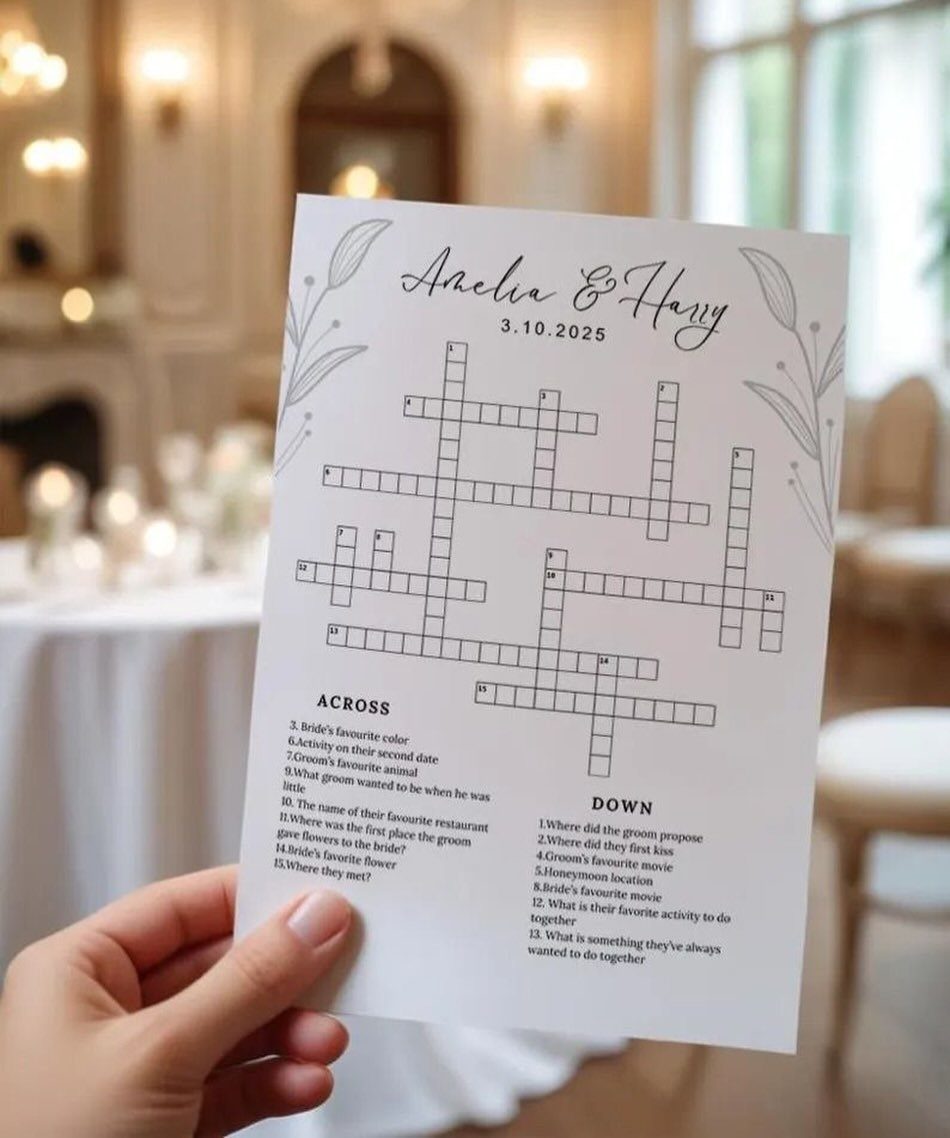
Custom crosswords turn wedding programs into something guests fiddle with through the salad course. Pair the couple’s names and date with clues about where the proposal happened, favorite trips, family inside jokes.
Building it takes a puzzle maker or a patient friend with grid paper.
Clues about your relationship work best when they are guessable by half the room; too obscure and tables stall out, too easy and nobody finishes their wine before the answers.
I would aim for 15-20 clues, a mix of quick fills and head-scratchers.
Printed cards cost little beyond design time. Clean black text on white stock reads fast under reception lighting.
You could add a small prize for the first completed card, or collect entries and read wrong answers aloud for laughs.
Best for couples who already trade trivia about their history. If your story is mostly "we met, we liked each other, here we are," the clue list runs thin fast.
9. Board and Card Game Station
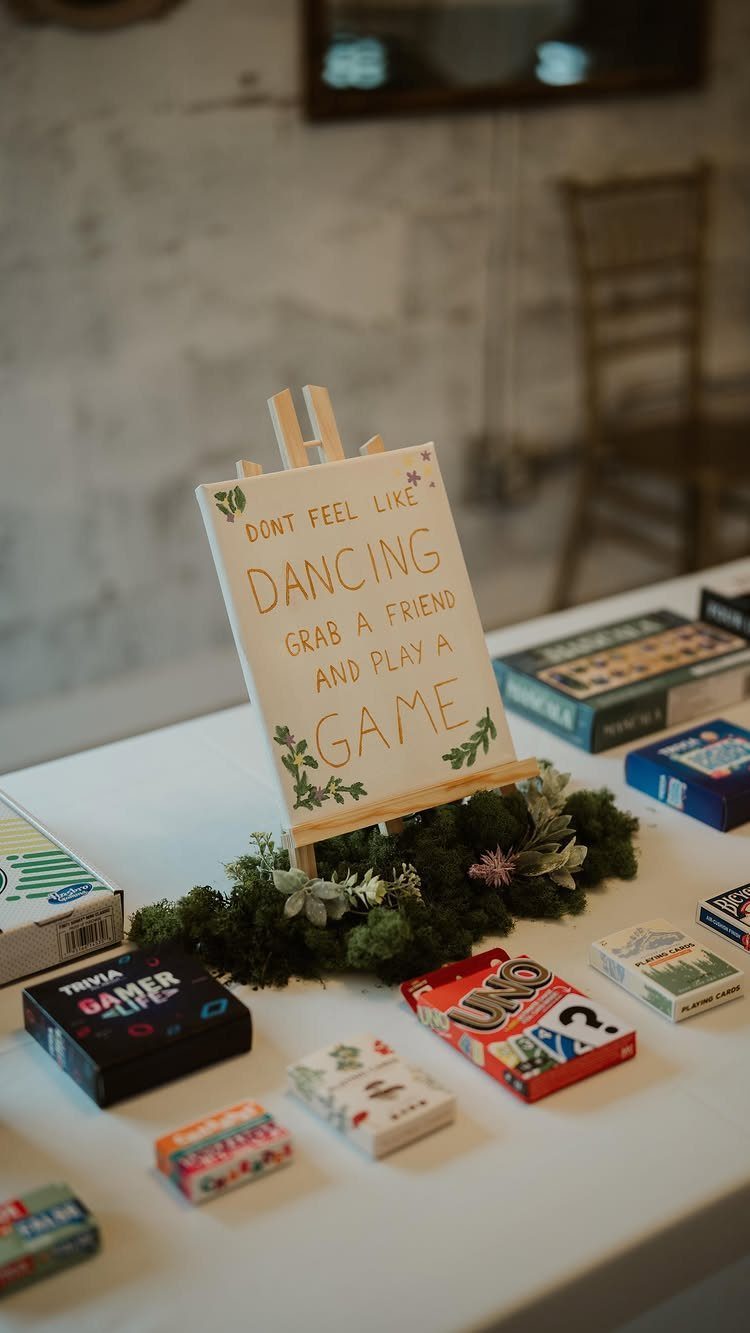
Not every guest wants to dance. A game station gives them cover to sit, talk, and still feel part of the night.
A sign saying it straight, something like "Don’t feel like dancing, grab a friend and play a game," sets the tone without hovering.
Raid your own closet for Uno, trivia decks, playing cards. Tuck greenery around the edges, or use table numbers, candles, whatever fits your look.
Pick games that finish fast, not marathons that strand someone for an hour while the dance floor fills up. Short rounds let guests drop in between speeches or cake.
Cost is close to zero if you already own the games. The risk is pieces wandering off; assign a younger cousin to tidy between rounds, or tape a "return here" note inside each box.
This setup shines at receptions with big age spreads or lots of introverts. It trades some floor energy for seated conversation, which is the right call for some crowds and a mistake for others.
10. Wedding Betting Sweepstakes Cards
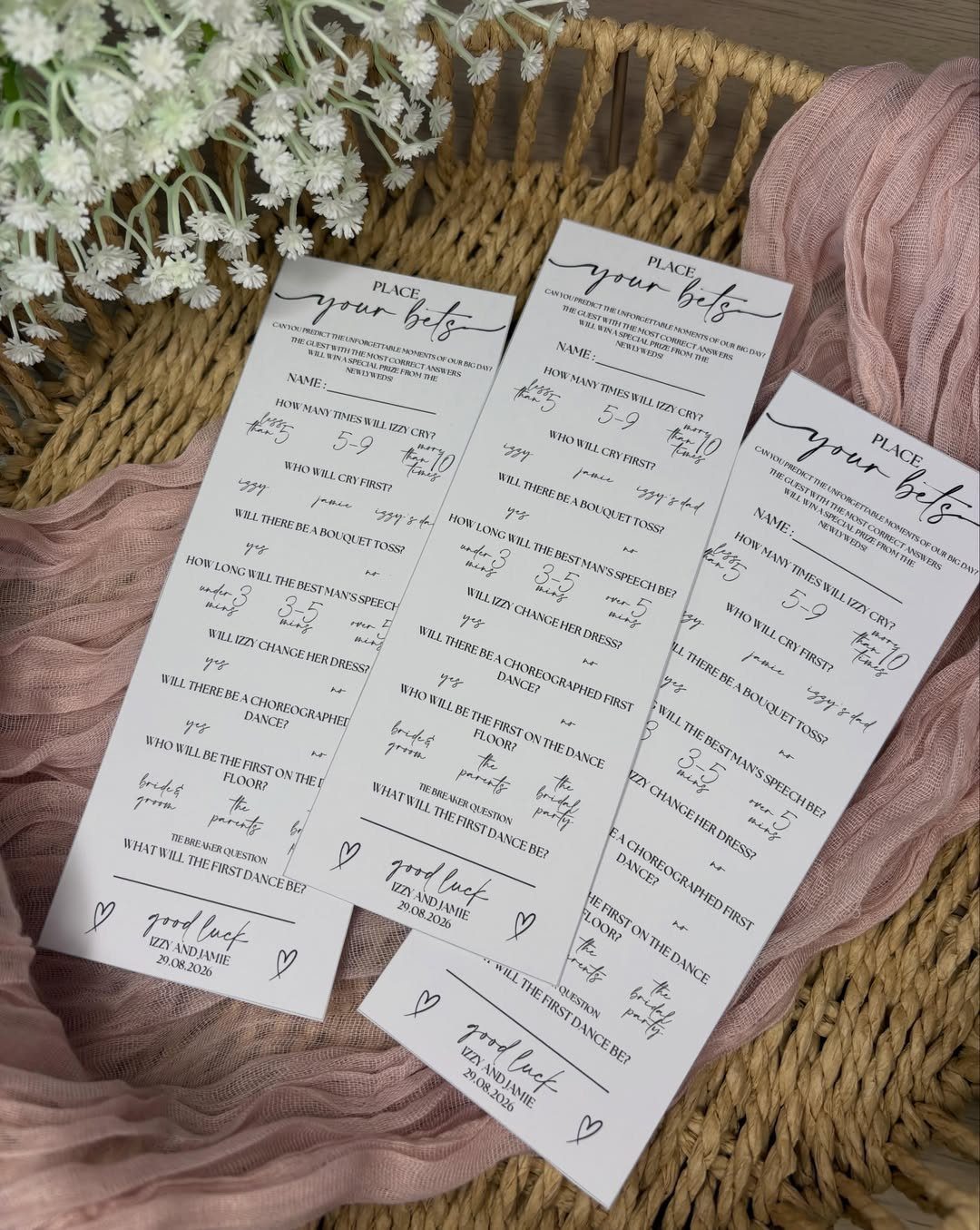
Betting cards turn the speeches into sport. Guests guess how long the best man will ramble, whether the maid of honor cries, which song opens the first dance.
You write the questions, so you control the tone. Keep it kind; nobody wants bets on whether the marriage lasts.
Good prompts predict timing, wardrobe choices, or hidden talents revealed in toasts. Collect cards before the events start, score them during, announce winners near the end.
Printing costs run low if you design simple black-and-white cards. A fabric liner dresses them up; a plain bowl works too.
Prizes can be candy, a drink token, or just bragging rights.
This one needs a crowd that knows the couple’s circle well enough to guess. At a wedding of mostly strangers, the cards sit blank.
11. Hershey’s Kisses Guessing Jar
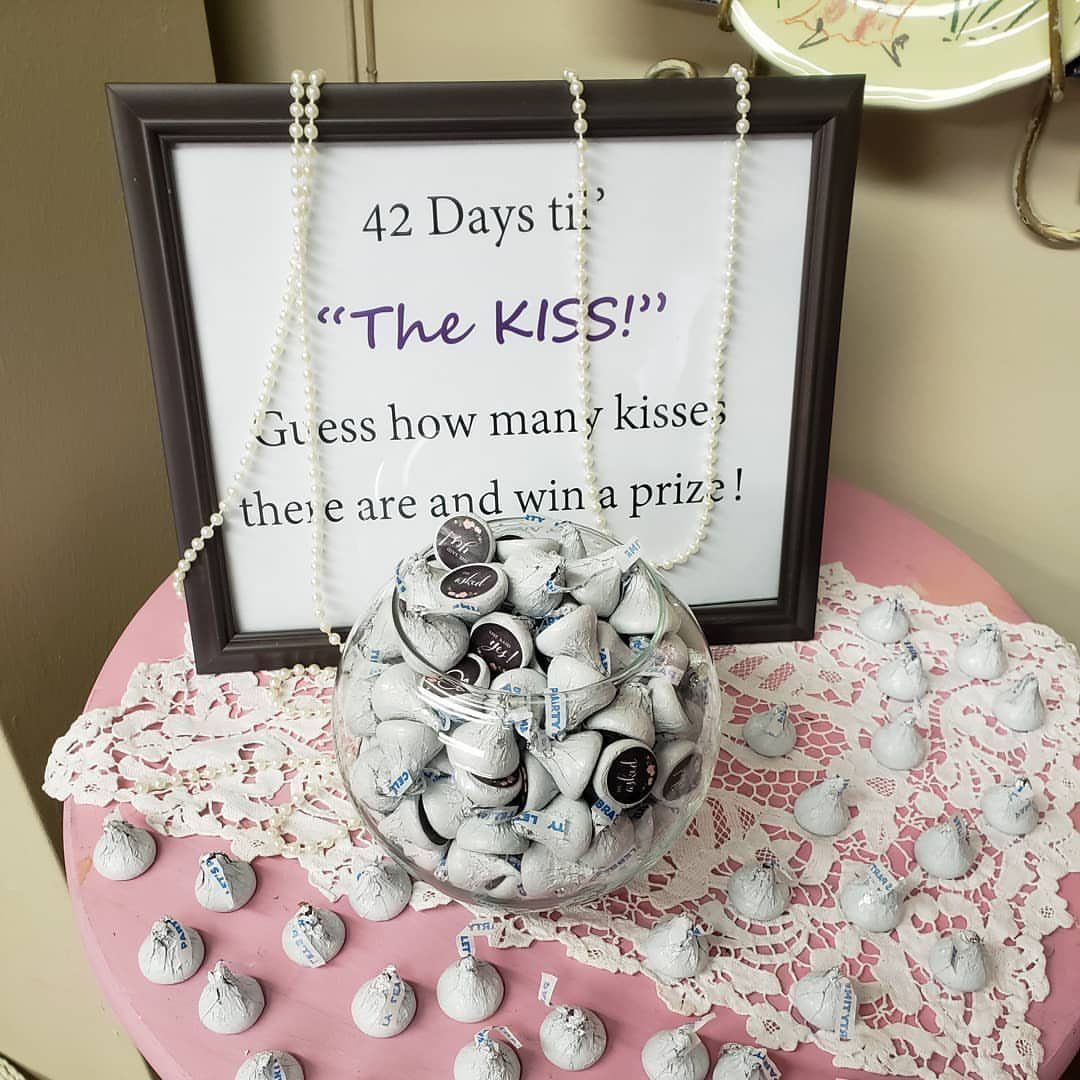
A guessing jar lives or dies by its prize. Cheap filler is fine; what pulls guests over is the chance to win something, or at least the satisfaction of being closest.
The sign here ties the candy to the wedding: "42 days til ‘The KISS!’" That frame of reference matters.
A generic "guess how many" jar at a wedding feels like a county fair leftover; connecting it to your story, your countdown, your inside joke saves it.
Fill with anything small and uniform: candies, buttons, beads. Count while you fill, write the number down, seal it in an envelope before guests arrive.
A lace doily and glass bowl read vintage; a mason jar and kraft tag would suit a different wedding.
This suits cocktail hour when people are standing, moving, killing time. It does not hold attention for long, so place it where guests pass anyway, not at a table they must seek out.
12. Clothespin Secret Peg Game
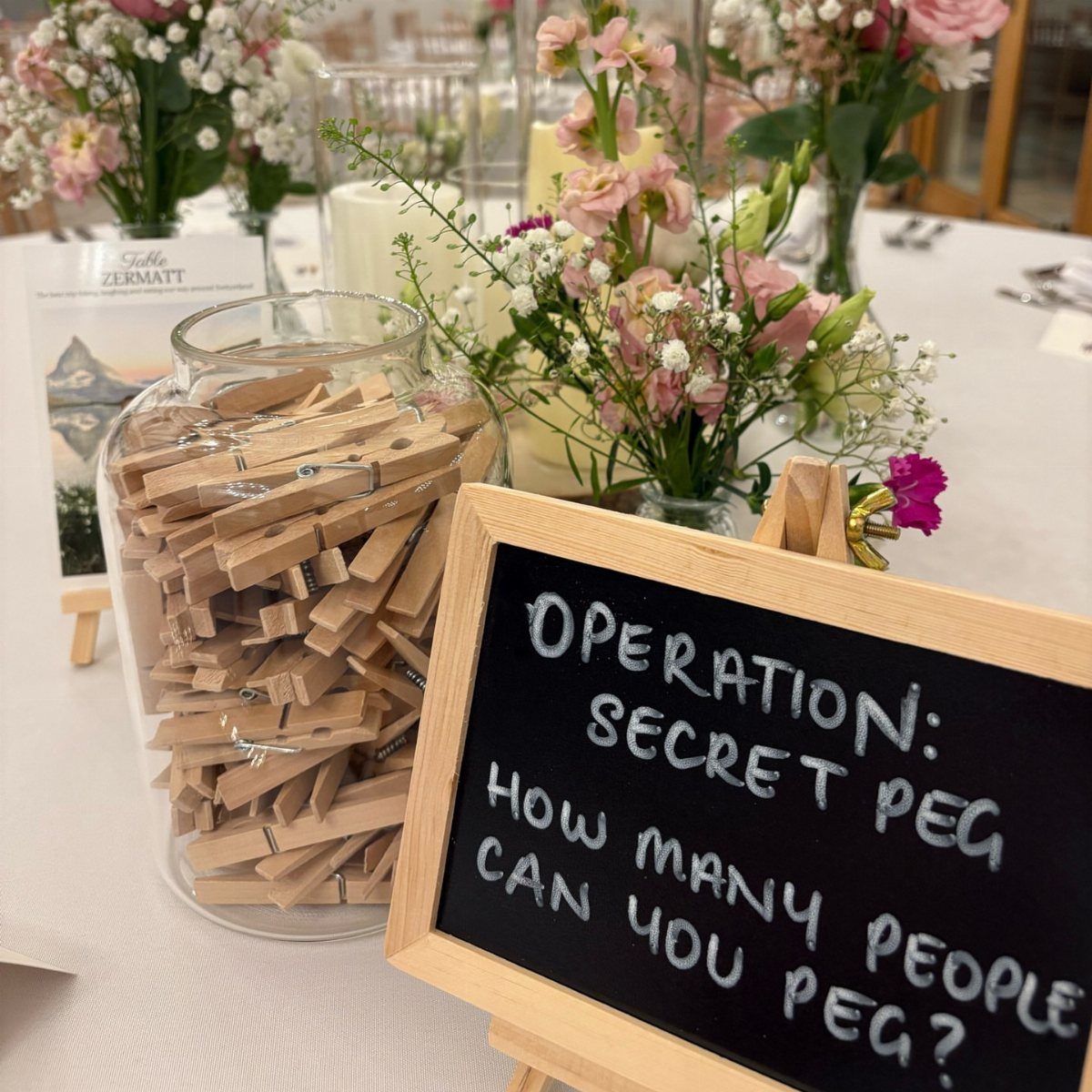
The clothespin game runs on stealth. Guests clip pegs to each other without getting caught; whoever collects the most wins.
A jar of wooden pins and a chalkboard sign explaining the rules in big letters gets the point across without a speech.
Simple materials keep cost down: clothespins, a container, a sign. The game itself needs no table, no cards, no sitting down.
That mobility is its strength and its risk. Guests absorbed in pegging each other can miss speeches, knock into servers, or clip the wrong person at the wrong moment.
I would limit it to the dancing hours, not dinner. In a dark hall, pins on black jackets vanish; plan the color contrast with your lighting.
One variation: assign each table a color pin, or make bridesmaids and groomsmen worth extra points.
Best for crowds with energy to burn and no dignity to lose. At a formal seated dinner, the game reads childish; at a backyard reception, it fits right in.
13. Wedding Table Game Card Boxes
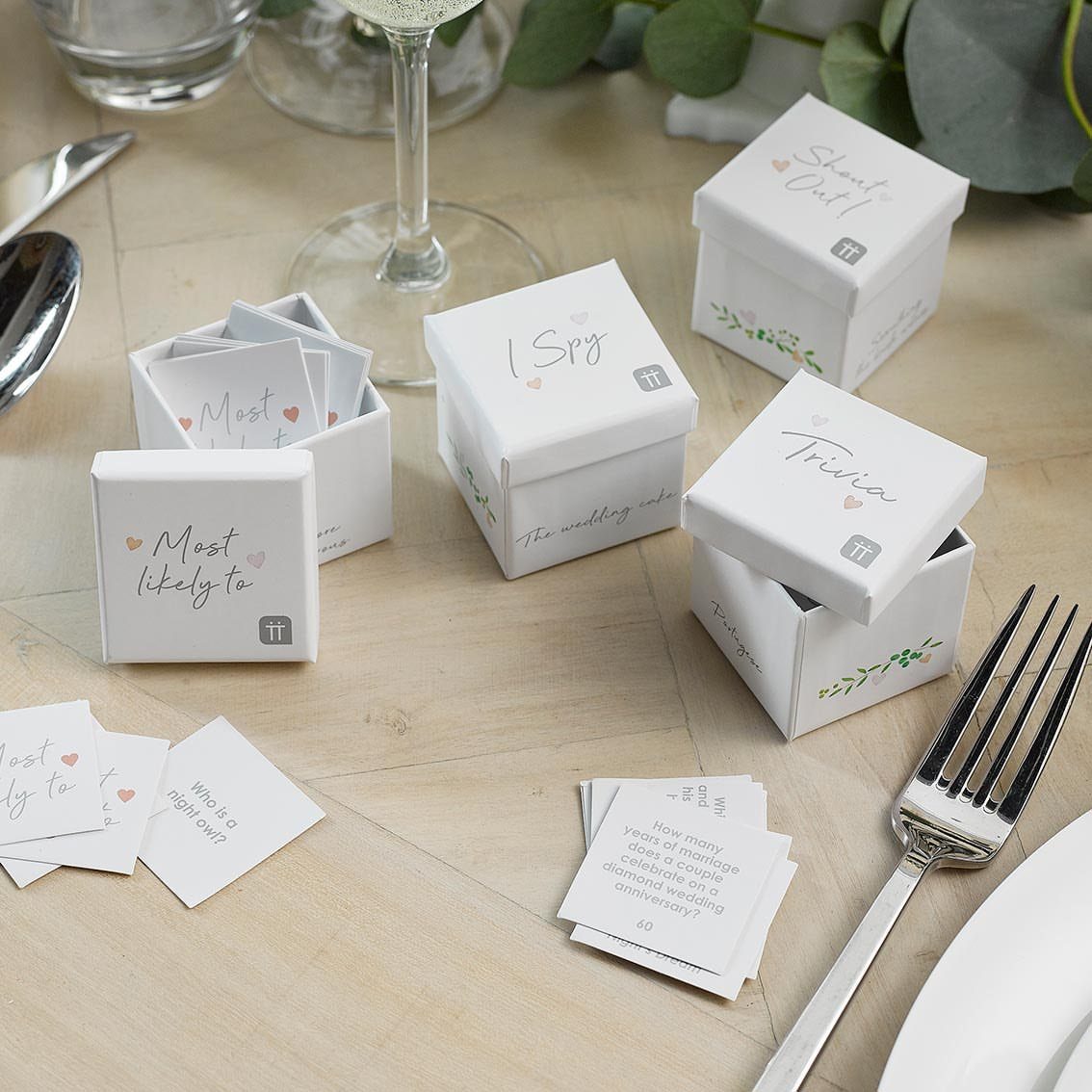
Small labeled boxes let each table choose its own pace. One box holds "Most likely to" prompts, another trivia, another an I Spy list.
Guests pass them around between courses instead of waiting for a single big game.
This kind of box works well when you have guests from different circles who might not have much to talk about yet. The box does the explaining; nobody has to read rules aloud.
Fill each box with enough cards for a few rounds without anyone drawing the same question twice.
Cost stays low if you print labels at home and buy bulk favor boxes. A decorative jar or glass container works too, though the boxes stack flat for transport.
Best for receptions with a sit-down dinner where conversation needs a nudge. Skip it if your crowd already talks easily; the boxes can feel like homework to the wrong group.
Engagement and Interaction
Games at the table do the work of mingling without forcing anyone to circulate before they’re ready. Laughter builds across seats that might otherwise stay quiet between courses, and the best photo moments come from guests caught mid-reaction, not posed.
Table games fit naturally during dinner and speeches, when the floor is occupied and conversation needs a nudge. They fill the gaps between courses without demanding an MC or a microphone.
The reception keeps moving even when the dancing hasn’t started.
Customizing Games
Questions about the couple hit harder than the generic stuff you could find in any wedding magazine. Guests who know half the answers feel smart; those who don’t learn something worth bringing up later.
Questions can cover first dates, favorite trips, or the story of how you met. Teams or individual play both work; a small prize for winners gives the table something to compete over lightly.
I Spy lists get better when the items are yours: a specific tie, a flower crown on a particular guest, the sparkler send-off you have planned.
The hunt runs the whole night instead of one sitting, and guests who complete a card return it for something small: wrapped chocolates, a mini candle, a sticker with your monogram.
Accessibility for All Ages
A game that needs explaining aloud excludes anyone hard of hearing or uncomfortable with attention. The best table games carry their own instructions on the card or box, so a guest can read, understand, and join without asking.
Mixed-age tables need formats that don’t rely on pop culture references or physical speed. Mad Libs works because the grammar skill is universal; photo quizzes work because guessing levels the field.
Avoid games where children compete directly against adults for the same prize; split versions or team play keeps everyone in.
Materials and Setup
Setup means thinking about traffic before guests arrive. A wheel near the bar catches people already standing; a guessing jar belongs where guests pass, not where they must seek it out.
Frequently Asked Questions
What are some fun table games for a wedding?
Mad Libs, Speech Bingo, Find the Guest Bingo, and I Spy cards all work well at tables during the meal or between courses.
They need little setup, cost mostly printing, and suit mixed ages since guests already know formats like bingo or fill-in-the-blank from grade school.
A labeled box of prompts at each table lets guests pass games around during salad without waiting for an MC.
What are some games to play at the table?
Mad Libs with custom stories about the couple, Speech Bingo marking off wedding clichés, Find the Guest Bingo forcing strangers to mingle, and photo quizzes where guests match baby pictures to names all play flat on a table.
A crossword built from the couple’s history works through the salad course.
Most of these just need printed cards; hand each guest their own sheet, or split one between two people if you want to cut the printing cost in half.