
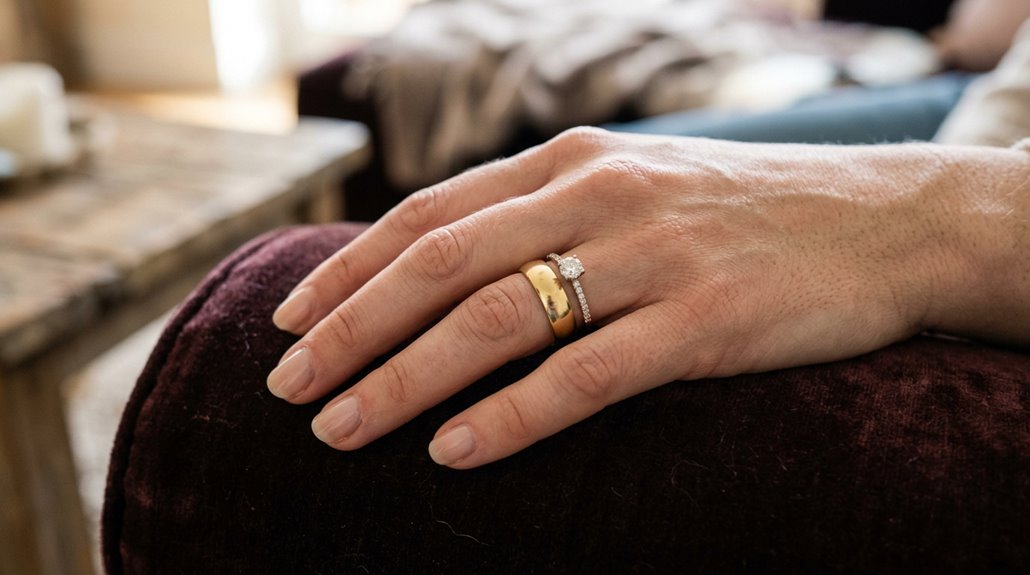
In Western cultures, your wedding ring typically goes on your left ring finger, a tradition rooted in medieval European customs and the debunked belief in the vena amoris, a supposed vein connecting that finger directly to the heart.
However, this convention isn’t universal. Eastern European, Orthodox, and many other cultures place rings on the right hand instead.
Your choice ultimately depends on cultural background, personal preference, and practical lifestyle considerations rather than fixed rules, with countless couples successfully embracing non-traditional placements that reflect their unique circumstances.
Left Hand vs. Right Hand: The Quick Answer
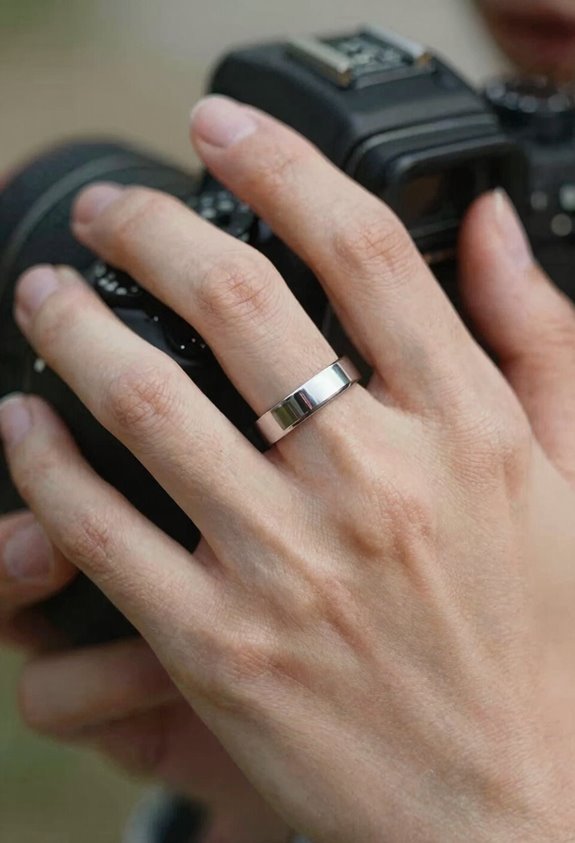
Where you place your wedding ring depends largely on cultural tradition, personal preference, and regional custom. In most Western cultures, you’ll wear your wedding ring on the left hand, specifically on the ring finger. This practice stems from the historical belief in the vena amoris, a supposed vein running directly from the ring finger to the heart. Though scientifically unproven, this tradition remains deeply embedded in Western customs.
Right-hand placement is equally common in other regions. Germany, Austria, Poland, and various Eastern European and Orthodox communities traditionally favor the right hand for wedding rings. Countries like Colombia, Greece, and Russia also frequently practice right-hand wear.
Your choice depends on what feels right for your relationship, lifestyle, and cultural background. Many couples prioritize comfort and practicality over strict tradition.

Why the Left Hand Became Standard in Western Culture
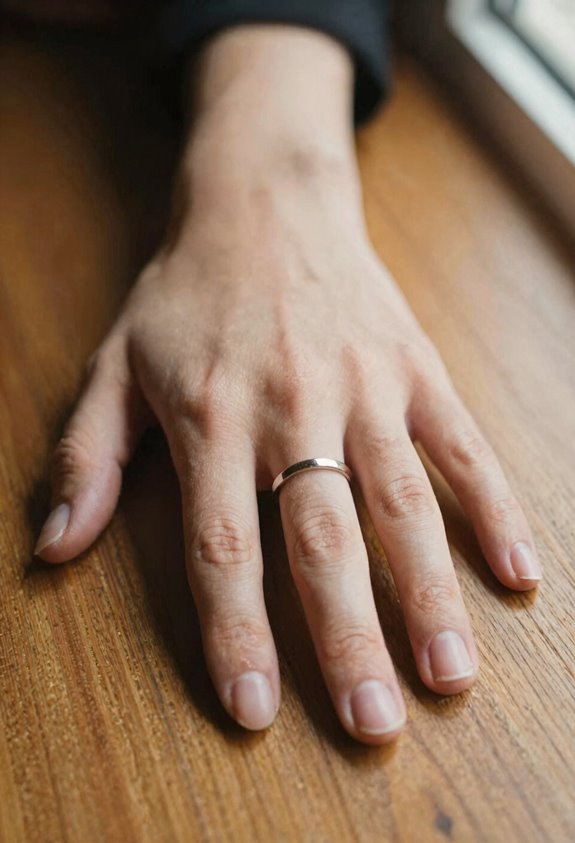
The left-hand wedding ring tradition didn’t emerge overnight, but rather developed through centuries of cultural evolution, religious practice, and romantic symbolism. Medieval European clergy blessed rings and placed them on the bride’s left hand during ceremonies, establishing a religious foundation for the practice. The vena amoris, a vein believed to run directly from the left ring finger to the heart, reinforced this custom among couples seeking tangible connections between their rings and their emotions. Western societies gradually standardized this placement, particularly throughout the British Empire and Western Europe, where the left hand became synonymous with marital commitment. Though scientists later disproved the vena amoris theory, the tradition persisted, transforming from anatomical belief into cultural expectation. Most Western couples maintain this historical practice today, continuing a custom strengthened by generations of weddings and deeply rooted in cultural identity.

Ensure the perfect fit—please refer to our size chart in the images before purchasing! True Commitment - Any Place, Any Time - Maximum Safety - workout, gym, weight lifting, water sports, trekking, climbing or any other physical activity? Our silicone wedding bands will be great in replacing your formal wedding band to keep it safe from being scratched or damaged. It is also perfect for extreme duties & manual labor work such as - constructions, military duties, renovation, painting and more.
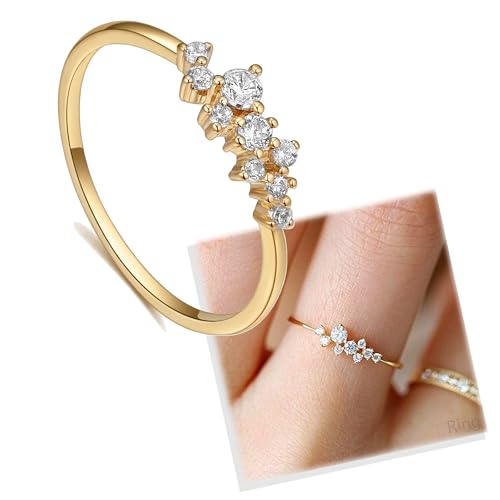
Perfect Fit for Everyday Wear: Crafted with 18K gold plating and vacuum plating, this ring is designed to help maintain a bright, polished look through daily wear, so it stays easy to style over time.
The Vena Amoris: Why the Left-Hand Tradition Stuck (Even If the Science Is Wrong)
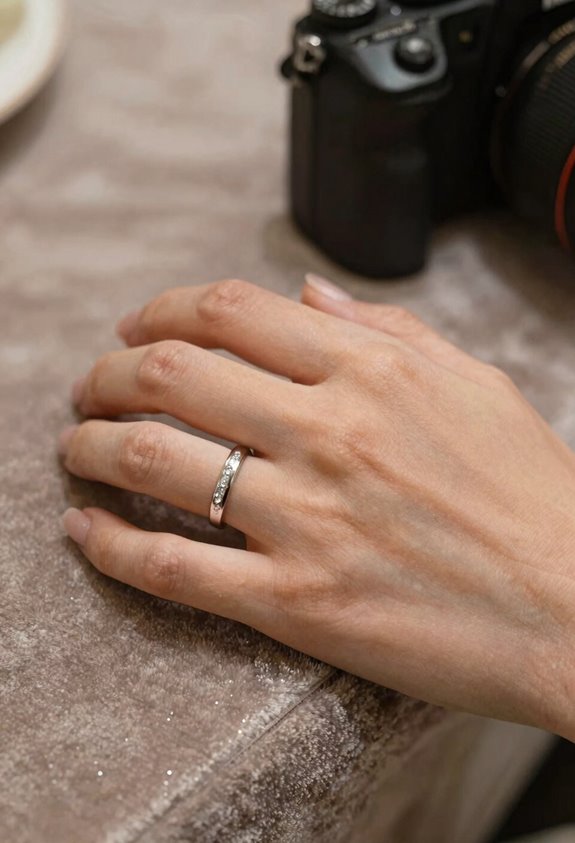
The ancient Romans believed in the vena amoris, a vein they thought ran directly from your left ring finger to your heart, establishing the foundation for centuries of Western wedding tradition. Despite modern anatomy proving no such direct vein exists, the symbolic power of this belief persisted, anchoring the left-hand ring finger as the standard placement across cultures and generations. The tradition endured not because of scientific fact, but because the symbolism, a direct pathway to love itself, proved far more compelling than anatomical accuracy.

Authentic Orthodox Cross Design: Features the iconic Orthodox cross symbol, meticulously crafted to honor religious traditions and serve as a constant reminder of faith.

Premium Material: This stainless steel men's ring is crafted from superior quality stainless steel, known for its strength and durability. It is designed to withstand rust and corrosion, making it an ideal choice for long-lasting wear

Very Attractive Stainless Steel 8mm Cross Wedding Band for Men
Ancient Roman Beliefs Origin
How did an anatomical misconception become one of Western tradition’s most enduring symbols? Ancient Romans believed the vena amoris, a vein running directly from the left-hand ring finger to the heart, existed as a biological truth. This conviction shaped their cultural practices and wedding ceremonies for centuries. Romans began the tradition of placing rings on the left-hand ring finger, associating this finger with a direct emotional connection to the heart itself. Medieval Europeans inherited and perpetuated this Roman belief without questioning its anatomical validity. The vena amoris concept traveled through generations, cementing the left-hand ring-finger placement as the standard across Western cultures. Though science eventually disproved this vein’s existence, the tradition persisted and became integrated into the fabric of modern wedding customs and expectations.
Modern Tradition Versus Science
While ancient Romans anchored their ring-wearing customs to an anatomical fiction, modern couples continue this practice for reasons far removed from biological claims. The vena amoris, that mythical vein directly connecting your left ring finger to your heart, has no scientific basis. Modern anatomy definitively disproves this theory, yet the left hand tradition persists worldwide.
Why does this endure? Consider these factors:
- Emotional symbolism overshadows anatomical accuracy
- Cultural continuity reinforces generational expectations
- Ritual meaning transcends scientific verification
- Social recognition standardizes left-hand placement
Contemporary couples embrace the left hand not because they believe in the vena amoris, but because the symbolism resonates deeply. The tradition’s power derives from its cultural significance and emotional resonance rather than medical claims. This represents meaningful ritual rooted in social practice rather than outdated physiology.
Countries Where Wedding Rings Go on the Right Hand
Across much of Europe and beyond, wedding ring placement follows distinctly different customs than those observed in English-speaking nations. In Germany, Austria, Poland, the Netherlands, Norway, Bulgaria, Lithuania, and Ukraine, the right hand tradition dominates wedding ceremonies. This right hand practice reflects deeply rooted cultural values and historical customs unique to these regions. Some couples in Orthodox and certain Catholic communities begin with the ring on the left hand, then move it to the right during the ceremony itself. Latin America also embraces right-hand placement in many areas, where this tradition carries significant meaning. Regional variations in ring placement correspond to specific cultural and religious practices. Your choice of right hand or left hand placement depends on your personal preferences, cultural background, and what feels meaningful to your partnership.

Design: 2mm 4mm 6mm 8mm wedding rings for men and women. silver plated, rose gold plated, rainbow, 24k gold plated color, high polish finish, classic dome design, never out of date

Premium 925 Sterling Silver Rings: Crafted from high-quality 925 sterling silver, these couple rings are nickel-free and lead-free, ensuring a hypoallergenic and comfortable fit. The sleek silver finish offers a timeless look that never fades

Southpaws and Ring Placement: A Practical Trade-off
Beyond cultural traditions and regional customs, left-handed individuals face a unique consideration when deciding where to wear their wedding ring. As a southpaw, you’ll navigate practical trade-offs that traditional ring placement doesn’t address.
Consider these practical options:
- Wearing your ring on your right hand to minimize interference with dominant-hand work
- Choosing a lightweight band that reduces distraction during manual tasks
- Moving your ring between hands depending on your daily activities and routines
- Removing your ring entirely during work, then wearing it on your left hand afterward
Your personal comfort and lifestyle heavily influence this decision. Ring weight, job requirements, and daily habits determine the best placement for your circumstances. Many left-handed individuals prioritize functionality over tradition, selecting placements that suit their unique needs and preferences.

♥I LOVE YOU♥ The most romantic words is "I LOVE YOU" more than I could say! No matter it is a famous brand or not, but it is your unique ring in the world!♥I Love You means: Inject, Loyal, Observant, Valiant, Enjoyment, Yes, Obligation and Unison.

Material: Crafted from premium brass with thickened 14K white gold plating, long-lasting color, fade-resistant, and hypoallergenic. Inlaid with AAAAA+ cubic zirconia with precision cutting, sparkles brilliantly under light for a luxurious texture

White and Blue Cz White IP 2pc Ring sets For Women And White IP Tungsten Carbide Matching Wedding Bands For Men. Perfect Couples Rings.Paved with aaa+ clear sparkling cubic zirconia stones.Every zircon is inlaid and won't fall off.hypo-allergenic, never- green
Your Engagement Ring and Wedding Band: Should You Wear Both on the Wedding Day?
On your wedding day, you’ll face a meaningful decision about how to wear your engagement ring and wedding band together. You can stack both rings on your left hand, solder them permanently into one unified piece, or separate them by wearing each on different hands according to your comfort and preference. Your choice depends entirely on what feels practical and aesthetically right for you, with no established rules dictating the “correct” approach.
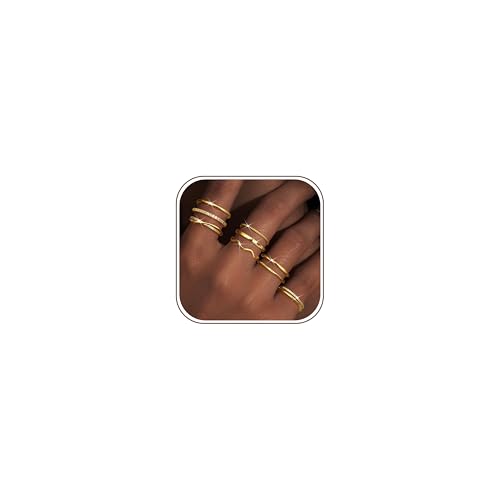
Trendy Stackable Rings for Women: Dainty adjustable open ring set comes with 9pcs gold band rings in different designs, such as CZ knuckle gold thin rings, thumb ring, rope rings, simple circle thin rings, etc. These band rings are not only good looking when worn alone, but also unique and beautiful when stacked as desired

Material: Crafted from premium brass with thickened white gold plating, long-lasting color, fade-resistant, and hypoallergenic. Inlaid with AAAAA+ cubic zirconia with precision cutting, sparkles brilliantly under light for a luxurious texture

Stacking Both Rings Together
How you choose to wear your engagement ring and wedding band after the ceremony reflects your personal style and practicality. Stacking both rings on your left ring finger creates a unified, elegant appearance that many couples prefer. You can explore several approaches when considering this option:
- Wear rings stacked in their traditional order, with the wedding band closest to your hand
- Solder the rings together permanently, ensuring they remain as a fused set during daily wear
- Mix and match different bands to achieve variations in width, metal, and design
- Move your engagement ring to your right hand for certain occasions while keeping the band on your left
There are no universal rules governing ring placement. Your decision depends on personal preference, comfort level, and how well the rings fit together on your finger.
Separating Rings By Hand
While stacking both rings together creates a cohesive aesthetic, many couples find that wearing their engagement ring and wedding band on separate hands offers greater flexibility and comfort. You might choose to keep your engagement ring on your right hand while positioning your wedding band on your left hand ring finger, a practical compromise that reduces daily interference. This separation allows you to pair rings with different outfits, activities, and occasions without constraint. Some couples discover that wearing rings apart accommodates work environments, hobbies, or personal preferences better than stacking. The arrangement also prevents excessive wear on either ring, extending their longevity. Separating your rings by hand represents a personalized approach that honors both tradition and practicality, letting you embark on married life with arrangements tailored to your lifestyle and comfort needs.
Orthodox, Catholic, and Jewish Traditions: When Right Hand Is Customary
Across Orthodox, Catholic, and Jewish wedding ceremonies, the right hand takes precedence in several meaningful contexts, departing from the Western left-hand convention many couples anticipate. These traditions honor distinct ritual sequences and symbolic meanings:
- Orthodox ceremonies often place the ring on the right hand during the exchange, with movement to the left-hand ring finger occurring later in many communities.
- Jewish customs sometimes position the bride’s ring on the right hand or index finger initially, then relocate it to the left-hand ring finger afterward.
- Catholic practices occasionally use the right hand for initial blessing or exchange, depending on regional and liturgical norms.
- The choice reflects ritual sequence, symbolism, and regional variation within each faith tradition.
Wedding ring placement carries cultural and spiritual significance rooted in specific theological and liturgical practices within each faith community.

✦18K Rose Gold Plating✦: Luxurious 18K Rose gold plating for a radiant and high-quality finish that enhances the ring’s elegance.

HIGHLIGHTS: This ring features a 6mm x 10mm pear-shaped cubic zirconia with 88 facets, surrounded by a halo of 1.2mm CZ stones, and set on a 1.8mm-wide eternity band.

Stack Them or Separate Them? Making the Choice That’s Right for You
Once you’ve considered tradition and cultural customs, you’ll want to evaluate whether stacking your engagement and wedding rings together or wearing them separately suits your lifestyle best. Stacking creates a unified, cohesive look on your left ring finger, while separating them onto different hands or fingers reduces potential interference with daily tasks and work activities. Your choice depends on practical factors like your dominant hand, profession, and personal aesthetic preferences rather than any universal rule.

Orthodox Cross Design--The Orthodox Cross is the symbol of Christ and the Christian faith,recalling Jesus Christ’s crucifixion and the symbol of his Passion, death and resurrection (1 Corinthians 15:3-4),sacred and classic,wearing this to show your Christianity faith or belief with Crucifix Ring.
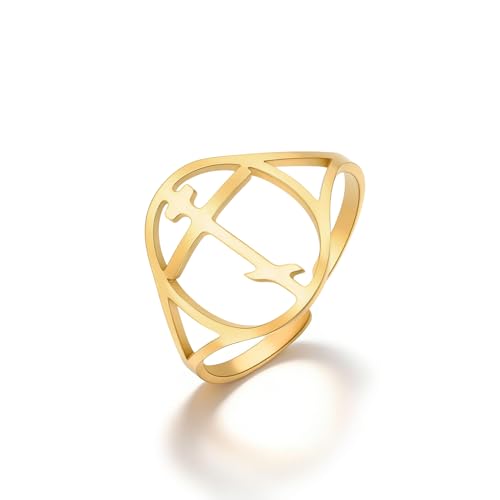
DESIGN CONCEPT- This adjustable open ring features the classic three-bar Orthodox cross design, also known as the Byzantine or Russian cross. The top bar represents the inscription above Christ (“King of the Jews”), the middle bar holds the central beam of crucifixion, and the slanted bottom bar—the footrest—symbolizes the penitent thief’s ascent to heaven and the unrepentant thief’s descent. A meaningful daily reminder of victory over death and eternal life

Solid Stainless Steel, Rust-Proof, High-Polished - Perfect for Water, Shampoo, and Detergent.
Stacking Rings Together
How you choose to wear your engagement ring and wedding band depends on your lifestyle, aesthetic preferences, and practical comfort needs. Stacking rings together on your left hand creates a unified, cohesive look that many couples appreciate. Consider these key aspects when deciding to stack:
- Visual Impact – Stacking produces a distinctive, layered appearance that showcases both rings simultaneously
- Soldering Option – Some couples solder their rings together after marriage, creating one permanent piece
- Metal and Style Mixing – You can combine different metals, widths, and designs for customized aesthetics
- Practical Comfort – Assess weight, movement during daily tasks, and potential resizing needs before committing
Stacking rings on the left hand offers elegance and intentional design. You should evaluate whether this arrangement suits your daily activities and personal comfort level before making your final decision.
Wearing Rings Separately
Whether you keep your engagement ring and wedding band together or wear them on different fingers entirely depends on your daily activities, comfort level, and personal preferences. Many couples choose to wear their rings separately for practical reasons. You might move your engagement ring to your right hand for daily wear while keeping your wedding band on your left ring finger, creating a balanced compromise. This approach reduces interference during manual work and protects delicate settings from damage. Others prefer lightweight rings specifically chosen to minimize distraction when worn separately. Some couples alternate which hand holds which ring based on their schedule. There are no universal rules governing this decision. Your choice reflects your lifestyle, comfort needs, and the personal meaning you assign to each band.
Won’t Your Ring Get Damaged? Why Placement Matters for Your Daily Life
If you work with your hands or spend your days typing, building, or engaging in manual labor, you’ll likely wonder whether wearing your wedding ring on the traditional left ring finger truly works for your lifestyle.
Ring placement significantly impacts durability and comfort. Consider these practical strategies:
Ring placement significantly impacts durability and comfort—thoughtful positioning protects your investment while maintaining everyday wearability.
- Move your engagement ring to your right hand during workdays, keeping your wedding band on the left
- Choose lightweight bands that minimize snagging and interruption during physical tasks
- Solder rings together to reduce movement and potential damage from daily wear
- Reserve wearing both rings on your left hand for special occasions only
Your dominant hand experiences more friction and impact, making it vulnerable to scratches and bent prongs. Protecting your investment requires assessing where you’ll actually wear your rings based on your professional demands and lifestyle activities.

PREMIUM TUNGSTEN CARBIDE: Forged from premium tungsten carbide, this mens ring combines rugged durability with refined craftsmanship, textured, non-tarnish and durable

White Cz Yellow IP 2pc Ring sets For Women And Yellow IP Titanium Matching Wedding Bands For Men. Perfect Couples Rings.Paved with aaa+ clear sparkling cubic zirconia stones.Every zircon is inlaid and won't fall off.hypo-allergenic, never- green

Width Options:IV(4mm)/VI(6mm)/VIII(8mm). Different Widths And Colors Tungsten Wedding Bands.
When Your Ring Moves During the Ceremony: Regional Customs Explained
Across different cultures and religious traditions, the wedding ring doesn’t always stay in one place throughout the ceremony and married life. In countries like Turkey, Lebanon, Syria, Romania, and Brazil, couples commonly wear the ring on the right hand beforehand, then move it to the left during the ceremony itself. This practice reflects deep-rooted ceremony customs that honor both tradition and transition into marriage. The historical belief in the vena amoris, the vein of love running from the ring finger to the heart, historically supported left-hand placement in Western regions. Some couples adopt hybrid approaches, positioning rings strategically throughout different celebration moments. Understanding these regional variations allows you to approach your wedding planning with cultural awareness and respect for the meaningful customs surrounding this significant commitment.

PRICE FOR 1PC ONLY – 6MM wide, women ring size 7.5 (size chart 5-15 available). The listing price is for a single ring only, the men's and women's rings are listed separately with a variety of sizes available in the size chart. To form a pair, kindly purchase two rings, this flexibility ensures you can find the perfect fit for your promise ring.
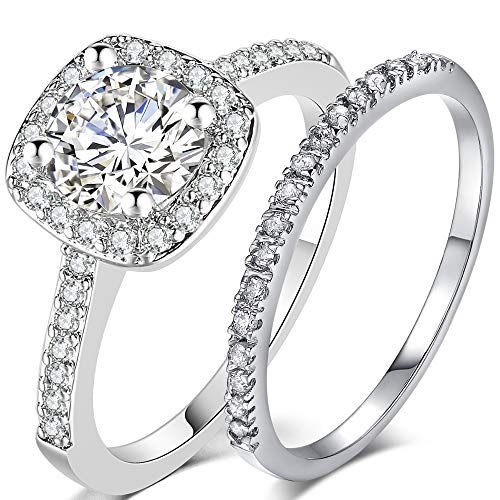
Rhodium Plated on Brass, Wont Rust or Green Finger Easily

White and white Cz White IP 2pc Ring sets For Women And White IP Titanium Matching Wedding Bands For Men. Perfect Couples Rings.Paved with aaa+ clear sparkling cubic zirconia stones.Every zircon is inlaid and won't fall off.hypo-allergenic, never- green
What Happens If You Wear Your Ring on the “Wrong” Hand?
The decision to wear your wedding ring on your right hand instead of your left doesn’t carry the social consequences many assume it might. Ring placement reflects personal practicality rather than commitment level. Consider these practical reasons for choosing your right hand:
- Left-handed individuals often wear on right to avoid interference with writing and daily tasks
- Professional demands in certain fields necessitate moving rings to protect them from damage
- Cultural traditions in some regions normalize right-hand placement for married individuals
- Personal comfort and lifestyle preferences guide placement decisions without judgment
Many couples discover that wearing on left becomes impractical over time. You might shift your ring to your right hand during work, then move it back for social occasions. Your choice should align with your life and values.
Your Ring, Your Hand: How Personal Meaning Overrides Tradition
Why do you wear your ring where you do? Your personal meaning and lifestyle choices can absolutely override tradition when selecting which hand displays your wedding band. While the left hand remains customary in many Western cultures, your comfort, handedness, and daily activities take priority over convention. If you work with your hands regularly, you might choose your right hand to minimize interference or potential damage to the ring. Some couples embrace alternative arrangements entirely, stacking multiple bands or soldering rings together for symbolic reasons. Others select the right hand based on cultural background or personal preference. The hand you choose reflects your unique symbolism, comfort level, and life circumstances rather than adhering to fixed standards.