
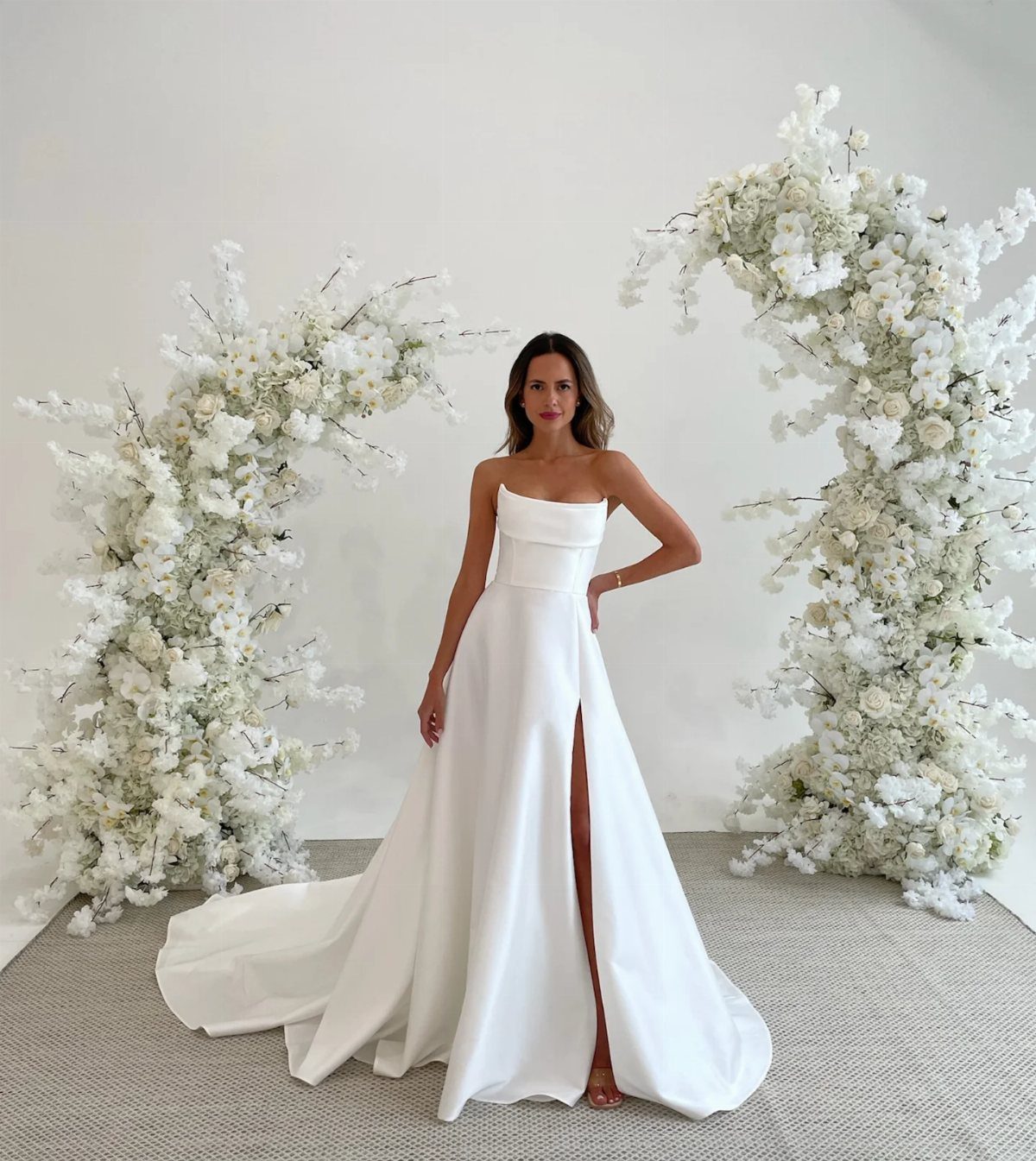
An A-line satin gown gives you a fitted bodice and a skirt that opens gradually from the natural waist to the hem, which flatters most body types without requiring a tight fit through the hips or thighs.
The fabric choice matters because satin has enough weight to skim your body rather than cling, and it holds clean lines in both simple and structured designs.
Satin finishes with a smooth surface that photographs well in low light, and you can choose between duchess satin for more structure or standard bridal satin for softer drape.
1. Satin A-line Wedding Dress
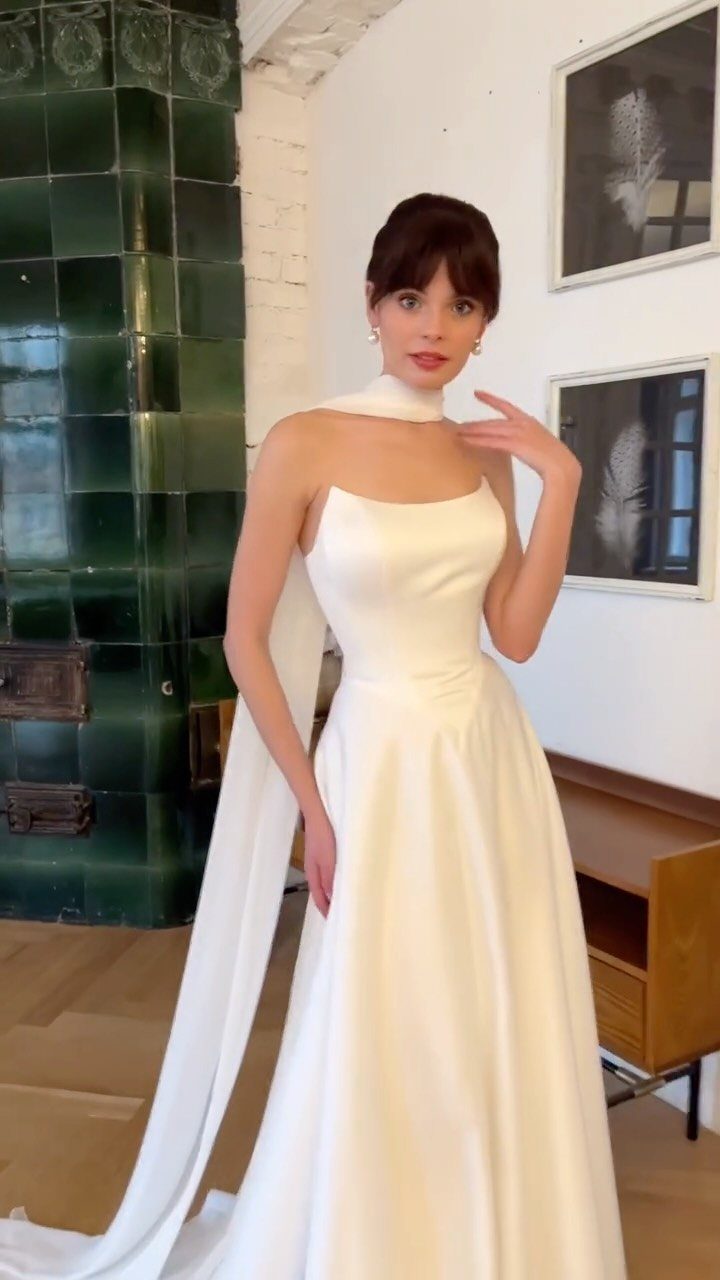
The silhouette narrows at the bodice and opens gradually from the natural waist to the hem, which gives you shape through the torso without a tight fit below.
Satin keeps the line clean because the fabric has enough weight to skim rather than cling.
The fit works for most body types.
If you carry weight in your hips or thighs, the flare balances your proportions. If you have a straighter frame, the defined waist creates shape.
Satin shows creases, so plan to steam or press it close to the ceremony.
2. Strapless A-line Dress
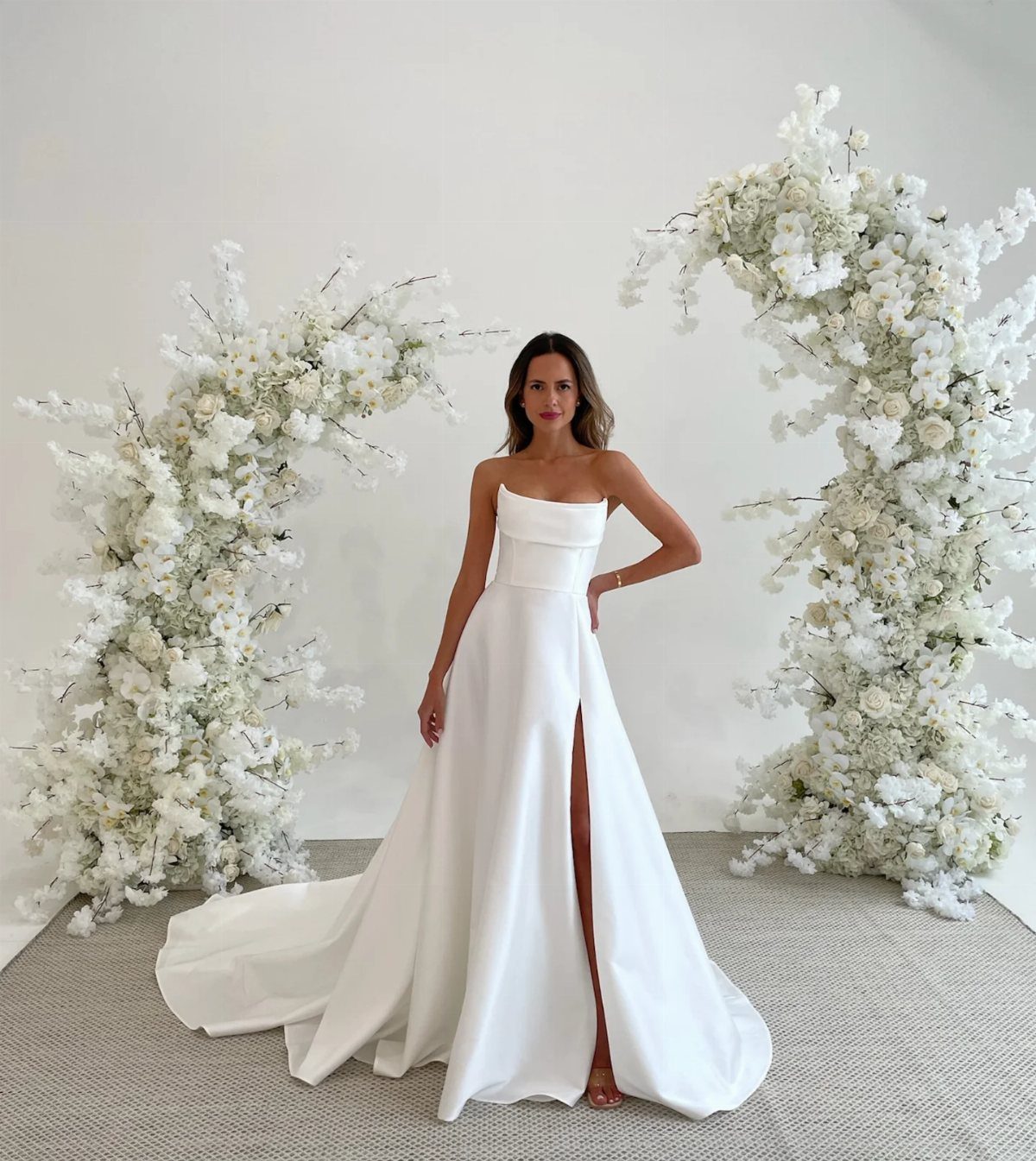
A strapless bodice keeps the focus on your shoulders and collarbones, and it needs to be fitted enough to stay put without adjusting. Most strapless gowns use boning or interior structure to hold the fabric in place.
If you have broad shoulders or a fuller bust, a sweetheart neckline softens the top edge. A straight-across neckline sits higher and shows less skin, which reads more modern.
Bring a strapless bra to your fitting. The gown may have cups sewn in, but you will want to know how it sits with or without one before the day.
3. Lace A-line Dress
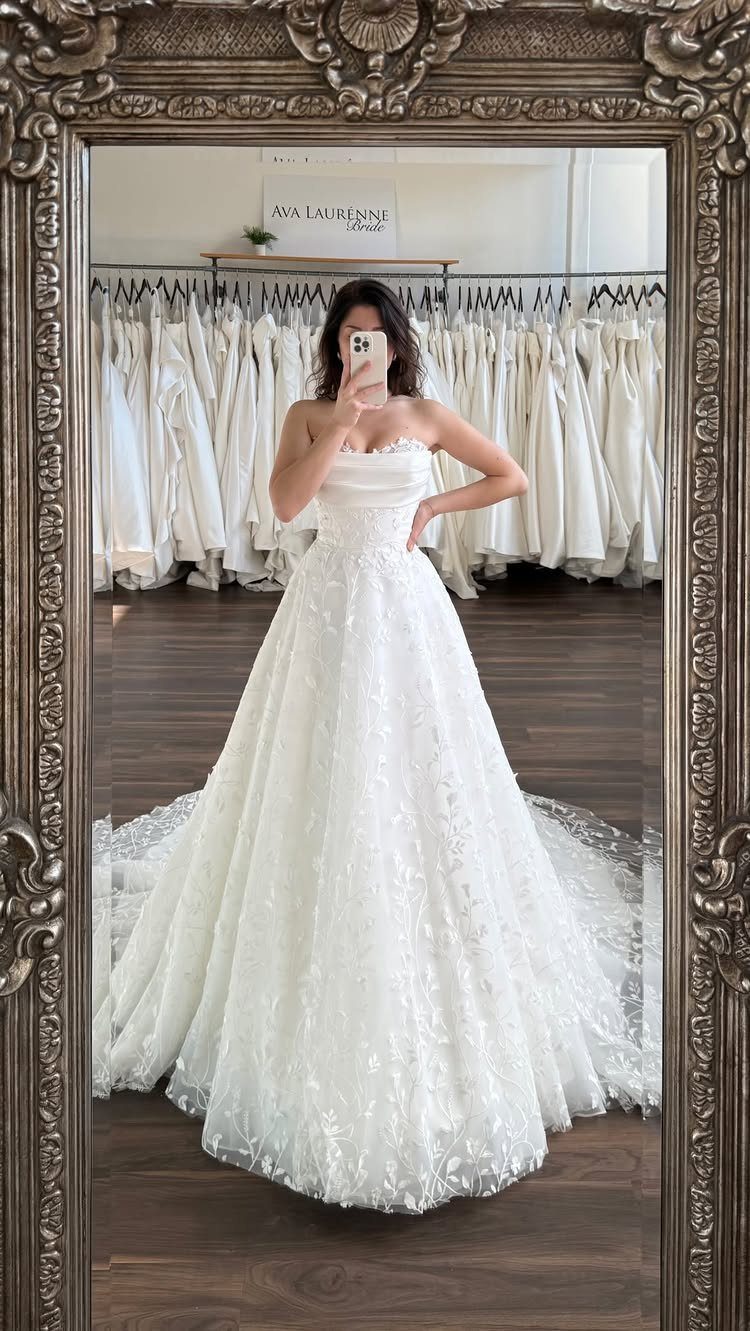
Lace adds texture without changing the silhouette, and it works over satin or on its own. Some gowns use lace for the entire skirt, others layer it over a solid base so the pattern floats above the fabric.
If the lace is appliquéd, it will have visible edges that create dimension.
If it is sewn flat, it reads more subtle. Both hold up through a long day, but appliqué can snag on jewelry or rough surfaces.
Check whether the lace is lined. Unlined lace shows skin and reads more delicate, lined lace gives you coverage and a smoother fit.
4. Satin Ball Gown
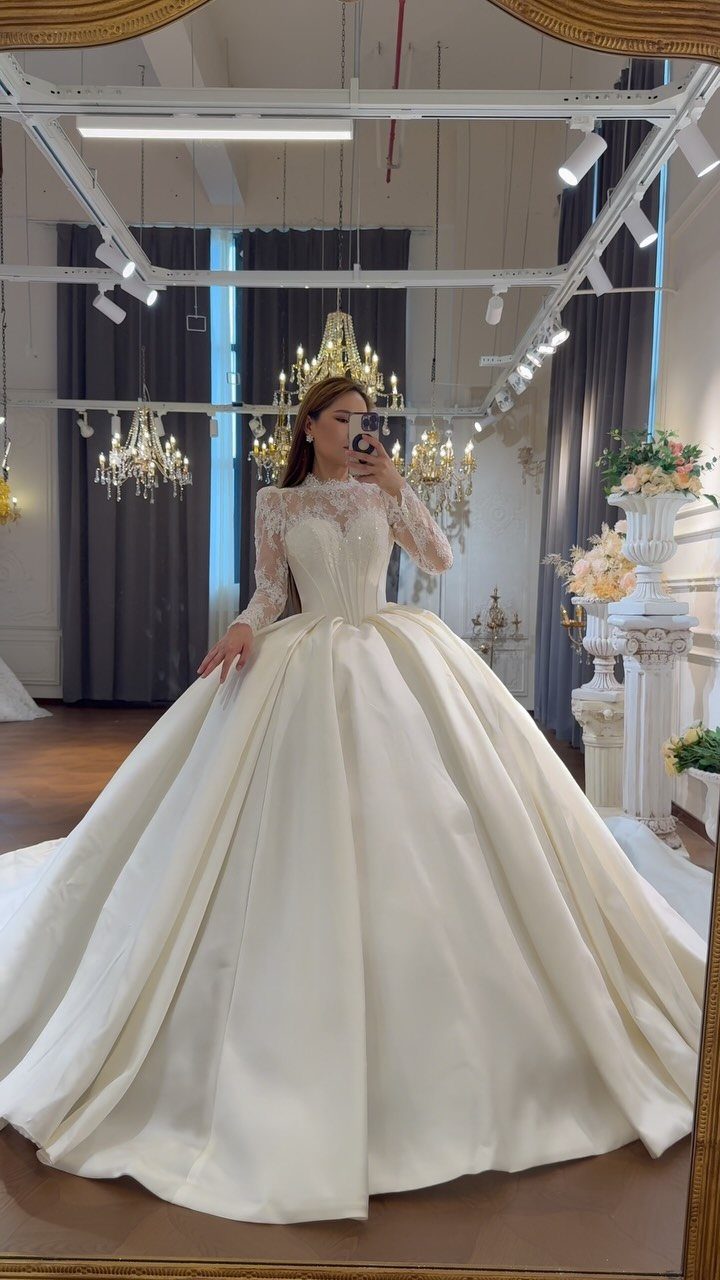
A ball gown skirt starts at your natural waist and falls in a full circle, which creates volume without adding weight to the bodice. Satin holds the shape because it has enough structure to stand away from your body.
This style works if your venue has space for the skirt to move. A narrow aisle or a tight reception floor will catch the hem, so factor in where you will be standing and walking.
The skirt can be heavy. If you are wearing this for 8 hours or more, ask about a petticoat with fewer layers or a lighter lining.
5. Duchess Satin Gown
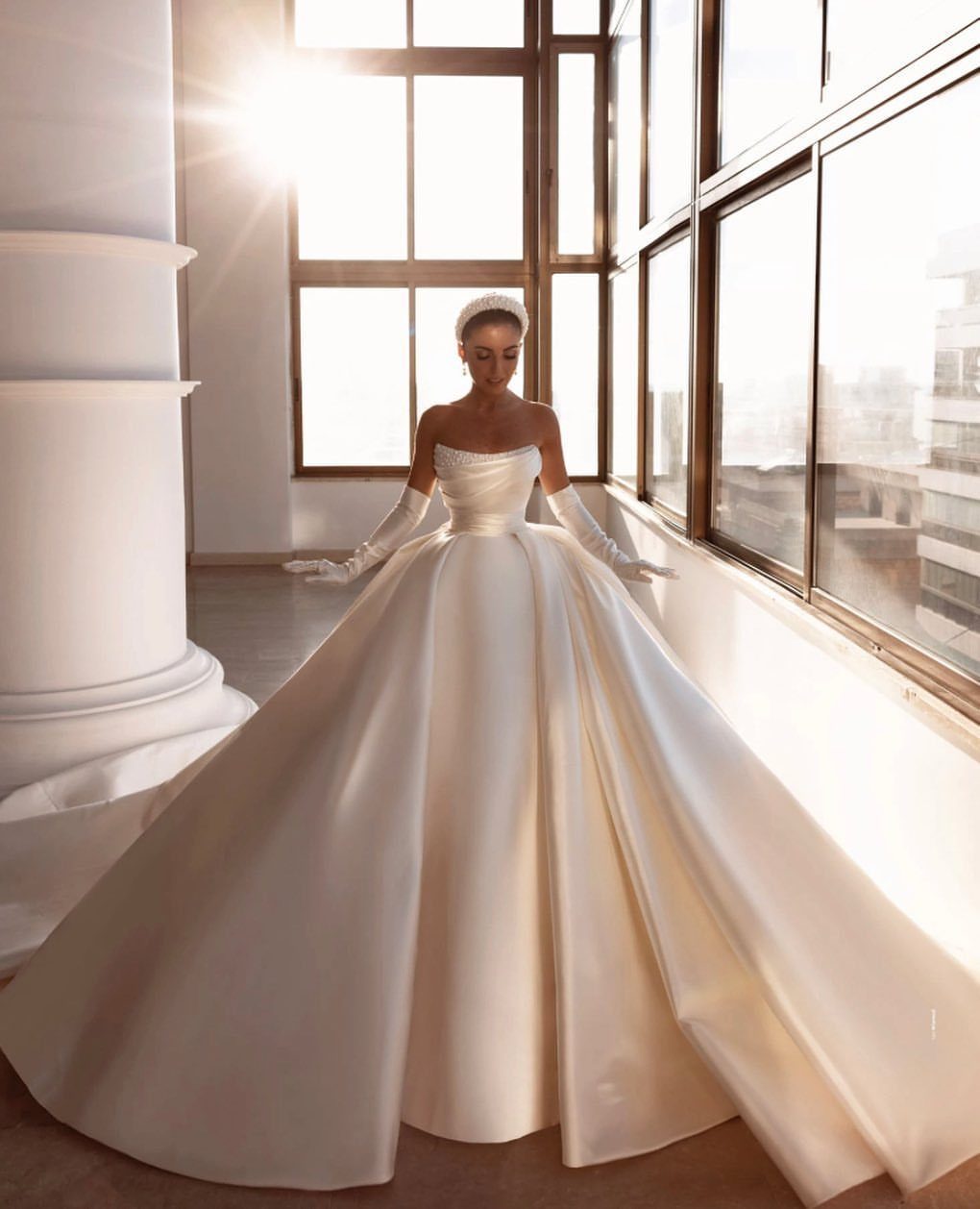
Duchess satin is thicker and heavier than standard bridal satin, which gives the gown more structure and a matte-to-slight sheen finish. The fabric holds its shape through the bodice and skirt, so you get clean lines without extra boning.
This weight works if you want a gown that feels formal and substantial. It also holds up in outdoor settings because it does not wrinkle as easily as lighter fabrics.
You gain weight, though.
Duchess satin adds pounds to the dress, which matters if you are wearing it all day or dancing. Try it on and walk around before you commit.
6. A-line Dress with Fuller Skirt
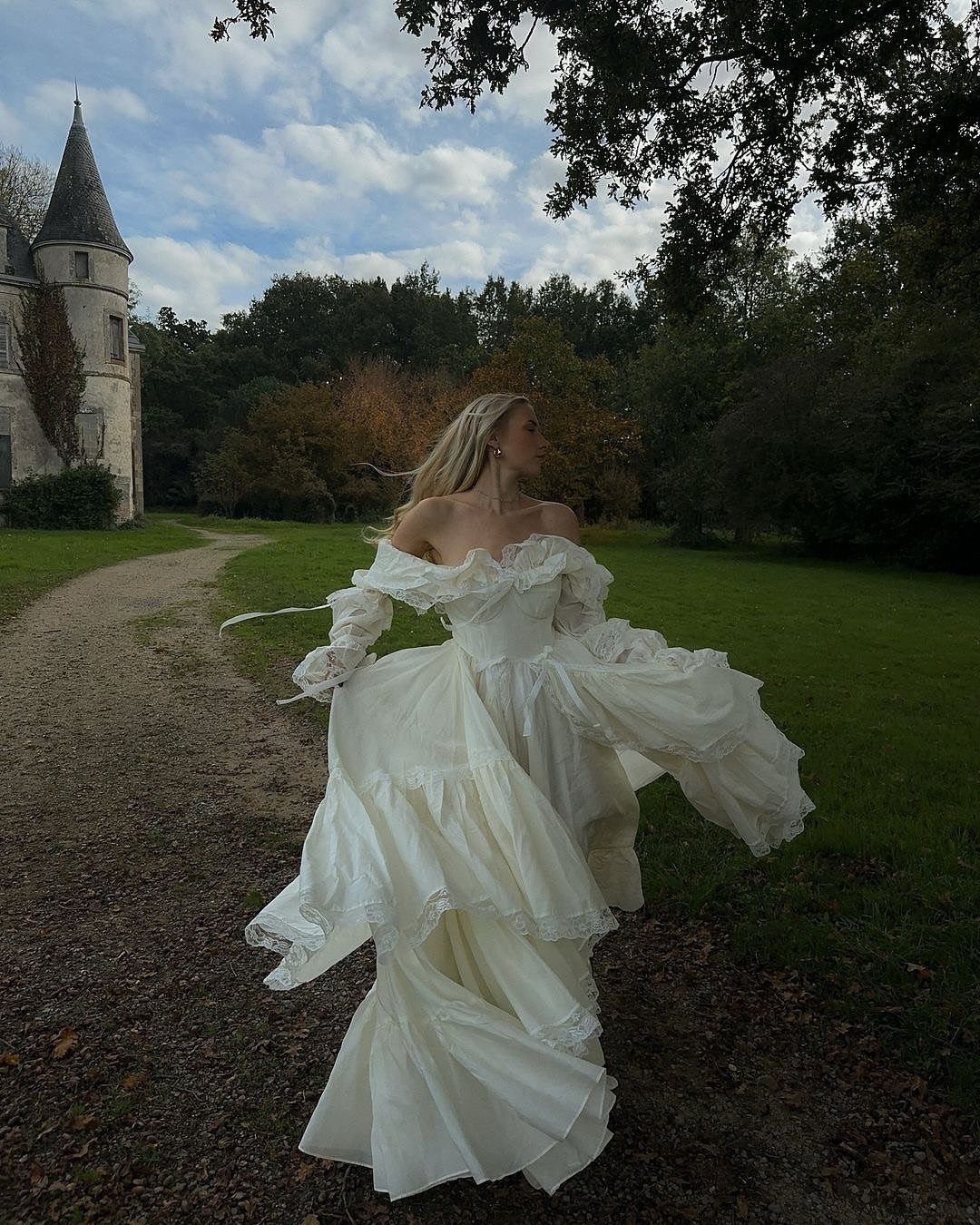
A fuller skirt adds volume below the waist, which balances a fitted bodice and gives the gown more presence. The skirt still opens gradually from the waist, but it uses more fabric or layers to widen the silhouette.
This style works if you want the fit of an A-line with the drama of a ball gown. The extra fabric also helps if you are taller, since the added volume keeps the proportions from reading too narrow.
Plan for the width when you choose your venue. A fuller skirt takes up more space in a car, a narrow aisle, or a small dance floor.
7. High-neck A-line Dress
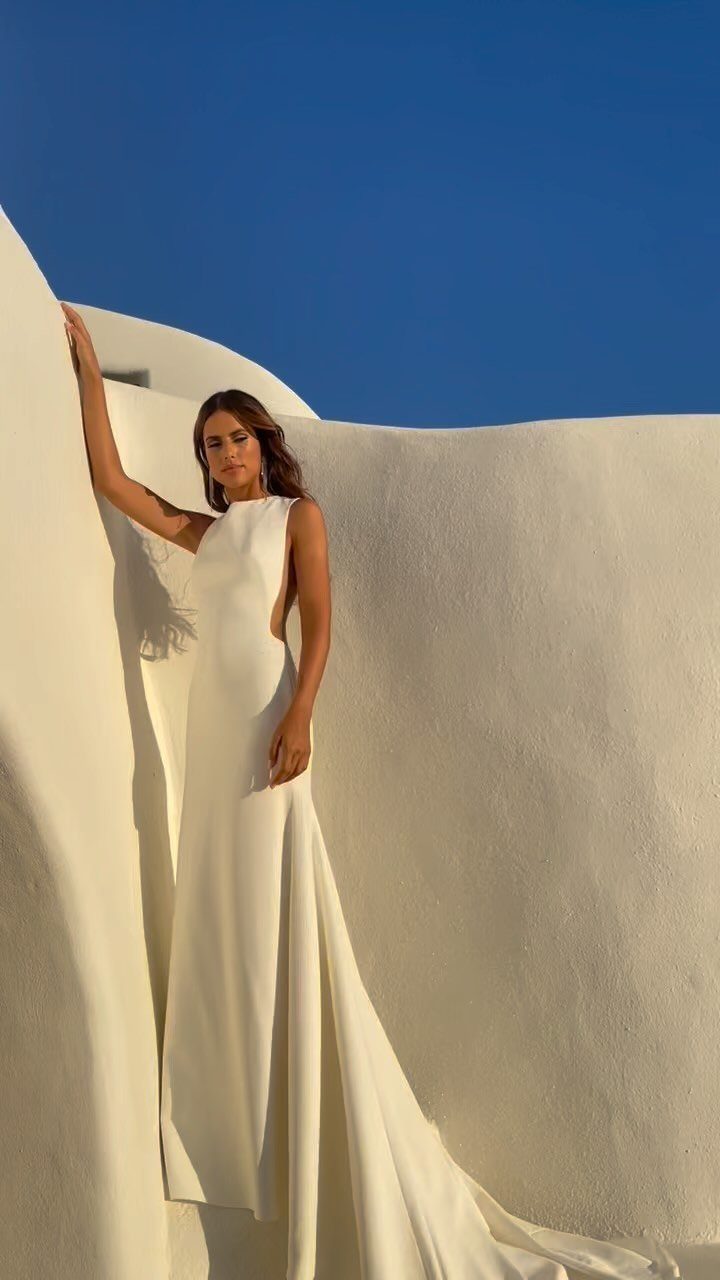
A high neckline covers your collarbones and sits close to the base of your throat, which gives the gown a covered, formal look.
The satin shows the neckline cleanly because the fabric has enough body to hold the edge without gaping.
This style works if you want coverage through the bodice or if your venue is conservative. It also balances a low or open back, since the front stays modest.
The fit matters.
A high neck that is too loose will fold or shift, and one that is too tight will pull. Have it fitted so it sits flat without pressing into your skin.
8. Floral Lace A-line Dress
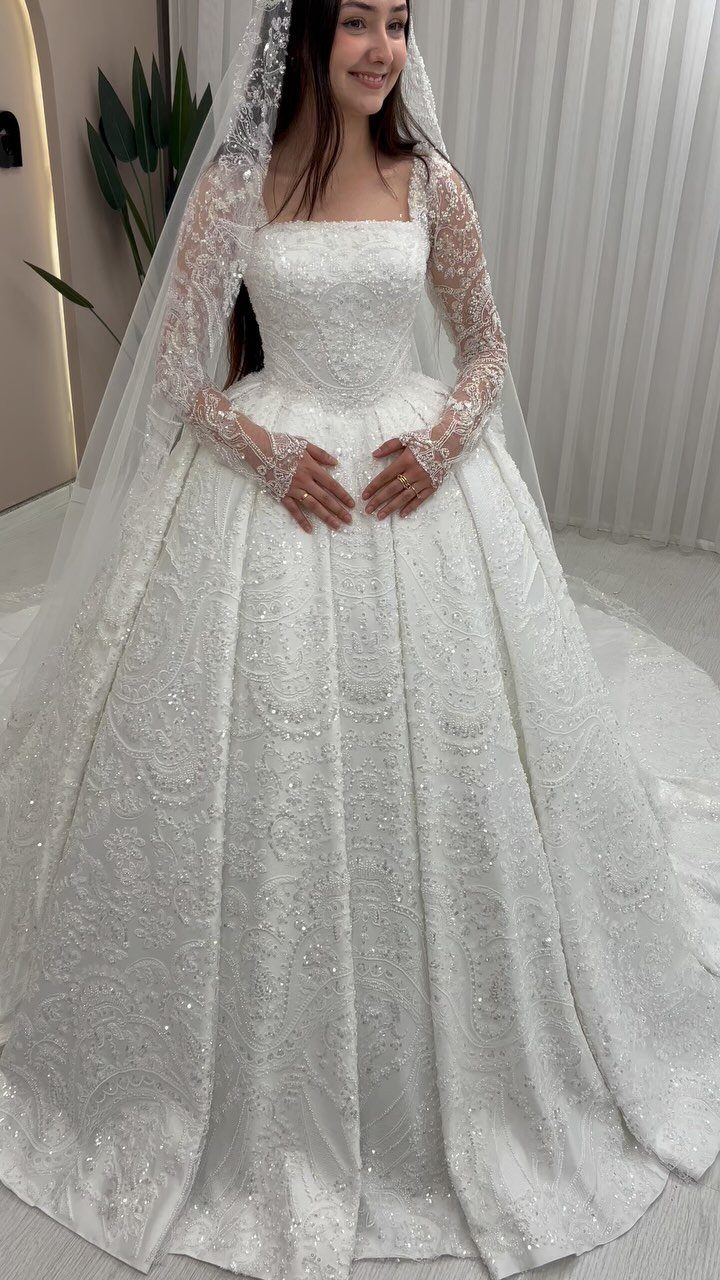
Floral lace uses motifs shaped like petals, leaves or vines instead of geometric patterns, which gives the gown a softer, more romantic look.
The lace can sit flat against the fabric or stand off it in appliqué, and both hold detail well.
If the lace has sequins or beading, it will catch light and add texture. Leave it plain and the pattern stays quiet.
Check how the lace is finished at the edges.
Cut and applied individually, each motif gets a raised edge that adds texture. If the lace is one continuous layer, the pattern blends into the fabric.
9. A-line with Skirt Slit
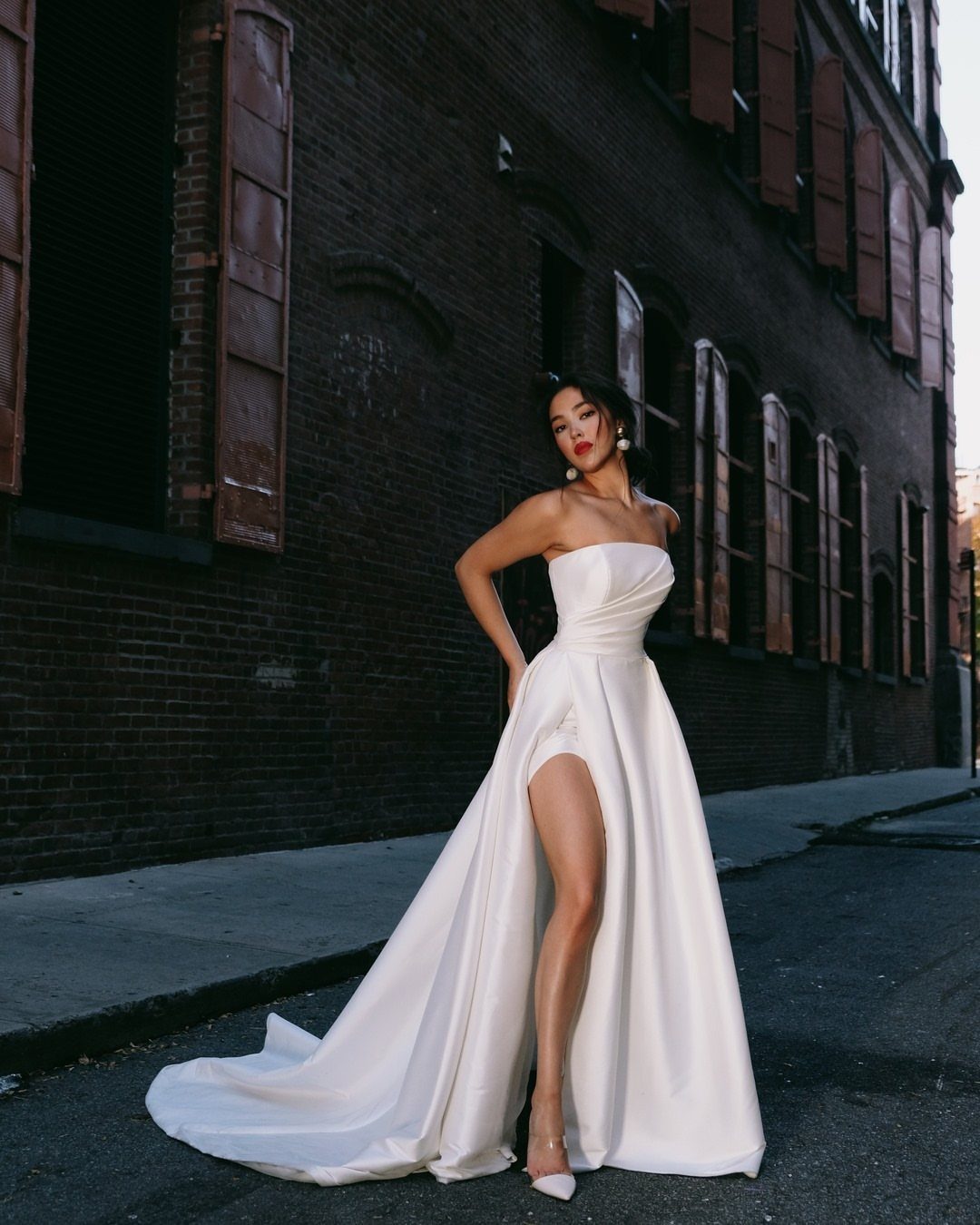
A slit in the skirt opens from the hem upward, usually along one leg, which lets you move more easily and shows your shoes. The satin holds the fold cleanly, so the slit stays defined rather than flaring open.
If you are dancing or walking outdoors, the slit gives you room without lifting the hem. It also breaks up the volume of the skirt, which works if you want less fabric around your legs.
Decide how high the slit goes.
A lower slit, ending mid-thigh, gives you movement without much exposure. A higher slit, reaching the upper thigh or hip, reads more modern but requires confidence and careful posing.
10. Strapless Mikado A-line with Bow
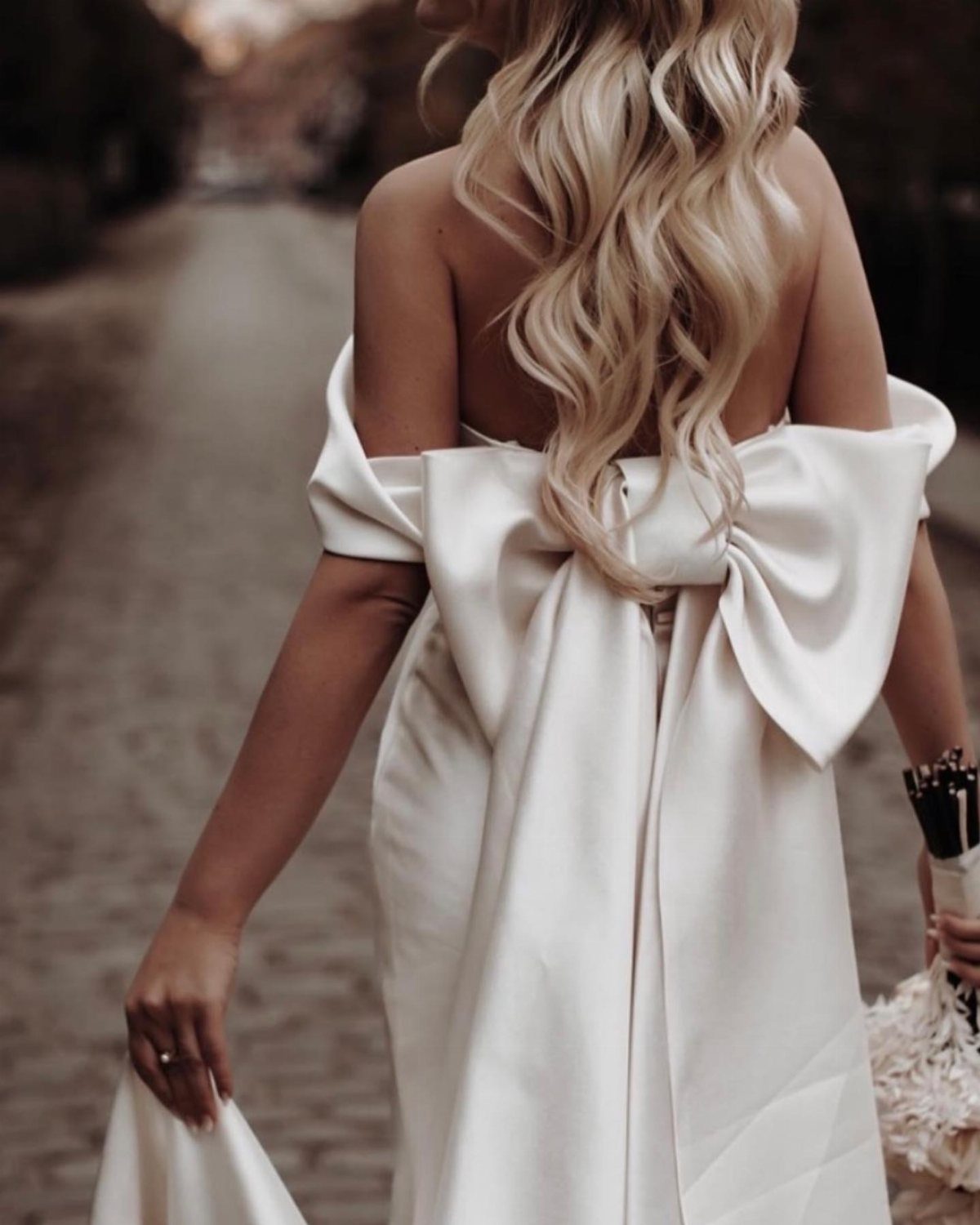
A bow on the back creates a focal point and adds structure, especially when the bow is made from the same satin as the gown.
Mikado satin is thicker than standard bridal satin, so the bow holds its shape and sits stiff rather than soft.
The bow works if you want detail on the back without lace or beading. It also adds width at the waist, which balances a narrow bodice.
The size matters.
A large bow reads formal and structured, a smaller bow reads more restrained. Try the gown on and look at yourself from behind before you settle on the size.
11. A-line with Long Sleeves
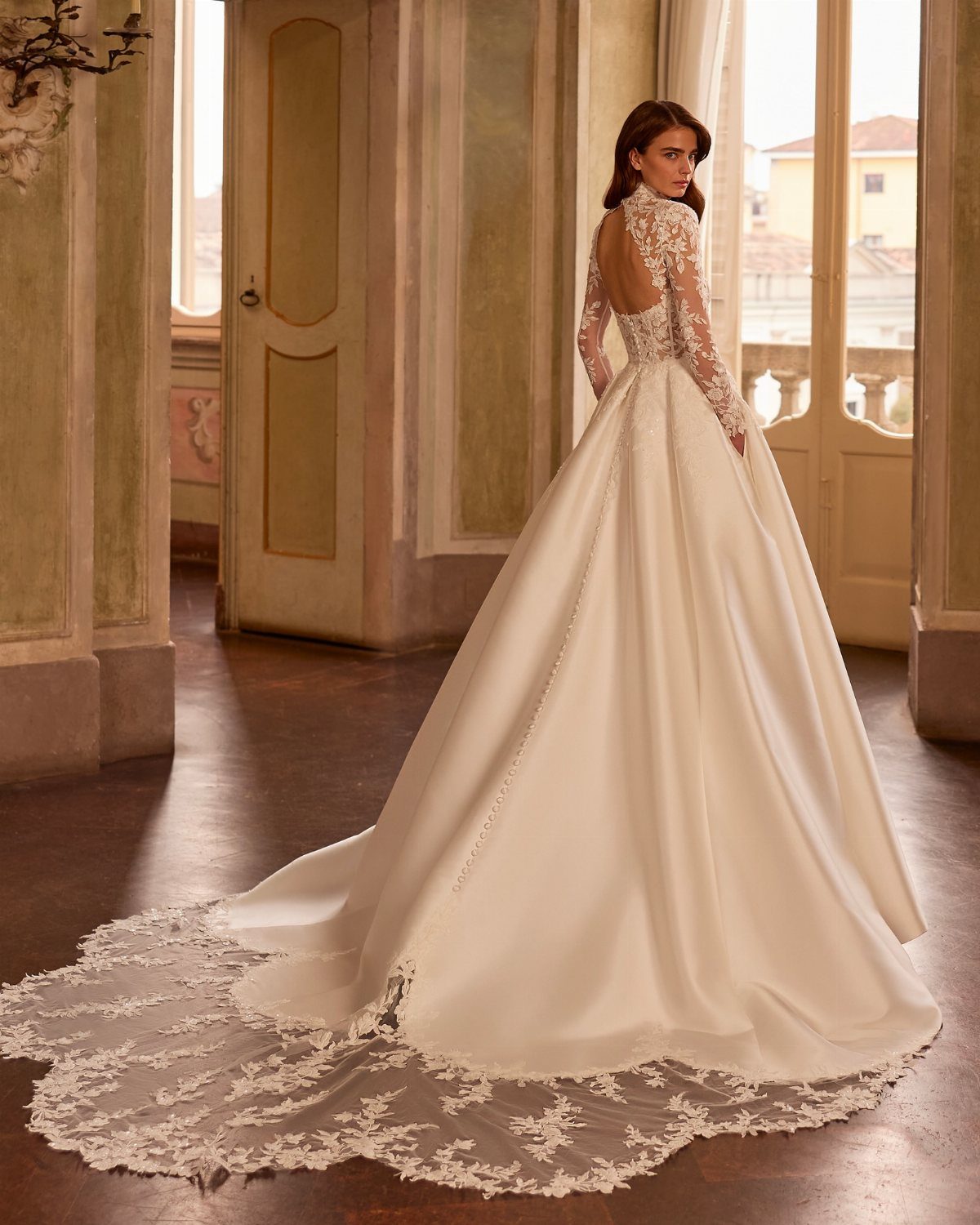
Long sleeves cover your arms from shoulder to wrist, which gives the gown a modest, formal look and works for cooler weather or religious settings.
Satin sleeves sit close to the skin and move with you, lace sleeves add texture and can be sheer or lined.
If the sleeves are fitted, they will need to be tailored to your arm length and width. If they are too tight, they will pull when you lift your arms or reach forward.
Check whether the sleeves have closures.
Some fasten at the wrist with buttons or hooks, others are sewn shut. If they are sewn, you will need to be able to pull them on over your hands.
12. A-line with Cape
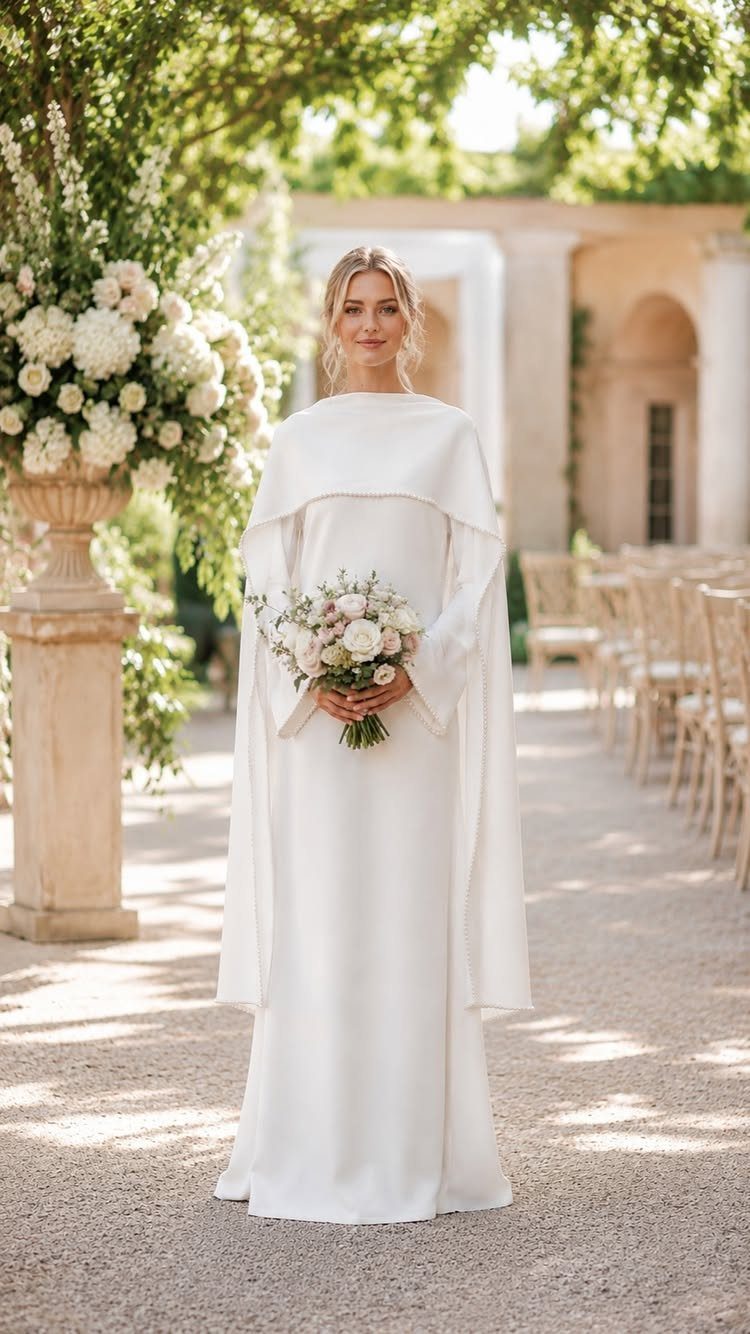
A cape drapes over your shoulders and falls behind you, either attached to the gown or worn separately. Satin capes have weight, so they stay in place without pinning and create a formal silhouette.
The cape works for outdoor ceremonies or if you want coverage up front and plan to take it off for the reception. It also adds drama to photos without altering the gown itself.
Check the length.
A short cape, ending at the waist or hips, moves easily and does not interfere with walking. A long cape, reaching the floor, reads more formal but can catch underfoot or drag on the ground.
13. A-line Square Neckline
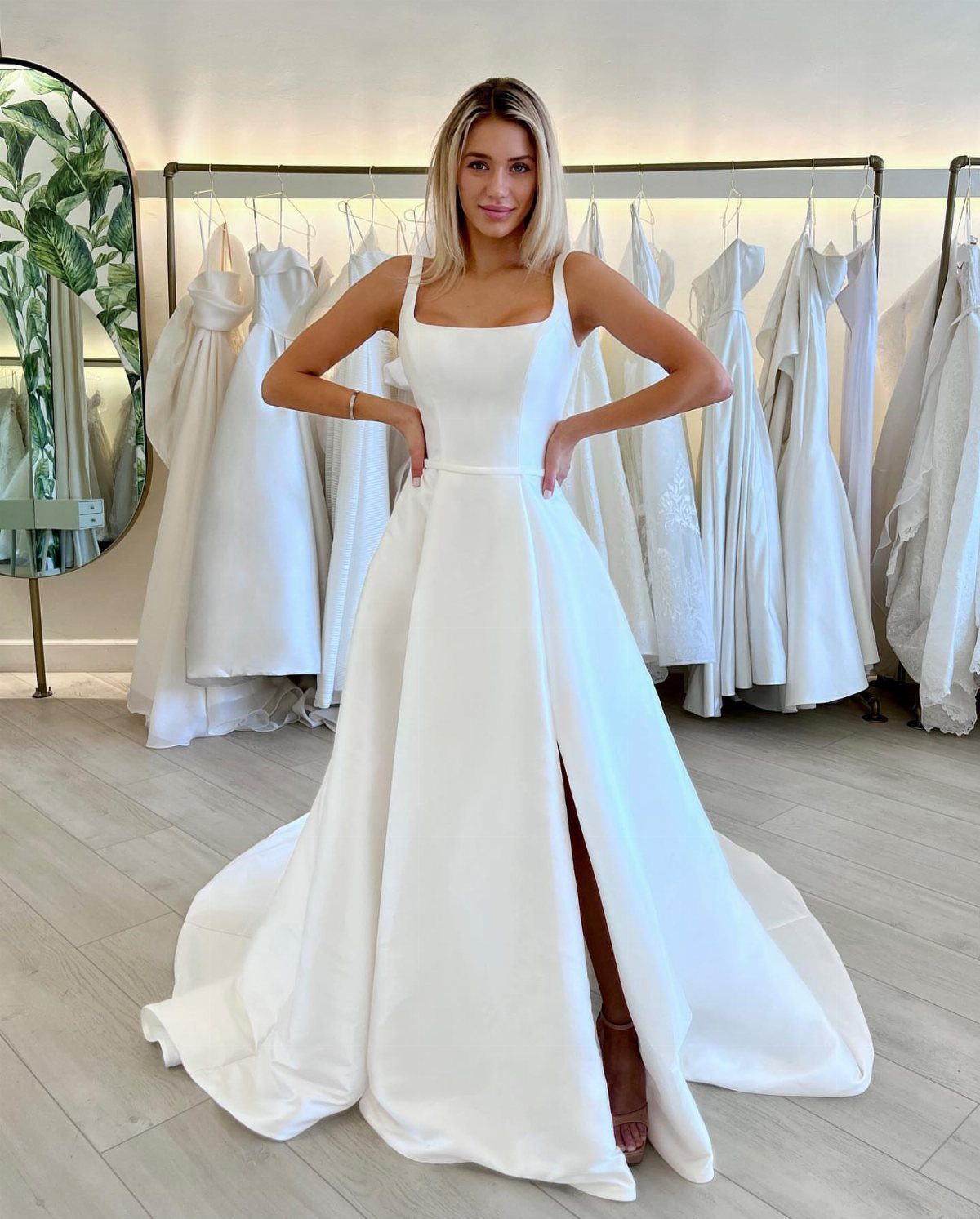
A square neckline cuts straight across the chest and meets the shoulders at right angles, which creates a clean, geometric edge. The shape frames your collarbones and reads more modern than a sweetheart or scoop.
This neckline sits best when the bodice is fitted.
If the fabric is loose, the straight edge will gap or fold. If you have a fuller bust, the square cut can sit lower and show more skin, or higher for more coverage.
Pair it with a slit or simple skirt so your eye stays on the neckline.
14. Off-the-shoulder Satin A-line
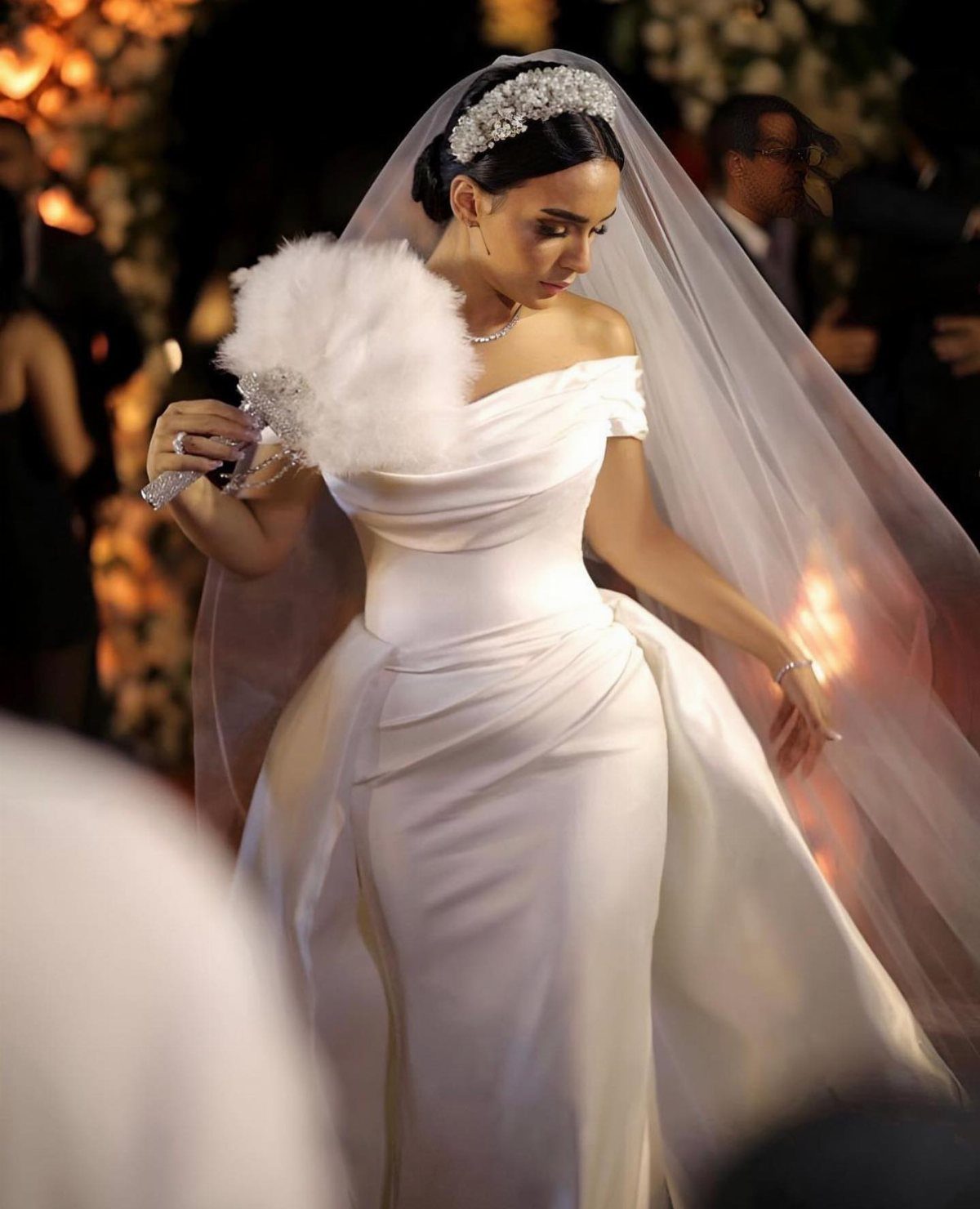
Off-the-shoulder sleeves sit below your shoulders and show your collarbones and upper chest, which softens the neckline and adds coverage to your arms.
The sleeves need to fit snugly enough to stay in place when you move, or they will slide down and require adjusting.
This style works if you want a romantic look with some structure. The sleeves also balance a fuller skirt, since they add width at the shoulders.
Try it on and lift your arms.
If the sleeves pull or restrict your movement, have them loosened at the fitting. You will be hugging people and dancing, and tight sleeves will show in every photo.
15. Satin A-line with Lace Sleeves
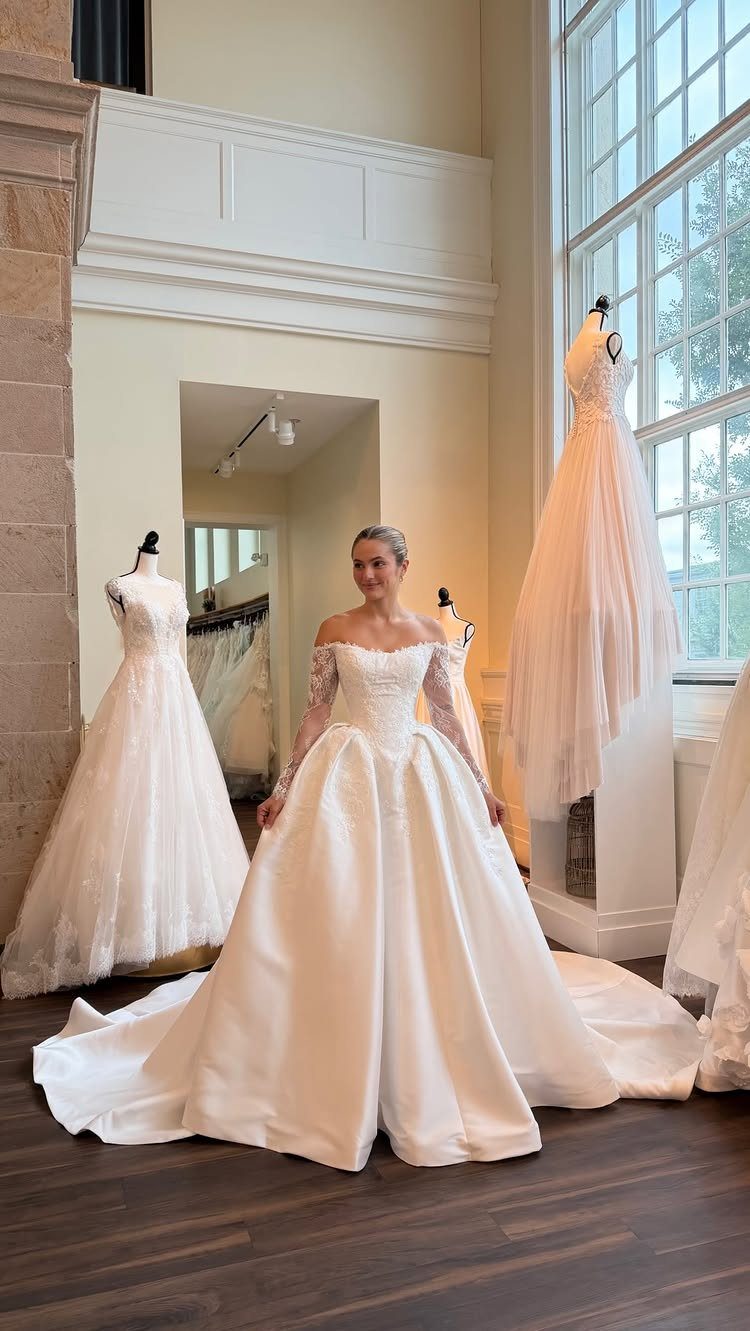
Lace sleeves add texture and detail to the arms while the satin skirt keeps the gown clean and simple. The sleeves can be sheer or lined, and the lace can match the neckline or stand alone.
This combination works if you want coverage on top without weighing down the entire gown. The satin gives you structure through the skirt, and the lace keeps the sleeves light and breathable.
Unfinished edges can fray or catch, so ask for a clean hem or a delicate edging.
16. A-line with Back Bow
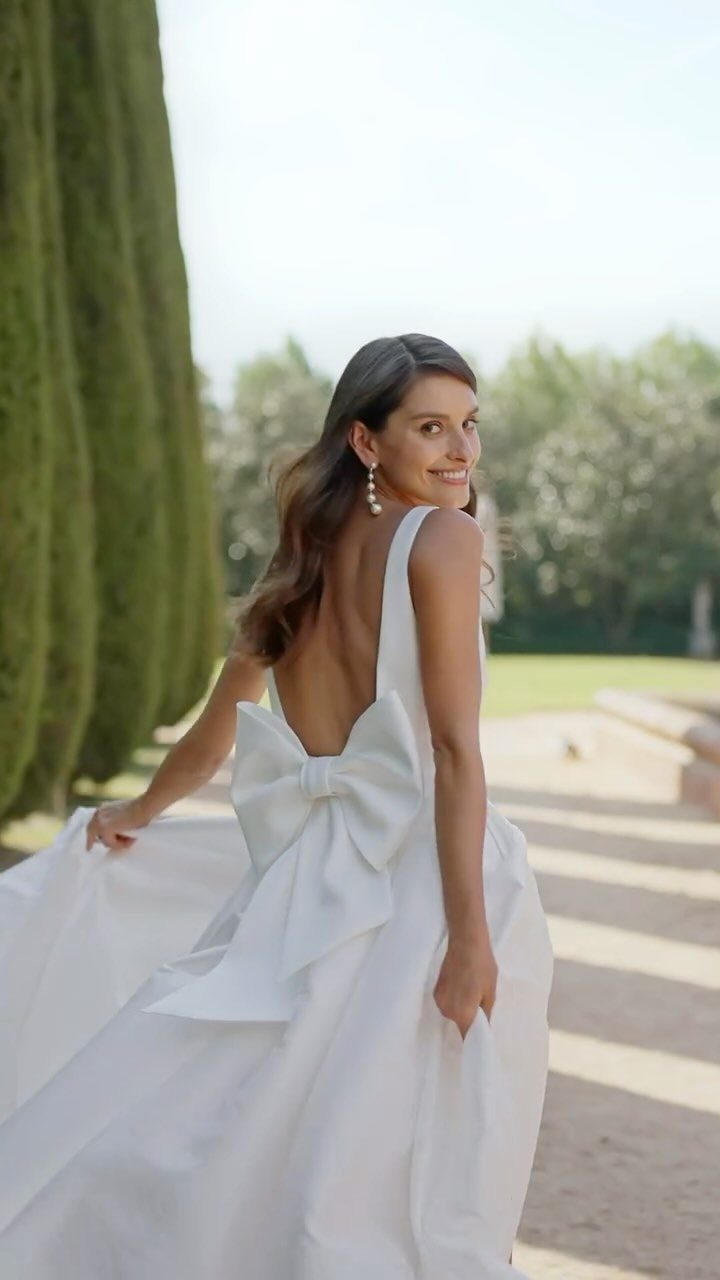
The satin holds the bow’s shape, so it sits structured rather than soft.
This detail works if you want something that reads in photos from behind but does not add bulk to the bodice. The bow also defines your waist, which balances a fuller skirt.
Consider the size. A large bow sits higher on the back and reads more dramatic, a smaller bow sits lower and feels quieter.
Walk around and sit down in the gown to make sure the bow does not dig into your back or shift out of place.
17. Satin Skirt with Lace Bodice
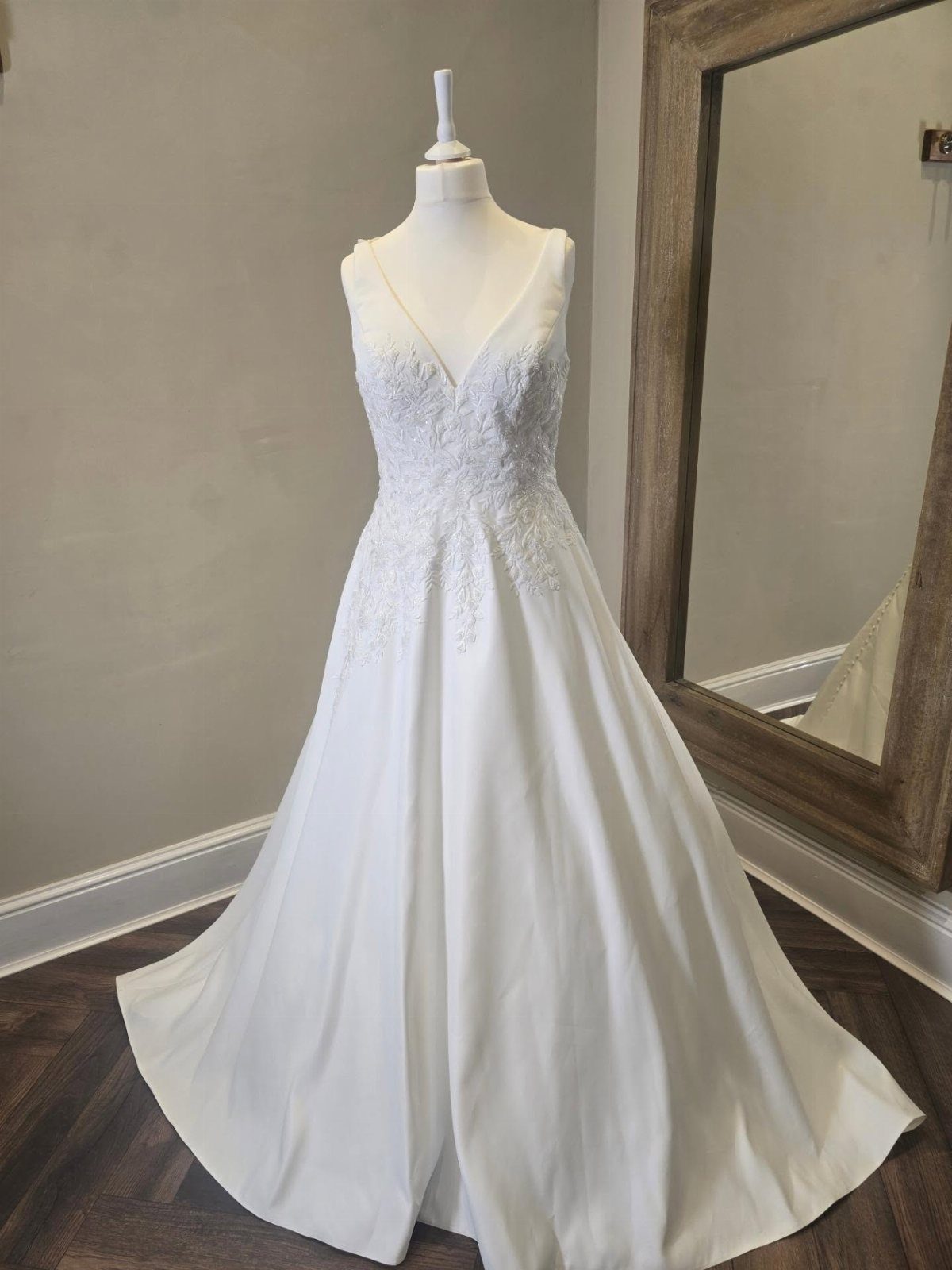
A lace bodice paired with a satin skirt gives you texture on top and clean lines below. The lace can be fitted or loose, and the satin starts at the natural waist and opens into the A-line silhouette.
This combination gives you detail through the torso and a plain skirt below. The satin also weighs less than a full lace skirt, which makes the gown easier to move in.
Satin skirts with lace bodices are available with either cap sleeves or sleeveless designs, and both hold up through a long day, so the choice is about how much coverage you want.
18. Long-sleeved Satin A-line
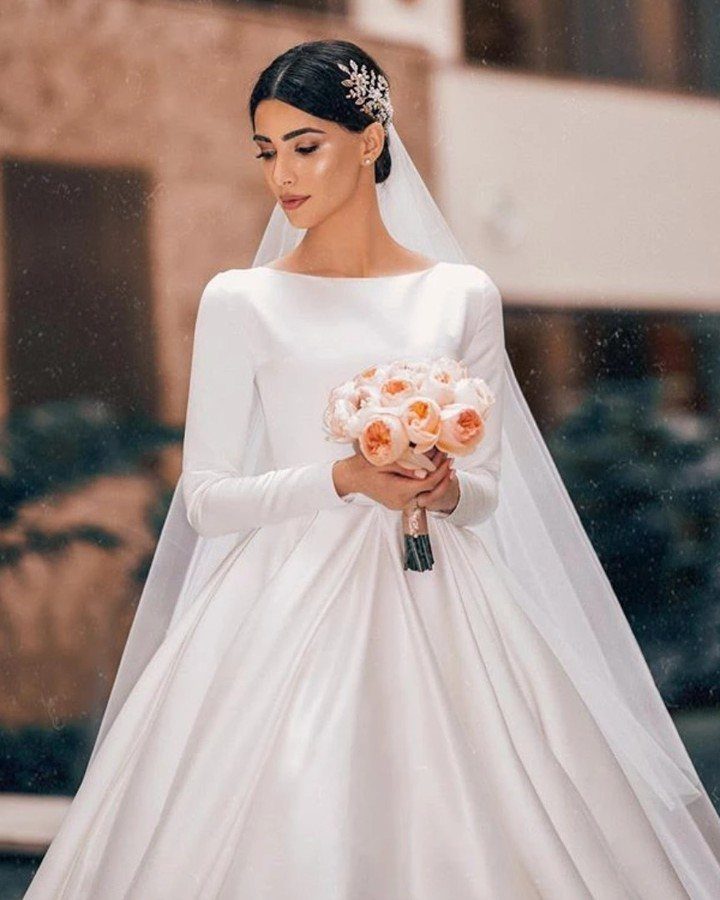
The boat neckline sits high and wide, which keeps the front covered and balances the sleeves.
This style suits cooler weather, religious ceremonies, or anyone who wants full coverage. The satin moves with you, so the sleeves will not pull or restrict your movement if they are fitted correctly.
Sleeves that are too long bunch at the wrist, sleeves that are too short pull when you move.
19. Strapless Satin with Full Skirt
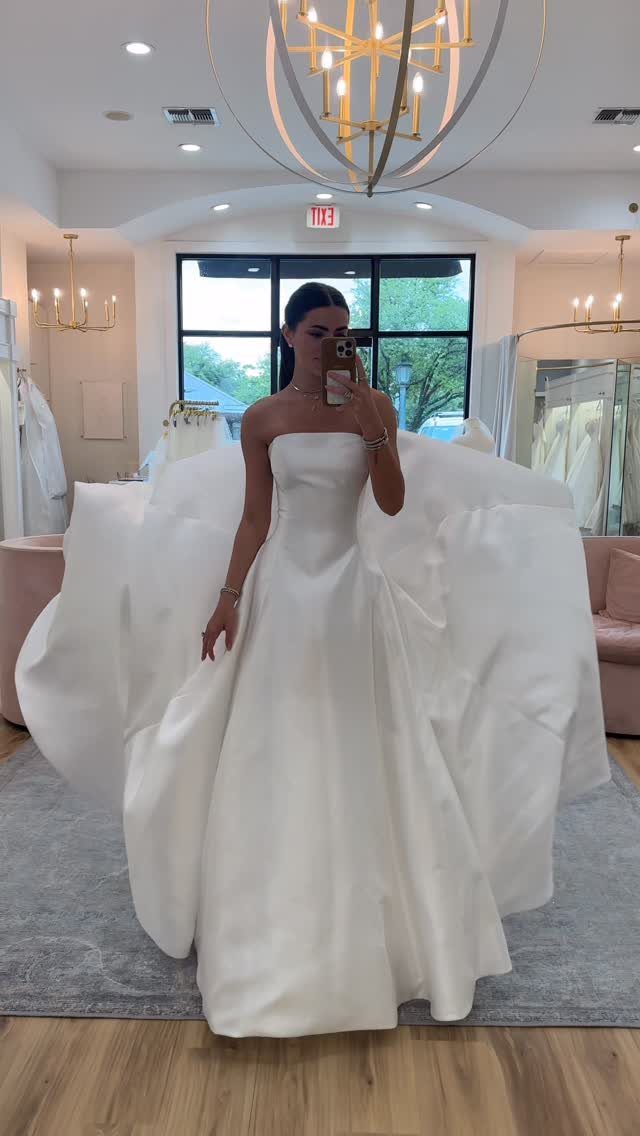
A strapless bodice paired with a very full skirt gives you maximum volume below the waist and a clean, fitted top. The satin holds the shape of the skirt without adding bulk to the bodice, which keeps the proportions balanced.
This style suits formal weddings where you want drama in the silhouette. The full skirt takes up space, so check your venue for narrow aisles or small dance floors before you commit.
The bodice needs to fit tightly enough to stay up without constant adjusting. If it slips, have it taken in at the fitting or ask the tailor about a grip strip sewn into the lining.
20. Satin A-line with Lace Sleeves
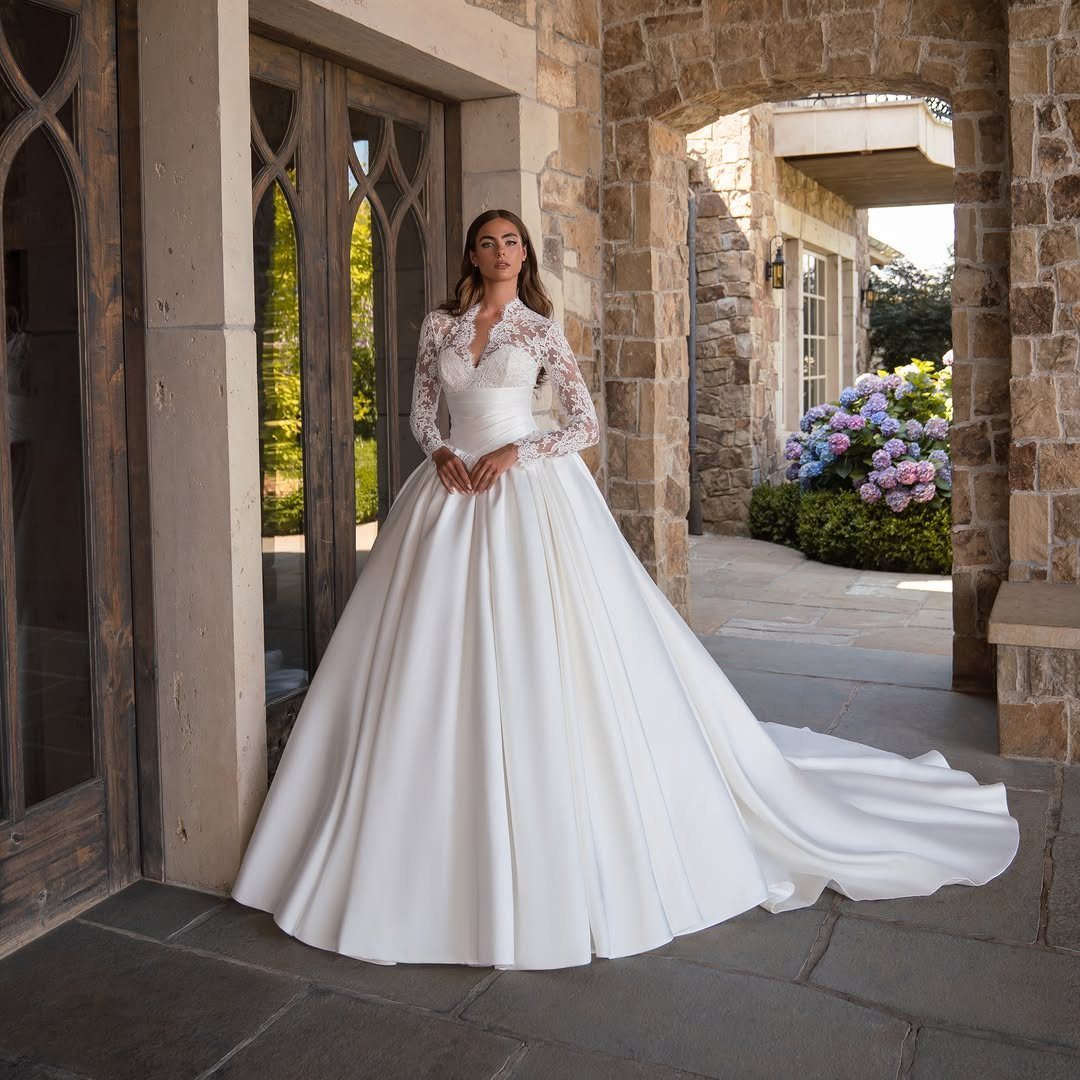
Long lace sleeves over a satin skirt give you coverage on top and a clean silhouette below. The V-neckline opens the chest and balances the sleeves, which keeps the gown from reading too covered.
I like it for garden weddings or church ceremonies where sleeves are expected but you still want the dress to feel light. The satin skirt stays structured, and the lace keeps the sleeves breathable.
If the sleeves are sheer, check how they photograph. Bright light can wash out the lace, so try the gown in different settings before your day.
21. Satin A-line with Embroidered Hem
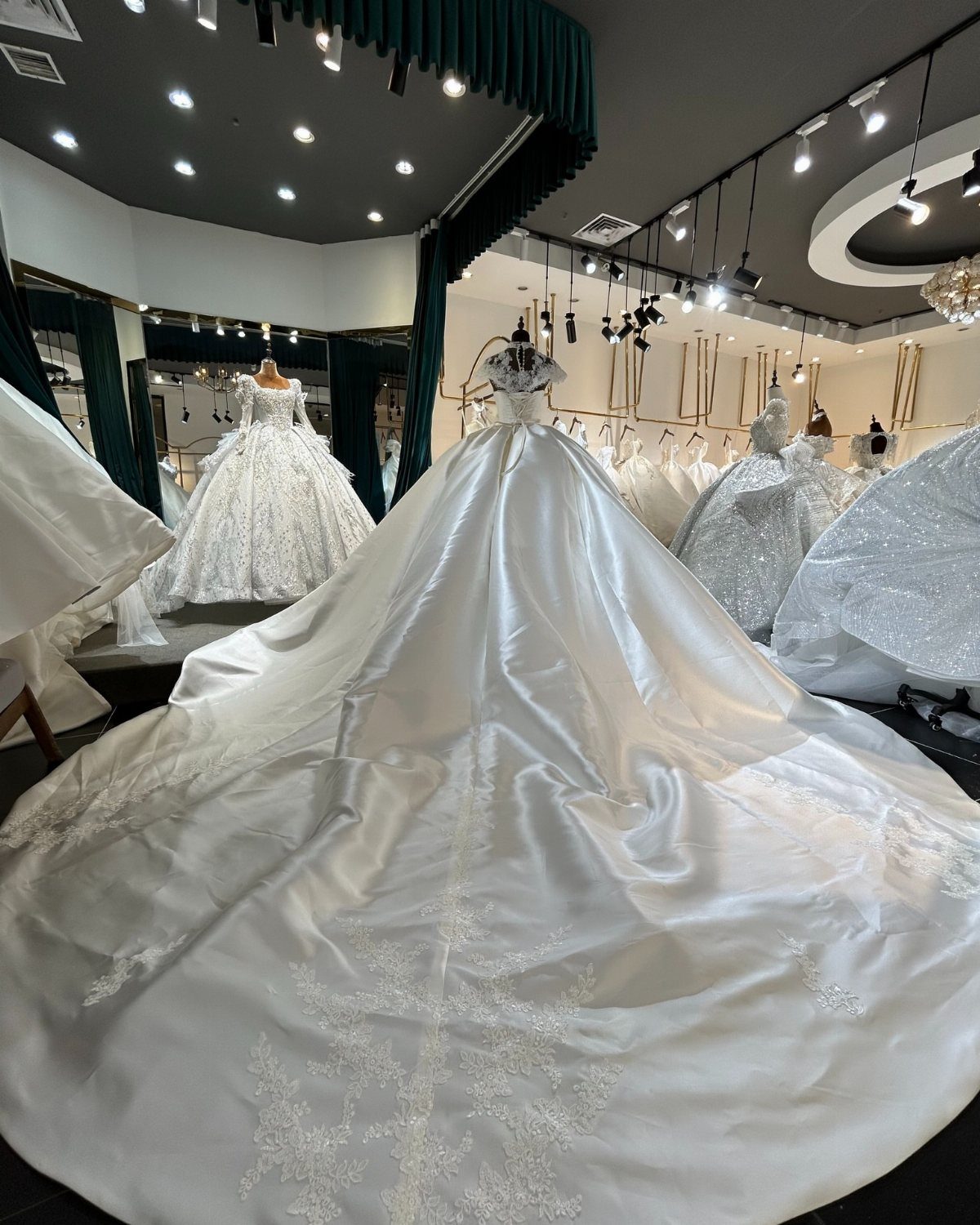
Embroidery along the hem adds detail without altering the clean lines of the bodice or skirt. The lace sits flat against the satin and follows the edge of the train, which draws your eye down the length of the gown.
The embroidery shows up best in full-length shots, so it rewards planning a few standing poses into your timeline. The train also gives the embroidery more surface area, so it shows up without crowding the skirt.
Check how the lace is attached.
If it is sewn on in sections, the seams can lift or fray after wear. A continuous layer holds up better through a long day.
22. Beaded Satin A-line
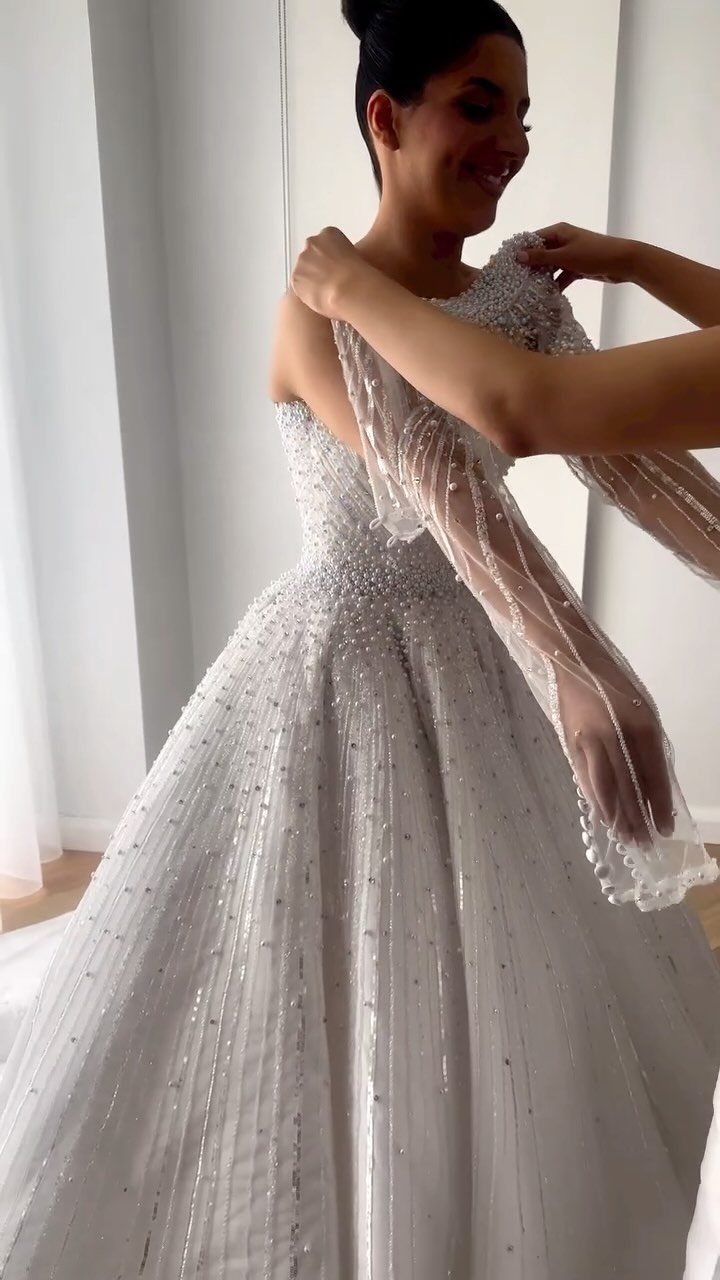
Silver beading and sequins cover the bodice and sleeves, which adds texture and reflects light when you move. The beading can be dense or scattered, and both read more formal than a plain satin gown.
This style works for evening weddings or low-light settings where the beading will catch candles or spotlights. The sheer sleeves keep the gown breathable, and the beading adds weight to the bodice, which helps it stay in place.
Beaded gowns are heavier. Wear it for a few hours before your wedding to make sure the weight does not tire you out.
A-line Fit and Figure
The fitted bodice defines your waist, and the skirt opens gradually from that point to the hem. The fitted bodice moves into a skirt that skims rather than hugs, so the shape flatters without requiring a specific frame.
The fabric’s weight lets it follow your body’s line without pulling tight or showing every contour. Lighter fabrics can pull or bunch, which changes how the silhouette reads.
The fit through the bodice matters.
If it is too loose, the waist definition disappears. If it is too tight, you lose the ease that makes the style flattering in the first place.
Satin Fabric Benefits
Satin has a smooth surface that reflects light, which gives the fabric a subtle shine and makes the gown photograph well. The finish reads as polished without being flashy.
The fabric drapes cleanly and holds structure, so it works in both fitted and full-skirted designs. A satin bodice stays smooth against your body, and a satin skirt keeps its shape without stiffening or collapsing.
Satin also feels comfortable. The surface slides rather than grips, so it moves with you and does not catch or pull on your skin.
The weight varies depending on the type of satin.
Duchess satin is thicker and adds more structure, standard bridal satin is lighter and drapes more softly. Both finish with the same smooth surface, but the heavier version holds more formal shapes.
Satin Storage and Cleaning
Store your satin gown in a garment bag, not folded or crumpled in a box. The fabric creases easily, and folds that sit for weeks will show on the day.
Hang the gown on a padded hanger, not a wire one. Wire can leave marks or dents in the fabric where the hanger presses into the shoulders.
Store it somewhere cool and dry, away from heat and humidity. Heat and humidity can damage the fabric or cause yellowing over time.
Limit how much you handle the dress before the wedding. Oils from your hands can transfer to the satin and leave marks that are hard to remove.
After the event, take the gown to a professional cleaner who works with bridal fabrics. Satin stains easily, and home cleaning methods can set the stain or damage the finish.
Frequently Asked Questions
When should you wear a satin wedding dress?
Satin works for any season, venue, or style.
Lighter satin suits outdoor summer weddings where you want ease and airflow, while heavier duchess satin or structured ball gowns fit formal indoor ceremonies. The fabric’s weight and finish adapt to the setting without limiting your options.
Do satin wedding dresses photograph well?
Yes, satin photographs well because it reflects light cleanly and shows detail without washing out.
The surface shine comes from how light hits the fabric, not from the material looking glossy on its own. A well-fitted gown keeps the sheen controlled so it reads polished in photos.
Are satin wedding dresses in style?
Satin stays in style because it holds structure and works across silhouettes without dating itself.
The fabric’s durability and clean finish make it a reliable choice for gowns that need to last through a long day and still look formal in photos.
Do satin wedding dresses wrinkle?
Satin holds a crease, which means you’re steaming or ironing right before you walk.
Keep the gown in its garment bag during transport and storage, and limit how much you handle it before the day. Heavier duchess satin wrinkles less than standard bridal satin.
How do you clean a satin wedding dress?
Have the gown professionally cleaned after the wedding. Satin needs careful handling, so avoid stains from makeup, food, or drinks during the day.
If you get a small stain, dab it with a damp cloth and test the method on the hem first to make sure it does not damage the fabric.