
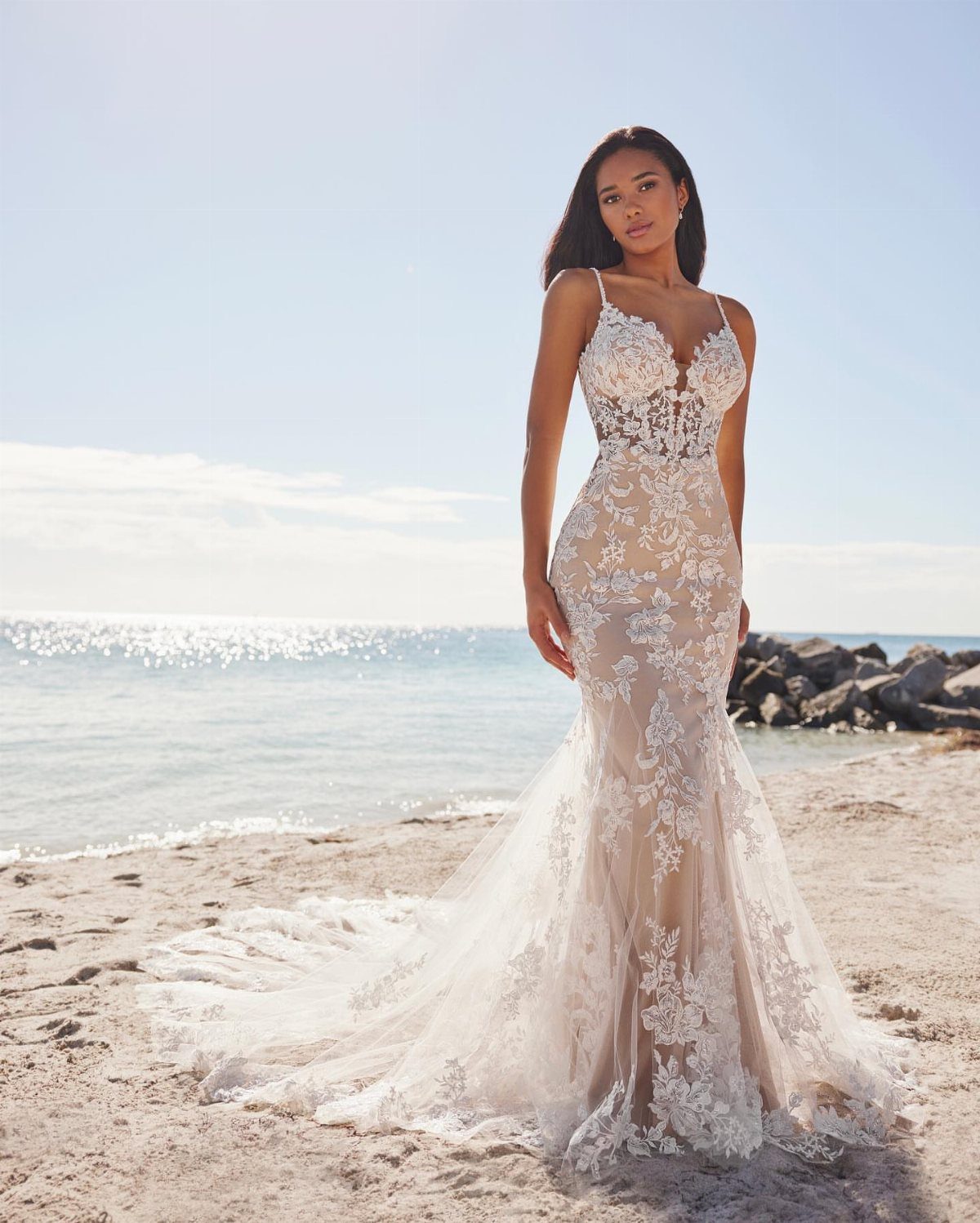
A fitted lace wedding dress price depends on the silhouette and how much detail covers the fabric.
The silhouette you pick depends on how much you need to move: a mermaid or sheath keeps steps short unless the lace stretches or the skirt has a slit, while an A-line or ball gown skirt gives you a full stride from the start.
1. Mermaid Lace Dress
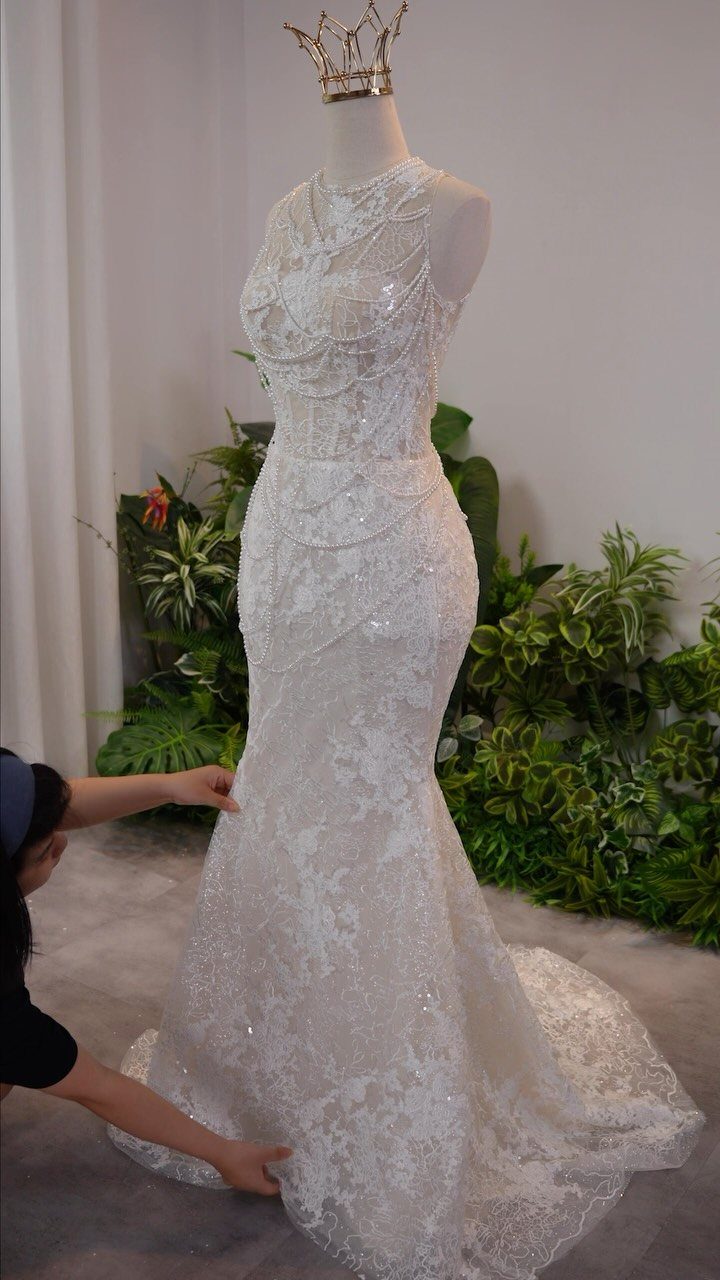
A mermaid dress hugs the body from the bust to just above or below the knee, then flares out into a skirt.
The fit shows your shape through the torso and hips, so the lace needs to stretch or the bodice needs boning to keep the dress smooth.
For full movement, size up slightly in the hips or ask about stretch lace.
A too-tight fit will bunch when you sit or walk. Most mermaid gowns need a bustle or someone to carry the train during the reception.
2. Lace A-line Dress
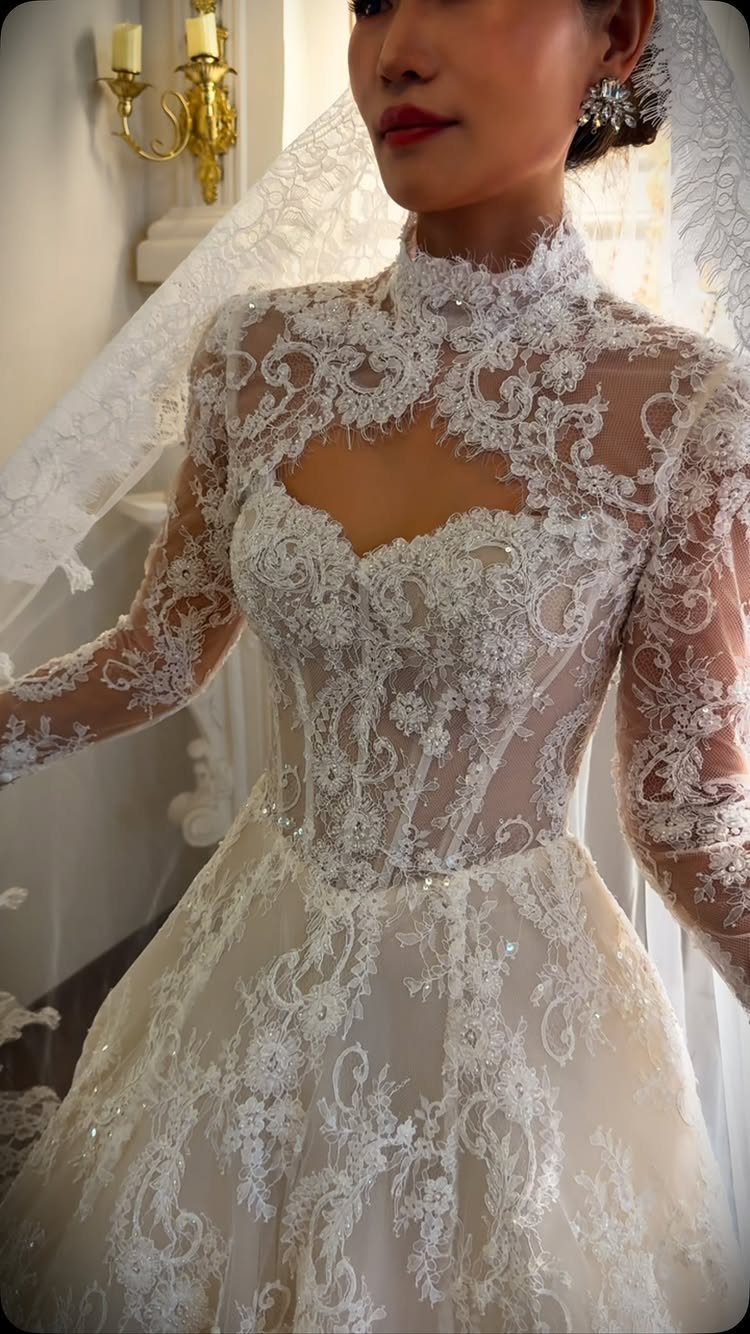
An A-line skirt fits at the waist and flares gently toward the hem, which makes it one of the most forgiving silhouettes for moving around.
Lace over the bodice and skirt keeps the fitted look at the top while the skirt gives you room to walk, dance and sit without restriction.
For lace all over, ask whether the skirt is lined.
Unlined lace can look sheer in bright light, especially outdoors. A full lace overlay on tulle or satin keeps the lace visible without transparency.
3. Long Sleeve Lace Dress
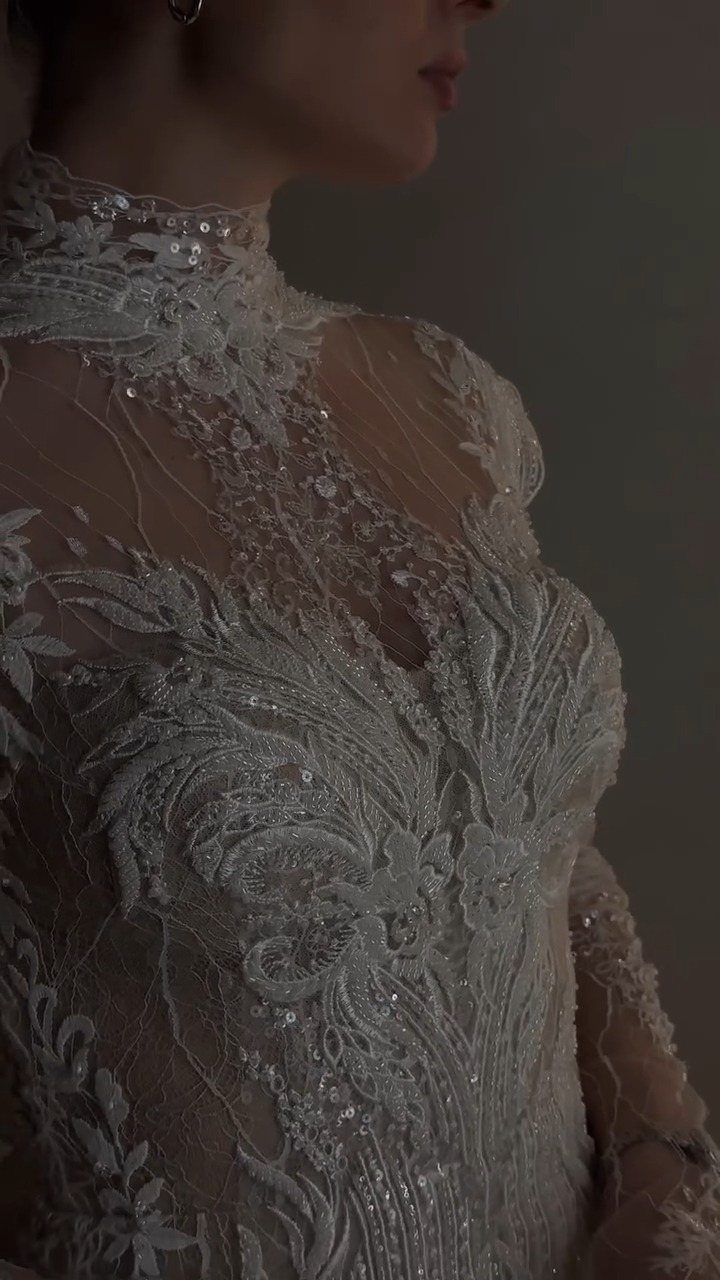
Long lace sleeves cover the arms completely, which works for religious ceremonies, winter weddings or anyone who prefers more coverage.
Sleeves in stretch lace fit closely without binding, while illusion lace with appliqués gives the same coverage with a lighter feel.
If your ceremony runs long or your venue is warm, sleeves in lined lace can get uncomfortable. Illusion lace breathes better, or you can ask about detachable sleeves that come off for the reception.
4. Off-the-shoulder Lace
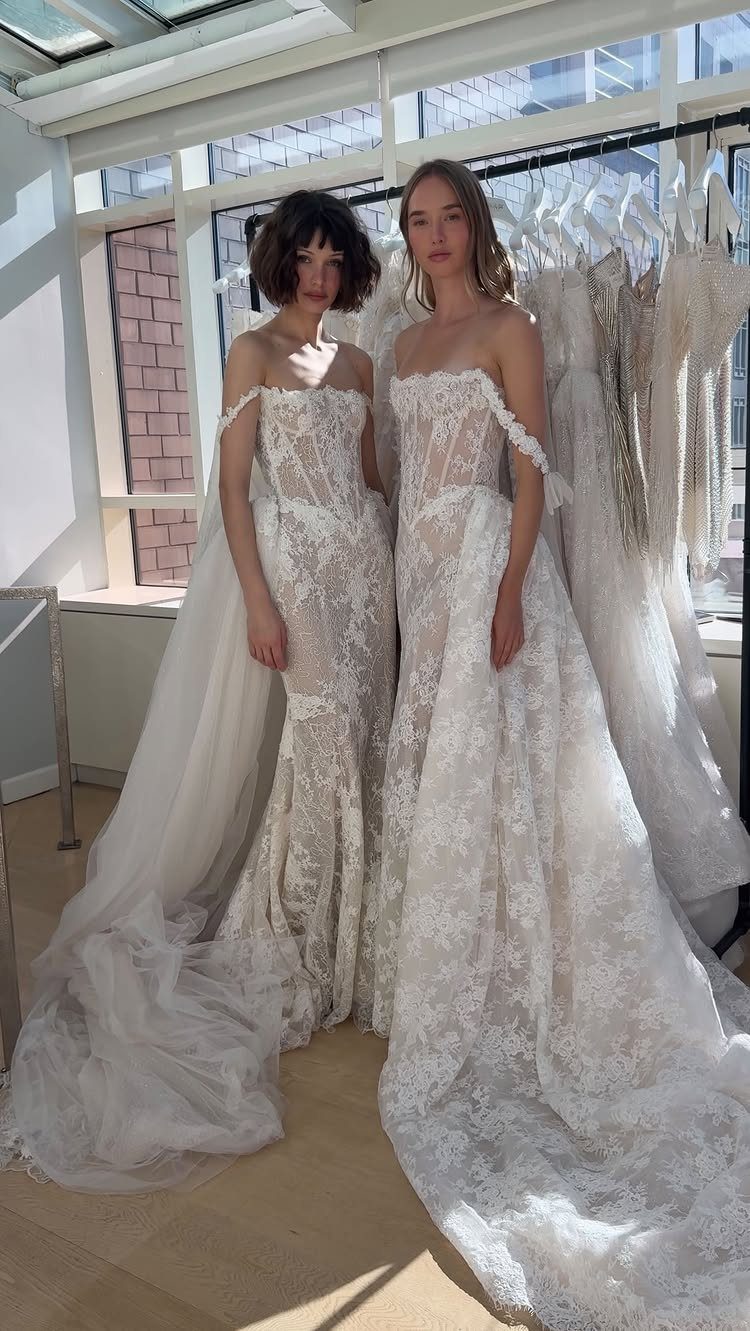
An off-the-shoulder neckline sits just below the collarbone, with sleeves or straps that rest on the upper arms. The neckline leaves your shoulders and collarbones open, which balances a fitted lace bodice.
If you plan to move around a lot, look for a neckline with built-in grips or a snug fit at the bust.
Off-the-shoulder styles can slip down when you lift your arms, so try raising your arms in the fitting to check how much it shifts. Some dresses include a loop or elastic inside to hold the neckline in place.
5. Sheath Lace Dress
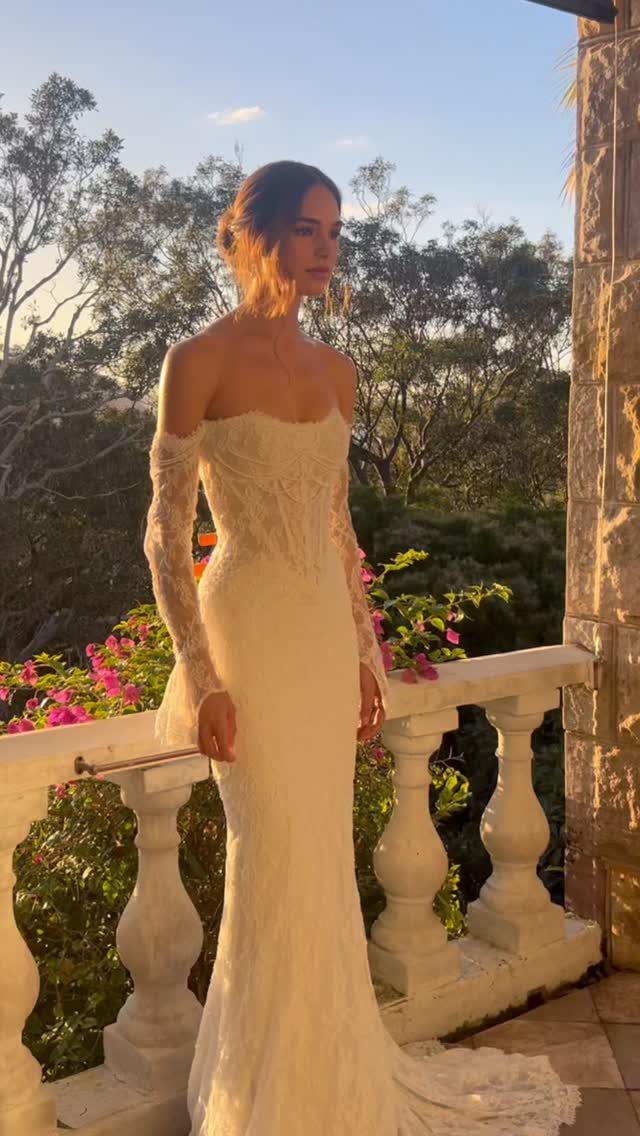
A sheath dress follows the body in a straight line from the neckline to the hem, with no flare at the skirt.
The fit is close all the way down, so lace with stretch or a bias-cut skirt gives you room to walk. Without that give, you will take smaller steps.
If you are wearing a sheath, check the back slit or side seam.
Most sheath gowns need one or the other to let you move. A slit that ends below the knee keeps the look sleek while giving you a normal stride.
6. Backless Lace Dress
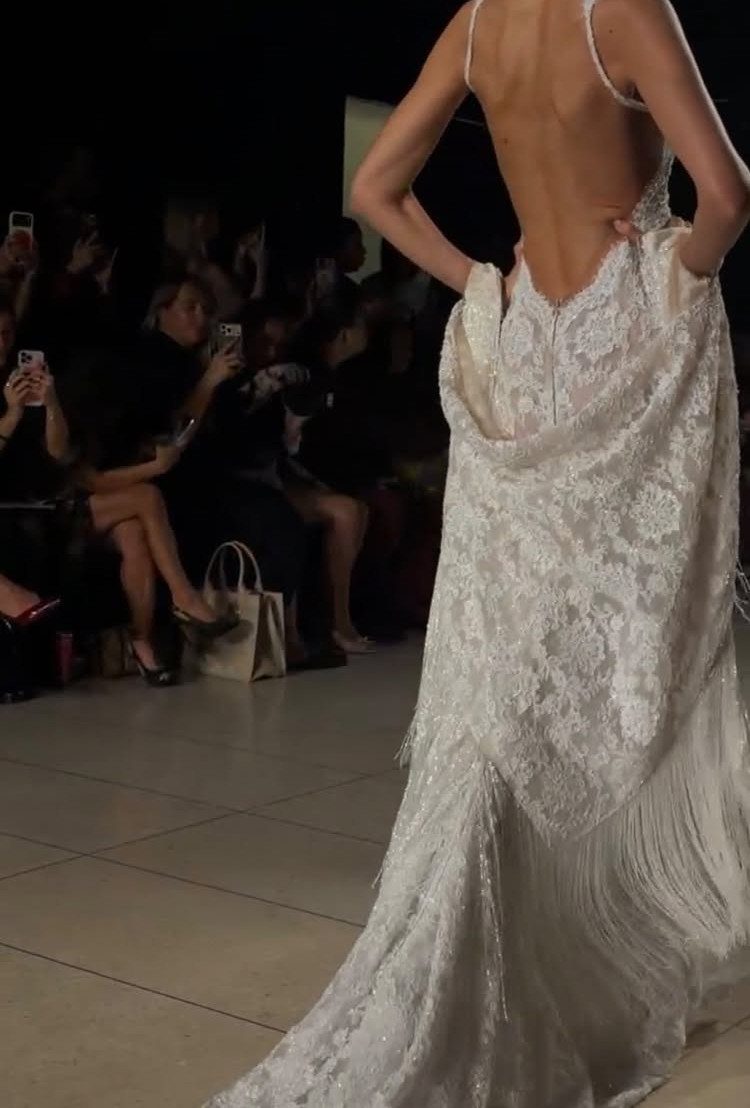
A backless gown opens at the back, often to the waist or lower, with lace covering the front and sides. The open back shows skin and keeps the dress light, which suits warm weather or a modern, minimal look.
For a backless dress, bring the undergarments you plan to wear to your fitting.
Backless bras, adhesive cups or dress-specific bra options exist, but not every solution works with every neckline or body shape. Fit the dress first, then solve the support.
7. Ball Gown Lace Dress
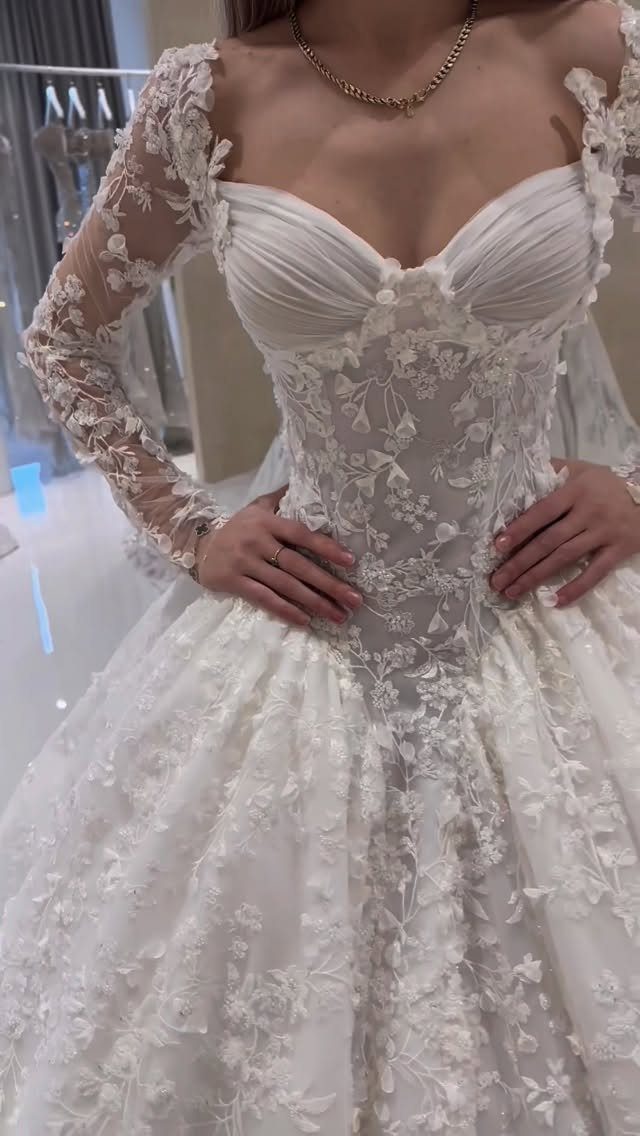
A ball gown pairs a fitted bodice with a full skirt that starts at the natural waist.
When the bodice is lace, the fit stays close through the torso while the skirt gives you room to move. The contrast between tight lace and volume works for formal ceremonies.
If the bodice has boning or a corset back, you can adjust the fit without altering the lace.
A zipper or hook closure offers less give. Try sitting and bending forward in the fitting to check whether the bodice digs in or rides up.
8. Lace Corset Dress
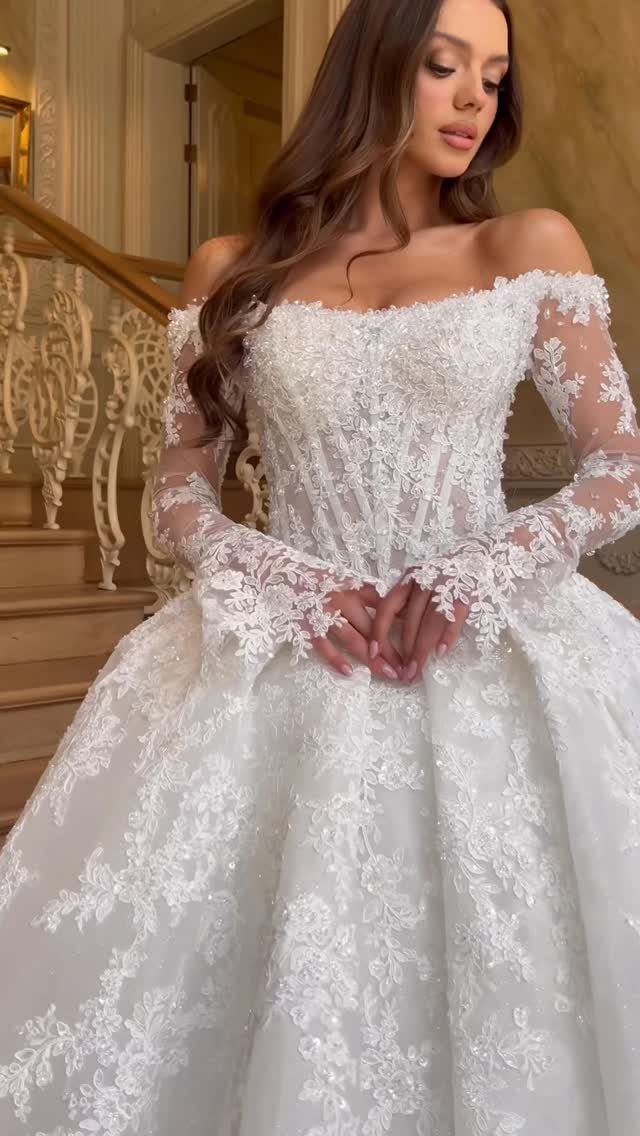
A corset bodice laces up the back, which lets you adjust the fit on the day.
The lacing pulls the bodice snug against your ribs and waist, so the lace stays smooth without gaping. Most corset dresses include boning to hold the shape.
Lacing takes longer than a zipper, so budget extra time for getting dressed.
You will need someone to pull the laces evenly and tie them off. Practice at least once before the wedding so you know how tight feels right.
9. Alençon Lace
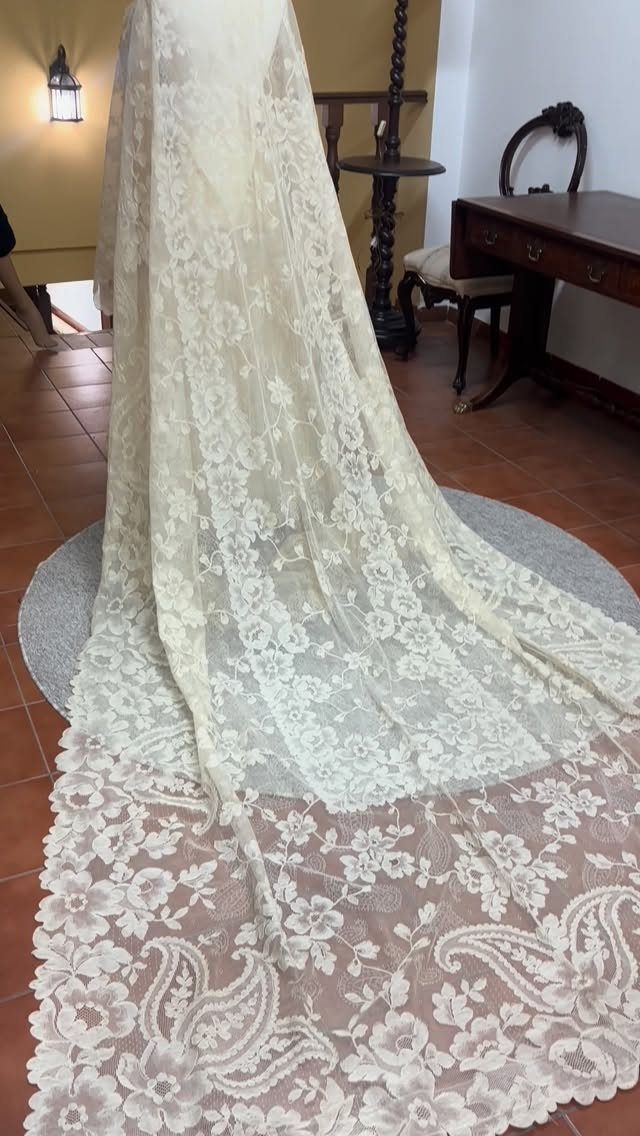
Alençon lace has floral or scrolling motifs outlined in cord, with a scalloped edge and an open mesh background.
The motifs sit slightly raised, which gives the lace texture and definition. It photographs well because the cord catches light.
Most Alençon lace costs more than other types, so gowns made entirely from it run higher. If budget matters, look for Alençon appliqués on a tulle or satin base instead of an all-over overlay.
10. Layered Lace Wedding Dress
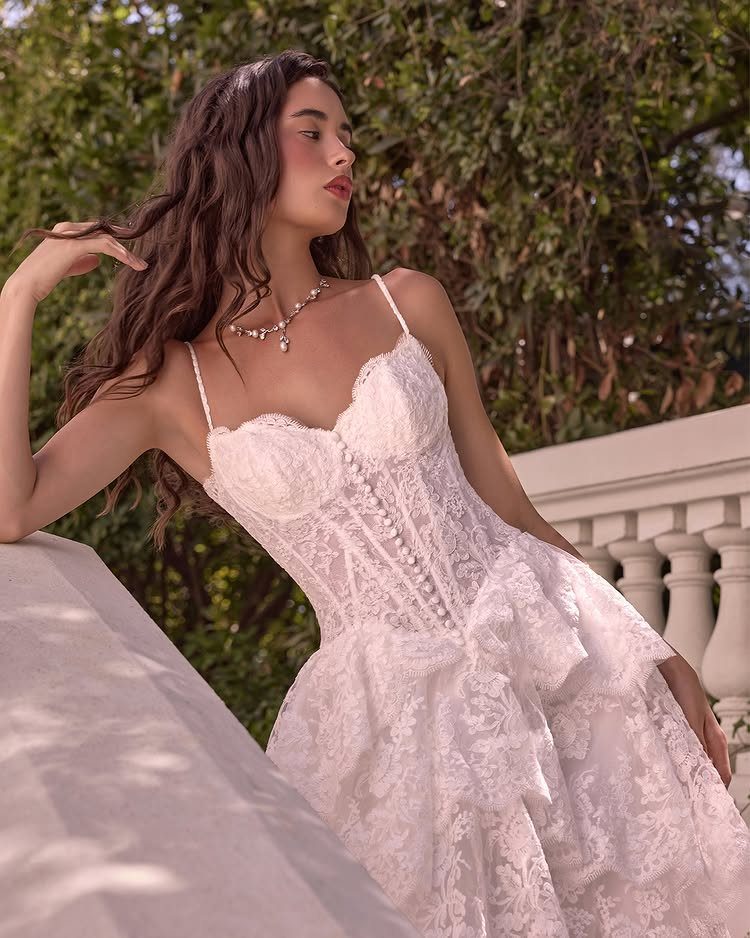
Layering different laces gives a dress depth you do not get from a single layer.
One lace might be large floral motifs, with a finer net lace underneath or scattered appliqués on top. The layers show through each other, so the pattern looks built up rather than flat.
For this to work, the laces need different scales or textures.
Two nearly identical laces just look muddy. In a fitting, stand back a few feet to see whether the layers read as separate or blend together.
11. Floral Lace
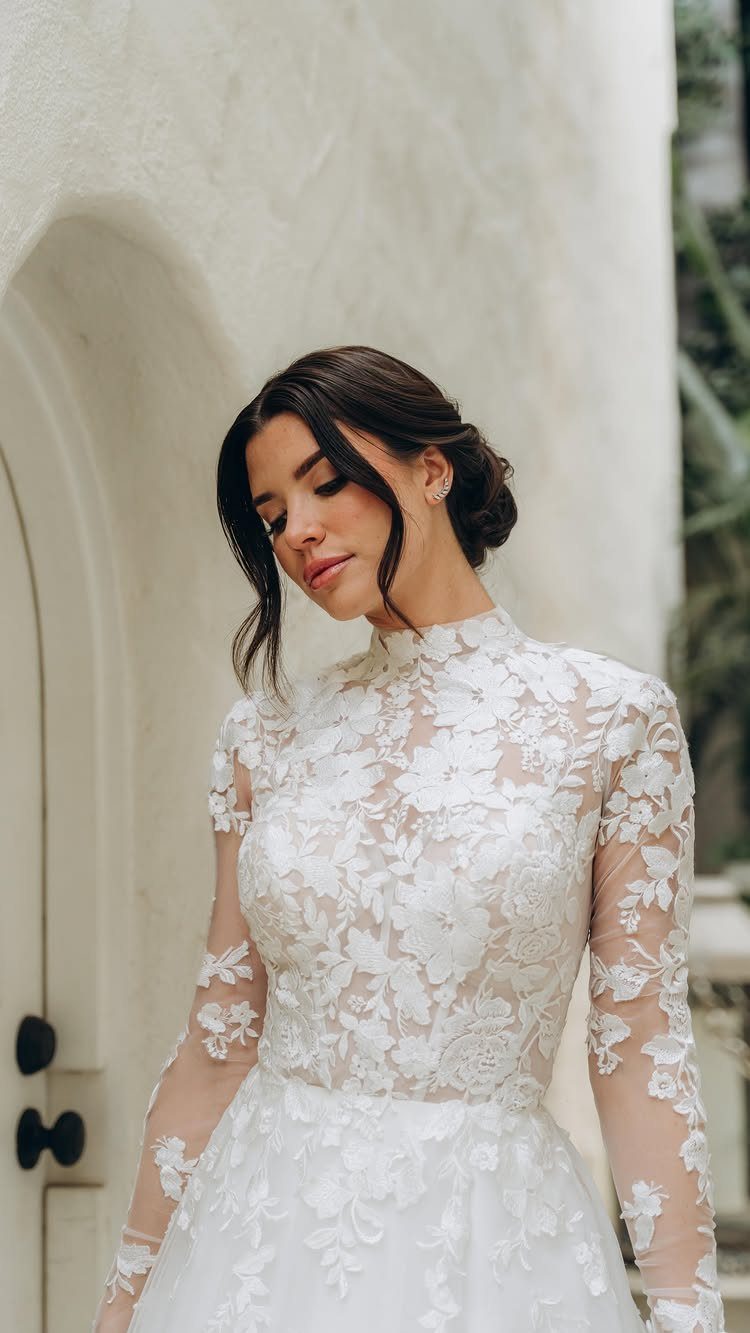
Floral lace uses flower and leaf motifs, which can be small and scattered or large and bold.
The size of the motif changes how the dress reads from a distance: small flowers look delicate, large ones make a statement. Most floral lace is embroidered or appliquéd onto tulle or mesh.
If your bouquet or venue has a strong floral theme, consider whether the lace will compete or complement it. Large motifs on the dress can overwhelm a simple bouquet, while tiny lace flowers work with almost anything.
12. 3-D Beaded Lace
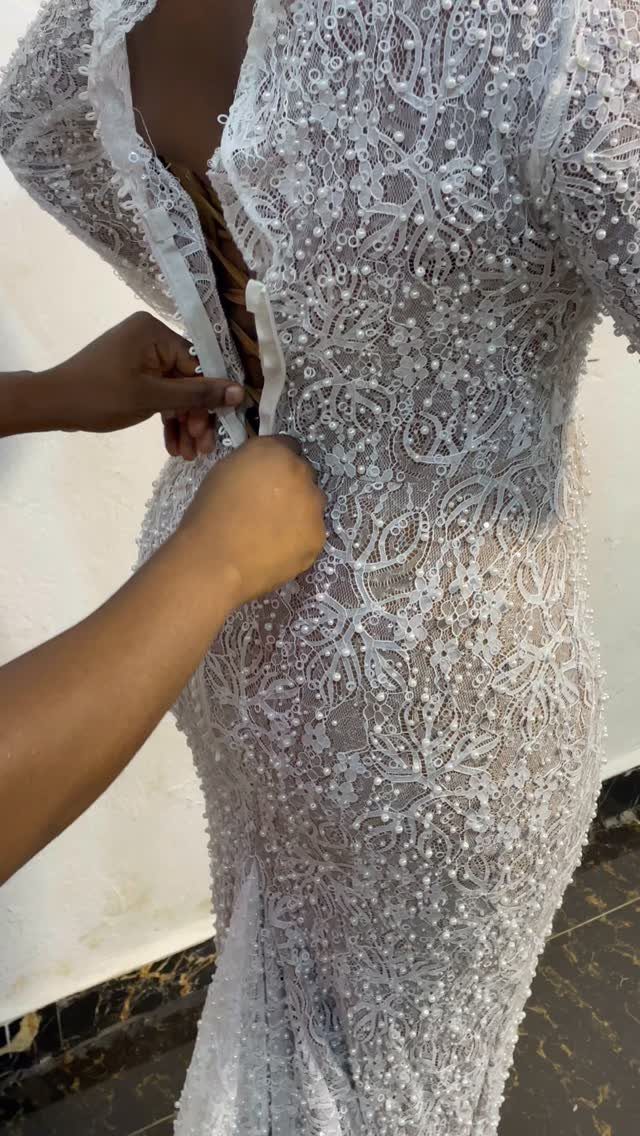
3-D beaded lace adds beads, sequins or crystals to raised lace motifs, which makes the dress catch light from every angle.
The beading weighs more than plain lace, so a full gown in 3-D beaded lace is noticeably heavier. That weight can pull on your shoulders if the dress has thin straps.
Before you buy, hold a section of the beaded lace up to the light.
Some beading looks dense indoors but sparkles too much in bright sun or flash photos. Subtle beading can vanish under certain lighting, so ask to see it in the same light as your ceremony.
13. Lace with a Slit
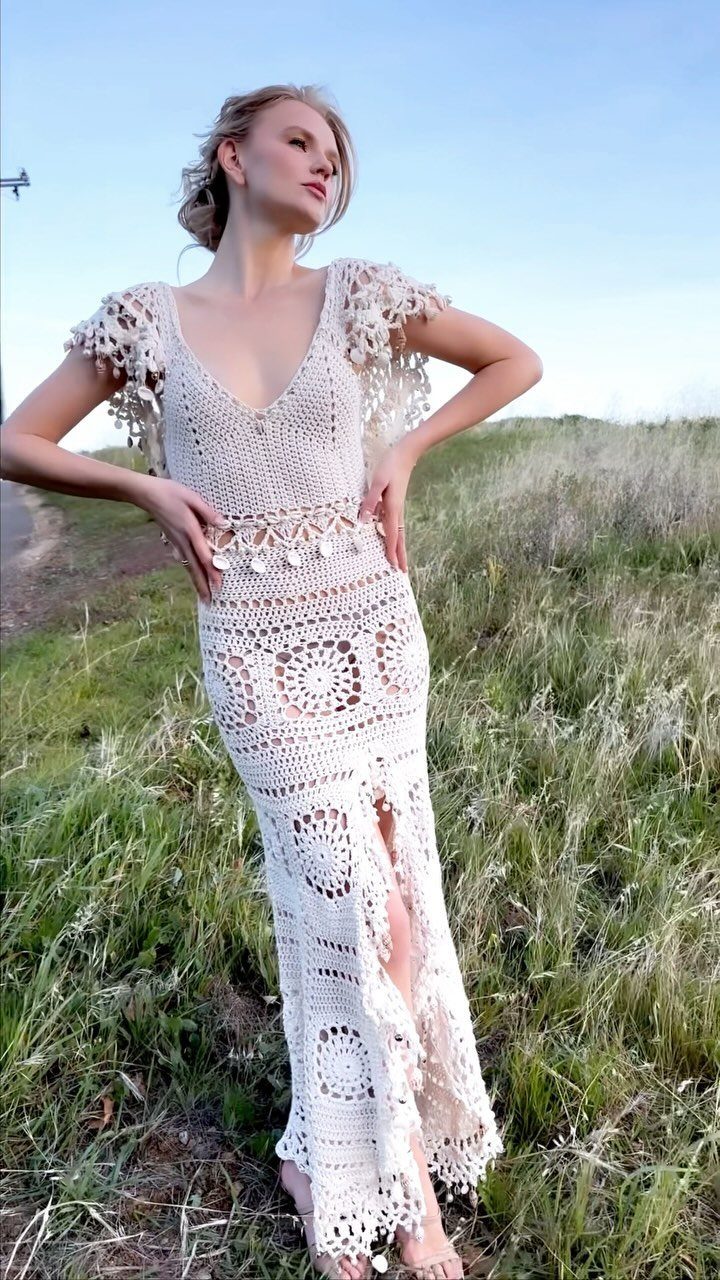
A slit opens the skirt from the hem upward, usually along the front or side seam. The opening lets you walk with a full stride in a dress that would otherwise keep your steps short.
Most slits stop mid-thigh or just above the knee. A higher slit shows more leg and moves easily, but it can feel exposed when you sit or pose for photos.
Try sitting down in the fitting to see how much the slit opens and whether you want it pinned partway during the ceremony.
14. Lace with a Cape
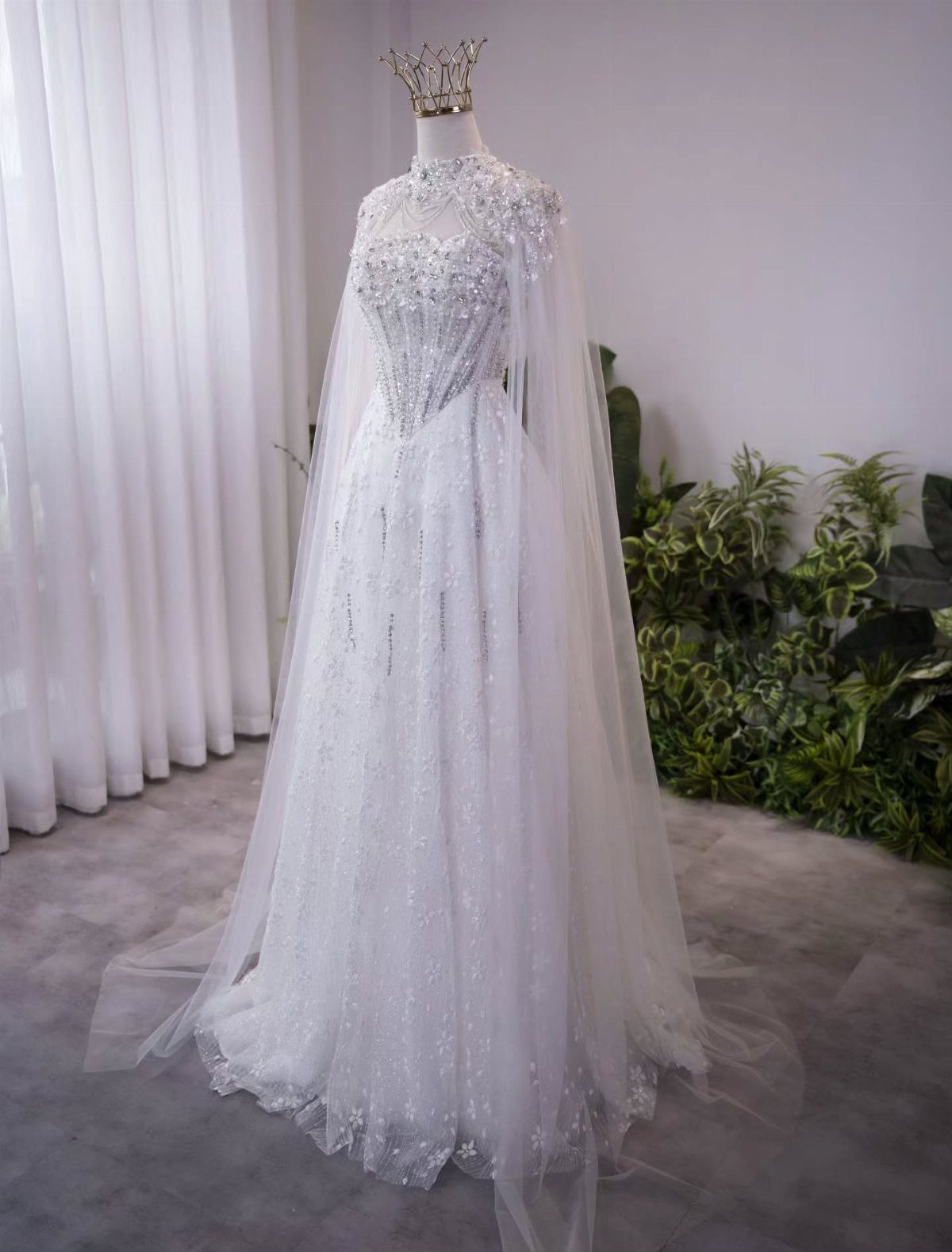
A cape attaches at the shoulders or neckline and falls behind you like a cloak. The cape adds drama without changing the fit of the dress underneath, and it comes off easily for the reception.
Sheer capes in tulle or organza keep the look light, while lace capes match a lace bodice.
Some capes button or tie at the front, others drape open. If your ceremony is outdoors, check how the cape moves in wind—a long cape can tangle or blow forward if it is not weighted at the hem.
15. Sweetheart Neckline
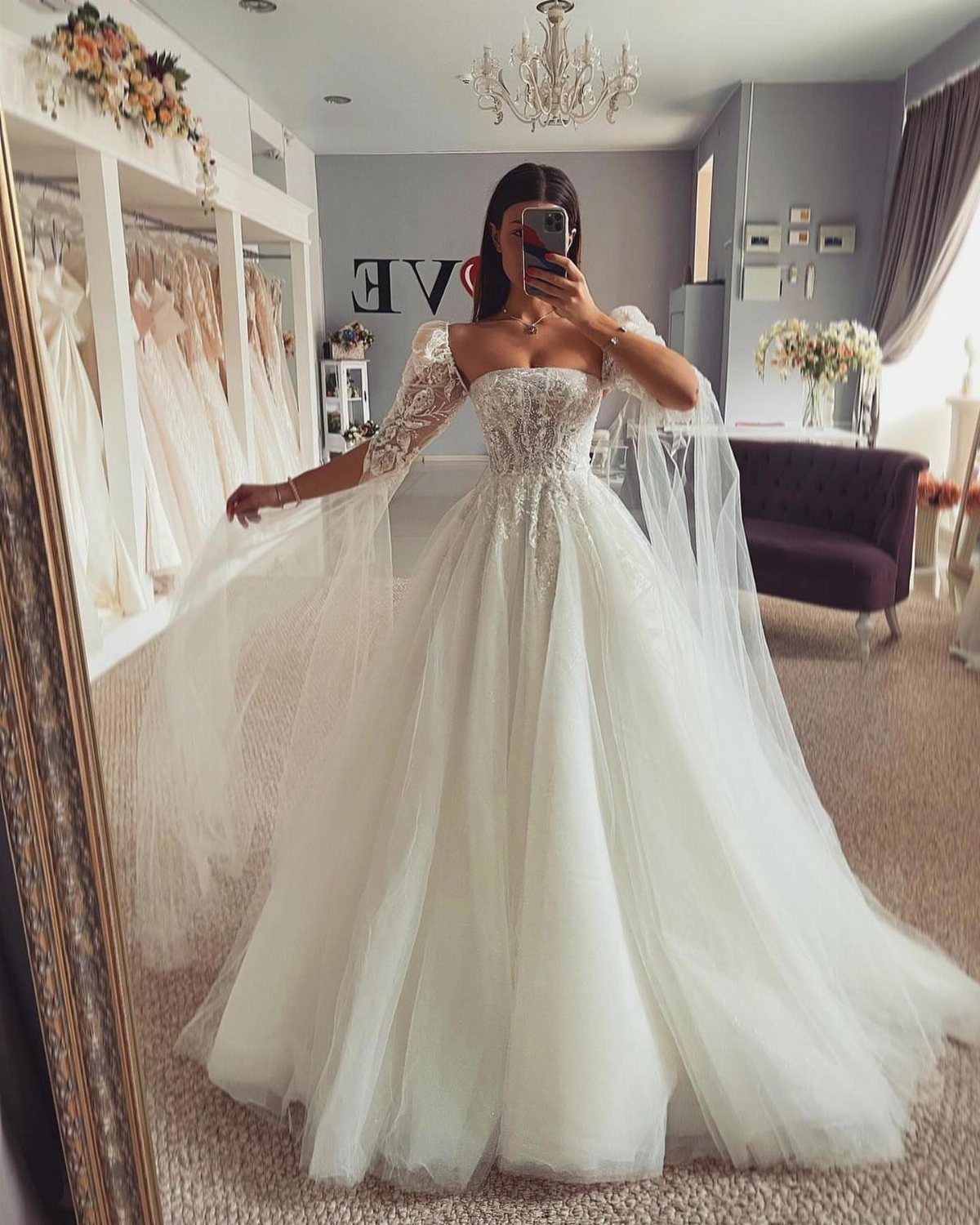
A sweetheart neckline dips in the center to form a heart shape, with curves that follow the bust. The neckline opens up your chest and collarbone while keeping the bodice fitted, which suits most body shapes.
Sweetheart necklines work with strapless, cap sleeve or long sleeve styles.
If you are wearing strapless, check that the bodice has enough grip or boning to stay put when you move. A too-loose sweetheart will gap at the top or slip down.
16. Square Neckline
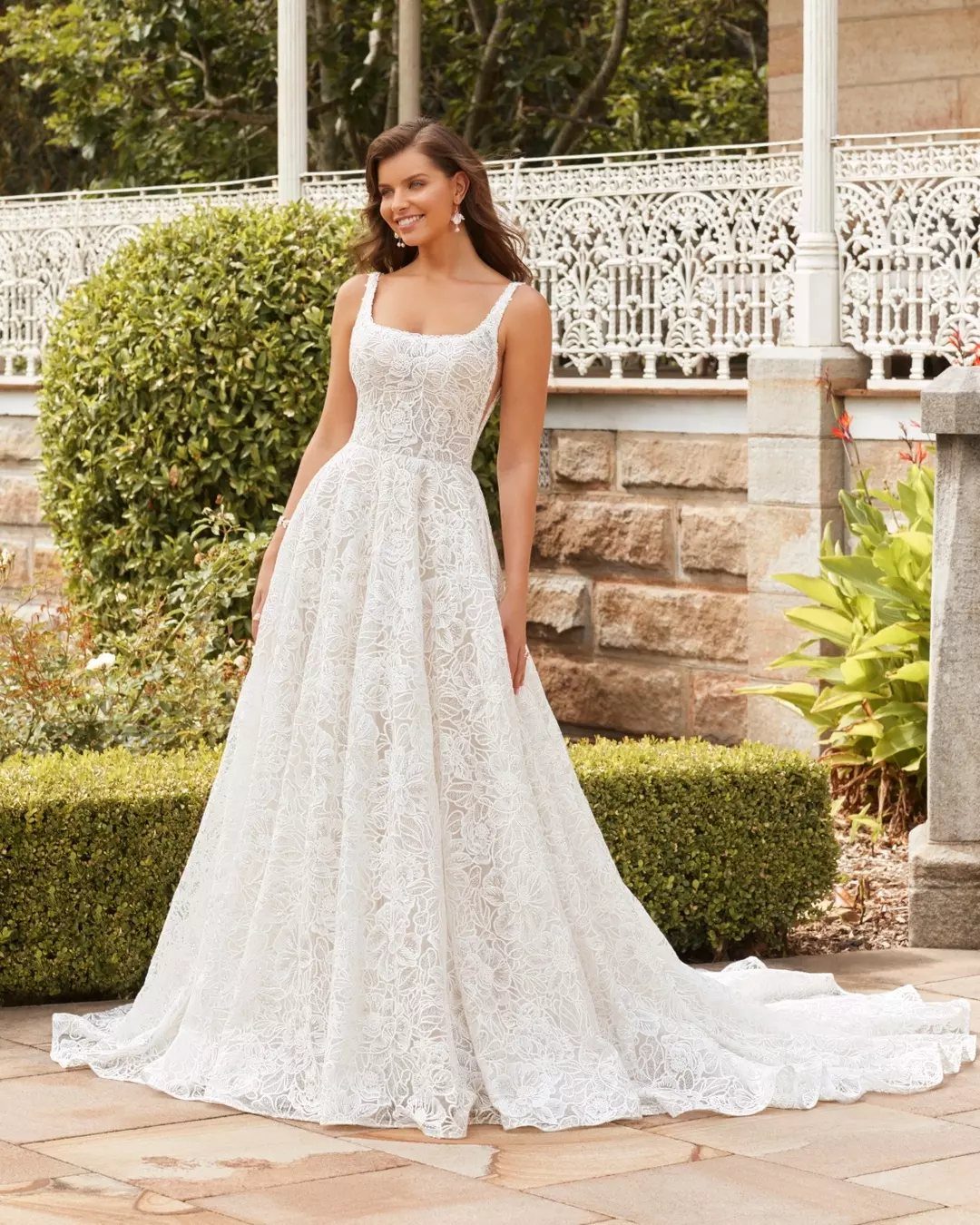
A square neckline cuts straight across the chest, with right angles at the corners. The straight edge frames your collarbones and looks clean against fitted lace, especially when paired with sleeves or straps that continue the square line.
Square necklines suit narrower shoulders or anyone who wants a structured look.
The shape can feel boxy on very broad shoulders, so try it with your usual posture in the mirror. If the corners sit too wide, a narrower square or a slightly curved neckline reads better.
17. Wedding Dress with Long Lace Train
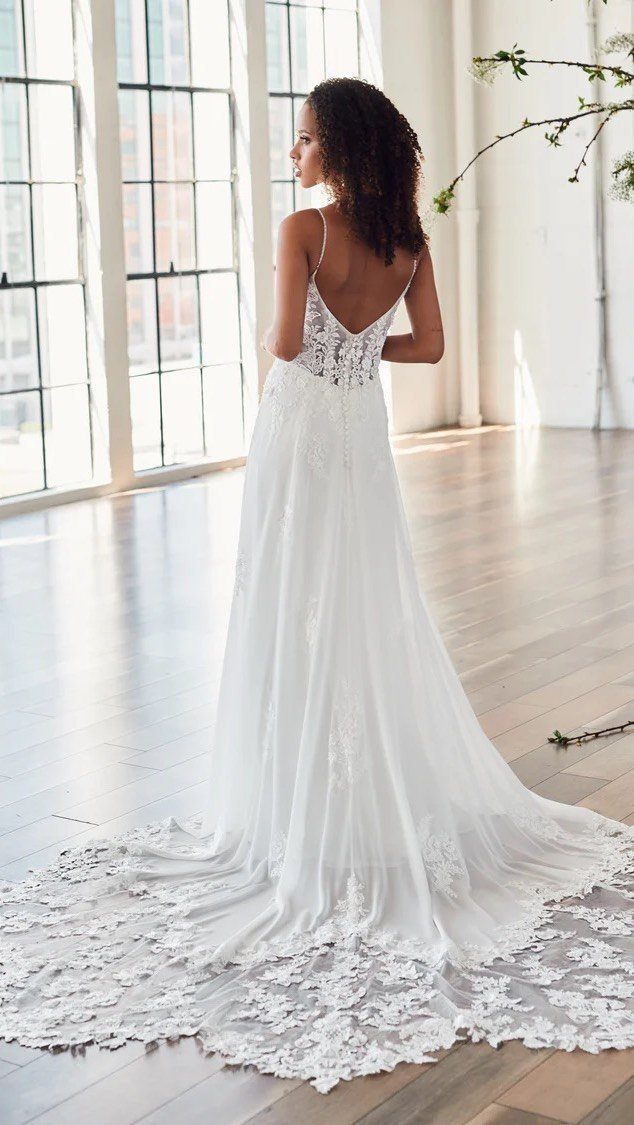
A long train extends several feet behind the dress, which adds formality and makes the entrance more dramatic.
Trains attach at the waist or hem, and the longer they run, the more help you will need managing them during the ceremony.
For a long train, assign someone to arrange it when you stand at the altar and to flip it for the recessional.
Most trains bustle up with loops or buttons so you can move freely at the reception. Ask your seamstress to show you the bustle mechanism before the wedding day.
18. Lace Sleeves
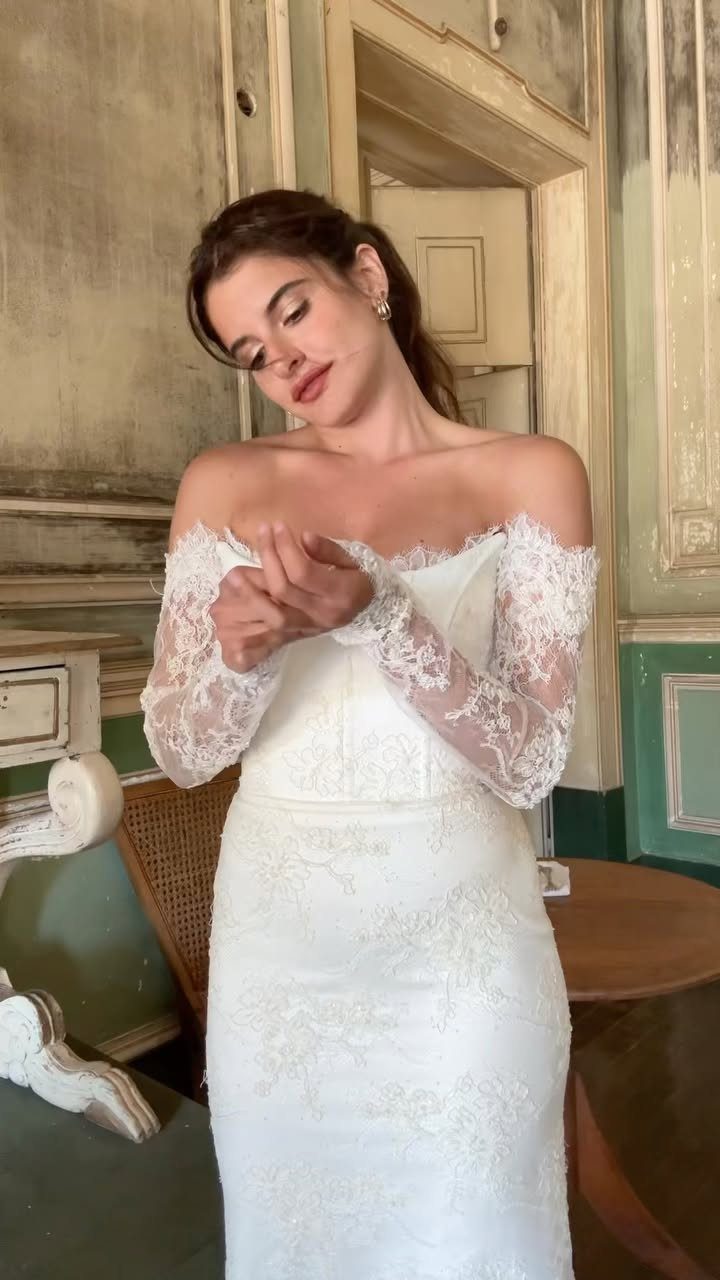
Lace sleeves add coverage and texture without the weight of lined fabric. Sleeves can be fitted, sheer, or puffed, depending on the lace and the dress style.
A seamstress can often add detachable lace sleeves that snap or button on to a dress that came without them. Detachable sleeves let you change the look between the ceremony and reception without altering the dress permanently.
19. Beach Wedding Lace Dress
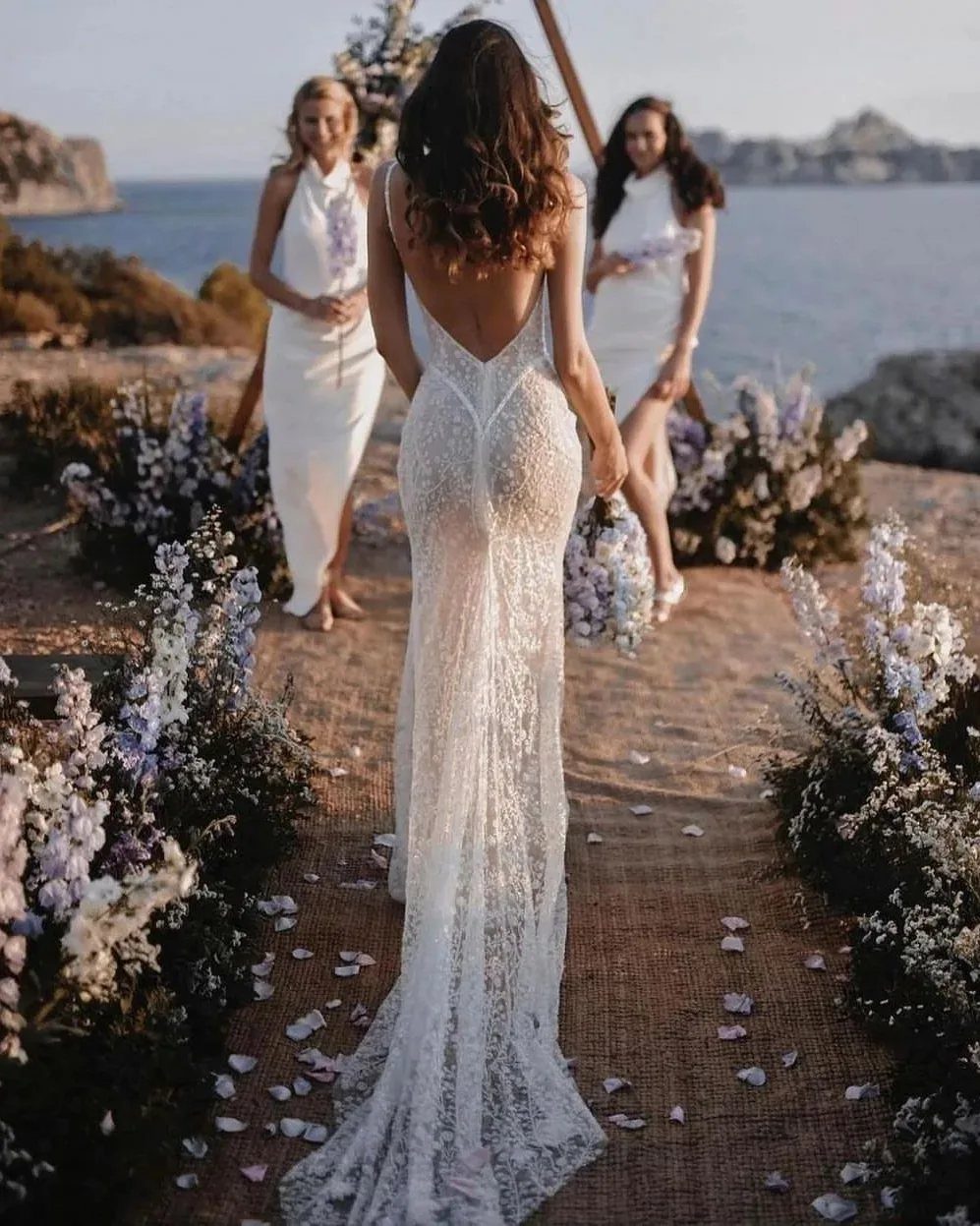
For a beach ceremony, lighter lace works better than heavy overlays.
Chantilly or tulle-backed lace breathes in humidity and moves with wind instead of holding stiff. A fitted silhouette without a train or bustle keeps sand from catching in fabric when you walk.
Barefoot or flat sandals suit sand better than heels, so check that the hem clears the ground by an inch or two. If the dress is too long, you will step on it.
20. Long-sleeve Lace Wedding Dress
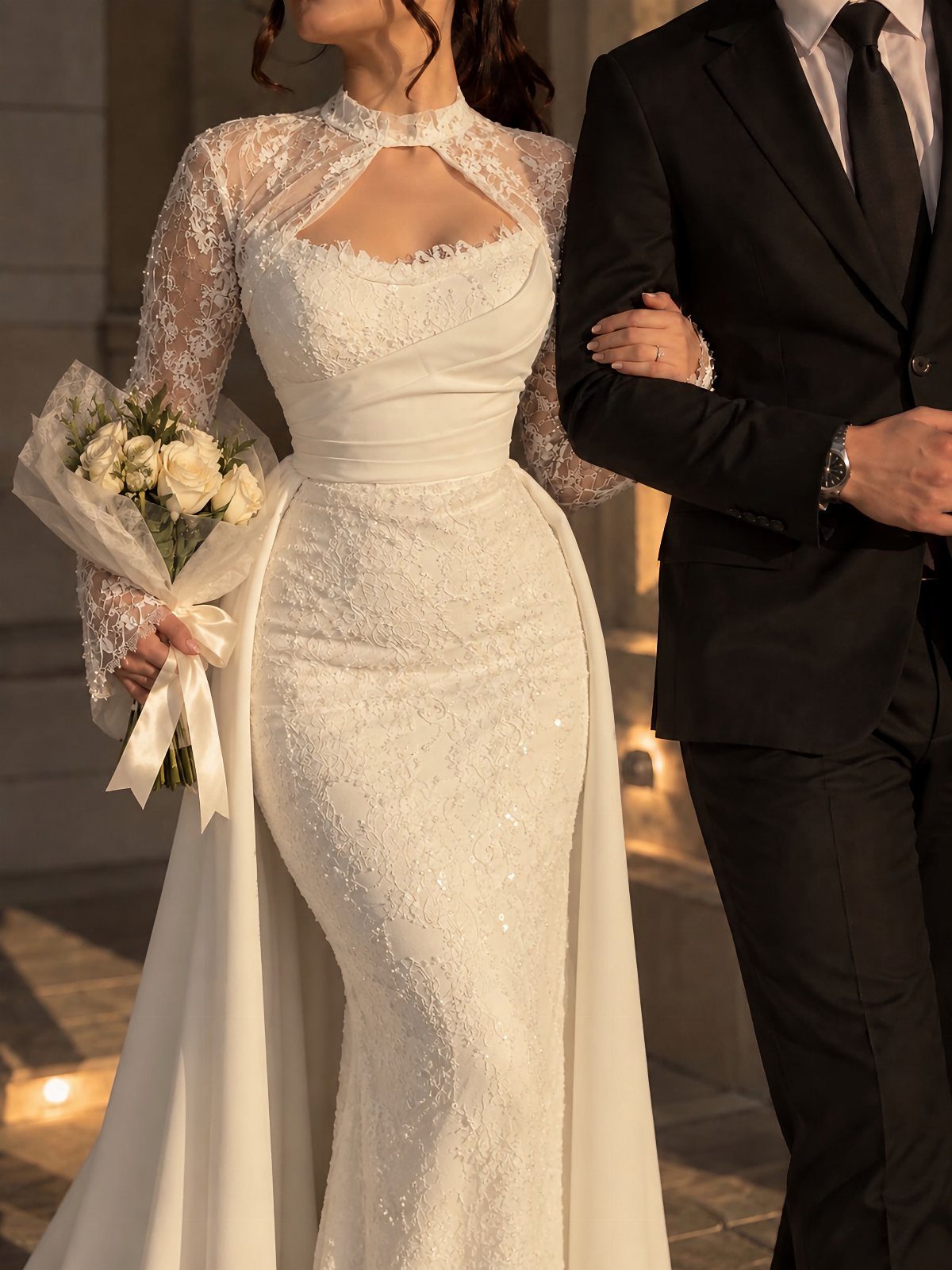
Full-length sleeves in lace suit winter ceremonies, religious settings or anyone who prefers arm coverage. Fitted sleeves stay close to the skin, which keeps the line sleek through the bodice and arms.
For indoor winter weddings, sleeves in lined lace can get warm. Illusion lace with appliqués covers the same area with less fabric weight, or you can look for sleeves that detach for the reception.
21. Black Lace Fitted Dress
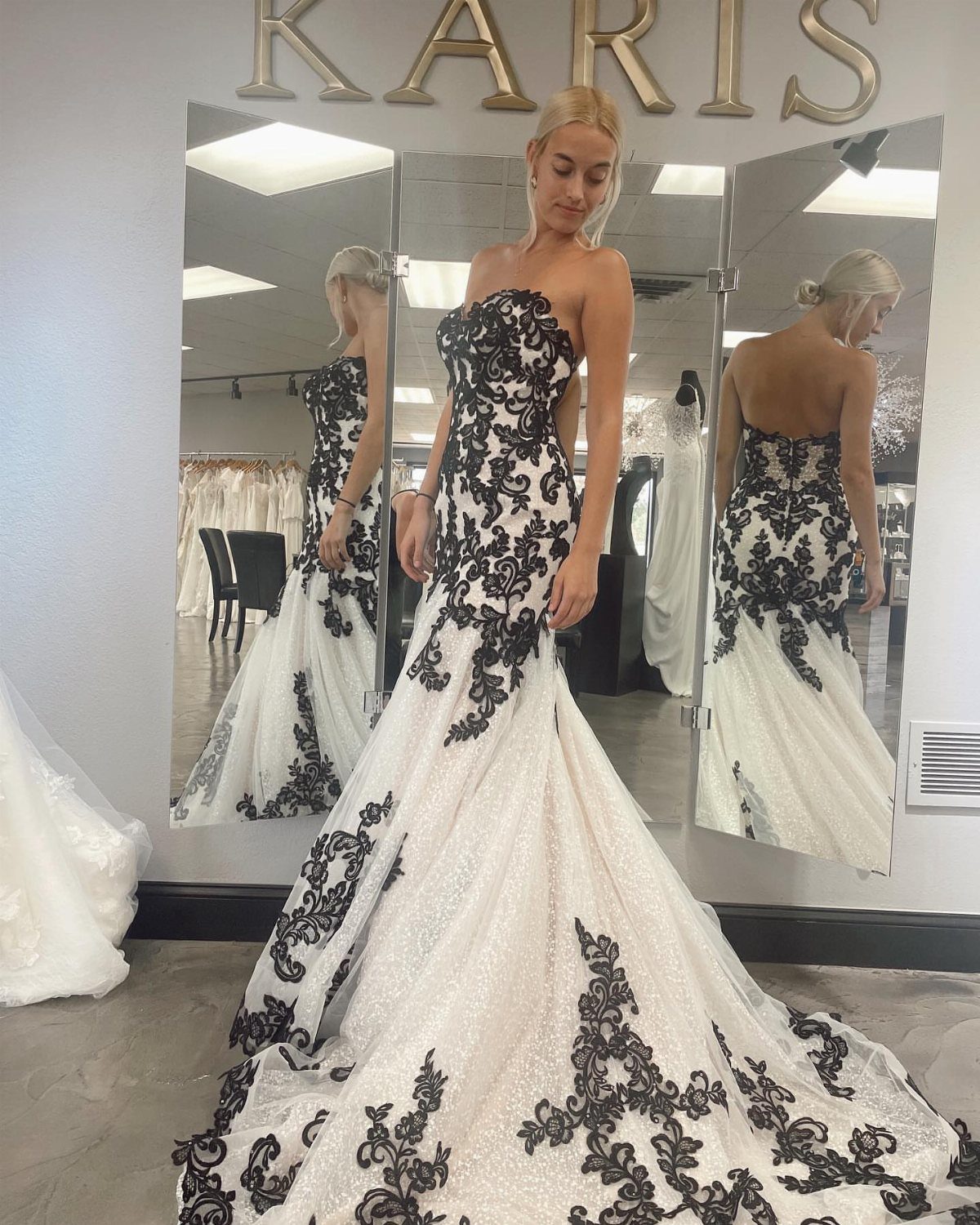
Black lace over white fabric gives contrast while still showing the base colour through. The black sits on top as appliqués or an overlay, so the white shows through and keeps the dress from reading as solid black.
Black lace suits modern or nontraditional weddings.
If your venue or theme leans formal or classic, the contrast might feel too bold. Some guests will read it as unexpected, so decide whether that fits your day.
22. Beaded Fitted Lace Dress
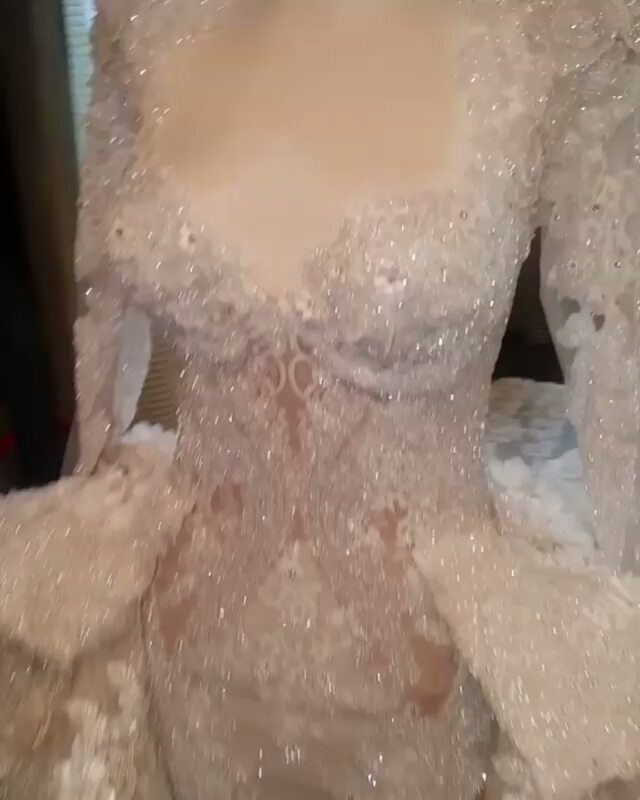
Beading on fitted lace adds shine without changing the silhouette.
If you are wearing the dress for several hours, try it on with the undergarments and shoes you plan to use. Beaded lace can dig in at the waist or neckline if the fit is too tight.
23. Fitted Lace with Deep V
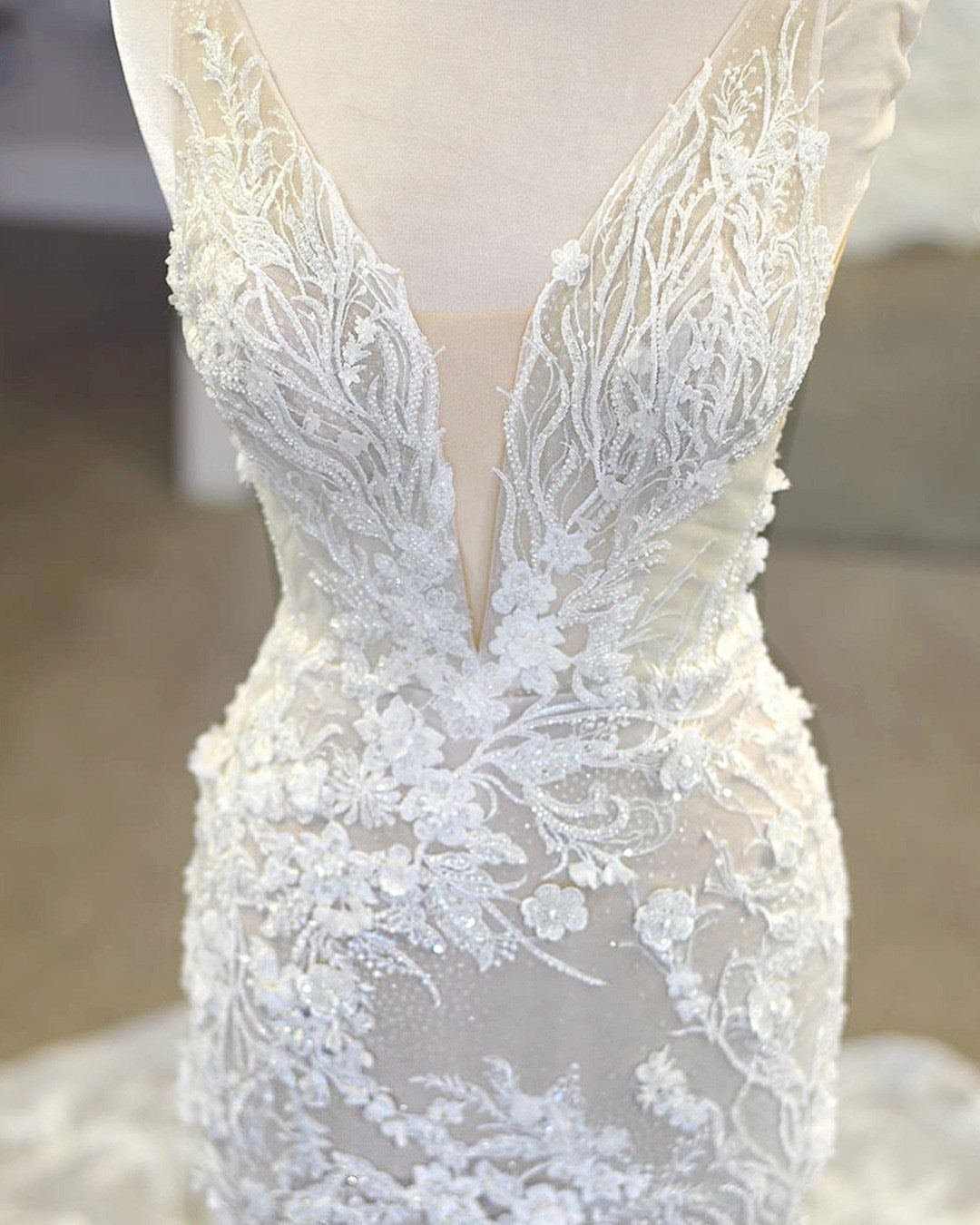
A deep V neckline drops below the bust, which lengthens the torso and shows more skin at the center front. A sheer panel or mesh insert fills the V partway, giving coverage while keeping the neckline low.
For this to stay secure, the bodice needs boning or structured seams at the sides. A V cut this low can shift or gape if the dress is not fitted closely at the ribs and waist.
24. Halter-neck Fitted Lace
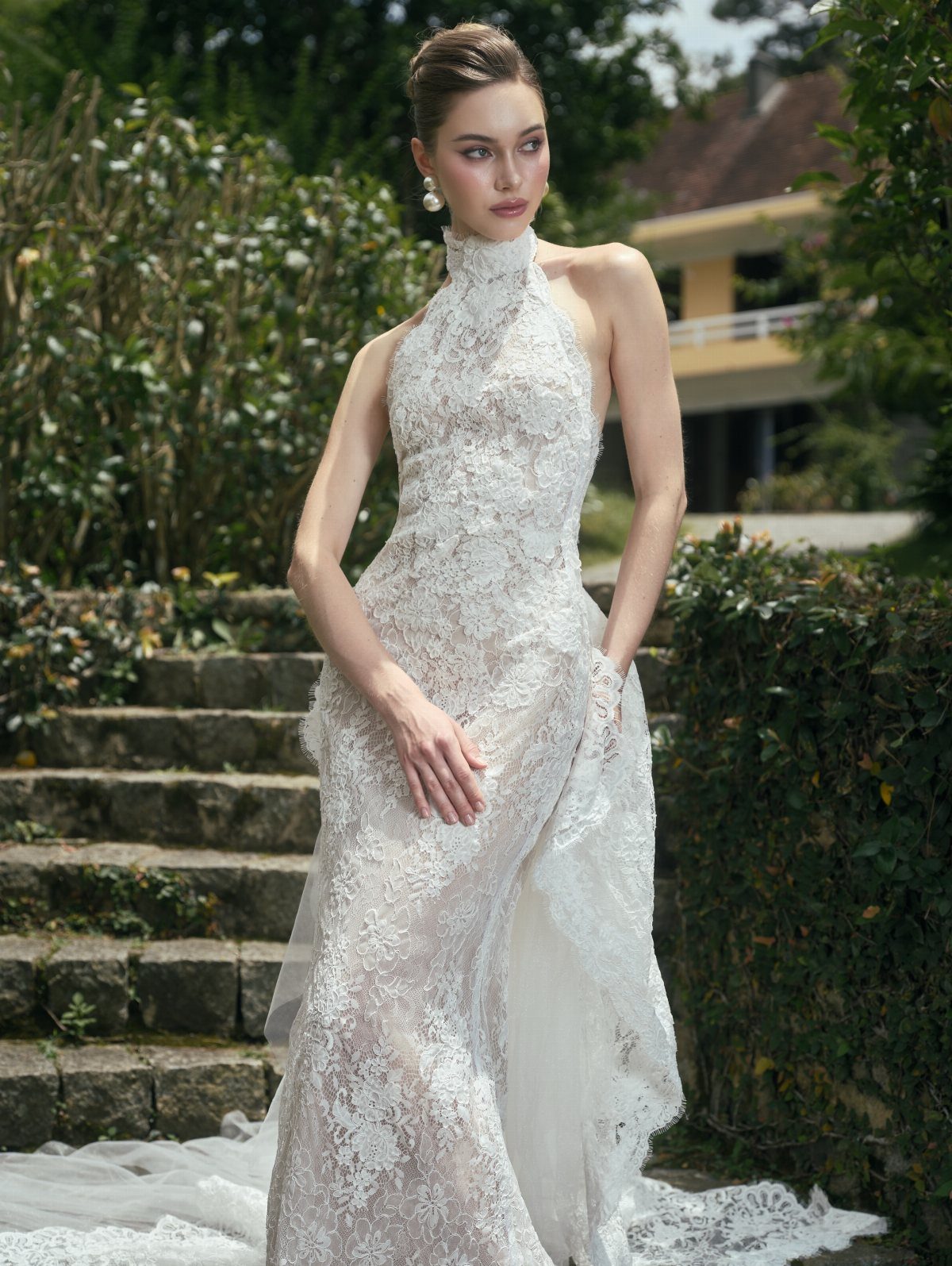
A halter neckline wraps around the back of the neck, leaving the shoulders and upper back open. The strap sits high, which frames the face and keeps the neckline structured without a strapless band.
Halter straps put weight on your neck instead of your shoulders, so a heavy lace bodice can feel uncomfortable after a few hours.
25. Detachable Overskirt Gown
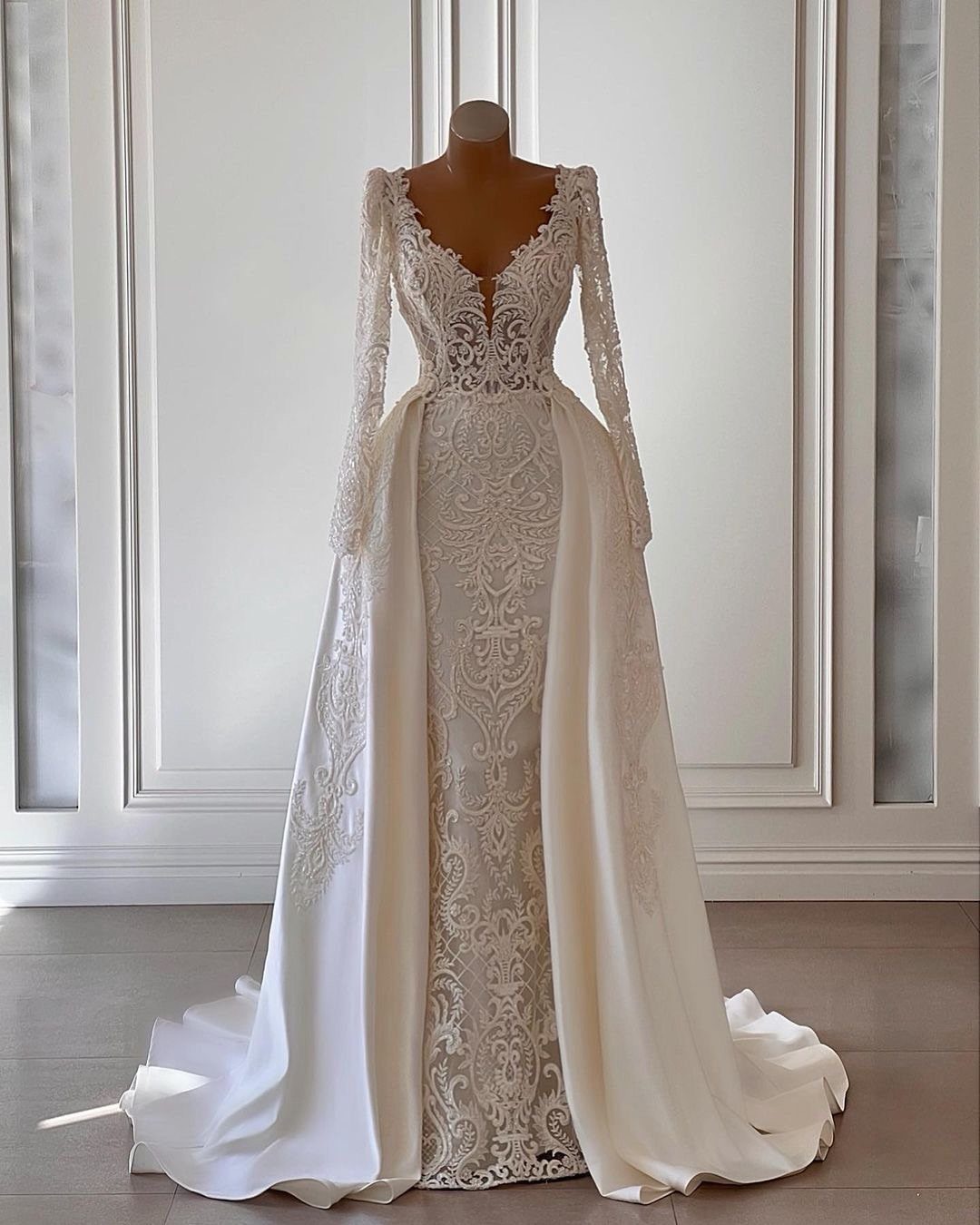
An overskirt attaches to a fitted lace gown with hooks, buttons or a waistband, and lifts off for the reception.
The fitted dress underneath stays slim through the ceremony, and removing the skirt changes the silhouette without needing a second dress.
Most overskirts fasten at the natural waist or just below it.
Check that the closure sits flat under the skirt so it does not show through sheer fabric. Practice removing the skirt before the wedding so you know how the fasteners work and how long it takes.
Lace Dress Styling Advice
When lace covers most of the bodice, jewelry that sits directly over it can hide the pattern you paid for.
Small studs or a single pendant leave the neckline clear. If the lace runs high across the collarbone, earrings show better than a necklace.
A fitted lace dress already has texture, so a sleek updo or pulled-back hair keeps the focus on the dress rather than competing with it. Loose waves can work if the lace sits lower on the shoulders.
Shoes in a color that is not white add a personal detail without changing the silhouette. Heels lengthen the leg under a fitted skirt, but the height needs to match what you can stand in for several hours.
A lower heel or a block heel will not sink into grass or catch between deck boards if your ceremony or reception is outdoors.
Frequently Asked Questions
How do I choose the right lace wedding dress silhouette?
Start with how you want to move. A-line and sheath dresses fit close at the top and give you room to walk, while mermaid and ball gown styles keep the torso fitted and add volume or flare lower down.
If you need full arm coverage, long sleeves work for religious ceremonies or winter weddings, and off-the-shoulder or backless styles suit warmer weather or a modern look.
Are lace wedding dresses still on trend?
Lace stays current because it works in full gowns, as sleeves, or as accents, and it suits both traditional and modern weddings. The style you choose matters more than whether lace itself is trendy.