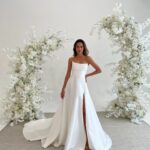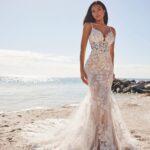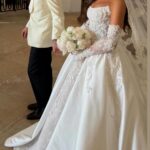
A princess wedding dress fits through the bodice and opens into a full skirt, landing somewhere between a fitted column and a floor-length ball gown.
Your choice comes down to neckline, sleeve length, skirt volume, fabric weight, and whether you want lace, beading, appliqués, or a train.
1. Princess Silhouette
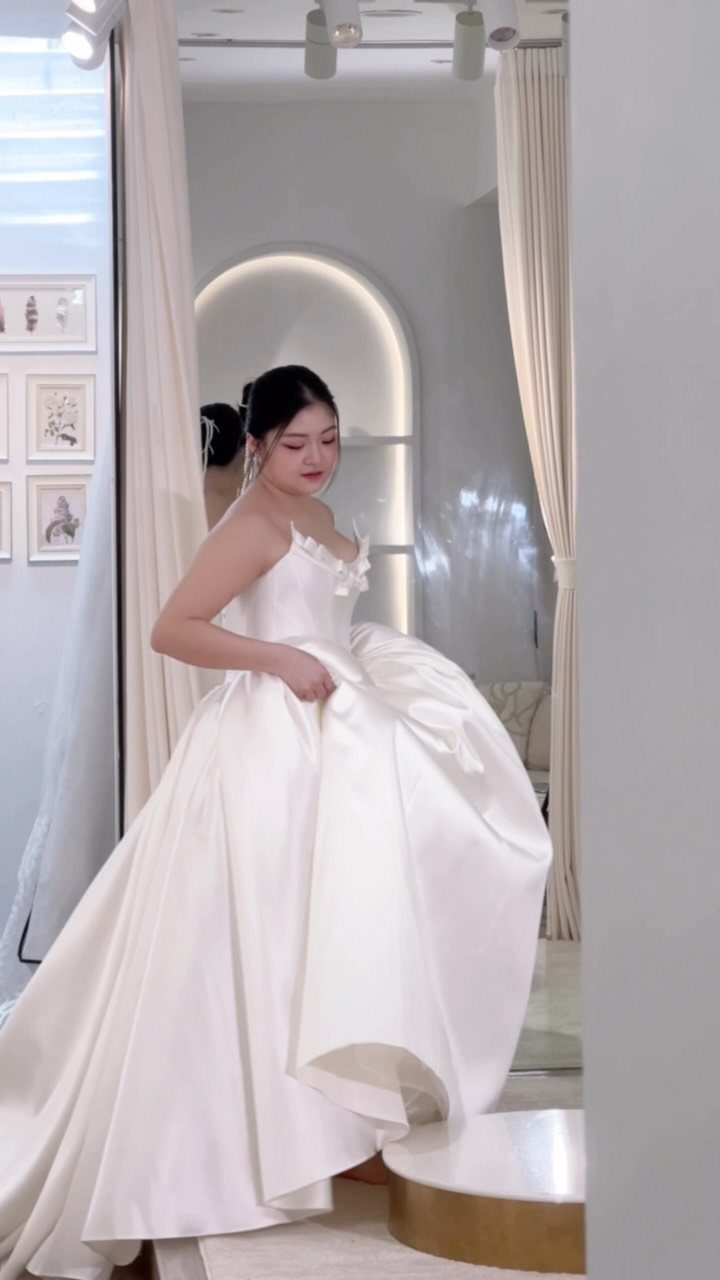
The silhouette fits through the bodice and cinches at the waist before opening into a wide, rounded skirt.
The shape sits somewhere between a fitted column and a full ball gown, offering volume without going quite as far as floor-sweeping tulle.
The nipped waist balances the skirt and holds the shape in place. Most versions build fullness through layers rather than a hoop, which makes the dress easier to move in and lighter to wear through a long reception.
2. Tulle Skirt
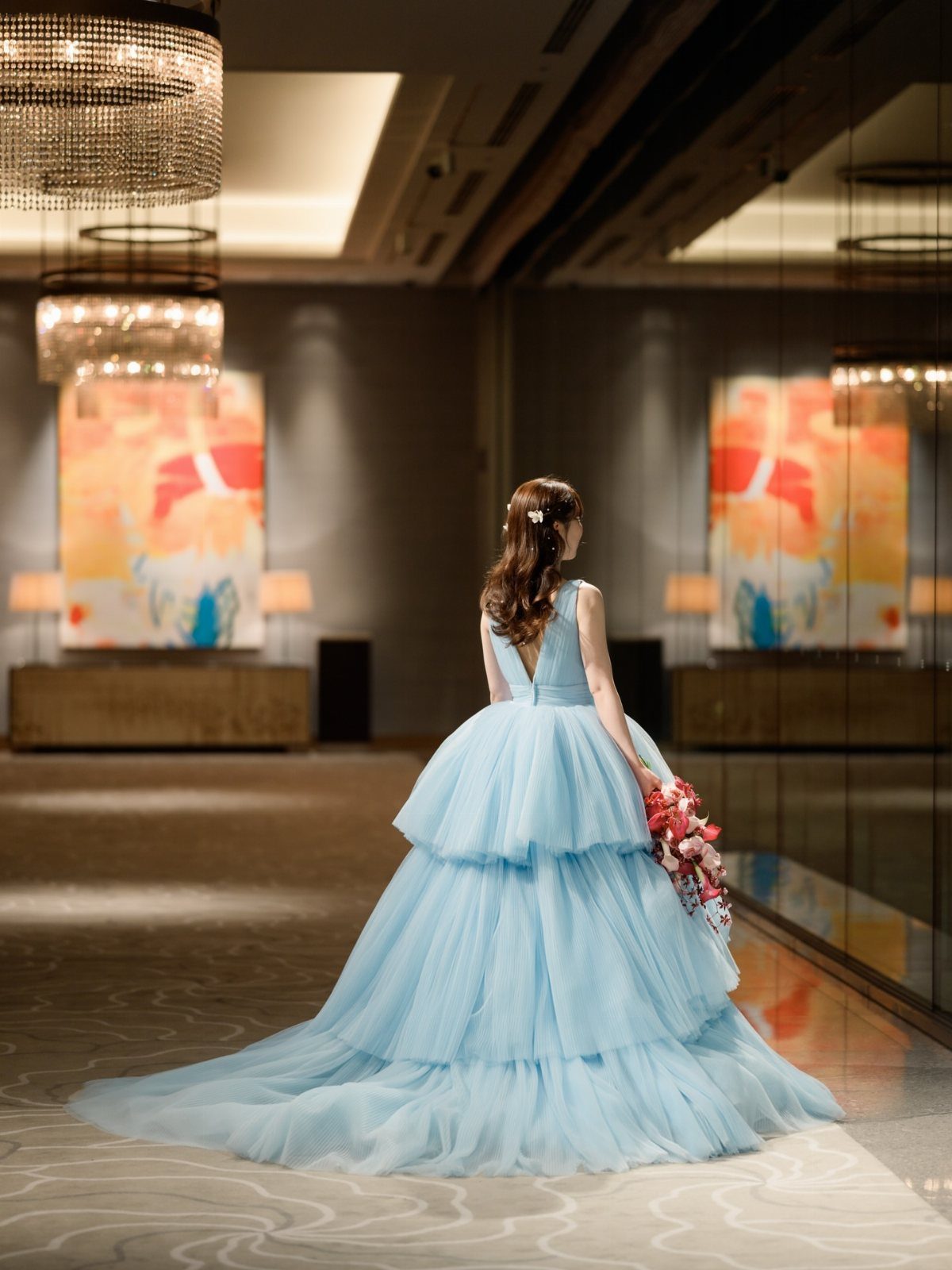
Layered tulle builds volume without weight. Each layer adds to the fullness, and the fabric’s slight transparency gives the skirt an airy, soft finish that moves easily and reads beautifully in natural light.
Tulle comes in varying stiffness.
Softer tulle drapes and gathers, while stiffer netting holds shape and creates more dramatic volume. Most princess skirts use a mix: stiffer layers underneath for structure, softer ones on top for a floaty finish.
The skirt can be styled with one solid color or graduated tones for depth. It pairs well with a simple fitted bodice that lets the skirt carry the visual weight.
3. Lace Details
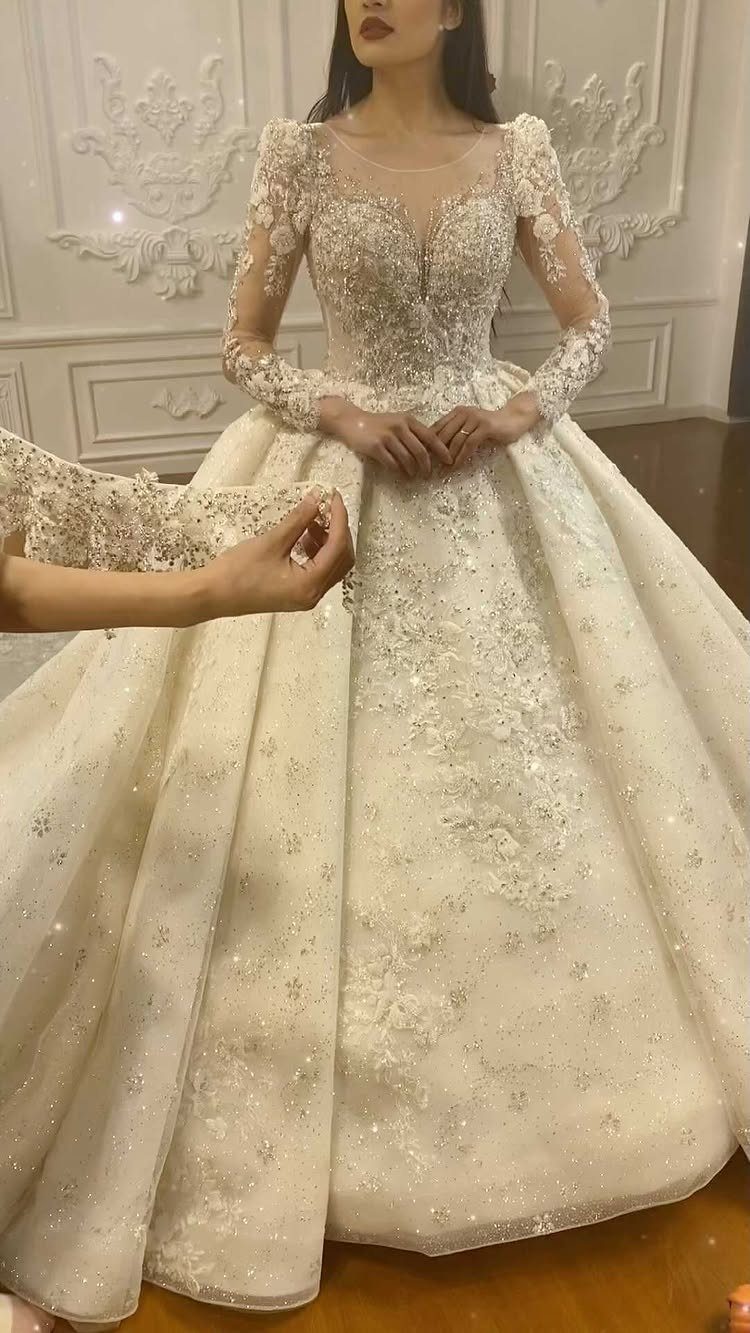
Lace brings texture and detail to a princess gown, whether it covers the bodice, runs along the hem, or layers over the skirt. It can be applied flat or raised for dimension.
Most lace patterns lean floral, but geometric or abstract motifs exist for brides who want something less traditional. The pattern itself can be subtle or high contrast, depending on the lace color and the base fabric beneath it.
Lace sleeves add coverage without making the dress feel heavy. When applied over tulle or satin, the lace keeps the gown formal while softening the overall look.
4. Off-the-shoulder Neckline
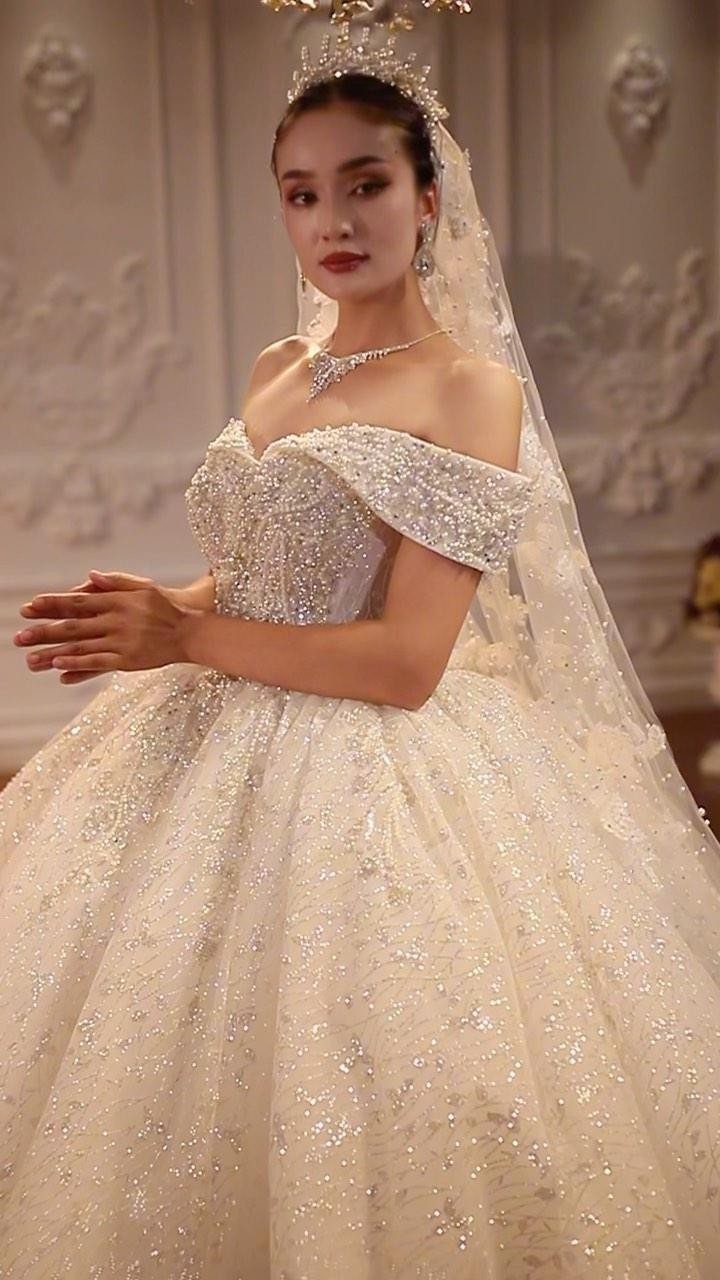
An off-the-shoulder neckline frames the collarbone and shoulders while keeping the upper arms covered. The neckline sits just below the shoulder line, supported by a structured bodice that holds it in place without straps.
The shape works well with long or short sleeves. A fitted sleeve streamlines the neckline, while a puffed or gathered sleeve adds volume at the shoulder for a more romantic finish.
This neckline pairs cleanly with a princess skirt, drawing attention to the upper body before the skirt takes over. It photographs well from the front and allows room for a statement necklace or earrings if you want them.
5. Strapless Neckline
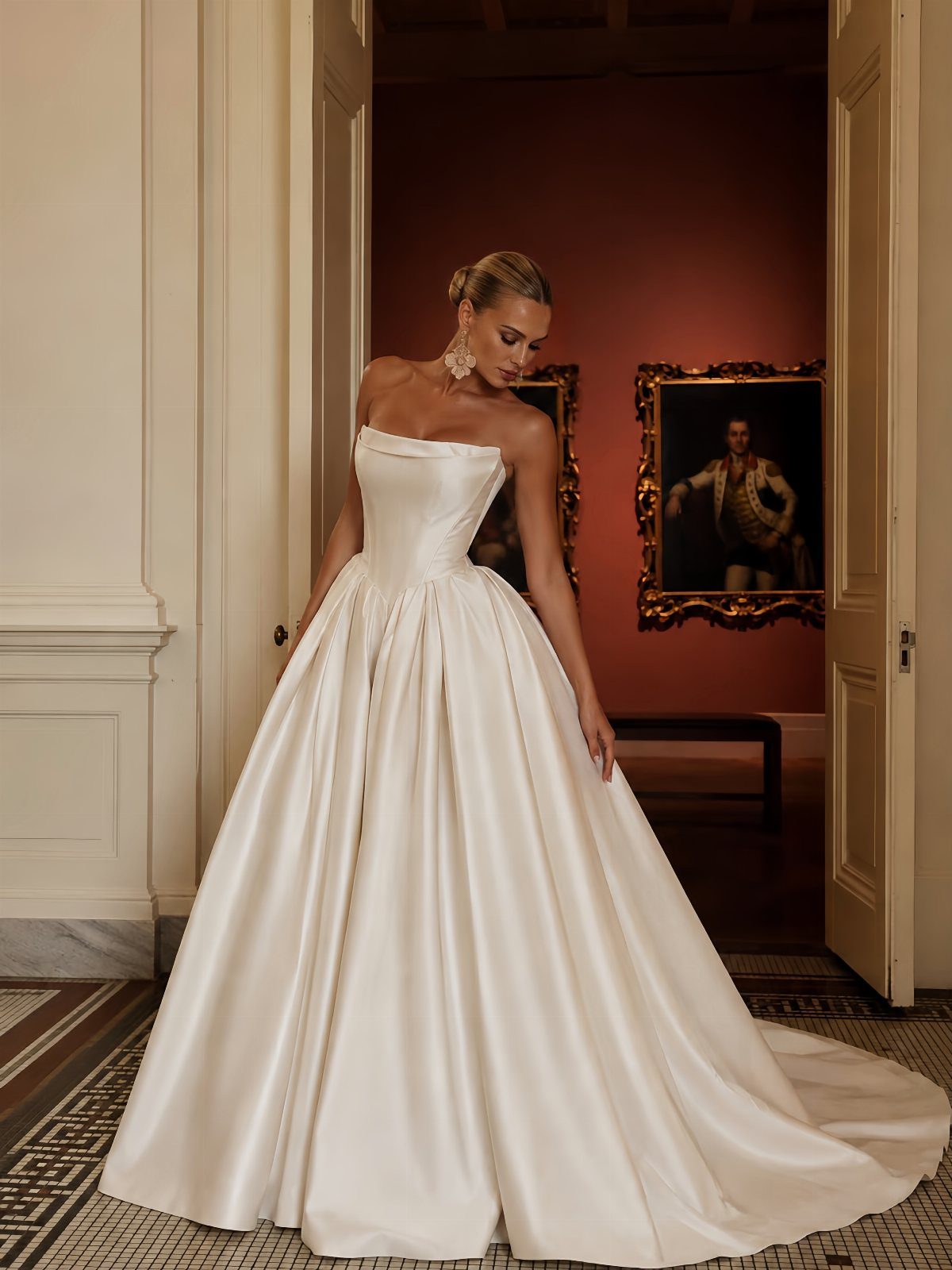
A strapless neckline leaves the shoulders and upper chest open, placing the focus on the bodice and skirt. The bodice is fitted and structured to stay in place without straps, usually with boning or internal support built in.
The cut works well for warmer venues and outdoor ceremonies. It also allows full movement in the arms and shoulders, which helps when greeting guests or dancing.
Strapless gowns pair cleanly with statement jewelry or a veil that starts at the crown. The open neckline keeps the silhouette simple and lets the full skirt hold the visual weight.
6. Long Sleeves
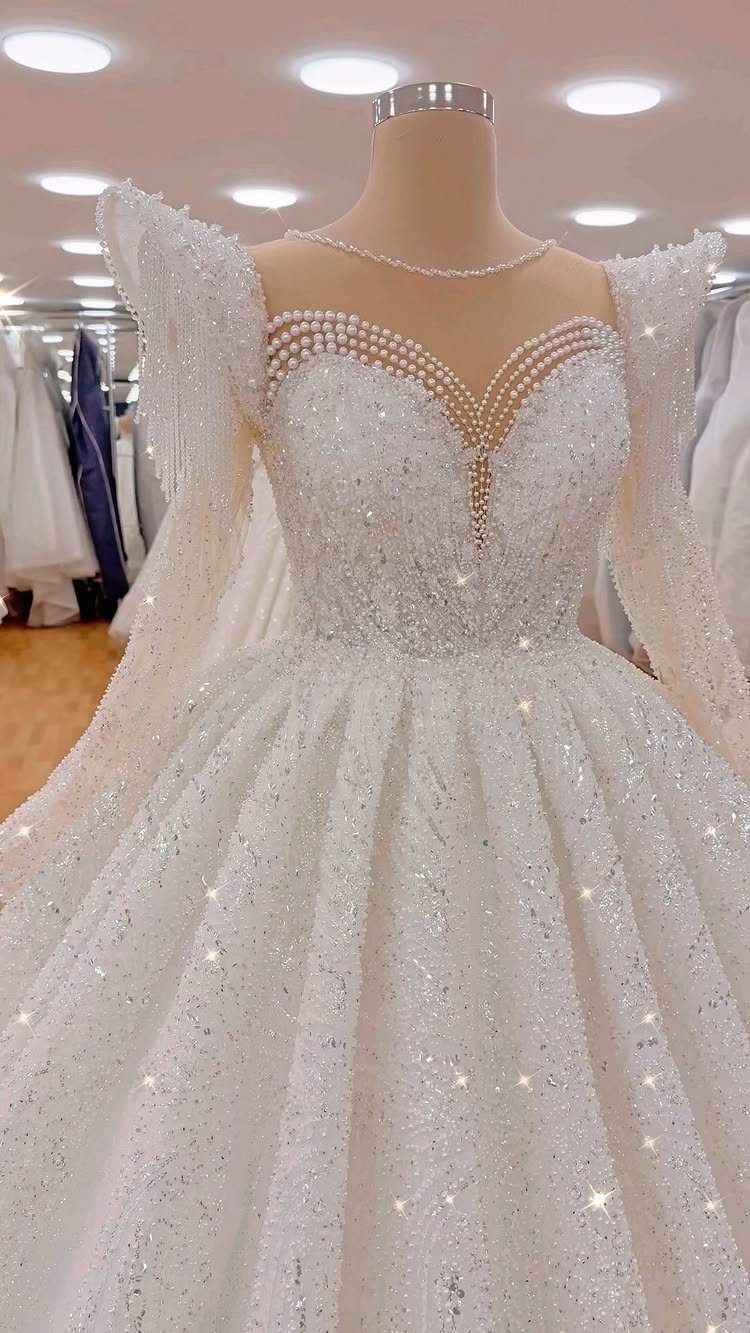
Long sleeves add coverage and structure to a princess gown. They suit winter weddings, religious ceremonies, and brides who prefer more fabric on the upper body.
The sleeves can be sheer, opaque, or embellished.
Sheer sleeves with lace or beading keep the look formal without adding bulk. Opaque sleeves in satin or mikado create a sleek, structured finish that balances a full skirt.
Fitted sleeves run close to the arm and taper at the wrist. They pair well with a high or modest neckline for a covered look that still photographs as formal.
7. Mikado Fabric
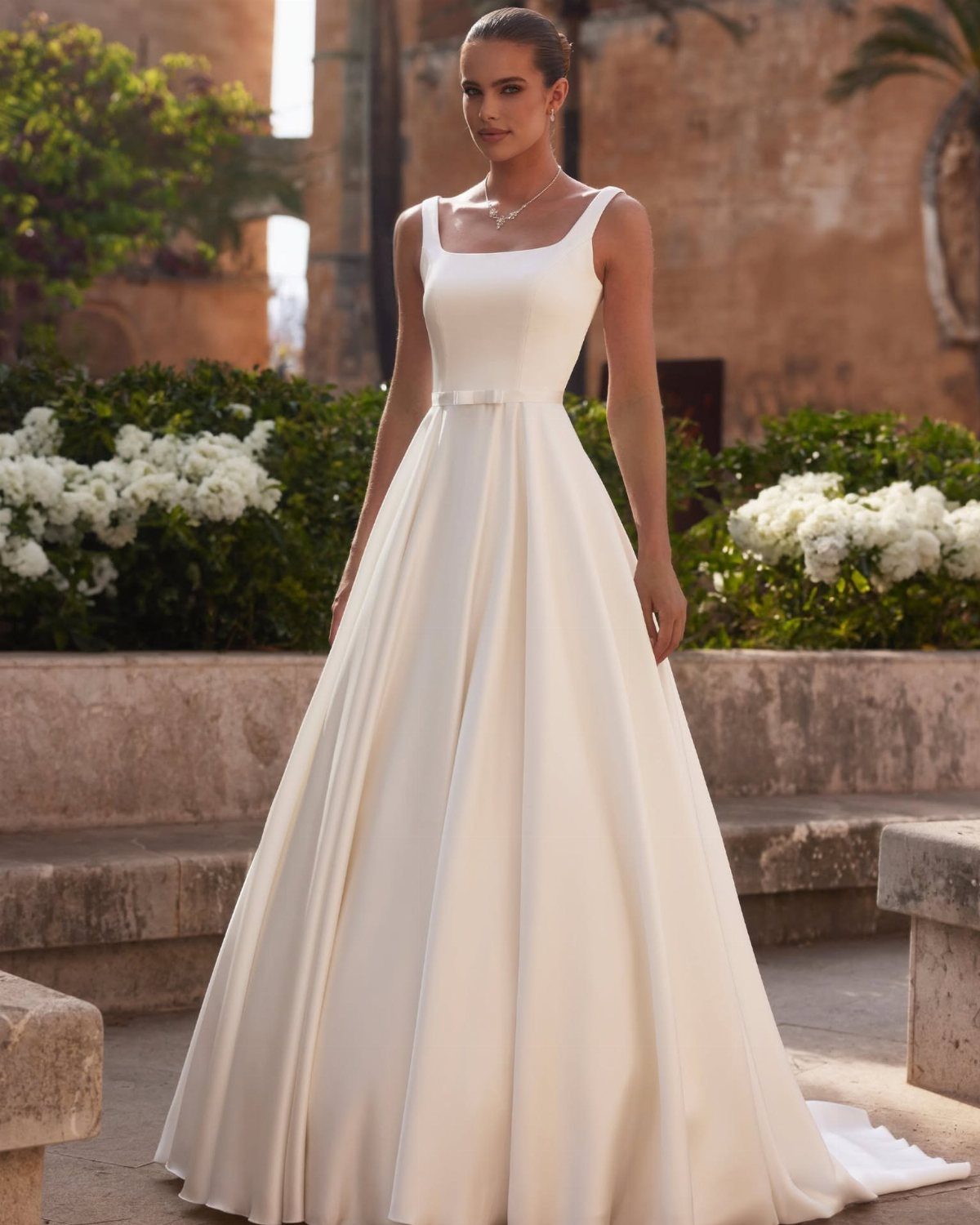
Mikado is a silk blend with body and weight. The fabric holds shape without clinging, so it supports a structured bodice and a skirt that stands away from the body rather than draping close.
The surface has a subtle sheen that catches light without reading as high-gloss satin. The fabric looks good under studio lighting and outdoors, and the surface stays even from bodice to hem.
Mikado suits formal ceremonies and works in most seasons. It does not wrinkle easily, which makes it practical for a long day.
8. Beaded Details
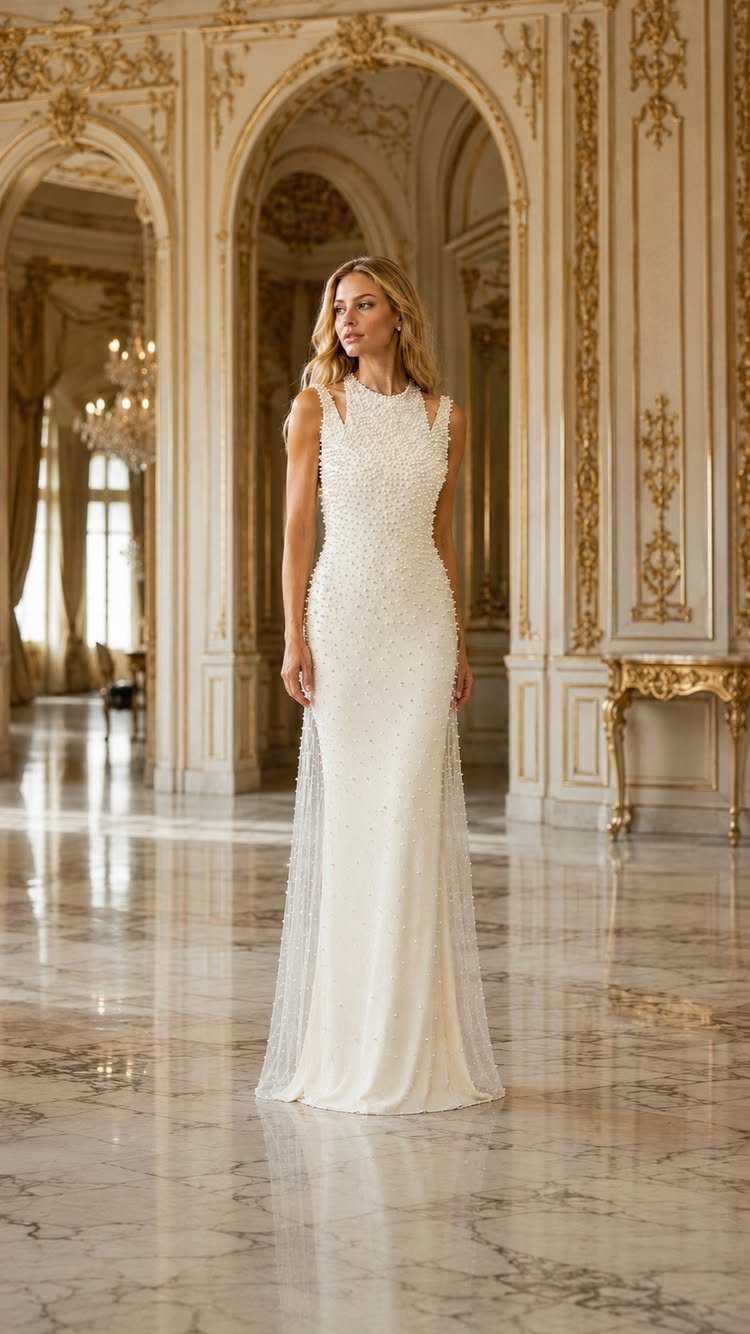
Beading runs along seams, across the bodice, or over the skirt in patterns that catch light. The beads can be clear, metallic, or tinted to match the dress fabric.
Application varies.
Hand-sewn beading sits flat and follows intricate patterns. Heavier beading adds dimension and weight, which can make the dress less comfortable over several hours.
Beaded gowns photograph well under mixed lighting. The detail shows up clearly in close shots and adds texture to the overall silhouette from a distance.
9. Satin Fabric
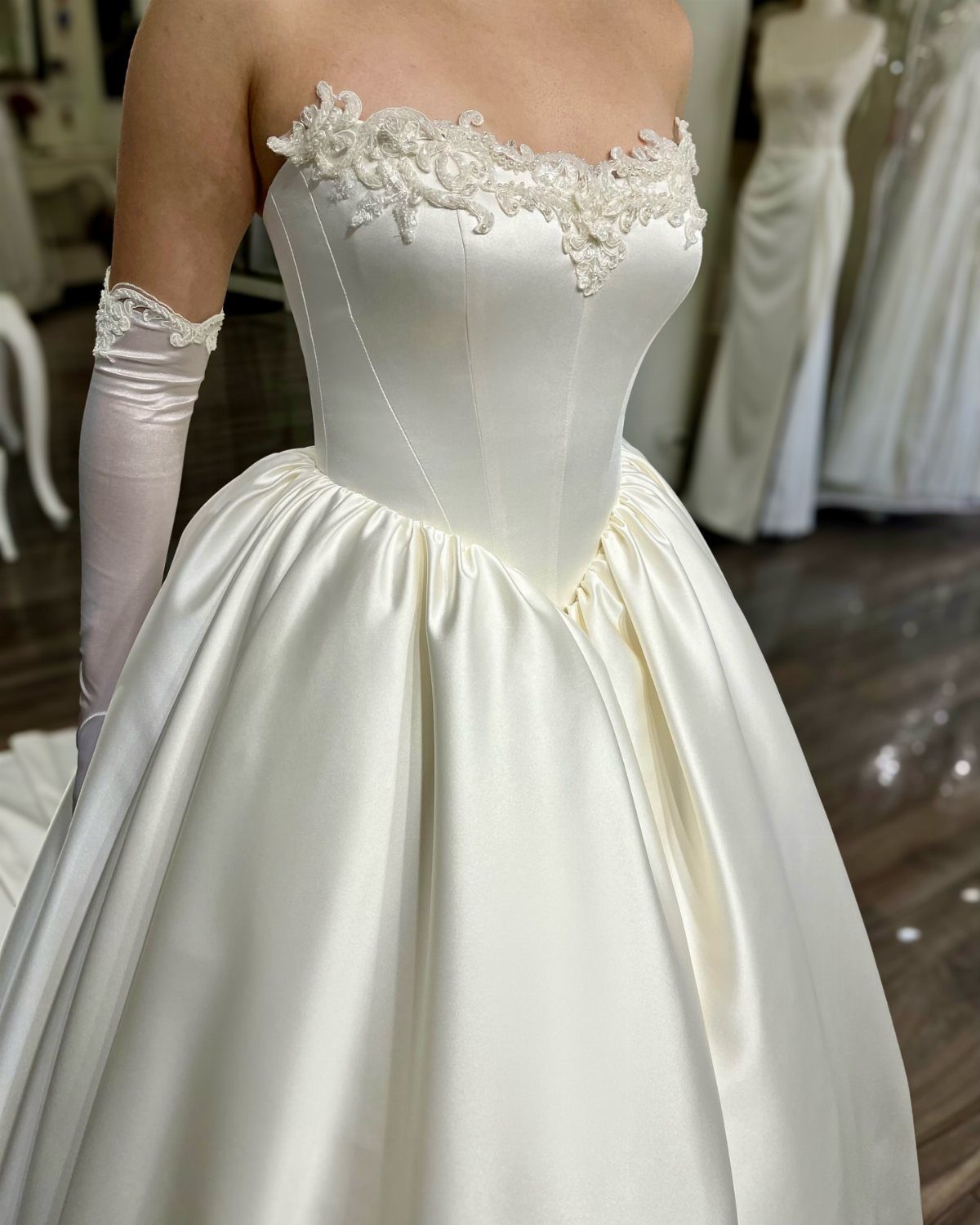
Satin has a smooth face and a matte back. The fabric drapes softly and moves with the body, which suits a princess gown that needs structure in the bodice and flow in the skirt.
The sheen is restrained compared to mikado or taffeta. Satin reflects light gently and does not create hard highlights, so it reads well in photographs without washing out.
The fabric holds pleats and gathers cleanly. It suits most seasons and works for both indoor and outdoor ceremonies.
10. Square Neckline
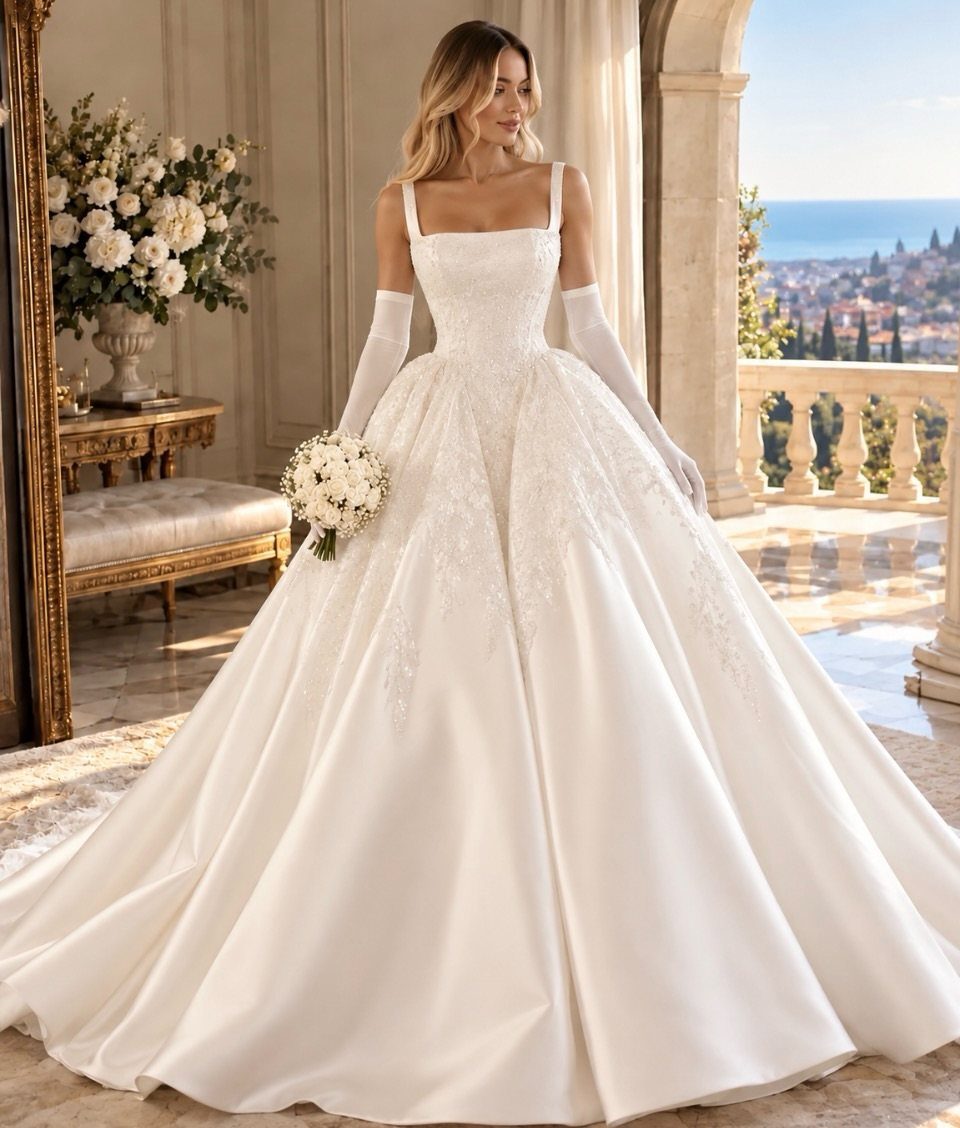
A square neckline runs straight across the chest and meets the shoulders at right angles. The cut frames the collarbone and neck without dipping low, which suits brides who want coverage without a high collar.
The shape pairs well with structured bodices and holds its line without shifting.
11. Wedding Train
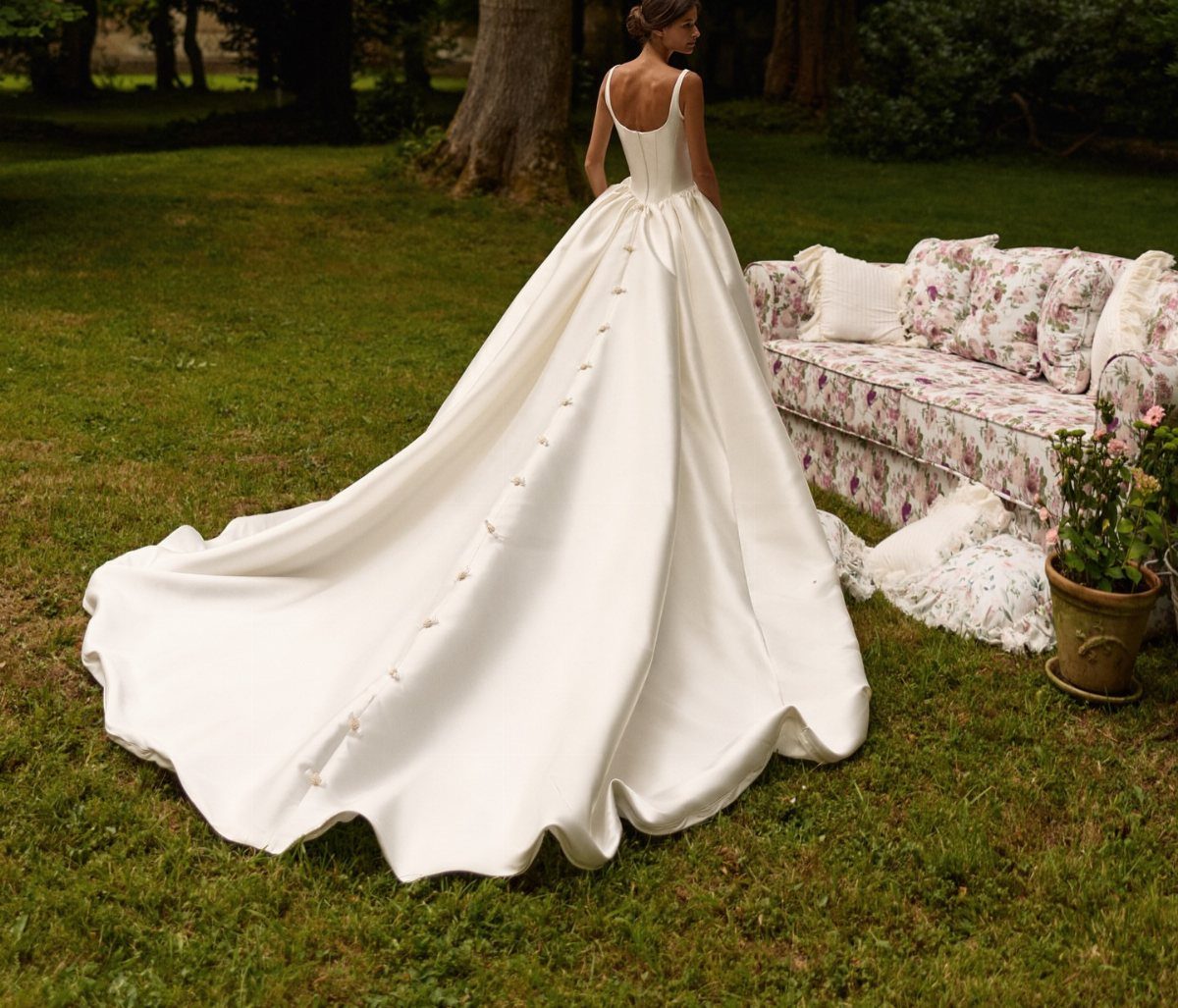
A train extends from the back of the skirt and trails along the floor. Length varies: a sweep train just brushes the ground, a chapel train extends behind you, and a cathedral train runs longer still.
Longer trains photograph dramatically but require help to carry and bustle after the ceremony. Most can be fastened up with hooks or buttons for the reception.
The train adds formality and works well for large venues where the extra fabric fills the space. It also photographs well outdoors, where the train can spread across grass or pavement.
12. A-line Silhouette
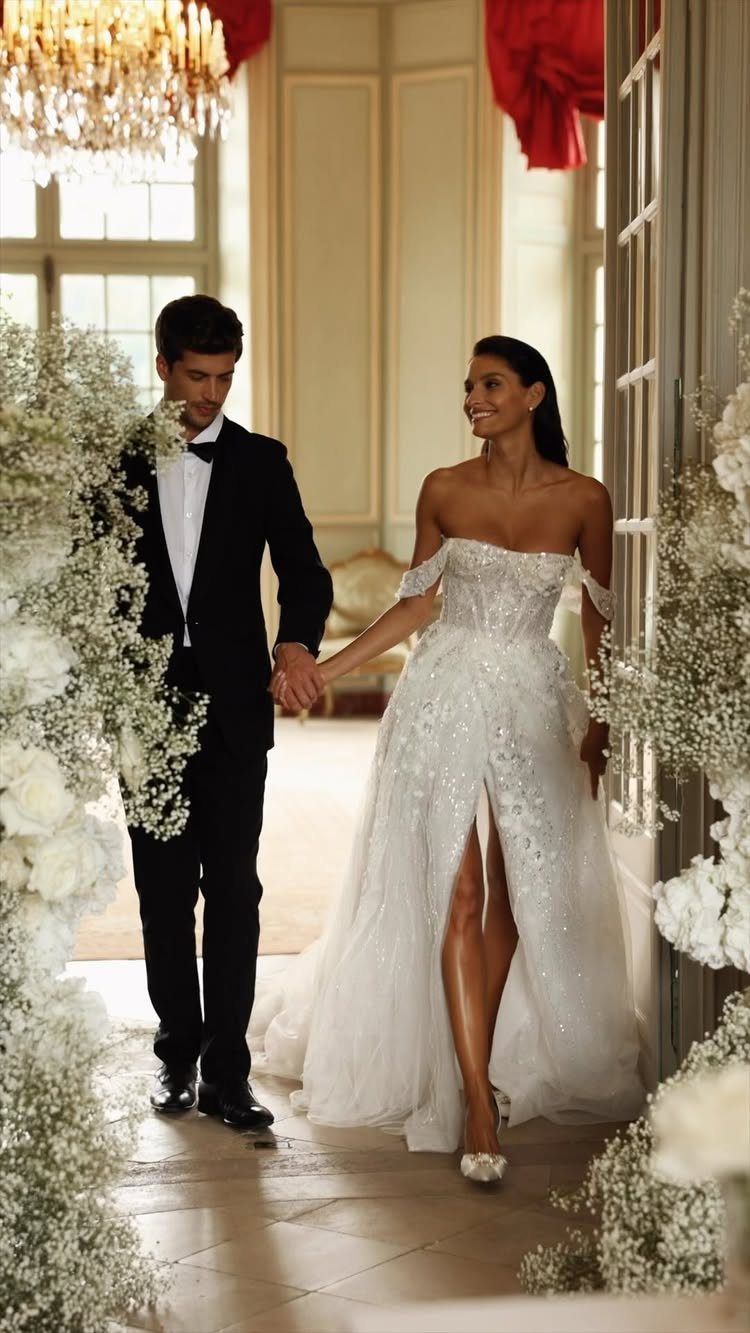
An A-line dress fits through the bodice and skirt both, flaring gently from the waist to the hem without the dramatic volume of a princess gown. The shape runs in a single line rather than cinching and then opening.
The silhouette suits brides who want a formal look with less fabric to manage. It moves easily and does not require layers of tulle or a petticoat to hold its shape.
The skirt can be plain or detailed, and the lighter construction makes the dress more comfortable for a full day of wear.
13. Glitter Tulle
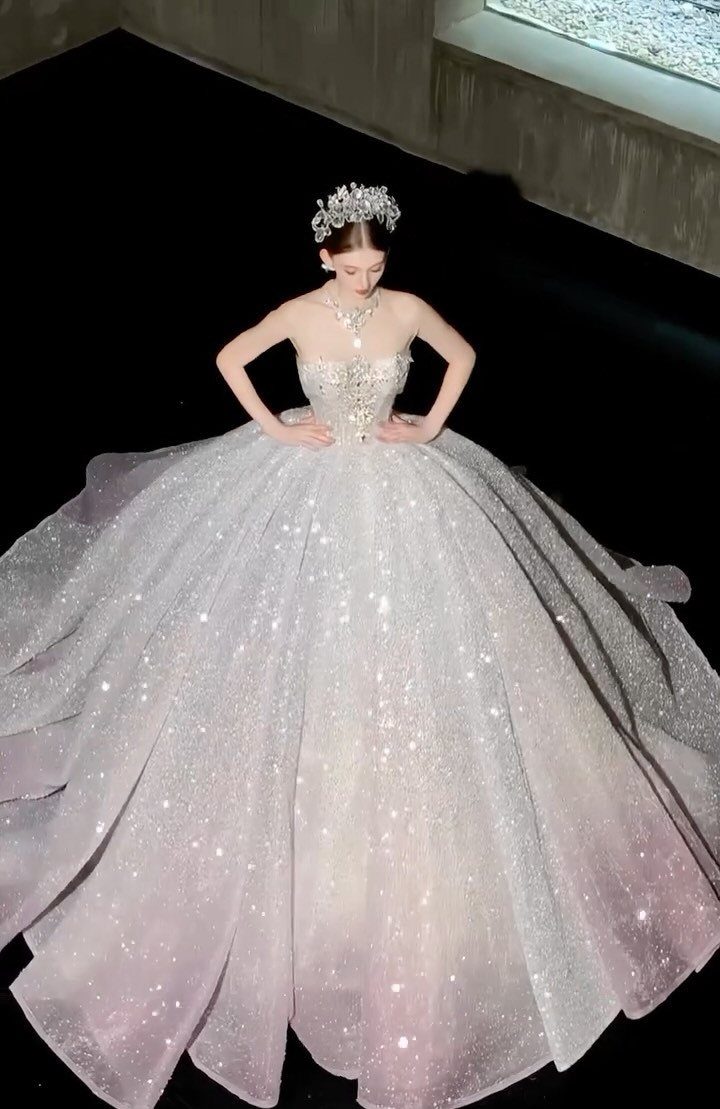
Glitter-coated tulle layers catch light with every step. The sparkle runs through the entire skirt, built in during fabric production rather than applied after, so it holds through wear and photographs without flaking.
The effect reads formal and works well for evening ceremonies or receptions with low lighting. The shimmer shows up clearly in flash photography and adds dimension to the silhouette without extra embellishment.
Pair it with a simple bodice. The skirt carries enough visual weight on its own.
14. Floral Appliqués
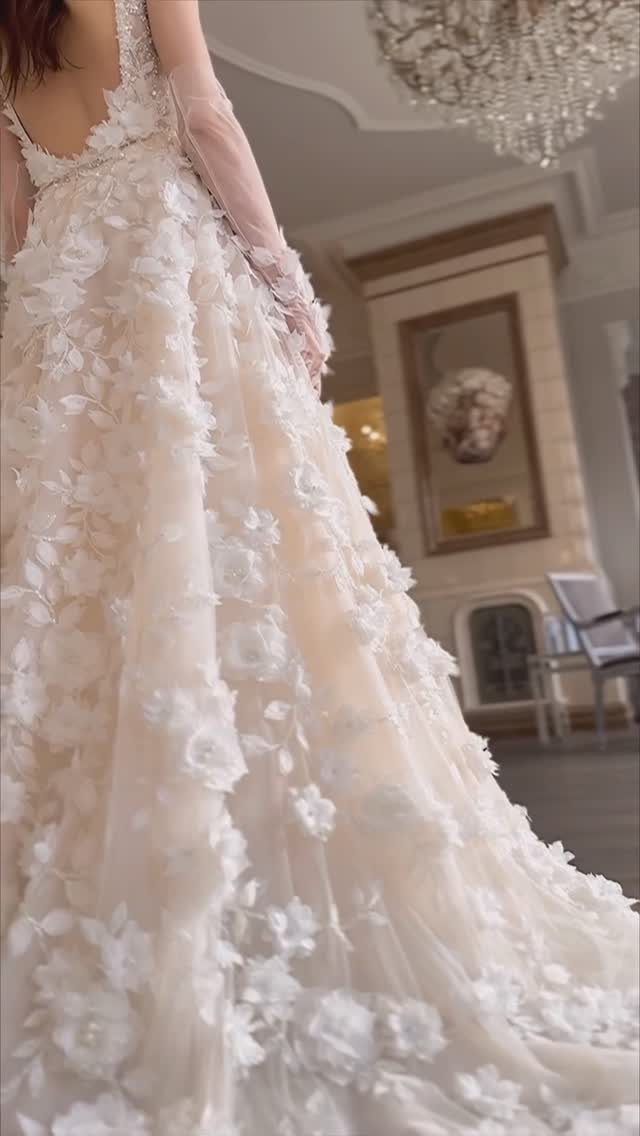
Three-dimensional flowers sit on top of the fabric rather than being stitched flat. Each appliqué is shaped from organza or tulle and attached at the center, so the petals lift away from the base and create depth.
The flowers can be scattered across the bodice and skirt or clustered along the hem and train. Placement affects how formal the dress reads: a full covering leans romantic, while strategic clusters keep the look cleaner.
The appliqués add texture that shows up well in photographs. They do add weight, so consider how long you will be wearing the dress.
15. High Neckline
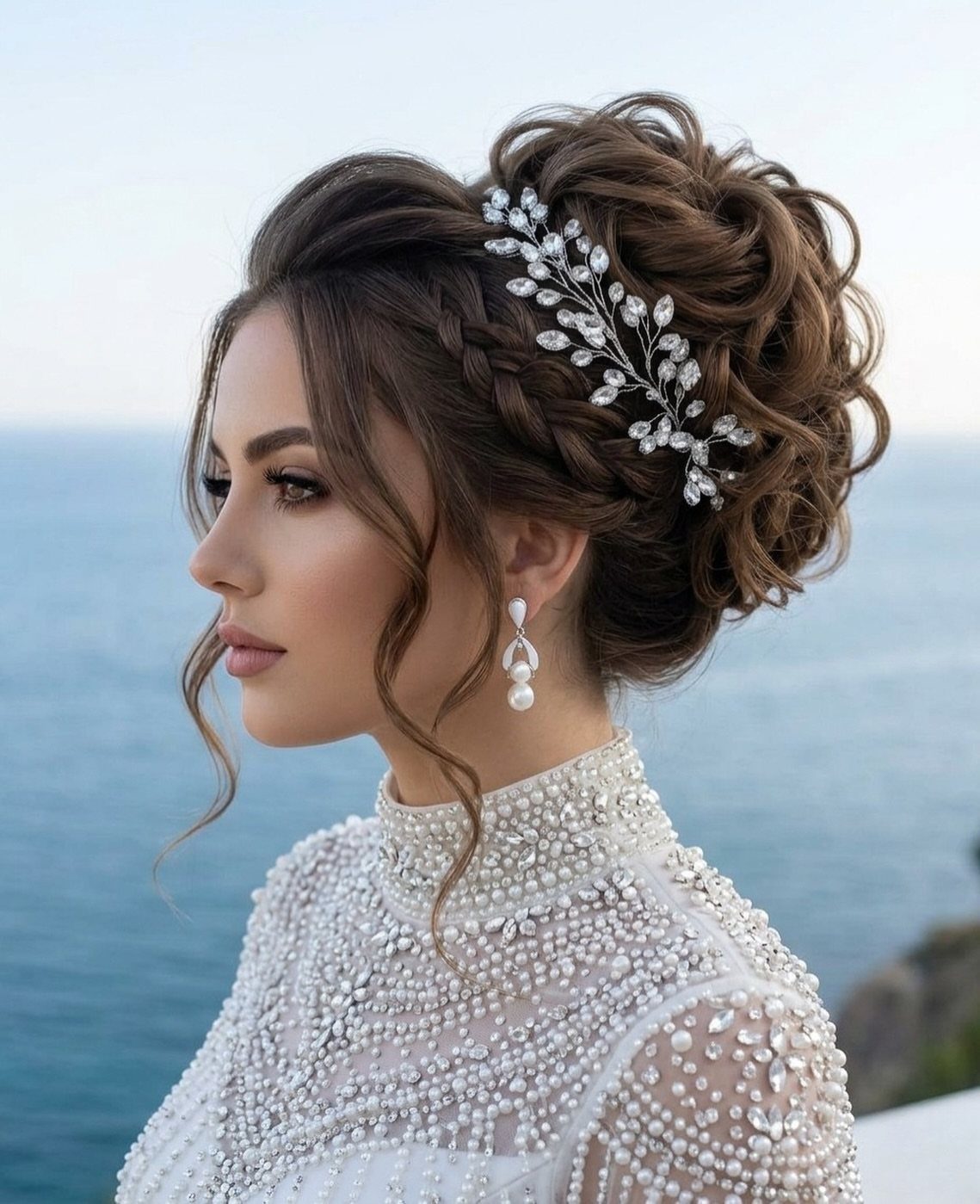
A high neckline covers the chest and throat, meeting just below the jawline.
The neckline can be plain or detailed.
Beading or lace along the collar adds interest without dropping the neckline lower. The shape pairs well with an updo or pulled-back hair that keeps the neck visible.
The coverage balances a full princess skirt and photographs cleanly from the front and sides.
16. Open Back
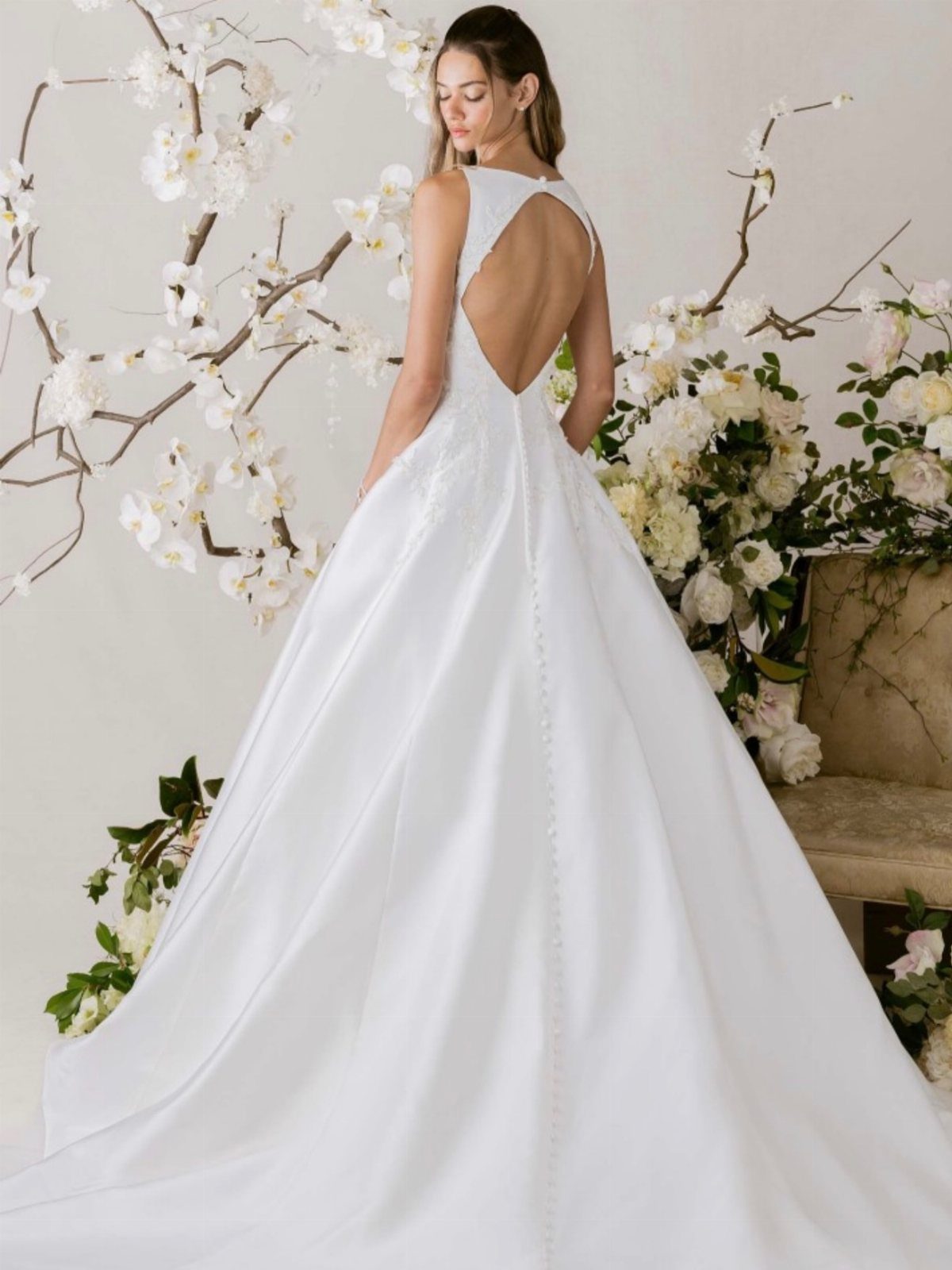
The back drops low or opens completely, leaving the spine visible from shoulders to waist. The cut adds a second focal point to the dress and photographs well from behind during the ceremony.
Most open backs are supported by the bodice structure at the sides, so the front stays secure without straps. The opening can be U-shaped, V-shaped, or squared off, depending on how low you want it to sit.
The back works well for warm-weather weddings and suits brides who want drama without adding fabric or embellishment.
17. Off-shoulder Ball Gown
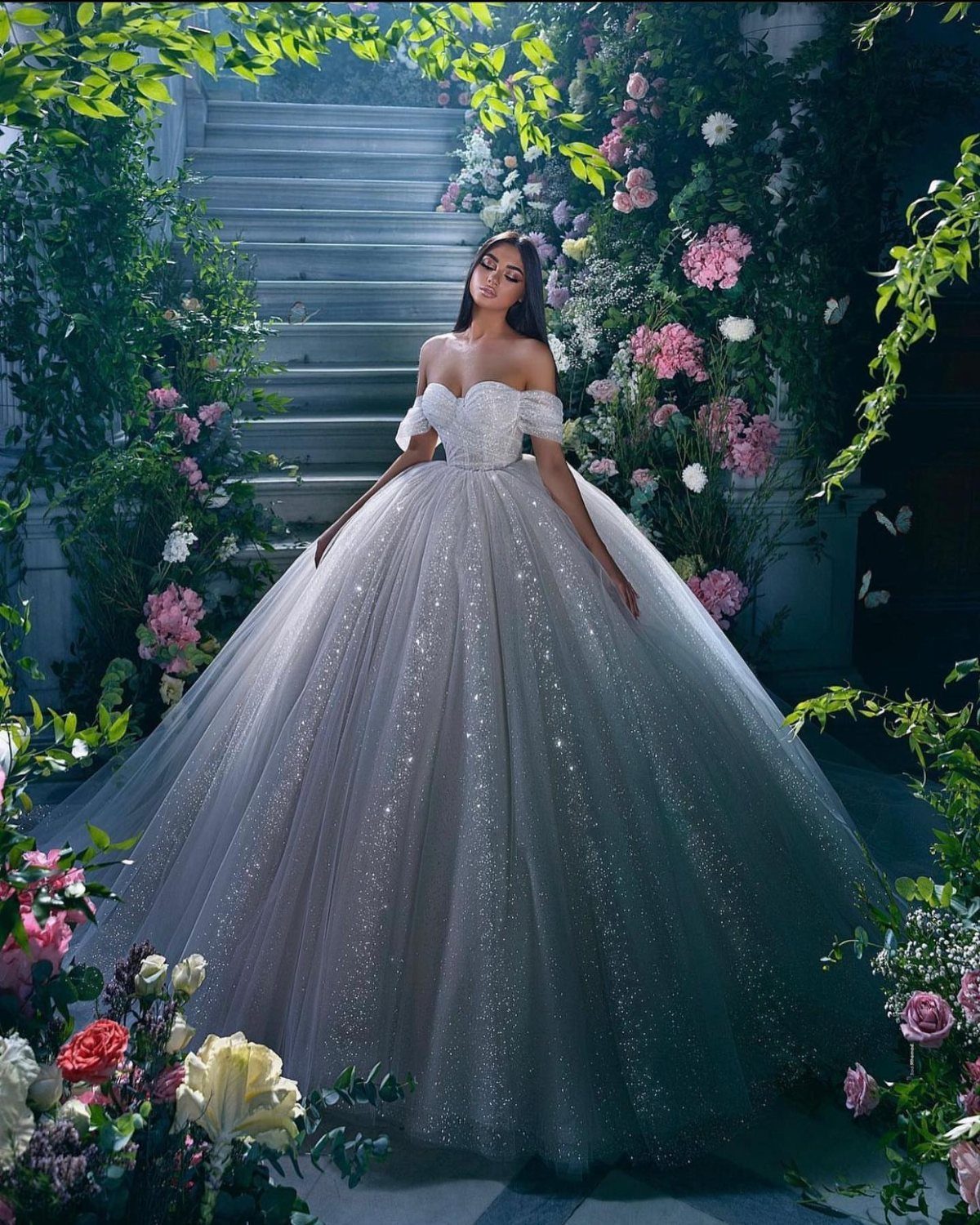
The skirt stands away from the body in full, structured layers that create maximum volume. The off-the-shoulder neckline frames the upper body while the skirt fills the space below.
Sparkle or shimmer in the fabric amplifies the effect.
The volume suits large venues and outdoor settings where the dress has room to spread. It photographs dramatically but needs room to move and may call for an extra hand in narrow aisles or doorways.
The shape works for brides who want a fairytale silhouette and are comfortable managing the extra fabric.
18. Cap-sleeve Lace Gown
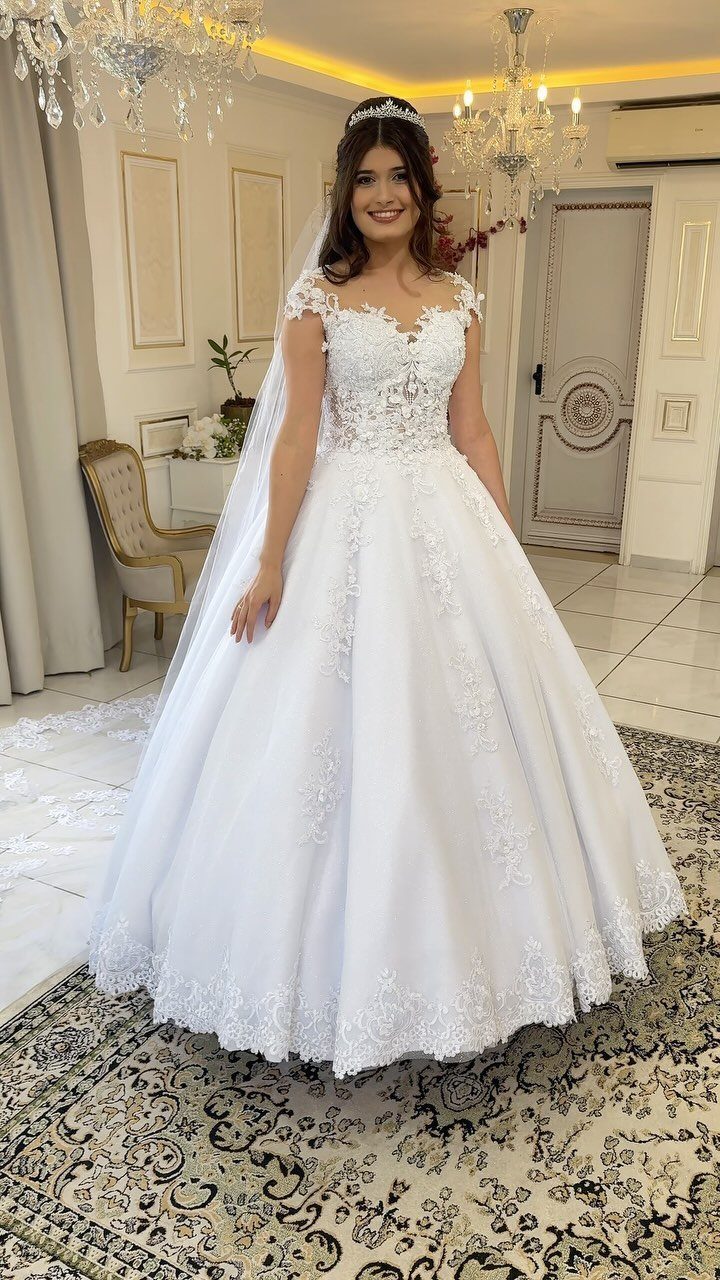
Cap sleeves cover the top of the shoulder without extending down the arm. The short sleeve adds coverage while keeping the arms free, which suits brides who want a middle option between strapless and long sleeves.
Lace over the bodice and skirt adds texture and detail.
The pattern can match the sleeves or run separately. The lace holds the formality but brings a softer finish to the silhouette.
A tiara and veil complete the princess aesthetic. The cap sleeve balances the accessories without competing for attention.
19. Ruffled Ball Gown
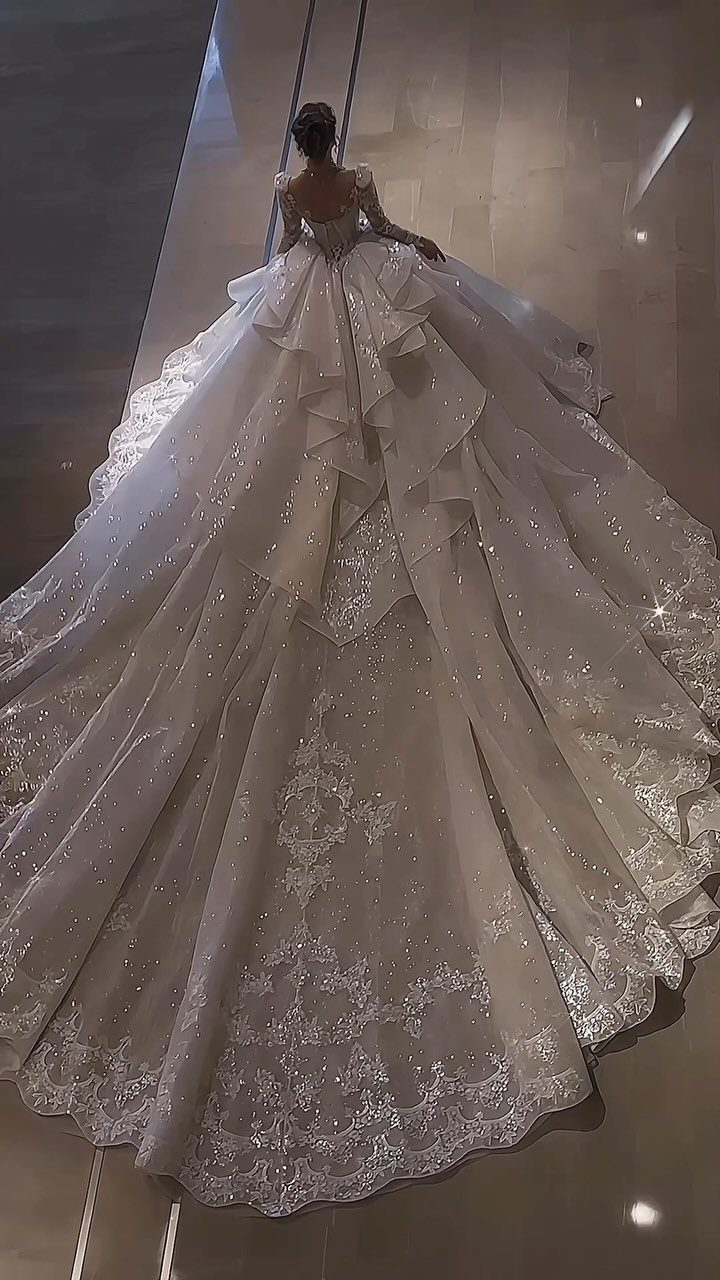
Ruffles layer horizontally across the skirt, each tier lifting away from the one below it. The texture catches light and adds movement as the dress shifts.
The volume fills large spaces and photographs with dimension from multiple angles.
The ruffled skirt adds weight and takes up more room than a plain tulle version. If you will be moving through narrow spaces or dancing for hours, consider how much fabric you want to manage.
20. Tea-length Bridal Dress
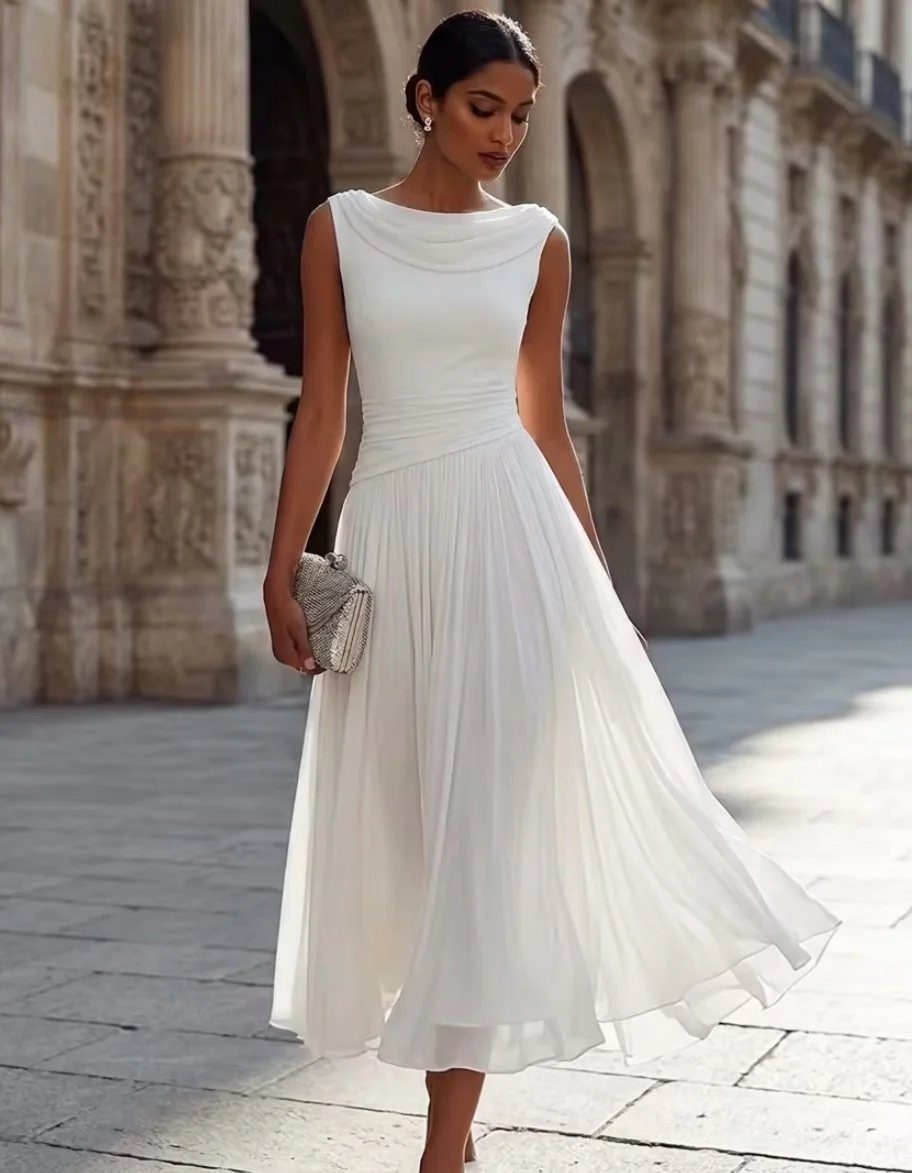
The hem stops mid-calf, landing between the knee and ankle. The shorter length shows the shoes and allows easier movement without sacrificing the formality of a full skirt.
A tea-length dress suits daytime ceremonies, outdoor weddings, and smaller venues. The length works well on shorter brides or anyone who wants a vintage-inspired silhouette.
The shorter skirt needs less fabric and usually costs less than a floor-length gown. Full-body shots that include the shoes come out clean and balanced.
21. Embellished Ball Gown
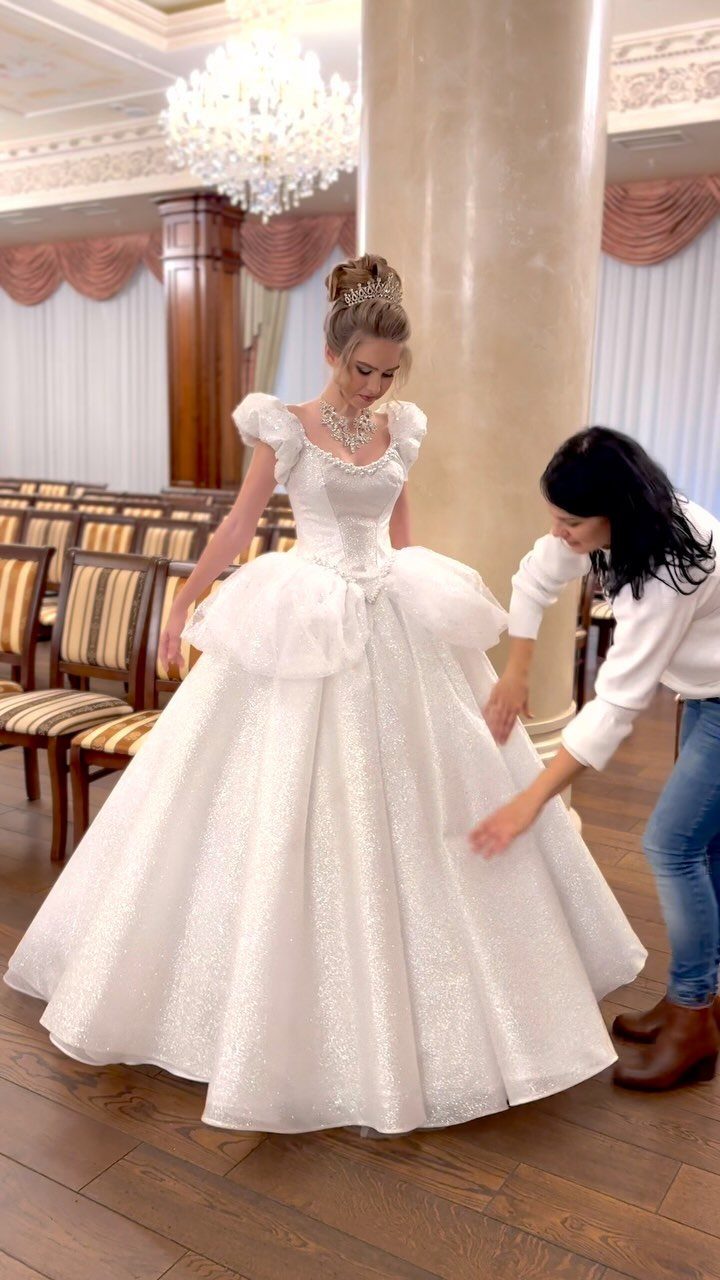
Sequins or beading cover the bodice and skirt, creating a surface that reflects light from every angle. The embellishment can be uniform or concentrated in patterns.
The sparkle suits formal evening ceremonies and low-light receptions.
Pair the gown with minimal jewelry. The dress carries enough detail on its own, and extra accessories compete for attention.
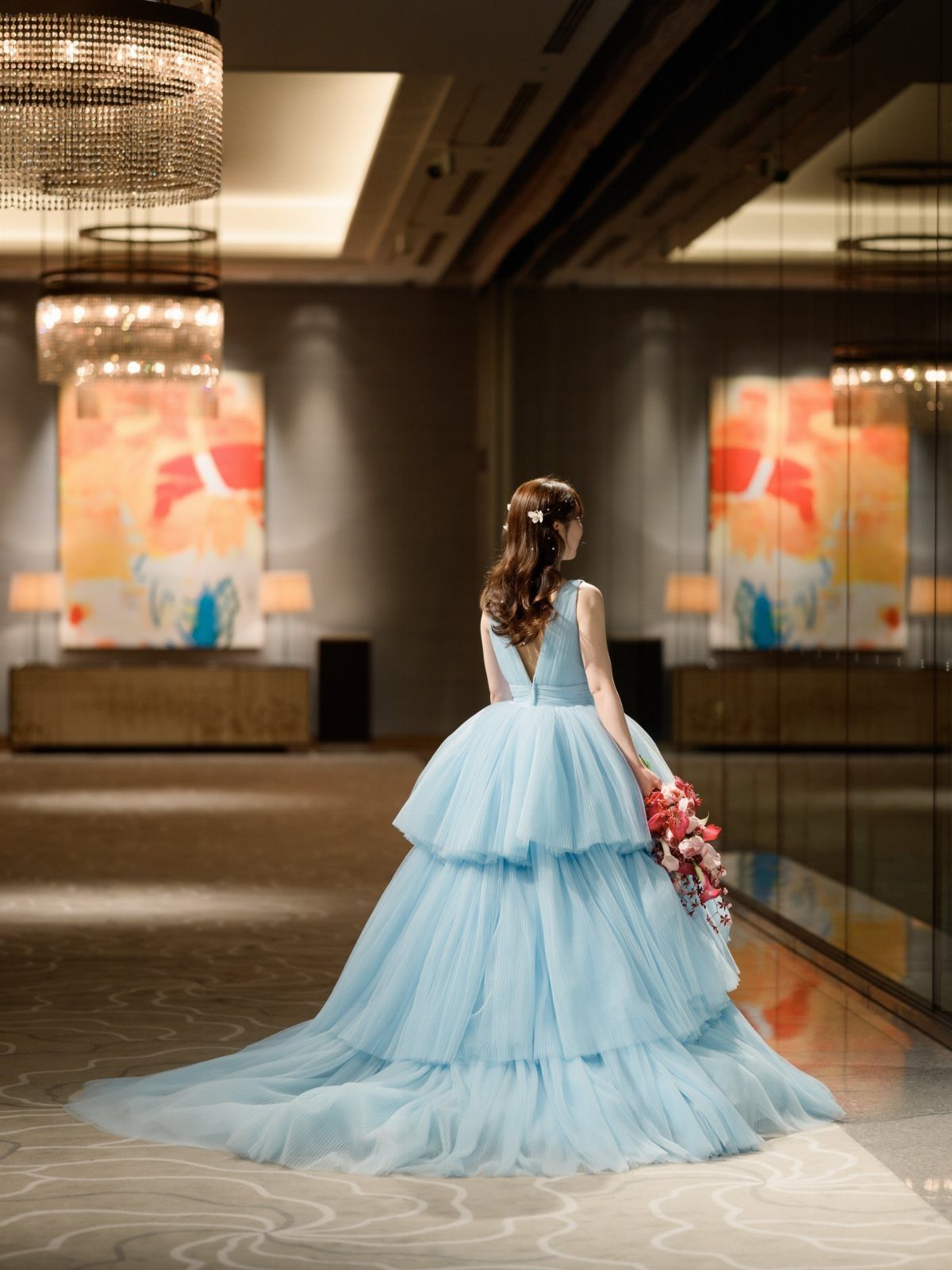
22. Colored Princess Gown
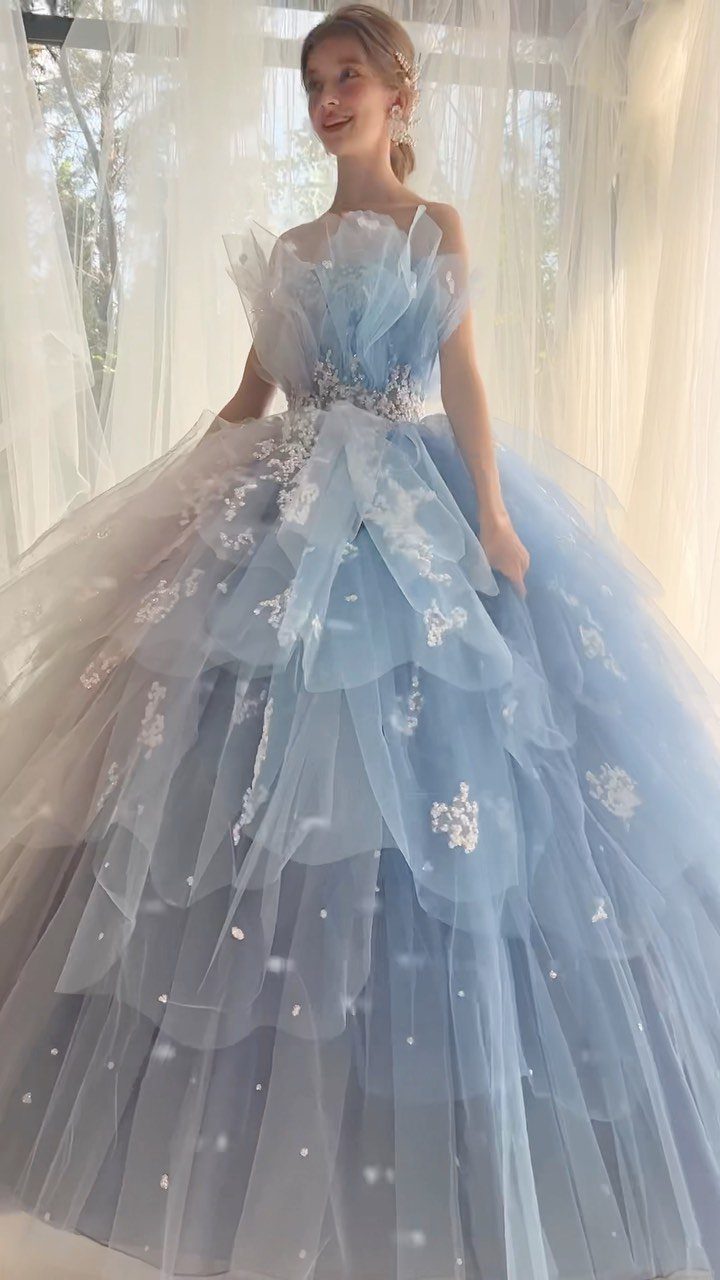
A colored gown breaks from traditional white without losing the princess silhouette. Soft pastels read formal and photograph well alongside a white or ivory veil.
A fully colored gown makes a stronger statement, while color accents on a neutral base keep the look more traditional.
The choice suits brides who want to stand out or match a specific wedding palette. The color shows up clearly in photographs and sets the dress apart from standard bridal white.
23. Floral Embroidered Gown
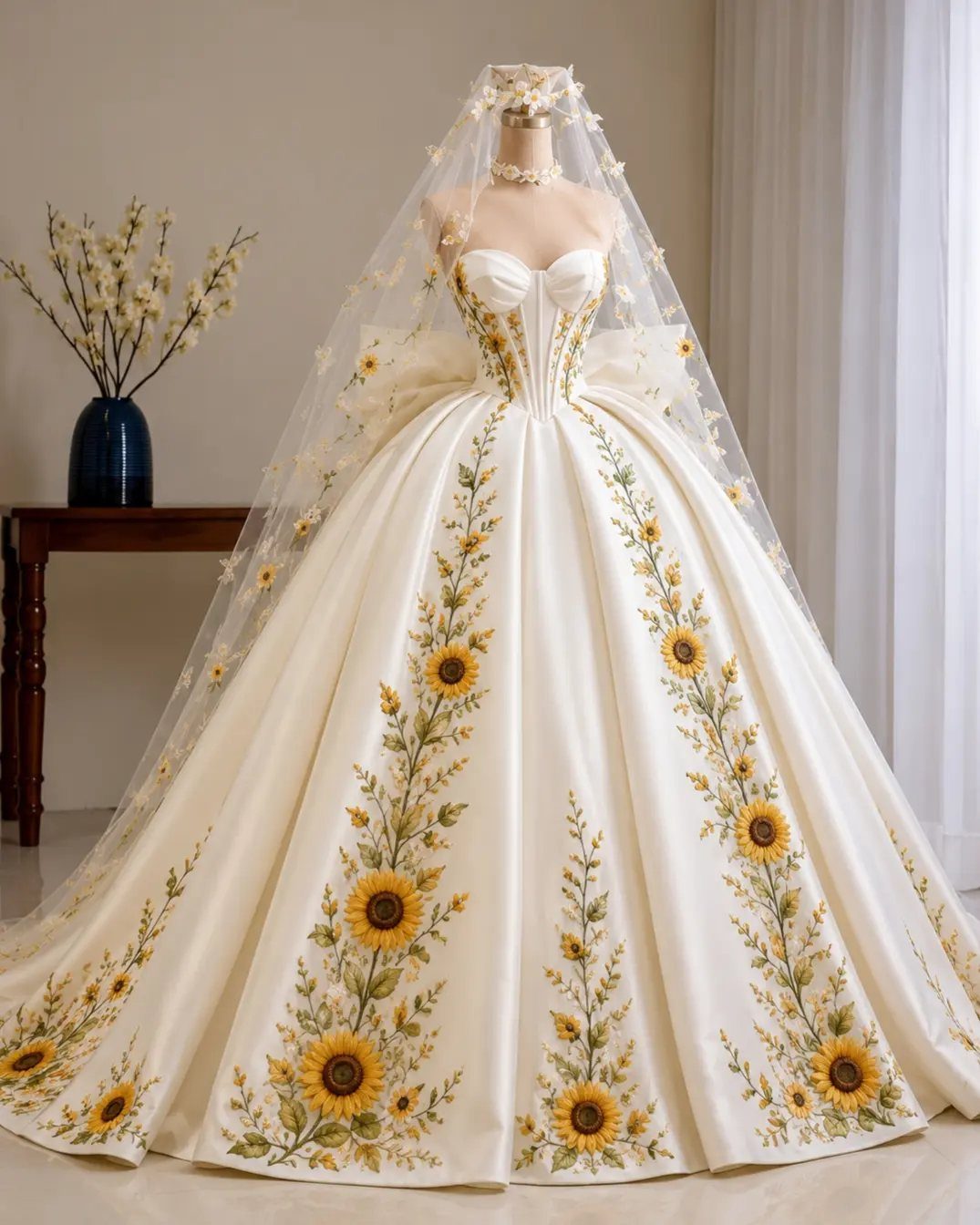
Embroidered flowers sit flat against the fabric, stitched in thread that contrasts with or matches the base.
Sunflowers, roses, or wildflowers add a seasonal or personal touch. The embroidery reads clearly in photographs and adds texture without the weight of appliqués.
A sheer veil balances the embroidered detail without covering it. The embroidery suits outdoor weddings and brides who want a nature-inspired design.
24. Lace Princess Gown
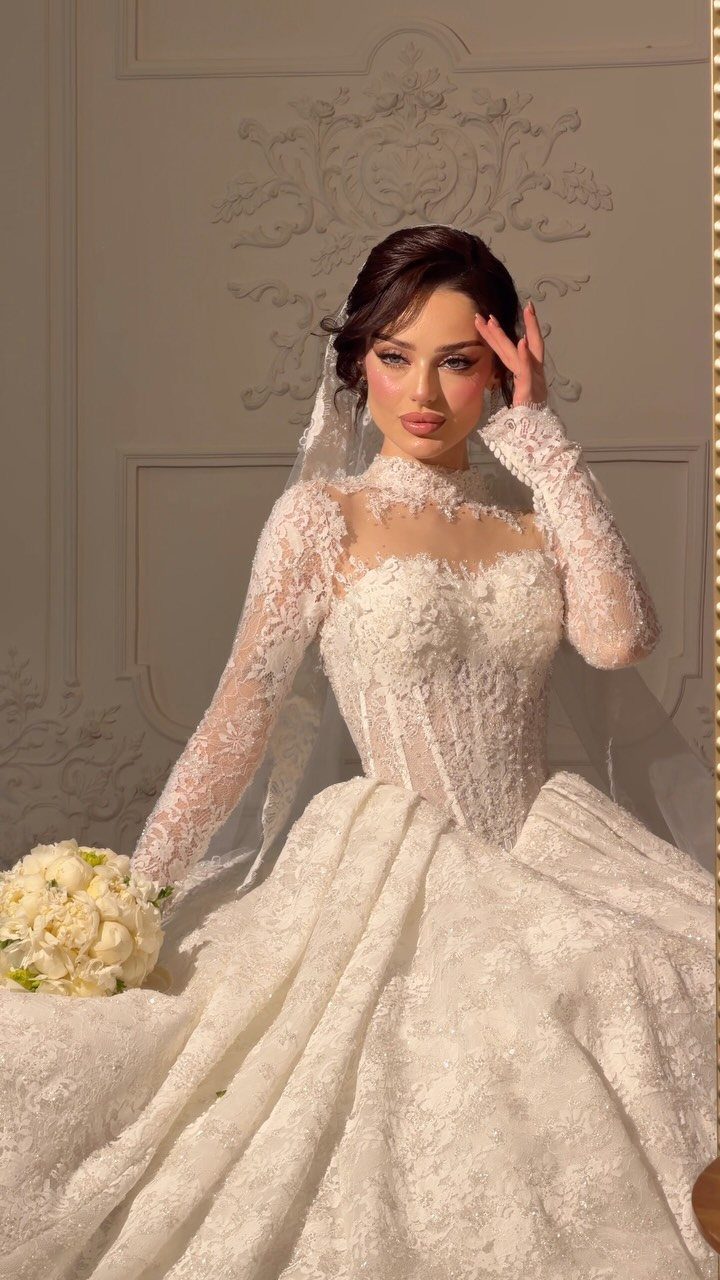
Lace covers the entire gown, from neckline to hem, for a consistent texture across the bodice and skirt.
A high neckline and long sleeves add coverage while keeping the dress formal. The lace softens the structure of the bodice and photographs with detail in close shots.
The full lace treatment suits religious ceremonies and winter weddings. It pairs well with a simple veil that lets the lacework show through.
25. Satin Princess Gown
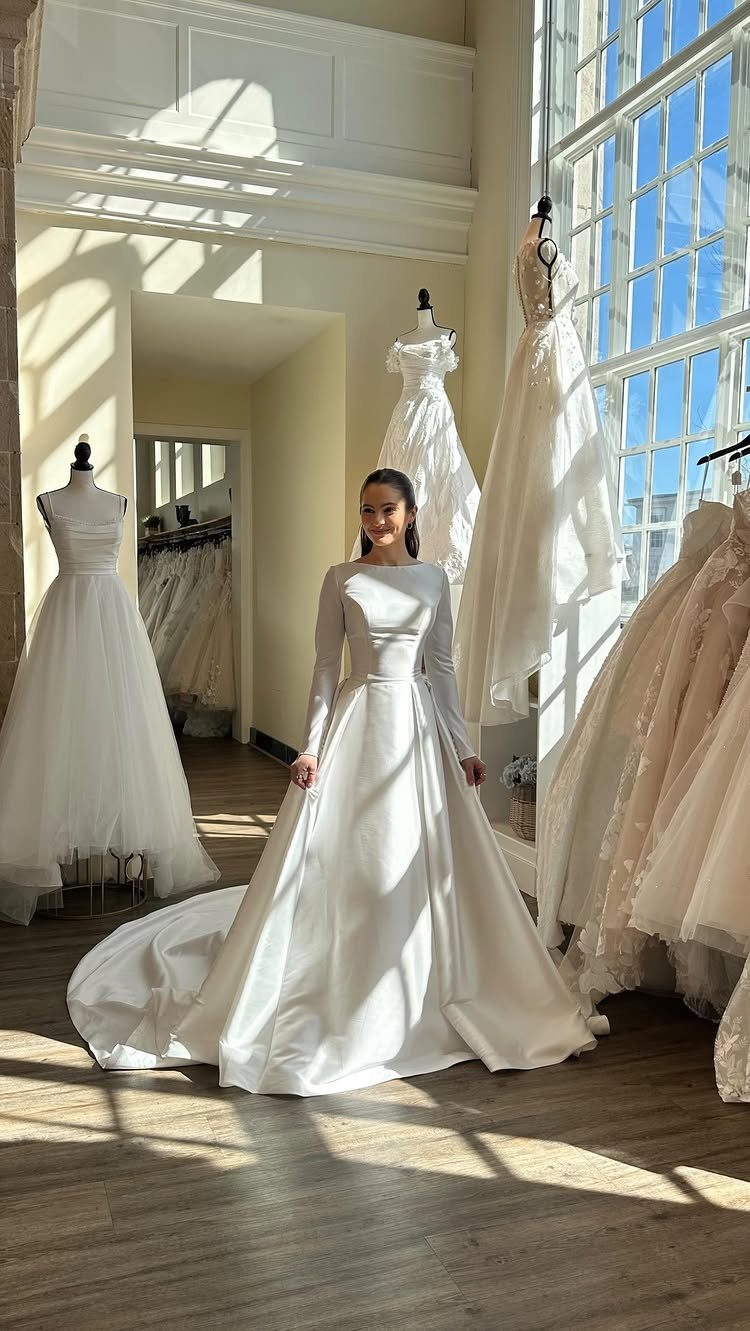
Satin holds a smooth finish and structured shape through the bodice and into a full skirt that stands away from the body. The fabric reflects light without hard shine, so it photographs cleanly in mixed lighting.
Long sleeves balance the volume below and add coverage without extra weight. The dress moves easily and suits formal ceremonies in any season.
The silhouette works for brides who want a classic princess shape with a polished surface rather than texture or sparkle.
26. Butterfly Bridal Details
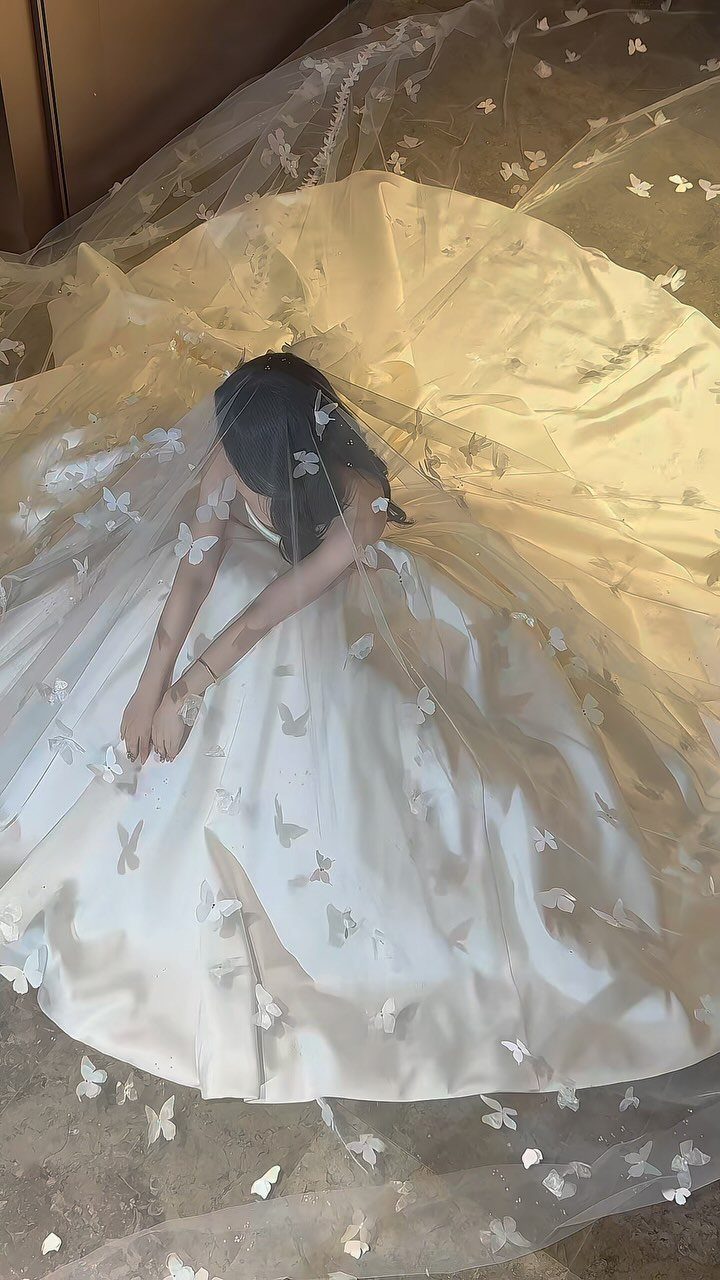
Small butterflies in organza or tulle attach to the veil and dress, each one shaped to lift away from the base. The appliqués scatter across the veil or cluster near the bodice, adding dimension without covering the satin.
The butterflies photograph clearly in close shots and show movement as the veil shifts. I’d choose it for garden ceremonies or weddings between April and August.
Keep jewelry minimal. The butterflies carry enough interest on their own.
27. Long Veil
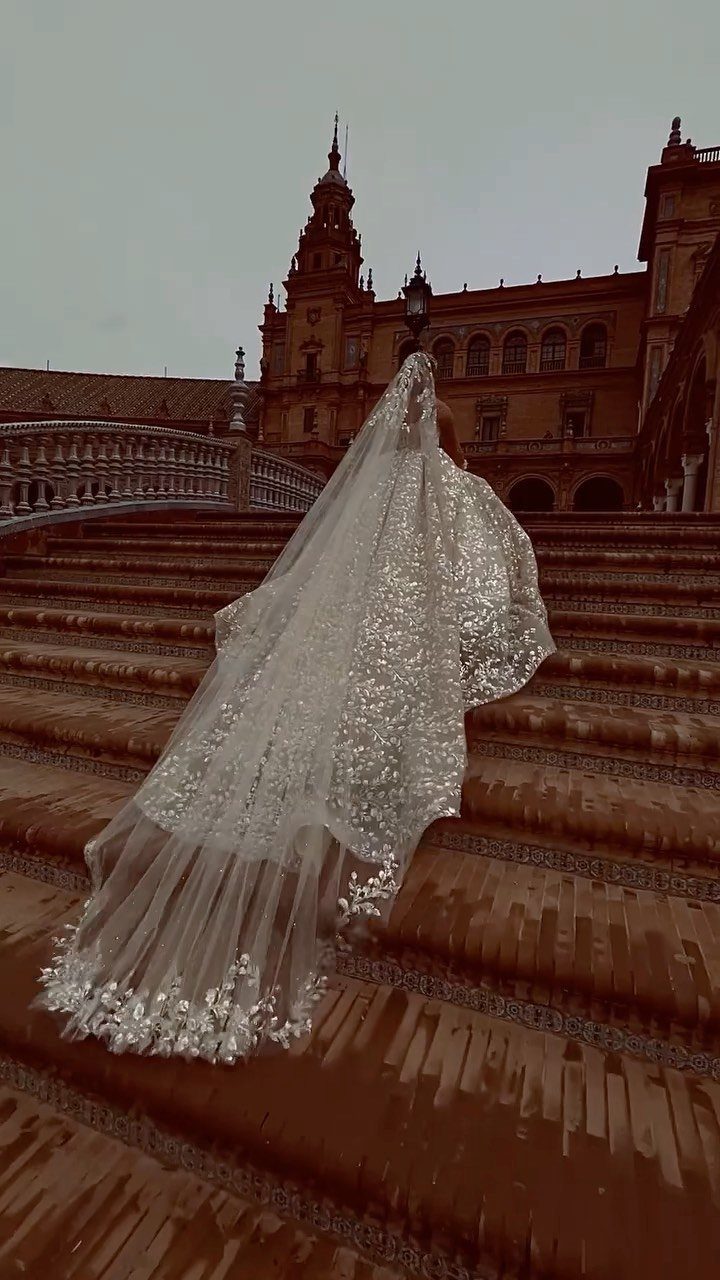
A long veil extends behind you, trailing along the floor and down stairs or aisles. The length brings formality and fills the frame in large spaces where the veil can spread.
The veil can be plain or edged with lace. A longer veil needs help to carry and arrange, especially outdoors where wind can lift it.
The length suits cathedral ceremonies and venues with architectural backdrops. An updo keeps the attachment point visible.
Choosing Fit and Silhouette
The fitted bodice and full skirt work together to create an hourglass shape, which is why the silhouette flatters many body types.
The waist seam anchors the look and visually divides the body in a way that can make the torso appear longer.
Petite brides can wear a ball gown or princess dress without being overwhelmed by the volume.
Tailoring makes the difference. A tailor can shorten the skirt or reduce the tulle layers so the dress sits in proportion to your height instead of overwhelming you.
The silhouette adapts well because the fitted bodice provides structure while the skirt can be scaled to suit your height and build. A thoughtful fit makes the difference between a gown that works and one that wears you.
Choosing Dress Details
Start with your wedding style.
A sophisticated or luxury setting calls for different details than a classic or romantic one. The neckline, sleeves, and train all shift how formal the dress reads.
Fabric affects both appearance and comfort. Tulle and chiffon are light and move easily.
Lace layered over satin adds texture and weight. Choose material that looks right in photos and stays comfortable through a long day.
White and ivory come in multiple shades. Compare options in natural light before deciding, since some shades will flatter your skin tone better than others.
A stylist or fabric swatch from the retailer can help you see how each choice looks against your coloring and wedding palette.
Frequently Asked Questions
What is a princess style wedding dress?
The bodice fits close, the waist cinches, and the skirt opens into a wide, rounded shape.
What are other names for the princess wedding dress?
The princess silhouette is sometimes called a ball gown, though a true ball gown typically has more volume.
Both names describe a fitted bodice paired with a full skirt. Some call it a fairytale dress or Cinderella dress, referencing the formal, storybook shape.
Can petite brides wear ball gowns?
A ball gown can work for petite brides when the skirt is adjusted to the right proportion.
Tailoring the tulle layers or shortening the length keeps the volume from overwhelming a smaller frame. A fitted bodice and defined waist keep the proportions balanced and prevent the skirt from overwhelming the frame.
What is a regal-style wedding dress?
Regal dresses take cues from royal weddings, with generous skirts and long trains.
These styles lean formal and covered, with details borrowed from antique or vintage sources. The silhouette sits close to the princess shape but typically adds more coverage and formal length.
How to choose the perfect princess wedding dress?
Start with the wedding’s formality and the venue size, since a full skirt needs room to move. Consider neckline and sleeve style for coverage and balance, then look at fabric weight and how it holds shape.
The right shade of white or ivory depends on your skin tone, and the fitted bodice should be tailored to your measurements for a clean waistline.