
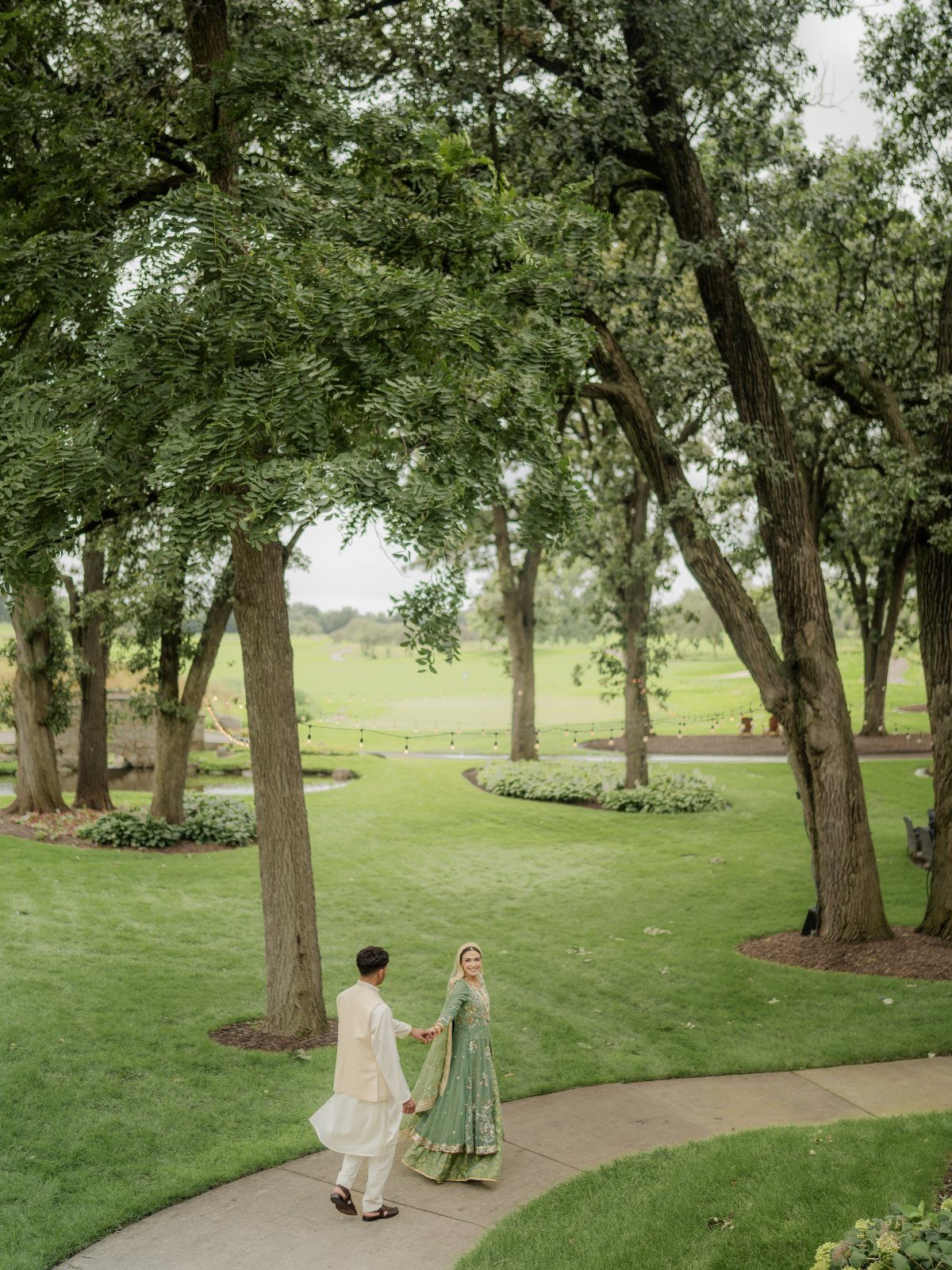
A bride and groom portrait can be a straightforward shot for the thank-you cards or a staged first look that calms your nerves before the ceremony.
The choice turns on timing: whether you see each other before the ceremony, how much daylight remains for portraits, and which groupings you shoot.
A floral backdrop needs stakes at the base if it’s freestanding outdoors, and a beach embrace only works if you’re getting married near water or willing to travel for it.
1. Bride and Groom
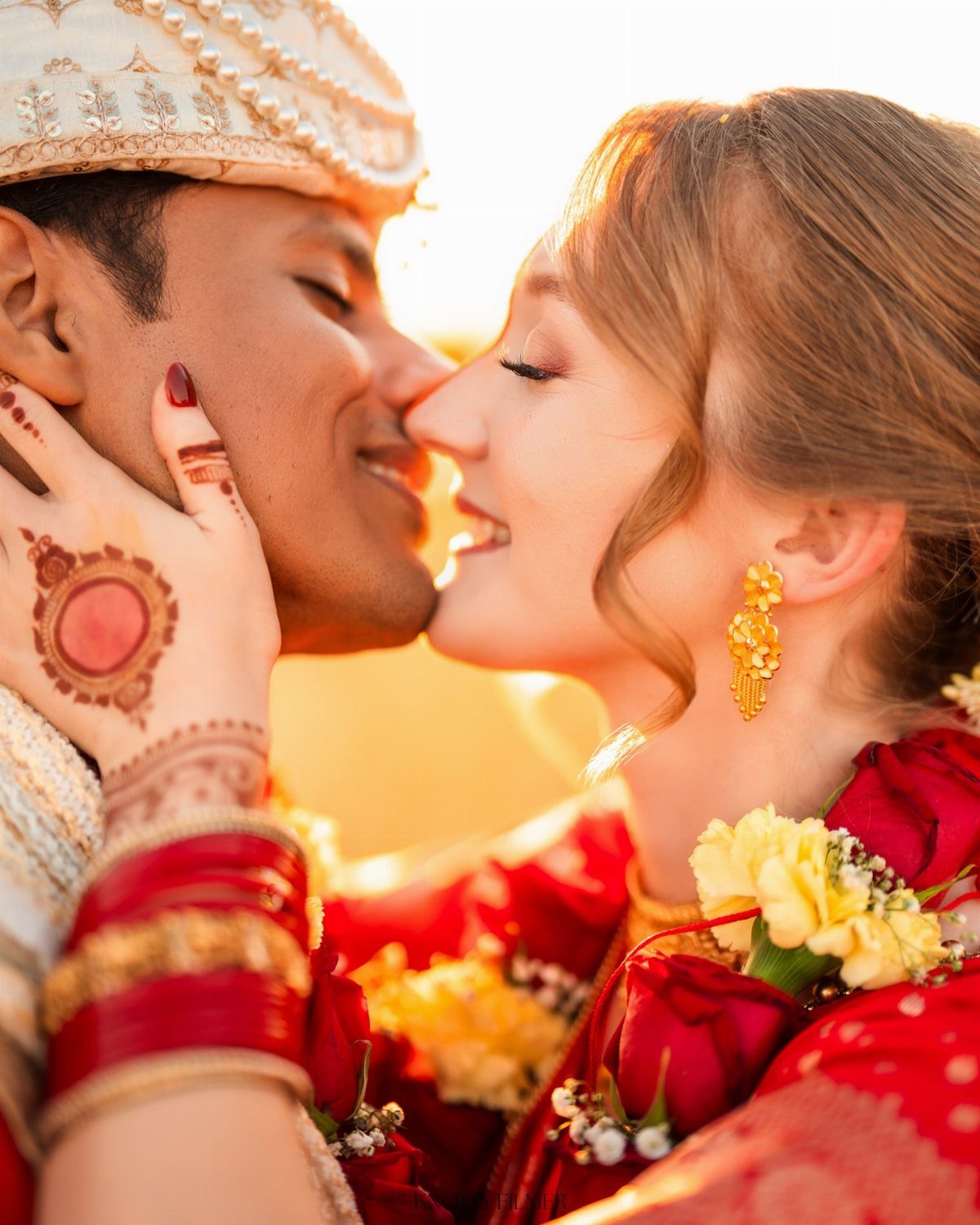
A straightforward portrait of the two of you together, close and composed. This is the shot your parents will frame and the one that goes on the thank-you cards when you need a single image everyone recognizes.
Ask your photographer to take several versions, slight shifts in angle and expression, so you have options. If you’re in full traditional attire, golden hour or late afternoon light keeps the detail visible without harsh shadows.
2. Couple Portrait with Location
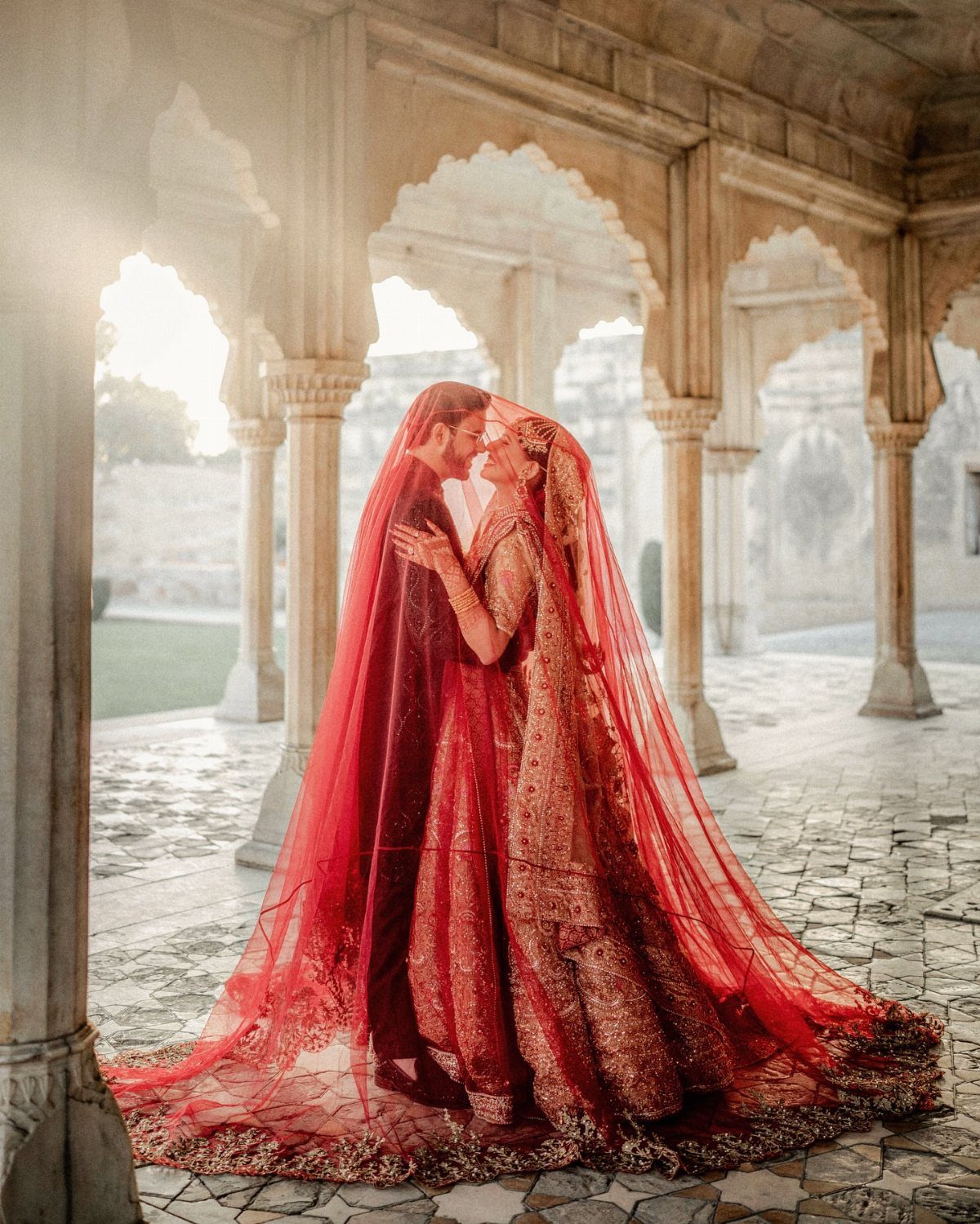
The location stays in view: carved stone, wide steps, gardens, whatever makes the place recognizable.
This works best when your venue has something you want to remember, a courtyard or a building with character. If you’re indoors all day, this might be the only wide shot that shows where you got married.
Brief your photographer ahead of time on which angle or entrance you want. The session is short, but it matters where you walk.
3. Walking Hand in Hand
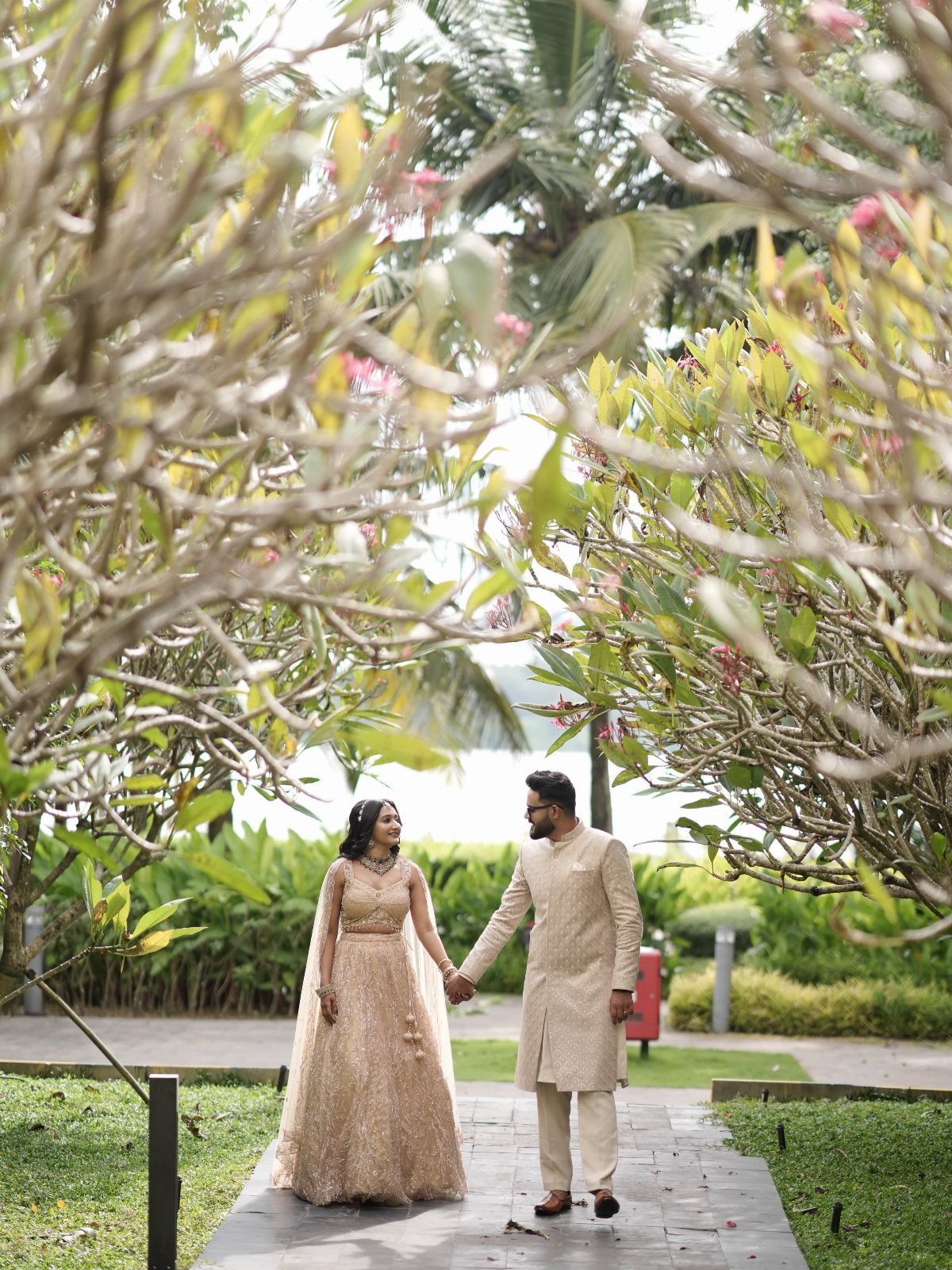
You walk side by side, holding hands, while the photographer shoots from a distance or follows you from behind.
The movement keeps you from feeling too posed, and if one of you is nervous in front of the camera, the motion helps.
A plain stretch of pavement reads flat. If your ceremony and reception are in separate buildings, the walk between them is a natural time to get this shot without adding a separate session.
4. First Look
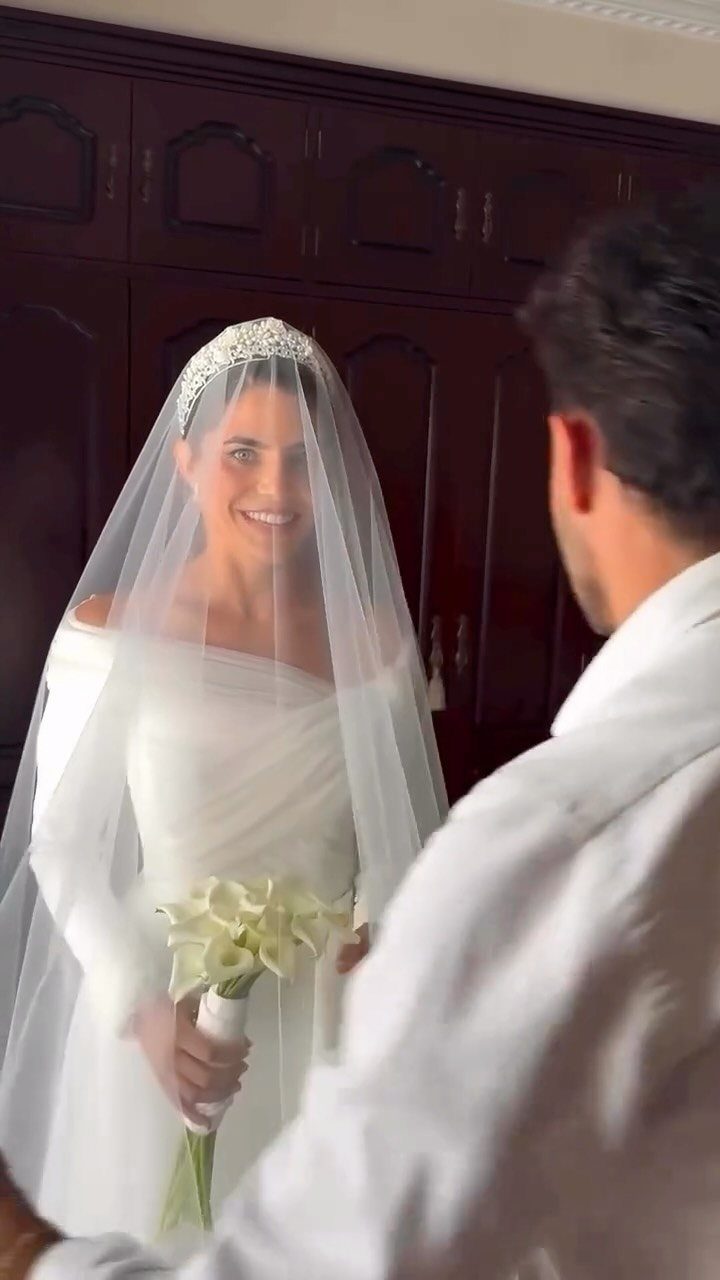
Your photographer sets up the moment you see each other for the first time, usually before the ceremony. One of you waits with your back turned, the other walks up, and the photographer shoots the reaction when you turn around.
Some couples save this for the ceremony. Skip the first look when you’d rather save that moment for the aisle.
A private first look gives you the moment without an audience and calms the nerves before you walk down the aisle, which matters when you’re anxious about crying in front of a crowd.
The timing matters. Schedule it early enough for portraits right after, while the light is still good and before anyone is looking for you.
5. Couple with Both Sets of Parents
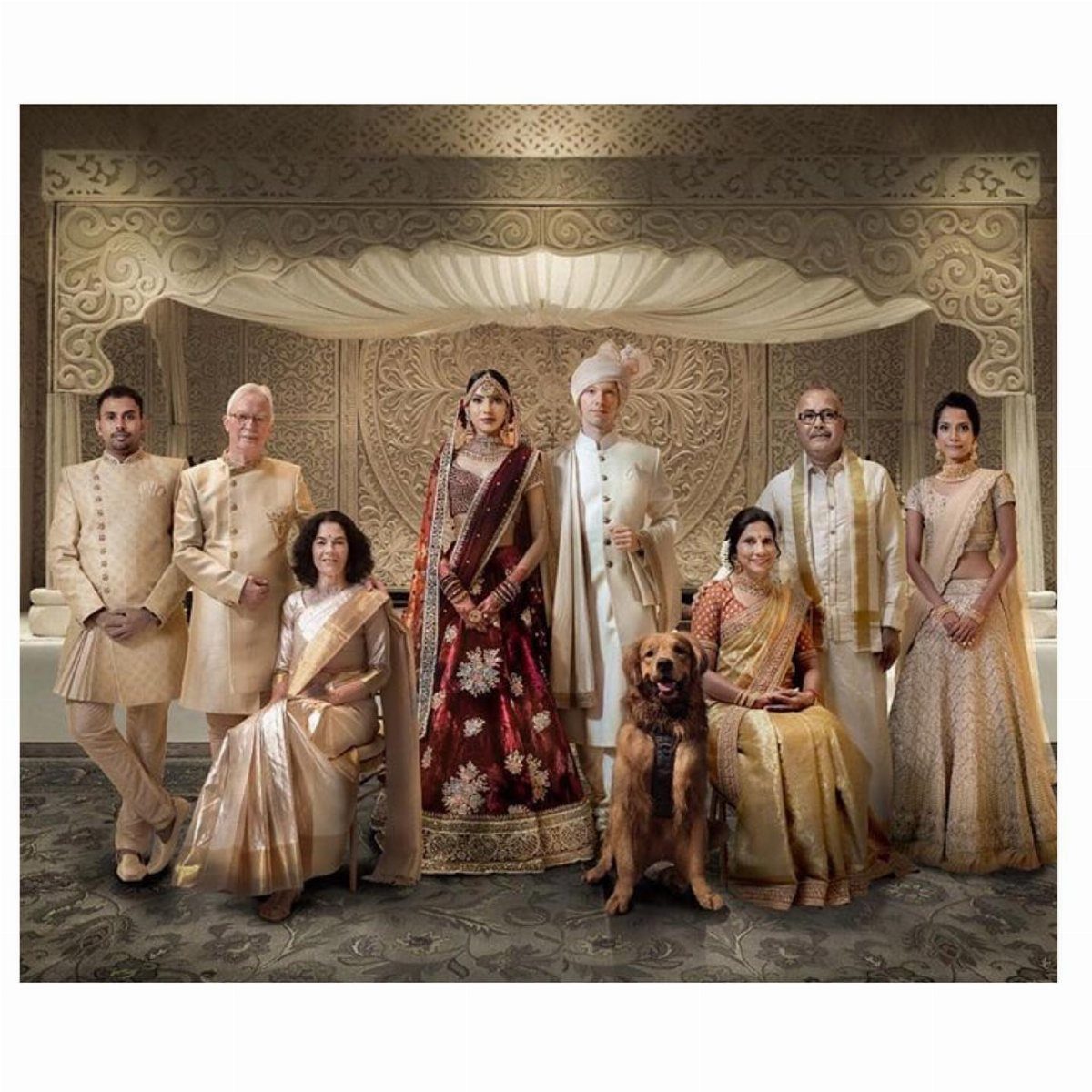
A group portrait of the two of you with both sets of parents, usually taken right afterward or during cocktail hour.
If your parents are traveling or you don’t see them often, this is the one formal shot of all 6 of you together.
If you’re outdoors, open shade beats direct sun. Indoors, near a window or under even light works better than a dark corner with one overhead fixture.
The shot goes fast, but only if everyone knows where to stand.
6. Couple with Groom’s Parents
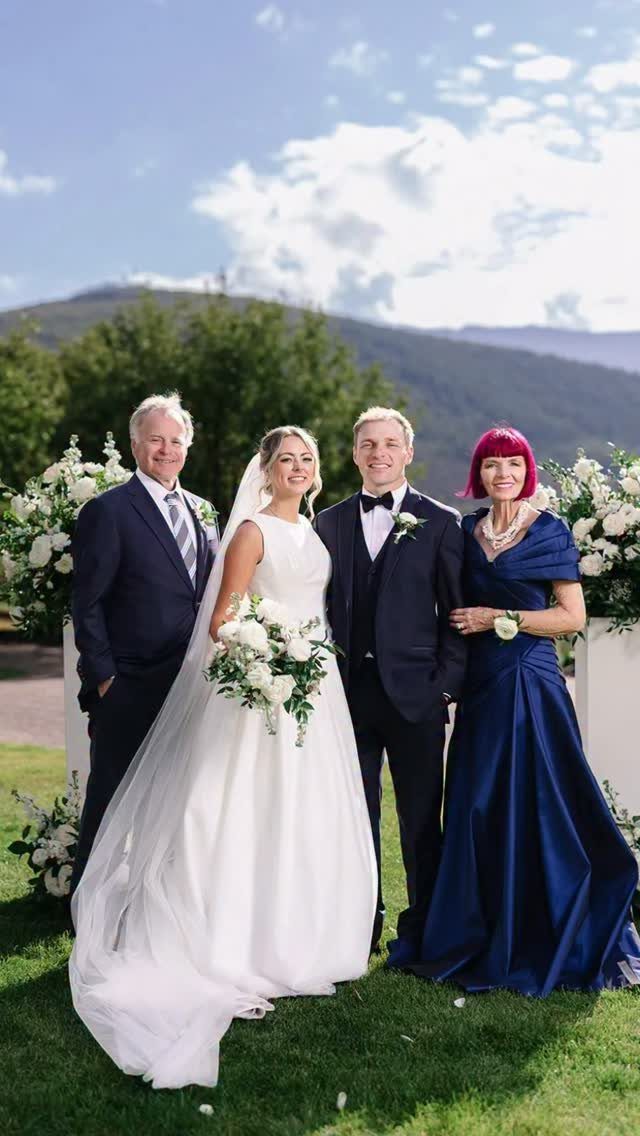
The couple poses with the groom’s parents alone, usually taken right after the larger family groupings. If the bride’s parents get their own shot, the groom’s side gets equal time, and this is the frame his family will want.
Keep it short, 2 or 3 variations, and pick a spot with clean background.
Grass, a plain wall, or the venue exterior all work. If the groom’s parents aren’t comfortable in front of the camera, the photographer can direct them into a natural arrangement in under a minute.
7. Entire Wedding Party Group Photo
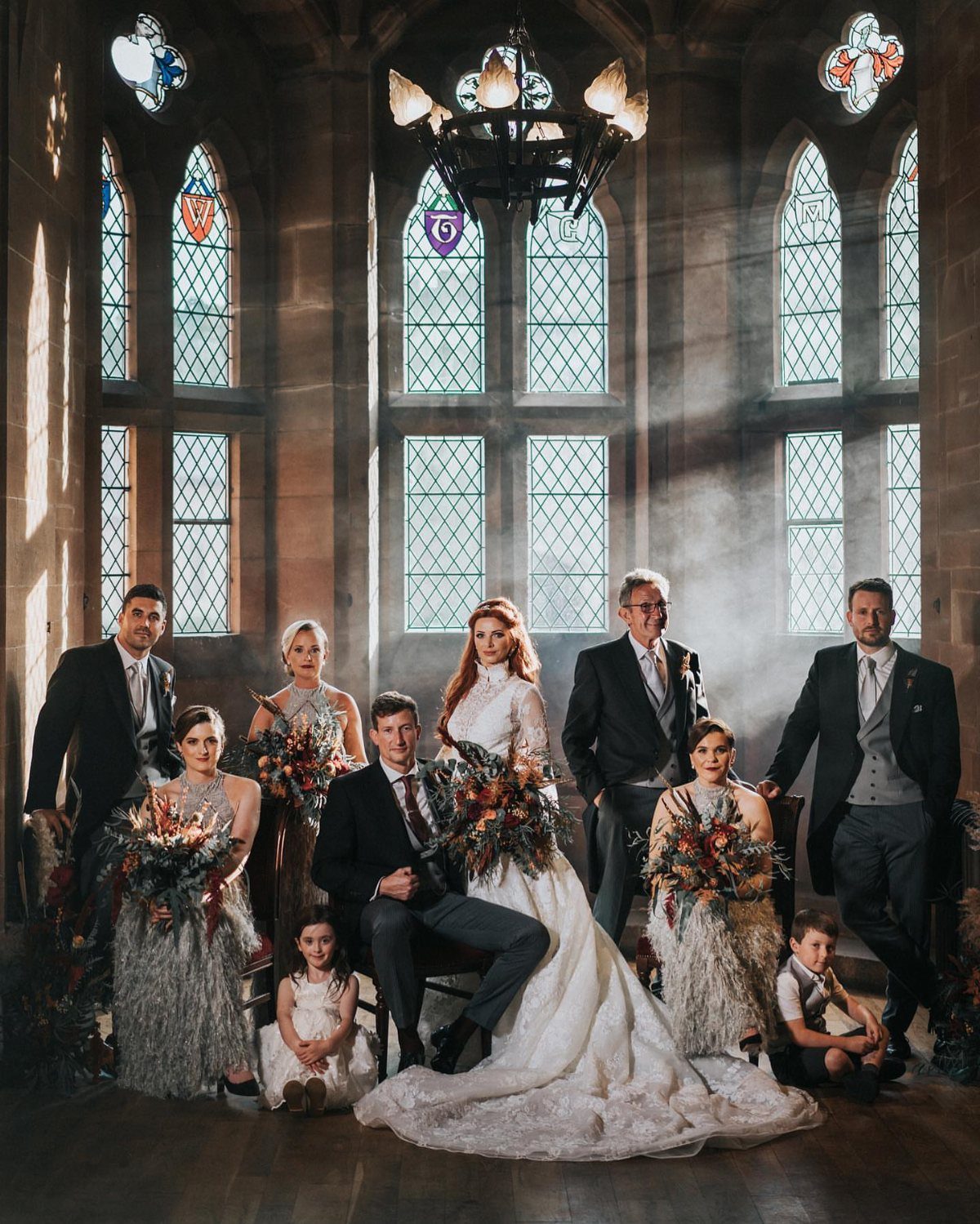
The full group shot with bridesmaids, groomsmen, flower girls, ring bearers, whoever stood with you. Your photographer will need a few minutes to arrange everyone and check the light when you’re working with a large group.
Pick a location with room to spread out.
A narrow hallway forces people into awkward rows, and you lose half the faces. If your venue has tall ceilings or arched windows, use them.
Get this shot early, right when you finish the ceremony, while everyone is still together and before anyone disappears to the bar.
8. Wide Venue Portrait
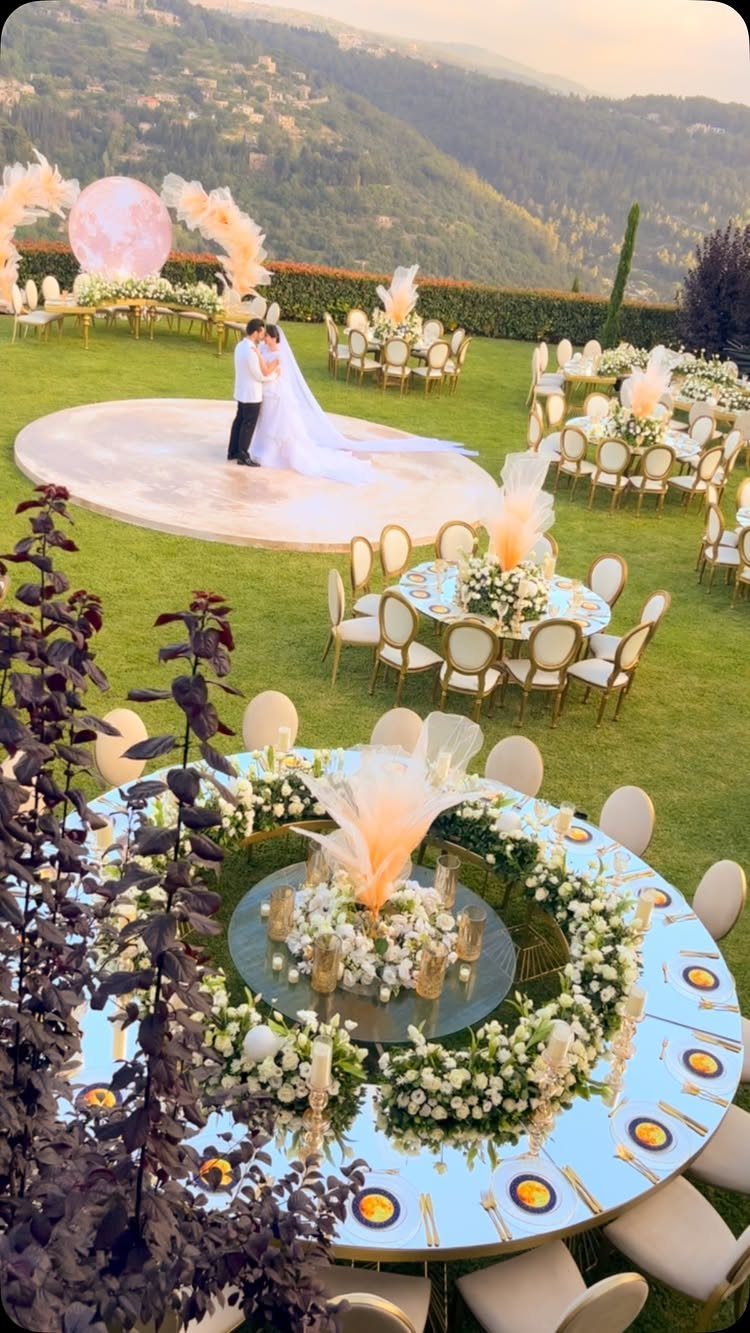
Your photographer steps back far enough to show the venue around you.
If you spent money on the location or the setup, this is the shot that shows it.
The shot needs clean sightlines. If your ceremony and reception are in the same space, take this before guests arrive and fill the chairs.
9. Giggly Couple Portrait
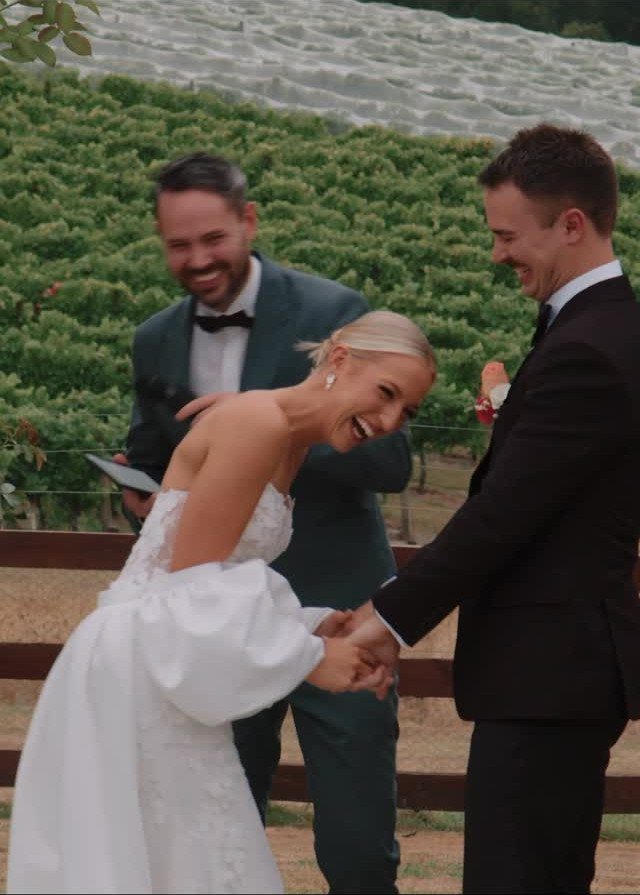
Your photographer asks you to lean in close, whisper something, and let the moment go where it goes.
The shot catches you mid-laugh instead of holding a pose, and if one of you hates stiff portraits, this is the frame you’ll actually like.
It only works if you’re both comfortable enough to laugh.
Some couples need longer to relax in front of the camera than others. If your photographer is good at directing, they’ll prompt something that gets a real reaction instead of asking you to fake a laugh.
10. Groom Lifted by Friends
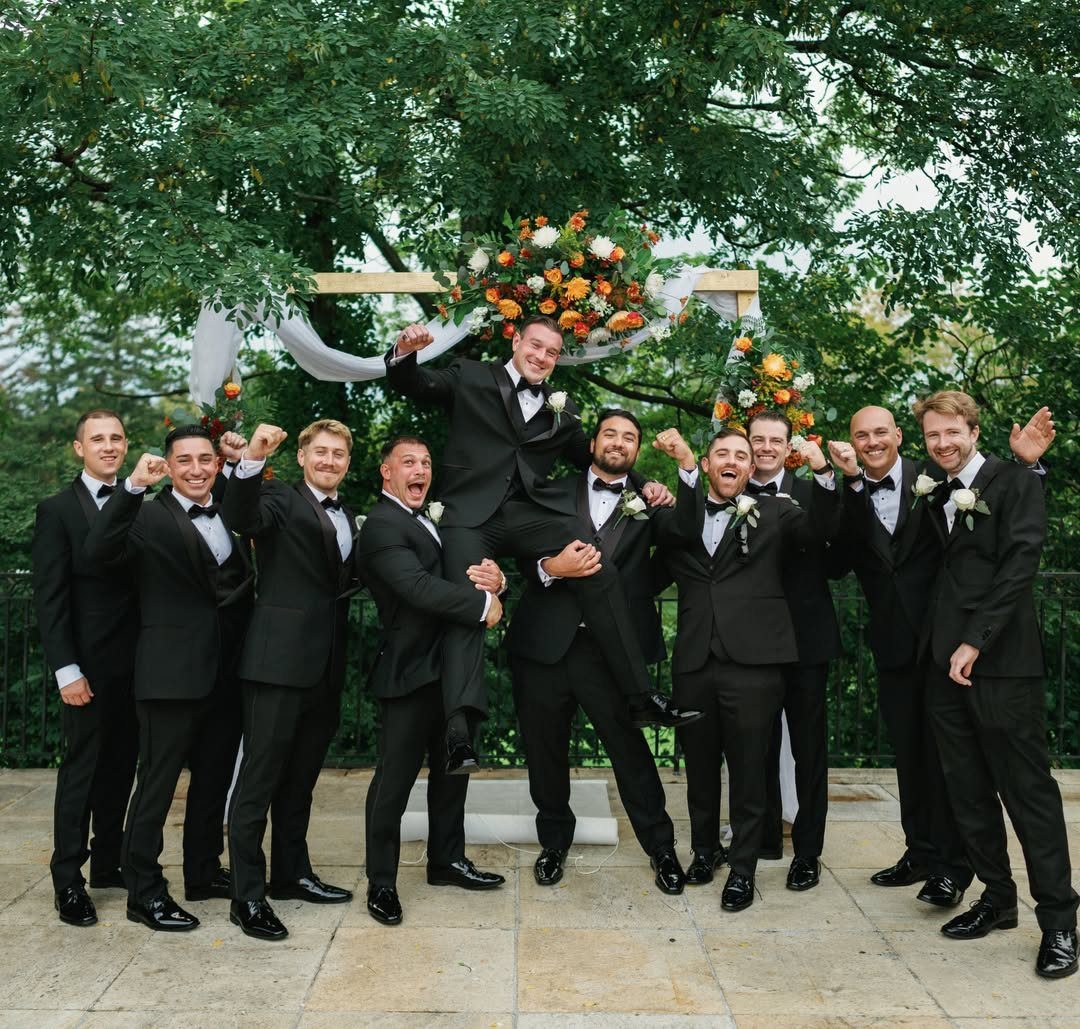
The groomsmen lift the groom into the air for one fast, chaotic shot. It reads as playful in a way formal group photos don’t, and gives the groom’s side something loud to do.
Only book this if the groom and his friends are actually up for it.
Someone always misjudges the timing, and if the groom is heavy or anyone is recovering from an injury, skip it. The tuxedo jacket will wrinkle, so take this shot last in the groomsmen sequence.
11. Couple Beneath Arch
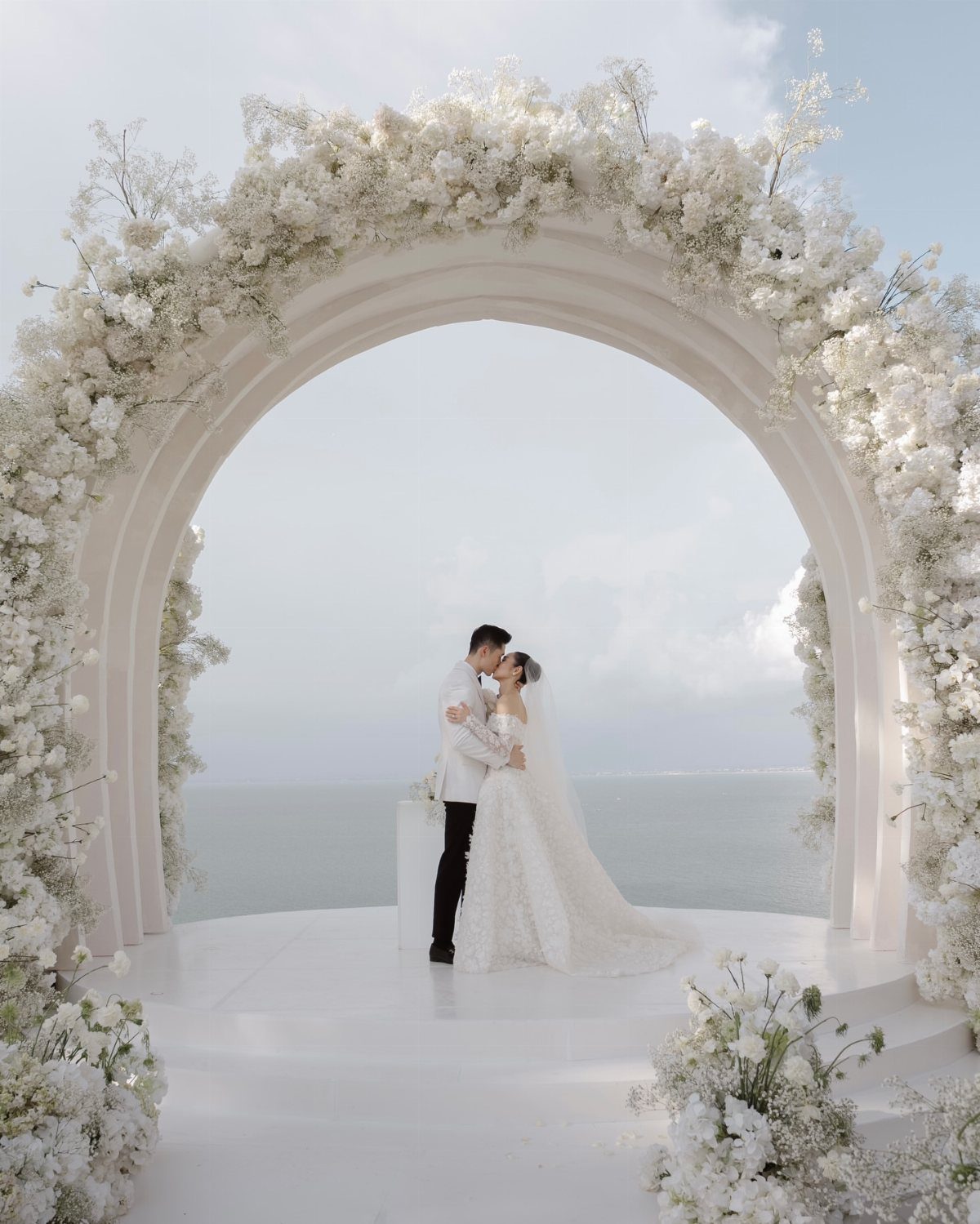
The arch frames the two of you while the photographer shoots through it or from the side, using the structure to add depth.
If your ceremony arch has flowers, greenery, or fabric, this shot keeps it in view instead of cropping it out.
The light matters here. An arch with open sides lets sunlight through, which works at golden hour but washes out at noon.
If your arch sits against a bright sky, your photographer will need to expose for your faces, and the background will blow out.
Take this right when you finish the ceremony, while the arch is still standing and before the crew starts breaking it down.
12. Bridal Portrait
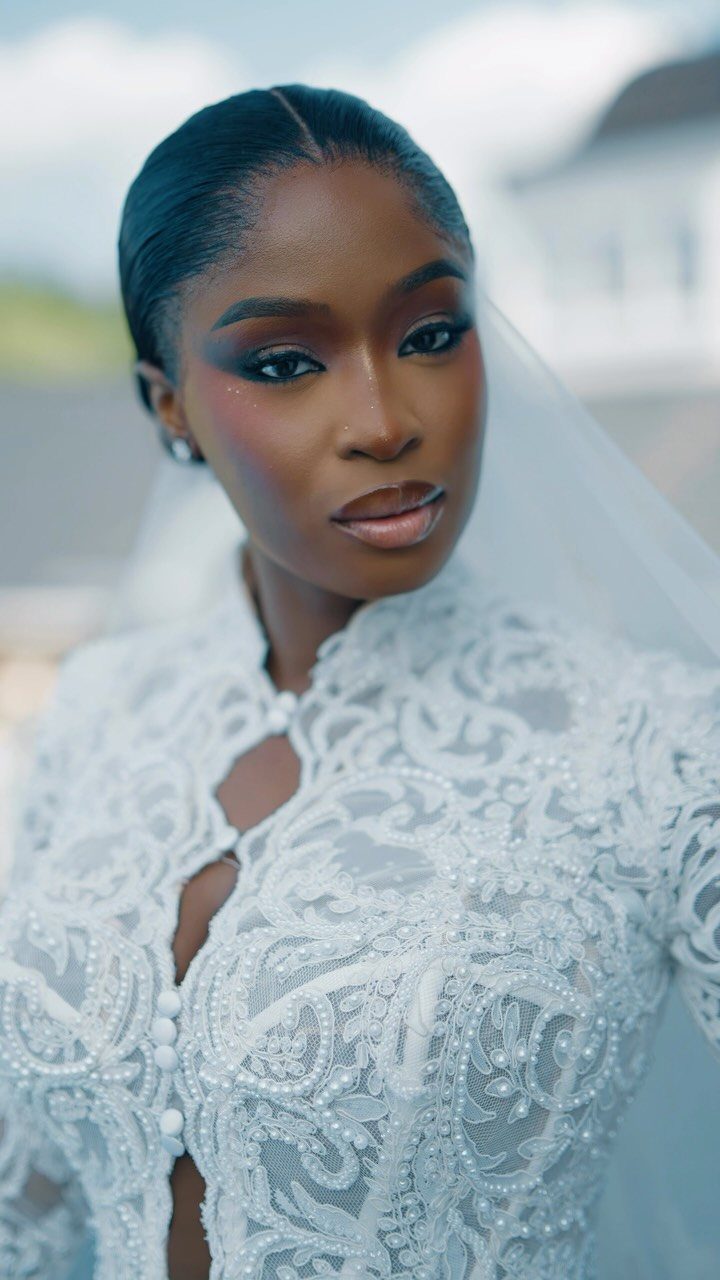
A portrait of the bride alone, taken after hair and makeup are finished and the dress is on. This is the shot your mother-in-law will ask for, the one that goes in the family album beside your partner’s solo portrait.
Schedule it during getting-ready time or right before the ceremony, when you have a few quiet minutes and the light is still soft.
If you’re doing a first look, your photographer can take this right before you walk out. Natural light near a window beats overhead fixtures, and a plain background keeps the focus on the dress and veil.
13. Groom Getting Ready
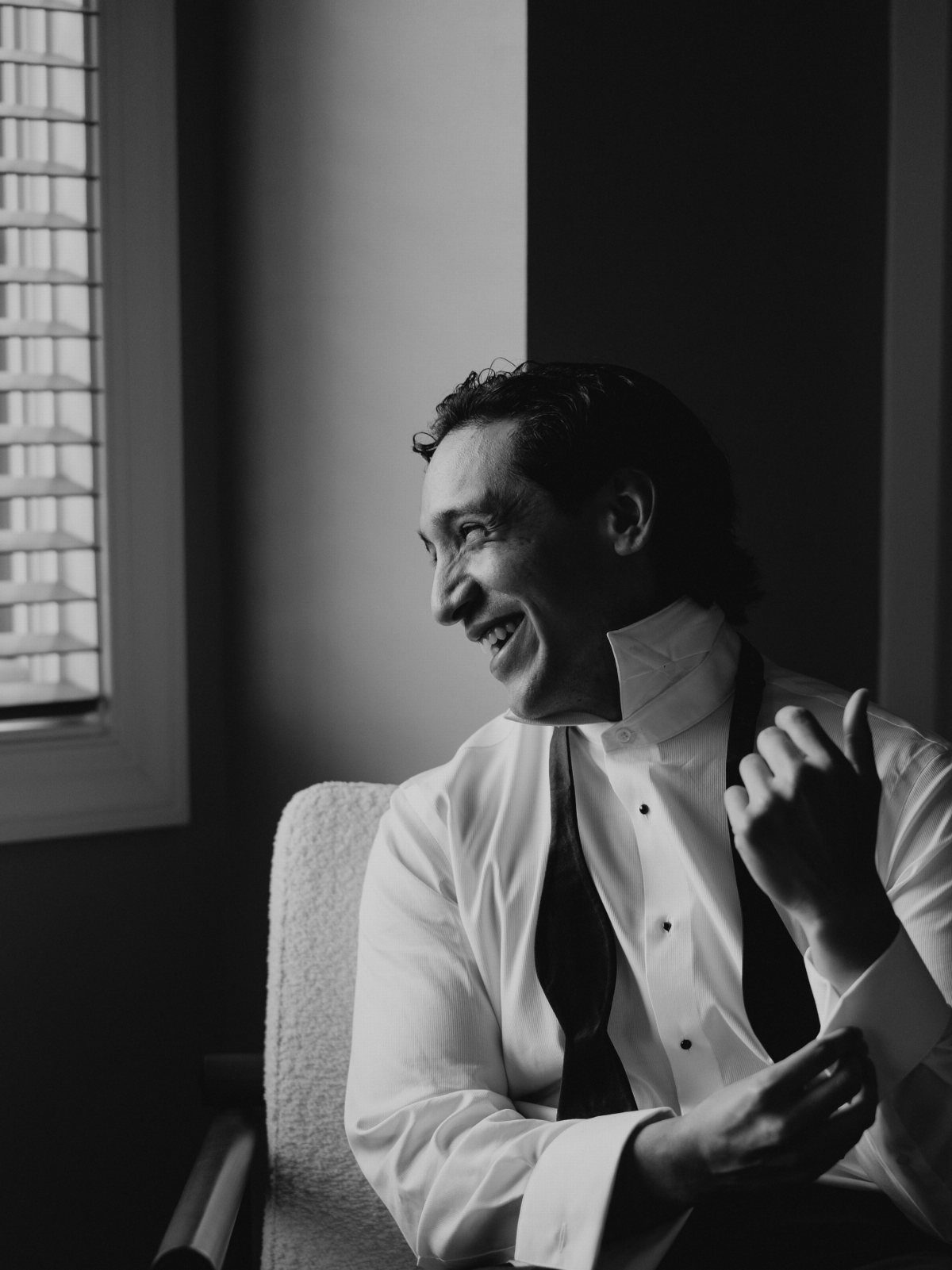
A few shots of the groom getting ready balance the coverage when you’re already photographing the bride’s prep. The photographer catches him adjusting his tie, buttoning his shirt, or sitting near a window while his best man helps with cufflinks.
Natural light near a window works better than overhead bathroom fixtures. If the groom is getting ready in a hotel room or at home, pick a spot with clean background and soft light.
14. Unposed Wedding Moments
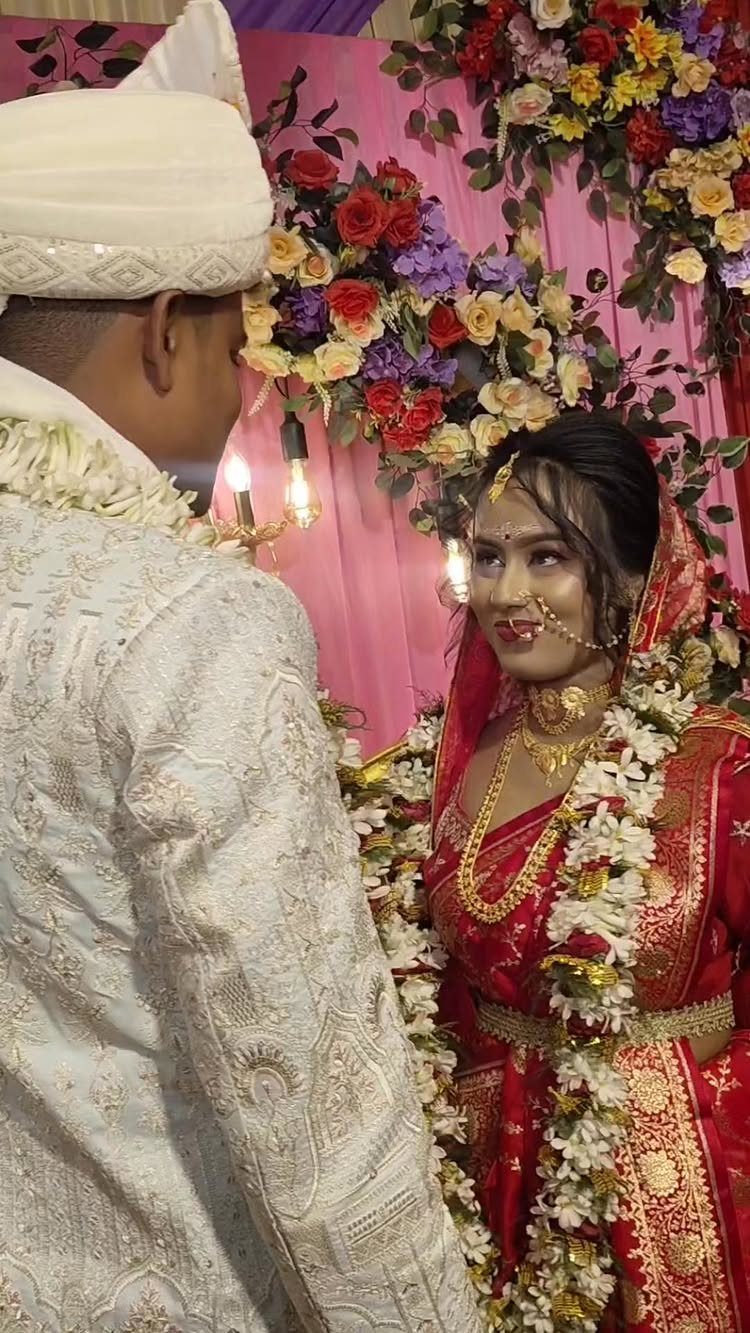
Your photographer watches for reactions and in-between moments while you move through the day. A hand squeeze during vows, your partner laughing at something a guest said, the look you give each other when no one else is watching.
These shots matter when you want to remember how the day felt, not just how it looked.
A good photographer reads the room and knows when to step back instead of directing every frame. You won’t see most of these moments happen, which is why they’re worth asking for.
15. Wedding Ring Silhouette
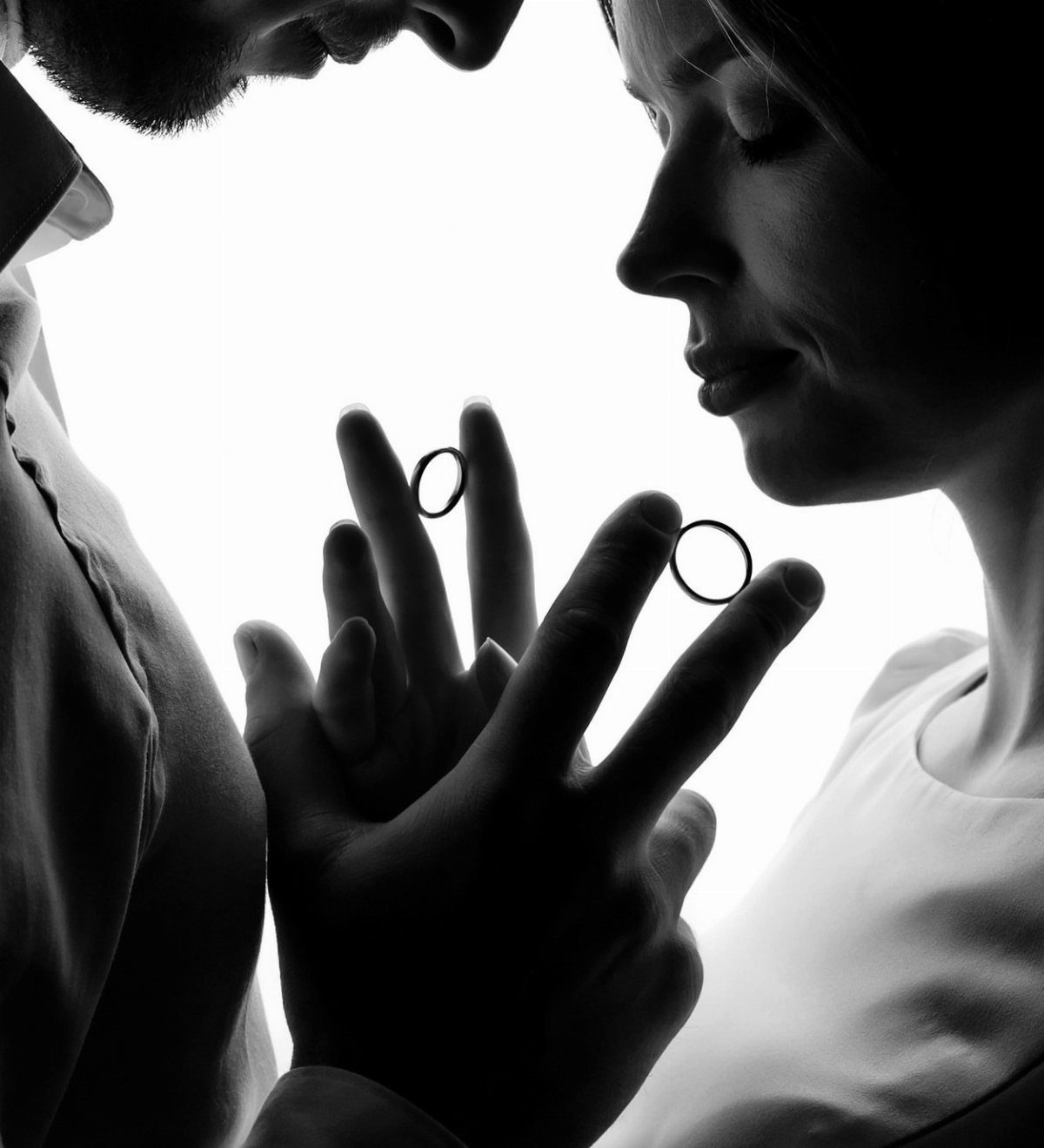
The two of you face each other in silhouette, hands raised to show your wedding rings against the light.
The photographer shoots from behind one of you or from the side, exposing for the bright background so your outline stays dark and the rings catch the light.
This works at sunset or near a bright window. Midday sun can blow out the background too much, and indoor lighting rarely gives enough contrast.
If your rings have stones or detail, this isn’t the shot that shows them. It’s about the shape of the moment, not the close-up.
16. Ring Exchange Close-Up
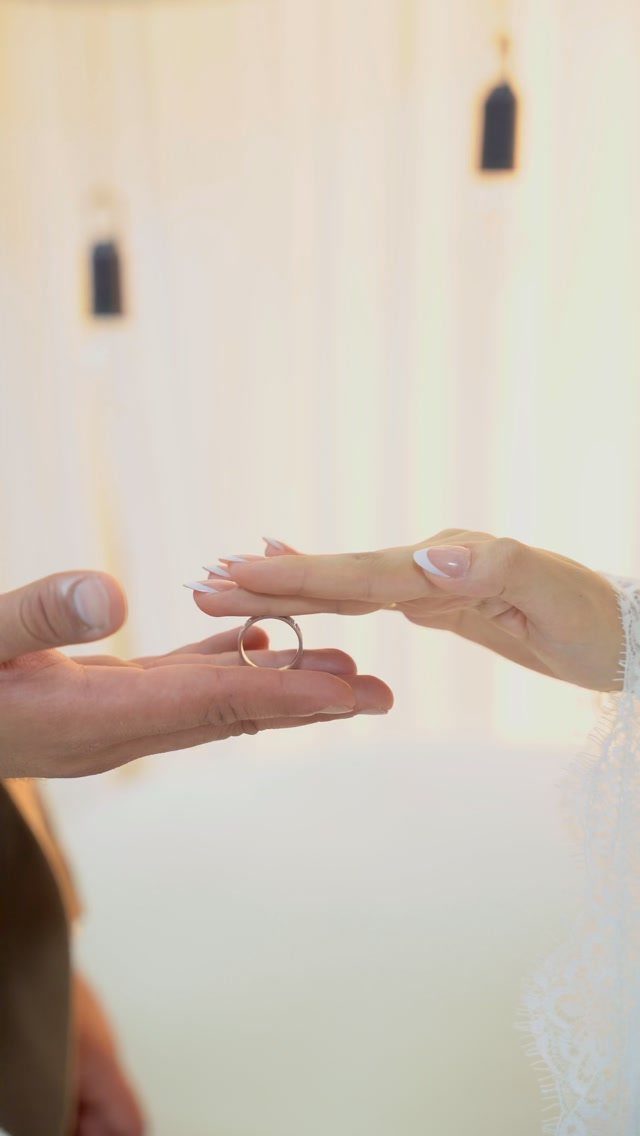
One of you holds the wedding band in an open palm while the other reaches for it, and the photographer shoots the exchange up close.
This happens fast during the ceremony, so some photographers stage it afterward to get the detail.
If your rings have engraving or texture, this is the shot that shows it. A plain background, good light, and steady hands give a clean frame.
17. Beach Embrace
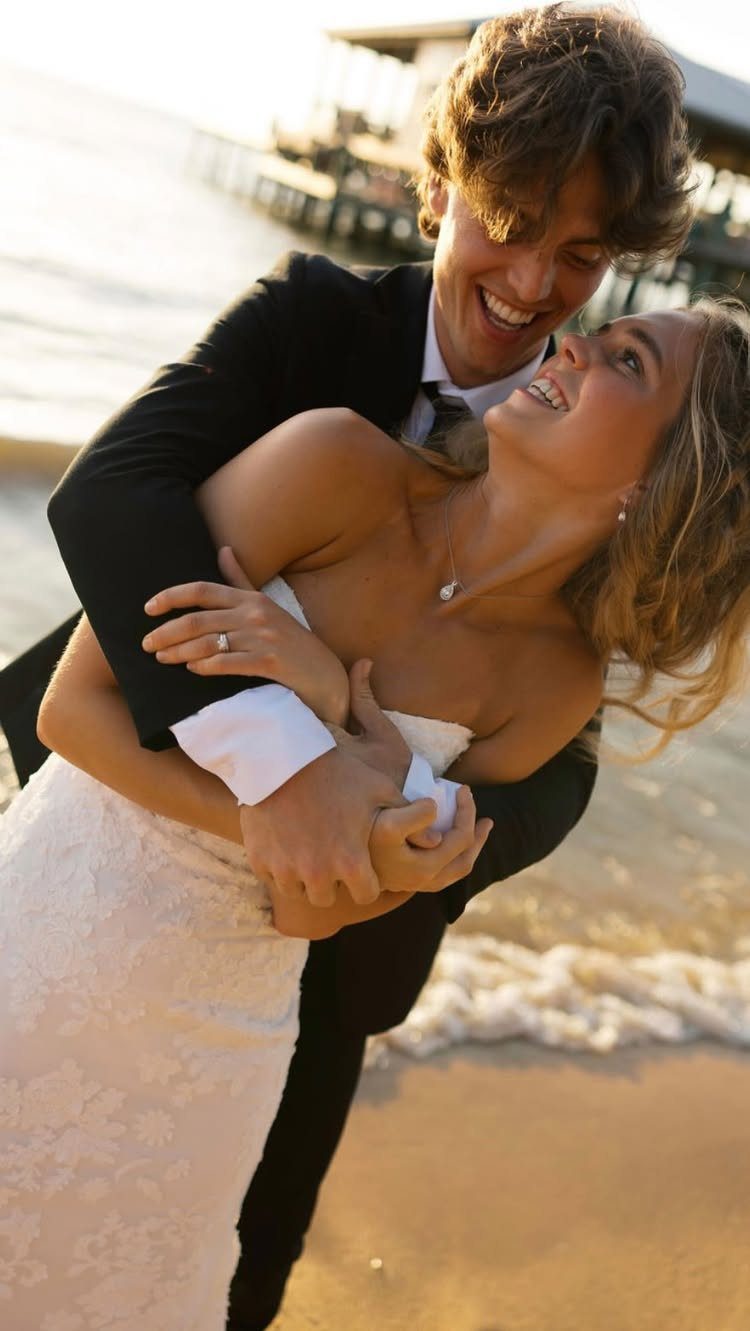
The groom stands behind the bride and wraps his arms around her while she laughs, usually on the sand near the water.
A beach wedding gives you the setting already. If you’re getting married inland and want this shot, you’ll need to travel to a beach for portraits, which adds time and planning.
Late afternoon light keeps the sand from looking washed out, and the water stays visible in the background.
18. Beach Couple Portrait
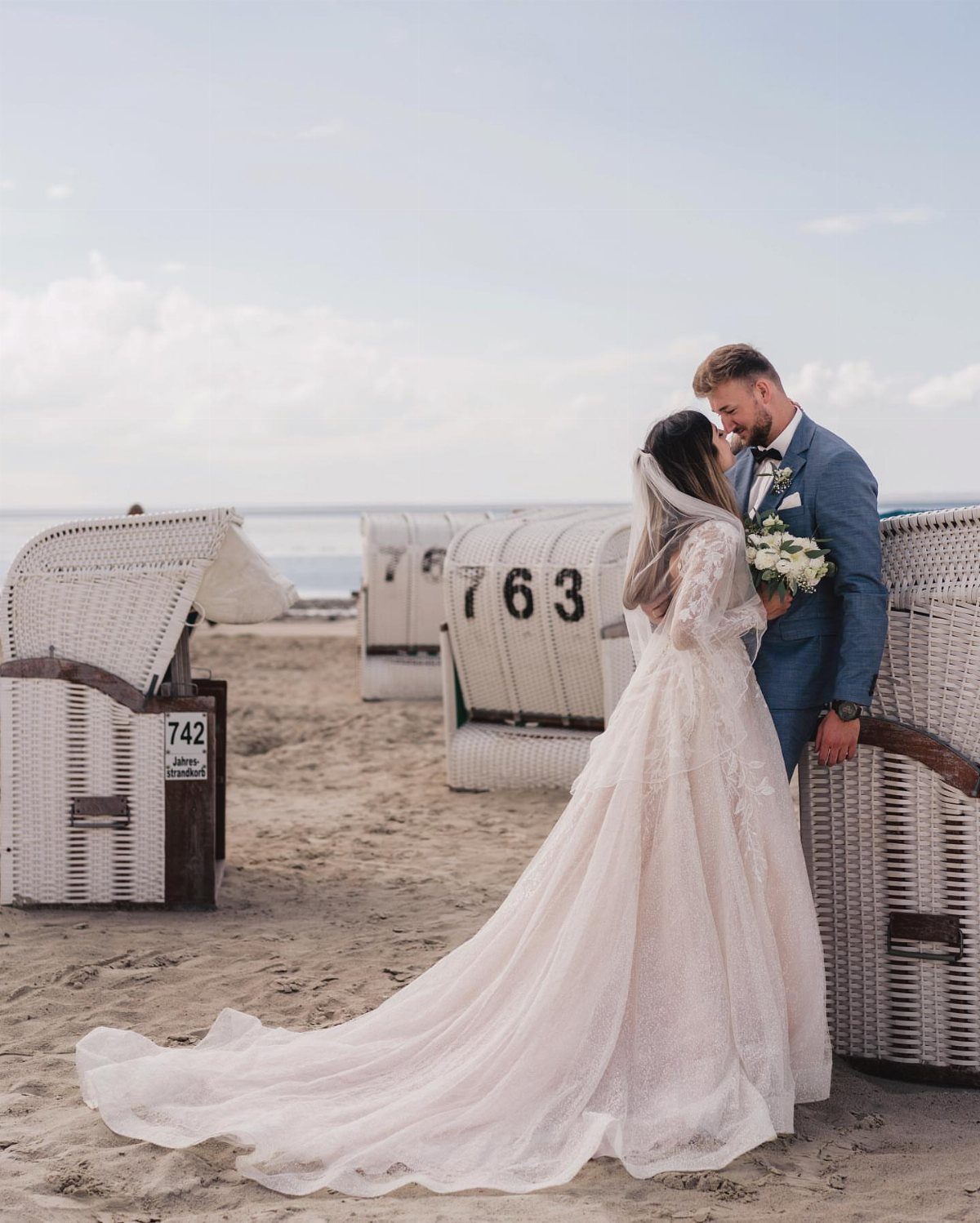
The two of you stand close together on the sand with the shoreline behind you, whether that’s open water, dunes, or beach chairs.
If your ceremony is on the beach, this takes a minute between the vows and the reception. If you’re traveling to the beach for portraits, pick a stretch with clean sand and something recognizable in the background.
Wicker chairs, a pier, or tall grass all work. Avoid midday when the light is harsh and shadows fall straight down.
19. Brick Wall Embrace
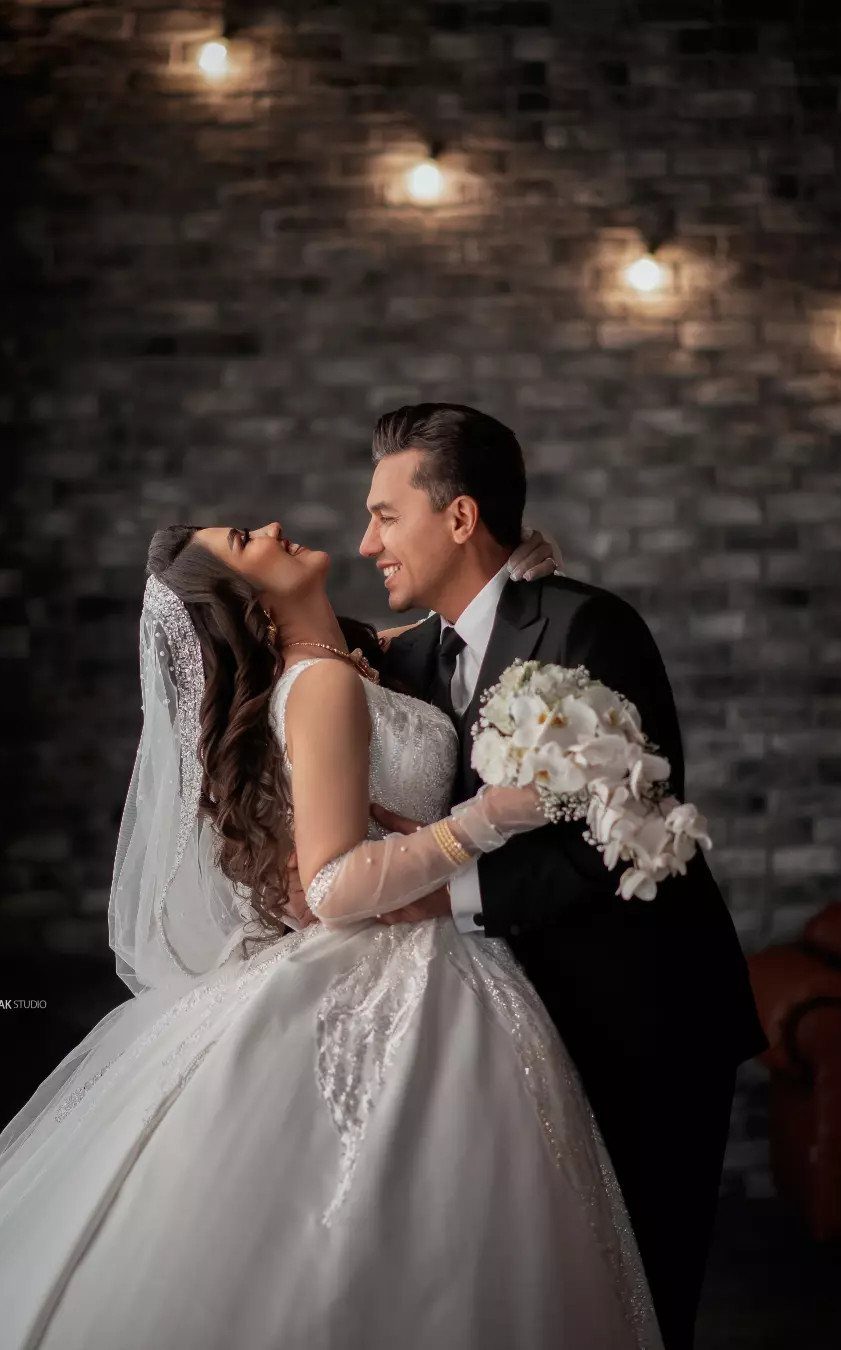
A dark brick wall with string lights puts warmth behind you without competing for attention. The glow lifts your faces while the wall stays neutral, and the texture reads better than plain drywall.
This works in an alley, a courtyard, or against the back of an older building.
If your venue has exposed brick indoors, you can hang battery-powered lights an hour before portraits and take them down after. Sunset or blue hour keeps the lights visible without washing them out.
20. Hand-Kissing Pose
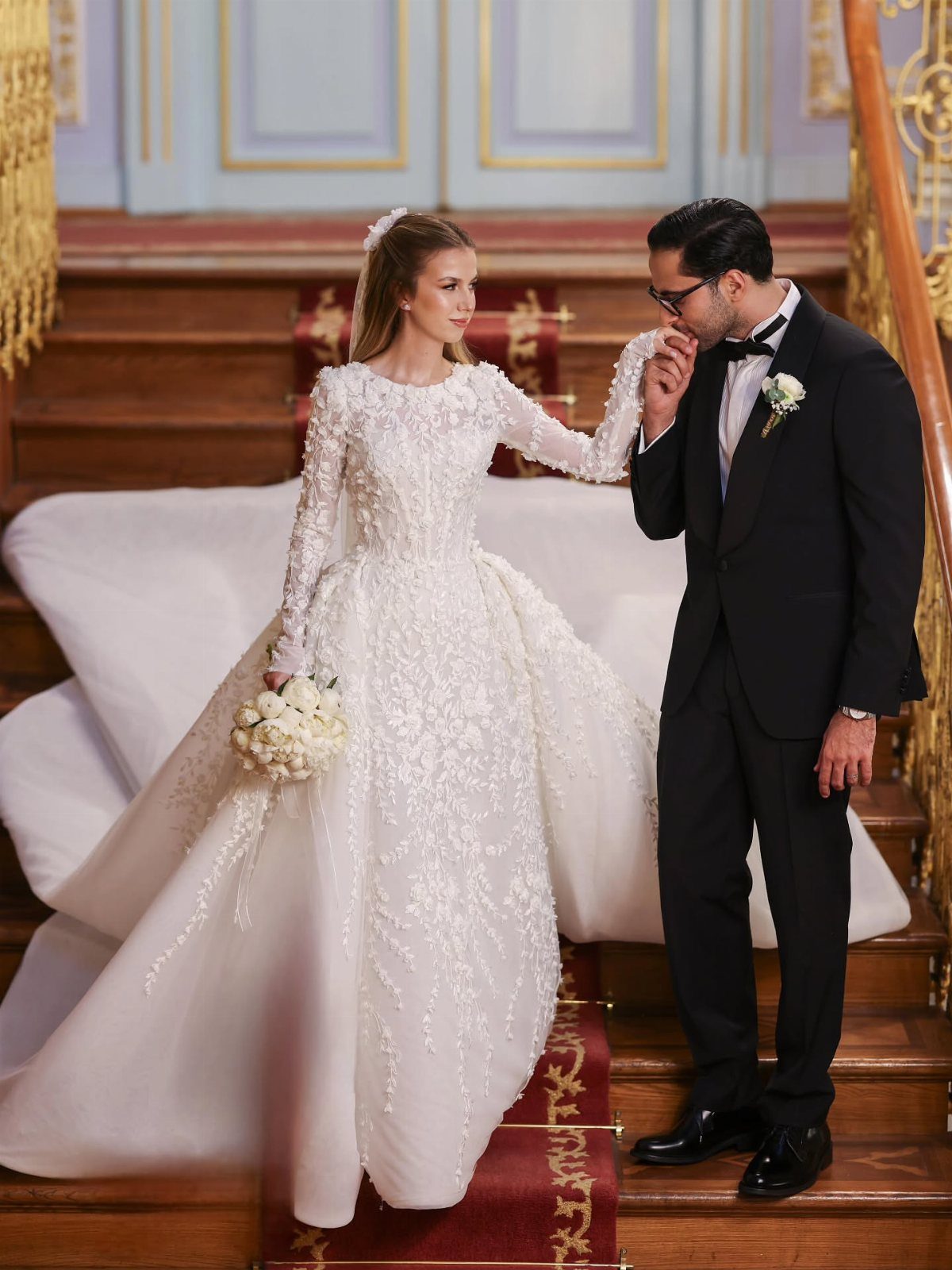
The groom holds the bride’s hand and kisses it while both of you stand close together.
The gesture reads as formal without being stiff, and if one of you is uncomfortable with full kissing shots, this gives you something tender without the pressure.
A staircase adds dimension, but any location with clean background works.
Mention this angle to your photographer during the shot list conversation. The groom will know whether to lift her hand or meet it halfway.
21. Floral Backdrop Portrait
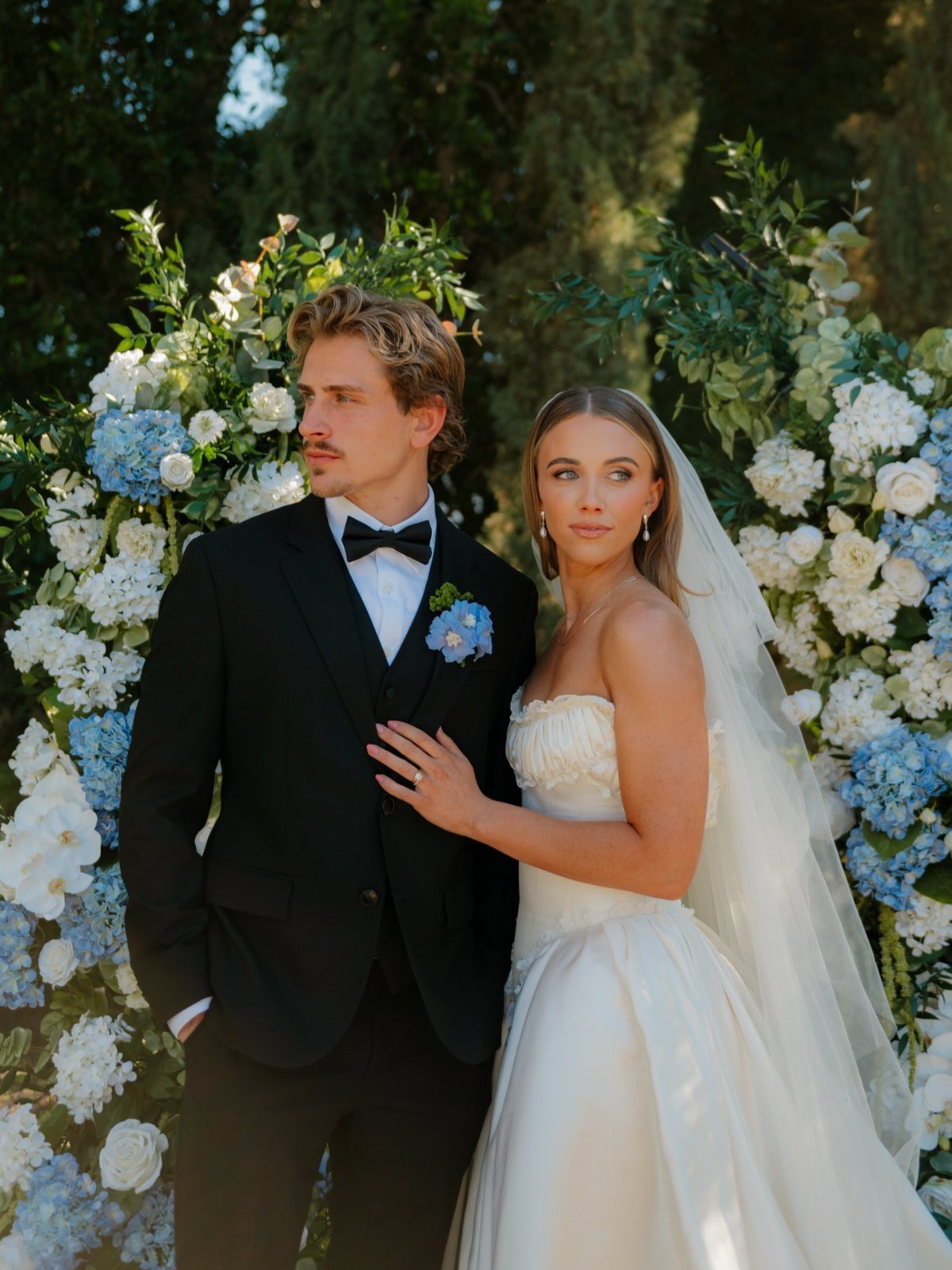
If you rented or built a floral installation for the ceremony, this is the portrait that shows it.
White and blue read as crisp without looking washed out. If your florist is building the wall, confirm it will stay standing through portrait time.
A freestanding wall needs stakes or weight at the base when you’re outdoors, and the flowers need water if you’re setting up hours before the ceremony.
22. Kiss in Garden Path
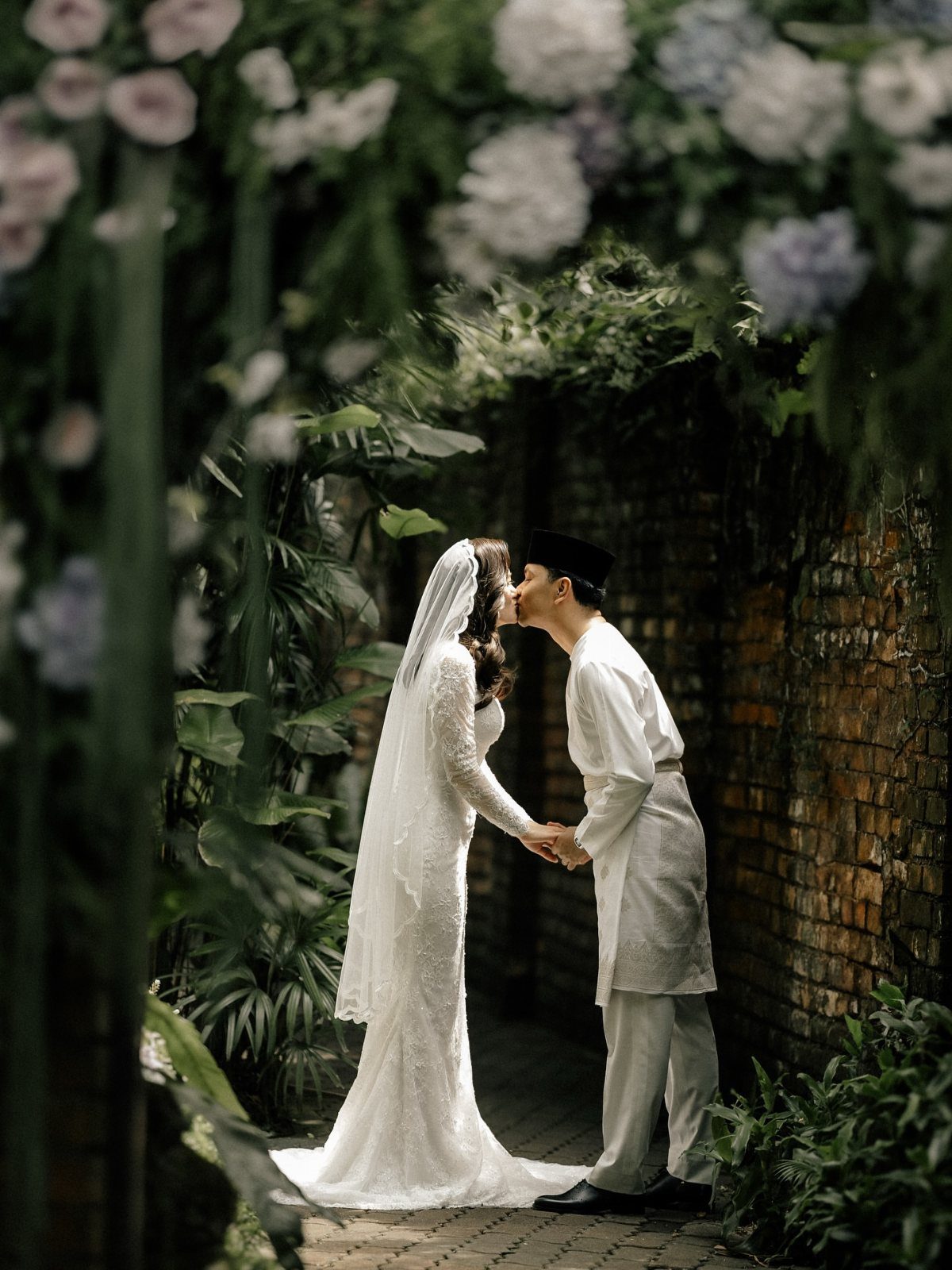
The garden path leads the eye toward the two of you while the flowers and greenery fill the frame. If your ceremony is outdoors in a garden, this uses the location without needing a separate setup.
Natural coverage works better than forced symmetry.
A brick or stone path adds texture, and white flowers keep the background from pulling focus. If the garden is part of your venue, walk it with your photographer beforehand to find the stretch with the cleanest sightlines.
23. Field Dress Adjustment
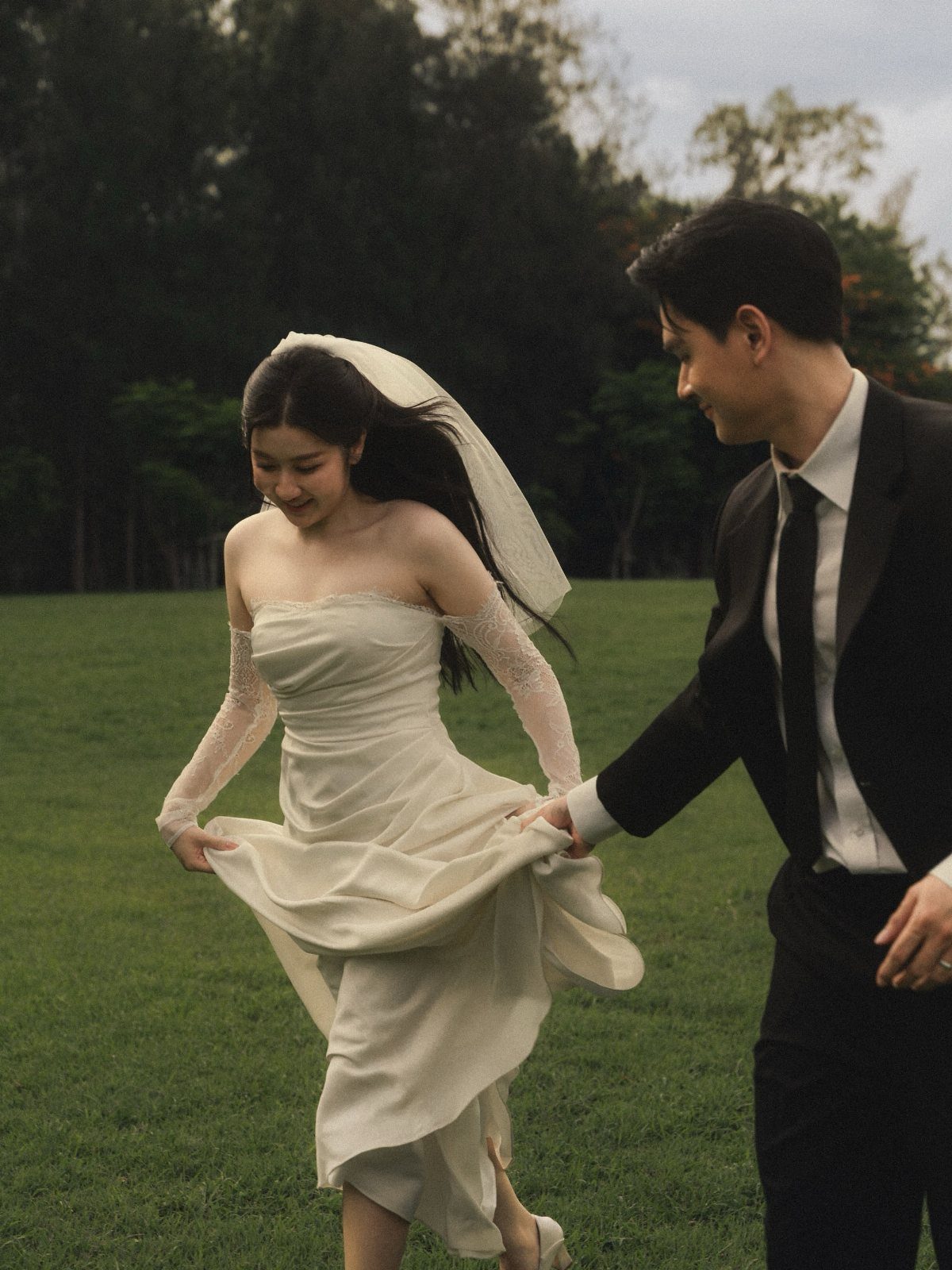
The bride’s gown drags in grass or dirt without help, and this shot turns the fix into a moment. The groom lifts the hem while the bride holds her bouquet, and the gesture reads as protective without feeling posed.
An open field gives you clean background and soft light. If your dress has a long train, this is practical between the ceremony and reception.
Schedule it during golden hour when the grass doesn’t look flat. The movement keeps both of you from standing too still.
24. Grand Venue Portrait
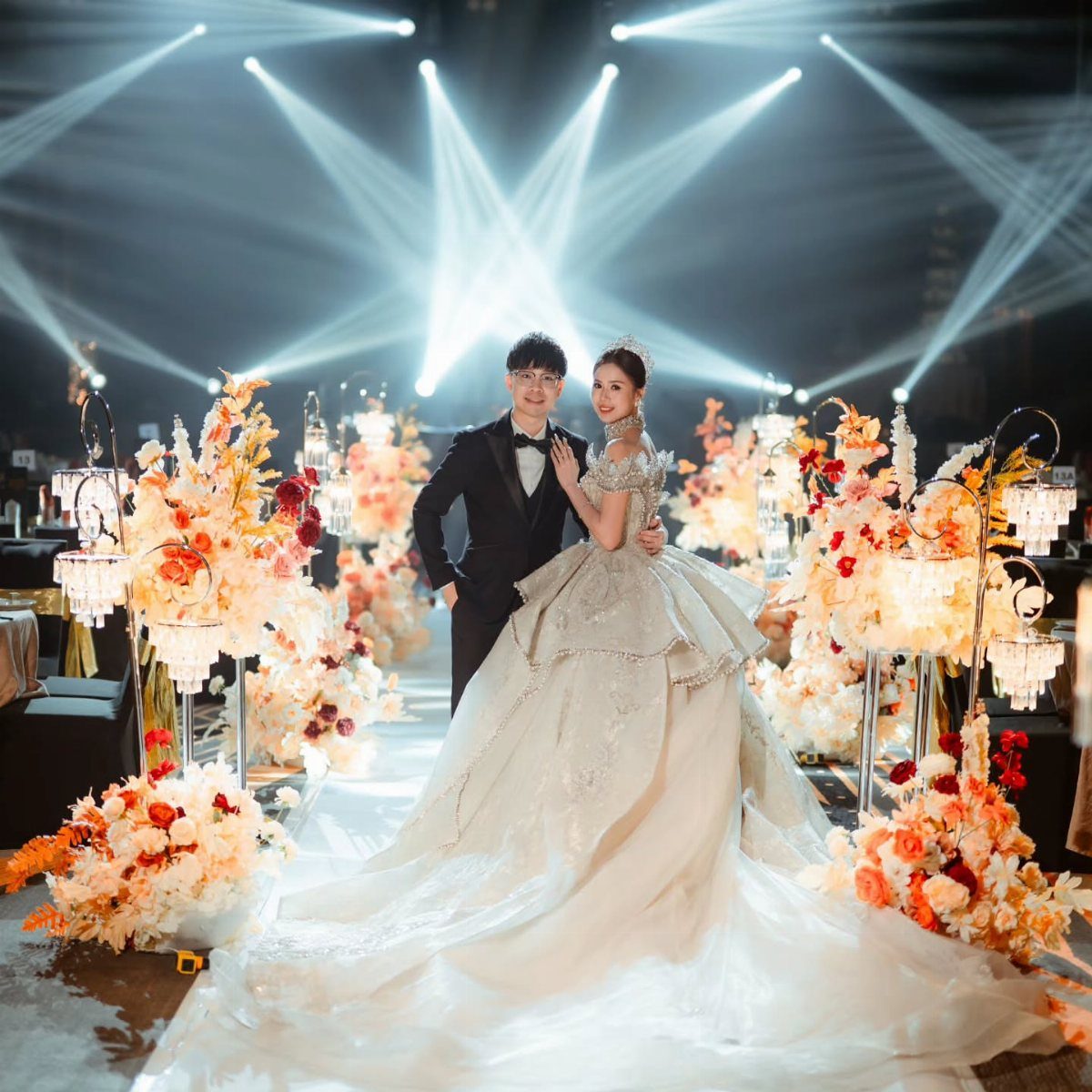
The hall, the lighting, and the arrangements stay in view while the two of you stand at the center.
Your photographer will step back far enough to catch the ceiling and the florals without cropping your faces. Take this right when you walk into the reception space, before guests fill the room and before the light changes.
25. Cypress Avenue Portrait
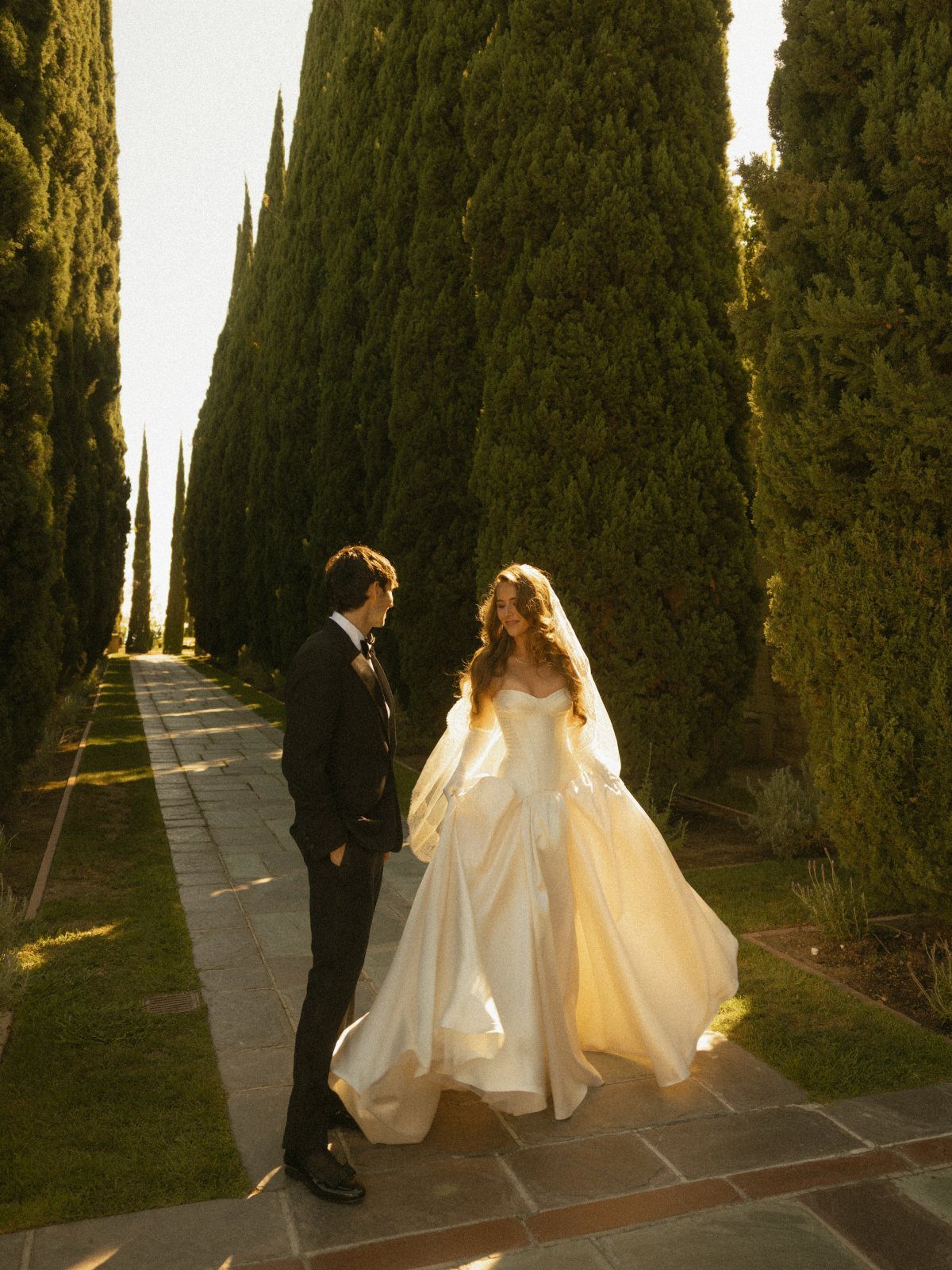
Tall cypress trees line the path and frame the shot without blocking your faces. The symmetry reads as formal, and the vertical lines add depth when your photographer shoots straight down the center.
This works at a garden, estate, or park with an established cypress alley. If your venue has one, walk it with your photographer during the site visit to check the light at your portrait time.
Midday sun can create harsh shadows through the branches. Late afternoon keeps the background visible without washing out the greenery.
Photographer Briefing and Preparation
Your photographer needs a list, not so they follow it like a script but so they know what matters to you and what doesn’t.
Write down 8 to 10 shots you want, then talk through them a few days before the wedding. If you care about veil coverage or want the cathedral ceiling in frame, say so now.
Gather anything meaningful you want photographed in one place the morning of: heirloom jewelry, the invitation suite, shoes, whatever you’re wearing that tells part of the story.
Your photographer can shoot them together in good light instead of hunting through bags.
Brief your photographer on relationships. If your best friend is your maid of honor and you want candid moments between the two of you, mention her by name.
Same for a parent or sibling whose reaction during vows you’d like captured. Your photographer can’t read the room without context, and you won’t get another chance at those moments.
Frequently Asked Questions
What are some modern wedding poses for brides and grooms?
A modern take means less standing straight at the camera and more natural interaction.
Your photographer can ask you to whisper something that makes you laugh, walk hand in hand while they shoot from a distance, or face each other in silhouette with your rings raised against the light.
Natural moments between takes often give you the most honest expressions, ones that look like the two of you instead of two people posing.
Fun and informal or serious and staged?
It depends on your personality and what feels natural to you. If you’re happy to be directed and can laugh on cue, shots like the groom hoisted by groomsmen or a close-up mid-giggle come off genuine instead of forced.
If you’d rather skip the performance and keep things simple, your photographer can still get the group portrait and the couple shots without asking you to act out a moment.