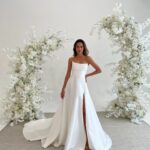
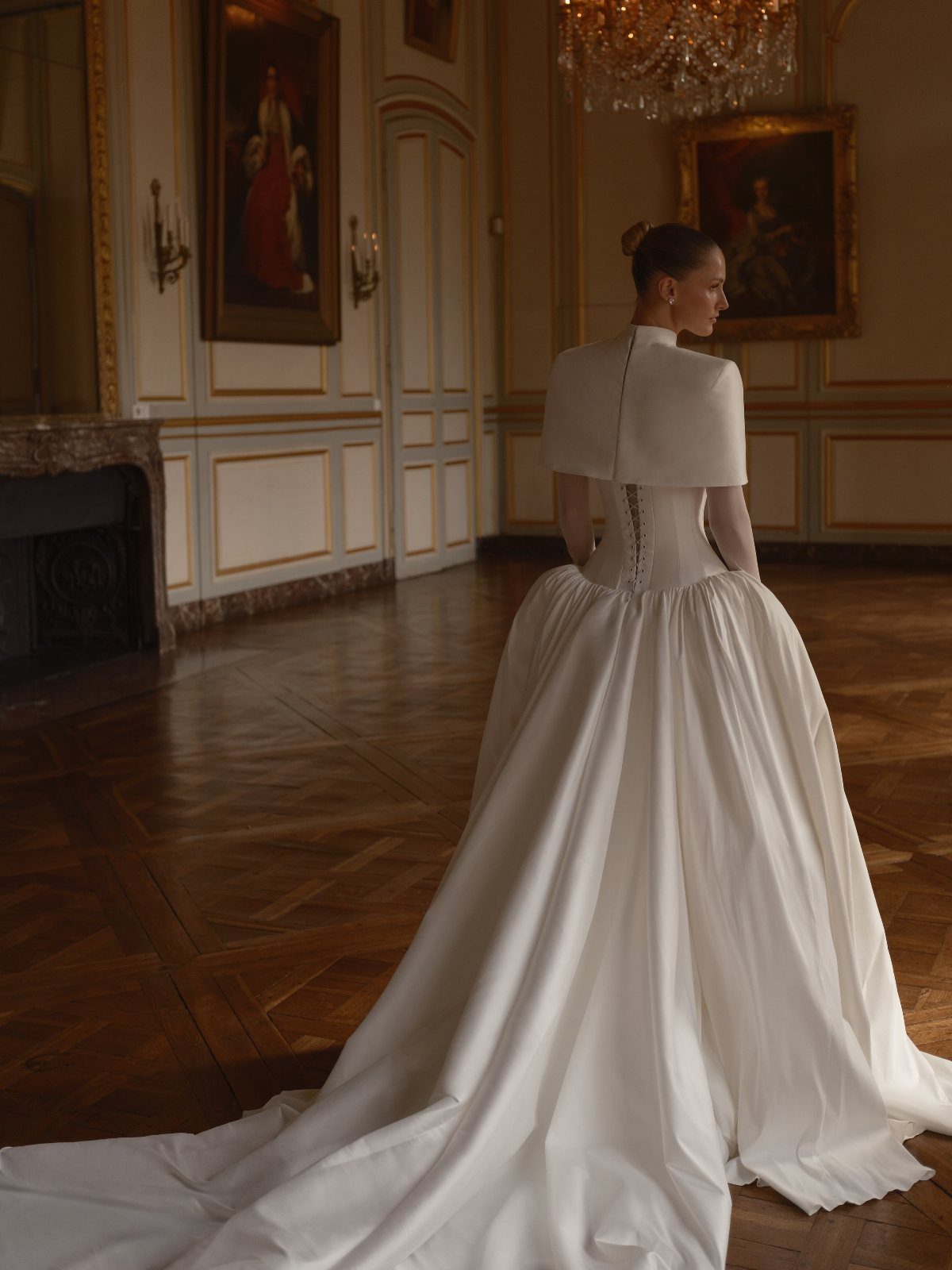
Vintage gowns span decades in style, from the low-waisted silhouettes of the 1920s to the full-skirted princess ballgowns of the 1950s, and range from archival pieces with yellowing or fabric wear to newly made dresses cut to period proportions.
You can hunt for an original piece that carries decades of wear or order something new that borrows the lines. The 1920s drop-waist needs silk that moves, the 1950s ballgown needs petticoats and room to turn without knocking over chairs.
1. 1920s-inspired Wedding Dress
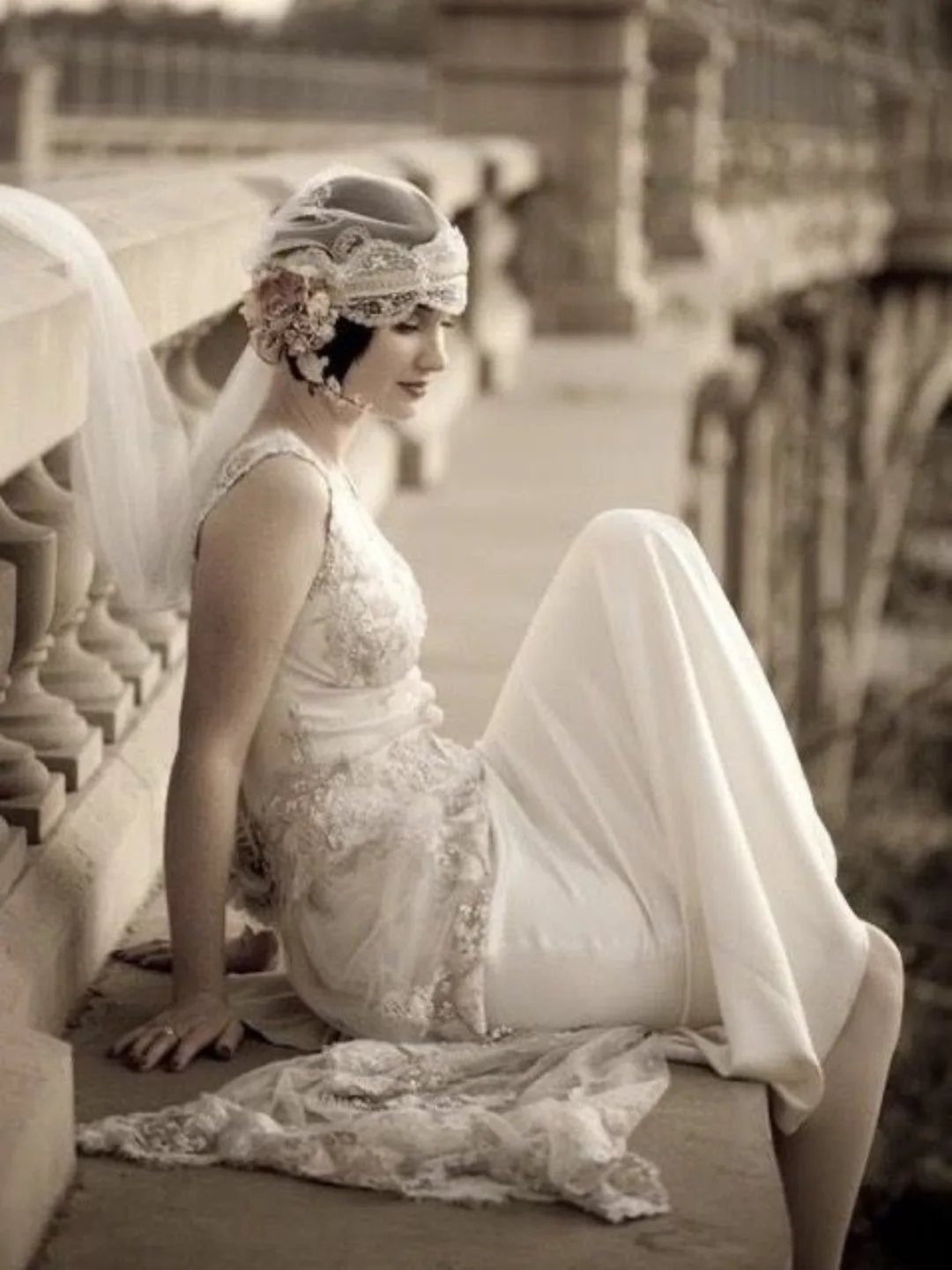
A 1920s-inspired gown draws on the low waist, fluid fabrics and art deco detailing of Jazz Age bridal style.
The look pairs best with softer fabrics like silk charmeuse, georgette or fine lace, which drape in the way these silhouettes need.
If you want beading, look for geometric patterns or linear designs rather than florals. A drop waist sits at the hip, so this cut suits brides comfortable with that proportion.
The style reads most clearly with a cloche veil or a headpiece low on the forehead.
2. Vintage Lace Wedding Dress
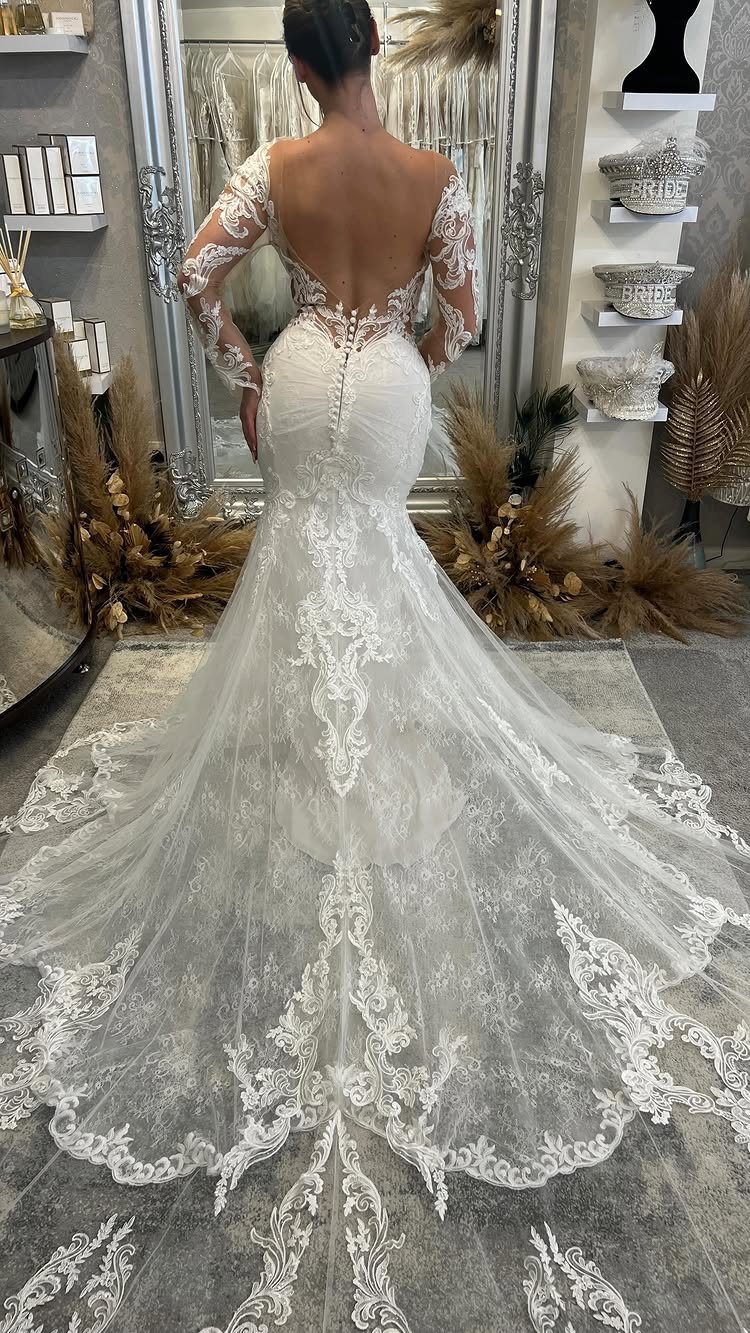
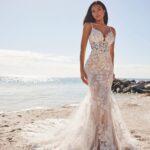
A vintage lace wedding dress makes lace the defining feature, covering most or all of the gown. The fabric can be Alençon, Chantilly, guipure or another fine style, and the construction can be new or archival.
Lace takes longer to alter than plain fabric, so leave extra time if you need adjustments. A gown this detailed often needs a simpler silhouette to let the fabric do the work.
If the lace has an obvious pattern direction, check that it runs the right way before ordering. Some sellers will recut if it arrives upside down, but not all will.
3. Vintage Bridal Boutique
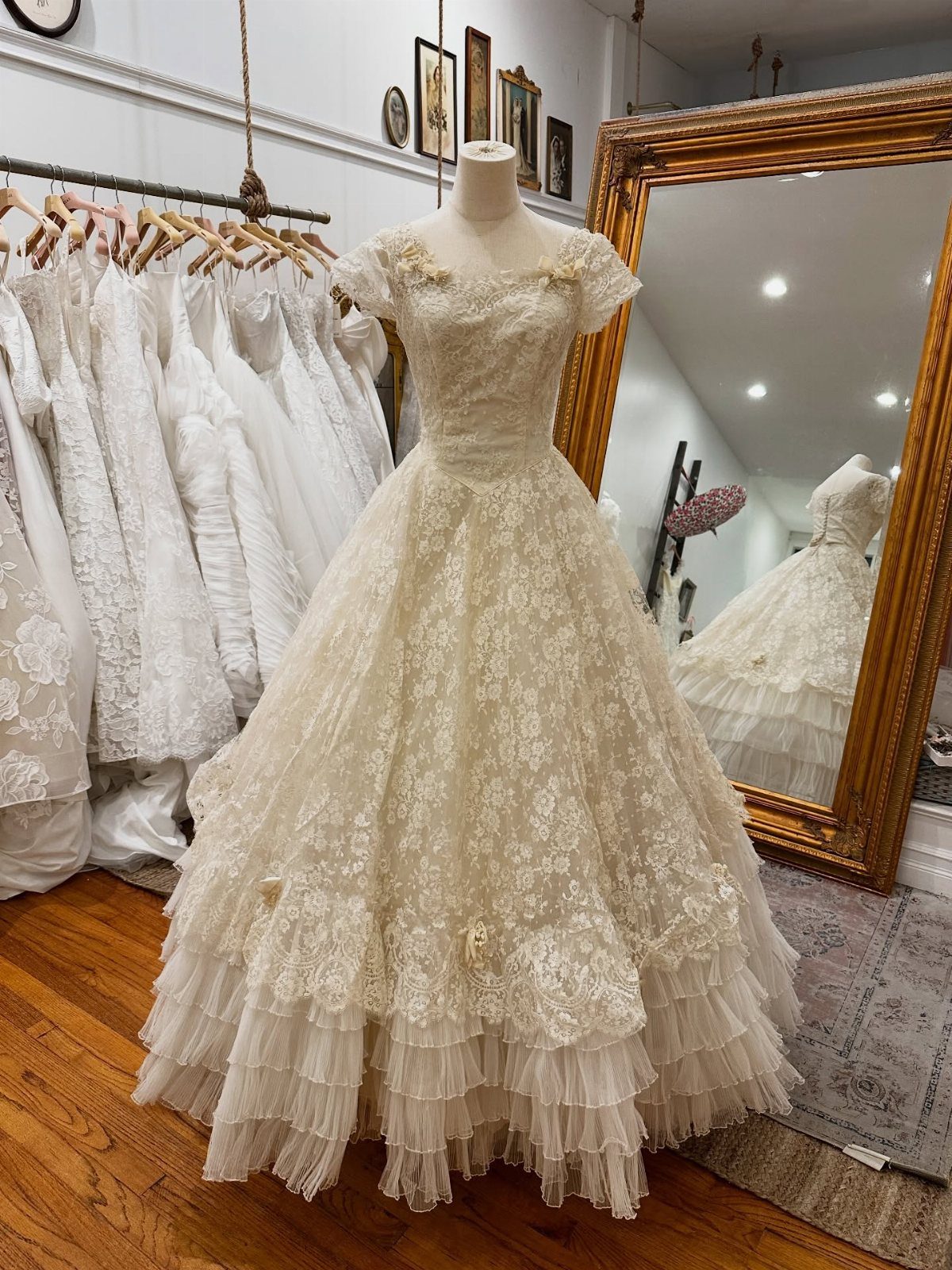
Specialist boutiques and resale sources carry vintage, archival and one-of-a-kind bridal gowns that are harder to find in standard stores. Stock can include genuine older dresses, deadstock from past decades, or reworked vintage pieces.
Selection is smaller than a typical bridal shop, and sizing can be limited since many vintage gowns were made to different standards. Ask about alteration policies before you commit.
If you are shopping online, confirm return terms and expect longer processing times than you would with a new dress from a major retailer.
4. Vintage Wedding Gown
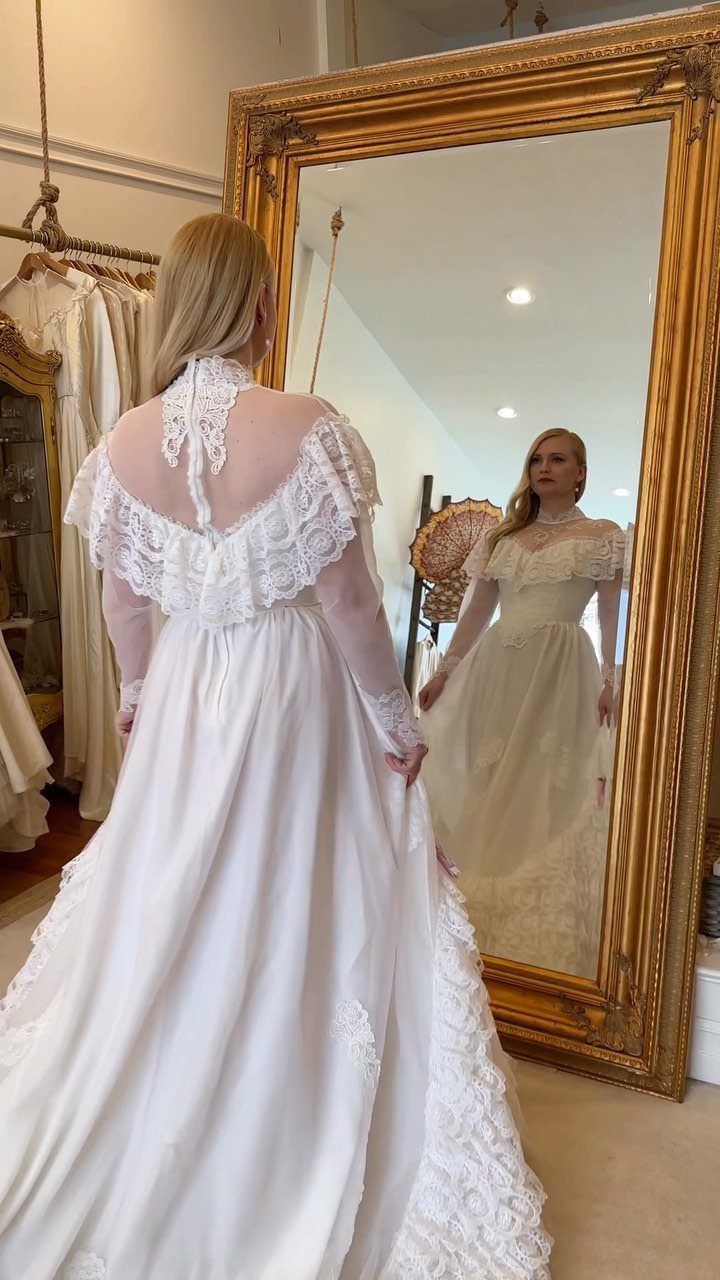
An actual older or archival wedding gown, rather than a newly made dress inspired by the past, brings a rarity and a specific history to the choice.
These dresses were constructed in a different era, so sizing, fit and fabric care all differ from current standards.
Condition varies.
Some have been stored well, others show yellowing, stains or fabric that has weakened over time. A good seller will photograph flaws and describe them in the listing.
Dry cleaning an archival gown requires a specialist who works with delicate or aged fabrics. Budget extra for that, and for any repairs the dress needs before you can wear it.
5. Short Vintage Wedding Dress
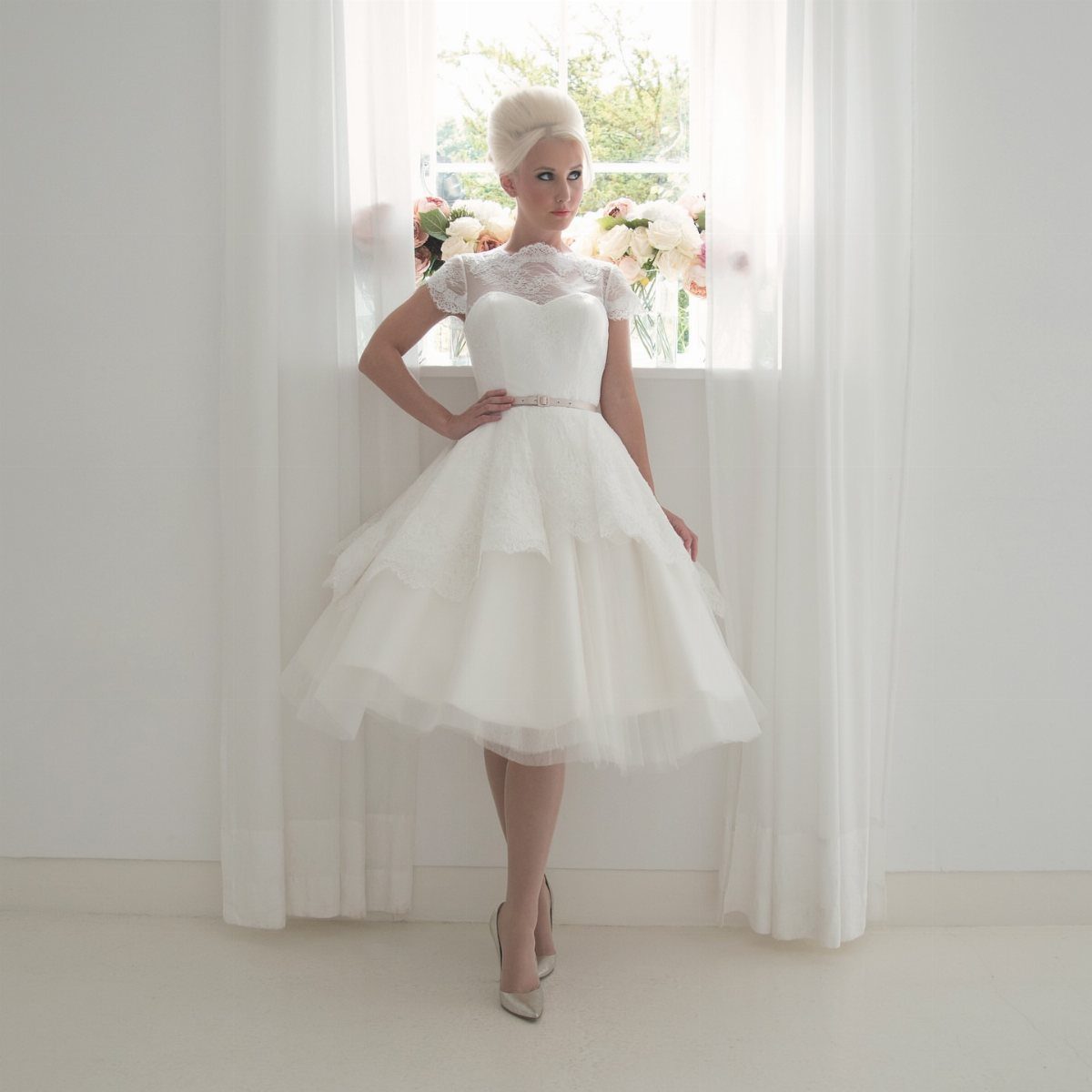
A short vintage wedding dress gives a casual, original look and suits brides who prefer a retro silhouette without a long train.
Length can range from knee to mid-calf, and the style works well for informal ceremonies, outdoor weddings or receptions where you want to move freely.
Shorter hemlines show shoes clearly, so the pair you choose becomes part of the outfit. Vintage cuts often sit higher at the waist or have fuller skirts, which can change how the proportions read.
Alterations on a short dress are usually faster and less expensive than on a full-length gown.
6. Long Sleeve Vintage Dress
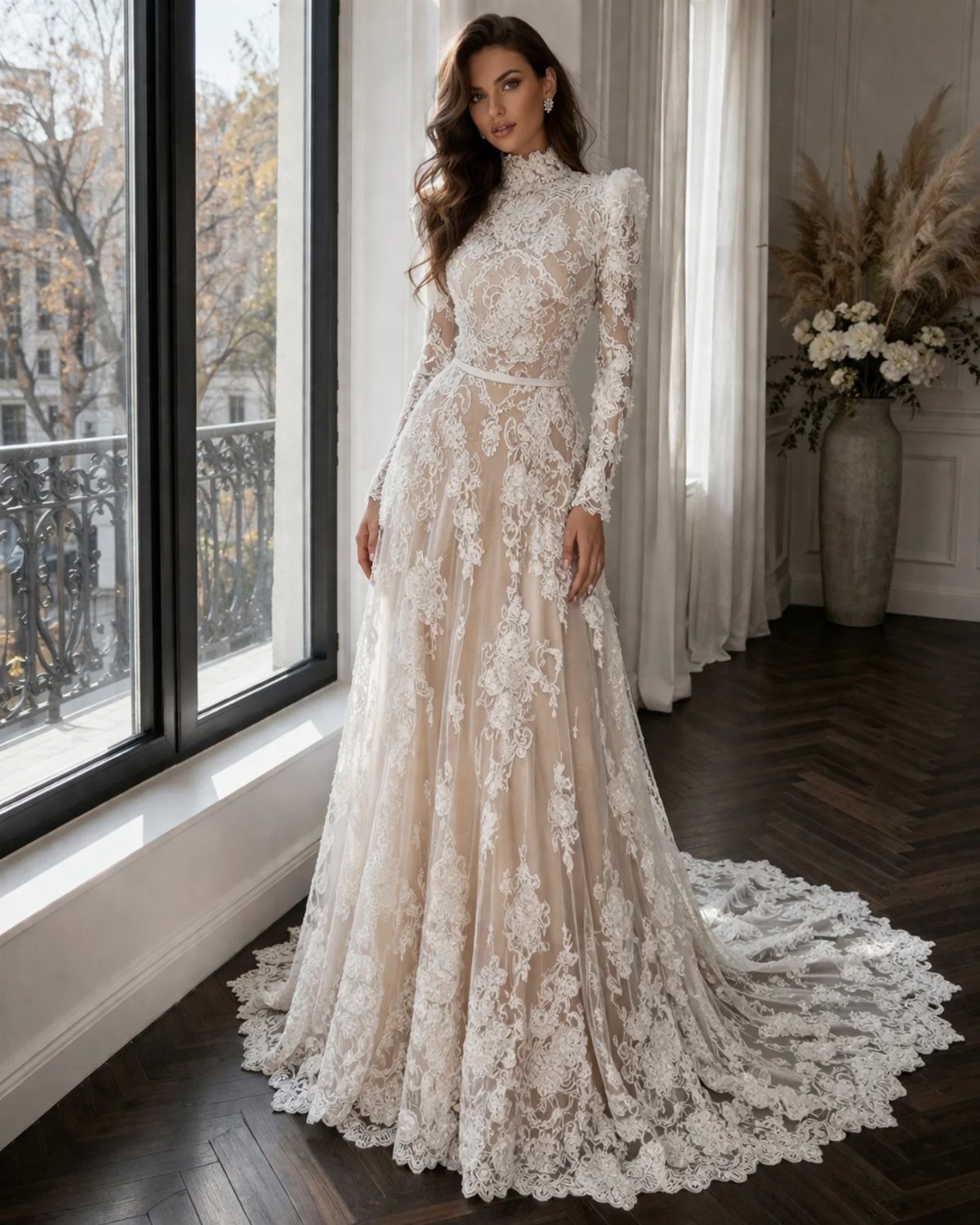
Long sleeves on a vintage-style gown bring a refined, traditional look that suits formal ceremonies and cooler seasons.
The sleeve can be sheer lace, fitted crepe or another fabric that matches the gown, and the neckline often sits higher to balance the coverage.
This cut works well for religious or conservative venues where a more modest look is preferred. Fitted sleeves need careful measurement, since alterations on sleeves are harder to reverse than on a hem or bodice.
If the gown has lace sleeves, check how the pattern is positioned at the shoulder and wrist before ordering.
7. Vintage Civil Wedding Dress
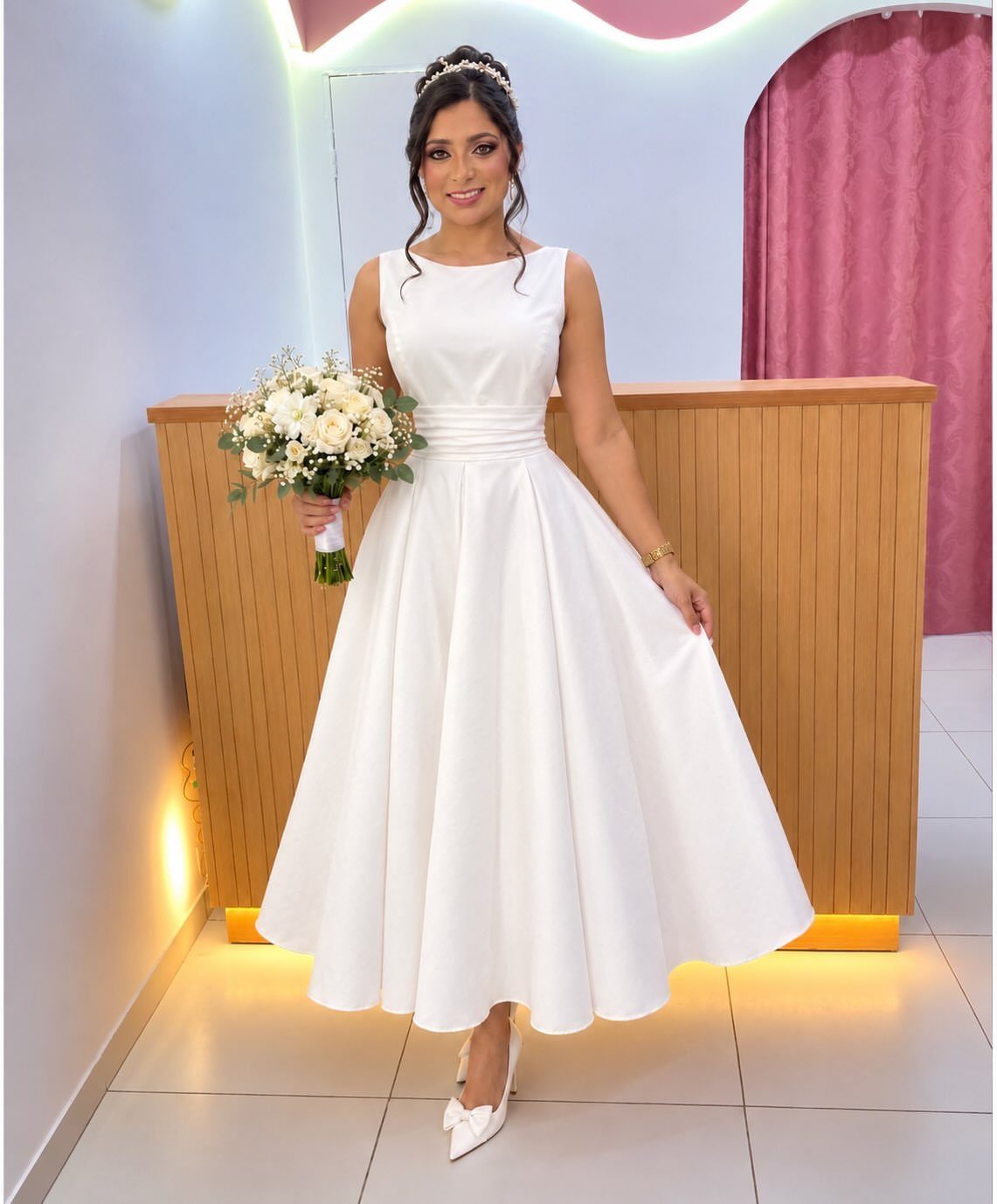
A civil ceremony often calls for a simpler, shorter gown that suits a courthouse or registry office without feeling overly formal.
A tea-length dress keeps the silhouette clean and works well in small spaces where a long train would be impractical.
This length shows shoes and legs, so choose a pair that reads as part of the outfit rather than an afterthought. The style suits brides who want a vintage reference without heavy embellishment or a full skirt to manage.
Alterations are straightforward and the dress travels easily if your ceremony is not at home.
8. 1940s A-line Wedding Dress
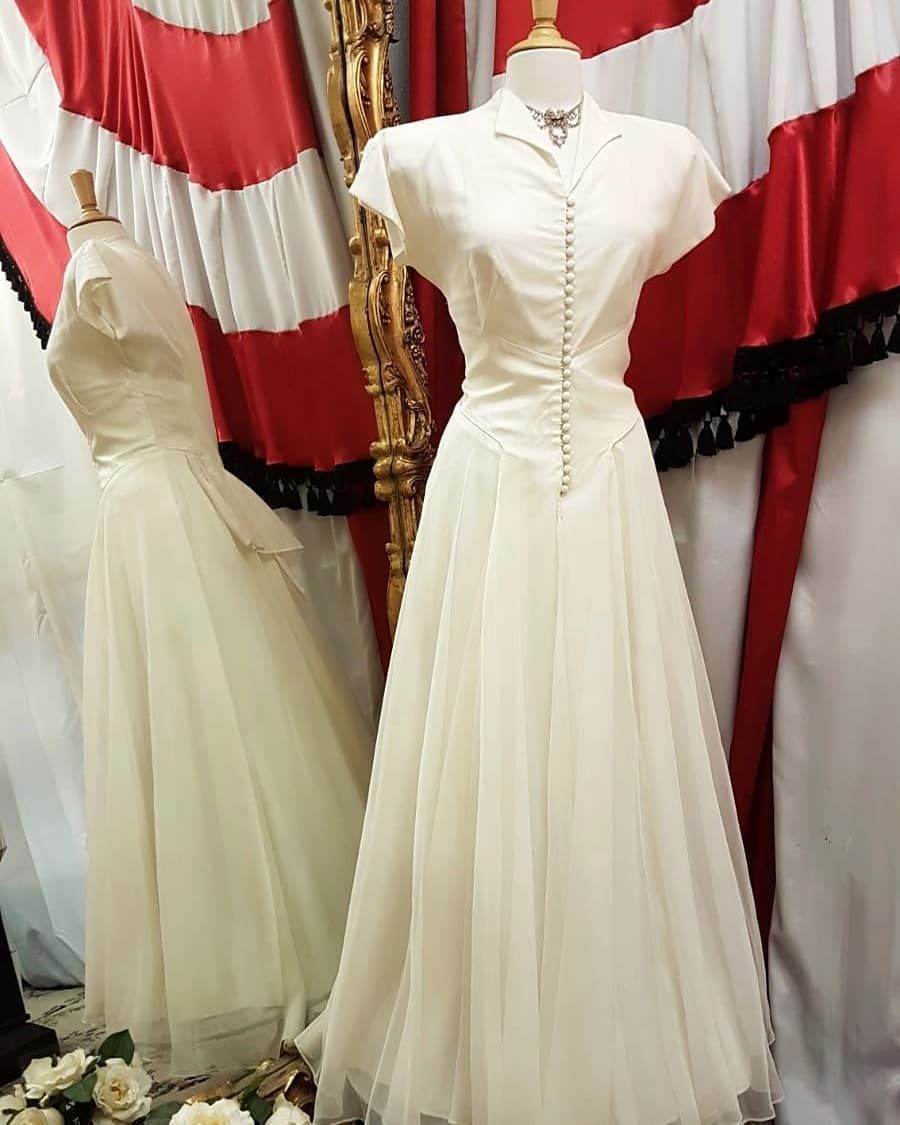
The 1940s A-line shape brings structure through a fitted bodice and a skirt that widens gradually from the waist. Buttons down the front or back add tailored detail, and the line works well with collared or portrait necklines.
This cut suits brides who want a vintage silhouette that does not require a petticoat or heavy understructure. The waist is defined but not cinched, so the fit is easier to adjust than a fully corseted bodice.
Pair this with simple jewelry so the dress remains the focus.
9. 1940s Puff Sleeve Gown
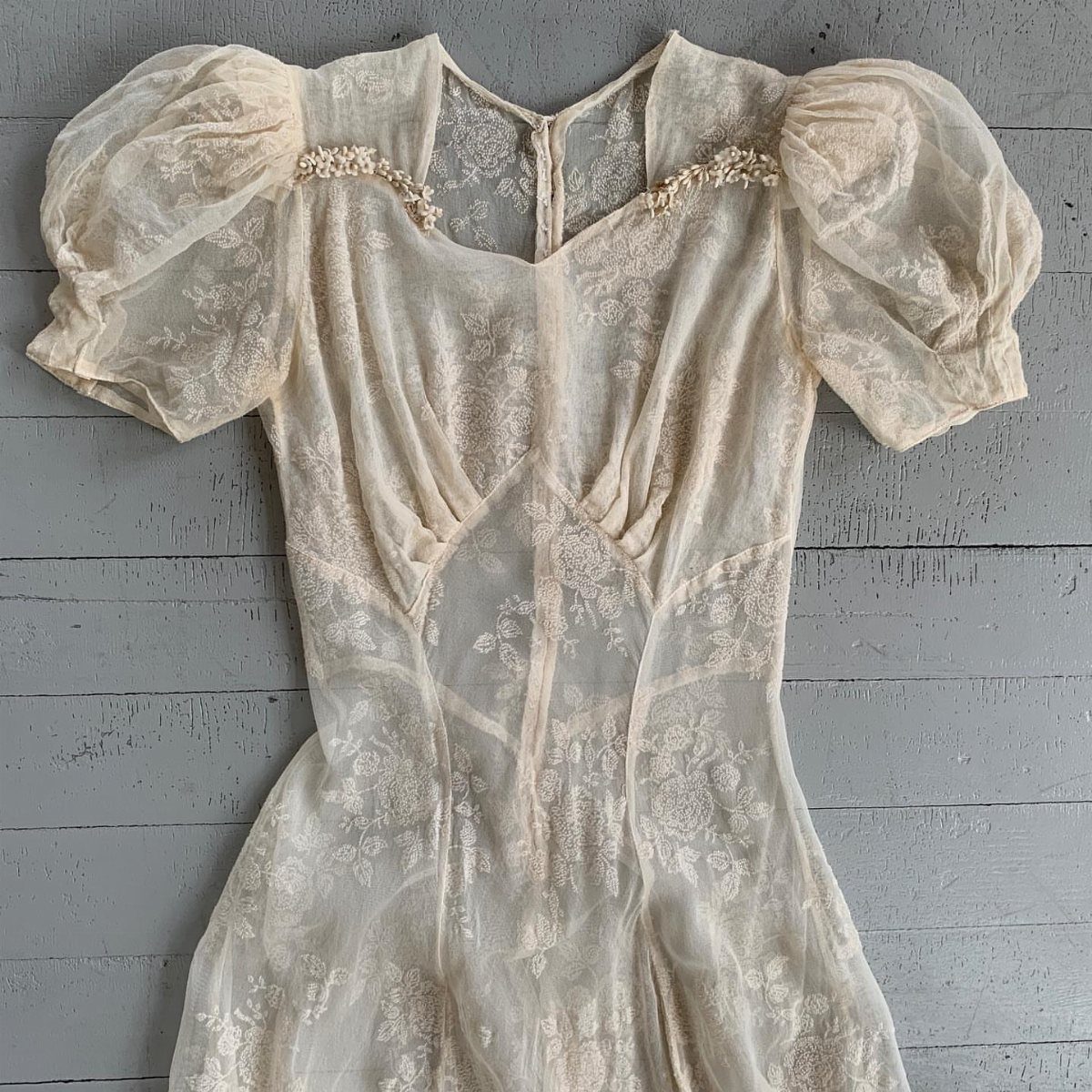
Short puff sleeves give a covered, romantic shape without the weight of a long sleeve. The style pairs well with lace or beaded fabric, and the sleeve volume balances a fitted bodice.
This cut suits brides who want shoulder coverage for a religious or formal ceremony but prefer a softer, less structured look than a cap sleeve.
The sleeve sits at the natural shoulder line, so fit at the armhole matters more than it does with a looser sleeve.
If the fabric has beading, ask how much movement the sleeves allow before you commit.
10. 1940s Fit-and-flare Gown
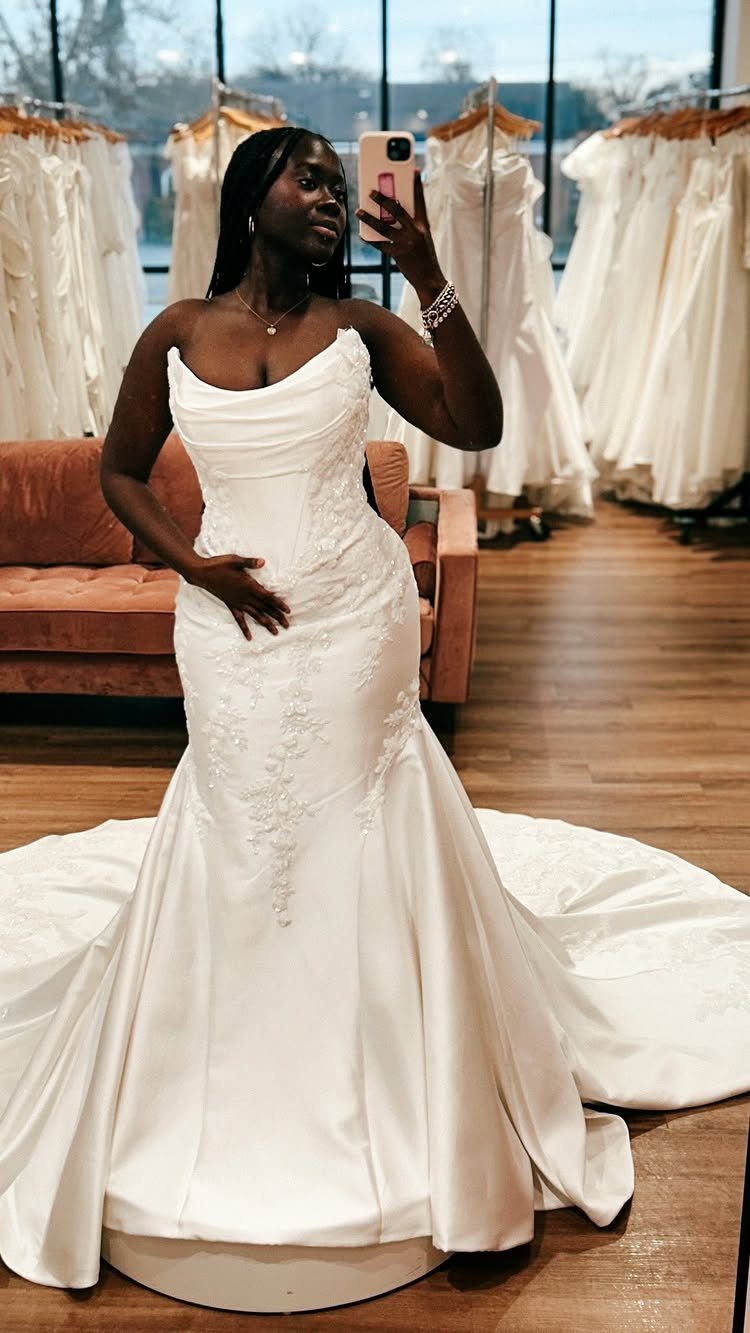
A fit-and-flare gown hugs the body through the bust, waist and hips, then flares out from mid-thigh or knee. The silhouette shows shape clearly, so it suits brides comfortable with a close fit through the torso.
Embroidery or floral detail adds texture without bulk, and the flare at the hem gives movement when you walk. This style requires more precise tailoring than an A-line or ballgown, so leave time for fittings.
Undergarments matter here. Pick styles that sit flat under fitted fabric.
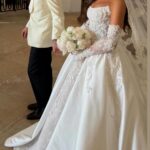
11. 1950s Princess Ballgown
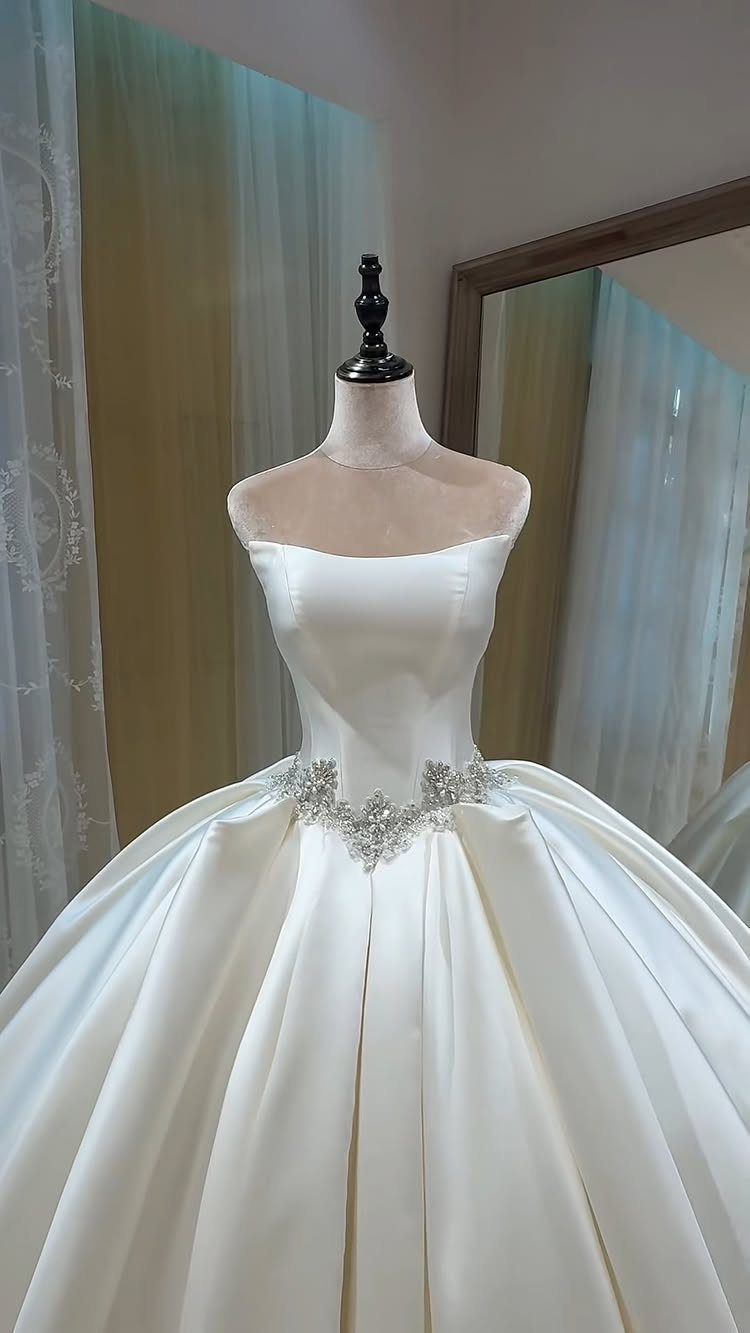
A 1950s princess ballgown is built on volume, with a fitted bodice and a full skirt supported by layers of tulle or crinoline.
The waist is clearly defined, often with a jeweled belt or sash, and the skirt can span several feet in diameter.
This silhouette suits formal venues with enough space for the skirt to move without catching on furniture or doorways. The style reads as regal and traditional, so it pairs best with classic jewelry and a veil rather than casual accessories.
Budget extra time for alterations, especially if the bodice has boning or a corset closure.
12. Star-sequin Wedding Dress
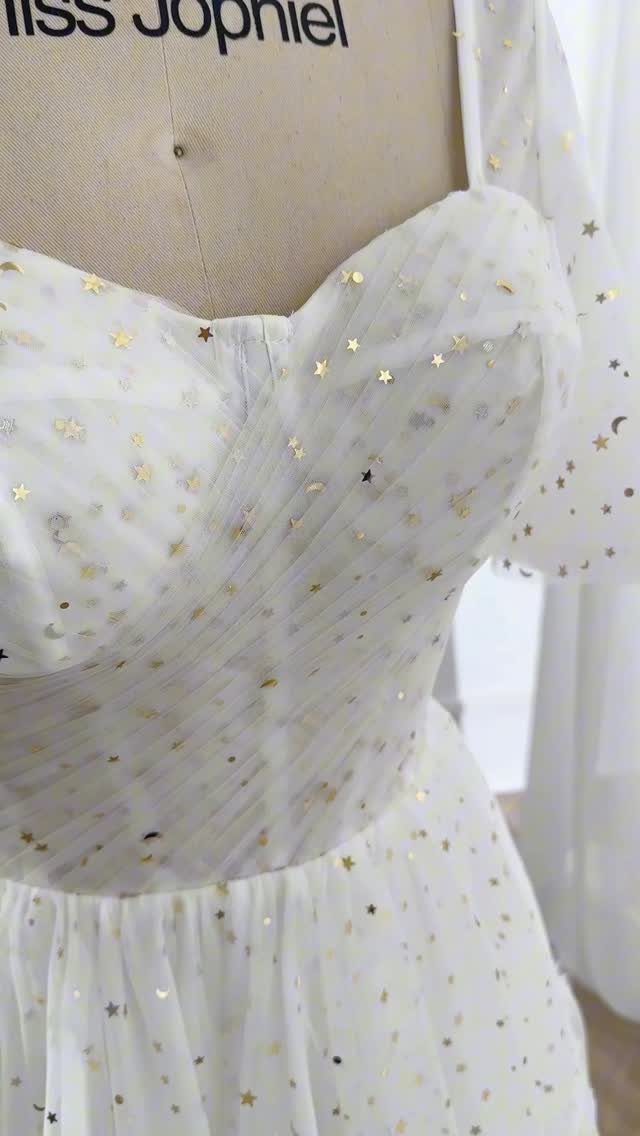
Gold star sequins scattered across a white gown give a celestial detail that catches light without reading as overly glitzy. The pleated sweetheart bodice adds structure, and the sequins work best when they are spaced rather than densely packed.
This style suits brides who want a vintage-inspired gown with a playful, unexpected element. The gold reads warm rather than cool, so it pairs well with brass or gold-toned jewelry.
If the sequins are hand-sewn, handle the dress carefully during fittings. Loose sequins are easier to lose than to replace.
Though a vintage wedding dress comes with strings attached—there might be repairs, unalterable elements, or imperfections due to age, the upside is endless. “Thanks, it’s vintage” feels utterly cooler when it’s said on your wedding day.
— Vogue
Vintage Versus Vintage-inspired
A vintage-inspired dress is new, cut to the silhouette and trim of a specific decade between the 1920s and 1970s.
The construction is modern, the fit follows current sizing standards, and the fabric is new. You get the look of an earlier era without the condition issues or limited sizing of an older dress.
An archival or true vintage gown was made decades ago and comes as it is.
Sizing may not match today’s charts, alterations can be harder or impossible depending on how the dress was originally constructed, and the fabric may show wear, discoloration or weak spots.
Some vintage pieces have been repaired or restored, others have not.
If you want a period aesthetic with predictable sizing and modern comfort, vintage-inspired is the practical choice.
If you want a one-of-a-kind garment with its own history, an archival gown offers that at the cost of condition uncertainty and stricter fit limits.
Shopping and Fit Considerations
Seeing a gown on your body matters more with vintage and vintage-inspired styles than with simpler cuts.
Proportions, texture and how details sit at the shoulder or waist change how the dress reads, and those differences are harder to judge from a photo alone.
Some boutiques offer tailoring or alterations as part of the package, others refer you to an outside specialist. Ask before you commit, especially if the dress needs work on sleeves, a fitted bodice or delicate lace.
If you cannot visit in person, some studios offer virtual consultations where you can see gowns on a model or discuss fit over video.
Expect longer lead times for alterations on vintage pieces, since the work often takes more care than it does on a standard new gown.
Vintage Gown Rarity
A vintage or archival gown offers rarity that a mass-produced dress does not.
You are wearing a piece that was made for one bride in a different decade, and the chance that another bride at your venue or in your circle will wear the same dress is nearly zero.
Boutiques that specialize in these gowns often curate their stock around craftsmanship, condition and one-of-a-kind appeal.
If uniqueness matters more to you than having every detail exactly as you pictured it, an archival gown is worth the trade-offs.