Medium hair reaches the length where half-up styles stay pinned and full updos hold their shape without needing a forest of bobby pins.
1. Half-Up, Half-Down
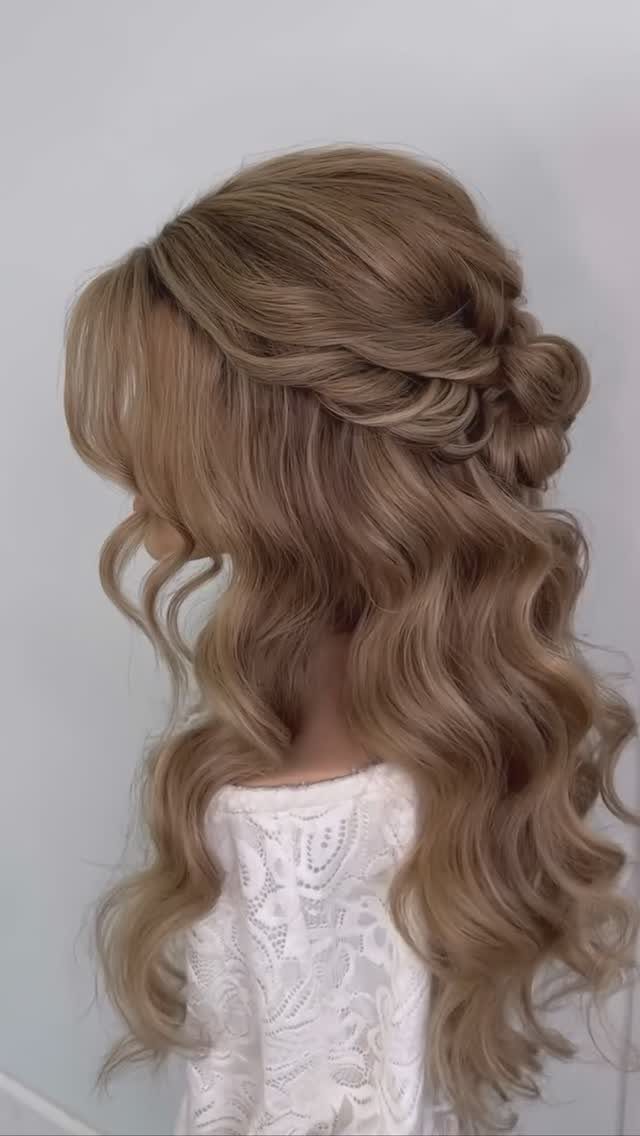
Hair gathers at the crown and pins in place, leaving the rest down. It balances the finished look of an updo with movement and the ability to show off natural texture.
Twisting the front sections instead of braiding them gives a softer finish and holds well in medium-length hair without needing as much length to work with.
Pin the twists at the back with bobby pins or cross them over each other for a more secure hold.
If your hair holds curl, you can add loose waves through the lengths that stay down. That gives the style more volume and makes the pinned section stand out more clearly against the rest.
2. Loose Romantic Waves
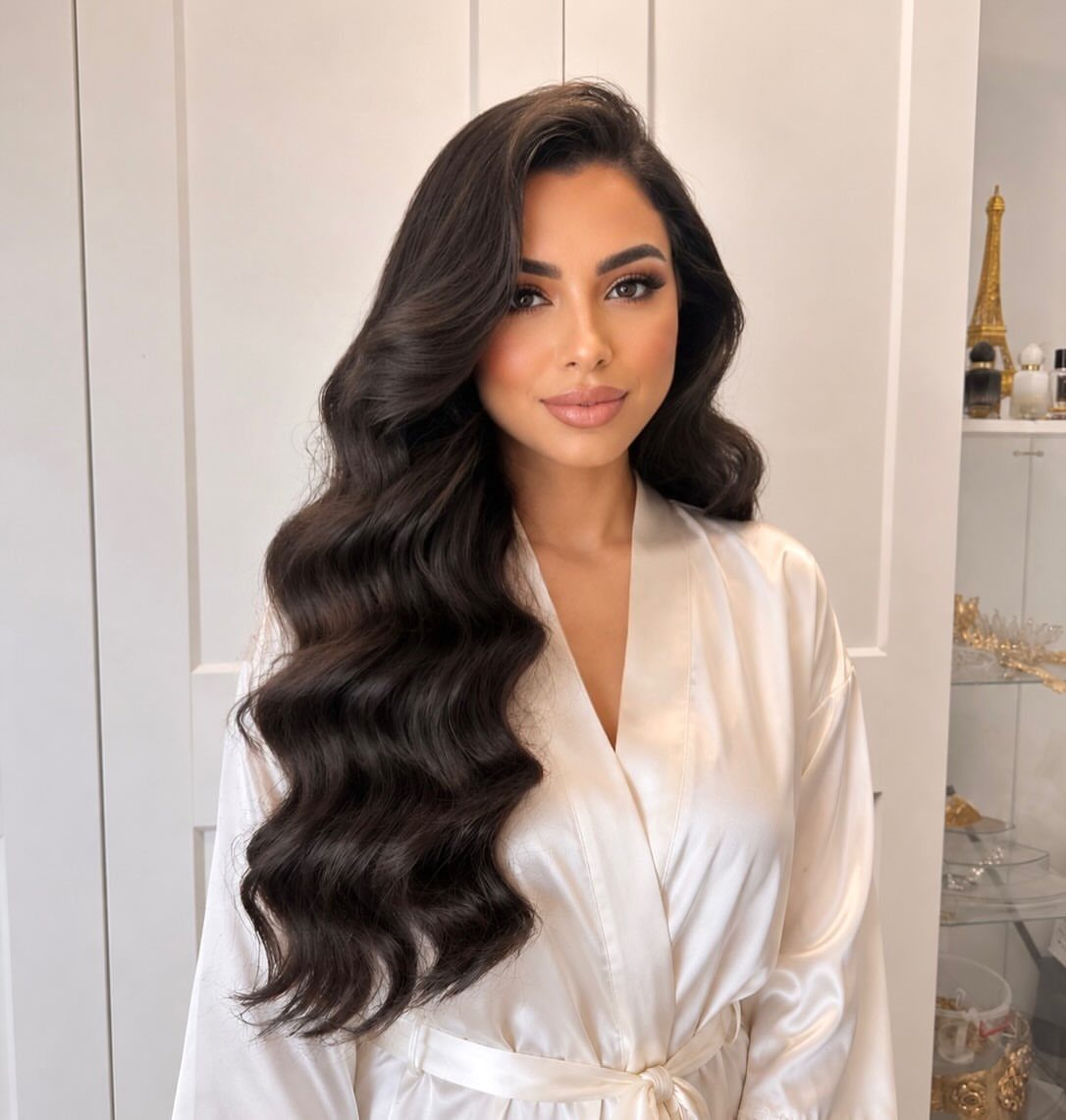
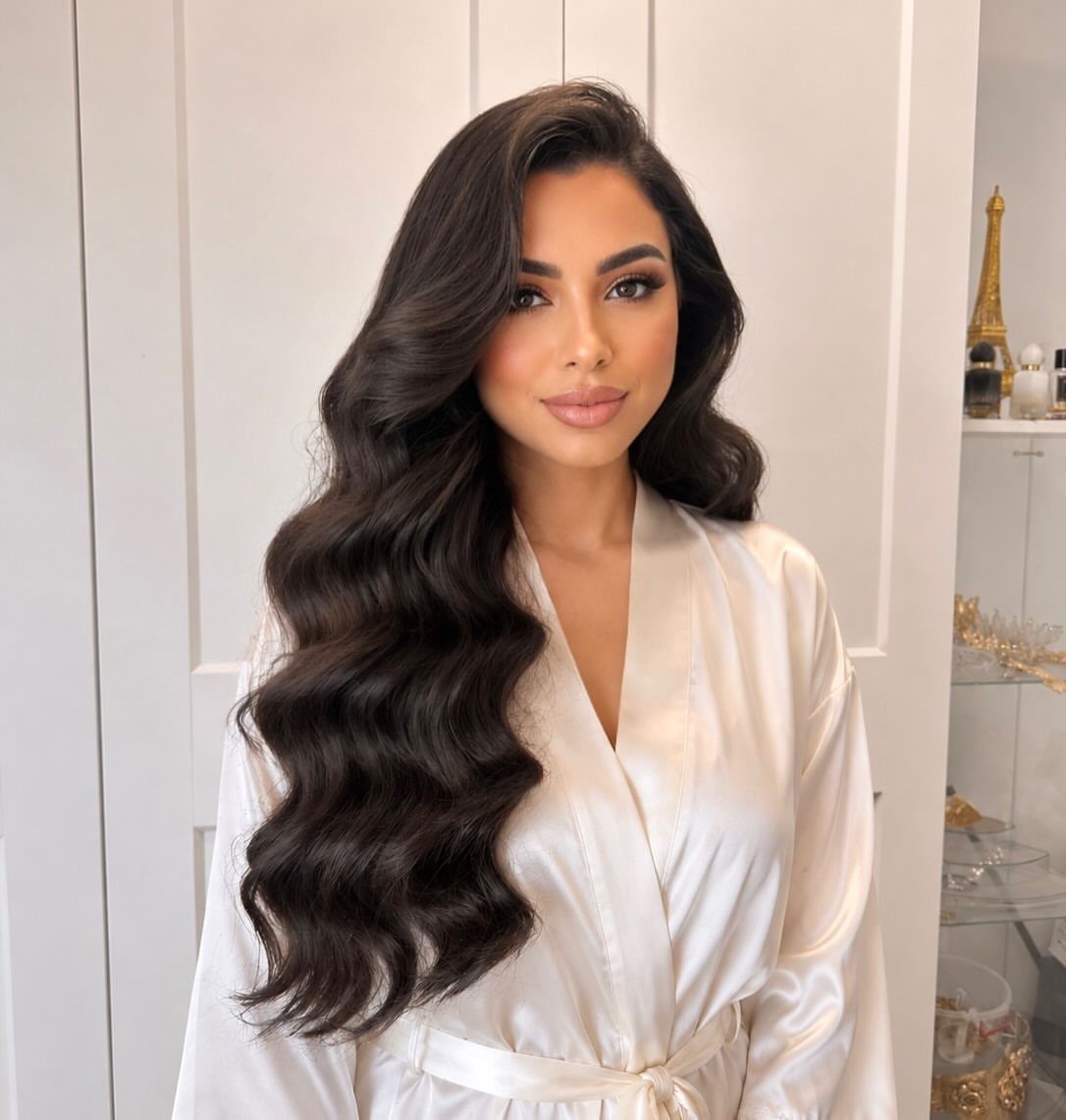
Hair is worn down and styled into soft, flowing waves that curve loosely rather than forming tight ringlets. It reads as polished but not stiff, and the length stays visible.
A wider barrel on the curling iron gives you those loose, open curves.
Start the curl midway down rather than at the root to keep the waves from looking too structured, and alternate the direction you wrap each section so the waves blend instead of forming uniform lines.
Run your fingers through the curls after they cool to separate them slightly. That softens the look and prevents the waves from sitting too separately.
In 2026, mother of the bride hair trends are embracing effortless elegance — think soft texture, refined updos, modern waves, and styles that move beautifully from ceremony to dance floor.
3. Low Chignon
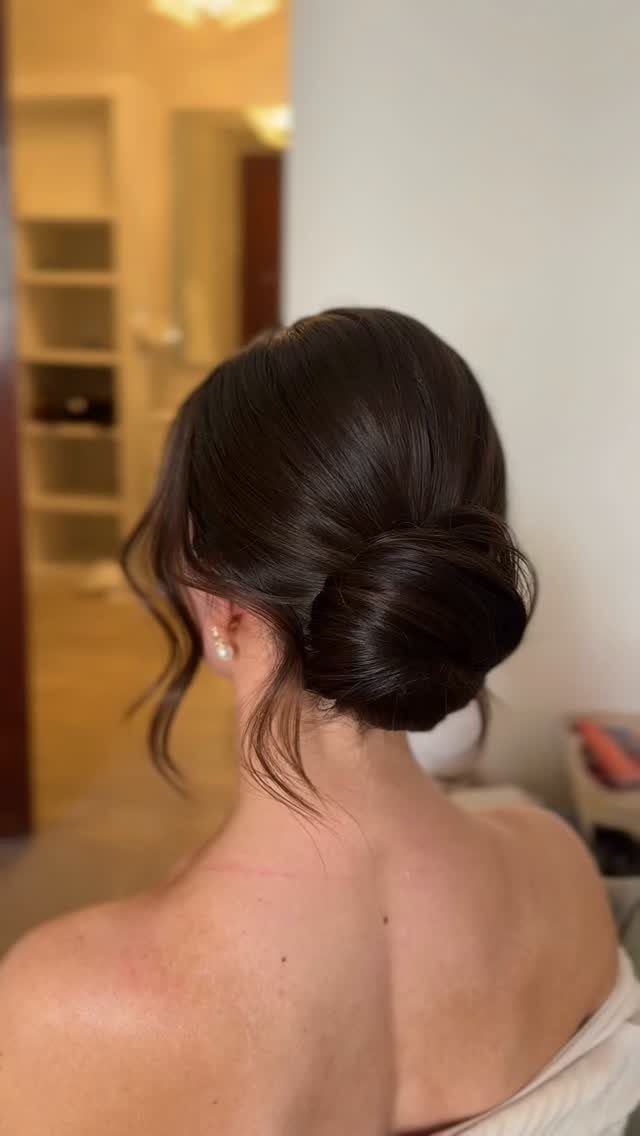
A low chignon gathers hair at the nape and twists or coils it into a compact bun. It keeps the neck visible and holds securely without tension at the crown.
The style suits medium hair well because the length is enough to form a full bun without needing extensions, and the lower placement makes pinning easier when there is less length to work with.
A chignon can sit smooth or textured depending on how tightly you twist the hair before pinning.
Bobby pins go in vertically through the bun and into the base to hold it in place. Four to six pins usually do it.
4. Low Ponytail
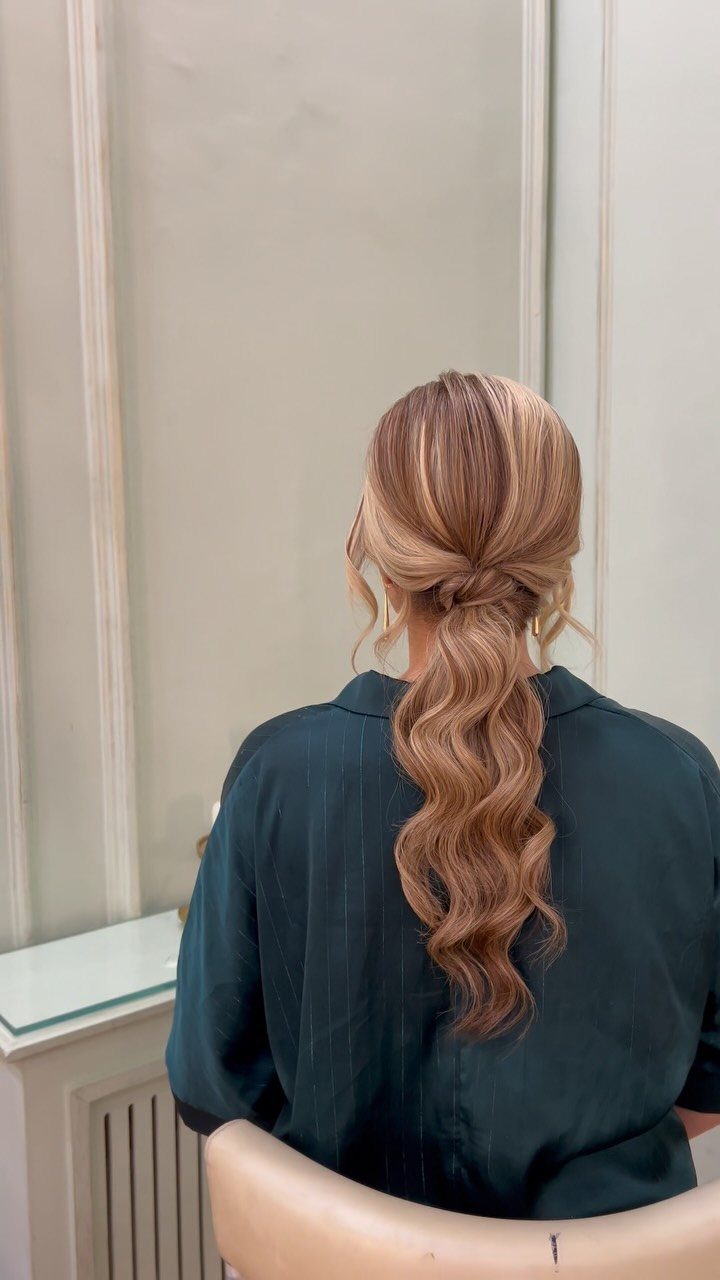
A low ponytail gathers hair at the nape and secures it with an elastic, leaving the length to fall freely. It keeps hair off the face and neck while the ponytail itself stays visible.
Wrapping a section of hair around the elastic hides the band and gives a cleaner finish. Pull a small piece from underneath the ponytail, wind it around the base, and pin the end underneath with a bobby pin.
Adding loose waves to the ponytail before securing it gives the style more volume and keeps it from lying flat. The texture makes the ponytail look fuller even when the hair is medium length.
5. Textured Low Bun
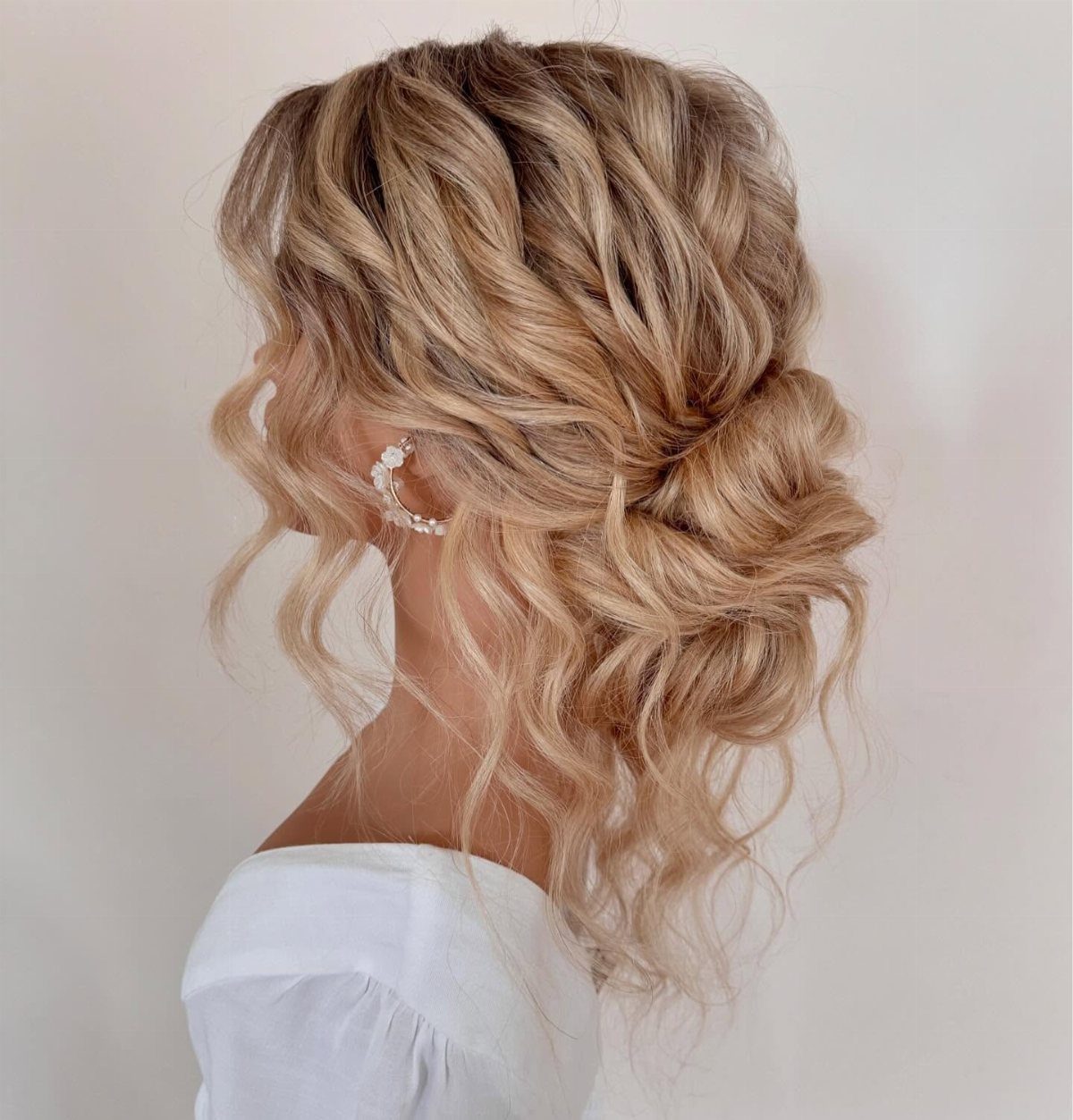
A textured low bun sits at the nape and uses the hair’s natural volume and movement instead of smoothing everything down. Sections are loosely twisted or pinned rather than tightly coiled, so the bun looks soft and full.
Medium hair suits this style because the texture does the work, not the length.
Teasing the hair lightly at the roots before gathering it into the bun adds height, and leaving a few face-framing pieces out softens the look around the hairline.
Pin sections loosely and do not worry about covering every bobby pin. The relaxed finish is part of the style.
6. Braided Low Bun
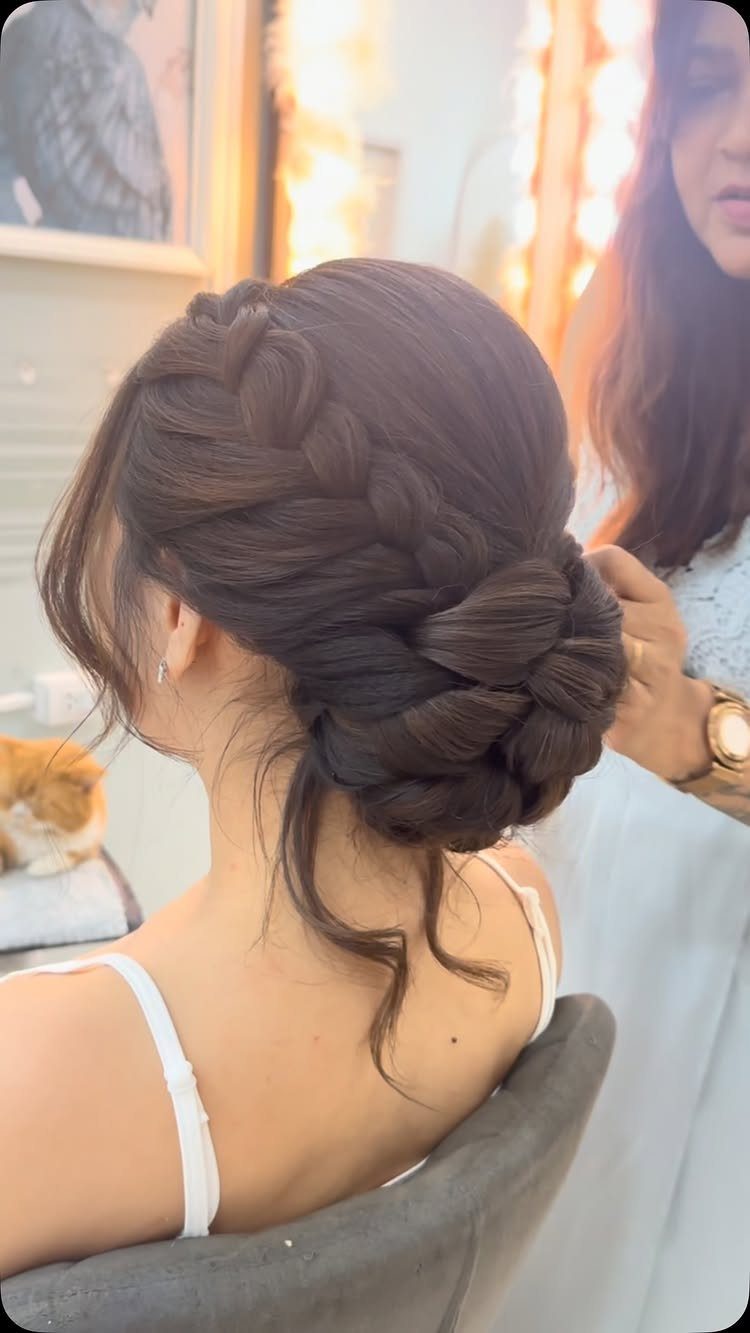
A braid runs through or wraps around a low bun, combining the detail of braiding with the structure of an updo.
The braid can start at the crown and feed into the bun, or it can wrap around the outside of a finished bun for a border effect.
Braiding before pinning the bun gives you more control over placement and keeps the braid tight enough to hold its shape.
A three-strand braid is simplest and shows up clearly, but a fishtail braid or Dutch braid adds more dimension if you want a more detailed look.
Secure the bun first with bobby pins, then wrap the braid around it and pin the end underneath so it stays hidden.
7. Hollywood Waves
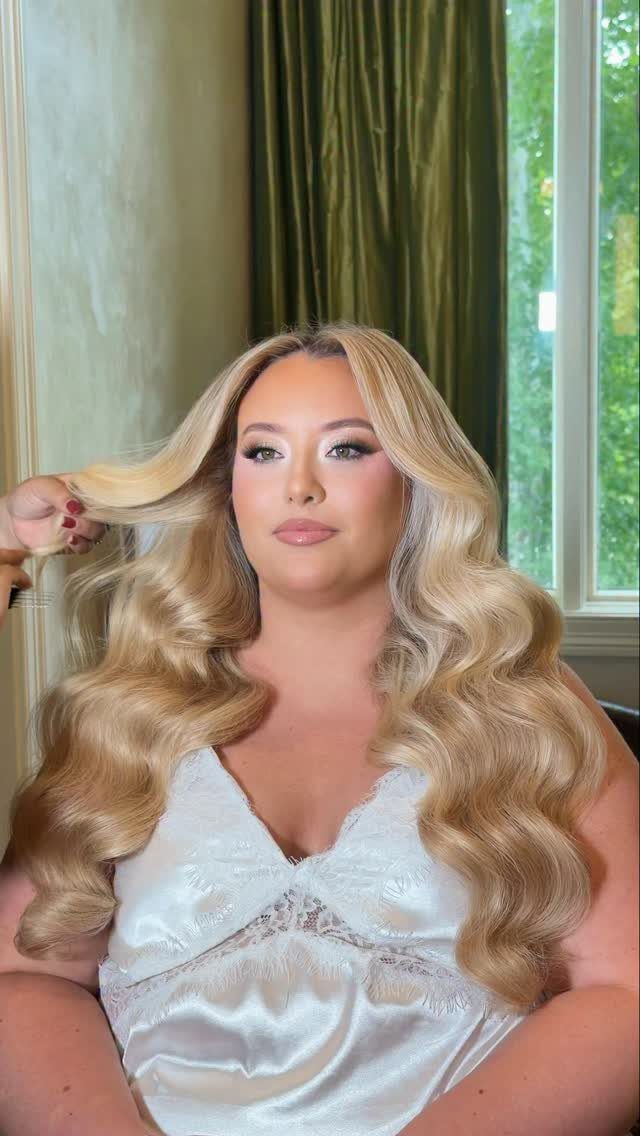
Smooth, defined waves curve in consistent S-shapes from root to ends, giving medium-length hair a polished, vintage-inspired finish. The style holds its shape and photographs well.
A flat iron or curling iron with a clamp creates the defined curl pattern.
Work in small sections, wrapping the hair around the barrel and holding it for several seconds before releasing. Each wave should sit in the same direction and align with the one below it.
Once the curls cool, brush through them with a paddle brush to smooth the waves into a continuous pattern. Finish with hairspray to keep the definition in place.
8. Blowout
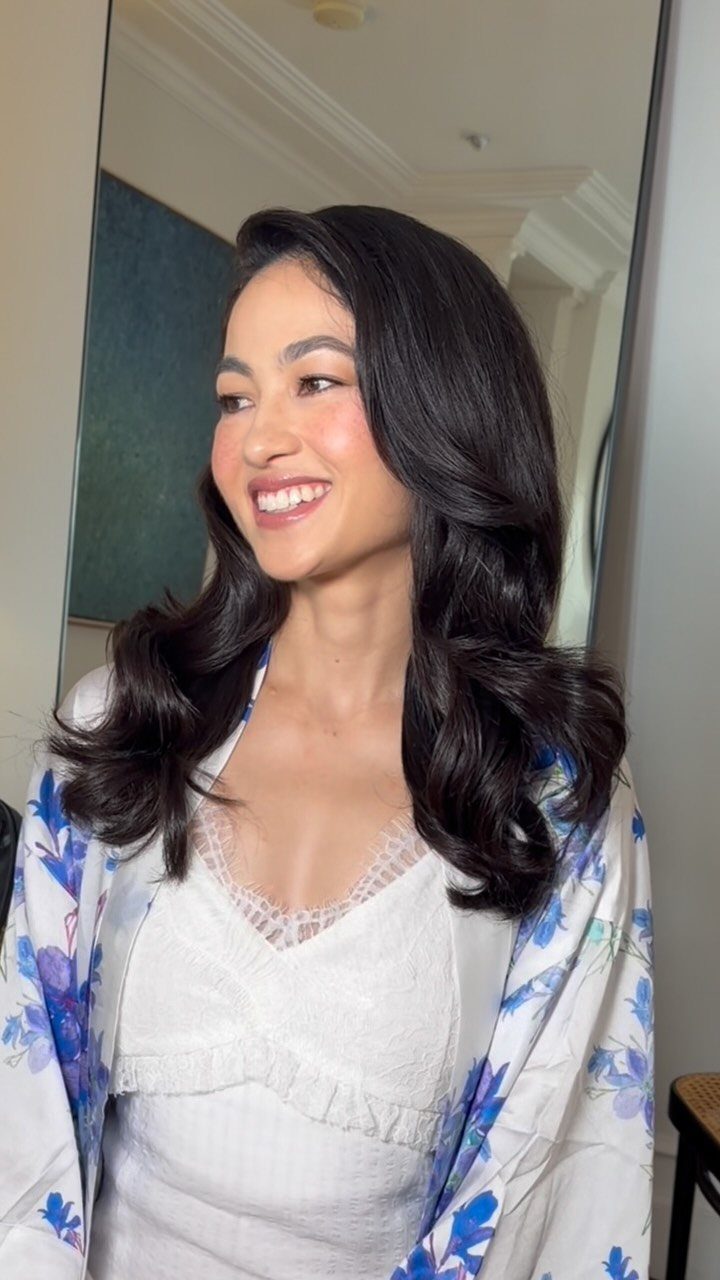
Hair is blow-dried smooth with a round brush to add volume at the roots and a slight bend at the ends. The finish is bouncy and full without curls or structured waves.
Medium-length hair takes less time to blow-dry than longer hair, and the weight is light enough that the volume holds without needing much product.
A round brush works well: lift sections at the root while drying to create height, then roll the ends under or away from the face for a soft finish.
The style works on its own or as a base for adding accessories.
9. Layered Textured Updo
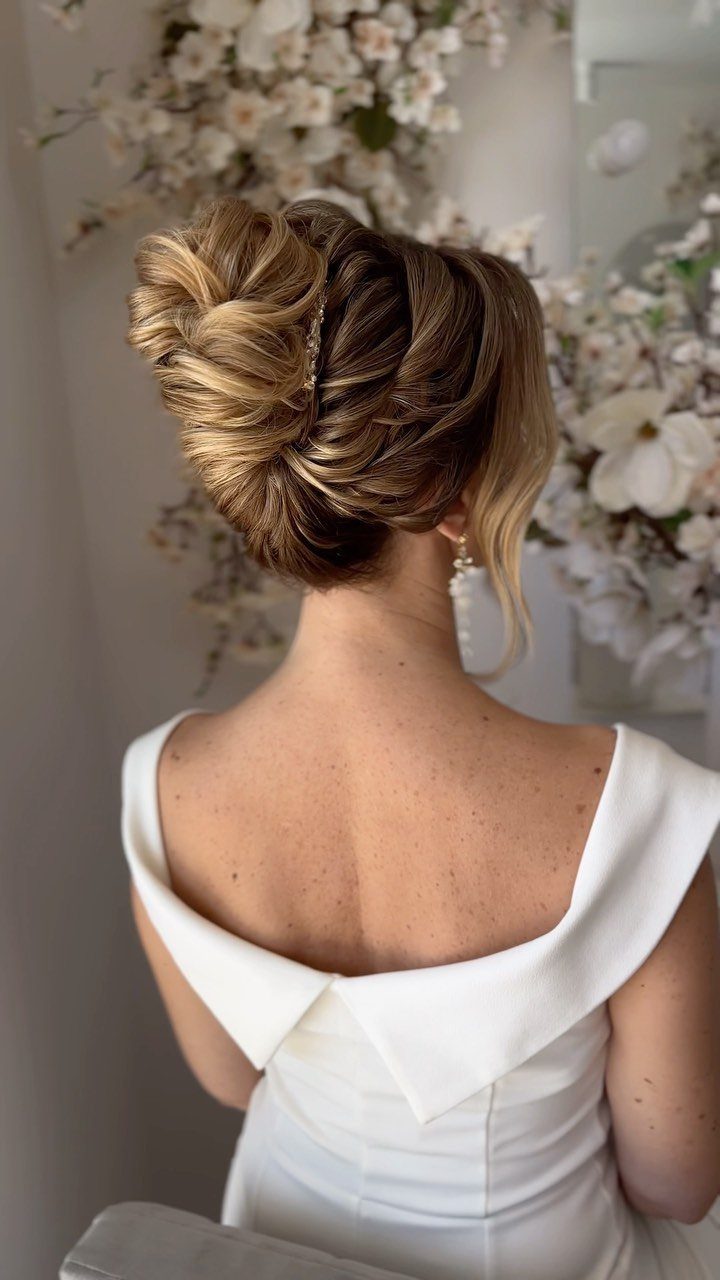
Sections of hair are pinned at different heights and angles to create an updo with visible layers and dimension. The style looks full and intentionally undone rather than smooth or tightly gathered.
Backcombing sections before pinning them adds volume and makes the layers more visible.
Pin each section loosely so the texture shows, and leave some ends visible rather than tucking everything under. The result is an updo that holds securely but reads as soft and romantic.
This style suits medium hair because the shorter length keeps the layers from looking too heavy or drooping.
10. Soft Curls
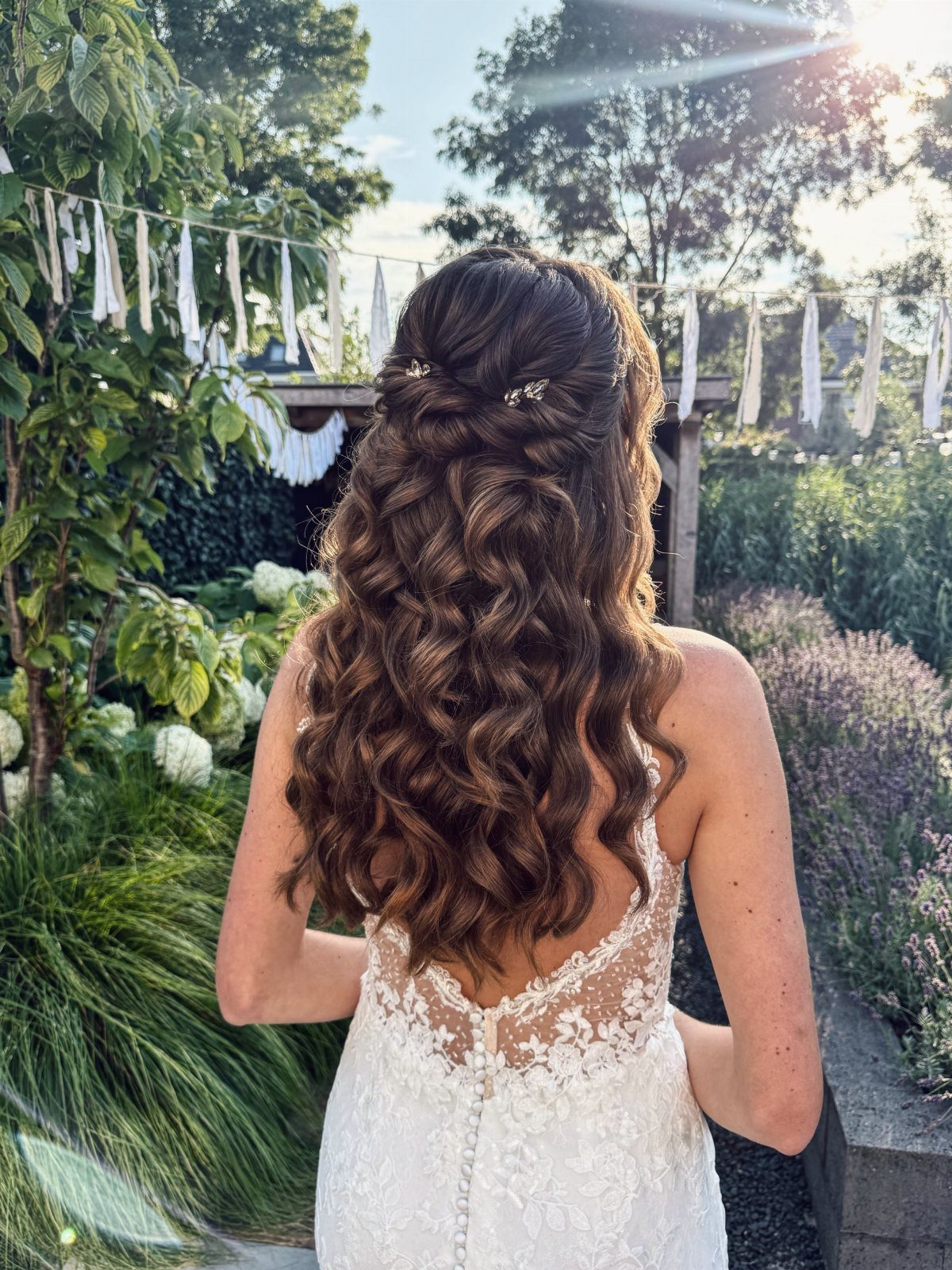
Curls are formed loosely so they stay defined but not tight, giving medium-length hair a romantic, textured finish. The curls hold their shape but move naturally.
A curling iron creates curls that are soft without being too loose. Curl away from the face for a more open look, and leave the very ends out of the iron so the curls taper naturally instead of forming ringlets.
Let the curls cool completely before touching them. Running your fingers through too early loosens them more than intended and makes them fall flat.
11. Side-Swept Curls
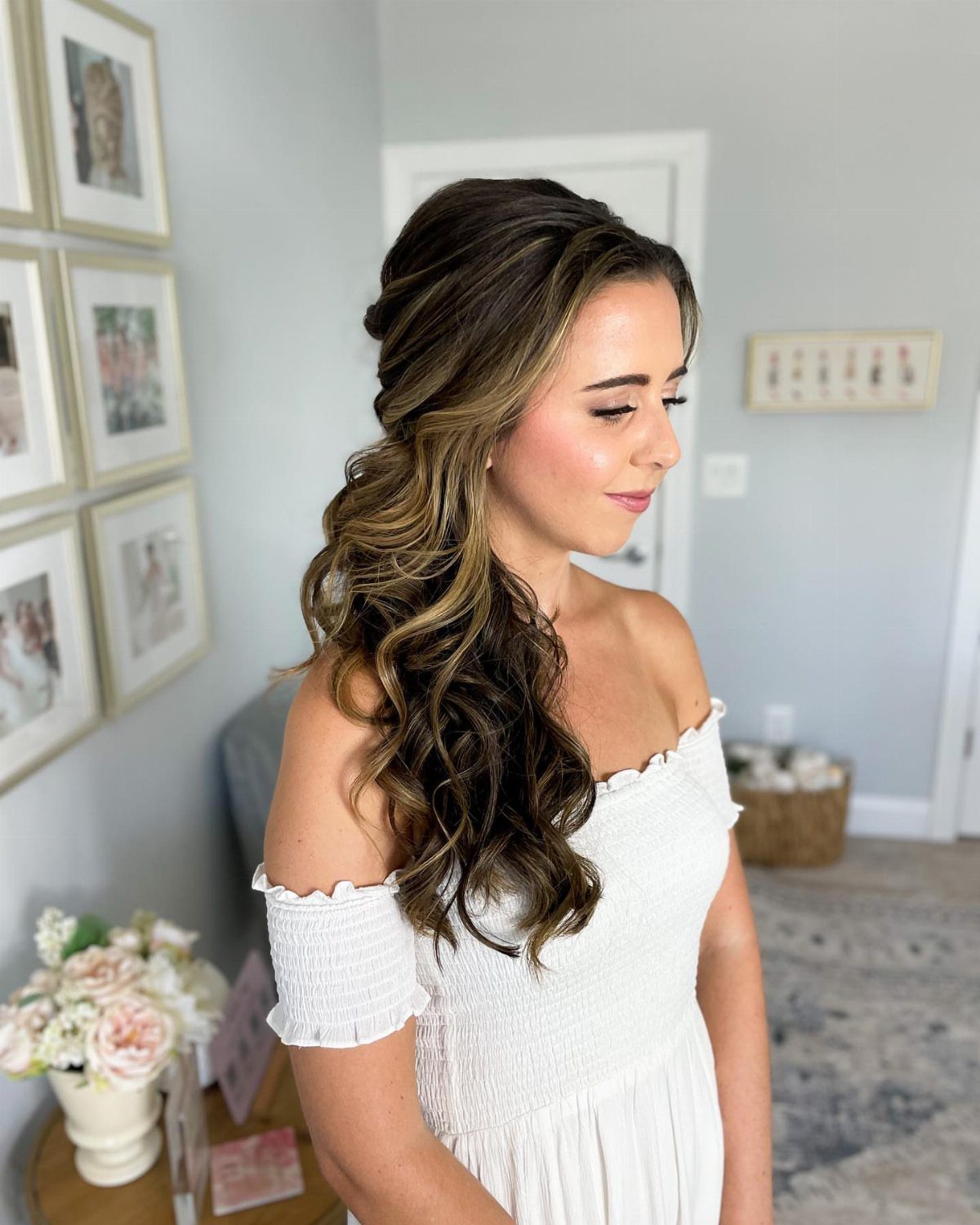
Curls are gathered over one shoulder, leaving the opposite side of the neck exposed. The asymmetry adds visual interest and keeps the curls from sitting evenly around the face.
Curl the hair first, then sweep it to one side and pin it in place behind the ear with bobby pins or a decorative clip. A few face-framing pieces can stay loose on the opposite side to soften the look.
This style works particularly well with off-the-shoulder or one-shoulder dresses, where the exposed neckline balances the volume of the curls.
12. Curly Half-Up Bun
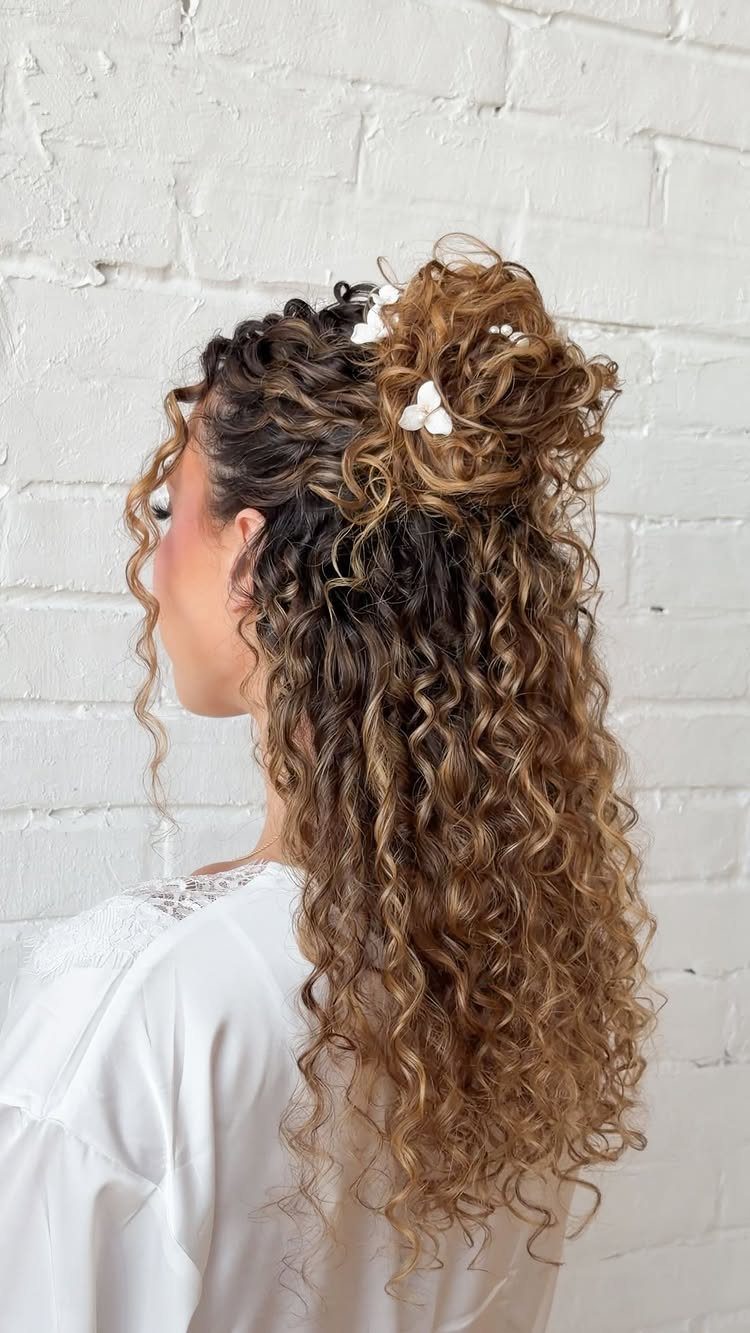
Curls are left down at the back and sides, while a section at the crown is gathered and twisted into a small bun. The style keeps hair off the face while showing off natural curl texture.
The bun itself stays small so it does not overpower the curls below it. Gather the top section loosely, twist it once or twice, and coil it into a bun before pinning it with bobby pins.
Pulling a few curls out around the face softens the look and keeps the style from feeling too tight.
Flowers or a decorative pin can go directly into the bun for added detail.
Match Hair to Dress and Wedding
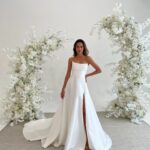
An updo shows off a dress with an open back, detailed straps, or a high neckline better than loose hair does.
If the back of the dress is the focal point, pulling hair up or to the side keeps it visible.
Flowing waves or a blowout suit strapless or sweetheart necklines where there is less detail to compete with. The hair adds softness without covering what the dress already emphasizes.
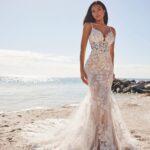
Outdoor weddings pair well with looser, textured styles like waves or a low ponytail because they hold up better in wind and humidity than tightly structured updos.
A textured bun or braided style splits the difference if you want hair secured but not overly formal.
Match the level of polish to the setting. A ballroom ceremony calls for more structure; a garden or barn wedding gives you room for softer, less finished looks.
Trials and Inspiration Photos
Bring inspiration photos to your stylist that show the hairstyle from the front, back, and sides. That gives them a complete view of the shape and helps them assess what will work with your hair type and length.
Tell the stylist what your dress looks like, how formal the wedding is, and how long you need the style to hold.
If you are wearing a veil or accessories, bring those to the trial so they can plan placement and pinning.
If you are doing your own hair, practice the style at least 2 or 3 times before the wedding. Take photos from all angles each time so you can see what holds and what falls flat by the end of the day.
Preparation and Staying Power
Day-old hair holds a set better than freshly washed, so I shampoo the night before instead of that morning.
Freshly washed hair is too slippery to hold pins or curl, and a day’s worth of natural texture gives you more grip.
A heat protectant goes on before any hot tool touches your hair. Medium-length hair heats through quickly, and unprotected hair can scorch or lose elasticity by the end of styling.
Block out an hour to 90 minutes for whoever is doing the styling, whether that’s you or a professional. That gives you time to adjust and re-pin without rushing.
Finish with hairspray once the style is pinned and set. For updos and buns, use extra bobby pins for a secure hold that lasts through hours of wear.
Frequently Asked Questions
What is the best wedding hairstyle for medium hair?
A low chignon or textured low bun balances polish with the length you have, and both hold securely without needing extensions. Half-up styles and loose waves also work well if you want to keep length visible while still looking finished.
Can medium length hair be styled into an elegant updo?
Yes. Low chignons, braided buns, and textured updos all work on medium hair because the lower placement and looser pinning make the shorter length easier to secure.
Should I curl or straighten my hair for a wedding?
Curls give a romantic, textured finish and photograph well, while a smooth blowout reads as polished and modern. Match the choice to your dress neckline and the formality of the setting.
Should the mother of the bride wear her hair down or up for her daughter’s wedding?
An updo shows off a detailed neckline or back, while loose waves or a blowout suit simpler dress styles and less formal settings.
Is it necessary to get your hair professionally done or can you DIY your hairstyle?
You can do it yourself if you practice the style 2 or 3 times beforehand and photograph it from all angles to see what holds.
A stylist helps with intricate looks or placement of veils and accessories, and a trial run confirms the style before the day.