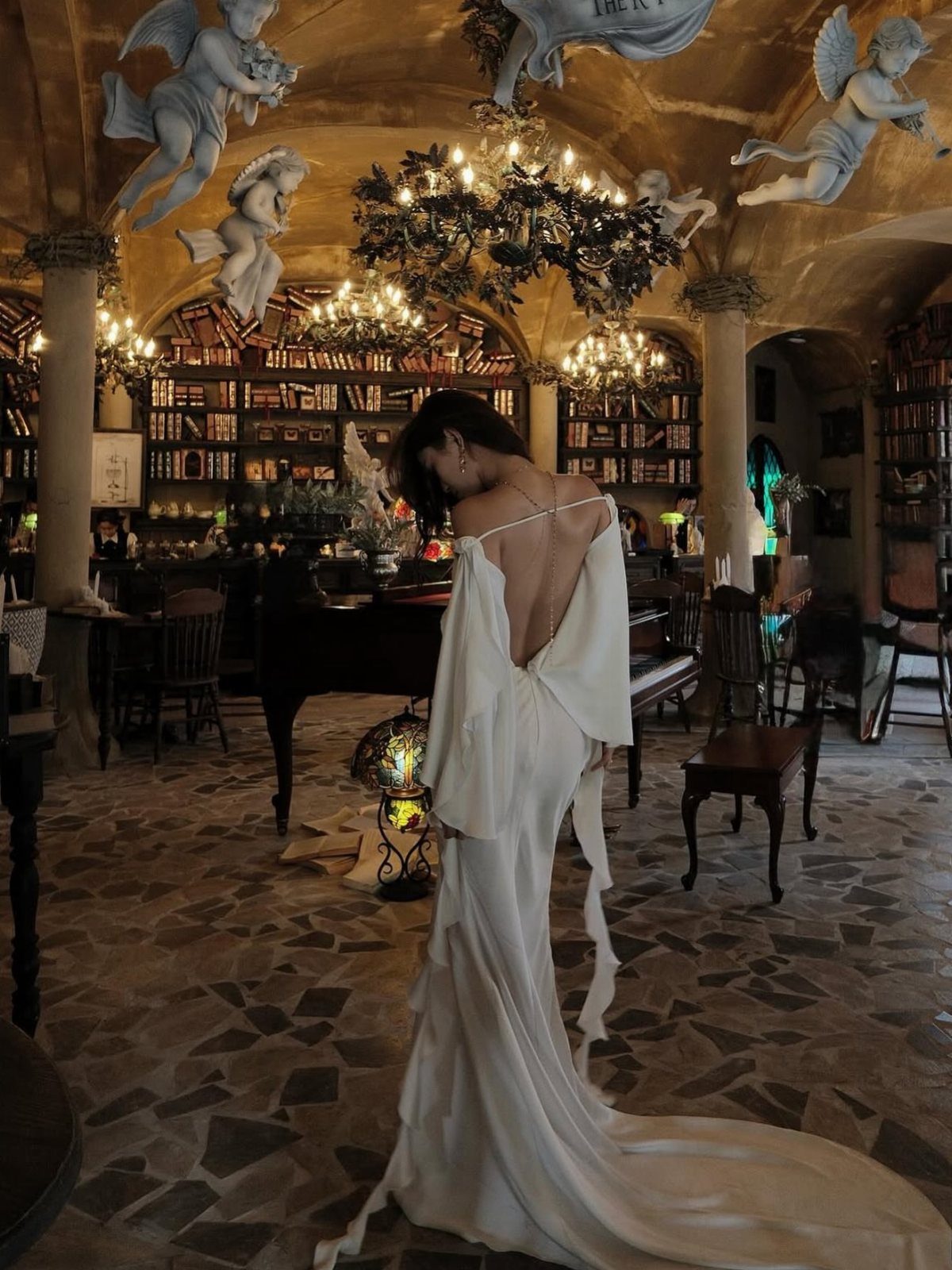
A backless silk wedding dress can drop low to the small of the back, stop at a high scoop, or open completely from shoulder to waist.
The depth you choose depends on how much structure you’re comfortable with and whether you’re wearing a bra underneath.
1. Low Scoop Back
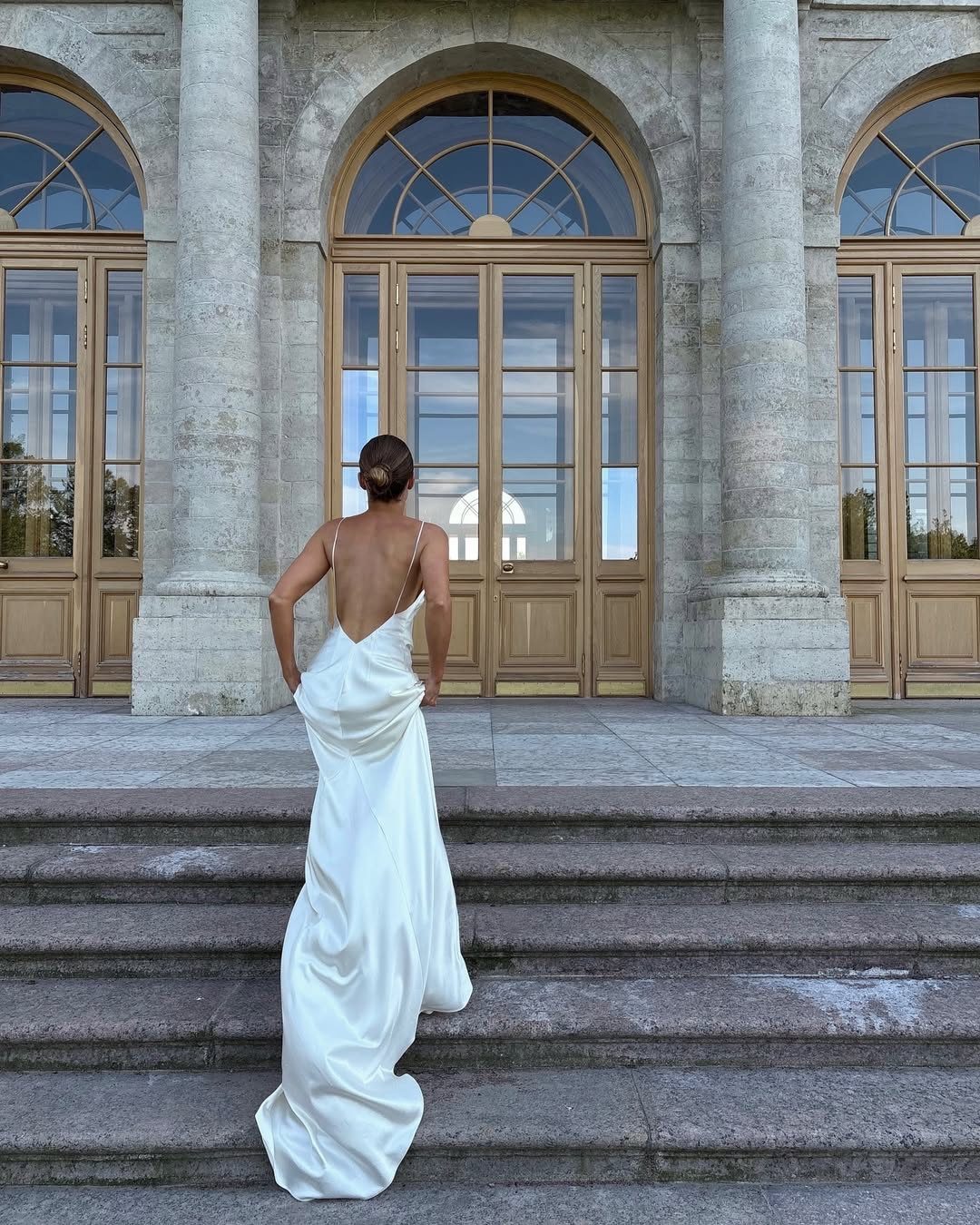
The curve sits just above the low back, showing skin without a dramatic plunge. You get the effect of an open back with something that still feels grounded and wearable for a long day.
Silk falls cleanly along the back without pulling or bunching, which makes the scoop read as part of the dress rather than added drama.
If you’re planning to move around easily or you’re not sure how far you want to go with an open back, this sits in the middle.
2. Silk Backless Gown
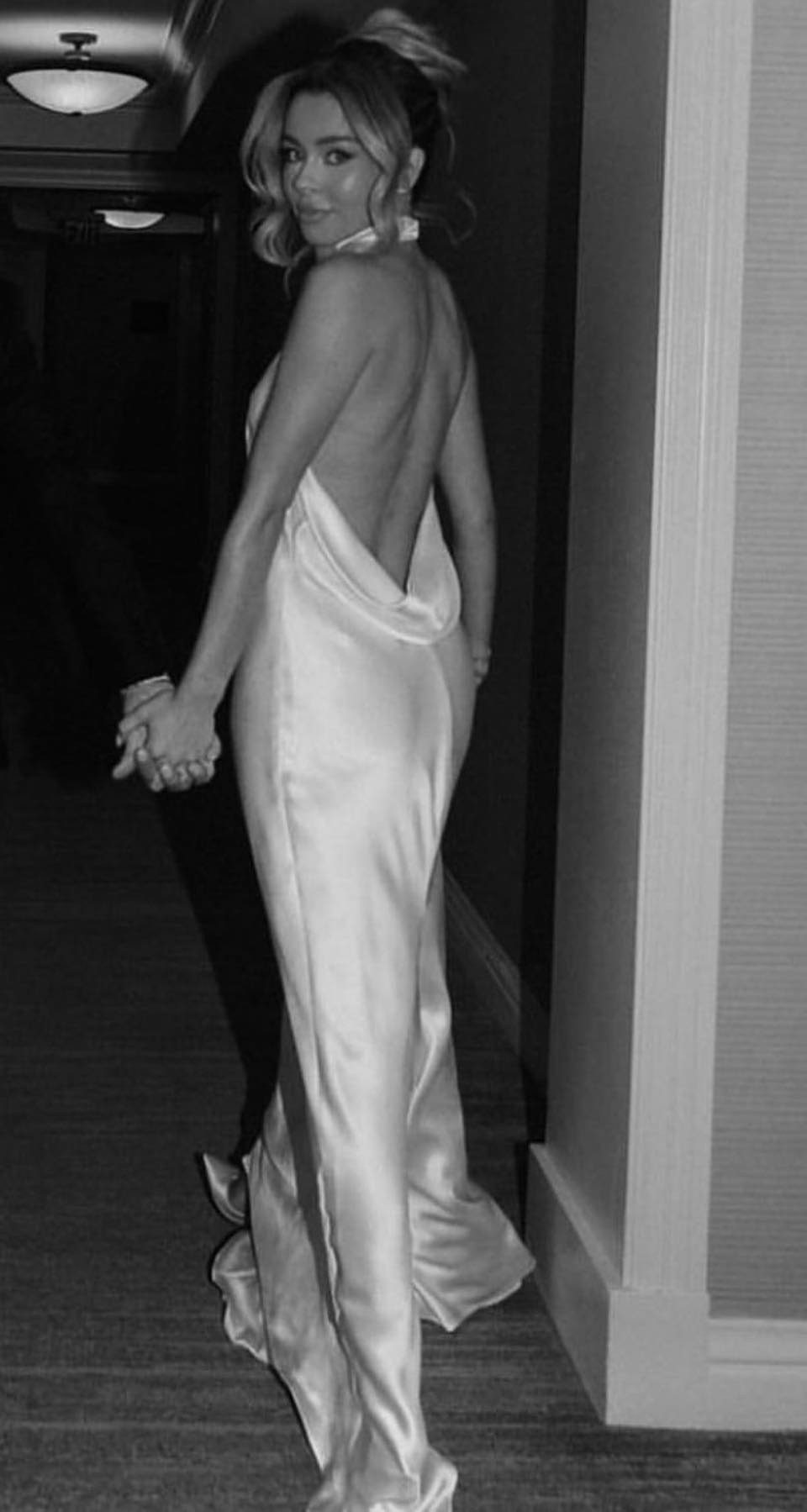
Silk drapes against the body and moves when you do, which makes it read differently than satin or taffeta. The fabric catches light without shine, and the weight keeps the back from looking unfinished even when it’s fully open.
A cowl or scoop back in silk works best when the dress fits close through the waist, since that gives the drape somewhere to start.
You’ll need a seamless bra or stick-on cups if you’re wearing anything underneath. Some brides skip both and rely on the dress itself to hold.
3. Crisscross Straps
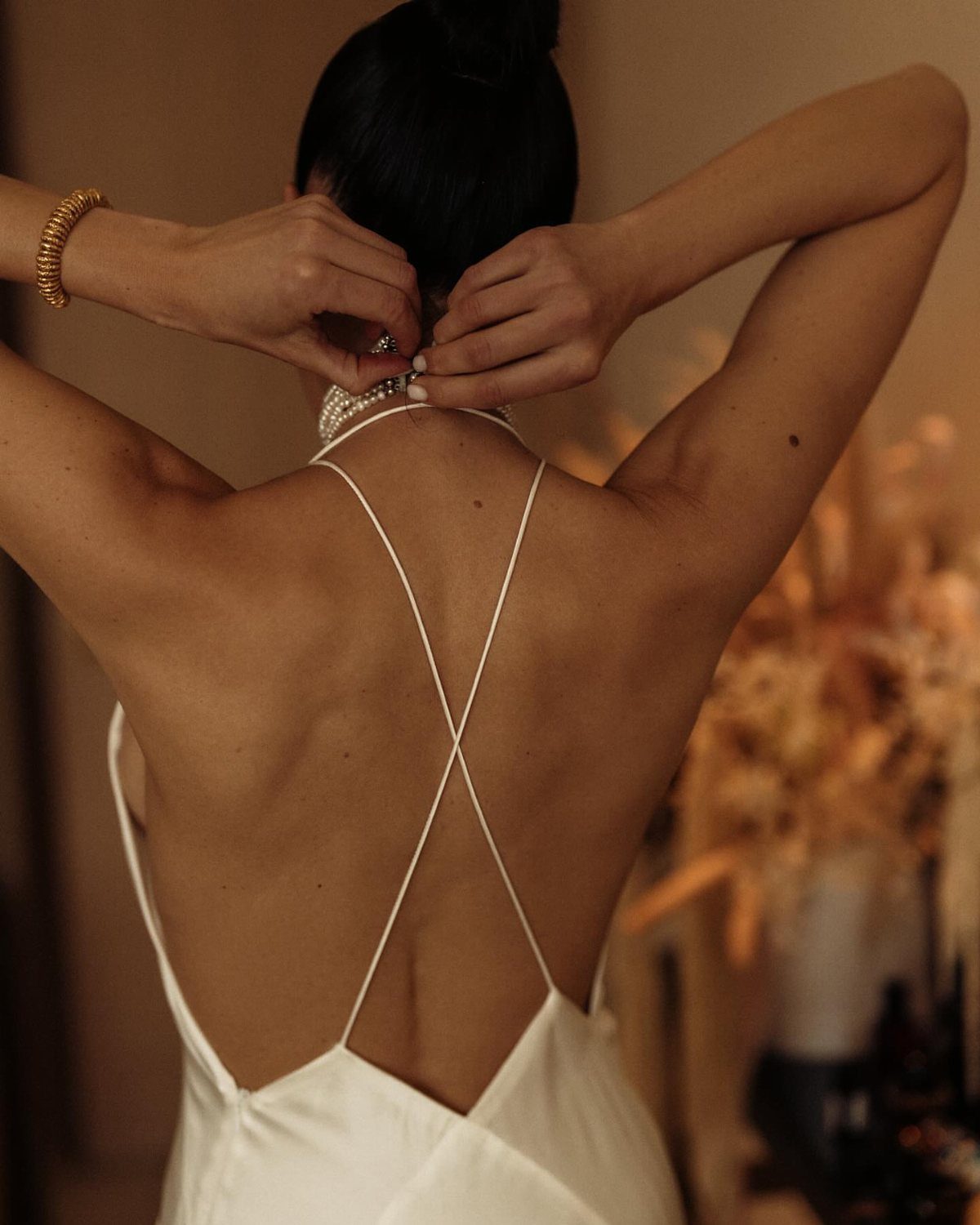
The straps cross once at the shoulder blades and tie or button at the center, which keeps the back open while still giving the dress structure.
You get a secure fit without a zipper, and the straps frame the back instead of leaving it plain.
Thin straps work well with silk since the fabric is light enough not to need wide support. If you’re wearing your hair up, the straps become part of the silhouette.
Down, they’re still visible but less prominent. This gives you some flexibility with the back without going strapless.
4. Floral Back Appliqué
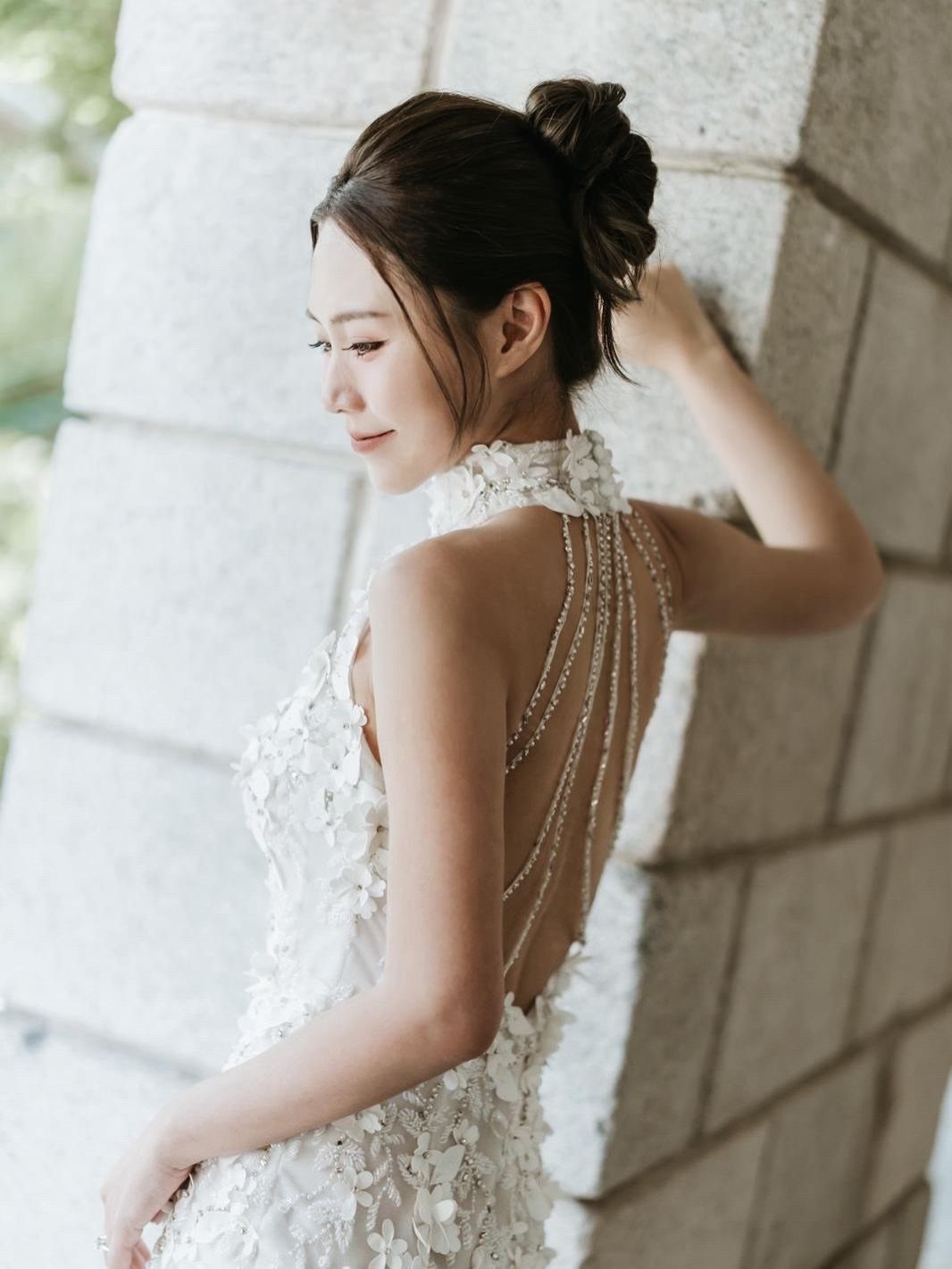
Flowers sit along the top edge of the open back or scatter down the sides, adding texture while leaving most of the back bare.
Appliqués can be sewn on flat or layered to create dimension, and they break up the negative space if a completely bare back feels too stark.
Beaded or pearl straps pair well with floral details, since both add detail without competing.
If the appliqués are three-dimensional, they may need pressing after shipping or storage. Check with your seamstress about whether they can be steamed or need hand shaping.
5. Completely Exposed Back
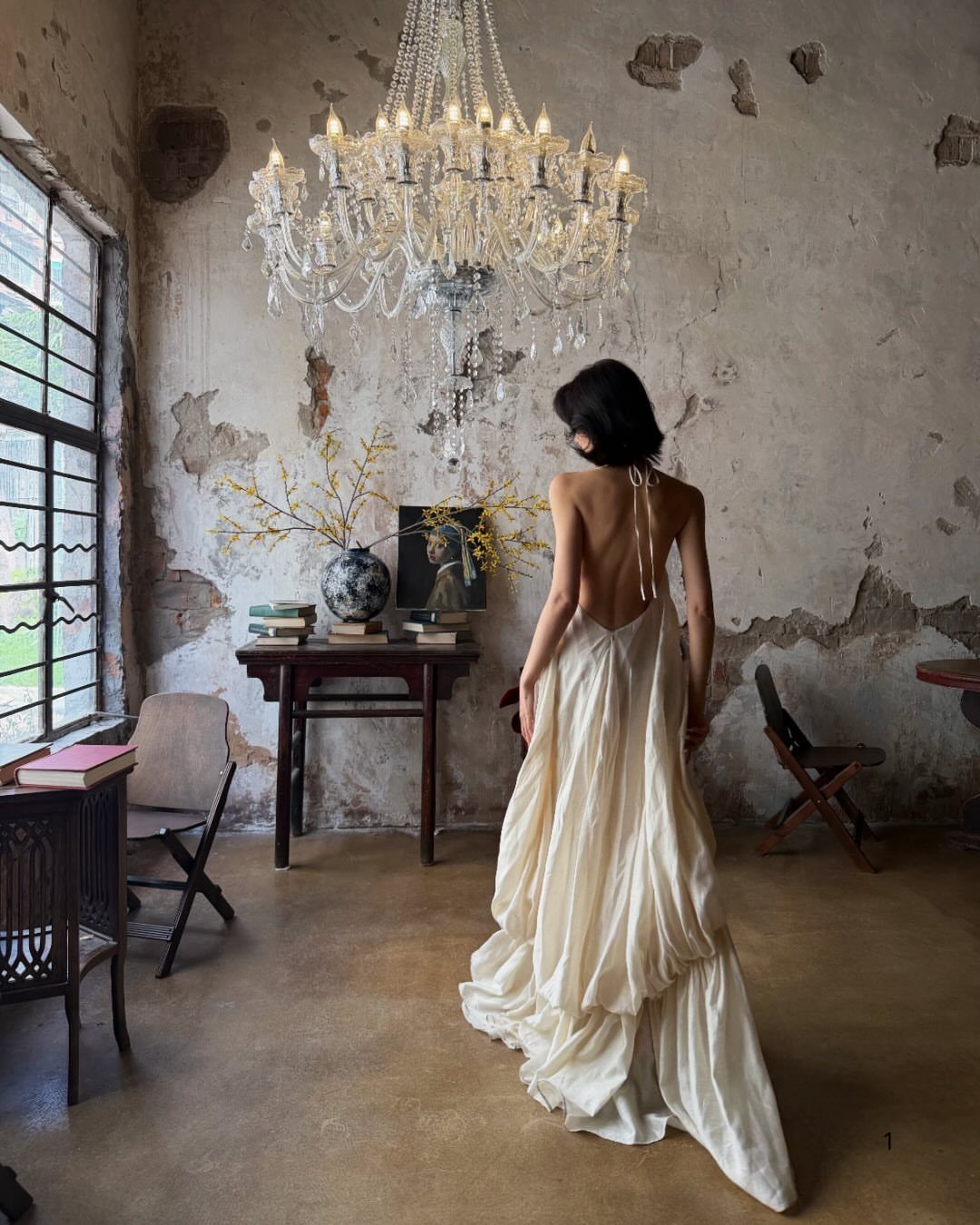
The dress leaves the entire back open from shoulder to waist, with no cutouts, straps, or sheer panels. You get one unbroken line of skin, which makes the back the main feature of the gown.
This works best if the dress fits snugly at the sides and has interior boning or structure to hold everything in place.
A fully open back means no traditional bra, so bring stick-on cups to your fitting for support. The dress itself does most of the work, but it has to fit right for that to happen.
6. Deep V-back
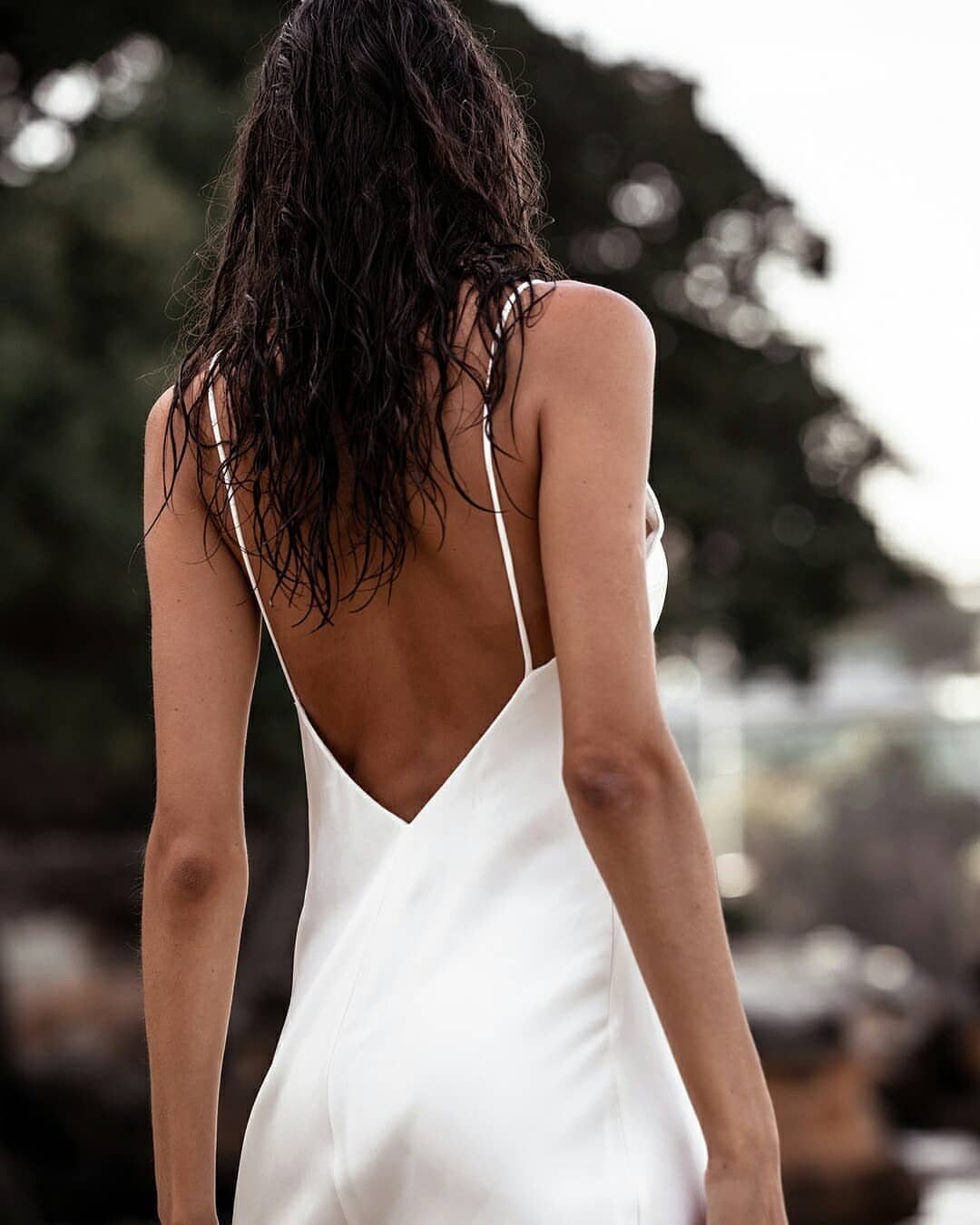
The V drops low, usually to the small of the back, and the point becomes the focal detail.
You get a defined shape instead of a rounded or straight-across opening, and the depth makes the back feel intentional rather than minimal.
A deep V works well on taller brides or anyone who wants the back to read as dramatic without adding embellishment. The sides of the dress need to stay close to the body so the V holds its shape.
If you’re between sizes, go with the smaller one and have it let out if needed, since a loose fit will gap at the sides.
7. Square Back
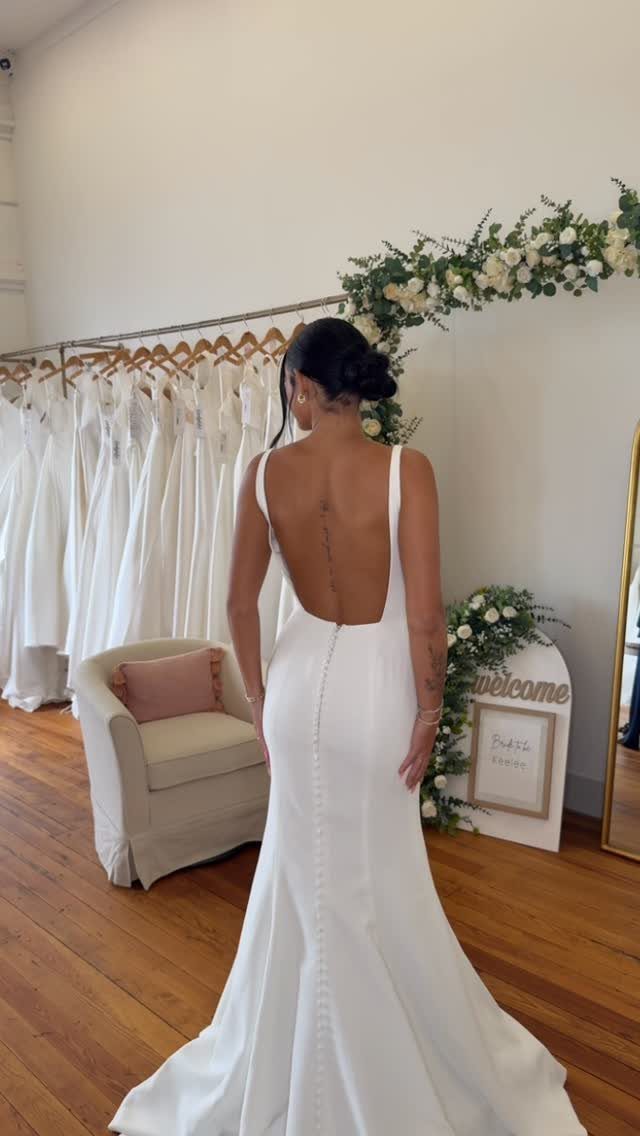
The edges form right angles instead of curves, which gives you a geometric, architectural line rather than a soft or rounded opening. The straight sides frame the back cleanly and look deliberate.
Square backs work well on narrower frames, since the horizontal top edge creates width at the shoulders.
If you’re wearing your hair down, the straight line still shows. The shape holds best when the dress fits close at the sides, so the corners stay sharp rather than sagging.
8. Backless A-line Gown
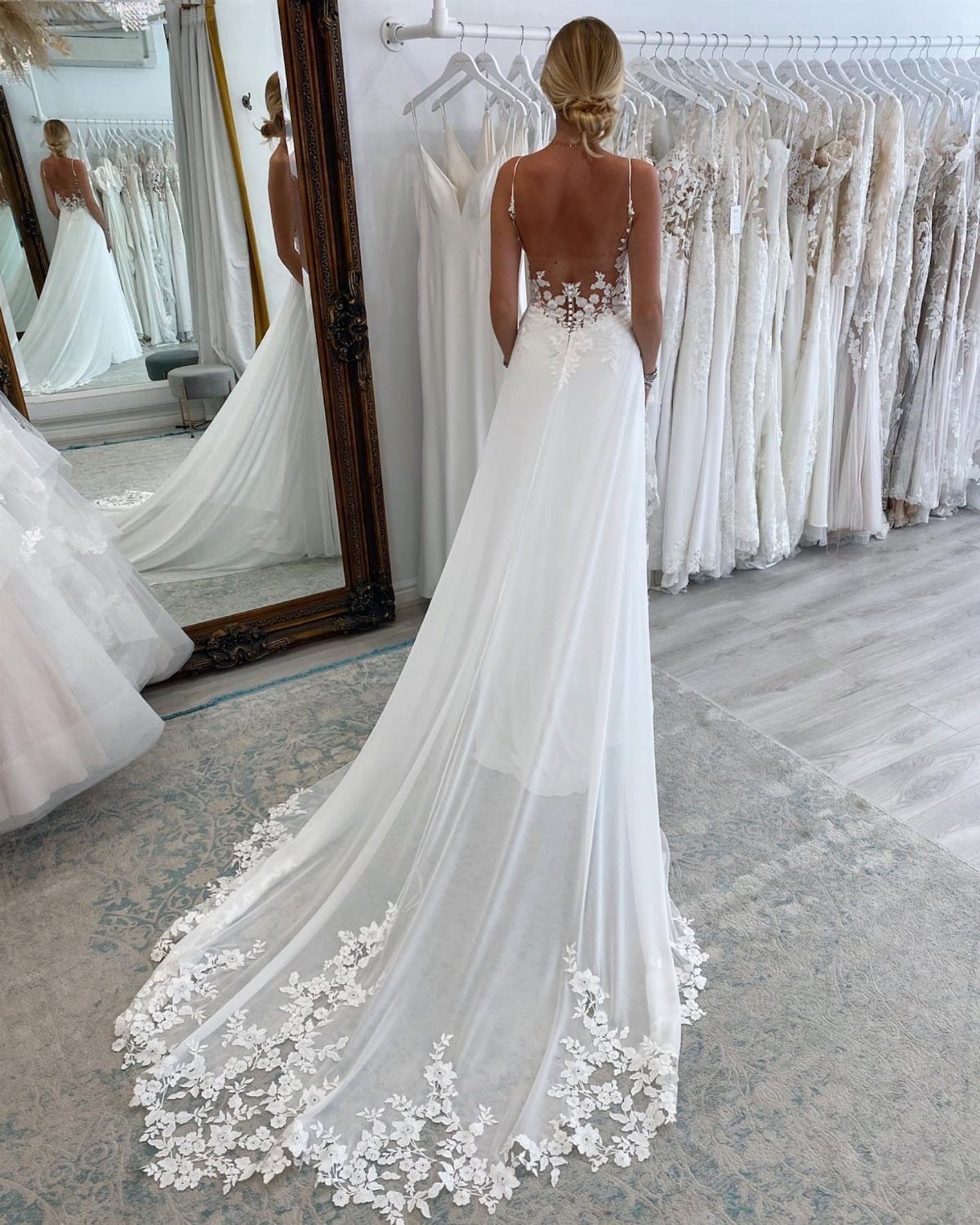
An A-line skirt flares gently from the waist, which balances an open back without adding bulk. The silhouette is forgiving through the hips, and the back becomes the standout detail.
This combination suits someone after a traditional shape with one modern feature.
The skirt moves easily, so you can dance or sit without adjusting fabric. A-line gowns typically hold their shape without boning in the skirt, which keeps the dress light even with structure at the bodice.
9. Backless Halter Gown
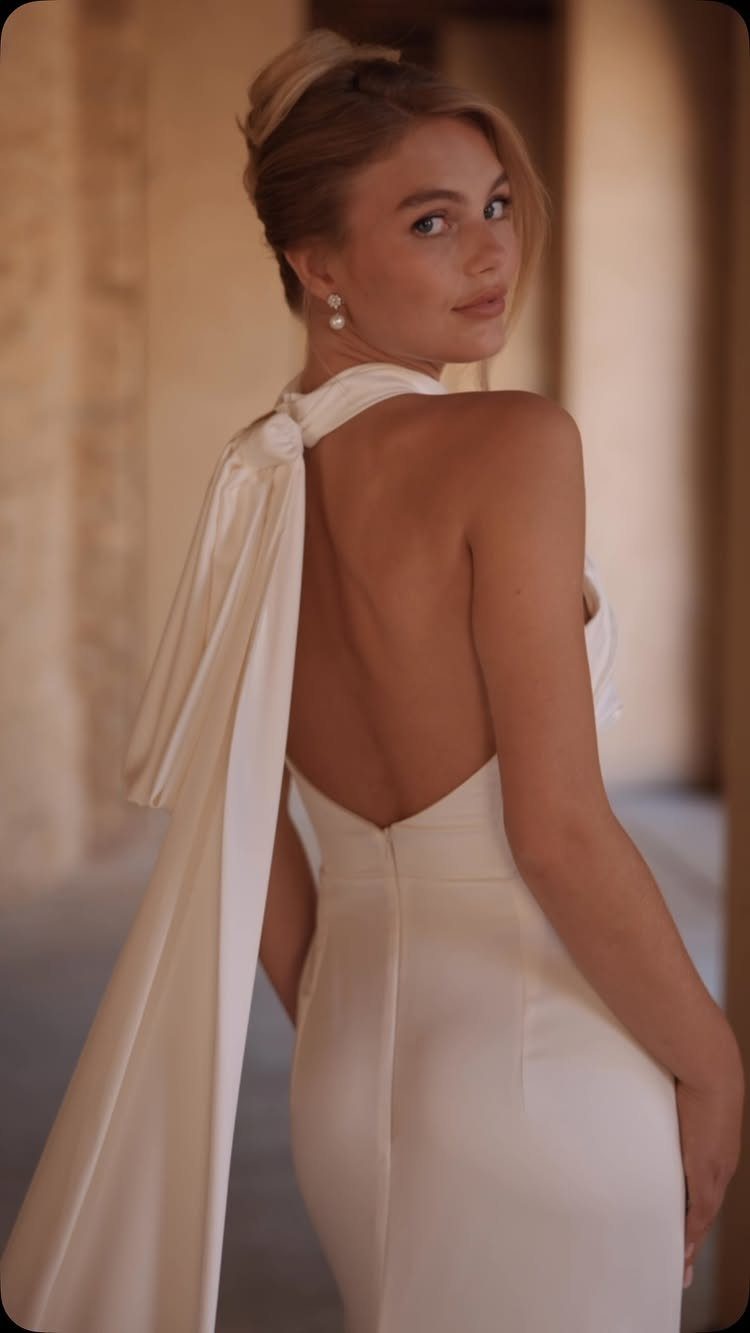
A halter ties or fastens at the neck, leaving the shoulders and entire back exposed while keeping the front covered.
The high neckline and open back create contrast, and the halter strap gives the dress support without side seams or a traditional bodice.
This works well if you have broad shoulders or want to avoid strapless styles.
The halter holds the dress in place, so you skip the interior structure a strapless back needs. If the tie is adjustable, you can control how much skin shows at the waist.
10. Backless with Embellishment
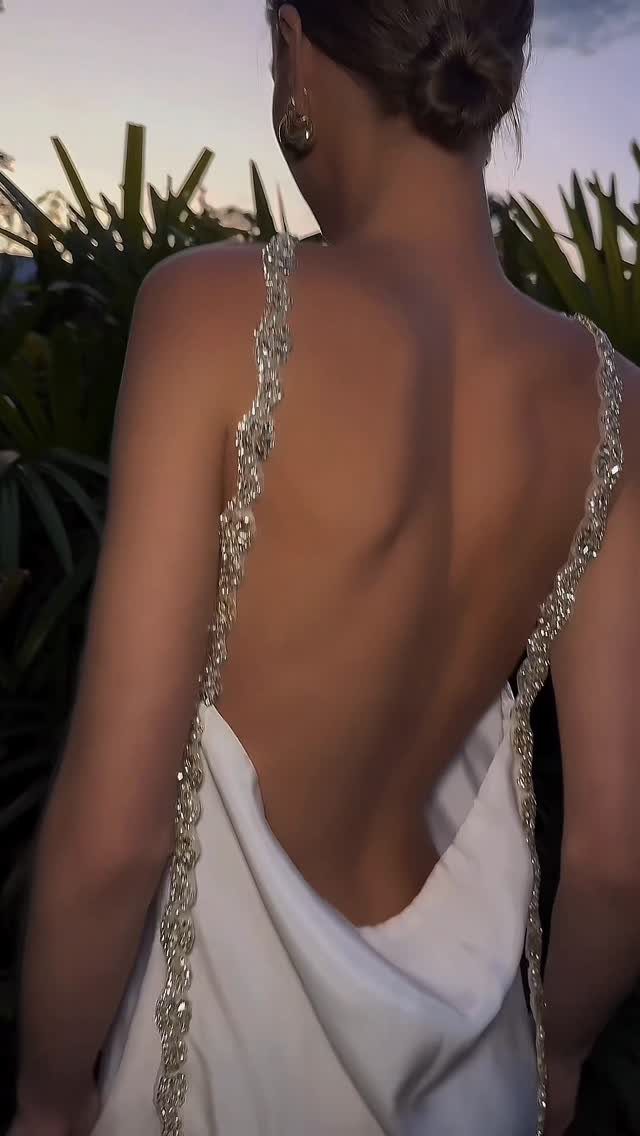
Stones or beading along the straps or at the edge of the back catch light and add texture where the skin would otherwise be the only detail. The embellishment frames the opening without covering it.
Beaded straps need support underneath, since the weight can pull if the dress does not fit snugly.
If the stones are sewn onto tulle or mesh, that base layer may show at the edges. Check the fit at your final alteration, since a loose strap will shift and the beading will sit crooked.
11. Backless Chiffon Gown
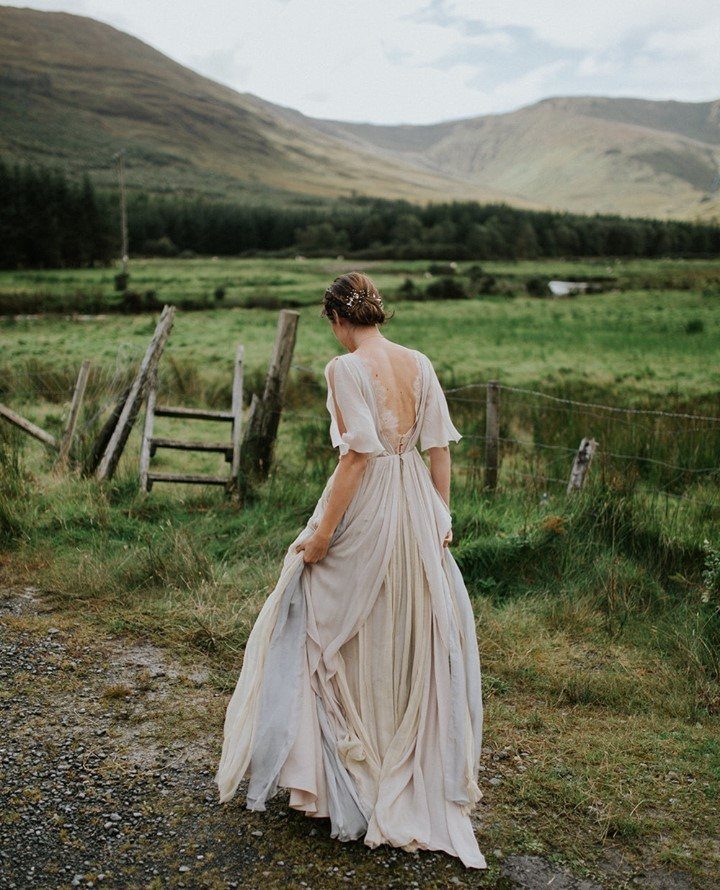
Chiffon is lighter than silk and moves more freely, which makes the skirt float rather than drape close to the body. The open back keeps the dress from feeling too covered, and the fabric keeps it soft rather than structured.
A chiffon skirt needs multiple layers to avoid being see-through, so the hem will have more volume than a single-layer silk.
The fabric wrinkles easily, so plan to steam it the day of or hang it as soon as it arrives. If you’re getting married outdoors, chiffon handles wind better than satin.
12. Backless Boho Gown
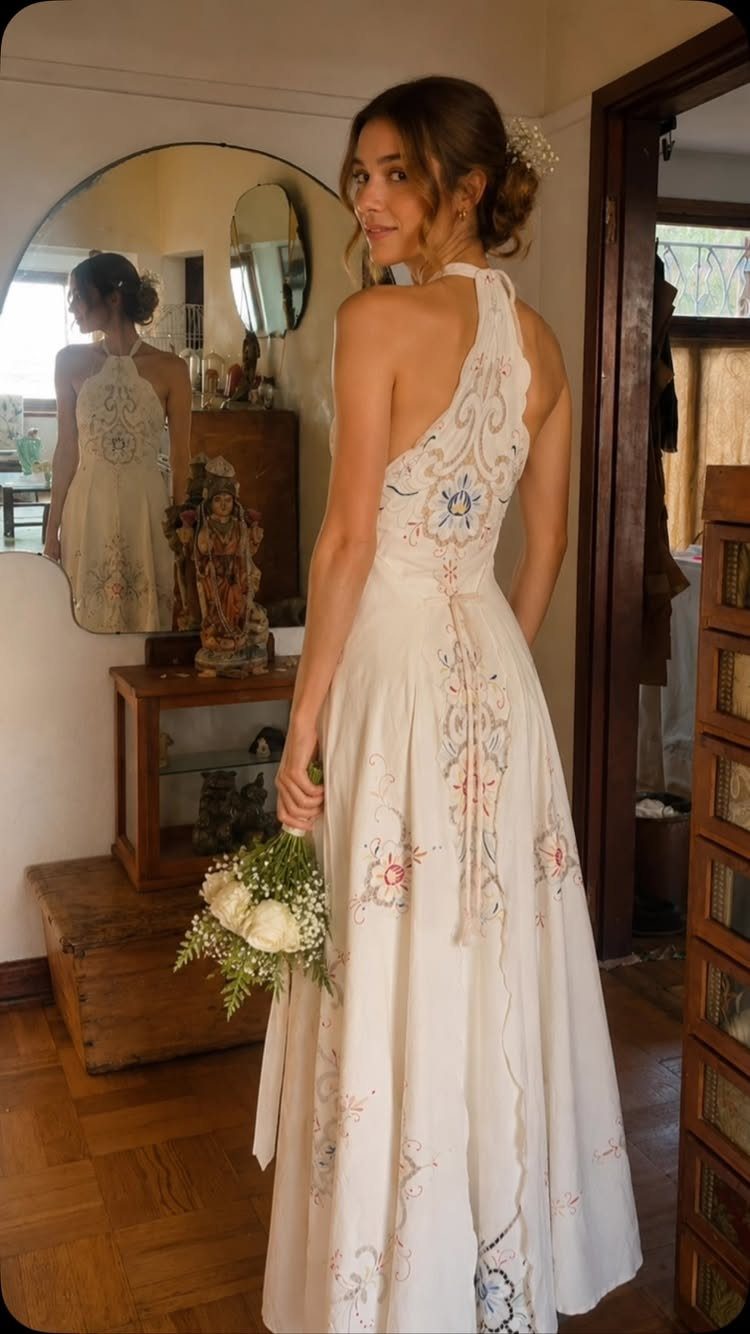
The dress skips clean lines and structure in favor of loose fabric, lace panels, or embroidered details that sit uneven or organic rather than tailored.
The back is open, but the rest of the gown stays soft and unfinished rather than formal.
This reads best at outdoor or casual weddings, where a fitted gown would feel too formal.
The fabric is usually cotton, linen, or a loose weave rather than silk, so it breathes well in warm weather. If the dress has embroidery or crochet details, those may snag, so handle it carefully during the day.
13. Silk Halter Wedding Dress
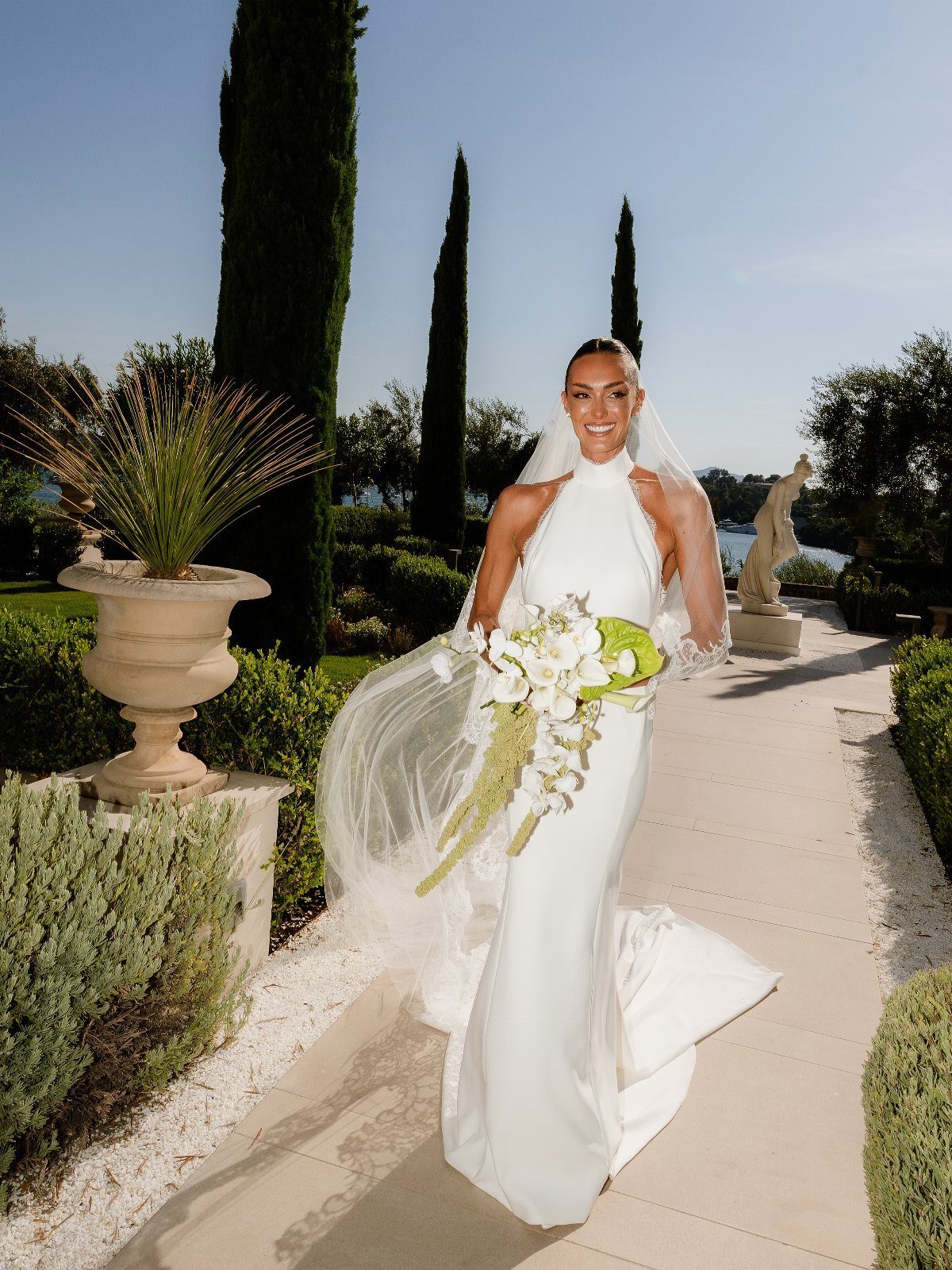
The halter wraps around the neck and leaves the shoulders and back open, which keeps the front covered while the back stays bare.
Silk holds the drape at the neckline without stiffening, so the fabric moves with you rather than pulling.
This suits someone who wants coverage at the front and an open back without going strapless.
14. Silk Backless Gown with Bow
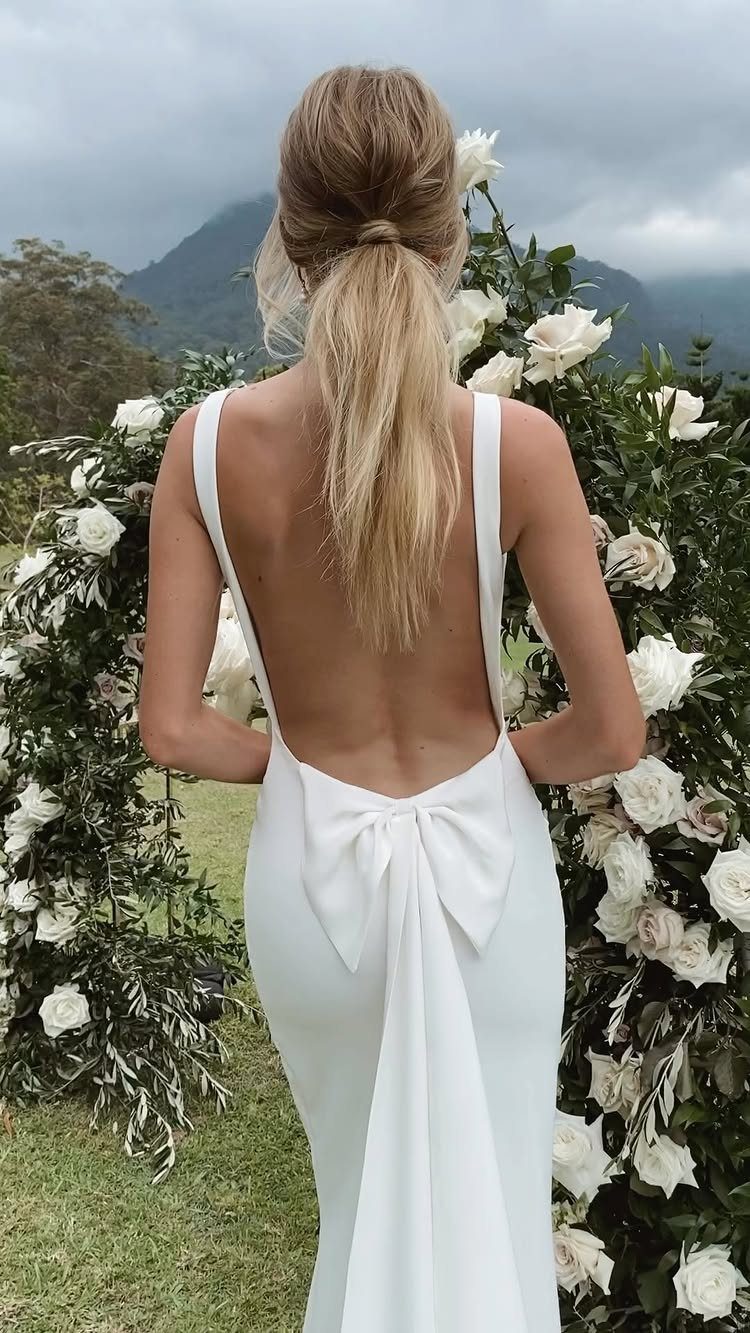
A bow at the lower back adds a focal point where the opening would otherwise end plain. The fabric gathers at the bow and falls into the skirt, which gives the back a finished edge without lace or beading.
Silk bows hold their shape better than satin, since the fabric has enough weight to stay put without going stiff.
The bow can be sewn on permanently or tied, depending on the dress. Ties let you adjust the depth yourself, which matters when you’re ordering online.
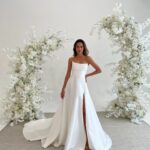
15. Silk Gown with a Slit
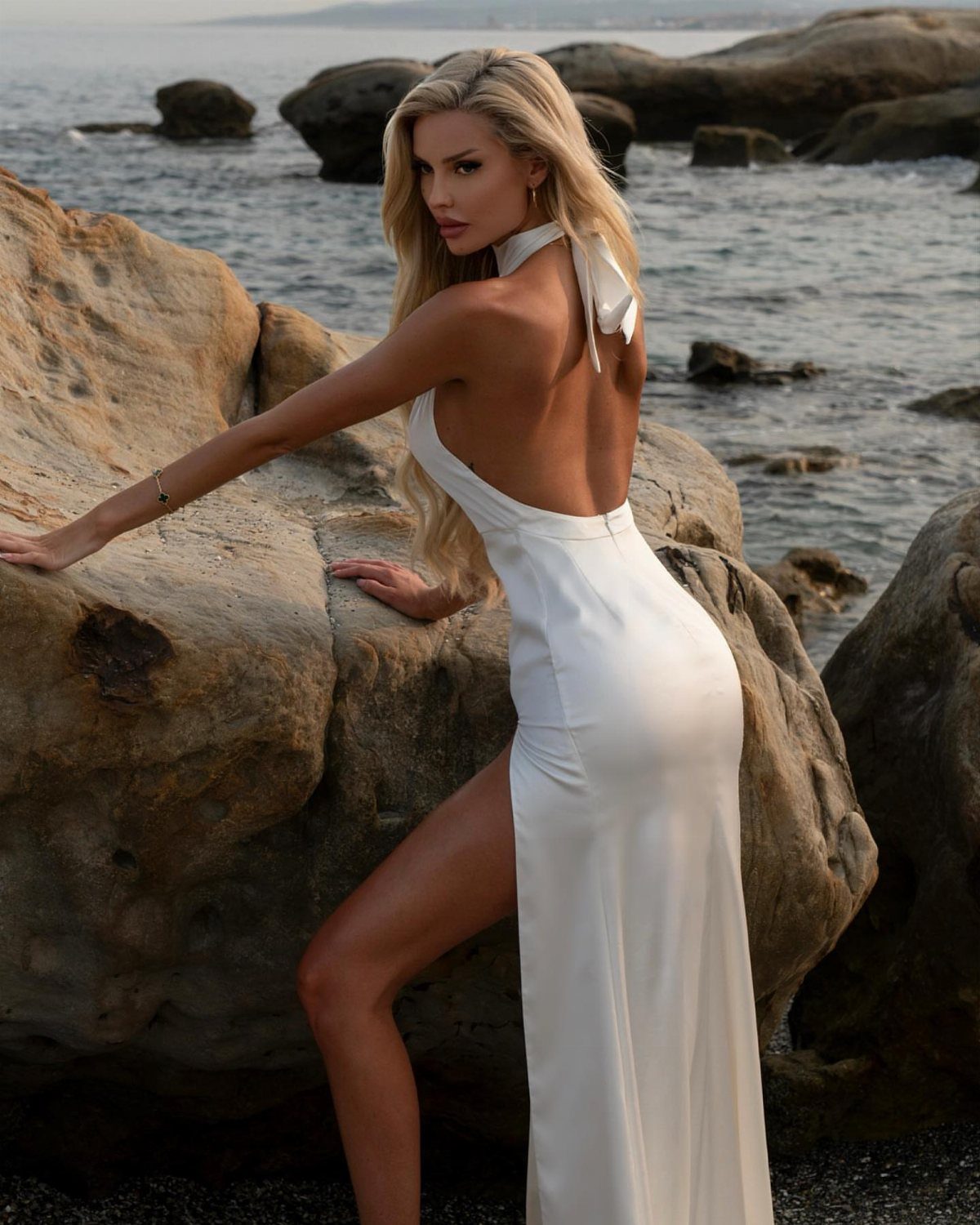
A high slit at the leg breaks up the length of the skirt and adds movement when you walk.
Paired with an open back, you get two focal points instead of one, which keeps the dress from feeling too covered despite the silk drape.
The slit works best when the dress fits close through the hips, since that keeps the fabric from gaping when you stand still.
High slits can shift open when you sit or kneel, so tape the edges to your leg before you walk down the aisle. This combination reads as modern rather than traditional.
16. Beaded-strap Open Back
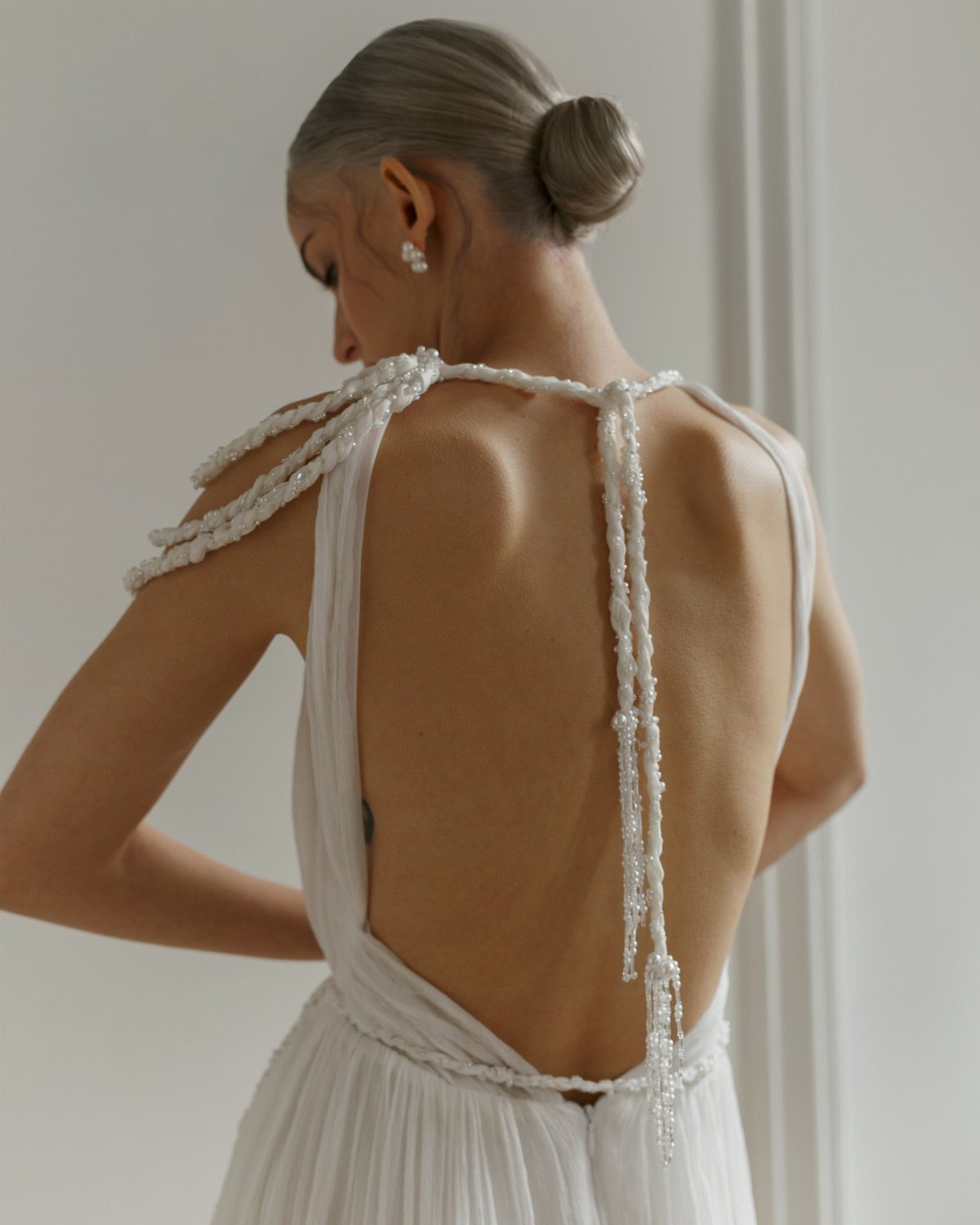
Beaded straps catch light and add weight at the shoulders, which frames the open back without covering it. The pleated skirt adds volume at the hem while the bodice stays fitted, so the dress balances structure with drape.
The beading needs to sit flat against the skin, which means the straps have to fit snugly.
If they’re too loose, the beads will shift and pull the dress out of place. A deep U-shaped back shows more skin than a scoop but less than a straight-across cut, so this sits between minimal and fully exposed.
Fit, Body Type, and Support
An open back can work on any frame if the rest of the dress fits right.
A-line skirts suit most body types because the flare balances the top without clinging at the hips. Mermaid and trumpet shapes look best on curvy or hourglass figures, since the fitted silhouette through the hips needs curves to support it.
If you’re fuller through the bust, ask about sewn-in cups during your fitting.
They sit inside the bodice and hold without a visible strap, which matters when the back is fully open. You can find built-in cups in some styles, while others let you add them yourself.
A low scoop back suits curvy brides because the curve follows the body rather than cutting straight across. The fit at the sides holds the dress in place, so make sure the bodice sits snug before you leave the fitting.
Customization and Sustainability
Some designers make backless silk gowns to order, which means you can adjust the depth of the back or swap silk for lace if the original fabric does not suit the season.
Andrea Hawkes offers that kind of customization, so you’re not locked into the sample depth.
Most silk used in bridal gowns now meets third-party environmental standards. Reformation uses Eco Silk that’s either Bluesign Certified for solid colors or Oeko Tex Standard 100 certified for prints, which means the fabric passed testing for harmful substances.
If sustainability matters to you, check what certifications the silk holds before you order.
Frequently Asked Questions
Which figures do wedding dresses with an open or low back suit best?
An open back works on any frame if the rest of the dress fits right. If you’re fuller through the bust, ask about sewn-in cups during your fitting, since they sit inside the bodice and hold without a visible strap.
What kind of bra should you wear with a backless wedding dress?
Backless styles leave no room for a regular bra, so most brides either use stick-on cups or go without and let the bodice do the work.
How can I make sure my backless wedding dress fits perfectly?
The dress has to fit snugly at the sides and through the bodice to hold everything in place, since an open back means no interior structure in that area.
Bring stick-on cups or any undergarments you plan to wear to your fitting so the seamstress can adjust the fit around them.