Western wedding styling spans everything from a rustic barn venue and wildflower bouquets to cowboy boots and a squash blossom necklace borrowed for the day.
Your venue surface decides whether boots will hold or slide, which matters if you or your wedding party plan to wear cowboy boots down the aisle.
The span between a raw cattle skull on weathered wood and one wrapped in fabric or rhinestones is the difference between rustic and polished, and most weddings land somewhere in that range.
1. Rustic Wedding Venue
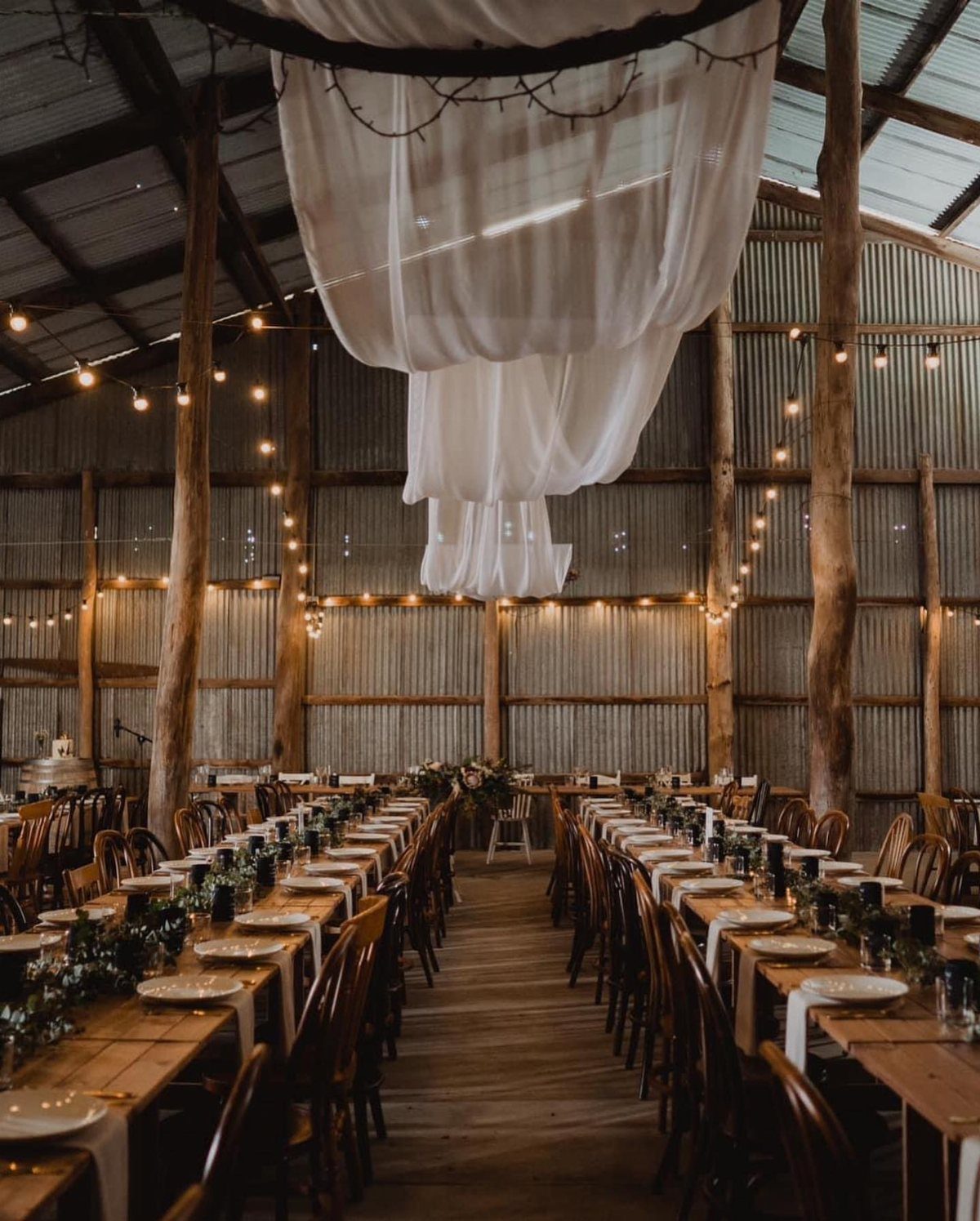
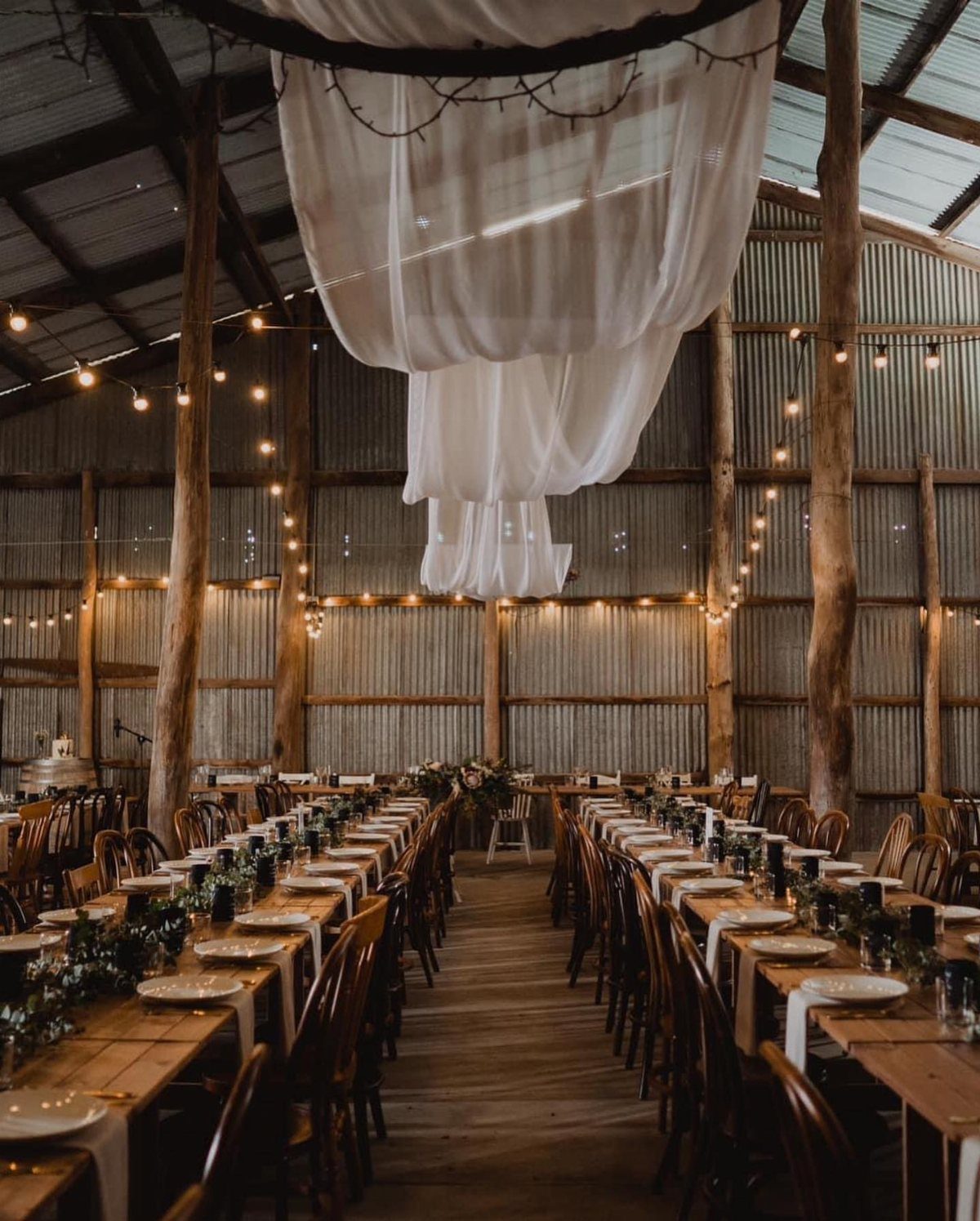
A barn or ranch venue brings instant Western atmosphere to the day. The exposed beams, weathered wood, and open layout give the setting its character before you add anything else.
Most working barns rent by the day and let you bring your own caterer and décor.
Rates vary widely depending on what comes with the space: a pole barn rents for less than a restored building with working plumbing and air conditioning.
Book early if your date falls during peak wedding season; barns in demand fill up a year out.
Check the facilities before you commit.
Some barns have power and lighting built in, others need a generator. If the space lacks restrooms, you will need to rent portable units.
2. Cowboy Boots
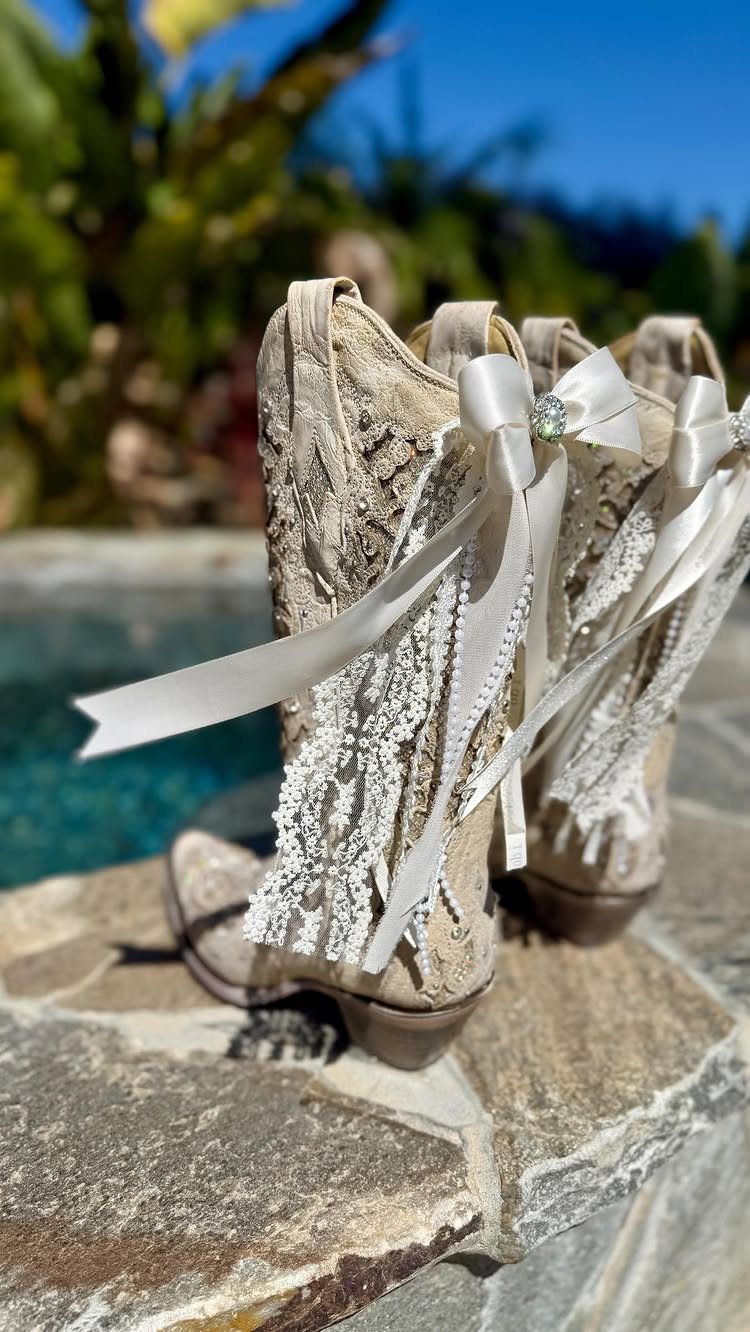
Cowboy boots replace traditional wedding shoes and keep the Western look consistent from the ceremony through the last dance.
Leather soles work fine on grass or wooden floors but can slide on polished concrete, so check your venue surface before the day.
Break in new boots well ahead of time so you can actually walk in them.
Wear them around the house with the socks you plan to use that day, and if they rub anywhere, address it early with moleskin or a blister pad.
Stiff leather that feels fine for an hour will punish you after six.
Pick a neutral color if you want to wear them again, or go bold if this is their one outing.
3. Western-style Invitations
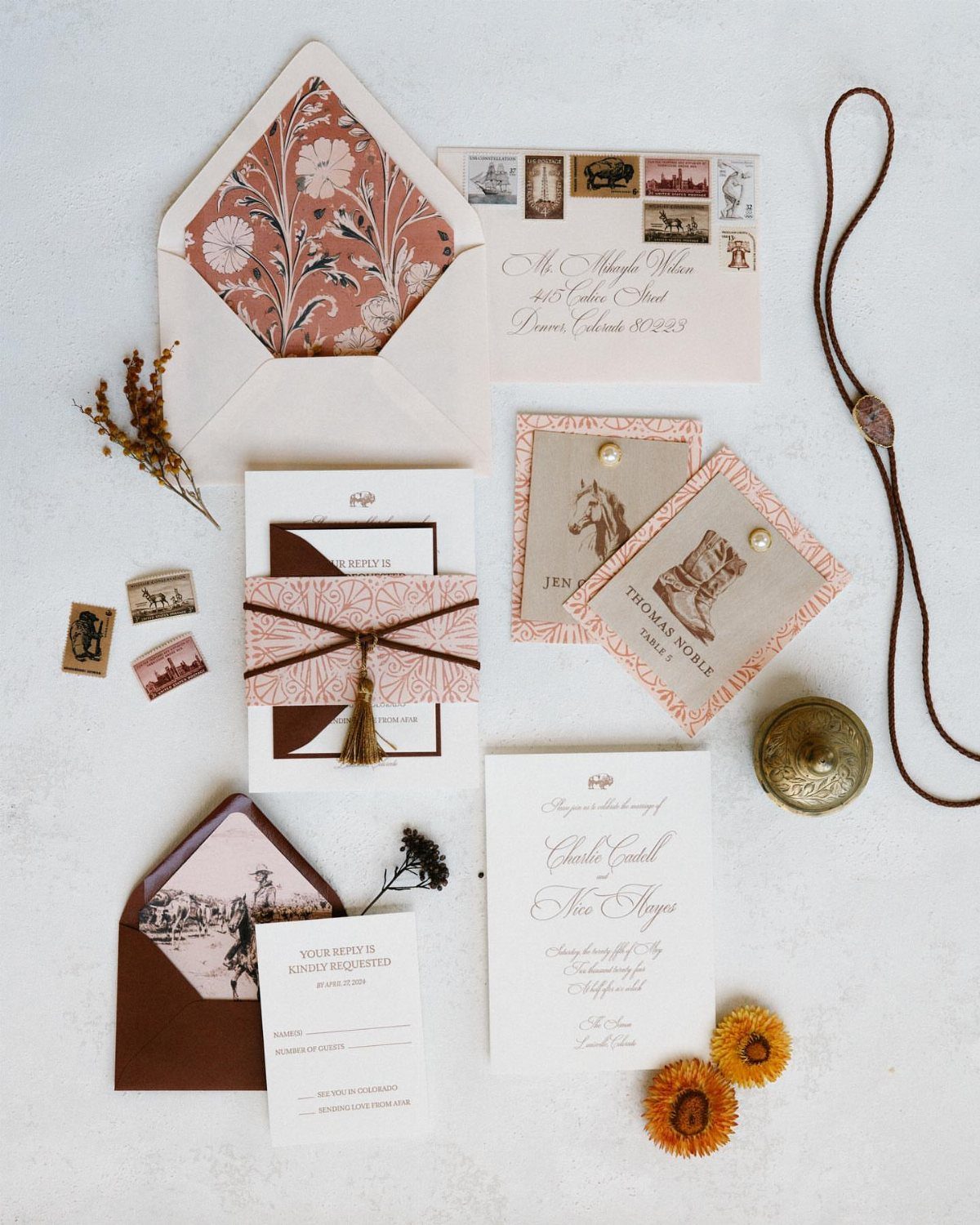
Invitations set the tone before anyone arrives. A Western design tells guests what kind of event to expect and what to wear.
Paper stock matters here. Kraft or textured cardstock in tan, cream, or brown reads more rustic than bright white, and it takes ink from a home printer if you are printing your own.
Leather accents, twine ties, or a wax seal add dimension without much cost. You can buy leather cord by the yard at craft stores and cut it to length yourself.
If your stationer offers foil stamping, metallic bronze or copper works better than gold for a Western look. Skip it if the upcharge is steep; a strong layout does the job on its own.
4. Wildflower Bouquets
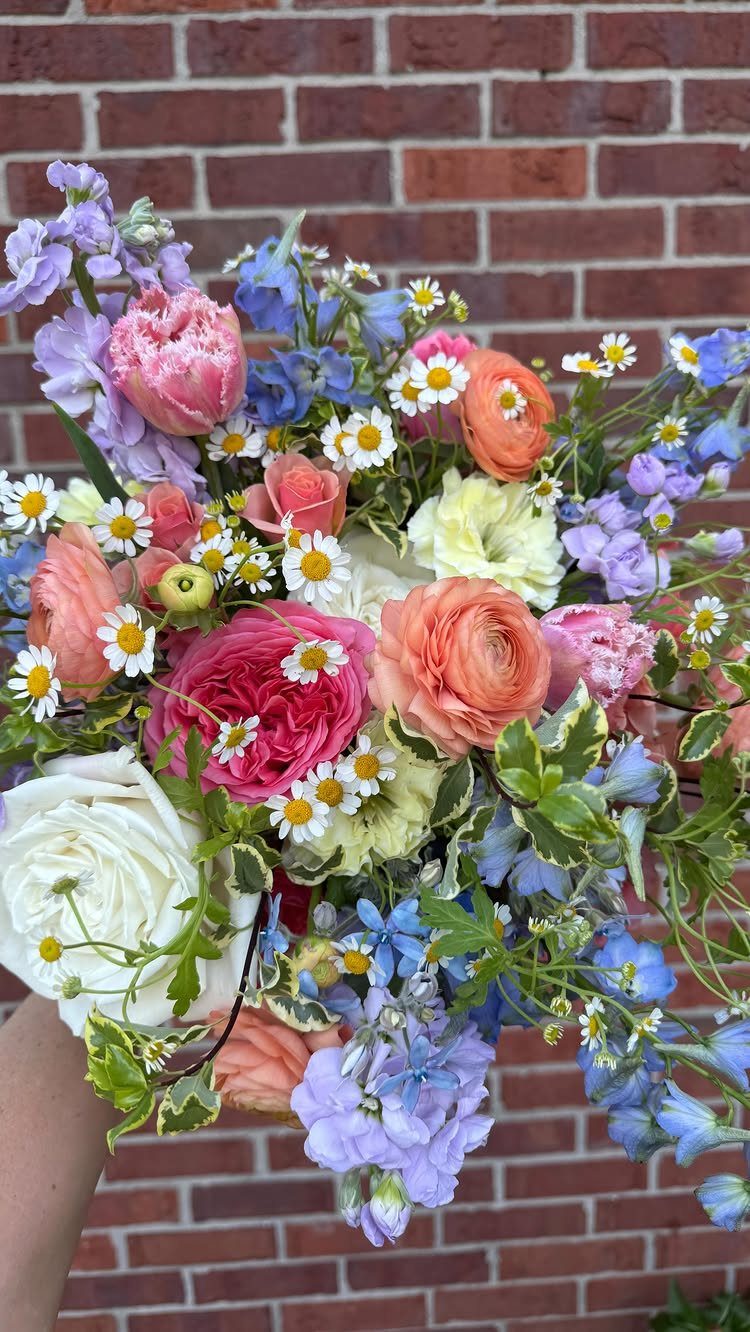
Wildflowers give you loose, organic arrangements that look like they were gathered from a field, not a floral cooler.
The mix of colors and textures suits an outdoor or rustic setting, and the informal shape works with Western styling without looking too formal.
Order from a flower farm or wholesaler if you want specific wildflower varieties, or buy what is in season locally and arrange them yourself.
Expect to pay less per stem than you would for roses or peonies, but plan for a larger quantity since wildflowers are usually smaller and you need more to fill out a bouquet.
Keep them in water until the last possible moment. Wildflowers wilt faster than florist standards, so assemble bouquets the morning of and store them in a cool spot.
5. Cowboy Hats
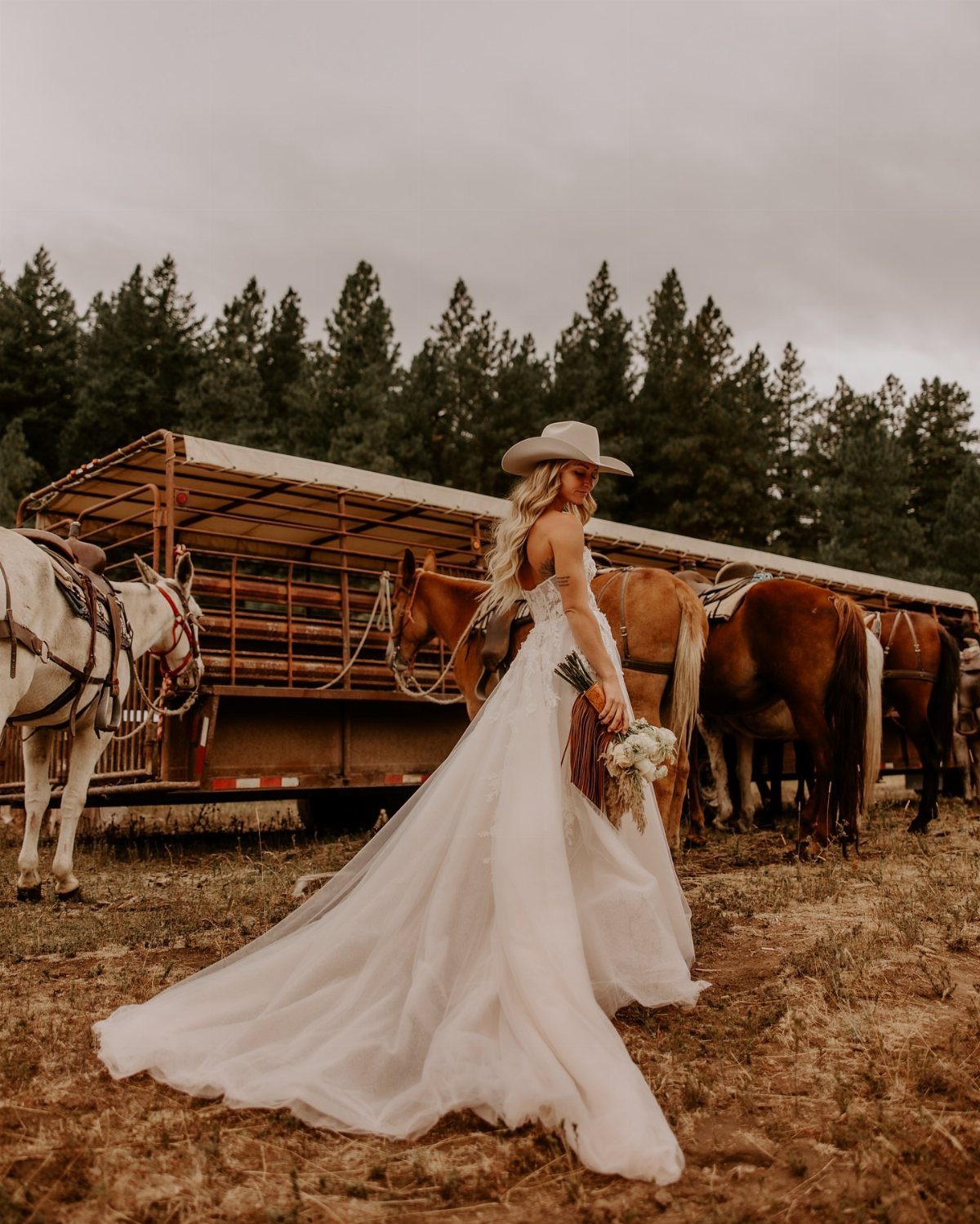
A cowboy hat pulls the Western theme into your outfit without requiring a full costume change. It works over a traditional gown or suit and reads as intentional rather than novelty if the rest of your styling already leans Western.
Fit matters more than you think. A hat that sits too high or shifts around will annoy you all day, and you will take it off before the reception starts.
Try on several sizes and shapes before you buy, and bring the hat to your hair trial so your stylist can plan around it.
Straw hats are lighter and cooler for outdoor summer weddings.
Felt holds its shape better in wind and photographs with sharper lines. Both come in a range of prices; a mid-range hat from a Western outfitter will last longer than a costume-shop version.
6. Hay Bale Lounge Seating
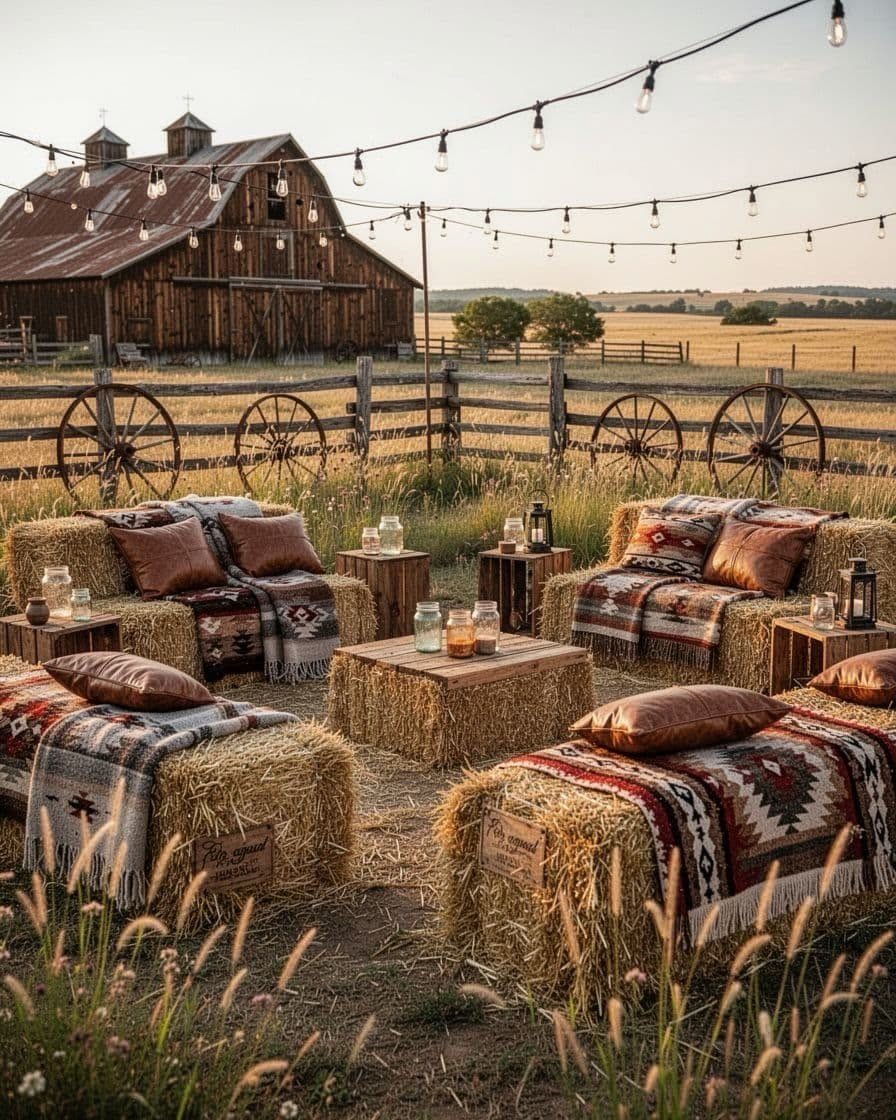
Hay bales stacked and covered with blankets make lounge seating that fits the Western theme and costs almost nothing. You can rent bales from a farm supply store and return them after the event if they stay dry.
Stack bales two high for couch height or leave them single for low seating.
Drape wool blankets, quilts, or canvas drop cloths over the top and tuck the edges under to keep them in place. Add throw pillows if you want backs to lean against.
This setup works best on grass or dirt. Hay sheds bits of straw as people sit, so keep it outside or, if you are using it in a barn, plan to sweep up afterward.
7. Horseback Arrival
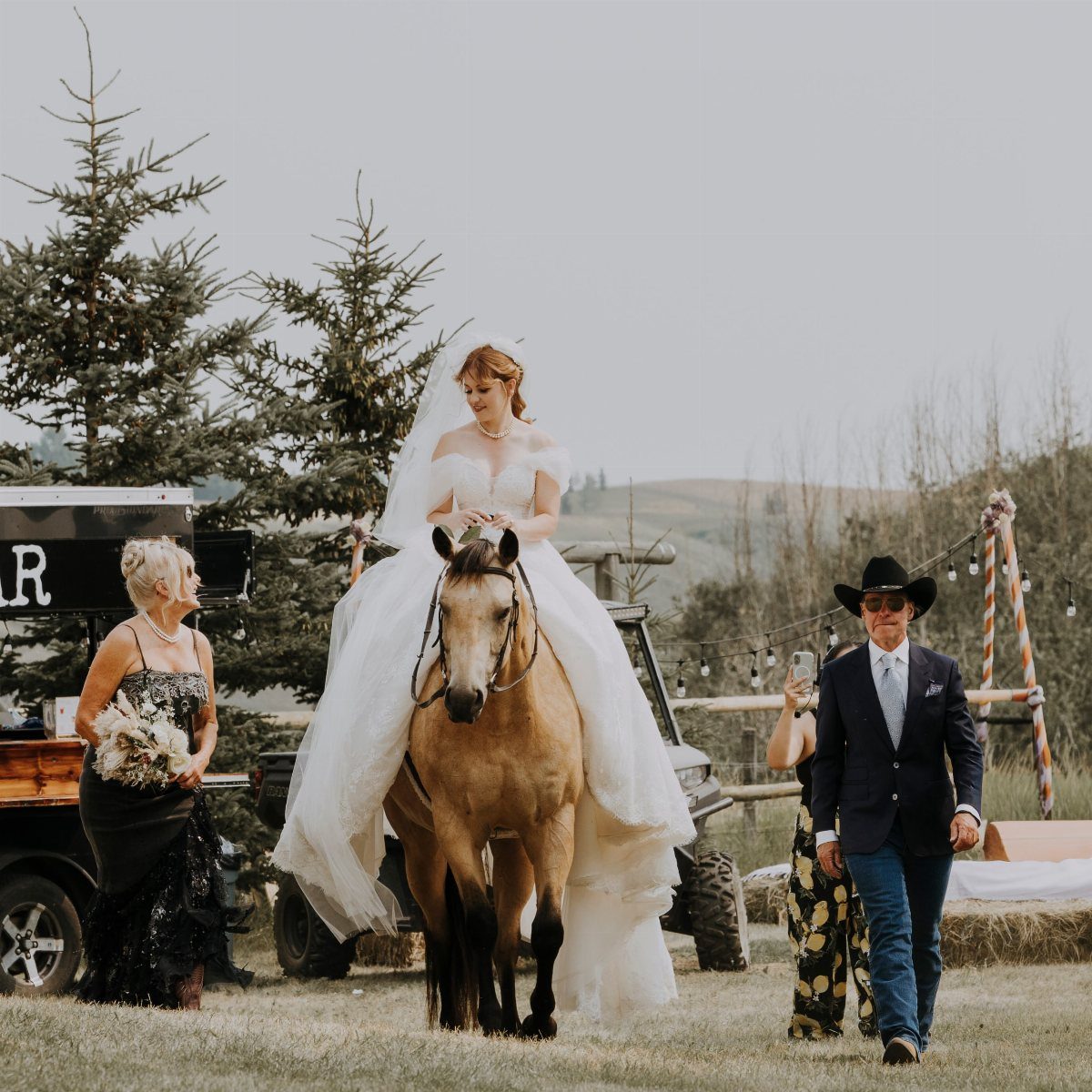
Arriving or leaving on horseback makes the entrance feel like an event on its own. The horse becomes part of the ceremony, and guests notice.
You need a calm, well-trained horse and someone who can ride confidently in wedding clothes.
Practice mounting and dismounting in your dress or suit beforehand so you know what moves and what catches. A long train or veil can spook a horse if it flaps, so secure anything loose.
Coordinate with your venue. Not all sites allow animals, and you will need a place to tie or stable the horse during the reception.
8. Squash Blossom Necklace
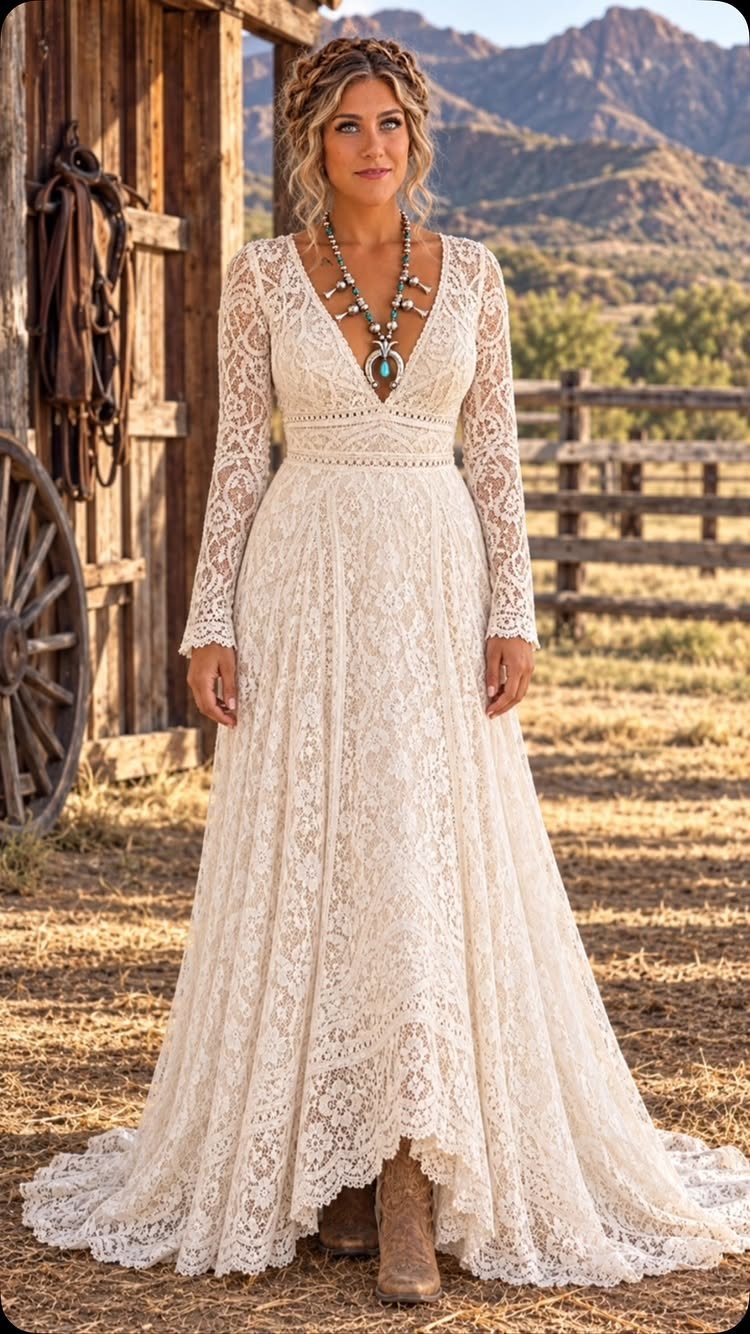
A squash blossom necklace sits heavy and centered on the chest, and the turquoise stones stand out against white lace.
The style is distinctly Southwestern, which means you’ll get the most out of it if the rest of your look already leans Western or desert-inspired.
The necklace is a statement piece on its own.
Skip the earrings or keep them small so the focus stays on the necklace. The silver and stone will photograph with strong contrast against a light-colored dress.
Borrow one if you can. Authentic squash blossom necklaces are expensive, and a single-day rental often costs less than buying.
9. Western Groom Attire
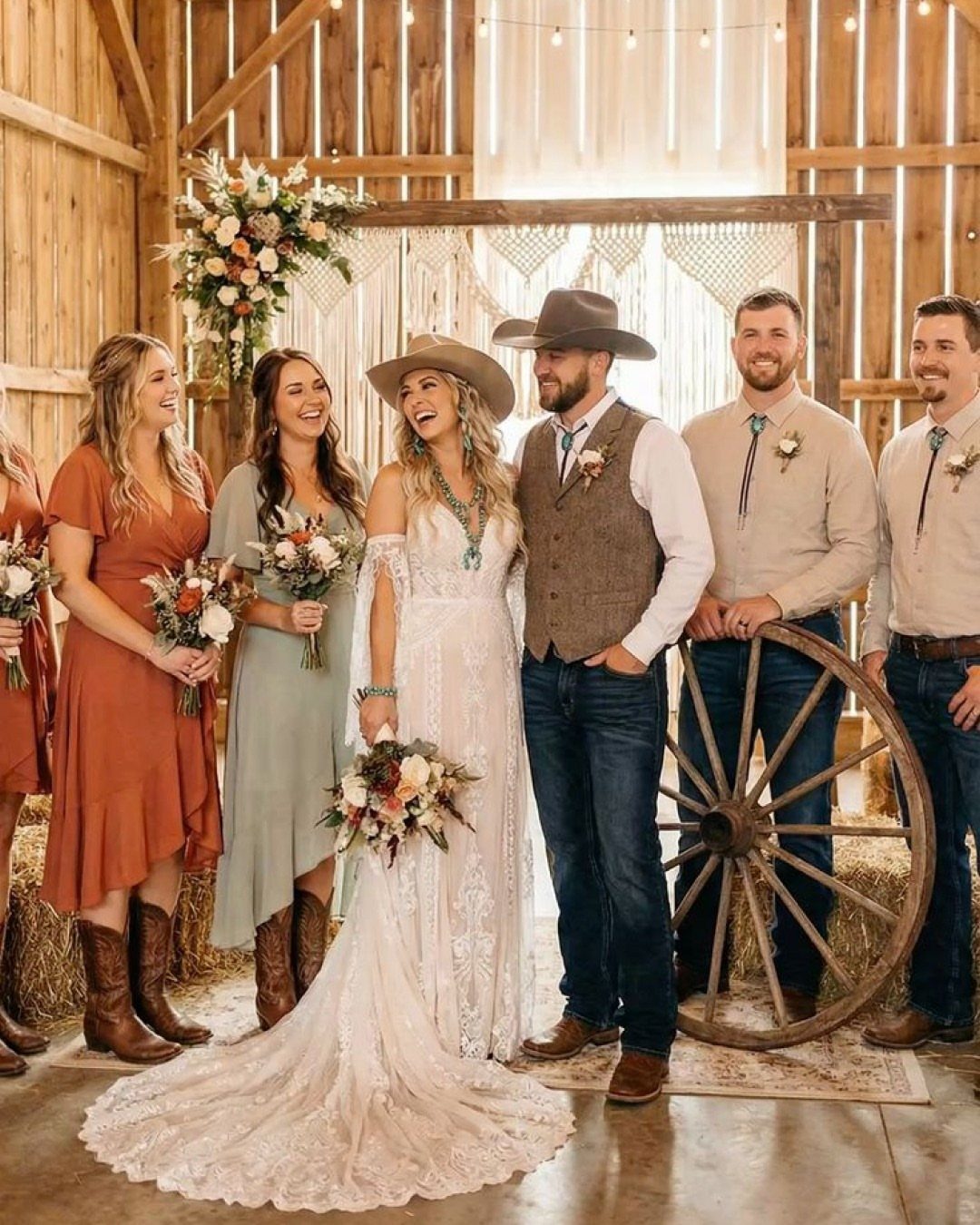
Dressing the groom in Western attire keeps him in step with the theme without putting him in a full tuxedo. A vest, jeans, and a cowboy hat give the look structure, and boots finish it.
Pick denim that fits well.
Baggy jeans read casual in photos, and overly distressed denim can look sloppy next to a formal dress. Dark wash or clean medium blue works better than faded or torn.
A bolo tie or leather belt with a statement buckle adds detail without adding bulk. If the groom is not used to wearing a hat, have him practice so it sits right and he feels comfortable in it all day.
10. Leather Bouquet Wrap
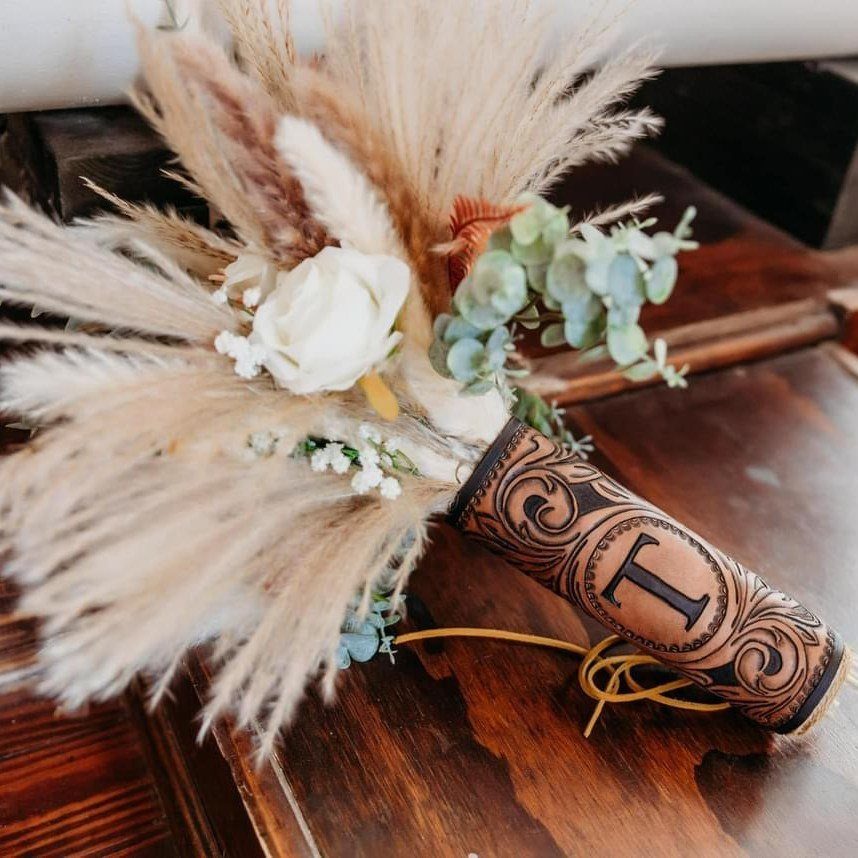
Wrapping the bouquet handle in leather gives it a Western finish that photographs well up close. The material is sturdier than ribbon and holds its shape all day.
Tooled leather adds texture and pattern.
You can order custom tooling with initials or a simple border, or buy pre-tooled strips from a leatherworking supplier and wrap them yourself. Suede works too if you want a softer, matte look.
Attach the wrap with hot glue or double-sided tape so it stays put through the ceremony and does not shift when you hold it. Leather is heavier than ribbon, so account for that if your bouquet is already large.
11. Rustic Wooden Arch
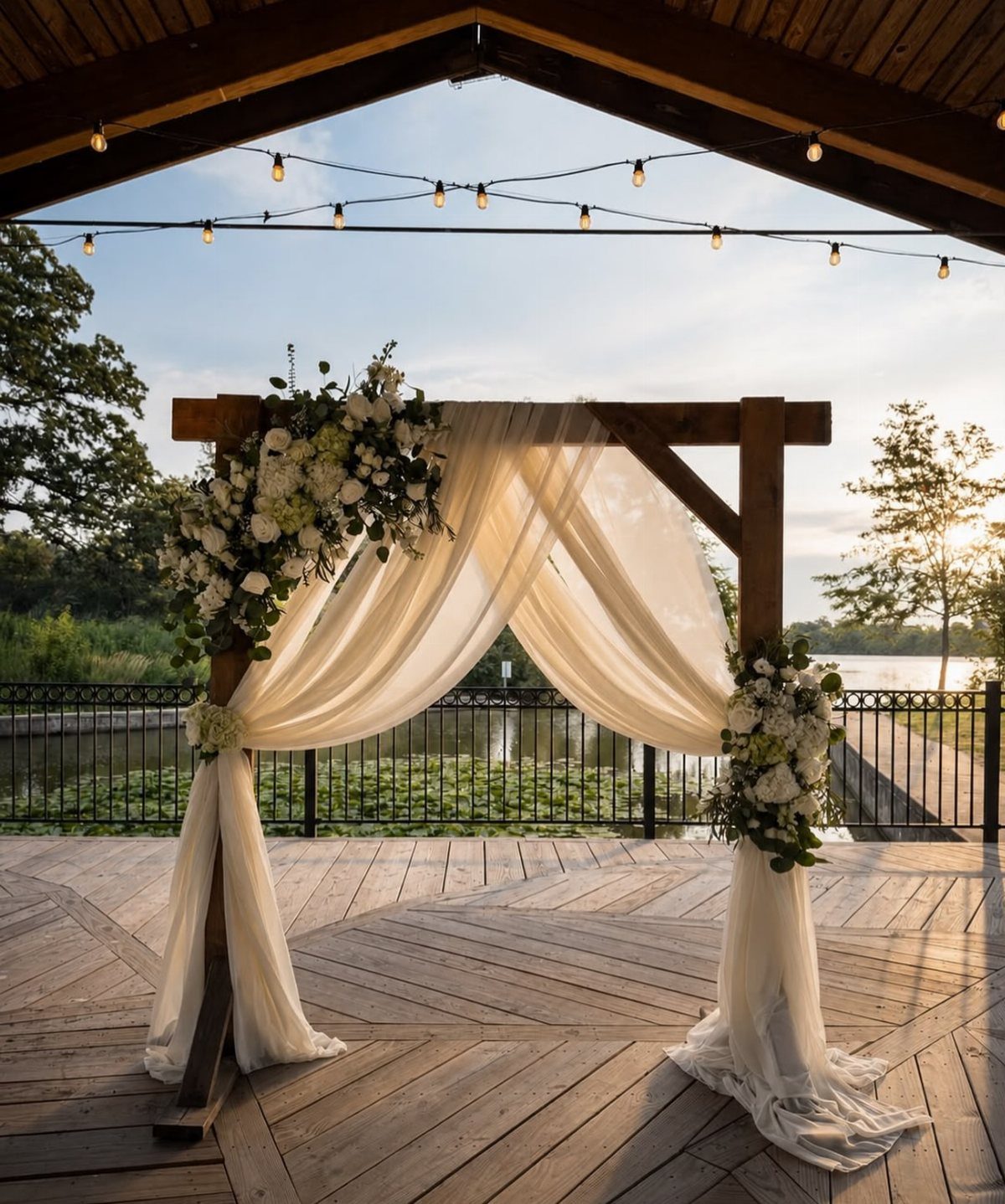
A wooden arch frames the couple during the ceremony and gives the space a clear focal point. The structure itself carries the look, so you can dress it lightly or leave it bare.
Build one from lumber if you have the tools, or rent from a decor company. A simple A-frame design is stable enough for outdoor use and does not need anchoring unless it is windy.
Draping fabric softens the wood and adds movement, and flowers or greenery attached to the top corners bring color without covering the whole structure.
If your venue already has a pavilion or pergola, you might not need a separate arch. The existing structure does the same job.
12. Western-style Welcome Sign
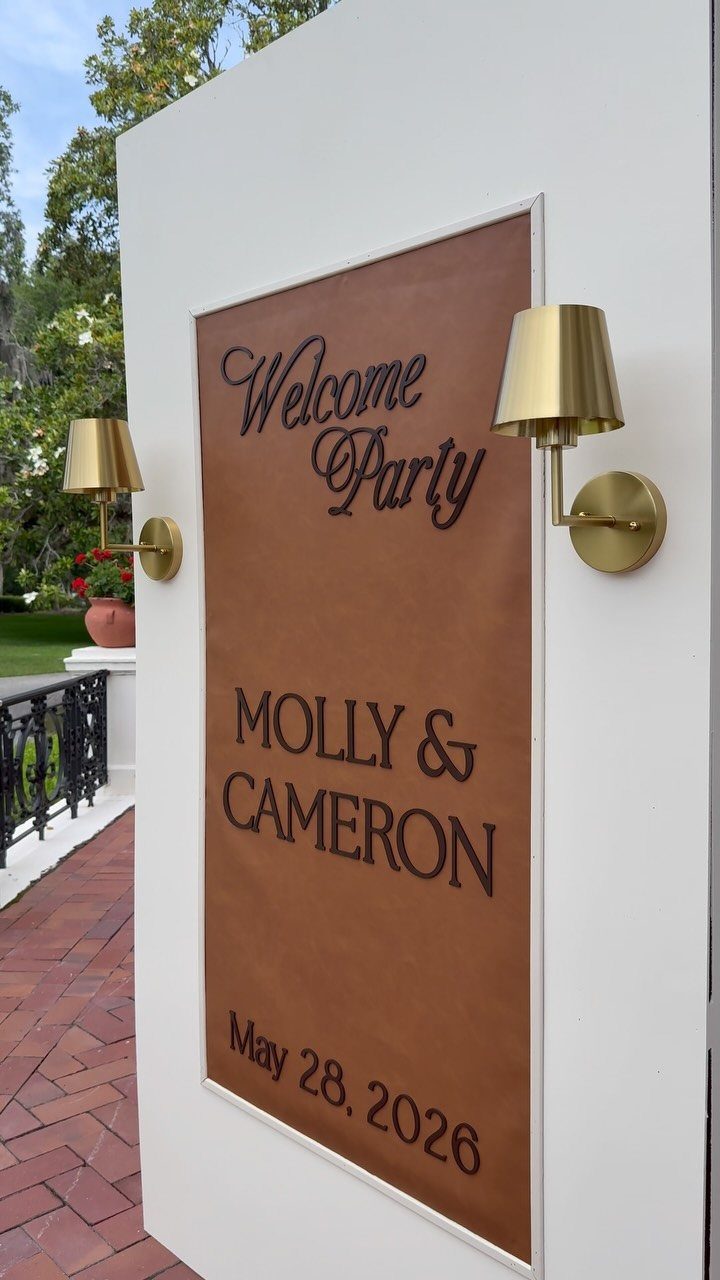
A welcome sign tells guests where to go and sets the tone before they walk in. Western styling means leather texture, wood grain, or tooled detailing instead of script on white acrylic.
Order a custom sign printed on leather-textured vinyl or wood, or make one yourself with a stencil and paint on a wooden board. Include the couple’s names and the event type so guests know they are in the right place.
Mount it near the entrance where people will see it as they arrive.
A freestanding easel works if you are setting up on grass or gravel, and wall mounting is cleaner if you have a solid surface to attach it to.
13. Western-themed Welcome Party
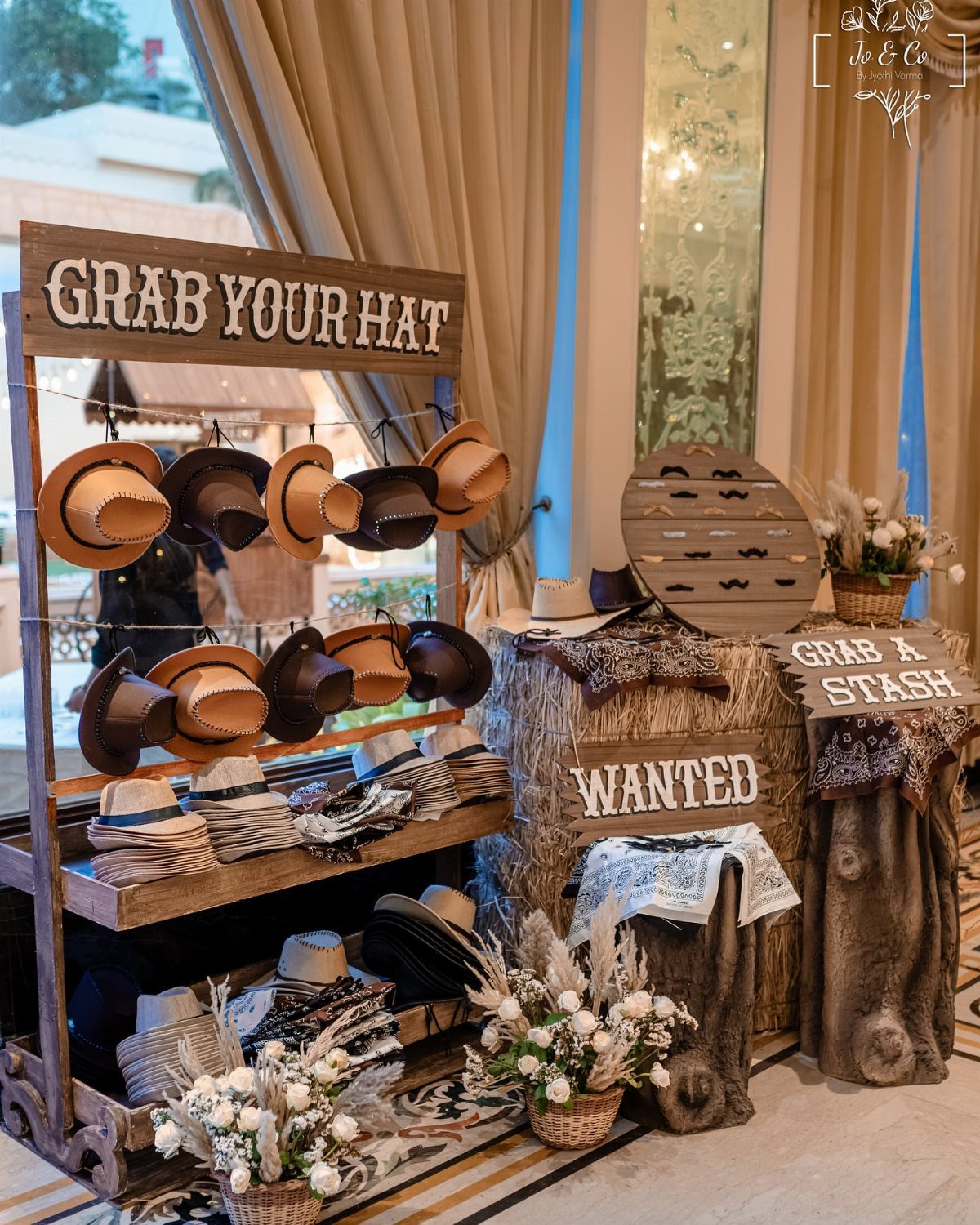
A Western-themed welcome party kicks off the weekend and gives guests a chance to meet before the ceremony. Set it up as a casual gathering the night before, at the venue or a nearby location.
Keep the dress code relaxed. Jeans, boots, and hats work, and guests who do not own Western wear can still show up in what they have.
Provide props like bandanas or hats at the door if you want everyone in the theme without requiring them to shop for it.
Food can be simple: finger foods, a taco bar, or a cookout. Keep it lighter than the reception, something that gets people talking.
14. Hay Bale Seating
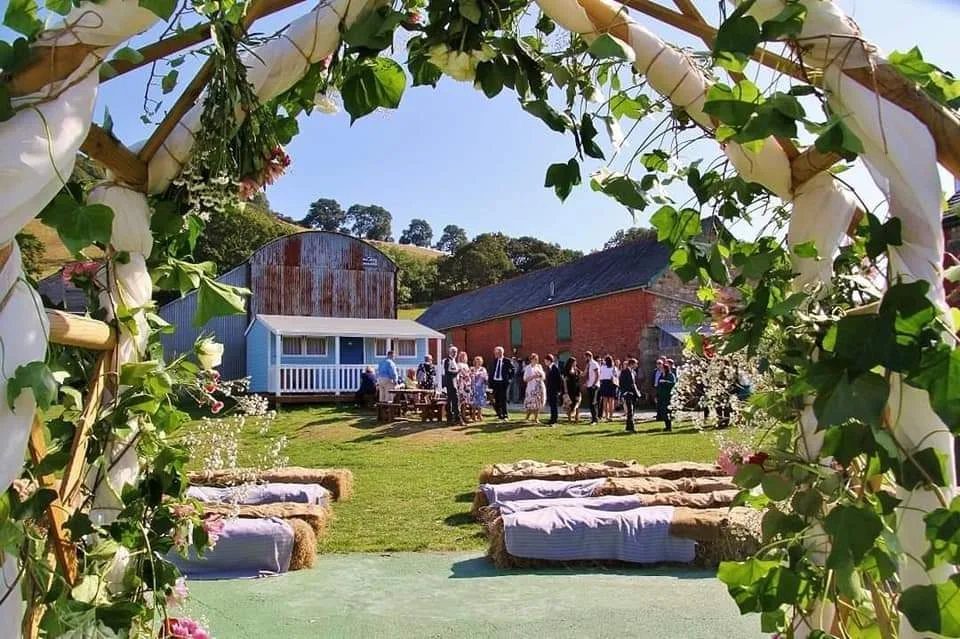
Hay bales work as ceremony seating when you cover them in fabric and line them up in rows. Stacking them is not necessary if guests can step up onto a single layer.
Use durable fabric that can handle outdoor ground and grass stains.
Canvas, cotton duck, or heavy quilting fabric holds up better than satin or tulle. Pin or staple the fabric to the underside of each bale so it stays taut across the top.
Bales are not as stable as chairs. Place them on level ground and check that they do not wobble before guests arrive.
15. Horseshoe Escort Cards
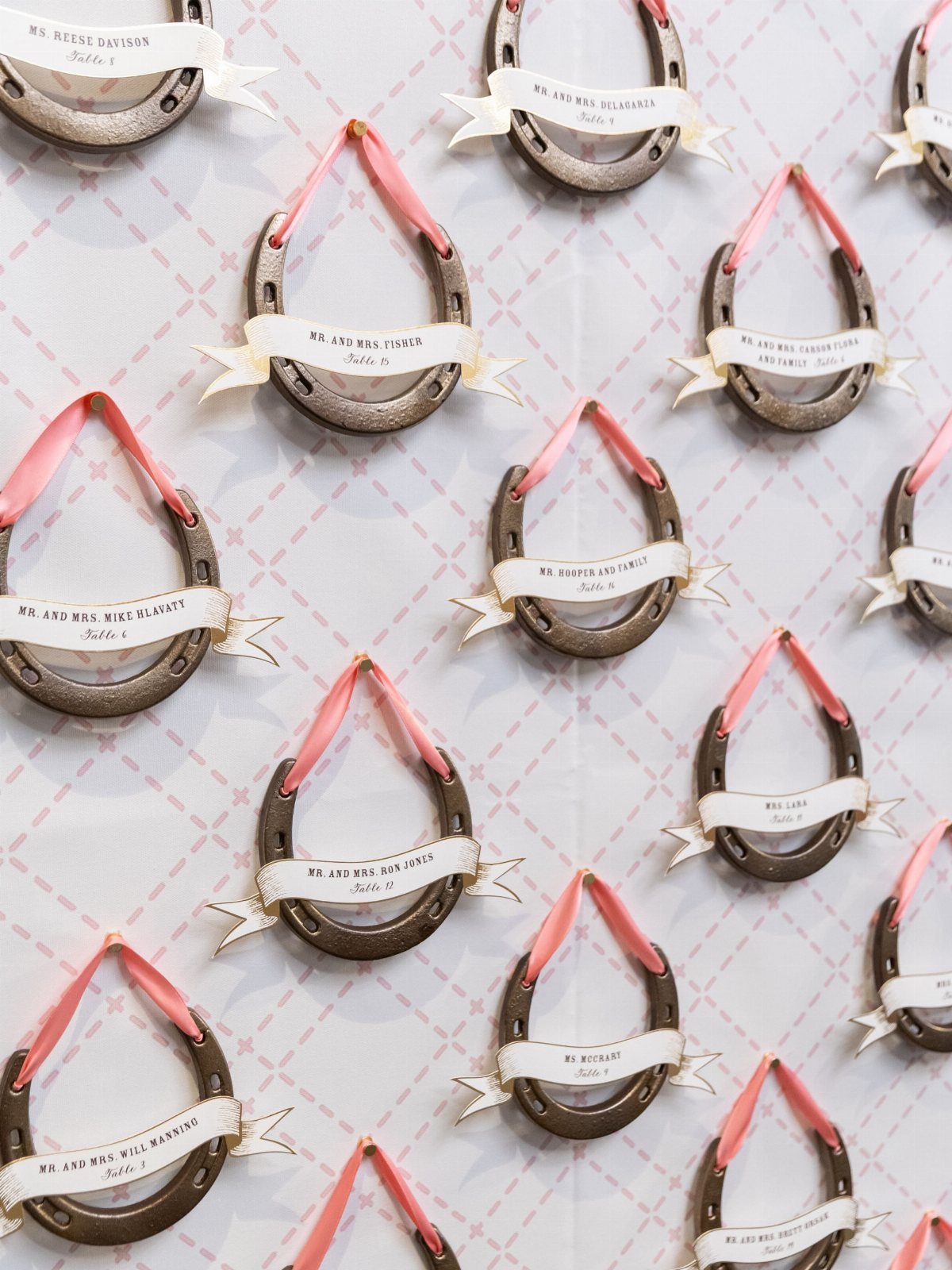
Horseshoes guide guests to their tables and double as favors they can take home. Attach a tag or ribbon to each one with the guest’s name and table number printed or written on it.
Buy horseshoes in bulk from a farm supply store or online.
New shoes are lighter and cleaner than used ones, and they cost a few dollars each. Hang them on a board, a rope strung between posts, or hooks mounted to a wall.
Drill a small hole near the top if the horseshoe does not already have one, then thread ribbon or twine through it. Write clearly so guests can read their names from a few feet away.
16. Fringe Wedding Dress
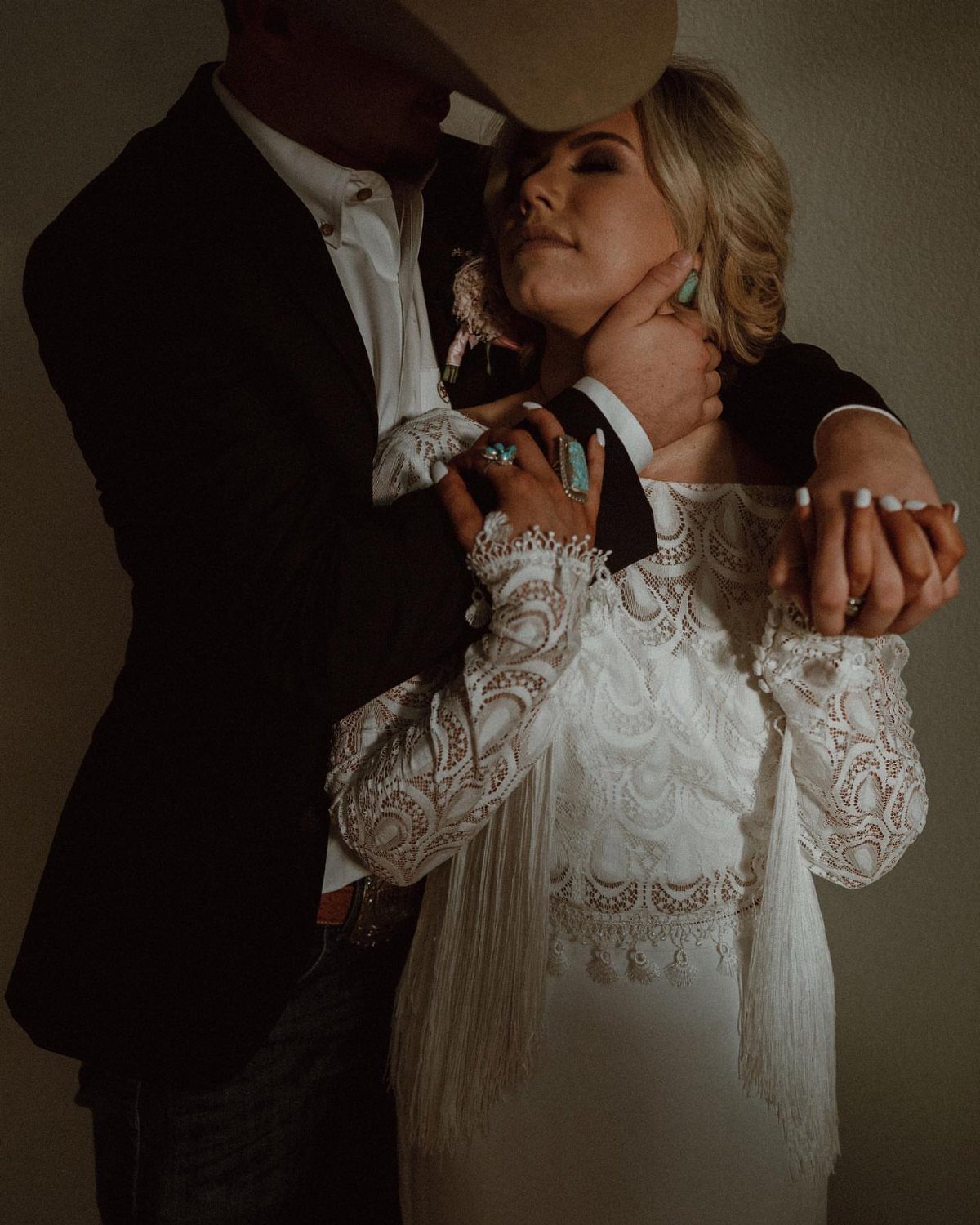
Fringe adds movement and texture to a wedding dress without requiring full Western styling. The fringe can sit along the hem, sleeves, or neckline, and it moves as you walk.
Look for dresses with fringe already attached, or add it yourself by sewing or gluing fringe trim to an existing gown. Leather fringe reads more Western than beaded or sequined versions, but any material that moves will photograph well.
Fringe catches on things. Keep it away from zippers, jewelry, or anything else it might snag on during the day.
17. Western Bridesmaid Styling
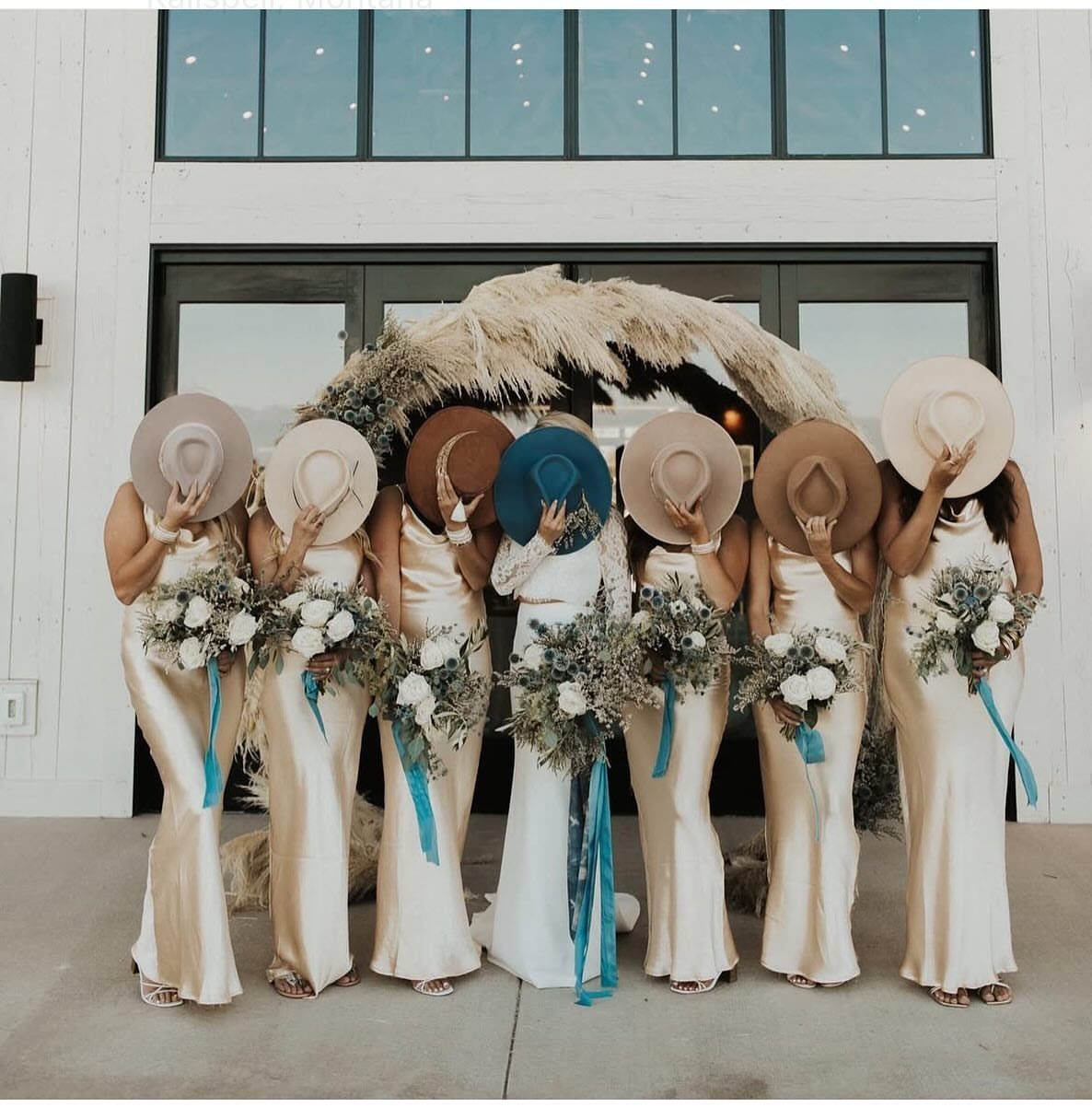
Dressing bridesmaids in hats and boots keeps them in the Western theme without matching the bride’s formality.
Long dresses or skirts work better than short ones if the wedding is outdoors, and neutral colors like tan, rust, or sage blend with the setting.
Let bridesmaids choose their own boots if they already own a pair. Matching boot styles is less important than making sure everyone can walk comfortably for hours.
Hats should fit well enough to stay on during photos and the ceremony. Have each bridesmaid try hers on ahead of time so adjustments can happen before the day.
Arons emphasizes that couples hosting a Western wedding should be aware that the theme is part aesthetic and part experience.
— Vogue
18. Barbecue Buffet
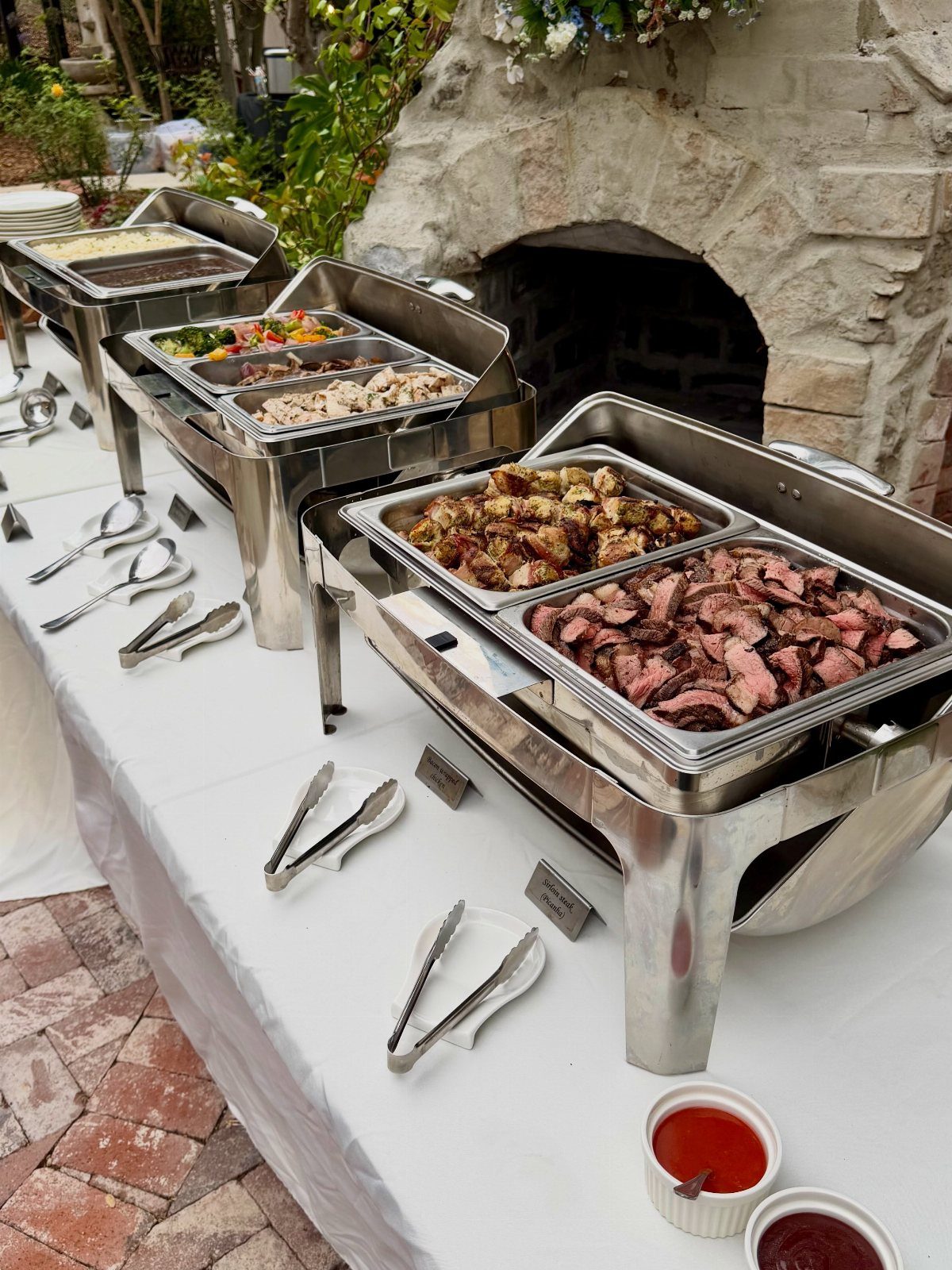
A barbecue buffet feeds a crowd without the cost or formality of plated service. Pulled pork, brisket, ribs, and sides like coleslaw, baked beans, and cornbread fit the Western theme and work at any temperature.
Rent chafing dishes to keep hot food hot if your caterer does not provide them. Set up the buffet line in a logical order: plates first, then proteins, then sides, then utensils and napkins at the end.
Plan for about half a pound of meat per person, plus sides. Vegetarian guests need a filling option beyond side dishes, so include a bean dish or grilled vegetables.
19. Fringe Reception Dress
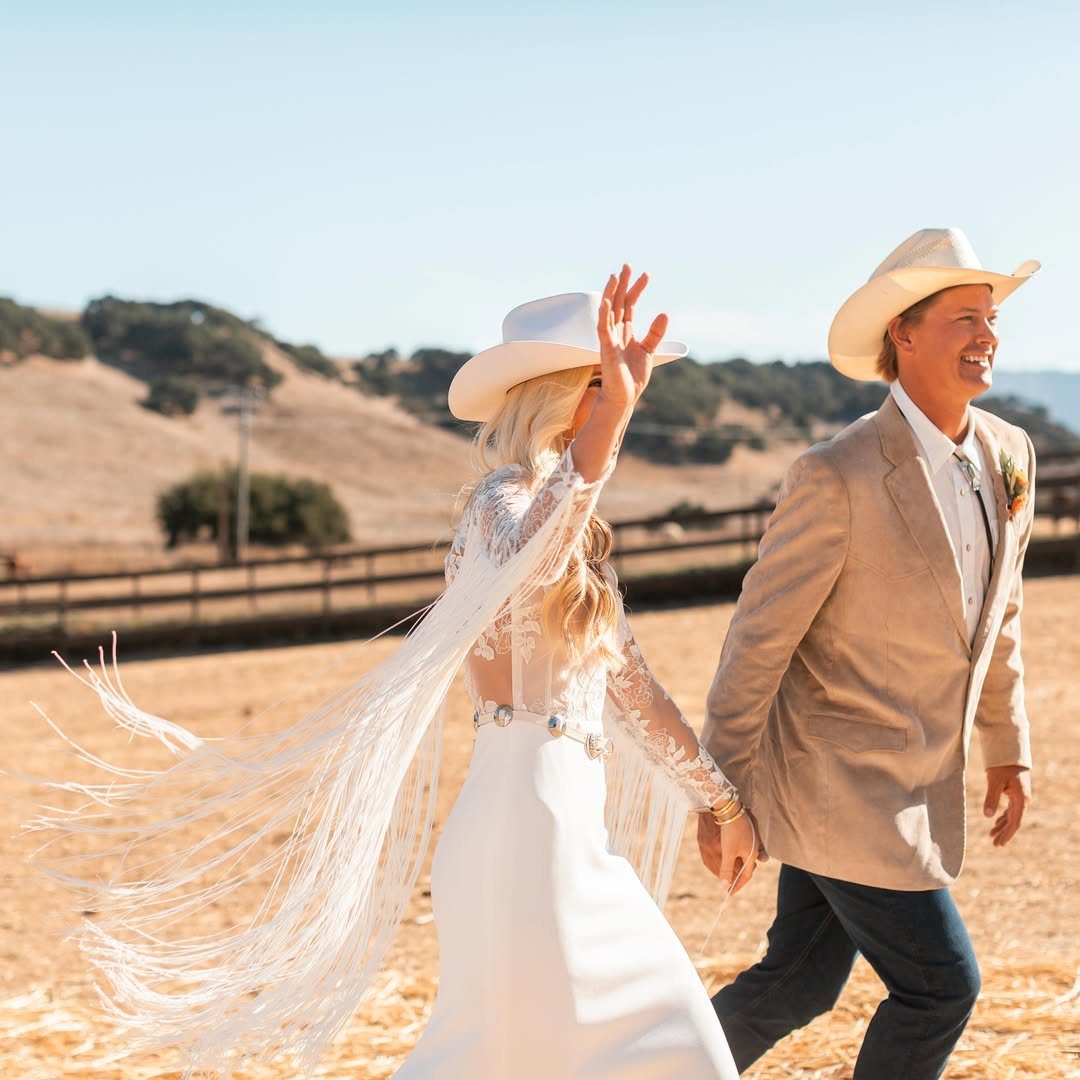
Switching into a fringe dress for the reception gives you comfort and movement after the ceremony. The fringe swings as you dance and photographs with texture under string lights or lanterns.
Pick a shorter length if you want full mobility on the dance floor. Knee-length or midi fringe dresses are easier to move in than floor-length versions, and they keep your boots visible.
Match the fringe material to the rest of your look. Leather fringe reads more Western, while beaded or fabric fringe softens the style.
20. Cattle Skull Décor
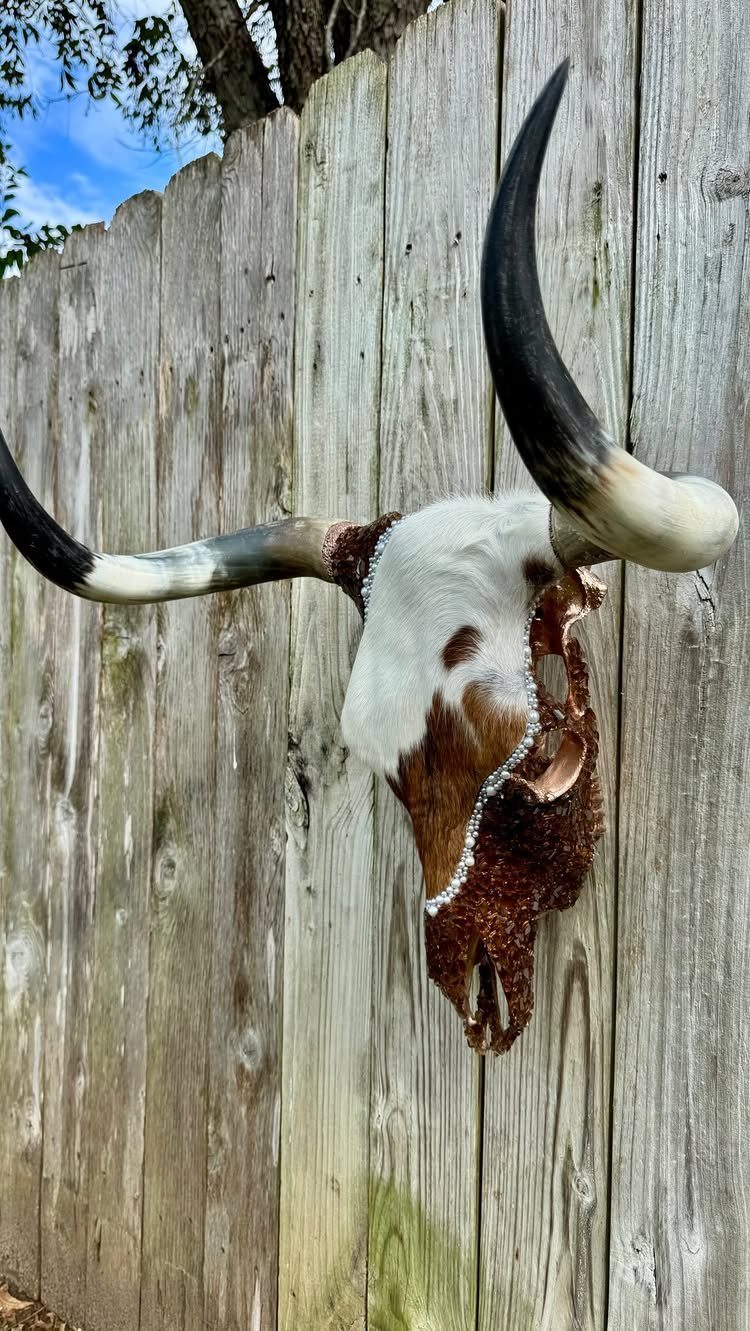
A cattle skull mounted near the ceremony or reception space brings Western iconicism without requiring explanation. The horns create symmetry in photos, and the skull itself becomes a marker guests remember.
Decorate it or leave it plain. Paint, flowers, fabric wraps, or rhinestones can dress it up for a more polished look, while a raw skull on weathered wood stays rustic.
Hang it on a fence, barn door, or wall where it will be visible but not blocking walkways. Secure it well if the venue is outdoors and windy.
21. Cowhide Aisle Runner
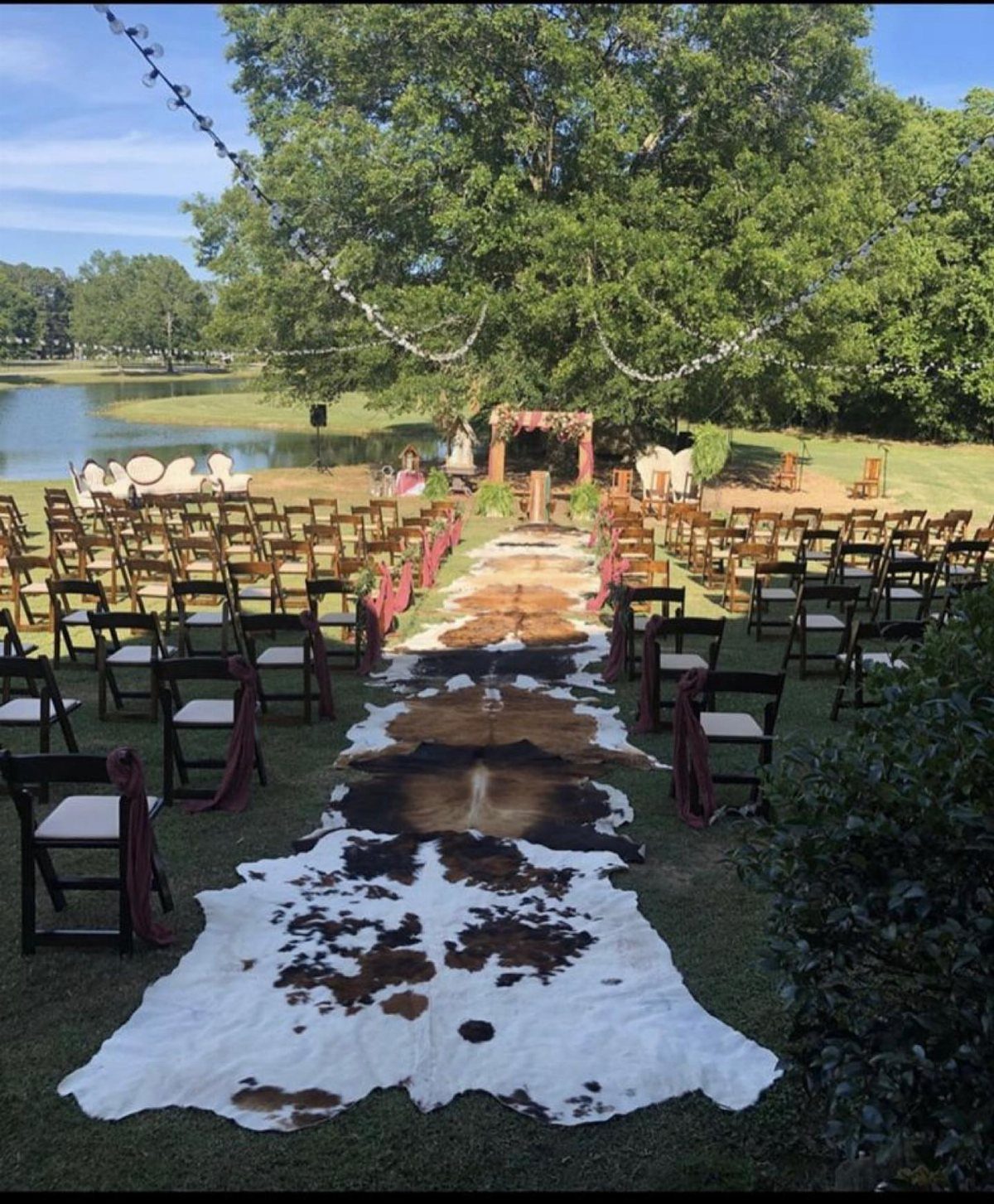
Laying cowhide rugs down the aisle gives texture and pattern without fabric that blows or shifts. Each hide has its own markings, so the aisle looks intentional but not uniform.
Overlap the hides slightly if you need to cover a longer distance, or space them out as stepping stones. Pin or stake the corners if you are setting up on grass so they stay flat.
Rent hides if buying them outpairs your budget. Cleaning and storing real cowhide after the event is work you might not want.
22. Saloon-style Wooden Bar
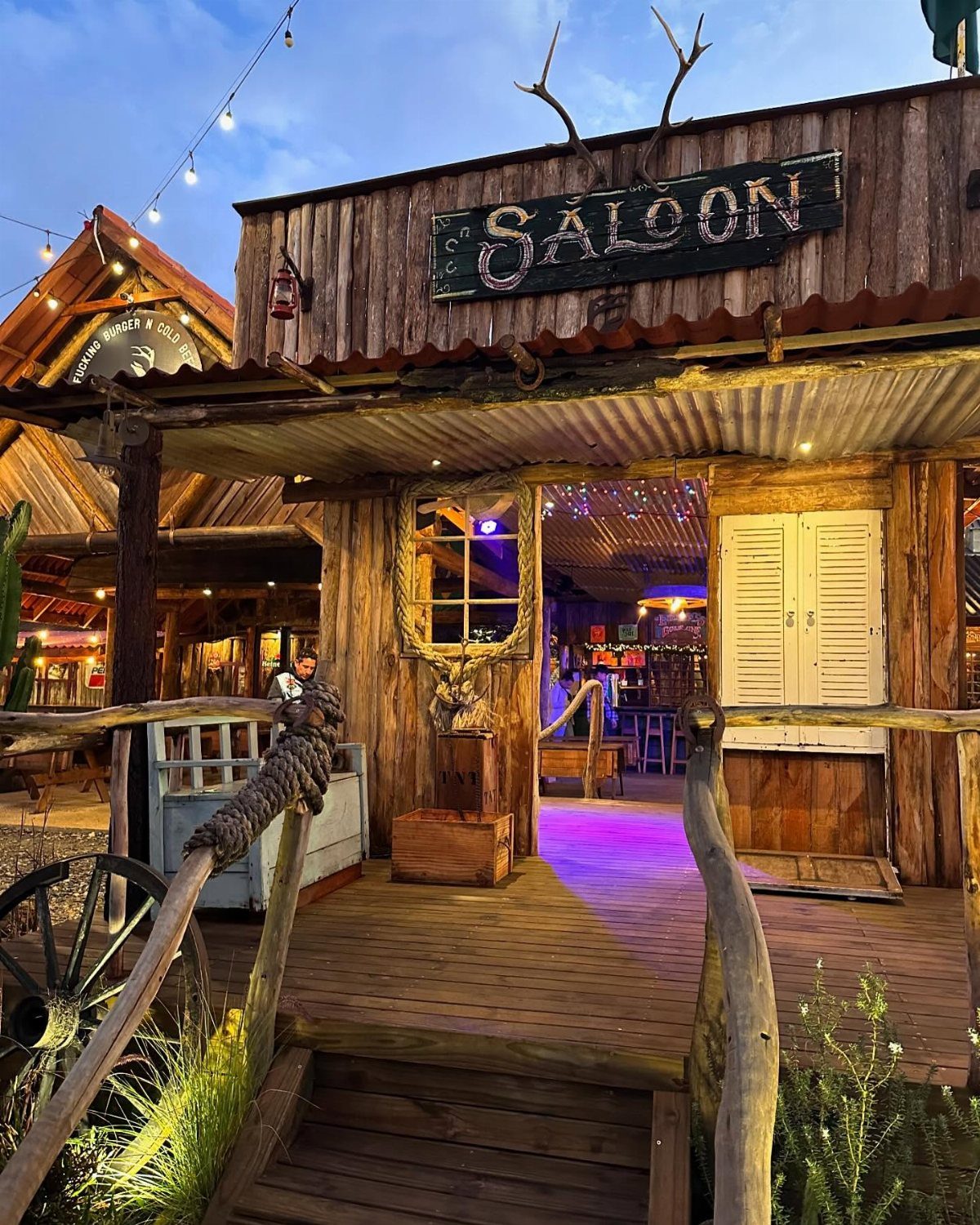
Building a bar to look like a saloon entrance gives the space a focal point and plays up the Western theme without requiring the whole venue to match.
Guests know where to go for drinks, and it photographs as a set piece.
Use reclaimed wood or plywood stained dark. Add a painted sign across the top, swinging doors if the structure allows it, and interior shelving for bottles and glassware.
This setup works best outdoors or in a barn. Indoors in a standard hall, it can read as oversized unless the room is large.
23. Couple Posing with Horses
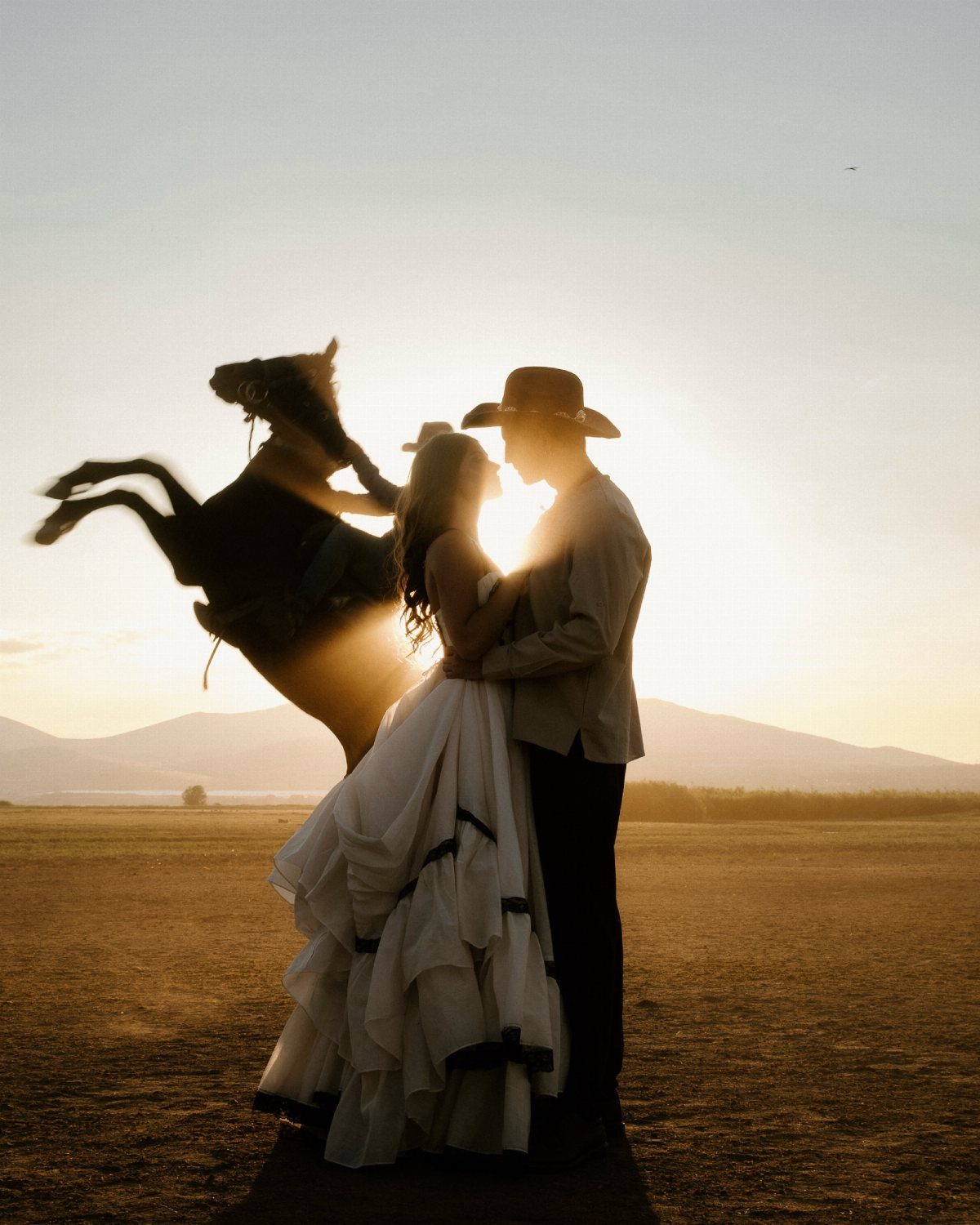
Horses in your portraits add scale and drama. The animal becomes part of the composition, and the photos feel cinematic if the timing and location work.
You need a horse that tolerates commotion and a handler who can position it safely during the shoot. Rearing or movement shots require training and timing, so discuss what is possible with the handler before you plan specific poses.
Schedule the shoot during golden hour if you want warm light. Bring someone to hold bouquets or adjust your dress between shots so the photographer can focus on capturing the moment.
24. Woodland Wedding
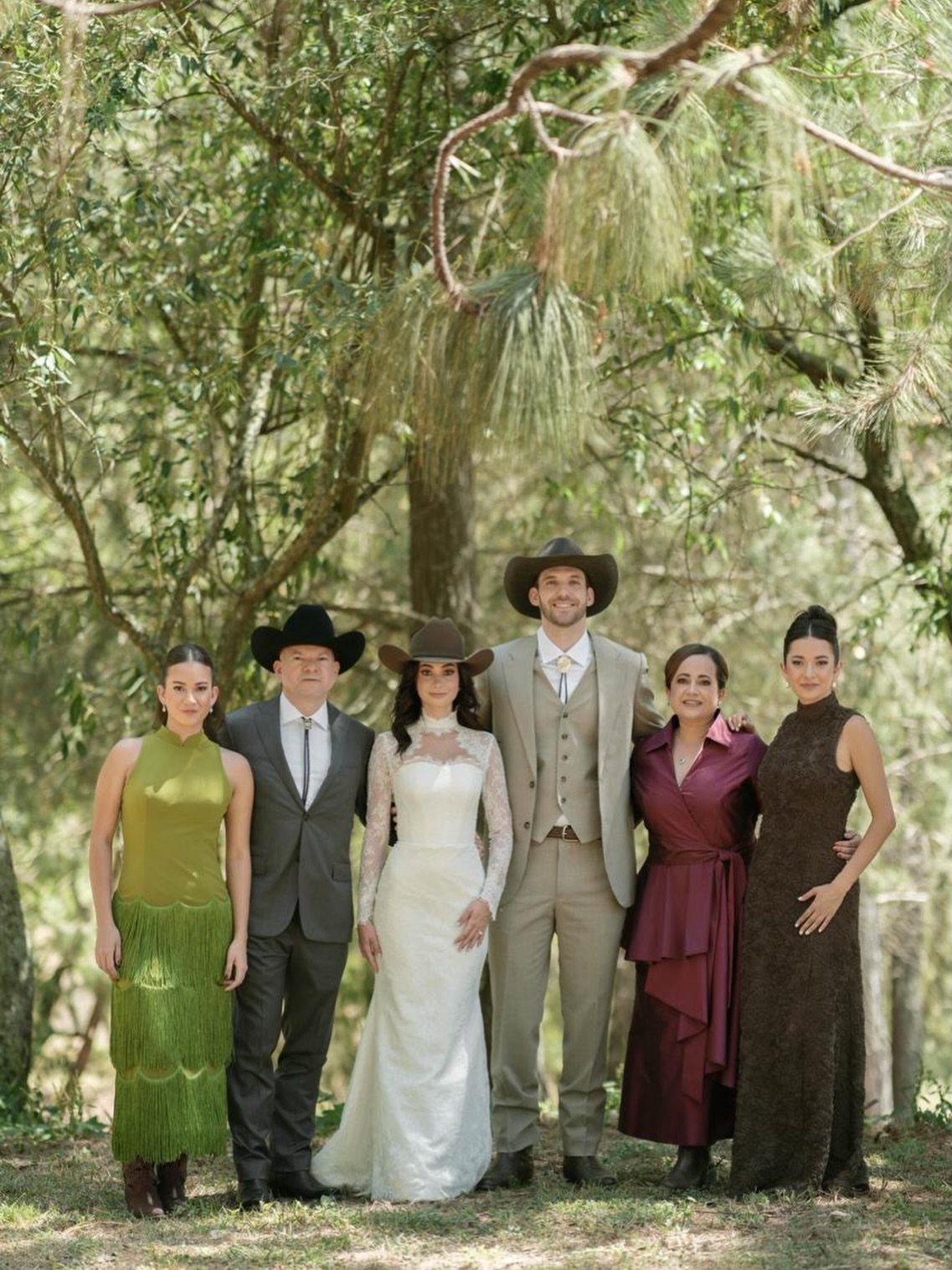
Holding a Western wedding in the woods combines 2 aesthetics that do not usually sit together, and the contrast is what makes it work. The forest provides the backdrop, and Western styling in clothing and details keeps the theme clear.
Choose a clearing with enough open space for seating and a clear sight line to the couple. Dense woods photograph darker than open fields, so plan your ceremony time around available light.
Guests in hats and boots will be walking on uneven ground. Mention that in your invitations so they can prepare.
25. Desert Oasis Wedding
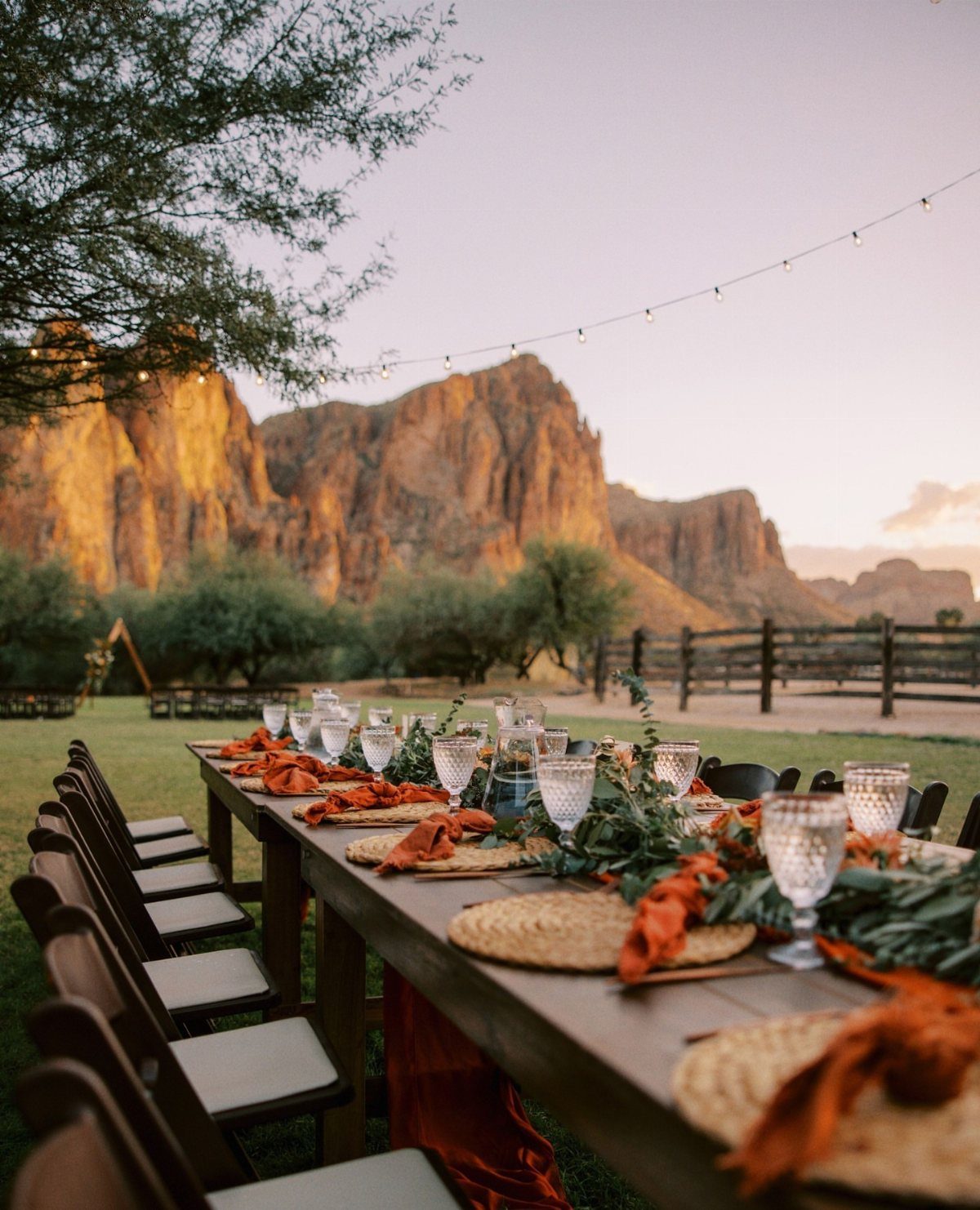
Red rock formations and cacti make the setting, so décor can stay minimal. The landscape does the work if you let it.
Pick a ceremony time that avoids midday heat. Early morning or late afternoon keeps guests comfortable and gives you softer light for photos.
Set tables with warm tones that pull from the surroundings.
Terracotta, rust, and amber echo the desert without competing with it. String lights overhead add definition once the sun drops.
Guests need shade during the day and warmth after sunset. Rent canopies or umbrellas for daytime events, and have blankets or pashminas ready for evening.
Keep Western Details Balanced
Western styling can lean rustic or stay refined, depending on which details you bring in and how many you use. A few light touches often read better than a full transformation of the space.
Not every Western element belongs at every wedding.
If cowhide or heavy fringe does not match your taste, leave it out. A flowing silhouette with lace and a hat can give you the look without committing to full cowgirl styling.
Mixing traditional wedding elements with Western details keeps the day feeling balanced. Satin paired with boots and a felt hat carries the look while the ceremony itself stays formal.
Consider the setting when you pick which details to include. Natural surroundings and rustic architecture carry part of the style on their own, so you can layer in Western touches without covering every surface.
Plan Outdoor Guest Comfort
If your ceremony or reception happens outdoors, plan for guest comfort ahead of time. Provide shade, seating, and water or drinks so people can stay through the event without overheating or standing the whole time.
Cowboy boots make sense on uneven ground. Soft soil, tall grass, and rodent holes can trip someone in heels, and boots give better footing in a field or pasture setting.
Check the ground conditions before the day. If the surface is rough or muddy, let guests know so they can dress accordingly.
Set up shaded areas near the ceremony site and reception if the venue does not already have covered space. A canopy or a row of umbrellas keeps guests out of direct sun during long stretches outdoors.
Check Animals and Guest Needs
If you are using a horse for an entrance or exit, make sure it is trained and will not spook in a crowd. A nervous horse in the middle of a ceremony is a safety risk, not a photo opportunity.
Plan for guests who do not eat meat. A barbecue buffet needs a vegetarian option so everyone has something filling to eat, not just side dishes.
Coordinate animal logistics with your venue before the day.
Frequently Asked Questions
What is a traditional Western wedding?
A traditional Western wedding centers on country life and outdoor settings, with rustic details like wildflowers, mixed wood furniture, and warm earthy colors.
The atmosphere is relaxed and homespun, often held at barns, ranches, or farms. Guests dress casually in boots and hats, and the celebration includes barbecue and dancing rather than formal plated service.
What do I wear to a Western themed wedding?
Cowboy boots and a hat are the basics. Pair them with denim, leather accents, or flowy dresses in earthy tones like tan, rust, or sage.
Men can wear tailored suits with bolo ties instead of standard neckties. Skip formal ballroom shoes and heavy fabrics in favor of comfortable, outdoor-friendly clothing.
What are some simple and rustic wedding ideas?
Hay bale seating covered in blankets, a wooden ceremony arch, and wildflower bouquets keep the setup simple and rustic. Use kraft paper invitations with twine ties, and serve barbecue buffet-style.
What is the dress code for a Western theme wedding?
The dress code trades formal ballgowns and suits for cowboy boots, hats, and denim or leather accents.
Guests can wear flowy dresses, Western-style shirts, or tailored separates that work for an outdoor setting. Turquoise jewelry and bolo ties fit the theme without requiring full costume.
What are rustic wedding colors?
Rustic wedding colors are warm and earthy: terracotta, rust, sage, tan, dusty rose, browns, and weathered oak tones.
Metallic accents in bronze, copper, or silver add dimension. These colors pair well with natural materials like wood, leather, and stone.
How to have a cowboy wedding?
Dress the groom in a cowboy hat, boots, and a bolo tie or leather vest instead of a traditional suit.
Use horseshoes as escort cards, add cattle skull décor, and set up a saloon-style wooden bar. Hay bale seating and a barbecue buffet complete the cowboy atmosphere.