Floral trends span simple all-white bouquets to architectural ceremony installations, depending on how much structure and labor the design requires.
The palette you choose sets the mood: jewel tones and sunset gradients work for candlelight and evening receptions, while pastels and whites suit natural daylight and garden settings.
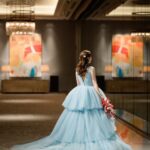
A loose meadow-style arrangement along the base of a long table reads as informal and garden-inspired, while a cascading bouquet adds trailing vine below your hands for full-length ceremony photos.
1. Jewel-Tone Wedding Flowers
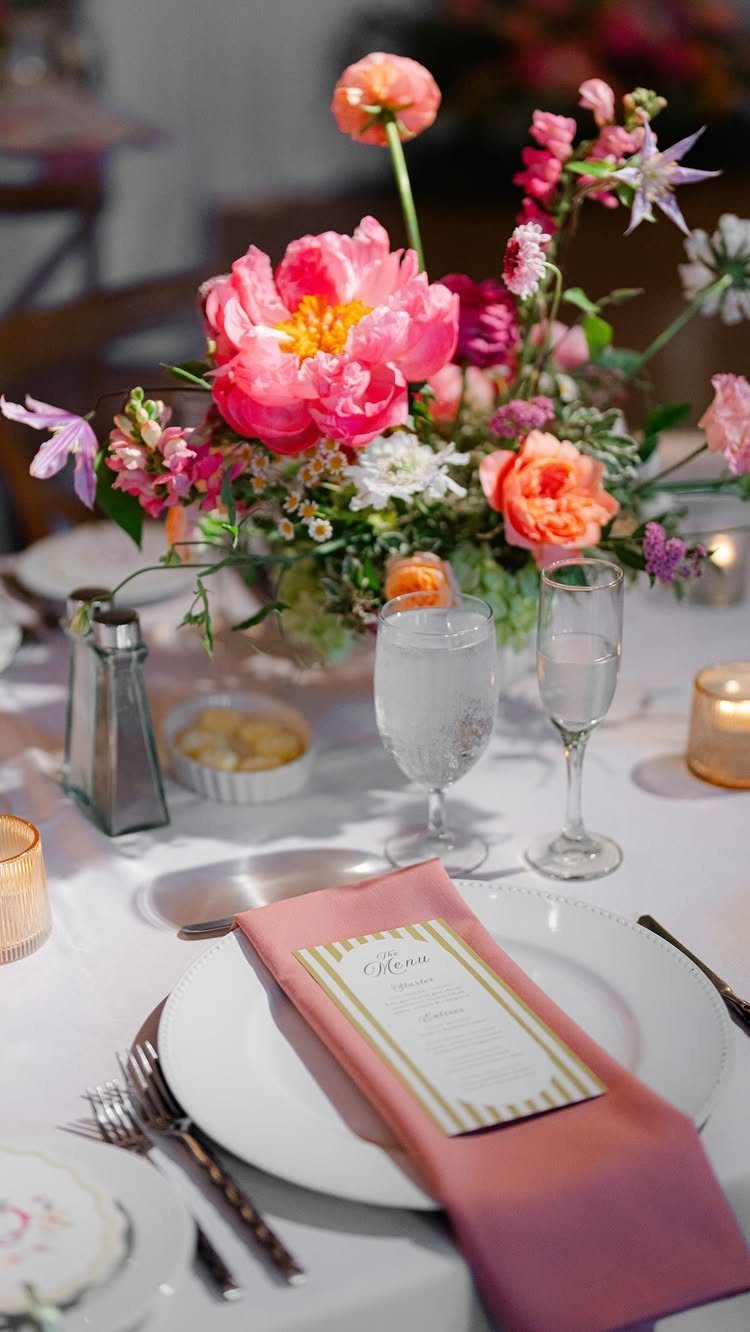
Jewel-tone flowers bring rich, saturated color to the table without the softness of pastels. Think deep fuchsia, burnt orange, emerald and sapphire, often mixed in a single arrangement.
This palette reads formal but not traditional, and it photographs with more punch than lighter shades. If your venue has warm wood or jewel-toned linens, these flowers pull the whole room together instead of sitting on top of it.
The color itself does most of the work here. You can keep the arrangement simple and still get a strong visual.
2. Sculptural Installations
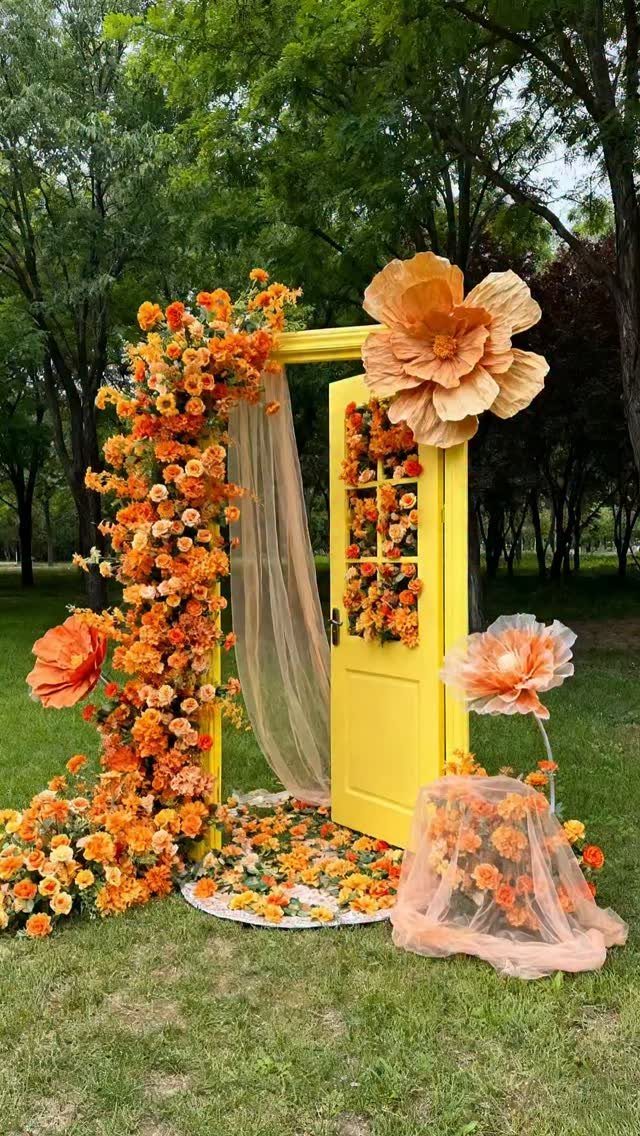
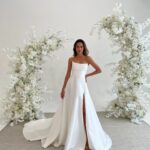
Large floral displays can frame a ceremony backdrop, mark an entrance, or anchor a lounge area when you treat them as architecture instead of decoration. The structure matters as much as the flowers.
Build around a fixed frame: an archway, a doorway, a suspended grid.
Plan this style around a particular architectural detail or backdrop you want to highlight. It takes more labor and material than centerpieces, so budget accordingly and plan the setup timeline with your florist or rental company.
3. Wild and Whimsical Bouquets
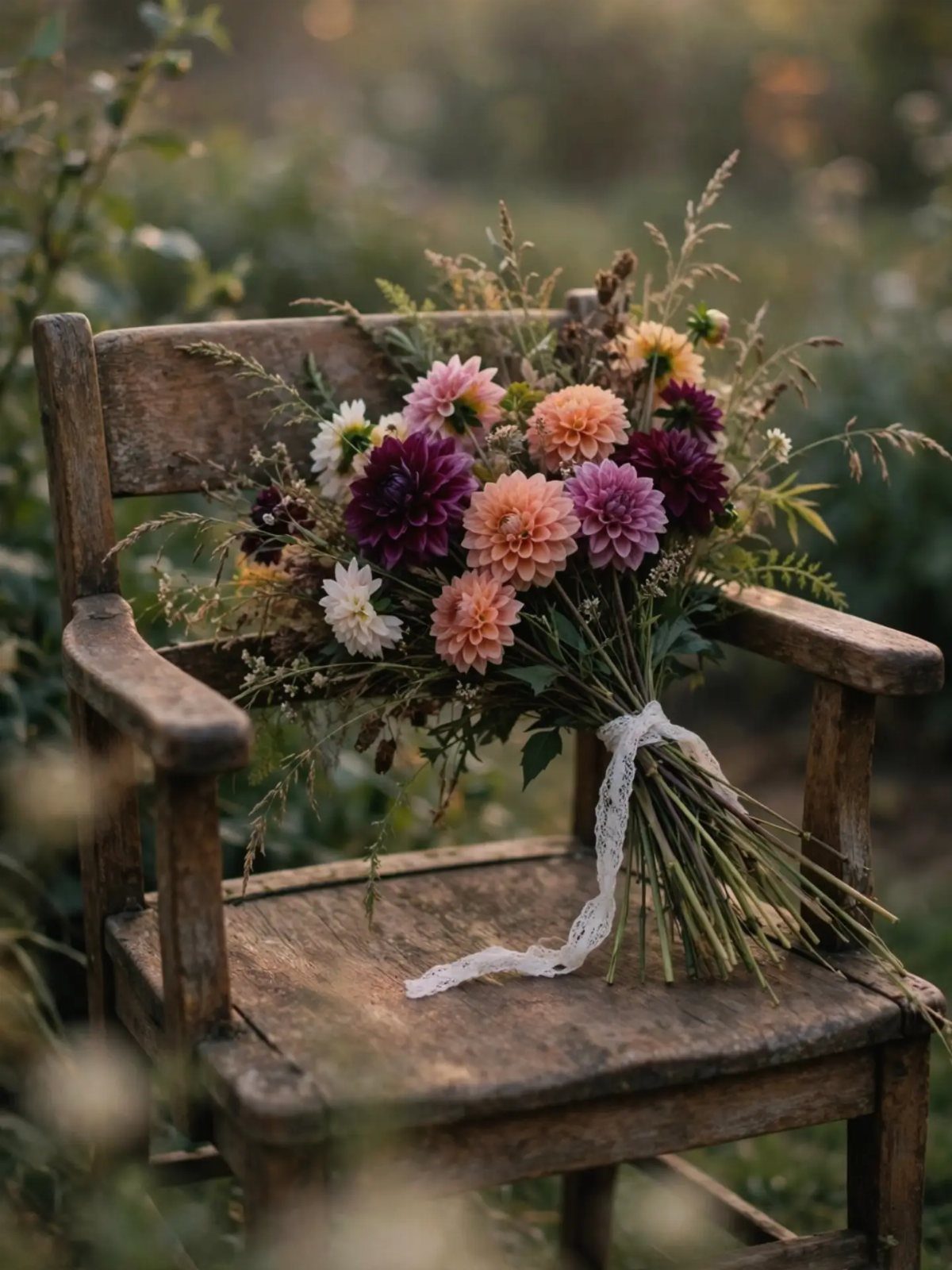
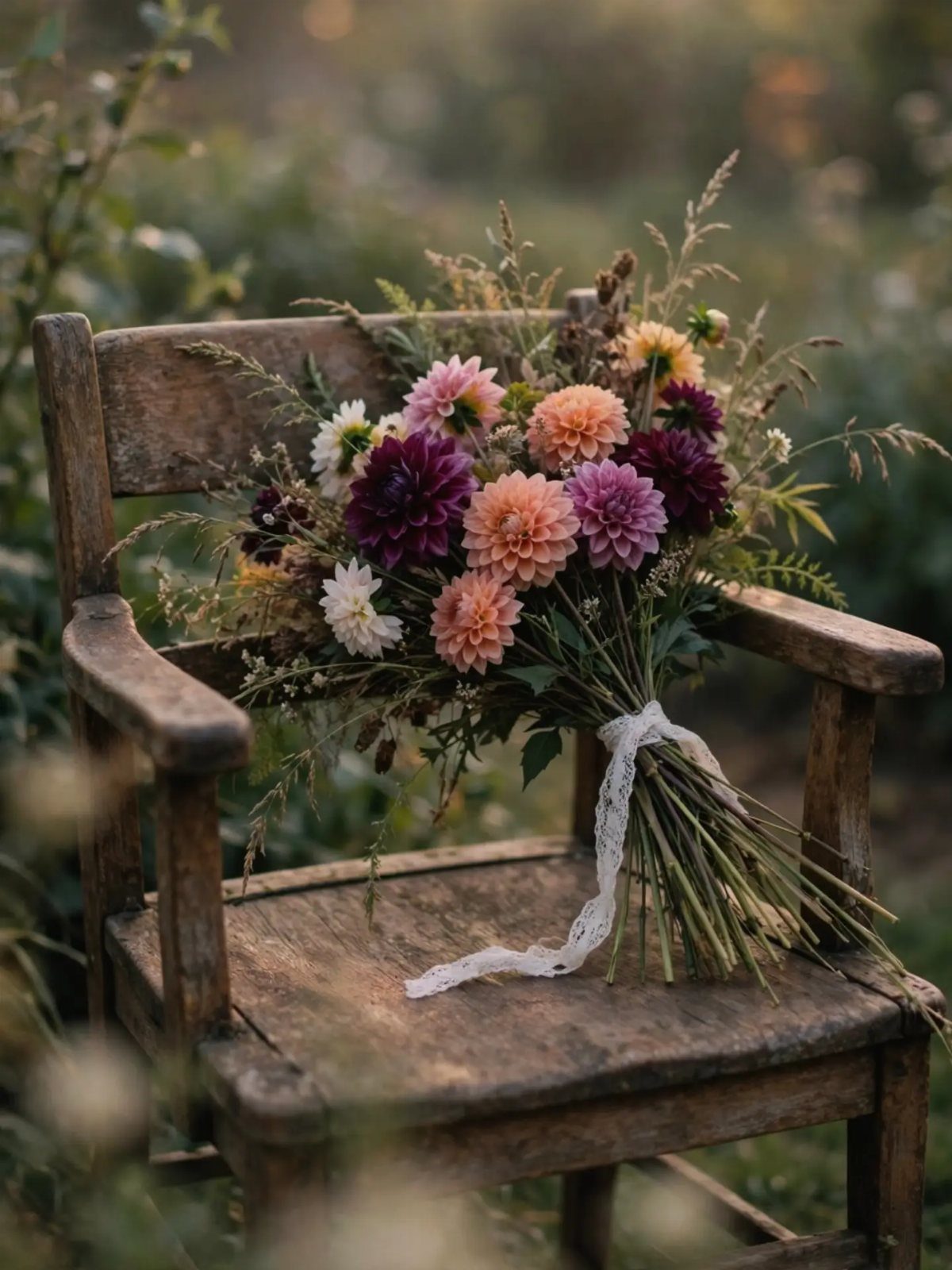
A loose, natural bouquet skips the tight spiral stem and structured dome in favor of flowers that look like you picked them yourself.
Stems stay visible, blooms sit at different heights, and a few pieces of greenery or seedheads trail out asymmetrically.
This style suits garden weddings and relaxed venues. It also hides imperfect stems better than a formal bouquet, which can lower your per-stem cost if you are working with a farmers market or grocery store flowers.
Tie the stems with ribbon or twine and leave the binding visible. The rough finish is part of the look.
4. Cascading Florals
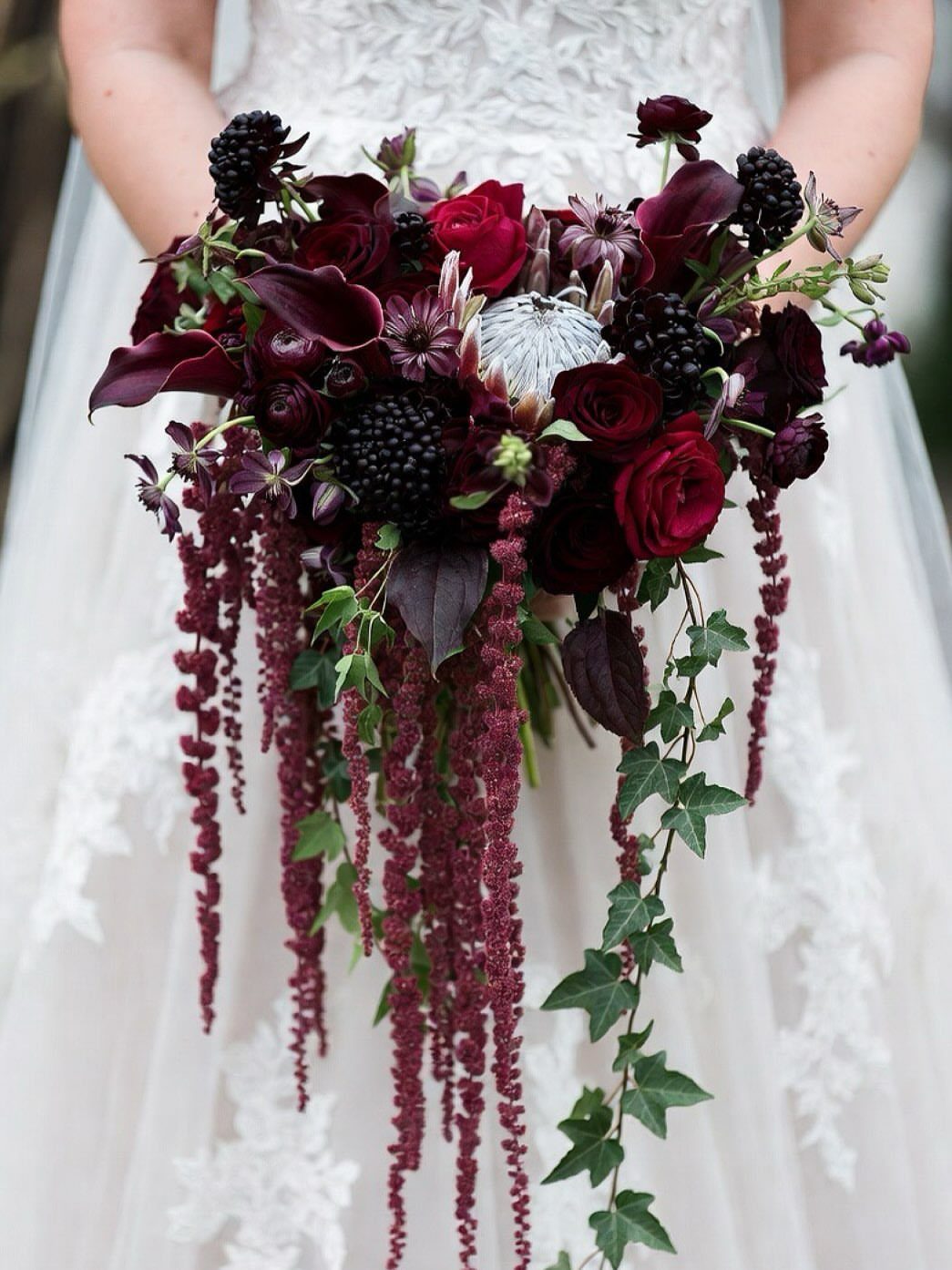
Flowers arranged to spill downward in a long, flowing shape give you a dramatic silhouette without adding width. Trailing amaranthus, ivy, or jasmine vine extends the bouquet below your hands, sometimes by a foot or more.
This style suits ceremonies where full-length photos matter more than close-up detail. It also balances a tall bride or a gown with a long train.
The extra length makes the bouquet heavier and harder to hold for long periods. If your ceremony runs long, ask your florist to keep the trailing section lightweight or plan to set it down during readings.
5. Personalized Wedding Flowers
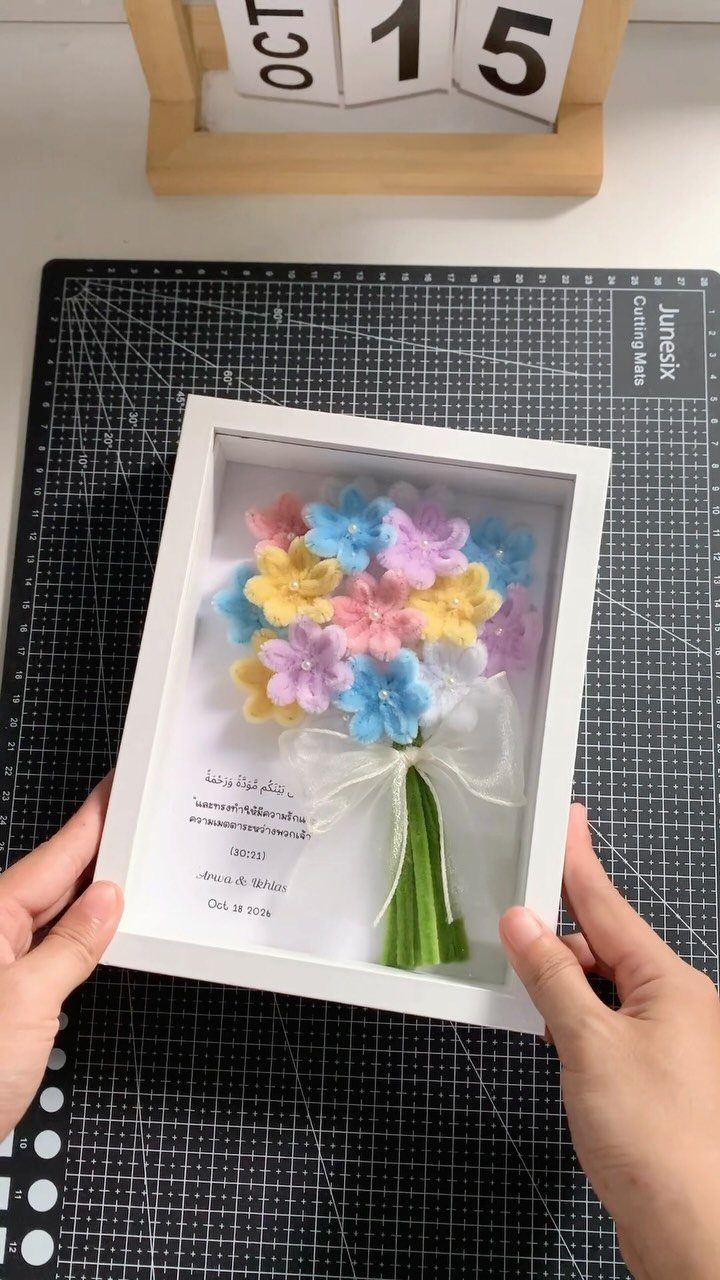
A preserved bouquet inside a shadow box with personalized text turns the flowers into a keepsake you can hang. The message might include your names, wedding date, a verse, or a phrase in a language that matters to you.
Fabric flowers or high-quality silk work better than dried natural blooms here because they hold their color and shape indefinitely. The box protects them from dust and fading.
This is a project you can do after the wedding when you have time to arrange the layout and choose the frame.
It also works as a gift for parents or bridal party members using smaller arrangements from the ceremony or reception.
6. All-White Bouquets
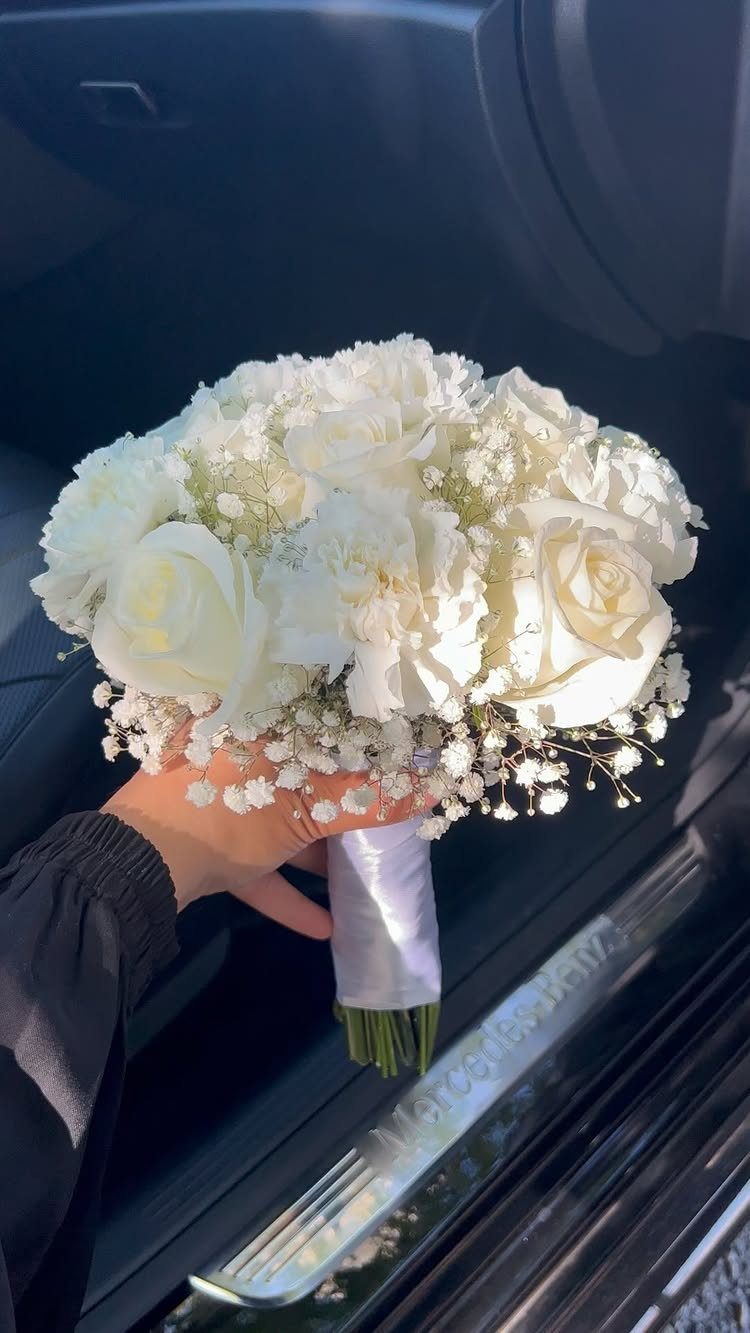
White blooms in every texture, from roses to carnations to baby’s breath, give you a classic bridal bouquet that pairs with any dress color and never competes with your other details.
This palette works in any season and suits formal or minimalist weddings especially well. It also photographs cleanly, with no color cast to correct later.
If all-white feels too plain, add greenery or choose white flowers with visible centers in yellow or green. That gives you texture and depth without bringing in a second color.
7. Meadow-Style Reception Tables
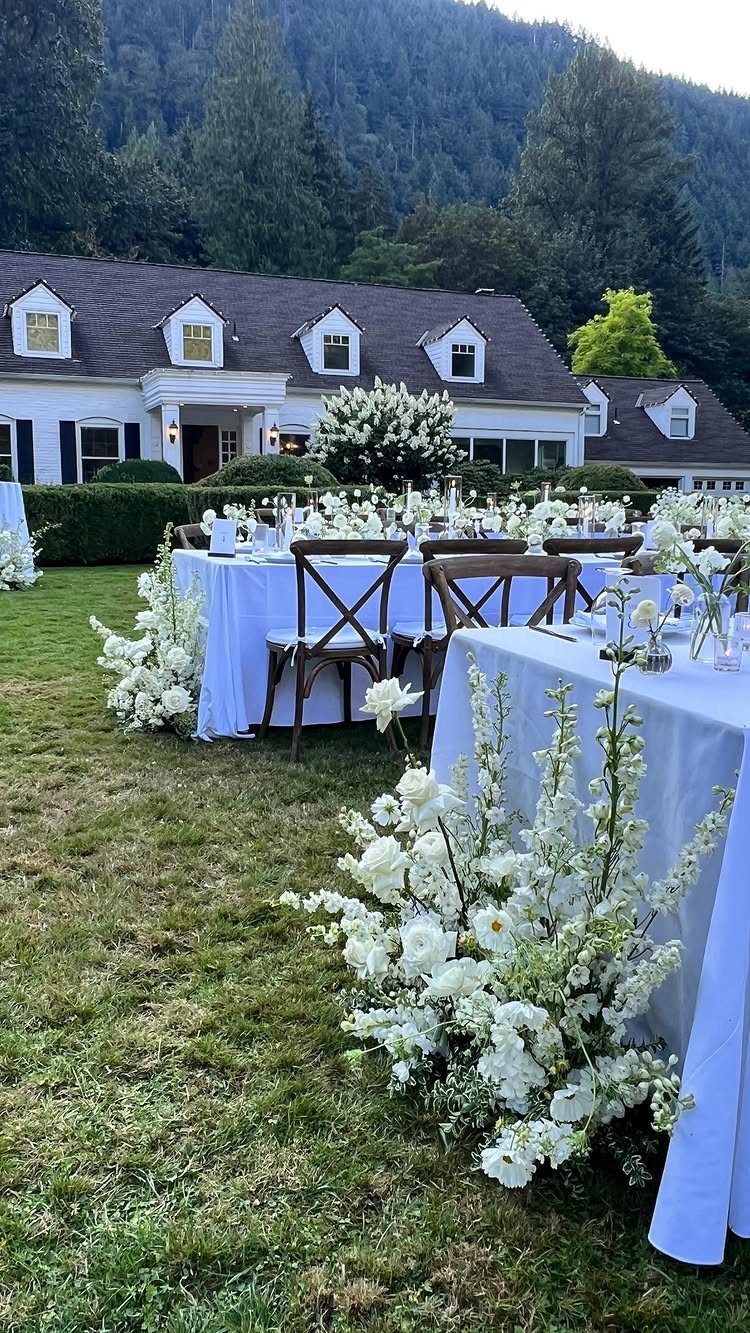
Flowers arranged low and loose along the base of a table give you the look of a meadow without the height that blocks conversation.
Blooms sit close to the cloth, stems stay visible, and the arrangement spreads horizontally instead of rising up.
Long rectangular tables suit it well when you want continuous color without centerpieces. It also leaves the middle of the table open for serving dishes or candles.
Keep the flowers short enough that guests can see across the table. If the arrangement is too tall, it functions like a centerpiece and loses the meadow effect.
8. Burgundy and Olive
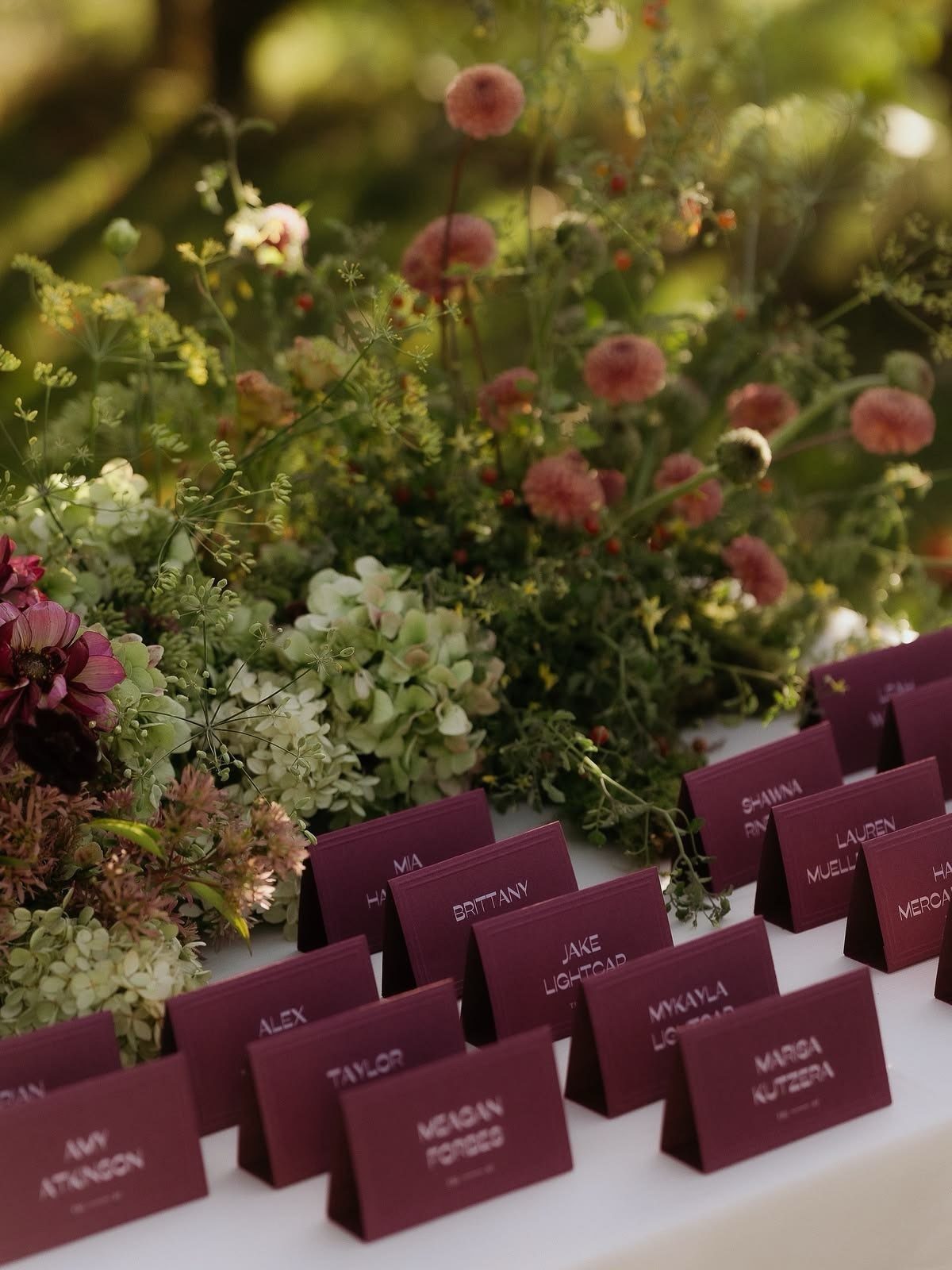
Burgundy paired with olive green gives you a fall or winter palette that reads formal without leaning traditional. The deep red anchors the arrangement, and the muted green keeps it from feeling too heavy.
This combination suits evening receptions and candlelit settings especially well. It also photographs with more depth than burgundy alone, which can flatten in low light.
If your venue has wood tones or neutral linens, this palette pulls them together. Add cream or ivory blooms if you need to lighten the overall look without losing the richness.
9. Blue Palettes
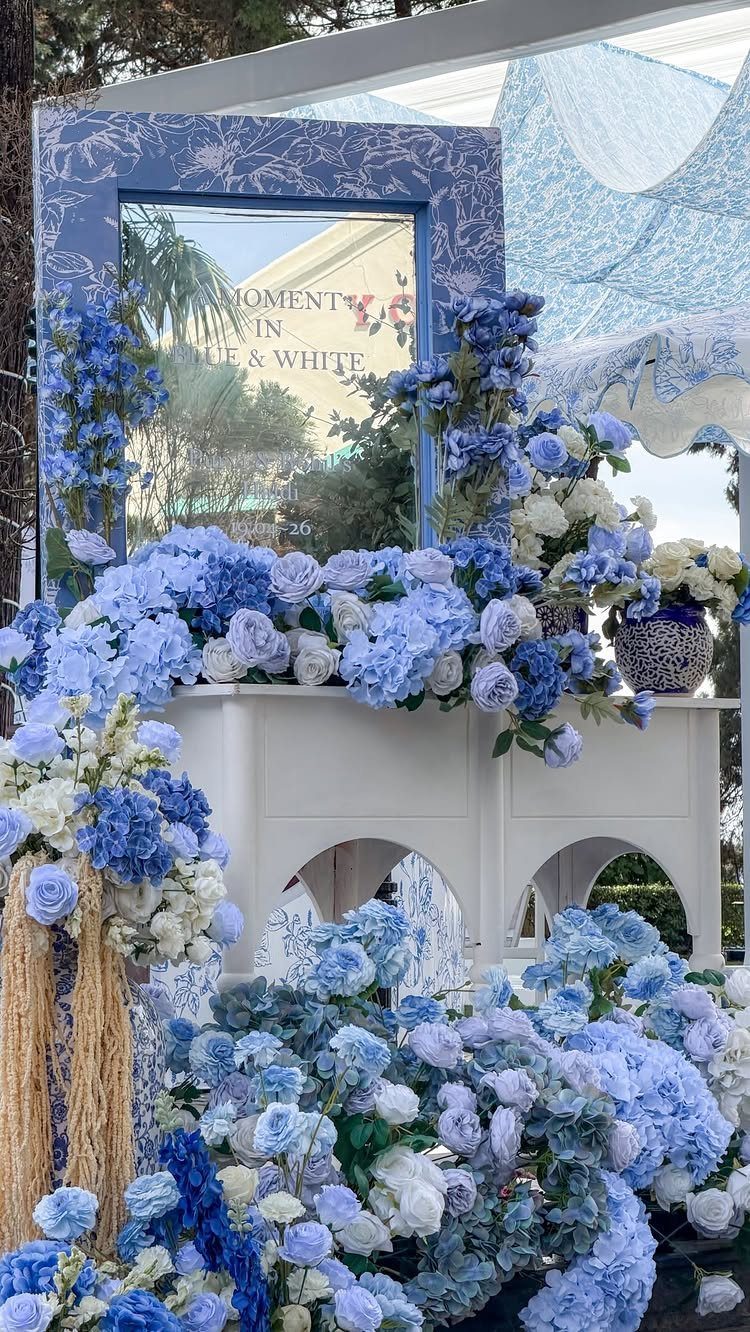
Blue flowers give you a cooler palette that stands out from the usual warm tones most weddings use. Pale blue reads soft and romantic, while cobalt or navy adds formality and contrast.
Blue works year-round but suits coastal or spring weddings particularly well. It pairs cleanly with white, silver, or gray and does not compete with most dress colors.
True blue blooms are harder to source than other colors, so budget a bit more per stem or plan on using dyed flowers if you need a specific shade. Hydrangeas and delphiniums are reliable natural options.
10. Petite Bridal Bouquets
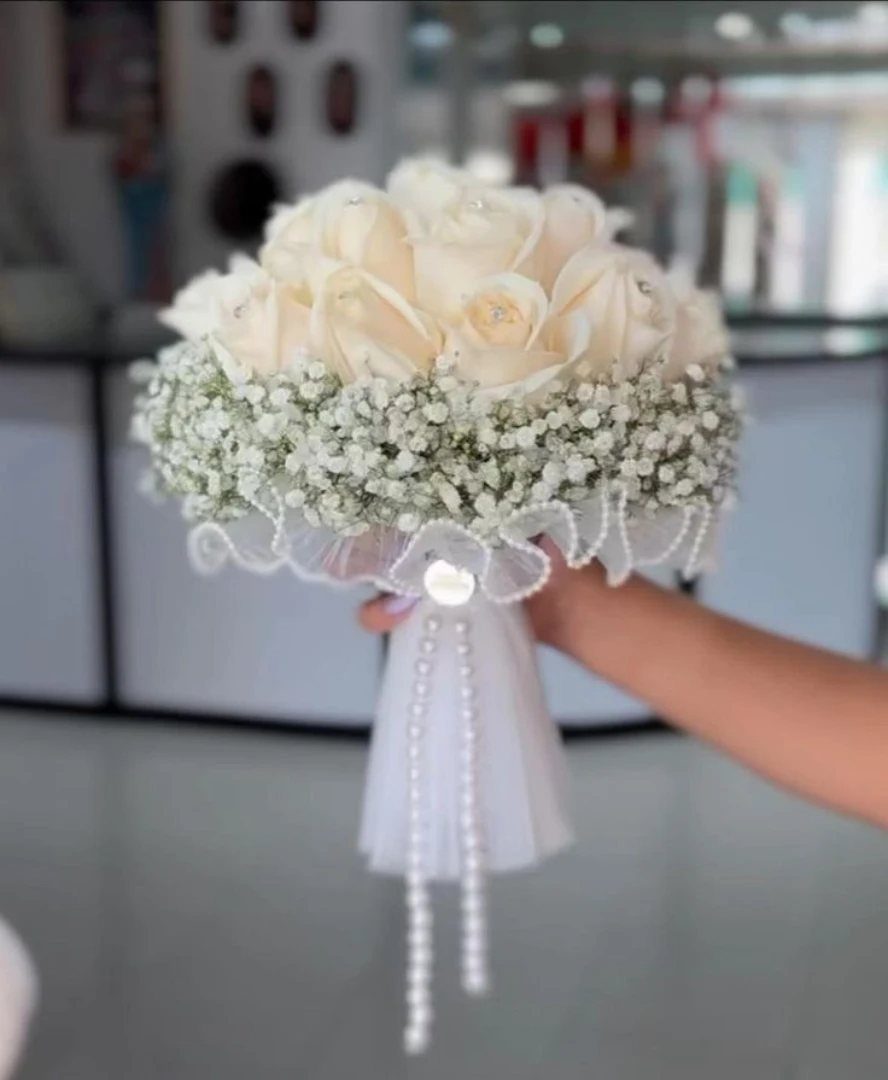
A small bouquet, sometimes no wider than your hand, gives you a modern silhouette that does not hide your dress or feel heavy to carry. The scale suits shorter ceremonies and minimalist wedding styles.
This size works especially well with sleek gowns or dresses with detailed bodices, where a large bouquet would cover the design. It also costs less in both flowers and labor.
If you are tall or your dress has volume, a petite bouquet can look out of proportion. In that case, keep the bouquet small but add trailing ribbon or greenery to extend the line downward.
11. Basket Bouquets
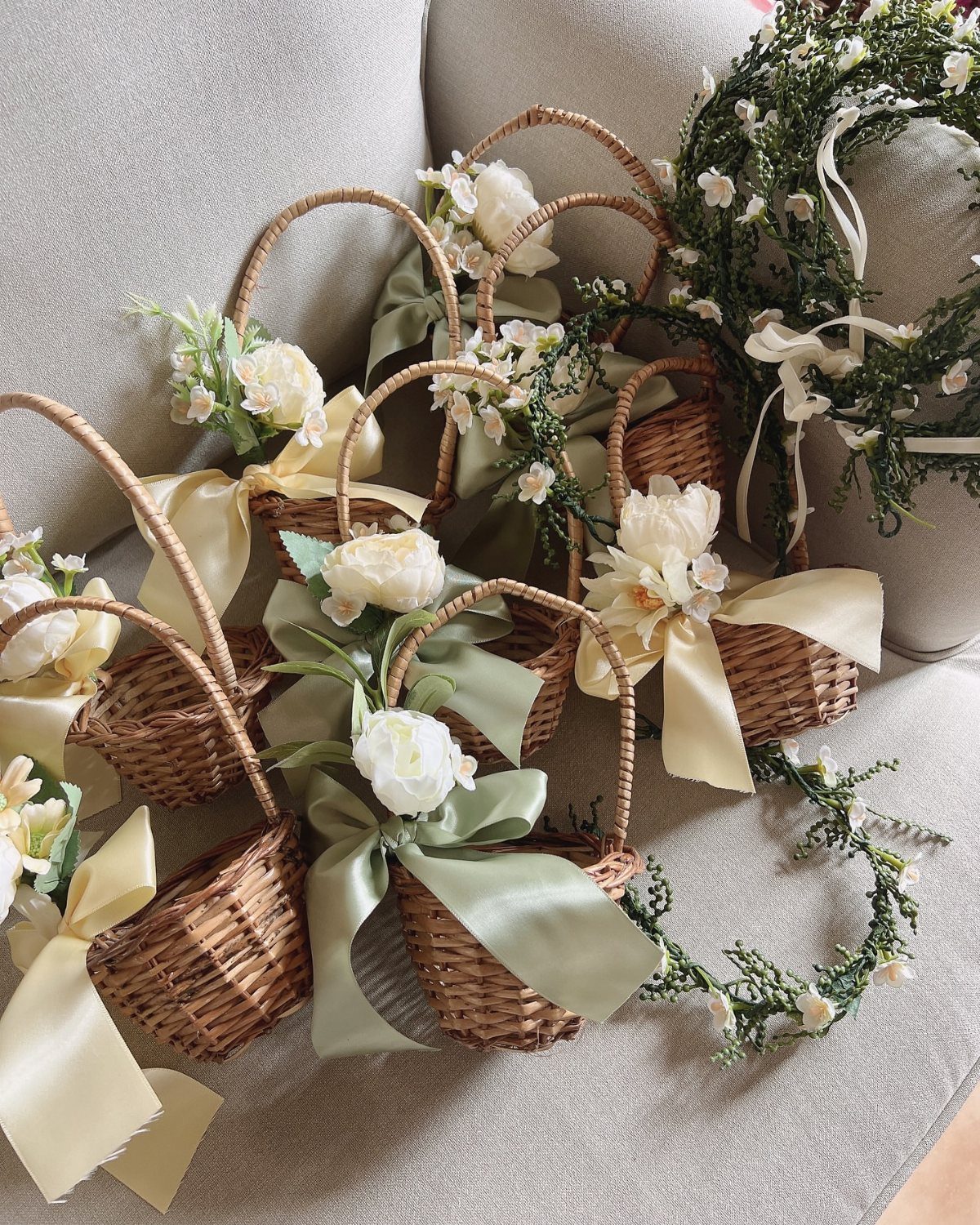
A basket filled with flowers gives you something to carry that feels casual and lets you set it down easily while you say your vows.
The handle takes the weight off your wrist, and the basket itself becomes part of the look.
Basket bouquets also work for flower girls, who can drop petals from the basket as they walk.
Choose a basket with a sturdy handle and line it with plastic or floral foam to hold water. Without a liner, the flowers will dry out quickly, especially in warm weather.
12. Bouquet Purses
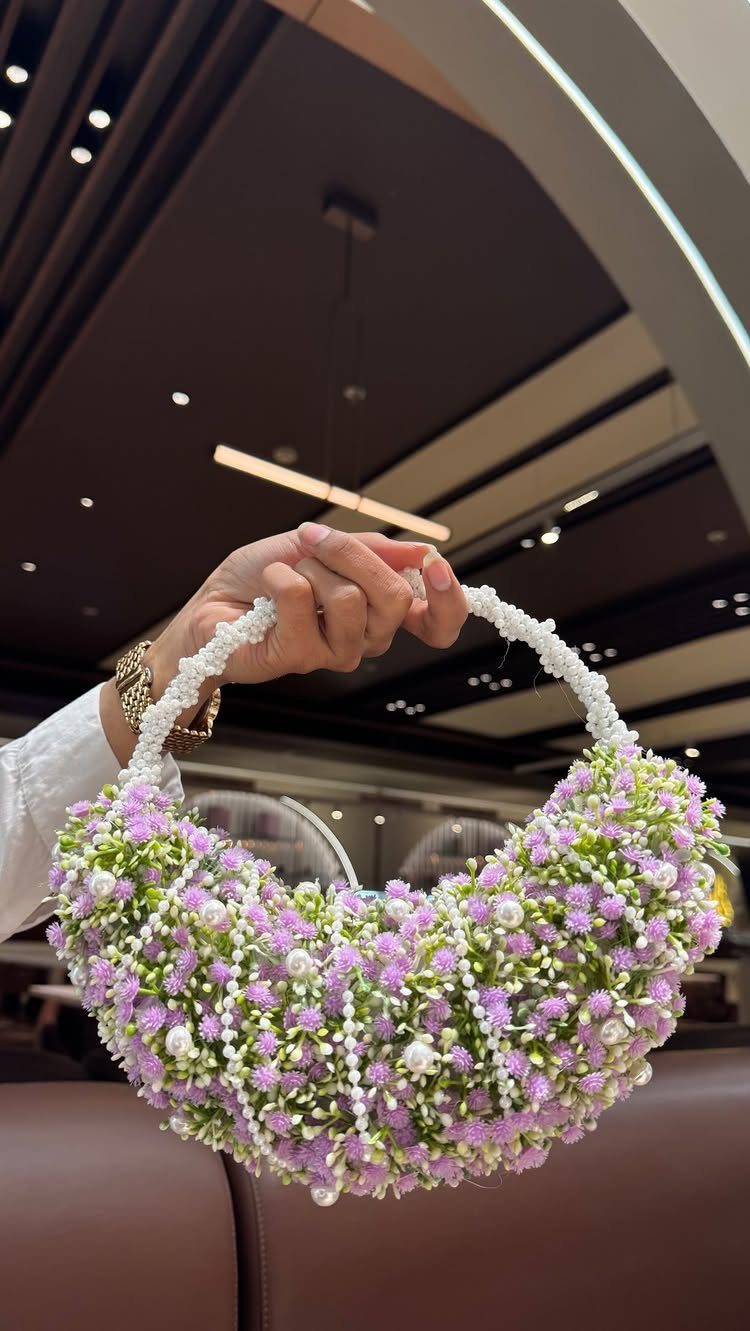
Flowers wired and arranged into the shape of a small purse let you carry blooms without a traditional bouquet stem. The handle sits over your wrist or in your hand, and the whole piece functions as both accessory and arrangement.
This style suits fashion-forward weddings where the details matter as much as the overall look. It also works if you want to carry something smaller and more structured than a loose bouquet.
Expect to pay more for this than a standard bouquet because the construction takes longer and requires more wiring. The piece is also fragile, so handle it carefully and avoid setting it down on hard surfaces.
13. Sunset-Inspired Palettes
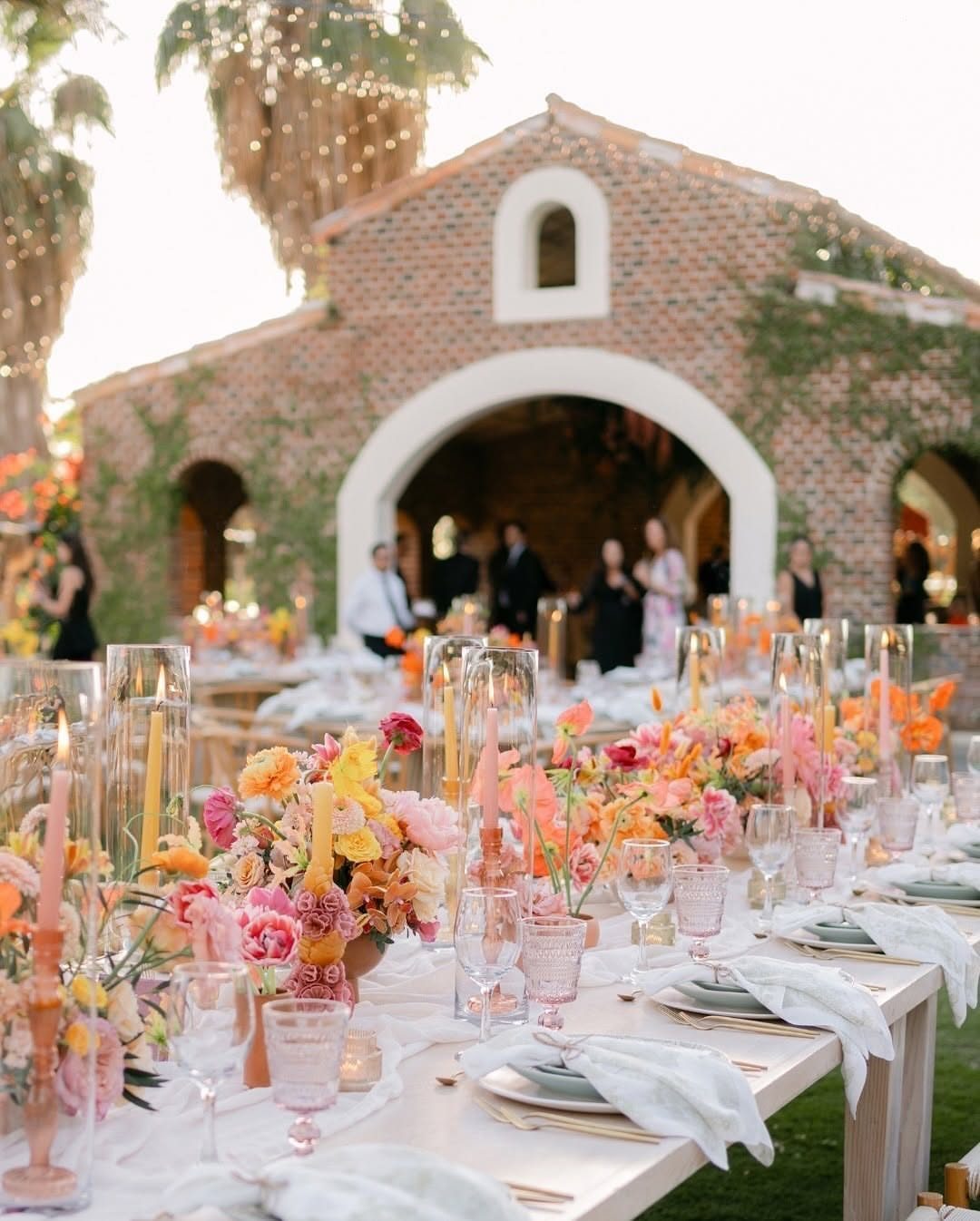
Orange, coral, pink and yellow arranged together give you the warm glow of a sunset without committing to a single color. The mix reads romantic but not soft, and it suits outdoor evening receptions especially well.
This palette photographs with more dimension than monochrome arrangements because the gradient between tones creates natural depth. It also works across seasons if you shift the balance toward cooler pinks in spring or deeper oranges in fall.
Candles placed near the flowers amplify the warm tones in low light.
14. Soft Pastel Palettes
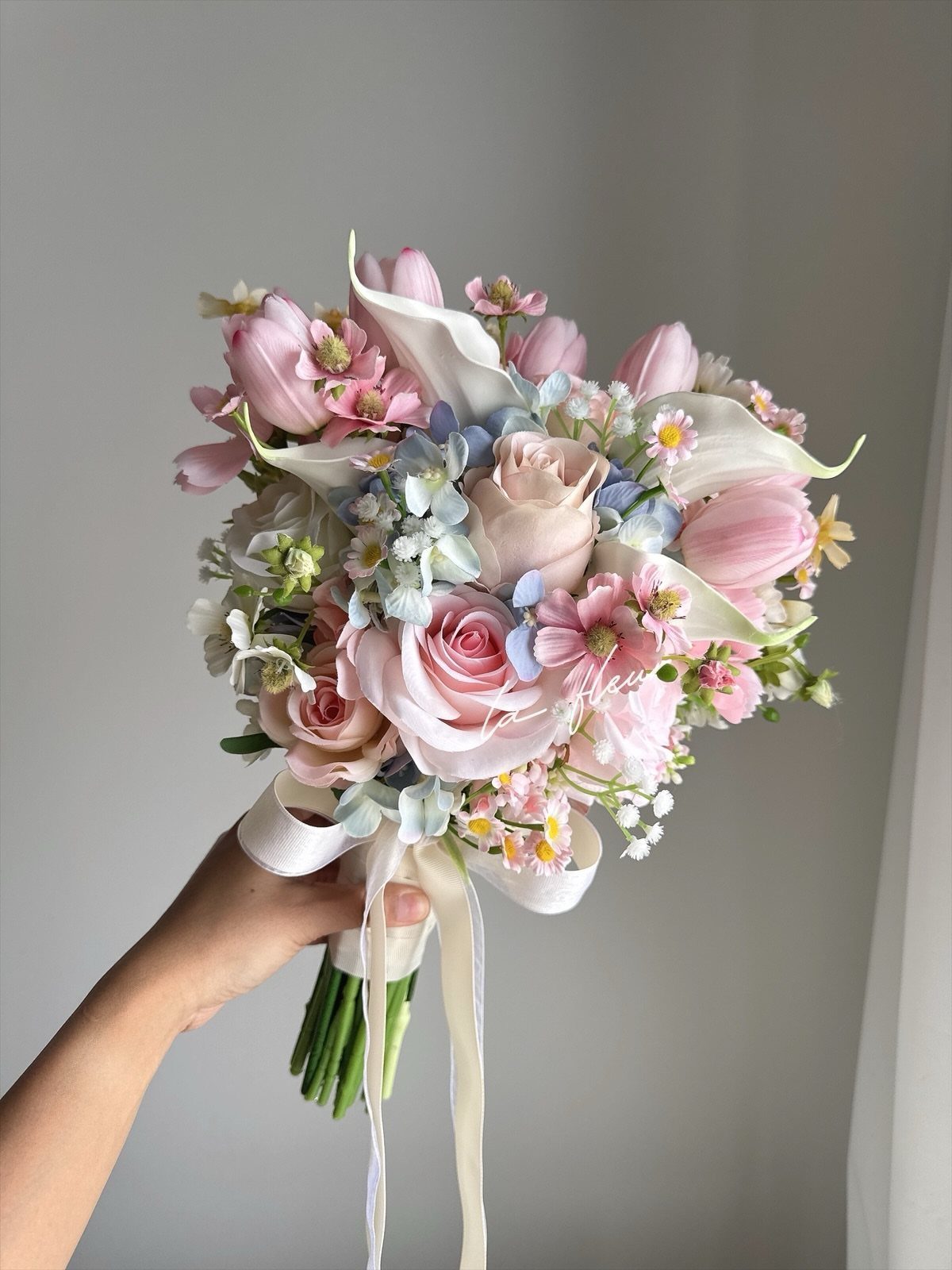
Blush pink, powder blue, soft peach and white give you a gentle palette that does not lean too sweet when you keep the arrangement loose and the stems visible. The colors layer without sharp edges.
Garden ceremonies and spring receptions in particular benefit from this softer palette. It also pairs well with natural light and outdoor photography, where pastels hold detail better than saturated tones.
If the palette feels too light, add a few deeper blooms in mauve or dusty rose to anchor the arrangement without losing the softness.
15. Statement Hydrangeas
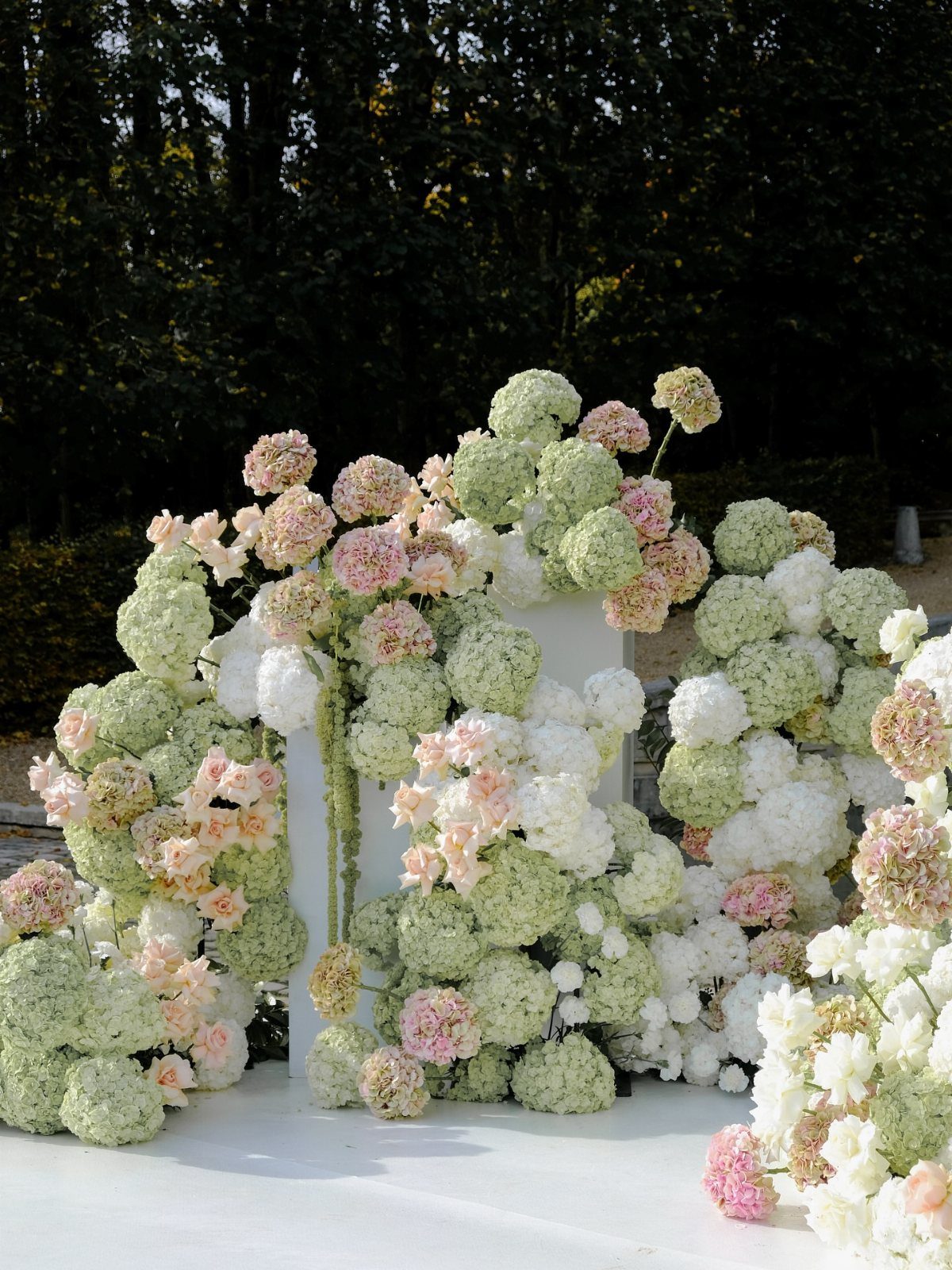
Hydrangeas massed together in white, green and blush create a sculptural installation with volume and texture that smaller blooms cannot match. Each head fills space quickly, so you need fewer stems to build a large display.
This approach works for ceremony backdrops, entrance installations, or focal points where you want impact without intricate arranging. The round shape of the blooms creates a soft, cloud-like form that photographs well from a distance.
Hydrangeas wilt quickly without water, so keep them hydrated until the last possible moment and avoid placing them in direct sun or heat.
16. Fruit and Floral Tablescapes
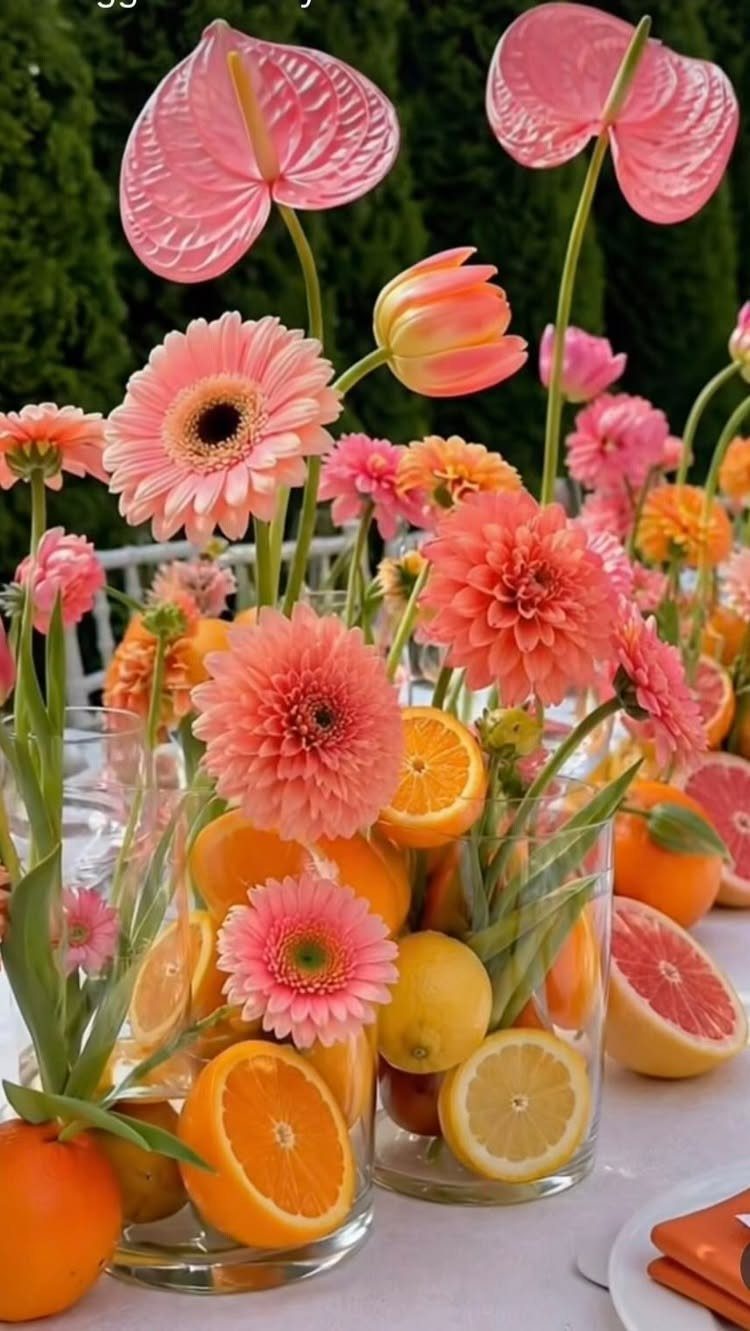
Citrus sliced and layered inside clear vases adds color and texture to your table without additional florals. The fruit sits in water with the stems, so it functions as part of the arrangement rather than decoration placed around it.
This style suits warm-weather weddings and outdoor receptions where the brightness of the fruit complements the setting. It also costs less than filling every vase entirely with flowers.
Pick fruit that stays firm when submerged. Berries and stone fruit break down too quickly, but citrus, apples and pears stay firm for several hours.
17. Ceremony Altar Flowers
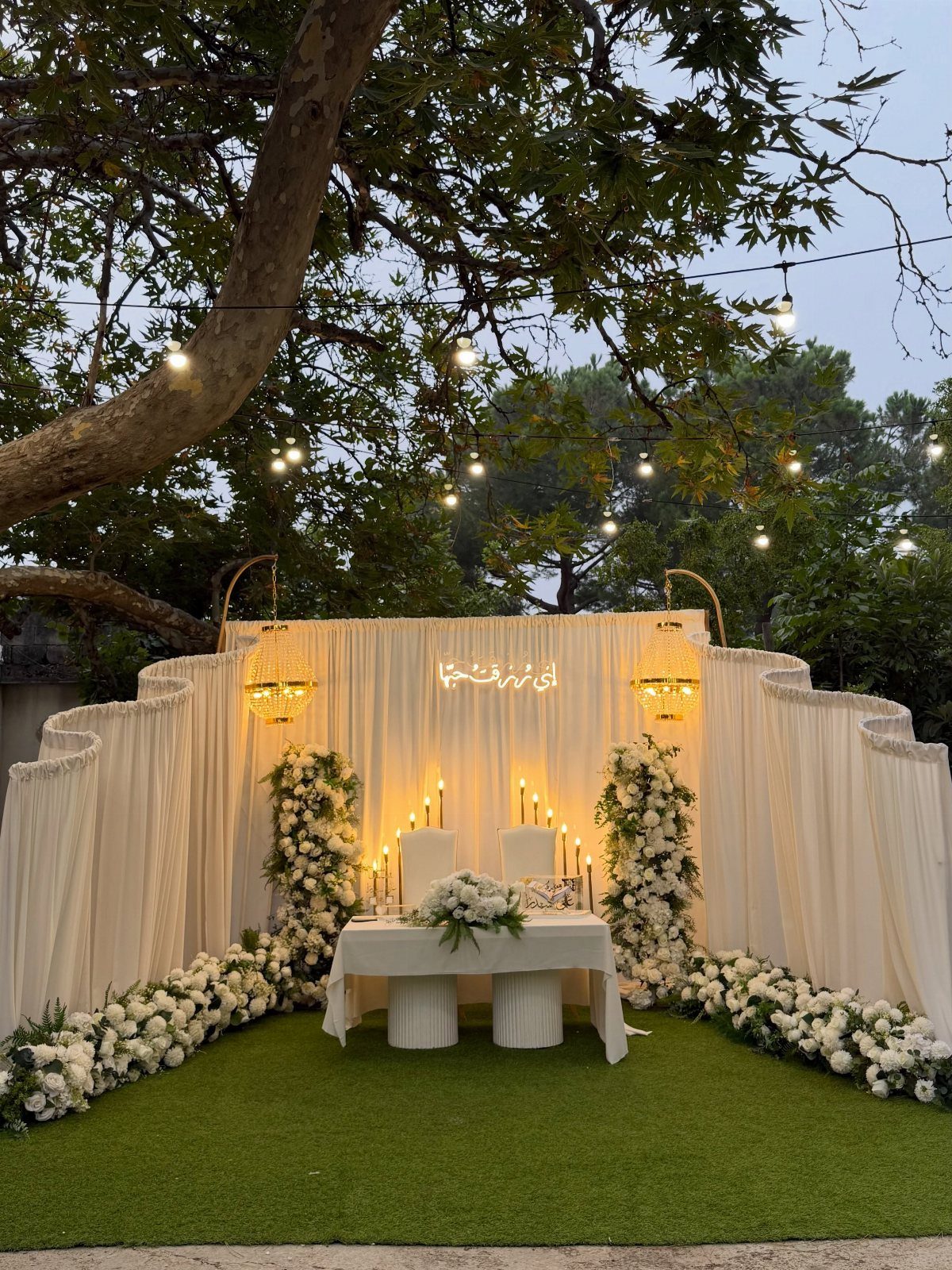
Large floral arrangements and draped fabric at the ceremony altar give you a finished backdrop that photographs well and anchors the space, while simpler centerpieces at the reception keep your overall floral budget in check.
This approach makes sense when ceremony photos matter more than reception detail shots, or when your ceremony and reception happen in different locations and you cannot reuse the arrangements.
If you want to move the altar flowers to the reception, plan the installation so the pieces can be broken down and repositioned quickly between events.
18. Silver and Chrome Accents
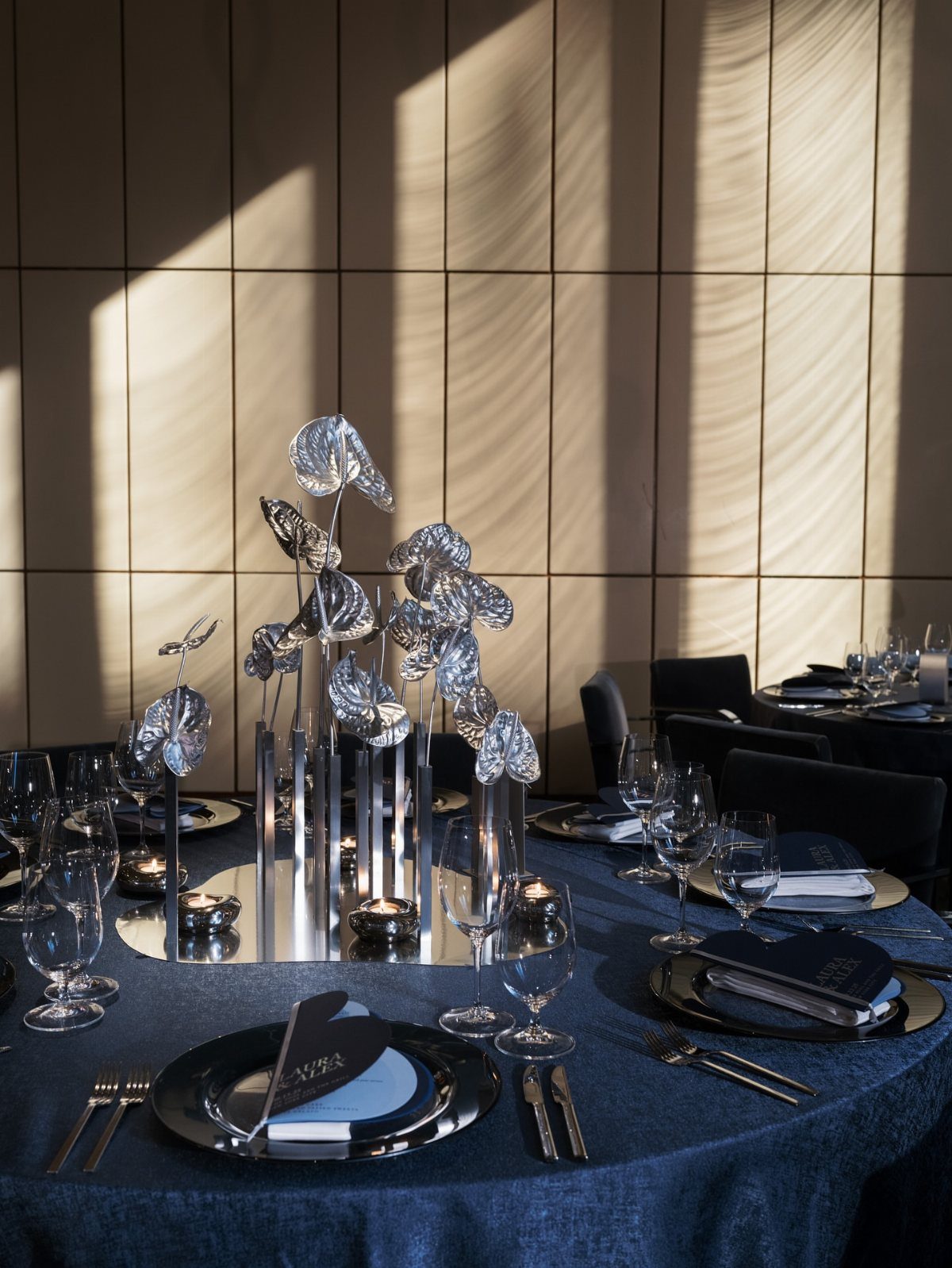
Silver and chrome finishes in vases, chargers, or metallic flower forms give you a cool, modern look that contrasts with the warmer gold and brass most weddings use. The reflective surface adds light without adding color.
This palette suits contemporary or minimalist weddings, and it pairs cleanly with jewel tones, white, or icy pastels. It also photographs sharply in both natural and artificial light.
Chrome reads more industrial than silver, so choose based on your venue. Silver suits formal spaces, while chrome works better in lofts or modern event halls.
19. Asymmetrical Calla Lily Bouquets
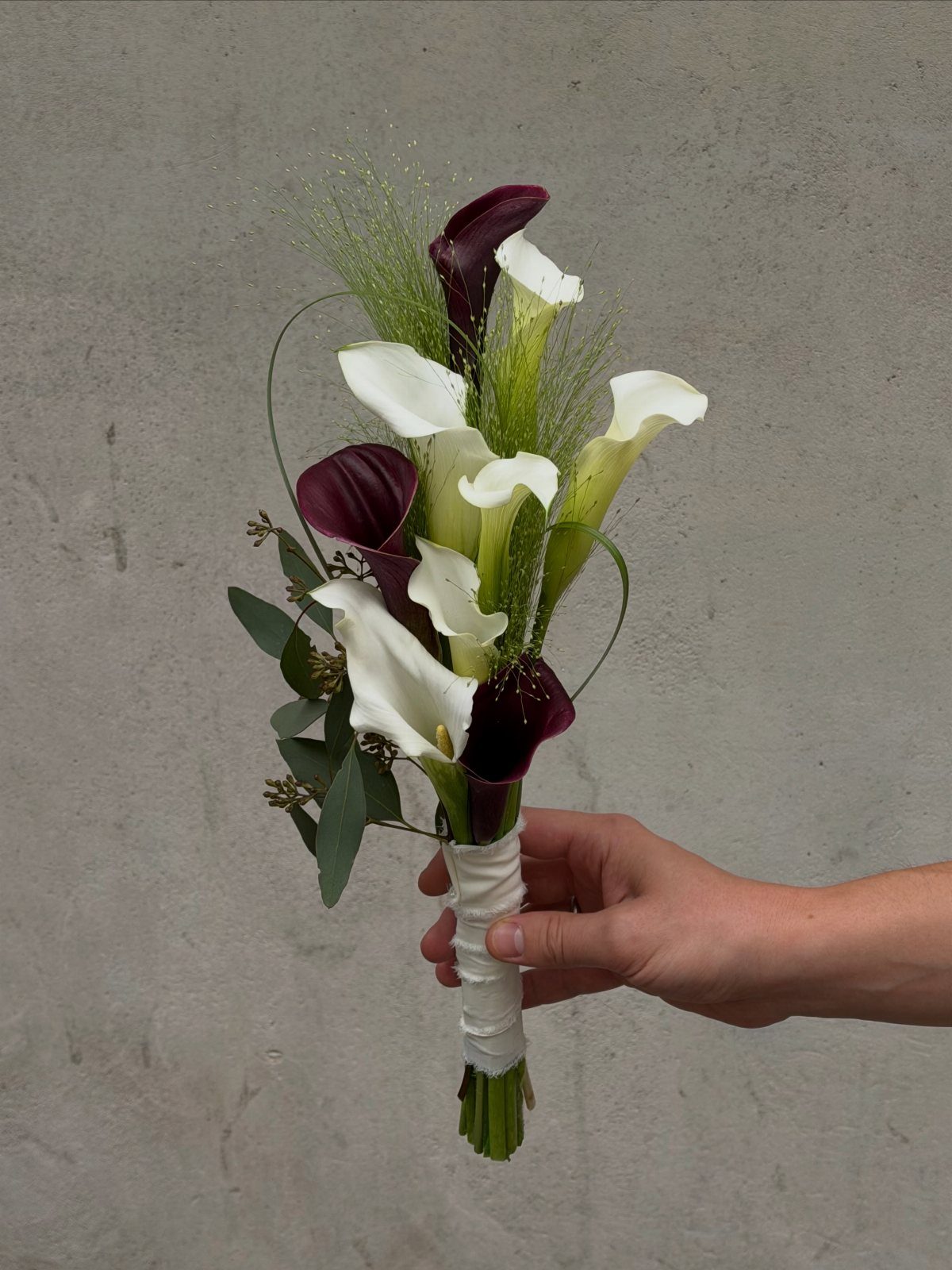
Calla lilies arranged off-center, with stems crossing at different angles, give you a bouquet that moves instead of sitting symmetrically in your hand. The shape follows the natural curve of the stems rather than forcing them into a round cluster.
This style suits modern or minimalist weddings where you want structure without formality. It also works if your dress has clean lines and you want the flowers to feel like part of the outfit rather than an accessory held separately.
Calla lilies hold their shape well without wiring, so the arrangement stays intact even when the stems cross loosely.
20. Nosegay Bouquets
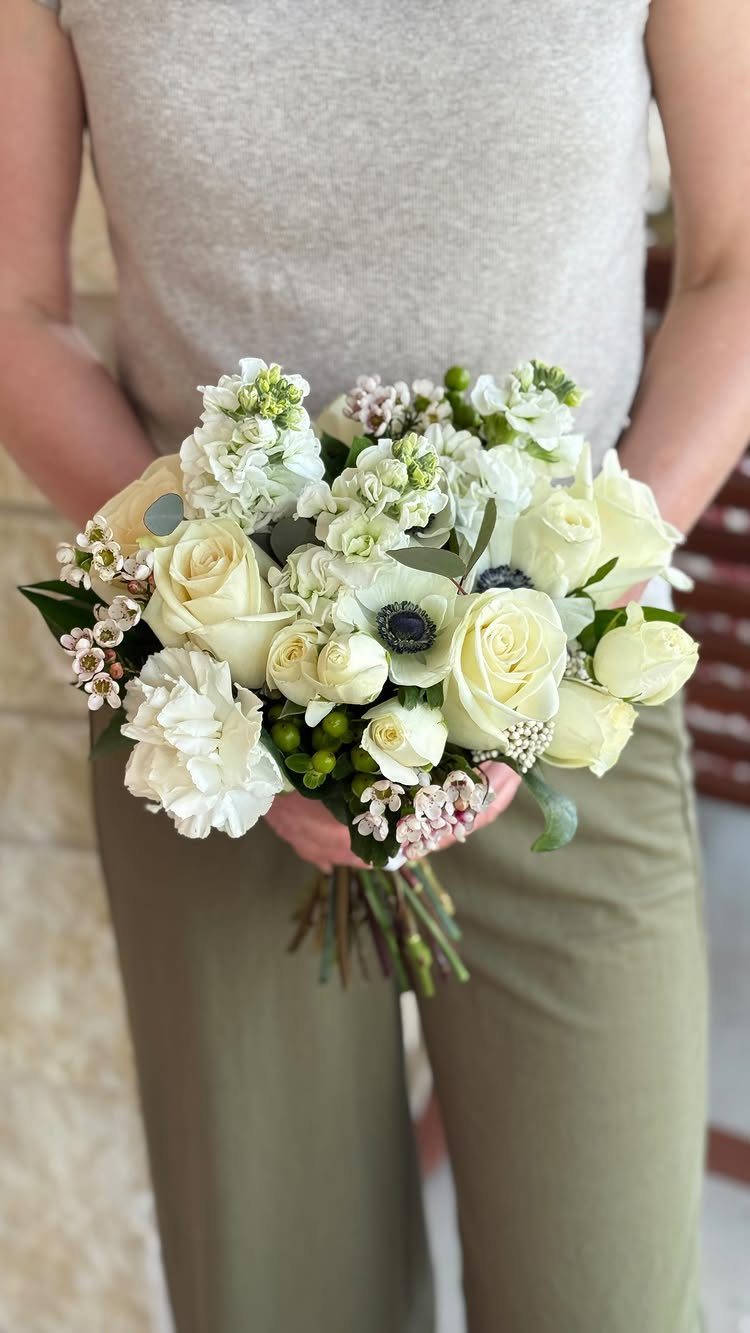
A tight round bouquet, where the blooms cluster close together and the stems stay short, gives you something compact to hold that does not shift or droop while you stand at the altar. The shape reads formal without looking stiff.
Nosegays suit shorter ceremonies and work especially well if you want a single flower type or a limited palette. The small scale also keeps the cost down when you are using premium blooms.
Wrap the stems tightly and trim them to the same length so the bouquet sits evenly in your hand. If the stems are too long, the weight pulls the arrangement forward.
21. Long Lean Centerpieces
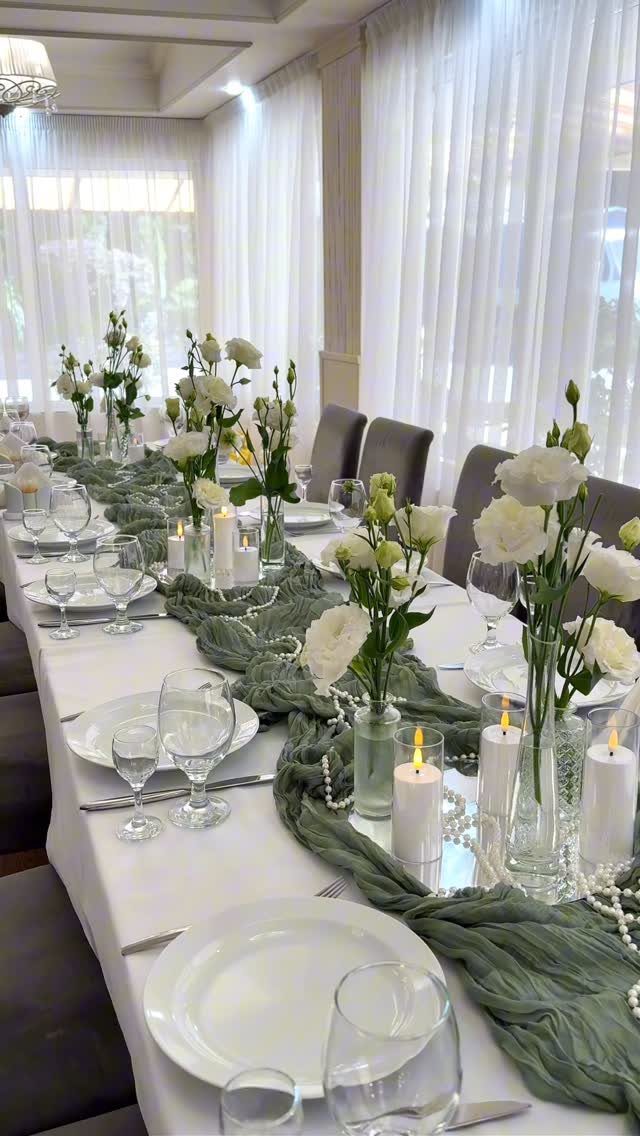
Tall narrow vases spaced along the table give you vertical interest without the bulk of traditional centerpieces. The flowers sit high enough to see but thin enough that guests can talk across the table.
The long, linear style also costs less per table than massed arrangements because each vase holds fewer stems.
Keep the vases stable. A narrow base tips easily, especially on an uneven floor or when someone bumps the table.
22. Succulent Bridal Bouquet
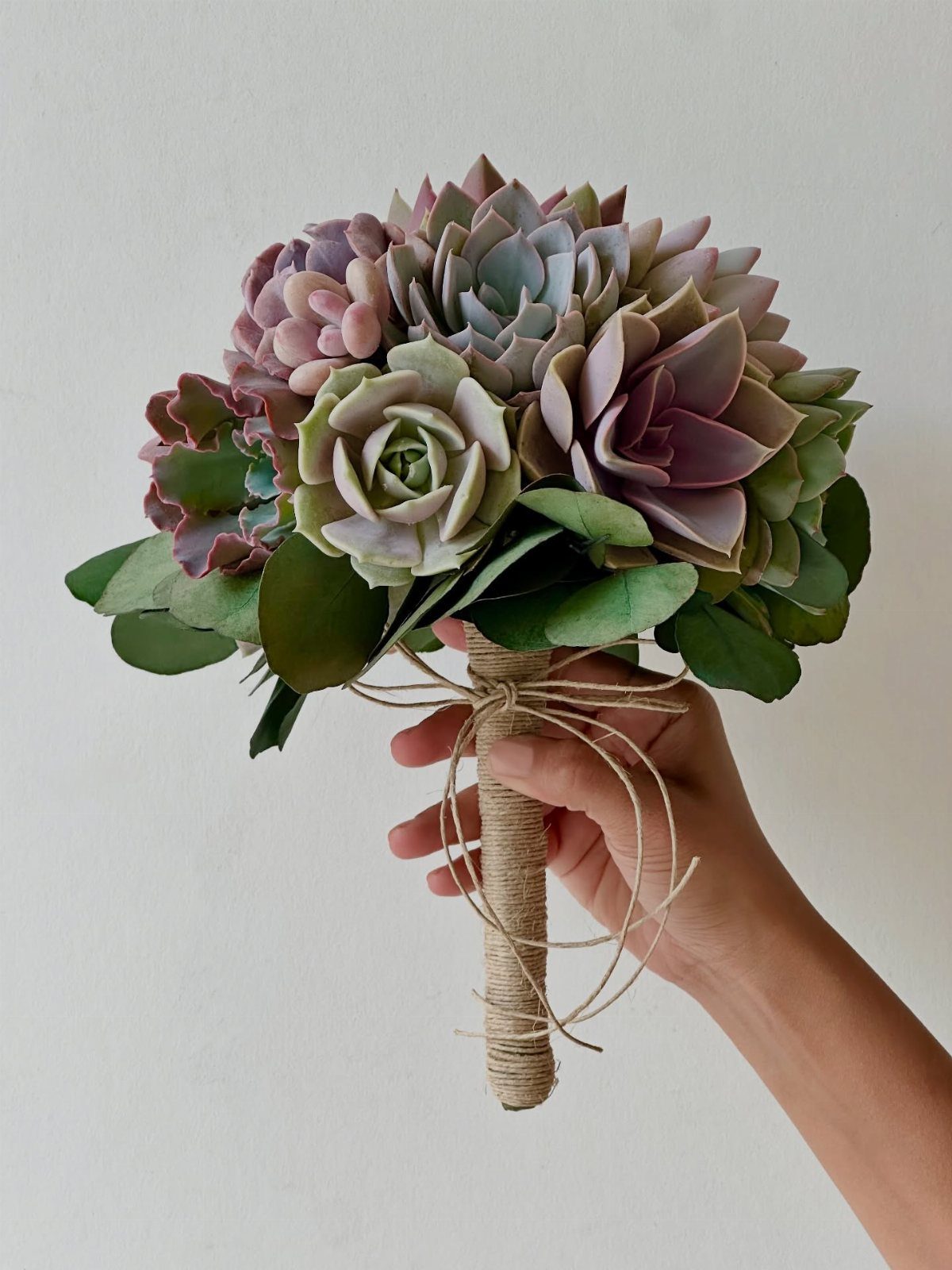
Succulents wired together into a hand-held bouquet give you something that lasts through the ceremony without water and stays intact for days afterward.
The texture contrasts with traditional flowers, and the colors range from soft green to deep purple depending on the varieties you choose.
This style suits desert or boho weddings, and it works if you want a bouquet you can set down during photos without worrying about wilting. You can also pull the succulents apart after the wedding and plant them.
Succulents are heavier than flowers, so keep the bouquet small or your wrist will tire.
23. Baby’s Breath Table Runner
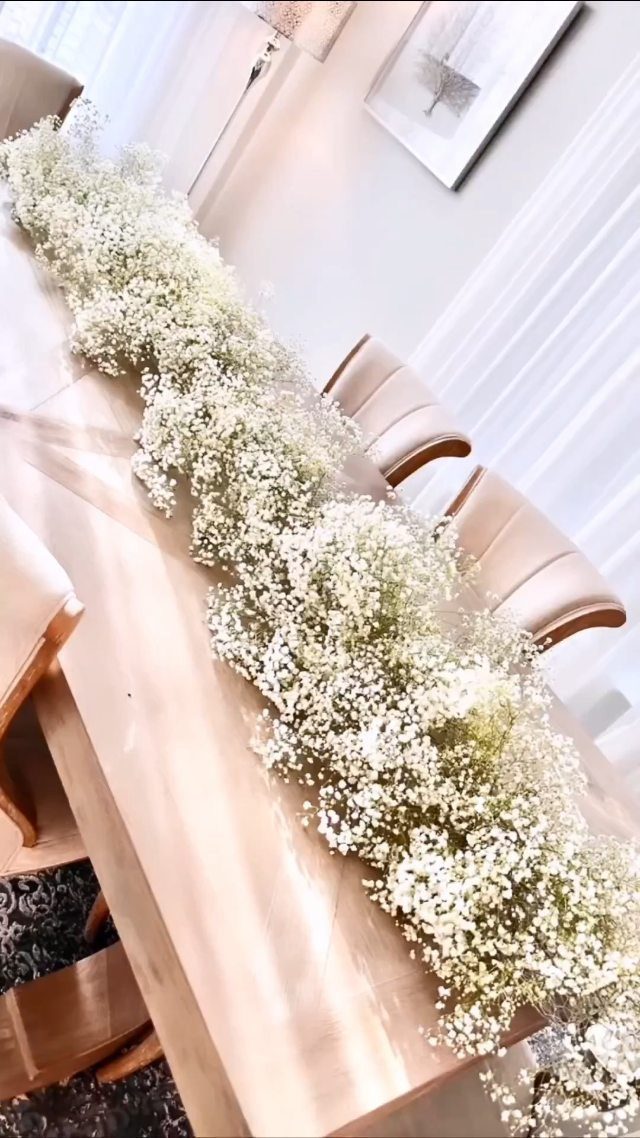
Baby’s breath massed along the center of the table creates a soft, continuous line of white that does not need individual centerpieces. The small blooms cluster densely, so the runner looks full without gaps.
This approach works on long tables where you want a cohesive look from end to end. It also costs less than arranging flowers in multiple vases because you can buy baby’s breath in bulk.
Lay the stems in the same direction and overlap them slightly so the runner holds together. If the stems cross randomly, the arrangement looks sparse and separates easily when someone reaches across the table.
24. Yellow Flower Tablescape
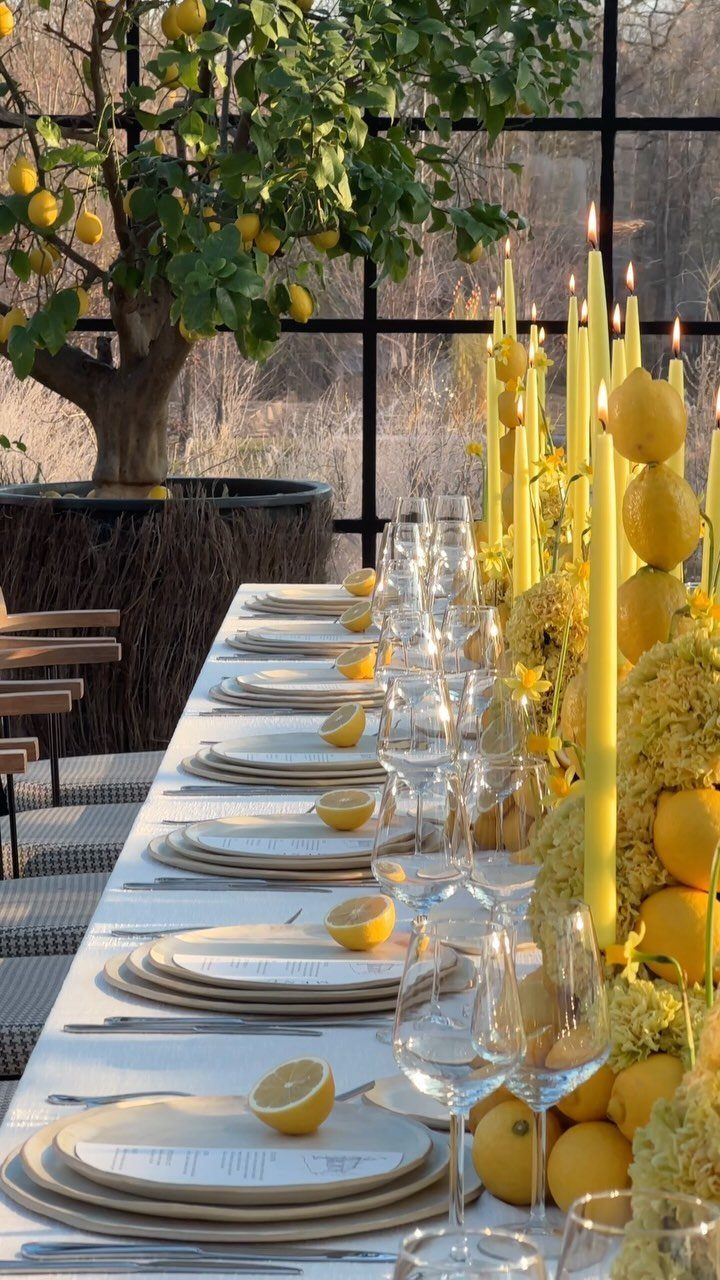
Yellow flowers paired with whole lemons and tall candles in the same shade give you a bright, monochromatic table that feels sunny without reading too casual. The fruit adds texture, and the candles carry the color upward.
This palette suits daytime or outdoor receptions, especially in warm weather. It also works if your venue has white or neutral linens that need color without pattern.
Place the lemons in small groups rather than scattering them individually. Grouped fruit looks intentional; single pieces look like leftovers from the kitchen.
25. Mini Rose Centerpieces
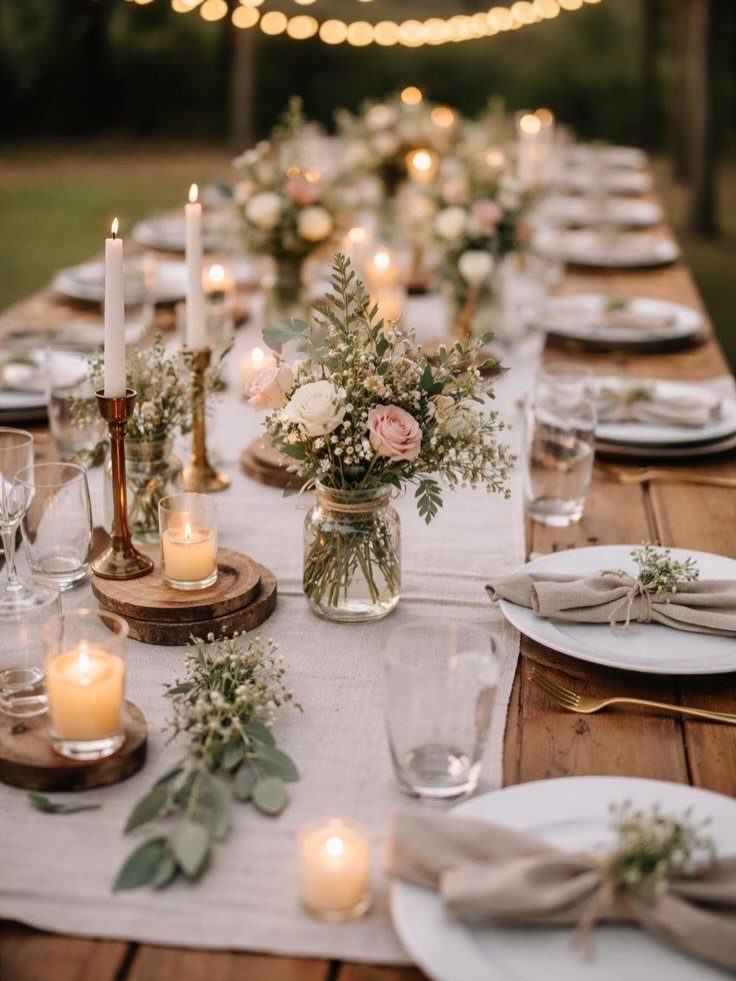
Small jars filled with roses keep the cost per table low while still giving each place setting its own flowers.
The compact scale works on long tables where tall centerpieces would block sight lines, and the jars sit close to each plate without crowding the flatware.
Mix white and pink roses in varying shades rather than keeping each jar to one color. The variation makes the table feel less uniform without requiring a complicated design.
Add candles in different heights to fill the vertical space the small arrangements leave empty.
26. Potted Succulent Favors
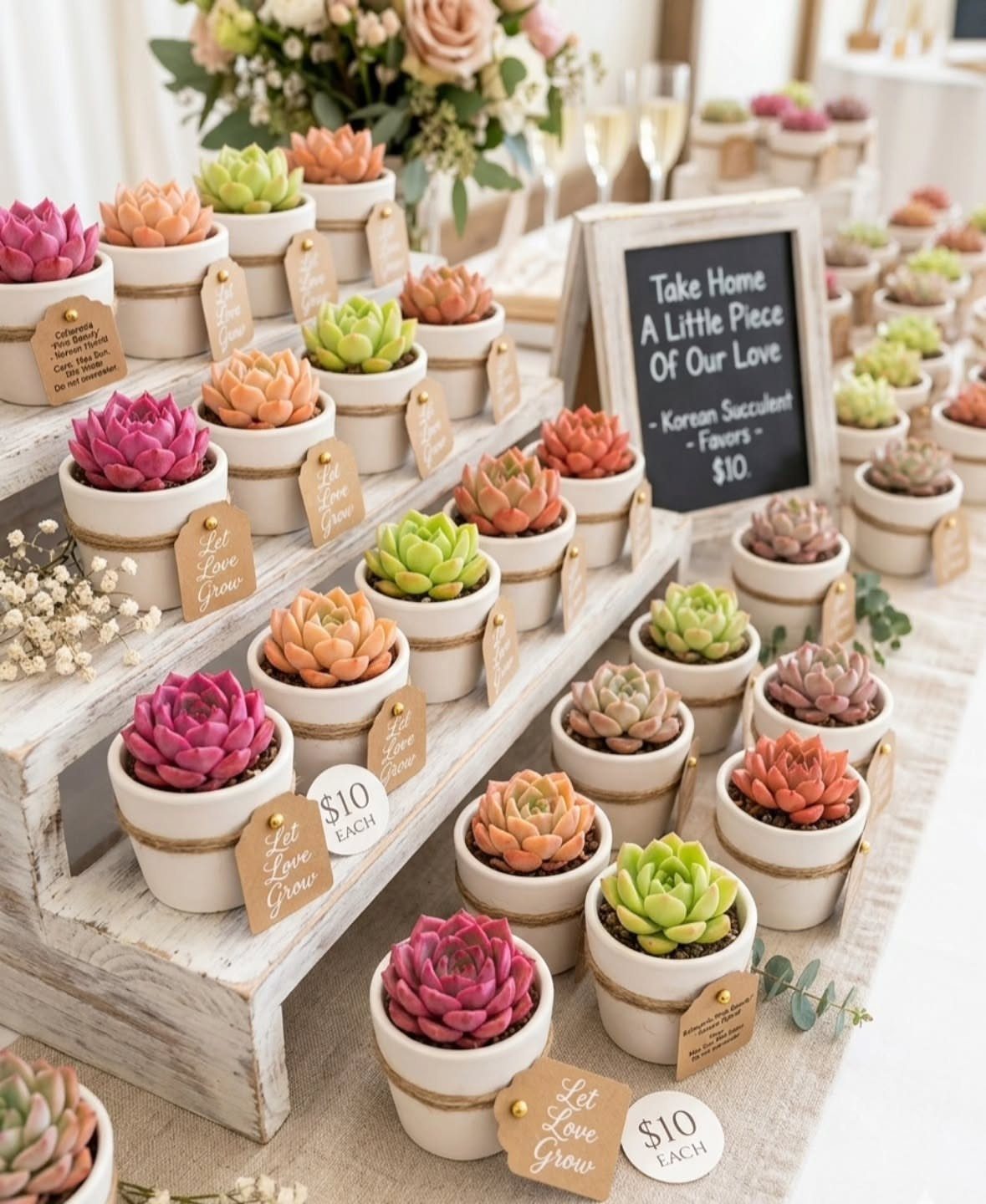
Succulents potted and tagged as favors give guests something living to take home that does not wilt on the drive. The plants sit on shelves near the exit, and guests pick one on their way out.
This option costs less than cut flower favors because you buy the succulents wholesale rather than paying for arranging. It also skips the packaging step that boxed favors require.
Choose varieties that tolerate neglect. Jade plants, echeveria and haworthia survive missed waterings better than delicate species, so more guests will keep them alive.
27. Green-Only Arrangements
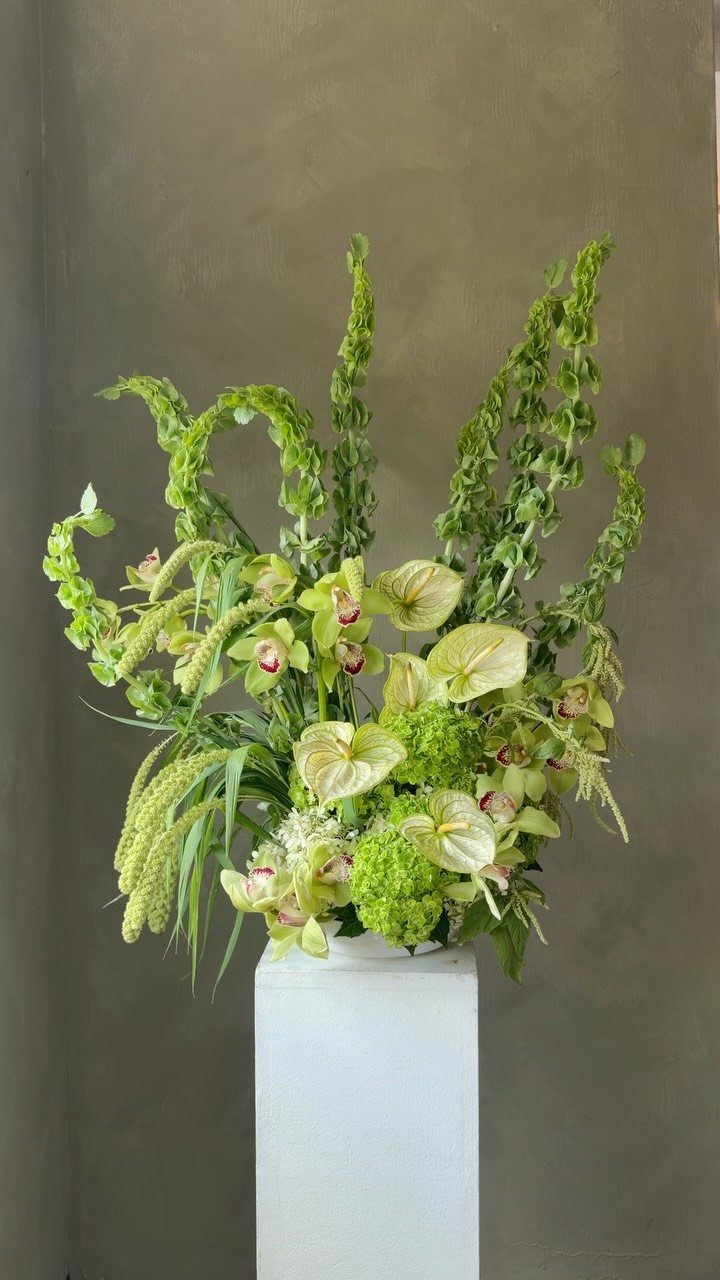
Green flowers and foliage in varying textures give you height and structure without competing colors. Anthuriums, bells of Ireland and layered greenery build a tall arrangement that reads formal but not traditional.
An all-green arrangement also photographs cleanly against white or neutral backgrounds.
Pair the arrangement with a white or metallic vase. Colored containers distract from the sculptural quality of the greens.
28. Colorful Floral Ceremony Arch
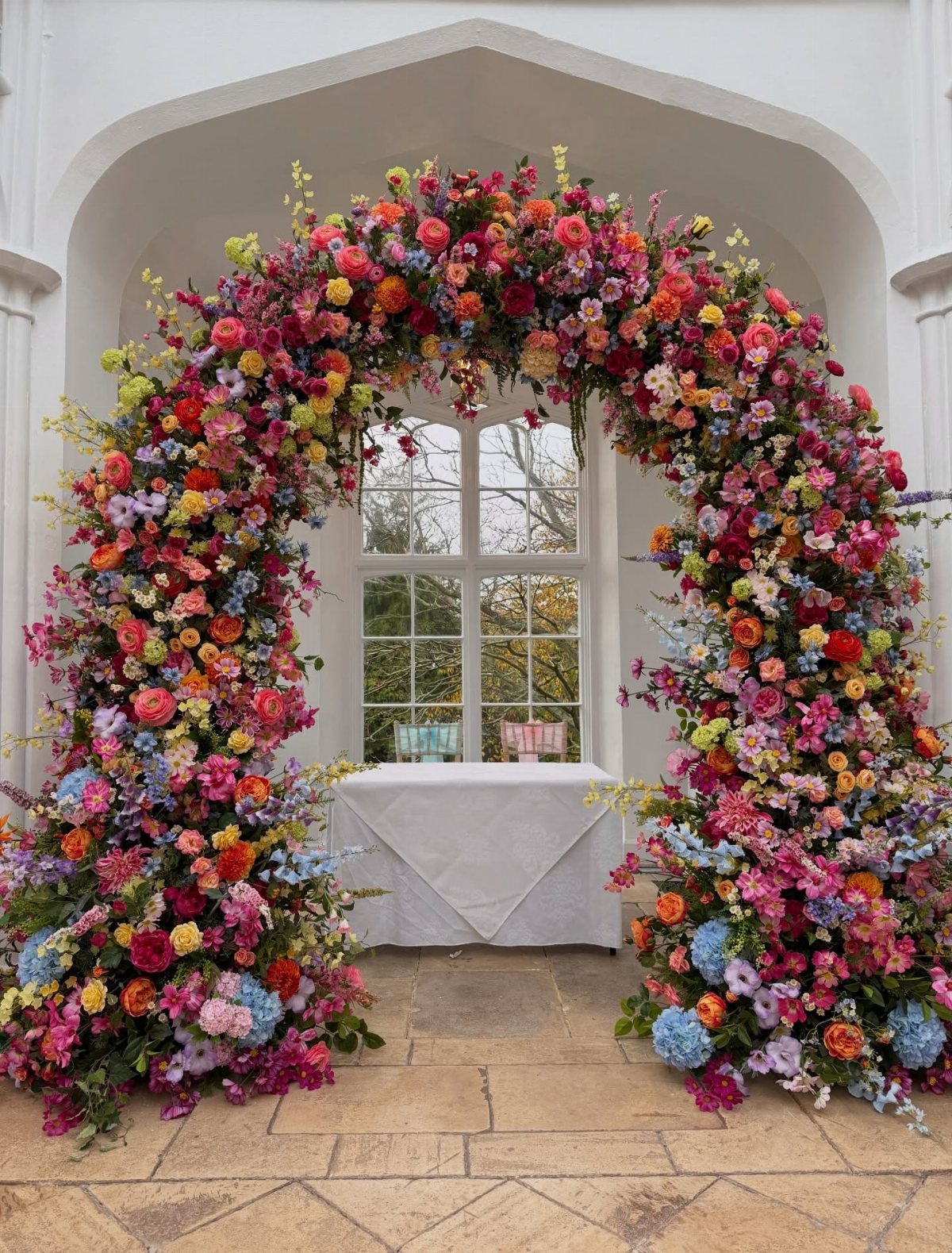
Flowers massed into a full arch create a frame around your ceremony space that defines the focal point without additional backdrop pieces.
Pink, red, yellow and blue layered together give you saturation and contrast that read well in photos taken from the back of the room.
This approach works when your ceremony happens in a plain space that needs color, or when the architecture behind the altar competes with simpler arrangements.
Build the arch on a frame that stays stable without anchoring. A freestanding structure lets you position it exactly where you need it, even on surfaces you cannot drill into.
29. Paper Flower Sign Display
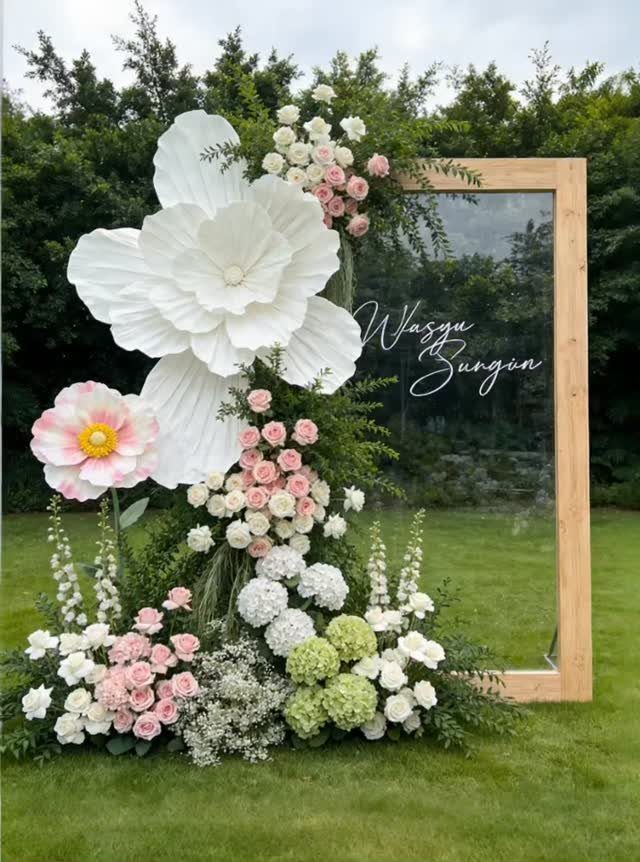
Paper flowers sized larger than real blooms anchor a sign or frame without the cost or fragility of fresh arrangements in the same scale.
The oversized white blooms sit beside smaller fresh roses, and the combination gives you dimension that all-paper or all-fresh displays lack.
This style suits outdoor ceremonies where you need flowers that will not wilt before the processional, and it works if you want a statement piece that stays intact through setup and teardown.
Make or buy the paper flowers weeks ahead. The timeline flexibility alone offsets the hands-on work if you are assembling them yourself.
30. White Floral Canopy
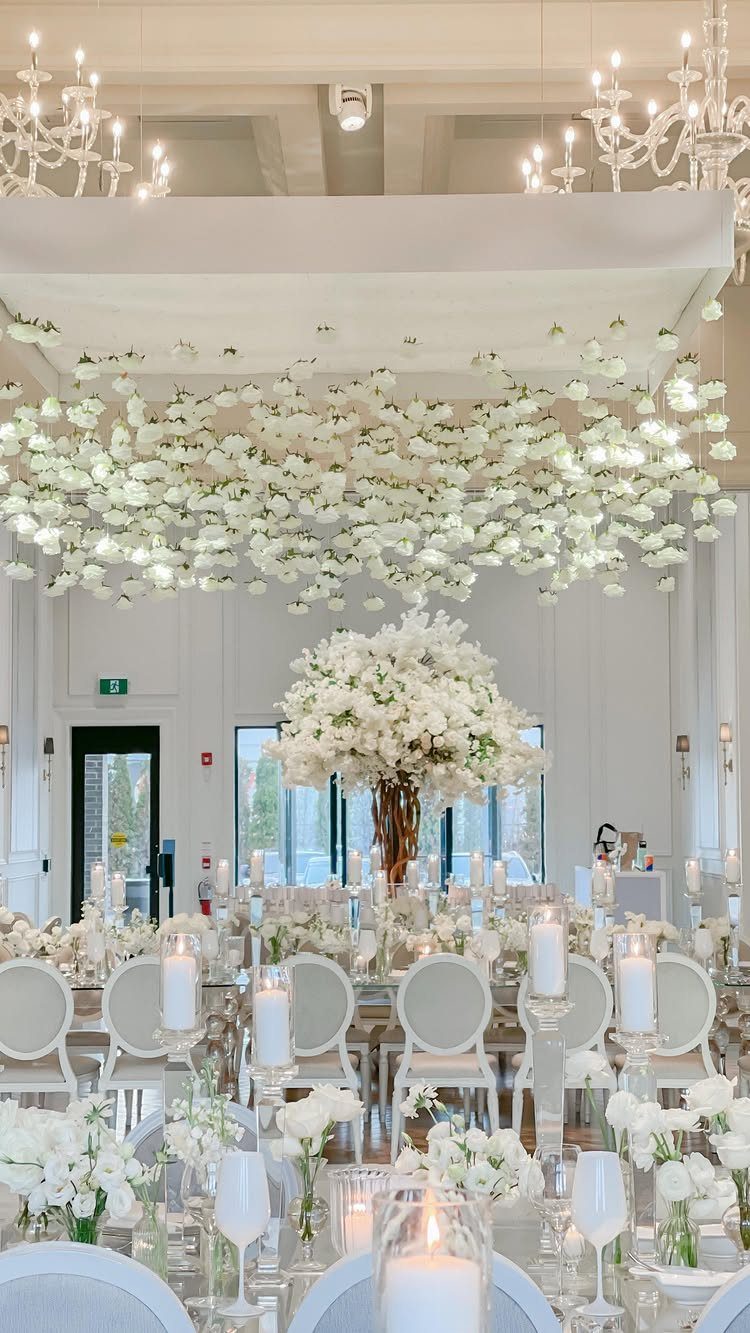
A ceiling installation of white flowers suspended above the reception creates a finished look overhead that most venues leave empty. The canopy draws the eye upward and makes the room feel intentional from every angle, not just at table level.
This approach suits venues with plain ceilings or industrial spaces where exposed beams need softening. It also works when you want impact without crowding the tables themselves.
Plan the installation with your venue’s load limits and hanging points in mind. Some spaces restrict what you can suspend, and the flowers need secure attachment or they shift during the event.
31. Hanging Wisteria Ceiling
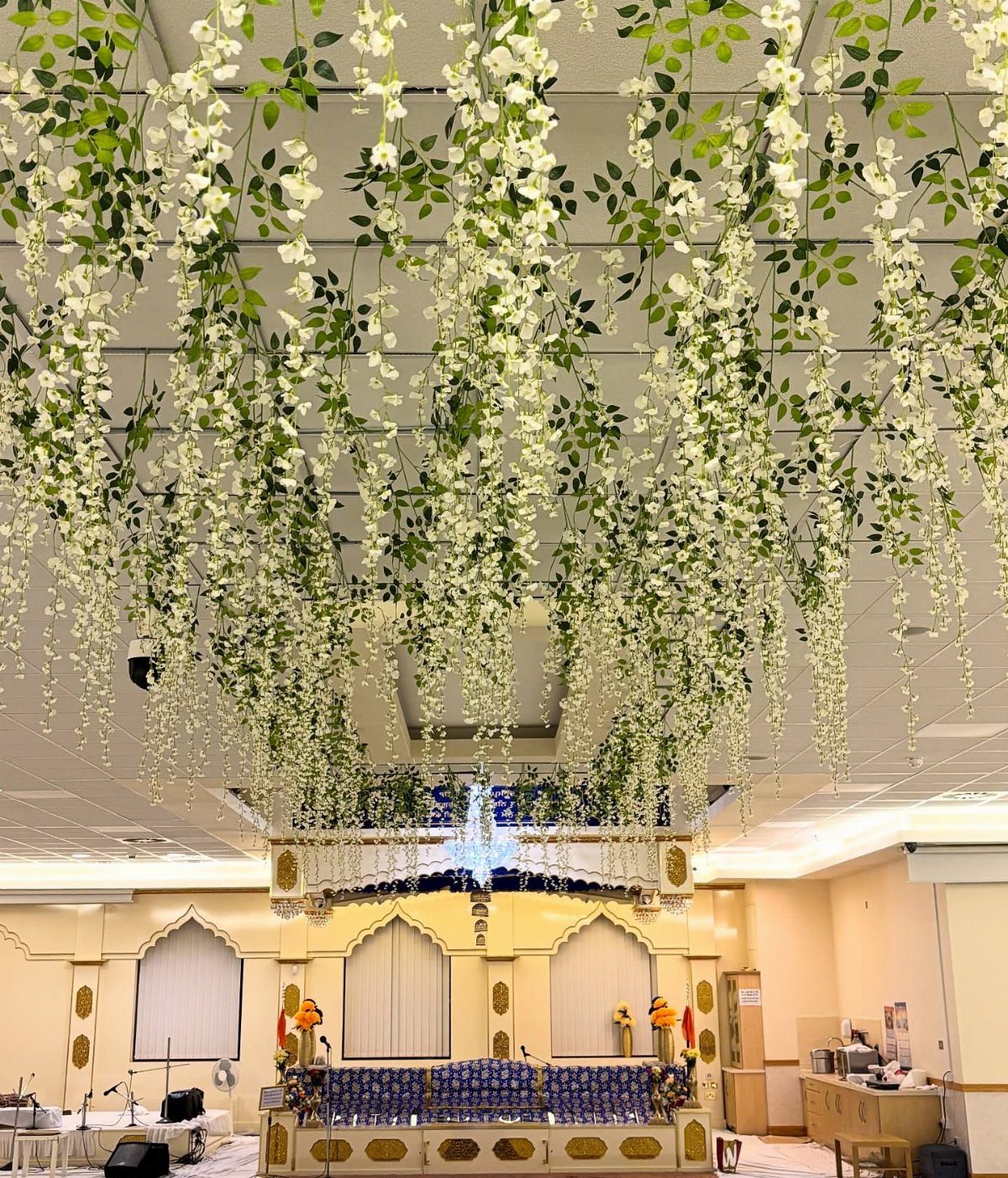
Wisteria hanging from the ceiling gives you a floral installation that fills the vertical space above the stage or dance floor without adding pieces to the tables.
The white cascading blooms soften a plain ceiling and create a backdrop that photographs well from any angle in the room.
This style suits indoor receptions in venues with high ceilings or exposed structure that needs finishing. It also works if you want the flowers overhead rather than competing for table space with dinner service.
Secure the hanging points before the day. Wisteria installations are heavier than they look, and temporary hooks fail under sustained weight.
32. Floating Flower Installation
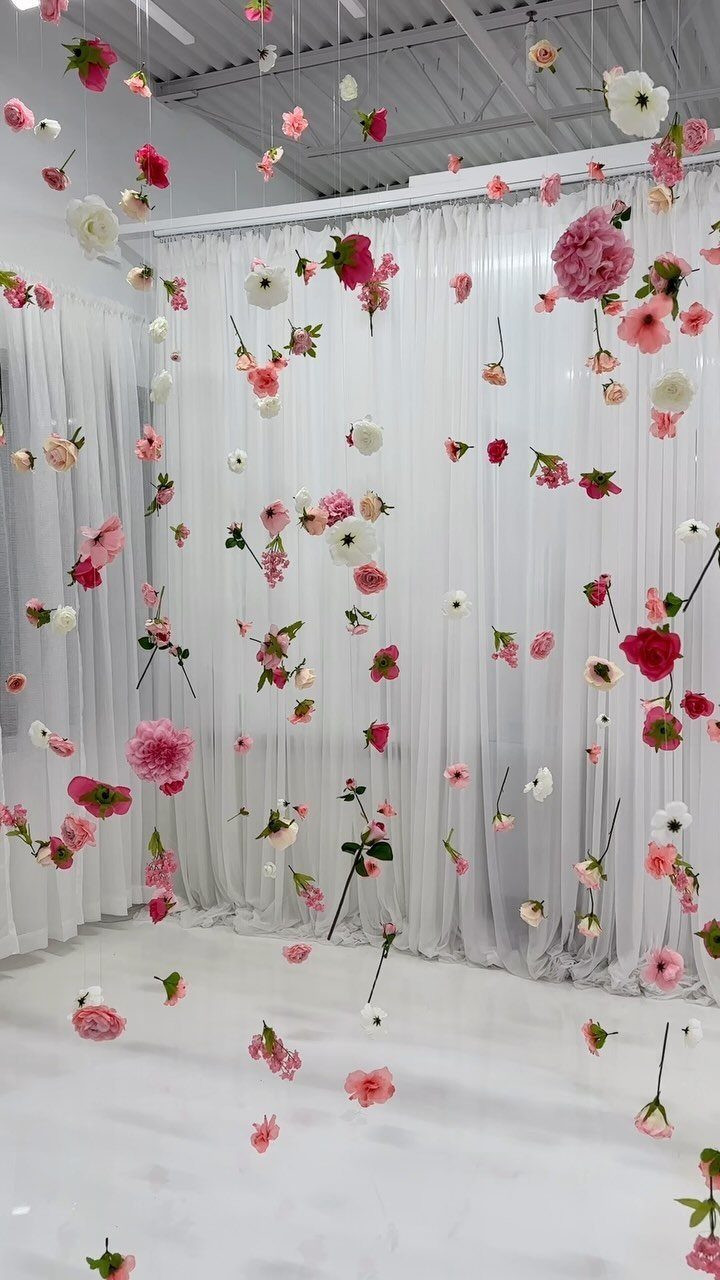
Flowers suspended on thin strings in front of a backdrop give you a layered installation that adds depth without blocking the view. The blooms hang at different heights, so the arrangement reads three-dimensional rather than flat against the curtain.
This approach works behind a ceremony altar or photo area where you want texture without the bulk of a standing arrangement. It also costs less than a full backdrop because you space the flowers individually rather than massing them.
Keep the strings taut. Slack lines shift when air moves, and the flowers tangle or hang unevenly.
33. Gothic Bridal Bouquet
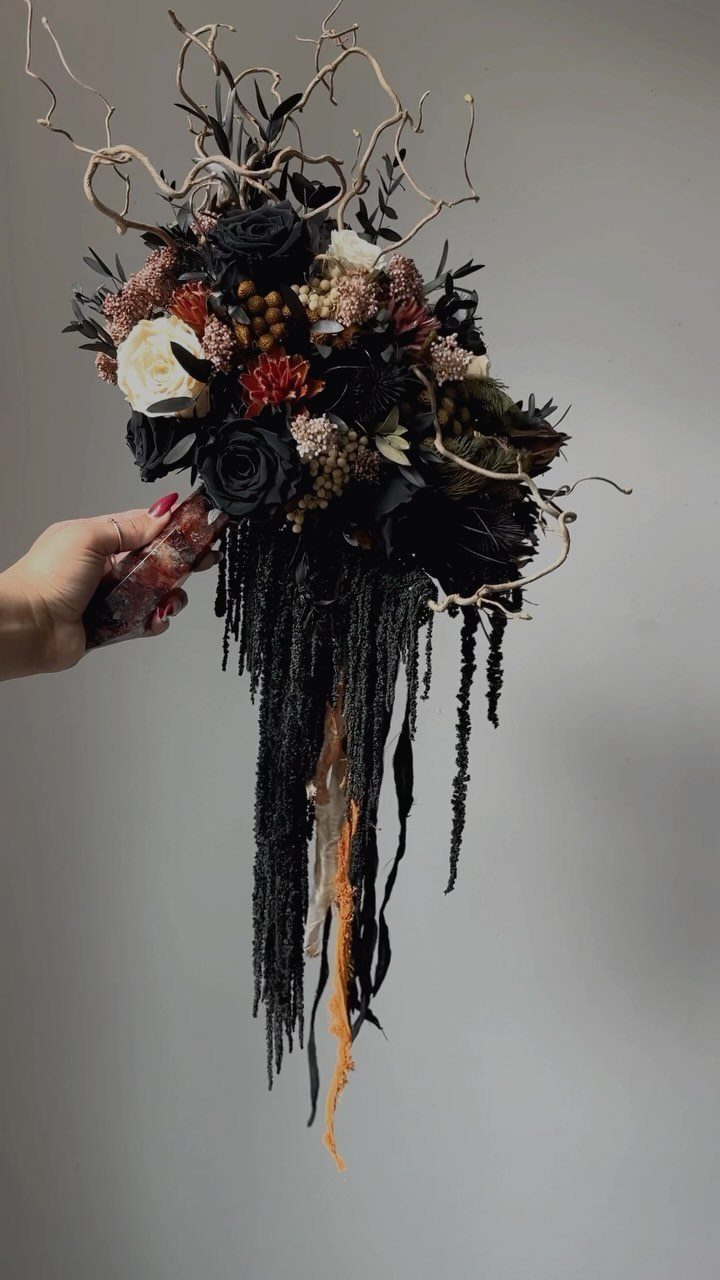
Black roses paired with white blooms, dark foliage and trailing black ribbons give you a bouquet that reads gothic without relying on red. The twigs add structure, and the long ribbons move as you walk.
This palette suits fall or winter weddings with a darker aesthetic, and it works if your dress or venue already carries a romantic or dramatic tone that soft pastels would undercut.
The ribbons need length to trail properly. Short ribbon ends look unfinished rather than intentional.
34. Pearl-Accented Calla Bouquet
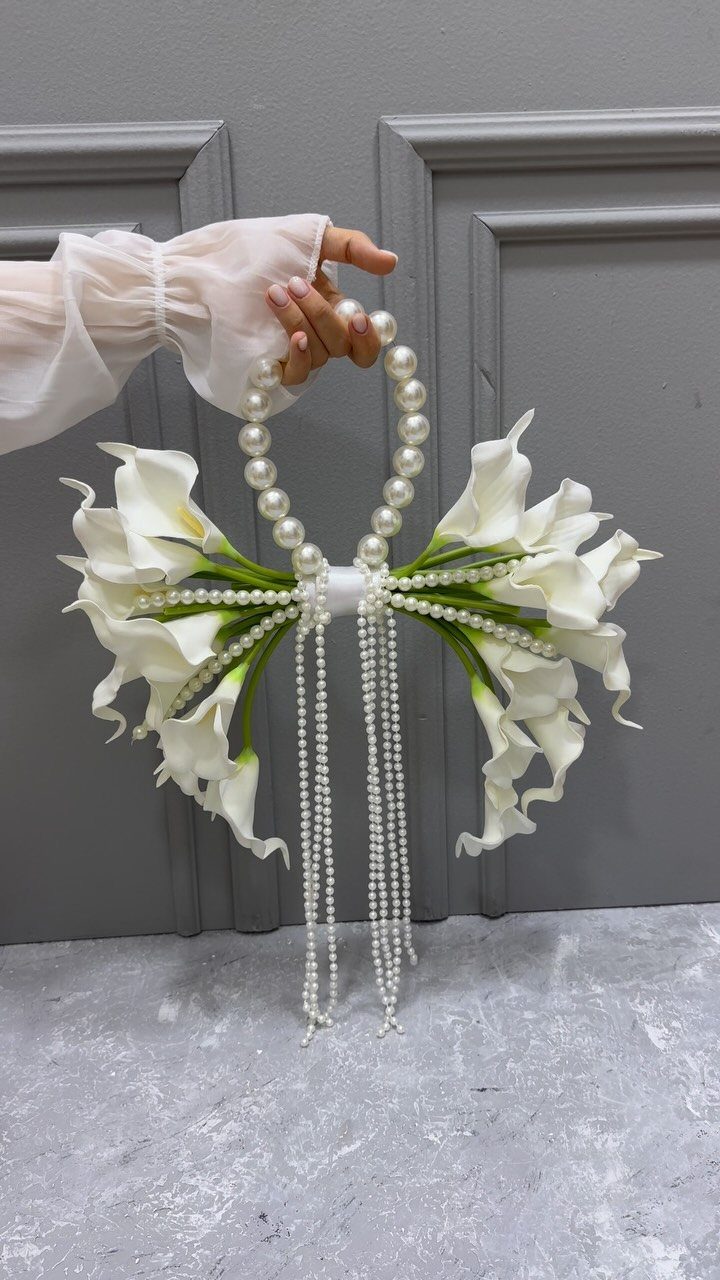
Pearl strands looped through white calla lilies add shine without color, and the weight of the pearls pulls the bouquet into shape without wiring the stems individually. The loops sit between the blooms, and the ends hang as tassels.
This style suits formal or vintage weddings where you want a bouquet that matches pearl jewelry or beaded dress details. It also adds texture that reads clearly in close-up wedding photos.
Use real or high-quality faux pearls. Cheap plastic beads look dull in natural light and cheapen the overall look.
35. Sculptural Paper Wrap
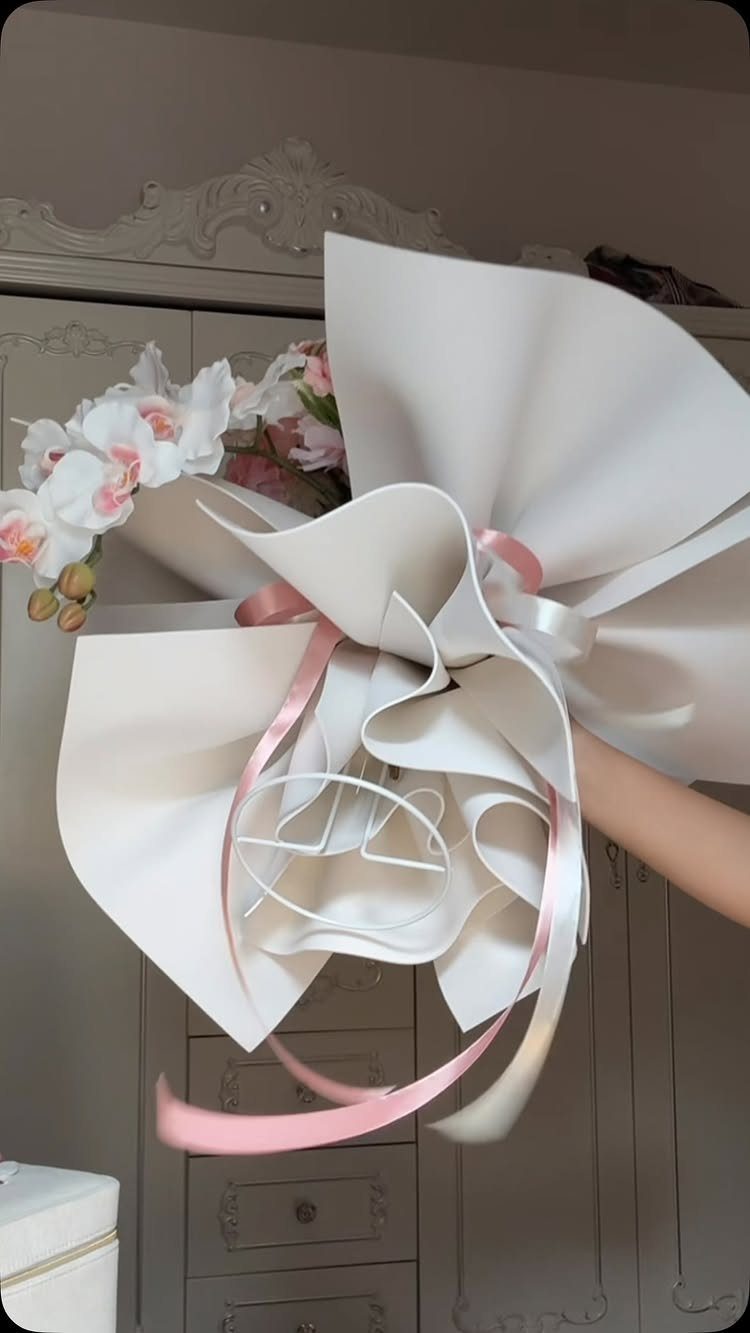
Thick white paper folded into sculptural layers and tied with a ribbon gives you a bouquet wrap that stands out in photos and stays intact through handling.
The paper stays crisp and structured even when folded around the stems, and the ribbon sits cleanly where the fold meets the base.
A sculptural paper wrap also works if you are carrying a small bouquet and want the presentation to add visual weight.
Choose paper heavy enough to hold a crease. Lightweight paper wilts under the moisture from the stems.
36. Blackberry and Rose Arrangement
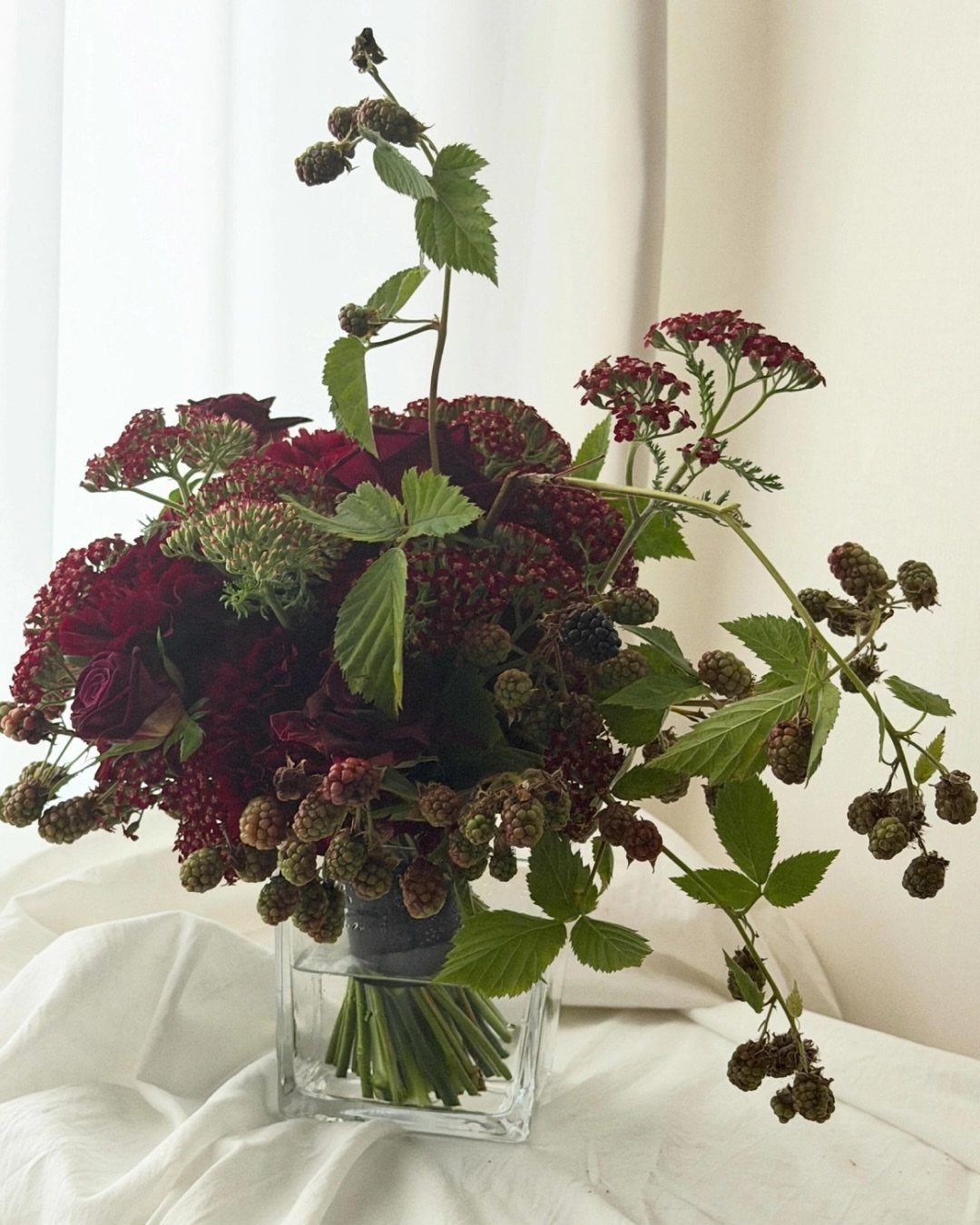
Blackberries on stems mixed with deep red roses give you a late-summer or fall arrangement that brings in fruit without the fragility of berries added after the fact.
The berries stay attached to their stems, so they hold up through the reception without bruising.
This palette works on tables with burgundy linens or dark wood, and it photographs well in low light because the deep tones do not wash out under candlelight.
Place the arrangement in a square vase rather than a round one. The clean lines suit the structured look of the berries better than a curved container.
Reuse Ceremony Arrangements
Moving flowers from ceremony to reception cuts your total floral spend in half if you plan it from the start.
Tell your florist you want the pieces to work in both spaces, and ask how long the breakdown and setup will take between events.
Altar arrangements transfer most easily when they sit in containers you can pick up and carry, rather than built directly into an arch or structure.
Aisle markers in low vases move to cocktail tables or the gift table without any rearranging.
If your ceremony and reception happen in the same venue, the transition is faster.
Different locations mean you need a vehicle and someone to handle the move while you are taking photos. Some florists include the labor in their fee, others charge separately for it.
Check how long your flowers will last out of water. Roses and carnations hold up for hours, but hydrangeas wilt quickly and may not survive the move looking fresh.
Frequently Asked Questions
What are current popular wedding flower trends?
Rich jewel tones, loose meadow-style arrangements, and large sculptural installations are popular right now, along with asymmetrical bouquets and textured designs that mix different bloom shapes.
Asymmetrical and hand-tied bouquets move away from perfectly round shapes and give photos more depth.
What are the trending wedding flowers for 2026?
Garden roses, anemones, ranunculus, and sweet peas are trending for 2026, along with calla lilies arranged asymmetrically and statement hydrangeas massed for volume. Orchids, peonies, and amaranthus also show up frequently in both bouquets and centerpieces.
What are the trends in bridal bouquets for 2026?
Smaller petite bouquets, asymmetrical hand-tied shapes, and basket or purse-inspired pieces are trending for 2026. They suit sleek gowns and detailed bodices better than round bouquets do, and they photograph with a looser, less formal shape.
What are the floral arrangement trends for 2026?
Bold color palettes like jewel tones and sunset gradients, meadow-style low arrangements along the table, and sculptural installations that frame ceremony backdrops are trending.
Monochromatic designs in all white or single colors also create a cohesive, modern look without competing with other details.
Why do wedding flowers matter?
Flowers tie your color palette together, set the mood of the space, and create focal points that show up in every photo. They also define whether your wedding feels formal or relaxed, traditional or modern, before guests even sit down.
What are the most classic bridal bouquet styles?
All-white bouquets and cascading bouquets with trailing vines or amaranthus are enduring traditional styles. Tight round nosegays also fall in this category, holding their shape well through long ceremonies and reading formal without looking stiff.
Why should you choose seasonal wedding flowers?
Seasonal flowers are in their prime, which means they last longer and often cost less per stem than out-of-season blooms. They also tie your wedding to the time of year in a way that feels natural rather than forced.