Winter small weddings cost anywhere from $5,000 to $30,000 depending on guest count and how much you delegate.
The single factor that decides your setup is the light: candlelight and lanterns replace outdoor torches, blankets and throws go on every chair, and you need to plan around winter daylight or risk shooting portraits in the dark.
1. Candlelight and Lanterns
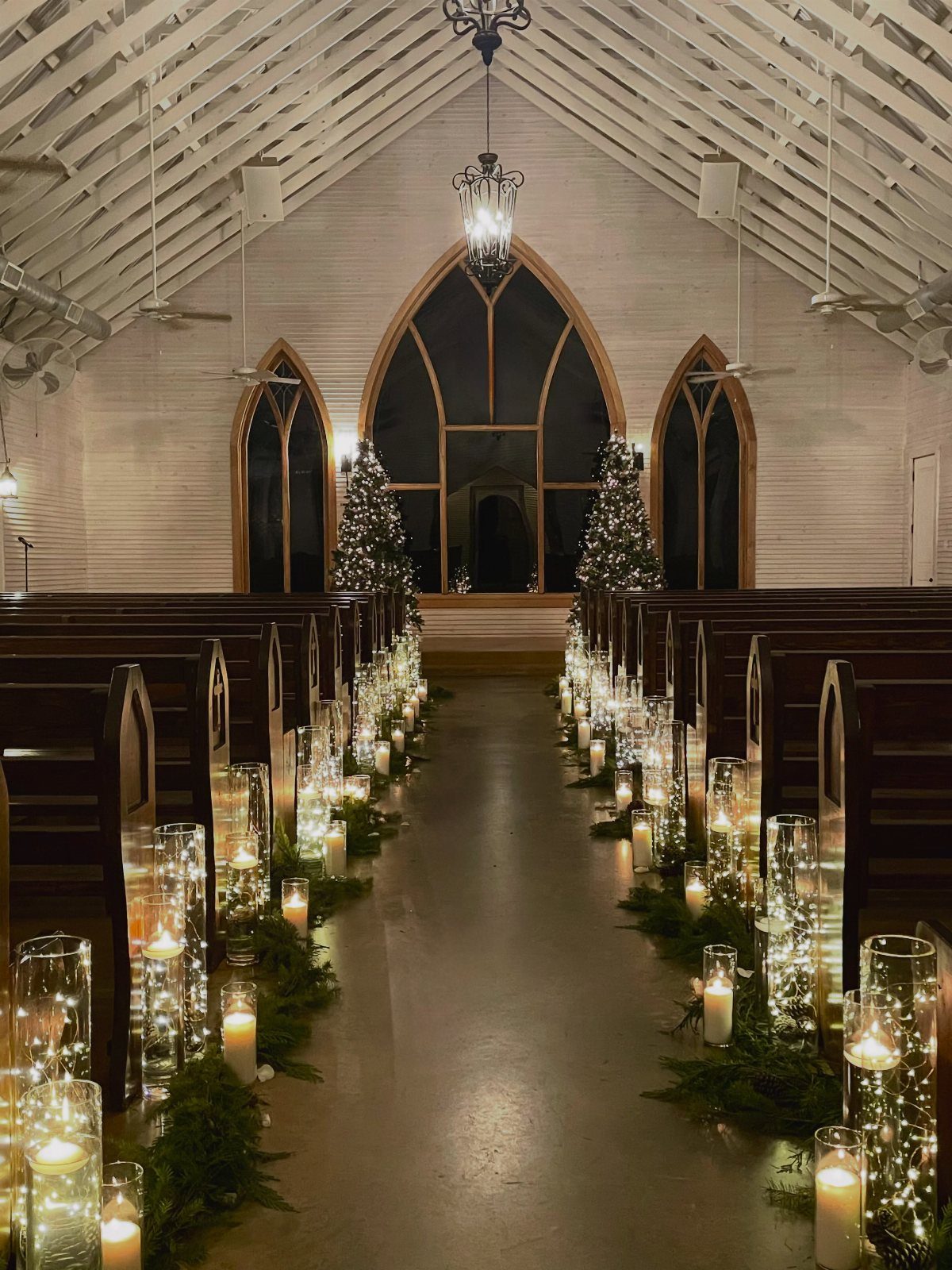
Candles in glass cylinders and hanging lanterns bring warmth to a winter ceremony without needing wiring or complicated setup.
Line the aisle with votives inside hurricane glasses to keep flames steady, or hang lanterns from shepherds’ hooks if you’re working outdoors.
Pair them with string lights along the pews or chairs for a layered glow that photographs well in low light. Battery-operated versions work when open flame isn’t allowed, though real candles give off more warmth.
2. Hot Cocoa Bar
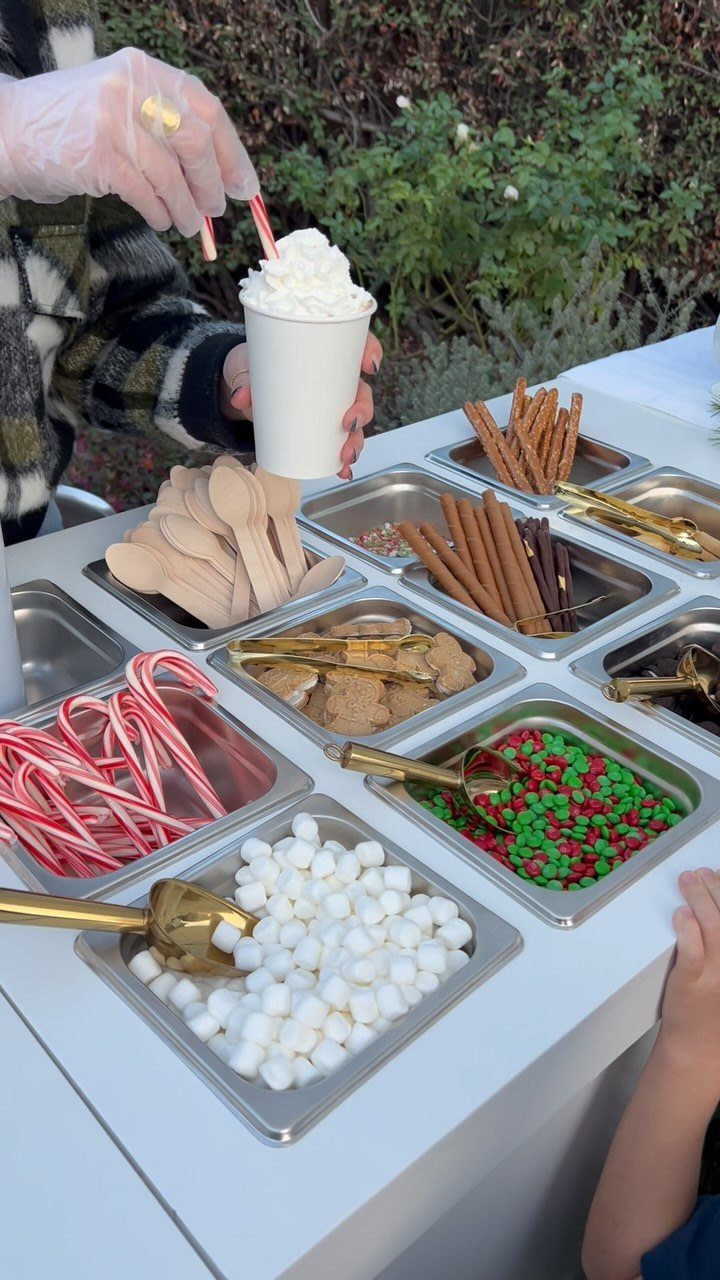
A hot cocoa station gives guests something warm to hold during cocktail hour or while they wait for the ceremony to start.
Set out a large urn or slow cooker filled with hot chocolate, then arrange toppings in small bowls: mini marshmallows, crushed candy canes, cinnamon sticks, whipped cream.
Use insulated cups if the wedding is outdoors, or ceramic mugs for an indoor reception. Label each topping with a small chalkboard sign to keep the table looking put together.
This works for any guest count and scales easily. For a small wedding, one urn is enough.
3. Evergreen Garlands
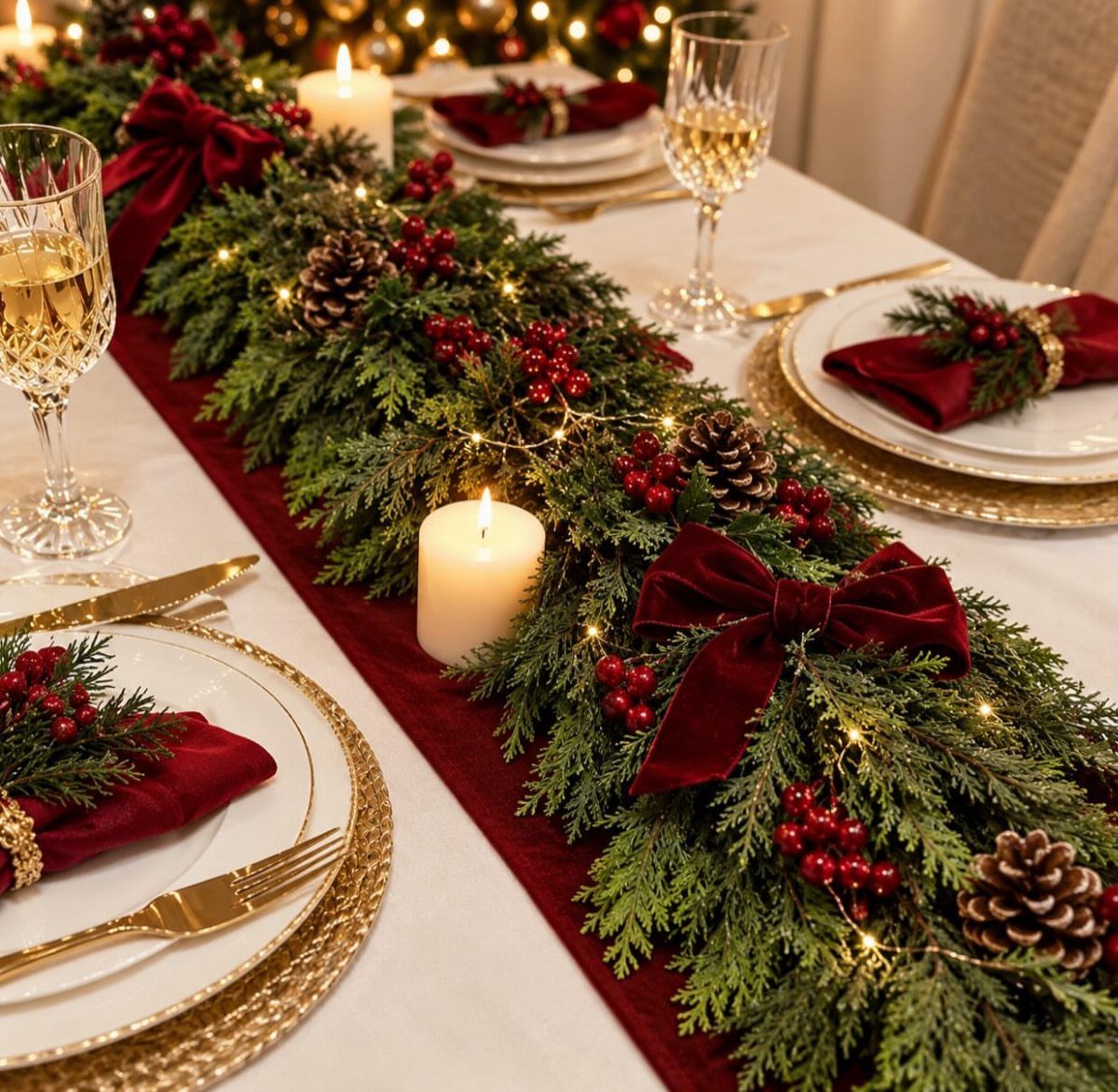
Fresh evergreen garland brings color to winter tables without flowers. Drape it down the center of a long table, then tuck in pinecones, red berries, and pillar candles to fill the gaps.
The garland holds its shape better than loose greenery and stays fresh for several days if you mist it lightly.
Buy it by the foot from a florist or garden center, or make your own by wiring together pine and fir branches. A red velvet ribbon ties it to the season without looking like Christmas décor.
4. Blankets and Throws
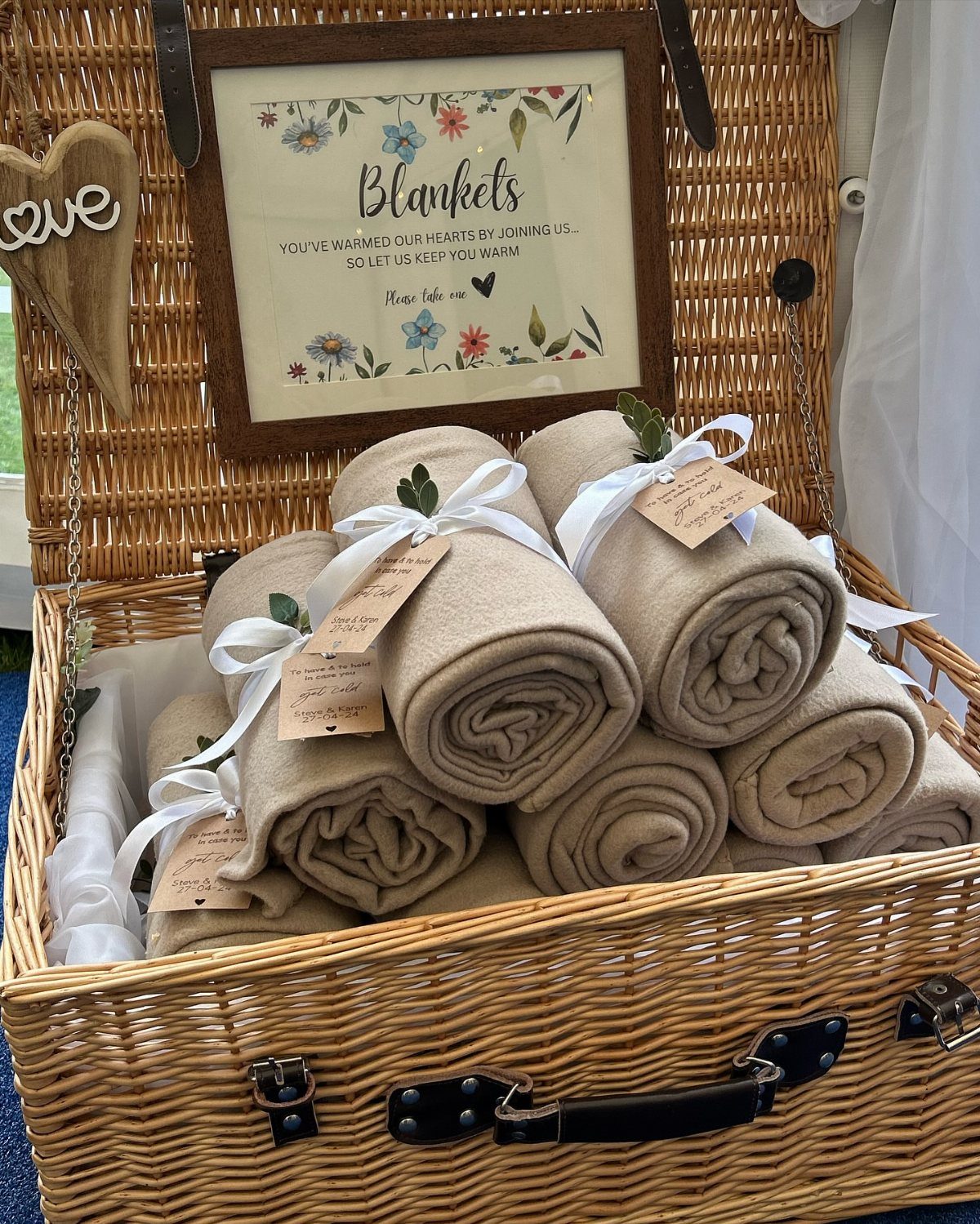
Rolled blankets in a basket let guests grab one when the temperature drops, especially if part of your event is outdoors.
Fleece and flannel are the cheapest options and come in neutral colors that work with most palettes. Tie each blanket with ribbon and add a printed tag to turn them into favors.
Set the basket near the entrance or beside the bar so it’s easy to spot.
5. Velvet Details
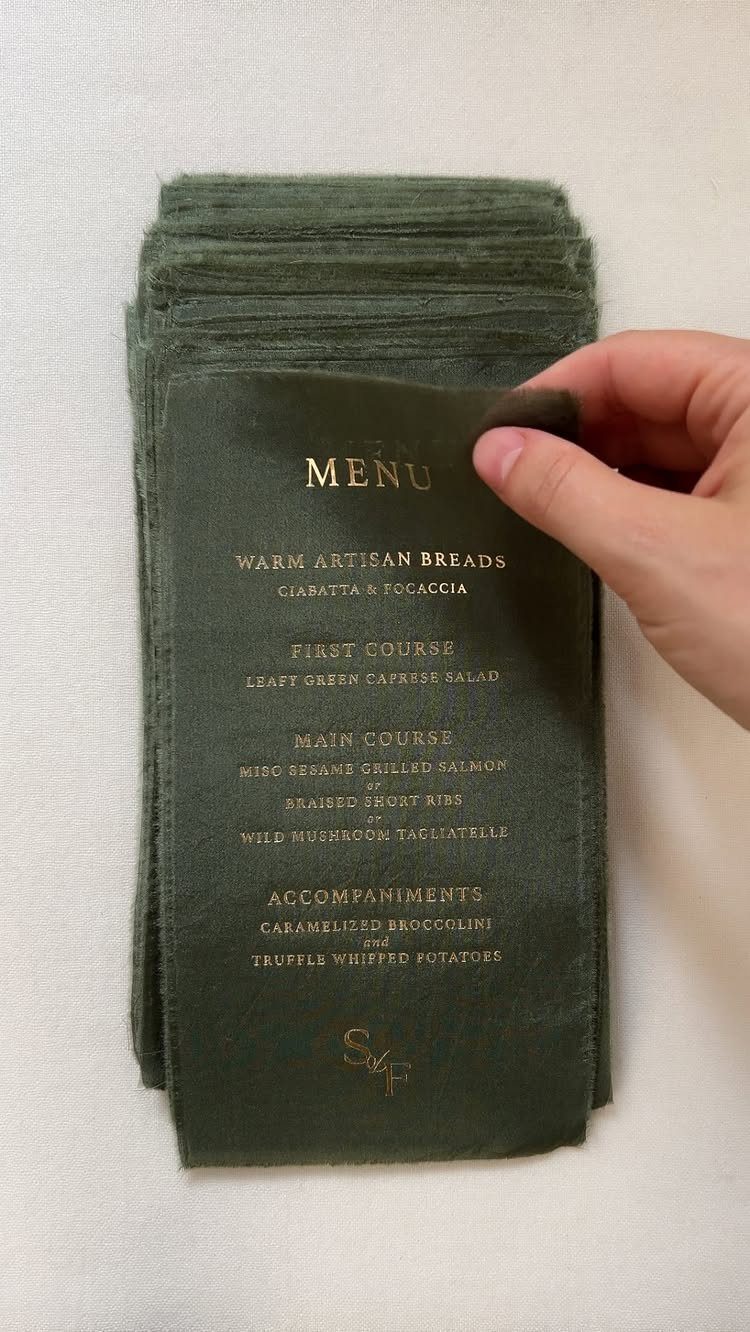
Velvet menus, table runners, or napkins add texture that feels right for winter without reading as holiday décor. The fabric catches light differently than satin or cotton, which gives tables a richer look in candlelight.
Green, burgundy, and navy are the most common colors for winter weddings, but blush and gray work if your palette is softer.
Velvet ribbon around a bouquet or tied to a chair back gives the same effect in smaller doses and costs less than covering a full table.
Order velvet items early; they take longer to print and ship than paper or linen.
But they all agreed on one thing, summed up best by Bluebird’s founder Virginia Frischkorn: “Winter weddings are magical.”
— Vogue
6. Seasonal Greenery and Flowers
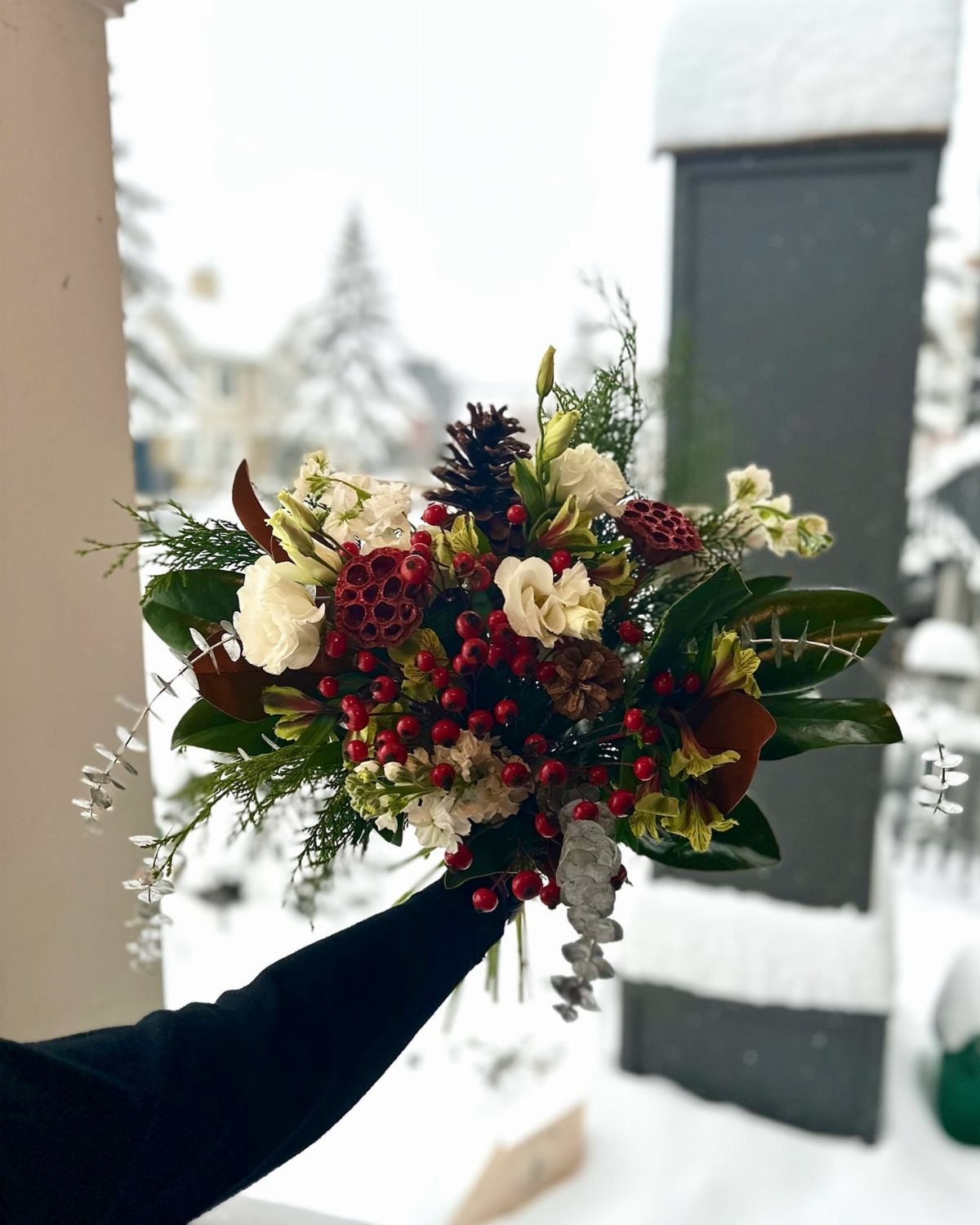
Winter bouquets lean on white blooms, evergreen branches, and berries instead of summer flowers.
Roses, ranunculus, and anemones hold up in cold weather, and pinecones or seed pods add texture without extra cost. Red hypericum berries and holly bring seasonal color, while eucalyptus and pine fill out the shape.
Ask your florist to wire the pinecones into the arrangement so they stay in place. If you’re making your own, buy floral wire and stem tape from a craft store and attach them yourself.
A small bouquet like this costs less than a garden-style arrangement because it uses fewer stems.
7. Fire Pits and Bonfires
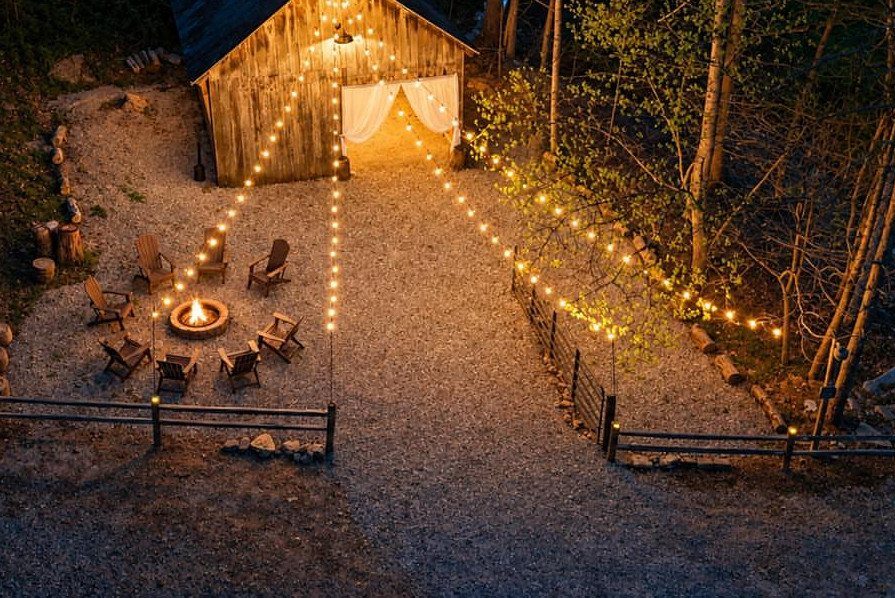
A fire pit gives guests somewhere to gather outside when the ceremony or cocktail hour is outdoors.
Set chairs in a circle around it, close enough that everyone feels the warmth but far enough back that sparks stay clear of fabric and blankets.
String lights overhead or along the path leading to the fire make the space easier to find once the sun sets. If you’re renting the fire pit, ask whether firewood is included or if you need to bring your own.
8. Cozy Lounge Area
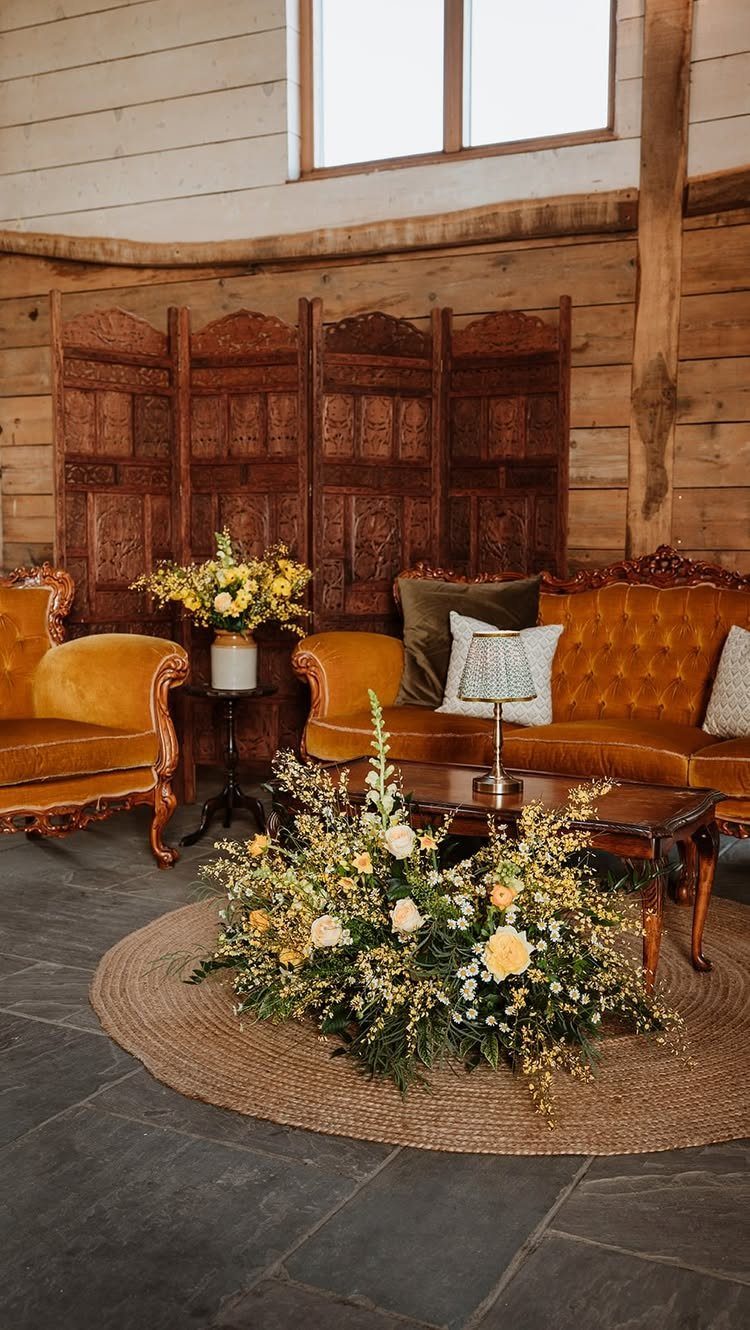
Lounge furniture breaks up a room and gives guests a place to sit that isn’t a dining chair.
A loveseat, 2 armchairs, and a low table are enough to create the space. Look for velvet or leather upholstery in colors that match your palette, or rent mismatched vintage pieces for a more relaxed look.
Add a rug underneath to anchor the seating and a few throw pillows if the furniture is plain. Floral arrangements or candles on the table tie the lounge area back to the rest of the reception.
9. Snowy Forest Ceremony
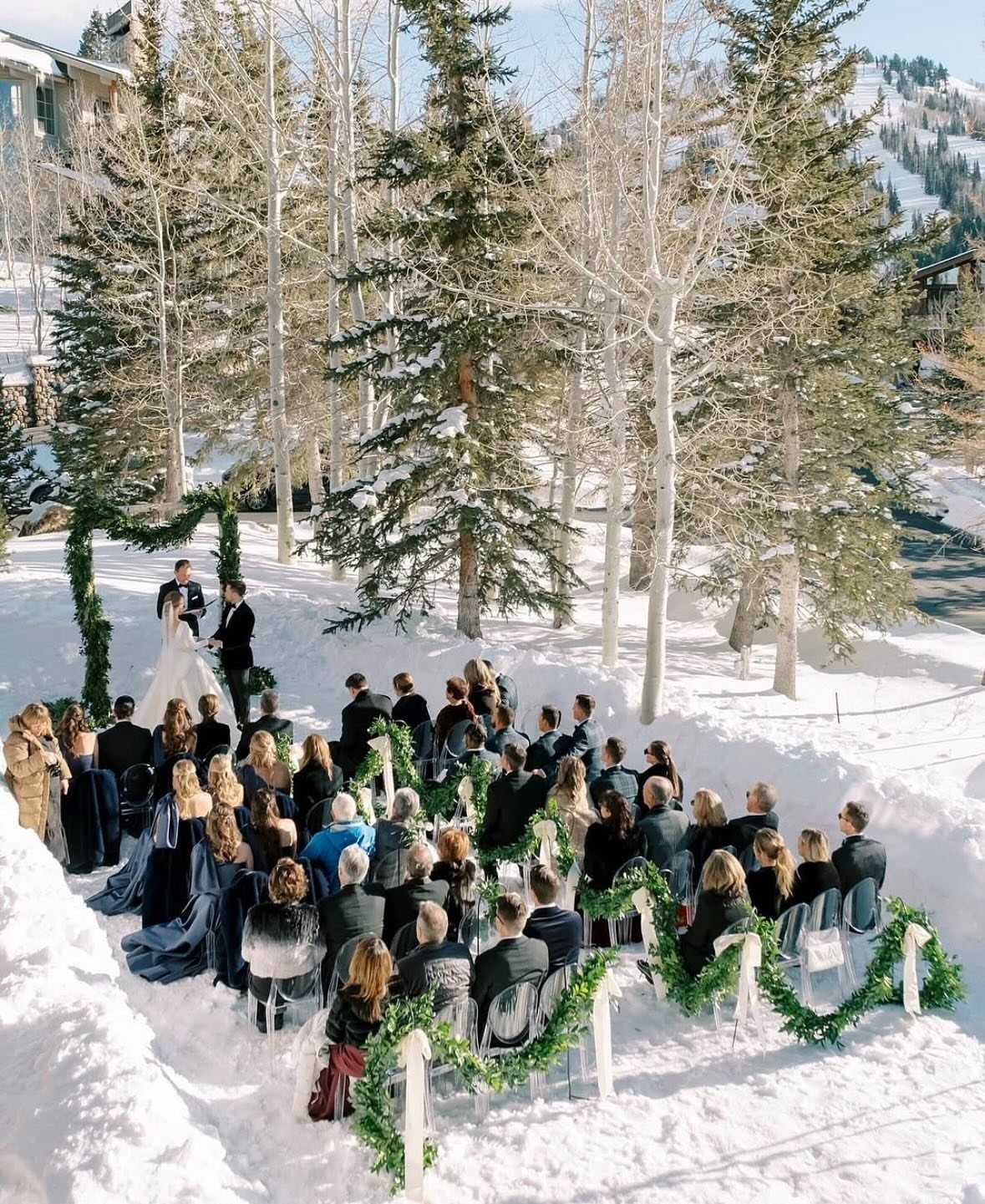
An outdoor ceremony in snow takes timing and weather watching, but the backdrop is already done.
White chairs blend into the snow, so the focus stays on the arch and the couple. An arch made from evergreen branches holds up better in cold than flowers alone.
Guests will need blankets, and the aisle should be shoveled or packed down so heels don’t sink. Keep the ceremony short if it’s below freezing.
10. Winter Wedding Reception
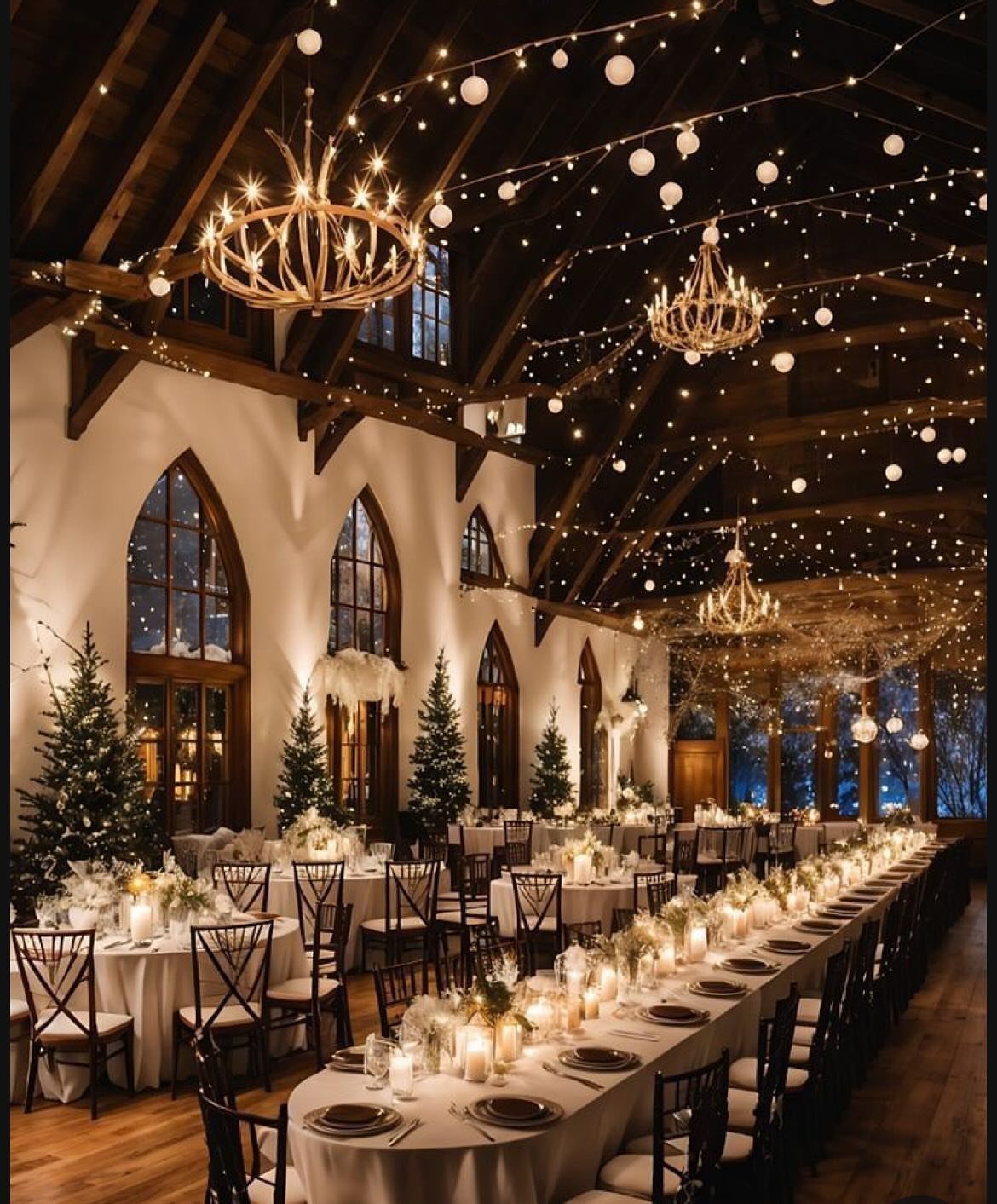
A hall with exposed beams and wood paneling already looks finished, so the setup can stay simple.
Long tables with white linens, pillar candles, and potted evergreen trees down the center fill the space without needing much else. String lights wrapped around beams or hung in swags soften the light and photograph better than overhead fixtures alone.
This setup works for a seated dinner or a standing reception, and the trees can be replanted or given away after the wedding.
11. Winter Charcuterie Boards
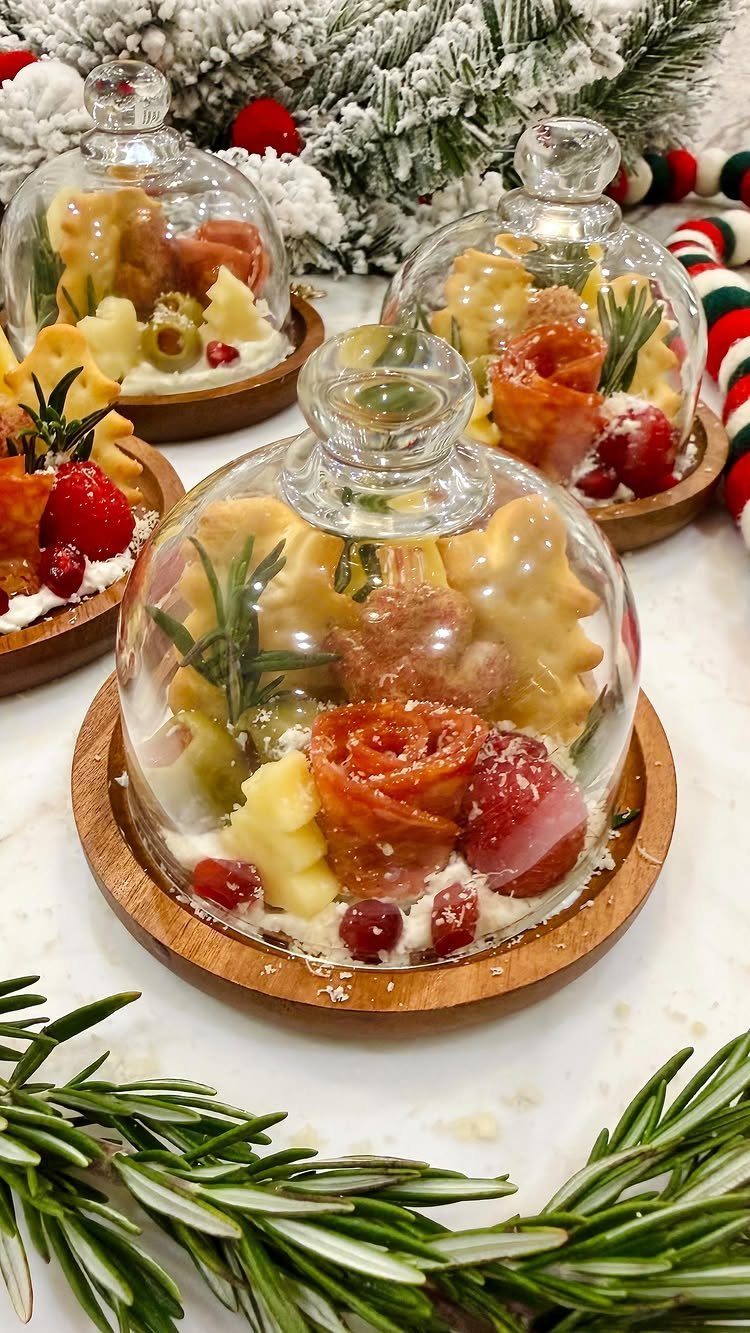
Individual charcuterie boards let guests eat during cocktail hour without waiting in a buffet line.
Build each board with a few slices of cured meat, two or three cheeses, crackers, and fruit. Glass cloches keep the food fresh and add height to the table.
Set the boards on a long table with evergreen branches and faux snow scattered between them. Count your guest list before ordering supplies.
12. Festive Floral Centerpiece
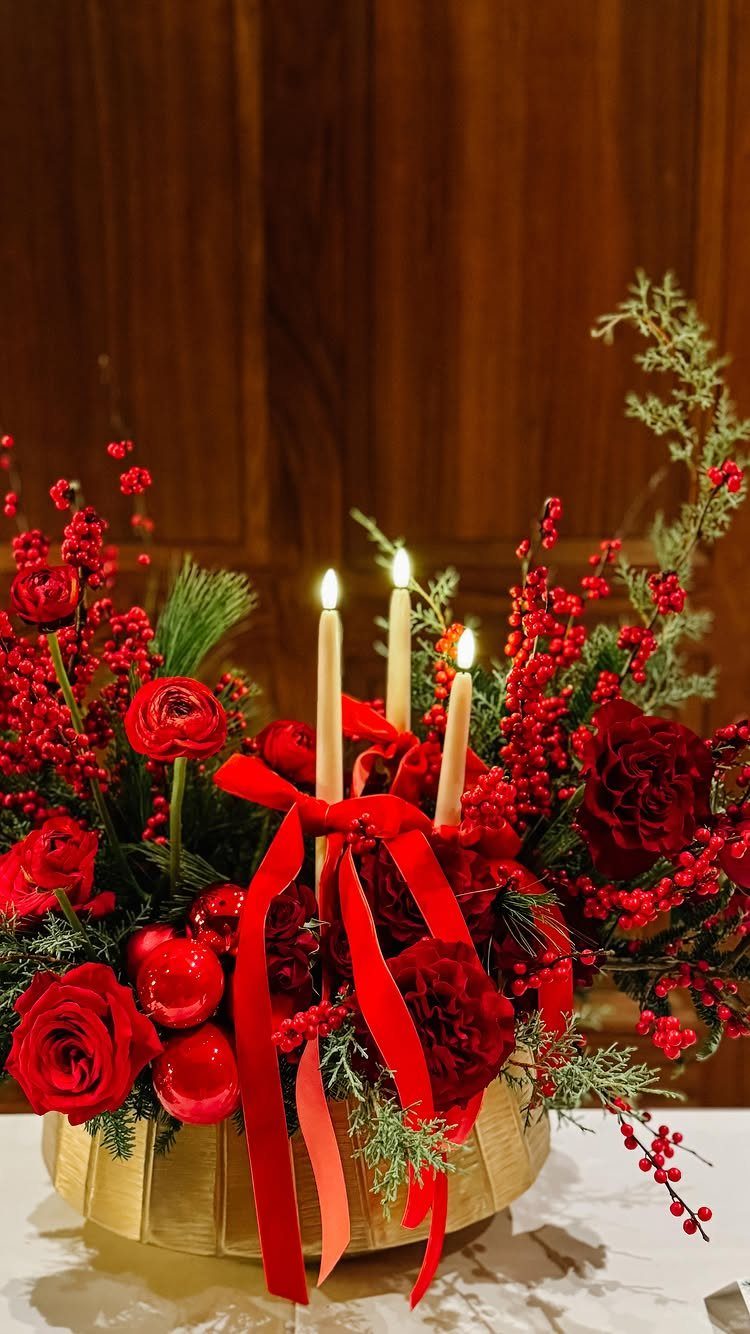
Roses, berries, and evergreen foliage in a low bowl centerpiece bring color to a winter table without blocking sightlines.
Red and green are the most common palette for this look, though burgundy roses and white berries soften it. Taper candles in the same arrangement add height and light.
Use a gold or brass bowl to reflect candlelight, or choose ceramic for a matte finish. This centerpiece works on round or long tables and holds up for several hours without wilting.
Plan for Winter Weather
Share your backup plan before the day arrives. If you’re hosting outdoors or in a location where snow could block access, send guests the venue’s indoor option or the address of an alternate site along with the invitation.
Include a phone number or group text line where you’ll post updates the morning of the wedding.
Pick somewhere accessible by a maintained road, not a long private drive that might not get cleared.
If guests are traveling from out of state, send a short list of road condition hotlines and local towing services they can call if they get stuck.
A ceremony scheduled for 4:00 PM should assume guests will arrive 20 minutes late if roads are slow, so plan the start of cocktail hour accordingly.
Plan Around Winter Daylight
Sunset arrives before 5:00 PM in most of the country during winter, which cuts into the window for outdoor photos. Schedule your ceremony early enough that portraits can happen in daylight, or plan to take them before the ceremony begins.
Couple portraits in natural light work best between 1:00 and 3:00 PM. After that, you’re working with dusk or full dark.
Scout an indoor location with good window light in case the outdoor plan doesn’t work. A room with large windows facing south or west will give you soft, even light for an hour or two in the afternoon.
Consider Winter Costs and Dates
Winter is off-season for most wedding venues, and prices reflect that.
Mountain destinations are the exception. Ski towns treat winter as high season, so venue costs stay high and lodging may require multi-night minimums.
If you’re working with a small guest count, winter pricing lets you spend more per person without exceeding your total budget. A $5,000 wedding is possible if you handle some tasks yourself; $30,000 is a typical figure for a larger event.
Frequently Asked Questions
How to plan a small inexpensive winter wedding?
Start with off-season venue pricing, which drops during winter months and lets a smaller budget go further per guest.
Focus on simple setups that need less labor: candles and evergreen garlands fill a table without expensive florals, and a hot cocoa bar or fire pit adds warmth without catering costs.
Handle tasks like tying blankets with ribbon or wiring pinecones into bouquets yourself to save on service fees.
What are some ideas for a very small wedding?
Candlelight ceremonies with votives lining the aisle work for any guest count and need no wiring.
A hot cocoa bar scales down to one urn, and a loveseat with a couple of armchairs gives guests a gathering spot without needing to fill a whole lounge.
How many guests are considered a small wedding?
Most people count fewer than 40 guests as a small wedding. It’s the guest count where everyone still fits around a few tables and you can actually talk to people instead of doing a meet-and-greet loop.
How do I decide who to invite to my small wedding?
Stick to immediate family and close friends, the people you actually want there rather than the ones you feel obligated to include.
If you’re still over your target number, consider inviting the extended group virtually so they can watch the ceremony without filling seats.
What are the types of small weddings?
An intimate wedding usually includes 20 to 50 guests, a micro wedding holds 10 to 20, and a mini wedding stays under 10. An elopement is just the couple, the officiant, and sometimes a few witnesses.