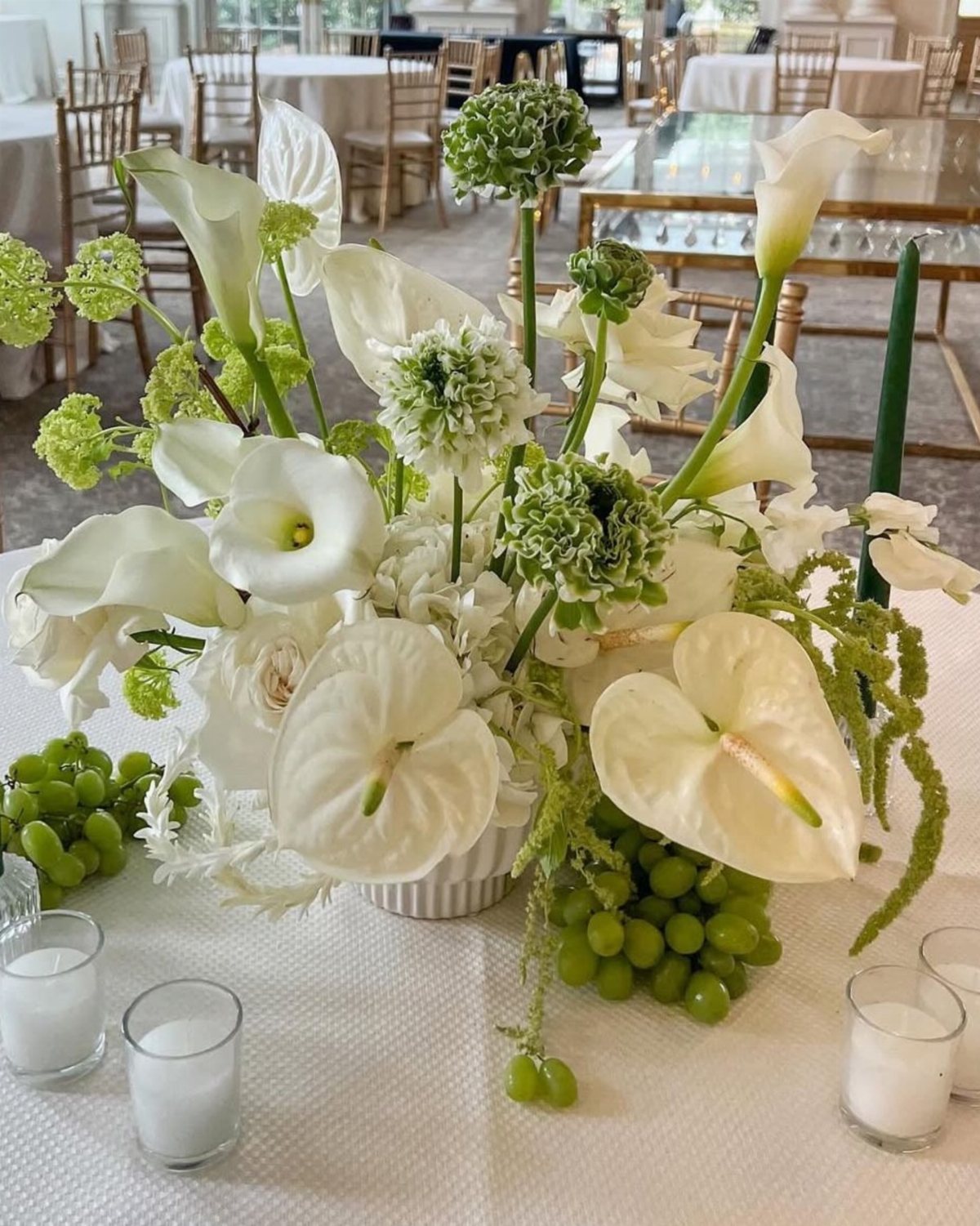
Round table wedding decor ideas sit on a wide scale, from a thrifted ceramic holder you already own to a rental chandelier that needs its own power outlet, with most of what actually gets used landing where a florist bill and a free weekend of DIY diverge.
The deciding factor is your ceiling height and your venue’s existing light: tall pedestals and hanging crystal turn oppressive in a low room, while candle clusters and low wreaths waste their charm in a grand ballroom built for vertical drama.
A floral runner that drapes past the table edge needs a full-length round cloth to land at all; without that drop, the effect collapses into midair stems.
1. Whimsical Floral Wreath Centerpiece
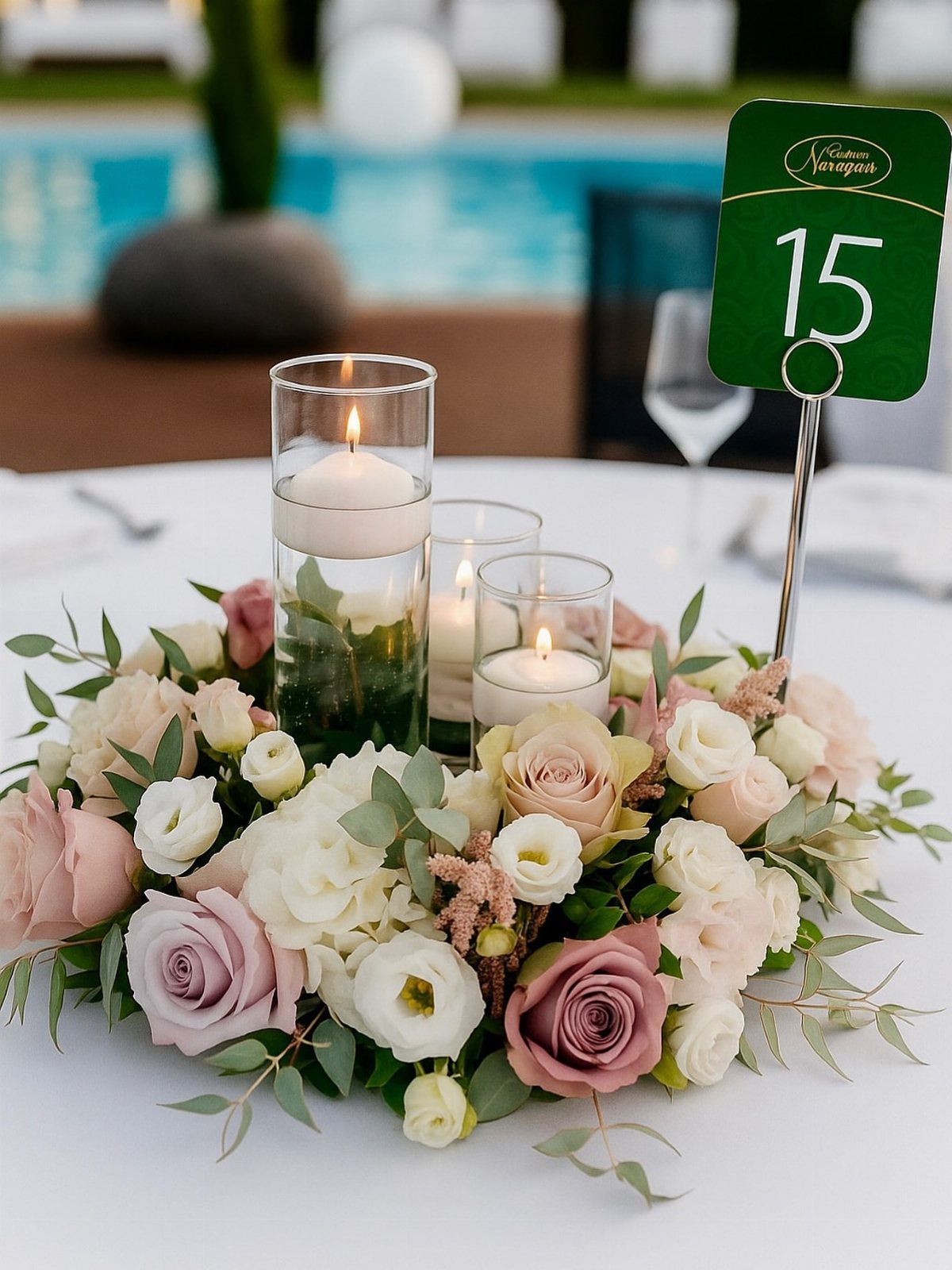
A floral wreath centerpiece keeps the sightlines open while still giving guests something to look at across the table.
Peonies and roses in soft pinks and lavenders work best for this shape; the blooms sit low and spread outward, so conversation flows without anyone leaning around a vase.
A pastel linen tablecloth in white or pale blush keeps the wreath from competing with stronger colors underneath. A green table number tucked beside the wreath keeps the look functional without breaking the floral circle.
Three glass cylinders with floating candles go in the center.
This suits a garden venue or any reception where you want the tables to feel dressed up but not crowded. Height is the compromise: you lose vertical drama, but you gain a table where guests can actually see each other.
2. Towering Floral Centerpieces
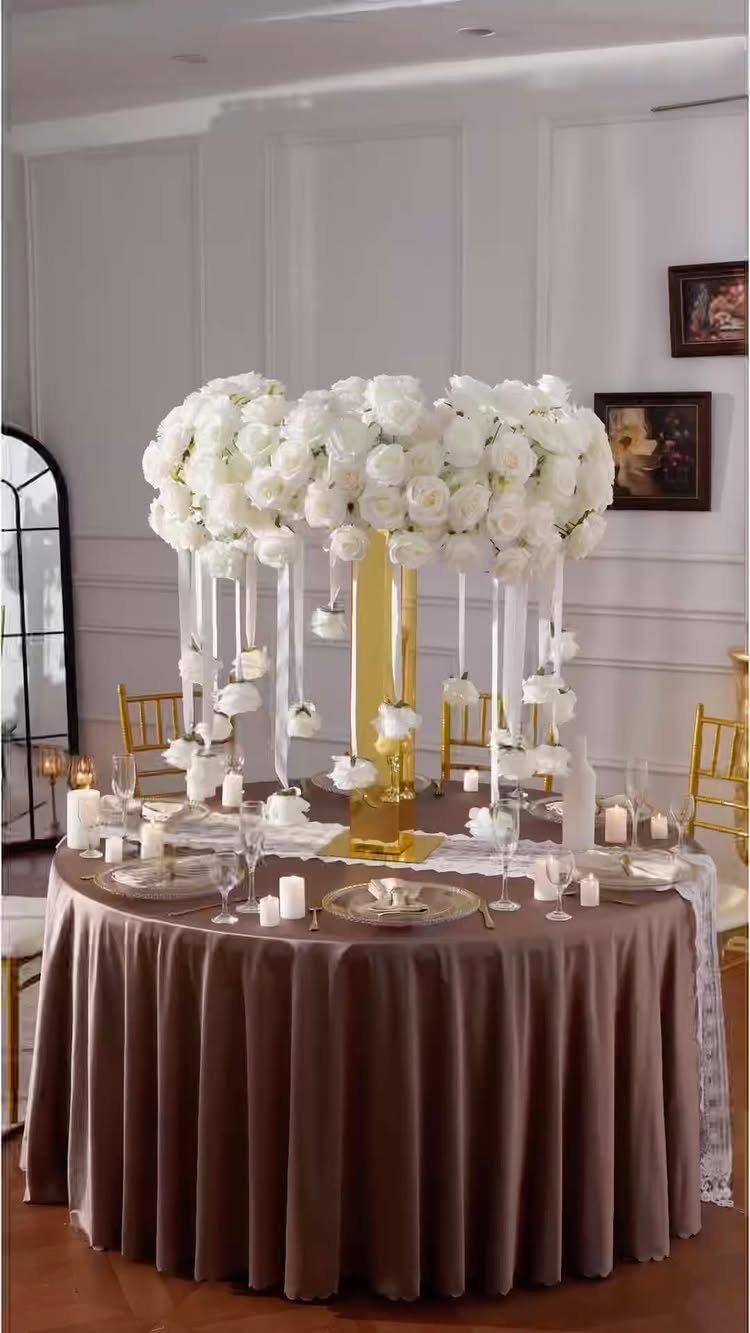
Height changes everything about how a round table reads in a room. A tall gold pedestal topped with white roses draws the eye upward and makes a standard round table feel grand rather than cramped.
Hydrangeas or orchids hold their shape well at this scale. Hanging ribbon and small rosebuds add movement that a static arrangement would miss.
Smaller votive candles at the base keep the table from feeling top-heavy and give guests their own light to eat by.
This works best in a hall with high ceilings, 10 feet or more, where the pedestal has room to breathe. In a tent or low space, the proportions turn oppressive fast.
The cost runs higher than low centerpieces: more stems, more structure, often a rental fee for the stand.
I’d save this for tables where the bridal party sits, or alternate one tall piece with two lower ones across the room so the budget stretches.
3. Colorful Napkins and Bright Floral Arrangements
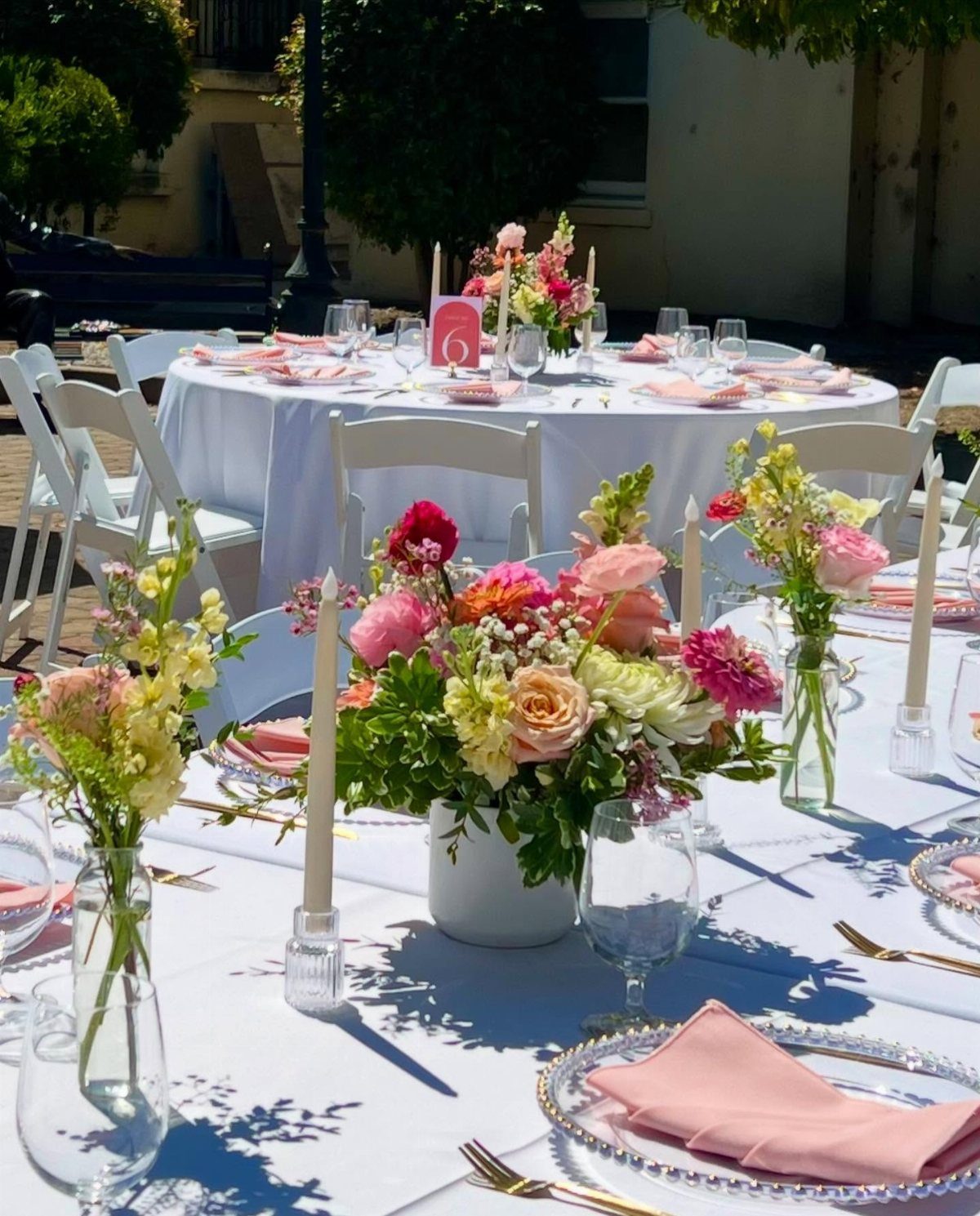
White linens give you a blank slate that bold color can actually use.
Pink napkins folded at each place, matched with hot pink and yellow florals, turn a simple round table into something that photographs well and wakes up an outdoor afternoon reception.
The key is committing to the contrast. Pale pink napkins with pale flowers would wash out in daylight; the saturation keeps the table from disappearing against the greenery behind it.
Patterned runners work the same way if napkins feel too small a gesture.
Glassware should stay clear so the color story stays with the textiles and blooms. Tall white candles add vertical structure without competing.
This approach suits a couple who wants personality without custom fabrication. The flowers and linens do the work; nothing needs building or wiring.
Trade-off: the palette has to hold together. One off-color bridesmaid dress or rental chair and the table looks accidental rather than intentional.
4. Candles and Lanterns
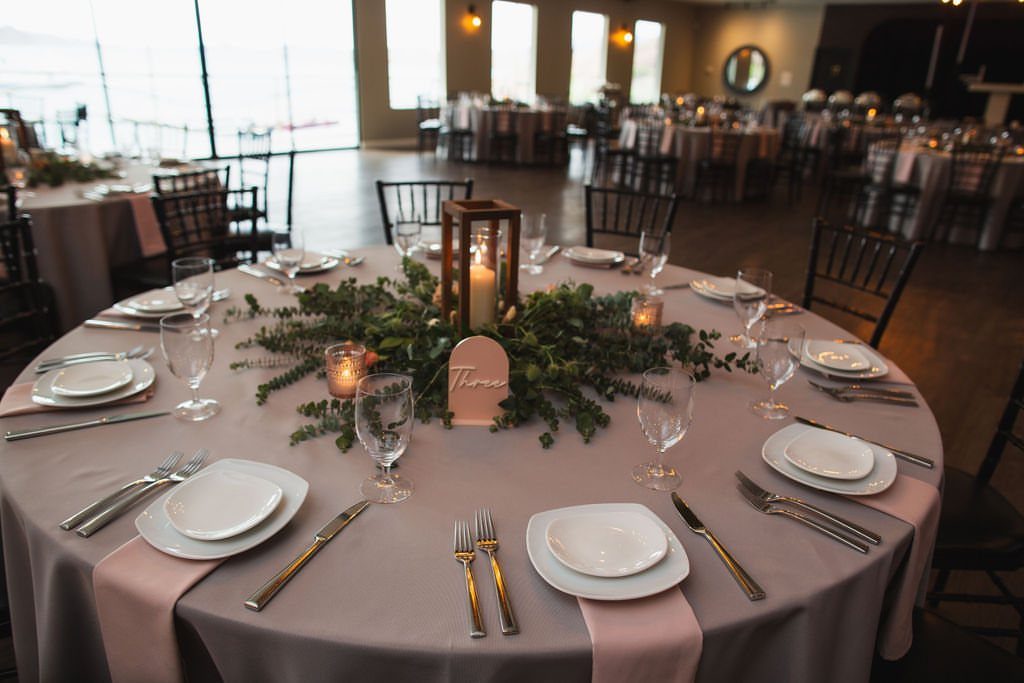
A wooden lantern with a pillar candle, ringed by greenery and small votives, gives a round table its own fireplace. The light sits low and warm, which flatters faces after sunset in a way overhead lighting never does.
A greenery wreath around the lantern keeps it from looking marooned on the linen.
Small clusters of flowers at the base would work too; connecting the lantern to the table surface matters more than the exact method, so it reads as one piece rather than an object placed on top.
Foliage wreaths are easier to build than they look: soak floral foam in a low dish, anchor it with waterproof tape, and insert stems at an angle so they face outward.
The votives need real glass holders, not bare flame, at any venue with a fire code.
This suits evening receptions and couples who want atmosphere without floral cost. The lantern itself is reusable home decor afterward.
Limit: afternoon outdoor weddings, where the candlelight gets lost and the lantern reads as just wood and glass.
5. Fruits with Floral Arrangements
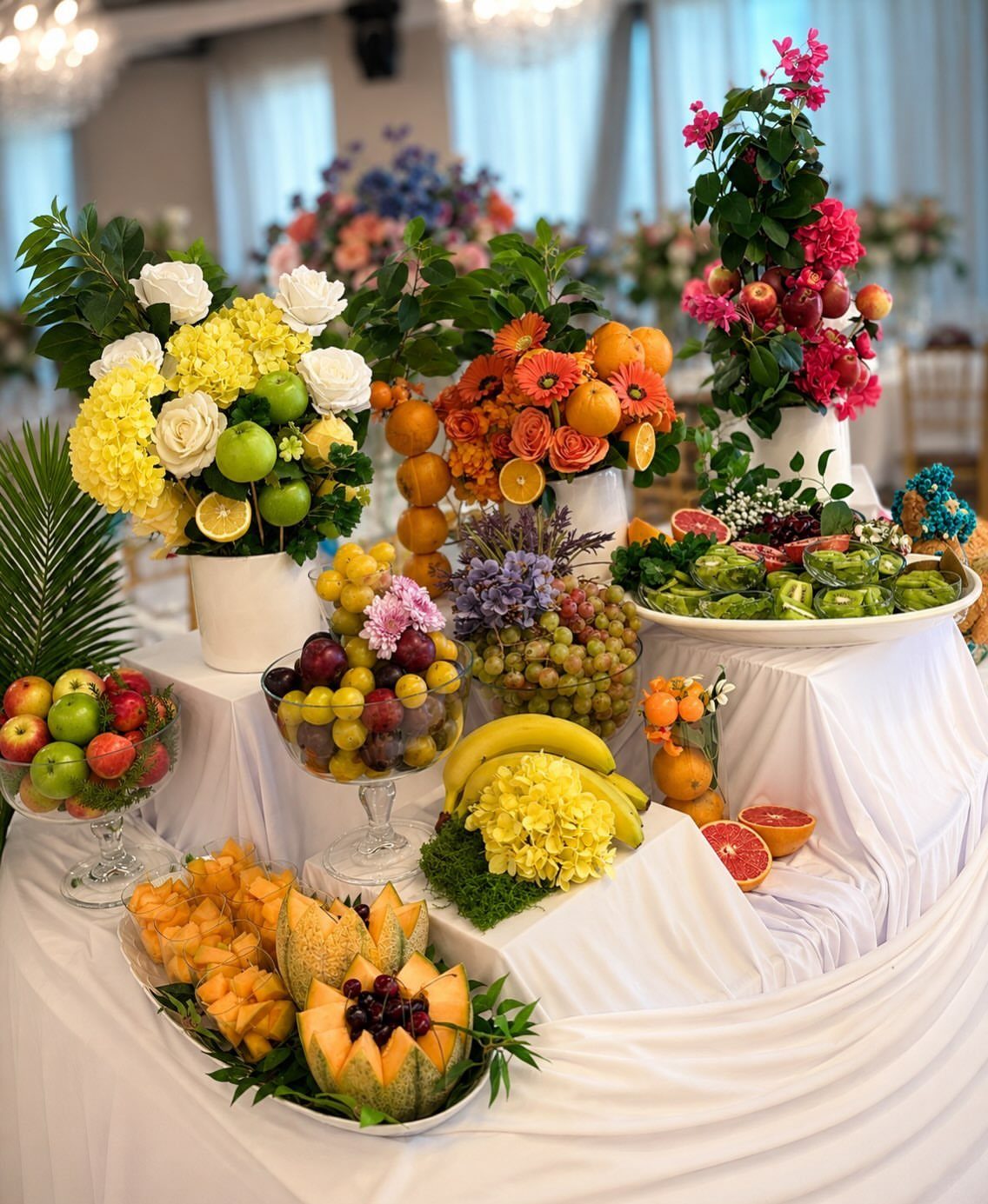
Fruit on a wedding table sounds risky until you see it done with this much intention.
Grapes, citrus, and melon arranged with yellow and pink blooms on white linens turn the centerpiece into something guests can actually interact with, not just photograph.
The polished look comes from the vessel. Rustic wooden platters work for a farm-table setup; glass bowls or white ceramic keep it formal enough for a seated dinner.
Sliced fruit shows color and texture; whole fruit gives height and structure. Mix both, and replace anything that browns before the meal ends.
This idea suits a summer wedding or any couple serving family-style Mediterranean food. The fruit can double as dessert garnish or late-night snack if the kitchen holds it cold until the right moment.
Trade-off: maintenance. A floral centerpiece wilts gracefully; a melon slice does not.
Assign someone to check the table hourly, or stick to whole fruits with thick rinds.
6. Ornate Chandeliers Above
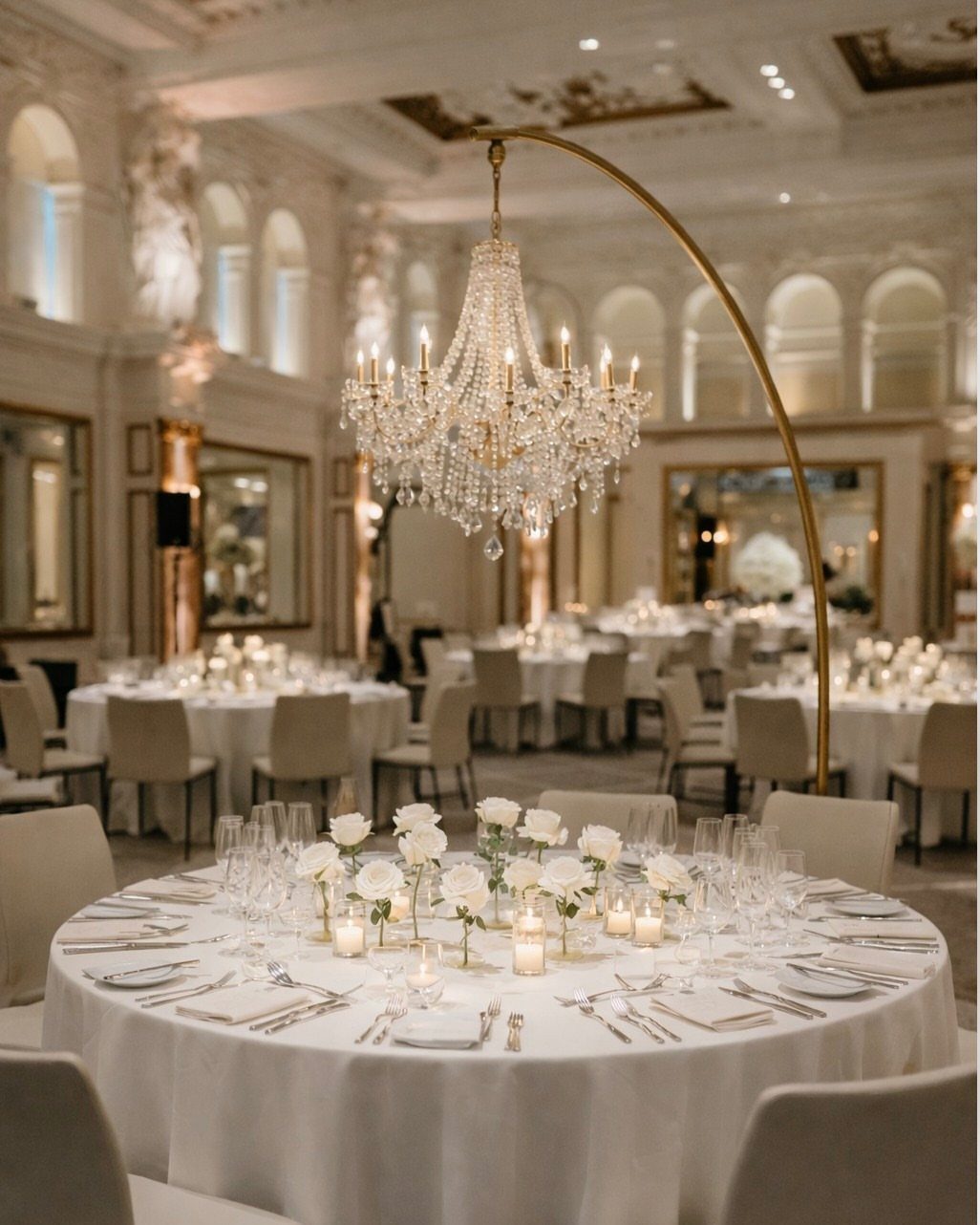
A chandelier over a single round table sounds excessive until you see the scale. The crystal piece hangs from a curved gold stand, not the ceiling, which means it travels with the table rather than depending on the venue’s fixtures.
This changes where you can use it. A tent, a lawn, a raw industrial space: anywhere you can run power, you can place this.
The stand itself becomes part of the design, so the gold finish needs to match your chair frames or flatware if you want cohesion.
The light it casts is downward and warm, which flatters the white roses and tea lights below without competing. For the full effect, keep the table centerpiece low.
Tall flowers would fight the chandelier for attention and block the glow.
Cost is the main barrier. Rental for a piece this size adds up fast per table, and you need an outlet within cord reach.
I’d use it for the sweetheart table only, or for a small head table where the photos matter most.
7. Minimalist Candle Clusters
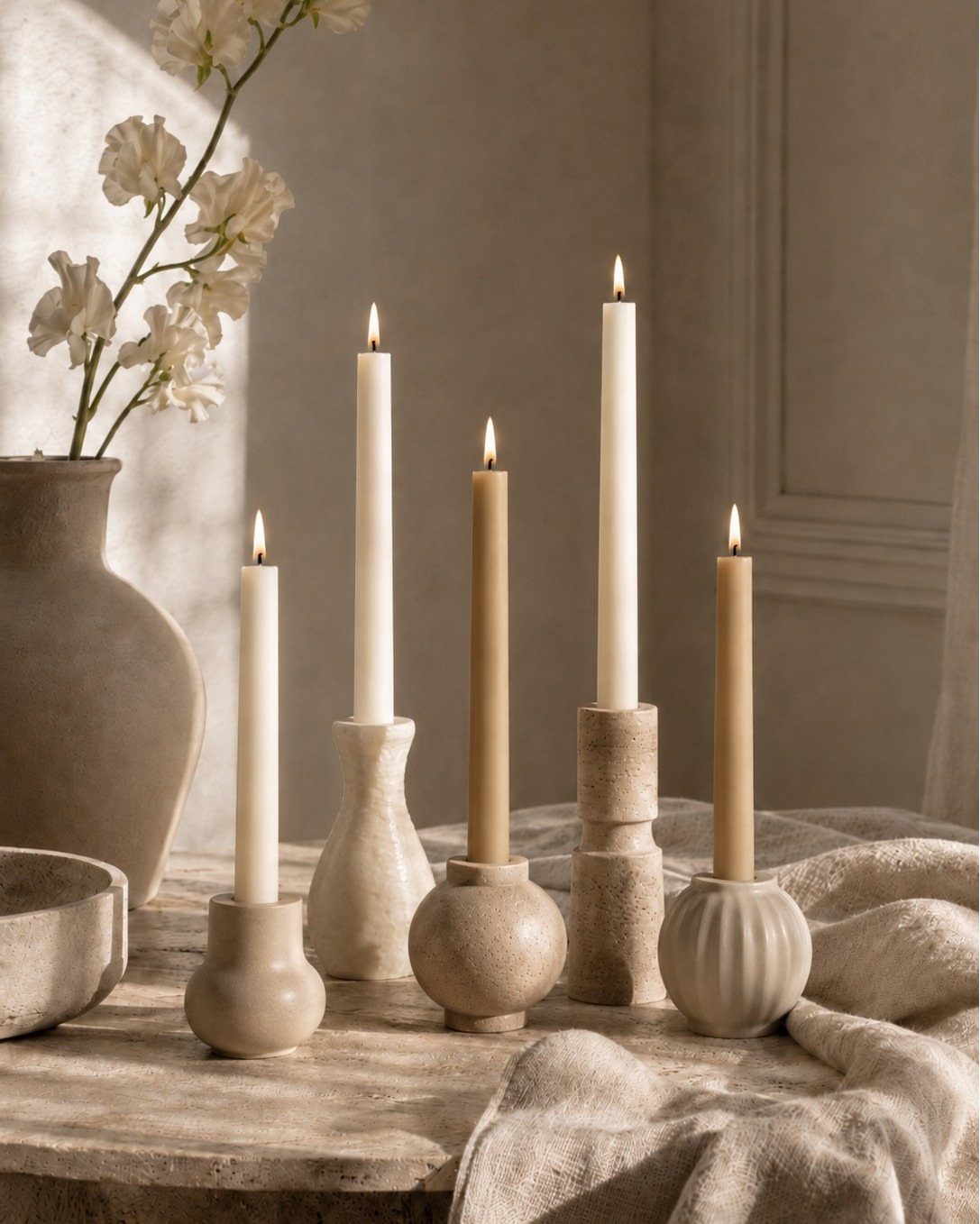
A cluster of taper candles at staggered heights does more with less. Ceramic and stone holders run from low and rounded to tall and narrow, all in quiet beige and cream tones that let the flame do the talking.
This setup suits a couple who wants the table to feel warm without fighting the conversation across it. No tall centerpiece blocking sightlines, no florist bill to swallow.
The holders matter more than the candles themselves. Thrift shops and ceramicists on Etsy sell single pieces you can build into a cluster of 4 to 7.
Mix textures, keep the palette tight. Rose petals or confetti around the base add color only if your palette needs it; the bare stone and cloth read cleaner without.
Light them well before guests sit down so the wax pools and the glow settles in. Tapers burn at a steady rate, so a full-length dinner candle carries you through the meal with glow to spare.
8. Customized Table Numbers
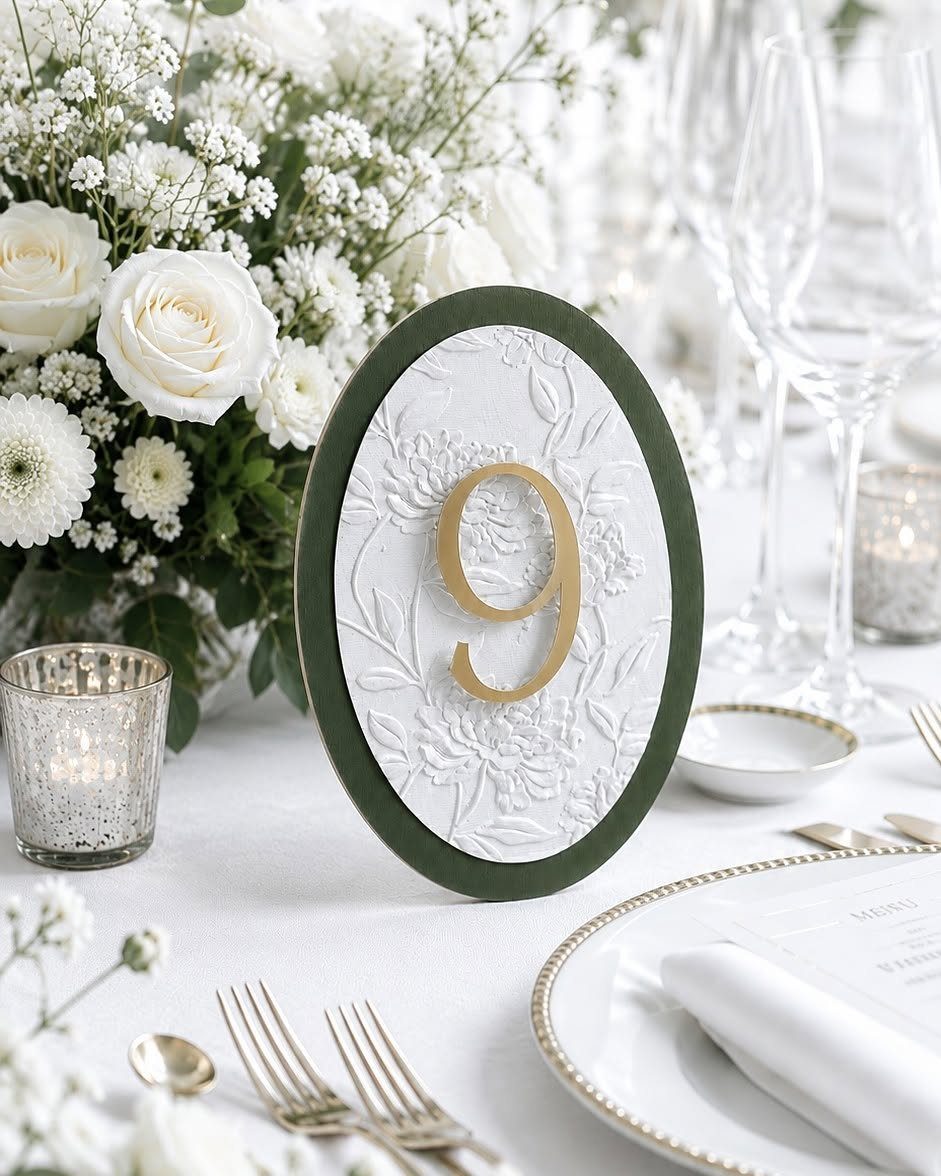
Table numbers are the one place your guests will look directly at a prop and read it. That makes them worth doing well, or not doing at all.
A table number that tries to tell your whole love story in collage form becomes homework for guests who just want to find their seat and a drink.
Engraved wood reads warm for rustic or outdoor weddings; pressed flowers under glass suit garden settings; a simple painted tile works anywhere.
The common mistake is sizing too small: anything that gets lost behind a water glass fails at its one job. Set your sample on a mock table and walk 10 feet away.
If you cannot read it, neither will your aunt in her progressives.
One table number per table, not two. Guests approach from one direction more often than you think.
9. Sage Green Napkins and Glassware
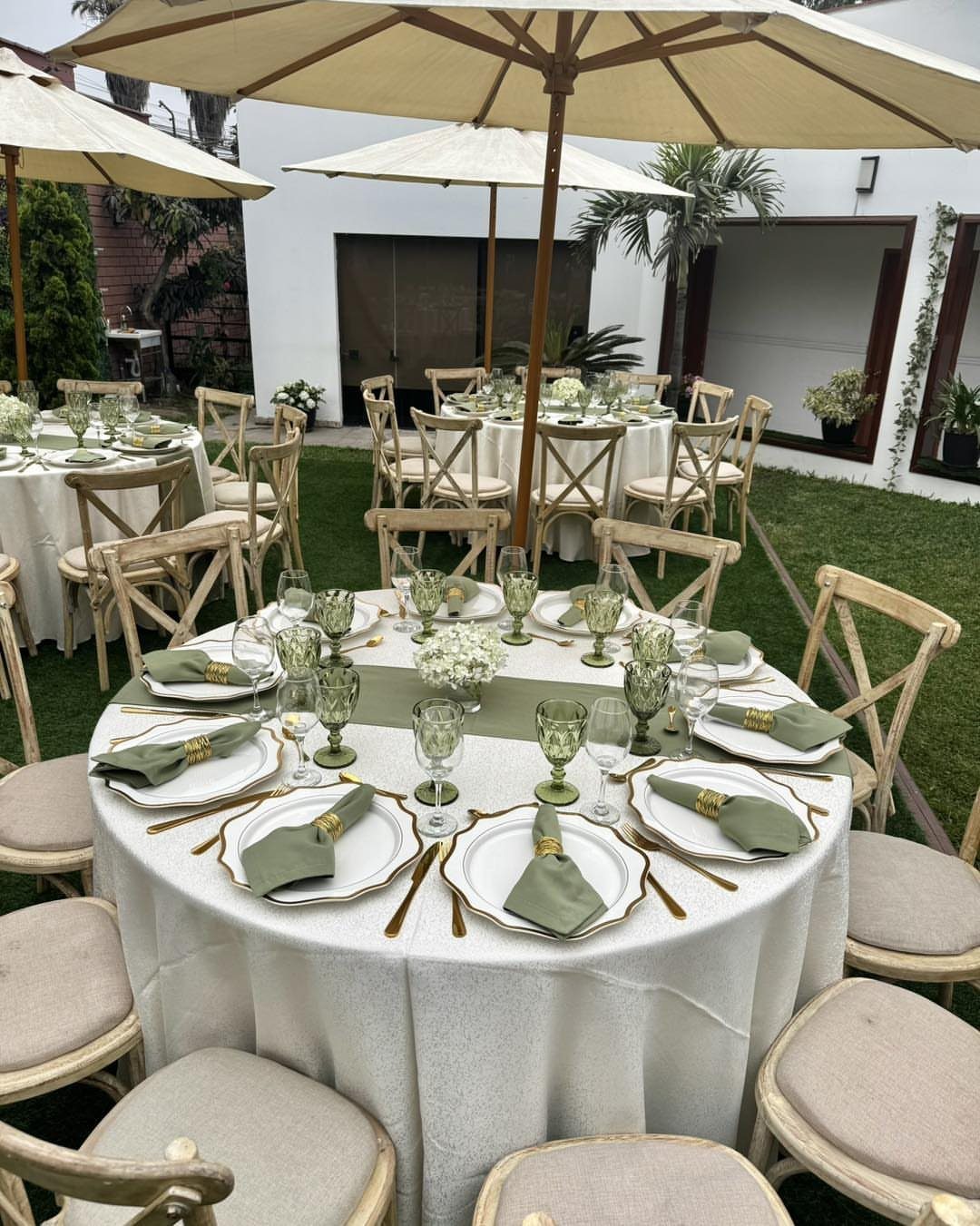
Sage green has held its ground as a wedding color because it photographs soft in daylight and reads as intentional, not accidental, under evening tent lighting.
Napkins and goblets that share one green family without matching exactly keep the table from looking kit-bought.
This palette needs a warm metal to avoid clinical coolness. Gold-rimmed chargers do that work.
Silver or black flatware would fight it; wood or gold wins.
Outdoor settings let the green speak against grass and sky. Indoors, under warm bulbs, the same sage can turn muddy.
Test your linen and glassware under the actual lighting your venue uses, not just daylight through a window. A napkin that reads wrong under venue lighting is a waste; the same napkin under corrected light becomes the detail guests remember.
White flowers keep the center light. Pink or red blooms against this green edge toward Christmas, not garden.
10. Blush Pink Linens and Florals
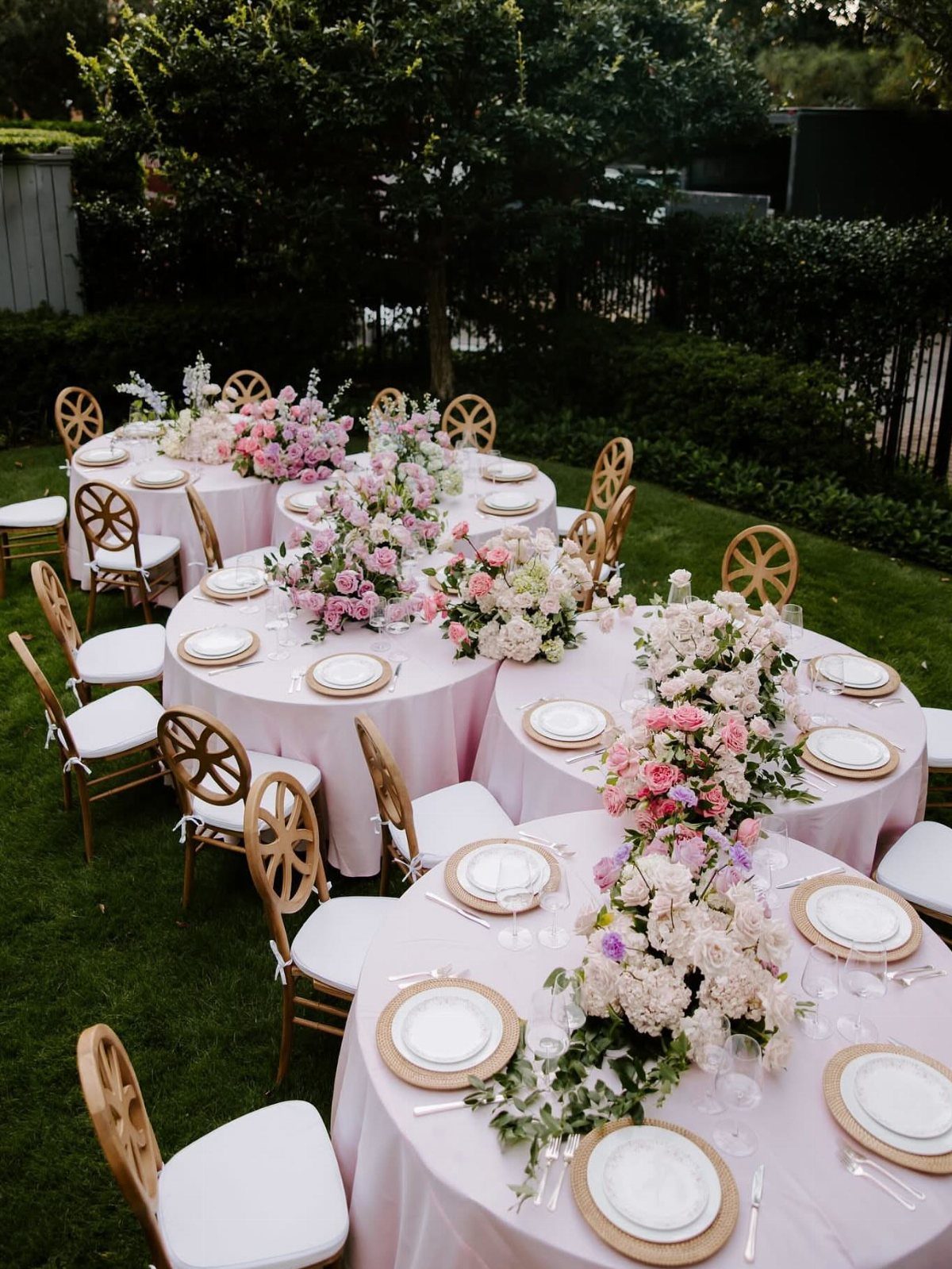
Blush pink on a round table risks sweetness overload if the tone runs too warm or the fabric too shiny. Matte tablecloths in a slightly dusty pink read closer to faded rose than nursery wall.
That choice saves the idea from looking like a princess party.
The floral centerpieces carry the same discipline: white keeps the pink from pooling into monotony, and the scale is full without being tall.
Round tables need width more than height; a centerpiece that spreads across the middle fills the visual space without becoming an obstacle.
This look demands attention to the chairs. Wooden chairs hold their own against all that softness; chiavari gold or white plastic would not.
If your venue supplies chairs you hate, rent alternatives or budget for covers, because the eye travels from linen to seat and back again.
Outdoor light flatters this palette. Indoor ballrooms with heavy drapery can make it feel suffocating unless you add white or cream in volume.
11. Draped Floral Runner Across Round Table
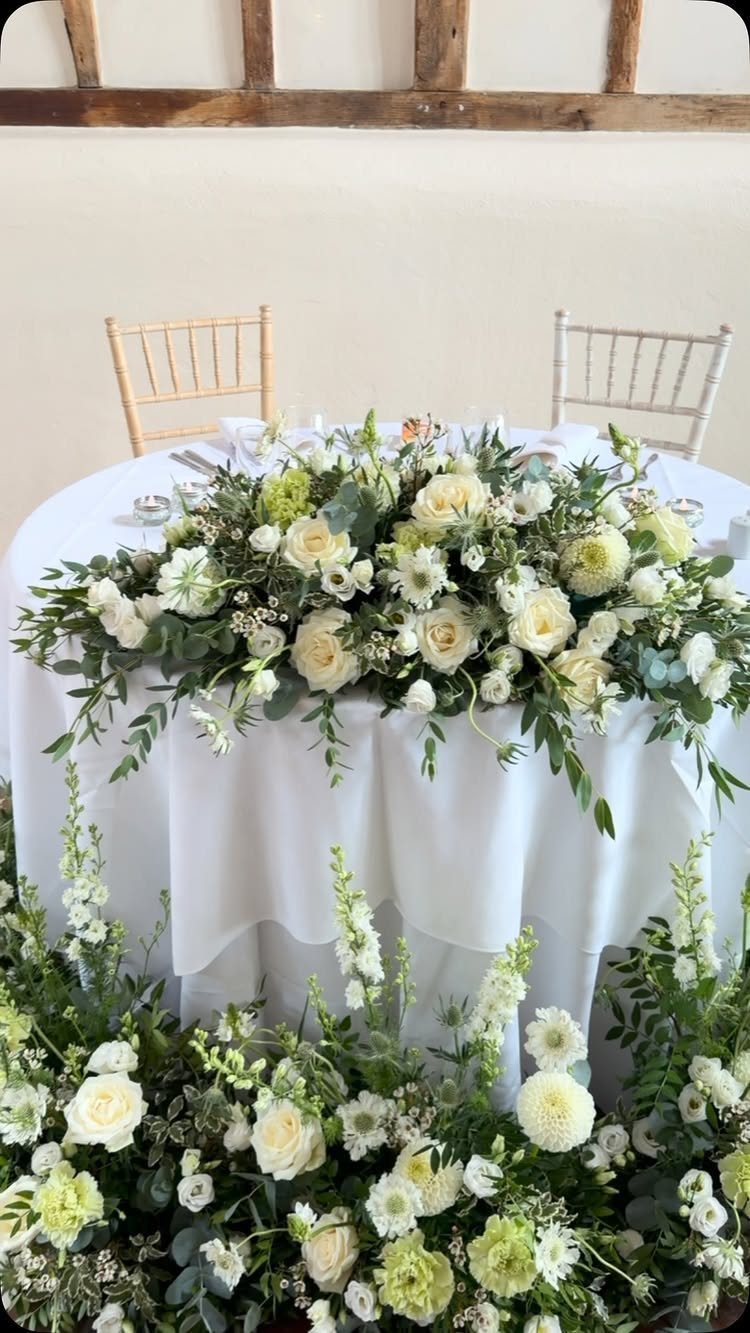
A floral runner that drapes over the table edge turns the whole surface into the centerpiece. White roses and greenery spill from a narrow core across roughly one-third of the diameter, enough to read lush without leaving room for plates.
This idea works best on tables wide enough that the runner does not overhang into laps. Anything smaller and the runner crowds the place settings; guests end up eating around stems and dripping water.
The florist needs a clear base, usually chicken wire or a soaked foam trough wrapped in foliage, so the mechanics hide underneath.
The drape at the edge is the signature move. It requires a tablecloth that hangs at least to the chair seat, otherwise the runner ends in midair.
A full-length round cloth on a standard-height table gives you that drape; anything shorter and the effect collapses.
A garland of mostly greenery with scattered blooms cuts that roughly in half and reads almost as generous.
12. Curved S-Shape Table Layout
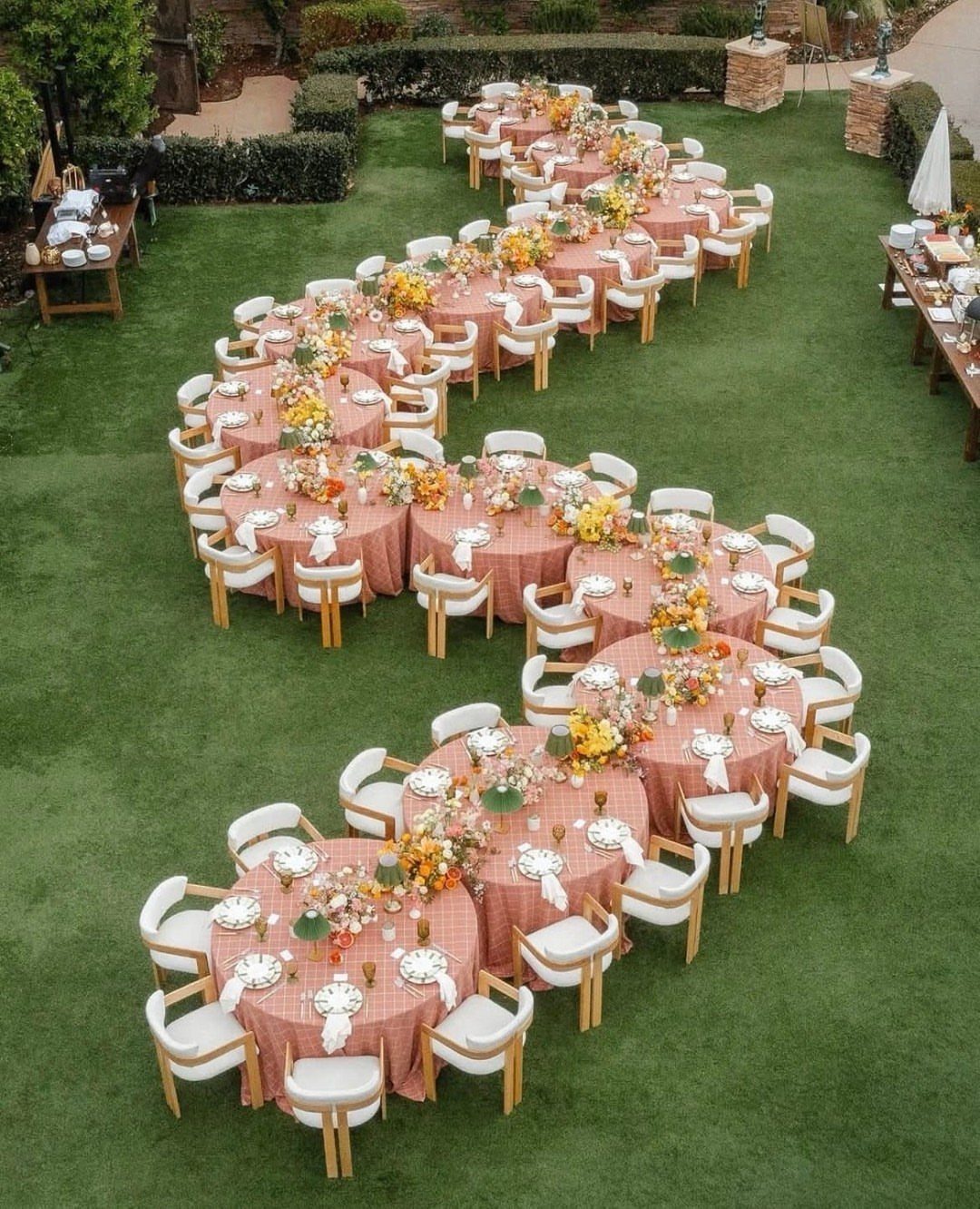
An S-curve of round tables turns a flat lawn into something that moves.
This layout needs space, more than you think. The curve only reads from a distance or from above; guests on the ground experience it as walking a longer path to their seat.
That can feel elegant or irritating depending on your crowd and their shoes. Older guests seated at the outer ends of the S will walk farthest.
The shape also changes how servers work. A straight line of tables lets staff move down one aisle; the S forces zigzag patterns that slow service.
Caterers need to see the floor plan in advance, not the morning of.
Peach reads warm against green grass but can turn orange under certain tent linings. Test your linen in place, at the hour your reception starts, before you commit the full order.
The S-curve demands enough tables to complete the shape; a thin scattering looks broken, while a proper chain fills it out.
13. Perimeter Floral Accents for Large Tables
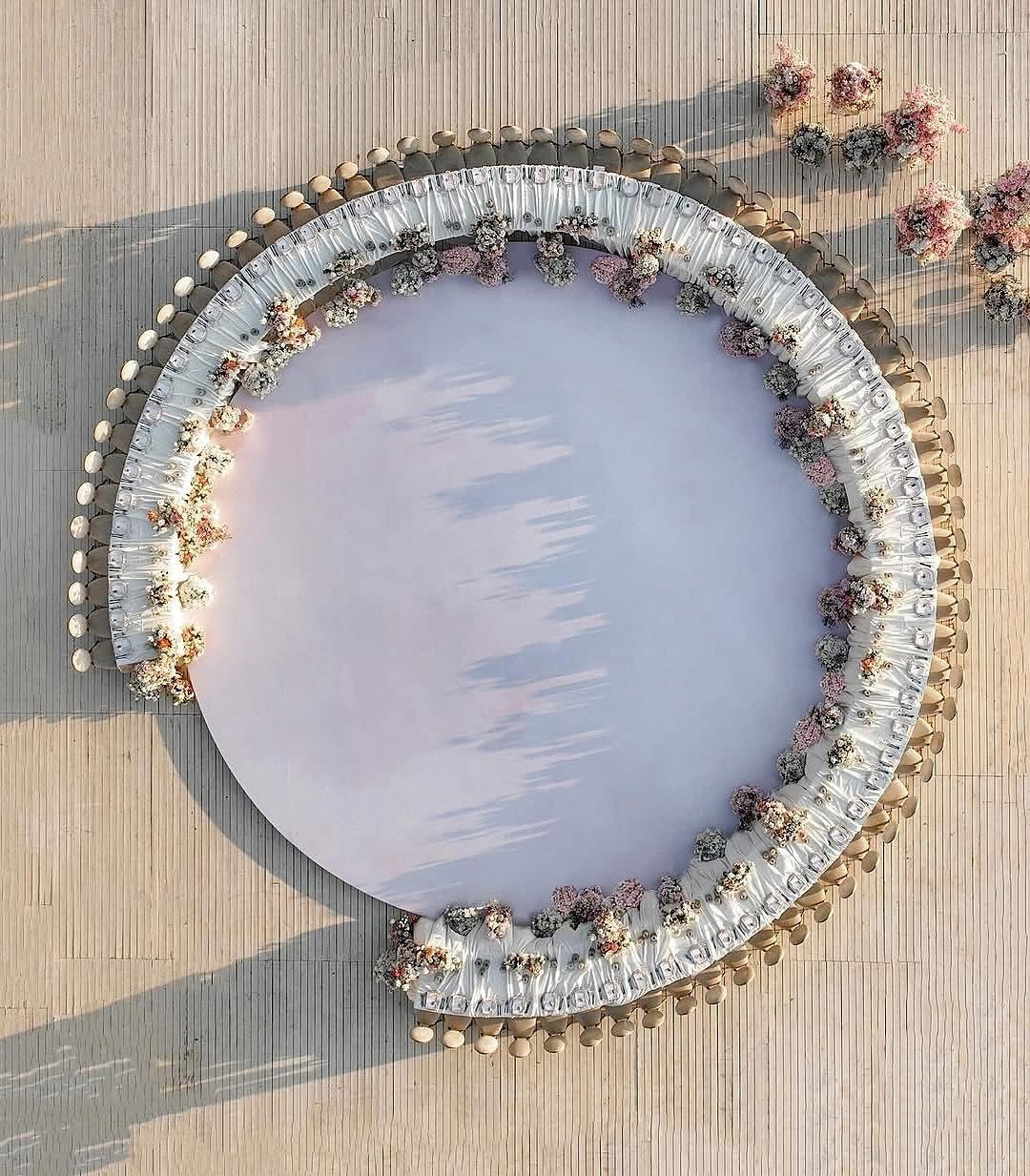
Perimeter floral accents turn a single oversized round table into a room’s centerpiece without blocking sight lines across it.
Small arrangements spaced every few seats mark each place setting while leaving the middle open for shared platters, a dance floor, or simply room to move.
This layout suits the couple who wants everyone at one table but needs the table to work, not just look pretty. The flowers stay low, so conversation flows; the spacing is regular, so the table feels planned rather than scattered.
For a table seating 20 or more, I would skip one large piece and scatter small arrangements around the edge instead.
Greenery-heavy mixes with a few focal blooms keep costs down and last through a long evening without wilting under guest elbows.
Intimacy takes the hit: guests across the wide span will shout to be heard. This works best when the table is the party, not the place for quiet talk.
Creating a Warm Atmosphere
Taper candles at staggered heights, clustered in ceramic and stone holders, give a round table its own fireplace without blocking sightlines across it.
Greenery does the same work for daylight hours. Lush ferns, eucalyptus, or ivy add depth and texture without the cost of full floral arrangements.
A strip of eucalyptus or ivy laid down the middle of a round table softens the edge-to-edge geometry, and if you tuck a tiny succulent by each plate, guests have something living to carry off at the end of the night.
Personalizing Decor
Flat blooms sealed under a pane of glass catch the afternoon light at an outdoor reception and weigh almost nothing to ship home later.
A single hand-painted tile, maybe picked up on a trip or at a local maker’s stall, sits flat enough that water glasses stay steady and conversation keeps moving.
Frame a photo from your engagement or a trip together, and the number becomes something guests pause over.
DIY Opportunities
A greenery wreath around a lantern is easier to build than it looks.
Ferns or succulents survive the evening without attention, and guests have something living to carry home.
Balancing Elegance and Charm
A round table risks looking either too bare or too crowded; the balance lives in what you leave out as much as what you add.
A gold charger under the dinner plate pulls the warmth out of blush or terracotta linens; swap in silver and the whole table goes cool and flat in a way that cheap metals only make worse.
The chairs matter as much as the linens.
Frequently Asked Questions
What’s a good centerpiece for a round table?
A floral wreath centerpiece keeps sightlines open while giving guests something to look at, or a tall gold pedestal with white roses draws the eye upward and makes a standard table feel grand.
What wedding decor is trending now?
Round tables with lush but low arrangements are holding ground, especially floral wreaths and greenery runners that spread width instead of height.
Couples are also using perimeter accents on large round tables, spacing small low arrangements around the edge so the middle stays open for shared platters or room to move.
How to arrange round tables for a wedding reception?
An S-curve of round tables turns a flat lawn into something that moves, but it needs more space than you think and forces servers into zigzag patterns that slow service.
Guests on the ground mostly notice the longer walk, not the shape itself, and servers lose the straight aisle that lets them move fast with full trays.