Homecoming updos run from a 10-minute waterfall braid to a twisted chignon that needs three sections and some patience, and the right pick depends on whether your hair holds a curl, fights a pin, or slips an elastic by the second dance.
A bubble ponytail needs no heat and no mirror-checking after every song, while a sleek polished updo demands smoothing serum and a flat iron before you even start twisting.
1. Fishtail Braid
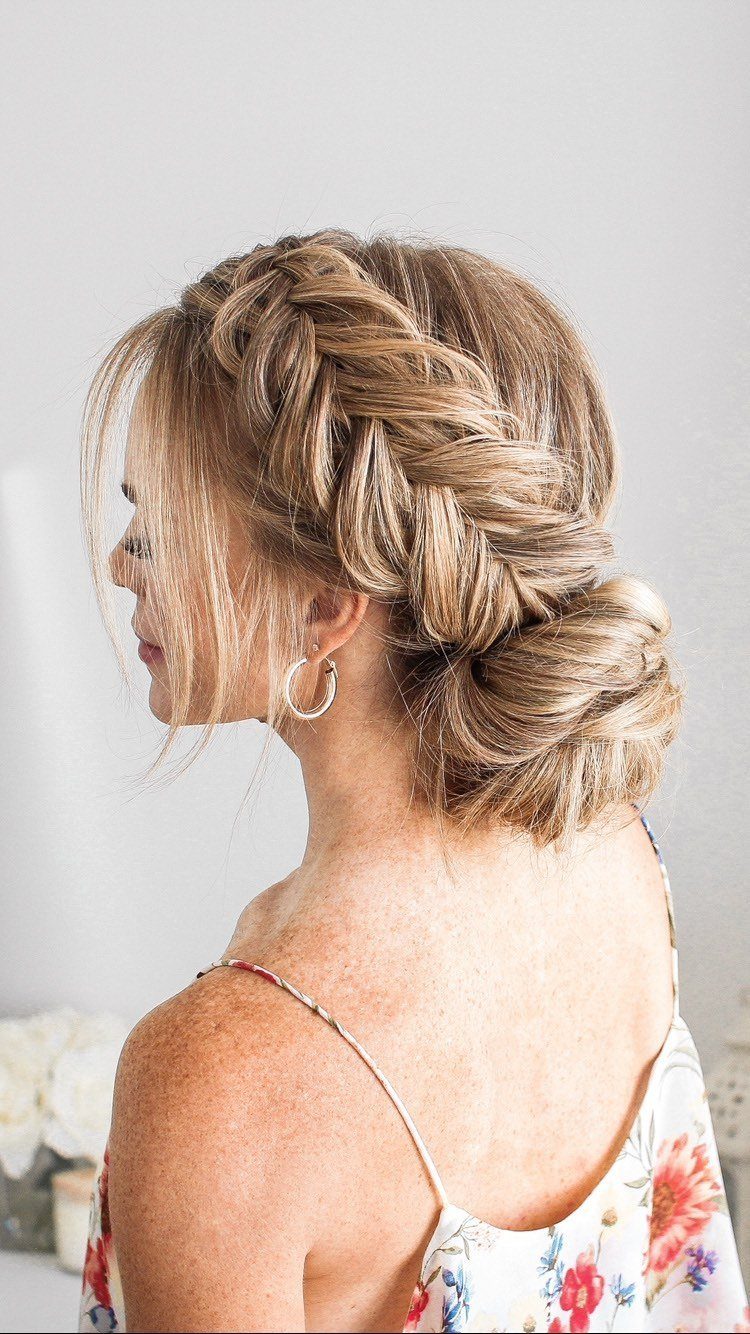
A fishtail braid looks complicated but breaks down into two sections crossed over each other instead of three. The flat, herringbone texture feeds into a low bun at the nape.
For homecoming, this style works best with medium-length hair or longer; the braid needs enough length to show the pattern before it tucks under. Pull each segment wider after you finish for volume that balances a one-shoulder neckline.
Leave a few strands loose at the temples if your hair has layers, or pin them with small grips that match your hair color.
If your dream aesthetic is “cartoon princess who has naturally full hair,” then the wraparound braid is a must-try for homecoming.
— Hair.com
2. Waterfall Braid
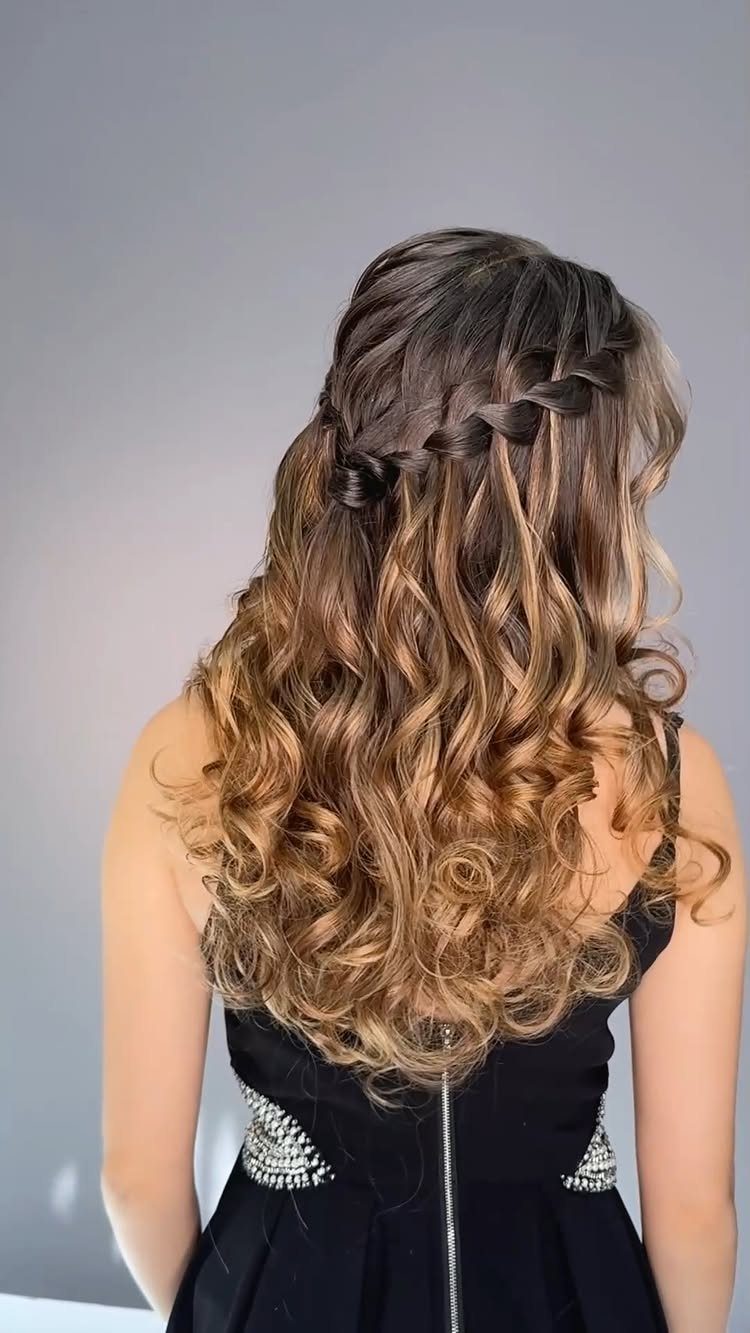
Waterfall braids read as intricate but take about 10 minutes once you get the rhythm: drop one strand, pick up a new one from below, repeat across the crown.
The effect is strands falling through the braid like water through a fence.
This version keeps the rest of the hair in loose waves, so the braid acts as a headband rather than controlling everything.
That makes it forgiving for hair that frizzes or refuses to hold a tight style through a long night.
Best for hair with some natural wave or body; straight hair needs curling first so the dropped strands blend rather than hanging limp.
3. Crown Braid
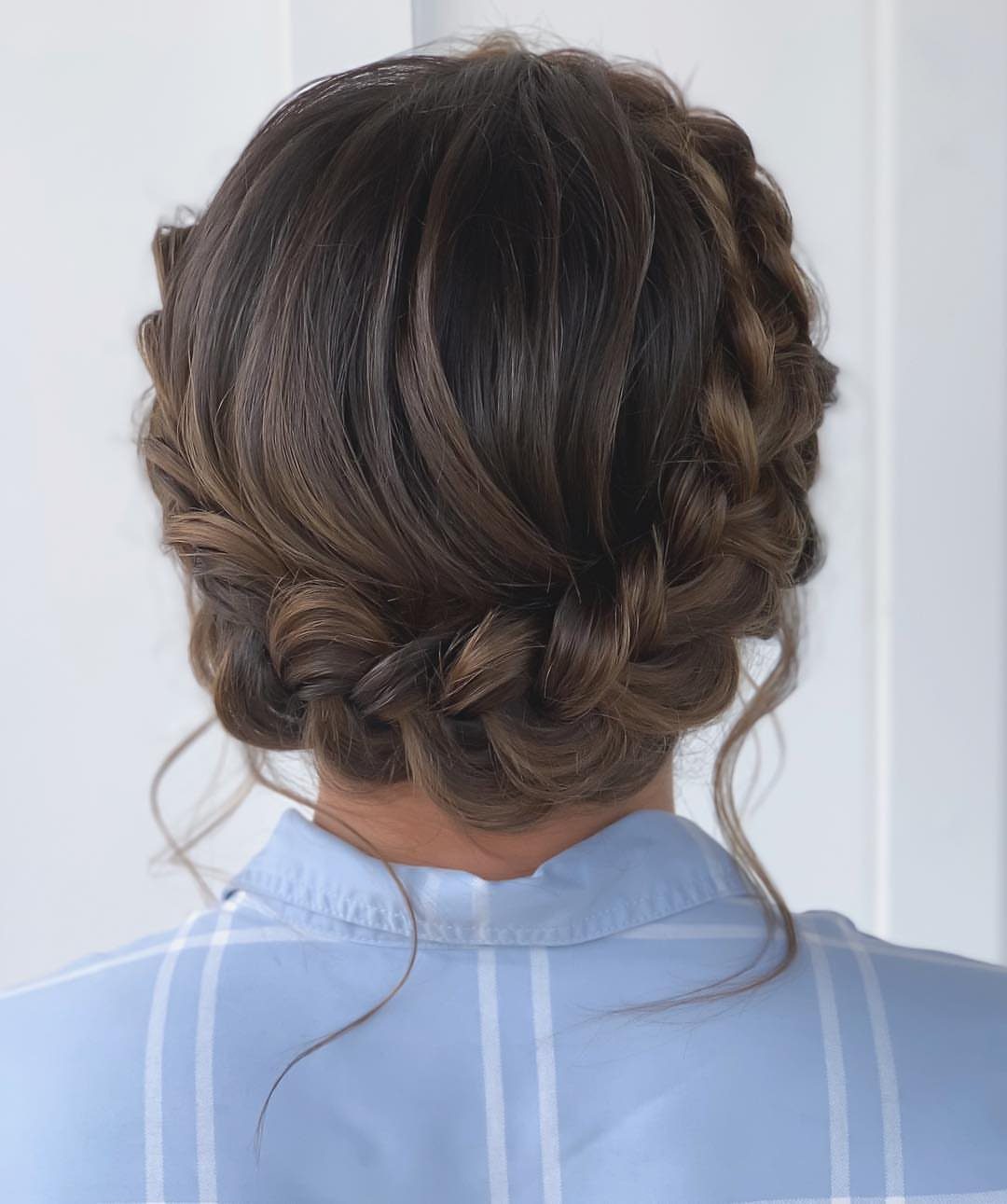
The braids sit flat and hold securely, which matters more than it looks like it will once you start dancing.
Small pearl pins pressed along the braid catch light and camera flashes without looking like you tried too hard.
Layered hair and bangs fight this style. If yours is cut either way, pack extra bobby pins and expect to work them in as you go.
4. Curly Girl Updo
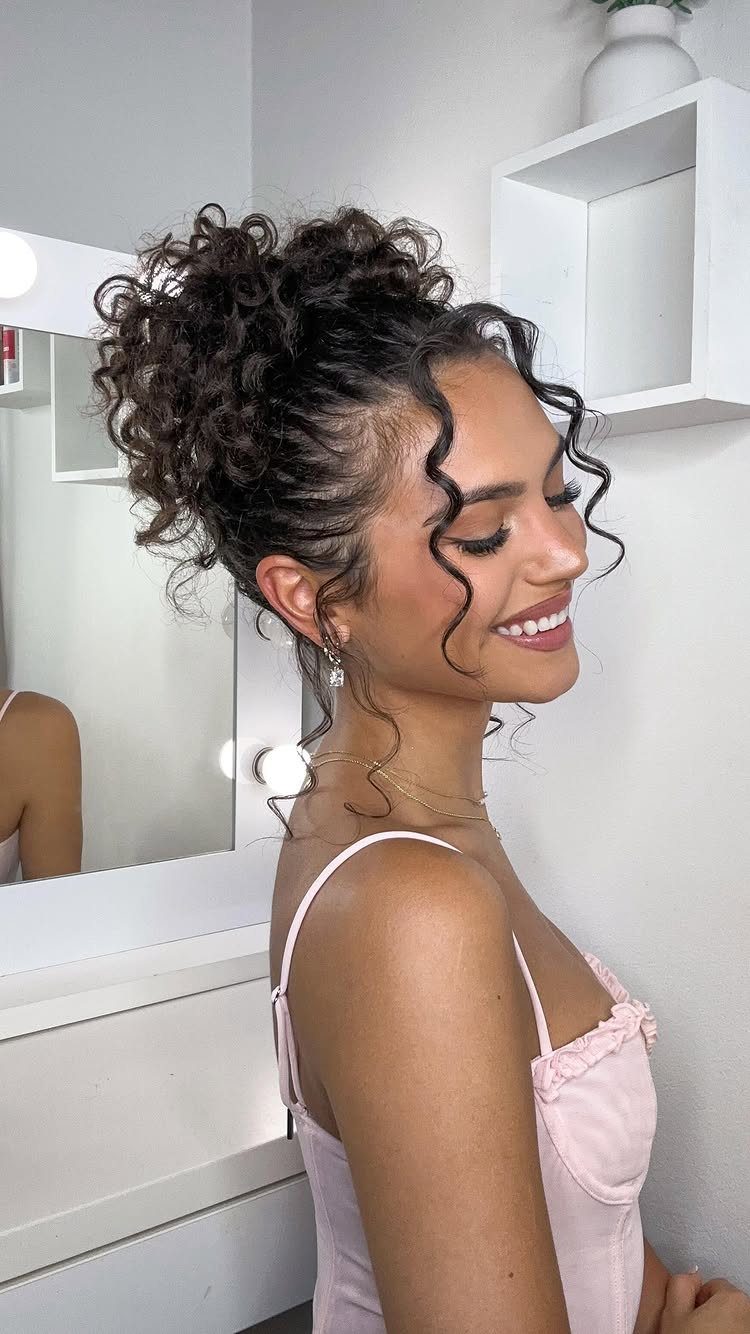
Natural curls gathered high with a soft headband as the base give volume that straight hair has to fake with backcombing.
The headband takes the weight so pins only have to direct, not support, which means fewer headaches by the end of the night.
A ribbon tied around the gathered base dresses it up for the occasion without requiring heat tools or product beyond what you already use.
Tendrils left at the face are intentional, not escaped; plan where they fall so they frame rather than frizz.
This style suits anyone whose curl pattern holds definition when stretched upward. Loose or wavy curls may need more pins and less height.
5. Low Bun
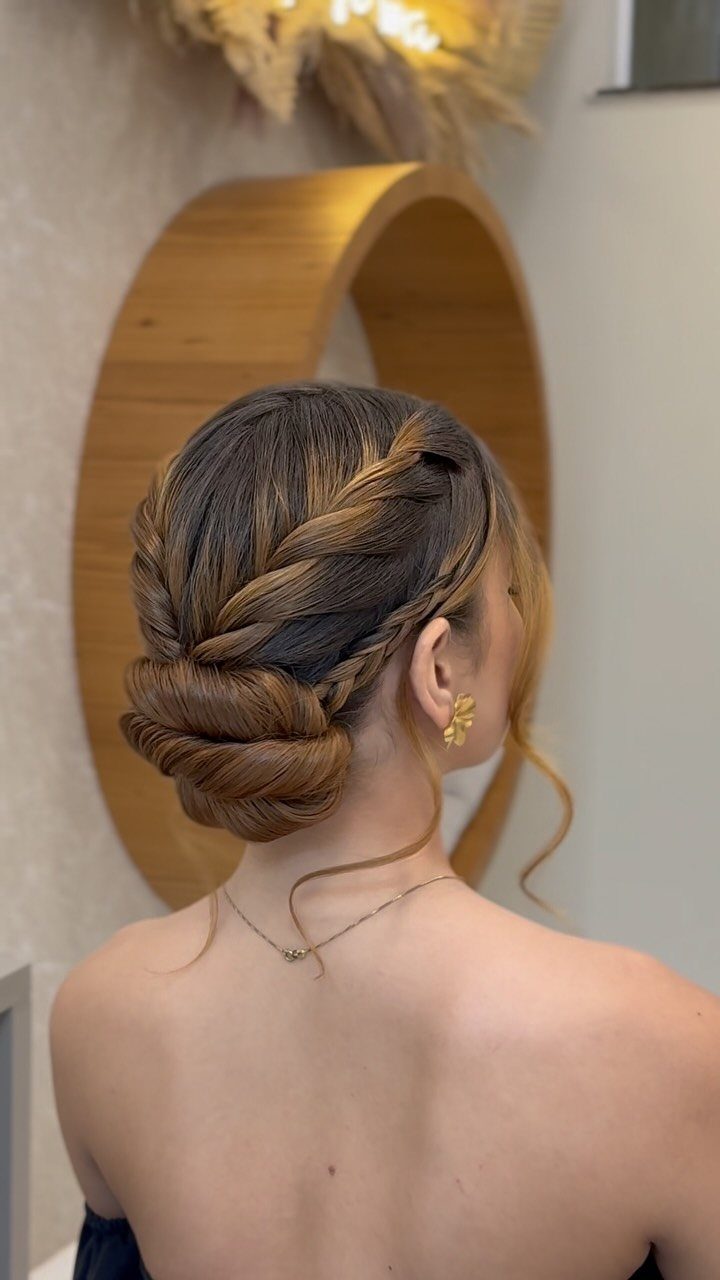
A thick braid wraps into a twisted, textured knot rather than a smooth coil for this low bun. That texture hides imperfections and holds pins better than a polished finish, which matters when you are doing this yourself.
You can add metallic clips or leave it plain; the braid supplies enough interest either way.
Hair past shoulder blade length gives you the most to work with for the wrap and twist. Shorter hair still works but needs more pins and less ambition in the knot size.
6. Wavy High Ponytail
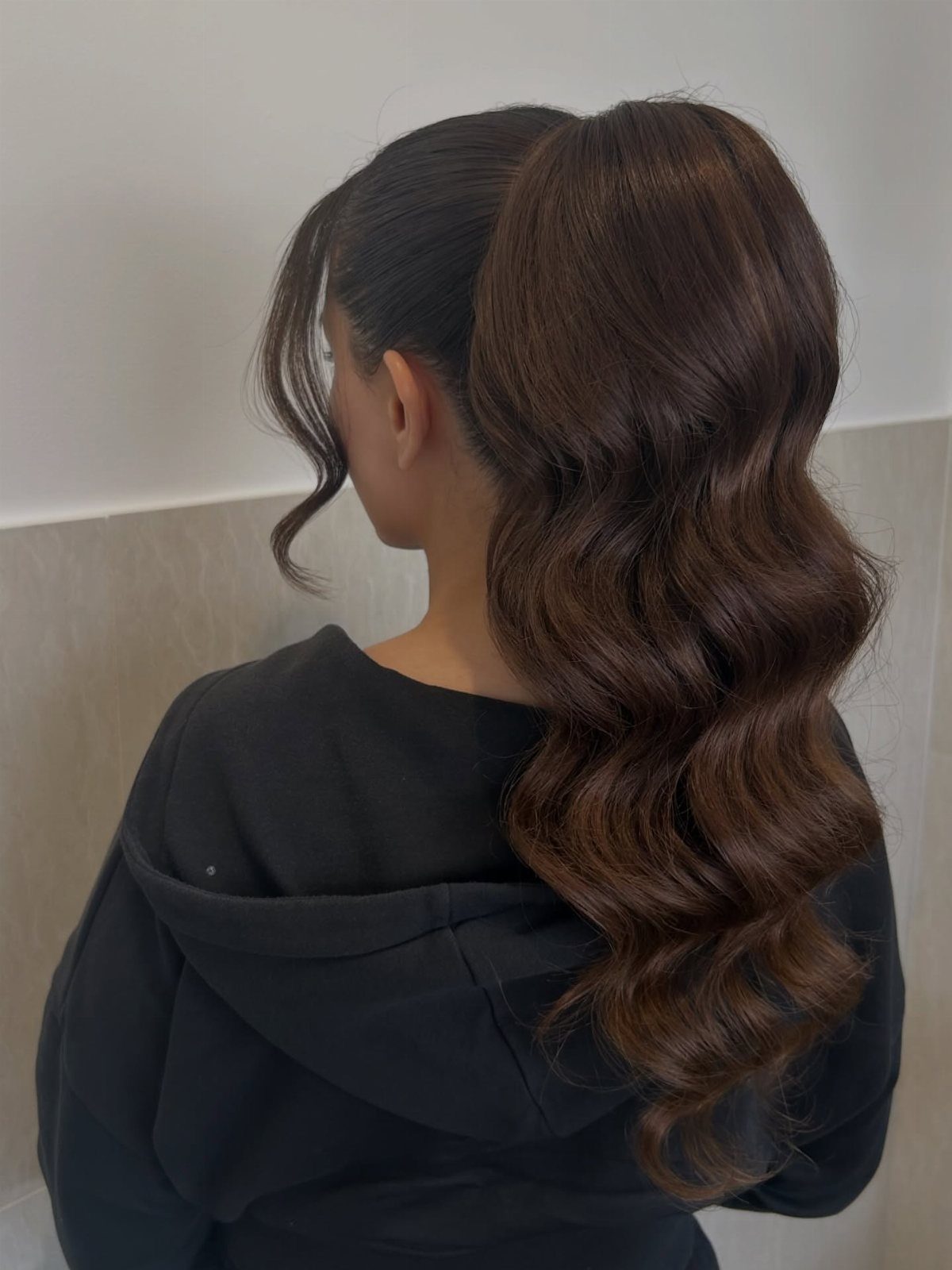
A high ponytail with defined waves reads retro-glam without the full commitment of a full updo.
Curl everything in the same direction before you pull it up, then brush the tail into one continuous wave pattern so the curls merge rather than compete.
Set the waves with clips while you do makeup; 10 minutes of cooling holds the shape through the night. Wrap a small section of hair around the elastic at the base to hide it, pinned underneath with a grip that matches.
This style adds height, so it balances a round face or a dress with a high neckline. On already long faces, keep the ponytail lower or add volume at the sides rather than the crown.
7. Side-Swept Glam Waves
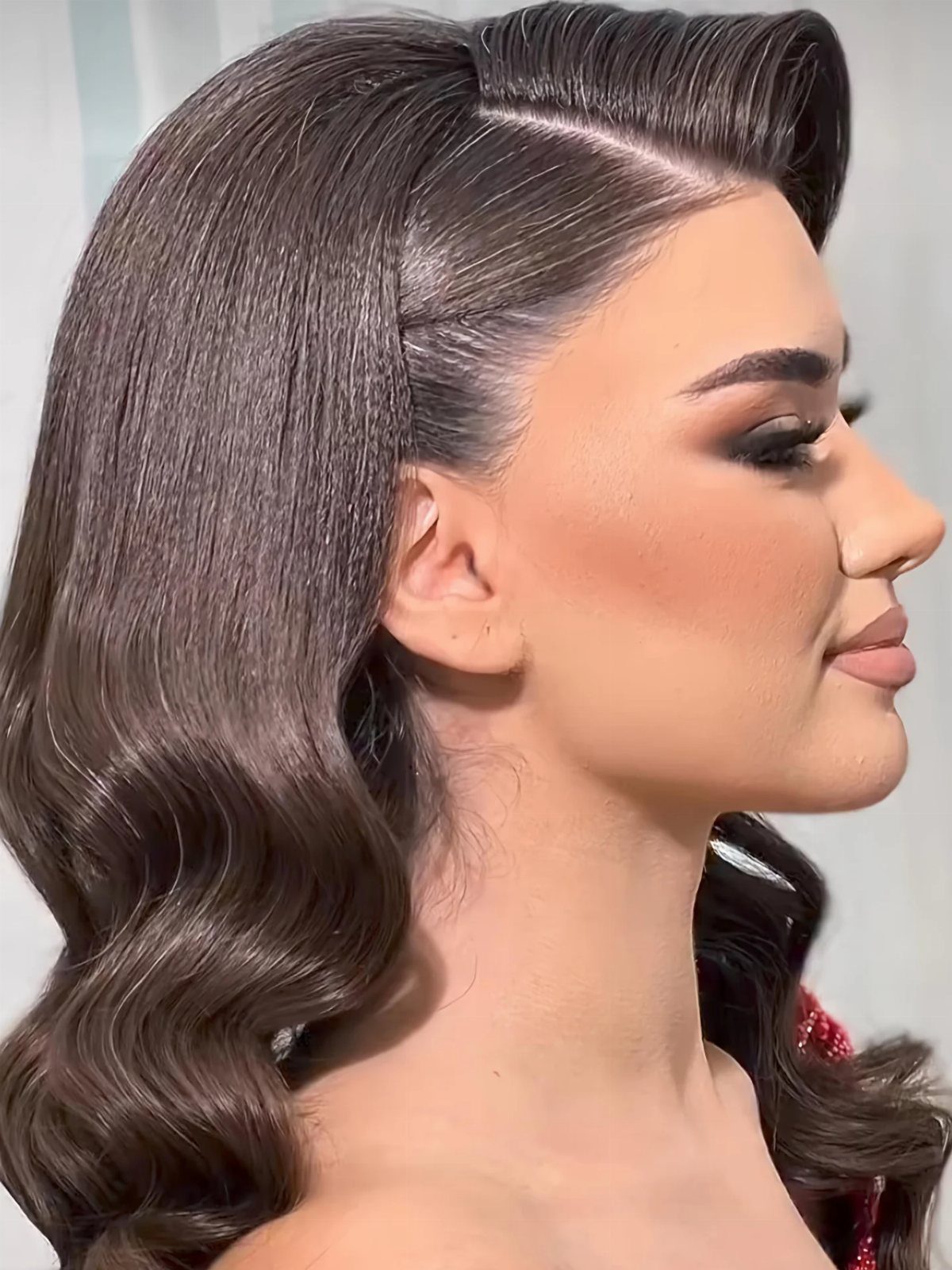
Old Hollywood had this figured out: a deep side part, waves that catch the light, and the whole mass swept to one shoulder. The roll at the front gives it structure; the rest is pure movement.
This one reads expensive on camera without needing a professional. Start with a strong side part and build the waves with a curling iron, brushing them out to that smooth, continuous ripple.
Hairspray locks the shape, and a decorative comb behind the ear keeps the sweep anchored through dancing.
The full effect needs length past the shoulders, or extensions. Shorter hair won’t carry the drape.
I’d save this for a student who already loves doing her own glam makeup; the hair and face want to match in polish.
8. Messy Bun
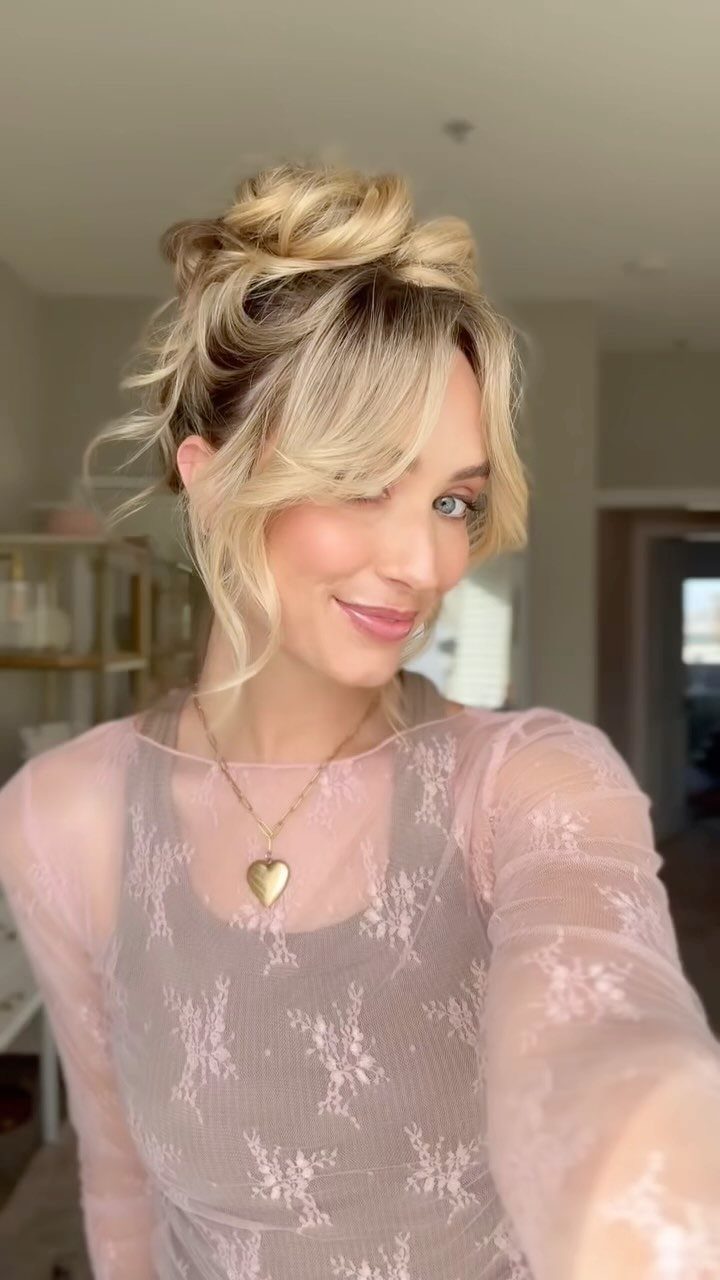
Not every homecoming look needs to fight your hair’s natural texture. The messy bun works with it, gathering everything up and letting a few pieces fall where they want.
Intentional imperfection is what separates a styled messy bun from hair that actually got messy. Curl first so the loose strands have shape, then pull the bun together without overthinking the placement.
A half-loop through the elastic creates the volume; the outer sections get tugged and pinned until they look accidental. Keep a few pieces loose around the face, but soft; stringy strands just look unwashed.
This suits the student who wants to look like she tried, but not too hard. Fine or slippery hair needs texturizing spray beforehand or the bun will slide apart before the night is through.
I’d skip it if your dress is heavily beaded; the casual hair and formal fabric fight each other.
9. Sleek Low Bun
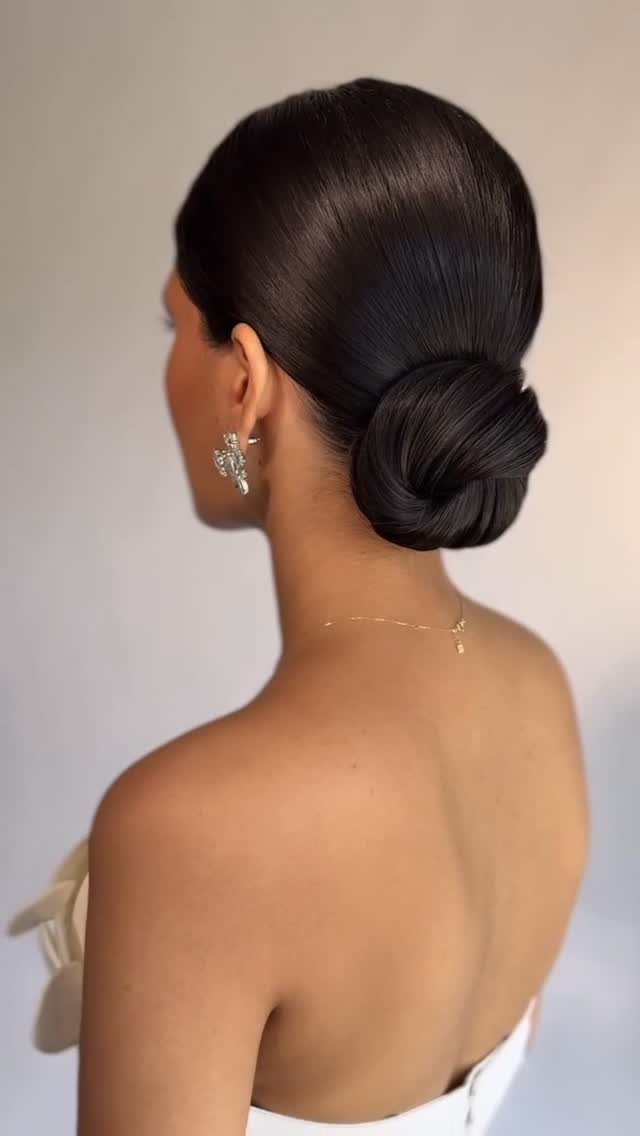
Some dresses speak for themselves and the hair’s job is to get out of the way. A sleek low bun does exactly that, pulling everything back so the neckline, the shoulders, and the face do the work.
The result reads grown-up and deliberate; nothing shifts during the night.
This is the choice for a student with strong bone structure or statement earrings she wants noticed. It also forgives rushed mornings, since precision matters more than creativity.
Curly or textured hair needs more product and patience to reach this level of smooth; budget that time or choose a style that works with the texture instead.
10. Bubble Ponytail
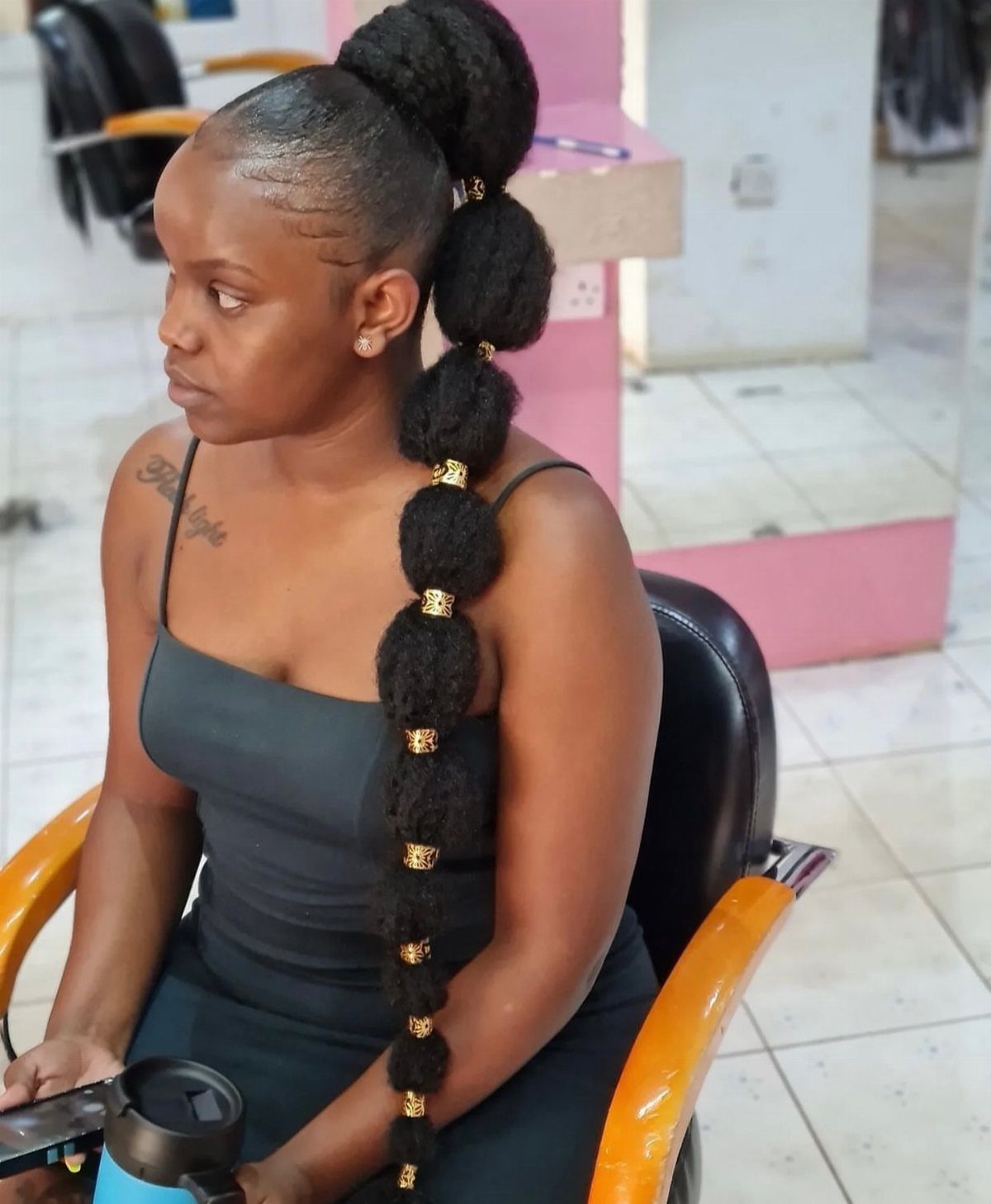
The bubble ponytail looks like it took planning and tools, which is the joke: elastics, maybe some small gold rings, and a few minutes of actual work.
Start with a high ponytail, secure it tight, then space elastics down the length wherever the intervals look right to you. Tug each section outward gently until it rounds into a bubble.
No heat required, no curling skills, no mirror-checking after every dance number.
This one wins for thick hair that can fill out the sections; thin hair goes stringy between bubbles.
I’d point a student toward this if she wants something playful against a simple dress, or if she’s doing her hair in a dorm bathroom with limited outlets.
The rings or colored elastics are where you add personality; plain black keeps it minimal.
11. Sleek High Ponytail
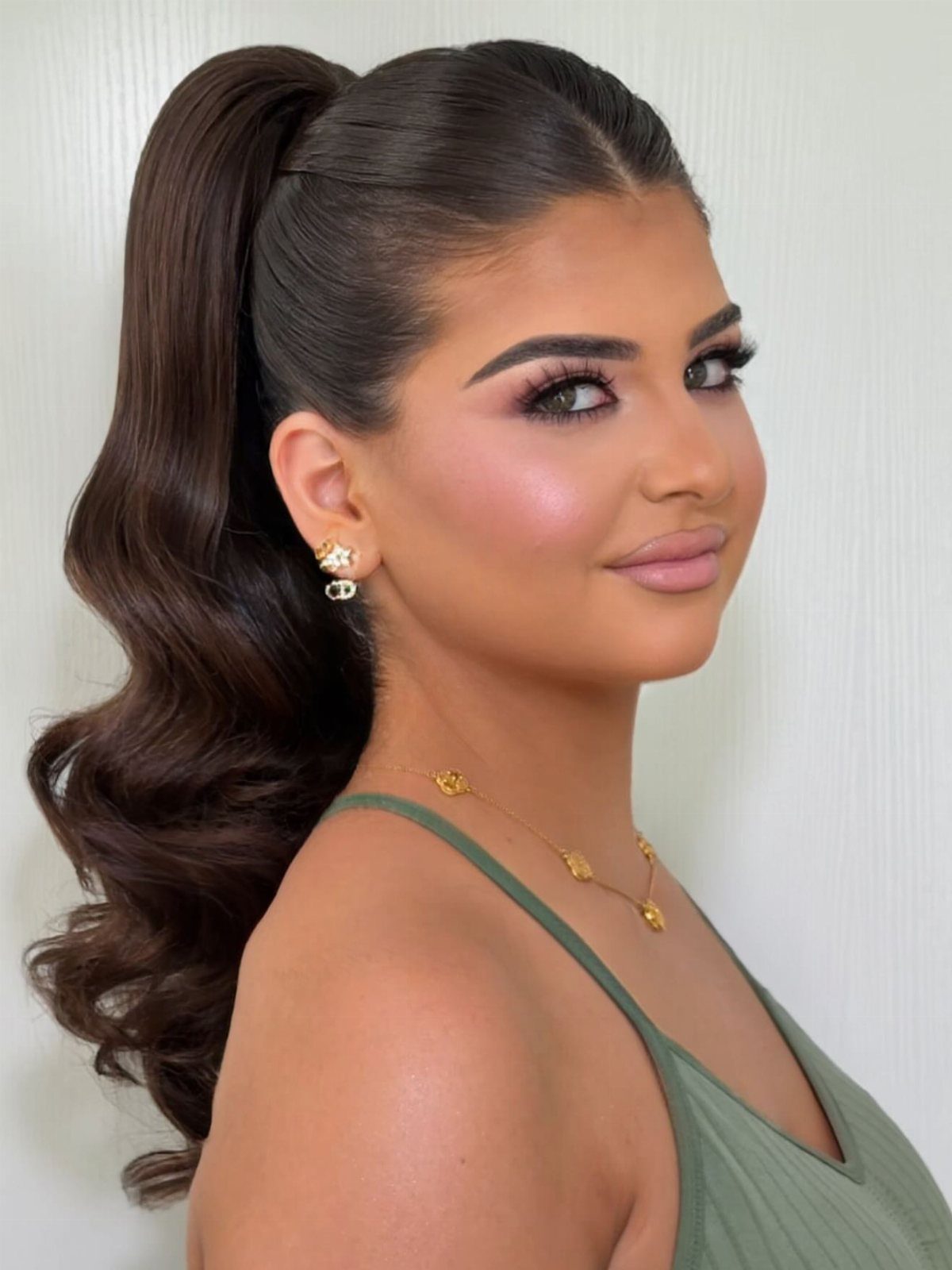
A high ponytail, pulled tight and smooth, does something no loose style can: it lifts the whole face and shows off the bone structure underneath.
Brush everything back with gel for control, secure at the crown, and let the length fall in waves or stay straight depending on what you have time for. Tension at the top matters; a sagging crown breaks the whole line.
This is power hair, the kind that pairs with bold makeup and a dress that doesn’t need to be the only statement. Hair stays off your face for the whole night, which is worth more than most people let on.
Fine hair needs teasing at the crown for the height; thick hair carries it naturally. I’d pick this for a student who wants to look finished without the complexity of an updo.
12. Twisted Chignon
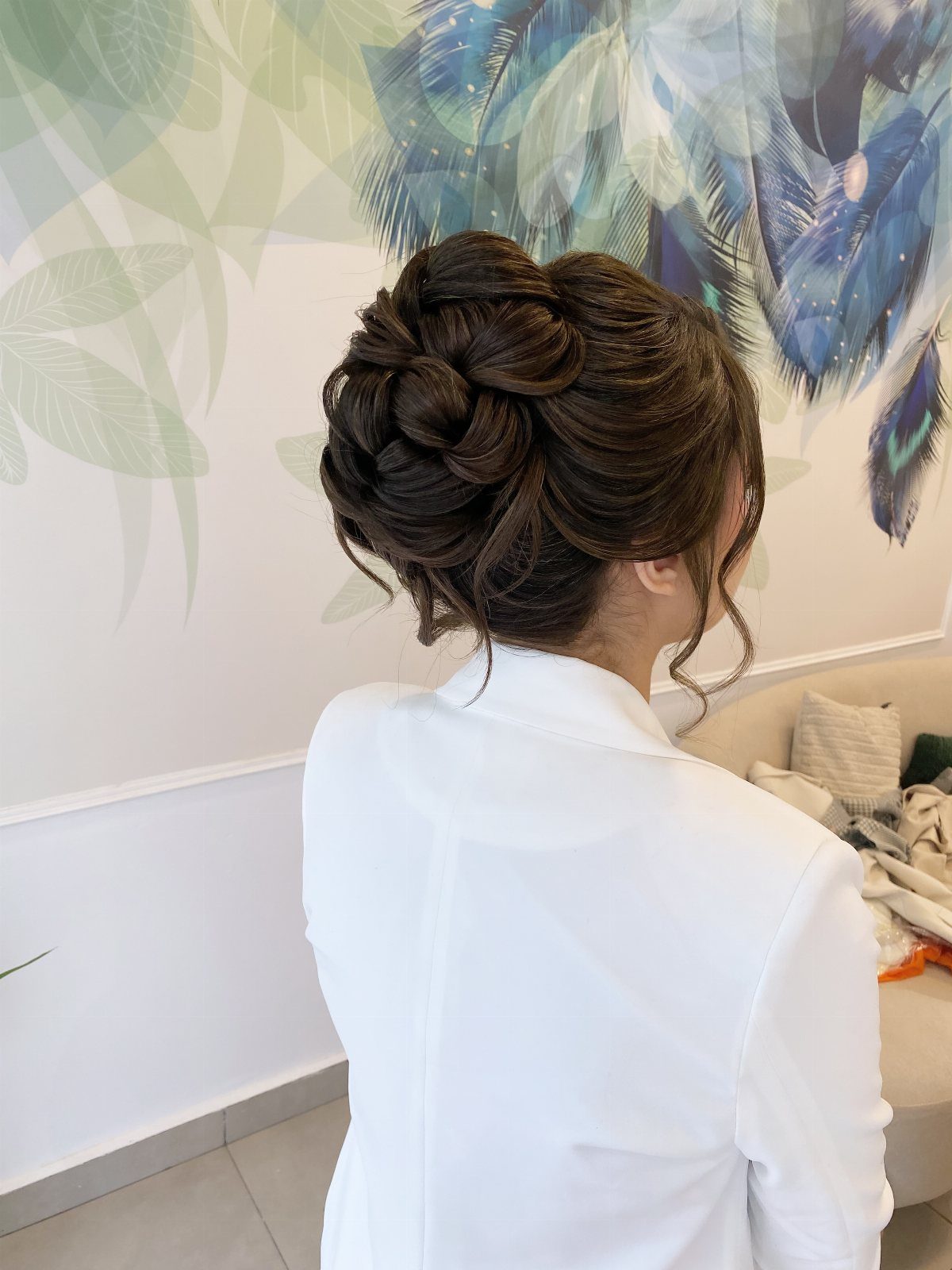
The twisted chignon sits at the nape, wrapped and pinned into a shape that looks intricate from behind but comes together with three sections and some patience.
Start with straight or blown-out hair so the twists stay defined. Divide into three strands, form a simple bun with the middle section, then cross the side strands over and tuck them under.
Pin and spray. The swirl detail shows best on smoother textures; curls fight the clean lines.
A low-backed or backless dress needs this style; nothing competes with the cut of the fabric. I’d steer a student here if she wants classic without reading pageant, or if she needs a style that won’t need bathroom touch-ups.
The chignon also works for medium-length hair that won’t fill out a bigger bun; the twists create volume without requiring it.
13. Bubble Braid
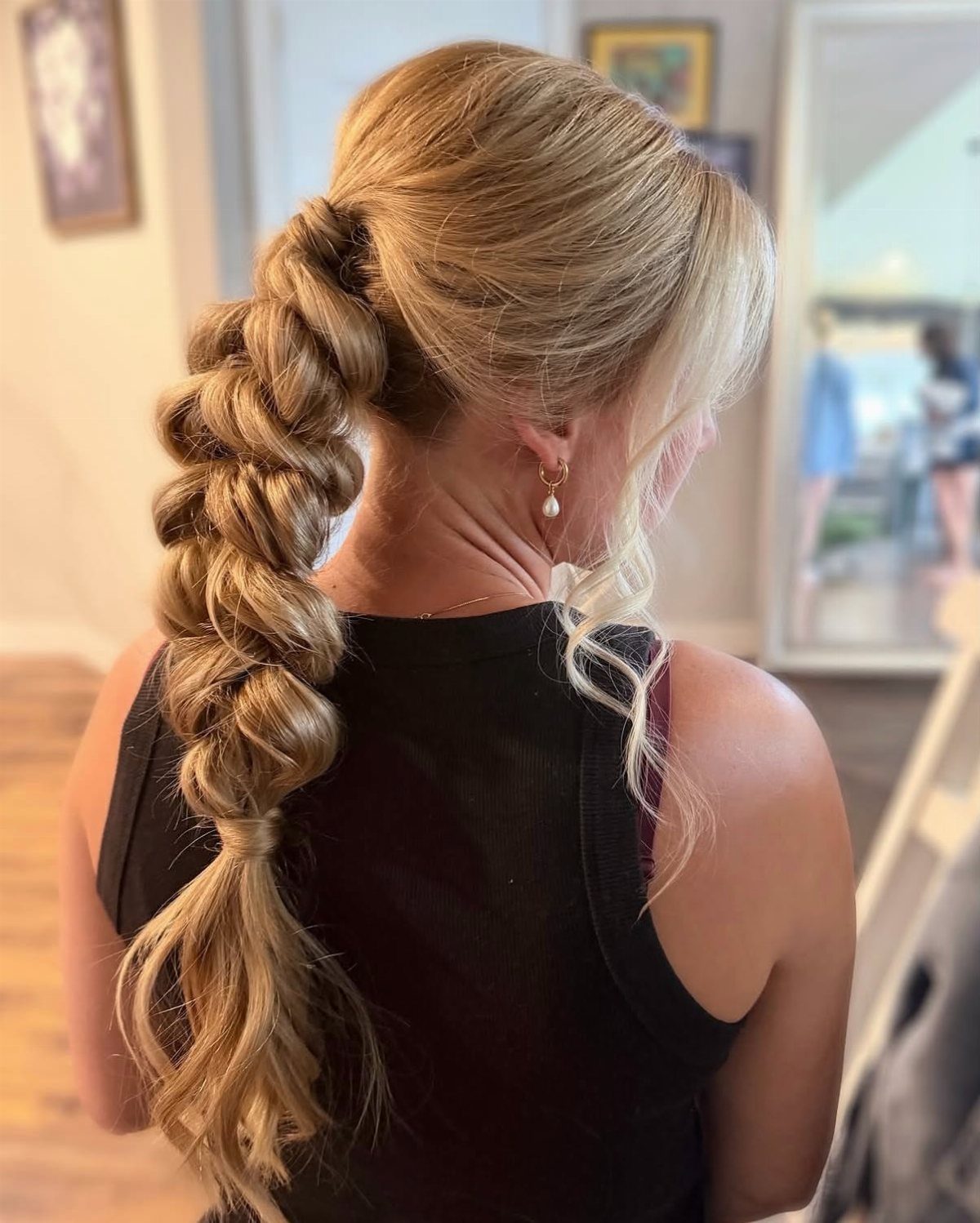
Bubble braids run on nothing but small elastics and patience. Start a ponytail, add another elastic a short distance down, then tug the hair between them until it rounds out.
Repeat to the end. The puff comes from tension, not teasing, so the surface stays smooth enough for photos.
This one eats time in proportion to your hair length. Shoulder-length hair gets a few bubbles; longer hair needs several more.
Stiffer bubbles move less, so the ponytail sways less when you dance.
Skip this if your hair slips elastics easily.
14. Boho Half Up, Half Down Hairstyle
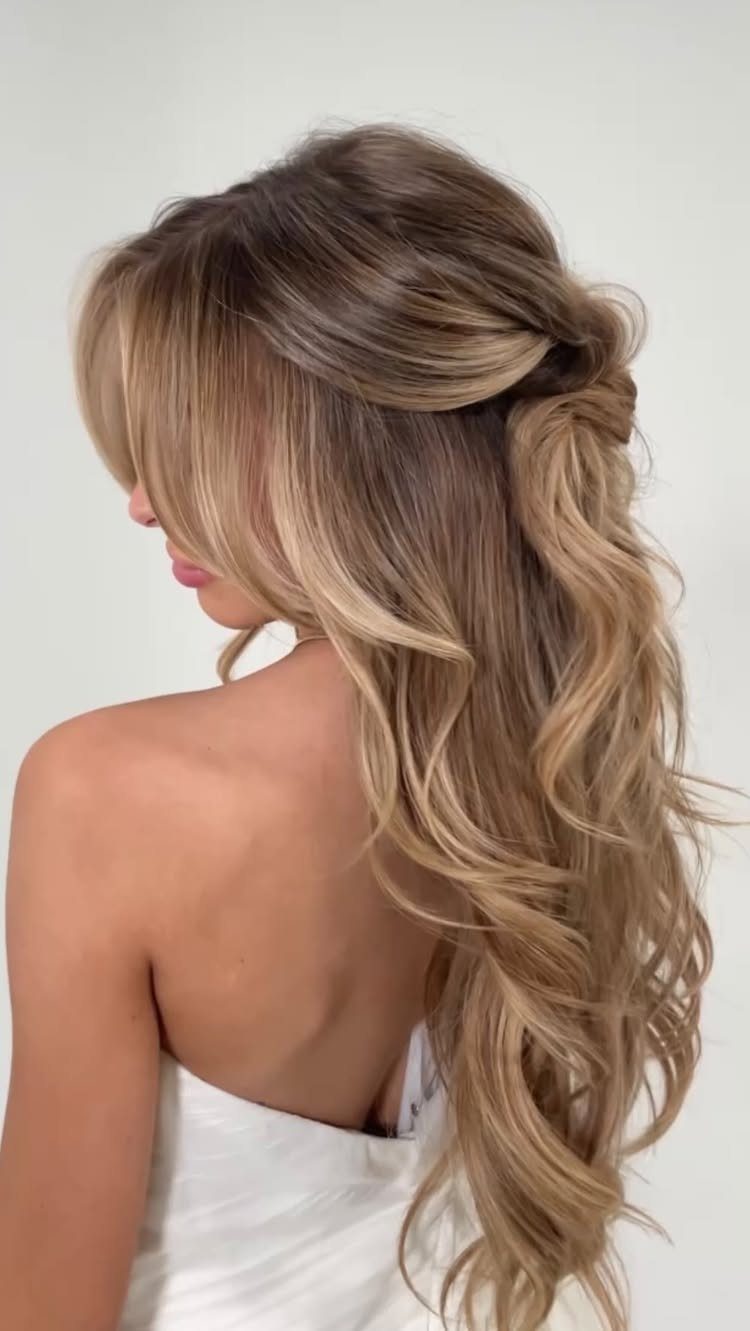
A half-up style keeps the neckline clear for a strapless dress without going full formal.
The visible version twists the crown section back and lets the rest fall in loose waves; a thin braid tucked behind one ear adds the boho element without requiring extensions or complex parting.
The weight split matters. Heavy hair pulled too high drags the crown flat within an hour.
Position the gather at or just above the ears, where the skull curve gives natural support. Wavy or curled ends blend the two sections so the divide does not read as a hard line.
This is the safe choice when you cannot decide between up and down. It also photographs reliably from every angle, which matters more than most people plan for.
15. Low Wavy Ponytail
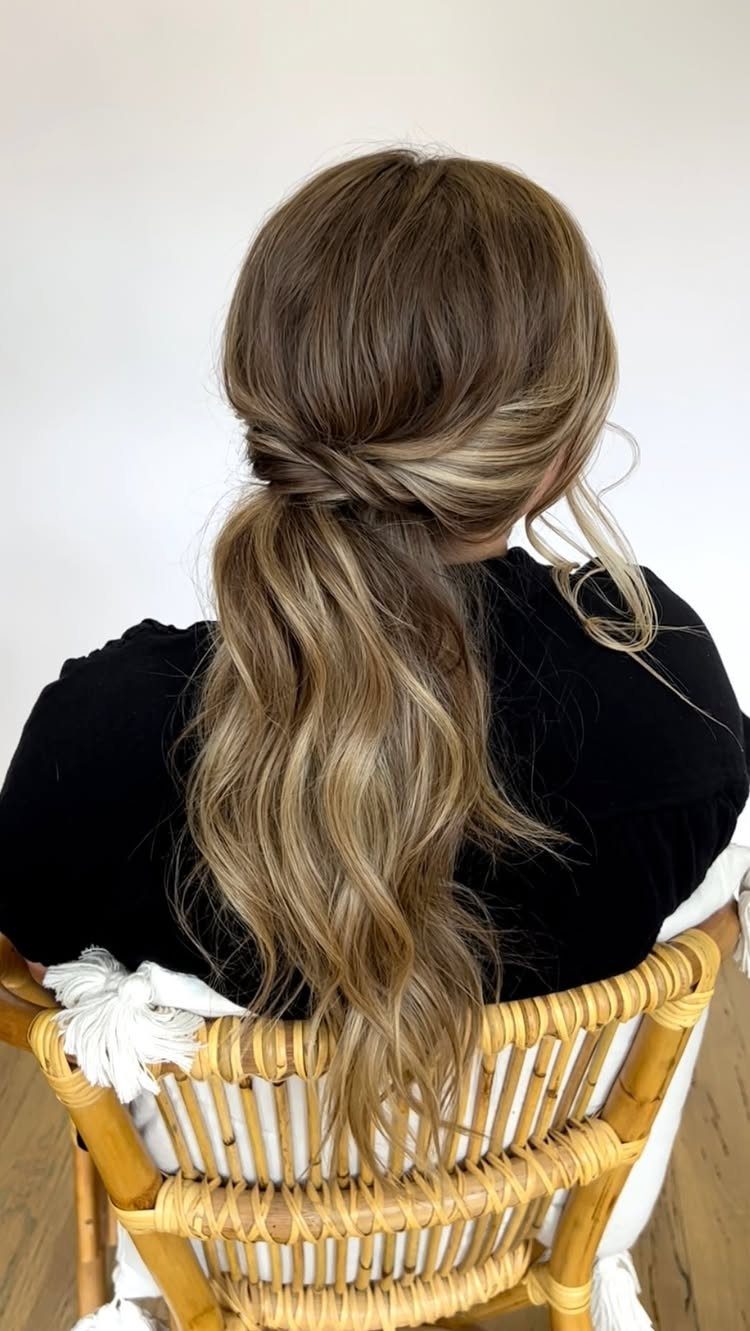
Low placement reads relaxed; waves keep it from reading lazy. A cover twist hides the elastic: wrap one section over the band so it never shows.
Without it, the ponytail drops from casual to after-gym.
Texture determines how long this takes; natural wave cuts the time way down. Natural wave holds the shape with minimal product.
Straight hair needs a curling wand on low heat, working in small sections, then a light texturizing spray so the waves do not fall into a single sheet.
The wavy low ponytail suits any dress length because it neither competes with a long skirt nor leaves a short one unsupported. It is also the easiest style to refresh in a bathroom mirror between dinner and dancing.
16. Braided Bun
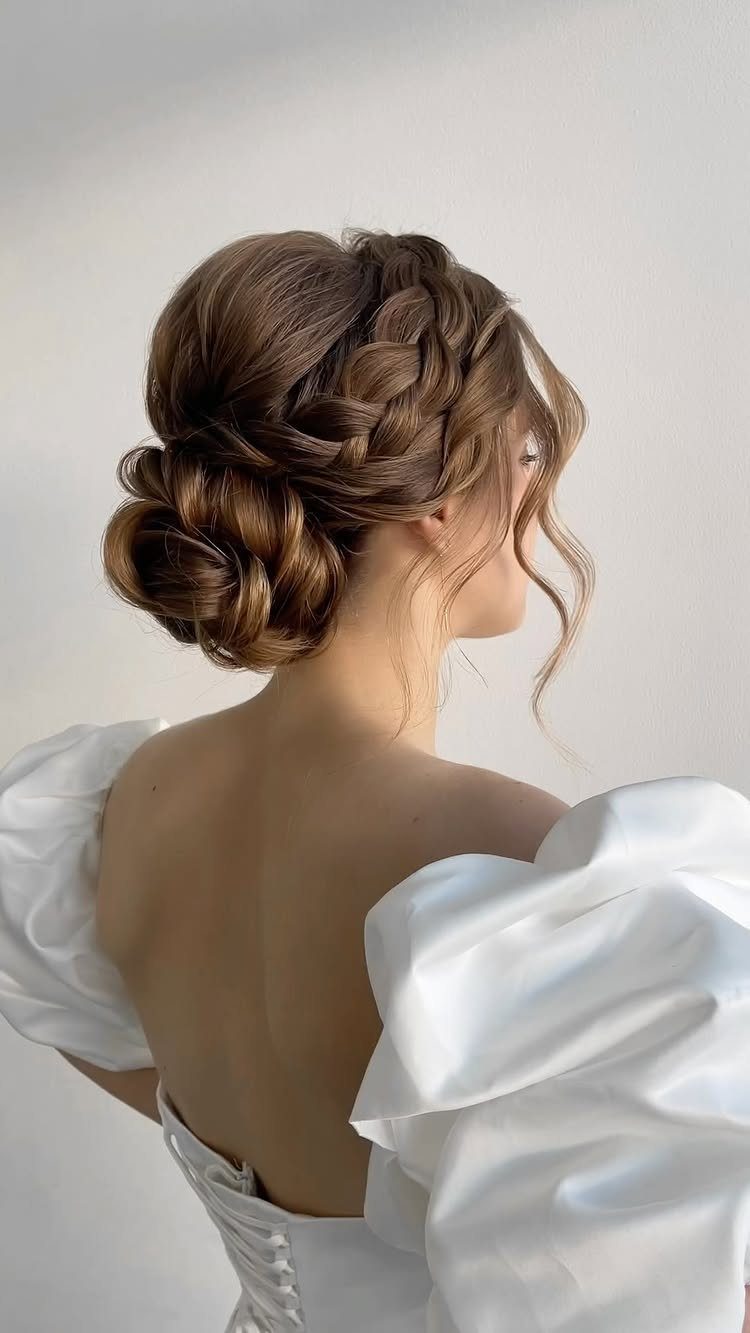
Braided buns look built by a stylist because the braid does the structural work for you. Ponytail first, braid the length, then coil and pin.
The braid’s ridges give the pins something to grip, so this holds longer than a smooth wrapped bun on fine hair.
Three-strand braids work; fishtail braids look more intricate for the same effort. The crown placement in the visible version comes from starting the ponytail high, at the crown, rather than at the nape.
Low placement gives a different mood, more dinner party than dance floor.
Fluff the braid before coiling. A tight braid wraps small and dense; a gently pulled one spreads into a wider, softer bun that reads larger and more romantic.
17. Sleek Polished Updo
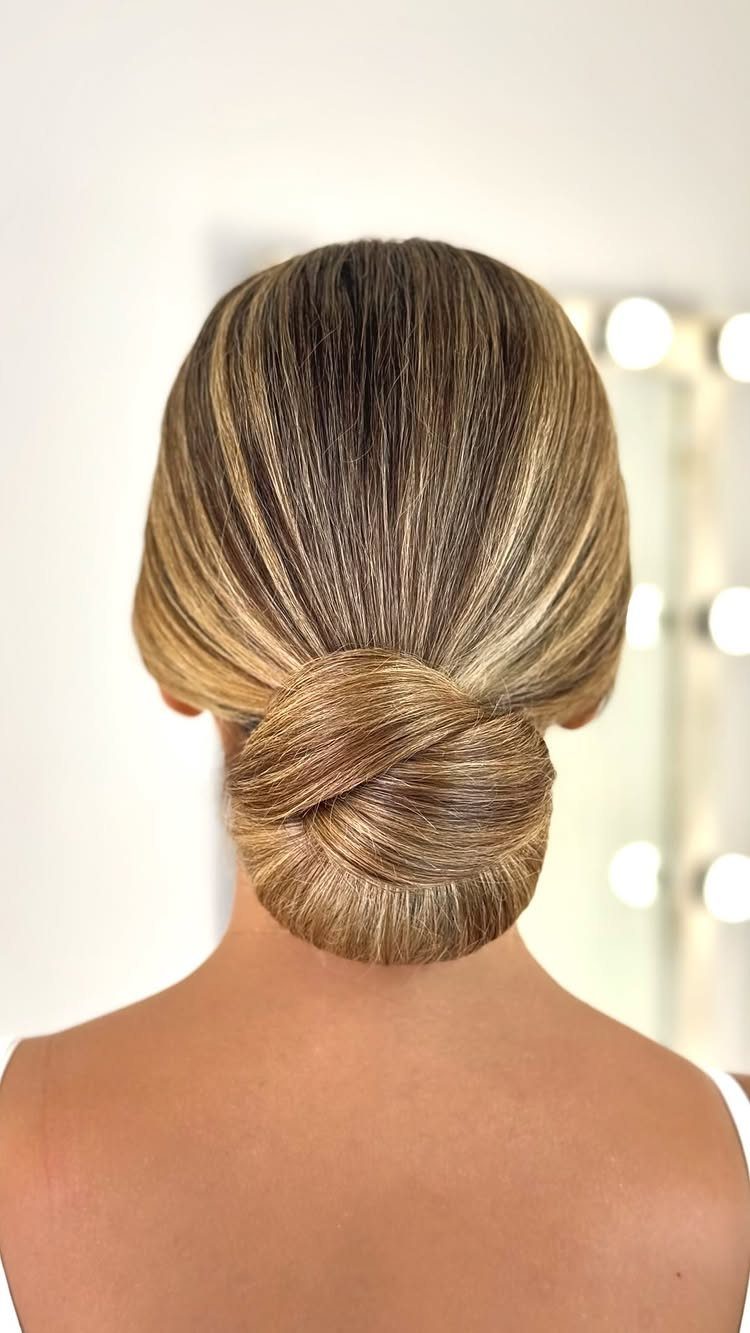
Sleek polished updos depend on product more than skill. A smoothing serum on damp hair, blown straight, gives the foundation.
Any wave left underneath fights the pins and pops out by hour two.
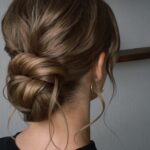
The visible version gathers at the nape and twists into a low knot.
For a stricter finish, run a flat iron over the gathered hair before twisting; for a softer edge, leave out a few face-framing pieces and curl them away from the face with a 1-inch iron.
This is the choice when your dress does the talking. It also suits fine hair better than voluminous styles, since smoothness reads as intention rather than thinness.
Tight smoothing pulls at the scalp, and the headache builds slowly enough that you notice it halfway through.
18. Twisted Updo
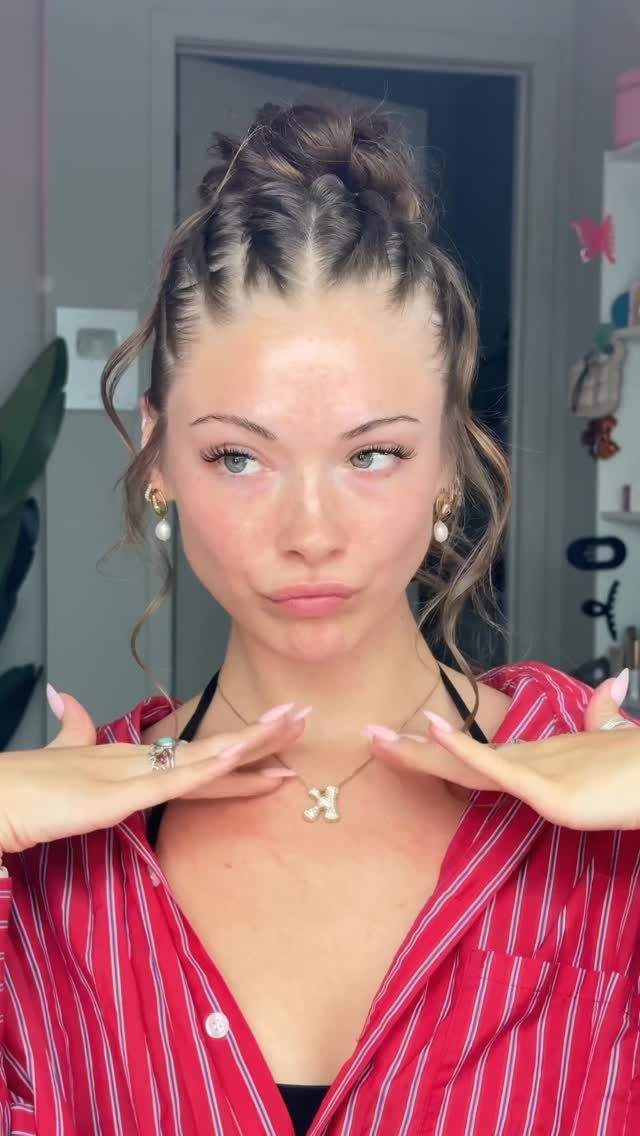
Twisted updos create complexity from simple moves. Take two sections, twist them around each other, pin.
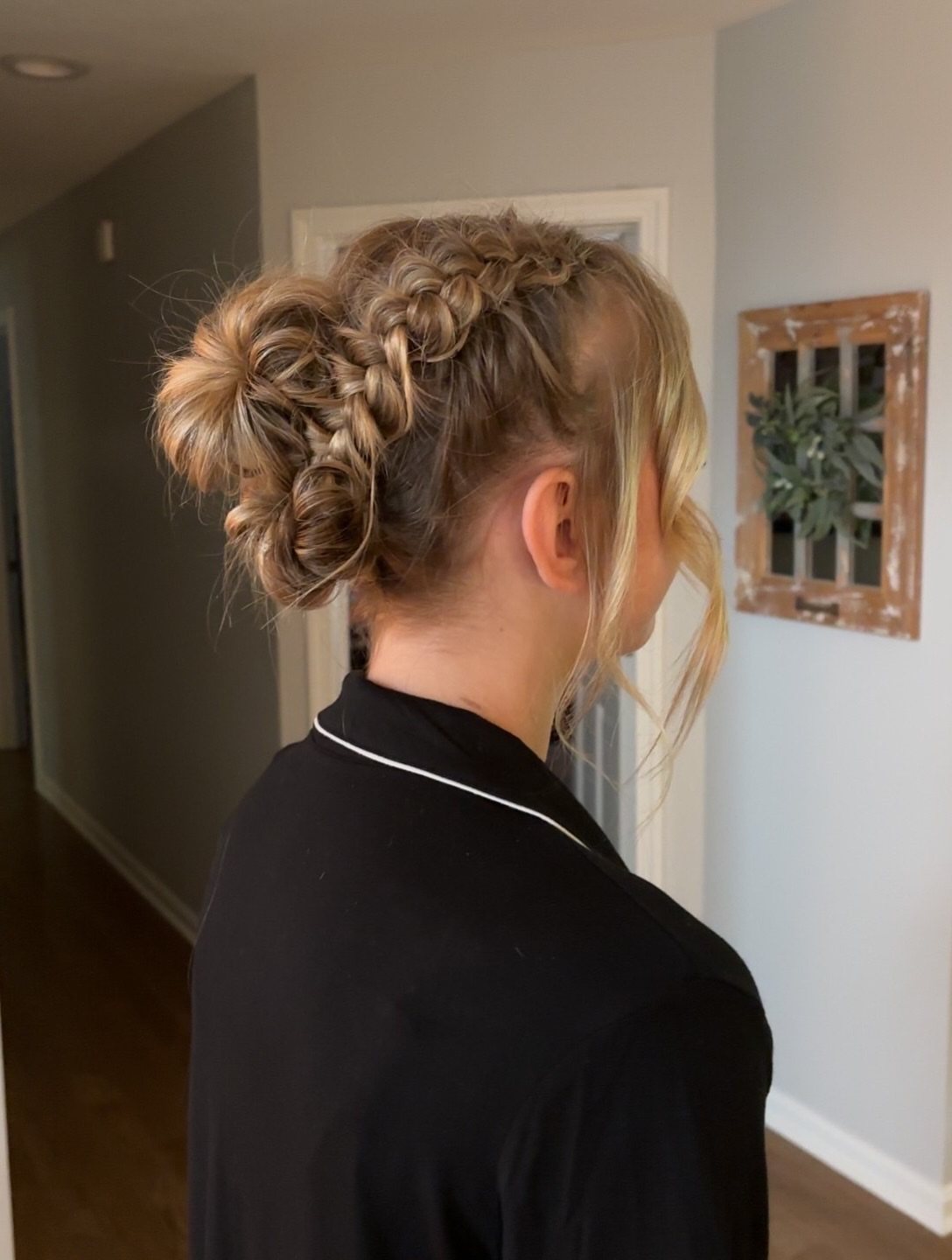
Repeat in layers until the shape builds. The visible version stacks several small twists into a high bun, but the same technique works at the nape for a different silhouette.
Alternate twist directions so the sections lock against each other instead of unraveling. Twists that all run the same way create a uniform rope; mixed directions create irregular texture that catches light differently in photos.
Pin each twist before starting the next, or the tension unravels what you just finished.
This style rewards second-day hair. Freshly washed hair is too slippery; hair washed the morning before holds the pins and keeps the twists from loosening.
Freshly washed hair slips loose, so this style holds better on second- or third-day hair.
Choosing Based on Dress
A strapless neckline wants your hair up so the bare shoulders and collarbone stay visible. An open-shoulder dress like the Gabby Twist Babydoll calls for hair pulled up to show the neckline.
An open back calls for up or swept-to-one-side styling; a twisted chignon or side sweep keeps the line clear. One-shoulder dresses pair with low placement toward the covered side, which means a side braid or low knot.
The goal is framing what the dress reveals and clearing what it decorates.
DIY Vs. Salon Styles
Some styles ask for a professional blowout, which means sitting back while someone else handles the heat and the brushing. That costs money saved from an after-school job, so budget for it if you want cascading waves without the work.
Most of these styles need only basic tools: elastics, pins, a curling iron, maybe a ribbon. The messy bun rewards trial and error more than training.
A salon visit makes sense for a polished updo if your hands shake or your hair fights back, but homecoming hair does not require a professional by default.
Hair Accessories
Hair accessories turn a simple style into the whole look.
Matte ponytail holders dress up a braid without competing with it.
Making Styles Last
Let curls cool completely before you brush them, or the wave falls flat in the first hour. Cross bobby pins in an X so they grip instead of sliding out.
Finish with flexible-hold spray rather than something that freezes your hair into helmet territory.
Backcomb the crown and coat it with hairspray if you need height that stays. The bathroom mirror at the venue sees more emergency repairs than most people plan for.