A white buttercream cake can run from a pint of raspberries and a steady hand to hours of Lambeth piping that costs nothing but patience.
What decides which version is yours is how much technique you have already, not how much you wish you had.
1. Buttercream Frosting
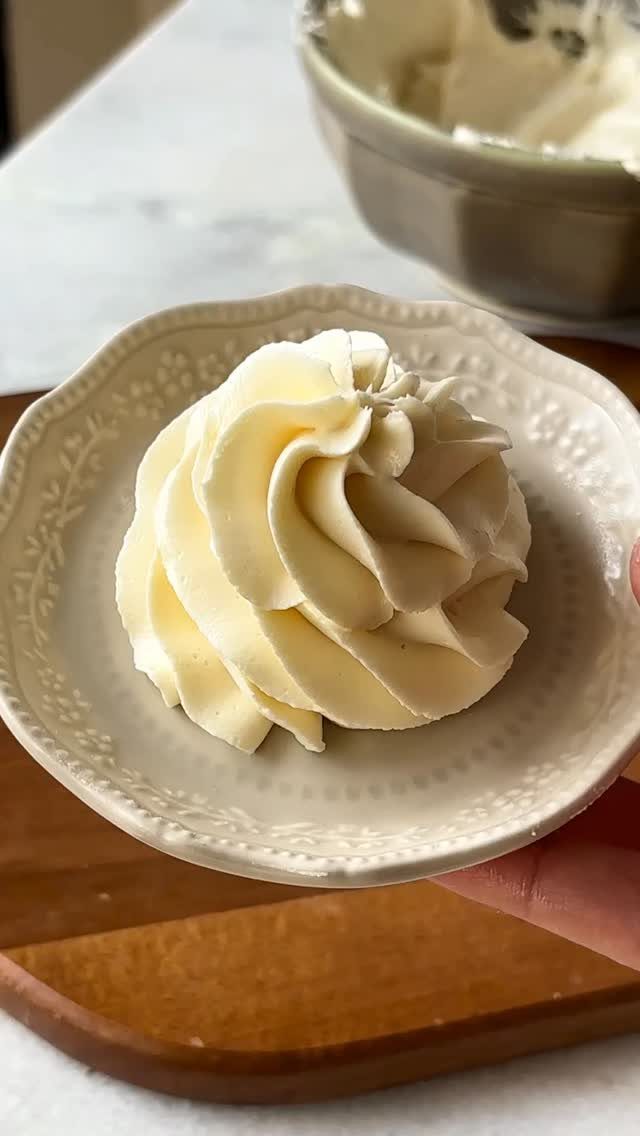
The base of any white buttercream cake starts here, and getting the texture right matters more than the exact recipe.
I like a classic American buttercream for home kitchens: 2 cups of room-temperature unsalted butter, 7 cups of sifted powdered sugar, 1 tablespoon of vanilla or vanilla bean paste, a half teaspoon of fine salt, and 3 tablespoons of heavy cream whipped in at the end.
One baker who pipes professionally adds her icing sugar in two stages, sifting and whipping thoroughly each time to skip the gritty mouthfeel that ruins a smooth finish.
Swiss meringue buttercream takes longer and needs a candy thermometer, but it delivers that bakery-counter silkiness and a butter-forward sweetness that tastes expensive without being cloying.
For a true white rather than ivory, use clear vanilla extract; the dark stuff tints everything beige.
Heavy cream lightens the batch more than milk does. Start with 3 tablespoons and add only if the buttercream still fights the paddle.
2. Sprinkles on White Buttercream Cake
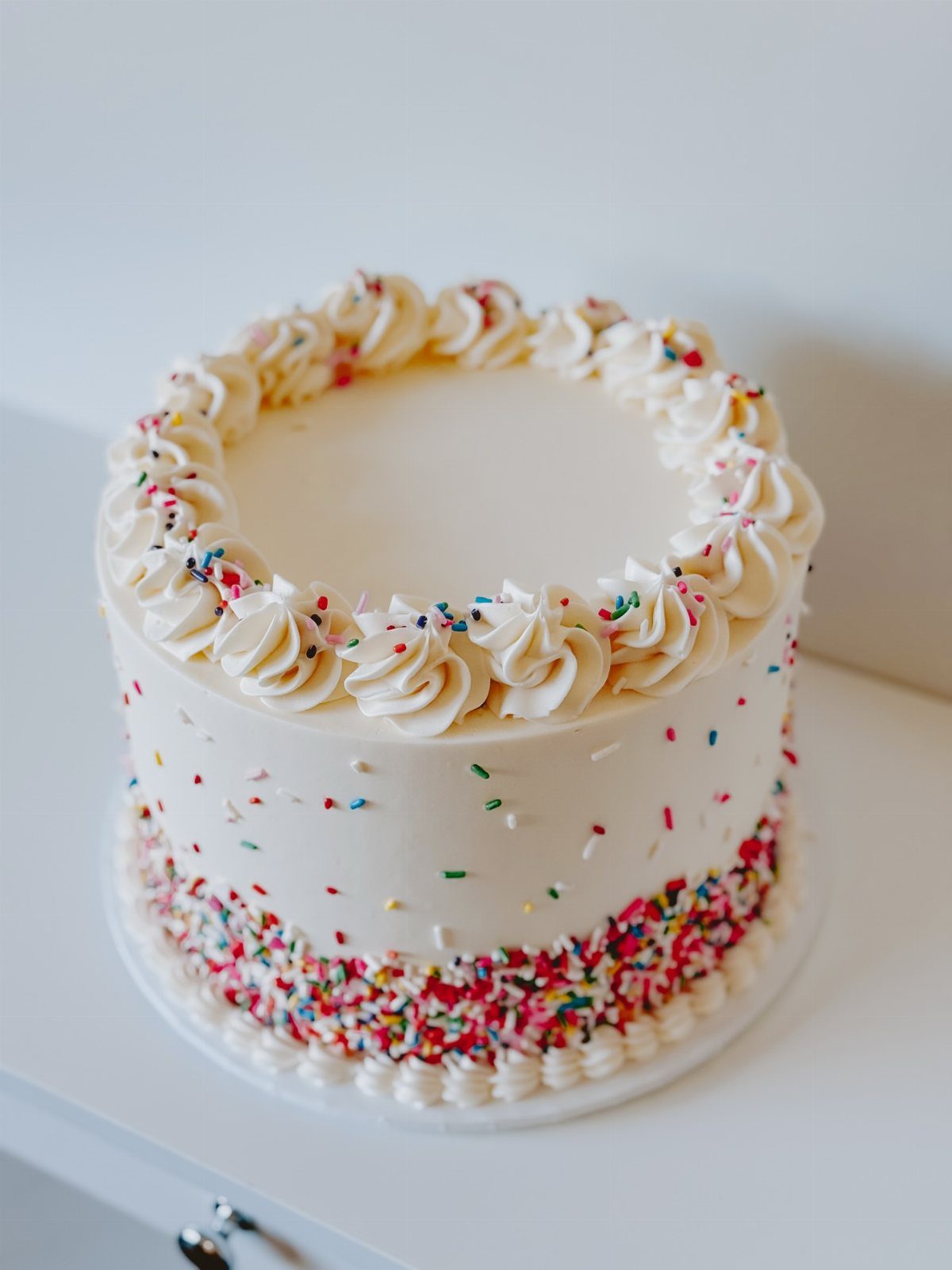
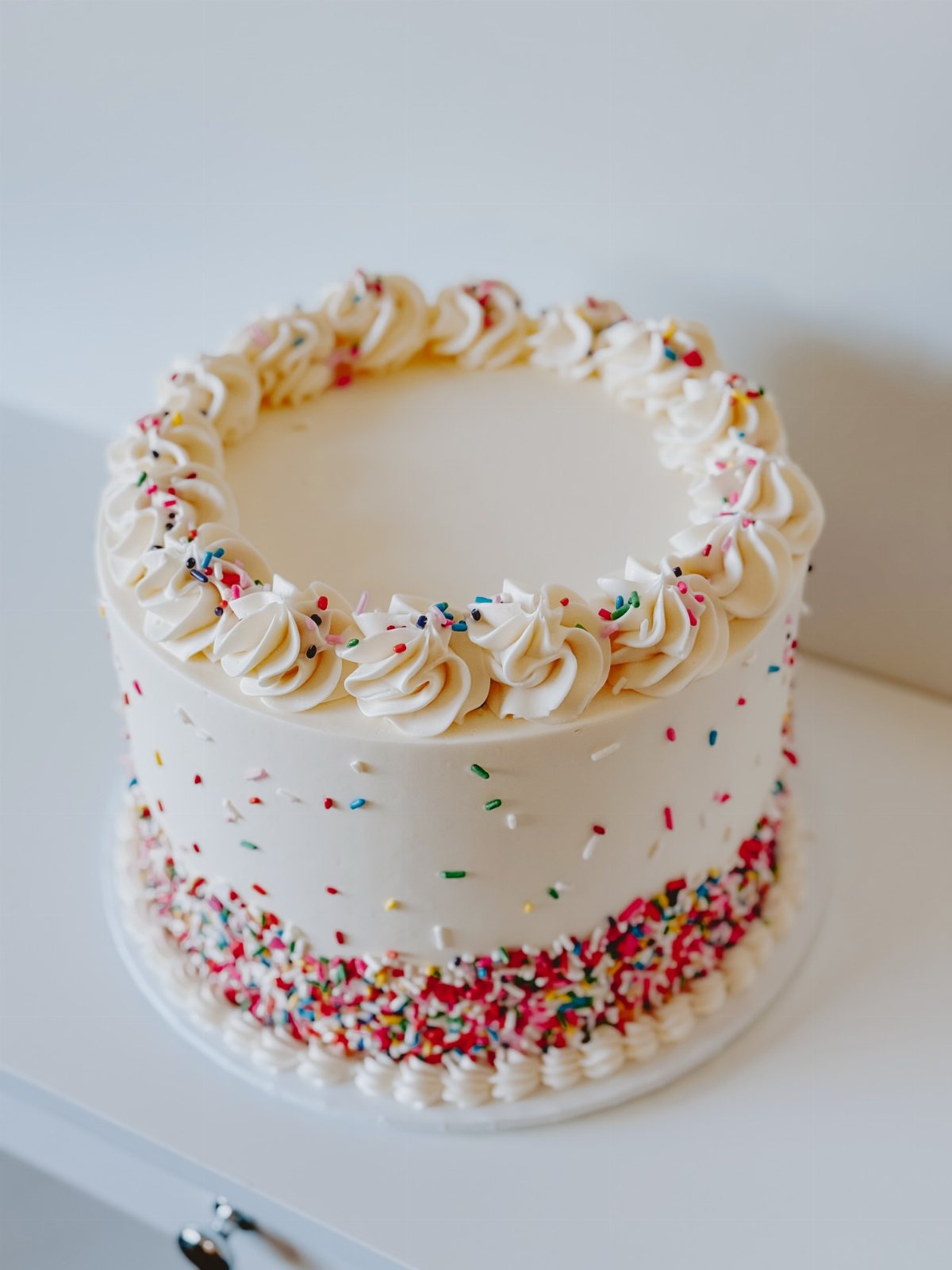
Color against white frosting reads as celebration without much effort, which is why this combination shows up at birthdays and casual weddings alike.
Sprinkles stick only while the buttercream still has a slight tack, so have them ready before you start the final coat.
Press larger shapes onto the base where fingers can reach easily, then scatter smaller ones up the sides while turning the stand. The top rim gets piped swirls or a clean edge depending on whether you want playful or polished.
A cake destined for outdoor summer heat should skip chocolate or wax-based sprinkles; they sweat and bleed color into the white. For a cleaner look, limit yourself to 2 colors that repeat elsewhere on the table.
The reader who wants maximum impact with minimum piping skill lands here naturally.
3. Crumb Coat on Cake
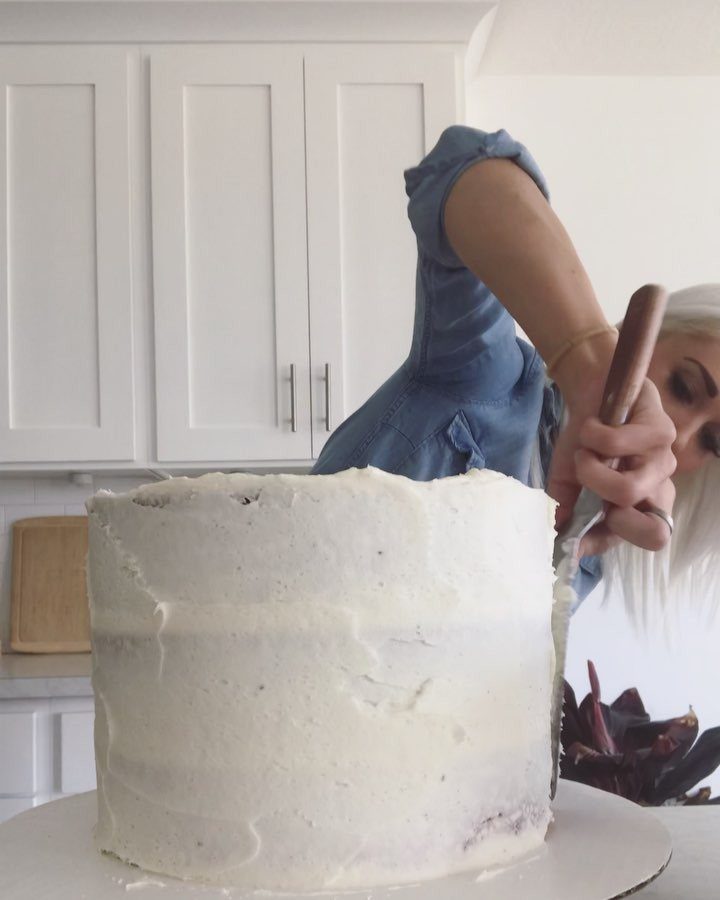
A tall layer cake without this step looks homemade in the wrong way: crumbs dragged through the finish like pencil smudges.
The crumb coat is a thin skim of frosting, about 1 cup for a standard 2-layer round, that glues stray cake bits to the cake so they never reach the surface you actually show.
Stack your layers with filling between, then spread that thin coat over top and sides. A bench scraper run around the edge smooths it flat enough.
The cake then goes bare into the refrigerator for 20 minutes to an hour; the cold hardens the butter in the frosting and locks everything in place.
One baker working with Swiss meringue buttercream chills hers only 15-20 minutes before the final coat, which suggests the firmer the buttercream, the shorter the set.
Without this pause, your final layer drags crumbs no matter how careful your spatula angle. The time is non-negotiable; the skill level is not.
4. Layered White Cake Slice
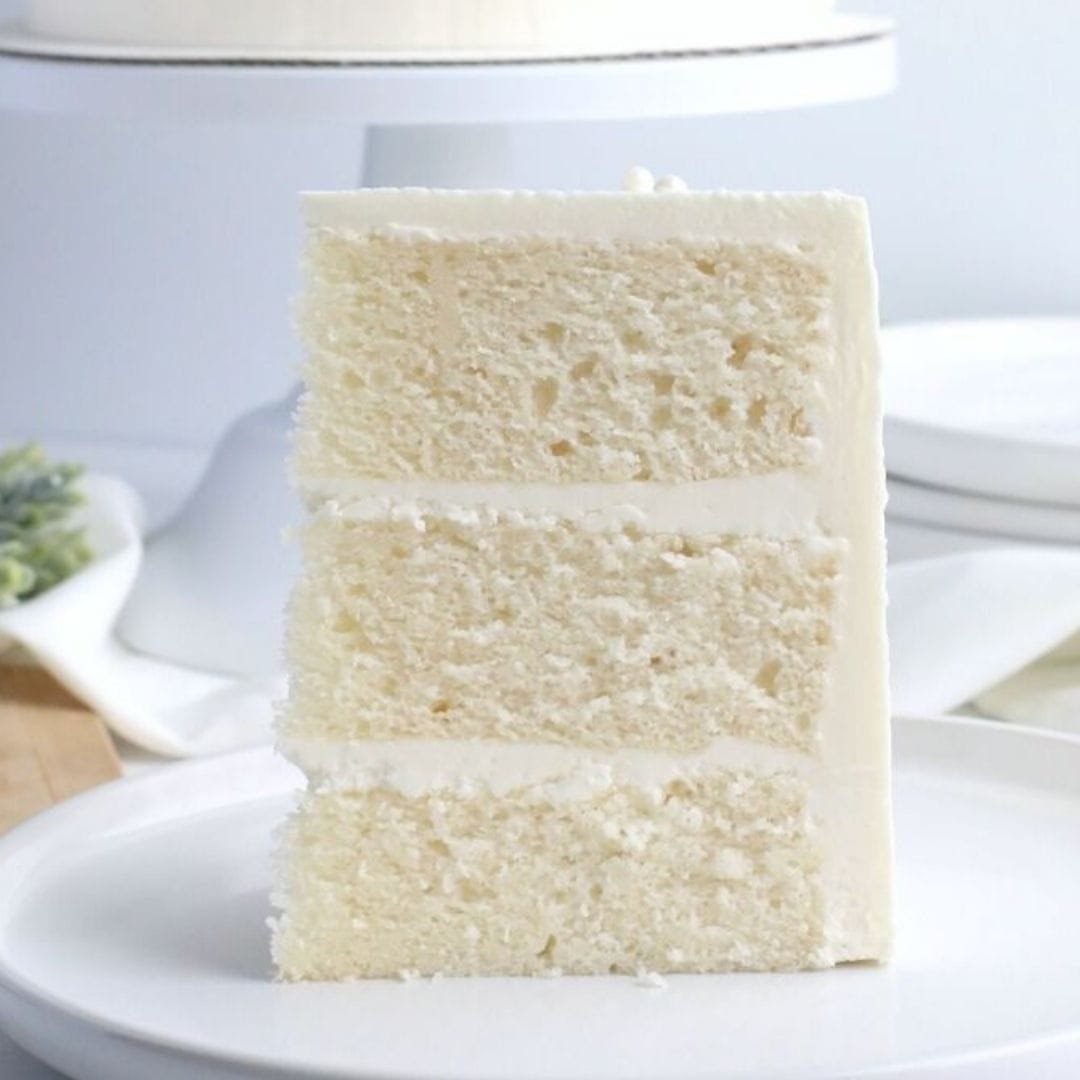
Three visible layers on a plate signal occasion before anyone tastes a forkful. The height comes from splitting each baked round or baking thinner layers separately, and the difference is immediate on a dessert plate against a clean background.
What changes the result is the ratio of cake to frosting.
A slice that stands upright and shows distinct bands needs cake layers sturdy enough to support their own weight; an extra-tender crumb collapses under the knife and smears the lines.
If your white cake recipe runs delicate, chill the layers before slicing and filling. The reader working from a box mix should consider adding an extra egg white for structure.
For serving, a cake stand in the background frames the slice as centerpiece rather than leftover, which matters when the photographer is also the host and the moment is moving fast.
5. Vintage Lambeth Piped Buttercream Cake
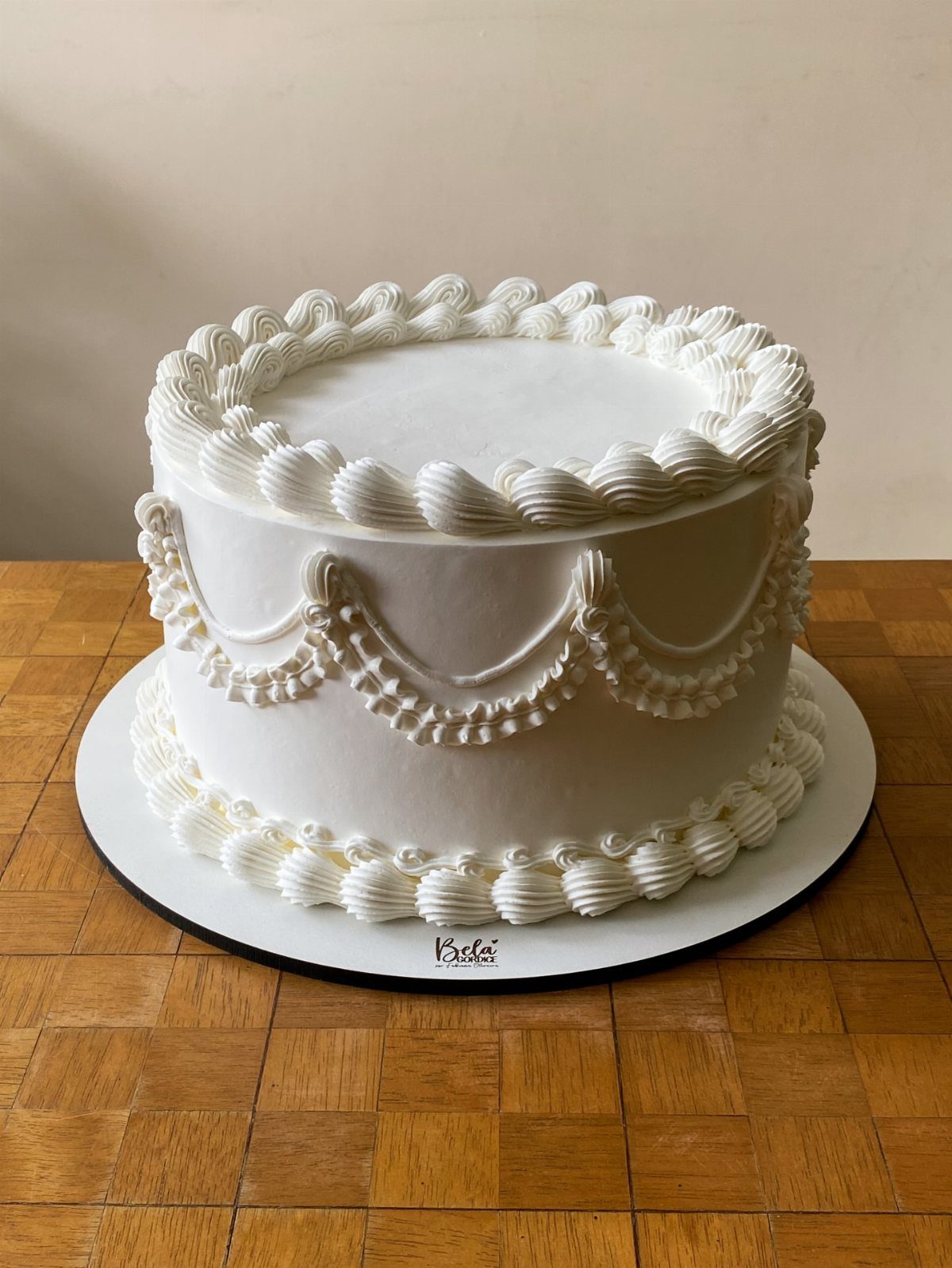
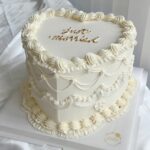
Piped scallops and swags look like lacework because they are: the Lambeth method builds pattern upon pattern with a small round tip and steady pressure.
Top and bottom borders connected by draped loops, all in one uninterrupted white, give this style its particular old-fashioned precision.
This decoration reads formal, even historical, and it suits a reader who owns a turntable and has practiced on parchment first.
The buttercream must hold a peak without cracking, which usually means slightly stiffer than a spreading consistency; add powdered sugar by the quarter-cup if your batch droops.
Each element is piped fresh; there is no smoothing afterward, so uneven spacing shows. A single tier carries the look better than stacked heights, where the eye loses the repetition.
For a modern compromise, limit the piping to the base border and leave the top clean. The time investment is significant, but the material cost is only buttercream and patience.
6. White Buttercream Cake with Pearls
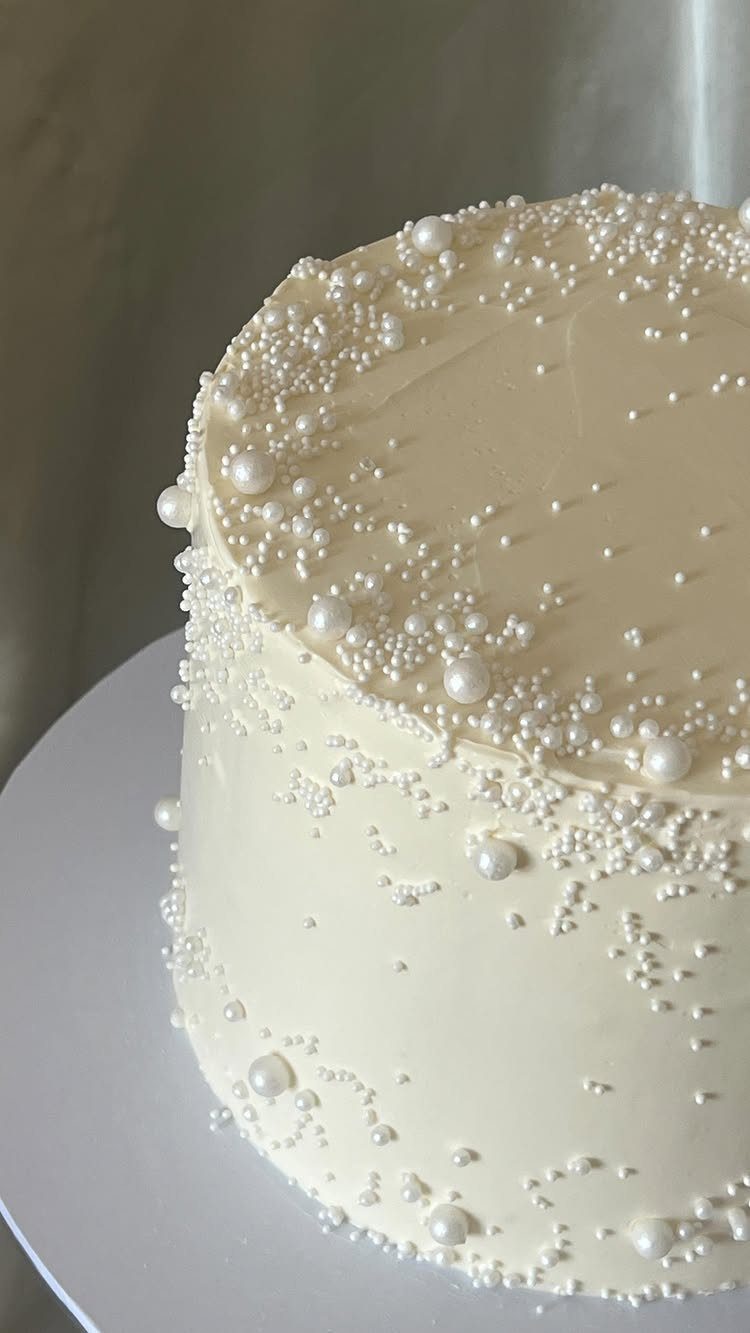
Edible pearls clustered at the top edge and drifting down the sides catch light like actual jewelry against matte frosting. Varying the sizes of the sugar pearls creates depth without demanding color variation.
These are sugar pearls, not fondant balls, and they stick to fresh buttercream with gentle pressure. Placement is the decision that takes time: a dense cluster reads opulent, scattered singles read modern.
The reader should buy more than they think they need; picking up a dropped pearl with frosting-sticky fingers ruins the gloss, and replacements disappear fast.
White-on-white suits a formal palette where the cake must coordinate with silver or crystal rather than compete. For a budget version, limit pearls to the top rim only and let the sides stay clean.
The effect still registers as considered, and the supply list shrinks considerably.
7. Buttercream Cake with Fresh Raspberries
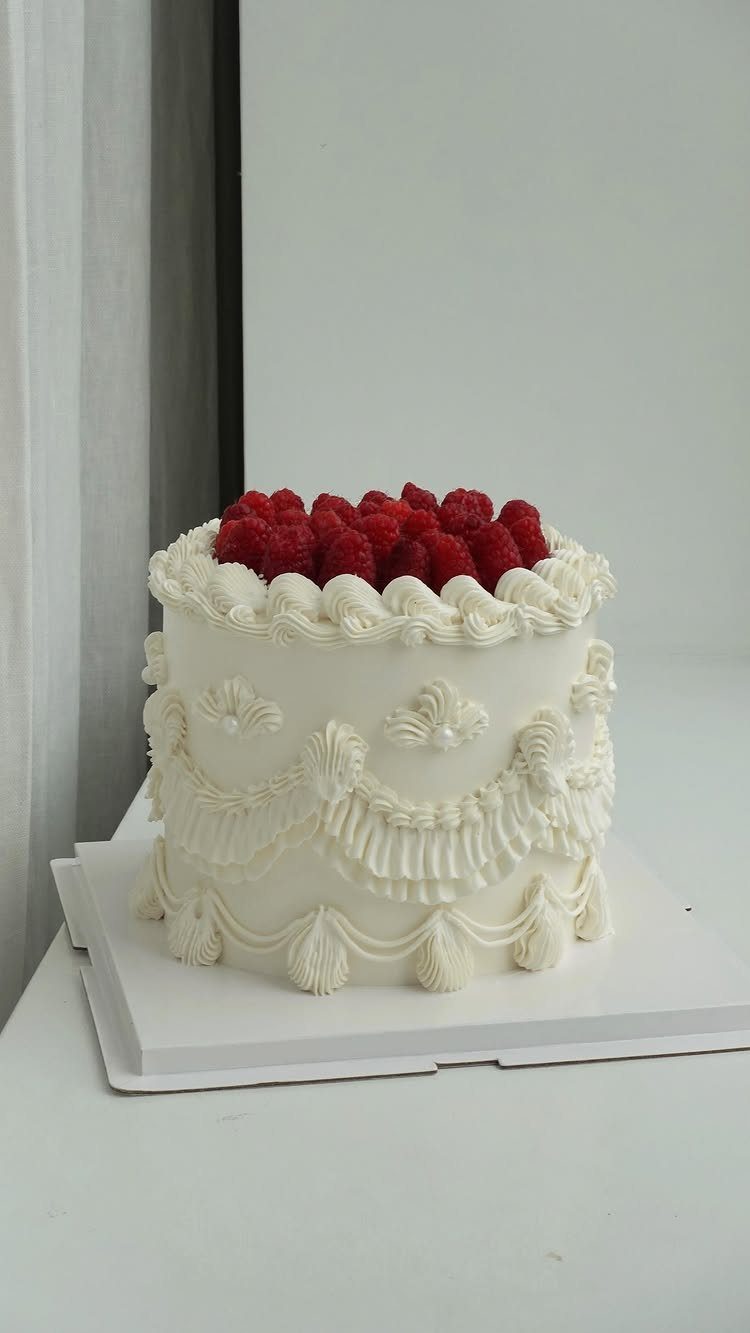
Fresh raspberries turn a plain white buttercream cake into something that looks like it came from a pastry case without the pastry case price.
The berries do almost all the work: their color and shape against white frosting need no piping skill to read as intentional and elegant.
A single pint of raspberries covers a standard round with enough left to fill between layers. Press them gently into fresh frosting so they grip; the juice will stain if you drag them.
Chill the cake before moving it, or the berries slide.
This suits anyone baking at home who wants maximum impact from minimum technique. Raspberries hold looking their best only a few hours, so this is not a make-ahead choice for a late reception.
For longer holding, strawberries or blueberries last longer but read less refined against white.
8. Textured Leaf Buttercream with Gold Pearls
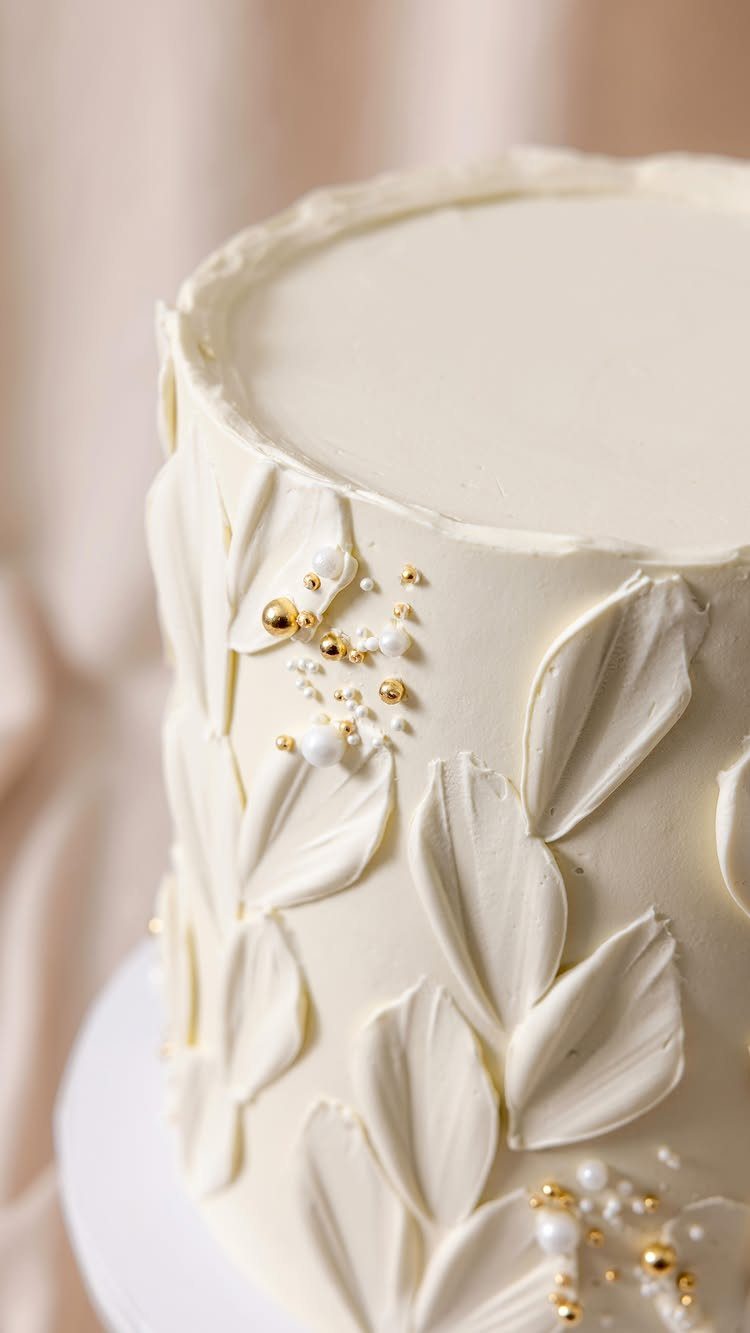
Sculpted buttercream leaves and gold pearls ask more of the baker than fruit or sprinkles, but the materials cost almost nothing.
A leaf piping tip, a small brush for luster dust mixed with clear alcohol, and patience replace the budget for fondant or a pro decorator.
The texture hides imperfections that smooth frosting would expose. Build the leaf pattern working from the bottom up, overlapping slightly so the seam between rows disappears.
Add pearls last, after the butter crusts, so they do not sink. Gold luster dust reads as metal; silver or rose gold work the same way for a different mood.
This look belongs at a small wedding where guests will be close enough to notice hand-work, or at any event where the cake table sits in good light. It trades the clean modern line for something busier and more romantic.
A tall cake carries it better than a single tier; the vertical repetition needs height to feel finished rather than cluttered.
9. Minimalist Black and White Birthday Cake
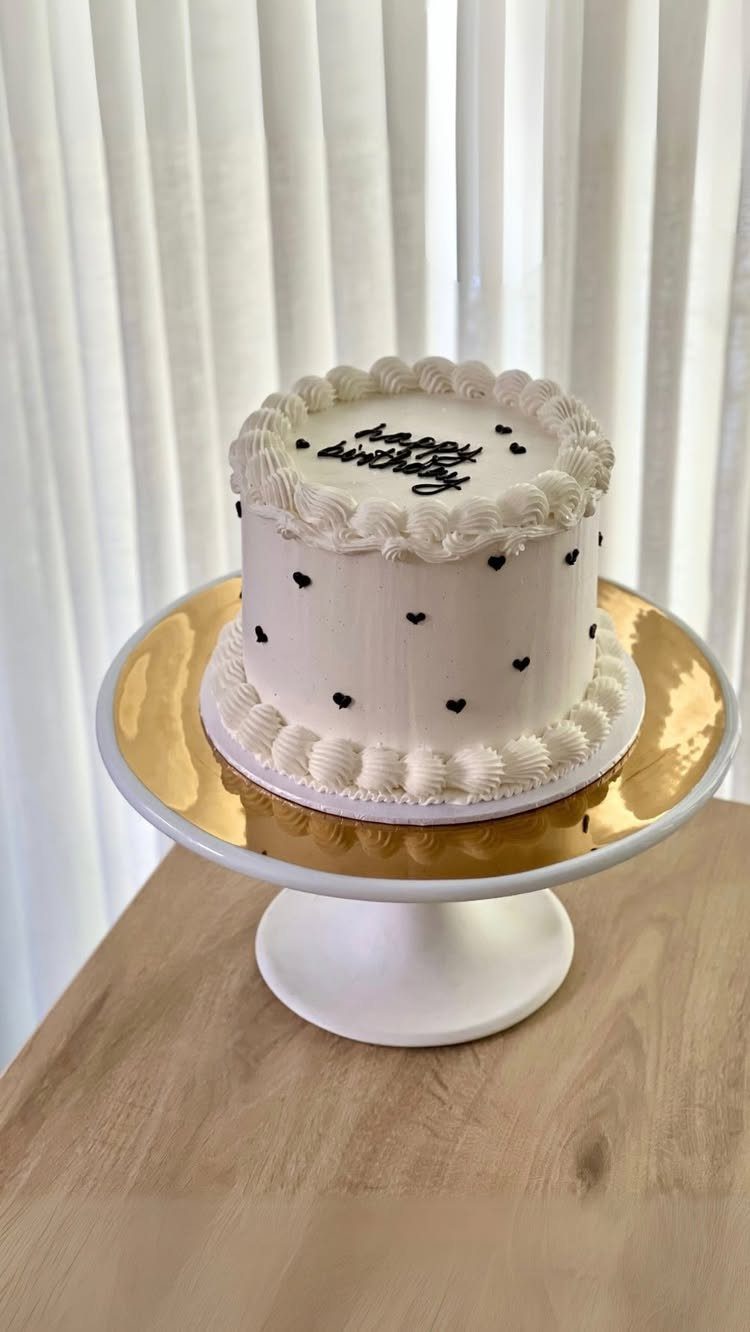
Black piping on white buttercream is the cheapest way to look deliberate. Two colors, one tip change, and the cake reads as designed rather than defaulted-to.
The contrast does the heavy lifting; the technique does not need to.
Shell borders frame the base and top with a motion most home bakers master quickly with practice on parchment.
The hearts and script call for a small round tip and a steady hand, or a food-safe marker as a cheat for the lettering.
Black gel color achieves this without the bitter taste of too much cocoa; start with a drop and build, as it darkens as it sits.
A cake stand with a metallic base lifts the whole presentation without extra decorating. This approach fits a birthday where the budget went to the venue or the guest list, not the dessert.
It trades color and flowers for graphic punch; the person who wants soft and romantic should look elsewhere.
Tips for Baking Success
Butter needs to be genuinely room temperature before it meets sugar, not the slight softening that happens on a counter for 20 minutes.
The creaming step builds the air structure that carries the whole rise, and cold butter shreds rather than whips.
Egg whites only keep the crumb light and the color clean; yolks weigh it down with fat that belongs in a yellow cake.
Sour cream adds moisture back without that same heaviness, and cake flour, nearly 30% finer than all-purpose, keeps the texture tender rather than bread-like.
Fresh baking powder matters more than the recipe notes suggest. Test a spoonful in hot water; if it fizzes weakly, the cake loses height.
Overmixing after the flour goes in develops gluten that turns a soft crumb rubbery, so stop when the streaks disappear.
Storage Tips
A buttercream cake sits out safely for 2-3 days because the sugar content stabilizes small amounts of milk. Cream cheese buttercream is the exception; that version needs refrigeration.
For longer holding, wrap the frosted cake and freeze it for up to a month. The buttercream seals in moisture, so the texture holds better than you’d expect.
Leftover buttercream alone keeps a month in the refrigerator or 3 months frozen; stir it smooth once thawed. A frosted cake lasts a week refrigerated if you need the buffer before an event.
Frosting Consistency
Heavy cream thins buttercream; powdered sugar thickens it. Powdered sugar stiffens the buttercream; I add it a quarter-cup at a time so it doesn’t go past the point I wanted.
The purple cancels yellow undertones; the white simply tints. Mix on low speed so you don’t whip in more air than intended.
Common Mistakes
Cold ingredients are the first place a white cake goes wrong. Butter that still holds its wrapper shape will not cream properly, and egg whites straight from the refrigerator chill the batter and stiffen the fat.
Set everything out an hour ahead.
Overbaking dries a white cake faster than most because the egg whites lack the moisture yolks provide. Start checking at the low end of the time range and pull when a toothpick shows moist crumbs, not a completely clean stem.
Scooping flour with the measuring cup packs it tight; a dry cake often traces back to 20% more flour than the recipe intended. Spoon it into the cup and level with a knife.
Frequently Asked Questions
How do you get white buttercream?
Whip room-temperature unsalted butter for about 2 minutes before adding anything else; this lightens the color and creates a white base. Sifted powdered sugar, clear vanilla extract rather than the dark kind, and heavy cream go in next.
What is the difference between white frosting and buttercream frosting?
White frosting is a color description, not a type; it can be made from shortening, cream cheese, or other bases. Buttercream frosting specifically contains butter, which gives it richness and a firmer set.
A white buttercream cake is simply a buttercream-frosted cake finished in that color.