These 12 wedding themes for 2026 range from a free backyard to a rigged canopy that can double the floral budget, and the one that fits you depends on whether your guest list is small enough for a wine bar private room or large enough to need a tent.
A single warm tone like honey or coral pulled from estate-sale amber glasses and thrifted floral plates turns mismatched tableware intentional, not accidental.
1. Outdoor or Nature-inspired Weddings
Outdoor or nature-inspired weddings are showing up on more couples’ wish lists each season, and a tent setup gets you the scenery without surrendering to weather.
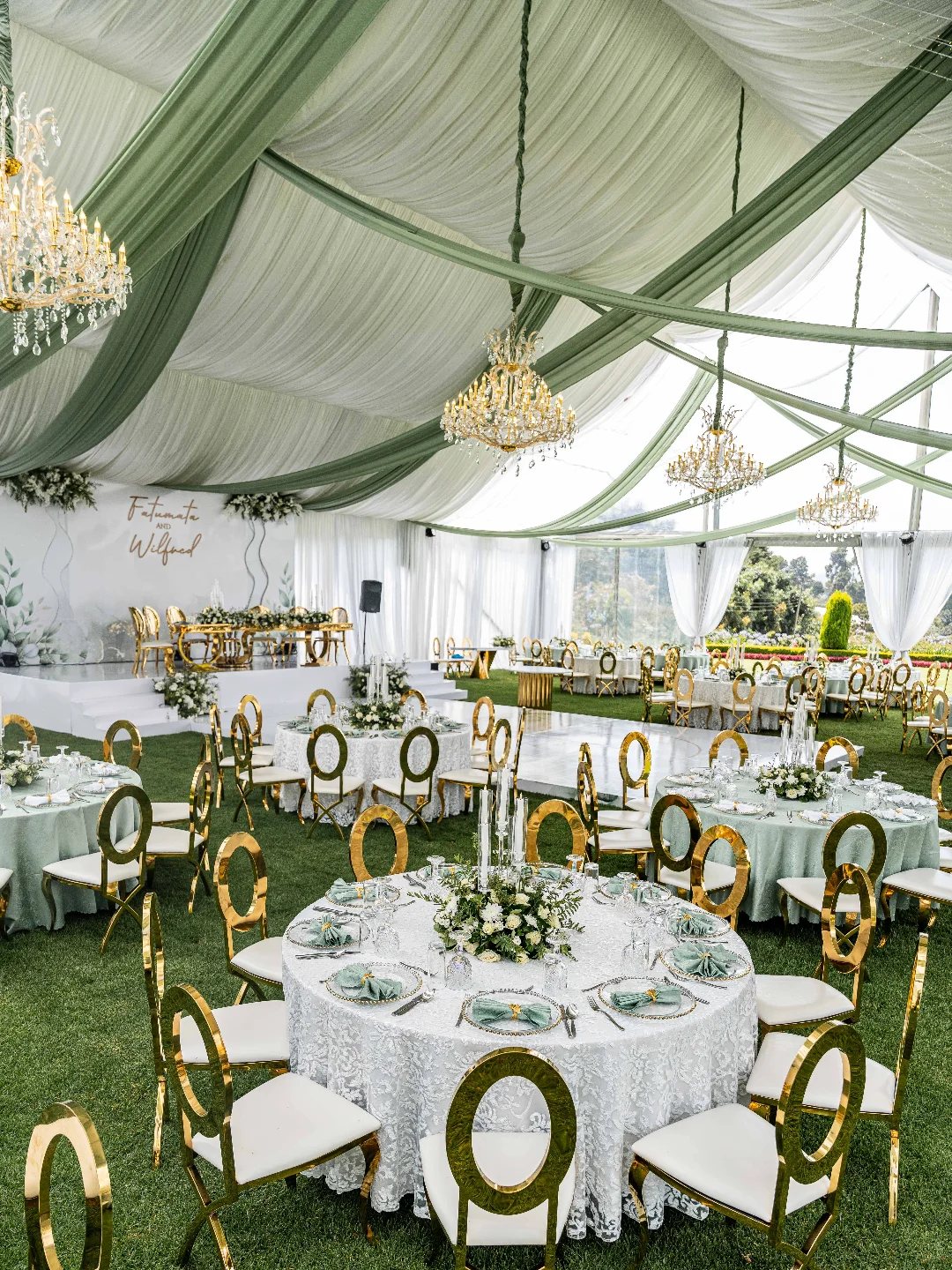
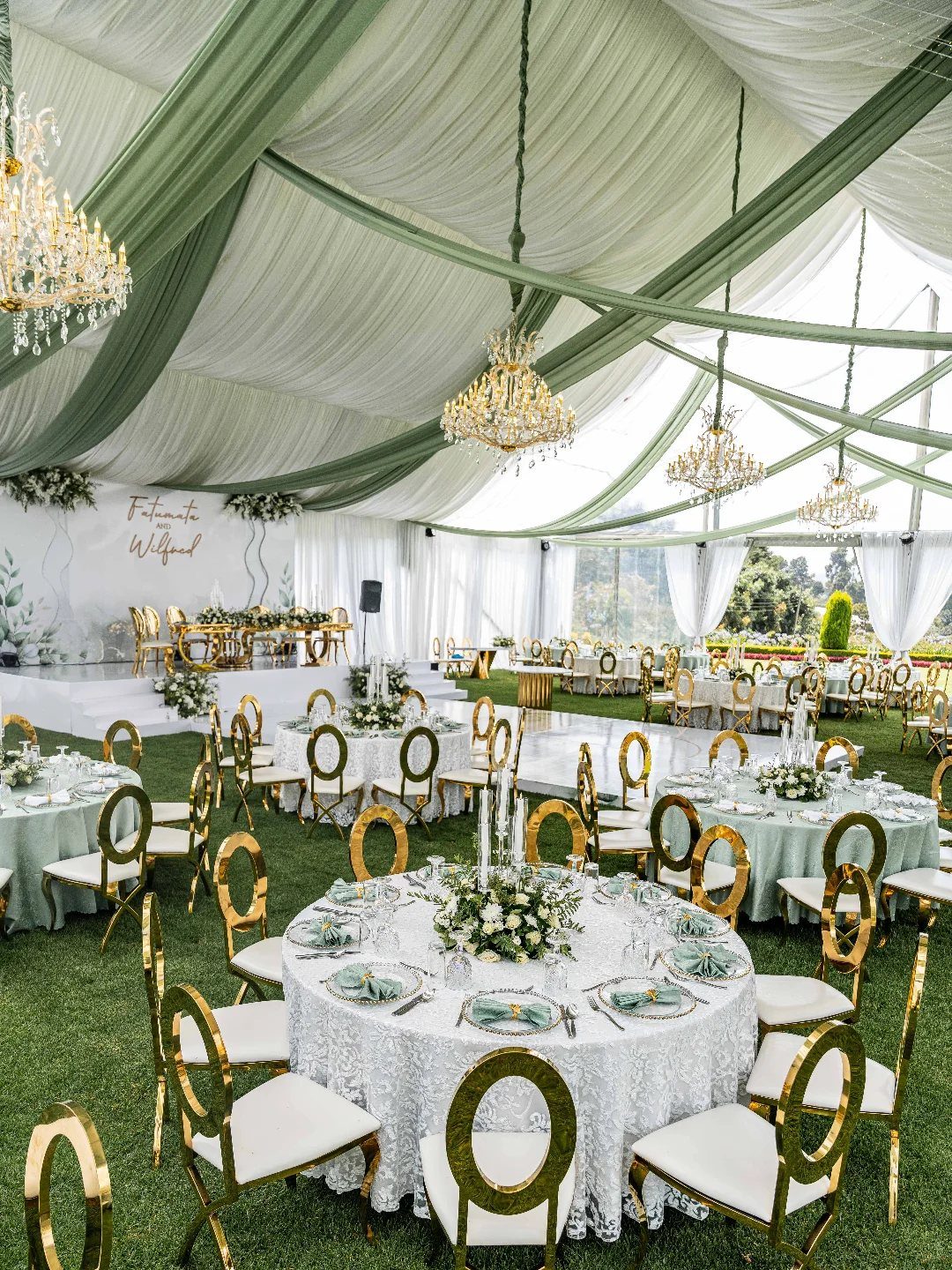
Green and white draping overhead, chandeliers that catch late light, and gold chairs on real grass give the formal structure some couples want while the trees and sky do half the decorating for free.
The color direction for fall leans earthy reds and copper shades, which read beautifully against golden-hour light and turning leaves. Spring and summer versions stay in sage and cream; lace cloths and green-and-white centerpieces carry the palette without feeling forced.
This suits anyone whose venue budget is modest but whose guest list is not; the tent, chairs, and draping are rentals, but the lawn and sunset are already paid for.
Trade-off: you need a backup plan for rain, and that plan costs money too.
2. Backyard Weddings
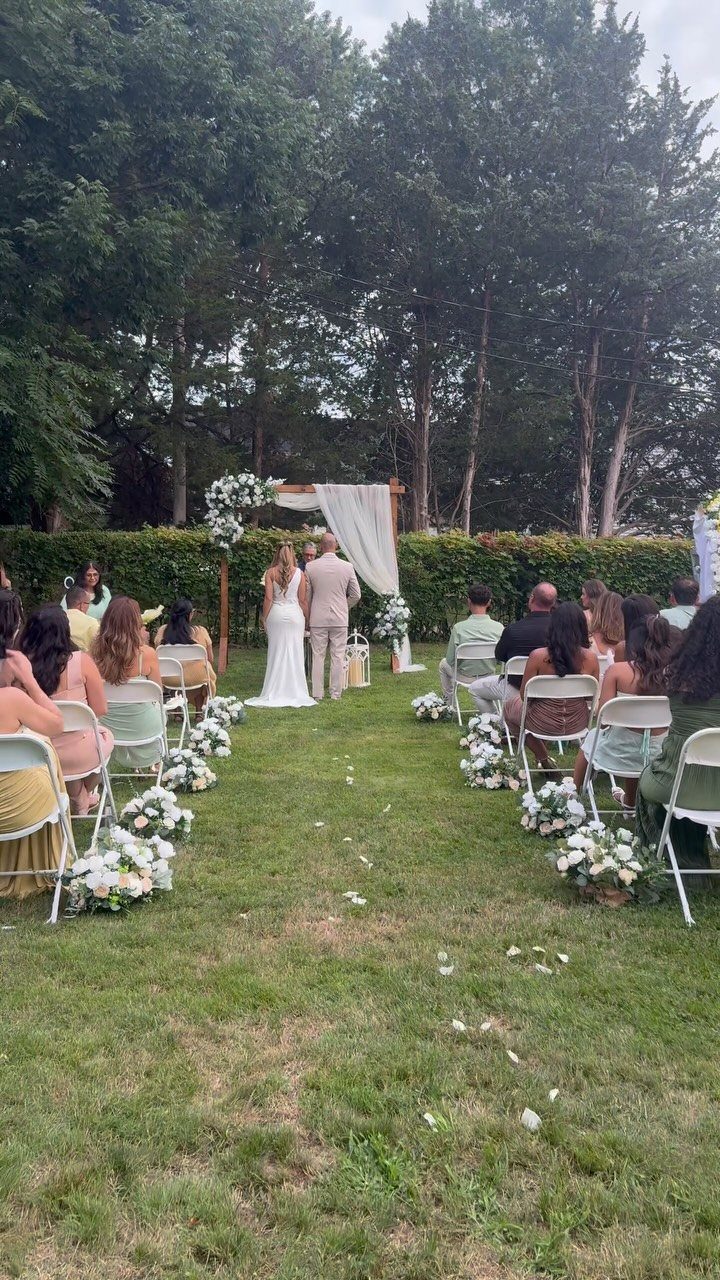
A backyard wedding turns the place you already have into the place you marry, and that elimination of venue rent is often what makes a modest wedding possible.
An arbor built from wood and dressed with white fabric and flowers creates the ceremony focal point where none existed; white chairs in rows on the lawn complete the transformation.
Sentimental value runs high here. A yard that holds memory, your childhood home, a parent’s garden, or a friend’s property, gives guests that personal weight the minute they arrive.
DIY options open up: you build the arbor, arrange the aisle flowers, and set the chair rows yourself or with help you do not pay vendor rates for.
Dress code is yours to set. Keep it formal with the arbor-and-aisle structure, or drop the chairs entirely for picnic blankets and lawn games.
The blank canvas works both ways. Limit: parking, bathroom access, and neighbor tolerance are real constraints that a rented venue handles without asking.
3. Vineyard Weddings
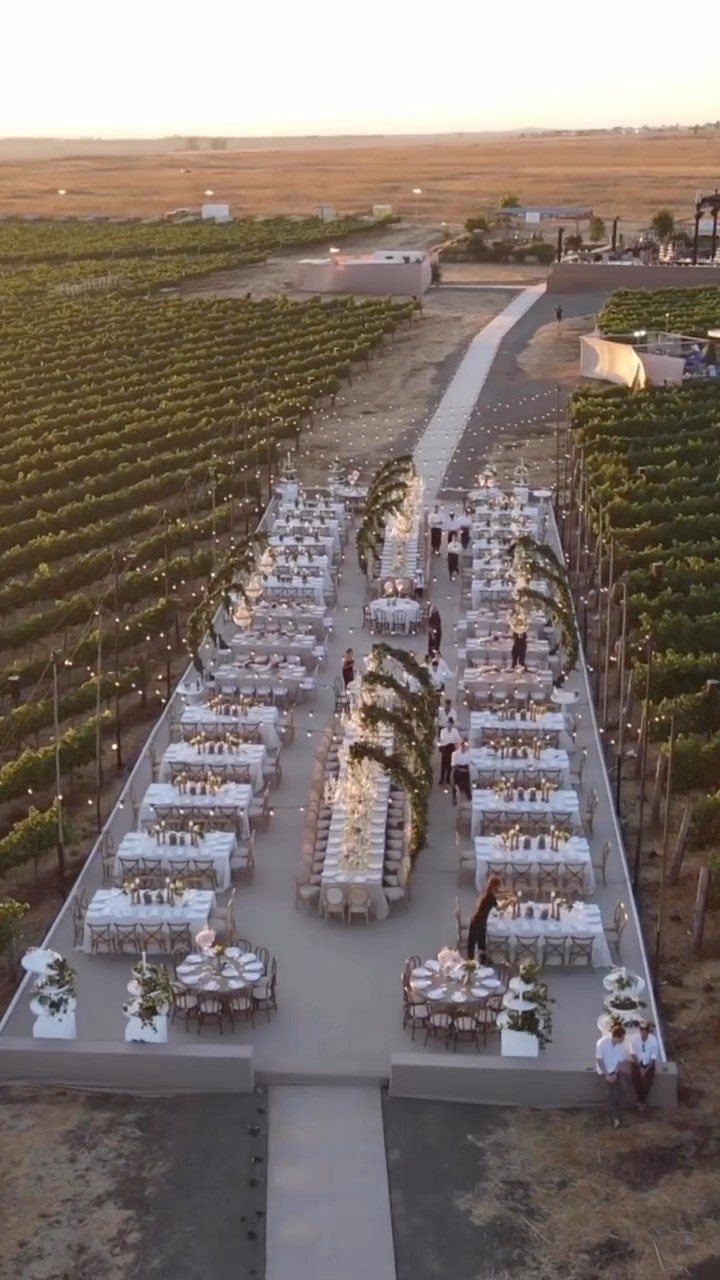
For 2026 couples without that budget or time, local wine bars are translating the same mood into city settings.
The food pairing is where this idea gets specific. Lay out grocery-store platters of olives, parmesan chunks, and dark chocolate alongside whatever wine flight the bar offers; the combination reads intentional and foodie without requiring a caterer.
String lights overhead bridge the gap between casual and chic.
This works best for couples whose guest list runs small enough that a wine bar private room or patio can hold them, and who want the culinary experience to be the memory guests take home.
Trade-off: the full vineyard weekend has space for 150; the wine bar version caps lower, and you need to ask that number early.
4. Art Gallery Wedding
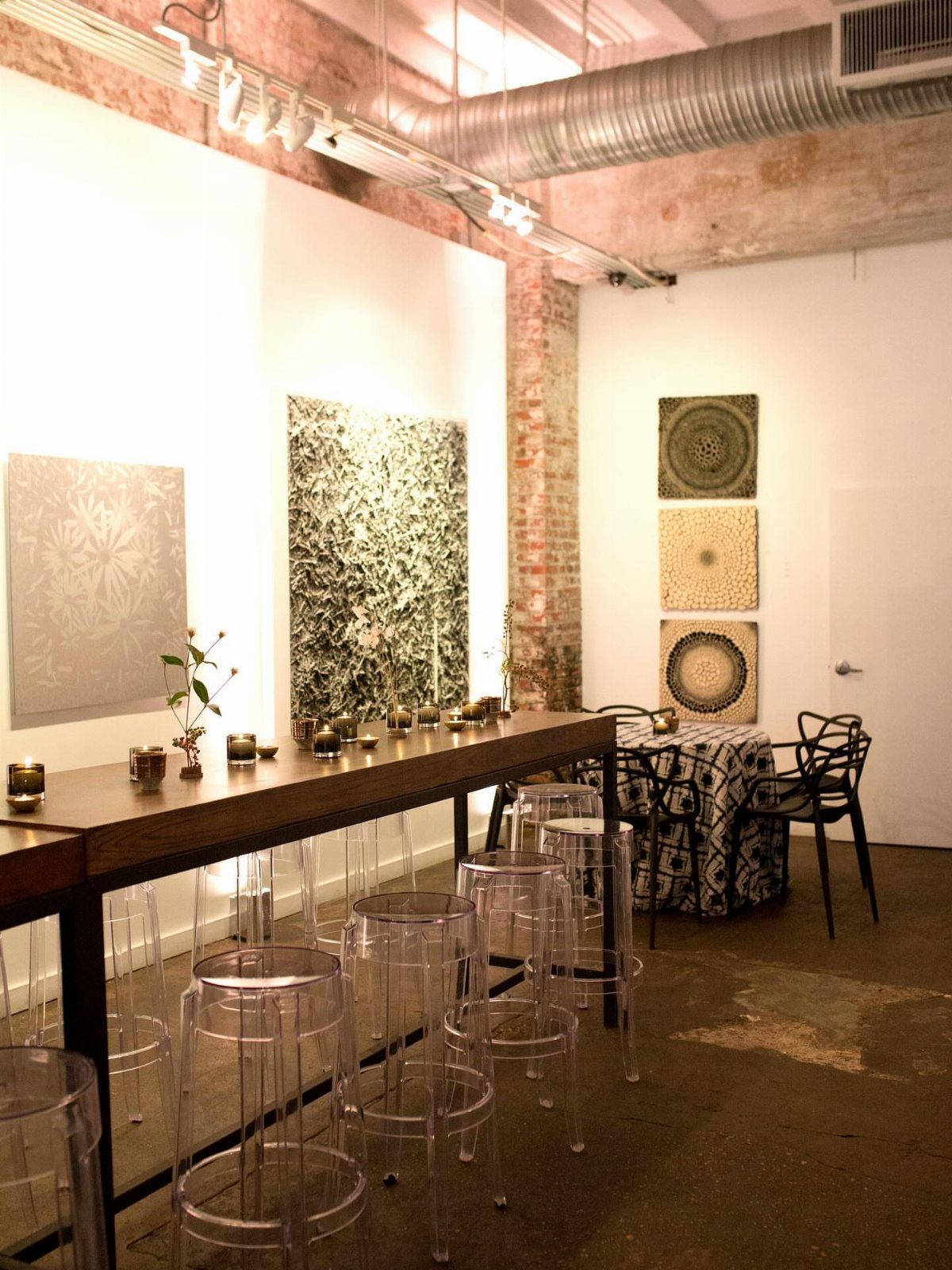
An art gallery wedding hands you white walls, track lighting, and the implicit permission to keep everything else minimal.
Use the walls. Framed photos from your relationship, hung where the gallery’s own art would sit, turn the space into something no other couple’s wedding could replicate.
The cocktail-party format, with guests standing and circulating rather than seated for a full dinner, fits the room’s scale and keeps rental costs down.
Dress code is your chance to mix levels: ask guests to wear their best, and the event gains formality that the nontraditional venue otherwise skips.
A film photographer, if your budget allows, captures the contrast between industrial architecture and dressed-up guests in a way digital rarely matches.
This suits couples who want their wedding to feel like an event they would actually attend, not one they endured.
5. Self-serve Bars
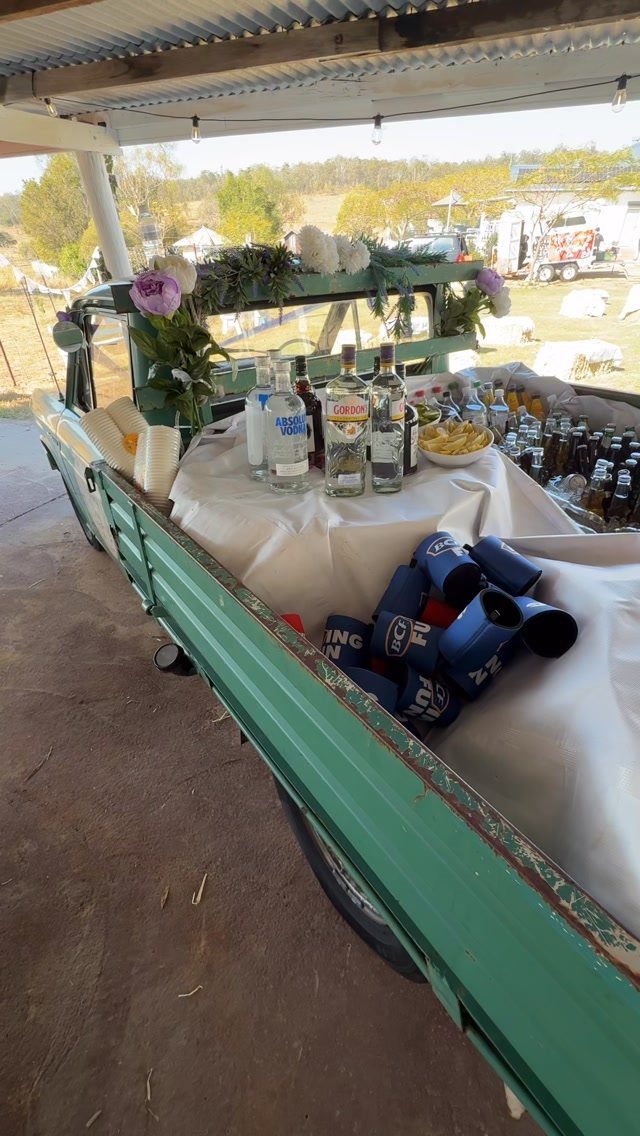
White cloth, greenery, and a few flowers turn a working vehicle into a station; the grid of glasses and bottles of vodka and gin wait for guests to pour their own.
The practical pieces: sliced lemons in a bowl, a potted mint plant for muddling, and ice in a cooler below eye line.
Blue stubby coolers alongside suggest this host also offered beer; the mix of liquor and casual cans is part of the relaxed tone.
A table inside works the same way if you do not have a vintage truck. For something sharper, the dirty martini fountain, a gallon dispenser filled with liquor and olives, turns the self-serve concept into a single visual moment.
This fits any couple whose crowd drinks responsibly and who would rather put the bartender budget toward food or photography. Risk: you are the host, and overconsumption is harder to slow without a professional watching.
6. Grazing Boards
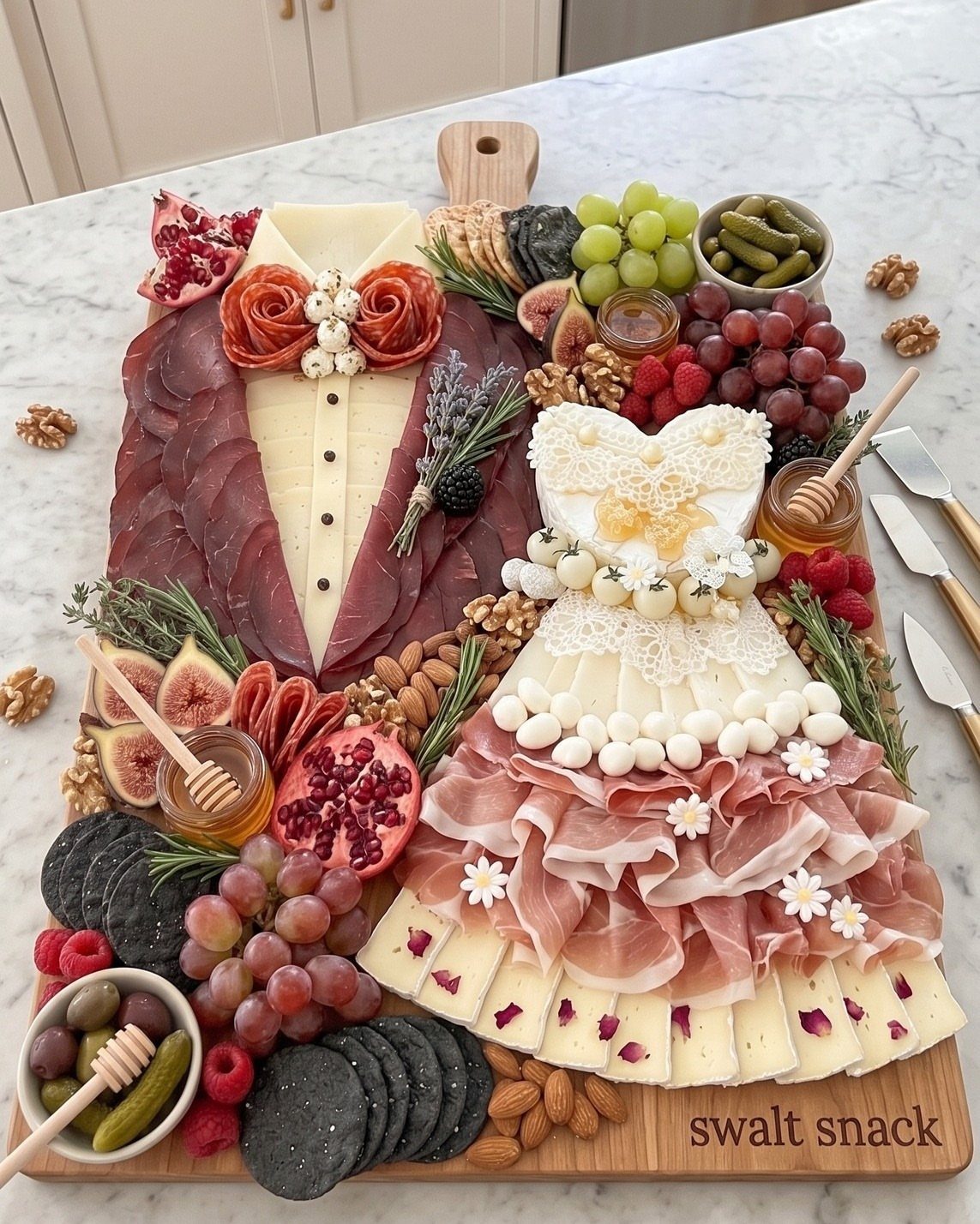
Grazing boards stretch the charcuterie idea across enough surface that guests eat while mingling, not while seated, and the format can carry meaning too: meats and cheeses arranged into bride and groom figures, with grapes, figs, pomegranate, and nuts filling the shapes.
Small bowls of pickles and honey nearby keep the board from feeling static and give guests something to pass around.
The DIY core is assembly, not cooking. A classic spread runs cheese, fruit, and crackers; a bread table gathers loaves and soft butter; a hot dog version lines up fries and dips.
The dessert board, if you want one, swaps in brownies, berries, and whipped cream.
Cost stays low because nothing requires a kitchen or a chef; you buy, you arrange, you refill. A board this detailed takes real time to build, and it does not hold overnight, so morning-of is the only option.
This suits couples who want food to be an activity, not a service, and whose guests will graze steadily rather than expect a plated meal at a set hour.
7. Mismatched Tableware
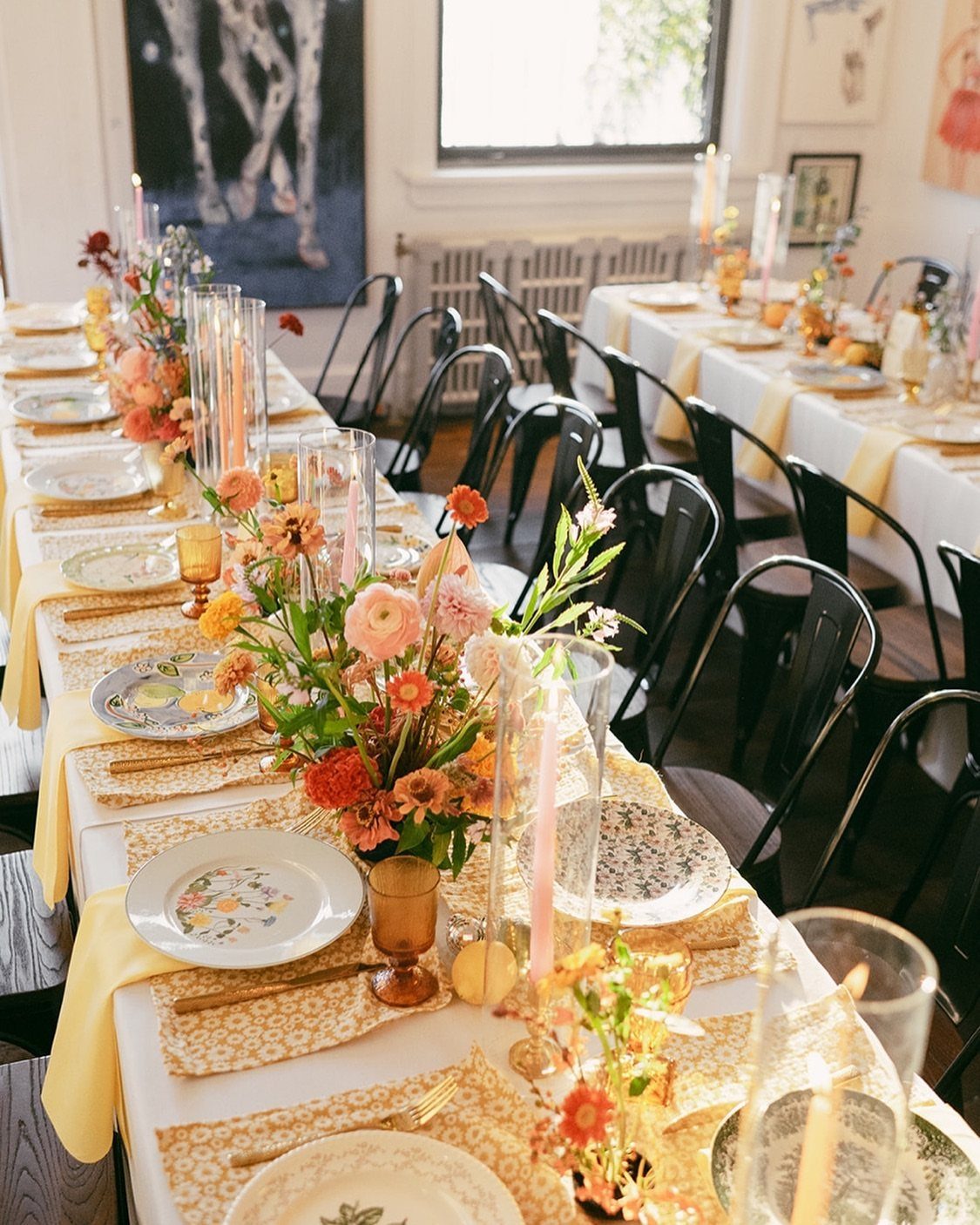
Borrowed plates from three friends plus a Saturday morning at the thrift store built the whole table cheap.
The amber glasses came from an estate sale, the floral plates from my aunt’s cabinets, and the yellow napkins were new because linens take the wear.
Sticking to one warm tone makes the mix read intentional, not accidental. Everything here shares honey or coral somewhere in the pattern.
Black chairs underneath keep it from going cottagecore when the venue is a plain rented hall.
This suits the couple who wants the table to feel gathered rather than bought in a set, and who has the time to hunt. If your venue includes standard white china, the swap is not worth the rental fee.
8. Seashell or Coastal Beach Theme
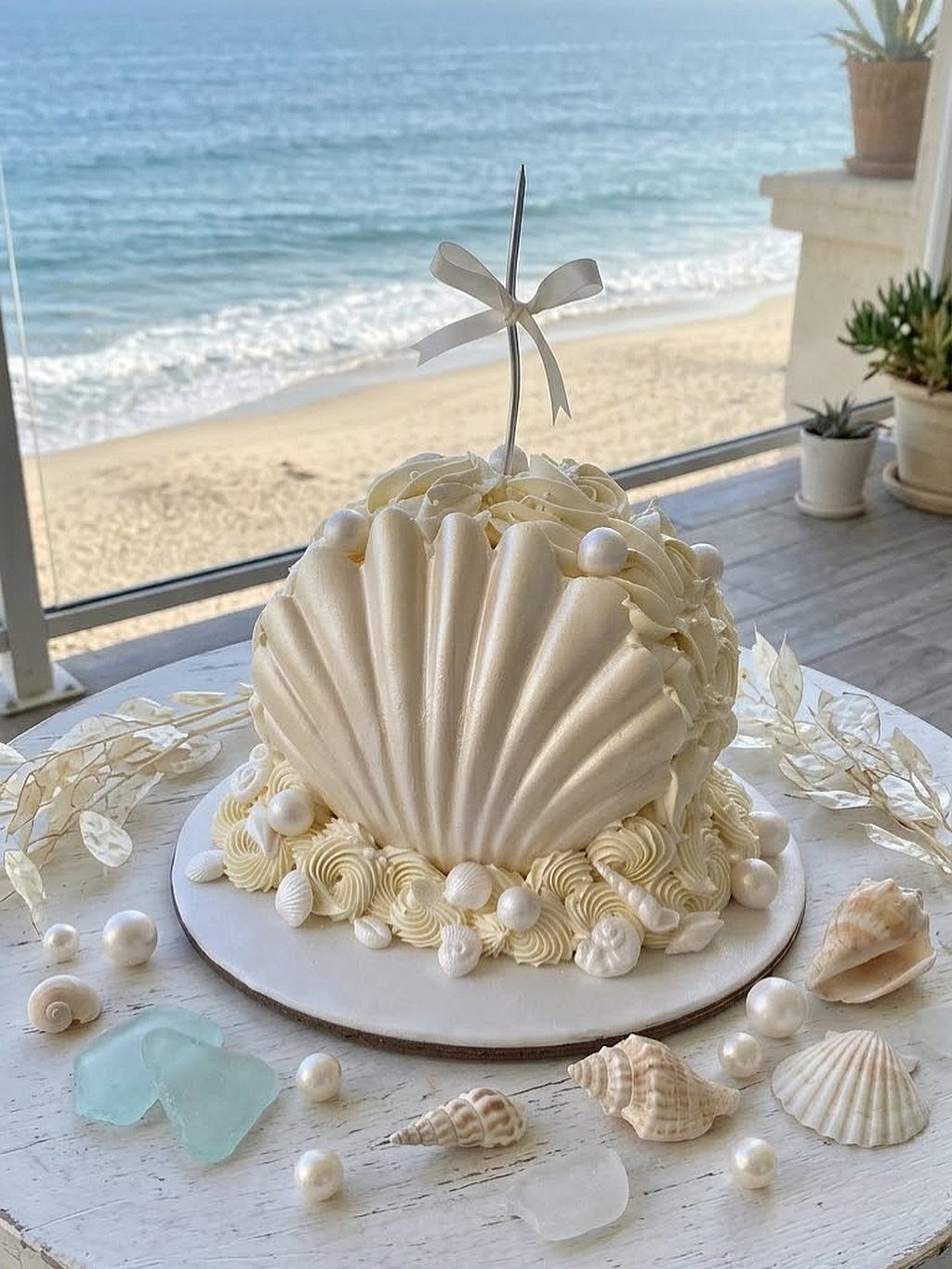
A seashell cake only works if the setting agrees. Move that same cake to a hotel ballroom and the shape reads costume instead of coastal.
The inland version pulls from the same palette without the literal shell. Pampas grass and bleached wood on the tables, seafoam napkins, sand-colored runners.
This theme works outdoors at the edge of a city, not on the water, which is how it has spread.
Check your location’s light before you commit. Evening would need more candlelight and a creamier icing to keep the detail visible.
9. Swan Motif Romantic Theme
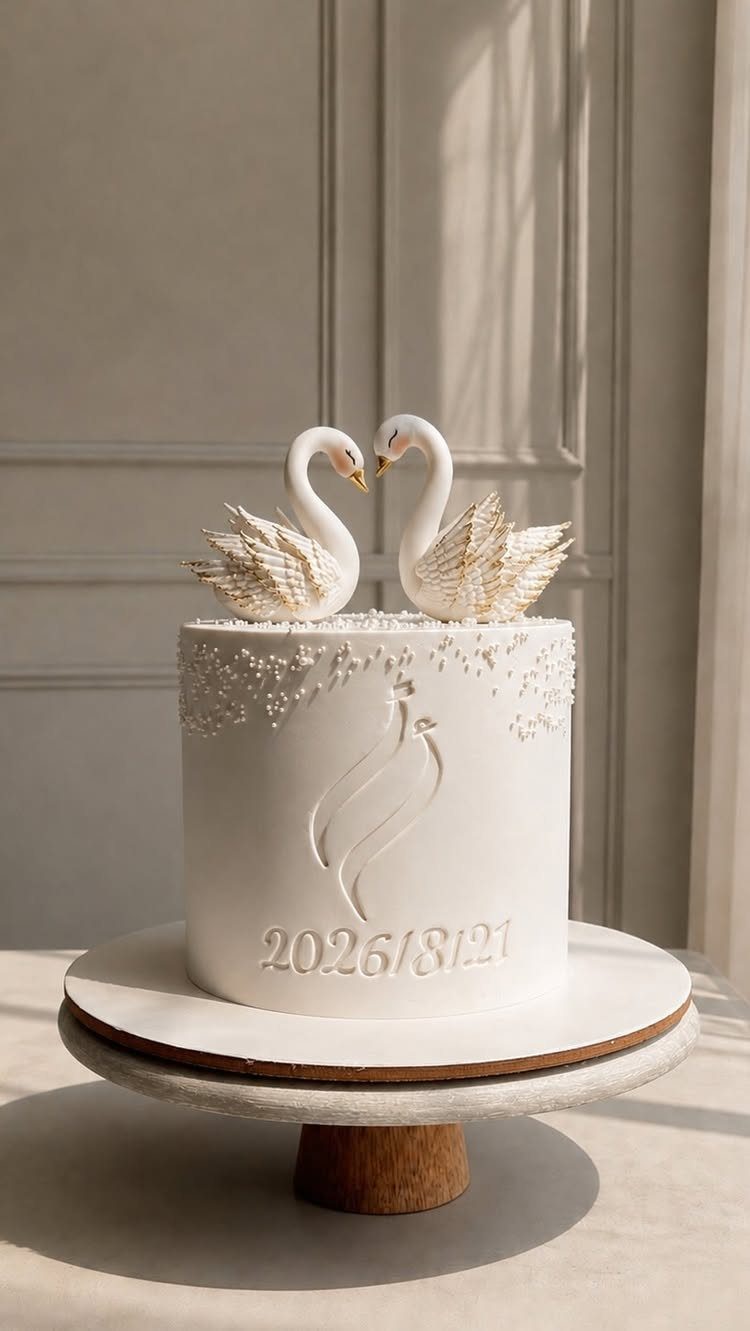
Two swans on a cake reads fresh again because the rest of the decoration is so plain. No scrollwork, no sugar flowers, just the date stamped straight into the fondant and the pair facing each other.
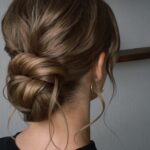
The hair color moving for 2026 runs in the same warm register: candlelit brunette, which is auburn without the red declaration. A bride with that tone and this cake has a single mood running from head to table.
This theme asks for restraint everywhere else. The swans are already doing the romantic work; add bunting or a neon sign and the cake starts looking sarcastic.
10. Deep Red Dramatic Glam
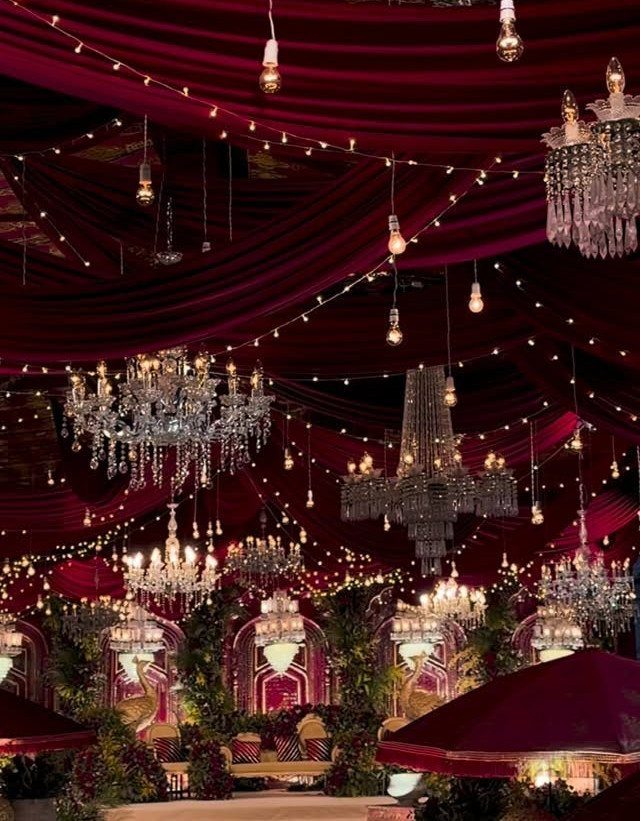
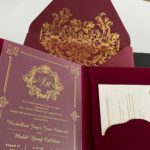
Deep red fabric overhead turns a high-ceilinged rental hall into a room that feels chosen. The chandeliers here are crystal, not brass, because the red already weighs heavy and needs the lift.
The color is moving into bridal hair this year, which means a bride with plum-red waves under this ceiling has matched her setting without meaning to. That coordination reads as confidence, not planning.
The trade is light. This setup needs the bulbs and the crystals or the red swallows the faces underneath.
Budget for more wattage than a white tent would require, and test it at the rental walkthrough, not the morning of.
11. Vibrant Mediterranean Table Styling
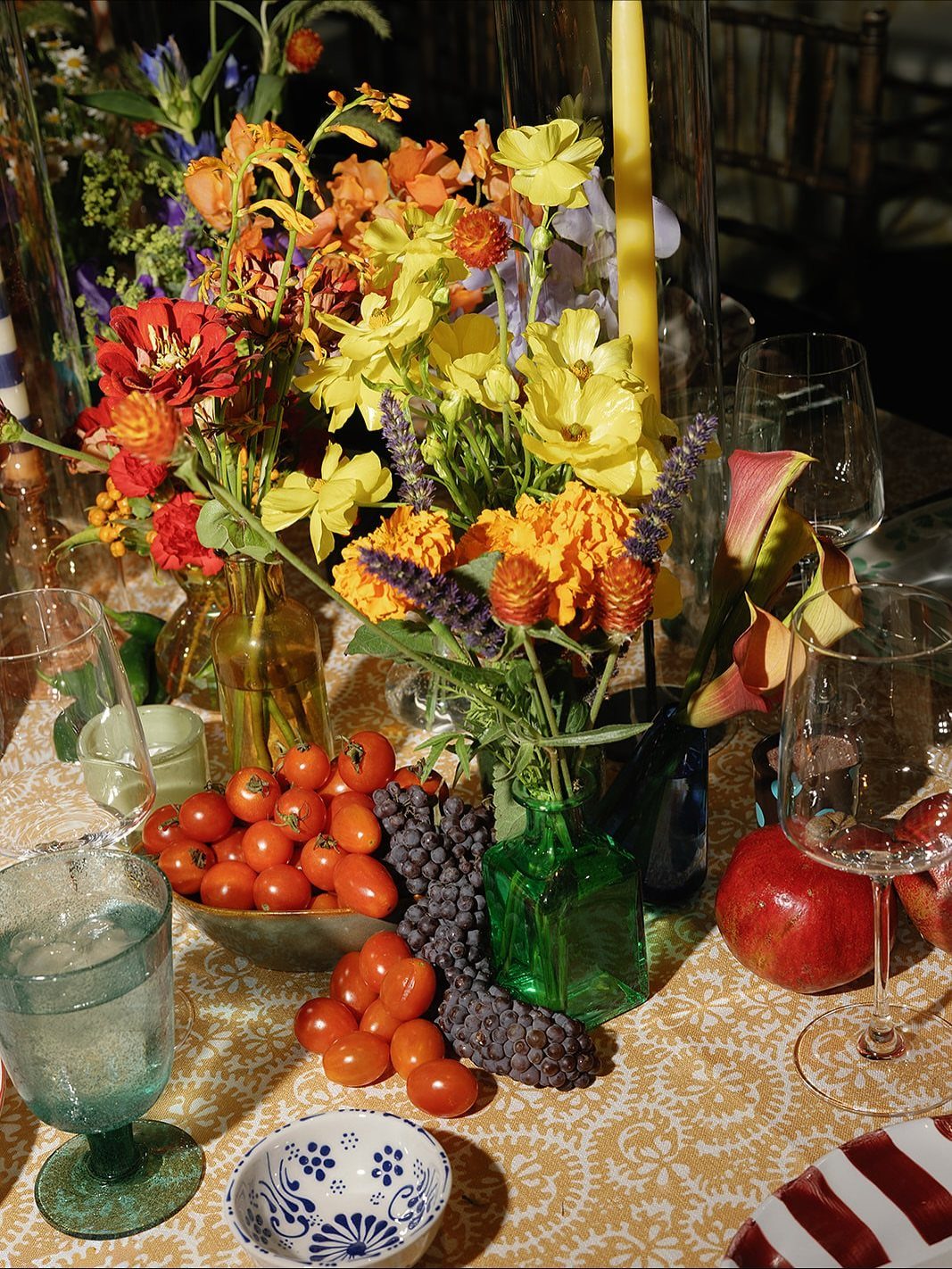
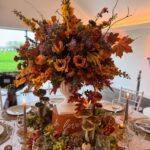
A yellow tablecloth this saturated only works because the fruit and flowers share the same heat. Tomatoes, pomegranates, and orange blooms repeat the tone so the cloth does not sit alone.
The patterned linen is doing more work than plain would; the bottles are plain because the cloth is not. That balance of one busy element and several simple ones keeps a long table readable from the entrance.
This is not a winter look. The tomatoes need to be good tomatoes, which in most of the country means August or September.
12. Romantic Hanging Greenery Canopies
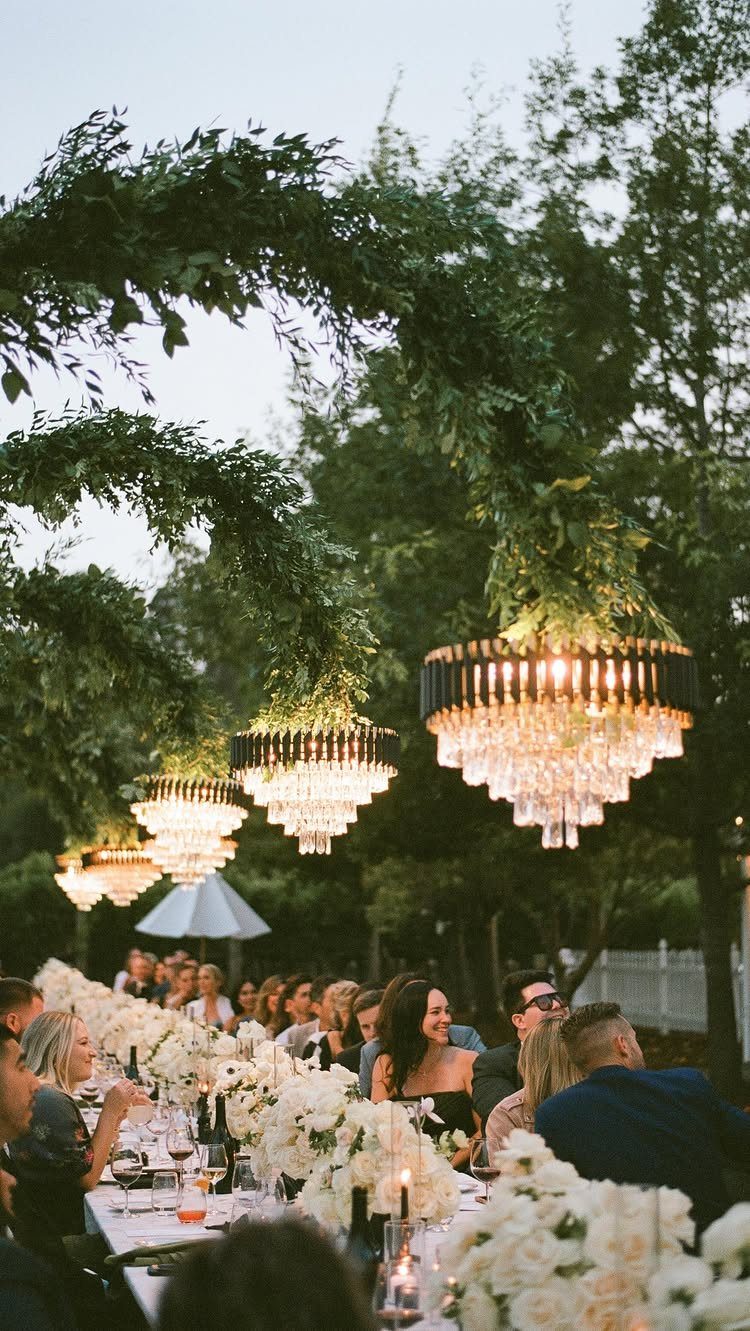
Greenery overhead works when it is thick enough to read as architecture, not decoration. The arches are wide as the table is long, and the chandeliers hang from the structure itself, not dropped through it.
The cost is in the rigging. A venue with existing beams or a tent with a frame saves the rental of the support system.
Without that, the canopy becomes a labor line item that can double the floral budget.
This suits dusk, not noon. The leaves read as black-green under direct sun and the chandeliers are pointless.
Advice on Choosing Themes
Start with the room you have, not the room you wish for. A high-ceilinged hall needs light and vertical drama to feel filled; a backyard needs structure you build yourself.
The season sets what you can buy fresh and what you must fake or skip. Tomatoes on a Mediterranean table need August; pampas grass for a coastal mood ships year-round.
Personal style is the filter. One couple’s "romantic" is another’s "too much," and the swan cake proves restraint reads louder than excess.
If your ideas scatter across neutrals, lake themes, and sushi nights, the venue and season alone will not narrow them. Pick 2 colors and 1 texture that feel like you, then reject anything that does not match.
The "hero" backdrops for photos, the power draw of your lighting plan, and the weight of anything overhead in wind are checks you run before you sign, not after.
Budget-friendly Options
The move toward DIY and non-traditional venues is measurable. 67% of event-goers in 2026 surveys prefer affordable or self-built options, and that preference is showing up in wedding planning too.
Outdoor or nature-inspired locations lead at 71.2% for wedding-related events; unique venues like galleries or warehouses sit at 52.4%. Intimate home gatherings specifically are rising at 49.7%.
Destination resorts and luxe locations are moving the other way, at just 19.2%.
The savings are in what you eliminate. Venue rent disappears at a backyard wedding.
A self-serve bar cuts the bartender line item. Grazing boards replace plated meals and the kitchen staff behind them.
The trade is your time: morning-of assembly for a board, the hunt through estate sales for plates, the backup plan a tent requires. Budget for that too.
71.2% of survey respondents saw outdoor or nature-inspired locations becoming more popular for wedding-related events in 2026.
— Evite
Cultural Considerations
A theme that fights the venue’s bones reads as costume. The same red in a low-ceilinged community room swallows the space.
Before you book a venue or lock in a date, ask whether the outlets can handle what you are plugging in.
String lights, a DJ setup, or a heated tent all draw real power, and a blown fuse mid-reception is not the kind of surprise anyone wants.
LED walls, extra wattage for dramatic color, and rigging for hanging greenery all draw more than the standard outlet run. Ask the venue for the amperage available, not just the outlet count.
For outdoor setups, weight matters. Floral towers or tall arrangements need ballast the wind will not tip.
Ask your rental company how they handle that, and do not accept "we’ll figure it out day-of."
The photo audit is practical, not aesthetic. Walk the space at the hour your wedding will run and mark where light falls.
3 distinct backdrops means 3 places where guests will naturally gather and the result will look deliberate, not accidental.
Personalization in Weddings
The bowling alley wedding is one model: retro setting, bar snacks, customized drinks, and a photobooth with tokens for guests. Your personal style shows up in attire and music choices, not in decorations you haul in.
The relationship timeline is the decoration.
A vintage truck as bar, mismatched plates from three friends’ cabinets, an arbor built from wood in a yard that holds memory: these carry weight because they came from somewhere specific. The story does not need explaining; guests feel it.
Customization that reads as choice, not effort: one saturated yellow tablecloth with plain bottles, one pair of swans on an otherwise blank cake, one warm tone holding together borrowed dishes.
The detail that signals "this is us" works best when everything else steps back.
Frequently Asked Questions
What is trending for weddings in 2026?
Outdoor weddings and nature-heavy settings are what most couples want right now; the surveys put that number at 71% for 2026. Unique venues like art galleries and warehouses are climbing too, at 52%, while intimate home gatherings sit at just under half.
The shift is toward laid-back, budget-friendly celebrations rather than resort destinations, which only 19% expect to grow.
What are the top wedding themes?
Backyard weddings, vineyard settings, and art gallery receptions are the strongest directions this year. A backyard setup cuts venue rent entirely and lets you build the arbor and arrange the aisle yourself.
Vineyard mood now translates to city wine bars for smaller guest lists, and gallery walls give you white space plus track lighting that needs almost no added decoration.