To choose a wedding officiant, start by deciding your ceremony style—religious, secular, or civil—since this shapes your search. Interview two to three candidates from sources like The Knot Marketplace, personal networks, or houses of worship. Verify their legal credentials for your state, assess their storytelling ability and personality fit, and clarify fees and inclusions. Confirm availability, rehearsal participation, and communication style to guarantee they authentically reflect your vision and guide your guests through a meaningful celebration. Understanding these factors positions you to make an informed decision that honors your relationship.
Understand What a Wedding Officiant Does
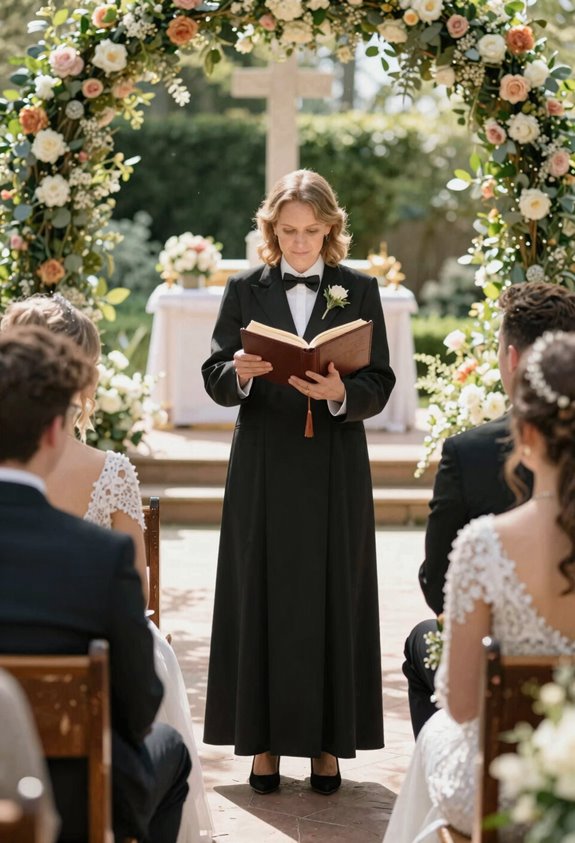
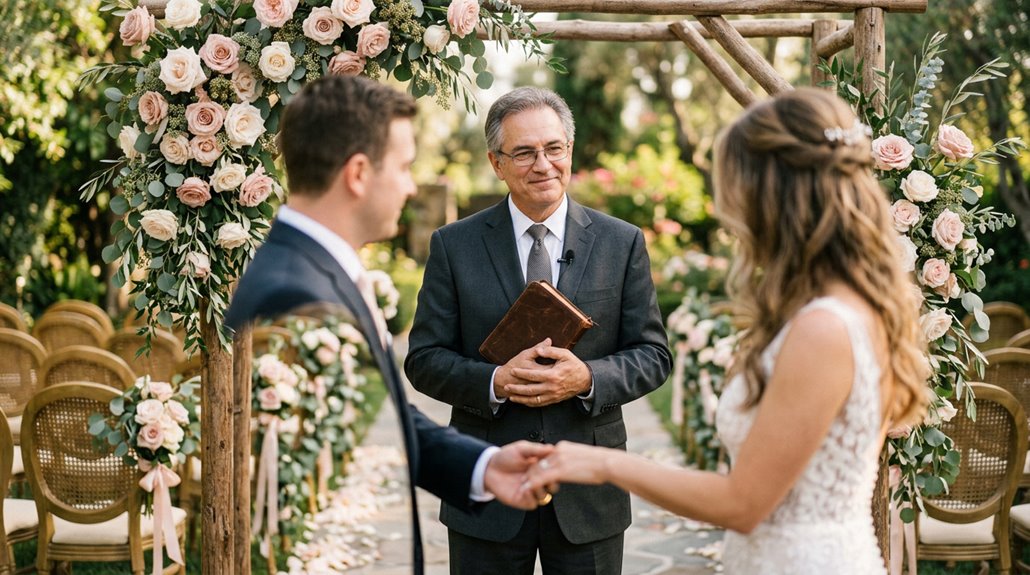
A wedding officiant is the person legally authorized to conduct your ceremony, guide the proceedings from beginning to end, and sign the marriage license that makes your union legally binding. Officiants come from diverse backgrounds: religious leaders, non-religious celebrants, or trusted community members. They craft a ceremony script tailored to your vision, values, and story. Beyond performing words, officiants coordinate with vendors, establish the flow, and help convey meaningful narratives to your guests. The role demands clear communication, genuine presence, and the ability to engage your audience authentically. Some states permit self-solemnizing weddings without an officiant, while others require a licensed or ordained official. Understanding these legal requirements and the officiant’s multifaceted responsibilities ensures you select the right person for your celebration.

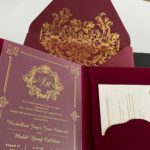
Size: A2 folded Card - 4.25x5.5 inches once folded. * KINDLY NOTE: A2 SIZE IS SMALLER THAN A STANDARD GREETING CARD
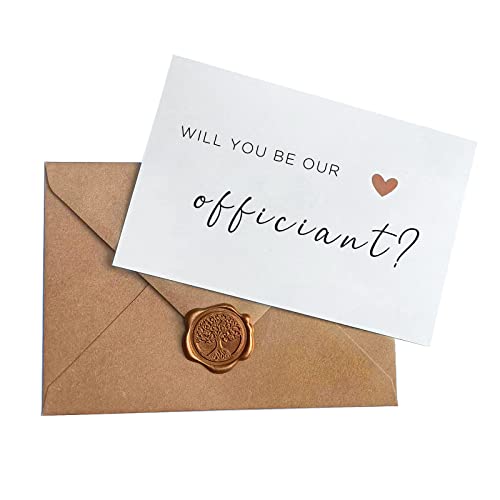
UNIQUE DESIGN: Care on a card will enhance the quality of your entire wedding, and every step of the wedding will be carefully prepared, which will become your lifelong romantic memories.Every word, font, and color of our cards are carefully designed, this is the perfect way to share some love with friends and family
Decide Your Ceremony Style Before You Start
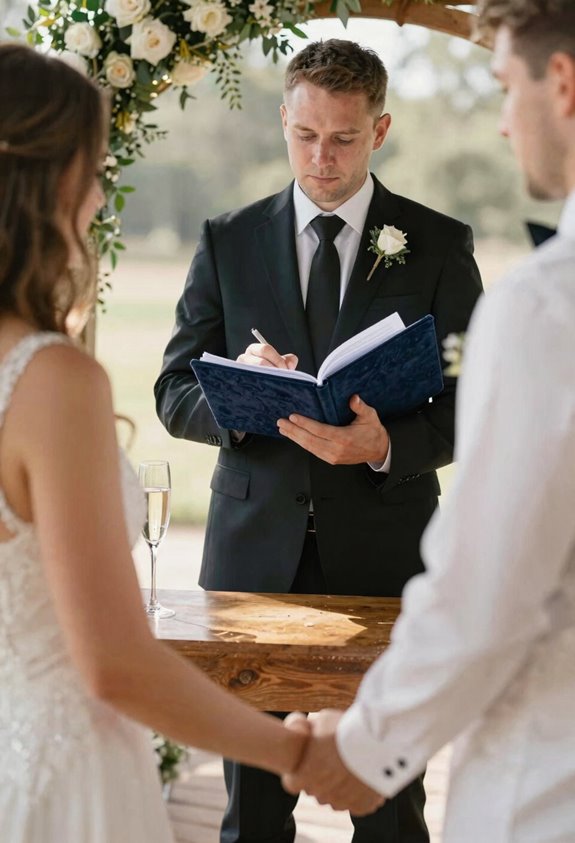
Before you commence your officiant search, you’ll need to establish your ceremony’s foundational style: whether you want a religious service rooted in faith traditions, a secular celebration focused on personal values, or a civil ceremony emphasizing legal requirements. Your chosen tone, whether traditional and formal, modern and casual, or playful and unconventional, will greatly influence which officiant can best deliver your vision through their storytelling, pacing, and connection with your guests. Personal rituals, readings, and vow preferences should also guide your decision, since different officiants offer varying levels of customization, scriptwriting assistance, and flexibility in incorporating your unique traditions.

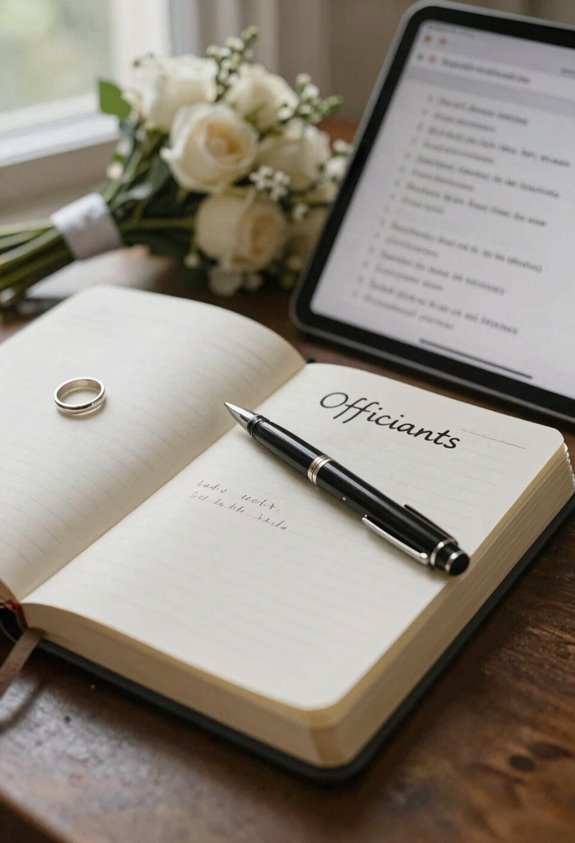
Complete Package: this package includes 1 wedding officiant book and 1 black ink pen; It offers a complete set for documenting your special ceremony, enhancing the overall experience; With dimensions of approximately 5.25 x 8.25 inches/ 13.6 x 21 cm, the A5 wedding officiant book is conveniently sized; This ensures easy portability and storage, while still providing ample writing space; The pen is around 5.7 inches/ 14.5 cm in length, well matching the journal

Religious vs. Secular Ceremonies
One of the earliest decisions you’ll make when planning your wedding involves determining whether your ceremony will be rooted in religious tradition or designed as a secular, personalized celebration. Religious ceremonies follow established liturgical traditions led by faith-based figures like pastors, rabbis, or imams. These services incorporate scripture, blessings, and spiritual elements meaningful to your faith community. Secular ceremonies offer flexibility, allowing officiants to customize vows, readings, and rituals reflecting your unique values without religious language. When officiating weddings, secular ceremonies emphasize personal storytelling and inclusivity, welcoming guests of all backgrounds. Both options carry legal authority in most states, though licensing requirements vary by jurisdiction. Consider whether you want your celebration anchored in religious community traditions or a universally accessible format that honors your individual values and invites meaningful participation from all attendees.
Formal Versus Casual Tone
How you want your ceremony to feel—polished and traditional or warm and intimate—fundamentally shapes every decision you’ll make during planning. Your chosen tone guides officiant selection, script style, and guest communication about the ceremony’s overall vibe.
| Aspect | Formal Tone | Casual Tone |
|---|---|---|
| Script Style | Structured, ritual-focused | Personalized stories, flexible |
| Language | Traditional vows, formal phrasing | Conversational, warm language |
| Pacing | Processionals, ceremonial cues | Storytelling, improvisation |
A formal tone emphasizes structured scripts and traditional elements, requiring more planning time. A casual tone favors personalized narratives and relaxed pacing. Your officiant should embody this tone consistently throughout. Consider your venue expectations, cultural or religious traditions, and the couple’s personalities when selecting your ceremony’s tone. These factors directly determine whether your ceremony reflects structured elegance or intimate warmth.
Personal Rituals and Traditions
Your ceremony’s foundation rests on deciding which rituals and traditions will shape the experience before you begin your officiant search. Consider these key elements:
- Religious, spiritual, secular, or interfaith frameworks that align with your values and guest composition
- Family or cultural traditions like handfasting, jumping the broom, or unity candles that hold personal meaning
- Music cues, readings, and blessing moments that reflect your shared identity and inclusivity goals
An officiant experienced with your chosen rituals can authentically weave these elements together. Confirm their familiarity with specific traditions beforehand. Your officiant should understand whether you want formal ceremonial language or conversational storytelling. Create a preference list noting desired tone, pacing, and formality level. This clarity helps you identify candidates whose voice and approach genuinely honor your personal rituals and vision.
Find Wedding Officiant Candidates in Your Area
Where you find your wedding officiant is as important as who you choose. You’ll discover qualified candidates through multiple channels, each offering distinct advantages for your search.
| Source | Method |
|---|---|
| The Knot Marketplace | Browse vendors, read couples’ reviews |
| Personal Networks | Ask recently married friends, wedding vendors |
| Houses of Worship | Contact local religious institutions |
| Online Directories | Search licensed officiants by location |
Scroll The Knot Vendor Marketplace to view candidates and couples’ feedback. Ask recently married friends and other wedding vendors for referrals to trusted officiants nearby. Contact local houses of worship for potential candidates who perform ceremonies in your vicinity.
Consider both religious and non-religious officiants to match your ceremony style. Verify each candidate can legally sign the marriage certificate in your state and confirm their availability for your wedding date.


16” x 16” bag with two 14” long and 1” wide black cotton webbing strap handles.

Heartfelt Officiant Thank You Gift: Express your deepest gratitude to your wedding officiant, pastor, or celebrant with this beautiful card. The perfect "thank you for marrying us" gift to show your appreciation for their role in making your wedding day unforgettable.
Interview Multiple Officiants to Find the Right Fit
Once you’ve identified potential officiants in your area, interview multiple candidates to assess personality compatibility, communication style, and overall fit with your vision. Interviewing two to three candidates allows you to compare their experience, availability, ceremony writing process, and storytelling abilities across different approaches. This evaluation phase helps you identify which officiant’s personality and professional style align best with your wedding’s tone, your relationship dynamics, and how you want guests to experience the ceremony.

Thoughtful Gift Keepsake: This officiant gift set includes a beautiful leather journal with a black ink pen, and a 17 oz officiant stainless steel tumbler, making it a memorable keepsake that shows appreciation for the officiant's special role in the wedding

BLANK INSIDE for you to write a heartfelt message to the special person who officiated your wedding. This officiant card is ideal as an officiant proposal gift or a memorable way to express thanks for their role on your wedding day.
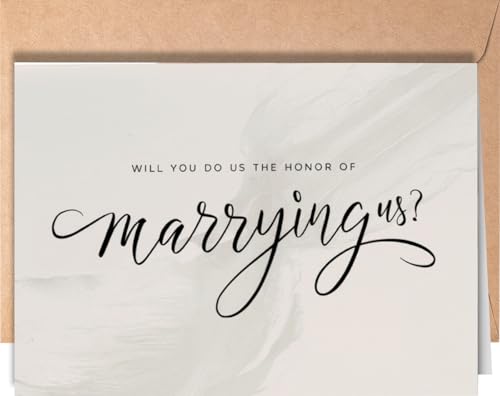
BLANK INSIDE to personalize your message and make your proposal truly special. Whether you're asking a close friend, family member, or mentor to officiate your wedding, this card offers a heartfelt and memorable way to pop the question.
Why Interview Multiple Candidates
How do you know if an officiant truly fits your vision? Interviewing multiple candidates allows you to compare communication styles, ceremony approaches, and genuine connection with your story. You’ll assess honesty and transparency about their process while gauging responsiveness and professionalism.
A broader pool helps you explore different ceremony types:
- Religious ceremonies that honor your faith traditions and values
- Non-religious services that reflect your personal beliefs and priorities
- LGBTQIA+-inclusive options that celebrate all couples authentically
Taking notes during each interview documents reliability in handling vows and scripts. Multiple interviews also provide scheduling leverage for your wedding date. This approach increases your chances of finding an officiant who will engage guests comfortably and authentically represent who you are as a couple.
Assessing Personality And Chemistry
Beyond credentials and experience, the right officiant must feel like a natural extension of your wedding vision and values. During interviews, assess how naturally each candidate interacts with you and your guests. Pay attention to personality fit and whether their communication style resonates with your approach to the ceremony.
Take detailed notes on officiant compatibility, observing their storytelling ability and capacity to hold guest engagement throughout. Consider their in-person presence alongside online professionalism. Ask direct questions about their planning process, script development, and ceremony elements.
Look for transparency regarding how they’ll personalize your service. Notice their responsiveness and willingness to address your concerns. The ideal officiant demonstrates warmth, attentiveness, and genuine interest in making your celebration meaningful and authentic to who you are as a couple.
Making Your Final Selection
The comparison process requires interviewing two to three officiants to evaluate their distinct styles, communication approaches, and overall compatibility with your ceremony vision. You’ll want to take detailed notes during each meeting, documenting personality traits, communication ease, and reliability indicators that matter to you both.
As you choose an officiant, consider these essential factors:
- Storytelling ability and guest engagement: An officiant will captivate your audience throughout the ceremony, keeping everyone emotionally invested in your union.
- Script creation process: Understanding how they’ll personalize your vows and ceremony language ensures authenticity that reflects your relationship.
- Availability and experience: Confirming their availability on your date and their background with your ceremony type allows you to verify their qualifications and capabilities.
Your instincts matter when selecting the right fit.
Ask the Right Questions During the Interview
Once you’ve narrowed down your officiant candidates, interviewing two to three prospects allows you to compare fit, vibe, and reliability before making your final selection. Your officiant interview should cover essential logistics and creative preferences that shape your ceremony experience.
| Topic | Key Questions | Purpose |
|---|---|---|
| Availability & Logistics | Do you work on our date and location? | Confirm scheduling feasibility |
| Ceremony Type | Do you perform religious, non-religious, or LGBTQIA+-inclusive ceremonies? | Ensure alignment with your values |
| Ceremony Script | How do you develop the script, vows, readings, and rituals? | Understand their creative process |
Request candidates demonstrate their storytelling ability and how they engage guest attention. Ask for transparent details regarding fees, rehearsal availability, and service inclusions: timeline management, equipment, and legal documentation signing.


Our Officiant Book serves as the quintessential companion for officiants, pastors, and celebrants, offering a refined platform for crafting and organizing wedding ceremonies. It provides a dedicated space for jotting down vows, arranging ceremony details, and ensuring seamless coordination, facilitating a smooth and memorable event for couples and guests alike.

1.Material:The socks made of cotton. Our socks are soft, comfortable, stretchy and breathable.
Verify Your Officiant’s Legal Credentials
How can you be certain your officiant has the legal authority to marry you? Verifying your officiant’s credentials protects your marriage’s validity and ensures everything proceeds smoothly on your wedding day.
Before finalizing your choice, confirm these essential elements:
- Request documentation proving your officiant’s legal authority to perform marriages and sign certificates in your state
- Review county or state listings to validate their current eligibility status and credentials alignment with local requirements
- Clarify whether your state permits self-officiating or mandates a third-party officiant, as rules vary significantly
Different states enforce varying regulations. Utah, for instance, requires specific licensing and signature eligibility. Ask your officiant directly about their qualifications and request proof of their legal standing. This verification step ensures your marriage certificate holds legal weight and protects your interests throughout the process.

PERFECT GIFTS - This funny bookmark is an ideal gifts for your loved ones. Whether for birthdays, holidays, or any special occasion, cool bookmarks with playful and inspiring text will infuse their daily lives with confidence and enthusiasm. Give family or friends this book lovers gifts to brighten their day and bring a smile to their faces on important moments.

Love to officiate a wedding? Ordained minister ordination proposal gift idea with "Wedding officiant" for marriage officiants & ministers. Cool on birthdays & Christmas for wedding ceremony lovers & US flag fans who love to prepare for church wedding day.

Material: 13.5 x 5.5 inches,Made of eco-friendly linen, durable and reusable.
Discuss Budget and What’s Included in Their Service
After confirming your officiant’s legal credentials, address the financial aspects of your arrangement. Understanding the officiant fee and inclusions prevents unexpected costs. You’ll want to clarify what’s bundled into their base cost, from ceremony scripts to rehearsal participation. Ask whether marriage license guidance is included or costs extra. Request a written contract detailing payment schedules, cancellation policies, and delivery timelines for final materials.
| Service Element | Included? | Additional Cost? |
|---|---|---|
| Ceremony script creation | Confirm directly | Possible rush fee |
| Rehearsal attendance | Ask about scope | May vary |
| License guidance | Clarify coverage | Often separate |
Discuss vow writing assistance, readings, and rituals separately. Some officiants charge additional fees for special requests or expedited orders. This transparency ensures you’re building your ceremony together with clear financial terms and aligned expectations.
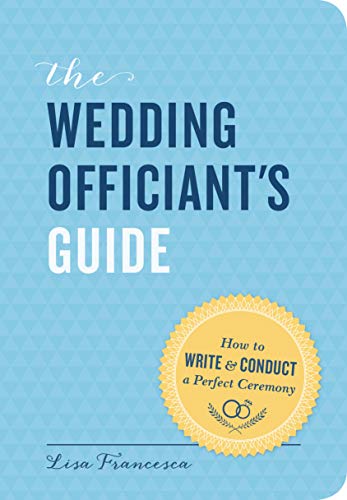
Career officiants life celebrants or seminary students hoping to officiate at weddings as a career|Women and men exploring resources for planning weddings to take place outside of religious institutions|Engagement gift or wedding officiant gift|Pair with traditional wedding planner book or organizer for the bride

【A5 NOTEBOOK WITH PEN】Package comes with an A5 lined journal and a premium metal pen. The notebook journal has a metal buckle to helps keep it securely closed. Decorated with gold inscription "officiant", this wedding officiant book presents a refine and sophisticated look. Great leather notebook and pen combo, perfect gift for officiant to use while hosting weddings or taking notes.

MATERIAL & EMBROIDERY Made of polyester satin fabric with gold cross embroidery on each front panel. Measures 60 inches total length, 30 inches each side. Back ends with pointed tips.
Assess Personality and Communication Compatibility
Your officiant’s personality and communication style will shape how your ceremony feels to you and your guests, making compatibility assessment essential before finalizing your choice. Request a sample script or video from past ceremonies to evaluate their tone, humor, and storytelling approach. Direct conversations reveal how clearly they explain plans and whether they listen actively to your concerns.
Personality compatibility matters significantly when selecting someone to officiate a wedding. Consider these essential indicators:
- They connect naturally with both you and your guests, maintaining genuine engagement throughout
- They communicate transparently about timelines, processes, and any potential challenges ahead
- They demonstrate reliability through punctuality, preparedness, and professional online presence
Ask how they would handle unexpected moments, manage timing adjustments, and guide guests if circumstances shift last-minute. Clear communication and genuine personality alignment ensure your ceremony reflects your relationship authentically.

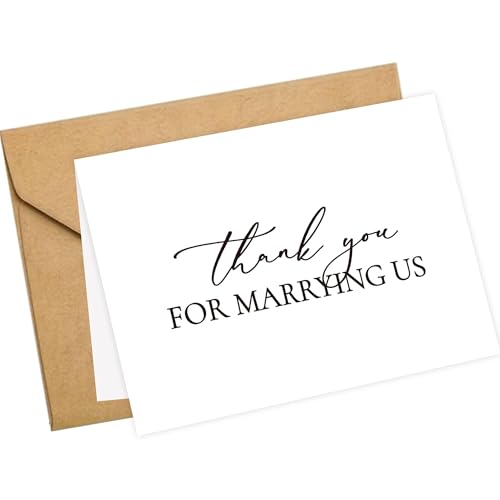
WEDDING CARD TO OFFICIANT-express your appreciation and gratitude to officiant, minister, priest, judge, pastor on your wedding day with these beautifully designed wedding cards in an elegant way.They will surely be delighted to receive them.

【Tote Bags for Women】You will receive a tote bag which measures approximately 13.8*16.5 inches.
Confirm Availability, Rehearsal Needs, and Logistics
Once you’ve identified an officiant whose personality aligns with your vision, securing their commitment to your specific date and location becomes your next priority. Contact them nine months to a year in advance to confirm officiant availability and allow adequate planning time.
Rehearsal logistics require careful coordination. Require the officiant to attend your full ceremony rehearsal, running through the complete script, music cues, microphone setup, and guest entrances. Discuss whether they’ll provide their own microphone; a lapel option works best for photography, or if you’ll supply equipment.
Document expectations in writing. Confirm their role in cueing guest movements, coordinating with vendors, and addressing lighting concerns. Clarify the final ceremony script content and timing. This preparation prevents misunderstandings and ensures everyone understands their responsibilities before the actual event.

Wedding Officiant Noun Someone Who Solves Problems You Never Knew Existed In Ways That Will Blow Your Mind - Great for marriage officiant or wedding officiant who officiates a wedding ceremony. Ideal for vow master, who are responsible to lead a ceremony.

Best Officiant Ever Gift for Men - Show your appreciation for the special officiant with a thoughtful and practical gift. Our personalized pocket knife gift box is a perfect choice for weddings, birthdayor any occasion to celebrate the role of the officiant in a meaningful way.
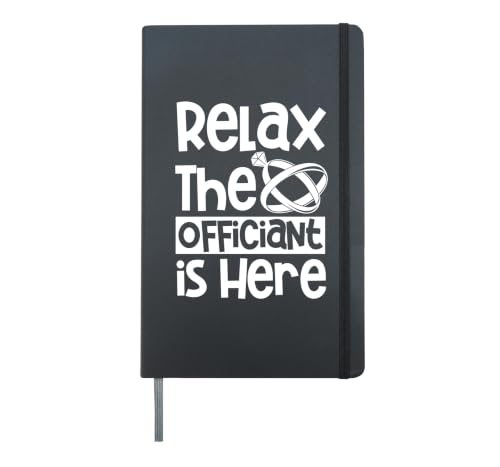
Relax The Officiant Is Here - Amazing treat for marriage officiant or wedding officiant who officiates a wedding ceremony. Awesome for marriage commissioner, solemniser, or vow master, who are responsible to lead a ceremony.