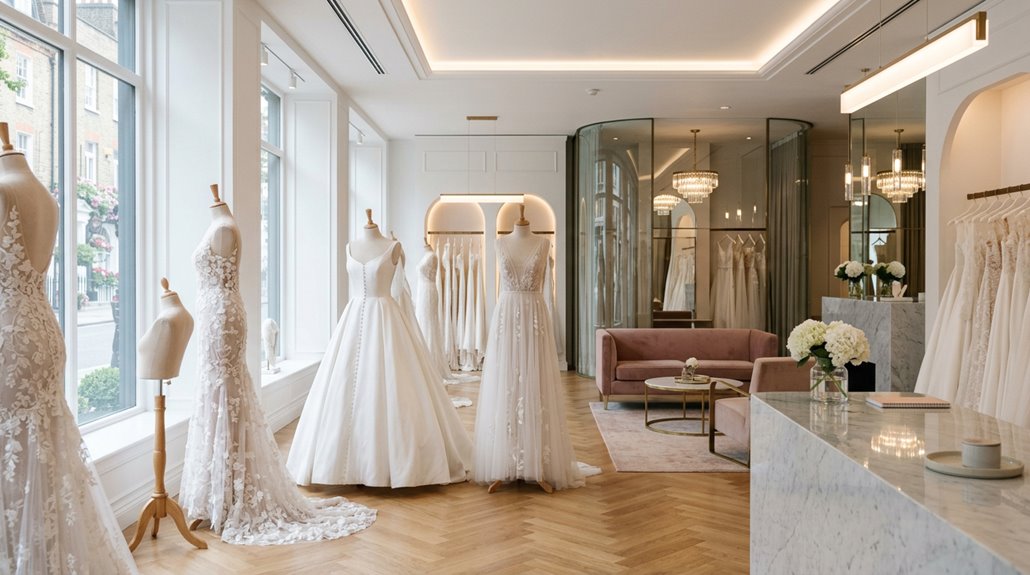
Starting a bridal boutique requires researching your market to identify unmet needs, then selecting a business structure, securing licensing, and calculating startup costs between $200,000–$2,000,000. You’ll need a high-visibility location with strong foot traffic and demographics aligned to your target bride.
Source quality wholesale inventory through trade shows and supplier relationships, establishing exclusivity agreements when possible.
Build your brand identity through cohesive ambiance, strategic lighting, and private fitting spaces.
Finally, implement multi-channel marketing across digital platforms and community engagement.
Each component builds the foundation for a thriving operation.
Research Your Market and Define Your Niche
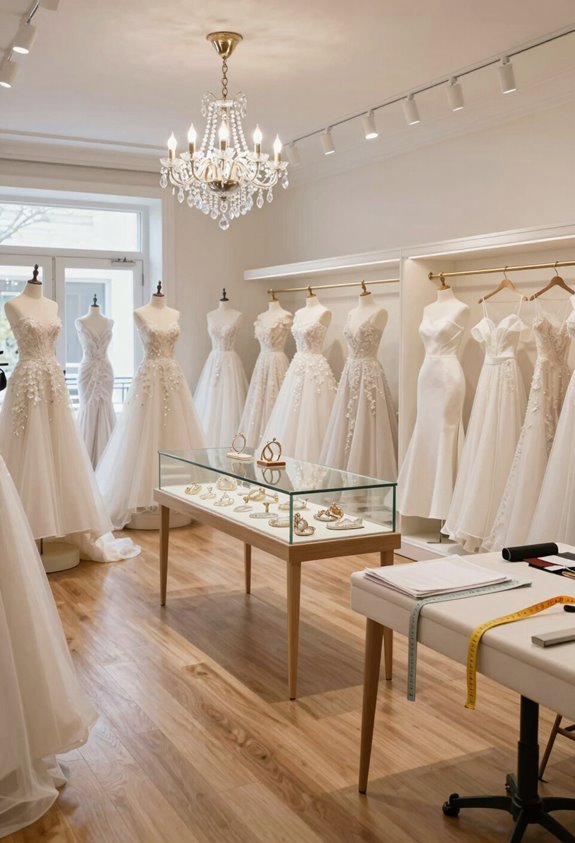
Before you invest capital and commit to a wedding dress shop, you’ll need to understand the bridal market environment in your area and identify where your business can thrive. Conduct thorough market research through surveys, focus groups, and bridal expos to gather competitive intelligence and bridal industry trends data. Analyze your target audience’s preferences, budgets, and spending patterns to assess market potential accurately. Visit competitor shops and trade shows to observe their operations and customer experience strategies. Define your niche by identifying unmet needs, whether size-inclusive gowns, eco-friendly options, or specialized styling services. Develop a unique selling proposition that differentiates your bridal shop concept from existing competitors. Map competitor strengths and gaps to position your boutique strategically within the local market environment.

DURABLE & SOLID CORE STRONG: Solid mannequin body, quality wooden stand and stainless steel tube combination, making the mannequin form steady and durable enough to support heavy weight clothes, garment, wedding gown, furnishing and decorative material. The mannequin torso with stand is made of strong foam to allow direct pinning anywhere.
DURABLE & SOLID CORE STRONG: Solid mannequin body, quality tested wooden stand and stainless steel tube combination, making the mannequin form steady and durable enough to support heavy weight clothes, garment, wedding gown, furnishing and decorative material. The mannequin torso with stand is made of strong foam to allow direct pinning anywhere.
Choose Your Business Structure and Get Licensed
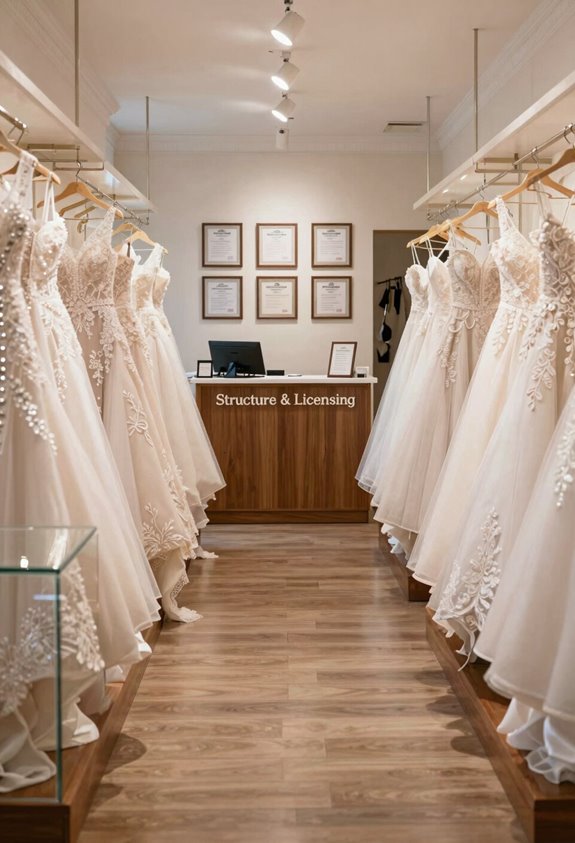
Establishing your wedding dress shop legally requires selecting an appropriate business structure and completing necessary registration and licensing steps. You’ll choose between sole proprietorship, partnership, LLC, or corporation. Each offers distinct advantages regarding liability protection and taxation flexibility.
| Structure | Liability Protection | Taxation | Capital Access |
|---|---|---|---|
| Sole Proprietorship | None | Pass-through | Limited |
| Partnership | None | Pass-through | Moderate |
| LLC | Limited | Flexible | Moderate |
| Corporation | Strong | Complex | Strong |
After selecting your legal structure, you’ll register a unique business name and obtain required retail licenses and an Employer Identification Number (EIN) for partnerships or LLCs. Address regulatory compliance regarding intellectual property, consumer protection, and employment laws. Registration timelines span several days to weeks, with startup costs ranging from $200 to $2,000 depending on jurisdiction. Consulting a qualified attorney ensures you select the optimal legal structure for your wedding dress shop’s specific needs and goals.
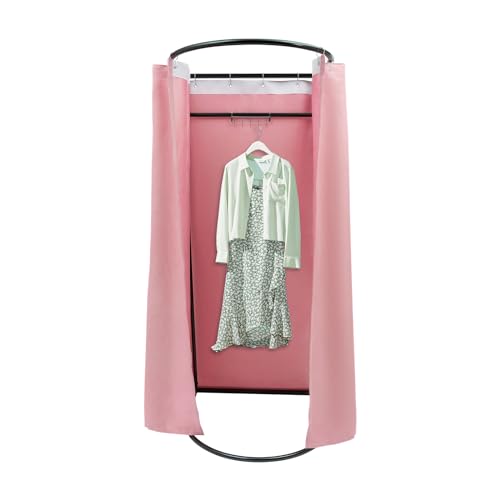
PRIVACY PROTECTION: Premium linen flannel curtain with light-blocking property creates a private, enclosed space for changing clothes. You can feel secure and comfortable, whether in a retail store, at a beach, or during a camping trip.

Mobile fitting rooms provide facilities or services that enable users to experience clothing fitting in non-fixed places (such as temporary locations in shopping malls, outdoor activities, etc.) through movable physical spaces.
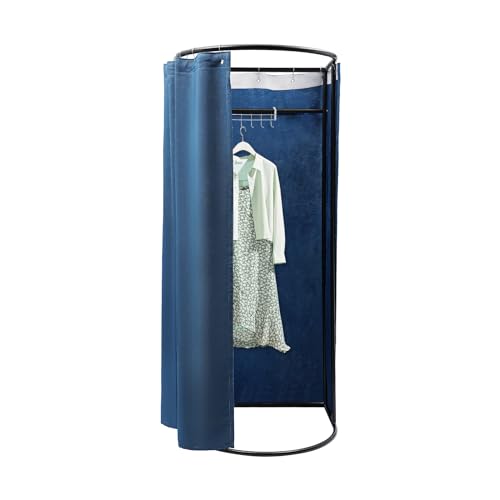
🛡️【Durable Iron Frame & Blackout Curtain】: Iron pipe frame with linen flannel fabric provides sturdy structure and excellent light-blocking privacy for secure changing
Calculate Startup Costs and Secure Funding
With your legal structure in place, you’ll now assess the financial requirements for launching your wedding dress shop. Your startup costs encompass lease costs, renovations, initial inventory, permits and licenses, marketing, and staffing. Expect monthly lease payments around $5,000 in major cities, with property purchases ranging from $500,000 to $1,500,000. Create a comprehensive business plan detailing all operating expenses and revenue projections to establish your financing trajectory. Explore diverse funding options including bootstrapping, bank loans, investors, and crowdfunding to determine what suits your vision. A detailed business plan identifies your break-even timeline and helps secure financing. Monitor cash flow continuously using a living financial plan that adjusts with inventory levels, staffing needs, and marketing campaigns to ensure sustainable growth throughout your business launch.

1.Adjustable Design - Adjustable Tripod Stand can reach 58 to 67 inch.

【GREAT FOR SEWING & DISPLAY】Female mannequin dress form torso for boutiques, retail stores and home sewing rooms. Ideal for clothing display, wedding dresses, gowns, tops, skirts, and jewelry styling.

DURABLE - Upgraded rubber wooden tripod stand and stainless steel tube combination, make the mannequin form steady and durable enough to support heavy weight clothes, garment, wedding gown, furnishing and decorative material.
Choose a Location That Attracts Your Target Bride
You’ll want to select a location with high visibility and consistent foot traffic, such as shopping centers, wedding districts, or bustling commercial streets that naturally draw your target brides. Analyzing local demographics and competitor positioning helps you identify market gaps and establish a unique value proposition that sets your boutique apart. Strong accessibility features, including ample parking, convenient entrances, and proximity to complementary services, ensure potential customers can visit comfortably for consultations and fittings.

【Sturdy and Durable】Tiny Home High-quality iron pipe, linen flannel fabric, and spraying process make this product wear-resistant, not easy to bend and deform, and can ensure long-term use.
PRIVACY PROTECTION: Premium linen flannel curtain with light-blocking property creates a private, enclosed space for changing clothes. You can feel secure and comfortable, whether in a retail store, at a beach, or during a camping trip.

TOTALLY PRIVACY: dressing rooms for boutiques is made of thick linen fabric, comfortable to touch, wearable and durable, drapes naturally, machine washable. Blackout curtain can block more than 90% of the light and has a height of 2m/78.74", which can perfectly protect your privacy and avoid embarrassment when changing
Visibility And Foot Traffic
Where your wedding dress shop locates can make or break your business. The right address attracts brides effortlessly while the wrong one requires significantly more effort for customer awareness. Visibility and foot traffic determine your storefront exposure in the bridal shop location marketplace.
Consider these strategic positioning options:
- Wedding districts with clustered bridal vendors, creating natural shopping destinations where engaged couples visit multiple stores
- High-traffic shopping centers offering consistent customer flow, parking accessibility, and established foot patterns
- Busy commercial streets with prominent signage opportunities and social media opportunities for photo-worthy storefronts
Target market alignment matters significantly. Research competition analysis in your area to identify gaps and differentiate your offering. Ample parking and convenient amenities support day-of appointments with bridesmaids and family members, creating a more comfortable boutique experience for your clientele.
Demographic And Competition Analysis
Before committing to a storefront, understanding your ideal customer and the competitive terrain is essential to long-term success. Start with demographic analysis of your target area, examining income levels, age ranges, and wedding planning timelines. This data reveals whether brides in your catchment area match your pricing strategy and inventory mix.
Next, conduct thorough competition analysis of existing bridal shops nearby. Document their styles, price points, and service offerings to identify gaps you can fill. Research their locations within the wedding district and assess their foot traffic patterns.
Map engaged couples in your potential bridal shop location against available inventory. This catchment area evaluation determines realistic demand projections. Study competitor differentiation strategies; what makes each unique. Then develop your distinct positioning that resonates with local brides seeking community and authenticity.
Stock Your Shop With Quality Wholesale Dresses
To build a distinctive inventory, research reputable wholesale suppliers and attend bridal trade shows where you can evaluate quality firsthand. Assess each potential collection by examining fabric weight, beading durability, seam construction, and overall craftsmanship to ensure your boutique maintains high standards. Negotiating exclusivity agreements with suppliers and cultivating strong relationships will give you access to unique designs, better pricing, and priority placement on new collections.

【Versatile Jewelry Display Stand】 Our jewelry display stand is designed to store and showcase a variety of jewelry pieces, including necklaces, bracelets, earrings, and more. Perfect for both personal and professional use.

1.Innovative Detachable Mannequin with Enhanced Stability - Unlike traditional mannequins, this model features a detachable metal bracket and rectangular base for easy assembly, offering superior load-bearing capacity. Its golden metal framework and sturdy base securely support heavy garments like wedding gowns, furnishing fabrics, and decorative materials. The non-slip base ensures stability while preventing floor scratches during movement, making it a practical choice for displaying bulky or weighty apparel with both durability and aesthetic appeal.
Research Reputable Wholesale Suppliers
Finding quality wholesale dress suppliers is essential to building a shop inventory that attracts brides and establishes your reputation in the bridal market. Strengthen your sourcing strategy by pursuing these key activities:
- Attend bridal trade shows and fashion weeks to connect with reputable bridal suppliers and access their latest collections directly.
- Request sample gowns from multiple vendors to assess quality, stitching precision, fabric feel, and overall fit before making bulk commitments.
- Evaluate designer relationships and wholesale platforms like Lightspeed NuORDER for streamlined inventory management and order tracking.
Prioritize suppliers offering customization options, sizing diversity, and accessory coordination through veils and belts. Strong partnerships secure favorable terms, early collection access, and on-time deliveries. Digital catalogs simplify comparing options and managing your growing inventory efficiently.
Evaluate Quality And Aesthetics
Every successful bridal boutique rests on a foundation of high-quality inventory that reflects craftsmanship, durability, and aesthetic appeal. Examine samples in person, evaluating fit, sewing precision, and beading work across each gown. Pay close attention to finishing details, fabric quality, and overall construction consistency that distinguishes premium pieces from mediocre alternatives. Run your hands along seams, inspect hem work, and assess how beading sits on the bodice. Test zippers, closures, and understructure integrity. This hands-on evaluation ensures every dress in your collection meets your boutique’s standards. Quality assessment builds customer trust and reduces returns. You are curating pieces that help brides feel confident on their wedding day. Prioritize suppliers who demonstrate exceptional craftsmanship and consistency.
Negotiate Exclusivity And Relationships
Once you’ve established quality standards for your inventory, the next step involves building strategic partnerships with suppliers who can deliver those premium pieces consistently. You’ll want to pursue exclusive rights with designers whose collections align perfectly with your brand vision and target market segments.
Focus your efforts on three key strategies:
- Attend bridal trade shows where you can network directly with designers and negotiate favorable payment terms, sample access, and restock prioritization during peak seasons.
- Develop strong supplier relationships that grant you early access to new arrivals and exclusive lines competitors can’t obtain.
- Establish clear exclusivity agreements covering lead times, returns policies, and inventory planning to protect your cash flow.
Brand alignment ensures your boutique feels cohesive, trustworthy, and distinctive in your community’s wedding marketplace. This directly impacts customer confidence and repeat business.
Build Your Bridal Shop’s Brand and Ambiance
How you design your bridal shop’s environment will shape every bride’s experience from the moment she walks through your doors. Your brand identity, including logo, color scheme, and tagline, must remain consistent across all touchpoints. The ambiance you create sets the tone for the entire customer experience.
| Element | Purpose | Implementation |
|---|---|---|
| Lighting | Showcase gowns flatteringly | Combine natural, ambient, spotlights |
| Store Layout | Ensure smooth navigation | Separate trying on, accessories, consultation areas |
| Fitting Rooms | Provide privacy and comfort | Design spacious rooms with elegant mirrors |
| Furnishings | Convey luxury | Select quality seating and tasteful decor |
Your shop’s environment should reflect a cohesive theme: vintage, modern, or bohemian. Thoughtful furnishings, strategic lighting, and purposeful store layout guide brides through their journey. Private fitting rooms with elegant mirrors and comfortable seating for guests create the welcoming sanctuary brides deserve during this significant milestone.
【High-quality Materials】High-quality iron pipe, linen flannel wear-resistant, corrosion-resistant. The fitting room adopts spraying process, not easy to bend and deform, which can ensure long-term use. Curtains are made of high quality blackout fabrics, good blackout effect and privacy protection.

Flexible Division, Instant Privacy:Made from a single, sturdy panel, this curtain creates a complete visual barrier. Without costly renovations, just pull it closed to form a private space for work, rest, or leisure in any room—living room/bedroom/office/closet/sliding glass doors/patio doors... It also hides cluttered shelves and exposed pipes, instantly improving the room’s look and helping you handle surprise guests.

Widely Used: Our portable room divider curtains can be a temporary solution for creating new spaces. Can be used in hospitals, SPA, beauty salons, theaters, physical therapy shops, bridal shops, clothing stores, storage spaces, cafes, hotels, shared bedrooms
Market Your Boutique Across Multiple Channels
Why do some bridal boutiques thrive while others struggle to attract customers? Strategic multi-channel marketing separates successful shops from the rest. You’ll build visibility by integrating these essential channels:
- Digital presence through SEO-optimized website, social media platforms, and email campaigns targeting engaged couples
- Community engagement via local advertising, collaboration with planners and photographers, and trunk shows
- Appointment booking systems and behind-the-scenes content fostering customer loyalty
Your branding consistency across all channels creates trust and recognition. Leverage Instagram and Pinterest to showcase collections while hosting trunk shows builds credibility. Email campaigns nurture leads, while local advertising reaches your immediate market. Strategic collaboration with wedding vendors expands your reach organically. This integrated approach converts casual browsers into loyal customers and establishes your boutique as the community’s trusted bridal destination.
Build Daily Operations and Scale
Your marketing success means nothing without the operational backbone to deliver on those promises. You’ll need robust appointment scheduling and inventory management systems that keep clients flowing smoothly from consultation to fitting. Hire staff who embody genuine customer service and emotional intelligence, creating the personalized experience your boutique promises.
Design private fitting rooms with excellent lighting and coordinate alterations seamlessly. Implement a living business plan that guides staffing levels, inventory choices, and marketing rollouts through regular performance reviews and data-driven adjustments.
Integrate your online presence through an appointment-booking website, strong social media engagement, and local SEO. These channels work together to drive store visits while building a cohesive brand experience. Your operations and marketing must align perfectly to scale successfully.

【Sturdy and Durable】Tiny Home High-quality iron pipe, linen flannel fabric, and spraying process make this product wear-resistant, not easy to bend and deform, and can ensure long-term use.

Private Fitting Space for Better Shopping: This freestanding changing room creates a comfortable, enclosed fitting area with thick flannel curtains that help block visibility, allowing customers to try on clothing with greater privacy and confidence.

Spacious & Privacy Fitting Room -- Large Changing Booth(100x100x200cm/3.28x3.28x6.56ft) comfortably fits bridal gowns or group fittings. Premium linen fabric blocks 90% light for complete privacy, while transparent gauze top provides natural illumination.